


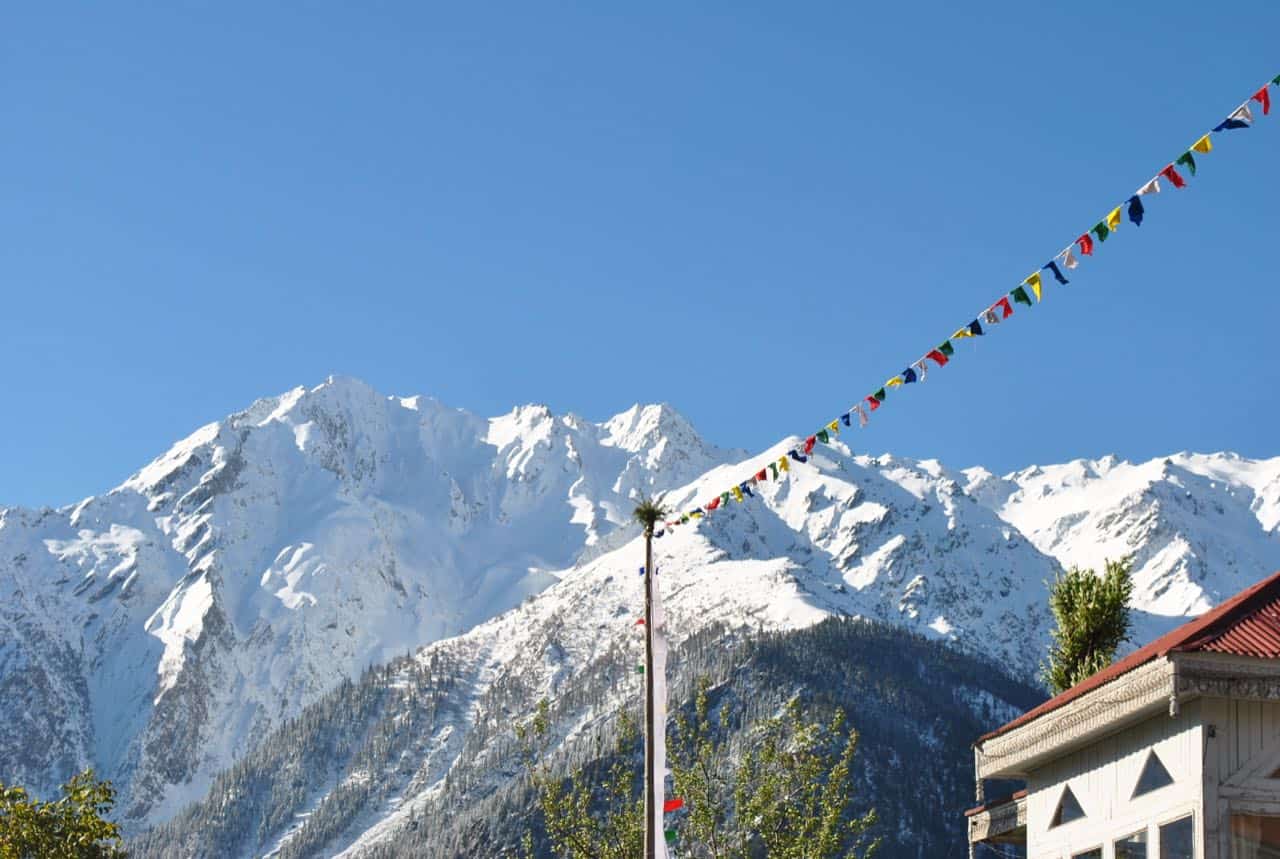
If you have been watching the Kinnaur and Lahaul weather forecasts nervously since July, hoping the landslide warnings would finally stop, here is the good news: they are starting to. Once the monsoon pulls back from Himachal Pradesh, usually by the third week of September, both NH-5 through Kinnaur and the Manali side roads into Lahaul settle into what is genuinely one of the best driving windows of the year. I get asked some version of “is it safe to go now” every single September, so let us go through what actually reopens, what the road status looks like as of this month, and how to build a short trip around it before winter shuts the high passes again.
Quick Answer: By late September, monsoon-driven landslides on NH-5 (Kinnaur) and the Manali-Keylong stretch (Lahaul) drop sharply, and this stays true through most of October. NH-5 is open end to end from Shimla to Sumdo, though isolated one-lane closures still happen after rain. Atal Tunnel and the Manali-Keylong road are open year-round. The Manali-Leh side beyond Darcha (Baralacha La and further) is open for light vehicles as of mid-September 2026 but closes for winter within weeks, and Kunzum Pass toward Spiti starts seeing snow from late September and is typically blocked completely by late October to early November. Homestays across both valleys do not literally shut for the monsoon, but bookings and owner confidence pick up noticeably once the rain stops, and it overlaps with the tail end of Kinnaur’s apple harvest.
Practical Info Box: Kinnaur and Lahaul Post-Monsoon 2026
| Best window | Late September to mid-October for both regions (extends into early November for lower Lahaul valley below Kunzum) |
| Kinnaur base | Reckong Peo (last ATM, fuel and reliable mobile network before remote stretches) |
| Lahaul base | Keylong (district HQ) or Sissu/Jispa for shorter stays near Atal Tunnel |
| Kinnaur distance | Shimla to Reckong Peo approx 235 km, 8-10 hours by road |
| Lahaul distance | Manali to Keylong approx 115 km via Atal Tunnel, 3.5-4.5 hours |
| Permits | No Inner Line Permit for Indian citizens on the standard Kinnaur or Lahaul circuits; carry a photo ID for checkpost registration |
| Short trip length | 3 days for either valley alone, 4-5 days if you want to push toward Chitkul or Sissu-Jispa-Darcha without rushing |
| Daily budget (approx) | Rs 1,400-2,100 budget, Rs 3,200-4,600 mid-range, Rs 6,400-11,300 comfort, per person on twin-sharing |
| Last updated | September 2026 |
What Actually Changes in Kinnaur and Lahaul After the Monsoon?
Quick Answer: The single biggest change is landslide risk. Both NH-5 and the Manali-Keylong road get hit hardest in July and August, when saturated slopes above the road let go with little warning. As rainfall tapers off through September, the slopes dry out, shooting-stone stretches calm down, and the same roads that had you white-knuckling through a downpour in August start behaving like normal mountain roads again. Nothing about the permits or the route itself changes. It is purely a risk and comfort shift.
In case you have driven this route in peak monsoon, you already know the feeling. Debris on the tarmac, one-lane traffic behind a JCB clearing a slide, and the low-level worry about what is happening on the slope above you that you cannot see. None of that disappears the day the calendar flips to September. Early September still carries real risk, and NH-5 saw fresh rockfall reports near Brauni Nalla and Nigulsari as recently as mid-September this year. But by the last week of the month, the pattern is unmistakable: fewer advisories, faster clearance, and noticeably better visibility once the haze that sits over the valleys through July-August finally lifts.
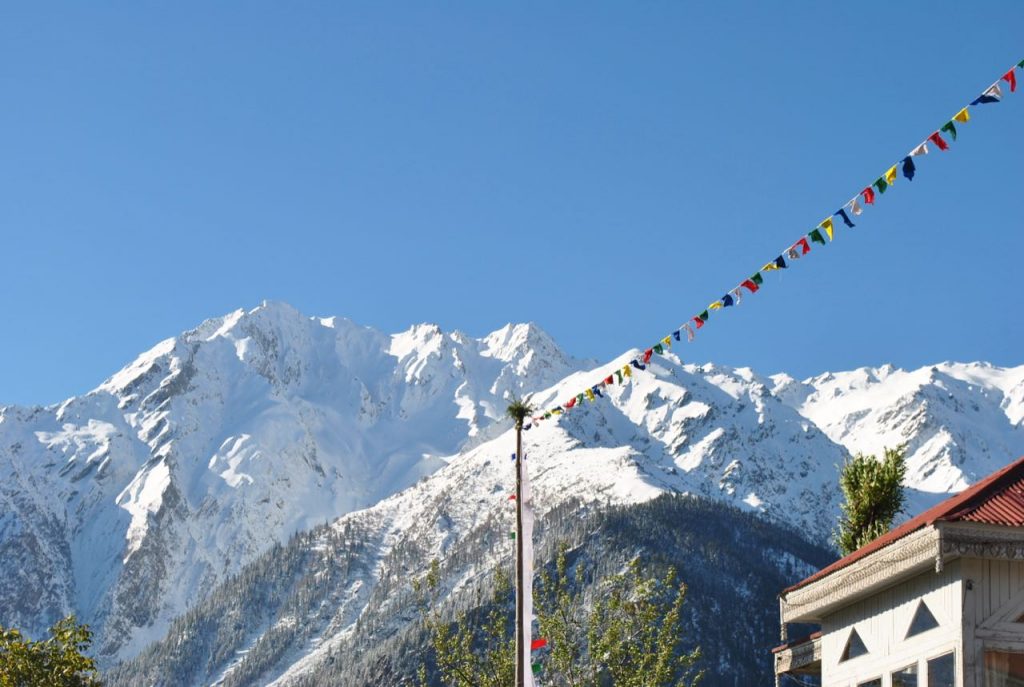
What Is the Current Road Status on NH-5 Through Kinnaur?
Quick Answer: As of September 2026, NH-5 is open end to end from Shimla through Rampur, Karcham, Reckong Peo and on to Sumdo toward Spiti. Short, single-lane closures at known trouble spots (Nigulsari, Brauni Nalla, and the Bhawanagar-Nathpa stretch) are still being reported through mid-September, usually cleared within hours to a day. Treat every closure as temporary and check locally before you leave your last stop with mobile network.
NH-5 (also signed as the Hindustan-Tibet Road) technically stays open year-round in the sense that it is not seasonally shut like a high pass, but it is also the stretch that takes the most monsoon damage of any road in this article, simply because Kinnaur gets more monsoon rain than Lahaul does. Nigulsari has been a chronic shooting-stone spot for years, and local Facebook groups and district pages are the fastest way to check same-day status, faster than any blog post including this one. However, if I am being completely honest, the pattern year after year is consistent: the worst of it is July and the first half of August, it is genuinely calmer by the third week of September, and it keeps improving through October.
For a full breakdown of the route stretch by stretch, including fuel points and the Jangi and Sumdo checkposts, my NH-5 Road Status guide gets updated through the season and is worth checking the day before you leave, not just once while you are planning.
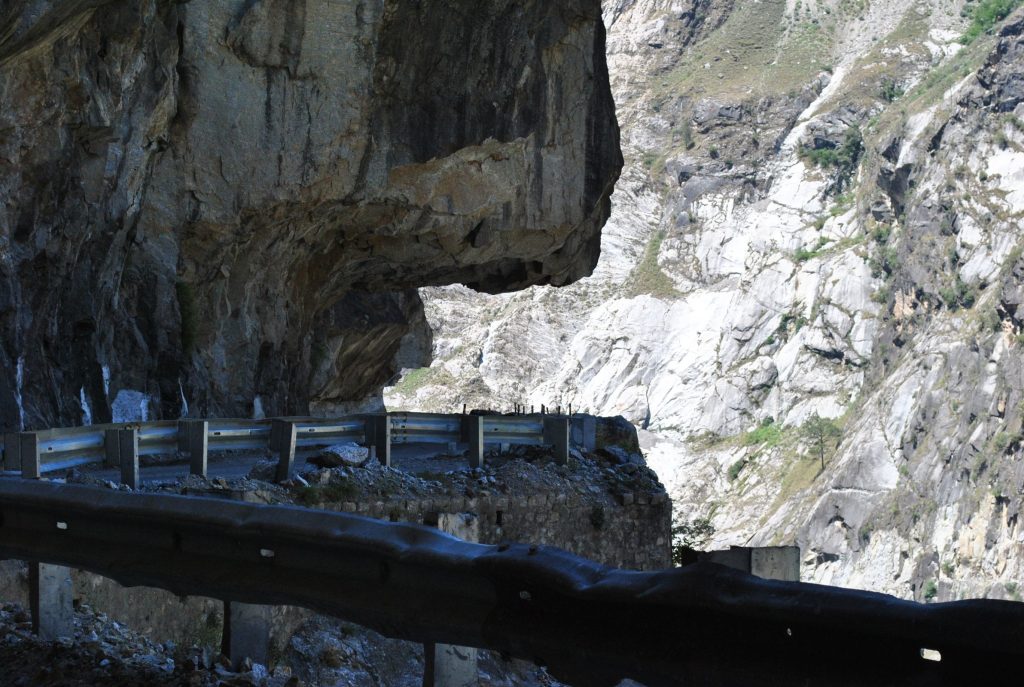
What Is the Road Status Into Lahaul After Monsoon?
Quick Answer: Manali to Keylong via Atal Tunnel is open year-round and is the calmest part of this whole trip. Beyond Keylong, the road to Darcha and Baralacha La was reported open for light motor vehicles as of mid-September 2026, though this changes quickly once early snow starts. The Keylong-Kaza road over Kunzum Pass, the route into Spiti, is the one to watch closely: the Lahaul and Spiti district administration’s own road status page showed it closed when checked this month, and separate advisories describe fresh snow at the pass with restricted vehicle movement. If Spiti is part of your plan, verify Kunzum’s status the same week you travel, not the week before.
This is where Lahaul genuinely differs from Kinnaur in a way that matters for planning. Atal Tunnel bypasses Rohtang Pass entirely, so Manali to Keylong, Sissu and Jispa does not depend on a high pass staying open. According to the Border Roads Organisation’s official Atal Tunnel page, it functions through winter, which is the whole reason it was built. That means the core Lahaul valley, Sissu, Gondla, Keylong, Jispa and Darcha, stays reachable well past the point Kunzum has already shut for the season. Kunzum itself typically opens by late May or early June and closes by late October to early November, with first snow at the pass from around end of September. Baralacha La sits at approximately 16,040 Ft (4,890 m) and closes earlier than Kunzum most years, being higher and further from any tunnel shortcut.
In practice, this gives you two different Lahaul trips depending on your dates. Go now through mid-October and you can comfortably do Sissu, Keylong, Jispa, and a day trip toward Darcha with clear roads and thin crowds. Push toward Kunzum and Spiti and you are racing an early winter that can close the pass with a single heavy snowfall. Tandi, about 110 km from Manali, is the last fuel pump before you commit to the higher stretches, so fill up there regardless of which trip you are doing.


For pass-specific detail, my Baralacha La opening and closing guide and the Manali-Kaza road status post both get updated as conditions change, and are the two I would check the night before departure.

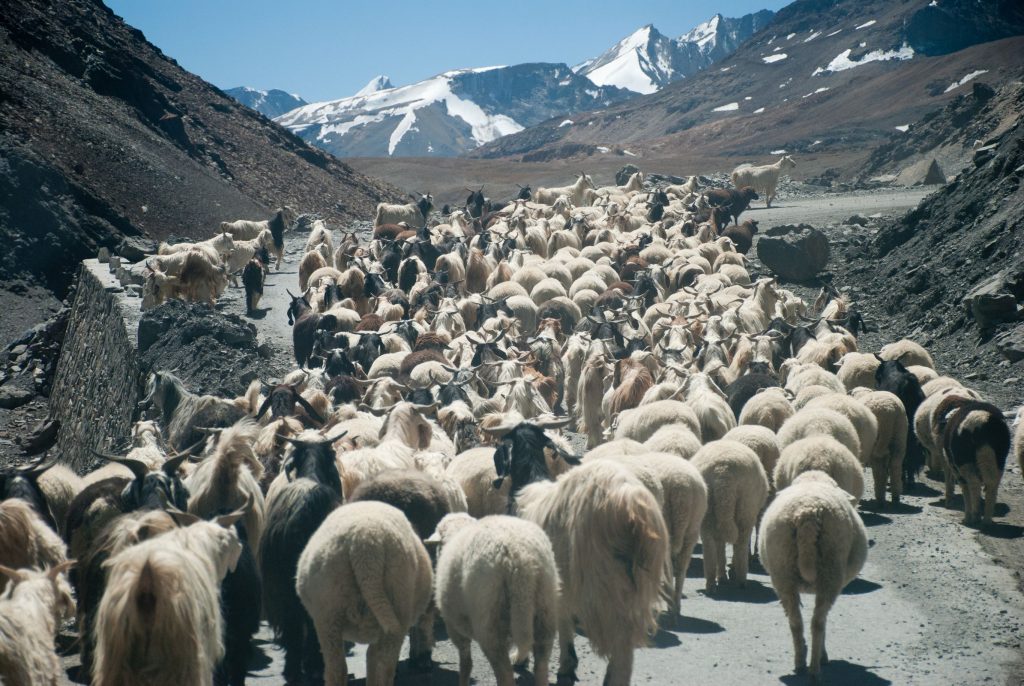
Do Homestays and Camps in Kinnaur and Lahaul Reopen After Monsoon?
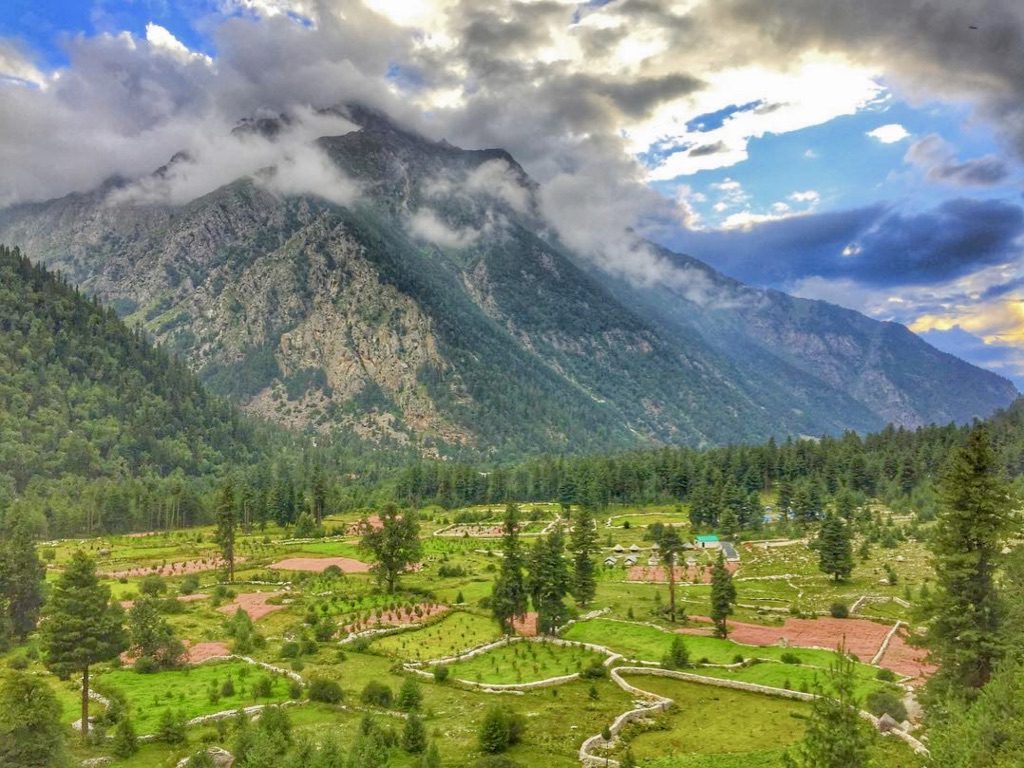
Quick Answer: Most homestays in Kinnaur and Lahaul do not literally close during the monsoon, but occupancy drops sharply in July-August because travelers cancel over road anxiety, and owners often scale back staff and food stock accordingly. From mid to late September, bookings pick back up, kitchens are fully stocked again, and in Kinnaur this overlaps with the tail end of apple harvest, which is a genuine bonus for anyone staying in an orchard village.
Sangla, Rakcham, Batseri, Kalpa and Chitkul in Kinnaur, and Sissu, Khangsar, Gondla, Tandi and Darcha in Lahaul now have homestay units in nearly every village, a shift from a decade ago when a handful of guesthouses covered the whole valley. Keep in mind that “open” in the monsoon sense does not always mean “well stocked.” A homestay owner who has had three cancellations in a row over July because guests got nervous about the road is not going to be sitting on fresh vegetables and firewood. By late September that hesitation is gone and places are running at a normal pace again, which also means better food and faster service, not just fewer landslide worries.
If you want a named, first-hand option in Kinnaur, Vijender Negi runs a working apple-orchard camp and homestay in Sangla Valley on the Baspa River, where orchard walks are part of the stay rather than an add-on, and it is exactly the kind of place that benefits from a September-October visit while the harvest is still going. I have covered more of the apple-season timing in my Kinnaur Apple Season guide, which pairs well with this trip if you time it right.
When Do the High Passes Close for Winter, and How Much Time Do You Actually Have?
Quick Answer: You have roughly four to six weeks. NH-5 in Kinnaur does not close for winter in the way a high pass does, so that window stays open into November and beyond (though snow eventually complicates the upper stretches near Sumdo). On the Lahaul side, Kunzum Pass is the hard deadline for anyone wanting to link into Spiti, typically closing by late October to early November. Baralacha La and the Manali-Leh passes close earlier still, usually within the first half of November most years, sometimes sooner if an early snowstorm hits.
Hence, the honest way to think about this window is in two tiers. Kinnaur is the safer bet for a late-October or even November short trip, since NH-5 stays driveable and the valley does not depend on a high-altitude pass. Lahaul beyond Keylong is the one on a clock. If crossing Kunzum into Spiti or riding up toward Baralacha is part of your plan, I would not push your dates past the first half of October without checking road status daily. If you are staying within the Sissu-Keylong-Jispa stretch and not attempting the high passes, you have a longer runway since Atal Tunnel keeps that part of Lahaul open well into winter.
Should You Do Kinnaur or Lahaul First on a Short Trip?
| If you are… | Go with | Because |
|---|---|---|
| Short on days (3 days only) | Kinnaur from Shimla | Shorter approach distance, NH-5 has a longer safe window into autumn |
| Chasing apple harvest and orchard stays | Kinnaur (Sangla, Kalpa) | Harvest runs into early October in the upper valley |
| Trying to also touch Spiti or Kunzum | Lahaul from Manali, and go now | Kunzum’s window closes fastest of everything in this guide |
| Wanting a quieter, less-driven road | Lahaul (Sissu-Keylong-Jispa) | Lower tourist volume than Kinnaur’s Shimla-side approach in this window |
| Coming from Delhi with only a long weekend | Kinnaur | Closer by road from Shimla side than Manali-Lahaul-Spiti loops |
A Short 3-Day Kinnaur Itinerary for Late September-October
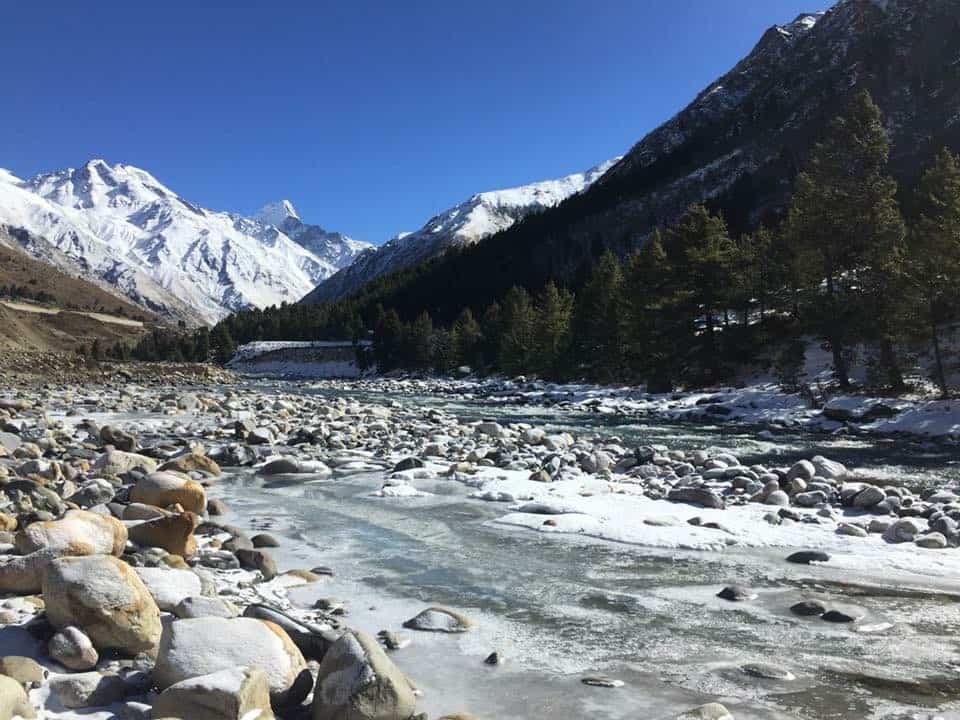
Quick Answer: Shimla to Kalpa on Day 1, Kalpa to Sangla-Rakcham-Chitkul and back to Sangla on Day 2, and Sangla back to Shimla on Day 3. It is a compact loop that covers Kinnaur’s best-known stretch without needing four or five days, and it keeps you entirely on NH-5 and its Baspa valley spur, the parts of Kinnaur least affected by the passes further north.
- Day 1: Shimla to Kalpa (approx 235 km, 8-10 hours). Fuel up in Rampur or Reckong Peo, the last reliable pump before Kalpa’s short climb. Overnight in Kalpa for the Kinner Kailash range view, best at sunrise.
- Day 2: Kalpa to Sangla to Rakcham to Chitkul, back to Sangla (approx 90 km round trip). Chitkul is India’s last inhabited village toward the Tibet border on this route. Register your ID at the checkpost near Chitkul, no ILP needed for Indian citizens. Overnight in Sangla or Rakcham.
- Day 3: Sangla back to Shimla (approx 220 km, 7-9 hours). Leave early to give yourself daylight margin in case of a short NH-5 hold-up.
If you have a fourth day to spare, add Nako village on the Spiti side of Sumdo, which stays comfortably reachable through October since it sits before Kunzum’s closure zone. My Kinnaur 7-day itinerary covers the longer version of this route if you end up with more time than planned, and the Rakcham and Batseri guide is worth reading if you want to skip Chitkul’s crowds for quieter neighbouring villages.
A Short 3-Day Lahaul Itinerary for Late September-October
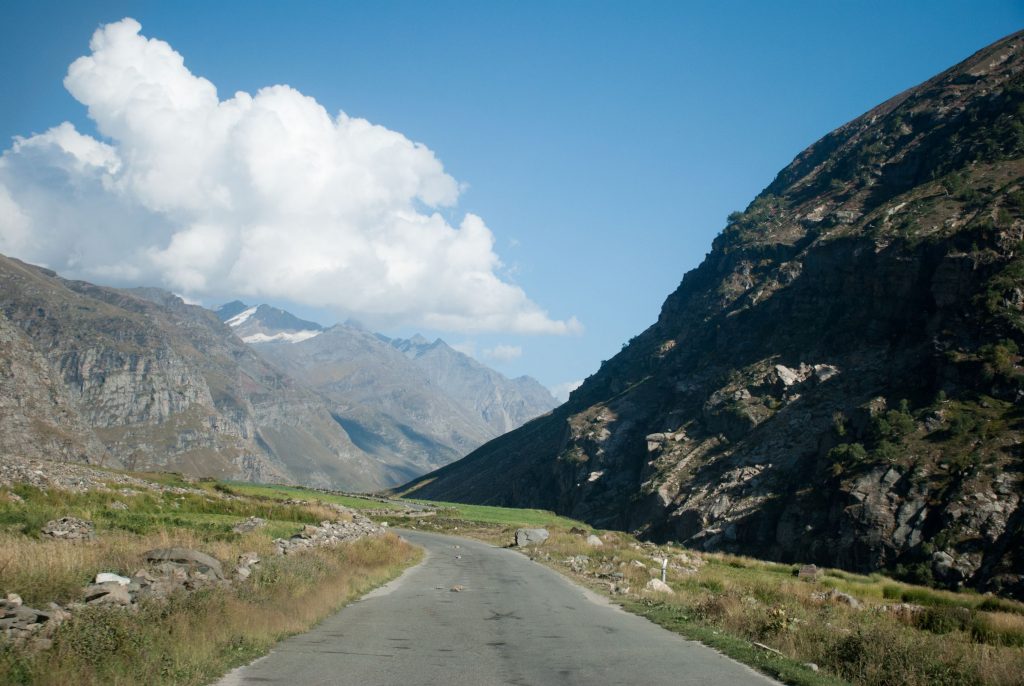
Quick Answer: Manali to Keylong via Atal Tunnel on Day 1 with a stop at Sissu, Keylong to Jispa and a look toward Darcha on Day 2, and back to Manali on Day 3. This version deliberately stays below Baralacha La, so it does not depend on the high pass staying open, and it is doable even if you only decide to go a few days out.
- Day 1: Manali to Keylong via Atal Tunnel (approx 115 km, 3.5-4.5 hours). Stop at Sissu for the waterfall and riverside walk, then continue to Keylong or push on to Jispa for the night.
- Day 2: Jispa to Darcha and back, or a day loop around Keylong. Darcha sits before Baralacha La and is a good turnaround point if you are not attempting the high pass. Visit Shashur Gompa near Keylong on the way back if you have not already.
- Day 3: Back to Manali (approx 115 km, 3.5-4.5 hours). Keep an afternoon buffer since Rohtang-side traffic near Gulaba can still bottleneck even after monsoon.
If your dates fall before mid-October and the road status confirms it, extending this into a 5-day trip across Baralacha La and toward Sarchu is possible, but that is a different, more serious undertaking with no fuel for over 300 km once you commit, and it genuinely depends on that week’s snow report. My Lahaul Valley 5-day itinerary and Best Time to Visit Lahaul guide go into that longer version in more depth.
Approximate Post-Monsoon Budget for Kinnaur or Lahaul
Quick Answer: Expect Rs 1,400-2,100 per day on a budget homestay-and-bus trip, Rs 3,200-4,600 per day mid-range with a shared taxi, and Rs 6,400-11,300 per day for a comfortable trip with a private vehicle. These are aggregator-sourced accommodation ranges, not an official tariff, so treat them as a planning guide and confirm current rates directly with your homestay before booking.

| Category | Budget | Mid-Range | Comfort |
|---|---|---|---|
| Stay (per night) | Rs 700-1,000 | Rs 1,800-2,500 | Rs 3,500-7,000 |
| Food (per day) | Rs 400-600 | Rs 600-900 | Rs 900-1,300 |
| Local transport (per day) | Rs 300-500 (shared) | Rs 800-1,200 (shared taxi) | Rs 2,000-3,000 (private taxi) |
| Total per day | Rs 1,400-2,100 | Rs 3,200-4,600 | Rs 6,400-11,300 |
| 3-day trip total | Rs 4,200-6,300 | Rs 9,600-13,800 | Rs 19,200-33,900 |
Lahaul’s comfort tier runs higher than Kinnaur’s mainly because of riverside camps in Jispa and Sissu that price closer to a resort than a homestay. If you are booking a taxi rather than self-driving, my list of recommended Kinnaur and Spiti taxi drivers has names and contact numbers rather than a generic fare table, which tends to be more useful once you are actually negotiating a rate.
Safety Notes for This Specific Window
- Landslide risk drops, it does not disappear. Wet slopes from a late-September shower can still let go, especially at Nigulsari and Brauni Nalla in Kinnaur. Leave a buffer day in your plan rather than a back-to-back schedule.
- Early snow and black ice start showing up in Lahaul’s higher stretches from late September. If you are pushing toward Darcha or beyond, start early in the day and do not attempt these stretches after dark.
- Mobile network is thin past Reckong Peo in Kinnaur and past Keylong in Lahaul. Download offline maps and tell someone your route before you lose signal.
- Fuel up at Reckong Peo (Kinnaur) or Tandi (Lahaul) before continuing. These are the last reliable pumps before long stretches with none.
- A sedan is fine for both short itineraries above. You only need an SUV or 4×4 if you are pushing beyond Chitkul toward Nako-Sumdo in bad weather, or beyond Darcha toward Baralacha La.
- Please take a sensible call if road status is uncertain the morning you plan to leave. A short trip delayed by a day is a minor inconvenience. Getting stuck on a closed stretch overnight is not.
Related Reading
- NH-5 Road Status: Shimla to Spiti via Kinnaur
- Spiti-Manali-Kaza Road Status (Kunzum Pass)
- Baralacha La Opening and Closing Guide
- Lahaul Valley Complete Travel Guide
- Best Time to Visit Lahaul Valley
- Kinnaur Valley 7-Day Itinerary
- Rakcham and Batseri: Offbeat Kinnaur Villages
- Kinnaur Apple Season Harvest Guide
- Inner Line Permit Guide for Kinnaur, Lahaul and Spiti
- Kinnaur-Spiti Circuit: 10-Day and 14-Day Itineraries
Frequently Asked Questions
Is NH-5 through Kinnaur open right now?
Yes, as of September 2026 NH-5 is open end to end from Shimla to Sumdo, though short one-lane closures at known trouble spots like Nigulsari still happen after rain. Check a local Kinnaur road status page or group the same day you travel.
Is the Manali-Kaza road over Kunzum Pass open after monsoon?
It is weather-dependent and closing fast. As of this September, the district administration’s own listing showed the Keylong-Kaza stretch as closed, with reports of fresh snow at Kunzum. Verify status the week you plan to cross, not earlier.
When does Kunzum Pass close for winter 2026?
Typically late October to early November, depending on snowfall, with the first snow at the pass usually arriving from around the end of September.
Is Atal Tunnel open in October and November?
Yes, Atal Tunnel operates year-round and is the reason Manali to Keylong stays reachable long after Rohtang or Kunzum would otherwise have closed the route.
Do homestays in Kinnaur and Lahaul close during monsoon?
Not officially, but occupancy and stocking drop through July-August because fewer travelers book due to road anxiety. Most return to normal operation by mid to late September.
Is late September or October the best time to visit Kinnaur and Lahaul?
It is one of the two best windows of the year, alongside pre-monsoon May-June. Skies are clearer, landslide risk is lower than peak monsoon, and it overlaps with Kinnaur’s apple harvest, though the Lahaul-to-Spiti high-pass window is closing fast.
Do I need an Inner Line Permit for Kinnaur or Lahaul?
No, Indian citizens do not need an ILP for the standard Kinnaur circuit (Shimla-Kalpa-Sangla-Chitkul) or the core Lahaul valley (Manali-Keylong-Jispa). Carry a photo ID for checkpost registration at Jangi and Sumdo in Kinnaur.
How many days do I need for a short post-monsoon trip?
3 days is enough for either Kinnaur (Shimla-Kalpa-Sangla-Chitkul) or Lahaul (Manali-Keylong-Jispa) as a standalone short trip. Add a fourth or fifth day if you want to push to Nako in Kinnaur or Darcha in Lahaul.
Is it safe to drive in Kinnaur right after monsoon ends?
Safer than peak monsoon but not risk-free. Wet slopes can still slide after a late-September shower. Drive in daylight, keep a buffer day, and check road status the morning you leave.
Can I combine Kinnaur and Lahaul in one short trip?
Not comfortably in 3-5 days since they are reached from opposite directions (Shimla side and Manali side). A combined trip realistically needs 7-10 days through Spiti, which my Kinnaur-Spiti circuit itinerary covers in detail.
Final Thoughts
Hence, if you have been sitting on a Kinnaur or Lahaul trip since the monsoon warnings started in June, late September through mid-October is genuinely the window to book it. Kinnaur gives you the longer runway since NH-5 does not depend on a high pass, while Lahaul rewards moving fast if Kunzum or Spiti is part of the plan. Neither trip needs to be long. Three focused days is enough to see what these valleys actually look like once the monsoon dust settles and before the winter closures start again.

I look forward to hearing which route you picked and how the road status held up for you, road conditions change fast enough in this window that your on-ground report genuinely helps the next reader. Feel free to share this with friends or family planning the same trip, and do join the DwD Community if you want to swap real-time road updates with other travelers doing this exact route this season 🙂 …
If you have any questions, feel free to ask in the comments section below 🙂
