


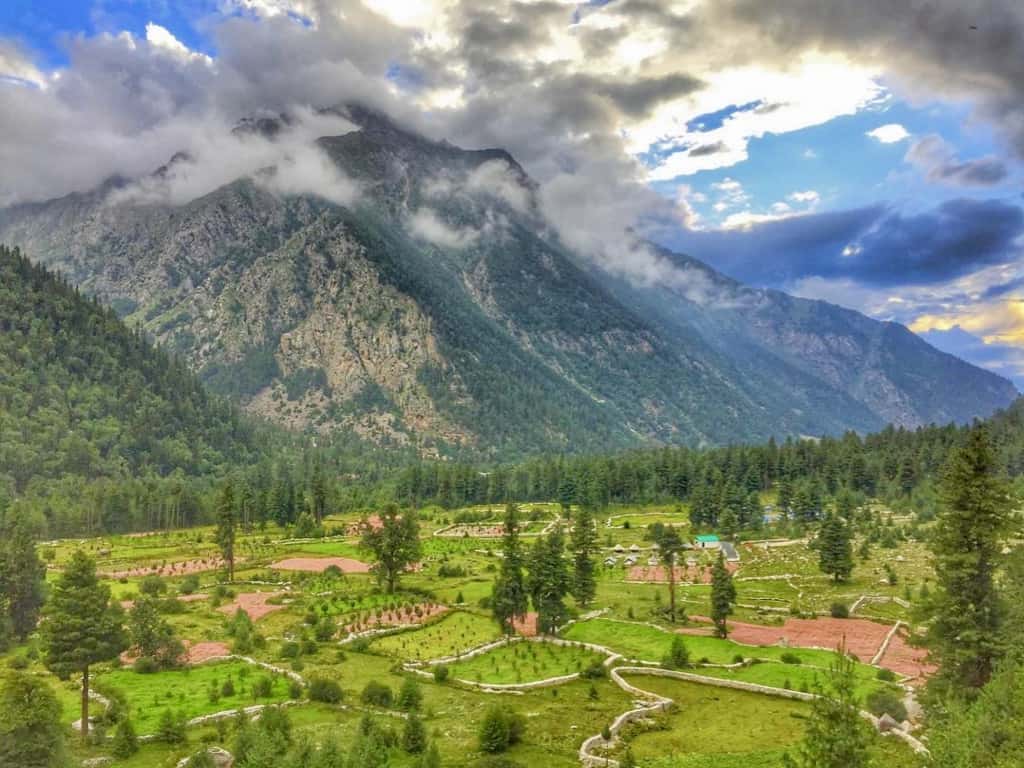
Are you looking for a place to stay in Sangla Valley that is not Chitkul, and have faintly heard the names Rakcham and Batseri? Almost every Kinnaur itinerary online treats these two villages as blurred scenery between Sangla and Chitkul. People drive through at 30 kmph, take a photo from the car window, and carry on to the “last village of India” board. That is a mistake, and it is why I wanted a dedicated guide on Rakcham and Batseri villages rather than two paragraphs inside a larger Sangla article.
Both sit on the Baspa river between Sangla and Chitkul, both have homestays, camps, walking trails and orchards, and neither has the tour-bus crush Chitkul now gets from June to September. In case you would rather wake up to a river than a parking lot full of Innovas, this is where you should be sleeping. Let us look at it in detail, my friend 🙂 …
Quick Answer: Are Rakcham and Batseri Worth Visiting?
Yes. Rakcham (about 3,048 m) is 14 km from Sangla and Batseri is 8 km away, across the Baspa. Both are quieter, cheaper and greener than Chitkul, and Indian nationals need no permit. Stay in Batseri for orchards, in Rakcham for open meadows.
Rakcham and Batseri at a Glance
| Location | Baspa (Sangla) Valley, Kinnaur, Himachal Pradesh |
| Altitude | Rakcham about 3,048 m (roughly 10,000 ft), though published figures vary from 2,900 m to 3,100 m. Batseri sits lower |
| From Sangla | Batseri 8 km, Rakcham 14 km |
| To Chitkul | Rakcham about 14 km (some guides say 10 to 14 km), Batseri about 20 km |
| From Delhi / Shimla | Rakcham roughly 555 km / 233 km |
| Best time | May to October. September is the sweet spot |
| Permit | None for Indian nationals. Foreign nationals, see the permit section below |
| Budget | Rs 3,800 to Rs 14,900 per person for 3 days from Reckong Peo |
| Road status | Open roughly March to mid-December, closed beyond Sangla in deep winter |
| Network | BSNL is generally the most dependable. Jio and Airtel patchy, often absent at Rakcham |
| Last verified | October 2026 |
Where Are Rakcham and Batseri, and Why Does Everyone Drive Past Them?
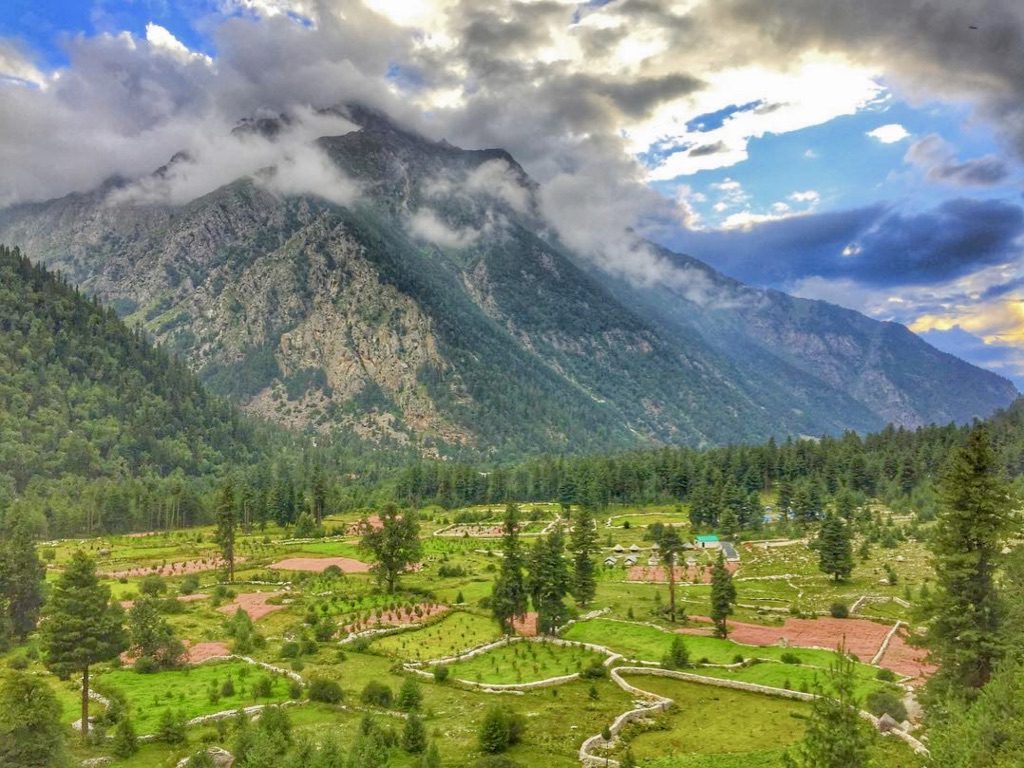
Quick answer: Both lie on the Sangla to Chitkul road along the Baspa river in Kinnaur, Batseri at 8 km from Sangla and Rakcham at 14 km. Travelers skip them because Chitkul carries the “last village of India” tag, which is a marketing line rather than a travel reason.
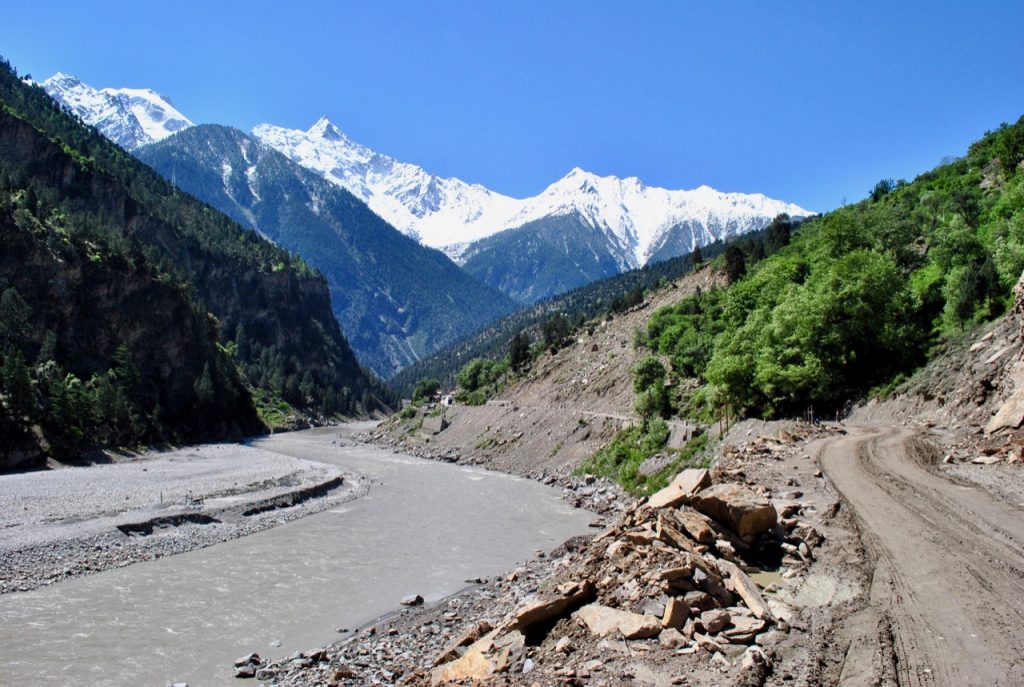
The Baspa Valley, which most people call Sangla Valley, branches off the Hindustan Tibet Road at Karcham and runs upstream along the Baspa. Batseri comes first at 8 km, then Rakcham at 14 km, then Chitkul at 28 km. The whole valley is a 28 km ribbon, so nothing here is far from anything else. You can be in the orchards at Batseri in the morning and at the ITBP checkpost in Chitkul by lunch.
Batseri is the more interesting of the two geographically. It sits on the left bank of the Baspa, so you leave the main road, cross the river, and walk in. The crossing is a traditional cantilevered bridge of stacked logs, the kind of engineering Kinnaur has done for centuries. That single crossing is why Batseri stays quiet. Cars stop at the road, and most people cannot be bothered to walk the last stretch. Their loss.
Rakcham sits on the main road, easier to reach but still far less busy than Chitkul. It occupies a wide, open bowl where the Baspa slows and spreads out, with meadows running towards the Rakcham-Chitkul Wildlife Sanctuary. Hence, if you want open views rather than village character, Rakcham is your pick. I have covered the full valley in our Sangla Valley travel guide.
Keep in mind that “Rakcham” is spelled several ways online. Raksham, Rakchham and Rakcham are the same village, so do not get confused when a homestay listing or bus board differs.
Rakcham or Batseri: Which One Should You Actually Stay In?
Quick answer: Choose Batseri for apple orchards, forest walks, temple architecture, and a shot at the September Ukhyang festival. Choose Rakcham for open meadows, higher altitude, riverside camping, and easier road access. Batseri suits slow travelers, Rakcham suits photographers and campers.
This is the question readers ask most, so here is a straight answer instead of hedging.
| If you are… | Stay in | Why |
|---|---|---|
| Traveling with parents or young kids | Batseri | Lower altitude, flat village walks, orchards, no real exertion |
| A photographer chasing wide valley light | Rakcham | Open meadows, the river spreads out, unobstructed mountain lines |
| Camping with your own gear | Rakcham | Riverside flat ground, meadow access towards the sanctuary |
| On a tight budget using buses | Rakcham | On the main road, so the bus drops you at the village |
| Visiting in September | Batseri | Apple harvest, plus a chance of the Ukhyang festival (confirm dates locally) |
| Wanting one base for the whole valley | Rakcham | Midway, 14 km either side to Sangla and Chitkul |
| Doing a day trip only | Batseri | Closest to Sangla, easiest without a night halt |
If you want one pick, I suggest Rakcham for a first visit and Batseri for a repeat visit. Rakcham gives you the scenery that made you want to come here, and it is logistically simpler. Batseri rewards you once you have seen the valley and want to slow down inside a working Kinnauri village rather than look at it from outside.
How Do You Reach Rakcham and Batseri?
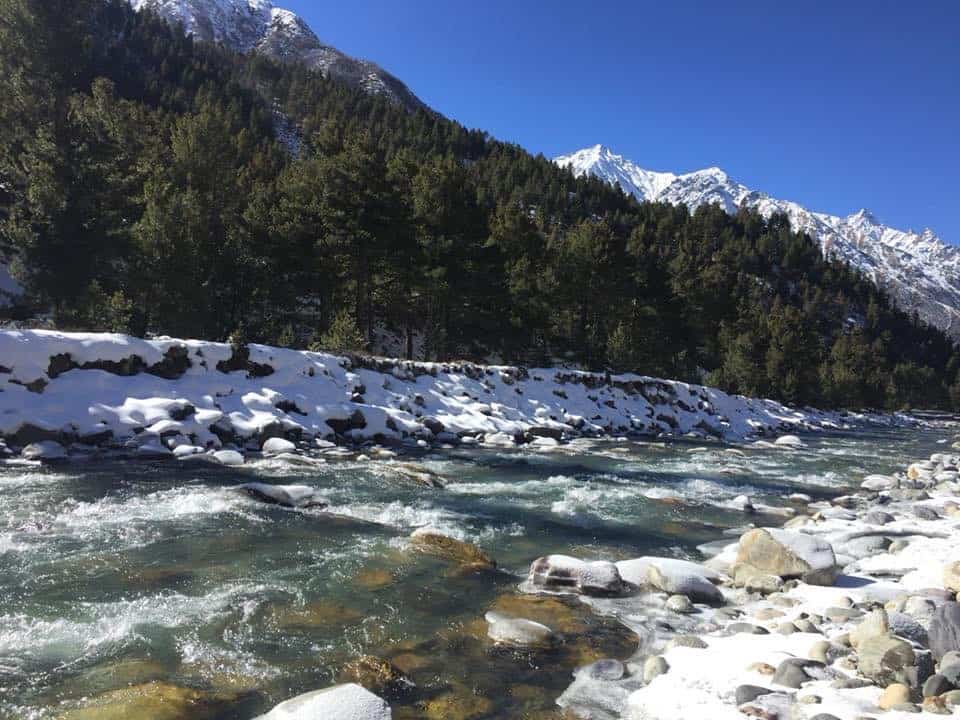
Quick answer: Reach Reckong Peo or Karcham first, then continue on the Sangla to Chitkul road, Batseri at 8 km and Rakcham at 14 km. HRTC local buses and shared sumos serve the valley with only a few departures a day, so confirm timings the evening before.
By Road, Self-Driving from Delhi or Chandigarh
The route is the standard Kinnaur run: Delhi to Chandigarh to Shimla to Narkanda to Rampur to Karcham, where you leave NH-5 and climb into the Baspa Valley. For reference, Chitkul is about 569 km from Delhi, 345 km from Chandigarh, and 247 km from Shimla. Rakcham is roughly 14 km less on each, and Batseri another 6 km less than that.
The Karcham to Sangla stretch (about 18 km) is the part people warn you about, rightly. It is narrow, cut into the hillside, with sections carrying a long drop and no barrier. It is doable in a hatchback driven sensibly, since hatchbacks and sedans do make the trip regularly, but go slowly and never after dark. Beyond Sangla the road is much gentler.
Please do not attempt Delhi to Sangla in one push. It is 14 to 16 hours of driving before breaks, and the last three hours are exactly where you cannot afford to be tired. Break at Shimla, Narkanda, or Rampur. Our 7-day Kinnaur itinerary from Shimla to Chitkul has the day-by-day splits worked out.


By Bus, If You Are Travelling on Public Transport
This is very doable, and it is how most solo travelers do the Baspa Valley. Get to Reckong Peo first, the district headquarters and transport hub for Kinnaur. HRTC runs buses there from Shimla and Delhi’s ISBT Kashmere Gate, and you can check current services on the official HRTC website.
From Reckong Peo, a few ordinary HRTC buses run to Sangla via Karcham, and some continue up the valley towards Rakcham and Chitkul. I could not find a current 2026 timetable I can stand behind. Older published lists show only a handful of valley departures a day, including a Sangla to Peo service around midday, so treat every time as indicative. The Peo to Sangla leg is about 40 km and takes around 2 hours because of the road. In case you are coming up NH-5 on a through bus, you can also get down at Karcham Dam and catch a local bus or shared sumo for the 18 km to Sangla. One travel guide reports a small fare of about Rs 35 for that hop, but verify on the spot.
Two things to keep in mind. Timings shift with season and road conditions, so confirm at the Reckong Peo bus stand counter the evening before rather than trusting any blog, including this one. And the fare on this leg is small, well under Rs 200 for the ordinary bus, but I do not have a rupee-exact 2026 figure I can stand behind, so verify at the counter. For a full public-transport plan, see our budget trip to Kinnaur Valley by public transport guide.
Since Batseri is across the river, the bus drops you on the road and you walk in over the log bridge. Rakcham is on the road itself, so the bus stops at the village. That difference matters when you are carrying a rucksack.
By Taxi
Taxis run from Reckong Peo and Sangla, and hiring a local driver is the easiest way to do the valley if the budget allows. Rates change every season and depend on whether you want a drop or a full-day charter, so I will not quote a number I cannot verify. Get a quote in Reckong Peo before committing, and see our list of taxi drivers for Kinnaur and Spiti, all local operators.
Where Should You Stay in Rakcham and Batseri?
Quick answer: Both villages have homestays and organised camps. Local homestay-camping runs about Rs 500 to Rs 1,000 per night, organised Swiss-tent camps about Rs 1,200 to Rs 4,500 including meals. Kinner Camps at Batseri is the best-known operator here, so confirm its current rates directly.
Accommodation splits into three honest tiers. Pick based on how much you mind a cold bucket bath.
- Village homestays (Rs 500 to Rs 1,500): A room in a family home, with home-cooked meals bundled or charged separately. Basic, warm, best value, and the money actually stays in the village.
- Organised camps (Rs 1,200 to Rs 4,500): Swiss-style tents with attached bathrooms and hot water. Kinner Camps at Batseri is reportedly about 23 Swiss tents, and one published listing quotes rates from around Rs 4,500 per night for two (undated, so ask for the 2026 tariff). Banjara Camp on the Sangla riverside is similar.
- Self-camping (free): Riverside ground near Batseri has flat, wind-protected pitches, and the Rakcham meadows towards the sanctuary are excellent. Follow local rules, avoid restricted zones, carry everything out.
A caution on self-camping at Rakcham. There are no shops or restaurants on those meadows, so carry your own food, water and fuel. Read our guide on camping in Kinnaur for pitches, permissions and gear first.
Booking advice: for July to September weekends, book ahead. The rest of the year you can usually walk in, often at a better rate. These rates were current for the 2026 season and homestay rates move around, so confirm by phone before arriving.
What Is There to Actually Do in Rakcham and Batseri?
Quick answer: Walk. The Batseri to Rakcham river walk is about 8 km and takes 4 to 5 hours. Beyond that, visit the Batseri village temple and orchards, the Rakcham meadows towards the wildlife sanctuary, and Kamru Fort and the trout hatchery back in Sangla.
This is not a checklist destination. No monastery to tick off, no viewpoint with a ticket counter. What there is, is walking, and it is very good walking.
The Batseri to Rakcham River Walk
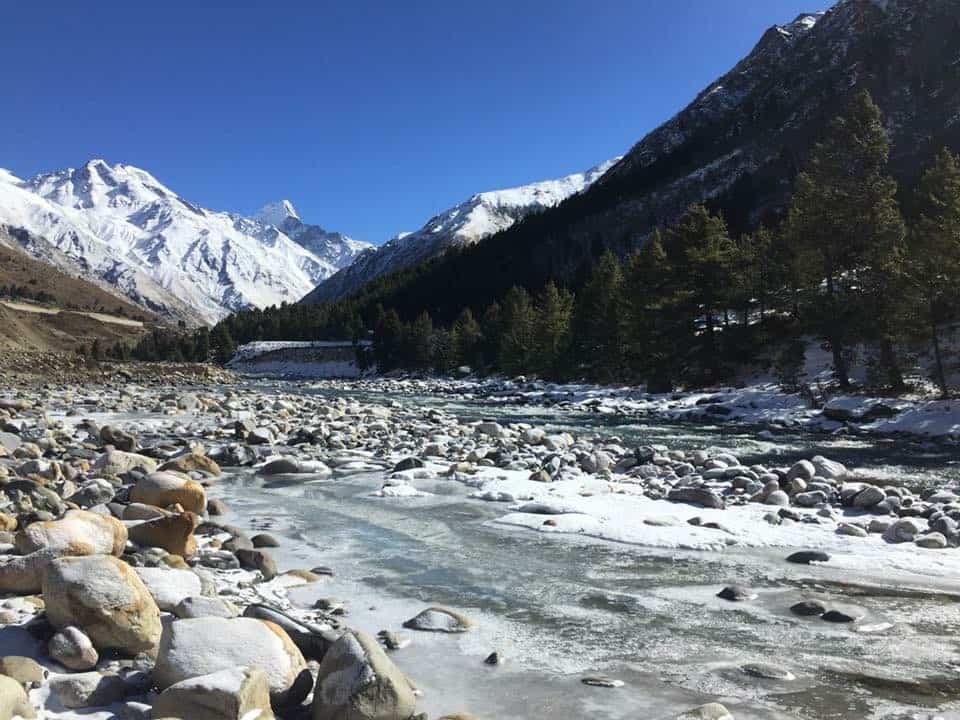
This is the one to do. Cross the log bridge into Batseri, then follow the trail along the far bank of the Baspa upstream to the Rakcham meadows. Roughly 8 km, 4 to 5 hours at an unhurried pace, through pine forest and open meadow with the river beside you throughout. Being on the opposite bank from the road, you barely hear traffic. Start early, carry water, and sort out your pickup or walk back before setting off.
Batseri Village Itself
Batseri is startlingly clean, which anyone who has travelled much in the hills notices at once (the village has reportedly won the Nirmal Gram Puraskar sanitation award). Pebbled walls, carved wooden doors, apple orchards running up to the houses. The temple is the centre of things, and September is when Kinnaur celebrates its flower festival, Ukhyang (also called Phulaich), timed to the bloom of alpine wildflowers that villages offer to their deities. Every village marks it in its own way and the dates move, so ask your host whether Batseri’s celebration falls within your stay. If it does, that alone justifies Batseri over Rakcham.
September is also apple harvest across Kinnaur, and Batseri’s orchards are part of it. The full harvest calendar is in our Kinnaur apple season guide.
The Rakcham Meadows
Walk out of Rakcham towards the Rakcham-Chitkul Wildlife Sanctuary and the valley opens right up. This is where the classic wide Sangla Valley photographs come from. No guide or permit is needed for a casual walk, but do not wander far off the trails alone, and turn back well before the light goes.
One detail worth timing your trip around: the buckwheat fields around Rakcham, known locally as ogla, flower pink in September. With the apple harvest and the Ukhyang flower festival season, that makes September the month.
Nearby, Within an Hour
- Kamru Fort, Sangla (14 km from Rakcham): A tower fort above Sangla town, a short uphill walk, the best historical stop in the valley. The trout hatchery across the river pairs with it.
- Chitkul (14 km from Rakcham): Yes, still go. Just sleep at Rakcham or Batseri instead. Our Chitkul travel guide covers the village in detail.
- Kalpa (about 60 km): The Kinner Kailash views from Kalpa are a different experience altogether and worth a night if you have the days. See the Kalpa travel guide.
When Is the Best Time to Visit Rakcham and Batseri?
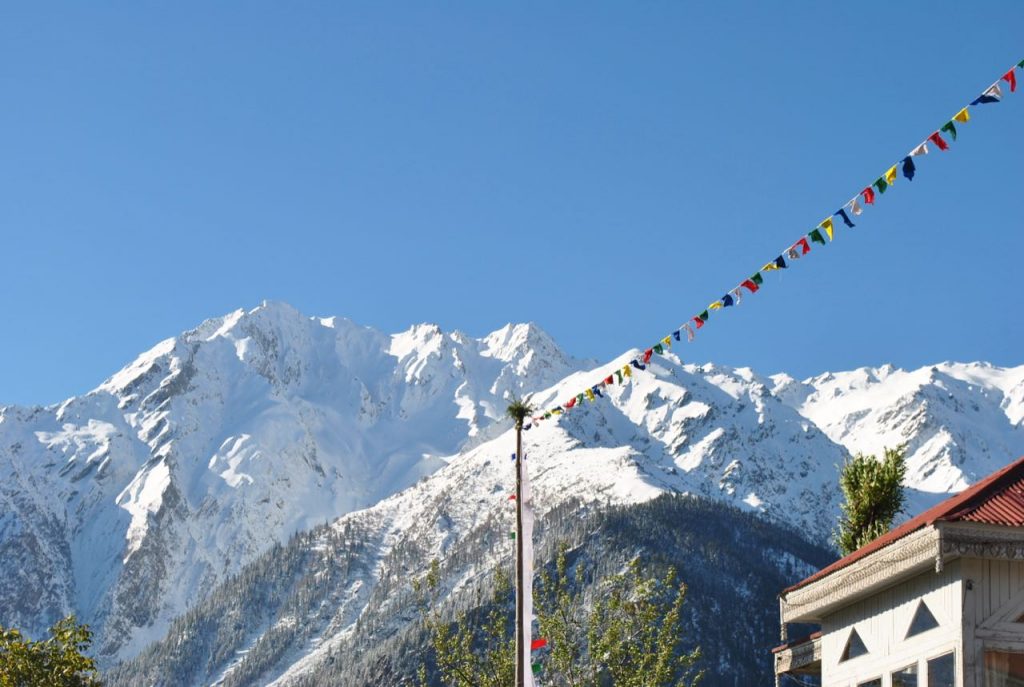
Quick answer: May to October, with September the best single month for apple harvest, the Ukhyang flower festival season, clear skies and thin crowds. Guides agree the road beyond Sangla typically closes from mid or late December and reopens around March, though the exact window varies by snowfall.
| Period | What to expect | Verdict |
|---|---|---|
| March to April | Road reopening beyond Sangla, cold nights, few tourists, orchards blooming late April | Good, check road status first |
| May to June | Peak season, pleasant days, everything open, most crowded | Good, book ahead |
| July to August | Monsoon, landslide risk on NH-5 and the Karcham road, green valley, lower rates | Risky, keep buffer days |
| September | Apple harvest, Ukhyang flower festival season, pink ogla blossoms at Rakcham, clear air, crowds thinning | Best month |
| October | Cold and very clear, autumn colour, most camps start shutting late in the month | Excellent for quiet |
| Mid-Dec to Feb | Road beyond Sangla closed. Sangla town itself usually still reachable | Not possible for Rakcham and Batseri |
The winter point deserves emphasis because people get it wrong every year. Authorities do try to keep the Karcham to Sangla road open through winter, but no effort is made to keep the road beyond Sangla open. Batseri, Rakcham and Chitkul are effectively out of reach from roughly mid-December until March. Heavy snow can block even the Karcham to Sangla road for days, so a winter Sangla trip needs buffer days. Our post on visiting Kinnaur Valley in winters covers this properly, and the Delhi to Kinnaur to Spiti road status page tracks current closures.
For monsoon planning, check the India Meteorological Department forecasts for Himachal before you leave, cross-check district advisories on the Kinnaur district administration tourism page, and see our month-by-month best time to visit Kinnaur guide for the wider region.
What Does a Rakcham and Batseri Trip Cost in 2026?
Quick answer: Budget roughly Rs 3,800 per person for 3 days on homestays and buses, Rs 8,400 on guesthouses and shared taxis, or Rs 14,900 in organised Swiss-tent camps. All figures run from Reckong Peo onwards and exclude getting to Kinnaur.

| Item (3 days, 2 nights, per person) | Backpacker | Mid-range | Comfort |
|---|---|---|---|
| Stay (2 nights) | Rs 1,600 | Rs 4,000 | Rs 9,000 |
| Food (3 days) | Rs 1,200 | Rs 2,100 | Rs 900 (meals included in camp) |
| Local transport | Rs 600 | Rs 1,500 | Rs 3,500 |
| Miscellaneous | Rs 400 | Rs 800 | Rs 1,500 |
| Total | Rs 3,800 | Rs 8,400 | Rs 14,900 |
Keep in mind that the Comfort column assumes roughly Rs 4,500 per person per night in a Swiss tent. If two of you share a tent, your stay line roughly halves. Do the math for your own trip rather than treating these as fixed. The biggest variable is accommodation, since a homestay bed and a Swiss tent differ by a factor of five for the same view. The second is group size. Four people splitting a taxi changes the transport line entirely, which is why four is the useful number in Kinnaur.
Two notes. These figures start from Reckong Peo, so add Delhi or Chandigarh travel on top. And there are no ATMs in Batseri or Rakcham, so carry cash from Peo. Our Kinnaur trip budget guide covers a longer circuit.
Do You Need a Permit for Rakcham and Batseri?
Quick answer: Not for Indian nationals. Rakcham, Batseri, Sangla and Chitkul lie on a permit-free side road, and Chitkul is described as the last point in India you can reach without a permit. Inner Line rules apply further up NH-5, beyond Jangi, towards Spiti, and they mainly concern foreign nationals.
This confuses first-time visitors because Chitkul is close to the Tibet border, and people assume border proximity means paperwork. Not in this valley. You can drive the entire Karcham to Chitkul road without producing anything. The Inner Line rules only matter if you carry on up the Hindustan Tibet Road towards Spiti and cross beyond Jangi, which is a different trip. Foreign nationals should note that most travel sources say Sangla Valley is permit-free for them too, but the Kinnaur district’s own tourist guidelines (last updated July 2023) are ambiguous, so confirm with the District Tourism Officer at Reckong Peo (01786-222253) before you travel. Full details are in our Inner Line Permits for Kinnaur and Spiti guide.
Do carry a government photo ID regardless. There is an ITBP presence at Chitkul, and an Aadhaar or licence costs nothing to carry.
Safety, Network, Fuel and the Practical Details Nobody Tells You
Quick answer: BSNL is the most dependable network. Fill up and withdraw cash at Reckong Peo, about 40 km from Sangla, because supplies in the valley are limited. The nearest proper hospital is also at Reckong Peo. Rakcham is not high enough for serious AMS in most people, but sleeping straight at Chitkul after a long drive can cause problems.
- Mobile network: BSNL generally works in most of the valley. Jio and Airtel are patchy at Sangla and frequently absent at Rakcham and Chitkul. In case you need to stay reachable, carry a BSNL number.
- Fuel: Fill up at Reckong Peo, Powari or Tapri. Listings show one Indian Oil outlet near Sangla (at Kamroo, on the Sangla to Chitkul road), but its stock and hours are not something to bet a trip on. Chitkul has no pump, and a Sangla to Chitkul return plus local running adds up faster than you expect on these gradients.
- ATMs and cash: Sangla reportedly has an ATM, but Reckong Peo is your last reliable point, and Batseri, Rakcham and Chitkul have none. Assume cards will not work in homestays.
- Medical: The nearest proper hospital is at Reckong Peo. Villages have basic dispensaries at best, so carry a first-aid kit and any prescription medicines.
- Altitude: Rakcham is moderate at roughly 3,048 m. However, if you drive up from the plains fast and then push on to sleep at Chitkul (3,450 m), headaches and disturbed sleep are common. That is exactly why a first night lower at Sangla, Batseri, or Rakcham is the smarter plan. Read our guide on preventing Acute Mountain Sickness if you are new to altitude.
- Road hazards: The Karcham to Sangla stretch and NH-5 through Kinnaur are landslide-prone, particularly July to September. Do not drive them at night, and build a buffer day into any monsoon trip.
- Warm layers: Even in June the nights at Rakcham get cold. Carry a fleece and a windproof layer in any month.
One last thing, and I say this in every Kinnaur post. These are small working villages, not resorts. Ask before photographing people, do not walk into orchards uninvited, and carry your trash out. Batseri’s cleanliness is maintained by the people who live there, and it is on us not to undo it.
A Simple 3-Day Plan for Rakcham and Batseri
Here is how I would spend three days once you have reached Reckong Peo.
- Day 1: Reckong Peo to Sangla (40 km, about 2 hours). Kamru Fort and the trout hatchery in the afternoon, then 8 km on to Batseri for the night. The lower night helps you acclimatise.
- Day 2: The Batseri to Rakcham river walk, about 8 km and 4 to 5 hours along the far bank. Afternoon in the Rakcham meadows, night at Rakcham.
- Day 3: Rakcham to Chitkul (14 km) early, while it is still quiet. The village, the Mathi Devi temple, the river. Head back down the valley in the afternoon.
Stretch it to four days if you can. This valley does not reward hurrying, and the whole point of choosing Rakcham and Batseri over Chitkul is that you are not rushing.
Related Reading on Kinnaur
- Sangla Valley Travel Guide
- Kinnaur Valley Guide: Kalpa, Sangla and Chitkul
- Hotels and Accommodation in Kinnaur and Spiti
- Best Time to Visit Kinnaur Valley
- Chitkul Travel Guide
Frequently Asked Questions
Is Rakcham better than Chitkul?
For staying overnight, yes, in my opinion. Rakcham is quieter, cheaper, lower, and has the same Baspa river and mountain views. Chitkul is still worth a daytime visit for the village and the border setting, but it gets far more traffic between June and September.
What is the altitude of Rakcham?
Rakcham sits at about 3,048 m, which is roughly 10,000 ft. Batseri is lower, somewhere between Sangla (about 2,650 m, published figures vary) and Rakcham. Chitkul, further up, is at about 3,450 m.
How far is Rakcham from Sangla and Chitkul?
Rakcham is about 14 km from Sangla and roughly 14 km from Chitkul (some guides say 10 to 13 km), so it sits close to midway. Batseri is 8 km from Sangla and 6 km short of Rakcham.
Do I need a permit to visit Rakcham or Batseri?
No, not for Indian nationals. Sangla, Batseri, Rakcham and Chitkul are permit-free, and Inner Line rules apply only beyond Jangi towards Spiti. Foreign nationals should confirm with the Kinnaur District Tourism Officer at Reckong Peo before travelling.
Can I reach Rakcham and Batseri by bus?
Yes. Take an HRTC bus to Reckong Peo (or get down at Karcham), then a local bus or shared sumo to Sangla, with some buses continuing towards Rakcham and Chitkul. Departures are few, so check the 2026 timings locally. Rakcham is on the main road. For Batseri you get down on the road and walk across the log bridge. Confirm timings at the Reckong Peo bus stand, as they shift seasonally.
Are Rakcham and Batseri open in winter?
No. The road beyond Sangla closes after mid-December and does not reopen until around March. Authorities try to keep the Karcham to Sangla road open, but no effort is made to clear the road above Sangla.
How much does a trip to Rakcham and Batseri cost?
From Reckong Peo, budget about Rs 3,800 per person for 3 days on homestays and buses, Rs 8,400 for guesthouses and shared taxis, and Rs 14,900 for organised Swiss-tent camps. Travel to Kinnaur is extra.
Can you camp at Rakcham?
Yes. The meadows towards the Rakcham-Chitkul Wildlife Sanctuary and the riverside flats near Batseri are both good for self-camping, and local homestay-camping setups cost about Rs 500 to Rs 1,000 per night. There are no shops on those meadows, so carry all supplies.
Is one day enough for Rakcham and Batseri?
You can see both on a day trip from Sangla, but I would not recommend it. Two nights lets you do the Batseri to Rakcham river walk properly, which is the reason to come here at all.
Final Thoughts
The honest summary: Chitkul has the name and the signboard, and it will keep the crowds. Rakcham and Batseri have the same river, the same mountains, better walking, cheaper beds and far fewer people. For a second visit to the Baspa Valley, or for anyone who dislikes sharing a village with forty parked cars, this is the answer.
My recommendation: sleep at Rakcham, walk from Batseri, treat Chitkul as a morning outing rather than a base. Go in September if your leave allows. And verify bus timings and road status locally before committing, because this is Kinnaur and the mountains get the last word.

In case you have already been to Rakcham or Batseri, do share what you found, especially homestay names and current rates, so it helps others planning the same trip. You can also find travel partners in the DwD Community, and do share this article with anyone planning Kinnaur this season.
Last Updated: October 2026. Distances, fuel, permit and bus details re-checked against published sources this month.
If you have any questions, feel free to ask in the comments section below 🙂
