


Every year around late August, the roadside dhabas on NH-5 start stacking wooden apple crates instead of chairs, and you know Kinnaur has entered its busiest season. This is not the same Kinnaur you see in June photographs. The orchards are heavy, the villages are working overtime, and the highway itself changes character with truck convoys hauling fruit to mandis in Delhi and Chandigarh.
I have driven NH-5 through Kinnaur more times than I can count, and the apple season trips are different from the regular Kinnaur circuit. This guide covers when the harvest actually happens month by month, which villages are worth visiting for it, what to genuinely expect if you want to see an orchard up close, and the one road problem that catches most first-time visitors off guard. Based on research and DwD’s own on-ground trip notes, not a generic seasonal listicle.
Quick Answer: Kinnaur Apple Season 2026
Kinnaur’s apple harvest runs roughly mid-August to late October, with the third week of September through the first week of October generally offering the best mix of peak harvest activity and clear post-monsoon weather. Kalpa and Sangla/Rakcham are the most visitor-friendly villages. NH-5 gets genuinely congested with apple trucks in this window, so plan for delays, not detours.
Practical Info: Kinnaur Apple Season at a Glance
| Harvest Window | Mid-August to late October (varies by altitude and variety) |
| Best Time to Visit | Third week of September to first week of October |
| Distance from Shimla | Reckong Peo ~228 km, Kalpa ~235 km (8-10 hrs by road) |
| Best Villages | Kalpa, Sangla Valley/Rakcham, Reckong Peo belt |
| Permit (Indians) | None needed for the standard Kalpa-Sangla-Chitkul circuit |
| Budget | Rs 1,500-4,500 per person per day (stay + food, depending on comfort level) |
| Difficulty | Easy. Road trip, no trekking required |
| Biggest Risk Factor | NH-5 congestion from apple trucks, plus tail-end monsoon landslide risk in August |
| Last Verified | September 2026 |
When Does the Kinnaur Apple Harvest Actually Happen?
The harvest is not a single event, it is a rolling one that moves with altitude and variety. Lower-altitude orchards near Rampur and Nichar start first, upper Kinnaur around Kalpa and Pooh finishes last. If you are planning around a specific variety or a specific village, this timing matters more than most travel content gives it credit for.
- Mid to late August: Early varieties (Gala, early Red Delicious types) start coming off trees in lower-altitude belts. This overlaps with the tail end of monsoon, so weather and road conditions are the least predictable of the whole season.
- September: Peak harvest month across most of Kinnaur. Royal Delicious, Red Delicious, and Golden Delicious are all being picked, graded, and boxed at the same time. Weather is generally clearer once the monsoon retreats mid-month.
- Early October: Harvest continues in the higher orchards around Kalpa and Pooh, while lower belts wind down. This is also when autumn colours (poplars turning gold) start layering on top of the orchard scenery.
- Late October: Late varieties like Fuji wrap up. Orchards start looking bare, and the working energy of the season fades. Good for scenery and quiet, not for watching active picking.
Harvest Window by Village and Altitude
The altitude gradient along NH-5 is the real reason harvest dates shift so much between villages that are only a couple of hours apart by road. Lower-altitude orchards ripen and get picked first, upper Kinnaur finishes last. Here is the window broken down by belt rather than the district-wide average most guides quote:
| Village or Belt | Approx. Altitude | Typical Harvest Window |
| Rampur, Nichar (lower belt) | 900-1,500 m (2,950-4,900 Ft) | Mid-August to mid-September |
| Reckong Peo | ~2,290 m (7,510 Ft) | Early September to early October |
| Kalpa | ~2,960 m (9,711 Ft) | Mid-September to mid-October |
| Sangla, Rakcham, Batseri | 2,700-3,100 m (8,860-10,170 Ft) | Mid-September to mid-October |
| Pooh and the upper belt | 2,900-3,100 m (9,500-10,170 Ft) | Late September to late October |
These windows typically shift by 7-10 days either way depending on how the monsoon behaves that year, so treat the table as a planning guide, not a fixed calendar. If you are timing a trip around one specific village rather than the district as a whole, this altitude gradient matters more than the general mid-August to late October range most listings quote.
Quick answer: If you want to see active picking and packing rather than just trees with apples on them, aim for September, ideally the second half. If you want the harvest scenery with calmer roads and fewer trucks, late September into the first week of October is the better trade-off.
One honest caveat for 2026: reports from several Himachal apple belts this year point to weather-driven crop losses in some pockets, with growers describing a rough season compared to previous years. This does not mean Kinnaur will look empty, but do not assume every orchard you pass will be as loaded as photos from a strong year. It varies farm to farm even within the same village.
Which Kinnaur Villages Are Best for Seeing the Apple Harvest?
Kinnaur is apple country almost everywhere along NH-5, but three areas stand out for actually experiencing the season rather than just driving past it. Per Himachal Tourism’s official district page, Kinnaur’s orchards and its position along the historic Hindustan-Tibet Road are central to how the district is promoted, which lines up with what you will actually see on the ground during harvest.
Kalpa
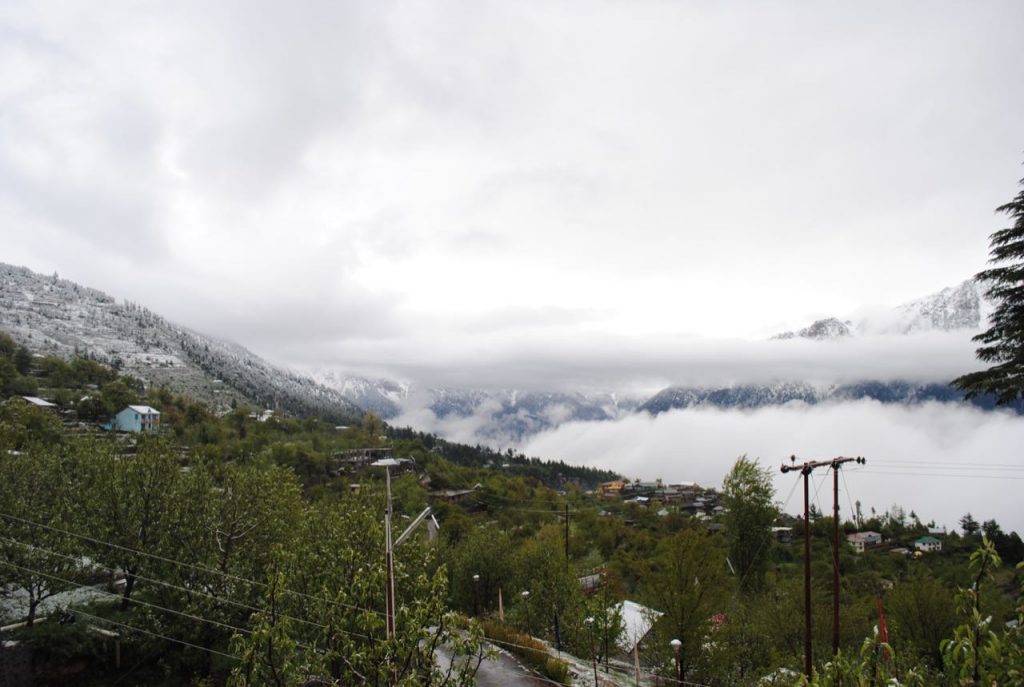
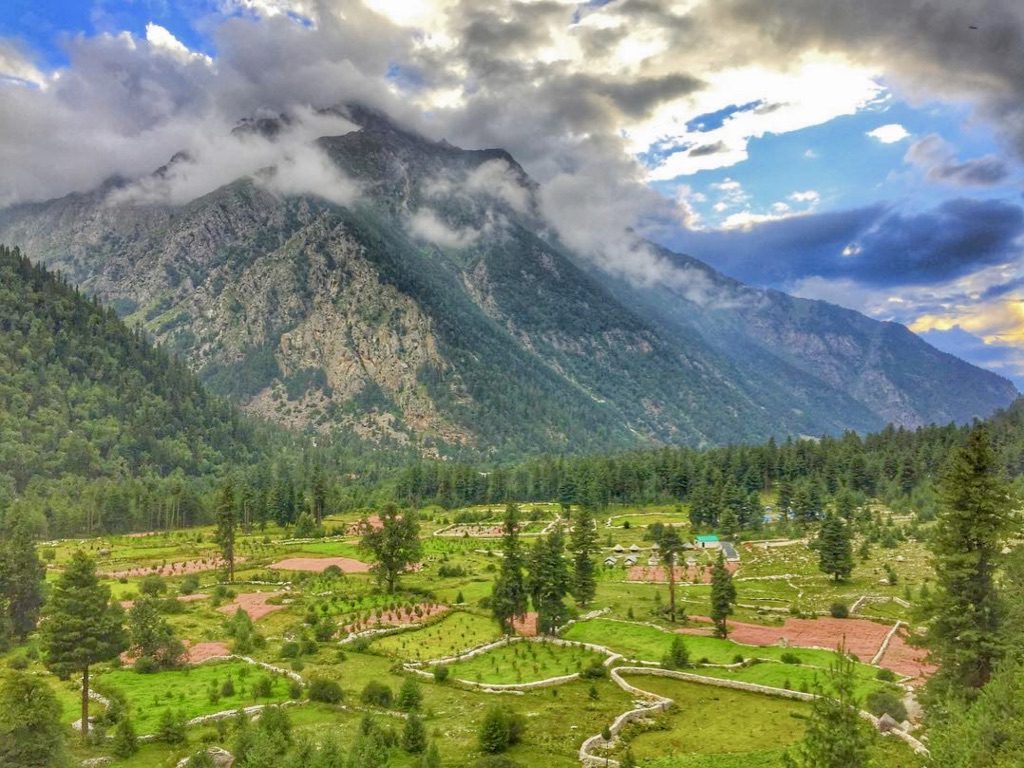
Kalpa sits at about 9,711 Ft (2,960 m) on a south-facing slope, roughly 7 km from Reckong Peo. The orchards genuinely wrap around the village on three sides, so you do not need to go looking for apple trees here, they are part of the walk from your guesthouse to the village centre. Kalpa also gives you the Kinner Kailash range as a backdrop, which makes it one of the better combinations of harvest scenery and mountain views in the district. My detailed Kalpa travel guide covers the village in more depth if this is your base.
Sangla Valley and Rakcham
Sangla Valley (also called Baspa Valley) is wider than most of Kinnaur, which translates into larger, more commercial orchards. Rakcham village, a short drive further up the valley, has similar orchard cover with a quieter, less touristy feel. This is also the one part of Kinnaur where organised apple-orchard tourism actually exists in a structured way, more on that below.


If you want to spend a night among these orchards, my Rakcham and Batseri villages guide covers where to stay and what to see there.
Reckong Peo, Nichar, and the Lower Belt
Reckong Peo itself is more of a functional town (ATMs, hospital, market) than a scenic stop, but the stretch of NH-5 around it and further down toward Nichar is dense apple country, and this is exactly where you will see the most truck loading activity during peak season. If your interest is the working, commercial side of the harvest, mandis and crate-loading points, rather than a quiet orchard walk, this belt shows it more honestly than the postcard villages.
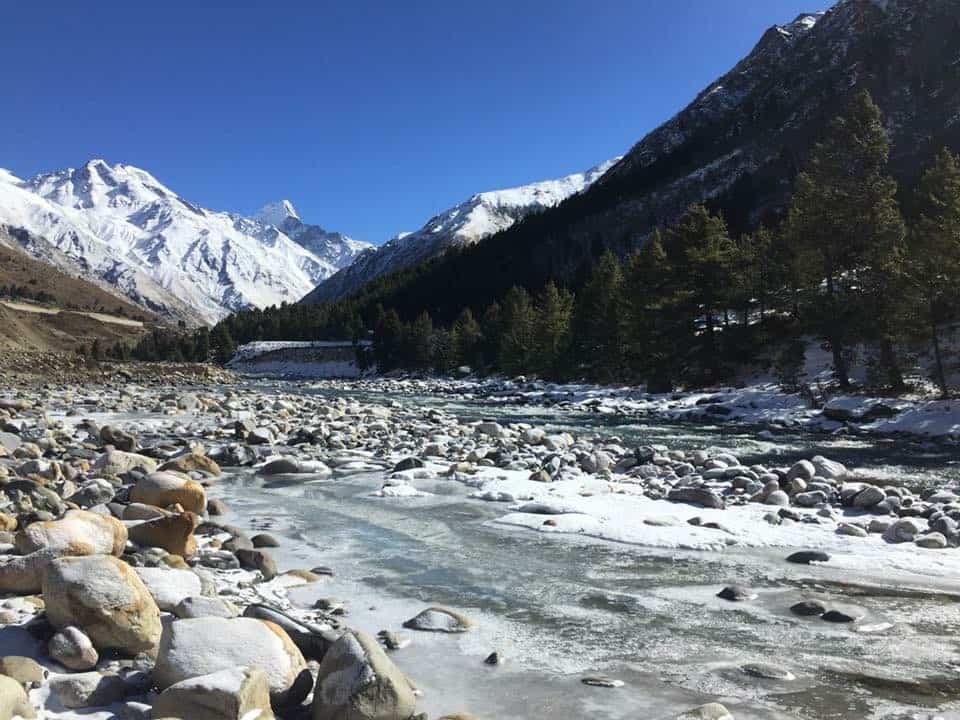
Quick answer: For an easy, scenic base, pick Kalpa. For the most structured orchard-visit experience, pick Sangla Valley/Rakcham. For seeing the commercial harvest machinery in action (trucks, crates, mandis), the Reckong Peo-Nichar belt on NH-5 shows it best.
Can You Actually Visit an Orchard? What the Etiquette Looks Like
This is where most generic “apple season” content oversells the experience. I want to be honest about it instead. Almost every orchard you see from the road in Kinnaur is a private working farm. The apples on those trees are someone’s income for the year, not a photo prop or a free tasting stall. Walking into a stranger’s orchard uninvited and picking fruit is not something locals appreciate, and it is not something I would recommend regardless of how welcoming the village feels.
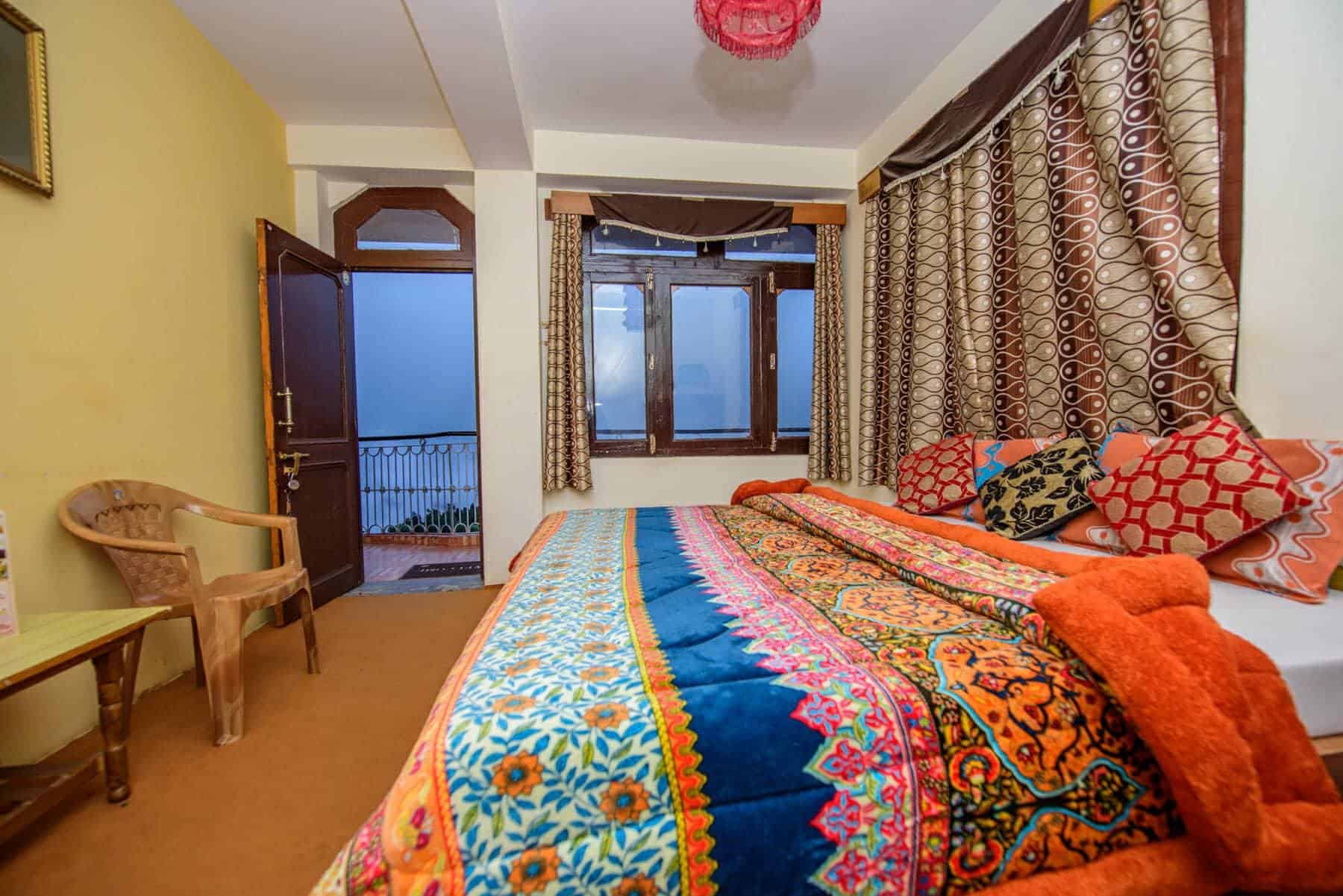
That said, orchard access is genuinely possible in Kinnaur, it just needs the right setup. The clearest example I can point to is a property in Sangla Valley called Apple Orchard Farm and Camping, run by a local host, Mr. Vijender Negi, that DwD has stayed at and reviewed. It is a working apple orchard on the banks of the Baspa River with tented accommodation on-site, where guests staying there can walk through the orchard, see the sorting and packing process, and generally experience the harvest as part of the stay rather than as an intrusion on someone’s farm. This is the model to look for: a homestay or farm-stay where orchard access is explicitly part of what you are paying for, not a roadside orchard you wander into uninvited.
For the logistics: the property sits in Batseri village, a short drive past Sangla proper, on the Baspa River, and has been run by Mr. Negi since he set it up in 2010. Book directly by phone or WhatsApp rather than turning up on spec, the site is small and the September-October weekends fill early once the harvest is in full swing. Direct contact: 7018413924 / 9805609739 (WhatsApp), applecamping@gmail.com. Confirm current rates and whether an orchard walk or picking session is included in your specific booking, as this varies by season and occupancy.
- Ask your host before assuming you can walk into any orchard, including ones next to your homestay.
- If picking is offered, pick only from the trees you are shown, do not roam and self-select.
- Never climb branches or shake trees for fruit, it damages next year’s growth.
- If you want to buy apples directly from a grower, that is usually welcomed everywhere, unlike free-range picking.
- A handful of homestays and farm-stays across Kinnaur (Sangla Valley especially) do build orchard walks or apple picking into the stay. If you specifically want this experience, ask when you book rather than assuming it on arrival.
Quick answer: Yes, but treat every orchard as private property first. The reliable way to actually walk through orchards and see picking up close is to book a farm-stay that explicitly offers it, like Sangla Valley’s Apple Orchard Farm and Camping, rather than hoping a random roadside orchard will let you in.
How to Reach Kinnaur During Harvest, and the NH-5 Truck Traffic Problem
The standard route is Shimla to Reckong Peo/Kalpa via NH-5 (the Hindustan-Tibet Road), roughly 228-235 km and 8-10 hours of driving. HRTC runs Shimla-Reckong Peo buses (around Rs 430-650, roughly 13 services a day), with local buses and shared taxis covering the short Reckong Peo-Kalpa hop and the Karcham-Sangla stretch. Sangla is about 42 km from Reckong Peo, and Rakcham/Chitkul are a further short drive up the Baspa Valley.
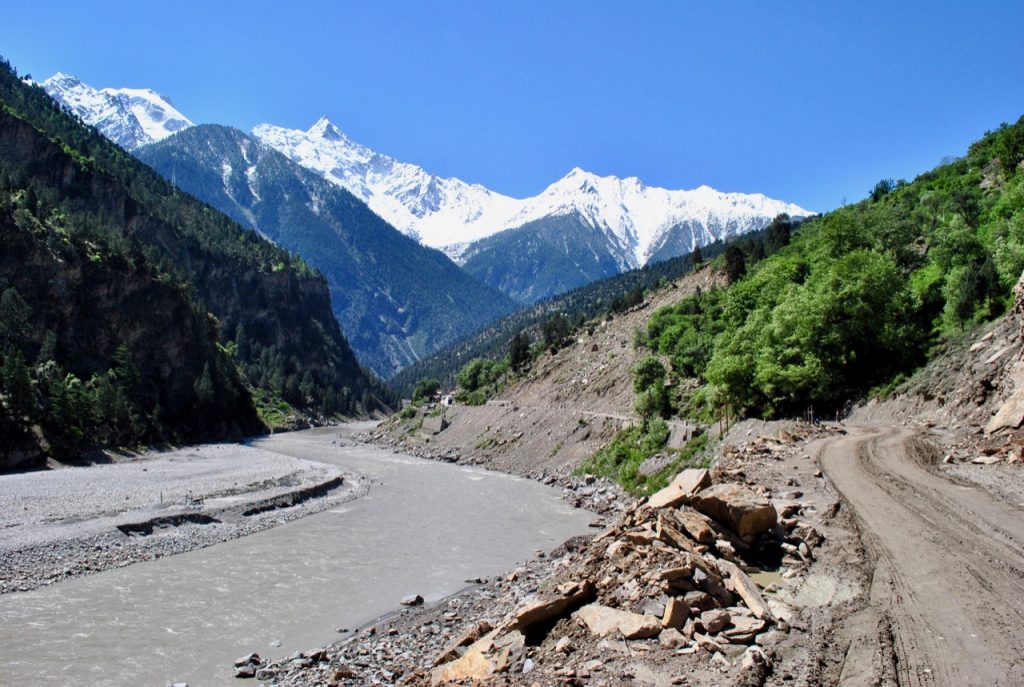
Here is the part most seasonal guides skip. NH-5 is a narrow, single-carriageway hill road for most of its length, and during peak harvest it fills up with heavy trucks carrying apple crates down to the mandis. According to DwD’s own NH-5 road status guide, August is genuinely the worst month to drive this stretch, partly because it overlaps with the tail end of monsoon (landslide risk at spots like Tranda, Chaura, and Maling Nallah) and partly because of exactly this truck traffic. News reports over the years have documented apple trucks stranded for days after landslides blocked stretches like Nigulsari, which gives you a sense of how disruptive a single blockage can be during this window.
- Start early and aim to clear the narrower, landslide-prone stretches before late morning, the same advice that applies to NH-5 generally.
- Build in buffer days if you are travelling in August specifically. September onward is comparatively more stable once the monsoon retreats.
- Trucks and buses get right of way on narrow sections, mountain etiquette, not a suggestion.
- Do not plan a tight day-trip itinerary around this route during peak harvest. Delays from slow-moving trucks are common, not exceptional.
- Check current road status before you leave. Conditions here change fast enough that anything older than a few days should be re-verified.
Where to Stay During Apple Season
Accommodation in Kinnaur is spread across Reckong Peo, Kalpa, Sangla, Rakcham, and Chitkul, and it books up faster than usual in September and early October because this is peak season alongside the regular autumn travel crowd.
| Category | Typical Rate (per night) | Notes |
| Budget homestays/guesthouses | Rs 500-1,200 | Available at all main stops, often meals included |
| Mid-range hotels | Rs 800-3,000 | Better amenities, hot water, valley or orchard views |
| Farm-stays with orchard access | Rs 1,800-3,600 (with meals) | Mainly Sangla Valley, book directly, confirm orchard-walk inclusion |
| Dorm beds (Zostel Chitkul) | Rs 500-1,900 | Private rooms at the higher end of that range |
Book at least a week ahead if you are travelling in the September-October window, especially for Kalpa and Chitkul, where the number of rooms is genuinely limited. Rates above are general ranges gathered from research and prior DwD stays, always confirm current pricing directly with the property before booking.
What Kinnaur Apples Actually Cost
Kinnaur apples, especially Royal Delicious, Red Delicious, and Golden Delicious varieties, are considered some of the finest grown in India, and pricing reflects that once fruit leaves the district. Based on market and aggregator data (not an official government price feed, so treat this as a general range and verify locally), farmgate prices for growers can run roughly Rs 30-80 per kg depending on variety and grade, while the same apples retail for well over Rs 130-400 per kg once they reach cities like Delhi. If you are buying directly from an orchard or roadside stall in Kinnaur itself, expect prices closer to the farmgate end, though this varies by season quality and how good the harvest has been that year.
As of the first week of September 2026, wholesale mandi rates for apples across Himachal Pradesh, the market Kinnaur’s harvest feeds into, were averaging around Rs 73 per kg (roughly Rs 7,300 per quintal), with grade-driven lot prices spanning a wide Rs 5 to Rs 160 per kg depending on size, colour, and quality grade. Kinnaur-specific retail listings this season have run close to Rs 120 per kg. Growers this year are also describing a genuinely mixed harvest, some pockets took a weather hit, so a grower’s actual asking price can sit well above or below the mandi average depending on how their particular orchard fared.

Quick answer: Buying apples directly in Kinnaur, at an orchard, roadside stall, or local market, is almost always cheaper and fresher than anything you will find outside the valley. Exact rates shift through the season, so treat any number you see online as a starting estimate, not a fixed price.
Safety and Timing Tips for an Apple-Season Trip
Kinnaur is not a high-altitude AMS concern the way Spiti or Ladakh are, Kalpa sits under 10,000 Ft and the standard circuit stays moderate. The real risks during apple season are road-related, not altitude-related.
- August is genuinely the riskiest month. Tail-end monsoon landslides combine with the heaviest truck traffic. If your dates are flexible, shift to September.
- Mobile network is patchy beyond Reckong Peo. BSNL tends to work best in the more remote stretches; do not rely on other carriers past Sangla or Kalpa.
- Carry cash. ATMs are reliable in Shimla, Rampur, and Reckong Peo. Beyond that, carry enough cash for the trip.
- No inner line permit is required for Indian nationals on the standard Kalpa-Sangla-Chitkul circuit. Foreign nationals need a Protected Area Permit, available at Reckong Peo or Shimla’s Sugam Centre.
- Fuel up at Reckong Peo or Tapri before heading further into upper Kinnaur, pumps thin out beyond this point.
Related Reading
For more on planning a Kinnaur trip beyond the apple season angle, these DwD guides cover the district in depth:
- Kinnaur Valley Complete Travel Guide (Kalpa, Sangla, Chitkul overview)
- Sangla Valley Detailed Travel Guide
- Kalpa Complete Travel Guide
- Chitkul Village Travel Guide
- NH-5 Road Status 2026: Shimla to Spiti via Kinnaur
- Best Time to Visit Kinnaur Valley
- Kinnaur Valley 7-Day Itinerary
- Kinnaur to Spiti Circuit Itinerary
- Chopal and Rohru: Shimla District’s Apple Country
- Inner Line Permit Rules for Kinnaur, Lahaul, and Spiti
Frequently Asked Questions
When exactly is Kinnaur apple season in 2026?
Roughly mid-August to late October, with September as the peak month across most of the district. Upper Kinnaur villages like Kalpa harvest slightly later than lower belts near Rampur and Nichar.
Can I pick apples myself in a Kinnaur orchard?
Only if a host explicitly offers it, most orchards are private working farms. Farm-stays like Sangla Valley’s Apple Orchard Farm and Camping build orchard access into the stay. Do not assume you can walk into any roadside orchard uninvited.
Which village is best for seeing the apple harvest?
Kalpa for scenic, easy access since orchards surround the village. Sangla Valley/Rakcham for structured orchard-visit experiences. The Reckong Peo-Nichar belt for seeing the commercial harvest, trucks, crates, and mandis, up close.
Is NH-5 safe to drive during apple season?
It is driveable but slower than usual due to heavy truck traffic and, in August specifically, overlapping monsoon landslide risk. September onward is comparatively more stable. Start early, build in buffer time, and check current road status before departing.
Do I need a permit to visit Kinnaur during apple season?
Indian nationals do not need an inner line permit for the standard Kalpa-Sangla-Chitkul circuit. Foreign nationals need a Protected Area Permit, available at Reckong Peo or Shimla’s Sugam Centre.
How much do Kinnaur apples cost?
Farmgate prices are roughly Rs 30-80 per kg depending on variety, based on market data rather than an official price feed. Buying directly in Kinnaur is generally much cheaper than city retail prices, which can exceed Rs 130-400 per kg. Verify current rates locally, they shift through the season.
Is apple season the same as the best time to visit Kinnaur overall?
Largely yes. September and early October are widely considered the best overall window for Kinnaur, combining harvest season, clear post-monsoon skies, and improved road conditions. See the best time to visit Kinnaur guide for a full month-by-month breakdown.
Are there apple-themed festivals during the harvest?
Not an apple festival specifically, but September also brings the Fulaich flower festival in several Kinnauri villages, which overlaps with peak harvest timing and adds a genuine cultural layer to a September trip.
What should I pack for a Kinnaur apple season trip?
Layers for cool mornings and evenings (10-20°C range through September, cooler by late October), comfortable walking shoes for orchard and village walks, cash since ATMs thin out past Reckong Peo, and a flexible itinerary given potential road delays.
Can I do a Kinnaur apple season trip as a weekend or short break?
It is tight but possible if you fly or take an overnight route into Shimla and drive straight to Kalpa or Sangla. A more comfortable version needs at least 4-5 days to account for the driving distance and potential NH-5 delays without rushing.
Conclusion
Kinnaur’s apple season rewards travellers who plan around it rather than just showing up in September hoping for the best. Pick your village based on what you actually want, easy scenic orchards in Kalpa, a structured farm-stay experience in Sangla Valley, or the raw commercial energy of the Reckong Peo-Nichar belt. Respect that every orchard you see is someone’s livelihood, not a photo backdrop. And take NH-5’s truck traffic seriously when you are building your travel dates, it is the one factor that catches most first-timers off guard.

If you have visited Kinnaur during apple season recently and have updates on road conditions, orchard-stay recommendations, or current apple prices, do share them in the comments. It genuinely helps other travellers reading this closer to their own trip. You can also connect with the wider DwD community for shared taxi plans and trip updates during the season.
If you have any questions, feel free to ask in the comments section below 🙂
