


Last Updated: October 2026
Every October my inbox fills up with the same question in a hundred different forms. “Is the road to Kalpa open?”, “Can I drive to Harsil next week?”, “Will Atal Tunnel be open on 2nd November?” Honestly, my friend, I cannot answer that for next week, and nobody else can either. What I can do is show you how to check road status in Himachal and Uttarakhand yourself, in the right order, from the people who actually close and open these roads. That is what this guide is about.
This is not a road status post. I maintain those route by route, like the Manali – Leh Highway one, and they are all linked in a table below. This is the checklist I run before any hill drive between the end of the monsoon and the first heavy snow, which is exactly where we are now.
Quick Answer: Check in three rounds. Seven days before, read the IMD district forecast and your route’s closing dates. The night before, check the IMD alert colour, the district advisory and the SEOC blocked-roads count. On the morning you drive, call your next stay. Disaster helplines in both states: 1070 (state) and 1077 (district), or 112 for emergencies.
Practical Info Box: Road Checks for Himachal and Uttarakhand (Oct-Dec 2026)
| Applies to | Self-drive and taxi trips in Himachal Pradesh and Uttarakhand, late October to December 2026 |
| State disaster helpline | 1070 (State Emergency Operation Centre, both states) |
| District helpline | 1077 (District Emergency Operation Centre, any district) |
| Emergency | 112 (all-India), 108 (ambulance), 100 (police) |
| Three check windows | 7 days before, the night before, the morning of the drive |
| Snow rule to expect | After snowfall, police can allow only 4×4 vehicles (with chains) beyond Solang towards Atal Tunnel and Lahaul |
| Hard deadlines | Kunzum Pass: late Oct to early Nov. Rohtang Pass: around 15 November. Gangotri, Kedarnath, Yamunotri: around 10-11 November 2026 (tentative) |
| Stays open in winter | NH-5 to Reckong Peo (with snow delays), Atal Tunnel to Sissu-Keylong (subject to snow restrictions), Shimla |
| Cost of a buffer night | From Rs 1,000 per room at an HP PWD rest house (non-Himachali tariff) |
| Last verified | October 2026 |
Why Is Late October to December So Tricky for Himachal and Uttarakhand Roads?
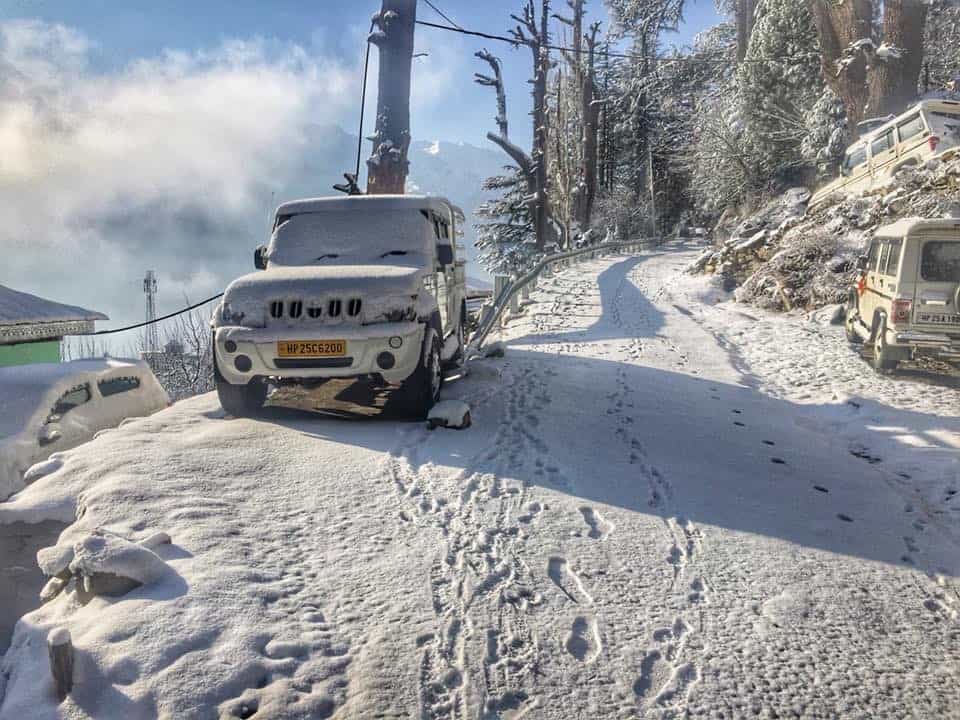
Quick Answer: Two hazards overlap. Slopes loosened by the monsoon keep sliding for weeks after the rain stops, and the first western disturbances bring snow to the high passes and black ice to shaded bends. Roads also close for the season on fixed-ish dates, so a road that was open last week may simply be shut now.
Let us look at what the 2026 monsoon left behind first. As per the State Emergency Operation Centre (SEOC) figures reported by Business Today on 11 August 2026, Himachal had 259 roads blocked, 157 deaths and around 257 people missing between 30 June and 9 August. By the end of August, the SEOC count had come down to 98 blocked roads, most of them in Mandi, Kullu and Chamba districts. The damaged stretches are now loose, freshly cut slopes, and they do not need a cloudburst to give way.
Uttarakhand had a similar season. In early July 2026 the Badrinath National Highway was blocked at Bhanarpani, Gulabkoti and Birahi-Nijmula on the same morning, and on 26 September 2026 the Uttarakhand State Disaster Management Authority (USDMA) put its disaster management system on full alert ahead of a heavy rainfall warning. Hence, “the monsoon is over” is not the same as “the roads are fine”, especially in the first three weeks of October.
Then the snow arrives. The first snowfall of December 2024 closed 87 Himachal roads, 58 in Shimla district, and in late January 2026 the SEOC count reached 885 roads, including four National Highways. Keep in mind that most of those are small village link roads, which is exactly where your homestay usually is.
Which Sources Actually Tell You If a Himachal Road Is Open?
Quick Answer: The district police or Deputy Commissioner’s order decides whether you can pass, BRO and HP PWD decide when the road is physically clear, and the SEOC tells you how many roads are blocked in each district. For the final word on the day, the person running your next stay is usually more current than any website.
The common mistake is treating one Instagram reel or WhatsApp forward as “the road status”. In my experience of more than a decade on these roads, the reliable picture comes from stacking sources that each know a different thing. Here is how I rank them for Himachal.
| Source | What it tells you | How I use it |
|---|---|---|
| District police and DC orders (Lahaul-Spiti, Kullu, Kinnaur, Shimla) | Whether vehicles are allowed, which type (4×4 only), and up to which point | The deciding source. If police say 4×4 only, that is the rule |
| SEOC daily blocked-roads report (via HPSDMA and newspapers) | Number of blocked roads and National Highways per district | A trend check. Rising day on day means delays |
| BRO (Project Deepak) and HP PWD | Clearance work, restoration and planned closures | Project Deepak looks after Manali to Sarchu. NH-5 is shared by BRO and HP PWD |
| IMD (Shimla Met Centre) | District-wise forecast and colour-coded alerts | The early warning. Orange changes my plan |
| 1070 / 1077 helplines | Live information from the state and district control rooms | When unclear, or in an emergency |
| Your next homestay, dhaba or taxi union | What the road looked like this morning | The final, same-day check |
The Himachal Pradesh State Disaster Management Authority lists 1070 as the State Emergency Operation Centre number and 1077 as the number for every District Emergency Operation Centre. I suggest saving both before you leave Chandigarh. You do not want to search for them in a Kinnaur gorge with one bar of BSNL.
For Lahaul, the Lahaul-Spiti police post advisories on their social media pages, and The Tribune reports the bigger restrictions the same day. That is usually the fastest public signal for Atal Tunnel.
Which Sources Should You Check for Uttarakhand Roads?
Quick Answer: Use the same structure. USDMA and its State Emergency Operation Centre (1070) give the state picture, the district control room (1077) and district police give the local one, and IMD Dehradun gives the alerts. Dial 112 for emergencies. For Char Dham roads, also check temple closing dates, because services shut with the temples.


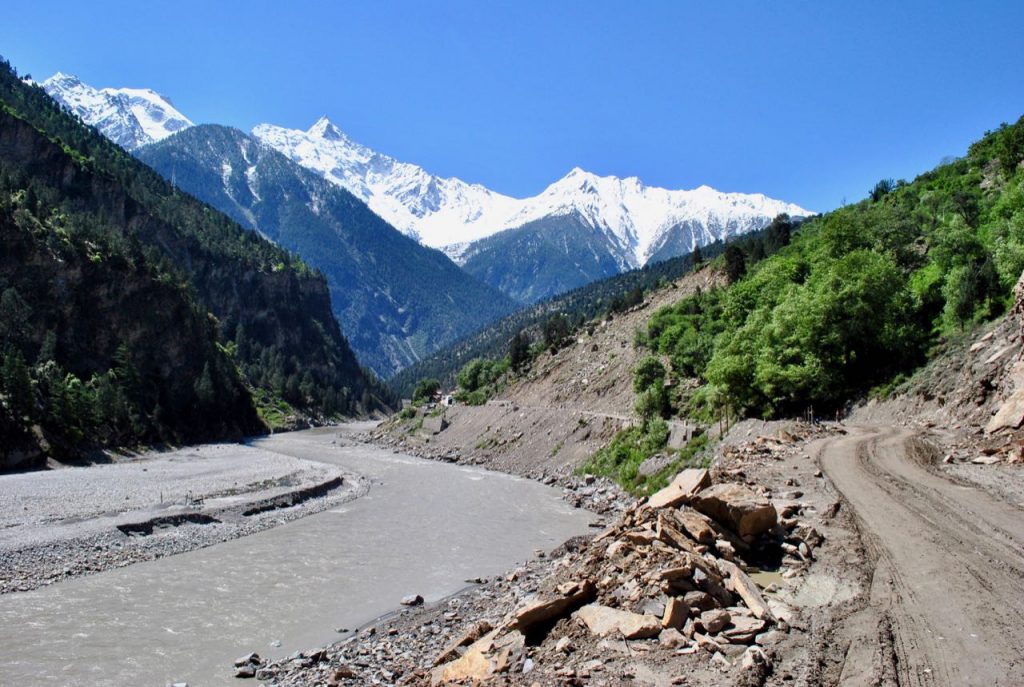
Uttarakhand is harder to track for one reason. The Char Dham roads are maintained by a mix of BRO, national highway agencies and the state PWD depending on the stretch, so there is no single feed for “the Badrinath road”. Hence, I lean on the district control rooms and my next hotel.
- USDMA and SEOC (1070): State-level alerts. The USDMA site posts notices under “Latest Updates”.
- District Emergency Operation Centre (1077): The most useful call for Chamoli, Rudraprayag, Uttarkashi or Pithoragarh. Ask about your stretch, not “the roads”.
- 112: The Uttarakhand emergency number for police, ambulance and rescue, the same number I mention in my Uttarakhand monsoon guide.
- IMD Dehradun: District forecasts and colour alerts for the hill districts. Check it the evening before.
- Temple and yatra calendar: In 2026, Gangotri is expected to close around 10 November and Kedarnath and Yamunotri around 11 November, with Badrinath a little later. These dates are tentative until formally announced, so confirm before booking.
That last point matters. Once the Dhams close, many dhabas and pilgrim hotels close too, so an open road does not mean dinner at 8 PM. I have covered what to do instead in Uttarakhand after Char Dham.

What Is the 7-Day, Night-Before and Same-Morning Road Check?
Quick Answer: A week out, check deadlines and the extended forecast, and build in buffer days. The night before, check the IMD alert, district advisories and SEOC numbers, then decide go, delay or reroute. On the morning, call your next stay, start early and confirm the first checkpoint before you commit to the climb.
These are the three rounds I would run on any hill drive in this season, whether Shimla to Kalpa or Rishikesh to Harsil. Each answers a different question, so please do not skip straight to the morning check.
Seven Days Before: Can This Trip Happen at All?
- Check the hard deadlines. Kunzum Pass typically closes for the winter between late October and early November, Baralacha La within the first half of November in most years, and Rohtang Pass around 15 November (it closed as early as 31 October in 2023). If your plan crosses any of these in the second half of October, have a plan B ready.
- Read the extended IMD forecast for every district you drive through, not just your destination.
- Add buffer days. I suggest one buffer day for every three driving days in this window, and two if you are crossing a high pass.
- Book stays you can cancel or on the safe side of a likely closure (Kalpa rather than Chitkul).
- Prepare the vehicle: good tyres, brakes and battery, plus snow chains that fit. Practise fitting them once at home.
The Night Before: Go, Delay or Reroute?
- IMD alert colour for tomorrow in each district on your route. See the decision table in the next section.
- District police or DC advisory for any restriction: 4×4 only, timed movement, night closure or tourist vehicles stopped at a point.
- SEOC count for your district. I look at the direction more than the number. Rising means trouble is building.
- Message your next stay using the template further down, so the answer is waiting for you in the morning.
- Fuel up and draw cash the evening before. ATMs and pumps beyond the main towns are not something to depend on after a snow day.
The Morning You Drive: Is the Next Stretch Clear Right Now?
- Ask your current host and one local driver what they have heard about the road ahead. Taxi drivers talk to each other at 6 AM, the most current network in the hills.
- Read the reply from your next stay. If they say “road is fine but snow came last night near the top”, treat it as a yellow light.
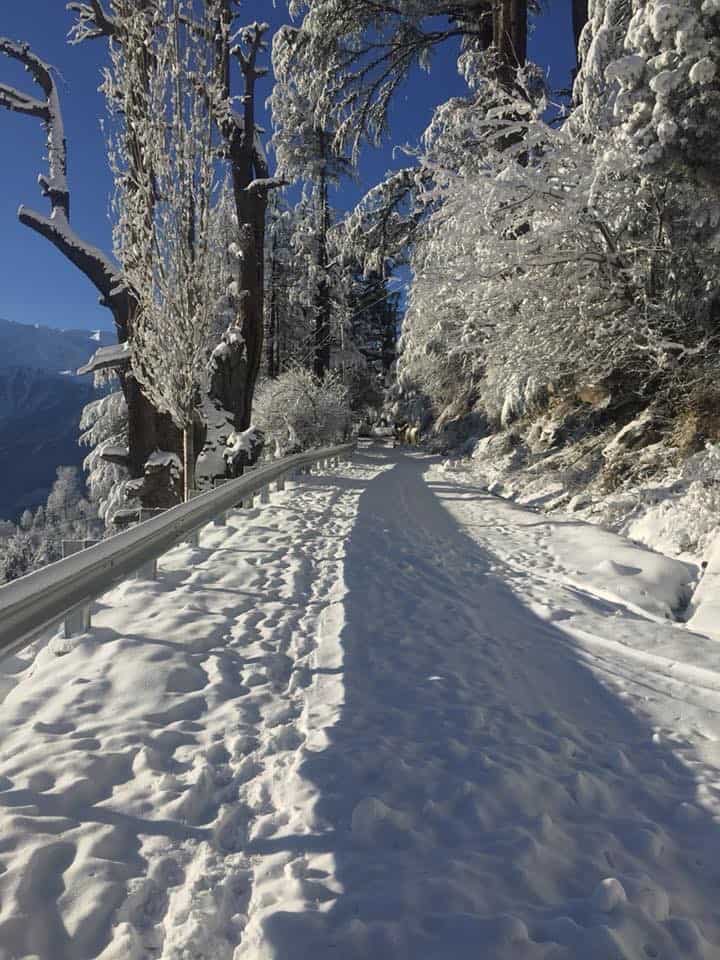
- Start early, but not in the dark. Black ice on shaded bends is worst before the sun hits the road, so a sunrise start is better than a 4 AM start.
- Ask at the first police checkpost before you start the climb. They know about restrictions further up before the news does.
- Plan to be parked by 4-5 PM. Darkness plus refreezing is a bad combination.
How Should You Read an IMD Orange or Red Alert for a Mountain Drive?
Quick Answer: Green means drive normally. Yellow means drive but start early and keep a buffer. Orange means IMD expects weather that can disrupt road travel, so I postpone hill driving in that district. Red means take action and follow official orders, which in the hills means do not start the drive at all.
The India Meteorological Department uses four colours. As explained in this Deccan Herald explainer on IMD warnings, orange is the “be prepared” level and specifically signals possible disruption to road and rail travel, while red is the “take action” level. Here is how I turn that into a driving decision.
| IMD colour | Plus this on your route | My call |
|---|---|---|
| Green | No police advisory, SEOC count stable | GO. Normal early start, normal buffer |
| Green | Snow last night on a pass or tunnel approach | GO WITH CONDITIONS. Wait for the police to open movement, chains in the car, 4×4 if they ask for it |
| Yellow | Rain or light snow forecast for the afternoon | GO EARLY. Finish the driving by lunch, skip side trips |
| Yellow | SEOC count rising in your district | SHORTEN. Drive only to the nearest safe town, not the full day’s plan |
| Orange | Any hill road | DELAY. Use your buffer day. Do not drive through a landslide-prone gorge |
| Red | Any | DO NOT START. Follow official orders and stay where you are |
Keep in mind that a colour over a state on the national map does not mean every district is affected, so read the district warning. In case your route crosses two districts with different colours, plan for the worse one.
What Are the Snow Rules in Himachal and Uttarakhand?
Quick Answer: There is no single statewide snow law that you can read in advance. Restrictions are announced by district police and administration as snow falls. In Himachal, the best-known rule is that after snowfall only 4×4 vehicles are allowed beyond Solang towards Atal Tunnel and Lahaul. Tourist vehicles can be turned back.
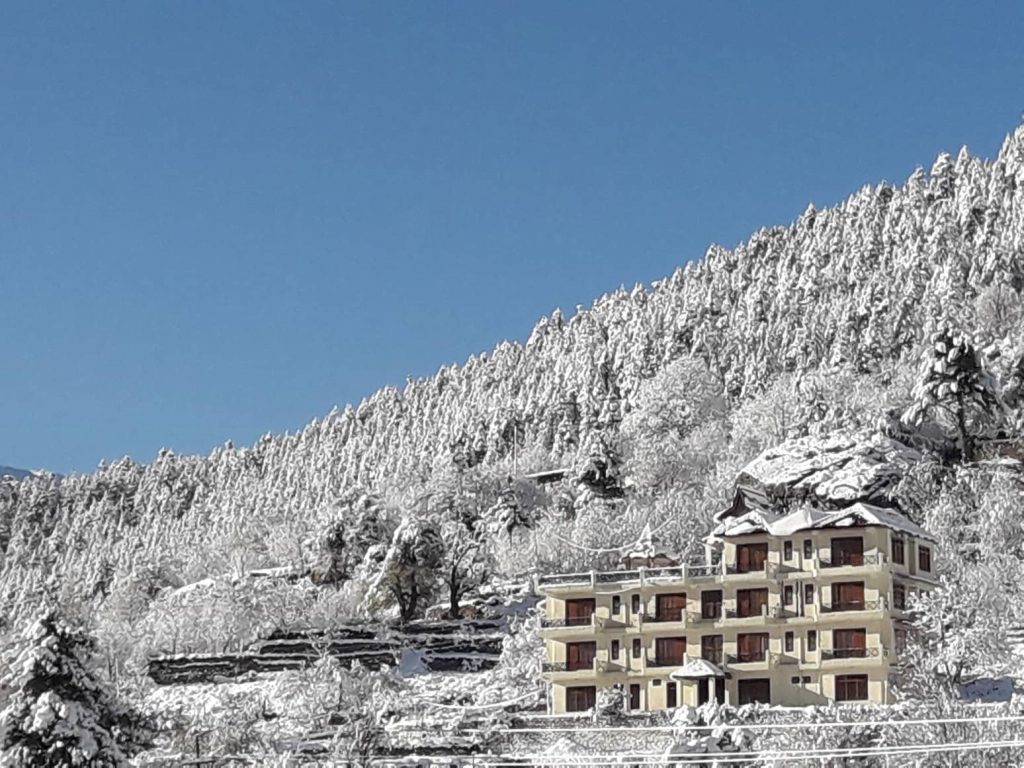
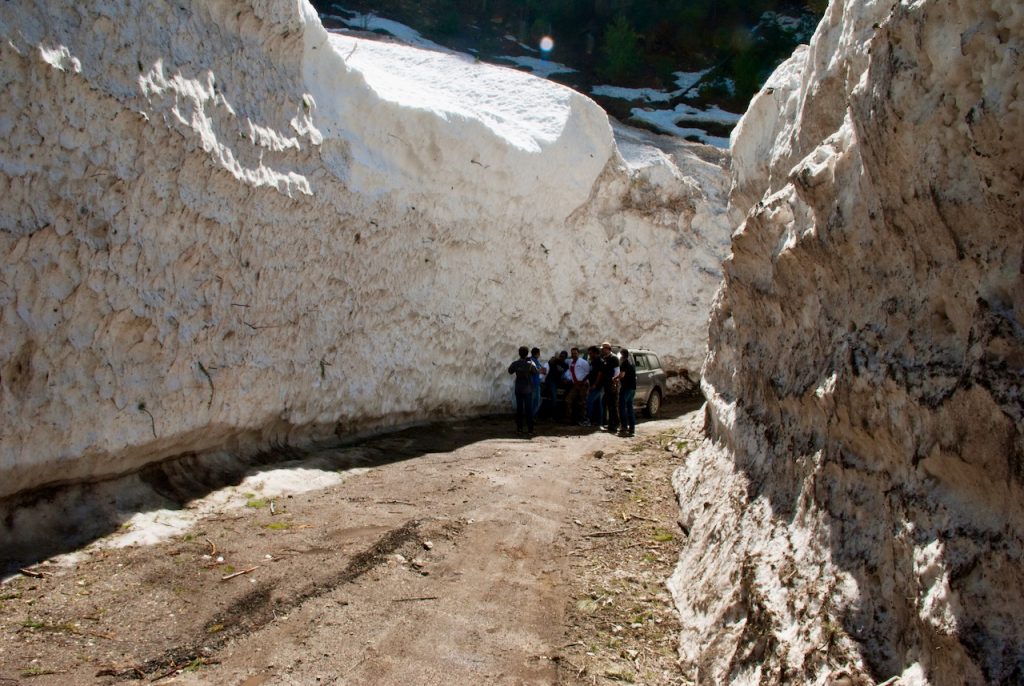
This is where many first-time winter travellers get caught. They read “Atal Tunnel is open all year” and assume their hatchback can go through in December. The tunnel may be open, but the approaches freeze, and the Lahaul-Spiti police regularly restrict movement to 4x4s. On one such day, as reported by The Tribune, about 250 tourist vehicles were sent back from Atal Tunnel after snowfall. In other spells, only locals’ 4x4s were allowed through.
- 4×4 plus chains: When police say 4×4 only, they mean it. If you are in a 2WD car, park in Manali and hire a local 4×4 taxi for the day. Taxi rates change with demand, so verify locally.
- Rohtang Pass: It usually closes to vehicles around 15 November, and visiting the pass needs the Rs 550 tourism permit while open. My Rohtang opening and closing dates post has the history.
- Kunzum Pass: Once the Lahaul-Spiti DC closes the Gramphu – Losar stretch for the winter, it stays closed till the next summer. In at least one past season that order came on 23 November, but heavy early snow can close it in effect well before any order.
- Kinnaur and Shimla: NH-5 stays open, but snow chains are not optional beyond Kufri and Narkanda in January and February, and Karcham – Sangla – Chitkul can shut for days after heavy snow.
- Uttarakhand: I did not find a standing statewide snow-chain or 4×4 order. The real risks are black ice on shaded bends above roughly 8,000 ft (Chopta, Auli) and snow on the Harsil – Gangotri side. Treat police advice at a barrier as final.
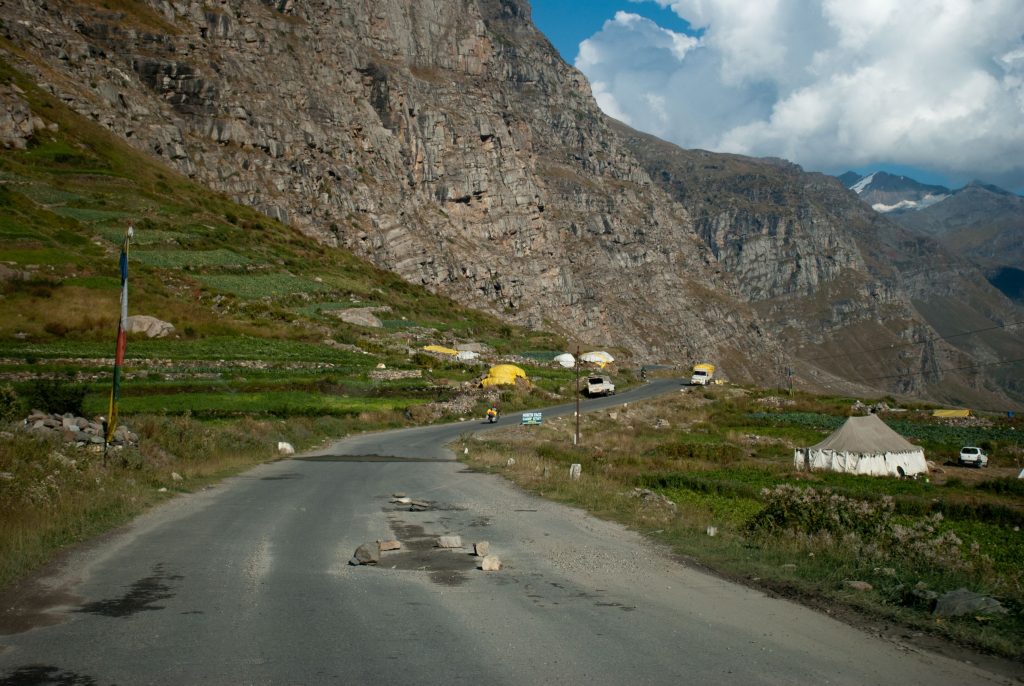
One more thing on snow rules, my friend. Please do not try to “beat” a restriction with a pre-dawn start. The Tribune has reported tourists who crossed Atal Tunnel early in the morning and then could not find a place to stay in Lahaul by evening once the snow came. Getting stuck in these conditions is not an adventure.
What Should You Ask Your Hotel or Homestay Before Leaving?
Quick Answer: Ask four specific things: whether the road from the last big town is open for normal cars today, whether there was snow or a slide overnight, whether police are allowing only 4x4s anywhere, and whether they are open and serving food. Specific questions get specific answers. “Is the road okay?” always gets “yes”.
I have learnt this the hard way. Hosts are not lying when they say “road is fine”. They are being polite. Hence, I send a message the night before that cannot be answered with a simple yes. Feel free to copy it.
“Namaste ji, we are reaching tomorrow by car from [last town], around [time]. 1) Is the road from [last town] to you open for a normal car this morning? 2) Did it snow or was there any landslide last night? 3) Are police allowing only 4×4 anywhere on the way? 4) Is your place open and serving dinner? Thank you, we will check again before leaving.”
If the reply is vague, call. A two-minute call tells you far more than a thumbs-up emoji. In case they are unsure, ask for the number of a local taxi driver who did that road today.
Which DwD Road Status Post Should You Check for Your Route?
Quick Answer: Use this checklist for the process and the route posts for closing patterns and section-by-section detail, since each route behaves differently once the first snow arrives. The table maps each common route to its post, so you can jump straight to the one you are driving.
| Route or region | Read this DwD post | Winter behaviour |
|---|---|---|
| Manali – Leh (Baralacha, Tanglang) | Manali Leh Highway status and Baralacha La road status | Closes for winter, usually in the first half of November |
| Manali – Kaza (Kunzum) | Manali – Kaza road status | Closes for winter, late October to early November |
| Shimla – Kinnaur – Spiti (NH-5) | NH-5 road status | Stays open, with snow delays |
| Kinnaur and Lahaul this autumn | Kinnaur and Lahaul after monsoon | Kinnaur has the longer window; Lahaul’s passes are on a clock |
| Kinnaur in winter | Kinnaur in winters | Kalpa and Reckong Peo safer than Sangla – Chitkul |
| Shimla, Kufri, Narkanda | Shimla in winter | Open, chains needed beyond Kufri after snow |
| Harsil – Gangotri | Harsil Gangotri trip | Gangotri closes around 10 Nov 2026; Harsil-side snow possible |
I will be honest with you. One person cannot update every road every day, so treat my route posts as “how this road behaves” and the sources above as “what is happening today”.

How Much Does a Safe Buffer Actually Cost?
Quick Answer: Less than people fear. A buffer night at an HP PWD rest house costs Rs 1,000 per room for visitors from outside Himachal. Snow chains and 4×4 taxi hire vary by town and by demand on the day, so ask your homestay for a number before you commit.
| Item | Budget | Mid-range | Comfort |
|---|---|---|---|
| One buffer night | Rs 1,000 per room (HP PWD rest house, non-Himachali tariff) | Homestay or guesthouse: verify locally | Hotel in Shimla, Manali or Rishikesh: verify locally |
| Snow chains | Buy or rent in Manali, Shimla or Reckong Peo before the snow line. Prices vary by tyre size, verify locally | ||
| Local 4×4 taxi for a snow stretch | Demand-based on snow days. Agree the fare before you start | ||
| Rohtang Pass tourism permit | Rs 550 per car or bike (only if visiting the pass while it is open) | ||
| Cash reserve for winter Spiti | Rs 2,000-3,000 per day, as I suggest in my winter Spiti and Ladakh guide | ||
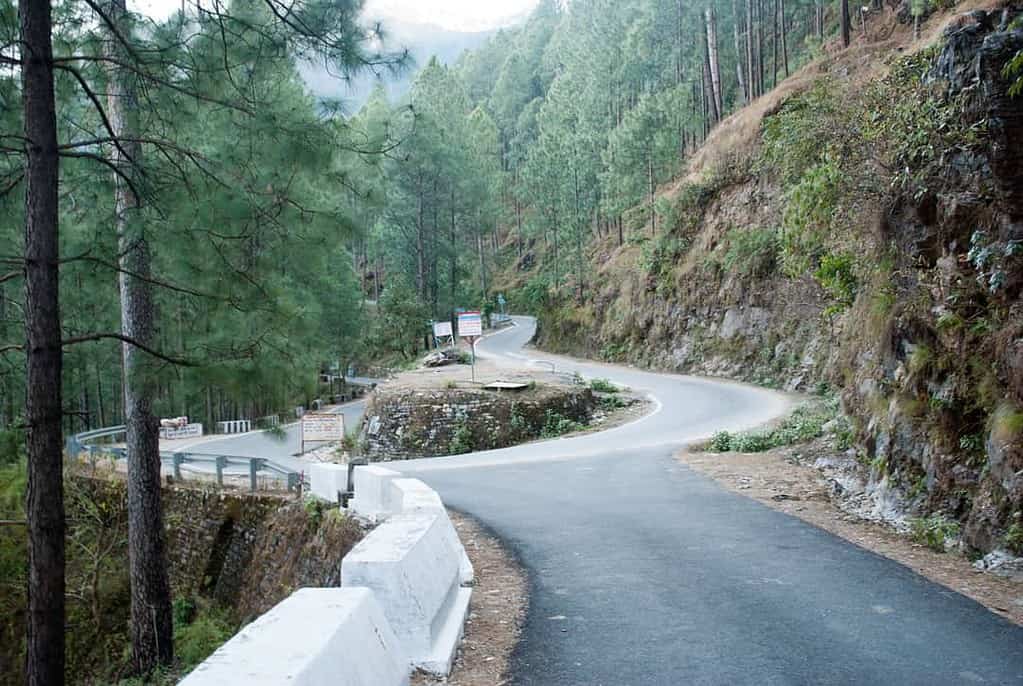
Rest houses are my favourite buffer in Himachal because many sit on the main routes and walk-ins are allowed if rooms are free (see my HP PWD rest house guide). One lost buffer day is cheap. One night stuck in a car at Gramphu is not.
What Should You Do If the Road Closes Ahead of You?
Quick Answer: Stop at a safe spot, not under a cut slope. Ask police or drivers ahead whether it is a two-hour or two-day clearance. If long, go back to the last village with a stay rather than waiting overnight by the road. Call 1077, or 112 in an emergency.
My NH-5 guide has a detailed playbook, and the logic applies on every hill road. Two points bear repeating. Never walk past a fresh slide to “see how bad it is”, because falling stones are the real danger. And never park directly below a loose slope while you wait.
On high passes like Kunzum or Baralacha, altitude adds one more risk. A long cold wait above 14,000 ft is when mild AMS gets worse, so read my AMS prevention tips and turn around early if anyone feels unwell.
Related Reading
- Kinnaur and Lahaul after monsoon: what reopens
- Uttarakhand after Char Dham: Oct-Dec retreats
- NH-5 driving guide and closure playbook
Frequently Asked Questions
How do I check road status in Himachal Pradesh today?
Check the district police or DC advisory for your route, the latest SEOC blocked-roads count for your district, and the IMD alert for the day. Then call your next stay. For a live answer from the control room, dial 1077 (district) or 1070 (state).
What is the disaster helpline number for Himachal and Uttarakhand?
Both states use 1070 for the State Emergency Operation Centre and 1077 for district control rooms. For emergencies needing police, ambulance or rescue, dial 112.
Can I drive a normal car to Atal Tunnel after snowfall?
Often not. After snowfall the Lahaul-Spiti police can allow only 4×4 vehicles beyond Solang towards Atal Tunnel, and tourist vehicles have been turned back. Check the police advisory that morning, and if it says 4×4 only, hire a local 4×4 taxi from Manali.
When do Rohtang and Kunzum close for winter in 2026?
Rohtang usually closes to vehicles around 15 November, though it closed on 31 October in 2023. Kunzum typically closes between late October and early November. Both depend on snowfall, so check the official closing order before you plan a crossing.
Should I drive in the hills during an IMD orange alert?
I would not. Orange is IMD’s “be prepared” level and signals possible disruption to road travel. Use a buffer day instead of driving through landslide-prone stretches. On a red alert, do not start the drive at all.
Are snow chains mandatory in Himachal?
There is no single statewide rule you can read in advance. Police announce restrictions as snow falls, often 4×4 with chains only. Practically, chains are essential beyond Kufri and Narkanda in January and February and on any winter drive into Kinnaur or Spiti.
How do I check Uttarakhand road status before driving to Kedarnath, Badrinath or Gangotri?
Call the district control room on 1077 for Rudraprayag, Chamoli or Uttarkashi, check the IMD Dehradun alert and USDMA notices, and confirm temple closing dates. In 2026, Gangotri is expected to close around 10 November and Kedarnath around 11 November, tentatively.
How many buffer days should I keep for a winter Himachal or Uttarakhand trip?
I suggest one buffer day for every three driving days between late October and December, and two if your route crosses a high pass. A buffer night at an HP PWD rest house costs Rs 1,000 per room for visitors from outside Himachal.
Final Thoughts: Check Three Times, Drive Once
If you remember one thing, let it be the three rounds: a week before for deadlines and buffers, the night before for alerts and advisories, and the morning of for the people on the road. Late October to December is honestly one of my favourite times in the hills, with clear skies and no crowds. However, it rewards the traveller who checks and punishes the one who assumes.
Save 1070, 1077 and 112 in your phone tonight, copy the homestay message, and keep a buffer day in your plan. If you have a road-check trick of your own, please share it in the comments so the DwD Community benefits too. And if a friend is planning a drive to Kinnaur, Manali or Harsil this winter, do share this checklist with them 🙂 …
If you have any questions, feel free to ask in the comments section below 🙂
