


Every year around the third week of November, my inbox and the DwD community groups start filling with the same question. “We are booking Shimla for the 30th of December, will we get snow?” And every year I have to give the same slightly disappointing answer, which is that the odds are against you. Not zero, but well under half.
The gap between what people expect from Shimla in winter and what Shimla actually delivers is the widest of any hill station in Himachal Pradesh. Part of it is the movies. Part of it is that the tour packages are sold hardest in the exact week the snow is least likely. So this guide does something a little different. Instead of telling you “December to February is the best time to see snow,” which is technically true and practically useless, I have put the actual India Meteorological Department climate normals for Shimla on the page and let the numbers make the argument.
Quick Answer
Shimla receives about 99 cm of snow a year, but only 7 cm of it falls in December. January and February carry roughly 86 percent of the annual total between them. If you want to actually see snow in Shimla, mid-January to mid-February is the window. December is the month everyone books and the month that most often disappoints.
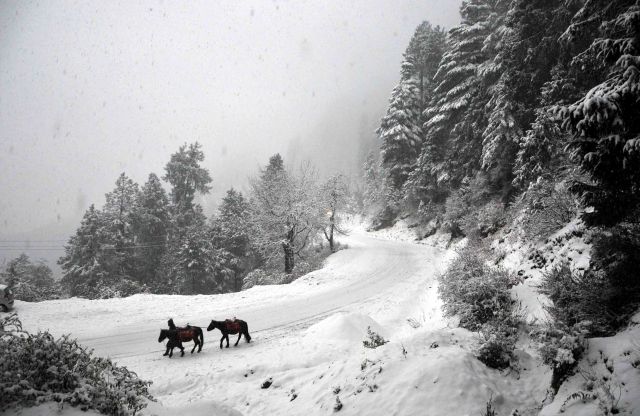
Shimla Winter Trip: Practical Information
| Altitude | About 2,200 m (7,200 ft) |
| Distance from Delhi | About 350 km, 7 to 9 hours by road |
| Best window for snow | Mid-January to mid-February |
| Average annual snowfall | 99 cm across about 11 snowy days (IMD normals) |
| Coldest month | January, mean minimum 1.7 degrees Celsius |
| Permit needed | None. Shimla is in Himachal’s regular tourist zone |
| Budget | From about Rs 3,300 per person for 3 days, off-peak |
| Difficulty | Easy. No trekking or altitude acclimatisation needed |
| Last verified | October 2026 |
When Does It Actually Snow in Shimla?
Quick answer: Shimla’s snow season effectively runs from the last week of December to the third week of February, and it is heavily back-loaded. January and February each average about 42 to 43 cm of snowfall over roughly four snowy days, while December manages about 7 cm over one or two snowy days.
Here is the table I wish somebody had shown me before my own first winter trips to this belt. These are long-period climate normals published by the India Meteorological Department for the Shimla observatory, and you can cross-check them on the Shimla climate record.
| Month | Mean max | Mean min | Avg snowfall | Avg snowy days |
|---|---|---|---|---|
| November | 15.4 C | 7.0 C | 0 cm | 0.1 |
| December | 11.9 C | 4.0 C | 7 cm | 1.3 |
| January | 9.3 C | 1.7 C | 42 cm | 4.2 |
| February | 10.3 C | 2.4 C | 43 cm | 4.2 |
| March | 14.5 C | 6.1 C | 7 cm | 1.4 |
| Full year | 17.5 C | 9.5 C | 99 cm | 11.2 |
Read that fourth column again, because it is the whole article in one line. December delivers about 7 percent of Shimla’s annual snowfall. January and February together deliver about 86 percent. And February, which almost nobody books, is marginally the snowiest month of the year by volume.
The reason comes down to western disturbances, which are the low-pressure systems that track in from the Mediterranean and Caspian region across Iran, Afghanistan and Pakistan before hitting the western Himalaya. They are what bring winter precipitation to Himachal, and they get stronger and more frequent as the season deepens. Early-season disturbances in December often arrive too warm for Shimla’s 2,200 m, so the town gets cold rain and sleet while Kufri and Narkanda a few hundred metres higher get the actual snow. By mid-January the whole column is cold enough and the same system that gave you rain three weeks earlier now gives you 20 cm.
Hence, the honest framing is not “Shimla gets snow in winter.” It is Shimla gets snow about eleven days a year, and eight of those days fall in January and February.
Why Does December Disappoint So Many Shimla Visitors?
Quick answer: December in Shimla is genuinely cold, with mean maximums under 12 degrees, but cold and snowy are not the same thing. The first real snowfall of the season usually lands somewhere between the last week of December and the second week of January, and in weak years it does not arrive until later.
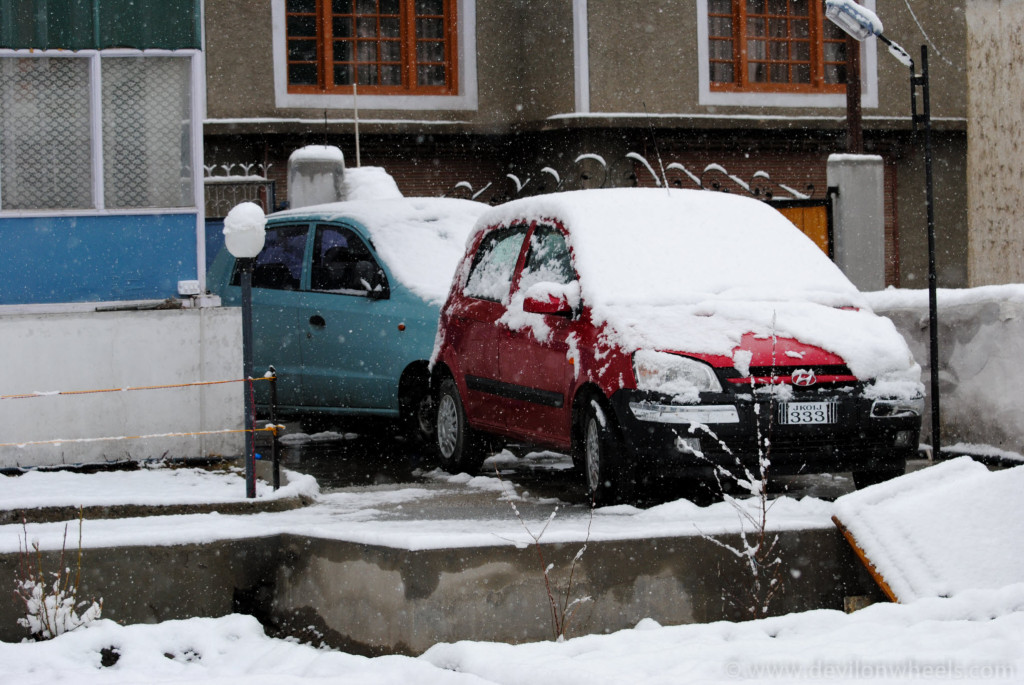
I want to be careful here, because I am not saying December never snows. It does. Some years a strong disturbance parks over the region around Christmas and the Ridge turns white on the 25th, and those are the photographs that circulate on Instagram for the next three years and set everybody’s expectations for the next decade. What I am saying is that this is the exception, and the IMD numbers above tell you roughly how often the exception happens.
The 2025-26 season was a good illustration of the problem. Shimla town went through a long dry spell and the reports coming out in late January 2026 described the town measuring well under a centimetre of accumulation, while travellers who had driven up specifically for snow ended up going another 60 km to Narkanda to find it. That is not unusual. That is a normal Himachal winter.
There is a second thing going on too. Shimla sits low for a snow destination. At about 2,200 m, even when snow does fall on the town, it frequently melts off the roads and the sunny slopes within 24 to 48 hours. What stays is the stuff on the north-facing slopes, the deodar branches and the rooftops. Kufri at roughly 8,600 ft and Narkanda at about 8,100 ft hold it far longer. Keep this in mind when you are picking where to actually base yourself.
What Is the Weather Like in Shimla Month by Month?
Quick answer: November is crisp and dry with essentially no snow. December is cold with a small snow chance. January is the coldest month and the first reliable snow month. February matches January for snow with slightly milder days. March is the melt.
November in Shimla
Mean maximum around 15.4 degrees, mean minimum around 7 degrees, and an average of 0.1 snowy days for the entire month. In plain language, do not come to Shimla in November expecting snow. What you do get is the clearest air of the year, almost no rain, very thin crowds after the Diwali rush passes, and the cheapest hotel rates you will find all winter.


I can speak to this one first hand. My very first drive into the hills on my own wheels was Delhi to Chail to Kufri to Shimla on the 1st and 2nd of November 2008, and I still have the write-up on this blog. We reached Kufri at 9 in the morning to an extremely cold breeze, had a hot tea with Parle-G to warm up, and I wrote at the time that Kufri would have been better “if there had been some snow.” It was not there. It was never going to be there on the 2nd of November. The room at Chail the previous night cost Rs 350, which tells you something about what November pricing looked like even then.
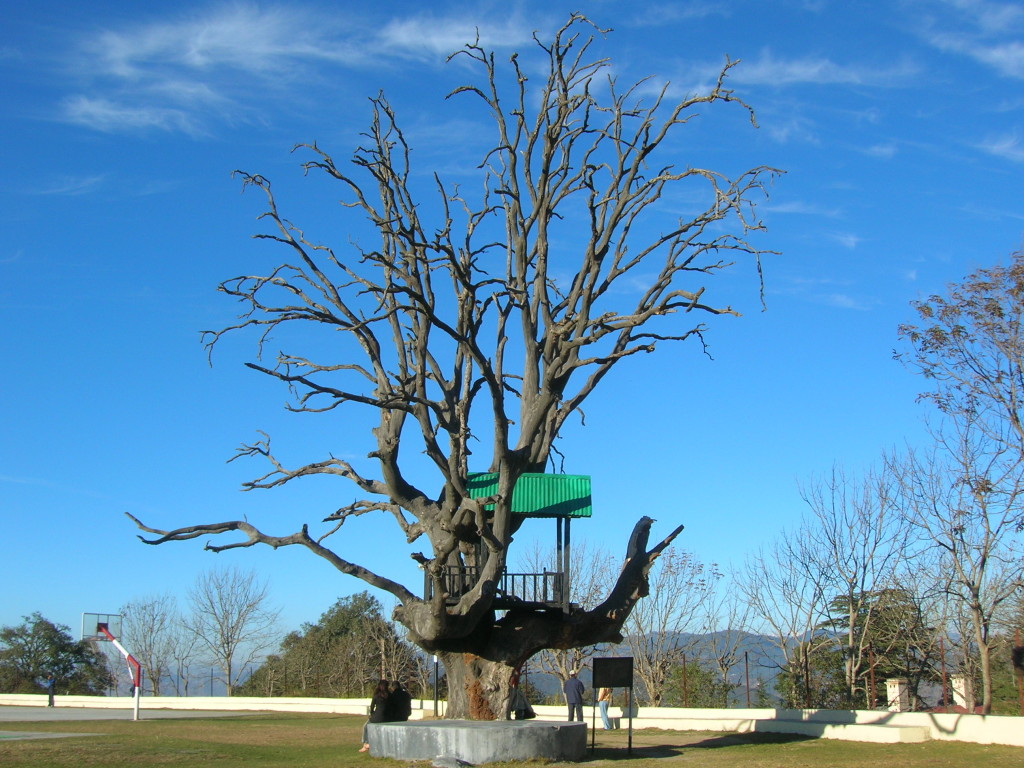
December in Shimla
Mean maximum around 11.9 degrees, mean minimum around 4 degrees, average snowfall 7 cm across 1.3 snowy days. The temperature drop from November is real and you will feel it, especially after sunset when the Mall Road wind picks up. The snow chance is not.
The first half of December is one of the genuinely underrated windows in Shimla. It is properly cold, the town is quiet, the rates are still reasonable, and the mountain views on a clear morning are excellent. The second half is the opposite in every respect, which I will come to below.
![What things to carry on cold weather Spiti or Ladakh winter bike ride? [8 Must-Have Items]](https://discoverwithdheeraj.com/yt_vid_thumbs/ladakh/84.png)
January in Shimla
Mean maximum around 9.3 degrees, mean minimum around 1.7 degrees, and the record low on the books is minus 10.6 degrees. Average snowfall jumps to 42 cm over 4.2 snowy days. This is the coldest month and the first month where snow is a reasonable expectation rather than a lottery ticket.
Within January, the second half is stronger than the first. The first week is still absorbing the New Year traffic and is priced accordingly. From roughly the 10th of January onward the crowds thin sharply, the rates fall back, and the snow probability keeps climbing. If somebody asks me for one single recommendation, it is the middle two weeks of January.
February in Shimla
Mean maximum around 10.3 degrees, mean minimum around 2.4 degrees, and average snowfall of 43 cm over 4.2 snowy days. February is a touch warmer in the daytime than January and gets fractionally more snow, and it is the most overlooked month on the Shimla calendar. Nobody is on school holidays, nobody is on a New Year package, and the hills are still white in the higher pockets.
If your priority is snow on the ground rather than snow falling on your head, the first three weeks of February are arguably the best value of the entire season. You are travelling after two months of accumulation has already happened.
March in Shimla
Mean maximum climbs back to 14.5 degrees and snowfall collapses to about 7 cm over 1.4 days, almost all of it in the first ten days and almost all of it at Kufri, Narkanda and Hatu rather than in the town. By the third week of March you are into spring, with rhododendron starting on the lower slopes. Good weather, not a snow trip.
Should You Book Shimla for the New Year Week?
Quick answer: Only if the New Year atmosphere itself is what you want. The last week of December is the most expensive and most crowded week of the Shimla year, and it sits right at the point where snow probability is still low. You are paying the season’s highest rate for the season’s worst odds.
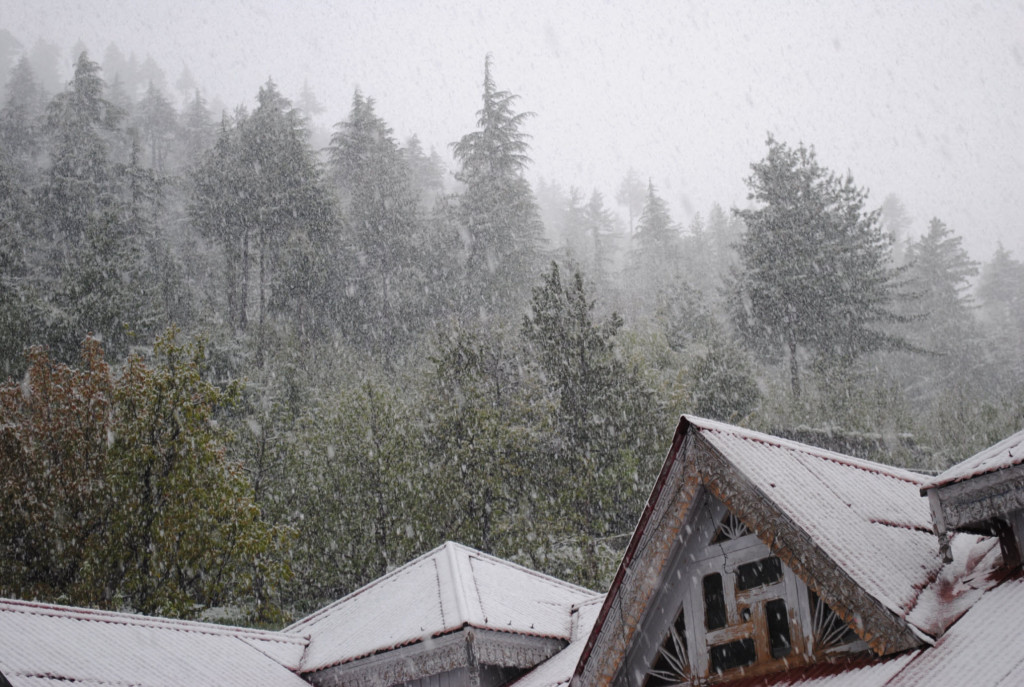
I do not have a reliable published figure for exactly how much Shimla room rates rise in the 28 December to 2 January window, and I am not going to invent one. What I can tell you from watching this market for over a decade is the shape of it. Rates go up meaningfully, minimum-night stays appear where none existed a fortnight earlier, advance payment becomes non-refundable, and the good properties on and around the Mall Road stop taking new bookings entirely by early December in a strong year.
So the practical advice splits into two clean cases:
- If you are locked into the New Year dates because of office leave or family plans, book by the end of October. Not November. By the time you are shopping in the first week of December, you are choosing from what is left, and what is left in Shimla in that week is not good value. Go in with the expectation that you are buying atmosphere, bonfires, a packed Mall Road and a crowded Ridge, and treat snow as a bonus if it happens.
- If your dates are flexible at all, move the trip. Shift it two or three weeks later into mid-January and you will pay materially less for a materially higher snow probability and a fraction of the crowd. This is the single highest-value change you can make to a Shimla winter plan.
There is one more angle worth mentioning. Because the New Year week is when everybody drives up, it is also the week that the Shimla bypass and the approach from Solan get properly choked, and the parking situation in town becomes its own separate problem. The Shimla Municipal Corporation has been trying to introduce a green fee on out-of-state tourist vehicles for years now, with proposed rates reported by the Tribune, Indian Express and Down To Earth at roughly Rs 50 to Rs 100 for two-wheelers and Rs 200 for cars (the reports disagree on the exact figures, and an earlier SMS-based version with lower rates I had quoted is not something I could confirm again in October 2026). It has been delayed more than once since the original 2024 target date, so I would not assume you will be stopped at a barrier at all. Check the Shimla MC’s own updates or ask your hotel before you travel, since this is one of those things that has flip-flopped for a decade.
Where Should You Go Near Shimla If You Want Guaranteed Snow?
Quick answer: Go higher. Kufri at roughly 8,600 ft, Narkanda at about 8,100 ft and Hatu Peak at about 10,600 ft hold snow reliably when Shimla town at 7,200 ft has none. Narkanda is 60 km beyond Shimla and is the single best base if snow is the actual objective.
This is the fix for the whole problem. Do not change the season, change the altitude. A difference of 1,000 to 3,000 ft is the difference between rain and snow, and between snow that melts in a day and snow that sits for three weeks.
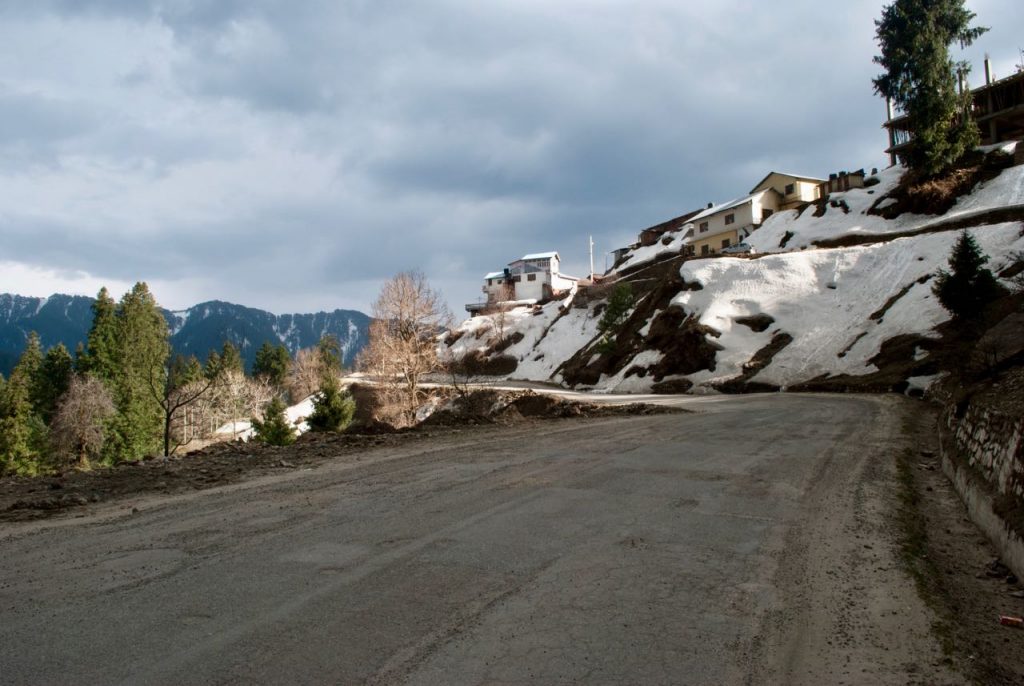
- Kufri (about 16 km, 45 minutes from Shimla). The standard day trip and the most commercialised. Expect horse-ride touts the moment you step out, which I ran into on my very first visit and which has not changed since. Good for families who just want to touch snow without committing to a longer drive.
- Narkanda (about 60 km, 2 to 2.5 hours). This is my recommendation. It is a small apple town on the old Hindustan Tibet Road, it is quiet, it holds snow through January and February, and it has skiing when conditions allow. Read the full Narkanda travel guide before you plan.
- Hatu Peak (about 8 km above Narkanda, roughly 10,600 ft). The highest easily reachable point in the belt and the last place to lose its snow, often holding into mid-March. The road up is frequently closed after fresh snowfall, so check locally on the day.
- Thanedar and Kotgarh (about 80 km). Apple country, orchards under snow, far fewer people. See the Thanedar travel guide.
- Pabbar Valley (Kharapathar, Rohru, Chanshal side). The offbeat option for people who want snow with no tourists at all. The Pabbar Valley guide covers the logistics, which are more involved than a Kufri day trip.
When Should You Actually Book? A Traveller-Type Decision Table
Quick answer: There is no single best time for Shimla in winter, because “I want to see snow falling” and “I want a quiet, cheap hill break” point at completely different weeks. Find your row below and book that.
| If you are… | Go | Why |
|---|---|---|
| Set on watching snow actually fall | 10 January to 20 February | About 86 percent of Shimla’s annual snowfall lands in this window, and disturbances are strongest here |
| Taking kids or parents who just want to touch snow | Late January to February, day trip to Kufri or Narkanda | Snow already on the ground, no need to gamble on a fresh spell, and no trekking involved |
| Chasing quiet and low cost | Mid-November to 15 December, or the last week of February | Lowest rates, thinnest crowds, clearest views. Accept that snow is unlikely |
| Locked into the New Year holiday | Book by end of October | You are buying atmosphere, not snow. Late booking gets you the worst rooms at the highest rates |
| A photographer wanting a white Ridge | Travel on 48 to 72 hours notice | Track IMD’s western disturbance forecast and move when a system is confirmed, rather than booking blind |
| Wanting deep, guaranteed snow regardless of date | Narkanda or Hatu, not Shimla town | Altitude beats timing. 1,000 extra feet is worth more than three extra weeks |
How Much Does a Shimla Winter Trip Cost?
Quick answer: A three day, two night trip from Delhi in the off-peak part of winter works out to roughly Rs 3,300 to Rs 5,000 per person on a backpacker budget, Rs 5,900 to Rs 9,000 mid-range, and Rs 10,900 to Rs 18,600 in comfort. The New Year week breaks all of these numbers.
| Item (per person, 3 days / 2 nights) | Budget | Mid-range | Comfort |
|---|---|---|---|
| Delhi to Shimla return by bus | Rs 1,000 to 1,400 | Rs 1,600 to 2,400 | Rs 3,000 to 5,000 |
| Stay, 2 nights, twin sharing | Rs 1,000 to 1,600 | Rs 2,000 to 3,000 | Rs 4,000 to 7,000 |
| Food, 3 days | Rs 900 to 1,200 | Rs 1,500 to 2,100 | Rs 2,400 to 3,600 |
| Local travel plus a Kufri or Narkanda day trip | Rs 400 to 800 | Rs 800 to 1,500 | Rs 1,500 to 3,000 |
| Total per person | Rs 3,300 to 5,000 | Rs 5,900 to 9,000 | Rs 10,900 to 18,600 |
Treat these as planning ranges rather than quotations. The bus figures come from the fares I documented in my snowfall near Delhi guide earlier in 2026, where HRTC Volvo services from Delhi to Shimla were running at roughly Rs 800 to Rs 1,200 one way and ordinary services materially cheaper. Listings I checked in October 2026 show Volvo at about Rs 900 to Rs 1,500 one way (one example at Rs 971), so on a peak-day booking the mid-range bus line above can run higher by up to about Rs 600 return. Verify the current fare on the HRTC online booking portal before you travel, since HRTC revises fares and adds seasonal services without much notice.
Two things that will blow up this budget. First, the last week of December, for the reasons above. Second, hiring a private taxi for the Narkanda or Hatu run instead of using the local bus, which is comfortable but easily doubles the local travel line. If you are on a tight budget, the HRTC bus from Shimla’s Tutikandi ISBT up to Narkanda is genuinely fine and it runs through winter except immediately after heavy snowfall.
How Do You Reach Shimla in Winter?
Quick answer: Overnight HRTC bus from Delhi is the easiest and cheapest option at 8 to 10 hours. Self-drive is straightforward on NH-5 via Chandigarh, Kalka and Solan. The Kalka to Shimla toy train is the slowest and the most enjoyable.

- By bus. HRTC runs ordinary, Himsuta and Volvo AC services from Delhi’s ISBT Kashmiri Gate through the evening and night, arriving in Shimla in the early morning. This is what I would pick for a short winter trip, because you sleep through the drive and you are not the one dealing with fog on the plains at 3 AM. Book through the HRTC portal rather than at the counter in peak weeks.
- By road, self-drive. Roughly 350 km from Delhi via Panipat, Ambala, Zirakpur, Kalka and Solan, mostly four-lane until Kalka and then hill road. In winter the actual hazard is not snow on the highway, it is dense fog between Delhi and Ambala in the early hours and black ice on the shaded hairpins above Solan at dawn. Start late enough that you are climbing in daylight.
- By train. Take a train to Kalka, then the narrow-gauge Kalka to Shimla mountain railway, which is on the UNESCO World Heritage list. It takes around five hours to cover 96 km, which is exactly the point. Additional holiday specials are usually run over the peak winter weeks. Book well ahead, as this fills up faster than the buses do.
- By air. Jubbarhatti airport near Shimla has very limited and weather-dependent operations, and 2026 listings I checked describe no reliably running scheduled service, so confirm with the airline before building a plan around it. Most people fly to Chandigarh and drive the remaining 110 km.
What Should You Know About Safety and Driving in Shimla in Winter?
Quick answer: Shimla is a low-altitude, well-connected hill town, so there is no AMS risk and no permit paperwork. The two real hazards are black ice on shaded curves in the early morning and getting stuck in traffic after a fresh snowfall closes the Kufri or Narkanda road.
- Black ice is the main danger. Overnight melt refreezes on shaded stretches and it is invisible. It is worst between roughly 6 and 9 in the morning on the Kufri, Naldehra and Narkanda roads. Delay your start until the sun has been on the road for a while, keep it in low gear on descents, and do not brake in a turn.
- The road above Kufri is the first to shut. After a heavy spell, the administration closes the Kufri and Narkanda stretches to traffic until it is cleared. Two-wheel-drive vehicles are frequently turned back at the checkpoint even when the road is technically open. If you drove up specifically for snow, be mentally prepared to park and walk the last stretch, or to take a local shared vehicle with chains.
- Carry chains or go with a local driver. If you are self-driving beyond Kufri in January or February, snow chains are not optional equipment. Local taxi operators in Shimla know which side of the hill has snow on any given morning, and hiring one for the day is often cheaper than the mistake of not doing it.
- Watch the forecast, not the packages. The India Meteorological Department issues western disturbance and snowfall warnings for the western Himalayan region several days ahead. This is the source worth watching, and it is the same one the district administration acts on.
- Power and water cuts happen. A heavy snowfall in Shimla routinely takes down power for a few hours and freezes supply lines. Carry a power bank and do not assume the room heater will be running all night.
What Should You Pack for Shimla in Winter?
Quick answer: Shimla in January sits near freezing at night but rarely goes far below it, so you need proper layering rather than expedition gear. Waterproof footwear matters more than a heavier jacket.
The mistake I see people make repeatedly is buying a very heavy jacket and then walking around the Mall Road in canvas sneakers. Your feet get wet in slush, and once your feet are wet you are cold no matter what is on your torso. So the priorities, in order:
- Waterproof shoes with grip. The single most important item. Slush and refrozen ice on Shimla’s pedestrian stretches are genuinely slippery.
- Thermal innerwear, upper and lower. Two sets is plenty for a three-day trip.
- A windproof outer layer over a fleece. Two mid-weight layers beat one heavy one because you can shed them in the daytime sun. My roundup of winter jackets under Rs 5,000 covers what actually works without overspending.
- Woollen cap, gloves and thick socks. Not optional in January and February.
- Sunglasses and sunscreen. Sunlight off fresh snow at Kufri or Hatu is much stronger than people expect.
- Moisturiser and lip balm. Himachal winter air is very dry.
For a fuller checklist that applies to any hill trip, see my list of things to carry on a trip.
Where Should You Stay for a Quieter Shimla Winter?
Quick answer: Staying on or near the Mall Road puts you in the middle of the crowd and the highest rates. Mashobra, Naldehra, Chail and Narkanda are all within an hour or two, cost less, and are considerably quieter in peak week.
My honest opinion after many trips through this belt is that Shimla town works better as a place you visit for an afternoon than as a place you sleep. It is a working state capital with a state capital’s traffic, and the Ridge in peak week is as crowded as any market in Delhi. I noticed this on my very first visit in 2008 and wrote at the time that it felt “too crowded for a hill station,” which was before the tourist numbers roughly doubled.
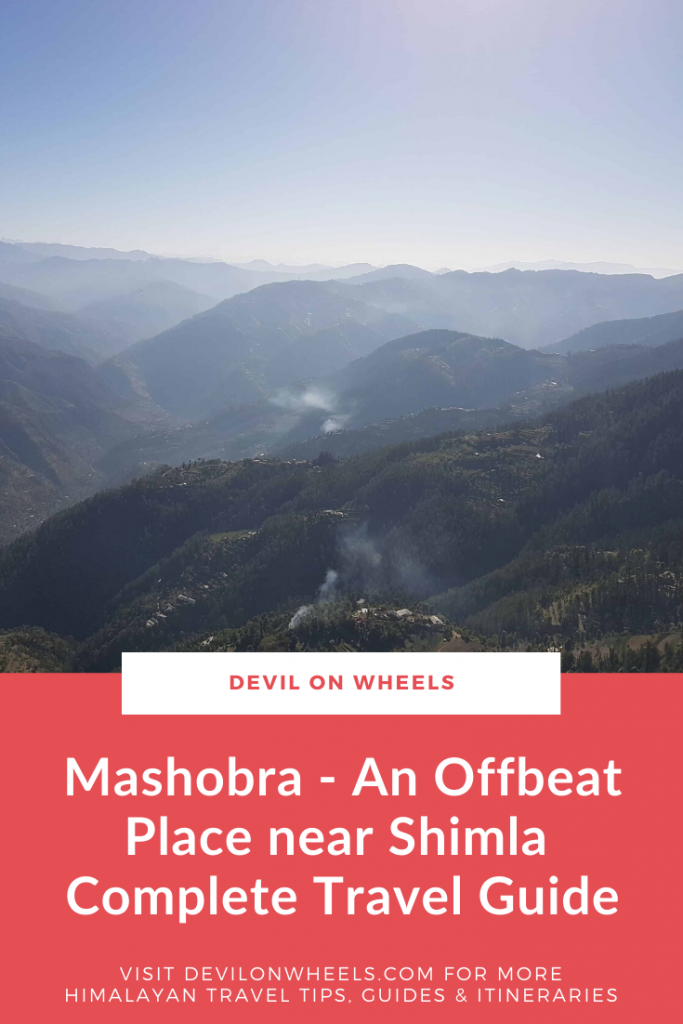
- Mashobra, about 13 km out, deodar forest, very peaceful. Full details in my Mashobra travel guide.
- Chail, about 45 km, the old Patiala summer capital and home to the highest cricket ground. This is where my own first hill trip started, written up in Delhi to Chail, Kufri and Shimla.
- Narkanda, about 60 km, the best base if snow is your actual objective.
- Several other options worth considering are covered in my roundup of hill stations near Shimla, and for a genuinely budget stay, look at booking an HP PWD rest house or forest rest house.
Related Reading
- How to plan a trip to Shimla and Manali, if you want to combine both in one itinerary.
- 5 reasons for travelling to Manali in winters, since Manali at 6,700 ft with Solang above it is the higher-snow alternative.
- Kinnaur in winters, the next valley along the same Hindustan Tibet Road if you want to go deeper.
- Rajgarh travel guide, the peach valley south of Shimla and completely empty in winter.
- Easy winter treks in Uttarakhand and Himachal, if you want to walk into the snow rather than drive to it.
Frequently Asked Questions
Does it snow in Shimla in December?
Sometimes, but not usually. IMD climate normals put December’s average snowfall at about 7 cm across 1.3 snowy days, compared with 42 cm across 4.2 days in January. Most Decembers in Shimla are cold and dry, with the first real snowfall arriving in the last week of the month at the earliest.
Which month has the most snowfall in Shimla?
February, by a very small margin. February averages about 43 cm and January about 42 cm, and both record roughly 4.2 snowy days. Together they account for around 86 percent of Shimla’s 99 cm annual total.
Will I definitely see snow in Shimla on New Year’s Eve?
No. There is no year in which snow on 31 December is guaranteed in Shimla. The New Year week sits at the tail of the low-probability part of the season while carrying the highest rates and the biggest crowds of the year. Book it for the atmosphere and treat snow as a bonus.
How cold does Shimla get in January?
January is the coldest month, with a mean daily maximum of about 9.3 degrees Celsius and a mean minimum of about 1.7 degrees. The lowest temperature on the Shimla record is minus 10.6 degrees, but nights near or slightly below freezing are the norm rather than anything extreme.
Is Kufri or Shimla better for snow?
Kufri, clearly. It sits about 1,400 ft higher than Shimla town, so it receives snow when Shimla gets cold rain and it holds that snow considerably longer. Narkanda, 60 km further out, is better still and far less commercialised.
When should I book a Shimla hotel for the New Year week?
By the end of October. Good properties on and around the Mall Road fill through November, and by early December you are choosing from leftovers at peak rates with non-refundable advance payment and minimum-stay conditions.
Does the Kalka to Shimla toy train run in winter?
Yes. The UNESCO-listed Kalka to Shimla narrow-gauge line operates year round, and additional holiday special services are usually run over the peak winter weeks. Services can be delayed or briefly suspended during heavy snowfall, so check current status before travelling and book well ahead.
Do the roads to Shimla close because of snow?
The main approach from Chandigarh via Kalka and Solan very rarely closes, since it stays low. What does close, often for a day or two after heavy snowfall, is the higher stretch beyond Shimla towards Kufri, Narkanda and Hatu Peak. Black ice on shaded curves in the early morning is a bigger practical risk than closure.
Is February a good time to visit Shimla?
February is arguably the best value month of the Shimla winter. It matches January for snowfall, has slightly milder days, carries none of the holiday crowds, and lets you travel after two months of accumulation has already built up in the higher pockets.
Do I need a permit to visit Shimla in winter?
No permit is required. Shimla is in Himachal Pradesh’s regular tourist zone. The Shimla Municipal Corporation has repeatedly proposed a green fee on out-of-state vehicles, with reported rates of roughly Rs 50 to Rs 100 for two-wheelers and Rs 200 for cars, but it has been delayed since 2024 and was not being collected at last check. Confirm the current status locally rather than assuming either way.
So, When Should You Go?
If I had to compress this entire guide into one sentence, it would be this. Move your Shimla trip out of the last week of December and into the middle of January or the first three weeks of February, and if snow is genuinely the point, base yourself at Narkanda instead of on the Mall Road. You will pay less, you will share the hills with far fewer people, and your odds of actually standing in falling snow go up several times over.
And if your dates are fixed and the New Year week is what you have got, that is completely fine. Go, enjoy the bonfires and the Ridge and the winter carnival energy, book early, and just go in with accurate expectations rather than the ones the package photographs sold you. A cold, clear, snow-free Shimla with the Himalayan ranges visible to the north is still a very good trip. It is only a disappointing one if you were promised something else.

I have been driving into these hills since that first November trip in 2008, and the thing I keep coming back to is that the people who have the best time in Himachal are the ones who plan around what the mountains actually do, not around what the brochure says they do. Keep in mind that the weather does not know about your leave calendar.
If you are planning a Shimla winter trip and want a second opinion on your dates, do drop by the DwD community. There is almost always somebody who was up at Narkanda or Hatu the previous weekend and can tell you exactly what the snow is doing right now, which is worth more than any climate table including the one above.
If you have any questions, feel free to ask in the comments section below 🙂
