


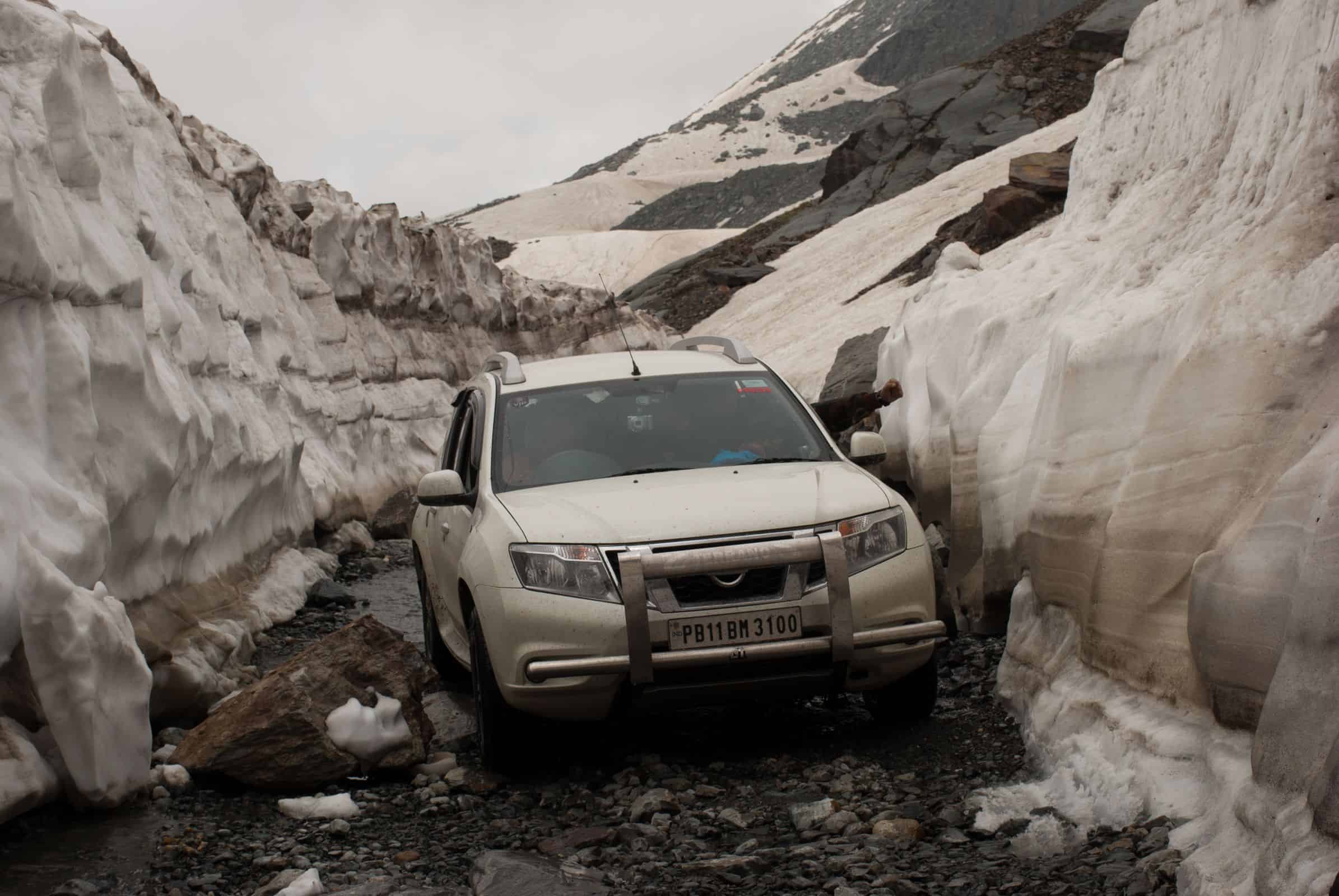
Sach Pass opened early this year. In 2026 the PWD teams from the Pangi and Churah divisions cut through the last snow wall in May, nearly a month ahead of the usual schedule, and the pass was thrown open to light motor vehicles after a seven month freeze. Every year when that news breaks, my inbox fills up with the same optimistic question: if it opened early, does that mean it stays open longer?
No, my friend. It does not work that way. An early opening is decided by how fast machines can cut snow in spring. The closing is decided by the first serious snowfall of autumn, and that clock runs on its own schedule. Sach Pass has shut in mid-October in most years, and the road does not care that it opened in May.
This post is about the other end of the season, the one almost nobody writes about. Not when Sach Pass opens, but when it closes, how you read the warning signs, and what the honest last date is to cross before the Pangi Valley goes back into its seven month isolation.
Quick Answer: When Does Sach Pass Close in 2026?
Sach Pass typically closes around mid-October, when early snowfall and ice make the 4,414 m crossing unsafe. The Chamba district administration then issues a formal prohibitory order. Plan to cross by the first week of October. After that the pass may still be technically open, but the dhabas, the bus and other travellers are already gone.
Practical Info at a Glance
| Pass altitude | 4,414 m (~14,500 ft). Some official reports round it to 4,500 m |
| Open season | Roughly late May to mid-October, varies every single year |
| 2026 opening | May 2026, about a month ahead of schedule, after a seven month freeze |
| Typical closure | Mid-October, by order of the Chamba district administration |
| Recommended last crossing | First week of October. September is the genuinely comfortable window |
| Chamba to Killar via the pass | ~170 km |
| Chamba to Killar when the pass shuts | ~600 km via Jammu and Kashmir |
| Winter snow depth on the pass | 15 to 20 metres in the deepest stretches |
| Permit | No special permit for Indian nationals |
| Reopening if you miss it | Late May to June the following year |
| Last verified | August 2026 |
When Exactly Does Sach Pass Close for Winter?
Quick answer: There are two closures, not one. The practical closure happens around mid-October when snow and ice stop vehicles. The formal closure is a written order from the Chamba Deputy Commissioner banning traffic. The practical one is what should govern your dates, because it always comes first.
This distinction confuses a lot of people, so let me explain it properly.
The practical closure is not announced anywhere. It simply happens. A spell of snow hits the top, the surface at Bagotu and Satrundi glazes over, and drivers stop attempting it. There is no press release for this. You find out by calling ahead or by turning back.
The formal closure is a legal order. When the Chamba district administration shut the pass for winter in a recent season, the Deputy Commissioner issued the prohibition under Section 115 of the Motor Vehicles Act, 1988, citing that “the road surface is becoming increasingly icy, especially during the early morning and late evening hours” along with the risk of sudden snowfall stranding travellers (The Tribune). Keep in mind that this order often lands well after the road has already become impassable in practice.
Hence, if you are planning around “the official closing date,” you are planning around the wrong number. By the time the order is signed, the window shut weeks ago.
Why the Opening Date Tells You Nothing About the Closing Date
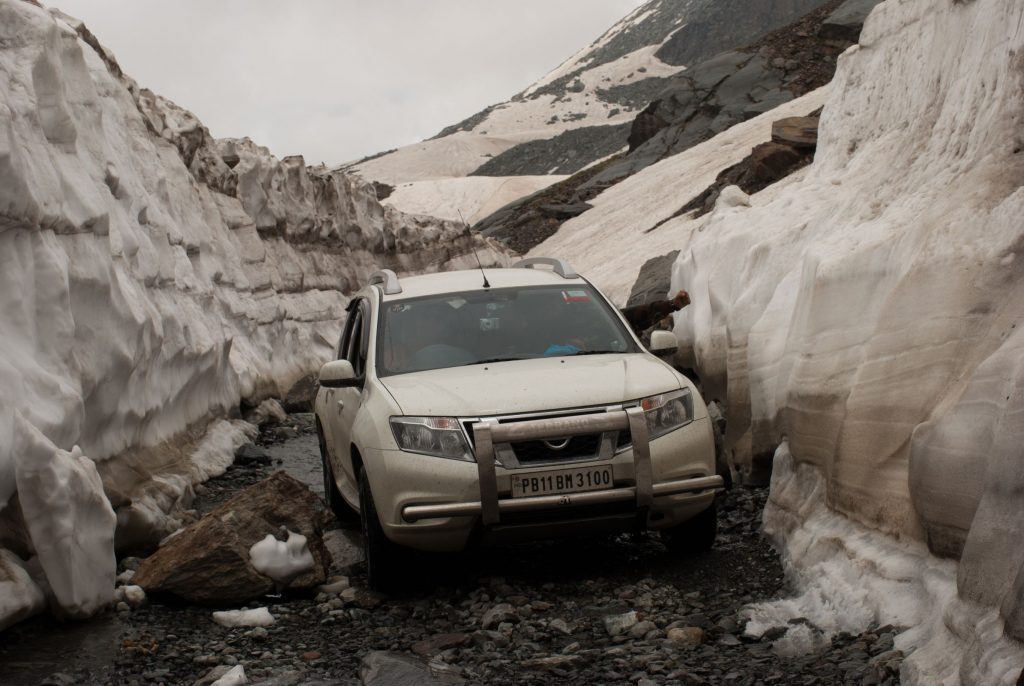
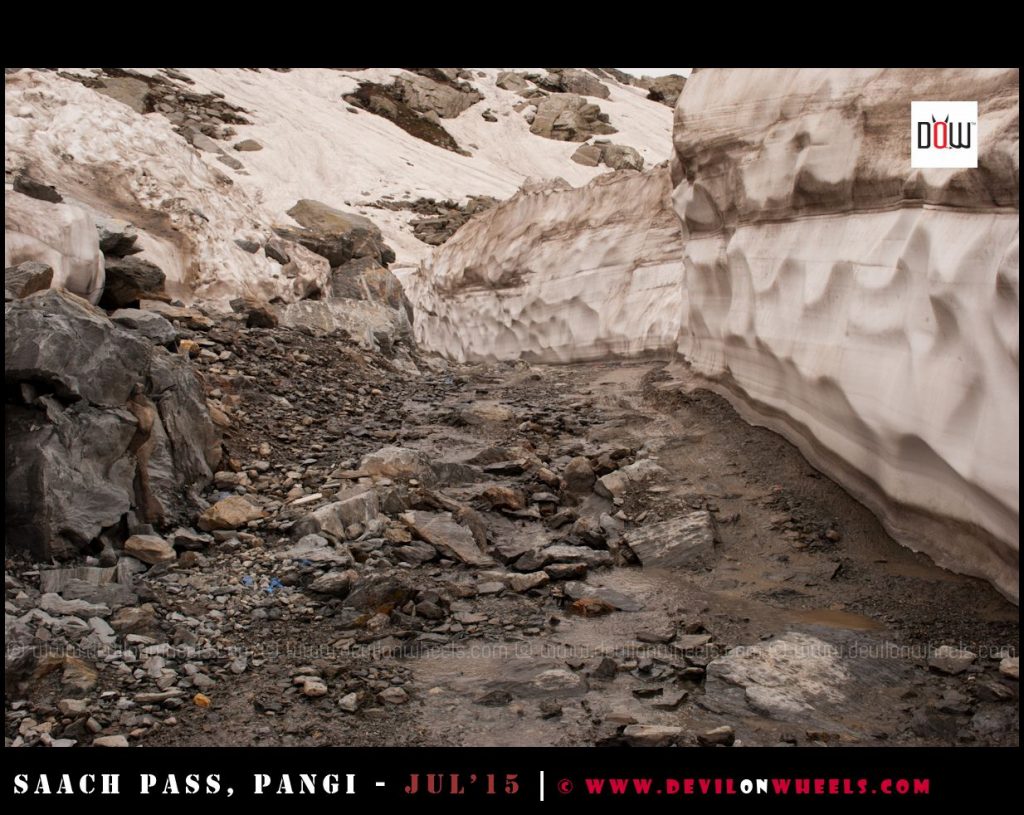
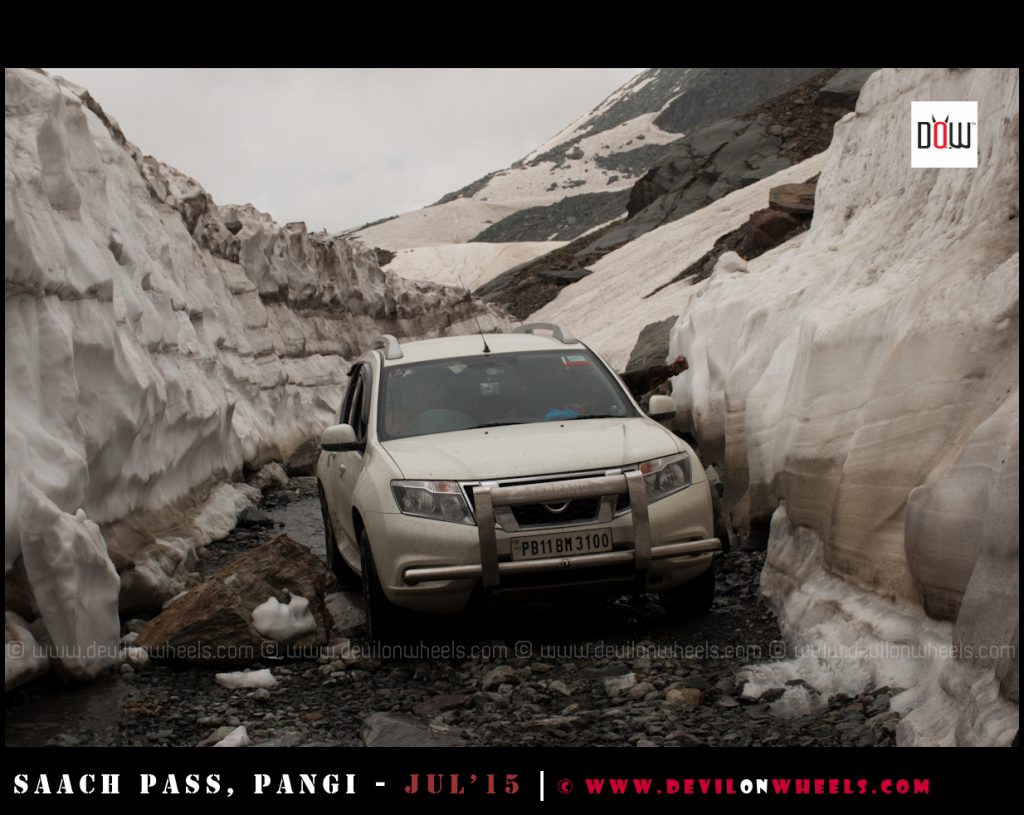
Spring opening depends on machine hours against a fixed amount of snow. In 2025 the crews were still cutting through drifts of 15 to 20 metres and a dozen glaciers when the pass reopened on May 30 after more than six months of closure (The Tribune). A mild winter means less snow to cut, so the pass opens earlier.
Autumn closing depends on one unpredictable event: the first storm that sticks. That event has no relationship with how much snow fell the previous winter. In 2020 the Chamba to Killar bus service was stopped as early as October 1 because of early snowfall. In other years vehicles have been crossing well into the middle of the month.
So the 2026 early opening buys you nothing at the back end. I suggest you treat every season as if it closes mid-October, and treat anything you get beyond that as a bonus.
Why Does the Support System Leave Before the Road Does?
Quick answer: The dhabas at Satrundi and Bairagarh pack up, the HRTC bus stops running, and traffic on the route thins to almost nothing well before the road physically closes. So the real risk in October is not the snow. It is that a breakdown which would be a two hour delay in August becomes an overnight emergency.
This is the part I want you to understand more than anything else in this post, because it is the part that gets skipped.


In July and August, the Sach Pass route has a thin but real safety net. There are seasonal dhaba tents at Satrundi. There are other vehicles, so if your car dies, someone will pass within the hour. The HRTC bus runs the Chamba to Killar route daily, one way fare Rs 432 for the 2026 season, departing Chamba at 5 AM and Killar at 9 AM. Read my full breakdown of that window in the Sach Pass in July guide.
By the second week of October, most of that is gone. The dhaba operators are seasonal workers who leave before they risk getting stuck. The bus service is suspended as winter sets in. Tourist traffic drops off a cliff after the Dussehra and Diwali holidays.

What you are left with is a 4,414 m pass, a road with no barriers, no mobile network across most of the top section, no mechanic, and possibly no other vehicle for several hours. Hence my rule for late season Sach Pass: do not cross alone, and do not cross in a single vehicle. Two vehicles travelling together turns almost every failure mode into an inconvenience instead of an emergency.
What Is the Real Last Safe Date to Cross Sach Pass?
Quick answer: Cross by October 7 if you want a sensible margin. September is the best month of the entire season. Between October 8 and 15 the pass is a gamble that experienced drivers sometimes win. After October 15, assume it is finished for the year and start planning for next June.
Here is the go or no-go calendar I use when readers write in asking whether their dates will work. Read the “support on route” column as carefully as the road column, because that is what actually decides your risk.
| Window | Road at the top | Support on route | Verdict |
|---|---|---|---|
| Sept 1 to 15 | Monsoon easing, nallahs dropping, surface stabilising | Dhabas open, bus running, decent traffic | GO. The best fortnight of the year |
| Sept 16 to 30 | Dry and stable. First light snow possible at the top late in the month | Dhabas thinning, bus still running | GO. Best light of the season, still a real margin |
| Oct 1 to 7 | Cold, morning ice likely. Usually still crossable | Most dhabas closing, traffic thin | GO WITH CAUTION. Two vehicles, cross by noon |
| Oct 8 to 15 | Can close with a single storm, with no warning | Effectively nothing. Bus likely suspended | EXPERIENCED ONLY. Have a 600 km exit plan |
| After Oct 15 | Assume closed. Formal order usually follows | None | NO GO. Wait for next season |
In case you are wondering why I put the hard line at October 7 rather than the mid-October closure date, it is because of what happens on the day the storm arrives. The pass does not warn you. It does not close gradually. A single overnight snowfall at 4,400 m can turn a crossable road into a stuck vehicle by breakfast, and in the second week of October there is nobody up there to help you sort it out.
The One Genuine Advantage of Going Late
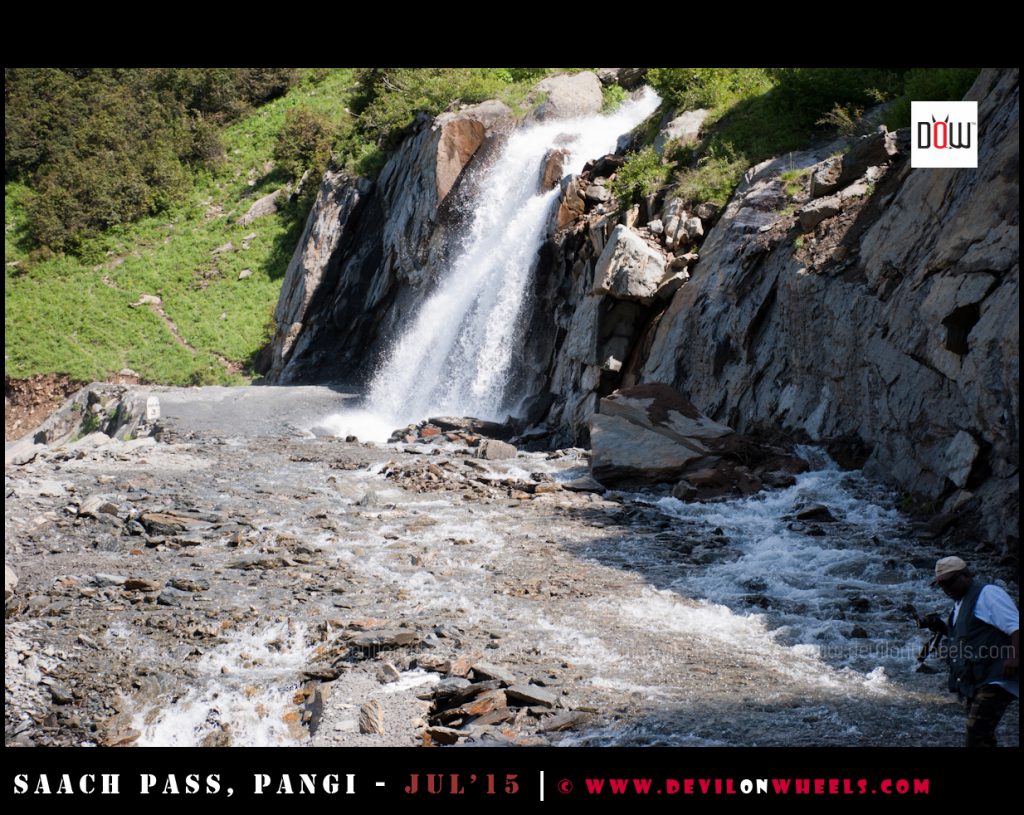
Not everything about the late window is a warning. The water crossings, which are the single biggest headache on this route in July, are at their tamest in September and October. Glacial melt has slowed right down, so the nallahs that swallow ground clearance in summer are often just a trickle by then.
The catch is that whatever water remains freezes overnight and refreezes every morning. So the crossings are smaller but slicker. Keep in mind that the timing advice reverses from what you may have read for July. In summer you start at 5 AM to beat the swelling nallahs. In October you wait for the sun to lift the ice off the surface, which usually means starting around 7 to 8 AM instead. Same road, opposite logic.
Is Late September Really the Best Photography Window at Sach Pass?
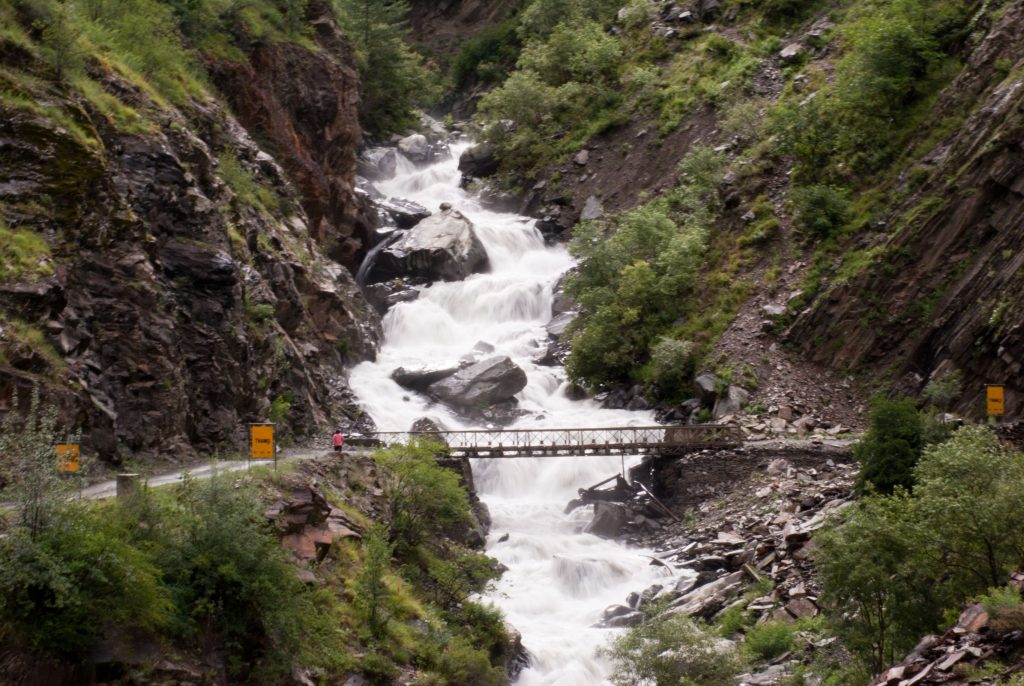
Quick answer: Yes, and it is not close. The monsoon scrubs dust out of the air, so late September gives the clearest visibility of the year. The valley turns orange and brown against a hard blue sky, and there is often fresh snow on the peaks without snow on the road. That combination does not exist at any other time.
I should be straight with you here. My own Sach Pass crossings have been in July, so I am not going to pretend I have shot this pass in October. What I am giving you is built from tracking the road status year after year, from the closure record, and from what riders in the DwD community report back when they attempt the late window.
The consistent report is this. Post-monsoon air over Chamba and Pangi is exceptionally clean because the rains have washed months of haze out of it. Ridgelines that read as grey smudges in June come out sharp. The high grass and scrub on the Pangi side goes copper. And in the last week of September or the first week of October you frequently get the shot that everyone wants, which is fresh white on the peaks while the road itself is still dry.
Now here is the honest trade-off, because I am not going to sell you the light without the price. That same fresh snow on the peaks is the first signal of the storm cycle that closes the pass. You are chasing a photograph that exists precisely because winter has started arriving. The people who get burned on this route in October are almost always the ones who went one week later than they planned, chasing better snow.
What Happens If the Pass Closes While You Are on the Other Side?
Quick answer: You do not get stranded permanently, but you pay heavily in distance and days. Killar to Chamba is roughly 170 km over Sach Pass. With the pass shut, the same trip becomes roughly 600 km via Jammu and Kashmir, or a long haul out through Udaipur and the Atal Tunnel to Manali.
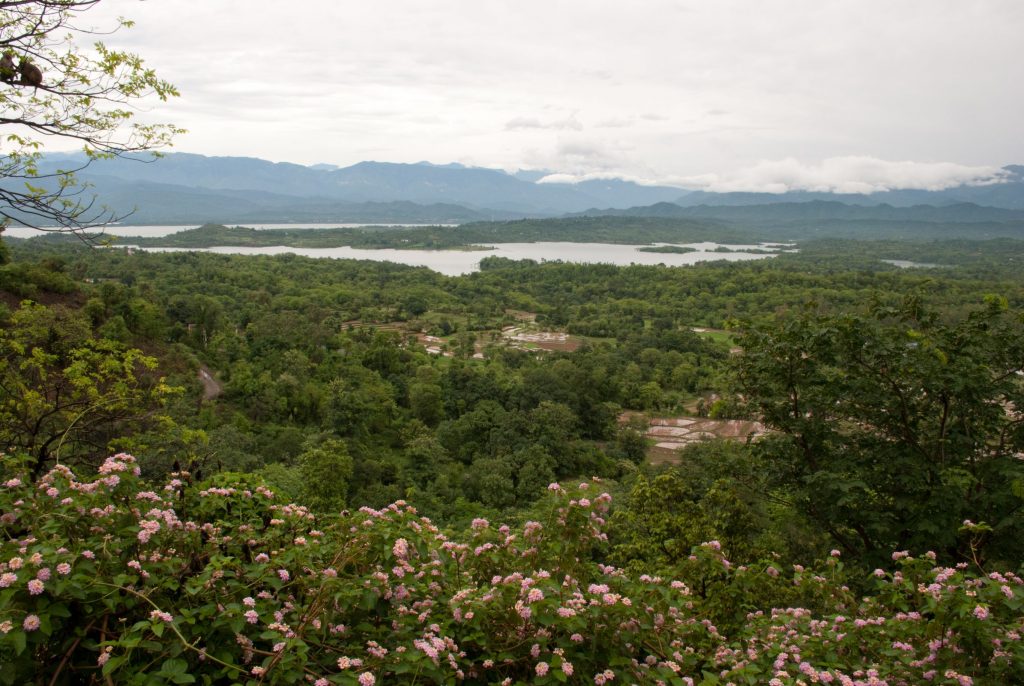
Understand the scale of this before you commit. When Sach Pass closes, the residents of Pangi are cut off from their own district headquarters, and their journey to Chamba stretches from around 172 km to over 650 km. That is not an inconvenience. That is the reason the reopening of this pass every spring is genuine front page news in Himachal.
For you as a traveller, there is an exit hierarchy worth memorising, because these three routes do not close at the same time:
- Sach Pass to Chamba (~170 km). The shortest exit and the first one to shut. Mid-October in most years.
- Killar to Udaipur to Tandi to Manali (~250 km). This one usually holds a few weeks longer than Sach Pass, and since the Atal Tunnel opened in 2020 the Manali to Keylong leg has year round access. The Killar to Udaipur stretch itself still closes in deep winter, so this is a buffer, not a guarantee. More on that side in my Lahaul Valley complete guide.
- Killar to Kishtwar to Jammu (~600 km to Chamba). The all season lifeline, and also one of the most exposed roads in the country. I have written about it separately in Killar to Kishtwar, the world’s most dangerous road. It is a serious drive, not a casual fallback.
Hence my planning rule for any October crossing: before you drive over Sach Pass, decide which of the other two routes you would take out, and make sure you have the fuel, days of leave and money to actually do it. In case the answer is “I only have two days of buffer,” go in September instead.
Worth noting for the long term, the Sansari to Killar to Thirot to Tandi road is being upgraded to double lane under Project Deepak of the Border Roads Organisation, with the stated aim of all weather connectivity between Pangi and the Kullu side (The Tribune). That will eventually change this calculation. It has not changed it yet.
How Should You Plan a Late Season Sach Pass Crossing?
Quick answer: Build the trip backwards from an exit date, not forwards from a start date. Travel in two vehicles, carry cold weather gear well beyond what the forecast suggests, top up fuel at every opportunity, and keep at least two spare days that you are willing to burn.

Most of the core logistics are the same as any other month, and I have covered those in detail in the Sach Pass travel guide and the day by day Sach Pass and Pangi Valley itinerary. If you are short on leave, the compressed version is in how to make a Sach Pass trip in 4 to 5 days. What follows is only what changes in the closing window.
- Cross the top by noon. Late afternoon brings the day’s cloud build up and the refreeze starts early at that altitude. Get over and down.
- Start later than the summer advice, not earlier. Around 7 to 8 AM from Bairagarh, once the sun has taken the ice off. This directly contradicts the 5 AM start you will read for July, and both are correct for their season.
- Sleep low, not high. Bairagarh and Killar are far more comfortable and far safer than anything higher once night temperatures drop. Altitude gain is also faster than people expect on this route, so read my notes on preventing AMS before you go.
- Fuel discipline gets stricter. The last reliable pump on the Chamba side is well before the climb, and there is no pump in Pangi. Fill completely, and bikers should carry spare fuel.
- Carry proper cold gear. Night temperatures at Killar in October drop far below what a Delhi forecast will lead you to expect. My list of must have things for a Himalayan self drive applies almost line for line here.
- Confirm status locally, every single day. Not from a blog, including this one. Call your guesthouse in Bairagarh or Killar the morning you plan to cross. Conditions at 4,400 m change faster than any website updates.
- Break the journey properly. Dalhousie or Khajjiar makes a sensible overnight on the way in. I have written about that side of Chamba district in my Dalhousie guide.
How Much Does a Late Season Sach Pass Trip Cost in 2026?
Quick answer: Broadly the same as any other month, roughly Rs 8,000 to 12,000 per person on a budget or Rs 13,000 to 18,500 mid-range for 5 to 6 days from Delhi in a group of four. The difference in October is that you must add a detour contingency, because the cheap trip becomes an expensive one the moment the pass shuts behind you.
| Expense (per person, group of 4) | Budget | Mid-range |
|---|---|---|
| Fuel, Delhi to Dalhousie to Killar and return | Rs 3,000 to 4,000 | Rs 4,000 to 5,000 |
| Accommodation, 5 nights | Rs 2,500 to 4,000 | Rs 5,000 to 7,500 |
| Food, 5 to 6 days | Rs 2,000 to 3,000 | Rs 3,000 to 4,500 |
| Miscellaneous | Rs 500 to 1,000 | Rs 1,000 to 1,500 |
| Base total | Rs 8,000 to 12,000 | Rs 13,000 to 18,500 |
| Late season detour contingency | Rs 4,000 to 6,000 | Rs 4,000 to 6,000 |
| Total to actually budget in October | Rs 12,000 to 18,000 | Rs 17,000 to 24,500 |
That contingency line covers the extra fuel and two to three additional nights if you have to exit the long way round. I would rather you carry it and not need it. Guesthouses and homestays in Killar and Bairagarh run in the Rs 500 to 1,500 per room range, though I suggest verifying locally since late season availability shrinks along with everything else. Full cost logic is in the Pangi Valley complete offbeat travel guide and the most complete guide to Pangi Valley.
What If You Miss the Window Entirely?
Quick answer: Then you wait. Sach Pass stays shut for six to seven months and typically reopens between late May and June, once PWD crews cut through drifts that reach 15 to 20 metres. There is no winter workaround over the pass itself, and attempting one is not a calculated risk, it is simply a bad idea.
I know that is not what anyone wants to read after taking leave from work. But this is exactly the sort of place where an honest “wait until next year” is worth more than a hopeful maybe. Pangi in winter is reachable only by the long Jammu side approach, and it is a genuinely serious undertaking rather than a holiday. In case you are curious about what these regions look like in deep winter, I have covered that in my January road status guide for Ladakh, Spiti, Zanskar and Pangi.
The better plan is to book September of next year now, mentally at least. It is the strongest month on this route and it removes the entire gamble.
Frequently Asked Questions
When does Sach Pass close in 2026?
Expect closure around mid-October 2026, though there is no fixed date. The practical closure happens whenever the first sustained snowfall hits the top, and the Chamba district administration issues its formal prohibitory order afterwards. Plan your crossing for the first week of October at the latest.
Is Sach Pass open in October?
Usually for the first week or two only. The first week of October is generally crossable with care. Beyond October 8 it becomes a gamble that can end with a single overnight storm, and after October 15 you should assume it is closed for the season.
Did the early 2026 opening mean a later closing?
No. Sach Pass opened in May 2026, roughly a month ahead of schedule, because there was less snow for the PWD crews to cut. Closing is driven by the first autumn storm instead, which is unrelated. Plan for a normal mid-October closure.
What is the best month to cross Sach Pass?
September. The monsoon has passed, the nallahs have shrunk, the road surface is at its most stable, the air is at its clearest for photography, and the dhabas and bus service are still operating. It gives you the best conditions and the best safety margin at the same time.
How long does Sach Pass stay closed in winter?
Six to seven months. The pass reopened on May 30 in 2025 after more than six months of closure, and in 2026 it opened in May after a seven month freeze. Snow depth in the worst stretches reaches 15 to 20 metres.
Does the Chamba to Killar bus run in October?
The HRTC service is seasonal and is suspended as winter approaches, usually around mid-October, though early snowfall has ended it as soon as October 1 in some years. The 2026 season fare is Rs 432 one way. Confirm directly with HRTC before relying on it in October.
How far is the detour if Sach Pass closes behind me?
Killar to Chamba is about 170 km over the pass. With the pass shut it becomes roughly 600 km via Jammu and Kashmir, or a long route out through Udaipur and the Atal Tunnel to Manali. Budget two to three extra days and Rs 4,000 to 6,000 per person.
Do I need a permit to cross Sach Pass late in the season?
No special permit is required for Indian nationals at any point in the season. However, once the district administration issues its winter prohibitory order under the Motor Vehicles Act, crossing is legally prohibited, not merely inadvisable.
Can a sedan cross Sach Pass in October?
I would not attempt it. Ground clearance is the binding constraint on this route in any month, and in October you add morning ice and almost no help on the road. A high clearance SUV with a competent driver, travelling in a pair, is the sensible minimum for the closing window.
What is the altitude of Sach Pass?
Around 4,414 m, which is roughly 14,500 ft. Some official reports round it to 4,500 m. Either figure is close enough for planning, and both are high enough that AMS and cold exposure are real considerations in October.
Related Reading
- Sach Pass Travel Guide, the complete route, itinerary and safety pillar for this trip
- Pangi Valley, The Last Frontier of Himachal, the full offbeat guide to the valley on the other side
- The Most Complete Guide to Pangi Valley, routes, stay, food and budget in depth
- Sach Pass in July, the opposite end of the season and why the advice reverses
- Sach Pass and Pangi Valley, day by day itinerary for a 7 to 8 day trip
- Killar to Kishtwar, your all season exit route, and what it demands
Final Thoughts
Sach Pass is not a place that punishes you for being unprepared. It punishes you for being late. The road in August and the road in the third week of October are the same stretch of dirt and rock, but they are completely different propositions, because by October everything that makes a mistake survivable has already packed up and gone home.

So here is my honest recommendation, and it is the same one I give everyone who writes in about this. Go in September. You get the clearest air of the year, the calmest nallahs, a stable surface and a functioning safety net all at once. If your leave only allows early October, go with a second vehicle, cross the top before noon and keep a real exit plan in your pocket. And if the only dates you have fall after the middle of October, do the mature thing and put it in the diary for next June. Pangi will still be there, and it will still be one of the least visited valleys in the country.
If you have crossed Sach Pass in the closing window, please share your dates and what you found up there. That kind of first hand report from the DwD community is genuinely how the rest of us calibrate this stuff year after year.
If you have any questions, feel free to ask in the comments section below 🙂
