


Every year around May, the same question floods my inbox: “Is Uttarakhand worth visiting in July and August, or should we wait for October?” My honest answer is that it completely depends on where you plan to go. The generic advice to “avoid Uttarakhand in monsoon” is one of the most misleading things in Indian travel writing, and it has cost thousands of travelers some genuinely special experiences.
Here is what nobody tells you. The Valley of Flowers, which is arguably the most spectacular destination in all of Uttarakhand, exists only because of the monsoon. It opens June 1 and the peak bloom runs from mid-July through mid-August. If you avoid monsoon, you miss the Valley of Flowers entirely. That is not a trade-off most travelers realize they are making. Similarly, Chopta turns an unreal shade of green in July and August, rhododendrons are in full flush, and the Tungnath trail feels nothing like the dusty crowd-fest it becomes in October.
That said, I want to be completely honest with you. Some parts of Uttarakhand in July and August are genuinely dangerous, and I am not going to pretend otherwise. The NH-7 corridor toward Badrinath near Lambagad and Hanuman Chatti has a serious landslide problem every monsoon season. The Gangotri and Yamunotri roads close frequently. Traveling to those areas in peak monsoon without checking daily road conditions is how trips turn into nightmares. The good news is there is a clear green zone, a yellow zone, and a red zone, and if you plan around this framework, monsoon Uttarakhand can be very rewarding.
When will monsoon end in Uttarakhand in 2026? The monsoon usually starts leaving Uttarakhand in the last week of September and has cleared the state by early October. In 2026, IMD began withdrawal from West Rajasthan on 19 September, two days after the normal date of 17 September, and the rest of northwest India, Uttarakhand included, was expected to follow around 1 to 7 October.
Quick Answer: Uttarakhand Monsoon Destination Guide (Green / Yellow / Red)
Here is the short version if you are planning in a hurry. The detailed sections below explain each zone and what to expect on the ground.
| Destination | Zone | Best For | Risk |
|---|---|---|---|
| Valley of Flowers | GREEN | Peak bloom, rhododendrons, alpine flowers | Low (managed park) |
| Hemkund Sahib | GREEN | Pilgrimage, July-September window | Low to moderate |
| Chopta / Tungnath | GREEN-YELLOW | Lush trails, Shiva temple, low crowds | Moderate (road check needed) |
| Auli | GREEN | Green meadows, rhododendrons, near-empty ski slopes | Low |
| Rishikesh / Haridwar | GREEN | Spiritual experience, yoga, low altitude | Low (rafting CLOSED Jul-mid Sep) |
| Mukteshwar / Kausani | GREEN | Cool hills, quiet travel, easy roads | Low |
| Kedarnath | YELLOW | Early July window only (Jul 1-15) | High after Jul 15, check daily |
| Badrinath (NH-7) | RED | Not recommended July-August | Landslide-prone near Lambagad |
| Gangotri / Yamunotri | RED | Skip until September-October | Frequent road closures |
Practical Info: Uttarakhand Monsoon Travel 2026
| Monsoon window | July 1 – September 15 (peak: July-August) |
| Best green-zone destinations | Valley of Flowers, Auli, Rishikesh, Chopta, Mukteshwar |
| Avoid | Badrinath via NH-7 (landslide risk), Gangotri, Yamunotri |
| Budget (per day, per person) | Rs 1,200 – Rs 3,500 (30-40% cheaper than May-June) |
| Valley of Flowers entry | Rs 200 (Indian), Rs 800 (foreign), 300 daily cap |
| KMVN booking | Available without advance booking in monsoon |
| Rafting in Rishikesh | CLOSED July 1 to mid-September |
| Road status | Check Uttarakhand Tourism daily: uttarakhandtourism.gov.in |
| Last updated | September 2026 |
Why Monsoon Uttarakhand Gets a Bad Reputation (and Why That Is Unfair)
The “avoid monsoon” advice comes from two real problems: the Char Dham pilgrimage routes (Badrinath, Kedarnath, Gangotri, Yamunotri) genuinely get hammered by monsoon rains, and a few high-profile landslide incidents make headlines every year. The impression that sticks is “Uttarakhand in monsoon is dangerous.” What does not make the news is that a quiet week in July at Chopta or a sunrise trek in drizzle to Valley of Flowers is one of the most memorable things a Himalayan traveler can do.
The state is large. Uttarakhand covers 53,483 square km across Garhwal and Kumaon divisions. The southwest-facing slopes that catch the Arabian Sea monsoon directly (the Badrinath corridor, the Mandakini valley to Kedarnath) are far more vulnerable than the rain-shadow zones and the lower-altitude destinations like Rishikesh, Mukteshwar, or Kausani. Lumping all of Uttarakhand into a single “avoid monsoon” category is like saying “avoid Himachal in November” because Rohtang Pass closes. Shimla is perfectly fine in November.
Also, keep in mind the budget angle. Peak season in Uttarakhand runs May through mid-June and again October through November. Hotels, KMVN rest houses, and transport rates drop 30 to 40 percent in July and August. KMVN properties, which are the most reliable mid-range option in the hills, are available without advance booking in monsoon. If you travel with a group of 3 or 4, the savings on accommodation alone can cover an extra day in the hills.
Green Zone Destinations: Where to Go in July and August
1. Valley of Flowers (Chamoli district) – The Monsoon Crown Jewel
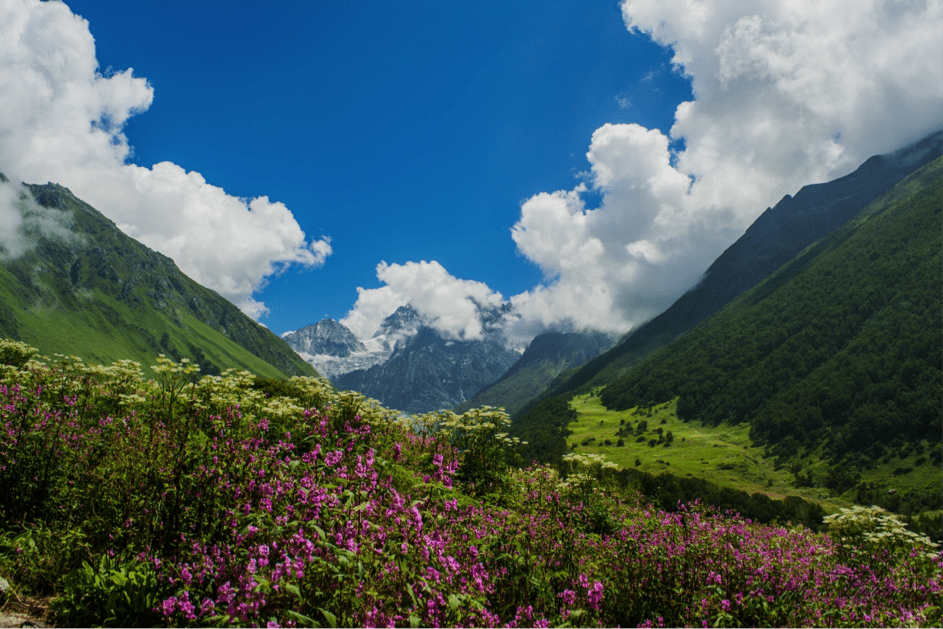
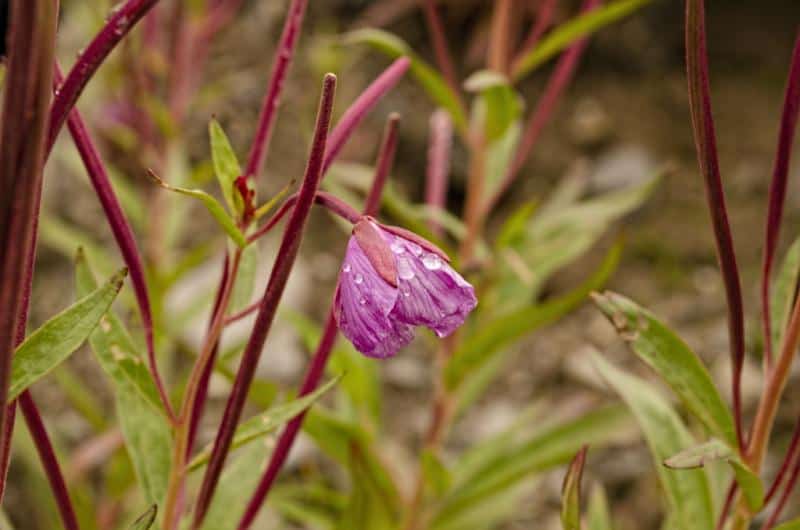
I want to lead with this because it is the single strongest reason to travel to Uttarakhand in monsoon rather than avoid it. Valley of Flowers National Park is a UNESCO World Heritage Site. It covers roughly 87.5 square km in Chamoli district, at an altitude between 3,658m and 6,675m. The park opens June 1 every year and the gates close October 31. This is a monsoon-dependent ecosystem. The 600-plus species of alpine wildflowers bloom only because the monsoon delivers the moisture they need. If you visit outside monsoon, you see dry meadows and brown slopes. If you visit mid-July to mid-August, you see something that does not look real.
As of 2026, registration is mandatory and fully virtual through the Uttarakhand government portal at valleyofflower.uk.gov.in. The entry fee is Rs 200 for Indian adults and Rs 800 for foreign nationals. Children under 12 enter free. There is a daily visitor cap of 300 people in place since 2017, so booking early in the season pays off. The gate opens at 7 AM and the last entry is at 2 PM. Nobody stays overnight inside the park. All accommodation is at Ghangaria, which is the base village, roughly 4 km downhill from the valley.
To reach Ghangaria: the motorable road now extends to Pulna, which is about 4 km past Govindghat. A shared jeep from Govindghat to Pulna runs at around Rs 50 per person. From Pulna, the trek to Ghangaria is 9 to 10 km. On the same trip, you can combine Valley of Flowers with Hemkund Sahib, which is the Sikh pilgrimage site at 4,329m. Hemkund Sahib is 6 km uphill from Ghangaria and is also a monsoon-window destination (open June to October). I always suggest combining both into a 4-day trip from Rishikesh. You can read the detailed itinerary in our Valley of Flowers and Hemkund Sahib guide.
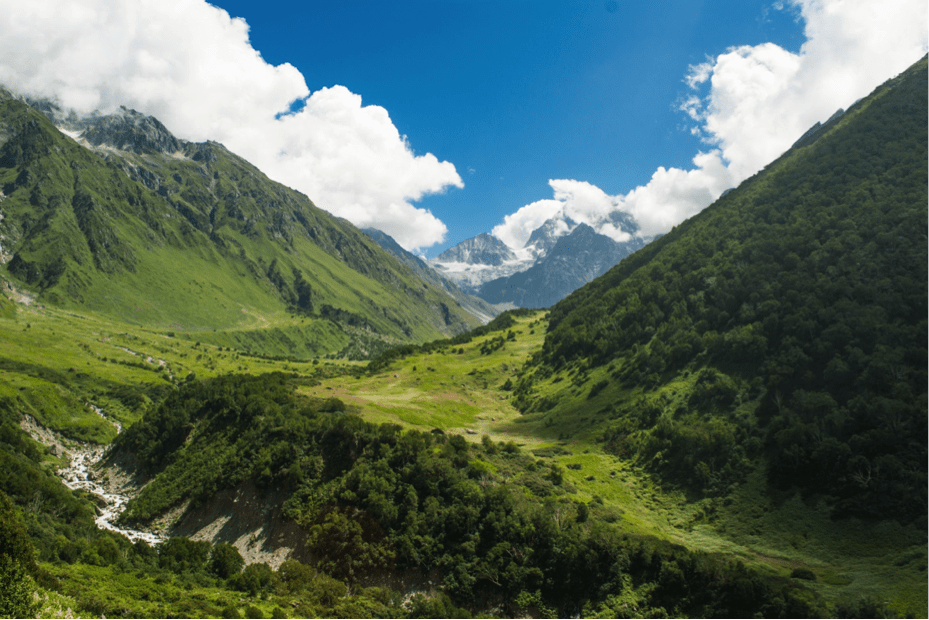
Practical notes for Valley of Flowers in July-August: Carry a waterproof jacket at all times. The rain comes in short bursts here, not all-day drizzle. Mornings tend to be clearer than afternoons. If you can only choose one day to enter the valley, pick a weekday and go early in the morning when the light on the flowers is at its best. Accommodation at Ghangaria runs from about Rs 600/night for basic guesthouses up to Rs 2,000 for GMVN accommodations. For the full 2026 permit guide, check our Valley of Flowers 2026 complete guide.
2. Chopta and Tungnath (Rudraprayag district) – Monsoon Turns It Green
Chopta sits at 2,600m (8,530 Ft) in the Rudraprayag district. Most people know it as the base for the Tungnath temple trek, which leads to the world’s highest Shiva temple at 3,680m (12,073 Ft). In May and June, Chopta sees crowds. In July and August, most of those crowds disappear because the general advice is to avoid monsoon. What the crowds miss is that Chopta in July and August is genuinely different and, in some ways, more beautiful. The bugyals (alpine meadows) are an intense emerald green. The rhododendron forests are in full flush. When the clouds part for an hour, the view from Tungnath toward Chaukhamba is something I find hard to describe without sounding like a tourist brochure.
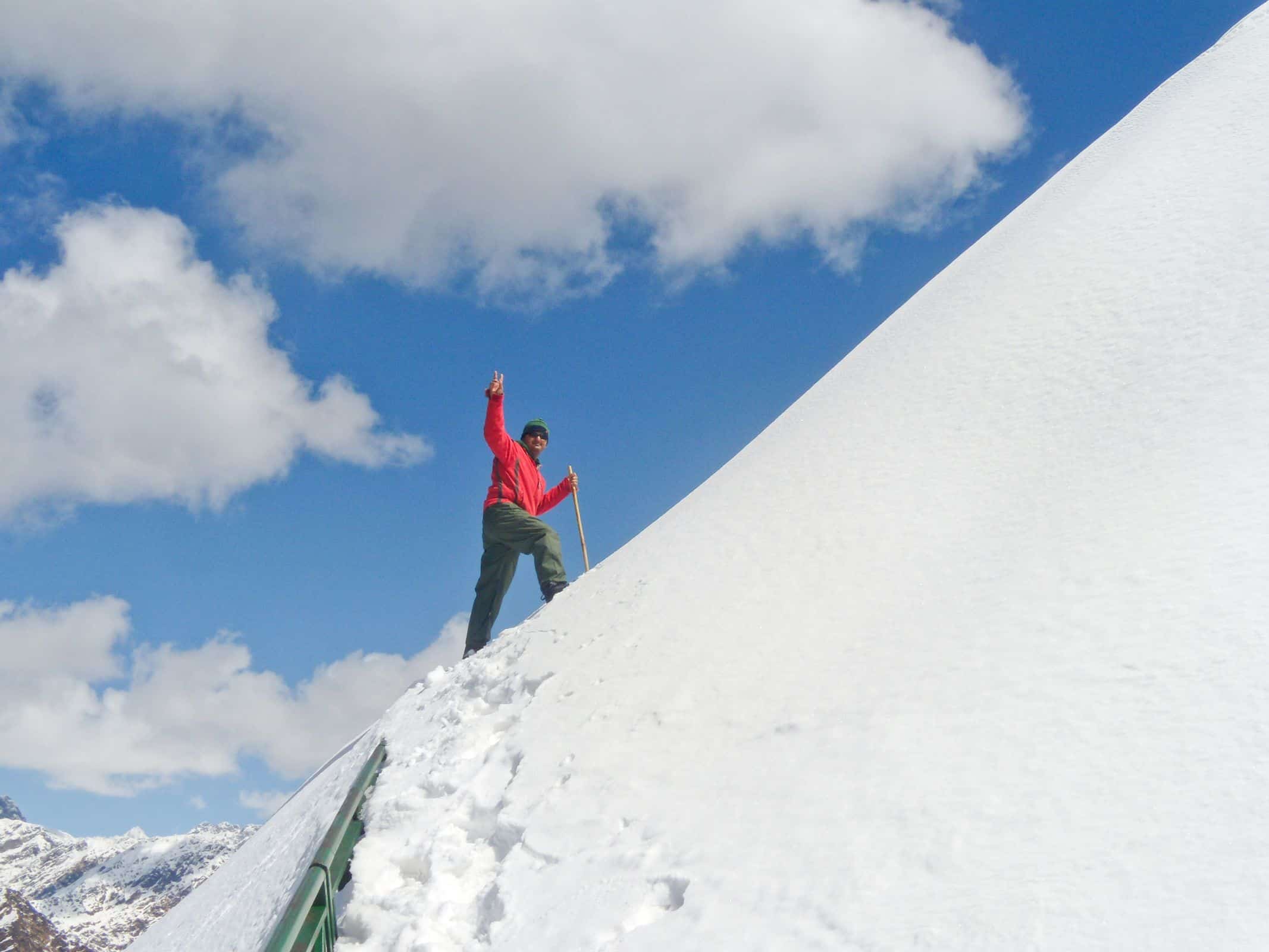
A word on road conditions to Chopta. The route via Ukhimath and Rudraprayag is generally manageable in July and August, but it is a narrow hill road with some slippery sections after heavy rain. Always check conditions before you drive. The stretch between Rishikesh and Rudraprayag has a few landslide-prone sections. If you are driving your own vehicle, give yourself more time and drive early in the day before afternoon rains. Budget guesthouses at Chopta run Rs 500 to Rs 1,500 per night in the monsoon shoulder season. GMVN Chopta is reliable and available without advance booking in July-August. The Tungnath temple itself is open from late April until November, with darshan timings of 7 AM to noon and 3 PM to 7 PM. For a complete Tungnath travel guide, check our article: Delhi to Tungnath and Chandrashilla travel guide.


3. Auli (Chamoli district) – Lush Green and Uncrowded
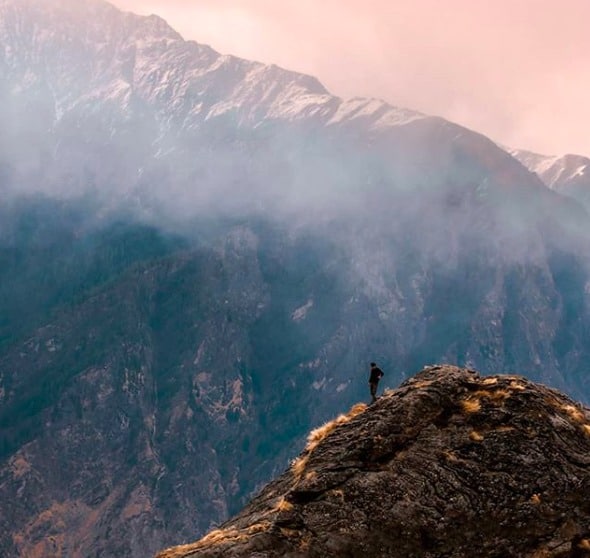
Auli at 2,519m (8,264 Ft) is famous for skiing in winter, but the July-August version of Auli is a completely different experience. The ski slopes are buried under lush green grass. One correction before you plan around this: the Joshimath-Auli ropeway has been closed since January 2023, after land subsidence damaged its towers, and it has not reopened. A replacement gondola exists only as a planning-stage proposal right now, so do not build your itinerary around a ropeway ride. You reach Auli by the 16 km road from Joshimath instead, a drive of 45 minutes to an hour, and the views near the top station on a clear morning still show Nanda Devi, Kamet, and Dunagiri. The artificial lake at the top is full, reflecting the surrounding peaks when the sky clears. There are almost no crowds. GMVN Auli accommodations are available without booking in this season and rates are noticeably lower than peak winter or summer rates.
One practical note: Auli is accessed via Joshimath. The road from Rishikesh to Joshimath (about 255 km, roughly 7-8 hours) passes through Chamoli and some sections are prone to slippery patches in heavy rain. Check the Chamoli district road report before travel. From Joshimath, a shared jeep up to Auli runs Rs 100 to Rs 200 per person, or a private taxi Rs 1,800 to Rs 2,500 one way; a local 4×4 is the safer choice if the road is wet. The route is generally fine, but awareness is better than being caught off-guard. I would suggest checking our Auli complete travel guide for full accommodation and access details.

4. Rishikesh and Haridwar – Spiritual Energy in the Rain
Rishikesh sits at just 356m (1,168 Ft) and is perfectly safe during monsoon. The town takes on a different energy in July and August. The Ganges runs full and fast, the ghats are washed clean by daily rain, and the ashrams and yoga centres have more breathing room than at any other time of year. If you want to do a serious yoga or meditation retreat, July and August are when you get a room and the genuine attention of teachers without competing with peak-season tourist volumes.
Keep in mind one important thing: river rafting in Rishikesh is officially closed from July 1 to mid-September. The Ganges discharge becomes too high and the debris in the water makes it unsafe. This is a firm safety regulation, not a scheduling inconvenience. Do not try to find operators willing to run rafting in July. If you are coming specifically for rafting, wait for October. However, Rishikesh without rafting is still very full of things to do. The Laxman Jhula and Ram Jhula area, the Beatles Ashram, the yoga trail, Neelkanth Mahadev temple (16 km from Rishikesh, manageable on rainy-season roads), and the evening Ganga Aarti at Parmarth Niketan are all excellent. Haridwar is 25 km away and the Har Ki Pauri Aarti at dusk during monsoon is worth a separate visit on its own.
5. Mukteshwar and Kausani (Kumaon) – Cool Hills, No Drama
If you want hill travel with minimal road risk, the Kumaon region is generally more stable than Garhwal during monsoon. Mukteshwar at 2,286m and Kausani at 1,890m both offer cool weather, valley views, and the kind of quiet that is genuinely hard to find in peak season. Apple orchards around Mukteshwar look their best in August when the fruit is on the trees. Neither destination has dangerous access roads by Uttarakhand standards. KMVN rest houses at both locations are available without advance booking in monsoon and run Rs 1,000 to Rs 2,200 per night for a double room as of 2026 (verify current rates at kmvn.in before booking). For a full guide to Mukteshwar, see our Mukteshwar Uttarakhand travel guide. Gwaldam, about 36 km from Kausani on the Garhwal-Kumaon border, sees a similarly mild monsoon with far fewer crowds. My Gwaldam travel guide has the month-by-month weather breakdown if you want to add it to this circuit.
Yellow Zone: Kedarnath in Early July
Kedarnath is a complicated case. I would not put it in the green zone for monsoon travel, but it is not a firm red either, especially in the first two weeks of July. The Kedarnath Yatra season opens in late April and the temple is open until early November. By mid-July, the Mandakini valley road from Sonprayag to Gaurikund begins to see increased debris flow. Keep in mind that the helicopter shuttle from Phata and Sersi is not a fallback option here. IRCTC HeliYatra runs only two seasonal windows a year, roughly May 1 to June 15 and September 15 to October 31, so helicopter flights are fully suspended through July and August, not merely weather-dependent. Early July, roughly July 1 to July 15, is a window when many pilgrims successfully make the trip on foot and conditions are still manageable. As a real example, a landslide near Sonprayag combined with a glacier fragment break at Bhairon briefly shut the trek route again in mid-August 2026, a reminder that even the “safer” early window is never risk-free.
My honest suggestion: if you want Kedarnath during the monsoon period, plan for the first week of July and be prepared to be flexible with your return by a day or two, and go on foot since the helicopter is not flying in this window. Do not plan a July Kedarnath trip with zero buffer days in your schedule. The trek from Gaurikund to Kedarnath temple is 16 km uphill and the trail gets muddy and slippery in July. Sturdy waterproof shoes are non-negotiable. After July 15, I would shift Kedarnath to a September-October plan, when the helicopter shuttle resumes and booking opens again through the official IRCTC HeliYatra portal. Slots fill quickly once a booking phase is announced. For full helicopter booking guidance, check our Kedarnath helicopter booking guide 2026.
Red Zone: Where Not to Go in July-August
Badrinath via NH-7 (Avoid July-August)
This is the warning I need to be direct about. The Badrinath National Highway (NH-7 or old NH-58) has a specific trouble section near Lambagad and Hanuman Chatti between Joshimath and Badrinath. This stretch has seen landslides, partial road washouts, and multi-day blockages every monsoon season for years, and 2026 was no exception, with the state disaster management authority issuing a monsoon alert for this zone from June onward. When the monsoon intensifies in July and August, this road can be cut off for two to three days at a stretch. Hundreds of pilgrims and tourists have been stranded at Joshimath or Badrinath with the road blocked on both ends.
I am not saying Badrinath is impossible in monsoon. The Yatra continues and thousands of pilgrims do make it. What I am saying is that if you are a casual traveler with limited leave days, a fixed return date, or children and elderly people in your group, Badrinath in July or August is a gamble I would not recommend. Save it for September or October when the rain eases. The road is far more predictable and the experience is less stressful. For the full Badrinath guide, see our Char Dham Yatra 2026 complete guide.
Gangotri and Yamunotri (High Risk)
The roads to Gangotri and Yamunotri face similar or worse conditions than the Badrinath route during peak monsoon. The Bhagirathi valley approach to Gangotri via Uttarkashi sees multiple closures every July. Yamunotri via Hanuman Chatti is on a narrow road that frequently gets hit by debris. These destinations are magnificent, but July and August are not the months to attempt them unless you have seen very specific updates from someone who drove the road within the last 48 hours. The Char Dham sequence of September to October is a far better window for Gangotri and Yamunotri.
July vs August in Uttarakhand: What Changes?
| Factor | July | August |
|---|---|---|
| Rainfall intensity | Builds through the month | Peak monsoon, heaviest rain |
| Valley of Flowers bloom | Early bloom, opening | Peak bloom (mid-Aug is best) |
| Road risk | Moderate in early July | Higher, saturated slopes |
| Crowds | Low to moderate | Very low |
| Accommodation rates | 30% below peak | 35-40% below peak |
| Kedarnath window | First half viable | Not recommended |
| Rishikesh | Perfectly fine | Perfectly fine |
| Auli / Chopta | Green and beautiful | Greener, but wetter |
My personal preference between the two is mid to late July. You catch the early Valley of Flowers bloom before the peak rush of August, the rains are not yet at their heaviest, and early July still has the Kedarnath option if that is on your list. If you are going specifically for Valley of Flowers peak bloom and do not mind heavy afternoon rains, the first two weeks of August are worth it. Just pack properly.
When Will Monsoon End in Uttarakhand in 2026?
This is the question behind most “should I wait until October” messages, so here is the dated picture, based on research of IMD’s own withdrawal reports. IMD does not declare a withdrawal from Uttarakhand on one fixed day. It declares it in stages, starting from the far northwest and moving southeast, and the earliest it will attempt withdrawal from the extreme northwest is 1 September.
| Milestone | Date | What it means for Uttarakhand |
|---|---|---|
| Normal start of withdrawal (West Rajasthan) | About 17 September | Rains still active in the hills |
| 2026 withdrawal begins (Ramgarh, Mohangarh, Phalodi, Khajuwala) | 19 September 2026 | Withdrawal line is still far from Uttarakhand |
| Remaining northwest India, including Uttarakhand | Expected around 1 to 7 October 2026 | Rain frequency drops, skies clear, but late showers are still possible |
Keep in mind that “withdrawal” and “the rain stops” are not the same thing. IMD’s own criteria for withdrawal require rainfall to cease for five continuous days along with a change in the wind pattern, so the declared date can lag the first dry spell. In the other direction, the hills can still get heavy spells from western disturbances and Bay of Bengal systems after the declaration. Hence, treat the last week of September and the first week of October as a transition, not a clean switch.
For planning, this is how I would read it. Through September, the landslide risk on the Badrinath, Gangotri and Yamunotri roads described above stays real, because slopes are still saturated. From the second week of October the roads are generally more stable, visibility improves, and the Himalayan views that monsoon clouds hide start to open up. Valley of Flowers stays open until October 31, though the bloom is well past its peak by then. If your goal is the Char Dham circuit after the rains, read the Char Dham Yatra in October 2026 late season guide for closing dates, and use the official IMD monsoon withdrawal page for the current status.
Budget Breakdown: Monsoon vs Peak Season
| Expense Category | Budget (Monsoon) | Mid-Range (Monsoon) | Peak Season (May-June) Comparison |
|---|---|---|---|
| Accommodation (per night) | Rs 500 – Rs 800 | Rs 1,000 – Rs 2,000 | Rs 1,200 – Rs 3,500 |
| KMVN Rest House | Rs 800 – Rs 1,400 | Rs 1,200 – Rs 2,200 | Rs 1,800 – Rs 3,500 (advance book) |
| Food per day | Rs 300 – Rs 600 | Rs 600 – Rs 1,000 | Rs 600 – Rs 1,200 |
| Bus (Rishikesh to Joshimath) | Rs 300 – Rs 500 | Rs 500 – Rs 700 (Volvo) | Rs 500 – Rs 700 |
| Valley of Flowers entry | Rs 200 (Indian) | Rs 200 (Indian) | Rs 200 (Indian) |
| Auli access (shared jeep from Joshimath, one way) | Rs 100 – Rs 150 | Rs 150 – Rs 200 | Rs 150 – Rs 200 |
| Guide / porter (VoF area) | Rs 600 – Rs 1,000/day | Rs 800 – Rs 1,200/day | Rs 1,000 – Rs 1,500/day |
| Total per day (per person) | Rs 1,200 – Rs 2,000 | Rs 2,000 – Rs 3,500 | Rs 2,500 – Rs 5,000 |
The Joshimath-Auli ropeway has been closed since January 2023, so budget for the shared-jeep or taxi fare above instead of a ropeway ticket, and confirm current jeep rates with the union stand in Joshimath before you go. Food costs at Ghangaria (Valley of Flowers base) are slightly higher than Rishikesh because everything is carried in by mule. Budget Rs 250 to Rs 400 per meal at Ghangaria, not the Rs 150 you might pay at a dhaba in Rishikesh. As always, do the math based on your own group size. Traveling with 4 people in a tempo traveler or a shared cab reduces per-person transport cost substantially.
Safety Tips: Monsoon Uttarakhand Road Protocol
Getting stuck in a monsoon landslide situation is not an adventure. It is genuinely miserable and can be dangerous. Here is what I always tell people planning Uttarakhand in July and August:
- Drive early, rest by 2 PM. Most landslides and debris flow happen after the afternoon rains. If you are on a hill road, try to complete your drive before 1 PM. Afternoon driving on narrow Garhwal roads in heavy rain is avoidable risk.
- Check road status before leaving hotel. The Uttarakhand police helpline is 112. The BRO control room numbers for Chamoli and Rudraprayag districts are posted at most petrol stations. Ask your hotel or homestay owner every morning before starting a drive.
- Never park below steep slopes. If you are stopping for a break or photos, make sure your vehicle is not parked directly below a cut slope or loose debris section. This sounds obvious but people forget it.
- Keep 2 extra days buffer in your itinerary. If your trip is 6 days, plan the itinerary for 4 days and keep 2 for weather or road delays. Do not try to run a tight schedule in monsoon Uttarakhand.
- Register your trip. The Uttarakhand government has a Tourist Care registration system for trekking destinations. For Valley of Flowers, this registration is mandatory and through valleyofflower.uk.gov.in. For Char Dham destinations, the Chardham registration is also required.
- Mobile network: Airtel and Jio cover Rishikesh, Haridwar, Joshimath, and most highway stops. Coverage at Ghangaria (Valley of Flowers base) is limited. BSNL works at many high-altitude points where Jio and Airtel drop. Carry a BSNL prepaid SIM if you are trekking.
What to Pack for Monsoon Uttarakhand
Packing for monsoon Uttarakhand is less about volume and more about getting the right gear. You will be surprised how cold it gets at Chopta or Ghangaria in the evening even in July, and you will be equally surprised how wet a “light drizzle” becomes over 6 hours on a trail.
- Waterproof jacket with hood: Not a showerproof windcheater. An actual waterproof jacket. This is the single most important item.
- Waterproof trekking shoes: For Valley of Flowers and Chopta, the trail gets genuinely muddy and slippery. Regular sneakers are a bad idea.
- Quick-dry inner layers: Wet cotton stays wet all day. Two sets of quick-dry base layers will save you from misery at altitude.
- Fleece or light insulation: Evenings at Chopta (2,600m) and Ghangaria (3,050m) are cold by 7 PM even in August. A fleece or down gilet is important.
- Gaiters or waterproof covers for bags: Keep your camera equipment and documents dry.
- Trekking poles: On a wet trail, these prevent most slip-and-fall accidents. Rentable at most hill starting points for Rs 100 to Rs 200 per day.
- Glucose tablets and ORS sachets: Higher altitudes plus physical activity plus intermittent rain is a dehydration risk even when you do not feel thirsty. Keep rehydrating.
How to Reach Monsoon Uttarakhand Destinations
Most trips to Uttarakhand start from Delhi (about 250-300 km to Rishikesh or Haridwar) or Dehradun. Here is the standard transport breakdown:
By Bus (GMOU / UPSRTC / private): Delhi ISBT (Kashmiri Gate or Anand Vihar) to Rishikesh runs multiple Volvo and ordinary bus services daily. AC Volvo runs Rs 550 to Rs 700 per person. Rishikesh to Joshimath (for Auli or Valley of Flowers base) by GMOU bus takes 7 to 8 hours and costs roughly Rs 300 to Rs 500. Bus timings and fares change seasonally, so verify at the ISBT counter or GMOU helpline before travel.
By Train: The nearest major rail stations are Haridwar (served by most Delhi trains) and Dehradun. From Haridwar, shared taxis and buses connect to Rishikesh (25 km), then onward to Joshimath, Rudraprayag, or wherever your green-zone destination is.
By Air: Jolly Grant Airport (Dehradun) is the closest airport to most Garhwal destinations. Flights from Delhi take about 40 minutes. From Dehradun, road travel to Rishikesh is about 1.5 hours. Flying and then taking road transport to Ghangaria or Joshimath is often faster than the full Delhi-to-destination road trip if you are short on time.
Self-drive notes: If you are driving your own vehicle, the Delhi to Rishikesh leg via NH-58 is fast and fine. After Rishikesh, the roads narrow and the skill requirement goes up. For Valley of Flowers via Joshimath, a SUV or capable hatchback with decent ground clearance is fine. The road condition after Chamoli needs more caution in July and August. Keep in mind that the last petrol station before Joshimath (from Rishikesh direction) is at Srinagar Garhwal (about 110 km from Joshimath). Fill up there.
Frequently Asked Questions
Here are the questions I get most often about monsoon Uttarakhand. If yours is not here, ask in the comments section below and I will answer directly.
When will monsoon end in Uttarakhand in 2026?
The monsoon usually clears Uttarakhand between the last week of September and early October. In 2026, IMD began withdrawal from West Rajasthan on 19 September, and the remaining parts of northwest India, including Uttarakhand, were expected to follow around 1 to 7 October. Late showers can continue after the official withdrawal, so check the IMD bulletin before booking.
Is Uttarakhand safe to visit in July 2026?
Yes, selectively. Rishikesh, Haridwar, Auli, Chopta, Mukteshwar, and Valley of Flowers are all safe to visit in July 2026 with basic precautions. The Badrinath NH-7 near Lambagad and Yamunotri-Gangotri roads carry higher risk due to landslide history. Check daily road conditions for any route outside the low-altitude green zone.
Is Valley of Flowers open in July and August 2026?
Yes. Valley of Flowers is open June 1 to October 31. The peak bloom is mid-July to mid-August, which is the best window to visit. Registration is mandatory through valleyofflower.uk.gov.in with a daily cap of 300 visitors. Entry fee is Rs 200 for Indian adults.
Can I do rafting in Rishikesh in July or August?
No. River rafting in Rishikesh is officially closed from July 1 to mid-September due to high water discharge and safety regulations. Do not book with any operator offering rafting in this period. For rafting, plan your trip for October or March-April instead.
How much cheaper is monsoon Uttarakhand vs peak season?
Accommodation runs 30 to 40 percent cheaper than peak season (May-June or October). KMVN rest houses are available without advance booking. A budget traveler can manage on Rs 1,200 to Rs 1,500 per day including accommodation, food, and local transport in July-August. The same trip would cost Rs 2,000 to Rs 2,500 per day in May.
Should I visit Kedarnath in July 2026?
Only in early July (July 1-15) with flexibility built in and current road conditions verified, and only on foot since the helicopter is fully suspended from mid-June to mid-September. After July 15, the risk increases significantly. If your dates are in late July or August, I would recommend rescheduling Kedarnath to September, when the helicopter shuttle also resumes and you can book through the IRCTC HeliYatra portal at heliyatra.irctc.co.in. Our Kedarnath helicopter guide covers the 2026 booking process in detail.
What is the weather like at Valley of Flowers in July?
Expect rain most afternoons at Valley of Flowers. Mornings are often clearer. Temperature ranges from about 10 to 18 degrees Celsius during the day and can drop to 5 to 8 degrees at night at Ghangaria (3,050m). Carry a warm layer and a waterproof jacket. The trail is muddy in places but well-maintained. Rain comes in bursts, not continuous drizzle, so if you are caught in a shower it usually passes in 20-30 minutes.
Are KMVN rest houses available in July and August without booking?
Generally yes, for most destinations. July and August are shoulder season for tourism, so KMVN properties at Chopta, Auli, Mukteshwar, Kausani, and other hill stations typically have availability without advance booking. However, for Ghangaria (Valley of Flowers base), advance booking is always better because the Valley’s 300-visitor cap means the accommodation fills up when demand is high. Check at kmvn.in or call the KMVN booking helpline before travel.
Which phone network works best in monsoon Uttarakhand?
Airtel and Jio cover the main towns and highway stretches. For trekking destinations like Ghangaria, Chopta, and Tungnath, BSNL has better coverage than private operators. If you are going to Valley of Flowers or other remote areas, it is worth carrying a BSNL prepaid SIM. Mobile coverage is not reliable inside the Valley of Flowers itself. Keep someone informed of your plan and expected return time.
Can I visit Char Dham in July or August?
Kedarnath has a narrow early-July window. Badrinath, Gangotri, and Yamunotri are better avoided in peak monsoon due to road conditions. The safest and most recommended window for the full Char Dham circuit is May (pre-monsoon) or September to October. Check our Char Dham Yatra 2026 complete guide for the full picture.
What should I keep in mind for driving in monsoon Uttarakhand?
Complete your driving before 1 PM wherever possible. Afternoon rains are heavier and debris flow peaks between 2 PM and 6 PM on vulnerable sections. Never park directly below loose cut slopes. Check road updates at district police helplines (112 works across Uttarakhand). Keep 2 days of buffer in your itinerary. Keep your fuel tank above half at all times since petrol stations are sparse on Garhwal roads.
Conclusion: Monsoon Uttarakhand is Underrated
I will say it plainly. Anyone who has stood in the Valley of Flowers in the third week of July, when the entire floor of that UNESCO valley is carpeted in Himalayan blue poppies, marsh marigolds, and cobra lilies, will not agree that Uttarakhand in monsoon should be avoided. The problem is not the monsoon. The problem is going to the wrong destinations in the wrong order without checking road conditions.

Go to Valley of Flowers in July. Spend a quiet evening at Chopta when there are no crowds and the meadows are green and wet. Do the Aarti at Haridwar in the rain. These are experiences that peak-season Uttarakhand cannot give you. Just keep the road risk framework in mind, check conditions every morning, build buffer days into your schedule, and pack a proper waterproof jacket. The hills in monsoon belong to the travelers who respect them.
If you have questions about specific routes, accommodation, or conditions, feel free to ask in the comments section below. I also suggest connecting with the DwD Community for real-time road condition updates from fellow travelers who are on the ground right now. The community is active during the yatra season and someone always has recent first-hand info 🙂 …
If you found this guide helpful, do share it with your friends and family who are planning an Uttarakhand trip this monsoon season. Safe travels, and stay dry out there!
