


Sikkim in winter is a different state from the one most people plan for. The roads and checkposts are the same, but between December and February the high axes open one morning and shut the next, permits get issued for half a route, and a day trip booked a week ago can be cancelled the evening before. Know how that works and you get snow on the Zuluk loops, a frozen Tsomgo and a white Yumthang. Don’t, and you can spend three days in Gangtok waiting for a permit.
I have to be upfront about one thing, my friend. The winter-specific rules in this guide are based on research, built from dated reports by the Sikkim authorities, BRO, and news agencies over the last two winters, not from a snowbound trip of my own. Each one is dated so you can judge how fresh it is. The general when-to-visit question is already answered in my Sikkim budget and route planner, so this guide covers only what winter changes.
Quick Answer: What Is Sikkim Like in Winter 2026-27?
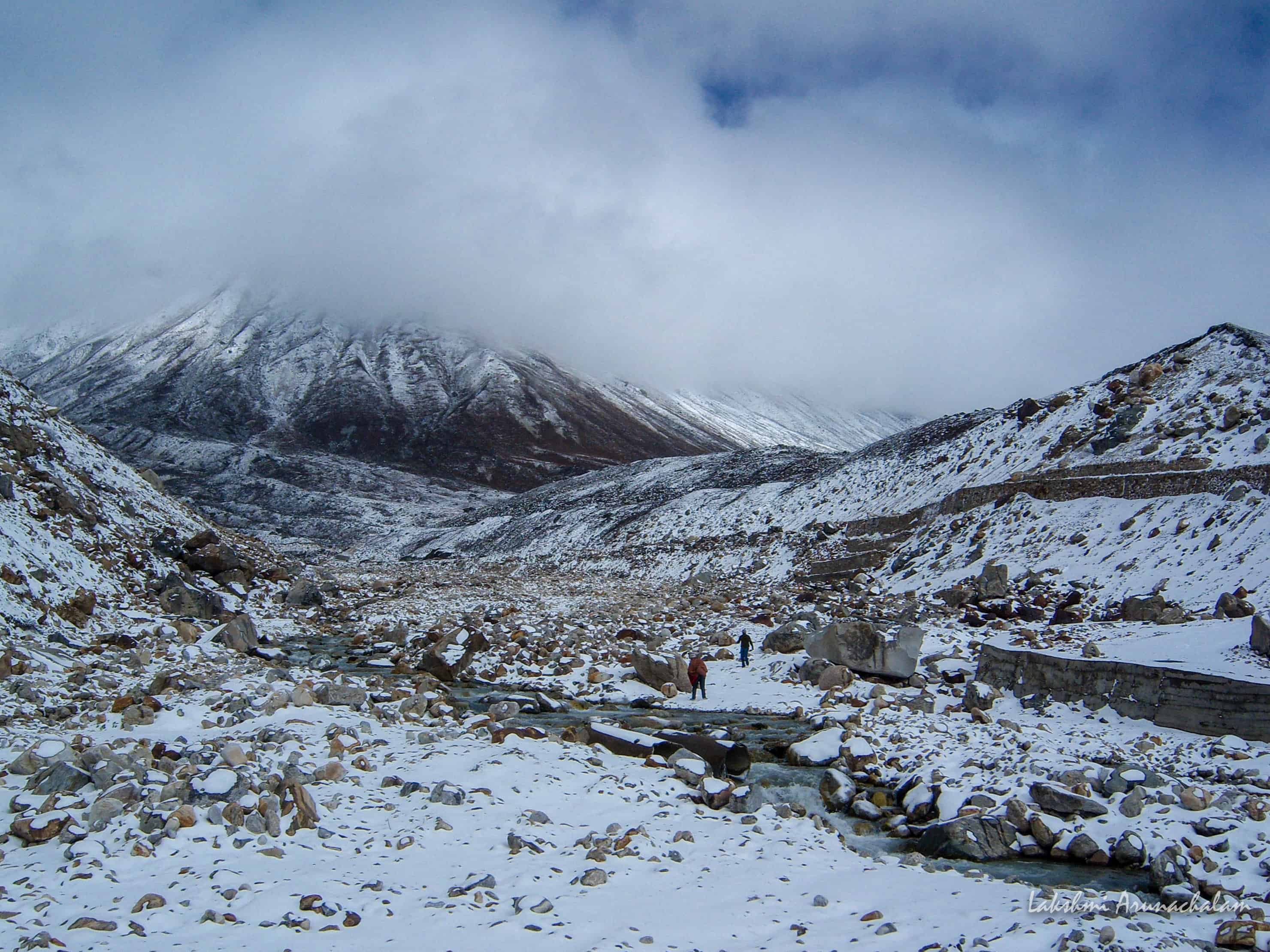
From December to February, snow is the norm at Tsomgo Lake, Nathu La, Zuluk, Nathang, Lachung, Yumthang and Zero Point. Gangtok almost never gets it. Snow closes each road from the top down: Nathu La, Thambi View Point, Zero Point and Gurudongmar go first, while Tsomgo, Zuluk village, Yumthang and Lachen often stay reachable. Keep a buffer day.
Sikkim Winter Trip at a Glance
| Snow season | December to February at altitude. First snow can arrive in late October (the Nathu La axis got snow on the night of 28-29 October 2026) |
| Gangtok in winter | IMD normals: January max 12.4°C, min 5.5°C. Snow in town is rare |
| Where to see snow | Tsomgo Lake, Nathu La, Zuluk and Nathang (East Sikkim); Lachung, Yumthang and Zero Point (North Sikkim) |
| Closes first in heavy snow | Nathu La, Thambi View Point, Zero Point, Gurudongmar Lake |
| Permits | Protected Area Permit (PAP) through a registered operator. Tsomgo is a one-day permit. North Sikkim needs a minimum 2-night itinerary |
| North Sikkim timing rule | Tourist vehicles must clear Toong Check Post by 4 PM (Mangan order of 10 September 2026) |
| Foreign nationals | Tsomgo Lake and Chopta Valley allowed. Nathu La, Gurudongmar Lake and the Zuluk Silk Route closed |
| Buffer days | At least one, ideally two |
| Last verified | November 2026 |
What Actually Changes in Sikkim When Winter Arrives?
Quick answer: the permit system stays the same but runs day by day. Every protected area sits on a road axis behind a police checkpost, and in winter the authorities open or close each axis, or part of one, based on that morning’s snow and ice.
As my Sikkim permits guide explains, protected areas here are defined by checkpost and road axis, not by attraction. Three axes matter in winter:
- JN Axis, past the 3rd Mile checkpost from Gangtok: Tsomgo (Changu) Lake, New Baba Mandir and Nathu La.
- RN Axis, past the Lingtam checkpost in Pakyong district: Zuluk, Thambi View Point, Nathang and Kupup, the Old Silk Route.
- North Sikkim, past the Phidang, Sankalang and Toong checkposts: Lachung, Yumthang and Zero Point on one branch, Lachen, Thangu and Gurudongmar on the other.
When heavy snow hits, nobody shuts “Sikkim”. The authorities trim each axis back to the last safe point. The clearest example I found is from 8 January 2025, when Northeast Live reported the status of all four routes on a single day of heavy snowfall:
| Axis | Still open on 8 Jan 2025 | Closed that day |
|---|---|---|
| JN Road (Gangtok to Tsomgo and Nathu La) | Only up to 10th Mile | Kanchenjunga View Point, Changu (Tsomgo) Lake, Nathu La, Baba Mandir. Advance permits cancelled |
| RN Road (Old Silk Route) | Up to Zuluk (Dzaluk) | Thambi View Point and beyond |
| Lachung Road | Up to Yumthang Valley | Zero Point |
| Lachen Road | Lachen | Gurudongmar Lake |
That table is your winter itinerary in miniature. On a bad snow day you still get Zuluk village, Yumthang and Lachen. You lose the top of each axis. Hence, treat the top of each axis as a bonus. If your whole trip hangs on Gurudongmar or Nathu La on one fixed date, winter will break your heart.
Are Tsomgo Lake and Nathu La Open in Winter?
Quick answer: usually, but not both on every day. Nathu La shuts first after fresh snow, then New Baba Mandir, then Tsomgo. After the heaviest falls or black ice, permits for the whole JN Axis are suspended for a day or two while the road is cleared.
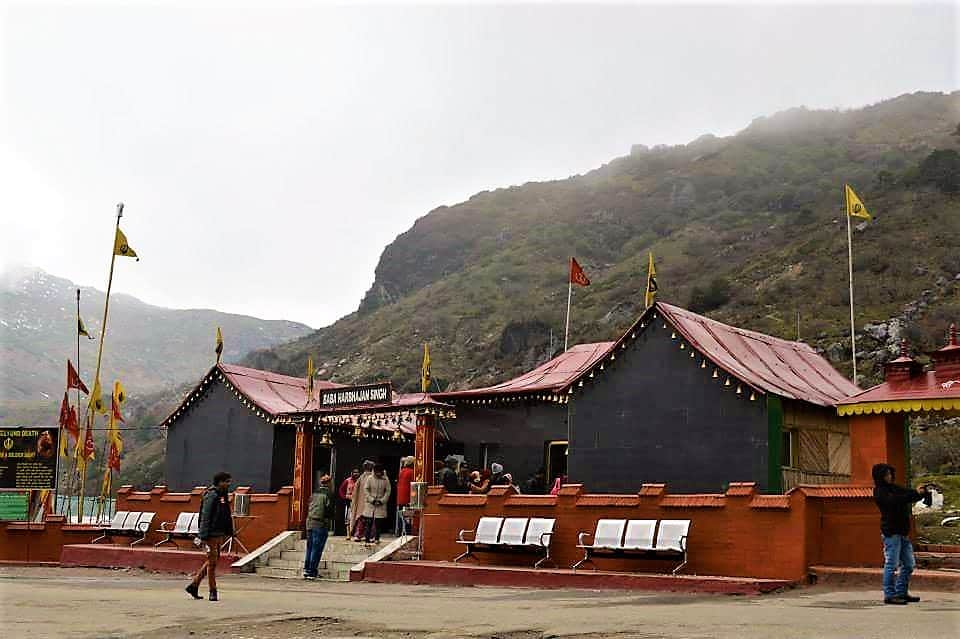
The 2026-27 season has already started on the JN Axis. On 30 October 2026, UNI reported from Gangtok that heavy snowfall from Wednesday night into Thursday morning had covered the Nathu La axis, and authorities barred tourist vehicles from going towards the pass as a precaution. Tsomgo Lake and New Baba Mandir stayed open. That is the textbook first stage of a winter closure.
The second stage cuts the road back to Tsomgo. On 19 February 2025, All India Radio reported that snow had blocked the stretch from Tsomgo Lake to Nathu La and New Baba Mandir, while the road from Third Mile to Tsomgo stayed open. The third stage is a full suspension. On 8 January 2025, India Today NE quoted an official saying black ice had formed at Thulo Khola, making the road to Nathu La and Tsomgo risky, and that the Tourism Department would not issue permits for either until further notice. Clearing was expected to take a day or two.

Snow can also land well after what most people think of as winter. On 21 March 2026, snowfall closed the roads to Tsomgo Lake and Nathu La. The next day BRO’s Project Swastik began snow clearance to reopen routes to Nathu La, Tsomgo, Baba Harbhajan Singh Mandir and Zuluk. So on this axis, winter disruption runs from late October to late March.
A few practical things to keep in mind for the Tsomgo and Nathu La day:
- The Tsomgo permit is a one-day permit. If snow cancels your date, you apply again for the next open day. You do not carry it over.
- Nathu La is closed to tourists on Mondays and Tuesdays even in good weather, as I explain in my Gangtok and Nathu La guide. So a snow cancellation on a Sunday pushes your next Nathu La chance to Wednesday.
- Nathu La is for Indian nationals only. Foreigners can go up to Tsomgo Lake with their own PAP.
- Snow boots and down jackets can be hired at Sherathang, a little before Tsomgo, where vehicles stop. Agree on the rate before you take anything.
- Expect holiday-week crowds. On 28 December 2025, official figures reported by The Week counted 1,516 tourist vehicles on this circuit and 6,080 tourists at Nathu La in one day, up from about 5,000 the previous winter.
Can You See Snow at Zuluk in Winter?
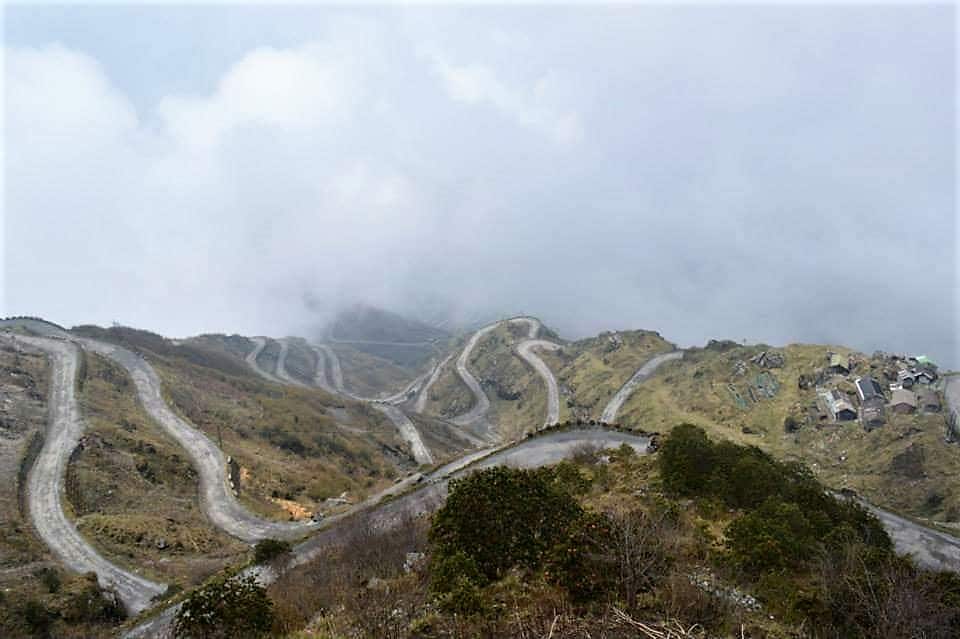
Quick answer: yes. Zuluk sits at about 9,400 ft and gets heavy winter snow, so the famous loops can turn completely white. In heavy snow the RN Axis is usually trimmed back to Zuluk village, which closes Thambi View Point, Nathang and Kupup above it. Plan Zuluk as a two-night stay so one clear morning is likely.


Zuluk is, in my opinion, Sikkim’s most rewarding winter stop: low enough to stay reachable on most days, high enough for serious snow. The Wikipedia entry for Dzuluk puts it at 9,400 ft (2,900 m), about 90 km and roughly four hours from Gangtok, and notes winter snowfall of about 3 to 5 feet.
The catch is that Thambi View Point, where the classic shot of the loops is taken, Nathang and Kupup are all above the village. On the 8 January 2025 snow day, the RN Road was open only up to Zuluk, with Thambi View Point closed and permits restricted to Zuluk. A second night gives you a second chance at Thambi.
Demand is real. The Week’s 28 December 2025 report named Zuluk alongside Tsomgo and Nathu La as destinations with heavy footfall since 22 December. As my Zuluk guide notes, the village has no hotels, only around 36 homestays, so book early for the Christmas to New Year window. Zuluk and the Silk Route are for Indian nationals only.
In good weather the Silk Route loops over Kupup to the Tsomgo road. In winter I would not count on that upper link. My Old Silk Route guide already suggests the simpler winter option: go in and out from the Rongli side on the same road. The dedicated Zuluk travel guide has the stay, distance, and permit detail for that route.
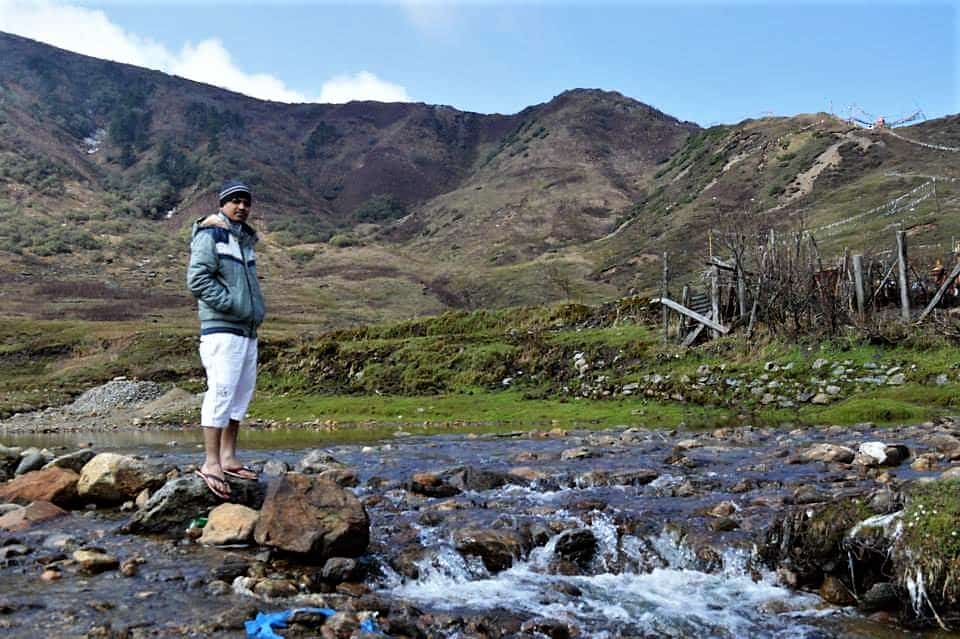
What Stays Open in North Sikkim in Winter: Lachung, Yumthang, Zero Point and Lachen?
Quick answer: Lachung and Yumthang Valley are the most dependable snow in North Sikkim and usually stay open. Zero Point closes after heavy snow. Lachen usually stays reachable, but Gurudongmar Lake is often not permitted in deep winter. Every trip needs a minimum 2-night itinerary, and vehicles must clear Toong Check Post by 4 PM.
North Sikkim is where winter rules bite hardest, because you commit to an operator, a vehicle, and a multi-day permit before you know the weather.
The 2-night minimum and the winter rush
Single-night North Sikkim trips are no longer permitted. The PAP for the Lachen, Lachung, Yumthang, Yumesamdong and Thangu axis is issued for a minimum of three days and a maximum of five. In winter this collides with demand. In the same 28 December 2025 report, a senior Tourism Department official said North Sikkim was fully booked because of the compulsory two-night booking norm. A year earlier, The Telegraph reported that around 2,000 tourists a day had been arriving in Lachen and Lachung since mid-December, a record for the region. Hence, if your dates are in the last two weeks of December, book the North Sikkim leg first and build the rest of the trip around it.
The Toong 4 PM rule
Under a traffic regulation order issued on 10 September 2026, reported by Devdiscourse the next day, all tourist and light vehicles heading from Gangtok and Mangan towards Lachen and Lachung must pass Toong Check Post by 4 PM. Vehicles coming down from Lachen and Lachung must also clear it by 4 PM. The order stays in force until further notice, and its stated aim is to stop night driving on these mountain roads. With short winter days, a late Gangtok start can mean being turned back. Older itineraries quote earlier cut-offs at Sankalang, so follow what your operator confirms for your dates.
Lachung and Yumthang: your most reliable snow
Yumthang Valley sits at about 11,700 ft, roughly 24 km beyond Lachung, and as my Yumthang Valley guide notes, December to February is its snow season. On the 8 January 2025 snow day, the Lachung road stayed open up to Yumthang even with Zero Point shut. So Yumthang under snow is a realistic goal on most winter days.
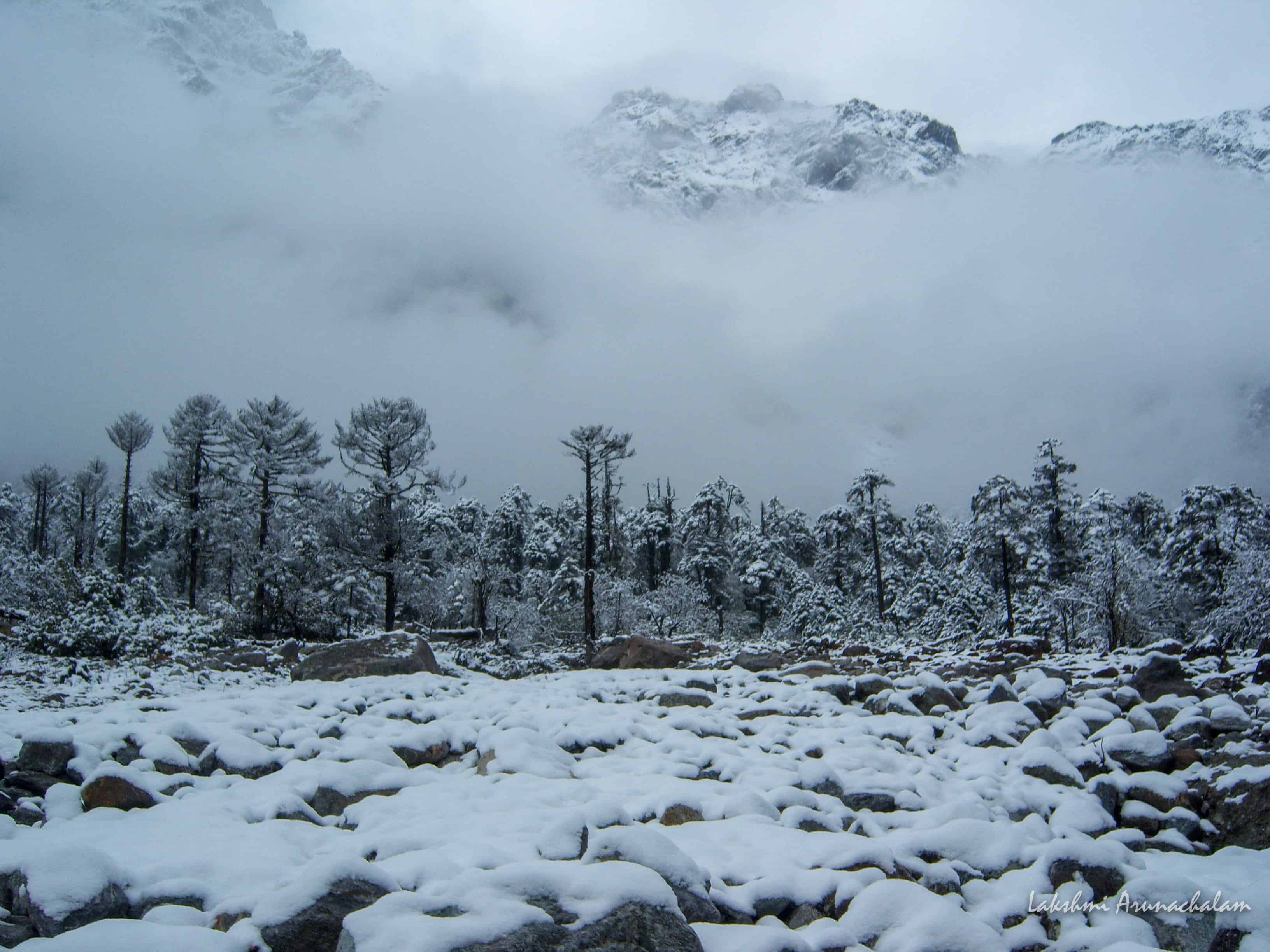
Zero Point: the bonus, not the plan
Zero Point (Yumesamdong) is where the civilian road ends beyond Yumthang. Our own posts and other sources disagree on its height, putting it anywhere from about 14,500 to 15,300 ft, and the exact turnaround spot moves with the snow. In winter it is the first point on the Lachung axis to be declared inaccessible after heavy snow. It is also an extra-cost add-on to your Lachung package, so confirm on the morning whether it is running.
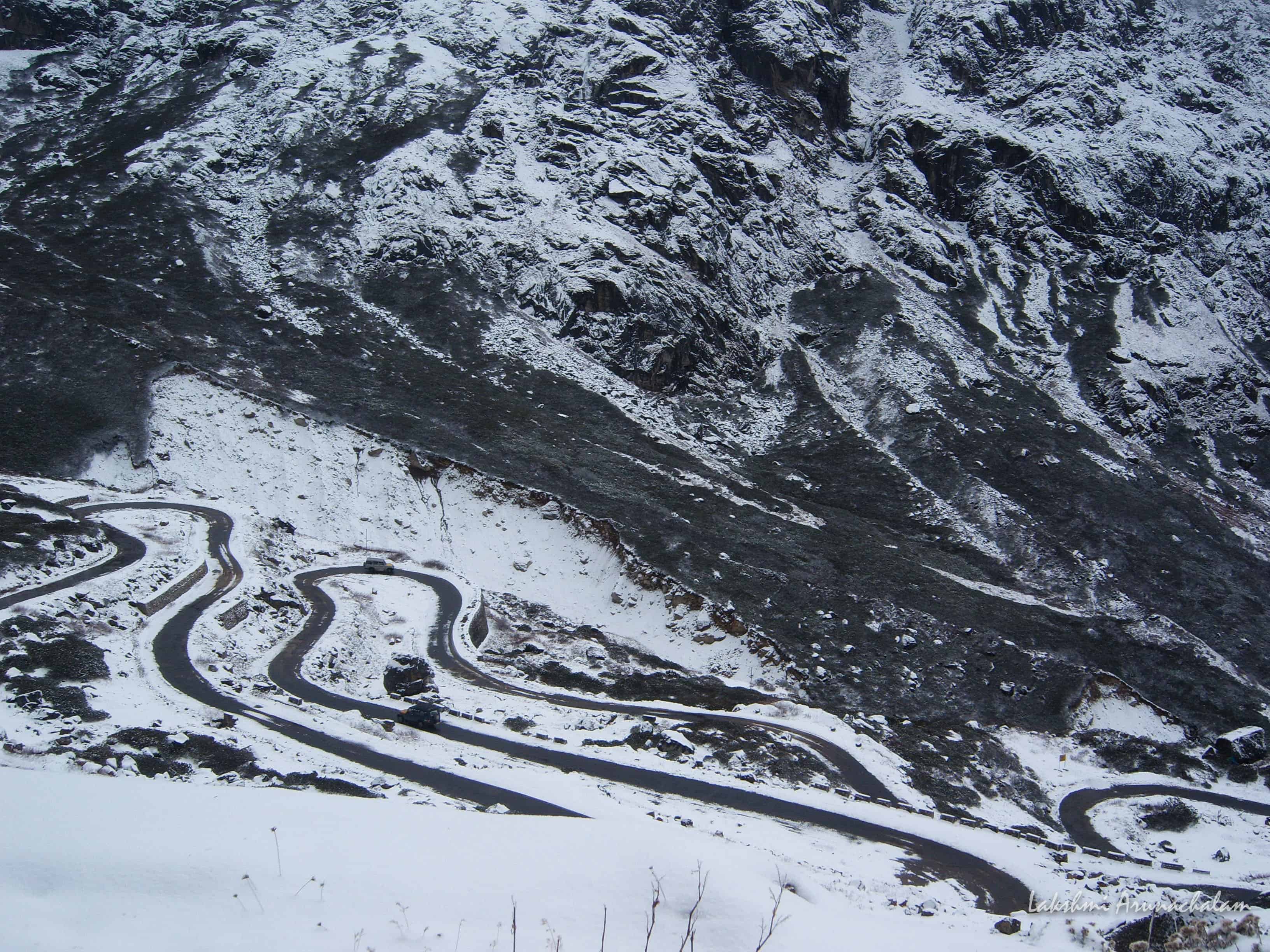
Lachen and Gurudongmar: the riskiest winter booking
On the Lachen side, the pattern from the 8 January 2025 snow day was “Lachen accessible, Gurudongmar not permitted”. The lake is far higher than anything on the Lachung side, above 17,000 ft, and my Gurudongmar Lake guide notes it freezes almost completely from November to mid-May. That guide covers the best months for the lake, so my only winter advice is this: if Gurudongmar is the reason for your trip, skip deep winter. If you go anyway, pick a package that includes Lachung and Yumthang, so the trip still works if the lake is shut. Foreign nationals cannot visit Gurudongmar in any season. Chopta Valley is the permitted alternative.
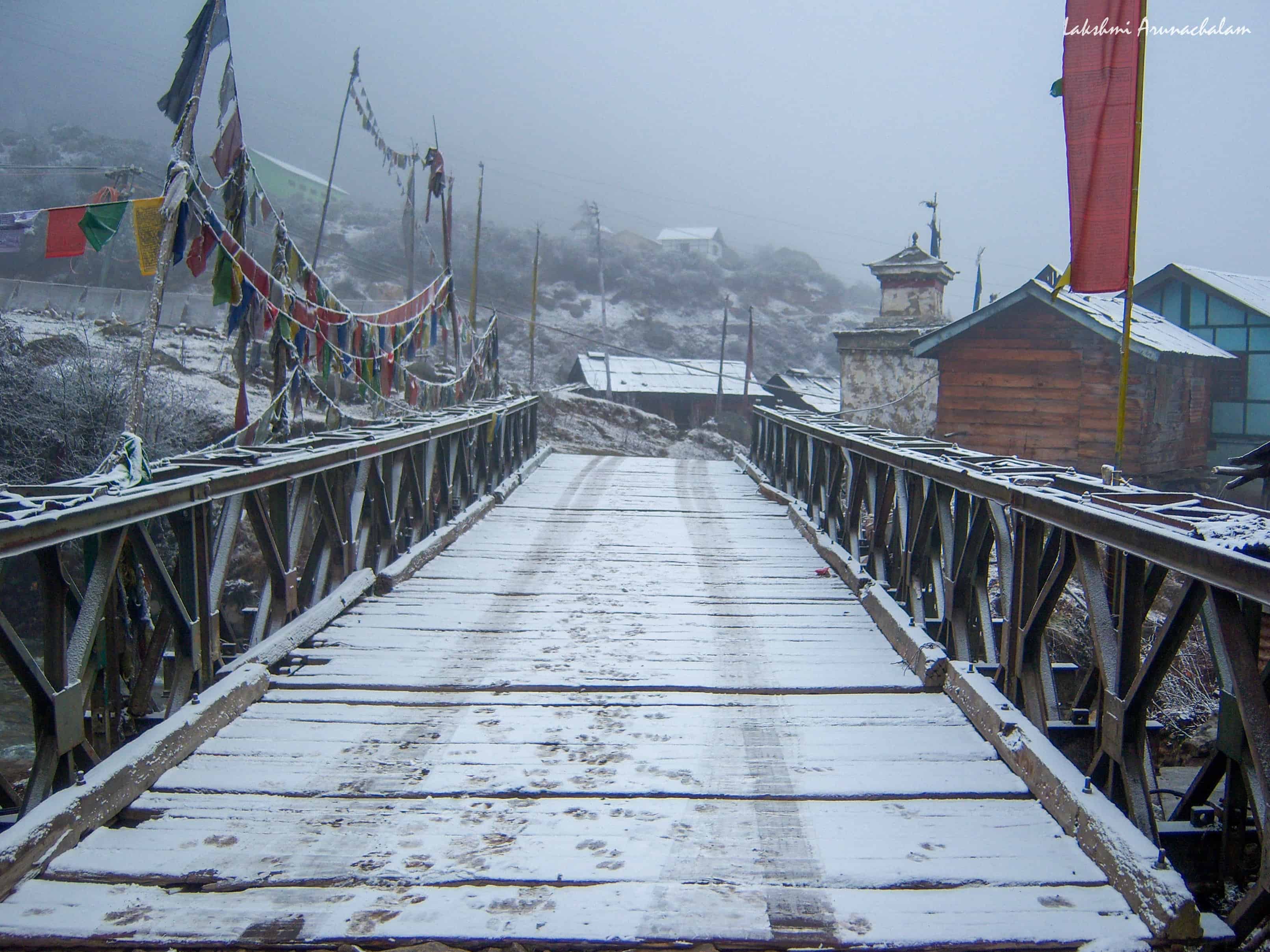
For the full Lachen and Lachung circuit, hotels and the highway, my North Sikkim travel guide is the place to go next.
How Do Permits and Cancellations Work in a Sikkim Winter?
Quick answer: you apply through a registered operator exactly as in other seasons, but in winter permits are effectively issued one day at a time. When snow or black ice hits, the authorities can stop new permits and cancel advance permits for an axis. You don’t lose the trip, you lose the date, so the fix is spare days.
An advance permit is not a guarantee. On 8 January 2025, the authorities cancelled all advance permits for JN Road as a precaution. Here is how I would handle it:
- Do the JN Axis (Tsomgo and Nathu La) early in the trip, ideally on your second full day in Gangtok (after one easy acclimatisation day), not your last. If it is cancelled, you have later days to retry. Avoid putting it on a Monday or Tuesday if Nathu La matters to you.
- Keep photocopies and photographs ready so your operator can reapply for the next open day.
- Ask what the North Sikkim package does if a sector closes. Will they substitute another stop, or refund the Zero Point or Gurudongmar portion? Get the answer before you pay, not on the road.
- Foreign nationals need the RAP first. Don’t let a paperwork delay stack on a weather one. The permits guide covers who issues what.
How Should You Plan a Winter Sikkim Itinerary Around Closures?
Quick answer: build the trip around the parts that usually stay open in snow, which are Gangtok, Tsomgo, Zuluk village, Lachung and Yumthang. Treat Nathu La, Thambi, Zero Point and Gurudongmar as bonuses. Add one buffer day in Gangtok, and put the high day trips early so a cancellation can be retried.
The standard 7-day route in my budget and route planner works in winter with one addition: a buffer day before you fly out. This is the shape I’d use:

| Day | Plan | If snow closes it |
|---|---|---|
| 1 | Bagdogra or NJP to Gangtok. Operator files permits that evening | No change |
| 2 | Gangtok sightseeing, an easy altitude day by design | No change |
| 3 | Tsomgo Lake, New Baba Mandir and Nathu La (not a Mon or Tue for Nathu La) | Gangtok monasteries and viewpoints; retry Tsomgo on the buffer day |
| 4 to 6 | North Sikkim, 2 nights minimum: Lachung and Yumthang, Zero Point if open, Lachen side if your package covers it. Back in Gangtok on Day 6, clearing Toong by 4 PM | Yumthang usually remains when Zero Point closes; Lachen usually remains when Gurudongmar closes |
| 7 | Buffer day: retry a cancelled sector, or rest | This is the day that saves the trip |
| 8 | Depart for Bagdogra or NJP | No change |
If you have more time and want Zuluk, add it as two nights from the Rongli side after North Sikkim, rather than trying to loop it with the Tsomgo road. If you would rather avoid high-altitude closures altogether, West Sikkim is the calmer winter option. My Pelling travel guide covers it, and Pelling town needs no permit.
One more note for December. Losoong, the Sikkimese new year, falls in December and is set by the lunar calendar, so the exact days change each year. Check the state’s holiday notification if you want to catch it, and expect monasteries to be busier around those dates.
Does Winter Change the Cost of a Sikkim Trip?
Quick answer: the core costs barely move, so a 7-day trip still runs about Rs 15,200 per person as a backpacker, Rs 23,600 mid-range and Rs 42,500 in comfort. Winter adds a buffer night, a possible re-run of the Tsomgo day trip, and gear hire. Late December is peak demand. Gangtok rooms are cheapest around February.
Base figures are from my Sikkim budget and route planner (verified September 2026). The winter rows are extras, not a separate budget.
| Item (per person, 2 sharing) | Backpacker | Mid-range | Comfort |
|---|---|---|---|
| 7-day Sikkim trip, base cost (Gangtok, Tsomgo and Nathu La, North Sikkim) | Rs 15,200 | Rs 23,600 | Rs 42,500 |
| Of which: Tsomgo, Baba Mandir and Nathu La day trip | Rs 1,700 | Rs 2,500 | Rs 4,000 |
| Winter add-on: one buffer night in Gangtok | About Rs 600 (budget room from about Rs 1,200, shared) | One extra night at your chosen hotel | One extra night at your chosen hotel |
| Winter risk: re-running a cancelled Tsomgo day | Usually a fresh day’s fare and permit. Ask your operator in advance | Same | Same |
| Winter add-on: snow boots and jacket hire at Sherathang | Small hire charge, verify locally and agree before taking | ||
Operator-quoted rates behind those figures (approximate, verify locally): a shared North Sikkim package covering Lachen and Lachung over three days and two nights at roughly Rs 5,500 to Rs 8,000 per person, or Rs 25,000 to Rs 40,000 per car private; the Tsomgo and Nathu La day at roughly Rs 6,500 to Rs 8,000 per vehicle plus about Rs 200 per person permit; and, from my Zuluk guide, a shared taxi seat from Gangtok to Zuluk at roughly Rs 1,500 to Rs 2,000 per person with homestays from about Rs 800 to Rs 1,500 a night including meals. If your dates are flexible, January and February are still deep snow season and quieter than late December, and Gangtok rooms are cheapest around February.
How Do You Reach Sikkim in Winter?
Quick answer: as in any season. Fly to Bagdogra or take a train to New Jalpaiguri (NJP), then drive about 115 km to Gangtok in 4 to 5 hours. Shared taxis cost roughly Rs 350 to Rs 550 per seat. Snow affects the protected axes above Gangtok, not the approach.
Keep in mind that shared jeeps leave when full and mostly run until early afternoon, so plan to reach Gangtok before dark. The Gangtok weekend trip guide covers how to spend your buffer day in town.
What Safety Precautions Matter Most in a Sikkim Winter?
Quick answer: black ice, altitude, and cold, in that order. Black ice on the JN Axis is what triggers full permit suspensions. Tsomgo, Nathu La, Zero Point and Gurudongmar are all high enough for altitude sickness, and winter cold makes symptoms harder to read. Use only Sikkim-registered vehicles with experienced local drivers, and never push on after dark.
- Black ice is the real hazard. Deep snow is visible and gets cleared. Black ice, like the Thulo Khola patch in January 2025, is invisible until a vehicle slides, which is why axes that look fine from Gangtok get shut.
- Drivers carry shovels and chains for a reason. During the December 2024 snow, The Telegraph reported drivers being told to carry shovels to clear snow and chains to stop tyres skidding. Check yours has them.
- Respect the altitude. Nathu La is about 14,140 ft and Tsomgo is 12,313 ft, both reached in a few hours from Gangtok at about 5,500 ft. Headache, nausea, or breathlessness means you go down. My AMS prevention guide covers the warning signs.
- Layer properly. Gangtok in January averages 5.5°C to 12.4°C by IMD normals, but Tsomgo and Lachung are far colder. Thermals, a down jacket, gloves, a woollen cap and UV sunglasses are the minimum. My cold-weather packing list, written for Ladakh, works here too.
- Emergencies: dial 112, the national emergency number. Mobile coverage thins out beyond Lachung and Lachen, so tell your hotel your plan for the day.
Related Reading for Your Sikkim Trip
- Sikkim Budget and Route Planner 2026, for full costs and the general best-time guide.
- Sikkim Permits 2026: RAP, PAP and ILP Explained.
- Gangtok and Nathu La Travel Guide.
- Zuluk Travel Guide and the Old Silk Route guide, for East Sikkim.
- Yumthang Valley Travel Guide and the Gurudongmar Lake and Chopta Valley guide, for North Sikkim’s two branches.
Frequently Asked Questions
Does it snow in Sikkim in December?
Yes, at altitude. Tsomgo Lake, Nathu La, Zuluk, Nathang, Lachung, Yumthang and Zero Point usually get snow from December to February, and the first snow can arrive in late October, as it did on the Nathu La axis in October 2026. Gangtok town itself very rarely sees snow.
Is Nathu La open in winter?
Nathu La has no fixed winter closure, but it is the first point on the JN Axis to shut after fresh snow, and it is closed to tourists every Monday and Tuesday. Permits are often cancelled at short notice from December to March. Keep a spare day, and remember that Nathu La is for Indian nationals only.
Is Tsomgo Lake frozen in winter?
Yes. Tsomgo (Changu) Lake sits at 3,753 m and freezes in winter, sometimes staying frozen into May. It often stays open when Nathu La beyond it is closed, but after very heavy snow or black ice, permits for Tsomgo are suspended too, usually for a day or two.
Can I visit Zuluk in winter?
Yes. Zuluk village at about 9,400 ft usually stays reachable and gets heavy snow. After heavy snowfall, the authorities often restrict the RN Axis to Zuluk itself, closing Thambi View Point, Nathang and Kupup above it. Stay two nights so you have a second chance at the higher viewpoints.
Is Gurudongmar Lake open in winter?
Often not in deep winter. On heavy snow days the pattern is that Lachen stays accessible but Gurudongmar is not permitted. The lake freezes almost completely from November to mid-May. If Gurudongmar is your main goal, travel outside December to February. It is closed to foreign nationals in every season.
Is Zero Point open in winter?
Sometimes. Zero Point (Yumesamdong) has the deepest snow in North Sikkim when it is open, but it is the first point on the Lachung axis to be closed after heavy snowfall, with permits then limited to Yumthang Valley. Confirm with your operator on the morning, not at booking.
Does Gangtok get snowfall?
Very rarely. Gangtok sits at about 5,500 ft, and IMD normals for January are about 5.5°C to 12.4°C. Recorded snowfall in town is limited to a handful of years, including 2020. For snow, you need to go up to Tsomgo, Zuluk or Lachung.
How many days do I need for Sikkim in winter?
Plan eight days for what a summer traveller would do in seven: one day to arrive, a Tsomgo and Nathu La day, a minimum two nights in North Sikkim, a return day, and a buffer day for snow cancellations. Add two nights if you want Zuluk.
Final Thoughts on Sikkim in Winter
If I had to sum up Sikkim in winter in one line: the snow is almost guaranteed, the date you see it is not. Plan around the places that tend to stay open (Tsomgo, Zuluk village, Lachung and Yumthang), keep a buffer day, put Tsomgo and Nathu La early, and book North Sikkim first for late December. Do that, and you get snow the summer crowd never sees.

Conditions change week to week, so if you have been this season, please share what was open and closed on your dates in the comments or with fellow travelers in the DwD Community. Your update helps the next person more than any guide can. And if this helped, do share it with whoever you are planning the trip with 🙂
If you have any questions, feel free to ask in the comments section below 🙂
