


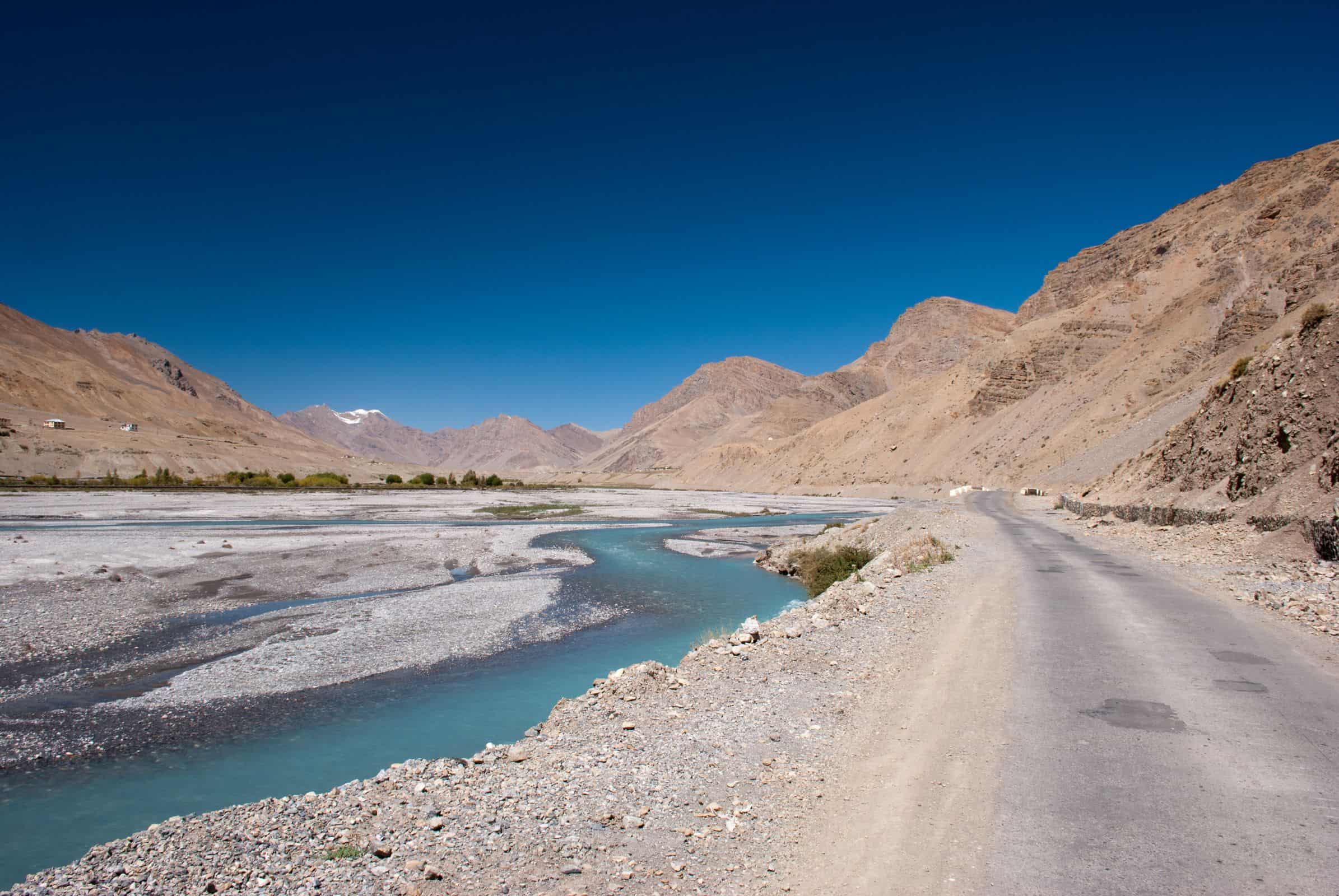
Spiti Valley is already considered offbeat by most Indian travelers. But here is the thing. Over the last few years, places like Key Monastery, Kibber, Langza, and Hikkim have become part of every standard itinerary. They show up on every travel reel, every listicle, every packaged tour. So, what happens when you want to go deeper? When you want places that most people drive past without knowing they exist? That is exactly what this guide covers.
I have been traveling to Spiti for over a decade now, and every trip reveals something new. Villages with five residents. Lakes that vanish by summer. Trading grounds from centuries ago. These are the places that remind you why Spiti is special, not because of Instagram spots, but because of the raw, untouched connection with nature and centuries-old traditions. Here are 7 truly offbeat places in Spiti Valley that deserve your time and respect.
Quick Info: Offbeat Spiti Valley at a Glance
| Detail | Information |
|---|---|
| Base Town | Kaza (3,650 m / 11,975 ft) |
| Best Time | Late June to September |
| How to Reach | HRTC bus from Manali (Rs 400-600) or Shimla-Kinnaur route (year-round) |
| Budget Per Day | Rs 1,500-2,000/person (accommodation + food + local transport) |
| Permits | No permit for Indian nationals. Foreign nationals need PAP. |
| Mobile Network | BSNL postpaid best. Jio/Airtel work in Kaza only. |
| Offbeat Transport | Own vehicle or hired local taxi from Kaza. No public transport to offbeat spots. |
| Days Needed | 3-4 extra days beyond a standard Spiti itinerary |
What Makes a Place Truly “Offbeat” in Spiti Valley?
A place qualifies as offbeat in Spiti if it meets at least two of these criteria: no regular public transport access, fewer than 50 visitors per week during peak season, not part of any standard Spiti Valley itinerary, or requires a trek or special effort to reach.
Places like Kaza, Tabo, Key, Kibber, Langza, Hikkim, and Komic are wonderful, but they are now firmly on the tourist map. The seven places below are not. Keep in mind, offbeat does not always mean better. It means less infrastructure, tougher access, and the need for better planning. If you are a first-time Spiti visitor, I would suggest covering the standard circuit first. These offbeat gems are for your second or third trip, when you are ready to go deeper.
How Do You Reach These Offbeat Places in Spiti?
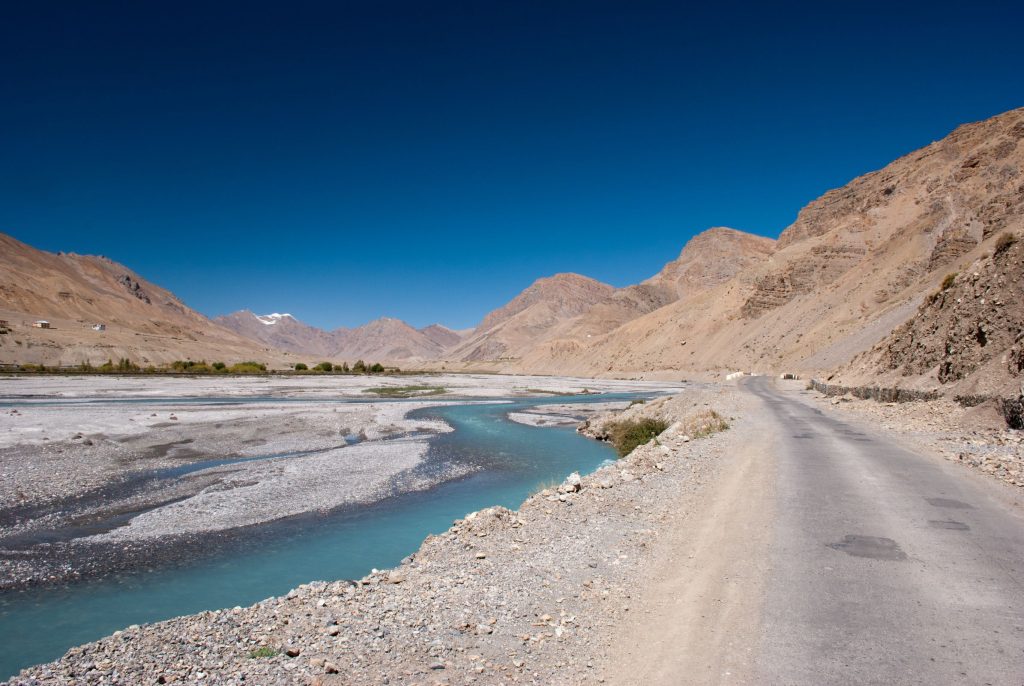
All seven places listed below are accessible from Kaza, which serves as the base town for exploring Spiti Valley. You can reach Kaza via two routes. The Shimla-Kinnaur route is open year-round (though landslides can cause temporary closures) and takes about 2 days from Delhi. The Manali route via Atal Tunnel and Kunzum Pass opens around mid-June and closes by mid-October.
HRTC runs a daily bus from Manali to Kaza (departure around 5:00-5:30 AM from Manali bus stand, arrival by 3:00-5:00 PM). The fare is Rs 400-600 per person as of 2026. From the Shimla side, buses from Reckong Peo to Kaza cost Rs 400-500. Once in Kaza, you will need either your own vehicle (car, bike, or rented) or a hired local taxi to reach most of these offbeat spots. Public transport does not serve most of these locations. Hence, hiring a local driver who knows the terrain is always the safer choice, especially for places that involve unpaved roads or river crossings.
1. Where Is Sopona Lake and Why Should You Trek There?
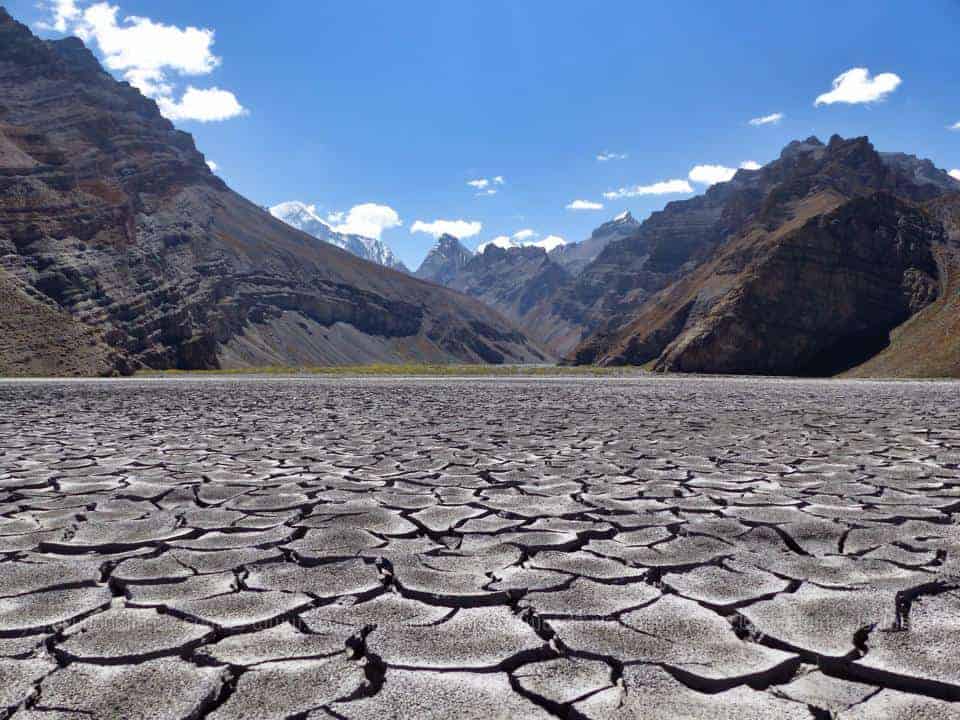
Sopona Lake sits at approximately 3,600 meters (11,800 ft) near Mane Village, and it is one of Spiti’s best-kept secrets. This is a seasonal glacial lake, meaning it fills up from snowmelt and can be completely dry if you arrive too early in summer. The trek from Mane Village takes about 4-5 hours one way, passing through some of the most dramatic terrain you will encounter in Spiti.
The highlight of this trek is not just the lake itself. The trail offers views of Manirang Pass (5,842 m / 19,166 ft), one of the highest mountain passes in Himachal Pradesh. The area around the lake is also part of snow leopard habitat, so keep your eyes open. The best time to visit is July to September when the lake is most likely to have water. Even if it does not, the journey through these silent, vast landscapes is worth every step.
I have covered the entire Sopona Lake trek in detail, including the route, what to carry, and camping options. Do read that before planning your visit.
2. Is Kanamo Peak Really Trekkable for Regular Trekkers?
Kanamo Peak stands at 5,964 meters (19,553 ft), making it one of the few trekkable peaks above 19,000 ft in India. But let me be honest. This is not a casual trek. It demands solid physical fitness, prior high-altitude trekking experience, and proper acclimatization in Kaza for at least 2-3 days before attempting the summit.
The standard route starts from Kaza, goes through the Kibber side, and takes 4-5 days round trip. From the summit, you get 360-degree views spanning peaks in Ladakh, Spiti, Kullu, and Kinnaur. It is genuinely one of those moments where you feel small and grateful at the same time. The trek window is narrow: late June to September, with August-September offering the most stable weather.
You will need a guide and a basic mountaineering setup for the final summit push. Trek operators in Kaza charge Rs 8,000-15,000 per person for a guided Kanamo trek (including camping gear and meals). I have written an extensive Kanamo Peak trek guide covering the day-wise itinerary, costs, fitness requirements, and gear list. In case you are considering this, read it carefully before committing.
3. What Makes Chicham Village Special Beyond the Bridge?
Most people know Chicham for one reason: Asia’s highest bridge connecting Chicham to Kibber across a deep gorge. They drive across, take a photo, and leave. That is a mistake. Chicham Village itself is a quiet, beautiful settlement that sits on the opposite side of Kibber, overlooking the same gorge from a completely different perspective.
Before the bridge was built (completed in 2017), the only way to reach Chicham was either a 3-hour road detour or a thrilling rope-pulled trolley (jhula) swinging across the gorge. The jhula is no longer in regular use, but older residents still remember the days when it was the only lifeline. The village has a few homestays where you can stay overnight (Rs 500-1,000/night including meals). Spending a night here, with the stars and absolute silence, is an experience that the bridge tourists completely miss.
If you do stay in Chicham, wake up early and walk to the edge of the gorge at sunrise. The light hitting the rock face on the Kibber side is something you will carry with you long after the trip ends. There is no chai stall, no tourist crowd, just you and the valley.


4. What Is La Darcha and Why Does It Matter Historically?
La Darcha is an open ground near Chicham that served as a historic trading point for merchants coming from across the Himalayas. This was not a casual market. Traders from Ladakh, Spiti, Kinnaur, and even Tibet would converge here to exchange goods through a barter system. Horses were traded for yaks. Salt for grain. Wool for tools. This system persisted for centuries and, in some forms, continues even today in parts of Spiti.
The La Darcha Fair is celebrated as a festival now, keeping this tradition alive. If your visit coincides with the fair (typically in August), it is a rare window into a part of Spiti’s culture that most travel guides do not cover. You will see locals in traditional attire, yak races, folk dancing, and the trading spirit that defined this region for centuries. Even outside the fair, the grounds offer stunning views of the surrounding peaks and a sense of history that you can almost feel in the air.

5. Is Pangmo Village Worth a Stop Between Losar and Kaza?
Pangmo sits at over 12,000 ft between Losar and Kaza, and virtually every vehicle passes through it without stopping. That is precisely what makes it offbeat. There are no signboards advertising it, no chai stalls lining the road, no tourist infrastructure whatsoever. Just a small cluster of traditional Spitian houses, terraced fields (where barley somehow grows at this altitude), and silence.
If you have heard of Pangmo at all, it is likely because of the Sherab Choeling Nunnery and Institute at nearby Morang, where many nuns come from Pangmo and the surrounding villages. The nunnery is a peaceful place to visit if you are interested in Buddhist practice and want to see a side of Spiti that goes beyond monastery tourism. There are no formal homestays in Pangmo as of 2026, but locals are hospitable if you ask politely. Carry your own supplies.
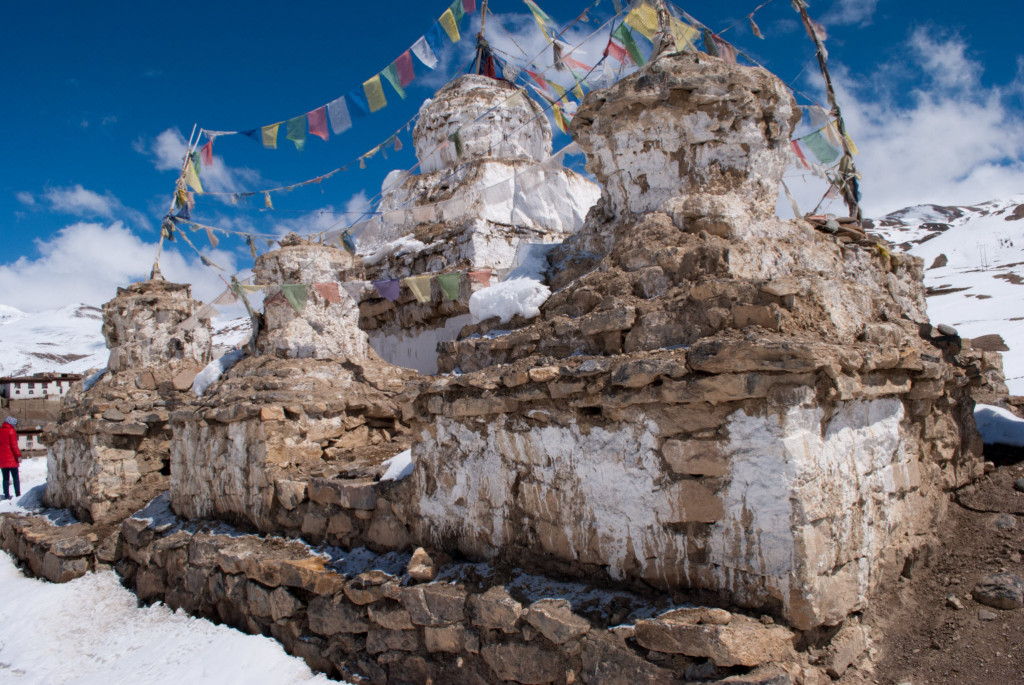
6. Can You Actually Visit Kakti, Spiti’s Smallest Village?
Yes, you can. And you should. Kakti Village is arguably the smallest inhabited village in Spiti, with just one family and roughly 5 residents. It is connected by a motorable road about 10 km from Kaza, which means you do not need to trek. The village has electricity and even cable TV, which feels surreal when you consider you are standing in a settlement of five people surrounded by nothing but mountains.
The family, headed by Tsering, is welcoming and often offers tea to visitors who make the effort to come here. When visiting Kakti, carry something useful for the family. Groceries, medicines, stationery for children. This is something we at the DwD Community strongly believe in: leave a place better than you found it. Remember, this is their home, not a tourist attraction. Respect their space, ask before photographing, and do not leave any trash behind.
7. How Do You Reach Samudri Tapu Glacier Near Chandratal?
This is my favorite spot on this entire list. Chandratal Lake is famous and deservedly so. But very few people know about Samudri Tapu, a glacial formation that is also the source of the Chandra River. It lies close to Chandratal but requires a separate trek that involves a river crossing (sometimes requiring rappelling), making it significantly more challenging and adventurous.
The glacial melt forms a serene lake at the base of the glacier. Do NOT attempt this alone. The route can be confusing, there is no marked trail, and weather changes rapidly at this altitude. I strongly recommend hiring a local guide through camp operators near Chandratal. The best window is July to mid-September. If you are the kind of traveler who finds Chandratal “too crowded” (and honestly, it can get busy in August), Samudri Tapu is where you go for complete solitude.
One important note: camping at Chandratal lake banks has been banned by the Koksar Panchayat. Camps now operate 3-5 km away from the lake (Rs 1,200-2,500/night). The entry fee for Chandratal is Rs 150 for Indian nationals and Rs 500 for foreigners. You also need a free e-permit via the Himachal Pradesh eAagman portal. For Samudri Tapu, there is no separate permit, but you will need to arrange camping gear and a guide independently.
What About Demul, Lhalung, and Other Semi-Offbeat Villages?
I intentionally left out some places that are sometimes labeled “offbeat” but are actually becoming well-known among experienced Spiti travelers. Lhalung, with its 10th-century gompa built by Rinchen Zangpo, is extraordinary but now features in most detailed itineraries. Demul at 4,350 meters has gained popularity as a homestay hub with growing infrastructure. Komic markets itself as one of the highest villages with a motorable road.
Similarly, Giu Monastery with its 500-year-old mummy is extraordinary but now firmly on the tourist map. And Mud Village in Pin Valley, while still quieter than Kaza, gets a steady stream of trekkers heading towards Pin Parvati Pass.
These are all wonderful places and I have written detailed guides for each of them (linked above). But calling them “offbeat” in 2026 would not be accurate. If you are planning a trip to Spiti, do include these villages in your itinerary. They are special. They are just not unknown anymore.
How Should You Plan a Trip Covering These Offbeat Spots?
Here is a practical day-wise breakdown if you want to cover these offbeat spots alongside the standard Spiti circuit. This assumes you are entering via Manali and exiting via Kinnaur (or vice versa).
Day 1-2: Delhi/Chandigarh to Kaza (via Manali route or Shimla-Kinnaur route). Rest and acclimatize in Kaza. Do not rush this. Altitude sickness is real at 11,975 ft.
Day 3: Standard sightseeing around Kaza. Visit Key Monastery, Kibber, and Chicham Bridge. Instead of returning from Chicham, stay overnight at a Chicham homestay. Explore La Darcha grounds in the evening.
Day 4: Return to Kaza. Drive to Kakti Village (10 km, 30 minutes). Afternoon: visit Langza, Hikkim, Komic circuit.
Day 5: Trek to Sopona Lake from Mane Village (full day, 8-10 hours round trip). Return to Kaza or camp near the lake.
Day 6: Drive towards Losar. Stop at Pangmo en route. Continue to Chandratal area.
Day 7: Visit Chandratal Lake. If you have a guide arranged, extend to Samudri Tapu (adds a full day).
Day 8-10: Return via Manali or continue to Kinnaur side (Tabo, Dhankar, Nako). For Kanamo Peak, you need 4-5 additional days from Kaza. Plan at least a 12-14 day trip if Kanamo is on your list.
For a more detailed route plan, check the Spiti Valley itinerary guide and add these offbeat detours as extensions.
What Will an Offbeat Spiti Trip Cost You in 2026?
Here is a realistic budget breakdown for a 10-day trip covering both standard and offbeat Spiti, based on 2026 prices.
| Expense | Budget (Per Person) | Mid-Range (Per Person) |
|---|---|---|
| Transport (Delhi to Kaza, return) | Rs 1,500-2,000 (HRTC bus) | Rs 4,000-6,000 (shared taxi) |
| Accommodation (10 nights) | Rs 5,000-8,000 (homestays) | Rs 15,000-25,000 (guesthouses) |
| Food (10 days) | Rs 3,000-4,000 | Rs 5,000-8,000 |
| Local Transport (taxi/fuel) | Rs 3,000-5,000 | Rs 8,000-12,000 |
| Chandratal Entry + Camping | Rs 1,350-2,650 | Rs 1,350-2,650 |
| Kanamo Trek (if applicable) | Rs 8,000-15,000 | Rs 8,000-15,000 |
| Total (without Kanamo) | Rs 14,000-22,000 | Rs 34,000-54,000 |
For a detailed cost breakdown including every possible expense, check the complete Spiti Valley budget guide. If you are on a tight budget, the budget Spiti by public transport guide will help you plan under Rs 15,000.
Practical Tips for Visiting Offbeat Spiti
Best time to visit: Late June to September. Most of these locations are inaccessible or snowbound before June. The Manali-Kaza route typically opens by mid-June (via Atal Tunnel and Kunzum Pass). The Shimla-Kinnaur route is open year-round but can have landslide disruptions during monsoon (July-August).
Permits: Indian nationals do not need any permit for these offbeat places within Spiti. Foreign nationals need a Protected Area Permit (PAP) for certain areas in the Lahaul-Spiti district. You can get this from the District Magistrate office or apply through the process detailed here.
Accommodation: Kaza is your base for all seven places. Budget homestays in Kaza cost Rs 500-1,000/night. Mid-range guesthouses run Rs 1,500-2,500/night. Hotels with better amenities cost Rs 2,500-4,000/night. For Chicham, basic homestays are available at Rs 500-1,000/night. For all other offbeat spots, there is no formal accommodation, so plan day trips from Kaza.
ATMs and fuel: The only reliable ATM in Spiti is at Kaza (SBI). It runs out of cash frequently, so withdraw in Reckong Peo or Manali before entering Spiti. The Kaza petrol pump is the only fuel stop in the valley. If entering from Manali, the last pump before Kaza is at Tandi (near Keylong). Carry enough fuel or plan your fills carefully.
Mobile connectivity: BSNL postpaid has the widest coverage in Spiti. Jio and Airtel work in Kaza town but signal is unreliable or absent in most offbeat locations. Carry an offline map and download anything you need before leaving Kaza. Read the Spiti mobile connectivity guide for village-wise details.
What to carry: Warm layers (temperatures drop below 0°C at night even in summer), sunscreen (UV is intense at this altitude), a refillable water bottle, basic first-aid, and high-energy snacks. For treks to Sopona Lake or Samudri Tapu, carry trekking poles, waterproof shoes, and rain gear. Check the complete packing guide for Spiti before you leave.
Responsible travel: Carry back all your trash. These offbeat places have zero waste management. Do not play loud music. Do not use drones near monasteries or military areas. If staying in homestays, eat what the family cooks. Buy local produce when available. Leave cash for families who host you, even if they do not ask for it.
Frequently Asked Questions
Which is the most offbeat place in Spiti Valley?
Kakti Village, with just one family and 5 residents, is arguably the most offbeat inhabited place in Spiti. For trekkers, Samudri Tapu glacier near Chandratal offers the most remote and least-visited experience. Both require no permits for Indian nationals.
Do I need a permit to visit offbeat places in Spiti?
Indian nationals do not need any special permit for the seven offbeat places listed in this guide. Foreign nationals need a Protected Area Permit (PAP) for restricted areas in Lahaul-Spiti district. The PAP can be obtained from the District Magistrate office in Kaza or Reckong Peo.
What is the best time to visit offbeat Spiti?
Late June to September is ideal. The Manali-Kaza route opens by mid-June and the weather is most stable during this window. For Sopona Lake, visit July-September when the glacial melt fills the lake. For Kanamo Peak, August-September offers the best conditions. Winter visits (December-March) are not recommended for these offbeat locations due to extreme cold and inaccessibility.
Can I visit these offbeat places by public transport?
No. While HRTC buses connect major towns like Kaza, Tabo, and Reckong Peo, none of the seven offbeat places in this list are served by public transport. You will need your own vehicle, a rented motorcycle, or a hired local taxi from Kaza. Kakti Village (10 km from Kaza) is the easiest to reach. Sopona Lake and Samudri Tapu require trekking.
Is it safe to trek to Samudri Tapu alone?
No. The route to Samudri Tapu glacier has no marked trail and involves a river crossing that may require rappelling. Weather changes rapidly at this altitude. Always hire a local guide through camp operators near Chandratal. Do not attempt this trek without prior high-altitude trekking experience.
How many days do I need to cover these offbeat spots?
With Kaza as your base, you need 3-4 extra days beyond a standard Spiti itinerary. Chicham, La Darcha, Pangmo, and Kakti can be covered in 2 days of day trips. Sopona Lake trek needs 2 days (one night camping). Kanamo Peak needs 4-5 days. Samudri Tapu can be combined with a Chandratal visit (add 1 extra day). Plan at least a 10-day Spiti trip if you want to include both standard sights and these offbeat places.
What is the budget for visiting offbeat places in Spiti Valley?
A budget trip covering these offbeat places from Kaza costs approximately Rs 1,500-2,000/day per person (accommodation + food + local transport). For a 10-day trip including transport from Delhi, expect Rs 14,000-22,000 on a tight budget or Rs 34,000-54,000 for mid-range comfort. The Kanamo Peak trek adds Rs 8,000-15,000 to your total.

Is Spiti Valley safe for solo travelers visiting offbeat spots?
Spiti is generally very safe for solo travelers. The locals are welcoming and crime is virtually non-existent. However, for offbeat treks like Sopona Lake, Kanamo Peak, and Samudri Tapu, always go with a guide or at least inform your homestay host about your plans. Mobile network is absent in most offbeat areas, so carry an offline map and let someone know your expected return time.
Final Thoughts
Spiti Valley rewards those who slow down and look beyond the obvious. The seven places in this guide are not easy to reach, not comfortable to stay at, and not photogenic in the Instagram sense. But they are real. They are the Spiti that existed before tourism arrived, and they will be here long after the trends move on to the next destination.
If you have visited any of these offbeat spots, or know of others that deserve to be on this list, drop a comment below or reach out to the DwD Community. We are always looking for the next hidden corner of the Himalayas to explore and share. Feel free to ask any questions about planning your offbeat Spiti trip, my friend. I will be happy to help 🙂
Last Updated: April 2026

1 Comment
Comments section gets closed in 90 days. To ask your travel questions, you can follow my YouTube Channel for a faster reply or for a much slower reply follow me on Instagram. :)
I’ve heard a lot about this amazing place. And after you defined it so well, I’m gonna visit this place this summer.
Thanks a lot.