


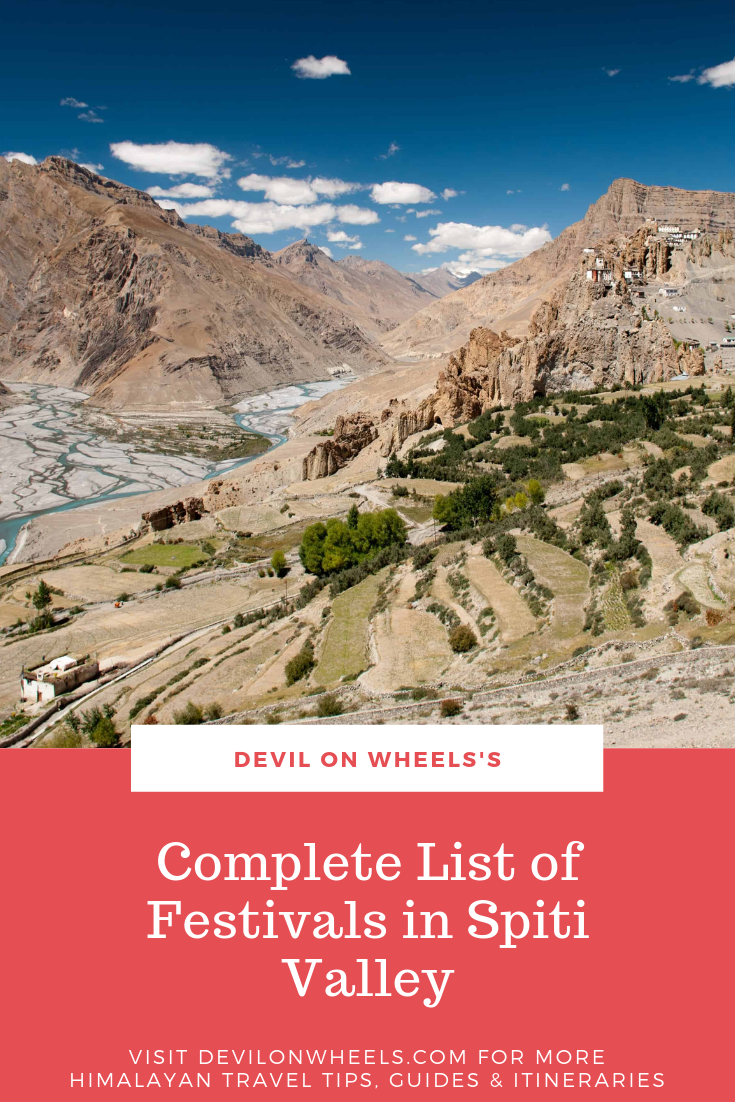
Planning a trip to Spiti Valley and wondering which festivals you can attend? The tribal region of Lahaul and Spiti celebrates some of the most unique festivals in Himachal Pradesh, blending Buddhist traditions with ancient Pahadi customs. This month by month guide covers every major festival in Spiti Valley and Lahaul for 2026-27, so you can plan your road trip around one of these community gatherings. I have rechecked every date below against government records and fresh news reports, since a few of the older claims floating around the internet (including an earlier version of this very post) were simply wrong.
| Quick Facts | Details |
| Total named festivals/fairs a year | Around 13, across Spiti and Lahaul |
| Biggest/most authentic | Losar (Tibetan New Year). Next occurrence: February 7, 2027 |
| Most tourist-friendly | Ladarcha Fair, Kaza (third week of August) |
| Entry fee | Free for every festival. Some monasteries keep a voluntary donation box |
| Winter access | Shimla-Kinnaur route only. Manali side stays shut till mid-June |
| Confirm exact dates via | District Administration, Lahaul & Spiti or your homestay host |
| Nearest ATMs | Reckong Peo or Keylong. Carry cash for your whole trip |
Let's quickly dive into the details:
What Are the Major Festivals in Spiti Valley?
Quick answer: Spiti and Lahaul celebrate 12 to 15 festivals a year, almost all tied to the Tibetan Buddhist lunar calendar. Losar (February) is the biggest, Ladarcha Fair (August) is the most tourist-friendly, and the Cham mask dance appears at nearly every one of them. Exact dates shift yearly, so always confirm locally before you travel.
Spiti and Lahaul together celebrate around 12-15 festivals throughout the year. Most of these are rooted in Tibetan Buddhism, while some reflect the Hindu and agrarian traditions of the Pattan and Bhaga valleys. The Cham dance, performed by Lamas in elaborate masks and costumes, is a common thread across many of these festivals.
Keep in mind that exact dates for most Spiti Valley festivals follow the Tibetan lunar calendar. Lamas at the local monasteries decide the dates each year, so the month stays consistent but the exact days shift. If you are planning to attend a specific festival, I would suggest contacting the District Administration of Lahaul and Spiti or your homestay owner in advance to confirm dates.
Quick Reference: All Festivals in Spiti and Lahaul
Quick answer: Thirteen named festivals repeat every year across Spiti and Lahaul, from Dechhang in December-January to Chakhar Mela in a rare third year. The table below lists each one by month and village, plus the most recent verified or expected date, so you can match a festival to your travel window at a glance.
| Festival Name | Month | Location | 2026-27 Dates |
| Dechhang Festival | December-January (Spiti), April (Lahaul) | Various villages | Set locally by Lamas, no fixed calendar date |
| Halda / Festival of Light | 2nd-3rd week of January | Pattan Valley (Lahaul) | Roughly 3-4 weeks before Losar each year |
| Losar (Tibetan New Year) | February | All monasteries across Spiti and Lahaul | 2026: Feb 18 (past). Next: Feb 7, 2027 |
| Gothsi / Gochi Festival | February | Bhaga Valley (Lahaul) | Coincides with the Losar period |
| Fagli (Kus / Kuns) | First half of February to early March | Pattan Valley (Lahaul) | A fortnight after Amavasya, shifts yearly, verify locally |
| Bhumskor | May-June | Lahaul Valley | Village-specific, ask locally |
| Tsheshu Fair | June | Shashur, Gemur, Ki, Kardang, Tabo, Mane Monasteries | Set separately by each monastery |
| Ki Chaam Festival | June-July | Ki Monastery, Spiti | Set by the lunar calendar, ask in Kaza |
| Kungri Festival | July | Kungri Monastery, Pin Valley | Set by the monastery |
| Ladarcha Fair | 3rd week of August | Kaza, Spiti | 2026: Aug 24-26 (confirmed) |
| Tribal Fair | August 14-16 | Keylong, Lahaul | 2026: Aug 14-16 (confirmed, coincides with Independence Day) |
| Pauri / Pori Fair | 3rd week of August | Triloknath, Lahaul | Coincides with the Ladarcha/Tribal Fair week |
| Gataur Mela | 4th week of September | Spiti Valley | 2026: expected late September, confirm locally |
| Chakhar Mela | Last week of September (once every 3 years) | Spiti Valley | Reportedly last held 2024, next expected 2027. Likely skips 2026, verify locally |
Now let me walk you through each festival in detail, organized by season.
Which Festivals Are Celebrated in Spiti During Winter (January to March)?
Quick answer: Winter brings Spiti’s most authentic festivals, Dechhang, Halda, Losar, Gothsi, and Fagli, celebrated with almost no tourists around because the Manali road is shut and temperatures fall to minus 20 degrees Celsius. You can only reach Spiti via the Shimla-Kinnaur route during this window, so plan for a slow, careful drive.
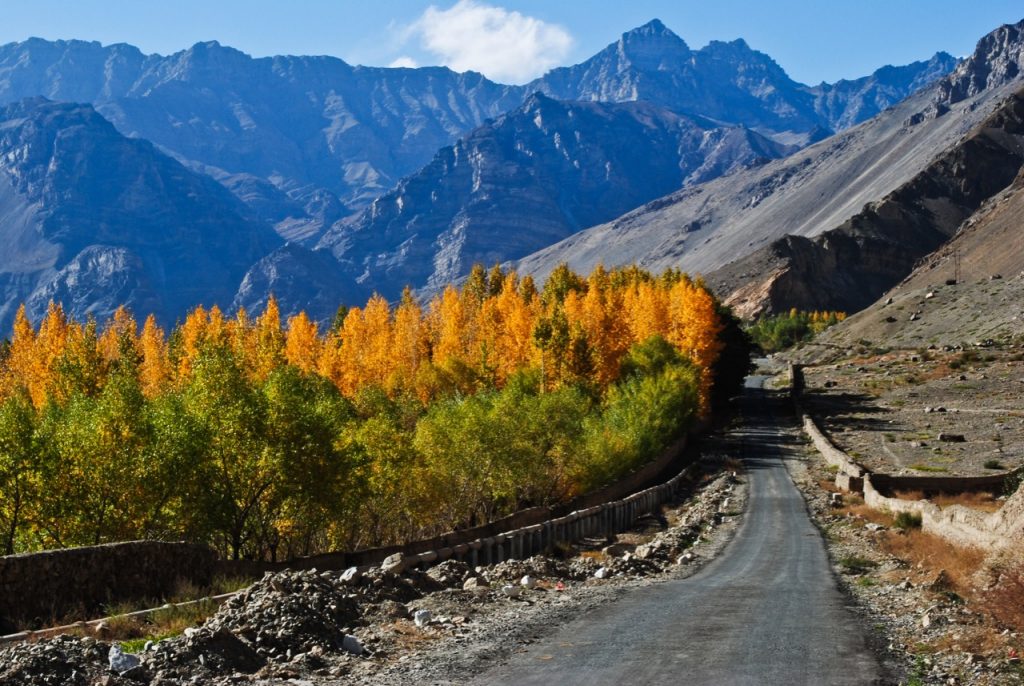
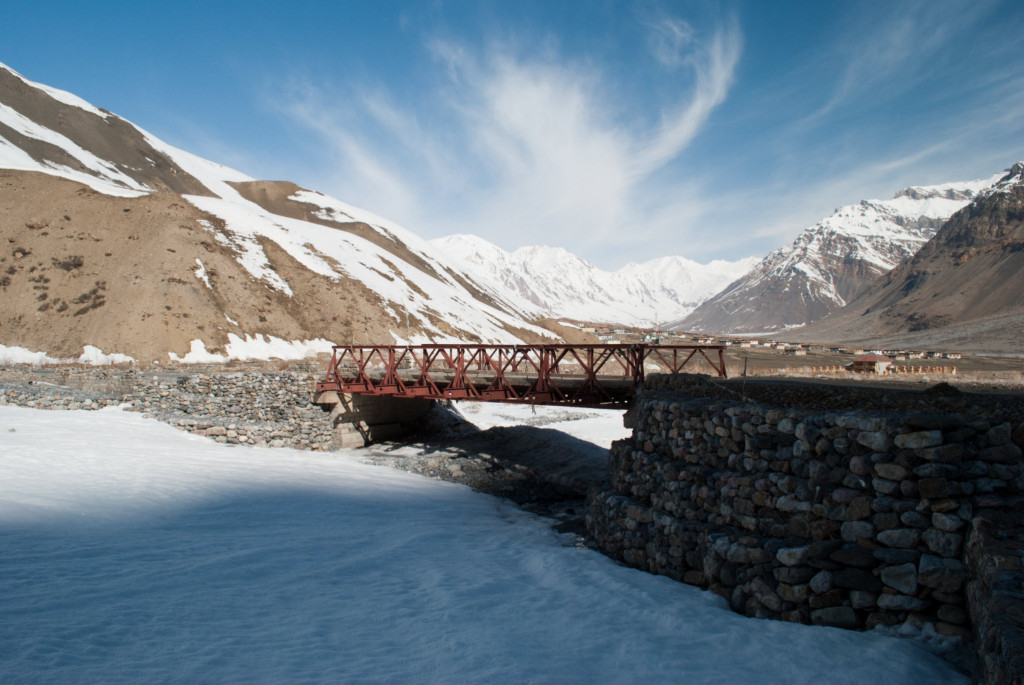
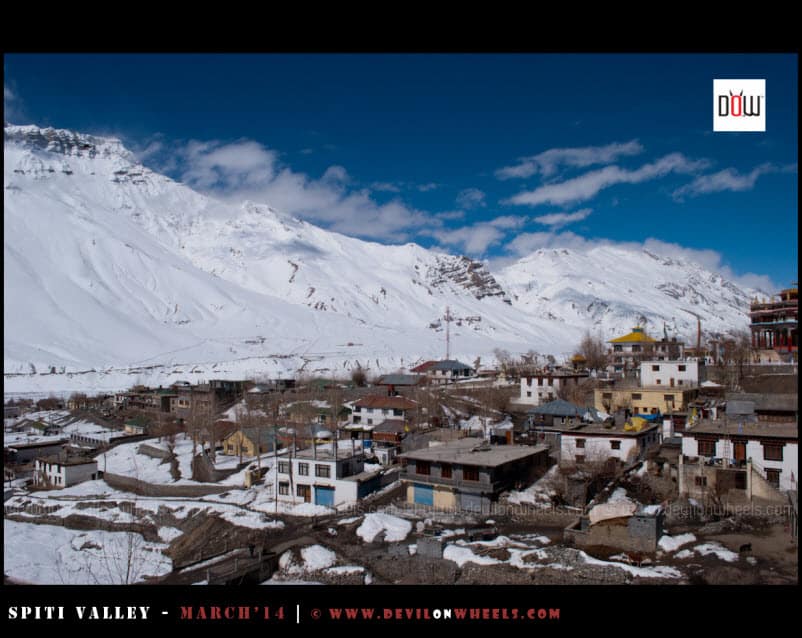
The winter months in Spiti are harsh, with temperatures dropping to minus 20-30 degrees Celsius. Roads from Manali close completely and the Shimla-Kinnaur route becomes unreliable. Yet, this is when some of the most authentic festivals happen, because there are hardly any tourists around. If you make the effort to reach Spiti in winter, you will witness celebrations in their purest form.
Dechhang Festival (December-January)
Spiti observes Dechhang in the peak of winter, usually in December or January. In Lahaul, the same festival is celebrated in April. Even with extreme weather, the tribal communities come together for bonfires, folk songs, and traditional dances. The fanfare is minimal and mostly local, which makes it feel very genuine.
If you are visiting during this time, go prepared for serious cold. Temperatures regularly hit minus 20 degrees Celsius, and heating options in homestays are limited to a bukhari (wood stove). Carry thermal layers, a good sleeping bag, and enough medication.
Halda / Festival of Light (Second to Third Week of January)
In case you have read other guides (including an older version of this one) that treat Halda and Losar as the same festival, they are actually two separate events. According to the official district records, Halda, also called the Festival of Light, falls in the second or third week of January, roughly 3-4 weeks before the Tibetan New Year itself. Lahaulis light torches of juniper and pine and carry them through the village at night to ward off evil spirits and bring good luck for the year ahead.
Villagers gather around bonfires, sing folk songs, and share a hearty community meal, often with fresh crops from the harvest. Local reporting on the festival, including a Tribune India report on Halda celebrations, confirms this is celebrated for luck and an abundant harvest, distinct from the New Year theme of Losar that follows a few weeks later. If you are in Lahaul in mid-January, this smaller, earlier festival is worth catching before the bigger Losar crowds arrive at the monasteries in February.
Losar Festival, the Tibetan New Year (February)
Losar is the biggest and most widely celebrated festival in Spiti Valley. It marks the Tibetan New Year. In 2026, Losar fell on February 18, and that date has already passed by the time of this update. The next Tibetan New Year, Losar 2027, falls on February 7, 2027, with celebrations running for about 15 days, until roughly February 21.
The festivities spread over three days of main celebrations. All monasteries participate in the traditions, and you can witness the Cham dance. This is a ritualistic dance where Lamas wear intricate costumes and masks representing different deities, animals, and spirits. The dance symbolizes the victory of good over evil and the transition into a new year.
Similar to how Hindus celebrate Diwali, Losar carries a strong Tibetan Buddhist significance. Members from local households step out with lighted cedar twigs near the Chandra and Bhaga rivers. These branches are collected to form large bases for community bonfires, which are then immersed in the rivers. People also worship Shiskar Apa, the goddess of wealth, and the celebrations continue for a couple of days with feasting and community gatherings.
Losar also commemorates the assassination of the Tibetan king Lang Darma, who had persecuted Buddhism during his reign. This historical layer adds depth to what is otherwise a joyous new year celebration.
Travel tip: If you want to attend Losar 2027, you will need to reach Spiti via the Shimla-Kinnaur route, as the Manali side stays closed in February. The road can be tricky with black ice and snow, so plan for delays and check the NH-5 road status before you leave. Homestays in Kaza remain open year-round, with rates around Rs 800-1,500 per night including meals (as of 2026, verify locally as winter rates can shift).
Gothsi / Gochi Festival (February)
Gothsi is a unique celebration of life, primarily observed in the Bhaga valley of Lahaul in February. This festival celebrates the sons born into families during the preceding year. Villagers gather in the morning for prayers, and the festivities continue well into the night.


The community shares Chhaang, a traditional local drink made from barley, to mark the occasion. The Labdagpa (village priest) worships with a bow and arrow, while Lohars beat drums during the ceremony. Families visit each village house after offering prayers and then gather for a large community feast.
An interesting tradition during Gothsi involves token marriages of children below six years of age. Children throw snowballs at each other, symbolically confirming their interest. While this is a long-standing tradition, it is primarily ceremonial in modern times.
Fagli Festival / Kus / Kuns (February-March)
Fagli is the most important festival of the Pattan Valley in Lahaul. According to the district administration, it typically falls a fortnight after Amavasya (the moonless night), usually in the first half of February. In practice, this festival is one of the hardest to pin to an exact date. Different local reports for 2026 placed it anywhere between mid-February and early March, which tells you how much it genuinely shifts from village to village and year to year. Do not lock your itinerary around a specific Fagli date without confirming with the district office or a homestay host closer to your travel dates.
![How to prepare for cold weather motorcycle ride in Ladakh or Spiti Valley? [13 Important Tips]](https://discoverwithdheeraj.com/yt_vid_thumbs/ladakh/83.png)
The locals decorate their houses and light oil lamps. They create a special setup called Baraza, which involves stacking bamboo sticks about 2 feet high and draping a white sheet around it, adorned with jewelry and flowers. This represents Shikhara Appa, an angel of the peak. Delicious dishes are placed before the Baraza along with burning incense, and offerings are first distributed to birds and crows in the morning.
What I find particularly beautiful about Fagli is how family members pay respects to their animals during this festival, acknowledging their gratitude and dependence on their livestock. The celebrations continue for the rest of the fortnight, with community feasts and gatherings. This festival marks the end of winter and the arrival of spring, making it a celebration of hope and renewal.
Which Festivals Happen in Spiti During Summer (April to August)?
Quick answer: Summer is Spiti’s easiest festival season. Both the Manali and Shimla-Kinnaur routes are open, hotels and homestays are fully running, and you get Bhumskor, Tsheshu Fair, Ki Chaam, Kungri, Ladarcha, the Keylong Tribal Fair, and Pauri Fair, all between May and the third week of August.
Summer is the busiest season in Spiti, both for tourism and for festivals. The roads open, the weather is pleasant, and the entire valley comes alive. This is also the easiest time for travelers to attend festivals, since accommodation and transport are readily available.
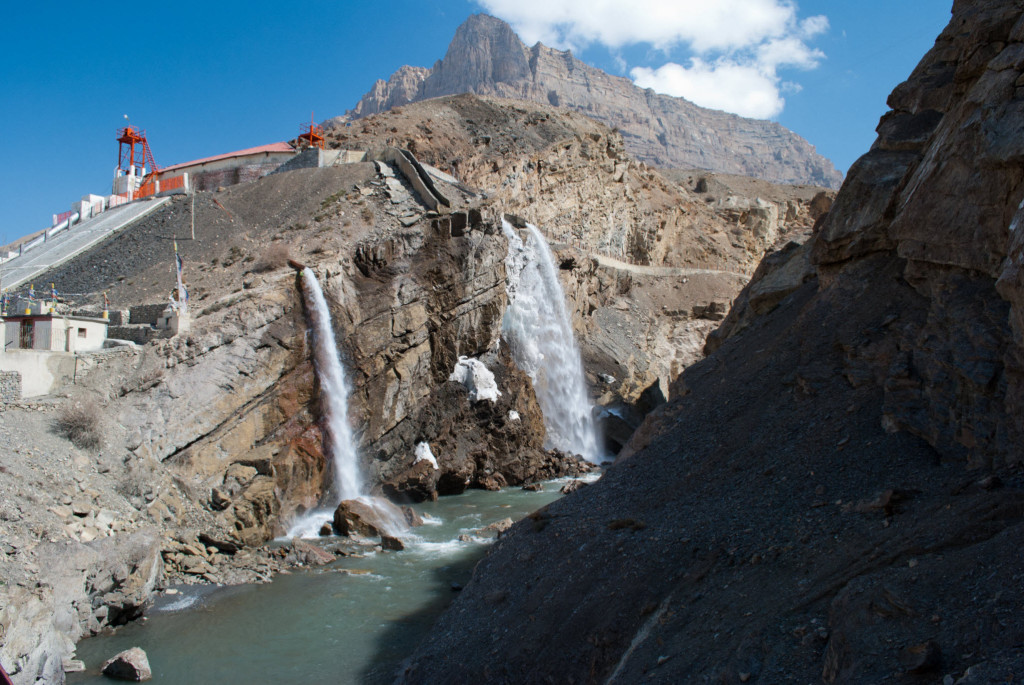
Bhumskor Festival (May-June)
Celebrated primarily in Lahaul, Bhumskor is a religious agrarian festival where Lamas bless the fields before the sowing season. The ceremonies honor mother nature and acknowledge the community’s dependence on the land. If you happen to be in Lahaul during late May or early June, you might catch this quiet but meaningful celebration in one of the villages along the Chandra or Bhaga rivers.
Tsheshu Fair (June)
Tsheshu is one of the most widespread festivals in the region, celebrated across multiple monasteries including Shashur, Gemur, Ki, Kardang, Tabo, and Mane. This festival serves a very practical purpose. After months of winter isolation with limited movement between villages, Tsheshu reconnects communities with their neighbors.
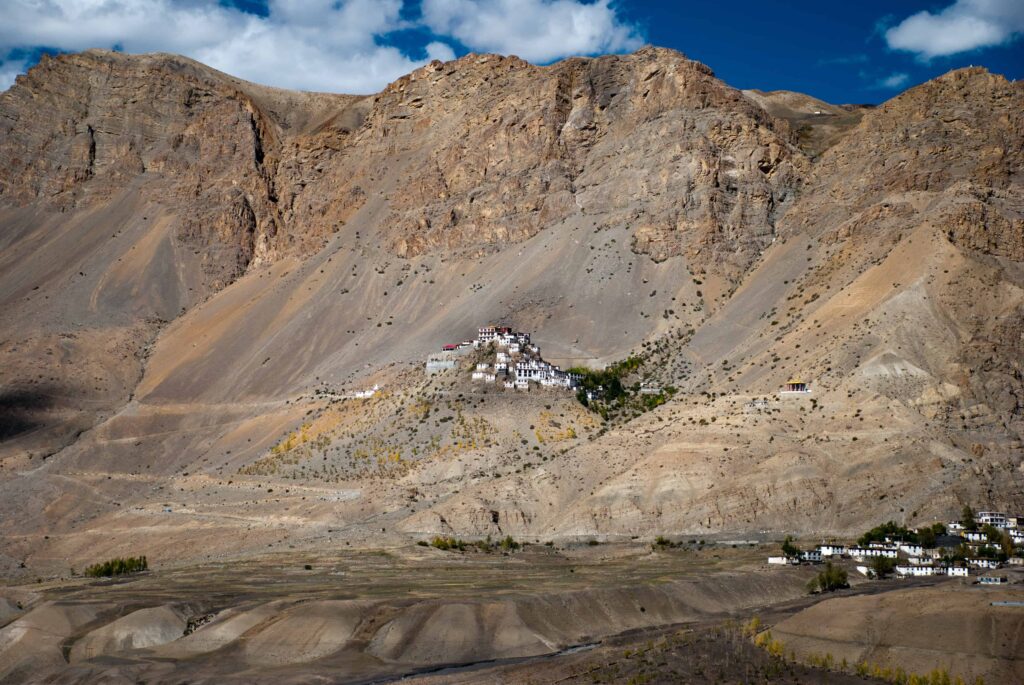
The highlight is the Cham Dance performed by Lamas in colorful costumes and masks of birds and animals from the region. The dance symbolizes increasing prosperity in the times ahead. For a traveler, this is one of the most visually spectacular festivals to witness, especially at Ki Monastery perched dramatically on a hilltop.
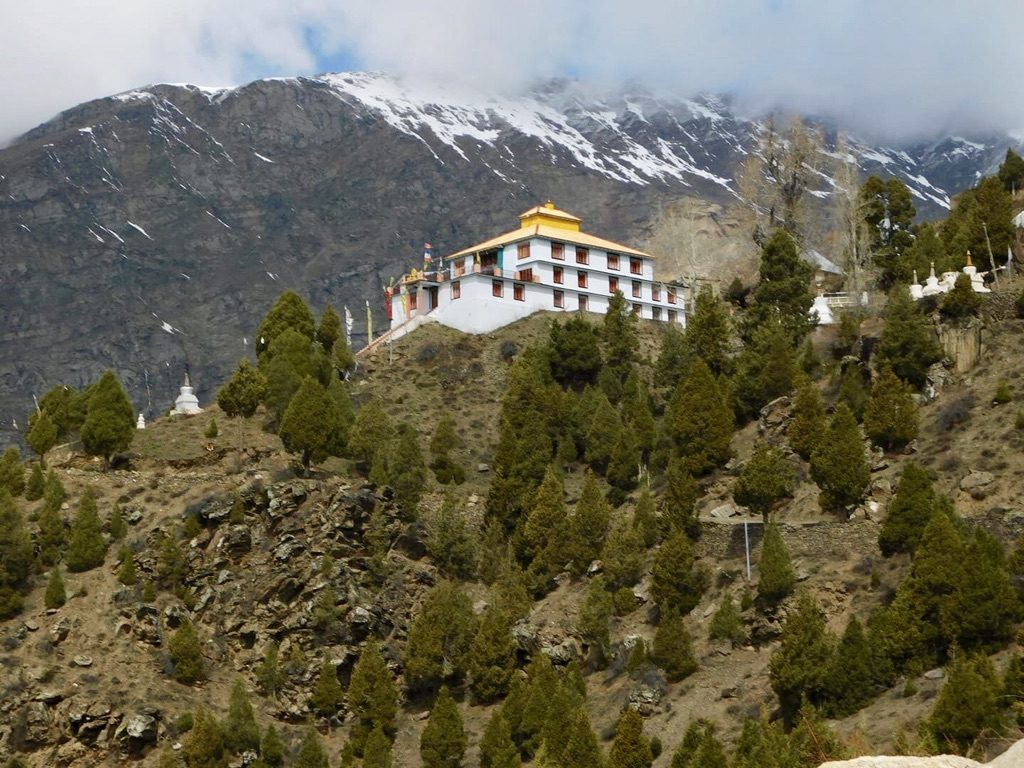
Ki Chaam Festival (June-July)
Ki Monastery, the largest monastery in Spiti Valley, hosts its own Chaam festival typically in June or July. The monastery comes alive with ritualistic dances performed by Lamas to pray for good fortune in the coming year. The atmosphere is charged with devotion and energy, with the sound of long horns and cymbals echoing through the valley.
This is perhaps the easiest festival to attend as a tourist, since Ki Monastery is just 12 km from Kaza and well-connected by road. You can stay in Kaza or Kibber village and visit for the day. The exact dates depend on the lunar calendar, so ask locally when you arrive in Spiti.
Kungri Festival (July)
Celebrated at the ancient Kungri Monastery in Pin Valley, this festival features the Cham dance performed by Lamas, followed by a sword dance performed by the Buzhens of Mud Village on the banks of the Pin River. Kungri Monastery, dating back to 1330 AD and belonging to the Nyingmapa sect, makes for a beautiful setting.
If you are already in Spiti during July, combining a visit to Pin Valley with the Kungri Festival is highly recommended. The drive from Kaza to Mud Village takes about 2-3 hours.
Ladarcha Festival and Fair (3rd Week of August)
Ladarcha is the most awaited fair of the year in Spiti. Historically, it reinforced trade bonds between Tibet and India. Traders from Ladakh, Rampur, Bushaahr, and Spiti would gather at the Kibber Maidan for bartering produce and artifacts. The fair was suspended in 1962 during the Indo-China War and resumed in 1980.
In 2026, the Ladarcha Fair was held from August 24 to 26 in Kaza, with a grand procession opening the fair on August 25. Interestingly, the district had first proposed August 21-23 for the fair before the local administration revised the dates, a good reminder that even a “third week of August” pattern can shift by a few days each year. For 2027, expect similar timing, but confirm the exact dates closer to your travel window rather than assuming they will repeat exactly.
Today, the Ladarcha Fair has evolved into a cultural showcase, with performers from the Tibetan Institute of Performing Arts, artists from Ladakh, Kinnaur, and Nepal. You can watch the traditional Cham and Bushan dances, attend Buddhist sermons, and participate in archery competitions.
The fair also serves as a marketplace. Items for sale range from jewelry, utensils, gems, and organic products to the unexpected, including yaks and horses. If you are in Spiti in August, Ladarcha is an experience you should not miss.
Tribal Fair at Keylong (August 14-16)
The tribal fair at Keylong, the district headquarters of Lahaul and Spiti, is celebrated around Independence Day each year. Held at the Police Ground in Keylong, the fair features folk dances, local music, and cultural performances. The 2026 edition ran on schedule from August 14 to 16, with a colourful opening procession and traditional Nati dance performances, so this is one of the rare festivals on this list you can plan around with real confidence.
Artists and cultural troupes are invited from Chandigarh, Dharamshala, Leh, Chamba, Kullu, and Spiti. The gathering is sometimes called the “Kumbh” of the region because of the massive turnout from tourists and locals alike. If you are traveling the Manali-Keylong route in mid-August, this is worth a stop.
Pauri / Pori Fair (3rd Week of August)
Pauri has been the most prominent fair of the Lahaul Valley for generations. It combines the atmosphere of a pilgrimage with a festival, drawing representations from across the Himalayan region.
From a religious standpoint, Hindus pay respects to Triloknath (Shiva, Lord of Three Worlds), while Buddhists pray to Avalokiteshvara. The mantra “Om Mani Padme Hum” is recited every morning and evening during the festival. After the rituals, a fair begins with temporary shops and stalls. In the evening, pilgrims dance in a large circle to folk songs.
On the second day, a procession headed by the Thakur of Triloknath on a decorated horse leads to the spring area where one of the seven gods of Triloknath is believed to have appeared. The procession returns to the fairground for more celebrations. This is one of the few festivals where you see Hindu and Buddhist traditions blend seamlessly.
What Festivals Are Celebrated in Spiti During Autumn (September to December)?
Quick answer: Autumn has just two festivals, Gataur Mela in the fourth week of September and Chakhar Mela (once every three years, in the same week). Both mark the shift into winter, with the Cham dance and offerings to protector deities Chaugayal and Chikchait.
As September arrives, the season begins to change in Spiti. Snow starts appearing on the higher passes, and the valley prepares for the long winter ahead. Two important festivals mark this transition period.
Gataur Mela (4th Week of September)
Every year in the fourth week of September, Gataur Mela is celebrated across Spiti. The Lamas conduct the worship of God Chaugayal, followed by throwing saur into the fire while performing the Cham dance. This festival marks the beginning of the transition into winter. If you are reading this update in September 2026, Gataur Mela is only a couple of weeks away, so this is actually one of the more time-sensitive festivals on this whole list right now. Call ahead to a Kaza homestay to check which village is hosting it this year.
Chakhar Mela (Last Week of September, Once Every 3 Years)
Chakhar is a special festival celebrated only once every three years, coinciding with Gataur Mela in the last week of September. During Chakhar, Lamas worship Lord Chikchait for six continuous days and throw the Chakhar into the fire on the seventh day. This is followed by the Cham dance performance.
Based on the reported three-year cycle, Chakhar was last held in 2024, which would put the next edition in 2027, not 2026. I have not found an official government notice confirming this cycle in writing, so treat it as a strong indication rather than a guarantee. In case your 2026 trip is timed around Gataur Mela in late September, it is worth asking locally whether this happens to be a Chakhar year before you get your hopes up.
Can You Attend the Kalachakra Festival at Ki Monastery?
Quick answer: Yes, but only when the Dalai Lama actually visits, which last happened at Ki Monastery in 2000. There is no fixed yearly Kalachakra here. Watch His Holiness’s official schedule and book a room the day an announcement comes, since Spiti’s limited homestays fill within hours.
The Kalachakra ceremony at Ki Monastery is celebrated on a grand scale when His Holiness the Dalai Lama visits to give teachings. During the Kalachakra, HH Dalai Lama leads the path toward positive energies and helps attendees experience the Buddhist philosophy of compassion and mindfulness. His Holiness held the Kalachakra at Ki Monastery in 2000, and separately conducted it twice at Tabo Monastery, in 1983 and 1996, so this part of Spiti has genuine history with the ceremony even though it is rare.
The Kalachakra does not happen every year at Ki Monastery. It is organized on special occasions, and the Dalai Lama’s schedule is announced well in advance. When it does happen, thousands of devotees from across the world gather in Spiti. Accommodation fills up months in advance, so if you hear about an upcoming Kalachakra at Ki, book your stay immediately.
How to Plan Your Trip Around a Spiti Valley Festival?
If attending a festival is one of the main goals of your Spiti trip, here are some practical tips that will help you plan better.
Confirm dates locally. Since most festivals follow the Tibetan lunar calendar, dates shift every year. Contact your homestay host or the Kaza tourism office to confirm exact dates before finalizing your travel plans.
Choose the right route. For winter festivals (Halda, Losar, Dechhang, Gothsi, Fagli), the only access is via the Shimla-Kinnaur route, which needs an Inner Line/Protected Area Permit for foreign nationals (Indians need none). The Manali route via Kunzum Pass opens only around mid-June. If you drive in via the Manali side and Atal Tunnel for a summer festival, remember that every vehicle now needs the free e-Aagman e-pass (eaagman.hp.gov.in) plus the Rs 200 SADA fee at Sissu for non-HP vehicles, a rule many older festival guides still miss entirely. For summer festivals (Tsheshu, Ladarcha, Ki Chaam), both routes are available.
Book accommodation early. During major festivals like Losar and Ladarcha, homestays and hotels in Kaza fill up fast. Spiti Valley homestays are your best option, ranging from Rs 800 to Rs 1,500 per night with meals. Book at least 2-3 weeks in advance for festival periods.
Respect local customs. These are community celebrations, not tourist events. Dress modestly, ask before photographing people (especially during religious rituals), and do not enter monastery areas that are restricted. Feel free to ask a local elder if you are unsure whether photography is allowed at that specific moment; the locals in Spiti are warm and welcoming, but mutual respect goes a long way.
Carry enough cash. There is no reliable ATM in Spiti. The nearest ATMs are in Reckong Peo or Keylong. Carry enough cash for your entire stay, including some extra for unexpected delays. For more practical tips, check out the Spiti Valley FAQs guide and the AMS and acclimatization guide, since winter festival travel especially means going straight to high altitude with very little room for a slow, gradual ascent.
Best Time to Visit Spiti Valley for Festivals
If you want the authentic, intimate experience with very few tourists, February is the month, and with Losar 2027 now confirmed for February 7, you have a solid date to plan around. Losar and Fagli during this period are celebrated in their purest, most traditional form. However, reaching Spiti in winter requires careful planning and a tolerance for extreme cold.
For a more accessible festival experience, August is your best bet. The Ladarcha Fair, Tribal Fair at Keylong, and Pauri Fair all happen within a couple of weeks of each other. You can combine festival visits with the standard Spiti Valley itinerary and enjoy good weather, open roads, and comfortable accommodation. For a detailed breakdown of what each month offers, check the best time to visit Spiti Valley guide.
Last updated: September 2026
Related Reading
- Best Time to Visit Spiti Valley: Month by Month Guide
- NH-5 Road Status: Shimla to Spiti via Kinnaur
- Inner Line Permits for Kinnaur, Lahaul and Spiti Valley
- Acute Mountain Sickness and the Importance of Acclimatization
- Langza, Komic and Hikkim: Local Sightseeing Near Kaza
Frequently Asked Questions
What is the most famous festival in Spiti Valley?
Losar, the Tibetan New Year, is the most widely celebrated festival in Spiti Valley. It takes place in February and features the Cham dance, community bonfires, and three days of main celebrations across all monasteries in the region. For travelers, the Ladarcha Fair in August is the most accessible and visually spectacular festival to attend.
When is Losar celebrated in Spiti Valley next?
Losar 2026 fell on February 18 and has already passed. The next Tibetan New Year, Losar 2027, falls on February 7. The main celebrations last for 3 days, though festivities continue for about 15 days in total, until roughly February 21, 2027. Since dates follow the Tibetan lunar calendar, they shift each year, so always double check with the district administration closer to your travel dates.
What is the difference between Halda and Losar?
Halda, also called the Festival of Light, is a separate Lahaul festival celebrated in the second or third week of January, roughly 3-4 weeks before Losar itself. Some guides describe them as the same event since both mark the run-up to the new year, but per district records and local news coverage, Halda is an earlier, smaller torch-lit festival focused on luck and harvest, while Losar in February is the actual Tibetan New Year celebrated across every monastery.
Can tourists attend festivals in Spiti Valley?
Yes, tourists are welcome at all festivals in Spiti Valley. These are community celebrations and locals are happy to share their traditions with visitors. The only requirement is to be respectful, dress modestly during monastery events, and ask permission before photographing people during religious rituals.
How do I reach Spiti Valley in winter for Losar?
In winter, the only route to Spiti is via Shimla to Kinnaur to Kaza. The Manali route via Kunzum Pass remains closed from October to June. The Shimla-Kinnaur road can have black ice and snow patches, so a 4×4 vehicle or experienced driver is recommended. HRTC runs limited bus services on this route even in winter, but schedules may vary seasonally, so verify with HRTC before travel.
Is there an entry fee to attend festivals in Spiti?
No, there is no entry fee for any festival in Spiti Valley or Lahaul. These are community and religious celebrations open to everyone. Some monasteries may have a small donation box, but it is entirely voluntary. The Ladarcha Fair in Kaza is also free to attend.
What is the Cham dance performed during Spiti festivals?
Cham (also spelled Chaam) is a traditional Buddhist ritualistic dance performed by Lamas at monasteries. Dancers wear elaborate masks and colorful costumes representing deities, animals, and spirits. The dance symbolizes the victory of good over evil and is performed at most major festivals in Spiti including Losar, Tsheshu, Ki Chaam, and Kungri festivals.
Is the Chakhar Mela happening in 2026?
Most likely not. Chakhar Mela is celebrated once every three years, and the last edition was reportedly held in 2024, which would put the next one in 2027 rather than 2026. This three-year cycle is not published in an official government notice that I could find, so treat it as a strong pattern rather than a certainty, and ask locally if your visit coincides with Gataur Mela in late September 2026.
With a rich culture that blends Tibetan Buddhist and Hindu traditions, the people of Spiti and Lahaul truly know how to celebrate. Whether you visit in the frozen silence of February for Losar or in the warm bustle of August for Ladarcha, attending a festival in Spiti gives you a window into the soul of this region that no amount of sightseeing can match.
Have you attended any festival in Spiti Valley, my friend? Which one stood out to you? If we missed any festival or if you have updated information about dates, do leave a comment below, and I will get it corrected. And if your friends or family are planning a trip to Spiti Valley, share this guide to help them experience the culture firsthand 🙂
