


Spiti Valley needs three clothing layers year-round: moisture-wicking thermals, a fleece mid-layer, and a windproof outer shell, since Kaza’s daytime highs can drop toward freezing within hours even in summer. Kaza’s own shops stock only basic woolens (gloves Rs 150-400, caps Rs 100-300 as of 2026), so buy your main gear in Manali, Shimla, or Reckong Peo before Spiti.
One of the most common questions I get on my blog and social media is, “What clothes should I carry for a Spiti Valley trip?” or “What should I wear in Spiti Valley?” These are genuinely important questions because Spiti sits at 3,000 to 4,500 meters above sea level, and the weather here can swing from warm sunshine to biting cold within minutes. Pack wrong, and your trip becomes uncomfortable. Pack right, and you will enjoy every moment of it.
In this guide, I will walk you through a complete month-by-month clothing guide for Spiti Valley, with special focus on the tricky shoulder season months (March to May and September to November) when most travelers make packing mistakes. I have been traveling to Spiti for over a decade now, and these tips come straight from that experience.
Let's quickly dive into the details:
What Temperatures Can You Expect in Spiti Valley?
Before you start packing, you need to understand the temperature ranges in Spiti Valley. Kaza, the district headquarters, sits at about 3,800 meters (12,500 ft). Higher villages like Langza, Komic, and Hikkim are even colder. Here is a rough temperature guide to help you plan your clothing.
| Month | Day Temp (approx) | Night Temp (approx) | Clothing Level |
|---|---|---|---|
| January | -10C to -5C | -20C to -15C | Heavy winter gear |
| February | -6C to 0C | -19C to -12C | Heavy winter gear |
| March | -5C to 5C | -15C to -8C | Heavy woolens |
| April | 5C to 15C | -5C to 2C | Heavy + light layers |
| May | 8C to 18C | 0C to 5C | Light + medium layers |
| June | 12C to 22C | 5C to 10C | Light woolens + backup jacket |
| July | 15C to 25C | 8C to 12C | Light woolens |
| August | 14C to 22C | 6C to 10C | Light woolens |
| September | 10C to 18C | 2C to 8C | Light + medium layers |
| October | 2C to 12C | -6C to 0C | Heavy + light layers |
| November | -5C to 5C | -15C to -8C | Heavy woolens |
| December | -7C to -2C | -19C to -12C | Heavy winter gear |
Practical Info: Spiti Valley sits at 3,000-4,500 m elevation with a cold desert climate. The best time to visit Spiti Valley for most travelers is June to September. The road via Shimla-Kinnaur stays open year-round while the Manali-Kaza route via Kunzum Pass opens only from late May to mid-October. UV index is extreme (8-11+) year-round, so sun protection is non-negotiable. Last updated: October 2026.
Why Does the Shoulder Season Need Special Attention?
The shoulder season for Spiti Valley is March to May (early season) and September to November (end of season). I specifically want to talk about these months because travelers from the plains often underestimate how cold Spiti can get during this period. You might be experiencing 30-35C heat in Delhi, and then you land in Kaza where the temperature is hovering around 5C during the day and dipping below freezing at night.
Hence, people traveling in these shoulder months need to be much more careful about packing than someone visiting in July or August. The cold conditions are either setting in or fading away, and the weather can be unpredictable. One day might feel like spring, and the next might bring a snowstorm. I have personally witnessed sudden weather changes in September and October that caught unprepared travelers off guard.
Keep in mind that the Shimla-Kinnaur route to Spiti remains open throughout the year, so people do travel even in March when the Manali-Kaza road is still buried under snow. Both these travel windows require proper winter-level preparation for your wardrobe.
What Is the Layering System and Why Does It Matter in Spiti?
The single most important clothing concept for Spiti Valley is layering. Forget about packing one thick jacket and hoping it works. Spiti’s weather changes rapidly. When the sun is out in Kaza, it can feel pleasantly warm at 15-20C. Then you drive into a shaded gorge with wind blowing, and suddenly you need a proper jacket. If you are wearing one heavy parka, you are either too hot or too cold. Layers let you adjust.
Here is how the three-layer system works for Spiti Valley:
- Base layer (next to skin): Moisture-wicking thermal innerwear. Merino wool or synthetic fabric works best. Avoid cotton as your base layer because cotton retains moisture, takes forever to dry, and makes you colder. Carry 2-3 pairs.
- Mid layer (insulation): Fleece jacket, woolen sweater, or a down vest. This layer traps body heat. One good fleece jacket and one pullover/hoodie should suffice for summer months. Add a second fleece for shoulder and winter months.
- Outer layer (protection): A windproof and waterproof jacket. This is your shield against Spiti’s cold winds and occasional rain or snow. A good parka or hardshell jacket is essential from September to May. Even in summer, carry a light windcheater.
The beauty of layering is that you add or remove layers as the temperature changes through the day. In the morning, you might wear all three layers. By noon with the sun blazing, you peel down to just the base layer and a light fleece. In the evening, back on go all the layers. This flexibility is what keeps you comfortable in Spiti.
What Is the Complete Clothing Checklist for a Spiti Valley Trip?
Based on my years of traveling to Spiti across different months, here is the master checklist. I have marked items as “must-have” for all months and “seasonal” for specific periods.


- Inner thermals (2-3 pairs). Must-have from September to June. Even in July-August, carry at least one pair for cold nights.
- Fleece jacket or windcheater. Must-have year-round. This is your go-to mid-layer.
- Heavy woolen jacket or parka (windproof). Must-have from October to May. Carry as backup in June and September.
- Heavy woolens (2-3 sets). Sweatshirts, pullovers, warm hoodies. Scale quantity based on month.
- Comfortable trekking pants or trousers. 2-3 pairs. I personally prefer jeans for casual days, but trekking pants dry faster if they get wet.
- Good trekking shoes or insulated boots. Insulated waterproof boots for winter months (Oct-May). Regular sports shoes work for June-September, but trekking shoes are always better on Spiti’s terrain.
- Woolen socks (3-4 pairs). Must-have from September to June. Carry at least 2 pairs even in summer.
- Caps and hats (2 minimum). A woolen cap for cold and a wide-brim hat or cap for sun protection. UV rays at this altitude are harsh. Kids should wear caps or hats whenever they are outdoors.
- Balaclava or monkey cap. Essential from October to April. Protects your face and neck from biting wind.
- Sunglasses (UV protection). Must-have year-round. Snow reflection and intense high-altitude sun can cause snow blindness. Get Category 3 or 4 UV protection lenses.
- Hand gloves. Must-have from October to June. Carry thin liner gloves plus heavier insulated gloves for winter months.
- Extra shoes or gumboots. Bikers especially should carry gumboots for water crossings during June-September. An extra pair of footwear is always wise in case your primary shoes get wet.
- Light rain jacket or poncho. Useful during June-September when the approach roads through Kinnaur or Manali side can get some rain.
Important Tip: In September and October, UV rays are at their harshest in Spiti. You must protect your skin using hats, caps, and a good high SPF sunscreen (SPF 50+ recommended). Apply every 2-3 hours, especially at higher villages like Langza and Komic.
How Should You Keep Warm and Avoid Altitude Sickness?
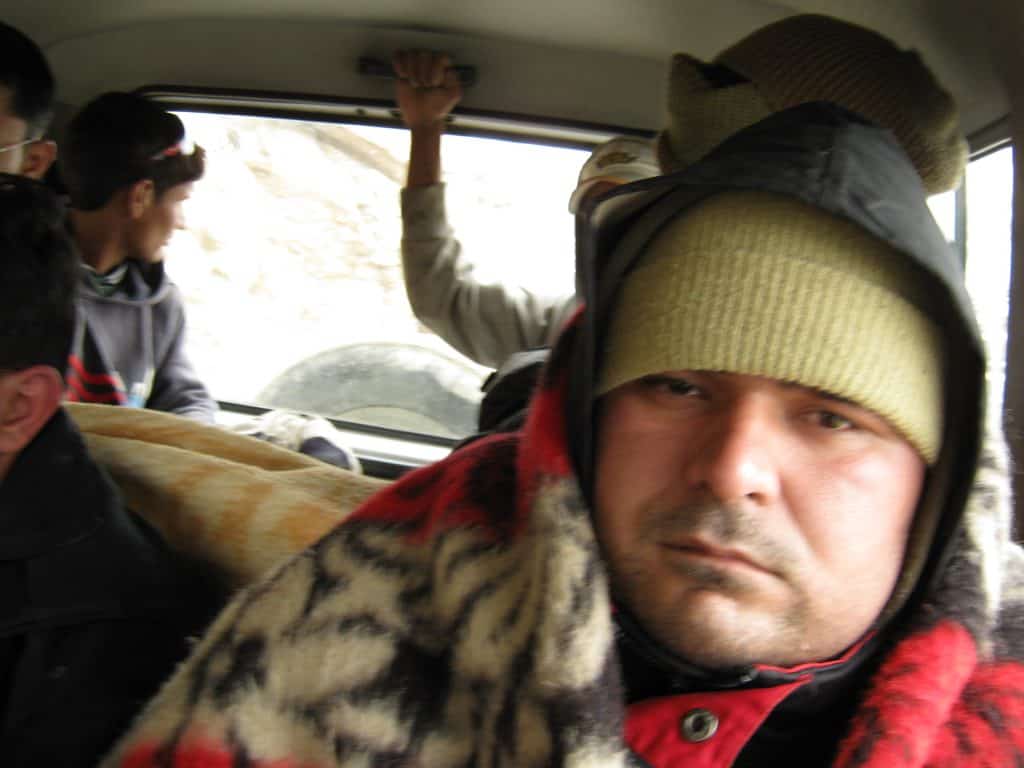
The basic rule for a successful Spiti Valley trip is this: at any cost, keep yourself warm at all times with proper woolen clothing and always wear shoes with socks. This is not just about comfort. Staying warm actually helps reduce the chances of getting hit by Acute Mountain Sickness (AMS). Cold exposure at high altitude stresses your body and makes acclimatization harder.

Always protect your chest from cold winds. When the cold gets severe, protect your neck and face as well using a balaclava or a buff. I have seen many travelers fall sick in Spiti not because of the altitude alone, but because they were not dressed warmly enough and their body used all its energy fighting the cold instead of acclimatizing.
One more thing. Keep in mind that you should always carry your own water bottle and refill it as many times as you need. Staying hydrated helps with acclimatization, and you also help save the Himalayas from plastic garbage. Every small step counts. 🙂
What Should You Wear in Spiti Valley Month by Month?
Now let me break this down month by month so you know exactly what clothing to prioritize for your specific travel dates. I have organized these into three seasonal categories for easier reference.
Winter Months (December to March)
These are the coldest months in Spiti Valley. The Manali-Kaza road is closed by heavy snowfall at Kunzum Pass (the Atal Tunnel keeps the Rohtang section open year-round, but Kunzum is the stretch that shuts). You can only reach Spiti via the Shimla-Kinnaur route. Temperatures regularly dip to -15C to -20C at night, and daytime temperatures stay below freezing in January and February. If you are planning a winter Spiti trip, here is what you need:
- Heavy woolen jacket or parka (windproof, insulated)
- Balaclava or monkey cap (protects face and neck)
- Inner thermals (2-3 pairs, wear daily)
- Fleece jacket (mid-layer insulation)
- Heavy woolen clothing (sweatshirts, pullovers, 2-3 sets)
- Woolen socks (3-4 pairs, change daily)
- Warm insulated boots or trekking boots (waterproof)
- Warm hand gloves (insulated, preferably with inner liner)
- Sunglasses (mandatory for snow glare)
In March, snow clearance operations begin on the Manali-Kaza road, but Spiti itself is still firmly in winter. Do not let the word “March” fool you into thinking spring has arrived. It has not. Pack exactly as you would for January or February.
Shoulder Season: April and May
April and May are when things get tricky. Snow clearance is in full swing on the Manali-Kaza road. Kinnaur Valley starts getting pleasant weather, and you might think Spiti will be the same. It is not. Beyond Schichilling towards Kaza, temperatures are still low, especially in the mornings and evenings. The high villages of Langza, Hikkim, and Komic remain cold, and Pin Valley starts becoming accessible only by late April.
This is exactly where layering becomes critical. During the day with sun, you might be comfortable in a t-shirt and fleece. By evening, you need thermals, a heavy sweater, and a jacket.
- Heavy woolen jacket or parka (windproof)
- Woolen cap (plus sun cap for daytime)
- Inner thermals (2 pairs)
- Fleece jacket
- Mix of heavy and regular woolens
- Woolen socks (2-3 pairs)
- Warm shoes or trekking boots
- Sunglasses and sunscreen (SPF 50+)
Peak Season: June to August
This is when summer finally arrives in Spiti. The Manali-Kaza road opens as snow is cleared from Kunzum Pass (note: Atal Tunnel has replaced the Rohtang Pass route, so that section is open year-round now). Tourists begin flowing into Spiti Valley. Daytime temperatures can reach 18-25C, which feels quite pleasant. But do not be fooled into packing only summer clothes.
Even in July and August, Spiti evenings and early mornings can drop to 8-12C. If you are camping at Chandratal Lake (14,100 ft), expect temperatures near freezing at night even in peak summer. Overcast days with wind can make you reach for that fleece jacket fast. Spiti is also a rain shadow region, so monsoon rains mostly spare Spiti itself, but the approach roads through Kinnaur and Manali side do get rain and landslides.
- Fleece jacket or light woolen jacket (windproof)
- Regular cap or hat (sun protection is critical)
- Inner thermals (1 pair for emergencies/camping)
- Light woolen clothing (1-2 pieces)
- Regular and woolen socks
- Regular sports shoes or trekking boots
- Gumboots for bike riders (water crossings in June)
- Sunglasses
- Light rain jacket (for approach roads)
- Heavy jacket as backup only (keep it in the car/bag)
Shoulder Season: September and October
September and October are personally my favorite months to visit Spiti because the valley looks stunning with autumn colors. But these months are deceptive. September starts pleasant, but by the second half, cold starts creeping in rapidly. October brings the first snowfalls at higher altitudes, and by late October, the Manali-Kaza road becomes risky.
Do not forget, September 2018 brought a snowstorm to Spiti that caught many travelers unprepared and caused casualties. So, take clothing seriously from September onwards. The UV rays are also at their harshest during these months, so skin protection is equally important.
- Fleece jacket and a heavy woolen jacket (carry both)
- Woolen cap and sun hat
- Inner thermals (1-2 pairs)
- Mix of light and medium woolens
- Woolen socks (2-3 pairs)
- Trekking shoes or boots
- Gumboots for bikers
- Sunglasses and high SPF sunscreen
- Heavy parka as contingency (especially late October)
November
November is effectively winter in Spiti. The Manali-Kaza road via Kunzum Pass is not recommended to travel even if technically still open. Pack exactly as you would for the December-March winter months. Heavy woolens, insulated boots, balaclava, gloves, the full winter kit.

Can You Buy Warm Clothes Locally in Spiti?
In case you forget something or realize you have underpacked, Kaza has a few shops that sell basic woolens like caps, gloves, socks, and shawls. Expect to pay roughly Rs 100-300 for a woolen cap and Rs 150-400 for gloves as of 2026, similar to what you would pay in Manali or Shimla, but the selection in Kaza is thin and the quality is basic. You will not find branded trekking gear or proper thermal innerwear in Kaza.
If you are traveling via the Kinnaur route, Reckong Peo and Shimla are your last reliable shopping stops. On the Manali route, Manali itself has plenty of shops selling woolens, fleece jackets, and trekking gear (both branded and local). My advice: buy everything you need before you enter Spiti. It is not worth the risk of being underprepared at 12,500 feet.
What Common Packing Mistakes Should You Avoid?
Over the years, I have seen travelers make the same mistakes again and again. Here are the big ones:
- Packing cotton as base layer: Cotton absorbs sweat, stays wet, and makes you colder. Always go with synthetic or merino wool thermals next to your skin.
- Overpacking heavy items instead of layering: Three thin layers keep you warmer and more versatile than one thick jacket. You can remove layers when it is warm and add them when it gets cold.
- Ignoring sun protection: At 12,000-14,000 ft, UV radiation is 40-50% stronger than at sea level. Sunburn, chapped lips, and snow blindness are real risks. Carry SPF 50+ sunscreen, lip balm with SPF, and UV-protection sunglasses.
- Wearing open footwear: Sandals and flip-flops have no place in Spiti beyond your hotel room. Always wear closed shoes with socks when outdoors. This keeps your feet warm and protects against rocky terrain.
- Not carrying rain protection on approach roads: While Spiti itself is a rain shadow, the roads through Kinnaur, Rampur, and Manali get heavy rain during monsoon months. A packable rain jacket saves you a lot of discomfort during the drive in.

What Other Things Should You Pack for Spiti Valley?
Clothing is only one part of packing for Spiti. You should also carry medicines (including Diamox for altitude), a good first-aid kit, a power bank (electricity is unreliable in remote areas), and enough cash (ATMs are limited and often non-functional). For the complete list, check my detailed packing checklist for Himalayan trips.
If you are riding a motorcycle to Spiti, your packing needs are different. Gumboots for water crossings, a riding jacket with armor, and waterproof panniers or dry bags become important. Check my motorcycle packing guide for detailed tips.
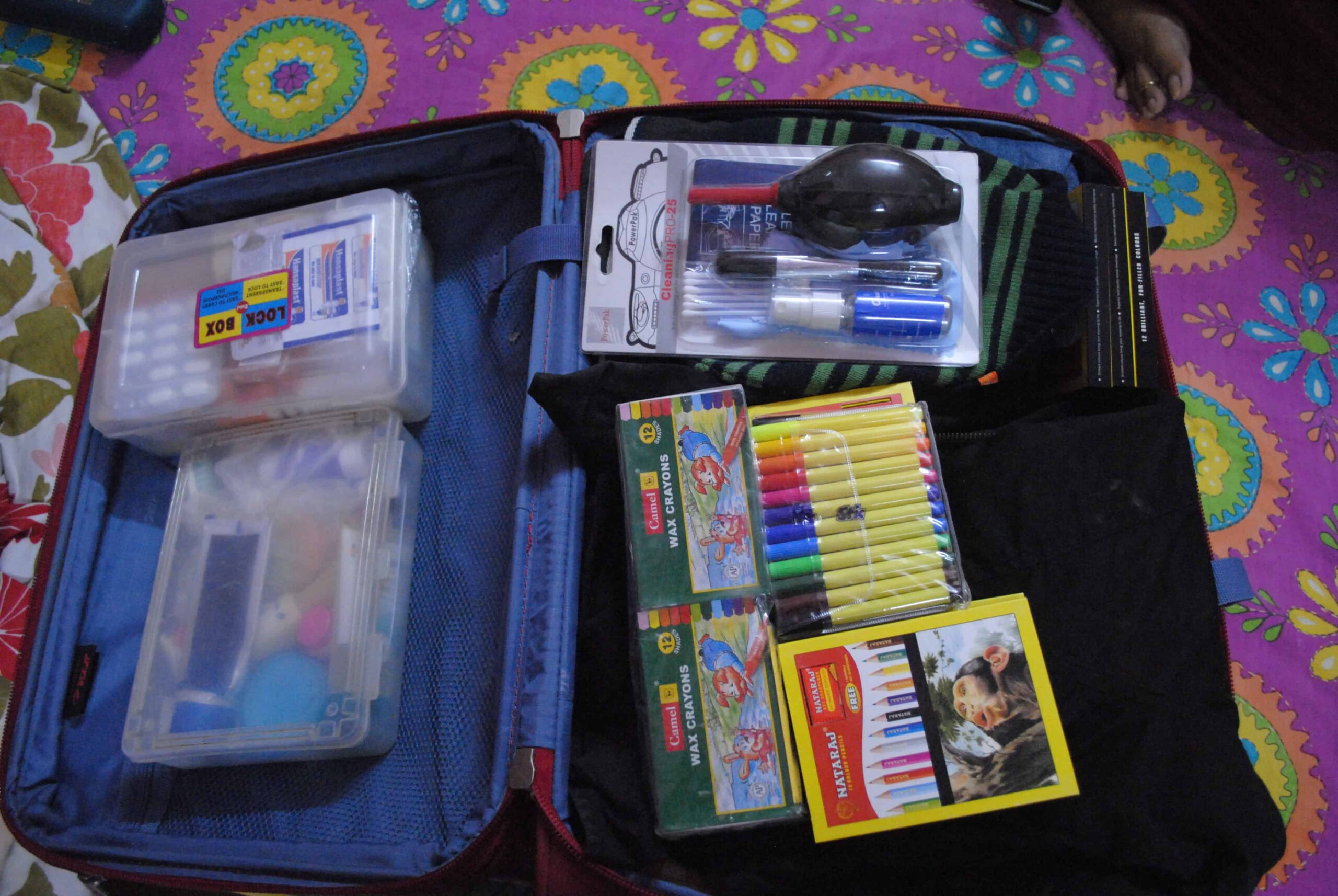
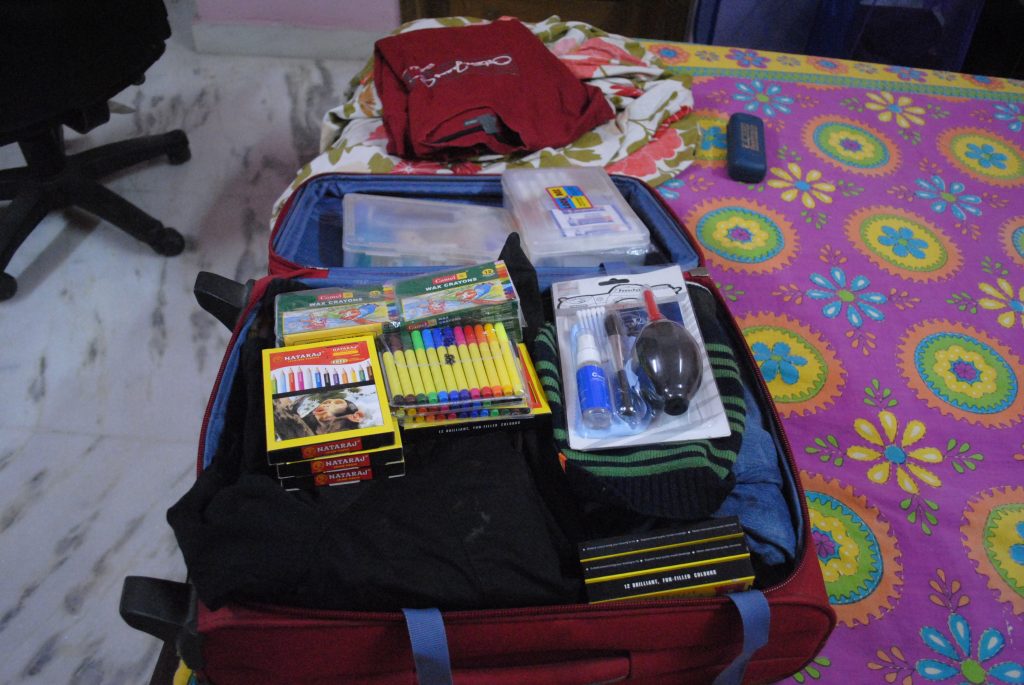
In the end, it is always nice to take some candies, chocolates, books, pens, pencils, crayons, or anything that you can distribute among the local children of Spiti. Nothing but the smile on their face would be too much worth it. 🙂
Frequently Asked Questions
What should I pack for a Spiti Valley trip?
Your Spiti Valley packing list depends on the month you are traveling. As a baseline, carry 2-3 pairs of thermals, a fleece jacket, a windproof outer jacket, woolen socks, trekking shoes, sunglasses, sunscreen (SPF 50+), gloves, and a woolen cap. From October to May, add heavy woolens, insulated boots, and a balaclava. Refer to the month-by-month section above for specific guidance based on your travel dates.
How should I prepare for a Spiti Valley trip?
Preparation goes beyond just packing clothes. Start by reading up on the best time to visit Spiti Valley, plan your itinerary, understand the permit requirements, and budget your trip costs. Get a medical check-up, carry altitude sickness medicine, and start physical preparation 2-3 weeks before your trip. Most importantly, pack in layers and carry more warm clothing than you think you need.
Can I wear jeans in Spiti Valley?
Yes, jeans work fine for casual days in Spiti, especially during June to September. I personally wear jeans on many of my Spiti trips. However, jeans are heavy, slow to dry if wet, and not great for trekking. If you plan to do any hiking (like the Chandratal trek or visiting high-altitude villages), trekking pants are a much better choice. For winter months, trekking pants with thermal innerwear underneath beat jeans for warmth too.
Do I need sunscreen in Spiti Valley?
Absolutely, and this is something many travelers underestimate. At 12,000-14,000 ft altitude, UV radiation is significantly stronger than at sea level. September and October have the harshest UV rays in Spiti. Use SPF 50+ broad-spectrum sunscreen and reapply every 2-3 hours. Also carry a lip balm with SPF, as chapped and sunburned lips are extremely common in Spiti. A wide-brim hat or cap adds another layer of protection.
What shoes should I carry for Spiti Valley?
For summer months (June-August), regular sports shoes with good grip work fine for most activities. If you plan to do any trekking, proper trekking shoes with ankle support are recommended. For shoulder and winter months (September to May), insulated waterproof trekking boots are a must. Bikers should also carry gumboots for water crossings, especially in June and early July. Always carry at least one extra pair of footwear in case your primary shoes get wet.
Is thermal innerwear really necessary for Spiti?
For travel between September and June, thermals are not optional. They are the most critical base layer that keeps your body heat from escaping. Even in May and September when days feel warm, nights and early mornings at 12,500 ft are cold enough to need thermals. The only months you can skip thermals are July and August, and even then, I recommend carrying one pair for camping or unexpected weather changes. Merino wool thermals are the best choice for their warmth-to-weight ratio.
How many bags should I carry to Spiti Valley?
If traveling by car, one large duffel bag or suitcase plus a daypack works well. If riding a motorcycle, space is limited, so pack smart. Use compression bags to reduce the volume of your woolens. One saddlebag or tail bag (50-60 liters) plus a tank bag should hold everything if you follow the layering principle and avoid overpacking. For public transport travelers, one backpack (50-65 liters) is ideal since you will be moving between buses frequently.
Where can I buy winter clothes near Spiti Valley?
If you are on the Manali route, Manali Mall Road has plenty of shops selling woolens, fleece jackets, and basic trekking gear. On the Shimla-Kinnaur route, Shimla and Reckong Peo have some options. Kaza has a few small shops selling basic woolens like caps, gloves, and shawls, but the selection is limited and prices are higher. My strong recommendation is to buy everything before you start your Spiti journey. Do not rely on finding specific items locally.
Wrapping Up
I hope this clothing guide helps you prepare well for your Spiti Valley trip. The key takeaway is simple: layer your clothing, prioritize warmth over style, protect yourself from the sun, and always pack a little more than you think you need. Spiti is forgiving in many ways, but cold and altitude are two things you do not want to be unprepared for.
If you have any questions about packing for Spiti or want month-specific advice for your travel dates, feel free to drop a comment below, join the DwD Community, or reach out on the Discover with Dheeraj Facebook group. There are thousands of Spiti travelers there who are always happy to help.
If you know someone planning a Spiti Valley trip, do share this article with them. It might save them from a cold, uncomfortable experience up there. 🙂

14 Comments
Comments section gets closed in 90 days. To ask your travel questions, you can follow my YouTube Channel for a faster reply or for a much slower reply follow me on Instagram. :)
Great tips..I was going crazy about packing specially as you mentioned for these time periods. Your blog is really informative. We had planned Chindi and Sach Pass after reading your blog..
That is wonderful to know Shubhda, I am glad this was helpful
Thank you for your blogs Dheeraj
Thank you, glad they are helpful !!
Hi, me ND my frnd r planning for trekking spiti valley at d time of 25 Dec 2017, it’s my 1st trek to Himalayan , so frnds need all ur guidance nd suggestions regarding clothing, endurance n costing.
Dheeraj
Dheeraj, I will not at all recommend a harsh place like Spiti Valley for your first trip in the Himalayas.
Hello Dheeraj,
Are there any wild animals or insects(perhaps on lower altitudes) in the area to be aware of?
Regards,
Boii
Boii, no, wild animals do not interfere or haven’t heard of dangerous encounters of any wild animals.
Awesome article. Surely helpful. Ordering Quechua Forclaz 50 🙂
Thanks Shilpa and yeah it is worth the buy not just for the trip but for casual use back at home in winters too.
Its always great to read your blogs. They are not only informative but are interesting too…..
Thank you so much Deepika, glad to know you enjoy reading them.
Good tips ,step by stem .
Thank you, Mamta !!