


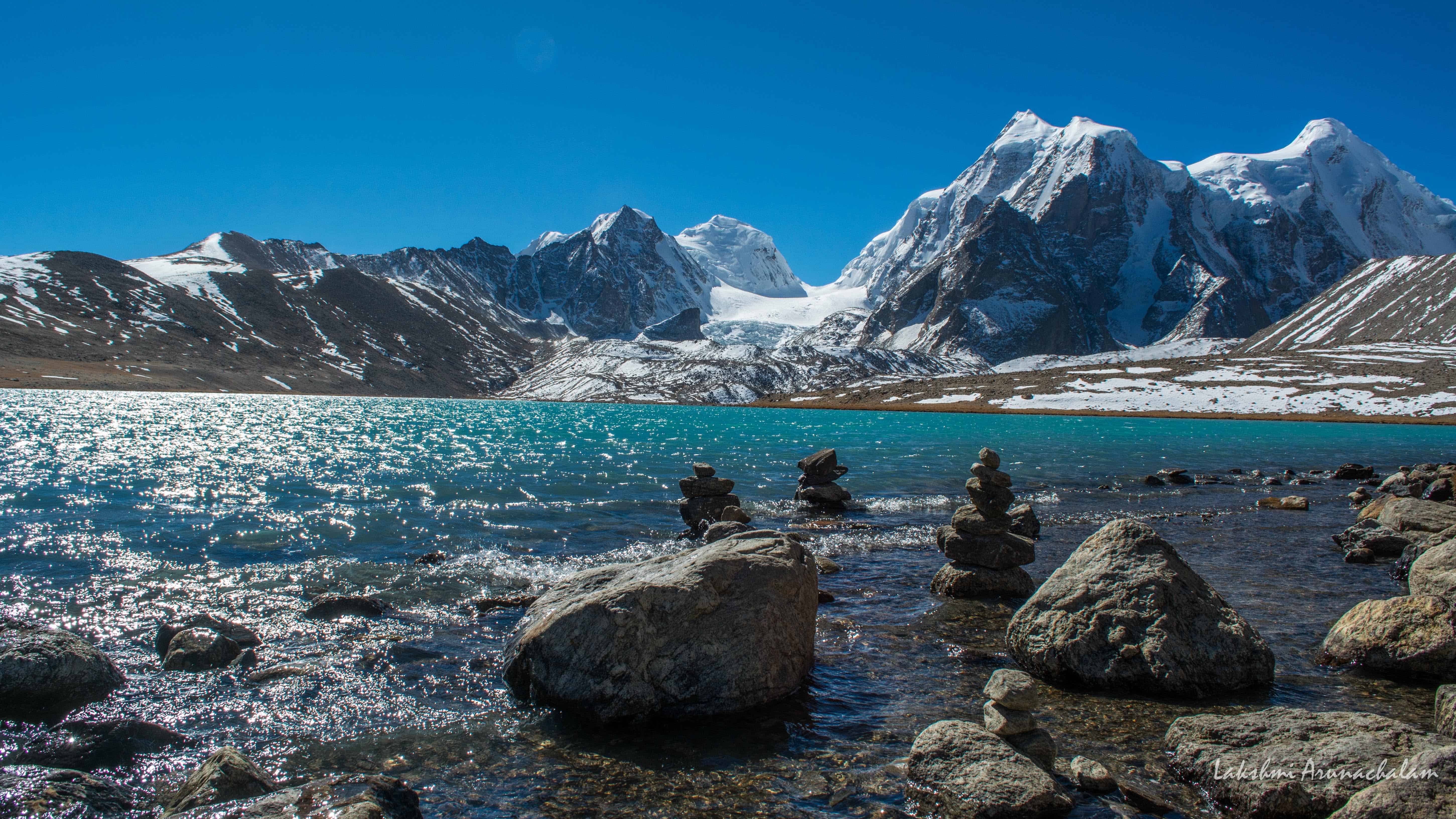
Are you planning a trip to Gurudongmar Lake and Chopta Valley in North Sikkim? If you have ever visited high altitude lakes like Pangong Tso, Chandratal, or Tso Moriri, you already know how magical these landscapes can be. For those who have not, let me tell you, no amount of photos or descriptions can truly capture what your eyes witness at 17,800 ft. It is simply magical.
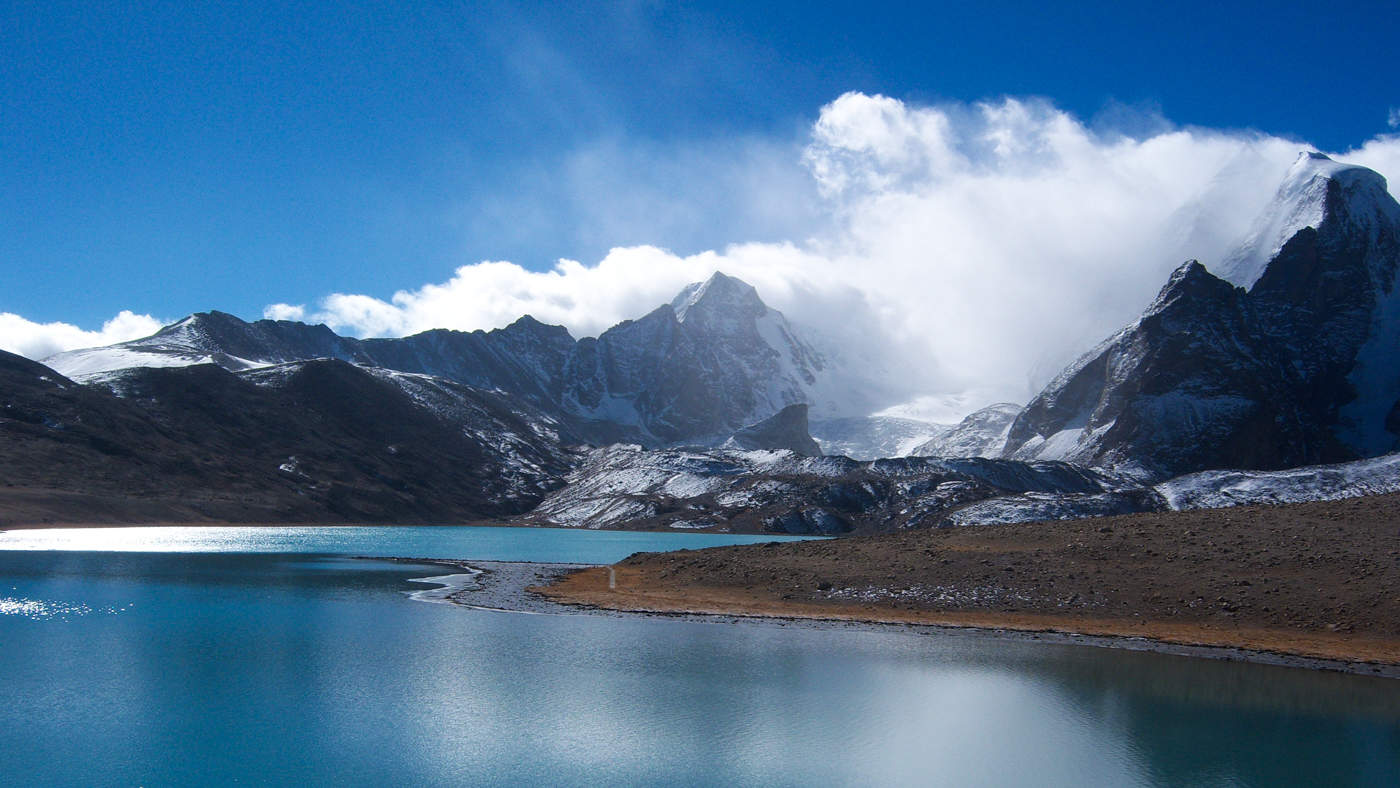
Gurudongmar Lake is one of the highest lakes in the world, sitting in North Sikkim near the Indo-China border. The first time I laid my eyes on Gurudongmar, I was mesmerized at the various shades of water, snow-capped cliffs forming a natural barrier around the lake, creating a surreal beauty. A monk takes care of a small monastery next to the lake. I envy him because he is privy to this paradise on earth. However, I do not envy the cold he has to bear, which is worsened by the constant winds. In this guide, I will cover everything you need to know to plan your trip to Gurudongmar Lake and Chopta Valley in 2026, including the current road and permit status, costs, how to reach, best time to visit, and where to stay.
Last Updated: October 2026
Let's quickly dive into the details:
Is Gurudongmar Lake Open Right Now? 2026 Status Update
Quick answer: Yes, with conditions. The Lachen road reopened on 29 August 2026 after four months of GREF repair at Taram Chu, reports ETV Bharat/PTI. A Mangan order dated 10 September 2026 says tourist vehicles must cross Toong check post by 4 PM. Confirm your Gurudongmar permit with a Gangtok operator before booking.
I want to be honest with you here, my friend, because I cannot update this hour by hour from my desk. Here is the dated timeline for 2026, attributed to the sources. The Mangan district administration and Sikkim Tourism resumed permits for Lachen and Gurudongmar from around 9 March 2026. The Taram Chu road section near Lachen, restored on 26 February 2026, was cut again on 5 April 2026 and stayed shut while GREF personnel rebuilt it for about four months. It was formally reopened on 29 August 2026 (ETV Bharat/PTI, 29 August 2026). Then, per a traffic order issued by the Mangan district administration on 10 September 2026, tourist and light vehicles moving between Gangtok/Mangan and Lachen/Lachung must pass the Toong check post by 4 PM in both directions, until further orders (Devdiscourse, 11 September 2026). The same report notes a 6 September landslide near the Teesta and Chyakoong confluence, a reminder of how fragile this stretch is. As of early October 2026 I found no newer closure announcement in my search, but that is a search result and not a guarantee, and this route has changed within weeks before. This is simply how a border-zone route recovering from a major flood behaves.
- What to do about it: Book your North Sikkim package with a Sikkim Tourism registered operator who can check the live permit status in Gangtok before you travel, not weeks in advance based on a blog post (mine included).
- Ask for this in writing: A confirmed itinerary that does not promise Gurudongmar until the permit is actually issued. Reputable operators will not guarantee the lake in a quote until it is confirmed open.
- Keep a backup plan: Chopta Valley, Thangu Valley, and the Lachung-Yumthang Valley-Zero Point circuit all remain accessible even in windows when Gurudongmar itself is closed, so your North Sikkim trip is rarely a total washout.
- Check the official source: The Sikkim Tourism travellers essentials page and the Mangan District Administration site are your best official sources, though keep in mind even these can lag behind ground reality by a few days.
If Lachen shuts again: Do not cancel North Sikkim outright. When the Lachen axis has been cut, the Lachung, Yumthang Valley and Zero Point side has stayed open in past closures, so ask your operator to swap the Gurudongmar nights for Lachung. Travel on the early side of the 4 PM Toong cut-off, keep one spare buffer day, and get any refund or rebooking terms in writing before you pay.
For context on why this keeps happening: the 2023 flood was triggered when the South Lhonak glacial lake breached, sending a wall of water down the Teesta river that damaged the Chungthang dam and swept away roads, bridges, and homes across North Sikkim. You can read the details on the 2023 Sikkim flash floods Wikipedia entry. Three years on, BRO and the state PWD are still repairing sections of the Lachen-Gurudongmar road in phases, which is why access keeps opening for a stretch and then closing again for repair or after fresh landslides. Please do not take this as a reason to skip North Sikkim altogether. Thousands of travelers, including many from the DwD community, have completed this trip successfully through 2025 and 2026. Just build flexibility into your itinerary instead of a rigid single-shot plan.
Quick Facts About Gurudongmar Lake
| Altitude | 17,800 ft (5,430 m) |
| Location | North Sikkim, near Indo-China border |
| Nearest Town | Lachen (about 67 km, 4 hours drive via Thangu) |
| Nearest City | Gangtok (about 190 km, 10-12 hours) |
| Nearest Airport | Bagdogra Airport (about 280 km) |
| Permit Required | Protected Area Permit (PAP) for Indians. Foreigners NOT allowed. Minimum 2-night North Sikkim itinerary as of 2026 (1-night permits are no longer issued). |
| Current Road/Permit Status (2026) | Intermittent, phased opening and closing since the Oct 2023 GLOF. Confirm live status with your operator before booking. See status section above. |
| Best Time to Visit | May to June, September to November (when open) |
| Mobile Network | No signal beyond Lachen |
How to Reach Gurudongmar Lake from Gangtok?
Quick answer: There is no public transport and no self-drive option to Gurudongmar Lake. You travel with a registered Gangtok tour operator on a fixed route: Gangtok to Lachen (overnight), then Lachen to Thangu to Gurudongmar Lake and back the next day.
There is no public transport to Gurudongmar Lake and hiring a taxi through a registered travel agent is the only option. The route goes from Gangtok to Mangan to Lachen, where you stay overnight, and then from Lachen to Thangu to Gurudongmar Lake the next day. Keep in mind, individual self-drive vehicles are generally not allowed on this route due to the sensitive border area. You must travel with a registered tour operator who arranges your permits, vehicle, and driver.
Gurudongmar Lake sits about 190 km from Gangtok, covered as a two-day drive via Lachen. The first leg runs 130 km from Gangtok to Lachen in 6-7 hours, and the second covers about 67 km from Lachen through Thangu to the lake. BRO restored the Taram Chu bridge in February 2026, reconnecting Chungthang and Lachen.
By Road
- Day 1: Gangtok to Lachen (about 130 km, 6-7 hours). Overnight at Lachen.
- Day 2: Lachen to Thangu (35 km, about 1.5 hours) to Gurudongmar Lake (32 km, about 2.5 hours). Return to Lachen or proceed to Lachung.
On the day you visit the lake, try leaving early, around 3:30 AM to 4 AM. Have only tea or light snacks and proceed to Thangu. You can have breakfast at Thangu around 6 AM to 7 AM and then proceed towards Gurudongmar. The idea is to reach the lake by 9:30 AM to 10 AM and start your return by noon. As of 2026, several operators report a tighter checkpoint window too, with vehicles turned back if they have not crossed by around 10 AM, so treat the early start as non-negotiable rather than optional. The weather near Gurudongmar usually turns unpredictable after midday, so an early start is not optional, it is essential. Please verify the exact checkpoint timing with your operator on the day, since the Army adjusts these windows depending on weather and road conditions.
What Is the Road Like from Lachen to Gurudongmar?
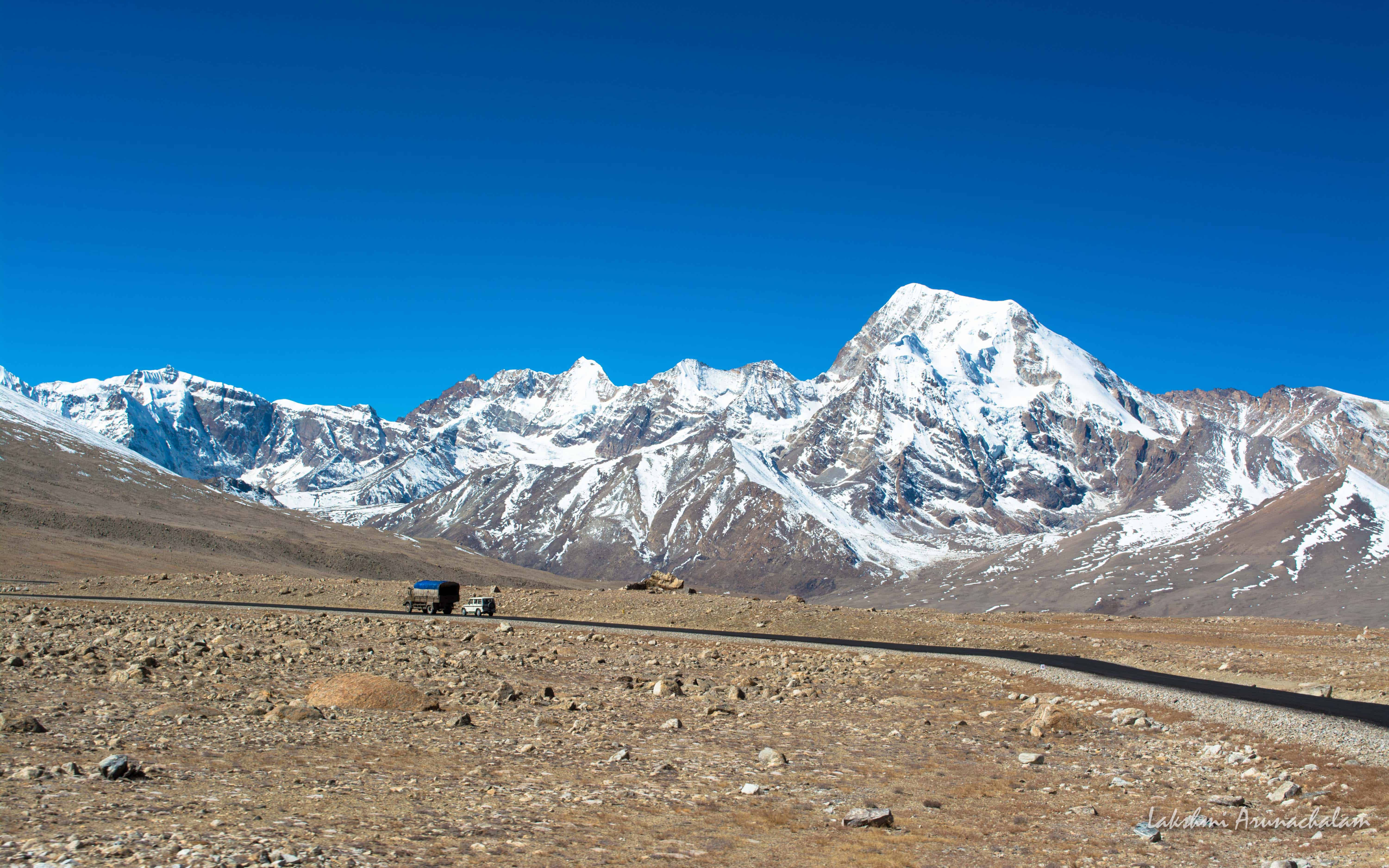
The roads leading to Gurudongmar Lake were virtually non-existent until a few years ago. However, now there are smooth roads once you cross the Giagong Army checkpost at an altitude of about 15,000 ft. After that, the road becomes rough, stony, and runs over moraines. In winter and early spring, sections can be snow-covered and slippery. Since the 2023 floods, expect stretches of temporary repair work too, with BRO and PWD crews patching washed-out sections in phases. The journey itself is worth the effort. A vastness which seemingly spreads across the horizon, alpine pasture lands where yaks and blue sheep lazily graze around, local folks churning yak milk into cheese in their homes, the absence of human influence will make you want to live there permanently, leading a simple life like that of nomads.
By Air
The nearest airport is Bagdogra Airport (IXB) near Siliguri in West Bengal, about 280 km from Gangtok. From Bagdogra, you can take a shared taxi or hire a private cab to Gangtok (about 4-5 hours). Alternatively, Pakyong Airport near Gangtok operates limited flights, but flight availability is inconsistent, so Bagdogra remains the more reliable option. You can check this article on how to reach Gangtok and other important info for detailed directions.


What Permits Do You Need for Gurudongmar Lake?
Quick answer: Only Indian nationals with a Protected Area Permit (PAP) can visit Gurudongmar Lake, arranged through a registered Sikkim Tourism operator in Gangtok. As of 2026, the permit requires a minimum 2-night North Sikkim itinerary, since single-night permits are no longer being issued.
Since Gurudongmar Lake is close to an international border, foreign nationals cannot visit the lake. Only Indian citizens are allowed, and you need a Protected Area Permit (PAP) to visit. Here is what you should know about the permits.
- Who can apply: Only Indian nationals. Foreigners can go up to Chopta Valley but not Gurudongmar Lake.
- How to get it: Through a Sikkim Tourism registered travel agent in Gangtok. The permit is processed through the Tourism Department and the Police checkpost.
- Documents needed: Voter ID, Driving License, or Passport are the safest bets. Aadhaar Card is generally accepted too, but I have seen a few operators in 2026 ask for one of the other three as well, so carry more than one photo ID just in case. Two passport-size photos. Duly filled permit application form.
- Cost: The permit itself is free of cost. However, the registered travel agent charges a service fee since they are liable for your safety during the trip.
- Processing time: Usually processed within one working day. I suggest getting your permit arranged at least one day before heading to North Sikkim.
- Minimum stay (2026 rule): A single-night Gurudongmar permit is no longer being issued. Plan for a minimum of 2 nights in your North Sikkim itinerary, which in practice means the standard 3 days / 2 nights plan most people already do.
- Children restriction: Children below 5 years are officially not permitted to visit high-altitude areas like Gurudongmar Lake. Permit authorities may check the age of the child.
Your permit will be checked at the Giagong Army checkpost. Aim to cross the checkpoint in the morning window your operator confirms for you (historically around 7:30 AM to 10:30 AM, though this has tightened in 2026 in some reports to a 10 AM hard cutoff), and plan to be heading back by early afternoon as the weather turns unpredictable here. The small Army shelter provides everyone with free piping hot tea and coffee, which is much needed in that cold. There is a small souvenir section run by the Army selling coffee mugs, holy water from the lake, and more. Please support our army by buying from there! You have restrooms too in the premises for public use.
What Is the Best Time to Visit Gurudongmar Lake?
Quick answer: May to June and September to November are the best months, when the lake shows its full blue color and roads are generally in better shape. Avoid July to September for the monsoon landslide risk, and treat December to March as an experienced-traveler-only window.
The best time to visit Gurudongmar Lake depends on what kind of experience you are looking for, and in 2026, it also depends on whether the road happens to be open in that window, so please cross-check the current status section above before you lock in dates. Here is a month-wise breakdown to help you decide.
- April to June (Spring/Summer): This is the most popular window. The ice starts melting, the lake shows its beautiful shades of blue and turquoise, and the roads are generally accessible when open for the season. Temperatures are relatively milder (though still cold), ranging from -5 to 10 degrees Celsius. If this is your first visit, I suggest planning in May or June.
- July to September (Monsoon): Not recommended. Heavy rainfall can cause landslides on the Gangtok to Lachen road, and this is also the highest-risk period for exactly the kind of infrastructure damage that closed the route in 2023. The road to Gurudongmar may be blocked for days. Permits may also be restricted during this period.
- October to November (Autumn): Clear skies, excellent visibility, and the lake starts freezing partially. This is a great window for photography. However, temperatures drop to -10 to -15 degrees Celsius, so be prepared with proper winter gear.
- December to March (Winter): The lake is completely frozen and often covered in snow. The road may be closed due to heavy snowfall. Only experienced travelers should attempt this, and even then, access is not guaranteed.
According to local legend, Guru Rinpoche blessed a portion of the lake, which supposedly never freezes completely, even in the harshest winters. This ensures water supply to the nearby villagers year-round. Whether you believe the legend or not, the partially unfrozen section amidst a fully frozen landscape is a sight to behold.
What About AMS (Acute Mountain Sickness) at Gurudongmar?
Quick answer: At 17,800 ft, AMS is a genuine risk. Acclimatize overnight in Lachen, keep your visit to under 30-45 minutes, and know that as of 2026, an oxygen cylinder in the vehicle is mandatory on this route, not optional.
At 17,800 ft, Gurudongmar Lake is at a very high altitude and AMS is a real concern. The oxygen level drops significantly at this height, and your body may not respond well if you rush to the lake without proper acclimatization. I have covered the principles of AMS and acclimatization in detail in a separate article. I strongly recommend you read about Acute Mountain Sickness and the importance of acclimatization before planning this trip.
Safety Warning: Gurudongmar Lake is at a very high altitude. You could be hit by AMS if you over-exert yourself. It is advised to reach the lake early before noon and not stay for longer durations. Do not run or jump around at the lake. Keep your movements slow and deliberate. If you experience severe headache, nausea, vomiting, or disorientation, descend immediately to a lower altitude.
Here are some practical tips to minimize AMS risk:
- Spend at least one night in Lachen (about 8,800 ft) before proceeding to Gurudongmar. This gives your body time to acclimatize.
- Stay hydrated. Drink plenty of water and avoid alcohol completely.
- Eat light meals before the journey. Heavy food can worsen AMS symptoms.
- Carry Diamox (acetazolamide) after consulting your doctor before the trip.
- Carry a portable oxygen cylinder. As of 2026, several operators now make this mandatory for every vehicle heading to Gurudongmar, not just a nice-to-have. Confirm with your operator that one is in the vehicle before you leave Lachen.
- Do not stay at the lake for more than 30-45 minutes.
What Is Chopta Valley and Why Should You Visit?
Quick answer: Chopta Valley sits above Thangu village at about 13,000 ft, and it is a peaceful, birdwatcher-friendly meadow you can visit even when Gurudongmar Lake itself is closed, since foreigners and everyone else can access it.
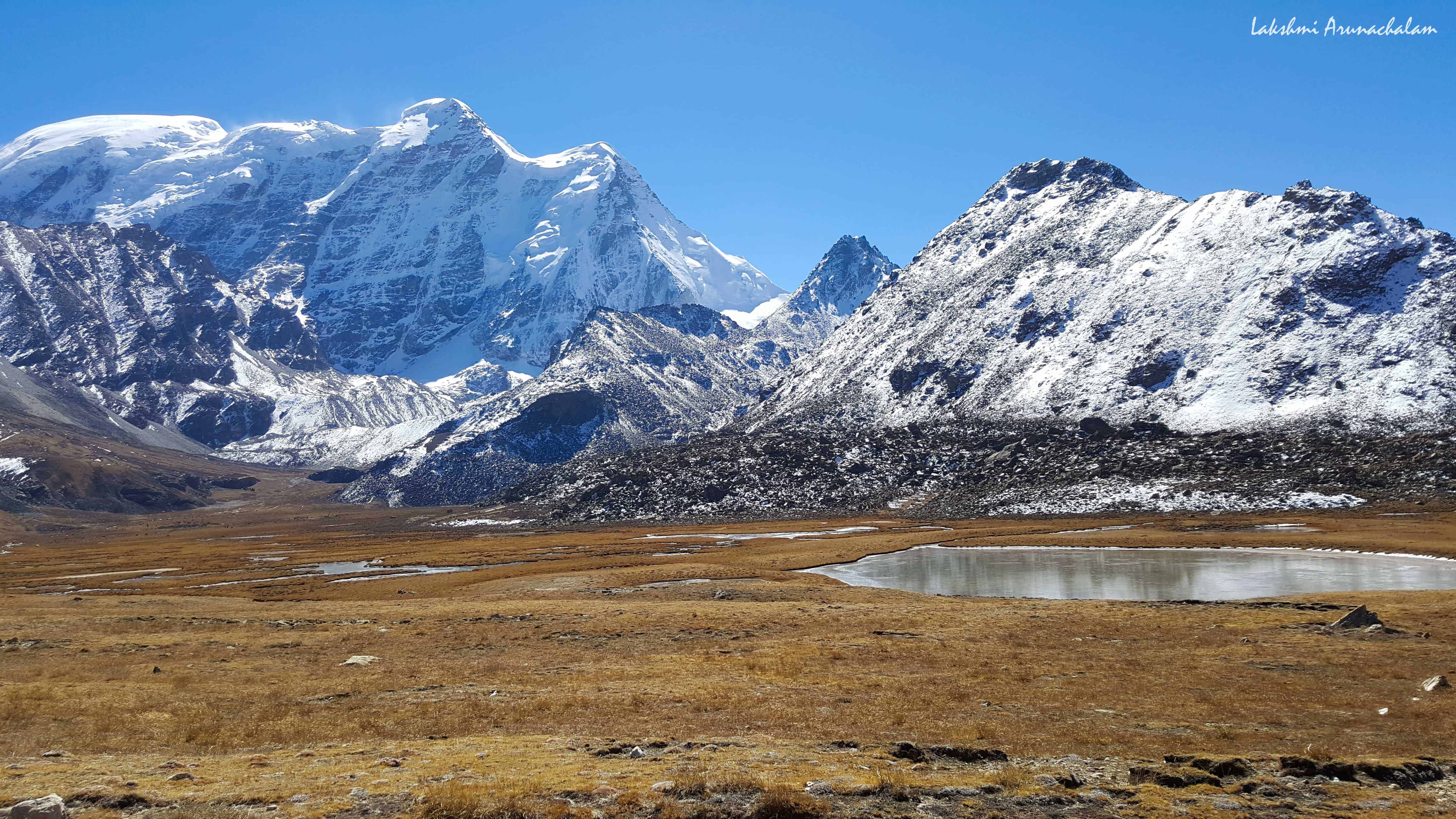
On your return journey from Gurudongmar, take a detour to reach Chopta Valley. Now, there are numerous Chopta valleys in the Himalayas (Uttarakhand has a famous one too), but this Chopta Valley in Sikkim is above Thangu village at an altitude of about 13,000 ft. A mud-track road runs parallel to the valley and you can travel for a few kilometres to see it stretching far.
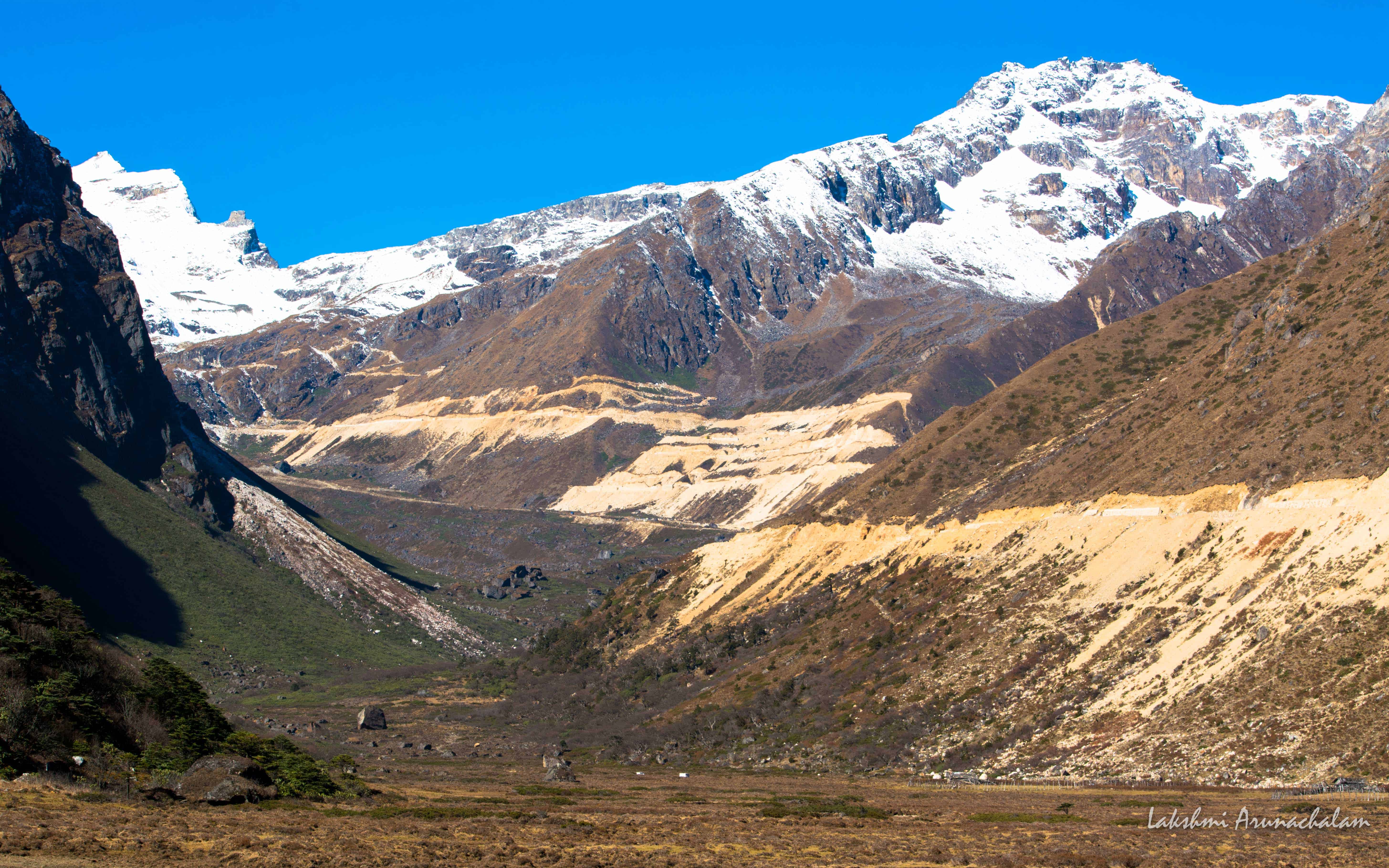
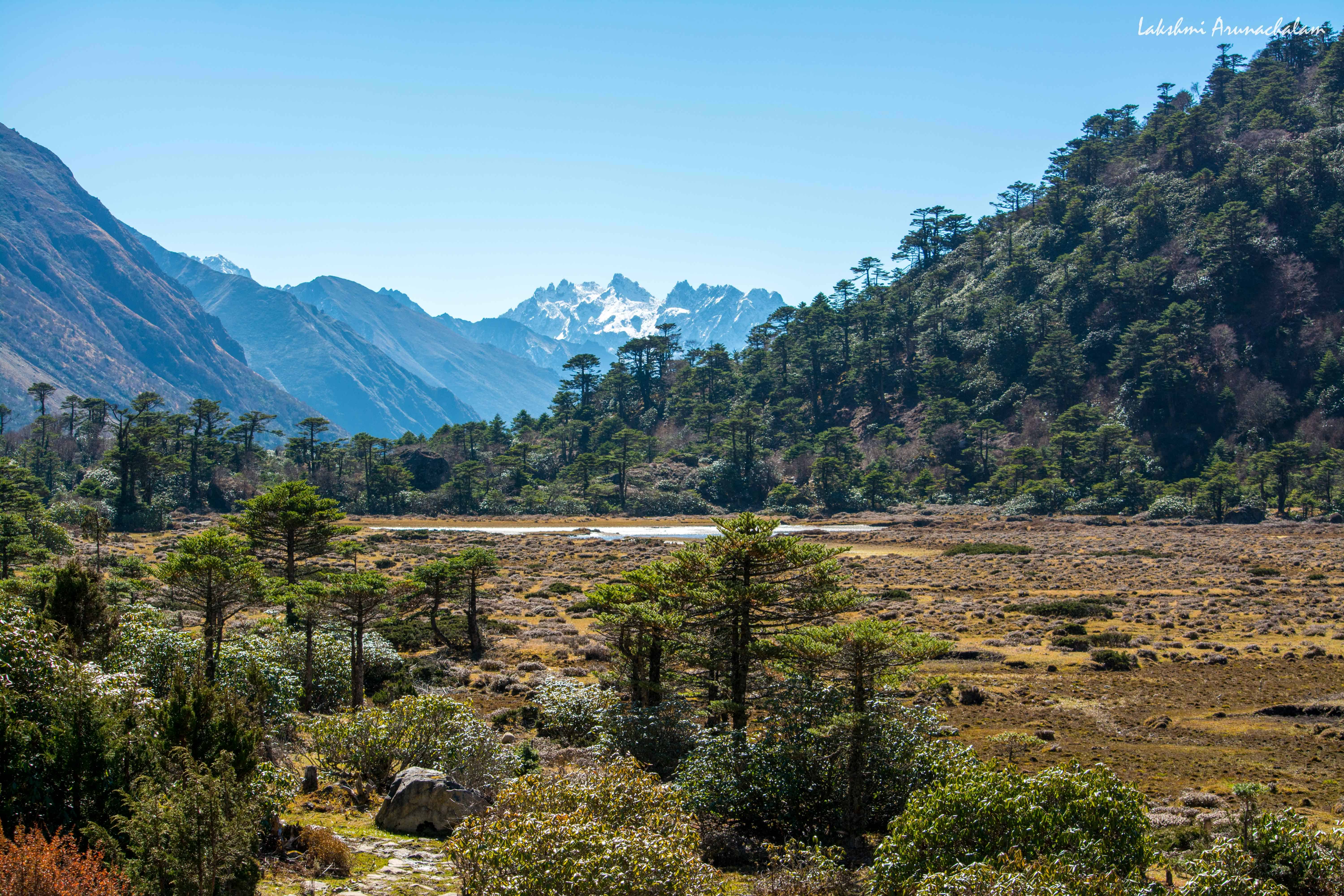
The vegetation is noticeably different due to the high altitude, and the contrast is striking. Meandering streams criss-cross all over the valley floor. Rhododendrons are scattered everywhere, birds are calling, and the valley is a hotspot during the birding season (April to May). If you are into birdwatching, this is a place you should not miss. Park your vehicle and walk down the mud track to spend a couple of hours here on your way back from Gurudongmar. Take a stroll along the river or simply sit on the rocky beds and soak in the view.
Important: Foreigners can visit Chopta Valley even though they cannot go to Gurudongmar Lake. So if you are traveling with foreign friends, they can enjoy Chopta Valley while you proceed to the lake. This also makes Chopta Valley your best backup plan on any trip where Gurudongmar itself turns out to be closed when you arrive.
How Much Does a Trip to Gurudongmar Lake Cost in 2026?
Quick answer: A shared-basis 3-day/2-night trip runs about Rs 4,000 to 8,000 per person depending on season, while a full 7-day North Sikkim circuit typically costs Rs 25,000 to 40,000 per person including transport, stay, food, and permits.
Here is a rough budget breakdown for a Gurudongmar Lake and North Sikkim trip as of 2026. These numbers are for one person and can vary depending on the season, group size, and your travel style. In case operators need to reroute around any temporarily closed sections due to ongoing flood-repair work, expect fares to shift slightly. Always confirm current rates with your operator at the time of booking rather than treating these as fixed.
| Expense | Budget (INR) | Mid-Range (INR) |
|---|---|---|
| Gangtok to Lachen taxi (shared, per person) | Rs 1,500 – 2,000 | Rs 3,000 – 4,000 (private) |
| Lachen to Gurudongmar taxi (shared, per person) | Rs 1,000 – 1,500 | Rs 2,500 – 3,000 (private) |
| Accommodation in Lachen (per night) | Rs 800 – 1,500 | Rs 2,000 – 4,000 |
| Meals (per day) | Rs 400 – 600 | Rs 800 – 1,200 |
| Permit + Agent fees | Rs 500 – 1,000 | Rs 500 – 1,000 |
| Bagdogra to Gangtok (shared taxi) | Rs 300 – 500 | Rs 3,000 – 4,000 (private) |
If you are booking a private vehicle directly rather than a sharing package, keep in mind full-vehicle charter rates run higher than the per-person shared fares above. As of 2026, a private sedan for the Gangtok-Gurudongmar leg (full round trip, per vehicle, not per person) can run into several thousand rupees, and an SUV higher still, so this only makes sense for a group of 4 or more splitting the cost. As always, get the exact figure from your operator in writing before you commit.
If you opt for a complete package (3 days, 2 nights, shared basis), expect to pay around Rs 4,000 to 5,000 per person in the off-season and up to Rs 6,000 to 8,000 per person during peak season (October/November). A 5-day package covering Lachen, Gurudongmar, Lachung, and Yumthang Valley ranges from about Rs 10,000 to 13,000 per person on a sharing basis, as per rates listed on the Sikkim Tourism official portal.
Overall, a 7-day North Sikkim trip covering Gangtok, Lachen, Gurudongmar Lake, Lachung, and Zero Point can range from Rs 25,000 to 40,000 per person, including transport, accommodation, food, and permits. If you are on a tight budget, traveling in a group of 4 helps bring costs down significantly since taxi fares are split.
Where to Stay Near Gurudongmar Lake?
Quick answer: Base yourself in Lachen, not Thangu, for better facilities. Most tour operators bundle accommodation into their package, and given the phased road closures in 2026, I would prefer a package with flexible or refundable dates over a separately booked non-refundable hotel.
You need to keep Lachen or Thangu as your base while visiting Gurudongmar and Chopta. Lachen is the preferred option due to better facilities. Here are your options.
Accommodation in Lachen
- Delight Royal, Lachen: Has a wonderful view of snow-clad mountains right from its doorsteps. Rooms are spacious enough but basic considering the remoteness of the village. Expect to pay around Rs 1,500 to 3,000 per night depending on the season.
- Hotel Blue Pine, Lachen: A budget range hotel with basic rooms and good views. They can be reached at +91 8348903404 or +91 7585919875. Rates start around Rs 800 to 1,500 per night.
- Several other homestays and guesthouses have come up in Lachen in recent years. Most tour operators include accommodation in their package, so you may not need to book separately.
Accommodation in Thangu
There are limited options available in Thangu. Most of them are very basic, not very comfortable, and may not be suitable for kids or elderly. Thangu village at an altitude of 14,000 ft has an average temperature of 5 to 10 degrees even during summer months. Please take necessary precaution if you plan to stay at Thangu, especially during winters as it experiences heavy snowfall.
- Tshetenla Lodge, Thangu: They can be reached at +91 9434867312. Very basic but functional.
- Kunga Restaurant, Dragon Lodge & Restaurant: These are sort of rustic homestays in Thangu. Do not expect hotel-like amenities here.
What Should You Pack for Gurudongmar Lake?
Packing right is critical for a trip to Gurudongmar. The temperature at 17,800 ft can drop to -15 degrees Celsius or lower, even in May. Here is a checklist.
- Heavy down jacket and multiple warm layers (thermals are a must)
- Woolen cap, gloves, muffler, and earmuffs
- Good quality trekking shoes with grip (the terrain near the lake is rocky and may be icy)
- Sunglasses with UV protection (snow glare can damage your eyes)
- Sunscreen with high SPF (the UV radiation at this altitude is intense)
- Personal medicines, Diamox (consult your doctor), and basic first-aid
- Portable oxygen cylinder (mandatory on most 2026 itineraries, confirm with your operator)
- Water bottles and dry snacks (there are no shops between Thangu and Gurudongmar)
- Power bank (your phone battery drains faster in cold temperatures)
- Original ID proof, ideally Voter ID, Driving License, or Passport, with Aadhaar as a backup (for permit verification at checkpost)
Is There Mobile Network at Gurudongmar Lake?
In short, no. Mobile network connectivity is non-existent beyond Lachen. You may get intermittent signal in Lachen itself (BSNL has the best chance), but once you leave for Thangu and Gurudongmar, expect zero connectivity. Hence, inform your family in advance about your plans and the expected time you will be unreachable. Most hotels in Lachen have landline phones that you can use in case of emergencies.
What Else Can You Explore in North Sikkim?
A trip to Gurudongmar Lake is usually part of a larger North Sikkim itinerary. Here are some places you can club together, and several of them stay open even in windows when Gurudongmar itself is temporarily closed.
- Lachung and Yumthang Valley: Often combined in a 4-5 day North Sikkim package. Yumthang is known as the “Valley of Flowers” and is stunning in April-May. I have covered the full Yumthang Valley guide separately if you want the detailed itinerary.
- Zero Point (Yumesamdong): At about 15,300 ft, this is the last civilian point in North Sikkim towards the China border. Accessible from Lachung.
- Gangtok and Nathu La: Most North Sikkim trips begin and end in Gangtok. If you have a day to spare, a visit to Nathu La Pass and Gangtok sightseeing is well worth it.
- Zuluk (Silk Route): If you have extra days, the Zuluk Silk Route in East Sikkim offers incredible views and is an offbeat addition to your Sikkim trip.
- Pelling: In West Sikkim, Pelling offers views of Kanchenjunga and ancient monasteries.
- East Sikkim Silk Route: For those wanting to explore further, check out the Old Silk Route in East Sikkim.
Important Tips for Your Gurudongmar Lake Trip
- Confirm the current road/permit status first: Given the phased closures since the 2023 floods, check with a registered operator before you finalize dates, not just this guide alone.
- Travel only through registered agents: Self-drive is generally not allowed on the North Sikkim route. You need a registered operator for permits and logistics.
- Plan for a minimum 2-night itinerary: Single-night Gurudongmar permits are no longer issued as of 2026.
- Start early, very early: Leave Lachen by 3:30 AM to 4 AM. The weather window at Gurudongmar is narrow and checkpoint cutoffs have tightened.
- Do not overexert at the lake: Walk slowly, breathe deeply, and do not stay for more than 30-45 minutes.
- Confirm oxygen cylinder in the vehicle: This has moved from a recommendation to a requirement on most 2026 itineraries.
- Carry cash: There are no ATMs after Mangan. Withdraw enough cash in Gangtok or Mangan for your entire North Sikkim leg.
- Carry your own water and snacks: There are no shops between Thangu and Gurudongmar (about 32 km of nothingness).
- Support the Army: At Giagong checkpost, the Army runs a small souvenir shop and provides free hot tea. Consider buying something from them as a gesture of support.
- Plan for weather changes: Weather at this altitude can change within minutes. Keep rain gear and warm layers accessible, not buried in your bag.
- Respect the environment: Gurudongmar is a sacred lake for both Buddhists and Sikhs. Do not litter, do not play loud music, and carry your waste back with you.
Frequently Asked Questions
Is Gurudongmar Lake open right now in 2026?
Access has been going through phased opening and closing since the October 2023 South Lhonak GLOF damaged roads and bridges in North Sikkim. The Lachen road reopened on 29 August 2026 after four months of repair (ETV Bharat/PTI), and a Mangan order dated 10 September 2026 requires tourist vehicles to pass Toong check post by 4 PM (Devdiscourse). I still cannot promise it will be open on your travel dates, since this genuinely changes from month to month. Confirm live status with a Sikkim Tourism registered operator in Gangtok before you book, and keep Chopta Valley, Thangu Valley, or the Lachung-Yumthang Valley circuit as a backup, since these usually remain accessible even when Gurudongmar itself is closed.
Can foreigners visit Gurudongmar Lake?
No. Due to the proximity of Gurudongmar Lake to the Indo-China border, only Indian nationals with a valid Protected Area Permit (PAP) are allowed to visit. Foreigners can travel up to Chopta Valley and Thangu but not beyond that.
Is Gurudongmar Lake safe for kids and elderly?
Children below 5 years are officially not permitted at Gurudongmar Lake. For elderly travelers or anyone with heart or respiratory conditions, I would strongly advise against visiting due to the extreme altitude (17,800 ft) and low oxygen levels. Consult your doctor before planning.
How many days are needed for a Gurudongmar Lake trip?
A minimum of 3 days and 2 nights is needed, and as of 2026 the permit itself requires this minimum since 1-night permits are no longer issued. Day 1: Gangtok to Lachen, Day 2: Lachen to Gurudongmar and back, Day 3: Lachen to Gangtok. If you want to include Lachung and Yumthang Valley, plan for 5-6 days from Gangtok.
Does Gurudongmar Lake freeze completely in winter?
The lake freezes almost completely from November to mid-May. However, according to local legend, a portion blessed by Guru Rinpoche never freezes, even in the harshest winters. This unfrozen section provides water to nearby communities year-round.
What is the best month to see the blue water of Gurudongmar?
May and June are the best months to see the lake in its full blue and turquoise glory. The ice melts, the water shows stunning color gradients, and the weather is relatively manageable compared to other months.
Is there oxygen shortage at Gurudongmar Lake?
Yes, at 17,800 ft the oxygen level is significantly lower than at sea level. You will notice difficulty breathing, especially if you exert yourself. Acclimatize in Lachen, avoid alcohol, stay hydrated, and do not rush. As of 2026, a portable oxygen cylinder in the vehicle is mandatory on most operator itineraries, not just a precaution you can skip.
Can I drive my own car to Gurudongmar Lake?
Self-drive to Gurudongmar is generally not permitted. The North Sikkim route requires you to travel with a registered tour operator who arranges permits, vehicle, and a local driver. This is enforced due to the sensitive border area and road conditions.
What is the difference between Chopta Valley in Sikkim and Chopta in Uttarakhand?
They are completely different places. Chopta Valley in Sikkim is in North Sikkim above Thangu at about 13,000 ft, accessible as a detour on the Gurudongmar Lake route. Chopta in Uttarakhand is near Tungnath temple at about 8,790 ft and is a popular trekking base. Same name, different states, different experiences.

I hope this guide helps you plan your trip to Gurudongmar Lake and Chopta Valley. It is one of those places that stays with you long after you return, closures and all. If you have any questions, feel free to ask in the comments section below, especially if you have more recent, on-ground status updates than what I have here since I know how quickly this changes. If you found this article useful, do share it with your friends and family who might be planning a Sikkim trip. You can also check the DwD Community for finding travel partners and connecting with fellow travelers who have done this route recently 🙂 …
Follow me on Instagram and Ask any questions you might have for me!!

2 Comments
Comments section gets closed in 90 days. To ask your travel questions, you can follow my YouTube Channel for a faster reply or for a much slower reply follow me on Instagram. :)
Hi Lakshmi, Did you travel alone? Do you think its safe for a single female traveler to use a personal taxi to get from Gangtok to Lachen to Gurudongmar? I will be traveling next week, and I am not sure if getting a personal taxi is safe since the distances are long and maybe not all that populated.
Hi Surabhi,
I did not travel alone. Did you try posting your travel plan in DoW Travel Partners Calendar? (https://discoverwithdheeraj.com/dow-travel-partners-calendar/) Try to see if you get like-minded people travelling around the same time.
Yes the routes are long and less populated, but from my personal experience I have not seen drivers or hotel owners behave badly to tourists. It usually is the other way around. Not to discourage you, but have you traveled solo before?