


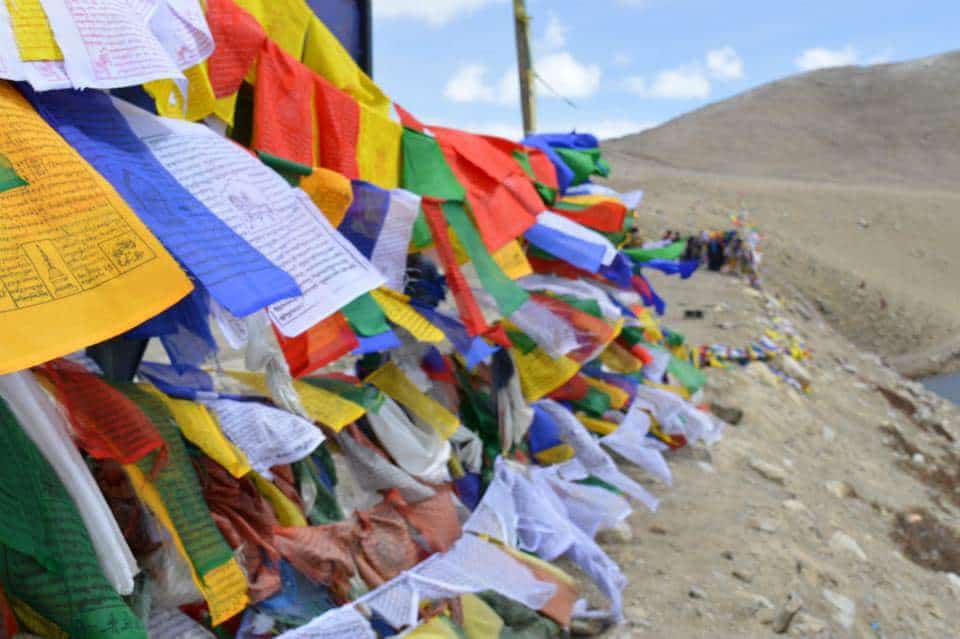
Are you planning a trip to North Sikkim? This detailed travel guide covers everything you need to know, from permits and package costs to itineraries, accommodation, and road conditions. I have been to North Sikkim multiple times and this guide is based on those experiences, updated for 2026.
In 2014, Lonely Planet magazine placed Sikkim at the top of its yearly global ‘top 10 regions to travel’ list. Leaving Kimberley (Australia) and Yorkshire (England) at the second and third spot, Sikkim carved out a niche for itself in the perspective of the entire travel community. Ever since, North Sikkim has seen a steady rise in tourist footfall.
How did it manage to do that?
Let's quickly dive into the details:
What Makes North Sikkim Special?
Sustainable community-based tourism, an environment of safety where tourists feel secure, and an eco-friendly inclination of its tourism policymakers made this happen. Sikkim was officially declared the cleanest state of India in 2012, and that commitment to sustainability continues to define the travel experience here.
The least populous yet geographically the largest district of Sikkim has drawn tourists from all corners increasingly over the last decade. North Sikkim sits on the frontiers of the Sino-Indian border, making it geopolitically sensitive. Yet the landscape remains a remarkable reminder of nature at its most raw and untouched.
- Where the rhododendrons flood the slopes in a million shades,
- Where the crystal streams take birth from glaciers pure,
- Where pristine lakes mirror the clear blue sky,
- Where a meditative silence blows with the prayer flags in mountain winds,
- Where the valleys sparkle under a zillion stars on long dark nights,
- Where mist and clouds play with sunshine in notes of light and shadow,
- Where the journey is as rewarding as the destination,
- Where an innate spirituality nudges even a skeptic’s heart,
- Where the breeze is cold but the views heartwarming,
- That is North Sikkim.
Practical Info Box
| Region | North Sikkim, India |
| Key Destinations | Lachen, Gurudongmar Lake (17,100 ft), Lachung, Yumthang Valley, Zero Point (14,500 ft) |
| Nearest Airport | Bagdogra (IXB), 130 km from Gangtok |
| Nearest Railway | New Jalpaiguri (NJP), 130 km from Gangtok |
| Permits Required | PAP (Protected Area Permit) from DC office, Gangtok or Mangan. Min. 2 persons. Indians only for Gurudongmar. |
| Best Season | Late March to mid-June, October to early December |
| Package Cost (2025-2026) | Rs 4,000-8,000/person (3D2N sharing), Rs 25,000-40,000/person (7D all-inclusive) |
| Mobile Network | BSNL and Airtel work in Lachen/Lachung town. No network beyond Yumthang and Thangu. |
| ATM | None in Lachen/Lachung. Nearest at Mangan or Gangtok. Carry cash. |
| Last Updated | April 2026 |
The region of North Sikkim is quite vast. It is extremely difficult for the average traveler to get access to some of the extreme fringes, either due to a lack of road connectivity or restrictions for being a strategic militarized area.
To sum it up, there are two facets of the North Sikkim story. One which is fairly common in regards to tourism, while the other is still somewhat unexplored by most, attempted only by a few adventurous kinds.
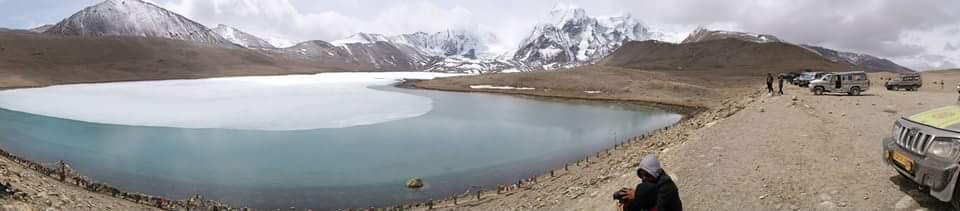
The former commonly comprises Lachen, Gurudongmar Lake, Lachung, Yumthang Valley and Zero Point. These are generally done by tourists of all genres from Gangtok on fixed all-inclusive packages. If Gurudongmar is the highlight for you, my separate guide to Gurudongmar Lake goes deeper into the route and distances from Gangtok.
The packages vary in duration from 1 night / 2 days to 3 nights / 4 days. They vary on other parameters as well, such as the kind of vehicle provided (exclusive or shared), quality of accommodation, and consequently the per person cost.
As of 2025-2026, a basic shared 3D2N package covering Lachung and Yumthang Valley starts from around Rs 4,000-5,000 per person in off-season. During peak season (April to June), expect Rs 6,000-8,000 per person. A comprehensive 3N4D package covering Gangtok, Lachen, Gurudongmar Lake, Lachung, Yumthang Valley, and Zero Point in an exclusive vehicle like Innova/Scorpio with the best accommodation can go up to Rs 25,000-40,000 per person. Hence, there is something for everybody and every budget.
The latter comprises places less traveled, generally involving treks and camping. Some of which are Green Lake, Muguthang, Lhonak Valley, Chopta Valley, Katao Valley, Dambung, Lhasar Valley, and Phuni Valley. Most of these places have no road connectivity and are completely uninhabited, but that is exactly what keeps them preserved in their rawest form.
How Is the Journey from Gangtok to North Sikkim?
The North Sikkim Highway is effectively the only road that connects Gangtok to the region, passing for most of its length alongside the mesmerizing river Teesta. You will cross small towns, waterfalls, hydel projects, and scenic mountain vistas along the way.
The landslide-prone road is maintained by BRO with great priority as it serves as an essential supply line for the heavily militarized border with China. Keep in mind that road conditions can change rapidly, especially during the monsoon months (July to September). In case you are traveling during or just after rains, check the latest road status updates before departing.
Kabi Lungchok
17 km on the highway from Gangtok is a site of huge historical importance for the Sikkimese. This place is where the ‘Treaty of Blood Brotherhood’ was signed in the early 14th century between the Lepchas and Bhutias to ensure a peaceful co-existence in the region.
Statues of the men who made this happen remain in a small garden on a hill, with prayer flags tied to the trees all around. The entrance is from just beside the road, following which some 30 steps up, a cemented porch with sitting benches appears. The place is silent with a whiff of history in its air. Colorful silk scarfs can be bought and tied to the trees. The locals believe it can fulfill wishes.
Dikchu
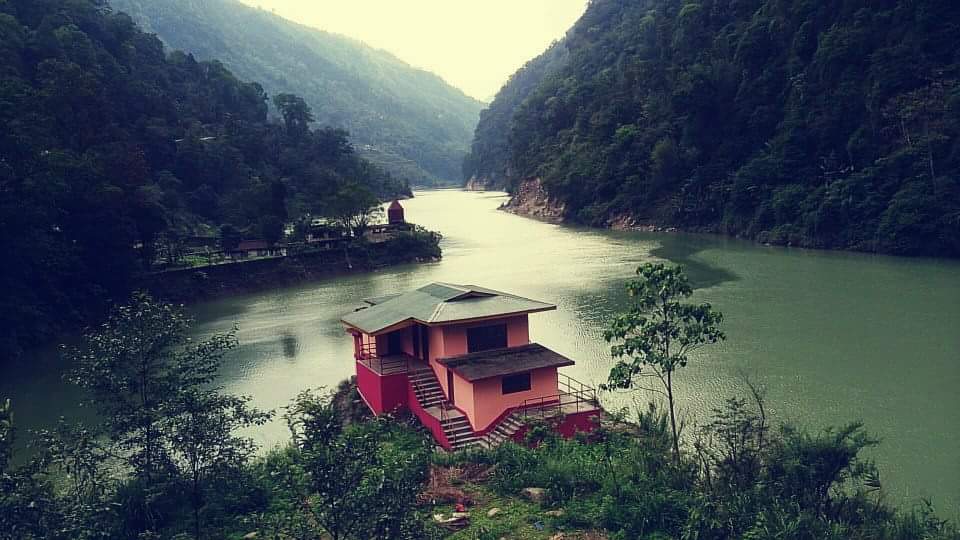
A small town about 32 km from Gangtok, Dikchu would have been inconsequential otherwise if not for two things. The first being the picturesque confluence of the Dikchu and Teesta rivers. The second being the 100 MW hydel power plant, named after the place itself.
There is a bridge while exiting the town from which the confluence looks remarkable, with a quaint little two-story cottage right at the fork. Unfortunately, this is not a hotel or homestay but an NHPC watchtower to monitor the water level. A good place to get off from the car and stretch the legs for some time.
Phodong
It is the first important town en route, 38 km from Gangtok. The Phodong Monastery, built around 1720, is one of the most important monasteries of Sikkim belonging to the Kargyupa school of Tibetan Buddhism. Not far from which is the forgotten Tumlong, which was for some part in history, the capital of the Kingdom of Sikkim.
Only ruins remain today. Rabdantse in West Sikkim was the first capital of the kingdom, after which it was shifted to Tumlong for 90 years. What remains of the erstwhile palace and the grand chortens, capped by invading thick green bushes, wear an eerie appearance.
Related Reading: Pelling Travel Guide, An Offbeat Place in Sikkim
Mangan
The administrative headquarters and the biggest town of the North Sikkim district is a busy little hamlet, 53 km from the state capital. It is where the wilderness meets civilization for the residents of this region. With private schools and hospitals, restaurants, shops, and a few good hotels, the town can be a brief stopover.
Mangan marks the beginning of the Tibetan Plateau north henceforth. This is the last place where you can buy things at MRP. So if you have something to buy at the last minute, be it medicines, snacks, or other essentials, Mangan is the place. The nearest petrol pump is also here, so fill up before heading further north.
Singhik
Just about 4 km ahead of Mangan, Singhik is slowly gaining popularity for its strikingly astounding views of the Kanchenjunga and Siniolchu peaks.
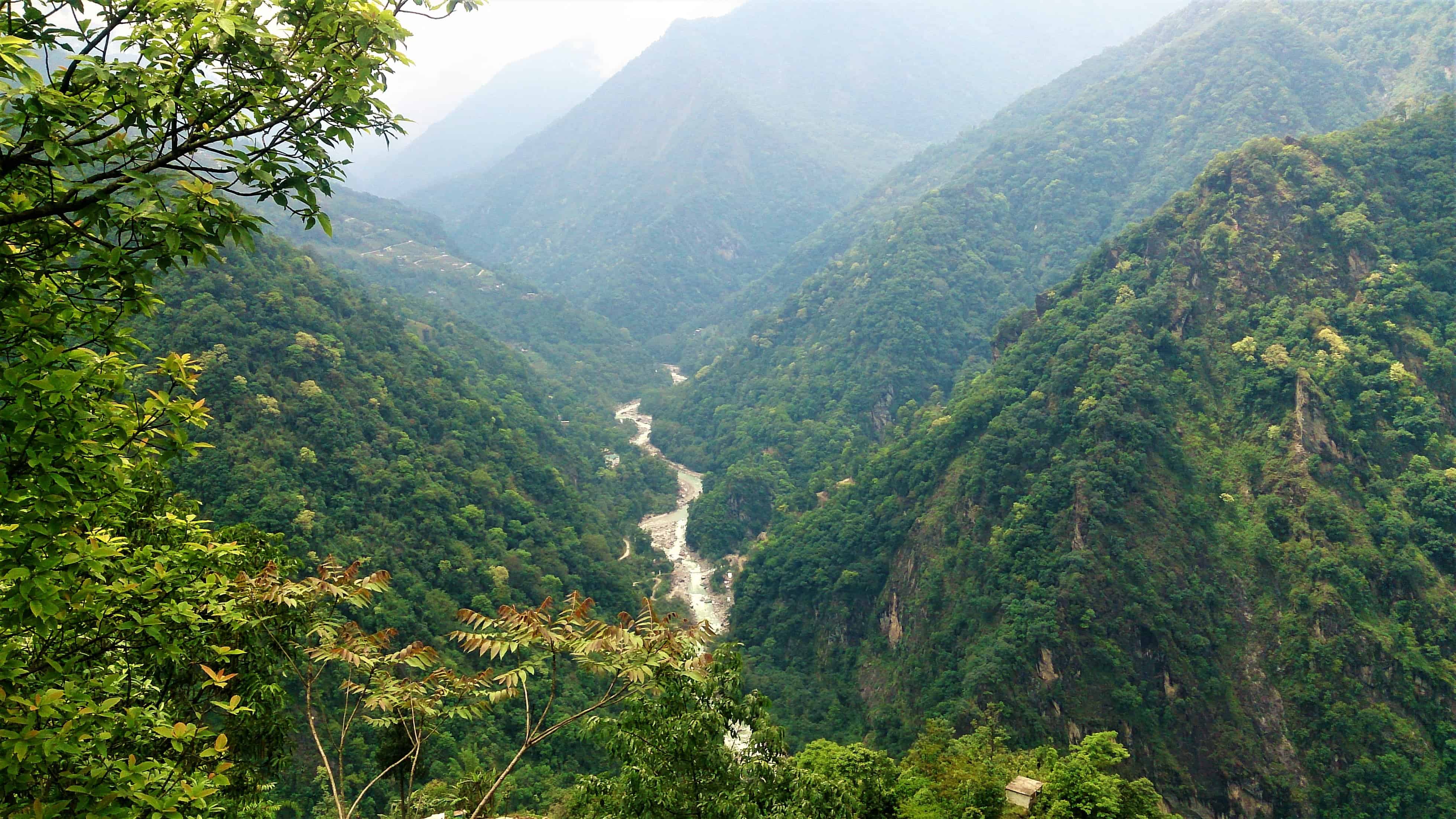
The Singhik Viewpoint is just beside the road where people can stop for a peek. Generally, the view of Kanchenjunga is clearer in the early mornings and tends to get hazed out as the day progresses, unless you are extremely lucky. However, even the general view without the peaks is quite spectacular, with the meandering Teesta deep down and the surrounding valleys diving into it. There is a heritage tourist bungalow in Singhik where tourists can stay for a night.
Toong (a.k.a Tung)
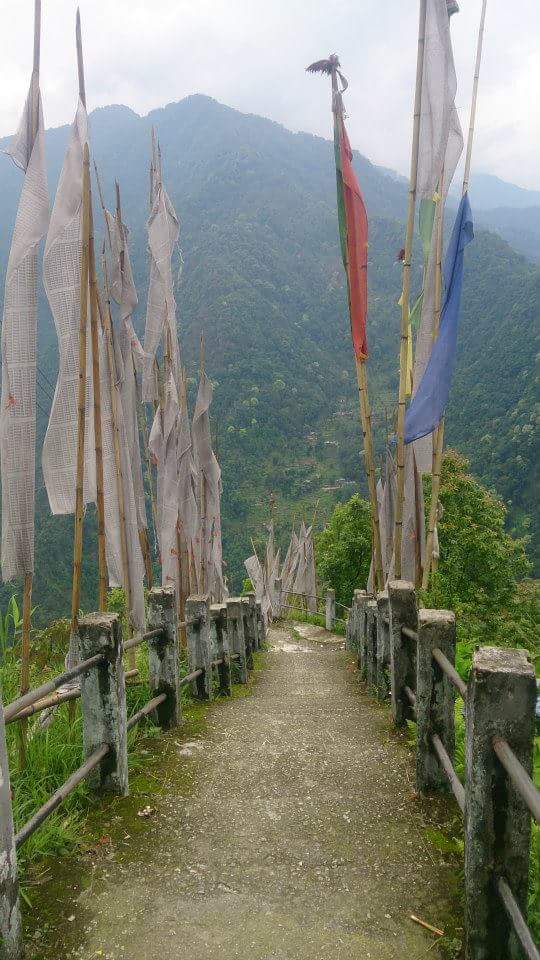
Tung comes next at 72 km from Gangtok. It is the first checkpoint where permits for everyone traveling further up north are verified.
Naga Waterfall
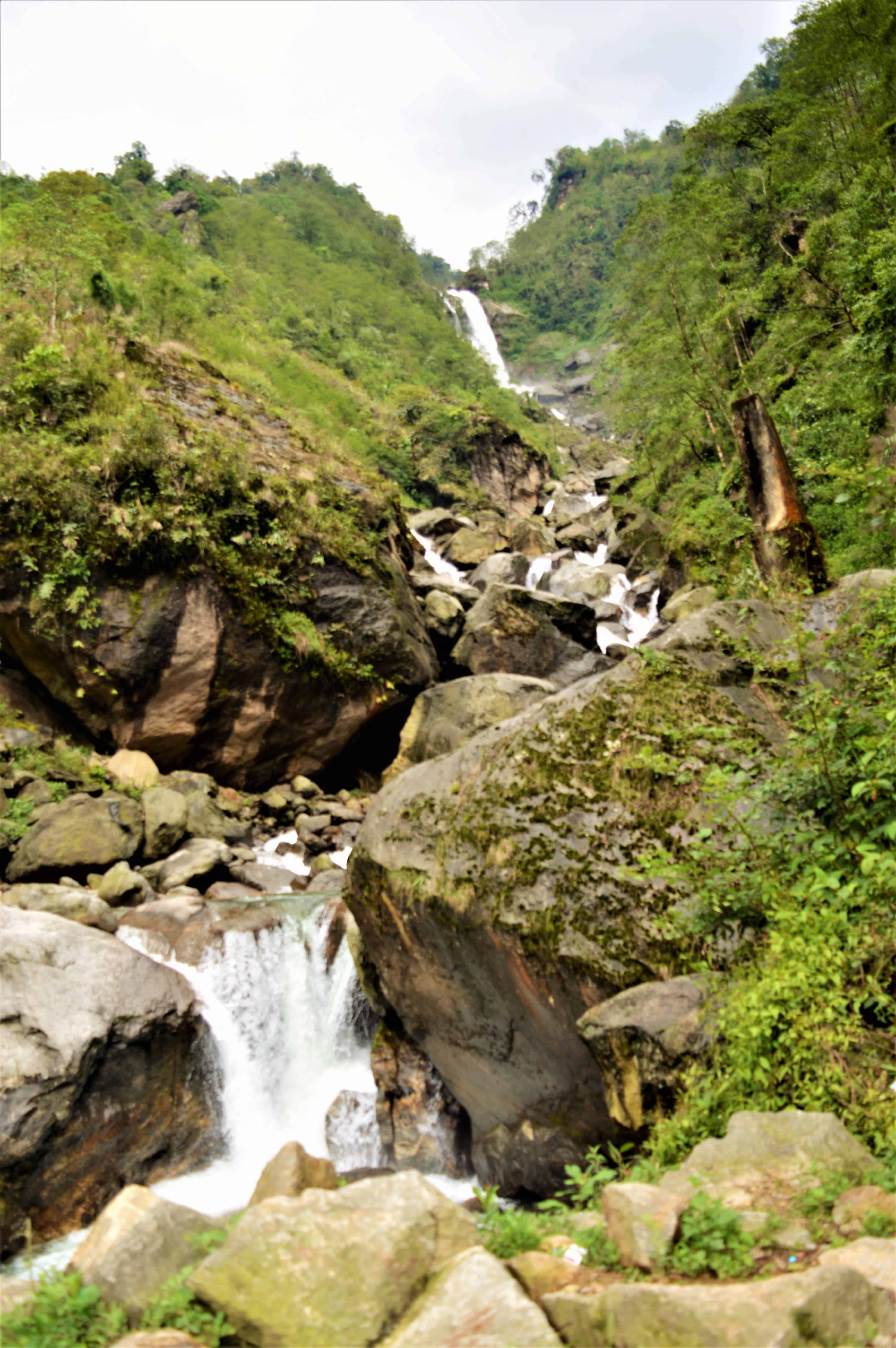
A common stoppage, generally to click a few pictures for tourists visiting the region. Situated between Toong and Chungthang, the Naga Waterfall gets its name from its appearance like a winding snake making its way down. In late summer, when the volume of water is more, the waterfall looks quite appealing.
Chungthang (a.k.a Chungathang)
At around 100 km from Gangtok, Chungthang is the only sub-division of the North Sikkim district, under which all the areas north of here fall. Chungthang is probably the second most important town of North Sikkim after Mangan. This is where the mighty Teesta takes form geographically, at the confluence of the Lachen Chu and Lachung Chu rivers.


A massive 1200 MW hydel power plant is being built here, for which the entire southern tip of the town is being reoriented. A huge dam is being built, and an intermontane tunnel is being dug up supposedly to change the course of the river. Opposing sentiments exist about the project and its impact on the local ecology.
The North Sikkim Highway bifurcates from Chungthang. The right goes towards Lachung and subsequently to Yumthang Valley, culminating at Zero Point. The left goes towards Lachen, leading further on till Gurudongmar Lake. Chungthang also contains the biggest forward military base in North Sikkim. There is a cafeteria and a health center right at the bifurcation, run by the army.
The cafeteria is quite good, with restrooms and a parking lot overlooking the dam under construction. Many people stop here for a cup of tea or a plate of fried Wai Wai. Someone visiting both Lachen and Lachung has to cross this place thrice: once while going towards Lachen, again when moving to Lachung from Lachen, and finally when exiting Lachung on the return.
It is said that Guru Padmasambhava during his journey towards Tibet stopped here briefly sometime in the 7th century. His footmarks are said to be contained in stone somewhere in Chungthang, surrounded by paddy rice plants, which cannot grow in these conditions normally.
What to Expect on the Lachen to Gurudongmar Lake Route?
Inhabited historically by the Lachenpas, Lachen is an alpine town at 9,000 feet, situated on a small flat meadow beside a deep gorge through which the Lachen Chu flows rapturously. Surrounded by pine conifers and towering snowclad mountains all around, Lachen has emerged as an important destination for tourists, travelers, and trekkers from around the globe. Numerous hotels have sprung up, giving the hamlet more concrete than it deserved.
The climate is cold, especially at night throughout the year. The winters are harsh and bring plenty of snowfall in the months of January and February. Lachen is 28 km from Chungthang, 125 km from Gangtok, which is around 6-7 hours drive.
The Lachenpas, a sturdy and introvert community who have survived these conditions for centuries, were primarily Yak herders. The Yak is of supreme importance for their sustenance in these parts. As almost no crops or vegetables are cultivatable in this climate, Yak and at times sheep are used for all purposes of sustaining life.
Related Reading: Dzongu, The Little Known Paradise of the Lepchas
Yak skin is used as protection against cold. In addition to its milk, meat, and use as a mode of transporting people and luggage, even yak-dung serves as fire-fuel to cook and stay warm in its dried form. It is also used as a top insulating layer, plastered on stone walls to keep off the cold.
Lachen’s rise to fame in the last decade can largely be attributed to its proximity to the famous Gurudongmar Lake. It serves as a stopover for the night after arriving from Gangtok or any place south, before leaving early morning to witness one of the highest lakes of India at 17,100 feet. Lachen’s altitude aptly acts as an acclimatizer. Lachen is also the base from where the popular Green Lake trek begins.
Thangu
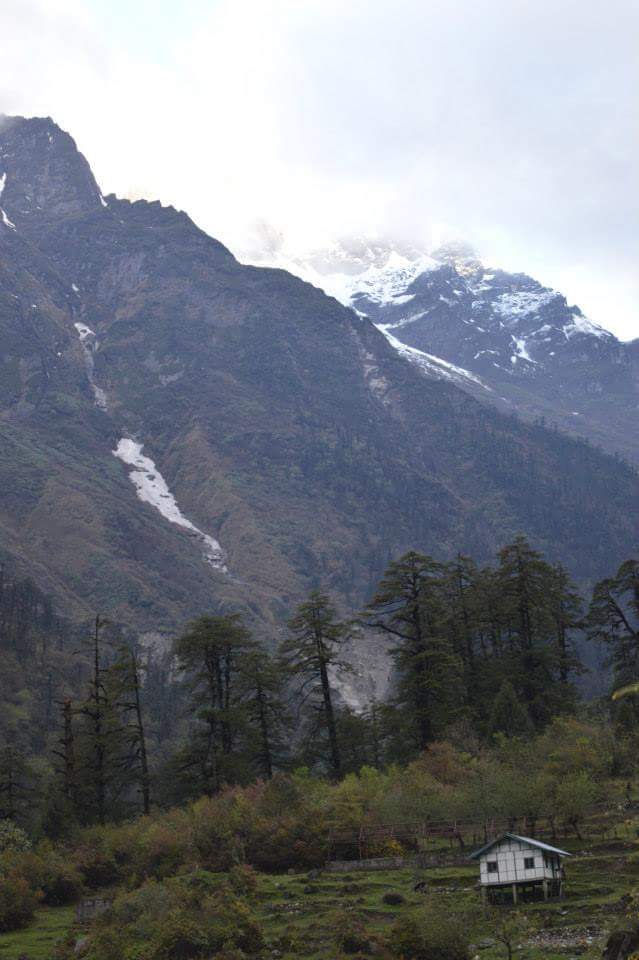
Thangu, at an elevation of around 14,000 feet, is halfway between Lachen and Gurudongmar Lake. After an early morning start from Lachen, people stop here for a quick breakfast of Maggi and eggs, also to get the hang of the grueling altitude rise. The journey from Lachen to Thangu is scintillatingly beautiful.
Tracing up the Lachen Chu with nothing apart from alpine wilderness all around, some stone-fenced grazing grounds for Yaks with one or two surreal log cabins or a distant waterfall on an unimaginable slope, you suddenly rise above the tree line and all signs of life disappear.
Thangu has a large army base with around 10 shops selling popcorns (believed to help cope with the altitude), chocolates, and liquor, apart from the quintessential Maggi and omelettes. It can get freezing and windy at Thangu.
The valley wakes up to flamboyant colors of rhododendrons and grassy meadows in the months of spring, while it stays submerged under snow from October to March. Lachen getting congested has resulted in some accommodation coming up in Thangu Valley. It connects with the verdant Lhasar Valley to its south, the Chopta Valley, and the Lhonak Valley in the north-northwest.
A drivable road exists between Thangu and Kalapatthar, which marks the beginning of the Chopta Valley. Foreigners are only allowed until here, while Indians generally continue towards Gurudongmar Lake. Some tourists have recently started to skip staying in Lachen and come to Thangu directly for the night. However, sleeping at 14,000 feet can be hazardous if the body is not properly acclimatized. My advice would be to spend the night at Lachen and leave early morning for Gurudongmar.
Thangu is 35 km and a 2-hour drive from Lachen.
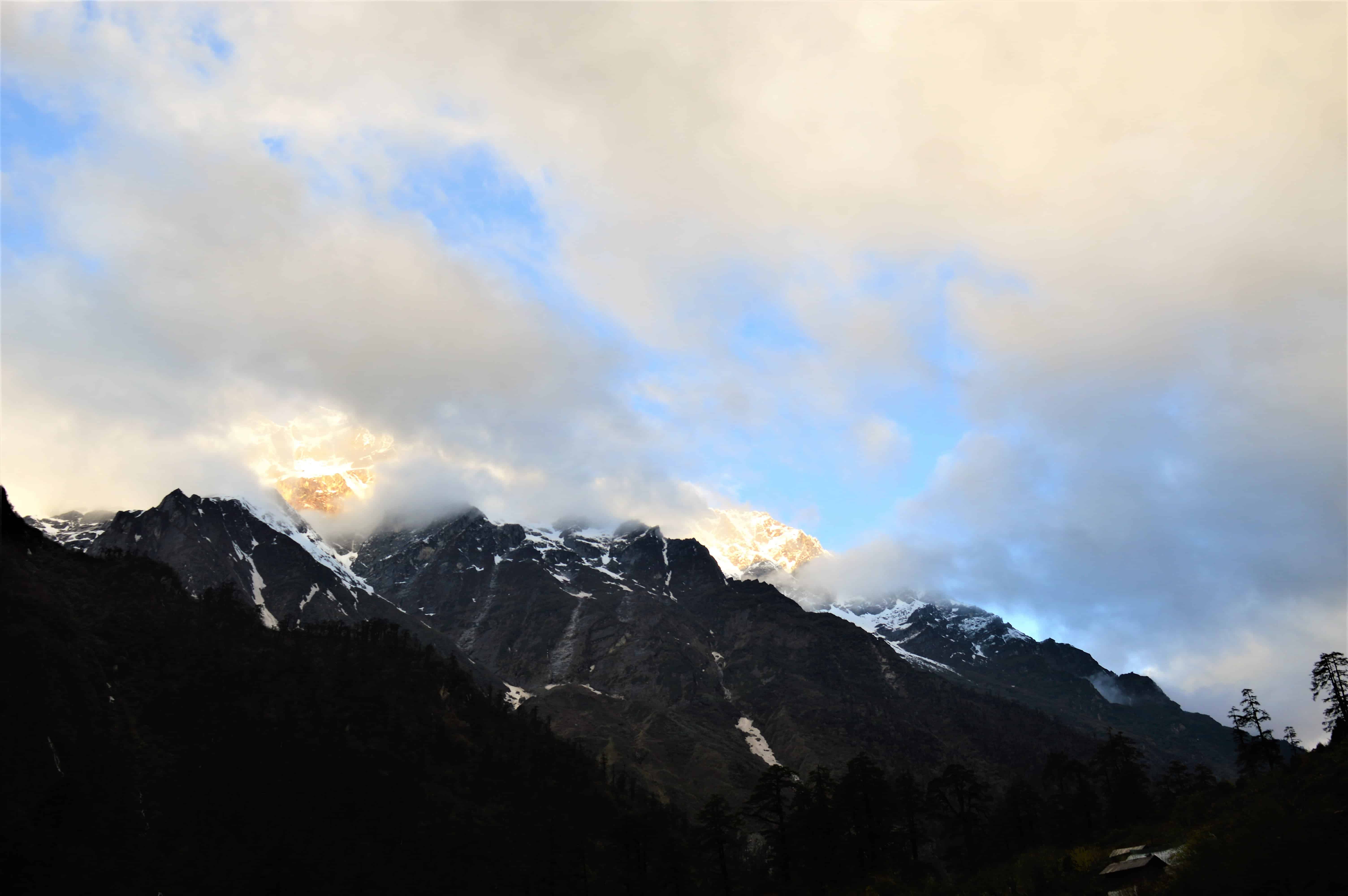
Gurudongmar Lake
The lake is further 40 km and another couple of hours from Thangu. The change in altitude is roughly 3,000 feet over just around 70 km from Lachen. The road to Gurudongmar from Thangu is generally open only between April and October.
The terrain is mostly a cold desert, arid, starkly grey. The roads are non-existent at places. The safest option is to keep following the telephone wires, which are for the military bases. There is a final military checkpost about 10 km short of the lake where an army jawan would come and check if everyone is okay.
There is an operative health center along with a cafeteria run by the jawans. A doctor is available all the time who readily helps if someone is unwell. It is baffling and at the same time humbling to see the sacrifices of these men in green camouflage jackets, ever so unwavering in the call of duty for our motherland.
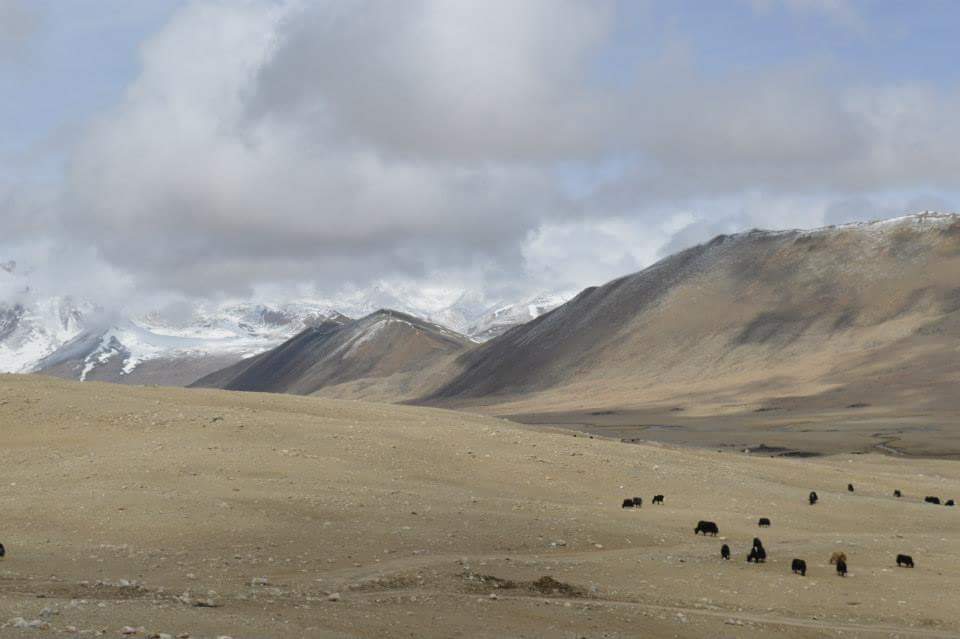
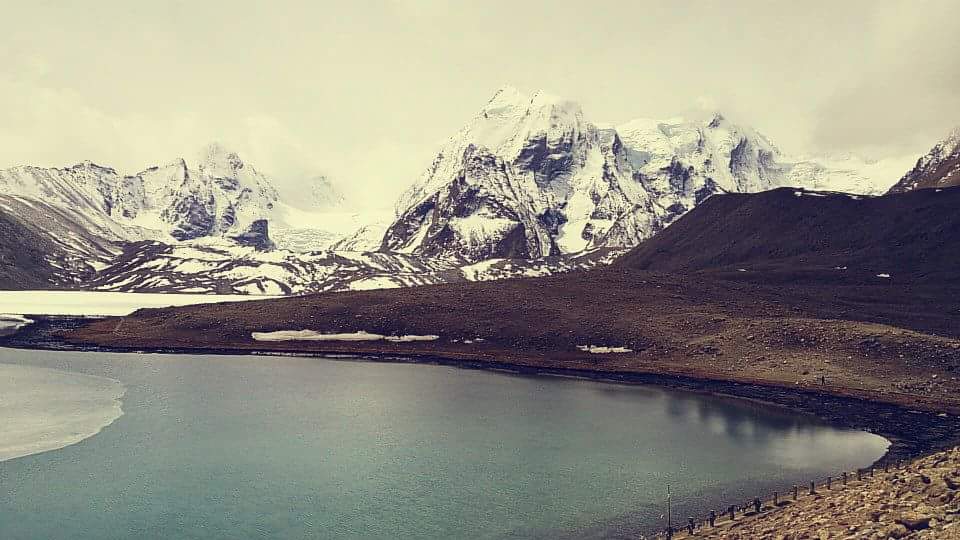
Another 15 minutes of bumpy ride and it appears. Gurudongmar Lake. Amidst the brown-yellow-grey desert-like aridity till the eyes can see, like an oasis, a mirage in its truest illustration. Except it is there. A bluish-green lake, semi-frozen, emanating as a moraine from the snout of a glacier, laden around for most of its circumference with colorful Buddhist prayer flags, revered alike by Hindus and Buddhists.
Related Reading: Sillery and Icchey, Two Hamlets Lost In Romance with Kanchenjunga
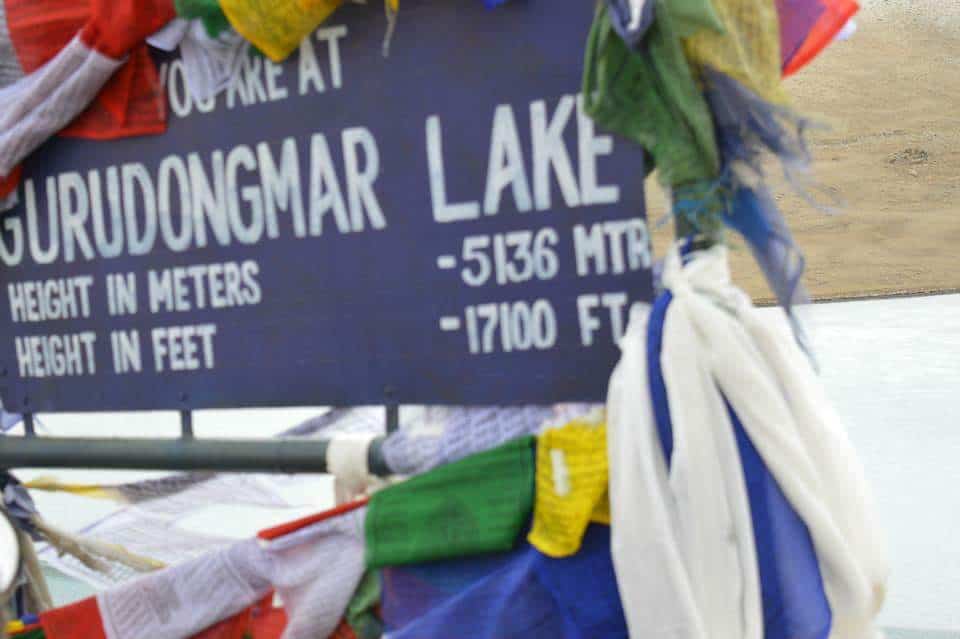
Some part of the lake remains frozen throughout the year due to its altitude. A flight of stairs goes down to the lake’s waters from where the vehicles stop. The altitude is written on the nameplate: 17,100 feet. I will not advise prolonged stay or physical exertion. Even going down and up the stairs can leave you gasping for breath.
A couple of army jawans who are present there primarily to help tourists, try their best to make them leave after 10 minutes or so. But you just will not want to leave, such is the exceptional spectacle of the place.
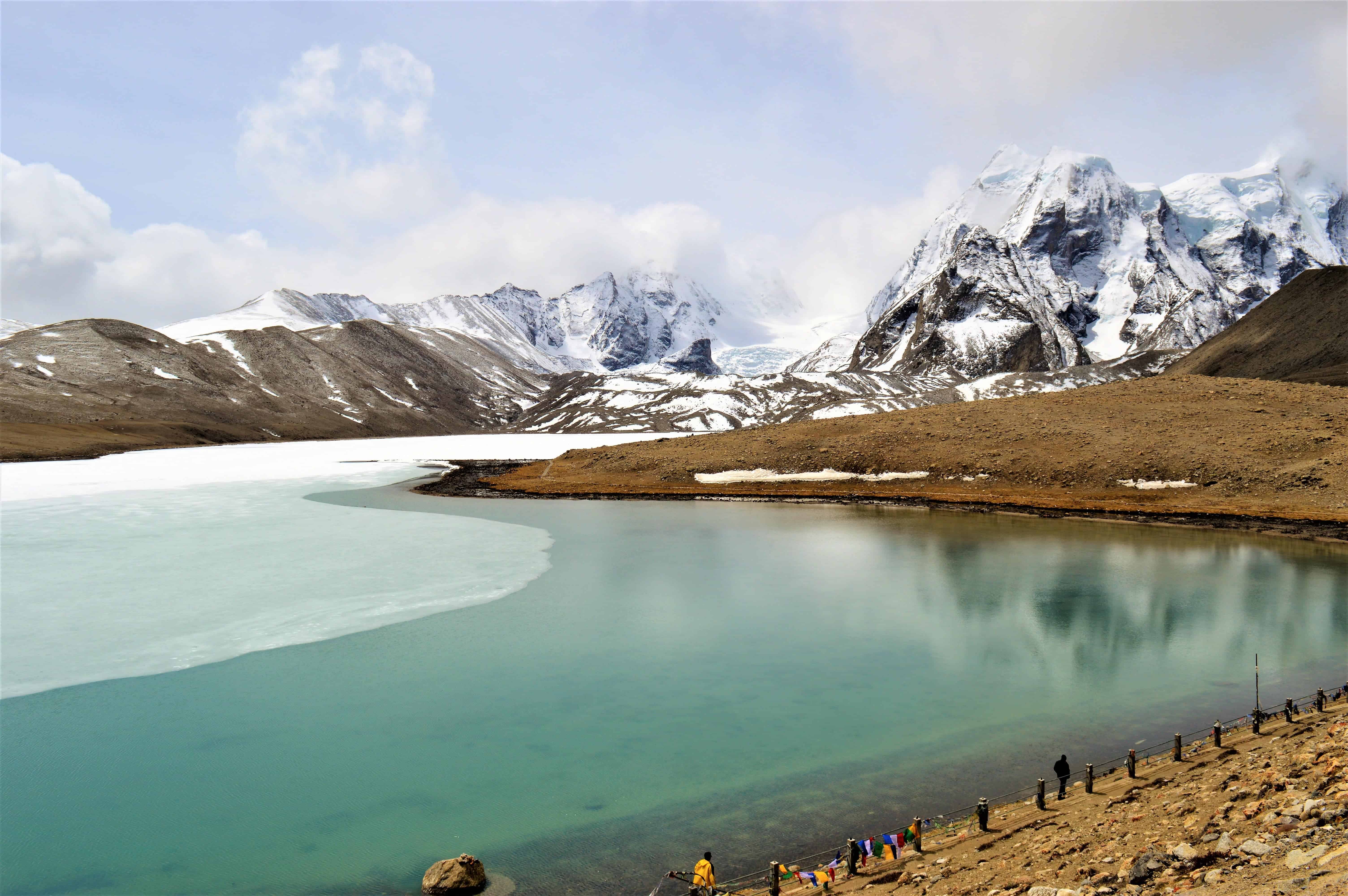
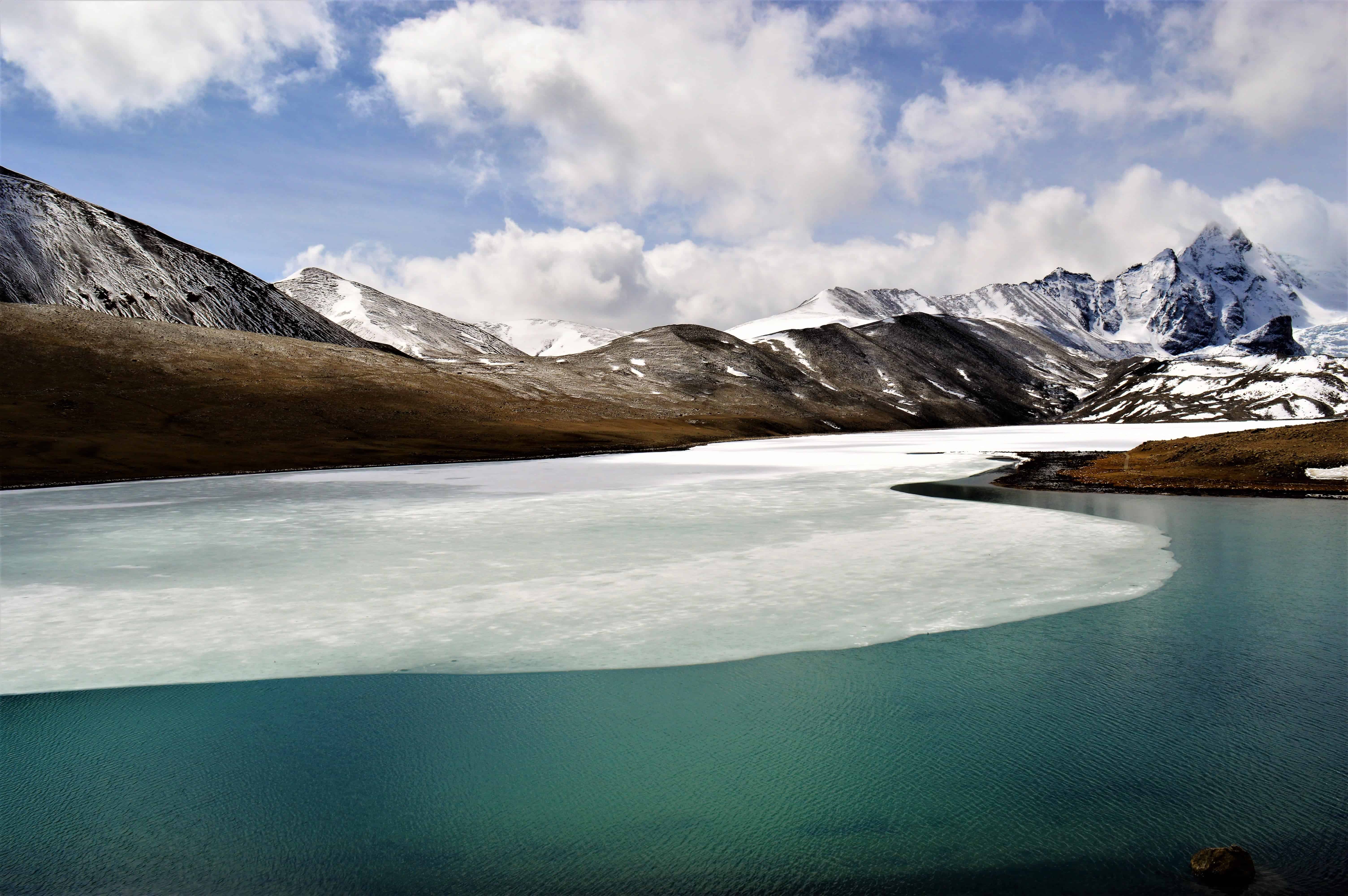
Incidentally, the highest lake of India, Cholamu Lake (Tso Lhamu) at an elevation of around 18,000 feet, is not far from Gurudongmar. A 10 km dirt road can land you there in about half an hour. However, being acutely close to the Sino-Indian border, civilian permits are generally off-limits. Some have managed to make it by obtaining special permits through army contacts, but this is not something you can count on. Together, the Cholamu and Gurudongmar Lakes give origination to the Teesta river.
There exists a dirt road connecting the Gurudongmar-Tso Lhamu region to Zero Point on the Lachung side. Geographically the two regions are separated by the Donkia La pass. This route is used primarily by army trucks and is not open for civilians. If BRO ever builds a proper road here, it could make possible a round trip of Chungthang-Lachung-Yumthang Valley-Zero Point-Tso Lhamu-Gurudongmar Lake-Thangu-Lachen-Chungthang. That would be truly amazing.
Lachen also has a small monastery which you can visit, along with a handicraft arcade in the main market. Shawls, blankets, carpets, and bags handcrafted by the local Lachenpas from yak and sheep wool are available for purchase.
What to See in Lachung, Yumthang Valley, and Zero Point?
Another gorgeous hill town which has gained prominence as a coveted destination for mountain lovers. Lachung draws one of the highest tourist footfalls in the state these days. Some posh hotels have come up in this town perched on both sides of the river Lachung Chu, connected by a small cantilever bridge.
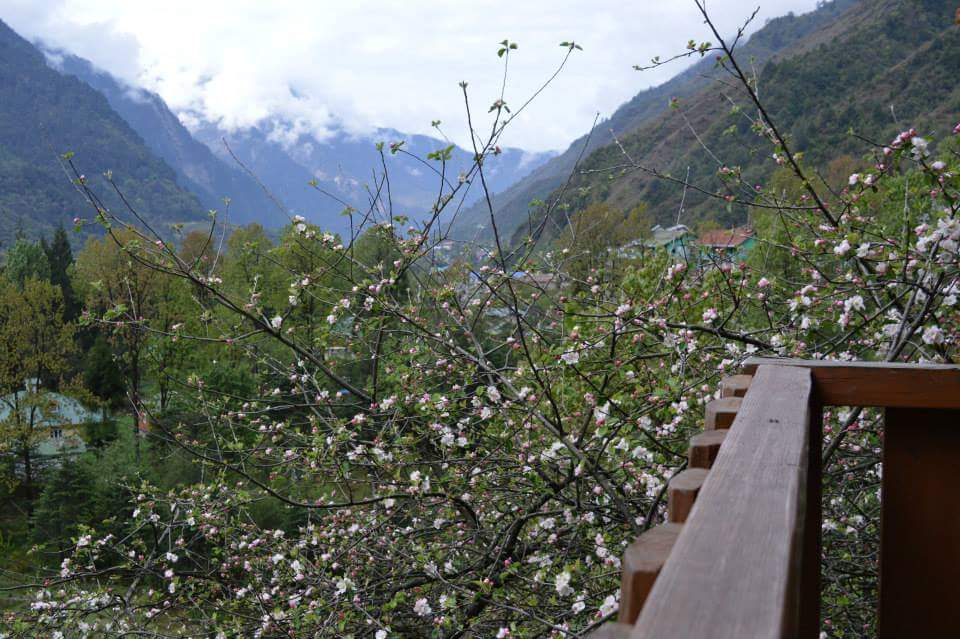
Surrounded by towering mountains, at an elevation of 8,600 feet, with orchards of apple and apricot, Lachung is busy with tourists almost around the year. In the summers it is mostly overbooked, while in winters too, people come in plenty to witness snowfall. The locals call themselves Lachungpas.
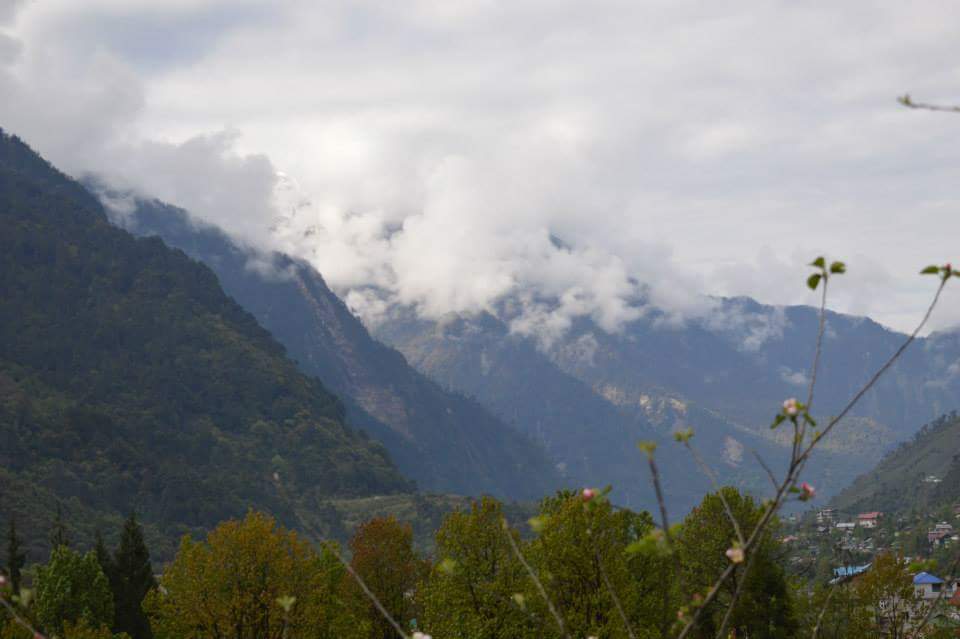
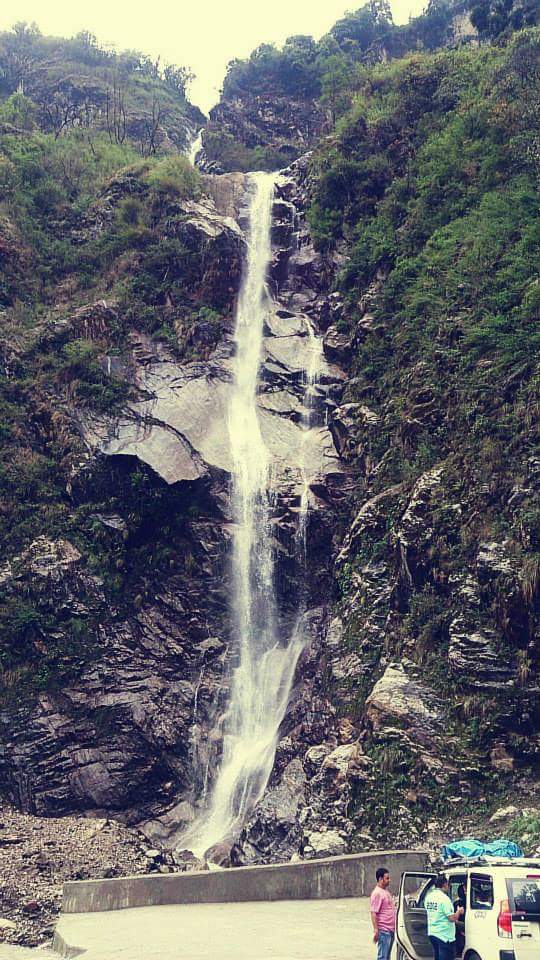
Lachung is located about 120 km from Gangtok and takes around 6 hours to reach. From the fork in Chungthang, it is a 22 km journey on the road that goes right. Just about midway, Bhim Nala Waterfall strikes the eye, being right beside the road.
A scene in the film Aankhen starring Amitabh Bachchan was shot here, which has added to its fame. While the waterfall is beautiful, it has been encroached upon by tea sellers. To get close to the waters over a wooden bridge, you will have to shell out a small fee.
Almost everyone visiting Lachung does so to witness the majestic Yumthang Valley. Located 25 km from Lachung, Yumthang takes around 1.5 hours to reach.
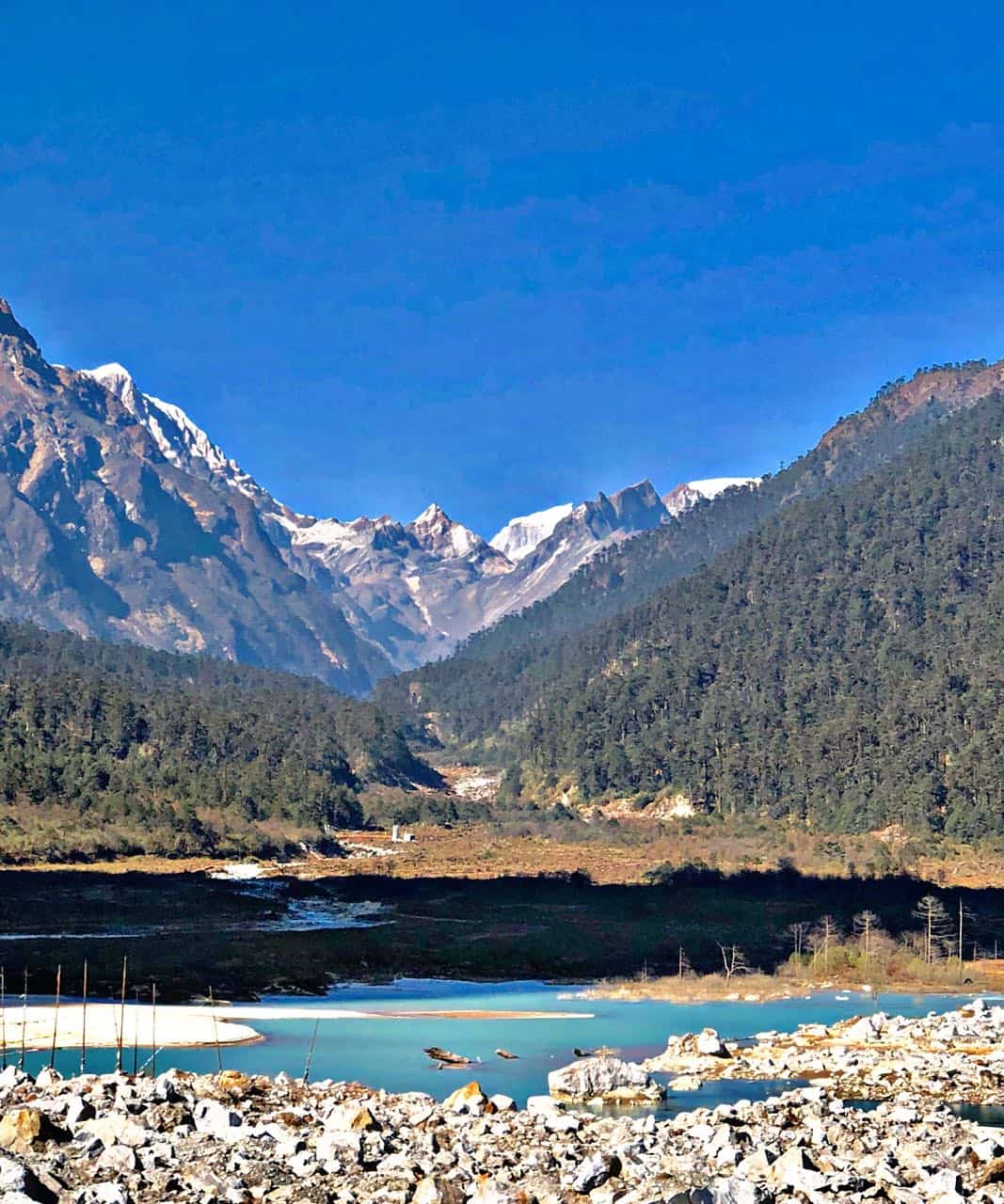
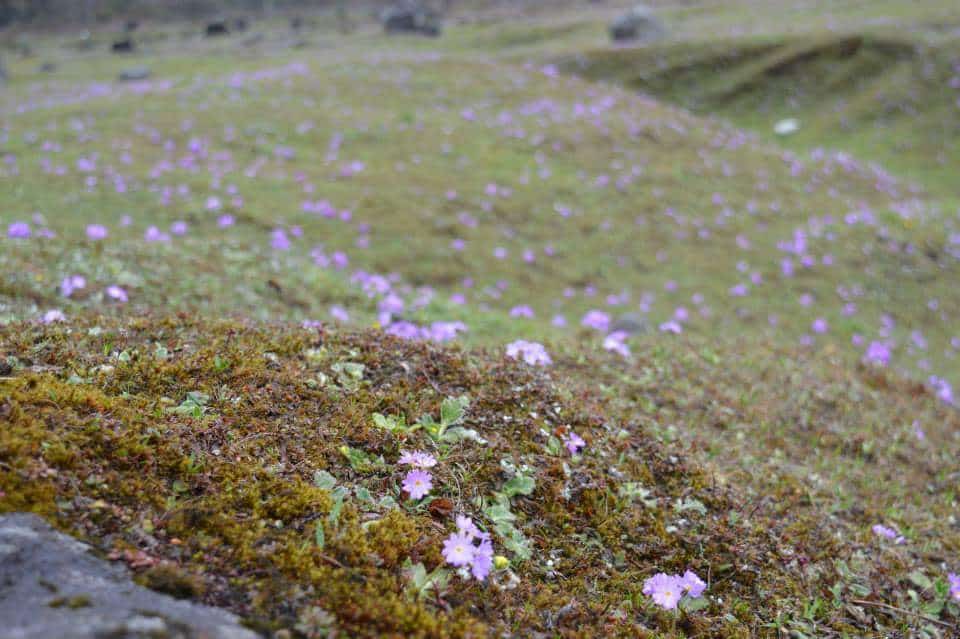
Often compared to Switzerland for its similar landscapes, Yumthang Valley is a truly special place to be, at any season. Particularly so during the blooming season of rhododendrons from March to May.
Singba Rhododendron Sanctuary
This part of the valley, spanning across 35 square km, abounds with every imaginable color during spring. At an elevation of about 12,000 feet, above conventional greenery, the valley slopes are entirely veiled with more than 30 species of rhododendrons beside poppies, iris, and primulas.
The state forest department organizes an annual International Rhododendron Festival in the month of April at Yumthang. The Lachung Chu meanders through the fairly flat valley, with rugged ice-capped peaks encircling the horizon.
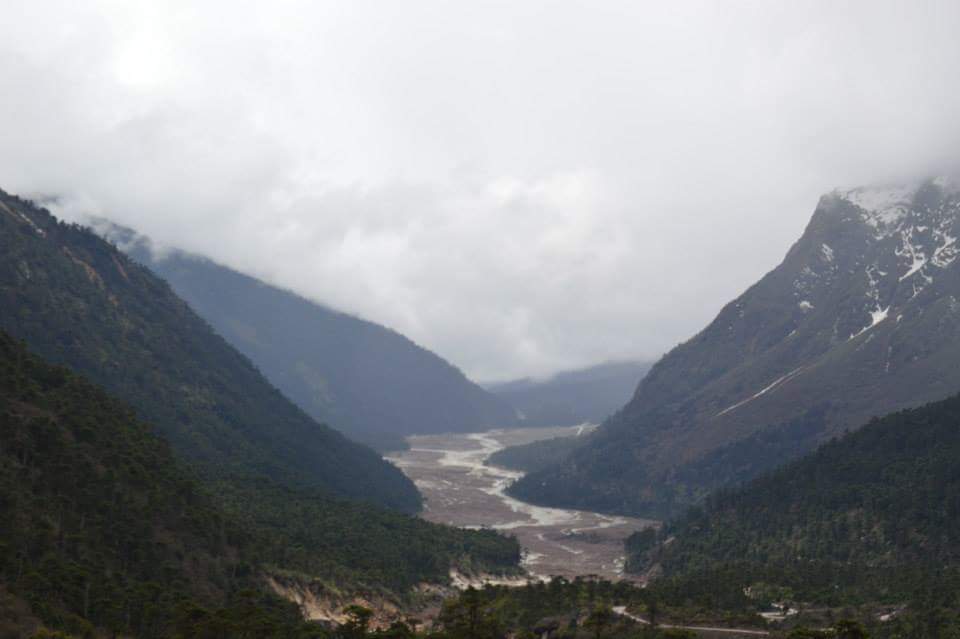
In winters the valley recedes underneath a thick blanket of snow, which is no less alluring. Phuni Valley, about 10 km from Yumthang, is slowly evolving as a skiing destination thanks to efforts by the Sikkim Mountaineering Association (SMA). Its slopes with proper snow cover at 11,500 feet are apt for the sport during December to February.
Just prior to reaching Yumthang, a wooden elevated pathway goes across the river stream from the main road. A 200 meter walk takes you to Yumthang Hot Springs. It is surreal that a hot sulfur spring lies at this altitude. There are separate log cabins for men and women, with small pools to take a dip in the waters believed to have medicinal properties.
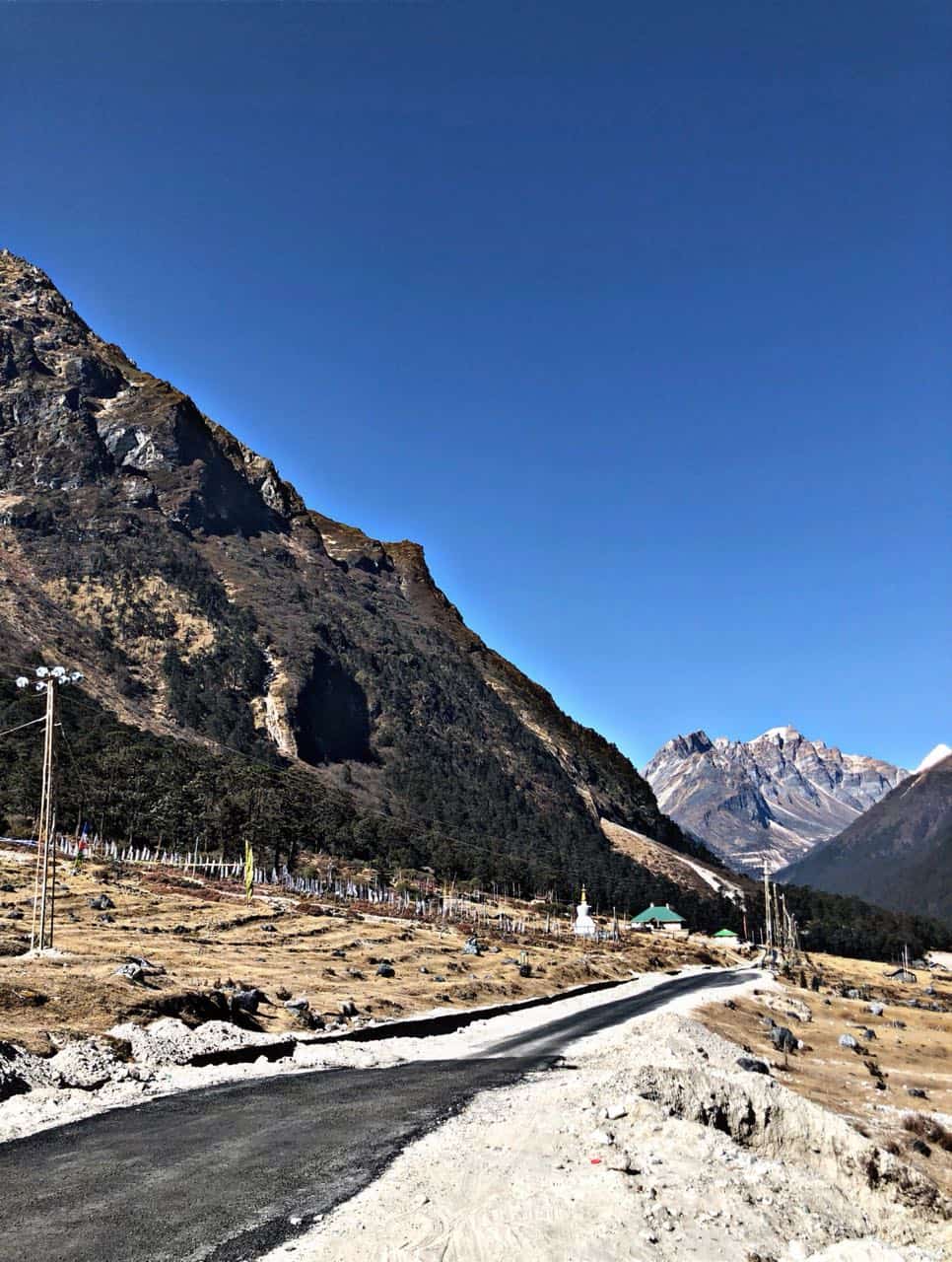
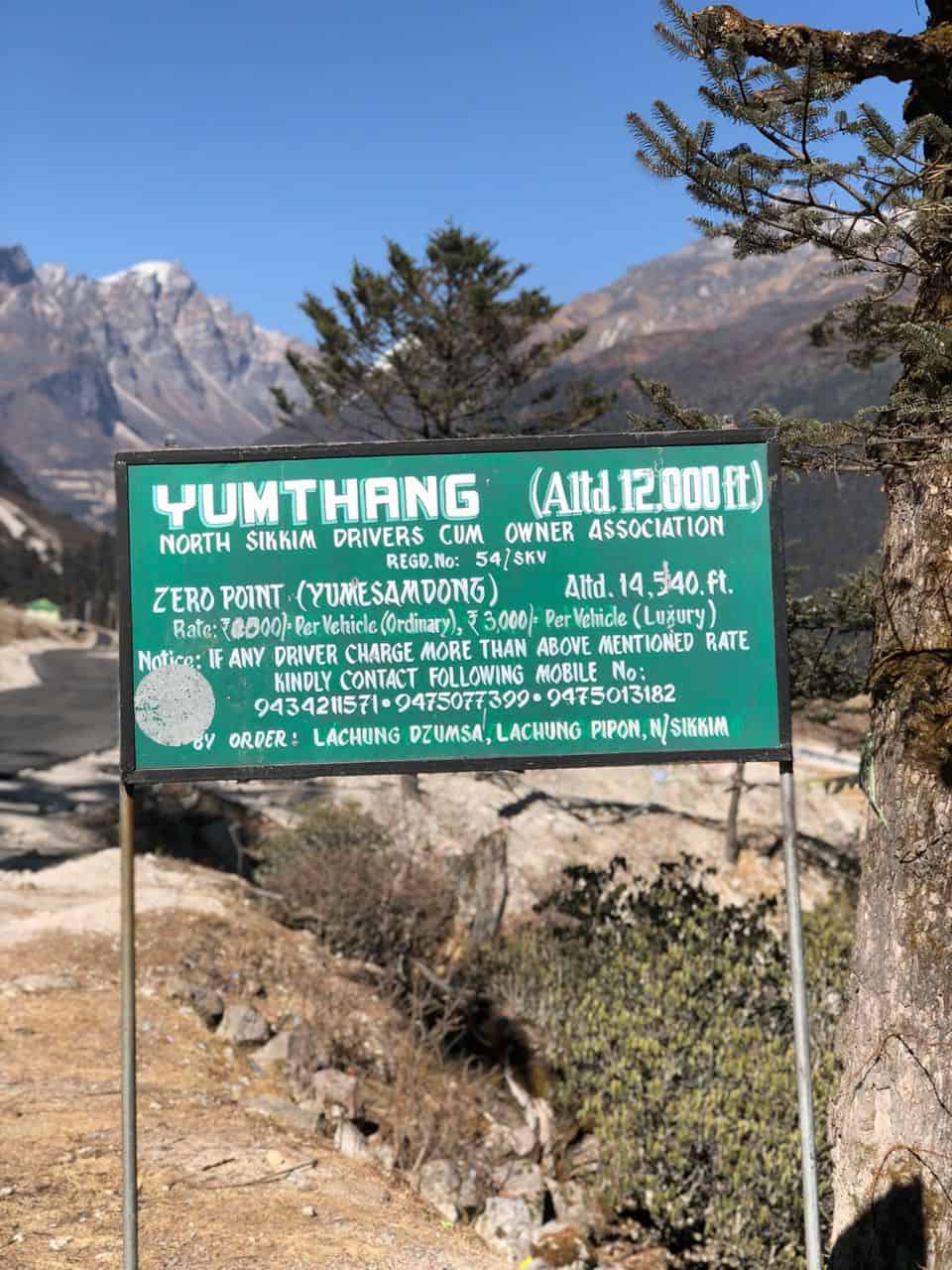
25 km further uphill, at 14,500 feet, lies Zero Point. It is where the blacktop road ends, hence the name. The place, very close to the Sino-Indian border, is perennially covered under snow due to its elevation. It gets very windy and bitterly cold. In the months of April and May you can see the snow melting in front of your eyes and creating streams.
Locals sell tea, coffee, Maggi, and even alcohol for the tourists during peak seasons. Snow boots are available on rent and can be handy if you wish to walk the slopes with knee-deep snow.
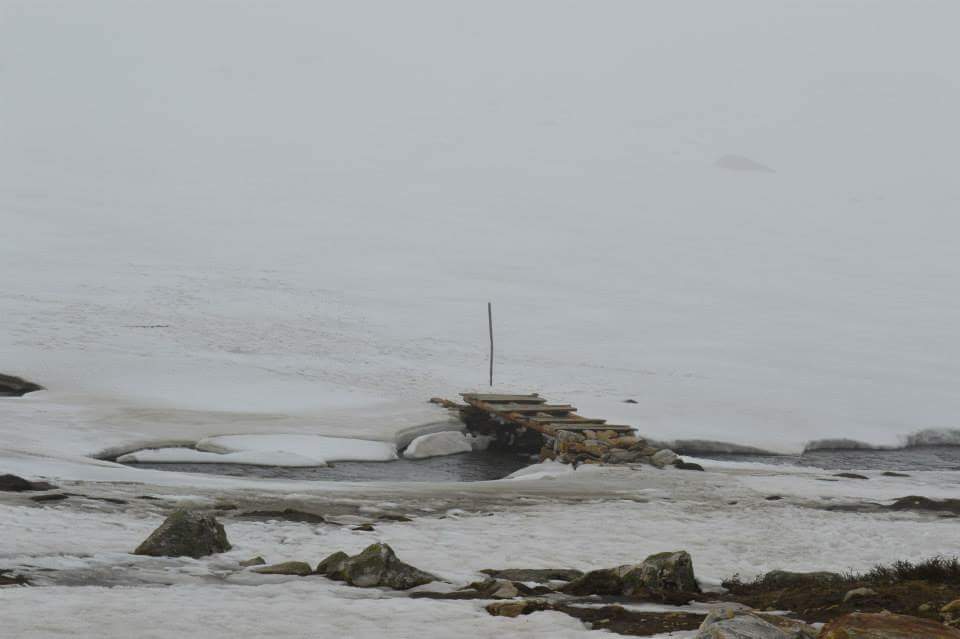
A restricted dirt road used only by military trucks continues after the blacktop ends, going by the banks of Tso Lhamu before reaching Gurudongmar.
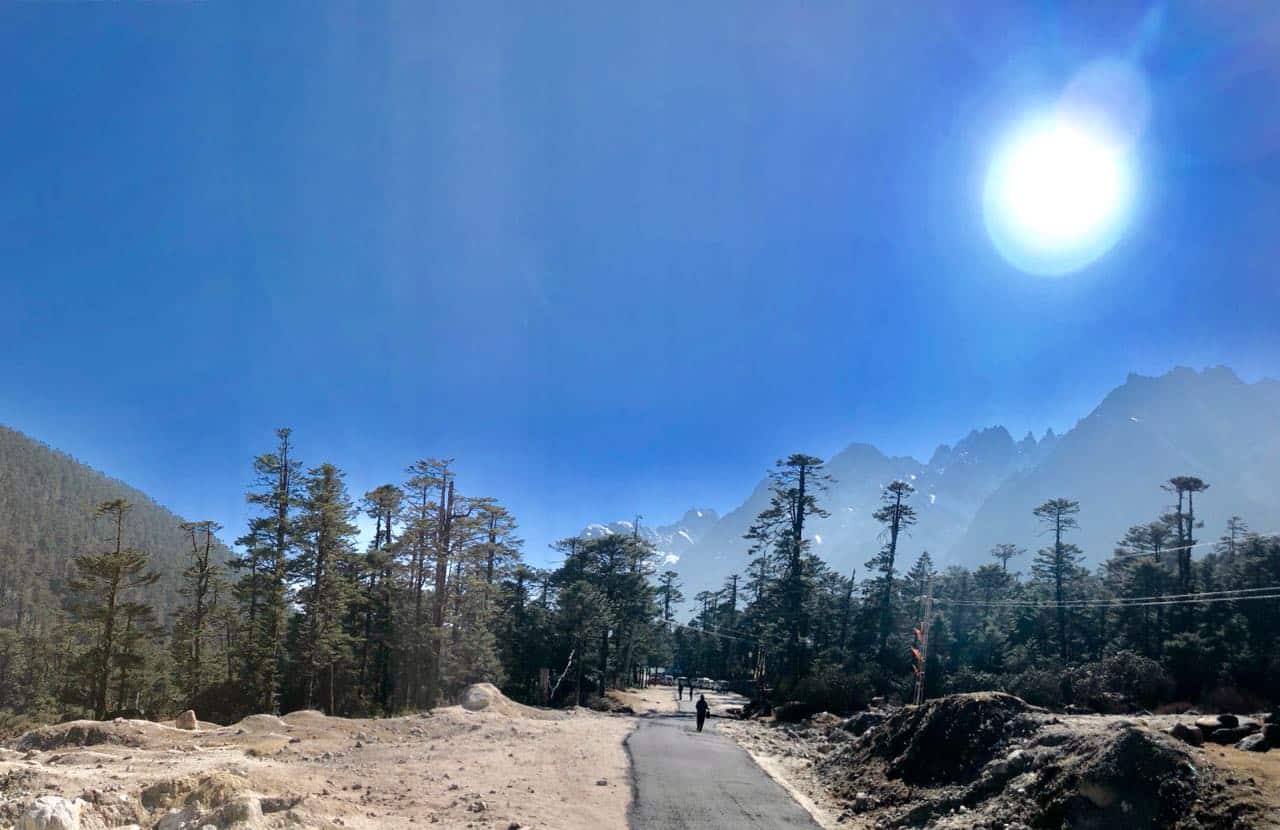
About 5 km short of Zero Point from Yumthang, a cantilever bridge laden with prayer flags marks the confluence of Lachung Chu and Sebu Chu. This is Yameysamdrong. This place used to be called Zero Point earlier. There is supposedly a hot spring here as well, besides being either the starting or ending point of a three-day trek that connects the Yumthang Valley with Thangu Valley, going across the Donkia La (18,400 feet) and the virgin Lhasar Valley.
Yumthang Valley has been featured in many movie scenes. There is a forest bungalow just around the parking area where tourists stop to take a stroll till the river stream. At a string of small shops, locals sell handicrafts, snacks, and tea.
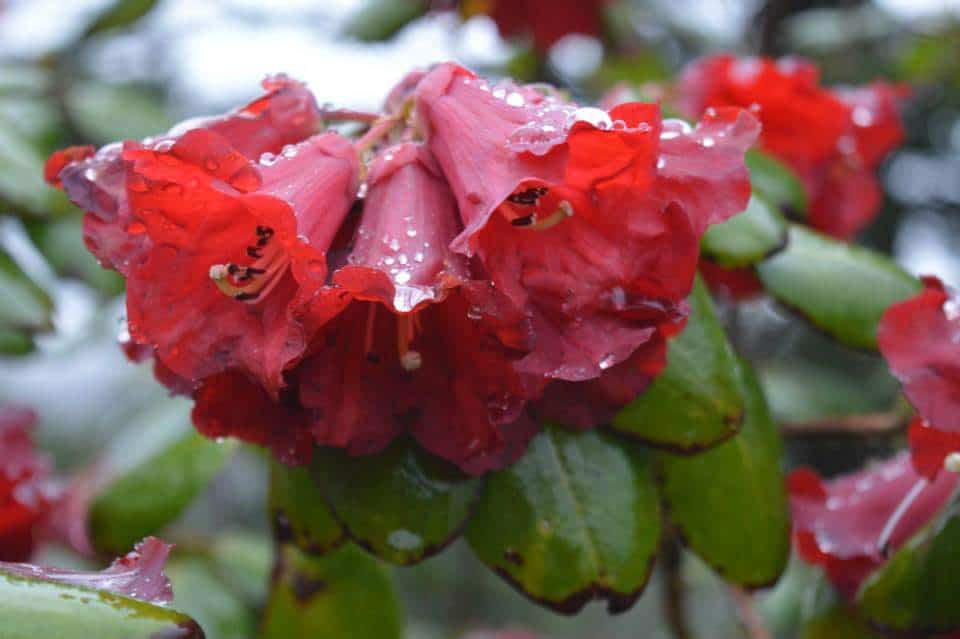
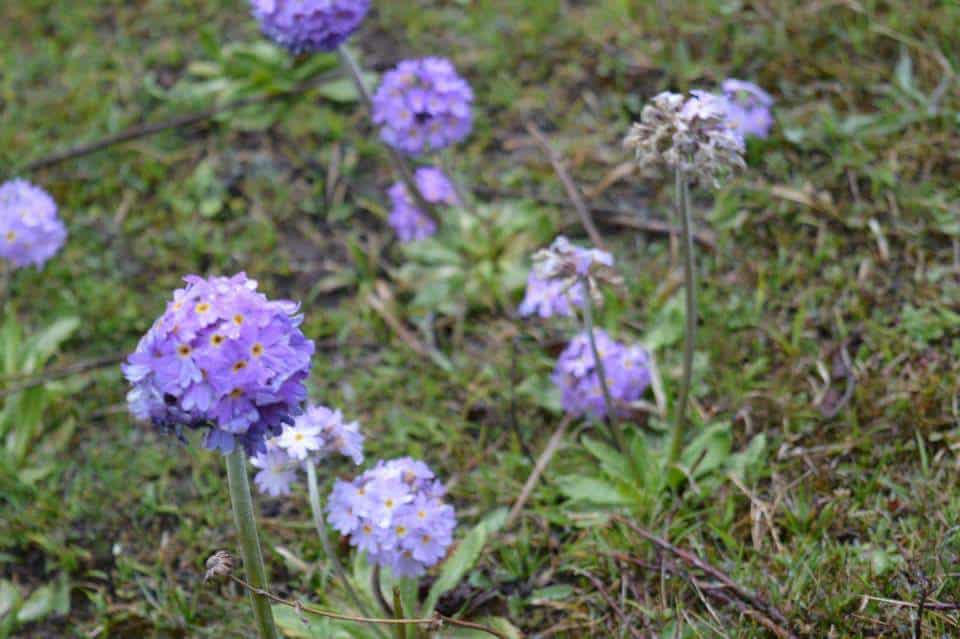
A little before the arched gate of Singba Rhododendron Sanctuary, a road cuts right. This leads to a tiny village within the Yumthang Valley National Reserve. At 14 km from Lachung, Dambung (or Domang Valley) is being promoted as one more sightseeing point out of Lachung. The route is extremely scenic, through winding roads, icy streams and waterfalls, silver fir and rhododendron foliage.
On another direction from Yumthang, across and beyond the bridge over Lachung Chu, 25 km away lies the prettiest secret of Lachung. Katao (also referred to as Mt. Katao) at an elevation of about 13,000 feet could have been as distinguished as Yumthang, perhaps even more so. But its extreme proximity to the China border has restricted that from happening.
No permits are formally issued for Katao, so it is never part of any standard North Sikkim package. However, with a bit of fortune and some extra cash, the driver can sometimes manage to take you there after some negotiations in Lachung. A splendid waterfall, partly frozen in spring or early summer, exists around midway. Poppies, primulas, and rhododendrons crowd the slopes in purple-red-blue-white shades, while at higher reaches, fresh powdery snow abounds for most of the year.
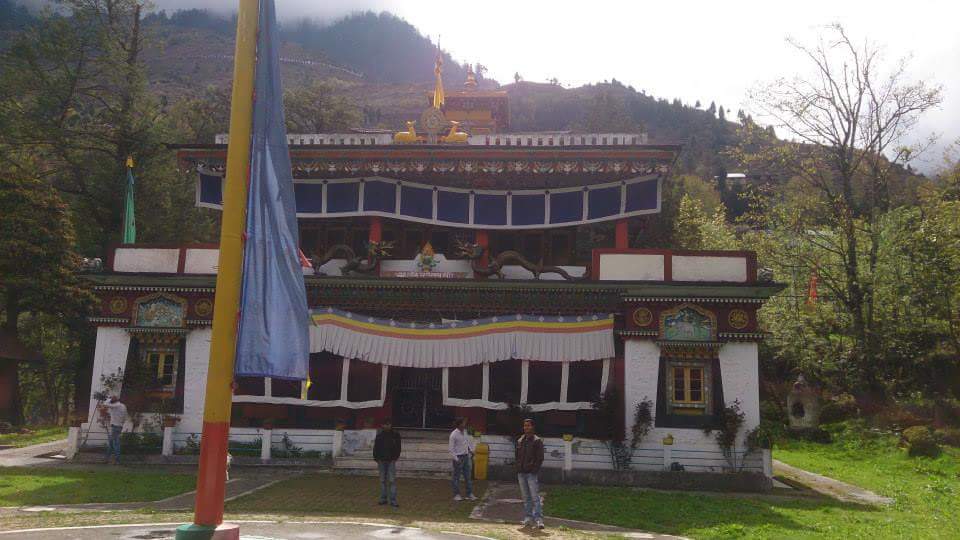
A pleasant walk across the cantilever over Lachung Chu, treading further on the Katao road or through a slightly longer route through alleys passing by apple, peach, or apricot gardens, would land you at a relatively small yet aesthetically appealing two-story gompa. This is Lachung Monastery. Built around 1850, this Nyingma Buddhist monastery is not to be missed while in Lachung.
How to Reach North Sikkim and Get Permits?
The nearest airport is Bagdogra (IXB), with daily flights from Kolkata, Delhi, Mumbai, and Bangalore. The nearest railhead is New Jalpaiguri (NJP), connected to almost all major cities of the country. Bagdogra also happens to be the usual starting point if you are combining this with a road trip into Bhutan, and I have written up a full Bhutan road trip itinerary for that route.
Gangtok is 130 km and a 4-5 hour drive from Siliguri. SNT (Sikkim Nationalised Transport) operates daily buses between Siliguri and Gangtok. As of 2025-2026, bus fares range from Rs 180-525 depending on the service class. Shared jeeps/taxis from Siliguri to Gangtok cost around Rs 300-400 per person. Helicopter service is also available between Bagdogra and Gangtok, taking just 30 minutes.
Lachen is 125 km from Gangtok, while Lachung is 120 km. Both take around 6-8 hours to reach. Vehicles generally come included in the package from Gangtok with necessary permits. If you wish to drive yourself, separate vehicle permits need to be obtained from Gangtok or Mangan.
The PAP (Protected Area Permit) is issued from the DC offices. You need a minimum of 2 persons to obtain the permit. Individual permits are easily arranged by travel agents on being provided with passport-sized photographs and any identification proof (Aadhaar, Voter ID, Driving License, or Passport). The permit itself is free, but operators may charge a processing fee.
Important: Gurudongmar Lake permits are issued only to Indian nationals due to its proximity to the international border. Foreign nationals are not allowed to visit Gurudongmar Lake.
There is an alternative way to do a North Sikkim trip without going through Gangtok first. If you reach Siliguri by 9 or 10 AM and have your own vehicle, you can drive directly to Mangan or Singhik the same day. Mangan is 140 km and takes around 7 hours via the Singtam-Dikchu route, bypassing Gangtok altogether. The next day, after getting permits from Mangan, you can head to Lachen or even further up to Thangu.
Alternatively, if you can get the permits done in advance by sending documents to your driver or agent before arrival, you can go all the way to Lachung on the first day itself. However, it would be a hectic journey of over 8-9 hours.
When Is the Best Time to Visit North Sikkim?
The ideal time would be the months of spring and summer, and then the fall and early winters. Late March to mid-June, and again October to early December.
It depends on personal preference. If witnessing snowfall is what you are looking for with clear views, and you can bear the sub-zero nights, go there in late January or early February. However, you may not be able to reach Gurudongmar Lake at that time as the road remains closed.
The months of April to June are generally quite crowded, especially with the Rhododendron Festival in April. Avoid the monsoon months (July to September) as landslides and flash floods are quite commonplace in the region. The road to Lachen in particular has been prone to severe landslide damage in recent years, so always check the latest road status before planning a monsoon trip.
What Is the Best Itinerary for North Sikkim?
2 Nights, 3 Days from Gangtok
Day 1: Start early from Gangtok. Depending on preference, stop at the places enroute discussed earlier. Arrive at Lachen before sundown. Rest and acclimatize. A short walk to the Gompa can help you with the latter.
Day 2: Start very early, around 4 AM. Stop at Thangu briefly for breakfast. Visit Chopta Valley if interested (can also be visited while returning). Visit Gurudongmar Lake and return to Lachen by noon. Post lunch, move to Lachung and reach by sundown.
Day 3: Start early again, go straight to Zero Point. Stop at Yumthang Valley on return. Return to Lachung by noon. Post lunch, start the return journey towards Gangtok.
3 Nights, 4 Days from Gangtok
Day 1 and 2: Same as above.
Day 3: Visit Yumthang Valley, Zero Point, Hot Springs, and Dambung while returning. Return to Lachung and visit the monastery. Overnight at Lachung.
Day 4: Arrange with your driver for Katao. Visit Katao after an early breakfast. Come back to Lachung and start the return journey towards Gangtok.
What Should You Keep in Mind on a North Sikkim Trip?
- The roads of North Sikkim are extremely landslide-prone. Hence, they are not always in the best shape despite the relentless efforts by BRO. In 2024-2025, landslides caused prolonged closures of the Lachen road. Always check the latest road status before your trip.
- While finalizing a trip from Gangtok, do so in the presence of the driver who would drive you and clarify all the points of visit with the agent and driver agreeing.
- It is not advisable to venture out alone after 7 PM in the villages of North Sikkim. The locals are harmless, but given the climatic conditions, it gets very cold and dark quickly.
- Though an all-inclusive trip is how most people do it, you can arrange all the facets separately. Nowadays, many hotels in Lachen and Lachung are listed on online booking portals. You can book them directly and then contact a travel agent or driver for transportation and permits.
- The people of North Sikkim have their own distinct language and customs. They are not as outgoing as people elsewhere in the state. Be respectful of their customs and culture.
- Never take pictures of army camps or military installations.
- Carry medicines like Diamox for altitude sickness. Consult your doctor before taking any medication.
- Smoking in public places is banned and commonly taken seriously in Sikkim.
- Plastic water bottles are completely banned in North Sikkim. Carry a reusable bottle.
Where to Stay and Eat in North Sikkim?
Generally, the stay and all meals during the entire duration of the trip, including the ones enroute, are covered by the standard package. Both vegetarian and non-vegetarian options are available. There are various categories of hotels: budget, standard, luxury, and premium, priced accordingly by the travel agents.
If someone is planning independently, here are some recommendable properties (prices as of 2025-2026, verify locally for current rates):
Lachen
- Apple Orchard Resort: Probably the best property in Lachen. Amenities include room heaters, TV, wooden floors, WiFi, and view rooms. Tariff: Rs 9,000 to 12,000 per night.
- Himalayan Residency: A 3-star property with room heater and TV. Tariff: Rs 5,000 to 7,000 per night.
- Hotel Blue Pine: A budget property. Tariff: Rs 1,000 to 3,000 per night.
Lachung
- Yarlam Resort and Spa: The only luxury hotel of the region with a specialty bar and spa. Amenities include concierge, room heaters, wooden floors and walls, WiFi, large screen TV. Tariff: Rs 7,000 to 20,000 per night.
- Etho Metho by RightClique: A 3-star property with view rooms, TV, and WiFi. Tariff: Rs 5,000 to 10,000 per night.
- Magellan’s Apple Valley Inn: Cottage rooms with good views. Tariff: Rs 2,000 to 5,000 per night.
- Lachung Continental (Jain Group Hotel): A vegetarian hotel with TV, good views, and room service. Tariff: Rs 1,500 to 4,000 per night.
What Are the Nearby Utilities and Connectivity in North Sikkim?
Lachen and Lachung, being prominent tourist destinations, have facilities like internet, police station, and basic healthcare. However, there are no ATMs in either town as of 2026. BSNL and Airtel work in the town areas, though coverage can be intermittent. Jio has limited coverage in Lachung town but may not work in Lachen. No mobile network works beyond Yumthang and Thangu.
It is advisable to get your required cash withdrawn and essentials bought from Gangtok or at the latest from Mangan. The nearest petrol pump is in Mangan, so fill up there. There are provision shops in Lachen and Lachung which sell almost everything from snacks and chocolates to liquor.
Related Guides from DwD:
- Yumthang Valley Travel Guide
- Gangtok and Nathu La Complete Travel Guide
- Pelling Travel Guide, Offbeat Sikkim
- Dzongu, The Little Known Paradise of the Lepchas
- Sillery and Icchey, Two Hamlets Lost In Romance with Kanchenjunga
- Gangtok Weekend Trip Guide
- Zuluk Travel Guide, Offbeat Sikkim
- East Sikkim, The Old Silk Route
Conclusion
Often overlooked in comparison to the north-western Himalayan regions like Ladakh and Spiti, Sikkim is no less in promise and grandeur. This tiny hill state has a flavour like no other.
With a solid tourism infrastructure in place and blessed immensely by nature, it holds tremendous potential for nature lovers, mountain enthusiasts, and adventure seekers. The cuisine is a pleasant fusion of Tibetan, Nepali, and East Indian palates. The cleanliness of the place can put a lot of other tourist destinations to shame.
Be here once and in all possibility you will come back again. If you have any questions about planning your North Sikkim trip, feel free to drop a comment below or reach out to the DwD Community. We are always happy to help, my friend 🙂
Frequently Asked Questions
Do I need a permit to visit North Sikkim?
Yes, a Protected Area Permit (PAP) is mandatory for all areas in North Sikkim including Lachen, Lachung, Yumthang Valley, and Gurudongmar Lake. The permit can be obtained from the DC office in Gangtok or Mangan. You need a minimum of 2 persons and valid photo ID. Most travel agents in Gangtok arrange this as part of the package.
Can foreigners visit Gurudongmar Lake?
No. Gurudongmar Lake permits are issued only to Indian nationals due to its proximity to the Sino-Indian border. Foreign nationals can visit Lachung, Yumthang Valley, and Chopta Valley (up to Kalapatthar) but cannot go to Gurudongmar Lake.
![What are tips for long-distance bike ride in Ladakh or Spiti? [10 Practical Tips]](https://discoverwithdheeraj.com/yt_vid_thumbs/ladakh/86.png)
How much does a North Sikkim trip cost in 2026?
A basic shared 3D2N package covering Lachung and Yumthang costs Rs 4,000-5,000 per person in the off-season, going up to Rs 6,000-8,000 during peak season (April to June). A comprehensive 3N4D all-inclusive package covering Lachen, Gurudongmar, Lachung, Yumthang, and Zero Point ranges from Rs 10,000-40,000 per person depending on vehicle type and accommodation quality.
Is there mobile network in North Sikkim?
BSNL and Airtel have intermittent coverage in Lachen and Lachung town areas. There is no mobile network beyond Yumthang Valley and Thangu. Carry all important offline maps and inform your family about the expected no-network period before heading north from Chungthang.
Can I drive my own car to North Sikkim?
Yes, you can drive your own car. However, you will need to obtain a separate vehicle permit from the DC office in Gangtok or Mangan, in addition to the PAP for passengers. The roads are generally in fair condition but can deteriorate rapidly during monsoon. A high-clearance vehicle is recommended but not mandatory for the Lachung-Yumthang route. For Gurudongmar Lake, the road conditions beyond Thangu can be quite rough.
What should I carry for altitude sickness prevention?
Carry Diamox (Acetazolamide) after consulting your doctor. Stay well hydrated, avoid alcohol the night before visiting high-altitude points like Gurudongmar (17,100 ft) and Zero Point (14,500 ft). Spend the first night at Lachen (9,000 ft) to acclimatize before heading to Gurudongmar. If you feel severe headache, nausea, or breathlessness, descend immediately and seek help from the army health center near Gurudongmar.
Is the road to North Sikkim safe after the 2023 floods?
North Sikkim tourism has been reopening in phases after the devastating 2023 Glacial Lake Outburst Flood (GLOF) that caused massive damage along the Teesta. As of 2025-2026, the routes to Lachen and Lachung are operational again, but some sections remain prone to landslides. The Lachung to Donkia La route is being used as an alternate diversion in some cases. Always check the latest road conditions with the Sikkim Tourism Department or your travel agent before departure.

1 Comment
Comments section gets closed in 90 days. To ask your travel questions, you can follow my YouTube Channel for a faster reply or for a much slower reply follow me on Instagram. :)
Get permission own vehicle. North sikkim….. i love deive………..