


Are you looking at your July or August leave dates, wondering whether a trip to Manali in monsoon is a good idea or a mistake waiting to happen? Almost every article answers this with one word: avoid. Every travel reel answers with the opposite: green valleys, roaring waterfalls, go now. Neither answer helps you decide.
I have driven the Delhi to Manali stretch in almost every month of the year over the last fourteen odd years, including in the middle of the rains, and I have sat at Aut waiting for a cleared road with a hundred other vehicles. So here is the honest version. The monsoon in Manali is not one season, it is three windows, and only one of them is genuinely a bad idea.
LAST VERIFIED: July 2026
Quick Answer: Manali in monsoon is worth visiting in early July and again from mid-September, when the valley is green, crowds are thin and rooms are 30 to 50 percent cheaper. Late July through August is the window to avoid unless you have 2 spare days for road closures. Budget roughly Rs 6,700 to Rs 10,800 per person for 4 days.
Manali in Monsoon 2026: The Practical Details
| Distance from Delhi | About 530 km, 10 to 13 hrs |
| Manali altitude | About 6,700 Ft (2,050 m) |
| Monsoon window 2026 | Covered all Himachal on 1 July 2026 (IMD), withdraws mid to late September |
| Best monsoon weeks | First two weeks of July, then mid-September |
| Weeks to avoid | Roughly 20 July to 31 August |
| Budget (4 days, 3 nights) | Rs 6,700 to Rs 10,800 per person |
| Permit needed | Only for the Rohtang road beyond Gulaba. None for Manali or the Atal Tunnel |
| Buffer days to keep | 2, if traveling late July to August |
| Best monsoon trek | Bhrigu Lake, meadows peak July to August |
| Last verified | July 2026 |
What Is the Weather Really Like in Manali in July and August?
Quick Answer: Expect daytime temperatures of roughly 15 to 25 degrees Celsius, overcast skies most days, and rain in bursts rather than all day. The India Meteorological Department recorded the monsoon covering all of Himachal Pradesh on 1 July 2026, with heavy rainfall warnings after.
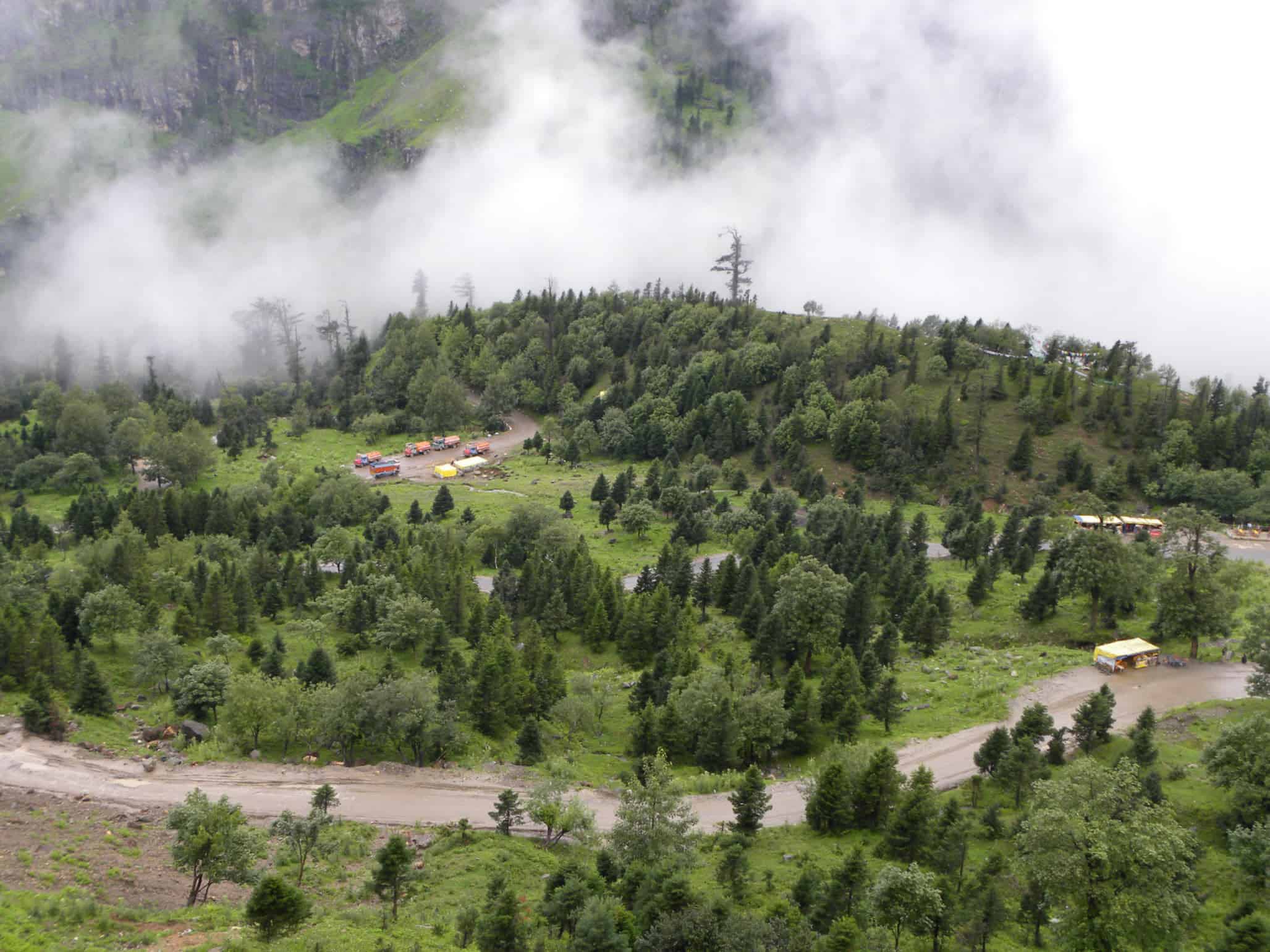
Monsoon rain in Manali does not behave like monsoon rain in Mumbai or Delhi. It rarely rains continuously for twelve hours. You usually get a heavy spell in the late afternoon or overnight, a misty morning, then a few genuinely clear hours where the valley looks washed and lit up. The dust is gone, the deodar forests are dark green, and the waterfalls on the Rohtang road run at full strength.
Now, the numbers that matter. As per the India Meteorological Department press release dated 1 July 2026, the Southwest Monsoon covered the entire state that day, with a warning of heavy to very heavy rainfall over parts of Himachal for the following four to five days. Hence, the rains arrived on schedule and the season is fully active as I write this.
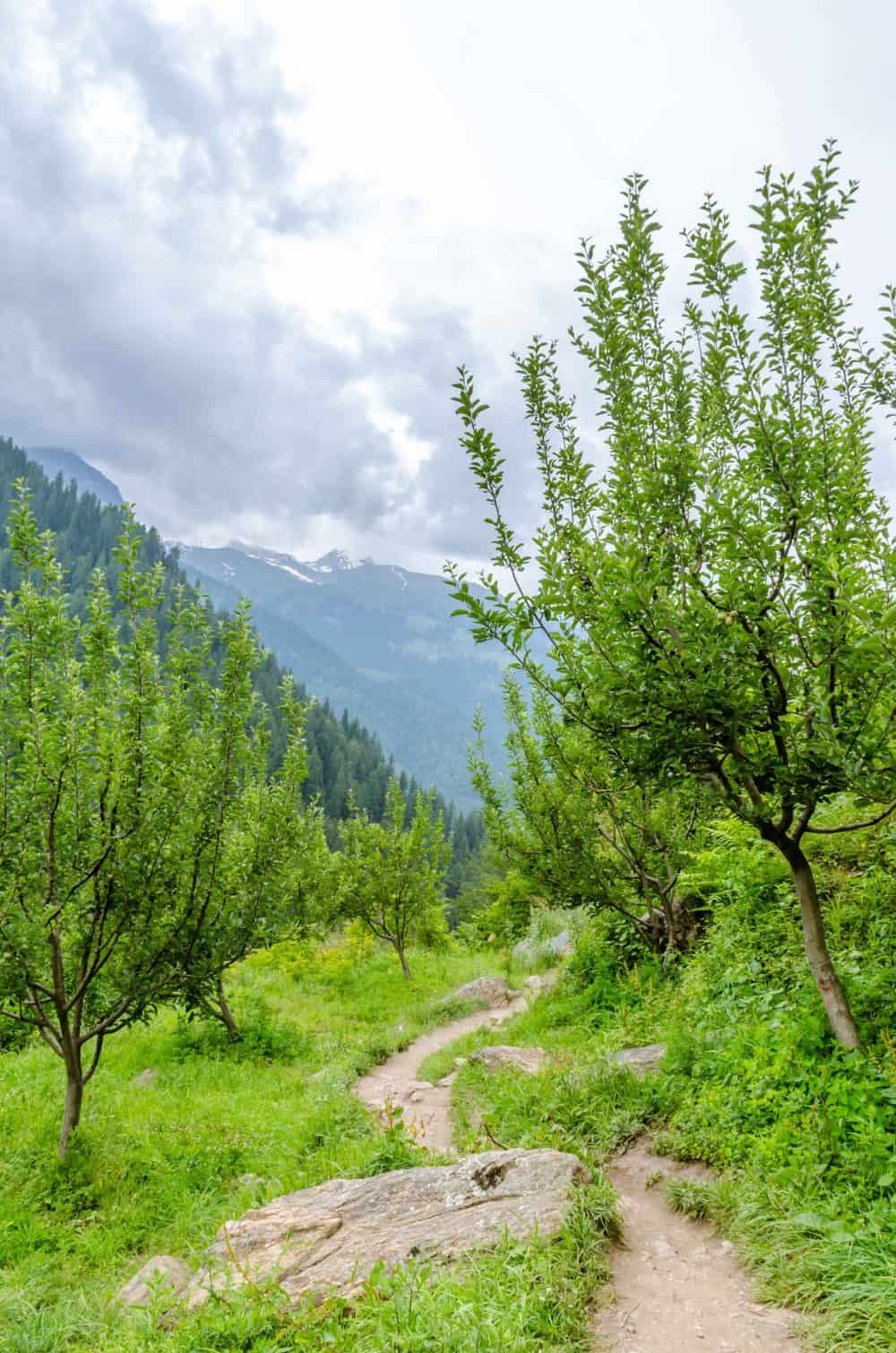
Manali sits at about 6,700 Ft, so July and August highs sit in the high teens to mid twenties, with nights around 12 to 15 degrees. You want a light fleece, not a down jacket. Humidity is the real annoyance, my friend. Clothes do not dry and shoes stay damp, so ask for an upper-floor room facing open sky.
Is Manali Safe to Visit in Monsoon 2026?
Quick Answer: Manali town itself is reasonably safe. The risk lies almost entirely on the roads and along riverbanks. As per Himachal Pradesh State Disaster Management Authority figures reported during the 2025 season, road accidents accounted for nearly half of all monsoon fatalities in the state, which changes what you should worry about.
Most articles just say “landslides, be careful”. The data tells a more useful story. Figures from the Himachal Pradesh State Disaster Management Authority, reported in the press through the 2025 monsoon, put that season’s toll at 451 deaths statewide. A mid-season bulletin counted 306 deaths from 20 June 2025 onward, and here is the detail almost nobody quotes: 155 were rain-related and 148 were road accidents.
Where the 2026 season stands as of 30 July 2026: this is an active monsoon, not a theoretical one. On 27 July 2026, the Himachal Pradesh government publicly urged residents and tourists to avoid unnecessary travel during adverse weather and to follow weather advisories strictly, as the state continued dealing with widespread rain-related damage. National media reporting through that week described heavy to extremely heavy rain across parts of Himachal blocking highways, damaging bridges, uprooting trees and forcing school closures, with fresh landslides reported around 28 July 2026. IMD has issued repeated district-level alerts covering Kullu through the month. So if you are reading this in the first half of August 2026 and asking whether to go, my honest answer is to postpone if you possibly can.
Why does that matter? It reframes the risk. Your realistic danger is not a boulder landing on your hotel. It is a night drive on a wet single-lane road, or a driver pushing to make up time after a two-hour road block. Hence, the highest-value safety decision you can make is boring: do not drive in the hills after dark during monsoon, and do not let your taxi driver do it either. Start early, stop early.
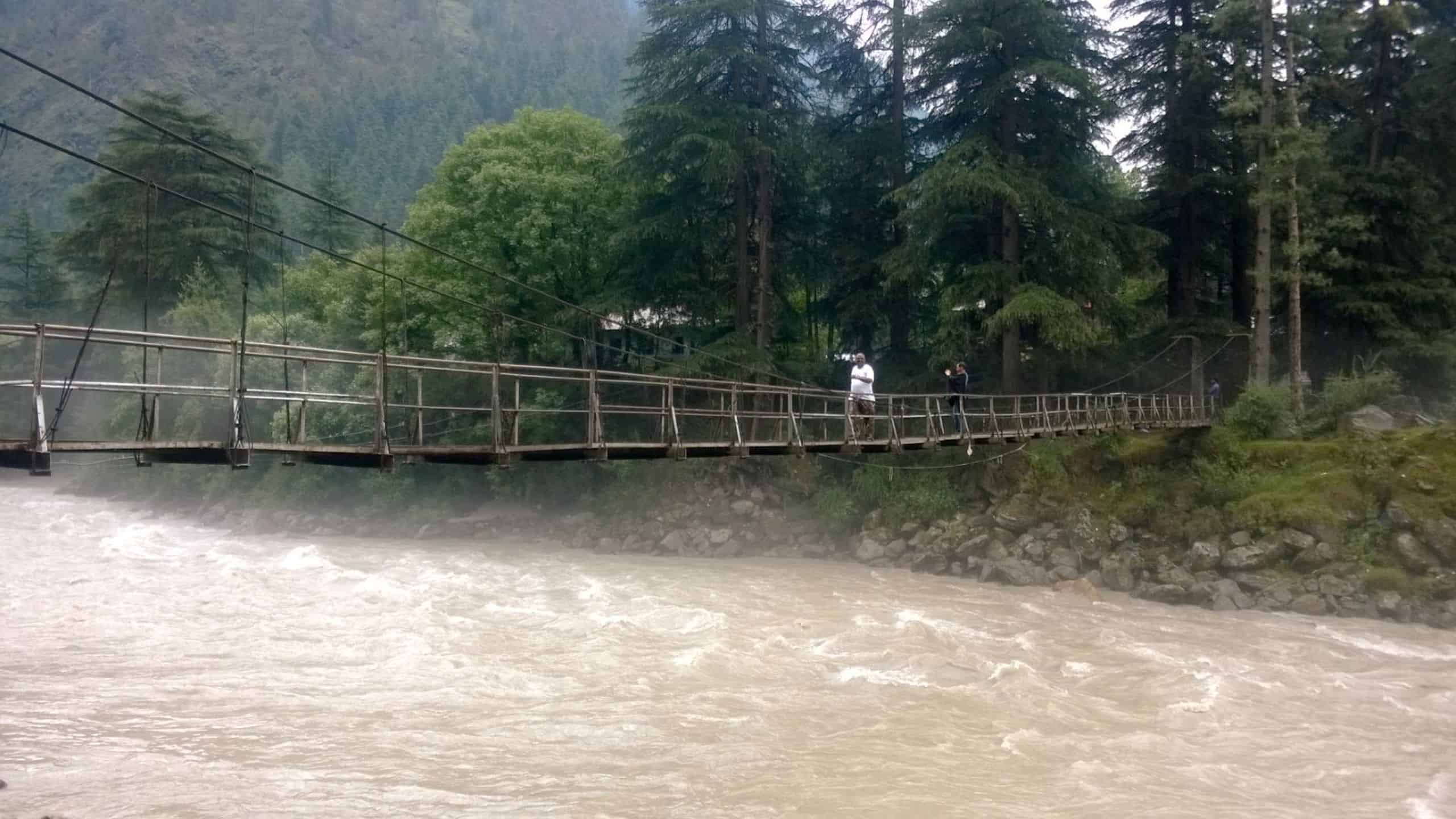
The second real risk is riverbanks. The Beas swells violently in these months and the volume can change within minutes after heavy rain upstream. Every season there are avoidable deaths of tourists who walked onto a rock bar in the riverbed for a photograph. Please take a sensible call for yourself and your loved ones waiting for your safe return, and do not camp on a riverbed or nallah bed however flat it looks.
Third, keep in mind that mobile network and power both get patchy in heavy spells. Carry a power bank and download offline maps. In case you are heading to a side valley, get the homestay owner’s number in advance and confirm the approach road is open on the morning of travel.
Which Roads and Stretches Should You Avoid in Monsoon?
Quick Answer: The vulnerable stretches are the Mandi to Kullu highway along the Beas, and the old Rohtang Pass road above Gulaba. The Atal Tunnel corridor is the most reliable high-altitude option because the 9.02 km tunnel removes the pass crossing.


The Delhi to Manali Highway
The stretch that causes almost all the trouble is between Mandi and Kullu, where the highway runs tight along the Beas through Pandoh and Aut. This is where slope failures shut traffic for hours, occasionally days. That is why I have long suggested caution about late July and August travel in my complete Manali travel guide. Everything below Mandi is tame, and delays there are traffic, not geology.
The Rohtang Pass Road vs the Atal Tunnel
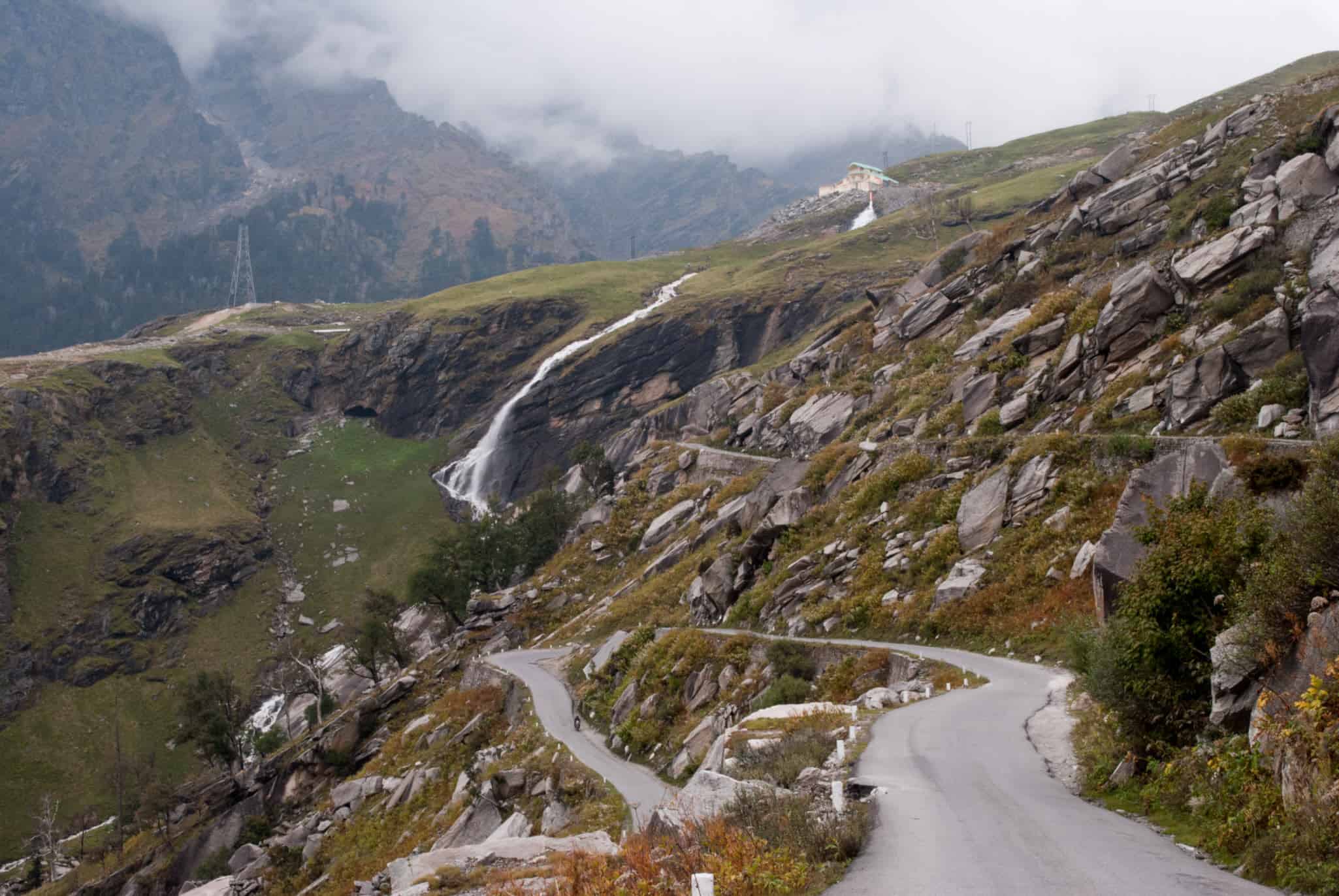
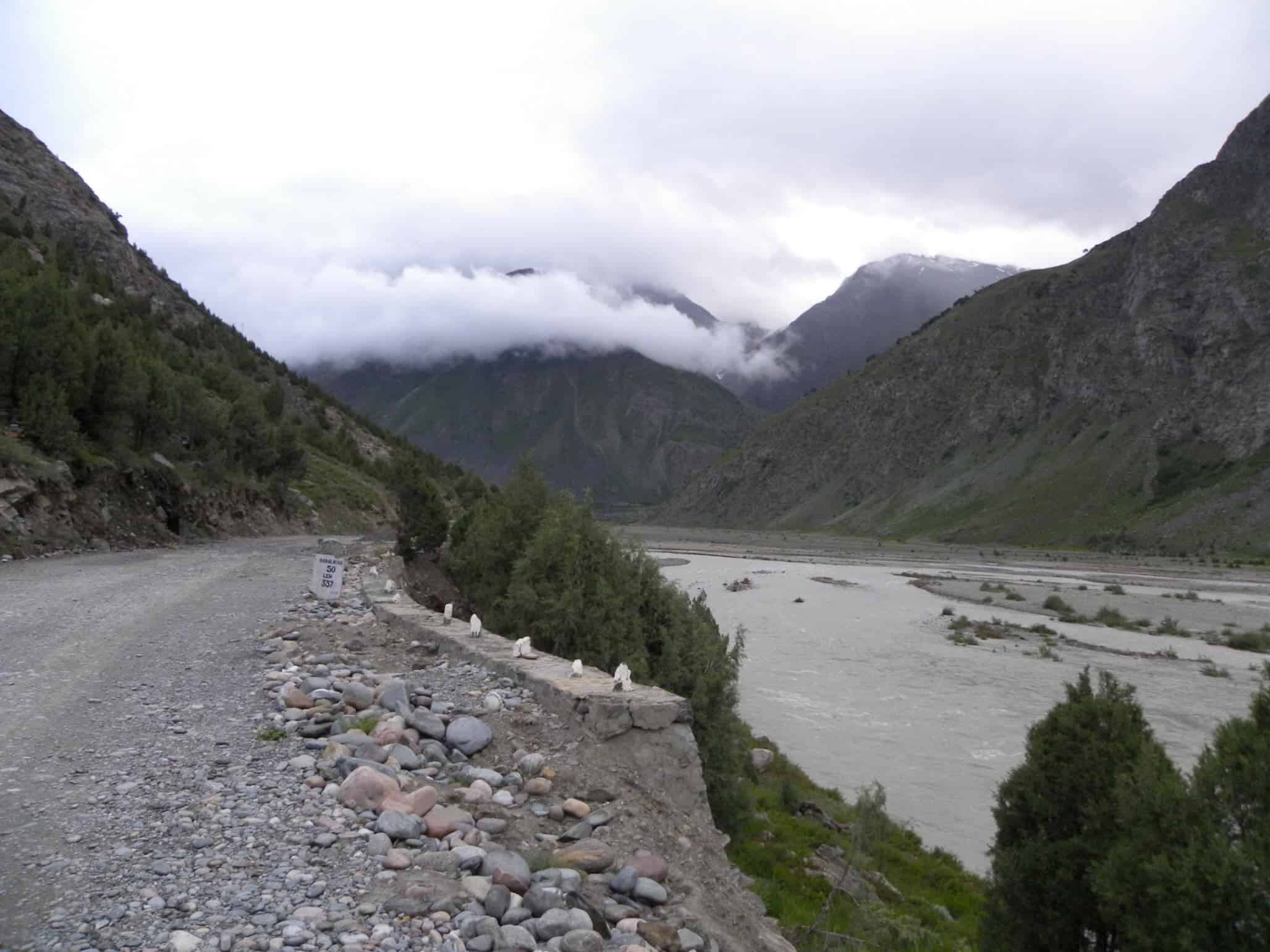
This is the distinction that matters most and that generic guides miss. The old Rohtang Pass road climbs from Manali through Kothi, Gulaba and Marhi to the pass at over 13,000 Ft. It is a cut road on steep, loose, water-fed slopes, exactly the kind of surface that gives way in monsoon. Above Gulaba it turns to slush, water crosses the road at multiple points, and single-lane sections mean one stuck truck holds up everyone for hours. You also need a permit beyond Gulaba, covered in my Rohtang Pass permit guide. In monsoon I would simply not plan a Rohtang day trip. There is little to see in the cloud anyway.

The Atal Tunnel is a different story. As per its published specifications, it is a 9.02 km all-weather tunnel on NH-3 connecting Manali to Keylong while bypassing Rohtang Pass completely, which takes the most weather-dependent element out of the journey. That does not make the corridor immune, and the Manali-side approach around Solang and Dhundi has been blocked by floods in past seasons. But as a route choice it is far more dependable than the pass.
Monsoon Route Risk at a Glance
| Route | Monsoon Risk | My Verdict |
|---|---|---|
| Chandigarh to Mandi | Low | Go, delays are traffic only |
| Mandi to Kullu (Pandoh, Aut) | High | Unavoidable, cross in daylight, keep buffer days |
| Kullu to Manali | Low to moderate | Generally fine |
| Manali to Solang and Dhundi | Moderate | Check status the same morning |
| Manali to Lahaul via Atal Tunnel | Moderate | Best high-altitude option, verify status |
| Manali to Rohtang Pass (old road) | Very high | Skip it this season |
| Manali to Kaza via Kunzum | Very high | Skip it, the worst monsoon call |
| Parvati Valley (Kasol, Manikaran) | Moderate | Fine, but stay off the riverbed |
On Spiti I want to be firm. The Manali to Kaza road over Kunzum La involves multiple unbridged nallah crossings that swell through the day. I have written separately about what a Spiti trip in the monsoons involves, and it suits people with flexible dates and real experience. Do not bolt it onto a 4-day Manali plan in August.
Which Treks Still Work in Manali During Monsoon?
Quick Answer: Bhrigu Lake is the standout monsoon trek because its meadows are at their greenest with wildflowers in full bloom in July and August. Kheerganga works well as a lower-altitude forest walk. Beas Kund is the one I would skip in August because of slippery boulder fields and swollen stream crossings.
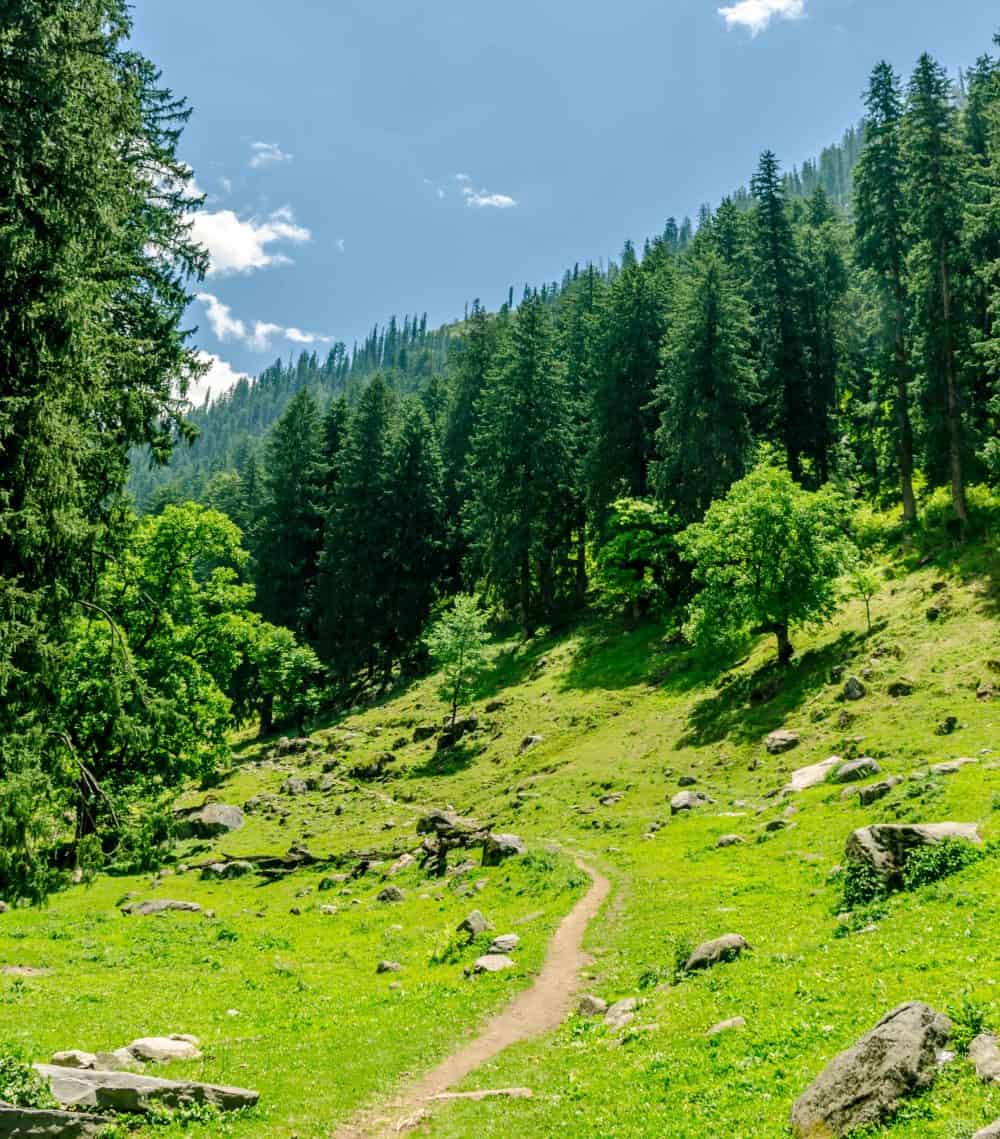
Here is where monsoon genuinely beats peak season. The meadows above Manali are green only because of these rains. Trek in October and you get clear views over dry brown grass. Trek in late July and you get cloud, drizzle, and grazing grounds carpeted in wildflowers. Both are good, just different. Let us go trek by trek, because a blanket answer is useless here.
Bhrigu Lake: Yes, This Is the One
Bhrigu Lake sits at 14,100 Ft and the trek runs about 25 km round trip over 3 to 4 days, starting at Gulaba, 22 km out on the Rohtang road. July and August are precisely when the meadows at Rola Kholi and above are greenest and the wildflowers are in full bloom. Yes, you will get rained on, and the lake often stays hidden in cloud until you are almost upon it. That is the trade.
Two monsoon notes. The descent towards Pandu Ropa and Vashisht is slippery, so trekking poles stop being optional. And you climb from 10,500 Ft at Gulaba to 14,100 Ft in two days, so do read up on preventing acute mountain sickness. The day-by-day route, campsites and operator rates are in my Bhrigu Lake trek guide.
Beas Kund: I Would Skip It in August
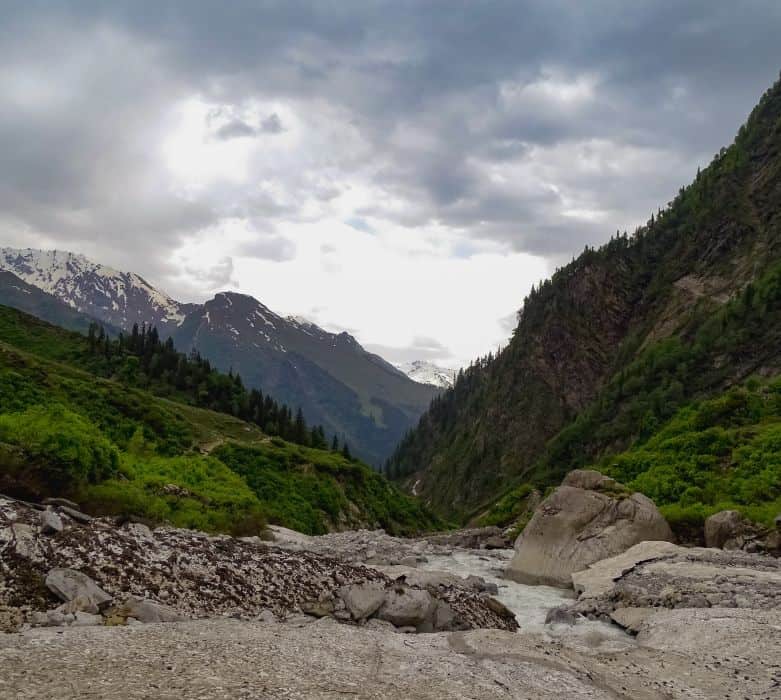
I am going to contradict the popular framing here. Beas Kund is a lovely beginner trek, 16 km round trip from Dhundi to a glacial lake at 12,772 Ft. But the section from Bakarthach up to the lake crosses boulder fields, and monsoon turns those rocks treacherous while the stream crossings swell. My Beas Kund trek guide specifically advises avoiding August and early September, and I will not soften that just because this article makes a case for monsoon travel. Early July with a guide is defensible. Peak August is not.
Kheerganga and the Parvati Valley: Yes, With Care
The Kheerganga trek is a good monsoon choice because it stays low, runs through forest rather than exposed ground, and ends at hot springs. The trail is slippery and the leeches are real, so wear proper shoes and long socks. Malana village and the Kasol side are also visitable, and the Kasol and Manikaran run is a low-commitment day. Just remember the riverbank rule.
Hampta Pass: Only With Buffer Days
The Hampta Pass trek is popular in these months because it crosses from the green Kullu side into dry Lahaul. It is doable, but the pass crossing day in bad weather is not something to attempt casually, and your exit depends on Lahaul road status. Go with a reputable operator and keep spare days. In case you want something gentler, my easy Himachal treks for beginners list has lower-commitment options.
Should You Escape to Lahaul Through the Atal Tunnel?
Quick Answer: Yes, this is the smartest monsoon move from Manali. Lahaul sits in the rain shadow beyond the Pir Panjal, so driving through the Atal Tunnel can take you from heavy cloud to open sky in under half an hour. Keep in mind that the 2026 outlook for Lahaul-Spiti is normal to above normal rainfall, so the rain shadow is less pronounced this year.
This is my favourite thing about being based in Manali during monsoon, and almost no article mentions it. The Pir Panjal acts as a wall. Most moisture coming up from the plains dumps on the Kullu side and little makes it across. Hence, on a day when Manali is grey and dripping, Sissu and Keylong can be sunny with open skies.
Practically, keep Manali as your base, watch the weather each morning, and on the worst Kullu-side days drive through the tunnel. Sissu suits an easy outing, Keylong or Jispa an overnight. The spots worth your time are in 10 beautiful places to visit in Lahaul Valley from Manali. That flexibility turns an uncertain monsoon trip into a workable one.
Two caveats. The rain shadow is a tendency, not a guarantee, and the 2026 outlook for Lahaul-Spiti is normal to above normal rainfall, so the gap between the two sides is smaller this year. Also, the road beyond the tunnel is still a mountain road. Confirm tunnel and road status on the morning you travel.
How Much Cheaper Is Manali in Monsoon?
Quick Answer: Rooms typically drop 30 to 50 percent from peak-season rates, and HPTDC runs an official off-season discount of 30 percent on its properties. A 4 day, 3 night trip from Delhi works out to roughly Rs 6,700 to Rs 10,800 per person, or about Rs 1,700 to Rs 2,700 per day.
The money side is the least discussed and most concrete advantage of monsoon travel. Manali in May and June is expensive and crowded. In late July and August, hotels sit empty and rates become negotiable in a way they are not in peak season. I once got a room at a Mall Road property that normally quotes several thousand for Rs 1,500 in deep off-season. Rates have gone UP since, my friend, but the pattern holds.
There is also an official discount worth knowing. HPTDC runs a formal off-season period during monsoon and winter with a 30 percent discount on its services, which you can check on the Himachal Pradesh Tourism site. HRTC runs the Delhi to Manali service year round, and seats are easy in these months.

Monsoon Budget Breakdown, 4 Days and 3 Nights (Per Person)
| Expense | Cost (per person) |
|---|---|
| Delhi to Manali return (HRTC Volvo or Semi-Deluxe, Rs 1,200 to Rs 1,500 each way) | Rs 2,400 to Rs 3,000 |
| Accommodation, 3 nights (Old Manali or Vashisht guesthouse, Rs 500 to Rs 1,000 a night) | Rs 1,500 to Rs 3,000 |
| Food, 4 days (dhabas, Rs 400 to Rs 600 a day) | Rs 1,600 to Rs 2,400 |
| Local transport and sightseeing (Solang, Vashisht, Naggar) | Rs 500 to Rs 1,000 |
| Monsoon buffer for one rain-forced extra night | Rs 700 to Rs 1,400 |
| Total | Rs 6,700 to Rs 10,800 |
| Optional: guided Bhrigu Lake trek | Rs 4,000 to Rs 8,000 |
| Total with the trek | Rs 10,700 to Rs 18,800 |
That is roughly Rs 1,700 to Rs 2,700 per day without the trek. Do the math for your own group, and keep in mind that splitting taxi costs among 4 changes the local transport line considerably. These are off-season ranges as of July 2026. Please verify current fares and room rates when booking, since monsoon pricing moves with occupancy.
That buffer line is not padding. It is the most useful thing you can add to a monsoon budget. If the Mandi-Kullu stretch shuts for a day, you will need an unplanned night and meals, and having that money accounted for keeps a road block from becoming a crisis.
What Should You Pack for Manali in Monsoon?
Quick Answer: A proper rain jacket rather than a poncho, a dry bag for electronics, quick-dry clothing, two pairs of footwear so one is always drying, and a power bank. Umbrellas are useless in hill wind.
- Rain jacket with a hood, not an umbrella. Wind on ridges makes umbrellas pointless.
- Rain cover for your backpack, plus bin liners inside. Rain covers leak at the seams.
- A dry bag or zip pouches for phone, power bank, documents and cash.
- Two pairs of footwear. Trekking shoes with grip, plus sandals while they dry.
- Quick-dry trousers and tops. Avoid cotton denim, it stays wet for two days.
- Long socks or gaiters for Parvati Valley forests. Leeches are common.
- Light fleece for evenings and for altitude on treks.
- Trekking poles for Bhrigu Lake or any descent. Non-negotiable on wet trails.
- Power bank and offline maps downloaded before you leave.
- Basic medical kit including something for stomach upsets.
In case you want your packing genuinely tight, here is how to pack your backpack properly.
Who Should Visit Manali in Monsoon and Who Should Not?
Quick Answer: Go if you have flexible dates, are traveling on a budget, want green trekking meadows, or dislike crowds. Do not go if your leave is rigid, you have a flight on a fixed date, you are traveling with very young children or elderly parents, or your plan depends on one specific sightseeing spot.
| Traveler | Verdict | Why |
|---|---|---|
| Trekker after green meadows | Go | Bhrigu Lake meadows peak exactly now |
| Budget backpacker | Go | Cheapest rooms of the year |
| Photographer | Go | Cloud, mist, waterfalls, no dust |
| Couple wanting a quiet valley | Go | Empty hotels, negotiable rates |
| Traveler with 2 buffer days | Go | You can absorb a closure |
| Traveler with rigid leave dates | Do not go | One road block can eat your whole trip |
| Family with toddlers or elderly parents | Do not go | Long unplanned road halts are hard |
| First-timer wanting Rohtang and Spiti | Do not go | Exactly the things that shut down |
| Anyone flying out on a fixed date | Do not go | Bhuntar flights get cancelled |
Within the season, the windows matter. The first two weeks of July, before the rains settle in, are usually manageable and the valley is already green. Roughly 20 July through end-August is the most disruption-prone stretch, the one I would avoid without spare days. From mid-September you get green slopes plus clearing skies, and that fortnight is quietly the best value of the Himachal year.
Related Reading for Planning Your Trip
- Manali Trip: A Complete Travel Guide, for itinerary, hotels and transport
- Bhrigu Lake Trek Guide, the best monsoon trek here
- Kothi and Solang Valley Guide, for short trips
- Naggar Castle, a heritage stay away from the Manali crowd
- Manali in Winters, in case you shift your trip instead
- 10 Tips for a Trip to Ladakh in Monsoons, if heading further north
Frequently Asked Questions About Manali in Monsoon
Is it safe to travel to Manali in July?
Manali town is reasonably safe in July. The risk is concentrated on the roads, particularly the Mandi to Kullu stretch, and along the Beas riverbanks. As per HP State Disaster Management Authority figures reported during the 2025 season, road accidents accounted for nearly half of monsoon fatalities in the state. Hence, avoid night driving, keep buffer days and stay away from the riverbed.
Is Manali worth visiting in monsoon?
Yes, if you have flexible dates. The valley is at its greenest, waterfalls are full, crowds are thin and rooms cost 30 to 50 percent less. It is not worth it if your leave dates are rigid, because a single road closure can consume a day or two of a short trip.
Which weeks are the worst for a Manali trip in monsoon?
Roughly 20 July through the end of August is the heaviest and most disruption-prone stretch. The first two weeks of July and the period from mid-September onward are considerably more manageable while still giving you the green valley.
Is the Atal Tunnel open during monsoon?
The Atal Tunnel is a 9.02 km all-weather tunnel on NH-3 and generally stays open through monsoon, which is why it is a more reliable route to Lahaul than the old Rohtang Pass road. That said, the Manali-side approach near Solang and Dhundi can get blocked by slides or flooding. Confirm status on the morning you plan to travel.
Can you trek near Manali during monsoon?
Yes. Bhrigu Lake is the standout choice because its meadows at 14,100 Ft are greenest with wildflowers in bloom in July and August. Kheerganga works well as a lower forest trek. I would avoid Beas Kund in August because the boulder sections and stream crossings become genuinely difficult.
Are Manali hotels cheaper in monsoon?
Considerably. Expect 30 to 50 percent off peak-season rates, and HPTDC runs a formal off-season discount of 30 percent on its properties. Budget guesthouses and hostels in Old Manali and Vashisht typically go for Rs 500 to Rs 1,000 a night in these months.
Should I plan Rohtang Pass or Spiti from Manali in monsoon?
No, I would skip both. The old Rohtang Pass road above Gulaba sits on loose water-fed slopes and turns to slush, and there is little to see through the cloud. The Manali to Kaza road over Kunzum La involves unbridged nallah crossings that swell through the day. Use the Atal Tunnel for a Lahaul day trip instead.
How much does a monsoon trip to Manali cost from Delhi?
Budget roughly Rs 6,700 to Rs 10,800 per person for 4 days and 3 nights, about Rs 1,700 to Rs 2,700 a day, travelling by HRTC bus and staying in guesthouses. Adding a guided Bhrigu Lake trek takes the total to roughly Rs 10,700 to Rs 18,800.
Do I need a permit to visit Manali in monsoon?
No permit is needed for Manali town, Solang, the Parvati Valley or to drive through the Atal Tunnel. A permit is required only for the old Rohtang Pass road beyond Gulaba, which I would not recommend in monsoon anyway.
Do flights to Kullu-Manali get cancelled in monsoon?
Bhuntar (Kullu-Manali) airport sits in a narrow valley and flights there are weather-sensitive, with cancellations common in heavy monsoon. In case your dates are fixed, plan on road travel, or fly to Chandigarh which is about 300 km from Manali and far more reliable.
Final Thoughts
So, is Manali in monsoon worth visiting? It depends far less on the weather than on how rigid your calendar is. What monsoon takes away is not beauty, it is certainty. In case you can absorb a lost day without your plan collapsing, come. You will get green meadows, empty hotels and waterfalls at full strength. In case every day is spoken for, shift to mid-September and get most of the same thing with far less risk.
![How to tackle water-crossings on Ladakh Bike Trip / Spiti Valley Bike Trip? [20 Important Tips]](https://discoverwithdheeraj.com/yt_vid_thumbs/ladakh/82.png)
If I were planning it myself right now, I would base in Manali, keep the Rohtang road and Spiti off the list, book the Bhrigu Lake trek for the meadows, and hold one flexible day to slip through the Atal Tunnel into Lahaul whenever the Kullu side turned grey. That plan works in monsoon in a way a packed itinerary does not.
Conditions change day to day and it is barely possible for one person to keep every stretch updated in real time, so please do verify current road status, fares and room rates before you set out. In case you have travelled to Manali during the rains and have observations to add, especially about specific stretches or homestays that handled the weather well, please share them so other travelers benefit. Do share this article with friends and family planning a monsoon trip, and for finding travel partners, do go through the DwD Community.
If you have any questions, feel free to ask in the comments section below 🙂
