


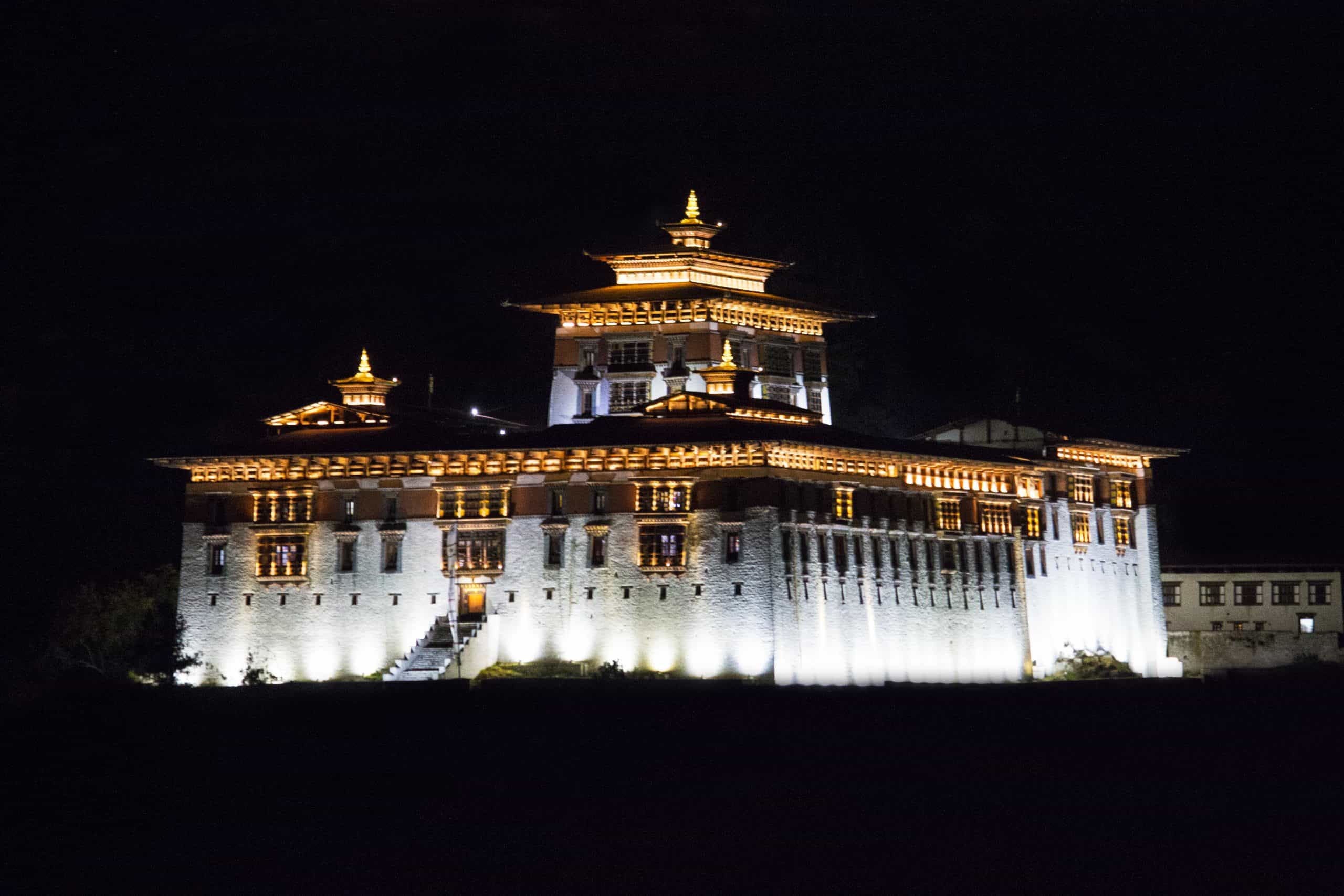
Bhutan is a nation that values happiness above all else. There is something genuinely special about the Land of the Thunder Dragon, a country that embraces you completely with its simple yet stunning ways. The Himalayan views, the wholesome climate, the welcoming culture, it all adds up to an experience that stays with you long after you return home.
While this might sound like a cliche, Bhutan is gorgeous in the purest of ways. It is offbeat enough to make you feel like you have stepped into a different era altogether. Yet, the key steps the country has taken make it far more progressive than most places in the world. From being the world’s only carbon-negative nation to measuring success by Gross National Happiness instead of GDP, Bhutan does things differently.
Last Updated: April 2026
Let's quickly dive into the details:
What Makes Bhutan Special? Quick Facts About the Happiness Nation
Bhutan is the only country in the world that measures its success through Gross National Happiness (GNH) rather than Gross Domestic Product. It is also the world’s only carbon-negative country, absorbing more CO2 than it produces. The constitution mandates that at least 60% of the land must remain under forest cover at all times, and currently about 72% of the country is forested.
Because of the violent and large thunderstorms that sweep down through the valleys from the Himalayas, Bhutan is known as the Land of the Thunder Dragon. The Druk (Thunder Dragon) is the central figure of Bhutanese mythology and appears on the national flag. People believe the sparkling light of thunderbolts represents the red fire of a Dragon.
Geography
Bhutan is a landlocked country in Asia, sandwiched between India and Tibet (China). With a total area of about 38,394 sq km and a population of roughly 7.8 lakh people, it is one of the smallest nations in Asia. Gangkhar Puensum, the highest peak in the country, towers at 24,840 ft above sea level and remains the highest unclimbed mountain in the world. Despite significant improvements in transport infrastructure, travel between regions can still be slow due to the winding mountain roads.
Mountains
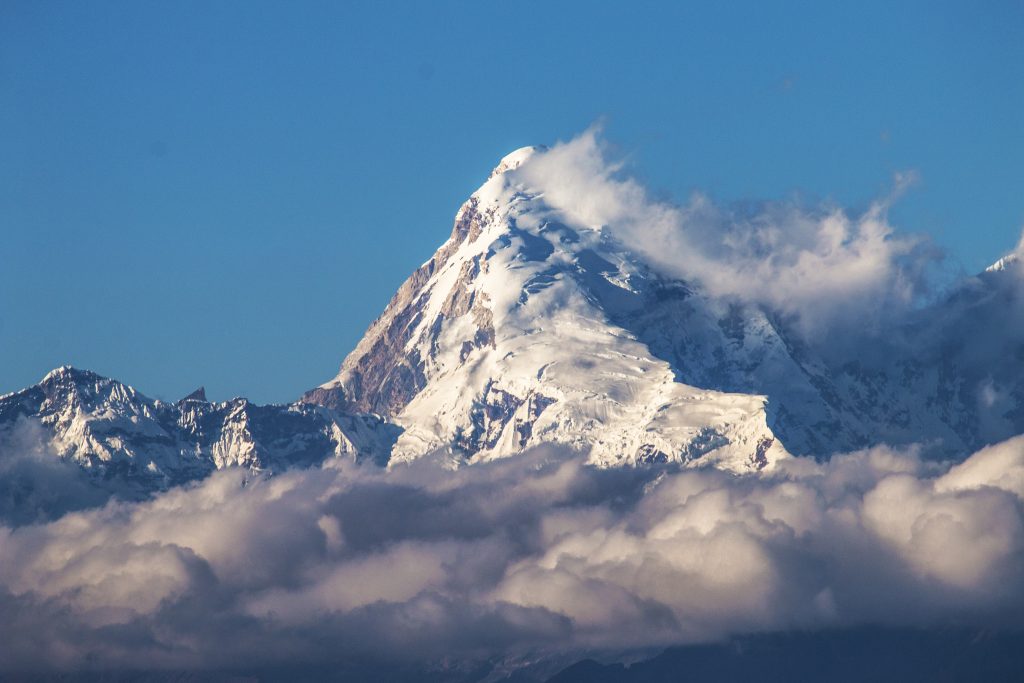
There are many prominent Himalayan peaks in Bhutan with some of the most rugged mountain terrains you will find anywhere. The mountains of Bhutan define its three main geographic zones: the Great Himalaya, the Lower Himalayan Range (Inner Himalaya), and the Sub-Himalayan Range.
The snow-capped Great Himalaya in the north ranges from about 18,000 ft to peaks of over 24,600 ft above sea level, extending along the Bhutan-China border. The northern region consists of an arc of glaciated mountain peaks with harsh alpine conditions at the highest elevations.
Also Read: Check out this complete travel guide for Eastern Bhutan if you want to explore the offbeat side of the country.
Valleys
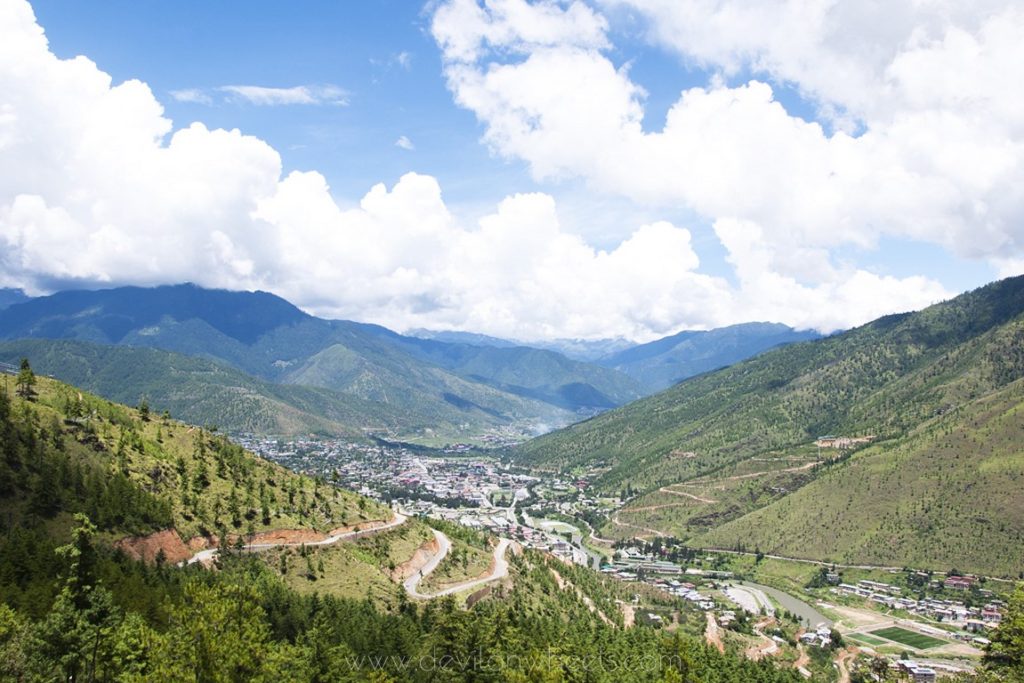
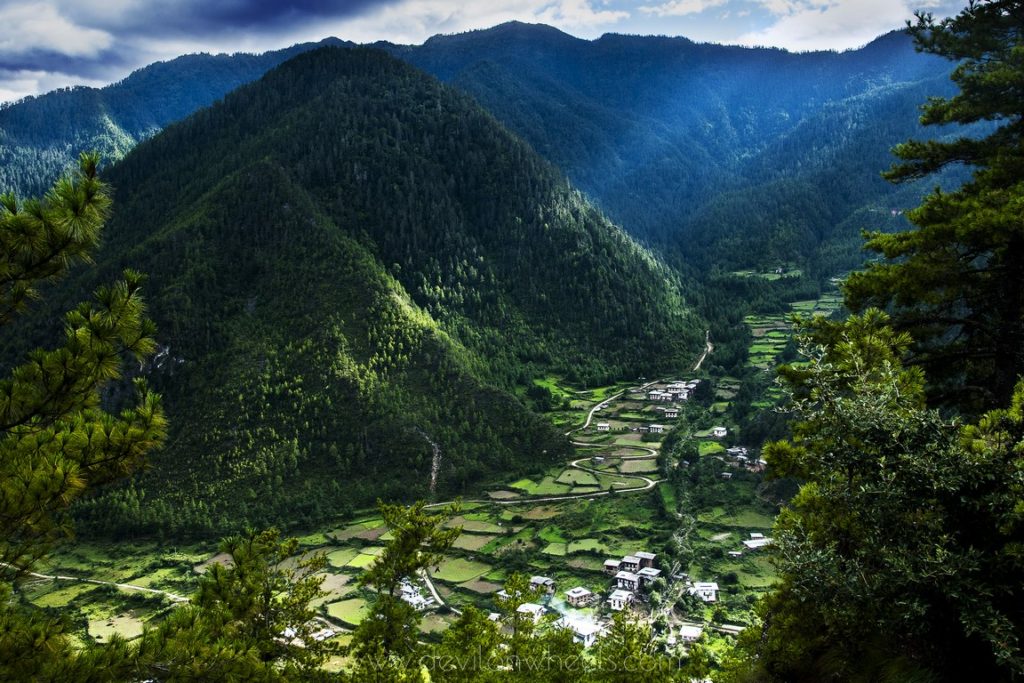
Bhutan’s valleys are carved into the Himalaya by its rivers, fed by glacial melt and monsoon rains. Much of the Bhutanese population is concentrated in these valleys and lowlands, separated by the rugged southward spurs of the Inner Himalaya. The major valleys include Paro, Thimphu, Punakha, Bumthang, and Haa, each with its own distinct character and microclimate.
The Flag of Bhutan
Even the flag of the country has many stories to tell. The Yellow half symbolizes the power of the King. The Orange is associated with the Kagyupa and Nyingmapa Buddhist sects, signifying the religious commitment of the nation.
The Dragon is the Druk, the Thunder Dragon of Bhutanese mythology. The White color represents purity of thoughts and inner deeds. In its claws, the dragon grasps four jewels symbolizing wealth and security.
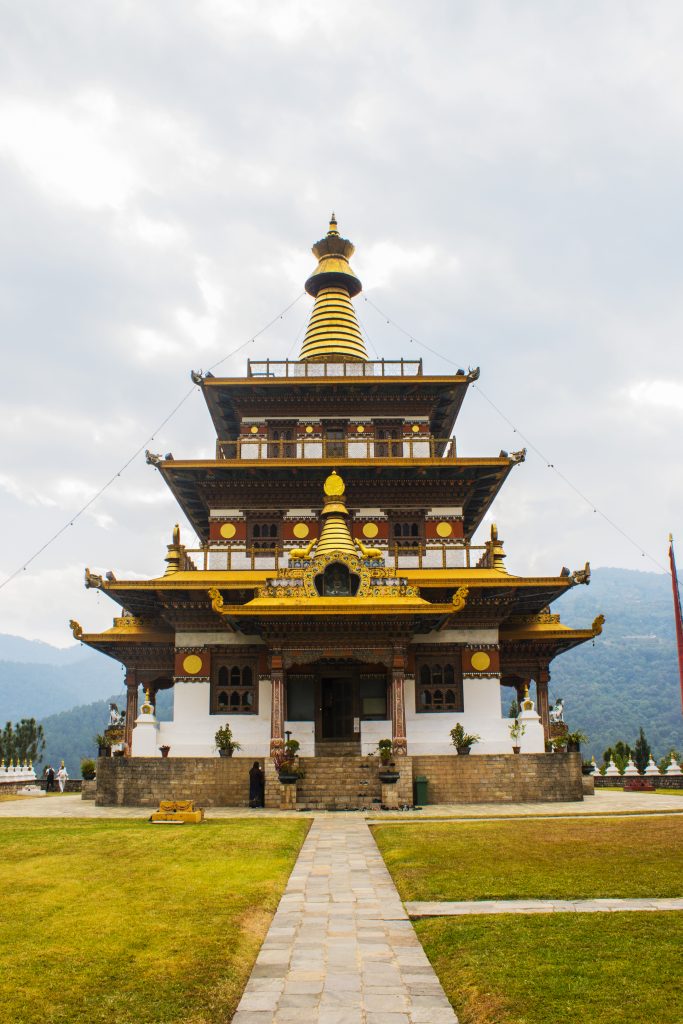
History of Bhutan
The earlier history of Bhutan is immersed in mythology and remains quite ambiguous. Not much is known about the region prior to the introduction of Tibetan Buddhism in the 9th Century.
The country’s political and religious history remains deeply intertwined, and Bhutan is one of the very few places that has never been conquered, colonized, or governed by a foreign power.
The Kings of Bhutan have consistently worked toward improving the quality of life for their people. When the country decided to transition to a constitutional monarchy in 2008, the draft of the constitution was circulated to every citizen for feedback. Per the Constitution, the monarchy retains a leadership role in setting direction for the government as long as the King demonstrates commitment to safeguarding the interests of the kingdom and its people.
Also Read: Do not miss this travel guide for hiking to Tiger’s Nest Monastery in Bhutan. It is one of the most iconic experiences in the country.
Why Should You Visit Bhutan in 2026?
With one foot firmly in the past and the other balancing modernity, Bhutan is a case study in mindful progress. This is one country that embraces the modern era but remains sharply aware of the downsides of rapid modernization.
Sustainable socio-economic development, safeguarding of culture and tradition, and preservation of its natural environment are at the forefront of government policy. The government’s “high value, low volume” tourism approach is a prime example of how Bhutan balances foreign engagement with cultural preservation.
As of 2026, the Sustainable Development Fee (SDF) system means that a significant portion of every tourist’s spending goes directly toward free education, free healthcare, and environmental conservation. So when you visit Bhutan, you are genuinely contributing to the country’s well-being.


Combine that sense of purpose with the stunning monasteries, the vibrant festivals (especially the Tsechus), the ancient dzongs, and the sheer natural beauty, and you have a destination unlike any other. The cuisine is unique too, with ema datshi (chili cheese) being the national dish that you will either love or struggle with. Either way, it makes for a great story 🙂
What is the Best Time to Visit Bhutan?
The weather in Bhutan follows the Himalayan pattern. Spring brings rhododendron blooms, summer brings monsoon rains and landslides, autumn offers clear skies, and winter can be bitterly cold at higher elevations.
While March to May is among the most popular times to visit Bhutan, for me, October to December is the best window, with clear air and sunny skies. January to February is the coldest period and might limit your explorations. Keep in mind that you can spot the rare black-necked cranes in the Phobjikha Valley between late October and mid-February, so that is a special reason to visit during this window.
If you are budget-conscious, the monsoon months (June to August) and deep winter (December to February) are considered low season. You will find better hotel deals during these months, though roads may be affected by rain in summer.
How Can You Reach Bhutan from India?
You have multiple options to reach Bhutan from India. You can make a road trip, take a flight, or combine rail and road. Let me break down each option for you.
By Air
Flying from India to Bhutan takes about 2.5 hours. Paro International Airport is the only international airport in Bhutan, and only two Bhutanese airlines are allowed to operate here.
Druk Air and Bhutan Airlines operate regular flights from Paro to Delhi, Kolkata, Bagdogra, Bodhgaya, and Guwahati in India. International connections are available from Bangkok, Dhaka, Kathmandu, and Singapore. As of 2026, Druk Air operates daily flights on the Delhi-Paro route and four weekly flights on the Kolkata-Paro route.
Approximate round-trip fares (as of 2026): Delhi-Paro is around USD 616 (economy), Kolkata-Paro around USD 456 (economy). A 5% GST applies to all Drukair services since January 2026. Keep in mind that Indian travelers can sometimes get special fares by contacting Druk Air directly via email.
By Rail
Railways are one of the cheapest ways to reach Bhutan from India. Jaigaon is a small Indian town right on the Indo-Bhutan border. Hasimara, the nearest railway station to Jaigaon, is situated at a distance of 17 km. New Alipurduar junction (60 km) is another option with more train connectivity.
Frequent trains run from Kolkata (690 km), Delhi (1,663 km), Ranchi (749 km), and Kanpur (1,197 km). While it is a time-consuming option, it is a great way to save money, especially if you are on a tight budget.
By Road
Road is the most common way of entering Bhutan from India. Jaigaon is the closest Indian town to Bhutan, and the distance from Jaigaon to the Bhutanese border town of Phuentsholing is barely 4.3 km.
Private cabs are available between the two places at prepaid rates, and you can negotiate the fares down. If you are taking a train to Hasimara or flying to Bagdogra, cabs are readily available to take you to Phuentsholing.
Anyone can walk into the border town of Phuentsholing without any documents. However, to visit any other town in Bhutan, you will need an Entry Permit from the Immigration Office in Phuentsholing.
What are the Visa and SDF Requirements for Bhutan in 2026?
This is where things have changed significantly since the post-COVID reopening. Bhutan now operates under a revised Sustainable Development Fee (SDF) system. Here is what you need to know as of 2026.
For International Tourists (non-Indian/Bangladeshi/Maldivian)
International tourists pay USD 100 per person per night as SDF. This fee is valid through August 2027. Children aged 6-12 get a 50% discount, and children under 5 are exempt. Unlike the old system (which was USD 200-250/day and included accommodation, meals, guide, and transport), the current SDF is a separate fee. You now book accommodation, transport, and food independently, though you still need a licensed Bhutanese tour operator to process your visa.
Do Indians Need a Visa for Bhutan?
Indian nationals do NOT need a visa to enter Bhutan. This is a huge advantage for us. However, since 2020, Indians must pay an SDF of Rs 1,200 per person per night. Children aged 6-12 pay Rs 600 per night, and children under 5 are exempt.
Indians are also not required to hire a guide or book through a tour operator, which gives you complete freedom to explore the country independently. You can drive your own vehicle in, take buses, hire local taxis, and book hotels directly.
For identification, you need either a valid Indian Passport (with at least 6 months validity) or an Original Voter ID Card issued by the Election Commission of India. If you have lost both, the Indian Embassy in Thimphu can issue a citizenship slip.
What Permits Do Indians Need for Bhutan?
When visiting Bhutan, keep in mind that you require two permits: an Entry Permit and a Route Permit. The combined validity is up to 15 days from your date of arrival. These permits are available free of cost (the SDF is separate). You can also apply for permits online through immi.gov.bt, which can save you hours of waiting in queues.
Detailed Guide: For the complete step-by-step process, check this detailed guide on how to get all the necessary permits for Bhutan.
Entry Permit for Bhutan (Documents and Process)
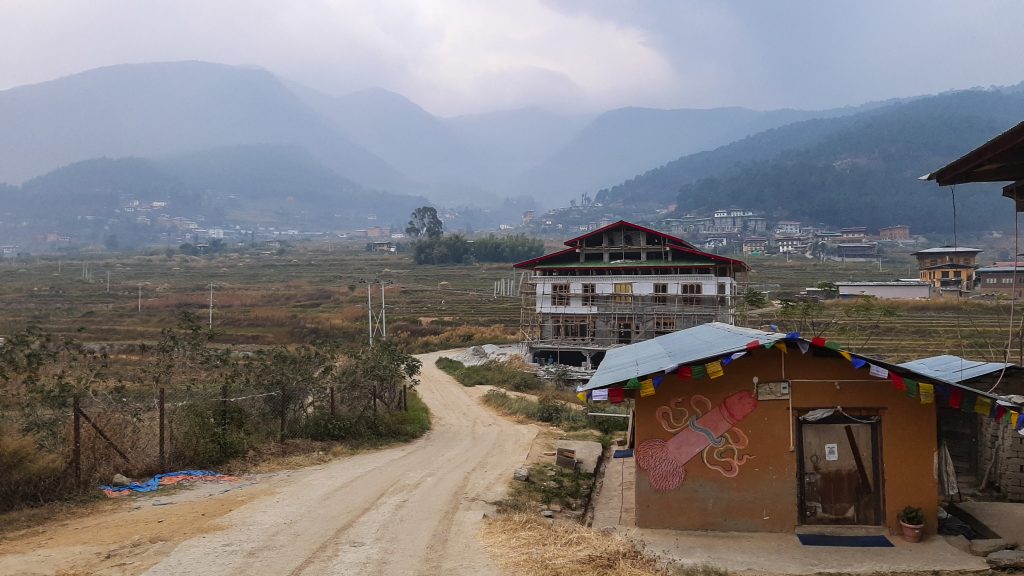
You can obtain the Entry Permit at Paro Airport or from the Immigration Office in Phuentsholing. These are the only two official entry points. The Entry Permit allows you to visit Thimphu (the capital) and Paro only, and has a validity of 7 to 10 days.
Important Note: The Immigration office is closed on Saturdays, Sundays, and Public Holidays. Permits are checked at every checkpoint in Bhutan. Working hours are strictly 9 AM to 5 PM with a lunch break from 1 PM to 2 PM.
Documents Required for Entry Permit
Fill in the entry form at the Immigration Office and attach the following documents in this sequence:
- Correctly filled Entry Permit Form
- Passport-size photo attached to the form (carry extras just in case)
- Printout of your short itinerary
- Photocopy of hotel booking for the first night
- Photocopy of Passport or Voter ID Card for all travelers
- Undertaking form (for solo travelers only)
Also Read: Check out this complete travel guide for Central Bhutan if you are planning an extended trip.
![What are tips for long-distance bike ride in Ladakh or Spiti? [10 Practical Tips]](https://discoverwithdheeraj.com/yt_vid_thumbs/ladakh/86.png)
Process if Entering via Phuentsholing
- Collect a form from the Immigration Office
- Attach all documents in the above sequence
- Stand in the queue to submit the form
- Wait in a separate queue for biometric verification
- If you submitted Voter ID instead of Passport, there is an additional verification step at a separate window
This whole procedure can take anywhere from 3 to 8 hours depending on the crowd. My strong advice is to avoid traveling on a Monday or on days following extended holidays when the Immigration office has been shut for 2 or more days. The queue on those days can be brutal. Try to be first in the queue, even if it means standing 2 hours before the office opens.
Pro Tip: If you are on a package tour with a Bhutanese Guide, the entry permit procedure can be done online by your travel agent. You only need to submit a clear scanned copy of your passport.
Process if Entering via Paro Airport
If you are flying into Paro, the process is much simpler. You just fill the Entry Form at the airport and walk out. The process is smooth and quick, usually done within 30 minutes.
Route Permit in Bhutan
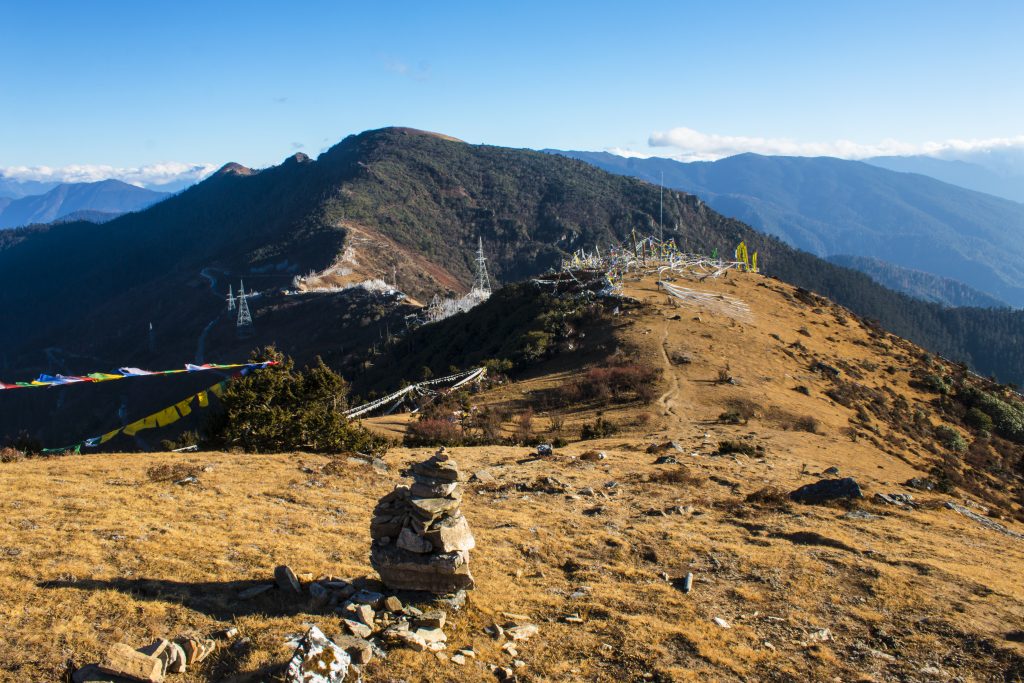
Once you have arrived in Thimphu, you will need to get a Route Permit. This permit allows you to visit all other places beyond Thimphu and Paro, including Chele La, Ha Valley, Dochu La, Punakha, Gangtey, Phobjikha Valley, Trongsa, Bumthang, and Eastern Bhutan.
Process for Route Permit
Submit the required documents (same as entry permit, plus a photocopy of your entry stamp) at the Immigration Office in Thimphu. Come back after about an hour to collect it. The whole process typically takes up to 2 hours.
Extension Permit (If Staying Longer Than 10 Days)
If you are planning to stay longer than 7-10 days (and you absolutely should if you can), you will need an extension. Visit the Immigration Office in Thimphu with these documents:
- Correctly filled Route Permit Form
- Photocopy of your itinerary
- Photocopy of the entry stamp
- Original and photocopy of Passport or Voter ID Card
- Extension form with a photocopy of taxi driver’s license or bus ticket if traveling by public transport
The maximum combined duration for Entry + Route + Extension is 15 days from the day of arrival. Submit the extension form with correct documents, come back after an hour to collect it, and then stand in the queue for the route permit.
What are the Most Common Itineraries for Bhutan?
I have detailed itineraries available separately. In case you want a comprehensive day-by-day plan, check out this perfect itinerary for a Bhutan road trip. However, here are the most common itinerary templates that travelers follow.
7 Nights / 8 Days via Air (Relaxed Pace)
Day 1: Arrive at Paro Airport and drive to Thimphu. Rest and acclimatize.
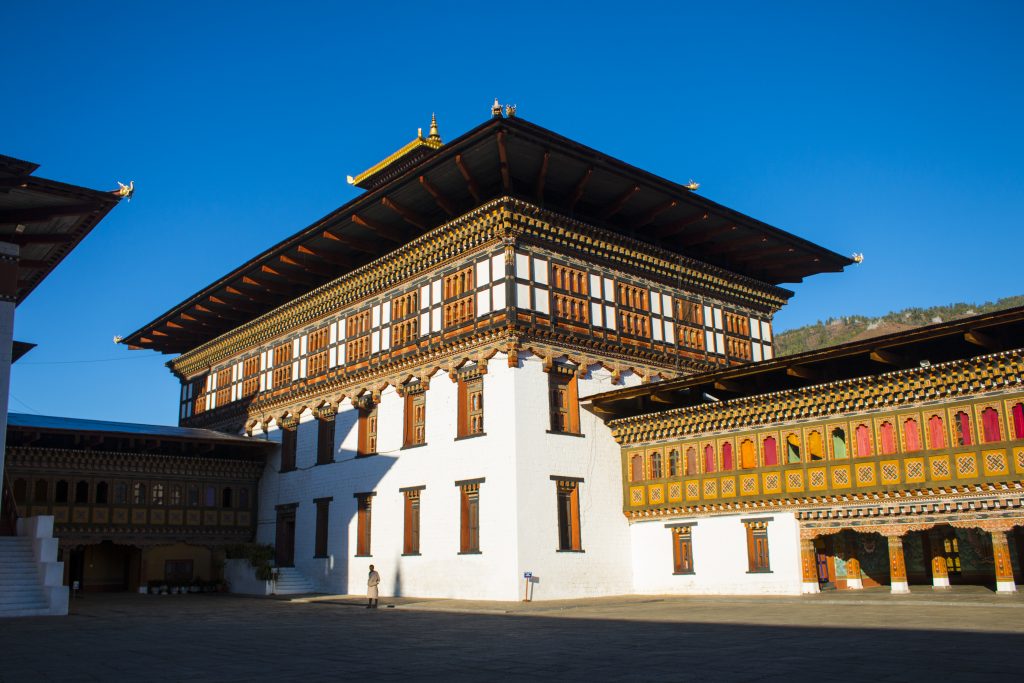
Day 2: Thimphu local sightseeing (Tashichho Dzong, Buddha Point, Memorial Chorten)
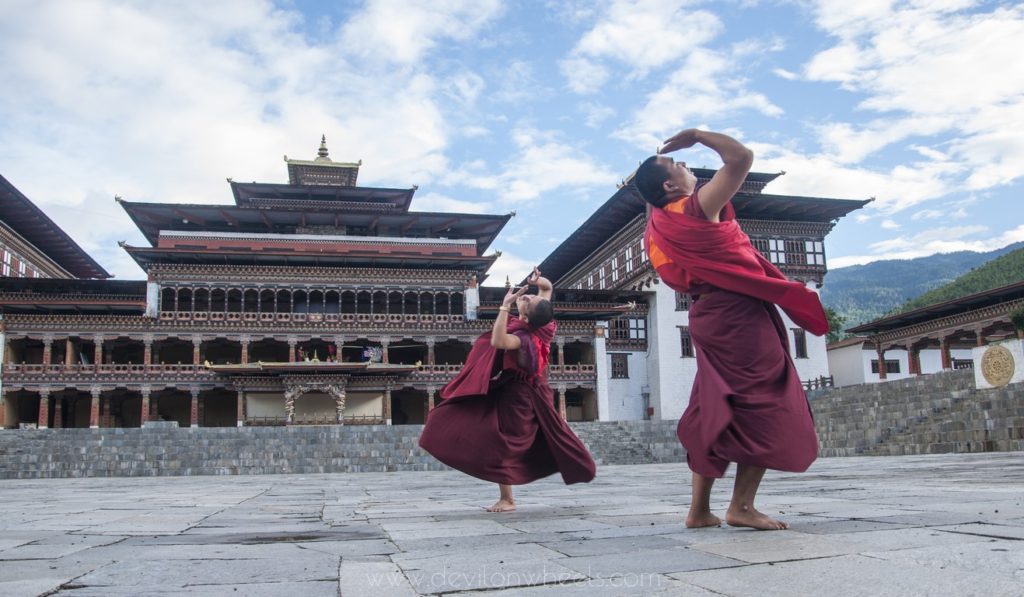
Day 3: Thimphu to Punakha via Dochu La (3,100 m / 10,171 ft). Explore Punakha Dzong.
Day 4: Punakha excursion to Gangtey / Phobjikha Valley
Day 5: Punakha to Paro via Dochu La
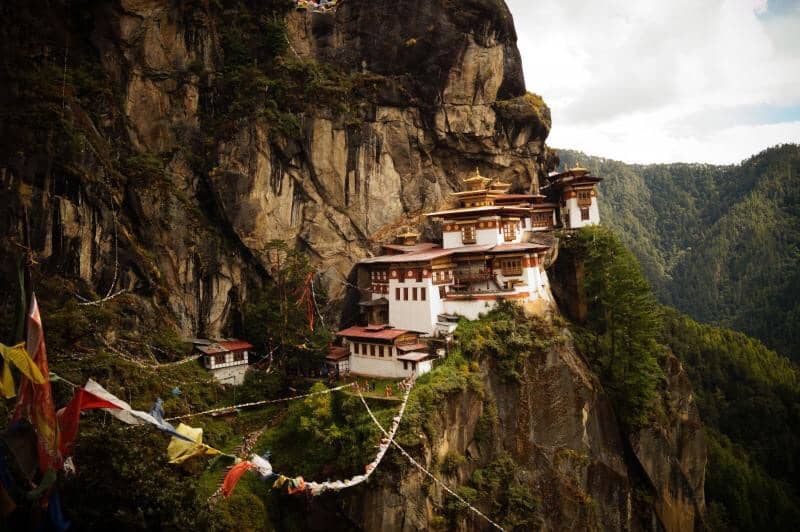
Day 6: Paro (Hike to Tiger’s Nest / Taktsang Monastery)
Day 7: Paro local sightseeing and excursion to Chele La (3,988 m / 13,083 ft)
Day 8: Paro Airport departure
7 Nights / 8 Days via Land (Fast-Paced)
Day 1: Arrive at Bagdogra Airport / NJP Station, drive to Phuentsholing
Day 2: Phuentsholing permit work, then drive to Thimphu (176 km, 5-6 hrs)
Day 3: Thimphu local sightseeing. Apply for Route Permit.
Day 4: Thimphu to Punakha via Dochu La (3,100 m / 10,171 ft)
Day 5: Punakha to Paro via Dochu La. Local sightseeing.
Day 6: Paro (Hike to Tiger’s Nest / Taktsang Monastery) or excursion to Chele La
Day 7: Paro to Bagdogra via Phuentsholing
Day 8: Depart Bagdogra
Also Read: Do not forget to check this complete travel guide for Western Bhutan for detailed sightseeing information.
Two Weeks Bhutan Itinerary (14N / 15D)
Day 1: Arrive at Bagdogra / NJP, drive to Phuentsholing
Day 2: Phuentsholing permit work and local sightseeing
Day 3: Phuentsholing to Thimphu
Day 4: Thimphu permit work and local sightseeing
Day 5: Thimphu local sightseeing (continued)
Day 6: Thimphu to Punakha via Dochu La (3,100 m / 10,171 ft)
Day 7: Punakha sightseeing
Day 8: Punakha to Gangtey / Phobjikha Valley
Day 9: Phobjikha Valley to Trongsa via Pele La (3,423 m / 11,230 ft)
Day 10: Trongsa to Bumthang
Day 11: Fly from Bumthang to Paro, then drive to Ha Valley via Chele La
Day 12: Ha Valley to Paro via Chele La
Day 13: Paro local sightseeing
Day 14: Paro (Hike to Tiger’s Nest / Taktsang Monastery)
Day 15: Depart Paro by air or drive to Phuentsholing / Bagdogra
How Much Does a Bhutan Trip Cost for Indians in 2026?
This is the question everyone asks. Let me give you a realistic breakdown. For a detailed cost analysis, feel free to check the complete budget guide for a Bhutan trip.
Budget Trip (7 days, per person): Rs 25,000 to Rs 40,000. This assumes entering by road via Phuentsholing, staying in budget hotels (Rs 800-1,500/night), eating at local restaurants, and using buses or shared taxis. The SDF alone will cost Rs 8,400 for 7 nights.
Mid-Range Trip (7 days, per person): Rs 50,000 to Rs 80,000. This includes flying to Paro (round trip Rs 40,000-50,000 from Delhi), staying in 3-star hotels (Rs 2,000-4,000/night), hiring a private taxi for sightseeing, and the SDF of Rs 8,400.
Key cost components: SDF is Rs 1,200/night (non-negotiable), flights are the biggest expense if flying, and local taxi hire runs about Rs 2,500-3,500 per day for a hatchback. Fuel prices in Bhutan are similar to India. Indian currency (INR) is widely accepted across the country.
Practical Tips for Your Bhutan Trip
Here are some things I wish I knew before my first trip to Bhutan. These small details can make a big difference in how smoothly your trip goes.
- Currency: The Bhutanese Ngultrum (Nu) is pegged to the Indian Rupee at 1:1. Indian currency is widely accepted, but Rs 2,000 notes can be hard to break at smaller shops. Carry denominations of Rs 100 and Rs 500.
- Time Zone: Bhutan is 30 minutes ahead of India (GMT+6).
- Mobile Network: Indian SIM cards do not work in Bhutan. You can buy a local TashiCell or B-Mobile SIM at Phuentsholing or Paro Airport for about Nu 200-300 with a data pack.
- ATMs: Available in Thimphu and Paro. Indian debit/credit cards work at Bank of Bhutan ATMs. Carry enough cash for smaller towns and eastern Bhutan.
- Food: Bhutanese food is heavy on chilies. Ema datshi (chili cheese) is the national dish. Indian and Chinese food is available in most restaurants.
- Altitude: Some passes like Chele La (3,988 m) and Dochu La (3,100 m) are at significant altitude. If you are sensitive to altitude, take it slow on Day 1.
- Driving: Roads in Bhutan are well-maintained but narrow and winding. Self-driving is allowed for Indian nationals with a valid Indian driving license.
Frequently Asked Questions
What is the time difference between India and Bhutan?
Bhutan is 30 minutes ahead of India. So if it is 10:00 AM in India, it is 10:30 AM in Bhutan. The time zone is GMT+6.
What is the currency in Bhutan and can I use Indian Rupees?
The Bhutanese Ngultrum (pronounced “Gultrum”) is pegged to the Indian Rupee at 1:1 parity. Indian currency is widely accepted across Bhutan. However, at remote locations in Eastern Bhutan, some vendors may prefer Ngultrum. Also, small vendors might give you change in Ngultrum rather than INR, so keep that in mind.
How much does the Bhutan SDF cost for Indians in 2026?
Indian nationals pay Rs 1,200 per person per night as the Sustainable Development Fee. Children aged 6-12 pay Rs 600 per night. Children under 5 are exempt. For non-Indian/non-Bangladeshi/non-Maldivian nationals, the SDF is USD 100 per person per night (valid through August 2027).
Is Bhutan safe for solo travelers?
Bhutan is one of the safest countries you can visit. However, it is not particularly solo-traveler friendly from a logistics standpoint. You can find affordable lodges everywhere, but you will not easily find other travelers to share taxi costs for local sightseeing, which can make the trip more expensive. Buses and shared taxis run between major towns, but for sightseeing you will need to hire a private taxi at Rs 2,500-3,500 per day. For detailed tips on planning a solo trip, check this guide to solo travel in Bhutan.
Do I need a guide to travel in Bhutan as an Indian?
No. Indian, Bangladeshi, and Maldivian nationals are not required to hire a guide or travel through a tour operator. You have complete freedom to travel independently, book your own hotels, hire local taxis, and use public transport.
Can I drive my own vehicle in Bhutan?
Yes, Indian nationals can take their own vehicles into Bhutan. You will need your vehicle’s registration certificate, insurance, and a valid driving license. The vehicle permit is processed at the Phuentsholing border. For a complete road trip plan, check this Bhutan road trip itinerary.
Is there mobile connectivity in Bhutan?
Indian SIM cards do not work in Bhutan. You can purchase a local TashiCell or B-Mobile SIM card at the border or at Paro Airport. Data packs are affordable, and 4G coverage is available in most towns including Thimphu, Paro, Punakha, and Bumthang. Coverage can be patchy in remote eastern regions.
What is the best way to reach Bhutan on a budget?
The cheapest way is to take a train to Hasimara or New Alipurduar, then a shared taxi or bus to Jaigaon/Phuentsholing. From Phuentsholing, use Bhutan’s public bus network to travel within the country. This can save you Rs 30,000-40,000 compared to flying.
Conclusion
If you are anything like me and love the Himalayas with all your heart, Bhutan is absolutely worthy of exploration. There is a lot to see and experience in this tiny nation, and it will give you a lot of perspective on life and what truly matters.
You will fall in love with the way of life in Bhutan and wonder why more nations cannot think similarly. The beauty of the region will stay with you, and the places you visit will become a part of your travel story forever.
For any queries or travel partner searches for Bhutan, feel free to join the DwD Community through the link in the main menu. There are a lot of detailed posts on Bhutan available on the blog. Here are some that might help you plan better:
