


Last Updated: March 2026
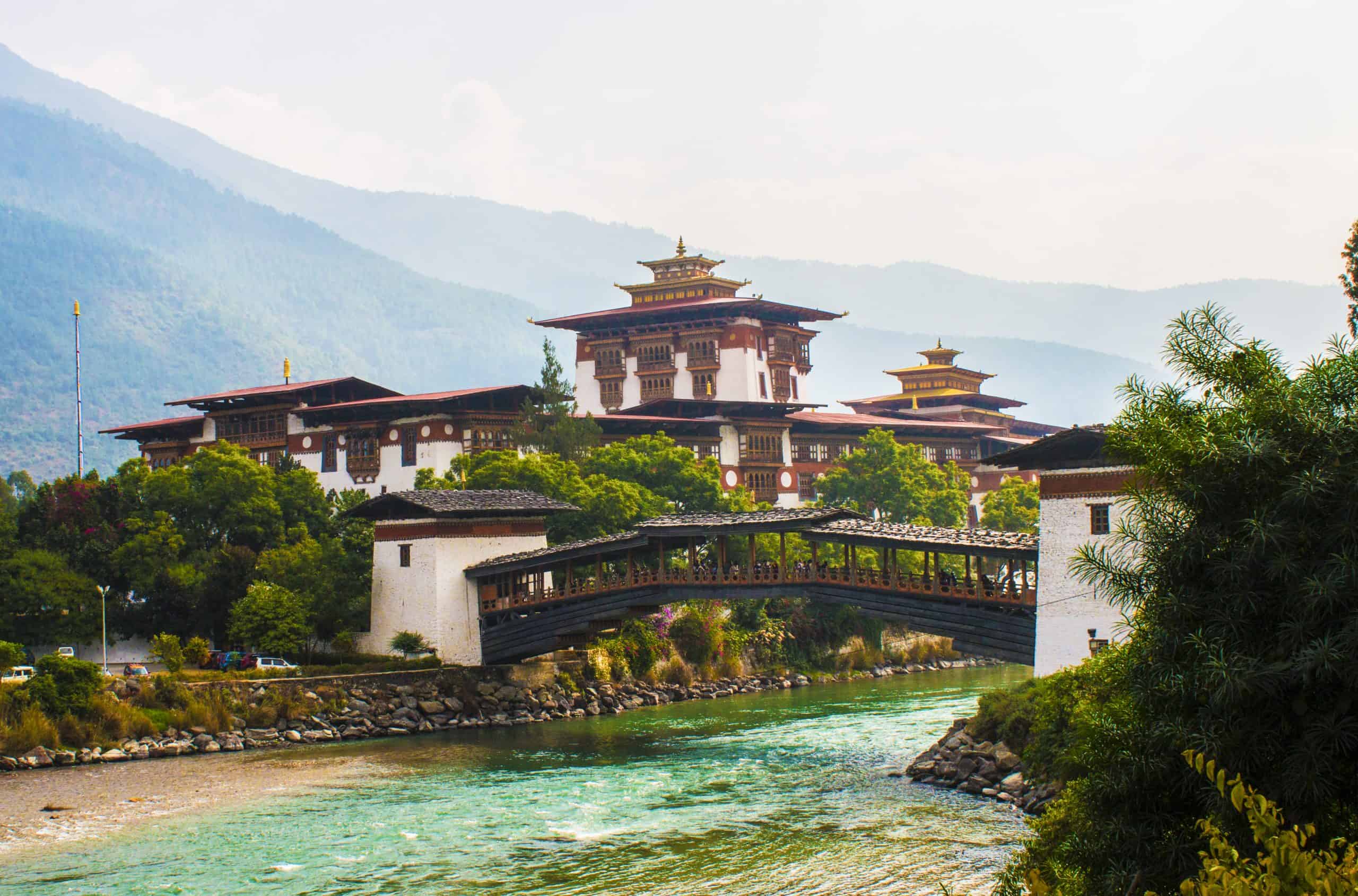
Central Bhutan is where the real soul of the country lives. While most travelers rush through Thimphu and Paro in Western Bhutan, the Bumthang and Trongsa regions remain still uncrowded, deeply cultural, and full of sacred sites that date back centuries. If you want to experience Bhutan beyond the tourist trail, Central Bhutan should be at the top of your list.
I have put together this complete Central Bhutan travel guide covering everything from how to reach, where to stay, what to see, hiking routes, food options, and a realistic budget. Whether you are planning a week-long cultural immersion or adding a few days to your Bhutan road trip itinerary, this guide has you covered.
Let's quickly dive into the details:
Quick Essential Information for Central Bhutan
| Region | Central Bhutan (Trongsa & Bumthang Districts) |
| Key Towns | Trongsa, Jakar (Bumthang), Chhume, Tang, Ura |
| Altitude | Jakar: 2,580 m (8,465 Ft), Trongsa: 2,316 m (7,598 Ft) |
| Best Time to Visit | March to May, September to November (year-round feasible) |
| How to Reach | By road from Thimphu/Punakha (270 km, 8-10 hrs) or domestic flight to Bathpalathang Airport (Jakar) |
| SDF for Indians | Rs 1,200 per person per night (confirmed through August 2027) |
| Ideal Duration | 3-5 days for Trongsa + Bumthang valleys |
| Mobile Network | TashiCell and B-Mobile work in Jakar and Trongsa towns. Patchy in remote valleys. |
What Is Central Bhutan and Why Should You Visit?
Central Bhutan refers primarily to the Trongsa and Bumthang districts, the cultural and spiritual heartland of the country. Trongsa Dzong is the western gateway, sitting high above the Mangde Chhu river behind the 3,420 m Pele La pass and the Black Mountains. From Trongsa, a short drive over the Yotong La (3,425 m) leads to the four valleys of Bumthang, a region rich with relics, hermitages, and sacred sites from the visits of Guru Rinpoche and Pema Lingpa.
Culturally, Central Bhutan is closer to Eastern Bhutan, and the predominant school of Buddhism here is Nyingma. The towns, however, have a mix of both Eastern and Western architectural styles. Trongsa, for example, has the Eastern characteristic of being located on the side of a hill, while Jakar meanders along a wide and lush valley, similar to towns in Western Bhutan.
The major sub-regions of Central Bhutan include Chhume, famous for its woven woolen goods, Jakar, which is the administrative center and the first place where Buddhism entered Bhutan, Tang, with its many sacred sites, and Ura, a quaint village high in the mountains. Central Bhutan is also full of natural wonders including Jigme Singye Wangchuk National Park, Royal Manas National Park, and the Phibsoo Wildlife Sanctuary.
Administratively, Central Bhutan is made up of Trongsa Dzongkhag and Bumthang Dzongkhag, with Zhemgang Dzongkhag to the south often included when people talk about the wider Nabji-Korphu trekking belt. Trongsa Dzongkhag is split into five gewogs (village blocks): Drakteng, Korphu, Nubi, Langthil, and Tangsibji, and it counted just under 20,000 residents at the last national census. Bumthang Dzongkhag has four gewogs, Chhoekhor (the Jakar valley), Tang, Chhume, and Ura, and recorded close to 17,800 people in the same count. This layout is worth knowing once you are on the ground, since locals will often point you toward a gewog name rather than a village name when giving directions.
Chhume is worth a closer look if you care about textiles. This is the home of yathra, a thick hand-woven wool fabric with geometric patterns found nowhere else in Bhutan. Around 240 households spread across roughly a dozen villages in the Chhume valley depend on yathra weaving for part of their income. A single 3-meter length takes about 1.1 kg of wool, and an experienced weaver can finish around 15 pieces in a month, for which the workshop owners typically pay Nu 10,000 to 15,000. Finished pieces sell for Nu 600 to Nu 1,800 depending on the pattern and quality, and most of the small roadside workshops along the Chhume stretch will let you watch a weaver at work before you buy directly off the loom.
A Brief History of Central Bhutan
Central Bhutan plays an important role in the history of the country. It is believed to be the first part of Bhutan that was inhabited. There is substantial evidence of prehistoric settlements in the Ura valley of Bumthang and the southern region of Khyeng. Historically, multiple independent kings ruled Central Bhutan over the centuries. Bumthang continued to be a separate kingdom up till the 17th century.
Bumthang has retained its political importance over the years. Several royal residences and country estates remain, including Kuenga Rabten, Eundu Chholing, and Ogyen Chholing. These are fascinating places to visit if you are interested in the royal heritage of Bhutan.
Of these, Kuenga Rabten is the easiest to fit into a Trongsa stop. It sits about 23 km from Trongsa town, roughly an hour’s drive through rice terraces and past a few small waterfalls. Built in 1929 as the winter residence of the second king, Jigme Wangchuck, the palace is now looked after by the National Commission for Cultural Affairs, has no entry fee, and is largely staffed by monks from the central monastic body who now live there. Inside, look for the woodwork around the shrine room and the paintings of Guru Rinpoche’s Zangdopelri paradise on the top floor.
Ogyen Chholing, further east in the Tang valley about an hour from Jakar, is smaller but just as worthwhile. Entry costs Nu 200 for foreign visitors, and the museum is best visited between 9 AM and 2 PM, when natural light through the old wooden windows is strongest. Budget an hour or two for the visit. The family that has looked after the house for generations still runs it as a heritage trust rather than a government-run site, which gives it a lived-in feel that some of the larger dzongs do not have.
When Is the Best Time to Visit Central Bhutan?
Unlike the Western and Eastern regions, Central Bhutan is worth visiting year-round. The sunny valleys of Bumthang enjoy pleasant weather across most of the year. That said, let me break it down season by season so you can plan accordingly.
Spring (March to May) is arguably the best time. The rhododendrons are in full bloom, temperatures are comfortable (10-20 degrees Celsius), and the valleys look their greenest. This is also festival season, with the Ura Yakchoe festival usually held in April or May.
Autumn (September to November) is equally good. Clear skies, golden buckwheat fields in Bumthang, and the famous Jambay Lhakhang Drup festival in October or November make this a prime window. The five-day Trongsa Tsechu, held in December or January, is another highlight.
Winters (December to February) can be cold, especially in Bumthang, but days are usually sunny and there are far fewer tourists. Dress in layers and you are good to go. There is something truly special about these Himalayan valleys blanketed in quiet winter light.
Keep in mind that the southern regions, especially Gelephu and Royal Manas National Park, are extremely hot in summer (June to August). Monsoon rains can also cause road disruptions.
Pro Travel Tip: Do not forget to check this complete month by month guide on the best time to visit Bhutan for a detailed seasonal breakdown.
How to Reach Central Bhutan from Thimphu?
There are two main ways to reach Central Bhutan, by road and by domestic flight. Here is what you need to know about both options.
By Road from Thimphu
The drive from Thimphu to Trongsa is about 200 km and takes 6-8 hours depending on road conditions. From Trongsa to Jakar (Bumthang) is another 68 km, roughly 2-3 hours. So total road time from Thimphu to Jakar is about 270 km and 8-10 hours. The road passes through Wangdue Phodrang, crosses the stunning Pele La (3,420 m), and enters Trongsa. From there, you cross Yotong La (3,425 m) to reach Bumthang.
Road conditions between Thimphu and Bumthang are a mix. The Thimphu to Punakha stretch is good, but beyond that, road widening projects are ongoing (as of 2026). The Gangtey to Trongsa section and Trongsa to Bumthang section have been under improvement, so expect some rough patches and possible delays. Keep an extra hour or two as buffer.
By Bus
Daily buses run from Thimphu to Bumthang via Trongsa. The bus typically departs at 7:30 AM and the journey takes around 10-11 hours. You can check schedules and book tickets through the Druk Ride app or at the Thimphu bus terminal. The fare is approximately Nu 500-600 (roughly Rs 500-600) one way. For more details on bus connectivity, check our complete guide to traveling by bus in Bhutan.
By Domestic Flight
Bumthang has its own airport, Bathpalathang Airport (BUT), with domestic flights from Paro operated by Drukair and Bhutan Airlines. The flight takes about 30 minutes and costs around Nu 5,000-7,000 one way. However, flights are weather-dependent and can be cancelled due to poor visibility. Keep in mind that this is a small airport and flight frequency is limited, so booking early is a good idea.


What Are the Major Attractions in Central Bhutan?
With so much to see and do, you can truly plan your entire week exploring various corners of Central Bhutan. Let me walk you through the key highlights, starting with the sacred sites.
Sacred Sites and Monasteries
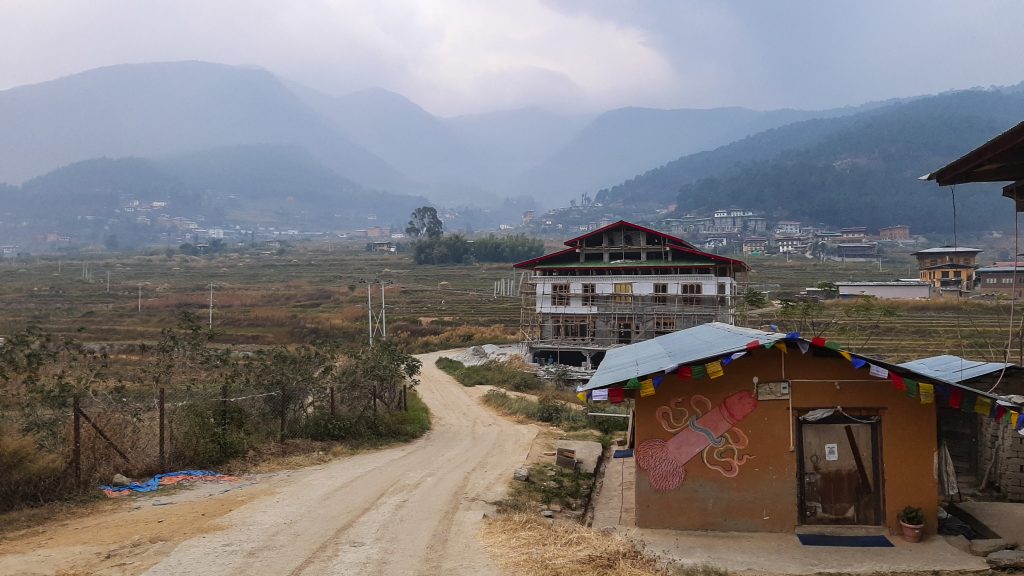
Given the historic significance of the region, Central Bhutan has some of the most important religious sites in all of Bhutan. Here are the ones you should not miss.
Kurjey Lhakhang, Jakar
One of Bhutan’s most sacred monasteries. A body print of Guru Rinpoche is preserved in a cave around which the oldest of the three buildings was constructed. The original building was built in 1652 by Trongsa Penlop. The latest addition was added by the late Queen Mother Ashi Kesang Wangchuk in 1990. This is a must-visit, no questions about it.
Jambey Lhakhang, Jakar
This is one of the 108 monasteries that were miraculously constructed by King Songsten Gampo in one night (7th century). The monastery is located between Kurjey Lhakhang and Jakar Dzong. The Jambay Lhakhang Drup festival held here in October or November is one of Bhutan’s most famous, featuring the naked fire dance (Mewang) and fire blessing ceremony.
Tharpaling Goemba, Chhume
Founded by the Dzogchen master Longchen Rabjam in 1352, this monastery was also home to the famous Nyingma Guru Jigme Lingpa in the 18th century. It sits at 3,600 meters and is home to around 150 monks. You can reach it by an unpaved road, though the hike up is far more rewarding.
Thangbi Goemba, Jakar
Founded in 1470 by Shamar Rimpoche. A serene and less-visited monastery that offers a peaceful alternative to the more popular sites.
Mebar Tsho (Burning Lake), Tang
A place where some of Guru Rinpoche’s scriptural treasures (known as terma in Tibetan) were discovered in the 15th century by the famous treasure discoverer Pema Lingpa. The lake itself is a deep pool in the Tang Chhu river, surrounded by cliffs and prayer flags. It is about a 40-minute drive from Jakar and is considered one of the most sacred pilgrimage sites in Bhutan.
Tamshing Goemba, Jakar
A monastery established in 1501 by the local Buddhist saint Pema Lingpa. The two-story building contains some lovely frescoes and has a shallow ceiling (apparently Pema Lingpa was very short!). There is also a 500-year-old suit of metal chain mail made by Pema Lingpa located on the first floor. It is considered auspicious to circumambulate the temple three times with the chain draped over your back and shoulders.
Sumthrang Lhakhang, Shinyer Village, Ura
A several-hundred-year-old monastery with simple but beautiful artwork. Those visiting in January should look for the two flowering trees near the main gate, while other trees of the same variety remain bare. Legend says these trees sprouted from a walking stick placed at the gate by the monastery’s founder, Gyelwa Lhanangpa.
Pro Travel Tip: Check our article about important tips for saving costs on your Bhutan trip if you are looking to travel on a budget.
Must-Visit Places Beyond the Monasteries
Trongsa Dzong and Viewpoint
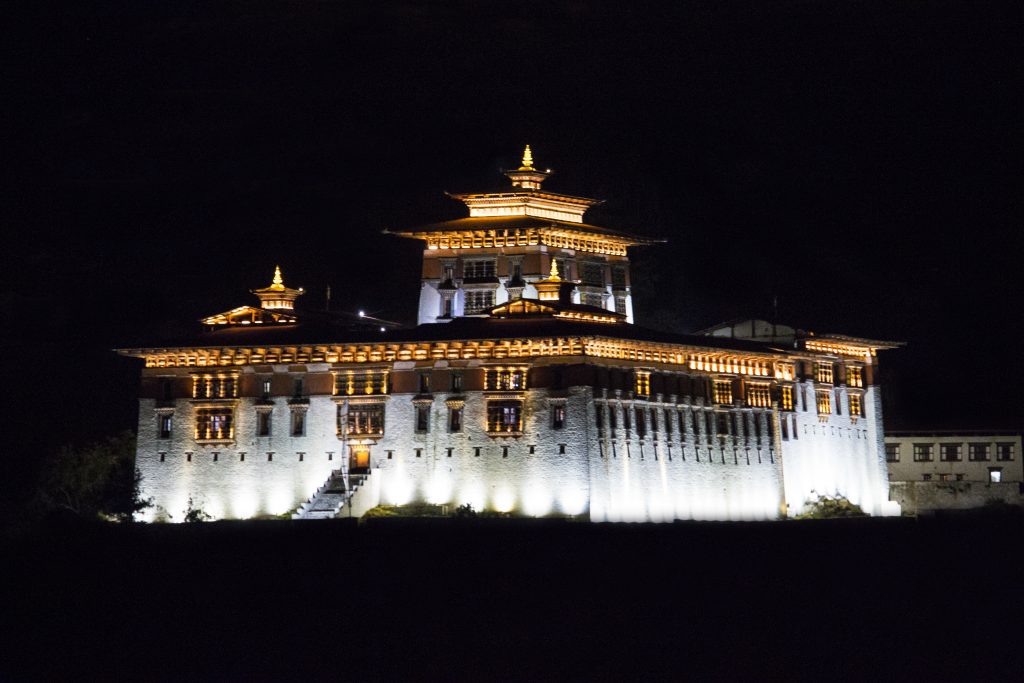
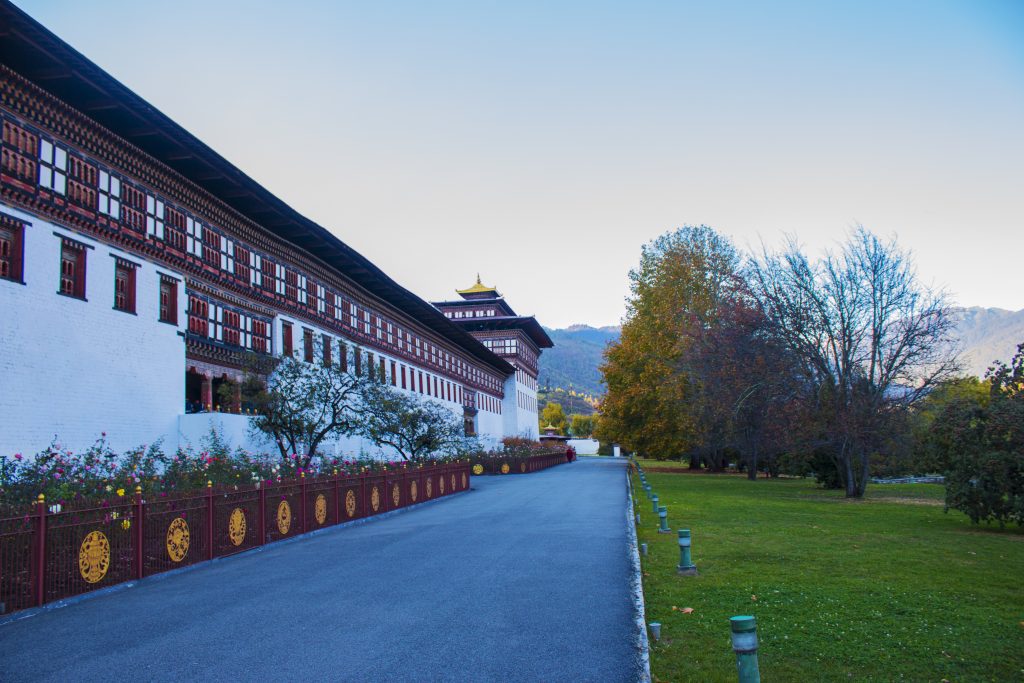
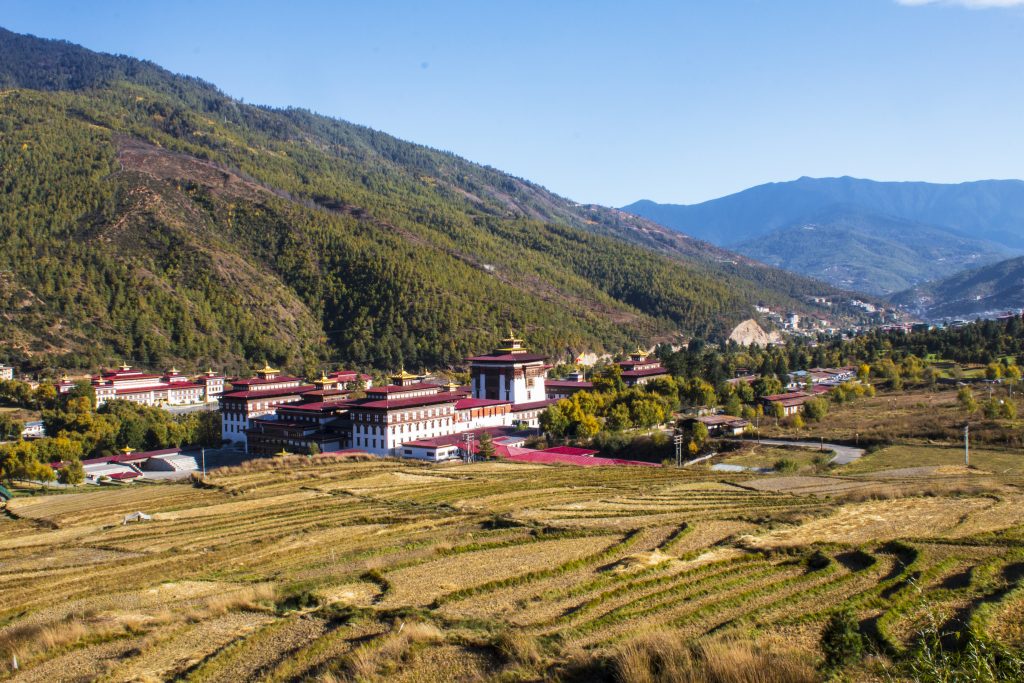
If there is one dzong in Bhutan with the best location, Trongsa wins hands down. The dzong lies high up above the Mangde Chhu with a dramatic sheer drop to the south. The sweeping views and the layered architecture make the place almost cinematic. There is a beautiful sequence of buildings connected by alley-like corridors and wide stone stairs. The paved courtyards add to the character of the dzong.
The southernmost part of the dzong, Chorten Lhakhang, is the location of the first hermitage, built in 1543. Trongsa Dzong is closely connected to the Bhutanese royal family. The first two hereditary kings ruled from this dzong, and tradition still dictates that the crown prince serves as Trongsa Penlop before ascending to the throne.
This dzong also had immense strategic importance, as this was the only trail connecting the Eastern and Western parts of the country. While most visitors these days use the main eastern gate, you can choose to do a steep climb via the Mangdue Foot Trail from the viewpoint and enter the dzong via the western gate, in the traditional fashion.
Tower of Trongsa Royal Heritage Museum
The watchtower (Ta-Dzong) overlooking Trongsa Dzong now houses an excellent museum. The five floors of displays tell the history of the Bhutanese monarchy through treasures like the 500-year-old jacket of Ngagi Wangchuk, the second king’s saddle, and a copy of the famous raven crown. You can drive here and then walk back to town down a staircase past several chapels.
The most sacred religious item is a copy of the Padma Kathang, a copy of Guru Rinpoche’s biography discovered by Pema Lingpa underneath the Jokhang Temple in Lhasa. There are two Lhakhang inside the Ta-Dzong. The top-floor Gesar Lhakhang is dedicated to the 19th-century Penlop of Trongsa, Jigme Namgyal. There are sweeping views from the roof, plus a souvenir shop and a ground-floor cafe providing refreshments.
Pro Travel Tip: Wondering how much a Bhutan trip will cost? Check our detailed guide on how to calculate the cost or budget of a Bhutan trip.
Jakar Dzong
Jakar Dzong sits in a picturesque location overlooking the Chokhor valley. The official Bhutanese name is Yuelay Namgyal Dzong, named in honor of the victory over Tibetan ruler Phuntsho Namgyal’s troops. A rare feature of this dzong is that the central tower is not inside the wall, so you cannot circumambulate it.
The approach to the dzong, with a perimeter of over 1,500 m, is made on foot along a stone-paved path. The entrance leads into a narrow courtyard surrounded by administrative offices. At the west end is a slightly larger courtyard, and behind it is a half-round Ta-Dzong (watchtower). A walled passage leads from the dzong down the hill to a nearby spring, a feature that ensured water during sieges.
Pro Travel Tip: If you prefer traveling solo, this article will help you plan a solo trip to Bhutan.
What Are the Best Hiking Routes in Central Bhutan?
The Bumthang region in Central Bhutan is a great region for hikers. From short day walks to multiday treks, there is something for every fitness level. Here is what you can choose from.
Day Hikes in Bumthang
Most of these hikes will lead you through or up to remote sacred sites, wide valley views, and beautiful picnic spots.
- Kurjey Lhakhang to Tamshing Goemba via Do Zam: A good short walk connecting two important monasteries. You can extend the walk by 15 minutes by walking to Kurjey from Jambey Lhakhang. The nearby rock painting of Dorji Drolo is worth seeing.
- Pelseling Goemba: A half-day hike from the Swiss Guest House in Jakar to the large “Lotus Grove” Monastery. It is all uphill (about 2.5 hours), gaining 800 m, but the walk is quite pleasant through a mix of forest, meadows, and villages. Great views reward you at the top.
- Kunzangdrak Goemba: For a more remote experience, drive to Pelseling and then hike over the ridge and around a side valley to this retreat in the Tang valley.
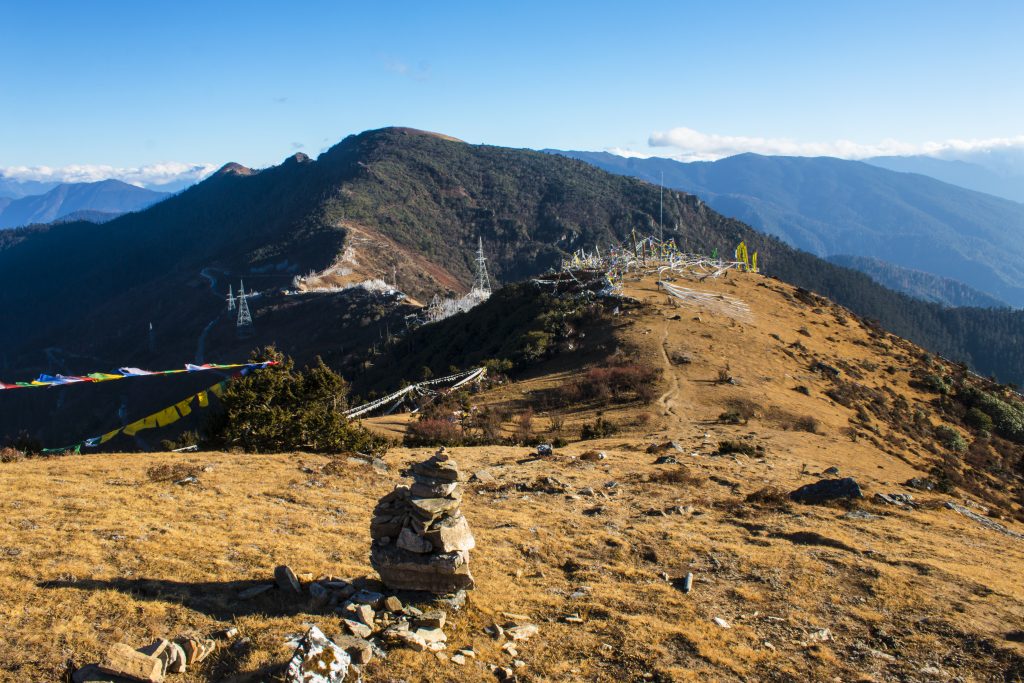
- Tharpaling Goemba: One of the most celebrated one-way walks from Lamey Goemba. It takes you over the ridge to Tharpaling in the Chhume valley. Even though the first couple of hours involve steep climbing through rhododendrons and bamboo, once you pass the crest, you get rewarded with stunning bare hillsides of the Chhume valley leading to the Zhambhala Lhakhang, Choedrak Hermitage, and finally Tharpaling.
- Drak Choeling Retreat: A 90-minute uphill hike from Pema Sambhava Lhakhang. It takes you up through the forest to cliffs and a silent retreat center, with sweeping views over the Bumthang valley from a prayer-flag lookout.
Longer Treks for the Adventurous
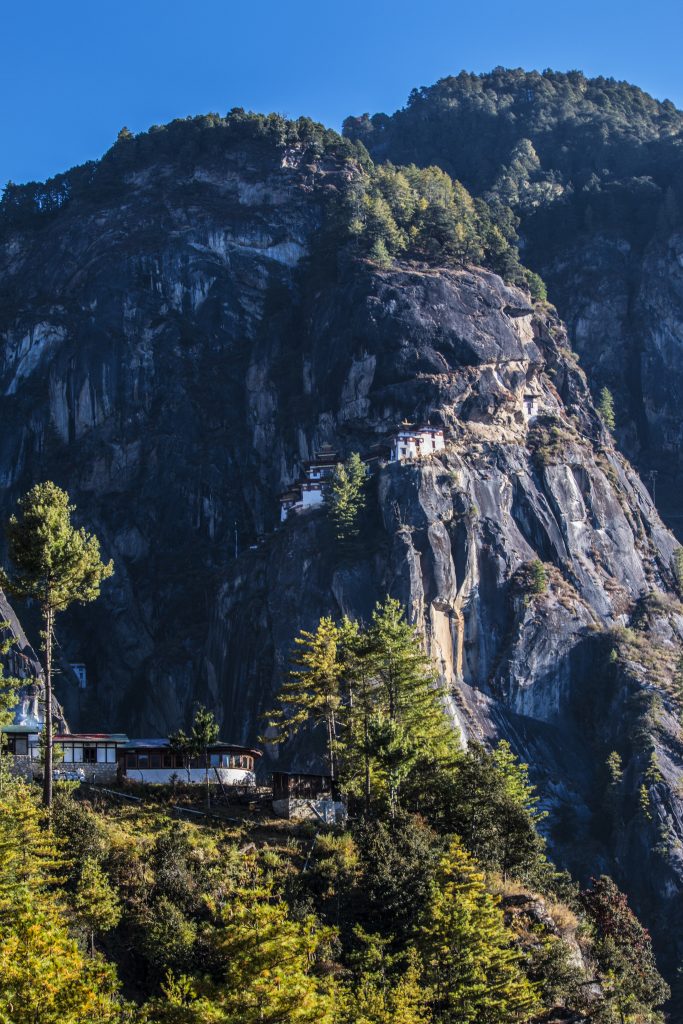
If you are looking for complete isolation and solitude, much like the experience of hiking to Tiger’s Nest, you might want to try some of these longer treks. They will satisfy all of your nature and adventure cravings.
Nabji Trek (4 Days)
The Nabji Trek starts from Tongtongphey, and you spend your nights at Jangbi, Kudra, Nabji, and Nimshong. If you are in the mood for a low-altitude winter trek and want to experience rural Bhutanese life, leisurely birdwatching, and family interactions over mountain views, this is perfection.
What is special about this trail is that it is a representation of community-based tourism in Bhutan. Local villagers are employed on a rotating basis to offer porterage, village tours, cultural shows, and food at semi-developed campsites. Campsite fees go into a community fund to support education, conservation, and tourism development.
However, I must mention that infrastructure is rapidly developing in Bhutan. Both ends of the trek are becoming shorter. Depending on how much walking on roads is desirable, you may end the trek at Nabji or Nimshong. You can also do this trek in the opposite direction.
Bumthang Cultural Trek (1-2 Days)
A slightly medium-difficulty trek that takes you to a maximum elevation of 3,360 meters. Best completed during March to May or September to November. You start at Ngang Lhakhang and finish at Ogyen Chholing. Thanks to road construction, you can now accomplish it in a day.
If you do the one-day version, you can stay at a beautiful, simple accommodation in Ngang Lhakhang. For something more comfortable, the digs at Ogyen Chholing at the start and end of the walk make for a wonderful base. The walk is short but packs in a tiring 750 m climb to the Phephe La.
If you want to make it a two-day camping trek, start from Thangbi Goemba, walk up the true left bank of the Chamkhar Chhu, and camp at Sambitang, about a 30-minute walk from Ngang Lhakhang. There is a second camping spot and a farm stay at Tandingang at the far end of the trail, but most groups continue to nearby Ogyen Chholing.
Pro Travel Tip: You can check this detailed guide on how to get all the necessary permits for Bhutan.
Multiday Hikes in Bumthang
With so many interconnected hiking trails all around the valley, you can string together many of these to make a customized multiday trek. For example, start at Menchugang and complete a day-hike towards Luege Rowe (or even further to Shugdrak). Then hike along the south bank of the Chamkhar Chhu to Ngang Lhakhang.
The next day, do a long day hike over the Phephe La and head to Ogyen Chholing (the Bumthang Cultural Trek route). You can push further by adding a day towards Thowadrak Hermitage. Then return to Jakar and hike over the ridge to Pelseling Goemba and down to the Swiss Guest House.
For a full week of walking with some camping, add on the three-day Owl Trek in the reverse direction, starting at Tharpaling Goemba and picking up this itinerary at Menchugang.
What Other Experiences Should You Not Miss?
- Duer Hot Springs: A one-day trek from the road head. The trek is arduous but stunningly beautiful. Blue sheep, musk deer, and Himalayan bear are common in the Duer Hot Spring area.
- Weaving Houses in Chhume: Chhume is famous for its wool weavers. You can watch the work in action and purchase items (called Yethra) straight off the loom. This is one of the best places in Bhutan to buy authentic handwoven textiles.
- Wilderness Backpacking: The region is perfect for long treks in the mountains. You should check our complete travel guide on Bhutan’s National Parks and Wildlife Sanctuaries.
- Bumthang Brewery Visit: Bhutan’s first and only microbrewery is located in Bumthang, started by a Swiss expat. You can taste Red Panda wheat beer and other local brews here.
- Ura Village Walk: The quaint hilltop village of Ura is one of the most charming settlements in Central Bhutan. The traditional stone houses and the annual Ura Yakchoe festival make it worth a visit.
Where to Eat in Central Bhutan?
Food options in Central Bhutan are limited compared to Thimphu and Paro, but you will not go hungry. Go out and eat authentic meals at the local restaurants and roadside shops in Jakar and Trongsa. The Bhutanese cuisine here is heartier and more traditional than what you get in the west.
Cafe Perk in Jakar has some of the best coffees and cakes in the region. Jakar Village Lodge is another decent place with hearty food. I would recommend meeting the owner and enjoying his many tales over tea. The views from the terrace are a bonus. In the mood for beer? Head to the Panda Beer Garden Cafe, situated next to the Bumthang Brewery, for an array of western food alongside local brews.
In Trongsa, options are more limited. The restaurants near the main road serve standard Bhutanese fare (rice, ema datshi, kewa datshi) at around Nu 200-400 per meal. Most hotels in the region include meals in their tariff, especially if you are traveling with a guide.
Where to Stay in Central Bhutan?
There are several stay options in Bhutan, ranging from guesthouses to luxury resorts. Depending on your budget and style of travel, here are some recommendations.
Budget (Nu 1,500-3,000 / Rs 1,500-3,000 per night): Guesthouses and homestays in Jakar and Trongsa. The Swiss Guest House in Bumthang is the most iconic budget option. It is the most rural place, a wooden farmhouse surrounded by apple and pear orchards on a hill overlooking the valley. In 1983, this was the first guesthouse in Bumthang.
Mid-Range (Nu 3,000-8,000 / Rs 3,000-8,000 per night): The Ogyen Chholing Heritage House in Tang Valley is superb. A beautiful ancient building with comfy beds and good food. The Rinchenling Lodge in Jakar is another solid mid-range option with valley views.
Adventure Stay: The Marang Forest Lodge near Royal Manas National Park, run by the River Guides of Panbang, comprises nine tents mounted on platforms beside the Marangang Chhu. Tents are simple but comfortable, with twin beds and portable electric lights. Hot showers are available in two separate blocks.
Luxury (Nu 10,000+ / Rs 10,000+ per night): The Yangkhil Resort, 1.5 km west of Trongsa, is an excellent choice with 21 rooms constructed in five blocks on a terraced hill facing the dzong. The gardens with their spring pear blossoms are an ideal place to relax, so arrange your itinerary for an early arrival.
How Much Does a Central Bhutan Trip Cost?
Here is a realistic budget breakdown for a Central Bhutan trip as of 2026. Keep in mind that costs will vary based on your travel style and duration.
| Expense | Budget (per person/day) | Mid-Range (per person/day) |
| SDF (Sustainable Development Fee) | Rs 1,200 | Rs 1,200 |
| Accommodation | Rs 750-1,500 | Rs 1,500-4,000 |
| Meals (3 per day) | Rs 600-800 | Rs 1,000-1,500 |
| Local Transport / Guide | Rs 500-800 | Rs 1,500-2,500 |
| Entry Fees / Misc | Rs 200-300 | Rs 300-500 |
| Total per Day | Rs 3,250-4,600 | Rs 5,500-9,700 |
Hence, for a 4-day Central Bhutan add-on to your trip, budget roughly Rs 13,000-18,000 per person on a budget or Rs 22,000-39,000 per person for mid-range comfort. This does not include the cost of reaching Bhutan from India (flights or road travel). For a complete cost breakdown, check our detailed Bhutan trip cost calculator.
What Permits Do Indian Travelers Need for Central Bhutan?
Indian nationals do not need a visa for Bhutan, but you do need an entry permit. Here is the current situation as of 2026.
Entry Permit: Indian citizens need a permit to enter Bhutan, which can be obtained at the border (Phuentsholing, Gelephu, or Samdrup Jongkhar) or pre-arranged through a tour operator or hotel. You need a valid Indian passport or Voter ID card.
Route Permit: For travel beyond Thimphu and Paro (which includes Central Bhutan), you need a route permit. Your guide or tour operator arranges this. If you are on a self-guided trip, your hotel can help arrange it.
Sustainable Development Fee (SDF): Indian nationals pay Rs 1,200 per person per night. Children aged 6 to 12 get a 50% discount. Children under 5 are exempt. This fee has been confirmed through August 2027. For a detailed walkthrough of the permit process, check our complete Bhutan permits guide.
Suggested Itinerary for Central Bhutan
Here is a practical 4-day itinerary for Central Bhutan that you can adapt based on your interests and pace.
Day 1: Arrive in Trongsa. Drive from Punakha or Gangtey (4-5 hours). Visit Trongsa Dzong and the Royal Heritage Museum. Explore the town. Stay overnight in Trongsa.
Day 2: Trongsa to Jakar (Bumthang). Drive over Yotong La to Bumthang (2-3 hours). Stop at Chhume to visit weaving houses. Visit Jakar Dzong, Jambey Lhakhang, and Kurjey Lhakhang. Stay in Jakar.
Day 3: Bumthang Exploration. Morning hike to Tamshing Goemba via Do Zam bridge. Visit Mebar Tsho (Burning Lake) in Tang Valley. Afternoon at Bumthang Brewery or Pelseling Goemba hike. Stay in Jakar.
Day 4: Ura Valley and Onward. Drive to Ura village (about 50 km, 1.5 hours). Explore the village and visit Sumthrang Lhakhang. Continue onward to Eastern Bhutan or return to Trongsa/Western Bhutan.
In case you have more time, I would strongly recommend adding a day for the Bumthang Cultural Trek to Ogyen Chholing or a day trip to Duer Hot Springs. For a complete Bhutan itinerary including Central Bhutan, check our most perfect Bhutan road trip itinerary.
Practical Tips for Central Bhutan
- Cash is essential: ATMs exist in Jakar and Trongsa towns, but they can run out of cash. Carry sufficient Ngultrum or Indian Rupees (accepted widely in Bhutan).
- Altitude awareness: Bumthang sits at about 2,580 m (8,465 Ft). While this is not as high as Ladakh, some people may feel mild effects. Stay hydrated.
- Road conditions: As of 2026, road widening is ongoing on several sections. Carry snacks and water for long drives, as delays are common.
- Clothing: Layers are key, even in summer. Evenings and early mornings in Bumthang can be chilly year-round. In winter, expect temperatures to drop below zero at night.
- Mobile network: TashiCell and B-Mobile work in Jakar and Trongsa towns. Coverage is patchy in Tang, Ura, and on hiking trails. Download offline maps before you go.
- Festivals: Plan your visit around festivals if possible. The Jambay Lhakhang Drup (October/November), Trongsa Tsechu (December/January), and Ura Yakchoe (April/May) are the major ones in Central Bhutan.
Conclusion
Central Bhutan is the kind of place that rewards you for making the extra effort to get there. While most travelers stick to Thimphu, Punakha, and Paro, the Bumthang and Trongsa regions offer a deeper, quieter, and more authentic experience of Bhutanese culture, spirituality, and natural beauty. Go and experience the genuine joy of an untouched cultural heartland. You will want more time than you planned for, I can promise you that 🙂 …
If you have any questions about planning your Central Bhutan trip, feel free to ask in the DwD Community. For other details about traveling in Bhutan, discussions, finding travel partners, and live updates, the community is always active and happy to help.
Frequently Asked Questions
Is Central Bhutan safe for solo travelers?
Yes, Central Bhutan is very safe for solo travelers. Bhutan is one of the safest countries in Asia. However, Indian nationals traveling beyond Thimphu and Paro need a route permit, which is easier to arrange through a guide or tour operator. For detailed tips, check our solo trip to Bhutan guide.
How many days are enough for Central Bhutan?
A minimum of 3 days is needed to cover Trongsa and the main Bumthang sites. Ideally, plan 4-5 days to include hiking, the Tang Valley, and Ura. If you want to do longer treks like the Nabji Trek, add 4-5 more days.
Can I drive from India to Central Bhutan?
You can drive from India to Thimphu via Phuentsholing (about 170 km from Siliguri). From Thimphu to Bumthang is another 270 km (8-10 hours). Indian-registered vehicles need a separate permit. The total drive from the India border to Bumthang takes about 2 full days. Alternatively, you can enter from Gelephu in the south, which is closer to Central Bhutan.
What is the SDF for Indians visiting Bhutan in 2026?
The Sustainable Development Fee (SDF) for Indian nationals is Rs 1,200 per person per night. This rate has been confirmed through August 2027. Children aged 6-12 pay 50%, and children under 5 are exempt. The SDF is waived for visitors to border towns who do not stay overnight or travel beyond the first designated point.
Is Bumthang connected by flight from Paro?
Yes, Bumthang has Bathpalathang Airport with domestic flights from Paro operated by Drukair and Bhutan Airlines. The flight takes about 30 minutes. However, flights are weather-dependent and can be cancelled, so always have a road travel backup plan.
Do I need a guide for Central Bhutan?
As of 2026, Indian nationals traveling beyond Thimphu and Paro need a route permit, which typically requires a guide or tour operator to arrange. While it is technically possible to arrange permits independently through your hotel, having a local guide significantly enhances the Central Bhutan experience, especially for monastery visits and trekking.
What is the best festival to see in Central Bhutan?
The Jambay Lhakhang Drup in Bumthang (October/November) is the most famous, featuring the unique naked fire dance. The Trongsa Tsechu (December/January) culminates in the unveiling of a giant Thondrol (religious thangka painting). The Ura Yakchoe (April/May) is a more intimate village festival.
