


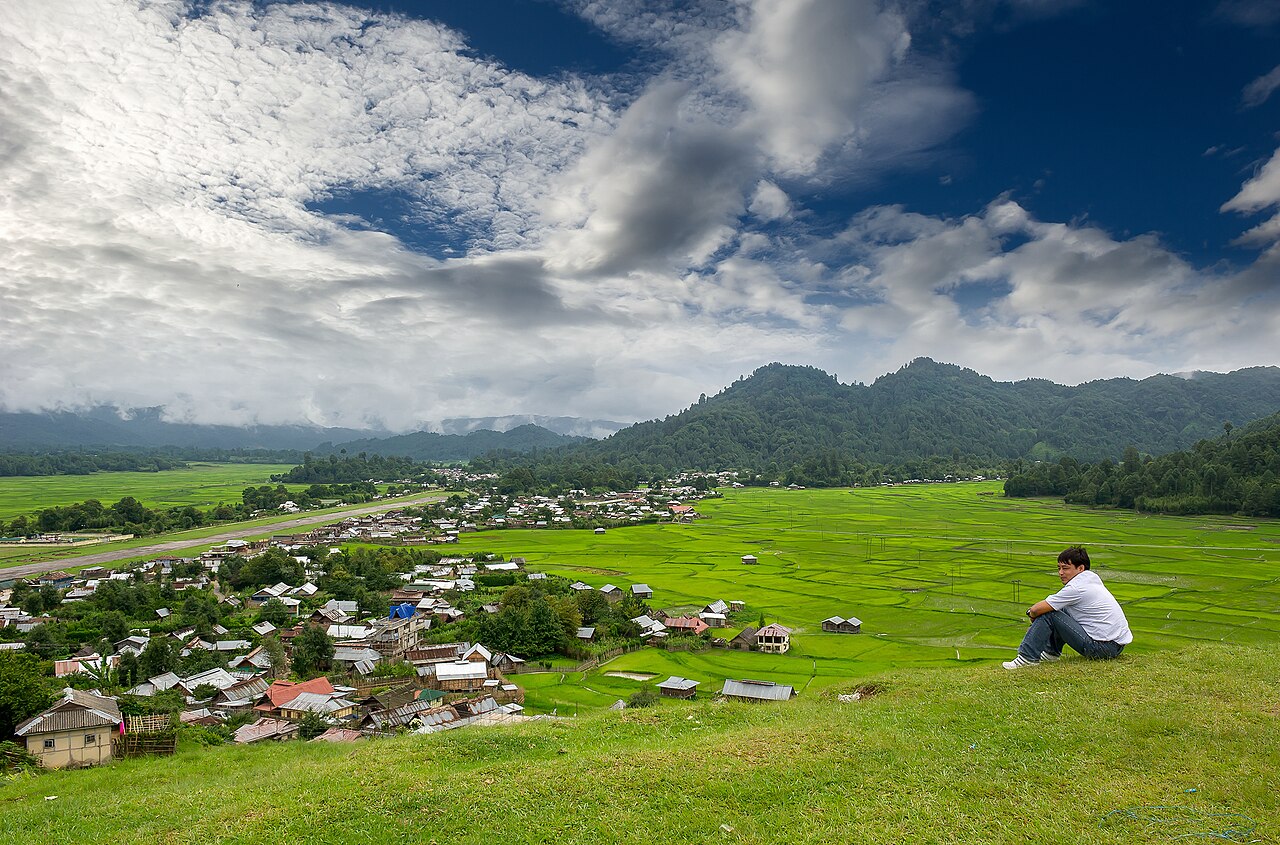
Are you looking at Ziro Valley for your first Arunachal trip and wondering how to get there without a car, which permit you need, and what it costs? Unlike our Tawang guide, which is about altitude and passes, Ziro is about getting the connections right: the train to Naharlagun, the early Sumo, and a permit many blogs still quote at the wrong price. This Ziro Valley travel guide puts the 2026 answers in one place.
Let me be upfront, my friend. I have not been to Ziro myself yet, so this guide is based on research: the official eILP portal (read 25 November 2026), the Lower Subansiri District Administration website and the UNESCO Tentative List entry. Numbers from traveller reports, like Sumo fares, are marked approximate. Hence, please verify those locally 🙂
Quick Answer: How Do You Plan a Ziro Valley Trip in 2026?
Apply online for a Tourist eILP (Rs 300 for up to 3 days, Rs 500 for 4 to 14 days). Take an overnight train from Guwahati to Naharlagun, then a shared Sumo to Ziro, about 96 to 115 km. Stay 3 nights in Hapoli, budgeting Rs 2,500 to Rs 10,000 per person, excluding food and train.
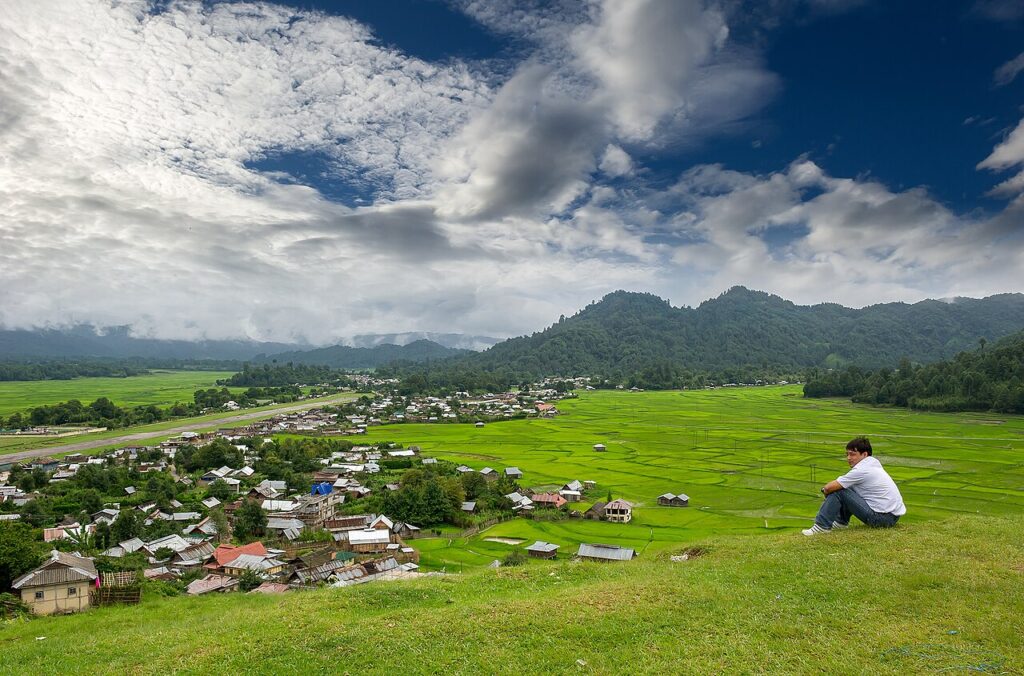
Ziro Valley Trip Planning at a Glance
| Where | Lower Subansiri district, Arunachal Pradesh. Ziro is the district headquarters, Hapoli is the main town |
| Altitude | About 1,688 m (5,538 ft) at Ziro town. Low enough that altitude sickness is not a concern |
| From Itanagar | About 115 km, around 3.5 hours via the Hoj – Potin road |
| From Naharlagun railway station | About 96 to 105 km |
| From North Lakhimpur (Assam) | About 112 to 118 km |
| From Guwahati | About 445 km by road (route listings, verify on your map). Best broken with a night train |
| Permit for Indians | Tourist eILP: Rs 300 (up to 3 days) or Rs 500 (4 to 14 days) |
| Foreigners | Protected Area Permit (PAP/RAP), not eILP |
| Ideal stay | 3 nights in Ziro, plus travel days |
| Best time | March to May, and late September to November |
| Budget, 3 nights per person | Rs 2,500 to Rs 10,000 (permit + shared Sumo + stay, twin sharing) |
| Emergency | 112. eILP helpline 155250 (toll free) |
| Last verified | November 2026 |
Where Is Ziro and How Is It Different From Tawang?
Quick answer: Ziro is a high plateau in central Arunachal Pradesh, home to the Apatani tribe, at about 5,538 ft. Unlike Tawang, there is no high pass to cross and no altitude sickness risk. The challenge here is logistics, because shared transport runs early and on fixed patterns, not altitude.
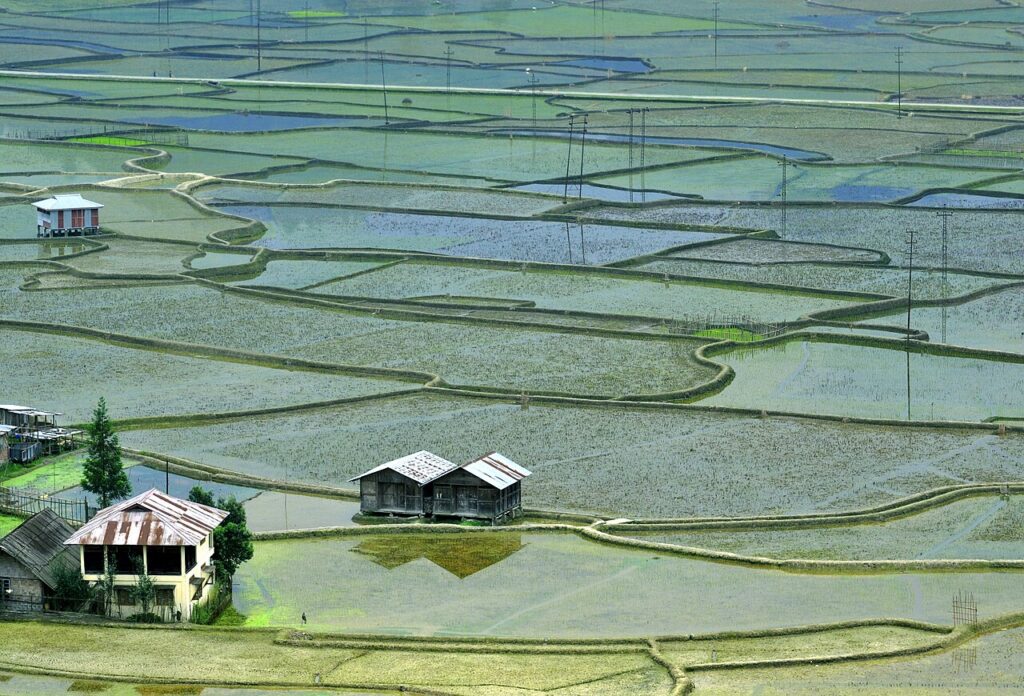
According to the UNESCO Tentative List entry, the Apatani plateau covers about 1,058 sq km, out of which only about 32 sq km is cultivable. The surrounding hills rise from 1,830 m to 2,900 m. That flat, farmed floor surrounded by pine hills is the Ziro you see in every photo, and it is why the valley went on India’s Tentative List for World Heritage status on 15 April 2014.
Keep in mind that Tawang and Ziro are on completely different road systems. Tawang is in the west via Sela Pass at 13,700 ft, while Ziro is reached from Itanagar or from North Lakhimpur in Assam. Combining both means a lot of road time back through Assam, so I suggest two separate trips unless you have 10 days or more.
A quick naming note for the Sumo counter: “Ziro” means the whole valley and the district headquarters. Hapoli is the main town with most hotels and the Sumo stand. Old Ziro is the older settlement, where the airstrip is.
Do You Need an Inner Line Permit for Ziro in 2026?
Quick answer: yes. Every Indian citizen from outside Arunachal Pradesh needs an Inner Line Permit to enter the state, and Ziro is no exception. Apply online for a Tourist eILP before you travel. It costs Rs 300 for up to 3 days and Rs 500 for 4 to 14 days, and children below 14 travel on an adult’s permit.
Many Ziro guides still quote Rs 100. The application page of the official Arunachal Pradesh eILP portal, read on 25 November 2026, gives the revised fee as Rs 300 for up to three days and Rs 500 for beyond three days up to fourteen days.
| Tourist eILP rule | What the official portal says (Nov 2026) |
|---|---|
| Stay up to 3 days | Rs 300 |
| Stay of 4 to 14 days | Rs 500 |
| Longer than 14 days | Apply for a provisional ILP instead |
| Children | No individual eILP below 14 years, must be with an adult |
| Who can apply | Indian citizens only. Foreigners apply for PAP/RAP |
| Helpline | 155250 (toll free) |
Now, do the math on your dates. Your permit covers the days you are inside Arunachal. Arrive at Naharlagun on day 1 and leave on day 4, and you need the Rs 500 permit. The extra Rs 200 is cheaper than an argument at a check gate.
Where Is Your Permit Checked on the Way to Ziro?
On the Itanagar side, the entry point from Assam is Banderdewa, where police stepped up daily ILP checks in April 2025. From North Lakhimpur, the road enters near Kimin in Papum Pare district, where a new ILP check gate opened in May 2025. Carry your eILP as a PDF and a printout, plus the photo ID you applied with.
The step-by-step application is in the Tawang and Arunachal permit guide. In case you have been to Himachal or Ladakh recently, do not assume the same rules. Spiti needs no Inner Line Permit for Indians and Ladakh charges an online environment fee, but Arunachal checks every visitor’s permit.
How Do You Reach Ziro from Guwahati or Itanagar?
Quick answer: the simplest route is an overnight train from Guwahati to Naharlagun, the nearest railhead, then a shared Tata Sumo to Ziro, about 100 km. Direct buses also run from ISBT Guwahati. Alliance Air small-aircraft flights from Guwahati to Ziro were reported in December 2024, but check its current schedule.
The Lower Subansiri District Administration lists trains to Naharlagun, direct APST and Network buses from ISBT Guwahati to Ziro, and daily shared Tata Sumos to Ziro from Naharlagun, Itanagar and North Lakhimpur. Let us look at the options.


| Option | How it works | Cost | My take |
|---|---|---|---|
| Train + Sumo | Overnight train Guwahati to Naharlagun, then the morning Sumo to Ziro | Sumo about Rs 550 per seat (traveller report, approximate) | Best for most people |
| Direct bus | APST or Network bus from ISBT Guwahati to Ziro | Not verified, check at ISBT or with the operator | Good if trains are full |
| Via North Lakhimpur | Reach North Lakhimpur in Assam by bus or train, then a Sumo to Ziro | Sumo around Rs 300 (older traveller report, verify) | Useful if you are coming from Upper Assam or Majuli |
| Flight | Alliance Air, Guwahati to Ziro airstrip | Check the airline | Fastest, but small aircraft and weather cancellations |
| Helicopter | Guwahati to Naharlagun, booked at Guwahati airport, then road | Check at the counter | Only saves the Assam leg |
Train to Naharlagun and the Morning Sumo (Recommended)
Naharlagun is the railhead for Itanagar, with trains from New Delhi and Guwahati via Harmuti. Traveller blogs name the Donyi Polo Express as the overnight train from Guwahati, arriving early morning. Check current timings on IRCTC, because I will not quote a schedule I cannot verify.
Traveller reports describe two shared Sumo departures from Naharlagun to Ziro, about 5:30 AM and around 10:30 AM, at about Rs 550 per seat, with private taxis near TRIMS hospital. Sumos fill up and leave early, which is exactly why the overnight train works so well.

The road from Itanagar runs via Hoj and Potin, about 115 km and around 3.5 hours as per Wikipedia, while the route from North Lakhimpur in Assam is about 112 to 118 km. In my experience on mountain roads, the clock matters more than the kilometres, so do not count on finding a Sumo after midday.
Can You Fly to Ziro?
Yes, but do not build your trip around it. India Today NE reported in December 2024 that Alliance Air would run Guwahati – Ziro flights into the Indian Air Force landing ground at Old Ziro, and the Lower Subansiri Deputy Commissioner said they would run on Mondays and Wednesdays. Small aircraft are weather-sensitive, so book a refundable fare and keep the train as backup.
Which Apatani Villages Should You Visit in Ziro?
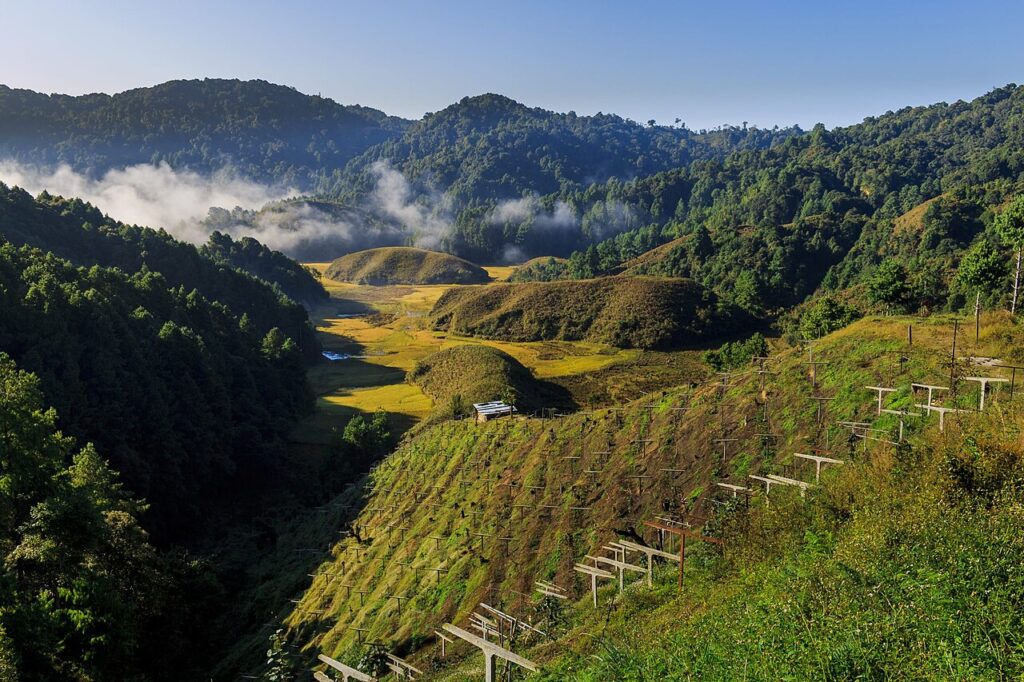
Quick answer: start with Hong, the best-known Apatani village and about half an hour’s walk from town, then add Hija, Hari, Bulla and Siiro. Look for the lapang (the village council platform) and the babo poles outside houses. Always ask before photographing anyone, especially elderly women with traditional facial tattoos.
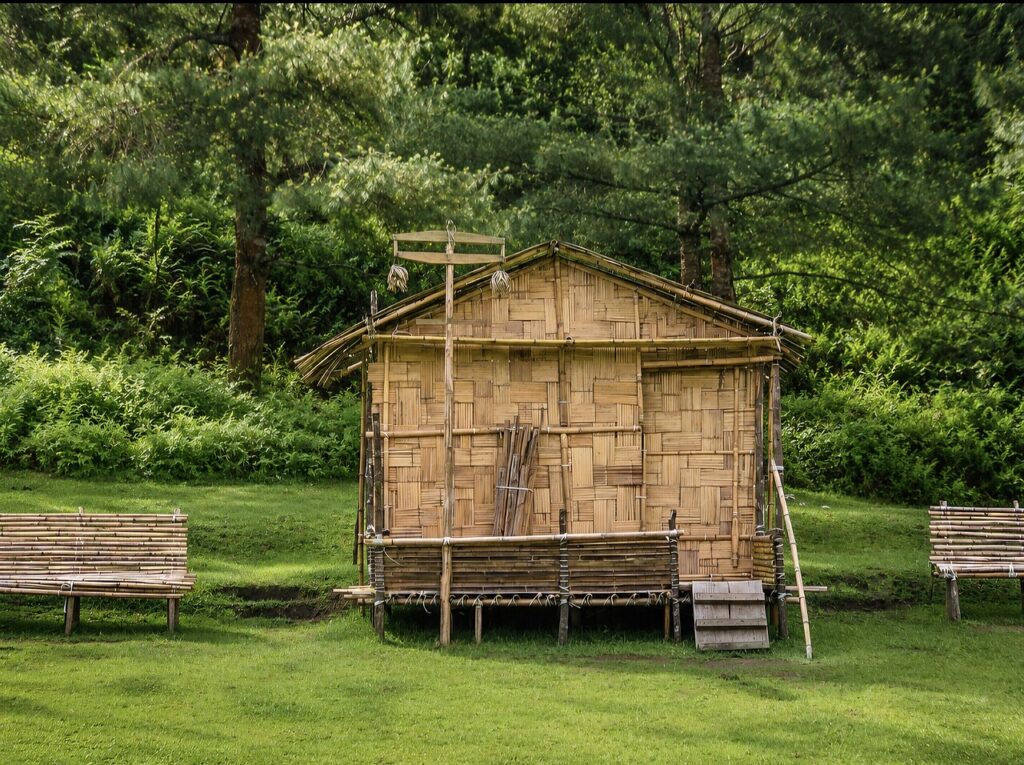
Start with Hong. Arunachal24 reports, citing Census 2011, that the two halves of Hong have 1,197 and 936 residents, large by hill-village standards. Look for the lapang, a big wooden platform where the village council meets, and the T-shaped babo poles in front of houses, which represent the clan and are raised by the community during the annual festival.
Hija, Hari and Bulla each deserve an unhurried walk. The District Administration also lists two spots that are easy to miss: Tiru Dipeh, the oldest metal spade in the valley, at Mudang Tage village, and Tahi Lampw, a stone cave at Reru village said to have sheltered leprosy patients long ago. Ask locally for directions and permission.
Village Etiquette: What Should You Keep in Mind?
These are living villages, not open-air museums. Hence, ask before you enter a house and before you photograph anyone. The older Apatani women with facial tattoos and nose plugs are photographed by a lot of tourists, and not everyone wants to be. If someone says no, put the camera down.
Walk on the bunds only where locals walk, because the paddies double as fish ponds. A local guide from your homestay for half a day is the best way to understand what you see, and it puts money into the village, the same principle we follow with homestays in Spiti.

What Is Apatani Rice-Fish Farming, and Why Is Ziro on the UNESCO List?
Quick answer: the Apatanis rear fish in the same flooded paddy fields where they grow rice, and grow finger millet on the raised bunds between plots. The fields are fed by streams from forested hill slopes. This system is the core reason the Apatani Cultural Landscape was placed on UNESCO’s Tentative List in 2014.
As the UNESCO Tentative List entry describes, the fields are nourished by nutrients washed down from the slopes, and crop residues and village organic waste go back into the soil, so fertility holds year after year. Wikipedia adds that this works without farm animals or machines.
A Tentative List entry is not an inscription, so Ziro is not yet a World Heritage Site. The entry also says the Apatanis lived in Talley Valley for a while before settling in Ziro, which makes the Talley trip below more interesting.
What Else Is There to See Around Ziro?
Quick answer: the district lists the Siddheshwar Nath Shiva Linga at Kardo, about 4 km from Hapoli; Siikhe Lake, 2.5 km away; the Tarin high-altitude fish farm, 3.5 km away; and the Talley Valley Wildlife Sanctuary, about 30 km from Ziro at around 2,400 m, which needs a full day and local arrangements.
| Place | Distance from Hapoli | What it is (per the District Administration) |
|---|---|---|
| Siddheshwar Nath Shiva Linga, Kardo | About 4 km, via Sibey village | A natural Shiva Linga about 25 ft tall in the Kardo forest, with water flowing from its base |
| Siikhe Lake | About 2.5 km | A man-made lake, built as a water conservation project |
| Tarin Fish Farm | About 3.5 km | A government high-altitude fish breeding farm |
| Talley Valley Wildlife Sanctuary | About 30 km | Silver fir and pine plateau at around 2,400 m, gateway at Pange camp |
| Apatani villages | Walking distance to a short drive | Hong, Hija, Hari, Bulla, Siiro |
Is Talley Valley Worth the Trip?
If you like forests and wildlife, yes. The sanctuary was established in 1995, covers about 337 sq km and is home to the clouded leopard. The gateway is Pange camp, 7 km from Manipolyang. I could not find a published entry fee or permission procedure, so ask at the forest office in Ziro or through your homestay, go with a local guide, and carry warm layers.
When Is the Best Time to Visit Ziro Valley?
Quick answer: March to May and late September to November are the best windows. Late March brings the Myoko festival, and late September brings golden paddy and the Ziro Festival of Music. Avoid June to mid-October if you hate rain, because Ziro is very wet. December to February is cold and foggy in the mornings but quiet.
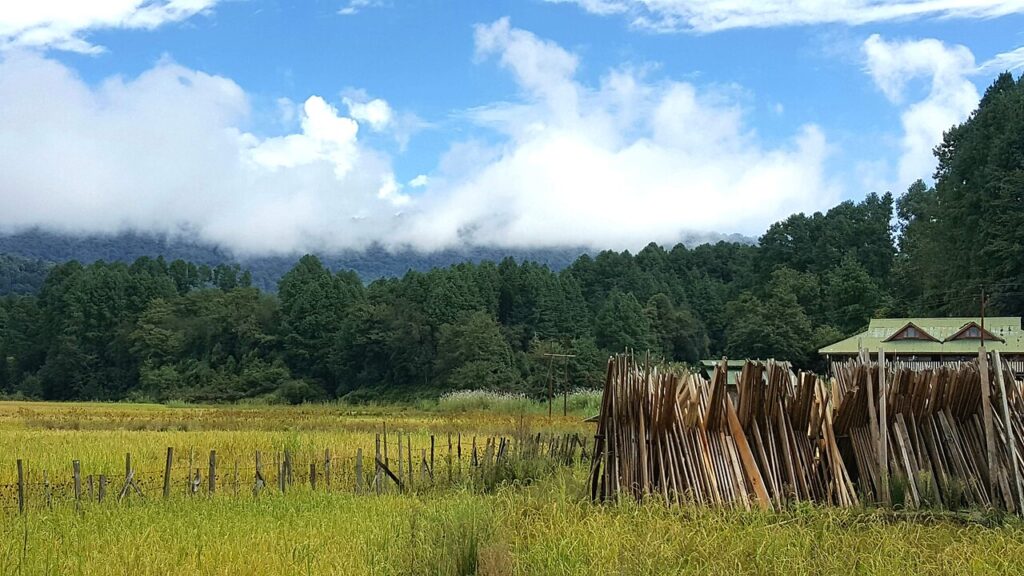
Ziro is a rain valley. Wikipedia, citing India Meteorological Department data, puts the monsoon from June to about mid-October and records 934.88 cm of rain at Ziro in 2000. Late October and November are clearer, and December and January are the coldest months, with morning fog.
| Months | Weather | What is happening | Verdict |
|---|---|---|---|
| January | Coldest, foggy mornings | Murung festival | Quiet, pack warm |
| February | Cold, drying out | Fields resting | Fine for village walks |
| March to May | Pre-monsoon, thunderstorms | Myoko in late March, fields flooded and planted | Very good |
| June to mid-September | Monsoon, heavy rain | Dree festival on 5 July, green paddy | Only if you accept rain and road delays |
| Late September | Monsoon tailing off | Ziro Festival of Music, paddy turning gold | Very good, but book early |
| October to November | Post-monsoon, clearer skies | Harvest season | Best for clear views |
| December | Cold, foggy mornings | Off-season | Quiet and cheap |
Which Festivals Should You Plan Around?
The District Administration names Myoko in March, Murung in January and Dree in July as the main Apatani festivals. Myoko celebrates friendship between villages, falls in the second half of March and rotates among village groups, so ask your homestay who is hosting. Dree, an agricultural festival, is celebrated centrally on 5 July at Nenchalya near Old Ziro.

The Ziro Festival of Music, founded in 2012, ran from 24 to 27 September in 2026, as per the official Ziro Festival website. The 2027 dates were not yet on the festival website in November 2026, but it is usually held in late September. Rooms and Sumo seats fill fast, so book early and arrive a day before, because a missed connection here costs you a day, not an hour.

How Many Days Do You Need? A 3-Night Ziro Itinerary
Quick answer: 3 nights in Ziro is the sweet spot, which means 5 days from Guwahati with overnight trains on both ends. Two nights is possible but rushed, because the arrival day is mostly travel. Add a fourth night if you want Talley Valley without hurrying.
| Day | Plan | Night |
|---|---|---|
| Day 0 | Evening overnight train from Guwahati to Naharlagun | Train |
| Day 1 | Arrive Naharlagun early, take the early Sumo (about 5:30 AM) to Ziro (about 100 km). Check in at Hapoli, rest, evening walk to Siikhe Lake | Ziro |
| Day 2 | Apatani village day with a local guide: Hong in the morning, then Hija, Hari and Bulla. Watch the paddy fields in the afternoon light | Ziro |
| Day 3 | Morning visit to the Siddheshwar Nath Shiva Linga and Tarin Fish Farm, or a full day at Talley Valley with local arrangements | Ziro |
| Day 4 | Early Sumo back to Naharlagun, evening train to Guwahati | Train |
In case you are combining Ziro with Assam, Majuli Island and Kaziranga fit naturally before or after, and the North Lakhimpur route means you do not have to go back through Itanagar. Give a combined loop at least 9 to 10 days.
Where to Stay in Ziro and How Much Does the Trip Cost?
Quick answer: for 3 nights from Naharlagun, budget about Rs 2,500 to Rs 3,850 per person on a budget, Rs 3,850 to Rs 7,600 mid-range, and Rs 6,550 to Rs 10,000 for comfort, twin sharing. That covers the eILP, shared Sumo both ways and your room. Food, guides and the train are extra.
Most stays are in Hapoli, with homestays across the villages. The District Administration’s hotel list below was last updated in July 2018, so treat its rates as a floor.
| Property (district list) | Location | Rate per night (2018 list) |
|---|---|---|
| Arunachal Guest House | Hapoli | Rs 600 to Rs 1,500 |
| Pine Ridge | Hapoli | Rs 600 to Rs 1,500 |
| Valley View | Hapoli | Rs 400 to Rs 3,000 |
| Blue Pine | Pai Gate | Rs 1,000 to Rs 3,500 |
| Paradise | Manipolyang | Rs 1,100 to Rs 3,300 |
| Ziro Valley Resort | Biiri | Rs 1,200 to Rs 4,000 |
| Siiro Resort | Siiro | Rs 1,500 to Rs 4,000 |
| Passa Lath Resort | Hapoli | Rs 3,200 to Rs 5,600 |
I prefer homestays, because your host becomes your guide to the village. Booking-platform listings for Hapoli homestays in 2024-25 started around Rs 3,300 to Rs 4,500 per night. Walk-in rates may be lower, but confirm directly.
Ziro Trip Cost Breakdown (3 Nights, Per Person, Twin Sharing)
| Item | Budget | Mid-range | Comfort |
|---|---|---|---|
| Tourist eILP (4 to 14 days) | Rs 500 | Rs 500 | Rs 500 |
| Shared Sumo Naharlagun – Ziro – Naharlagun (approx.) | Rs 1,100 | Rs 1,100 | Rs 1,100 |
| Room per night (whole room) | Rs 600 to Rs 1,500 | Rs 1,500 to Rs 4,000 | Rs 3,300 to Rs 5,600 |
| Your share of 3 nights | Rs 900 to Rs 2,250 | Rs 2,250 to Rs 6,000 | Rs 4,950 to Rs 8,400 |
| Total per person | Rs 2,500 to Rs 3,850 | Rs 3,850 to Rs 7,600 | Rs 6,550 to Rs 10,000 |
Not included: food, a guide, any private taxi and your train. I left food out on purpose, because I found no verified current figure and would rather give no number than a made-up one. For a private taxi, get a quote at Naharlagun and split it, because 4 really is the magical number 🙂
Is Ziro Safe? Roads, Rain, Network and Cash
Quick answer: Altitude is not a risk at about 5,538 ft. The real risks are monsoon landslides on the approach roads, missing the early Sumo, and travelling after dark. Carry cash, a printed permit and a buffer day.
- Altitude: at about 5,538 ft, Ziro needs no acclimatisation plan, unlike Tawang or Ladakh. Save my AMS guide for your higher trips.
- Monsoon roads: from June to mid-October, slides can cut hill roads. Keep a buffer day, and never book a non-refundable flight out of Guwahati on the day you leave Ziro.
- Night driving: plan to reach Ziro before dark.
- Cash: carry enough for homestays, Sumos and guides.
- Network: download your eILP and offline maps in Naharlagun, and do not count on mobile data in the villages or at Talley. Download your eILP and offline maps before leaving Naharlagun.
- Emergency: dial 112, India’s emergency response number. For permit problems, the eILP helpline is 155250.
Please take a sensible call on the weather, my friend. In the Northeast, a cloudburst can turn a 3.5 hour drive into a full day, and the mountain gods always have the last say.
Related Reading for Your Northeast Trip
- Tawang and Arunachal Pradesh Travel Guide 2026: eILP application steps, Sela Pass and the Bum La permit
- Majuli Island Travel Guide 2026: ferries, satras and the Raas season
- Kaziranga and Assam Travel Guide 2026: safari zones, costs and timing
- Meghalaya Travel Guide 2026: Shillong, Cherrapunji and Dawki in 5 days
- Sikkim Permits 2026: how permits work in neighbouring Sikkim
- Eastern Bhutan Travel Guide: if remote valleys and tribal culture are what draw you
Frequently Asked Questions About Ziro Valley
Do Indians need an Inner Line Permit for Ziro?
Yes. All Indian citizens from outside Arunachal Pradesh need an Inner Line Permit. Apply online for a Tourist eILP on the official portal before you travel.
How much does the Arunachal ILP cost for a Ziro trip in 2026?
The Tourist eILP costs Rs 300 for up to 3 days and Rs 500 for 4 to 14 days, as per the official eILP portal in November 2026. A 3-night Ziro trip usually needs the Rs 500 permit.
What is the nearest railway station to Ziro?
Naharlagun, about 96 to 105 km from Ziro. Overnight trains run from Guwahati, and shared Sumos leave Naharlagun for Ziro early in the morning.
How do I reach Ziro from Guwahati?
Take an overnight train from Guwahati to Naharlagun, then a shared Sumo to Ziro. Direct APST and Network buses also run from ISBT Guwahati to Ziro.
Is there a flight to Ziro?
Alliance Air flights from Guwahati to Ziro were reported in December 2024, using a small aircraft. Check the current schedule with the airline, and keep the train as a backup for bad weather.
What is the best time to visit Ziro Valley?
March to May and late September to November. Late March has the Myoko festival, late September has golden paddy and the music festival, and October to November has the clearest skies.
Is Ziro Valley a UNESCO World Heritage Site?
Not yet. The Apatani Cultural Landscape has been on UNESCO’s Tentative List since 15 April 2014, which is a step before inscription, not inscription itself.
How much does a 3-night Ziro trip cost?
About Rs 2,500 to Rs 10,000 per person for the eILP, shared Sumo both ways and 3 nights of stay on twin sharing, depending on your room. Food and train fares are extra.
Final Thoughts: Is Ziro Worth the Effort?
I think it is, especially if you have done the usual Himalayan circuits and want something different. Ziro has no big passes or snow. It has a valley where a tribe has farmed rice, fish and millet together for centuries. The effort is all in the logistics: get the Rs 500 eILP, take the night train, be at the Sumo stand early, and give it at least 3 nights.

Since this guide is research-based, your first-hand updates matter even more. If you have been to Ziro recently, please share current Sumo fares, homestay rates and road conditions in the comments or in the DwD community. And do share this guide with friends planning a Northeast trip.
If you have any questions, feel free to ask in the comments section below 🙂
Last updated: November 2026. Permit fees verified on the official eILP portal on 25 November 2026.
