


In over a decade of riding and driving through the Himalayas, one principle has kept me safe on every single Ladakh trip and Spiti Valley trip. Start Early, Sleep Early. It sounds simple. Almost too simple. But trust me, this one habit has saved me from landslides, shooting stones, flooded nallas, and a dozen situations that could have gone very wrong.
Whether you are planning your first Ladakh road trip or a Spiti Valley circuit, this principle applies everywhere in the mountains. Today I will share the five concrete reasons why starting early and sleeping early is not just a good habit, it is a survival strategy in the trans-Himalayas.
Quick Answer: The Start Early, Sleep Early Rule at a Glance. Wheels rolling by 5:30 to 6:00 AM. Reach your hotel or campsite by 4:00 to 5:00 PM, well before sunset. Cross water crossings, shooting stone zones, and BRO construction stretches before 12:00 PM. Never drive after dark on a Ladakh or Spiti mountain road, no exceptions 🙂
Let's quickly dive into the details:
What Does “Start Early, Sleep Early” Actually Mean on a Mountain Trip?
Quick Answer: It means being on the road by 5:30 to 6:00 AM and parking for the night by 4:00 to 5:00 PM. That gives you 10 to 11 hours of daylight driving with a real buffer for the delays that are guaranteed on Himalayan roads.
On a Ladakh trip or Spiti Valley trip, “start early” means wheels rolling by 5:30 to 6:00 AM. “Sleep early” means being at your hotel or campsite by 4:00 to 5:00 PM, well before sunset. This gives you roughly 10 to 11 hours of driving and sightseeing in full daylight, with buffer time for unexpected delays that are guaranteed in the mountains.
I have followed this pattern on every trip since 2008, and the difference it makes is massive. The roads are calmer, the water crossings are manageable, the light is better for photography, and you arrive at your destination with enough energy to actually enjoy the evening. Here are the five specific reasons why.

Download your FREE high-resolution PDF copy of this infographic guide. If you found it helpful, please feel free to share it with your family and friends 🙂
Why Do BRO Road Closures and Construction Delays Get Worse After Morning?
Quick Answer: BRO and HRTC road crews usually start work between 8:00 and 9:00 AM, and once a closure begins it can block traffic for 30 minutes to several hours. Leaving by 5:30 AM lets you clear most construction zones before the crews even arrive.
BRO (Border Roads Organisation) and HRTC road crews typically begin their construction and repair work between 8:00 and 9:00 AM. Once they start, scheduled road closures can block traffic for 30 minutes to several hours. On the Hindustan-Tibet Road through Kinnaur, these closures are a daily reality during the summer season. Similarly, the Manali-Leh Highway sees heavy machinery and blasting work throughout the driving season.
If you are on the road by 5:30 AM, you often pass through the worst construction zones before the crews even arrive. I have personally crossed stretches near Powari, Urni, and Akpa in Kinnaur at 6 AM without any wait, while travelers who left at 9 AM got stuck for 3 to 4 hours at the same spot. The math is straightforward: early departure means fewer delays.
Keep in mind that sometimes blasting of big rocks can trigger secondary landslides, adding even more hours to your wait. Starting early gives you the buffer to absorb these delays and still reach your destination in daylight.
How Does Snowmelt Cause Dangerous Landslides and Flooded Nallas Later in the Day?
Quick Answer: Rising daytime temperatures melt snow at higher elevations, and that meltwater swells nallas and loosens slopes through the afternoon. A crossing that is ankle-deep at 6 AM can be knee-deep or worse by 2 PM, strong enough to sweep a bike off its wheels.
This is perhaps the most critical safety reason to start early. As the sun comes up and temperatures rise, snow at higher elevations begins to melt rapidly. This meltwater feeds into nallas (seasonal streams) that cross the road, and also loosens the soil on steep slopes, triggering landslides and snow slides.
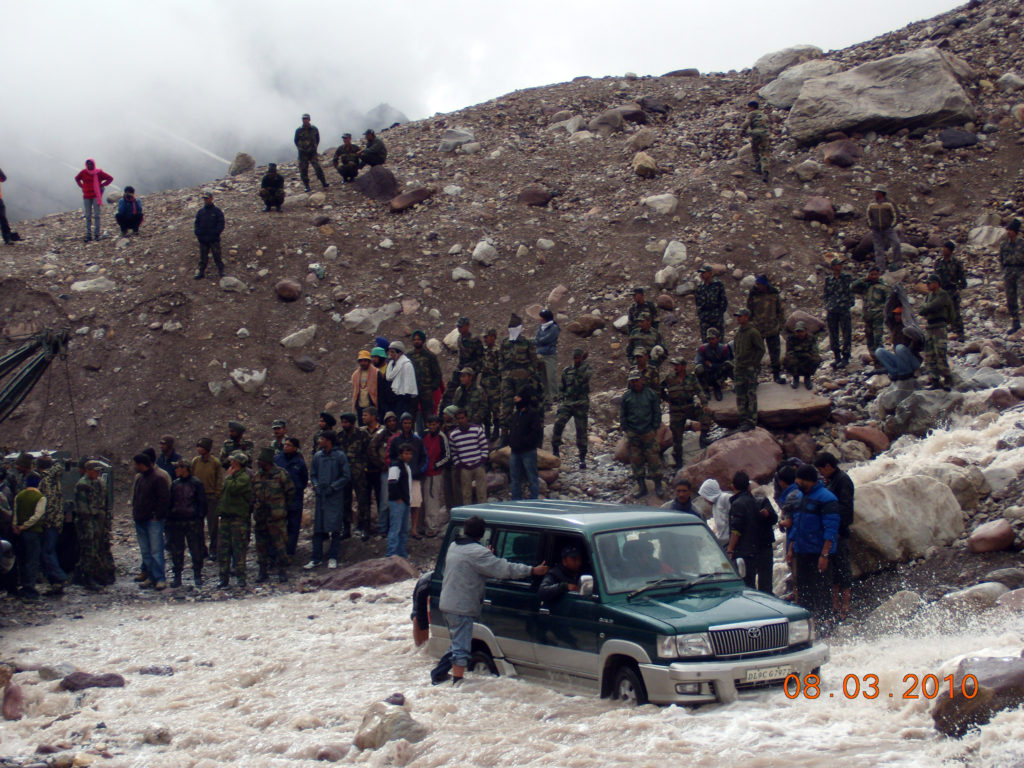
The difference between a nalla at 6 AM and the same nalla at 2 PM can be dramatic. In the early morning, the water might be ankle-deep and flowing gently. By afternoon, the same crossing can become knee-deep or higher with a powerful current that can sweep away a motorcycle or stall a car’s engine. I have seen this happen repeatedly at water crossings on the Manali-Leh Highway near Zing Zing Bar and Patseo, and on the Spiti Valley road between Batal and Gramphu.
Passes like Zoji La on the Srinagar-Leh Highway are particularly notorious for afternoon landslides caused by snowmelt. The roads in Spiti Valley between Tabo and Sumdo also see the same pattern. Hence, crossing these sections in the early morning hours, when the ground is still frozen and water levels are low, dramatically reduces your risk.
This is not theoretical. On June 30, 2026, a flash flood briefly shut the Manali-Leh Highway near Jispa. BRO cleared the debris and restored traffic the same day, but district administrations and the India Meteorological Department followed up on July 22, 2026 with a flash-flood alert for nine Himachal districts, including Lahaul-Spiti and Kullu (reported by downtoearth.org.in). Every single monsoon season brings a version of this same event somewhere on the Manali-Leh or Srinagar-Leh Highway. Keep in mind that timing your crossing for the morning is the one variable you actually control.
What Are Shooting Stones and Why Are They Worse in the Afternoon?
Quick Answer: Shooting stones are loose rocks that break free from unstable hillsides as the sun heats the rock face and afternoon winds pick up. They are frozen in place during the cooler morning hours, so passing through known zones like Akpa-Urni or Zoji La before noon cuts your risk sharply.


Shooting stones are loose rocks that break free from unstable hillsides and come crashing down onto the road. They range from pebble-sized to boulder-sized, and even the small ones travel at tremendous speed. A single shooting stone can shatter a windshield, dent a car roof, or seriously injure a motorcyclist. They are unpredictable and almost impossible to spot before they hit.
The connection to time of day is straightforward: as the sun heats the rock face and wind picks up speed through the afternoon, thermal expansion loosens rocks that were frozen in place during the cooler morning hours. BRO marks the worst shooting stone zones with warning signs, but the signs only tell you to “drive fast and don’t stop.” There is no way to truly protect yourself except to pass through these zones when conditions are calmest, which is early morning.
Shooting stones are especially common as you travel to Spiti Valley from the Kinnaur side, particularly near Malling Nalla and the Akpa-Urni stretch. On Ladakh routes, the section between Leh and Nubra Valley past Khardung La and the Srinagar-Leh Highway near Zoji La are known hotspots. The later you drive through these zones, the higher your risk.

How Does Starting Early Give You More Daylight, Better Accommodation Deals, and Safety Buffer?
Quick Answer: An early start banks you 2 to 3 extra hours of usable daylight, so a delay does not push you into driving after dark. It also means you reach town while multiple homestays and hotels are still available, giving you real bargaining power on the room rate.
In the mountains, daylight is your most valuable resource. Starting early gives you a buffer of 2 to 3 extra hours of usable daylight compared to someone who leaves at 9 or 10 AM. This matters because delays are not a possibility on Himalayan roads, they are a certainty. A landslide here, a puncture there, a BRO closure, a slow truck convoy on a single-lane stretch. These things add up.
If you started at 6 AM and face a 2-hour delay, you still arrive by 4 PM with daylight to spare. If you started at 9 AM with the same delay, you are driving in the dark on roads with no guardrails, no streetlights, and potential drop-offs of hundreds of feet. I cannot stress this enough: never drive after dark on Himalayan mountain roads.
There is a practical benefit too. The earlier you reach your destination in Ladakh or Spiti, the more accommodation options are still available. You can check two or three places and negotiate a better rate. Hotel owners know that if you arrive at 3 PM, you can always move on to the next town if their price is too high. But if you arrive at 8 PM in a small town like Sarchu or Keylong, they know you have no choice. You will pay whatever they ask. Hence, early arrival gives you bargaining power that late arrival simply does not.
Why Is Early Morning the Best Time for Photography in Ladakh and Spiti?
Quick Answer: The first hour after sunrise gives you the warm, directional “golden hour” light landscape photographers chase. Start at 5:30 AM and you drive through it instead of missing it, and you get the evening golden hour too since you are already parked well before sunset.
This is the reward side of the “Start Early, Sleep Early” principle. Photographers call the first and last hour of sunlight the “golden hours” because the light is warm, soft, and directional, perfect for landscapes. When you start your drive at 5:30 AM in Ladakh or Spiti, you are driving through some of the most stunning landscapes on earth during the best possible light conditions.
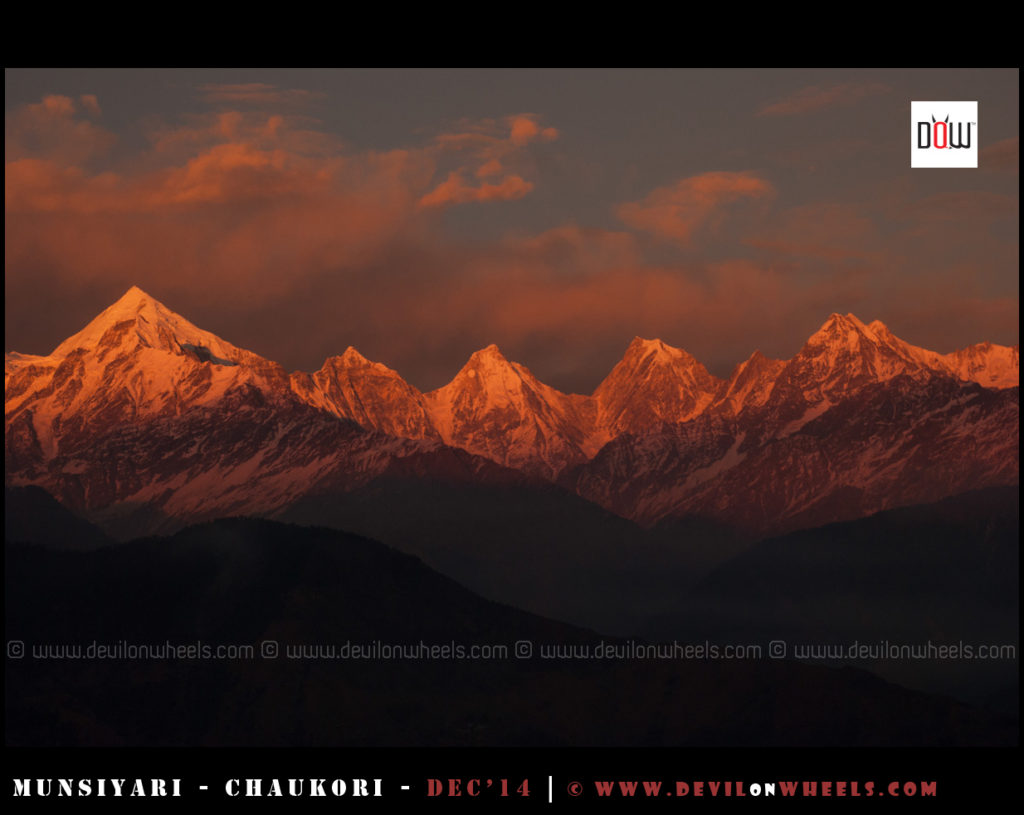
The early morning light hitting the barren brown mountains of Ladakh and painting them golden is something you cannot replicate at noon. Similarly, the evening light at your destination, the alpenglow on snow-capped peaks when you have already parked your vehicle and are sipping tea at your guesthouse, that is the other golden hour you get to enjoy because you arrived early.
Most travelers who start late are busy driving during golden hour. They miss both the morning and evening light because they are still on the road. By following the “Start Early, Sleep Early” principle, you get both golden hours for photography and relaxation, while the late starters get neither.
What Happens When You Ignore This Rule? A Real Near-Death Experience on the Spiti Road
Let me share the story of my friend Rahul Bhutani (do follow him on Instagram) who was kind enough to share his personal near-death experience from his bike ride to Spiti Valley. After reading his story, you will understand exactly why “Start Early, Sleep Early” is not just a suggestion. It is a survival rule.
Always remember: the mountains may be calling you, but they are the ones who will decide whether you come back safely.
Entering the Fear Zone
Rahul’s first “do or die” moment came on his bike ride to Spiti Valley. It was Day 2 as they started from Bhawa Nagar in Kinnaur Valley heading toward Kaza. They were going slow and only managed to reach Spello by 4 PM. The weather worsened rapidly, and locals warned them not to go beyond Nako at any cost.
They thought they could make it. As they progressed toward Nako, they entered a zone of falling stones. The winds were so strong that Rahul’s bike was being pushed toward the cliff edge by sheer force. Halfway through, this was the view:
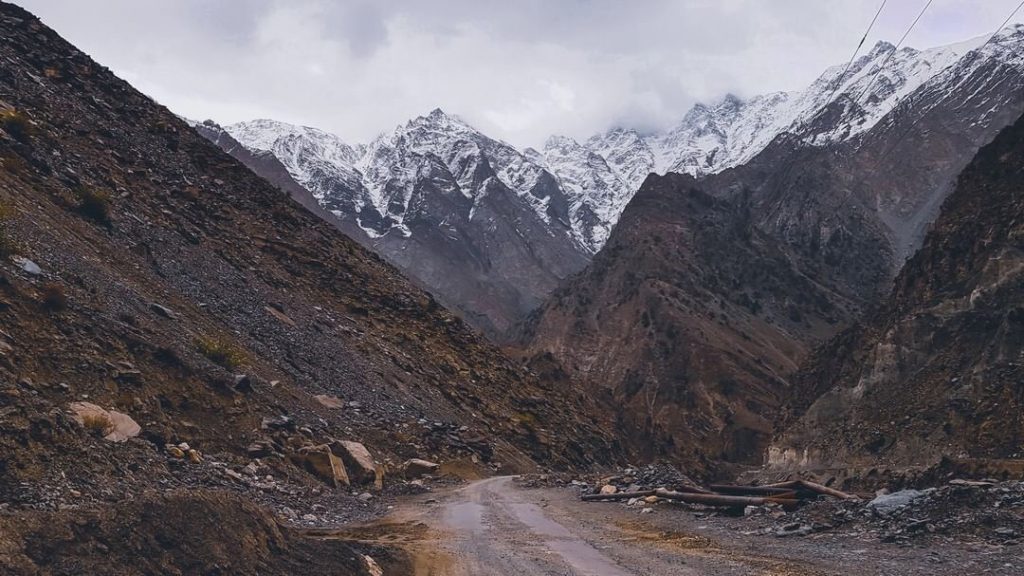
It was at that moment Rahul realized the gravity of the situation. He had promised his girlfriend that he would keep her brother Nitish safe, as Nitish was riding on these roads of Kinnaur and Spiti for the first time. But at 5:50 PM, with falling stones and fading light, Rahul knew he had to stay strong and act calm so Nitish would not panic.
Facing the Fear
As they continued, they reached the famous Khab bridge. The temperature had dropped below 5 degrees Celsius. They took a brief stop to discuss their options and message their families that they were safe.
Rahul was so focused on Nitish’s safety that he packed away his GoPro. He took the lead position and kept Nitish right behind him. They were gaining altitude rapidly. Body shivering, fingers freezing, near-frostbite conditions, brain struggling to function at altitude.
They slowly made it up through hairpin bends via ka-zigs. Then the snowfall started, and it was almost dark. No signs of human habitation, no signages, no mobile signal. In those remote corners of Himachal Pradesh, Rahul genuinely did not know if he would be alive two hours later.
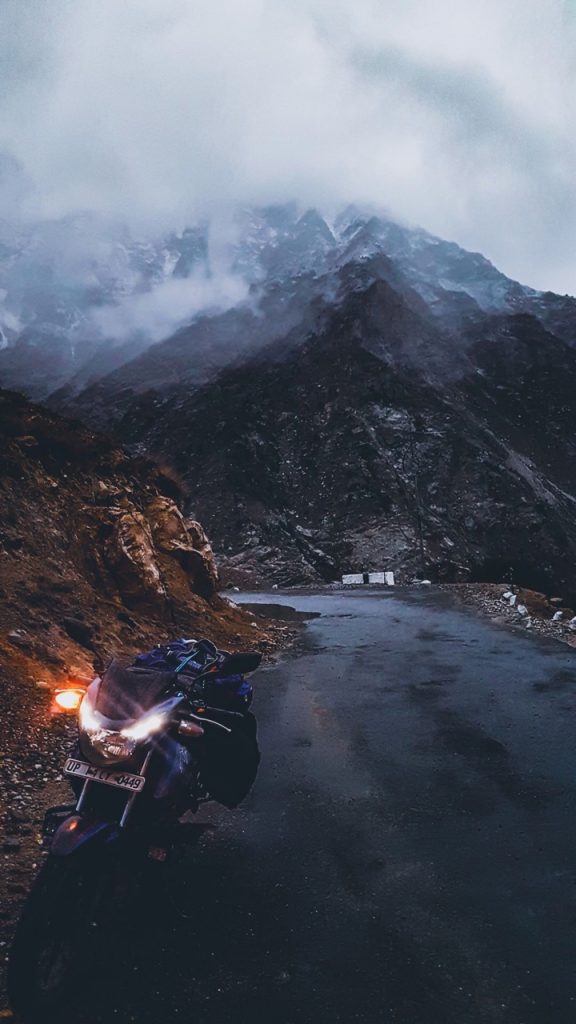
The road disappeared into darkness. He could only hear two bike engines and the river flowing somewhere far below. There were no proper roads, just a narrow patch beside a cliff with a massive drop.
Finding the Way Out
They kept riding through fresh landslide debris, which took 15 minutes to cross alone. It was 7:40 PM. Then a local appeared, almost like an angel, and told them they had missed the turn for Nako 8 km back. The road they were on led straight toward the Tibet border.
They turned back. The snowfall had intensified. It took nearly an hour to cover 20 km in near-zero visibility. Rahul’s headlights were practically useless. Every time Nitish tried to ride alongside or ahead, Rahul shouted at him to stay behind.

They crossed a swollen nallah. When Nitish made it across too, Rahul cheered like a cheerleader to keep him motivated, even though Rahul himself was terrified beyond measure.
They finally reached Nako and found a homestay. Both were nearly hypothermic. After informing their families, Rahul quietly wiped his tears and told Nitish, “Bhai, meri bhi fati thi pure raste, but bataya nahi” (I was scared to death too, but I didn’t tell you).
That day Rahul learned that in the Himalayas, it is always important to leave early and reach early. As the sun goes down, you should find shelter. Because you do not want to face the wrath of nature on these mountains the way they did.
15 months later, that night still sent chills through Rahul’s body. That near-death adrenaline rush made him a better rider and a better person.
They woke up to this view the next morning 🙂
What Is the Ideal Daily Schedule for a Ladakh or Spiti Road Trip?
Quick Answer: Wake by 4:30 to 5:00 AM, be driving by 5:30 to 6:00 AM, cross the risky sections (nallas, passes, shooting stone zones) between 10 AM and noon, and check in to your hotel by 4:00 to 5:00 PM. The full breakdown is in the table below.
Based on my experience over 18 years of Himalayan travel, here is the daily schedule I recommend for any Ladakh trip or Spiti Valley trip:
| Time | Activity | Why It Matters |
|---|---|---|
| 4:30 – 5:00 AM | Wake up, freshen up, light breakfast | Get fuel in you before the road does |
| 5:30 – 6:00 AM | Start driving | Beat the construction crews and rising water levels |
| 8:00 – 8:30 AM | Chai break at a dhaba | You have already covered 50-80 km by now |
| 10:00 AM – 12:00 PM | Cross major nallas, passes, shooting stone zones | Water still manageable, rocks still frozen |
| 12:30 – 1:30 PM | Lunch break | Rest during peak sun and wind hours |
| 2:00 – 4:00 PM | Final stretch to destination | Arrive with daylight to spare |
| 4:00 – 5:00 PM | Check in, explore the town, find food | Negotiate hotel rates with time on your side |
| 7:00 – 8:00 PM | Dinner and sleep | Rest well for another early start tomorrow |
This schedule works whether you are on a self-drive trip, a motorcycle ride, or traveling by bus. Adjust slightly based on season (summer days are longer, giving you more buffer), but the core principle stays the same.
Does This Rule Apply Beyond Ladakh and Spiti?
Quick Answer: Yes. Snowmelt, shooting stones, and fading daylight are not unique to Ladakh and Spiti. The same discipline applies on the Srinagar-Leh Highway, in Kinnaur, and on Uttarakhand hill roads, and it matters even more once the monsoon sets in.
Absolutely. I follow “Start Early, Sleep Early” at most places whenever I travel in the Himalayas, not just Ladakh and Spiti. The same hazards of landslides, water crossings, shooting stones, and fading daylight exist on the roads to Kinnaur Valley, Uttarakhand hill stations, the Srinagar-Leh Highway, and even the Manali-Rohtang stretch. The Himalayas do not care which valley you are in. The physics of snowmelt and gravity work the same everywhere.
In case you are planning a monsoon trip, this rule becomes even more critical. I have written a detailed guide on tips for traveling to Ladakh in monsoons where early starts and early stops are literally the difference between a safe trip and a dangerous one.
Quick Practical Tips to Actually Follow This Principle
Quick Answer: Pack the night before, eat a light dinner by 7 PM, set two alarms, carry ready-to-eat breakfast, and get your whole group to agree on the wake-up time before you sleep. Discipline the night before is what actually makes a 5:30 AM start happen.
Knowing you should start early is one thing. Actually doing it is another, especially when you are on vacation and your body wants to sleep in. Here are some practical tips that help me stick to this discipline:
- Pack the night before. Load your vehicle, set out your riding gear, fill water bottles, and keep your camera bag ready. Morning should be wake up, brush, eat, drive.
- Skip heavy dinners. A light meal by 7 PM helps you fall asleep by 8-9 PM. Heavy food plus altitude is a recipe for a restless night.
- Set two alarms. One at 4:15 AM and another at 4:30 AM. Your phone, not the hotel’s wake-up call (if they even have one in a remote village).
- Carry breakfast supplies. Biscuits, dry fruits, energy bars. You do not want to wait 45 minutes for a dhaba to fire up the stove at 5 AM.
- Tell your travel companions the plan. If you are in a group, make sure everyone agrees on the early start the night before. One late riser can delay the entire convoy.
- Remember the reward. Those extra 2-3 hours of daylight mean you get golden hour photos, better hotel rooms, negotiated prices, and the peace of mind that comes from being safe before dark.
Conclusion
The principle of “Start Early, Sleep Early” has been the single most reliable safety habit across all my Himalayan trips. It protects you from five specific dangers: BRO road closures, snowmelt-driven landslides and flooded nallas, afternoon shooting stones, running out of daylight, and overpaying for accommodation.
Rahul’s story is a powerful reminder of what can happen when you push beyond safe hours. He and Nitish survived, but not everyone is that fortunate. The mountains are magnificent, but they do not forgive poor planning.
If you are planning a trip to Ladakh, Spiti Valley, Kinnaur, or anywhere in the Himalayas, adopt this one habit. It will make your trip safer, more enjoyable, and far more memorable. Feel free to share this with friends who are planning their next mountain adventure. If you have your own experience of why starting early saved your trip (or what happened when you didn’t), I would love to hear your story in the comments below 🙂
Last Updated: August 2026
Related Reading
- 7 Useful Tips for a Self-Drive to Leh Ladakh
- How to Safely Handle Water Crossings on Your Motorcycle
- Complete Guide to Preparing Your Bike for a Ladakh or Spiti Ride
- 12 Tips to Prevent AMS in Ladakh and Spiti
- Tips for Carrying Clothes for a Ladakh Trip
- Manali to Leh via Zanskar: The Most Complete Guide
- Best Time to Visit Spiti Valley: A Month by Month Guide
Frequently Asked Questions
What time should I start driving on a Ladakh or Spiti road trip?
Aim to be on the road by 5:30 to 6:00 AM. This gives you maximum daylight, lets you cross water crossings when water levels are lowest (before snowmelt picks up), and helps you pass through BRO construction zones before road closures begin around 8 to 9 AM.
Why are water crossings more dangerous in the afternoon?
Nallas and water crossings on Himalayan roads are fed by snowmelt. As temperatures rise through the day, snow melts faster and water volume increases dramatically. A stream that is ankle-deep at 6 AM can become knee-deep or higher by 2 PM, strong enough to sweep a motorcycle or stall a car engine.
What are shooting stones and how can I stay safe?
Shooting stones are loose rocks that fall from unstable hillsides onto the road. They are caused by thermal expansion (sun heating rock faces) and wind. BRO marks high-risk zones with warning signs. The safest strategy is to pass through these zones early in the morning when rocks are still frozen in place, and never stop in a marked shooting stone area.
Is it safe to drive after dark on Himalayan mountain roads?
No. Driving after dark on mountain roads in Ladakh, Spiti, or Kinnaur is extremely dangerous. There are no streetlights, guardrails are absent on most stretches, the road surface is unpredictable, and you cannot see landslide debris, potholes, or drop-offs. Animals on the road are another hazard. Always plan to reach your destination before sunset.
Does the “Start Early, Sleep Early” rule apply in winter trips too?
Yes, even more so. In winter, daylight hours are shorter (sunrise around 7 AM, sunset by 5 PM in most Himalayan regions). Black ice forms on roads in the early morning but the real danger is running out of daylight on icy, narrow roads. Start as early as visibility allows and reach your destination by 3 to 4 PM.
What if I am traveling by bus instead of self-driving?
HRTC and HPMC buses on Ladakh and Spiti routes typically depart early morning (5 to 6 AM from most major stops). This is by design, as the bus operators know the same risks. If you are on a private bus or shared taxi, insist on an early departure. If the driver wants to leave at 9 or 10 AM, consider it a red flag.

Which Ladakh and Spiti road sections are most dangerous in the afternoon?
The highest-risk afternoon sections include Zoji La (landslides on Srinagar-Leh Highway), Zing Zing Bar to Patseo (water crossings on Manali-Leh Highway), Batal to Gramphu (water crossings on Spiti-Manali route), the Akpa-Urni stretch in Kinnaur (shooting stones), and the Malling Nalla area near Nako. Cross these before noon whenever possible.
What real-world example from 2026 shows why this rule matters?
On June 30, 2026, a flash flood briefly shut the Manali-Leh Highway near Jispa. BRO cleared the debris and reopened it the same day, and the India Meteorological Department issued a flash-flood alert for nine Himachal districts, including Lahaul-Spiti and Kullu, on July 22, 2026 (source: downtoearth.org.in). Events like this happen every monsoon season, and an early start is the only variable you control that reduces your odds of being caught in one.
Does the Start Early Sleep Early rule apply on the Srinagar-Leh Highway too?
Yes, arguably even more so at Zoji La. The Zoji La tunnel that will eventually bypass the open-air pass is still under construction (roughly 66 to 70 percent complete as of early 2026), with full completion expected only around 2028. Until then, Zoji La remains open to the weather and is one of the most notorious afternoon-landslide zones on any Himalayan highway. Cross it in the morning, not the afternoon.

23 Comments
Comments section gets closed in 90 days. To ask your travel questions, you can follow my YouTube Channel for a faster reply or for a much slower reply follow me on Instagram. :)
Hi Dheeraj!
First of all, let me thank you for DoW …its an amazing place to all things connected to Ladakh travel.
I am starting my first Ladakh trip next week. I have already planned one night each at Pangong and Tsomoriri, and plan to return to Leh via Tsokar. I have one more night at my disposal, and am wondering where to use that?…to add a second night at Pangong, or Tsomoriri Or to plan one night in Tsokar. Pls advise.
Looking forward to a quick revert.
Thanks in advance!
Asheesh if you are going to Nubra Valley, you should use that extra day to visit Turtuk
Hello Mr. Dheeraj
You have always provided the valuable information. After reading your blogs last year i have visited Leh ladakh on a my personal car and your itinerary has helped me a lot.
This year in 1st week of august i am planning to cover kaza, kunzum pass and chandratallake.
I will start my trip on 31st July 2016 from Chandigarh and i want to travel via shimla as there will not be any problem of permits.
1.Kindly suggest the itinerary I want to go via shimla, narkanda,rampur, kalpa, tabo,kaza, kunzum pass ,chnadrataal and then back to chandigarh via manali.
2, no of days required
3. Can i cover this with elite i20 /Scorpio.which one will be better???
You can check a very balanced and most common itinerary for Spiti Valley followed by many travellers including me at the link here for 10-11 days: Most Common Itinerary for Spiti Valley.
For stay options in Kinnaur and Spiti, check the link: Some Good Options of Stays in Spiti Valley / Kinnaur Valley. You can keep an average of 900-1200 per person per day for food and stay on the tour to Spiti Valley.
Better take Scorpio with you.
PS: If possible, do pay a visit to our DoW Spiti Library in Kaza. Who knows you short walk there may help it remain active for the kids up there for much longer time 🙂 :)…
In the group of 6 people we are planning to go leh ladakh.. but we are so confused about how to reach famous places of leh. Without wasting time by general transportation available there.
Har jagah ghumne k bd wapas leh jana pdega or fir waha se jao koi new place dekhne. B’coz sari bus services to leh se milegi. Kuch suggest kro please
Yes, you have to come back to Leh and then take buses to different places. There is no direct connectivity between places by public transport.
Hi
How early is it practical and safe to start the next day of the trip when in Kargil and Leh?
Waiting for your reply
I will not suggest later than 7-7.30 AM for Kargil to Leh and for Leh local sightseeing, you can start at 10-11 AM too
Hi Dhiraj,
Really liked your post and got a lot of information. Appreciated.
I am also planning to visit lahaul spiti valley from 25 th june by my own SUV. Could you plz suggest what things I need to care about. Also what are the road difficulty ? Will I be able to drive there? Coz I never been to that place. Though I am from himachal itself (dharamshala) and driving since 2012. But any advice is appreciated.
Thanks
Rajesh, you should refer: 7 Useful Tips for a Self Drive to Leh – Ladakh or Spiti Valley. The road conditions are OK OK up to Spiti from Kinnaur but from Kaza to Manali, they will be much like driving on the river bed with stones and water crossings to negotiate.
Hi Dheeraj
I m going for Leh Ladakh road trip nxt week…what will b d best option in footwears..As sports shoes will easily becum wet in water/waterfalls and doesn’t dry easily..don’t want to increase weight by taking 2/3 pairs..
Well, if you have or afford to buy a waterproof hiking pair of shoes nothing beats them. Else, if you will be on bike best is to carry fully covered floaters/sandals that protects your feet from all around.
Dear Dheeraj Sharma.
Am planning for a bike trip from Leh to nubra then nubra to pangong then pangong to tso Mori then tso Mori to chandratal and from there to Manali..
On 16th july @nubra on 17@pangong on 18@tso Mori 19@chandratal 20th@manali..
Can you help me by providing the routes which we need to choose and whether we need to take any permit for the trip..
Brijesh, it is not that easy as you have mentioned. All these rides and back breaking rides with only one petrol pump so fuel needs to be considered. Tso Moriri to Jispa and Jispa to Chandratal splitting needs to be done anyhow. So, one day is required for sure. Now, I am not sure if you ride for 6 Hrs, 11 Hrs, 12 Hrs, 12 Hrs, 9 Hrs, each of these 5 days, are you sure it will be worth the trip?
Hi,
I am planning gurgaon to leh on 15th june in my carolla Altis via srinagar and came back via manali. I am going alone.
Need to know how will be weather at that time & kind of clothing I need to carry and what other things i have to taken care.
Regards
Dheeraj, you should carry one heavy woollen jacket and rest light woollens shall be fine. The weather in general is OK during that time. For hatchback/sedan taking on Manali – Leh Highway Or Spiti Valley via Manali Or Ladakh, please refer the link: FAQ | Can I do Leh – Ladakh / Spiti / Manali – Leh trip in Hatchback or Sedan? for more details.
Hi,
I am planning gurgaon to leh on 15th june in my carolla Altis via srinagar and came back via manali. I am going alone.
Can i have to take permit for Nubra, Pangong etc. or where i can get it.
Regards
You do not need permit to visit Nubra Valley and Pangong tso.
Hello Dheeraj, I’m reaching Leh on 31st May by flight. I’m planning to stay for one week. Need to know how will be weather at that time & kind of clothing I need to carry.I will be visiting siachen base camp( permission taken) & local sight seeing too.
Regards
We are planning to take bike on rent from manali and visit spiti valley &chandratal lake.
Also can lahaul be visited .
We have 5 days to start and come back to manali.
Estimateed costing.
Can you help with the route to follow with maximum sightseeing.
PS:-5 bikes and 10 people in all.
Also if you can tell the danger involved.
Thanks and Regards.
Also trip starts on 6th june from manali.
Please post an article on how to make a duet bike trip more comfortable or some tips for a duet bike trip (like how to carry luggage, etc.)
Manav, there is already one: 5 Tips to Rent Bike in Leh – Ladakh and Ride with Pillion