


A bike ride to Spiti Valley is one of those trips that stays with you for life. The cold wind on your face, the endless curves through barren mountains, and the sheer silence of the high-altitude desert. I have ridden through Spiti multiple times over the years, and every trip has taught me something new about both the terrain and myself. If you are planning a motorcycle trip to Spiti Valley in 2026, this guide covers everything you need to know, from riding tips and route options to fuel stops, permits, and bike preparation.
Spiti Valley sits at an average altitude of 12,500 feet in the cold desert region of Himachal Pradesh. The roads here are some of the most challenging in India. You will encounter loose gravel, water crossings, narrow cliff-side stretches, and high-altitude passes above 13,000 feet. But with the right preparation and a sensible riding approach, this is a trip that every motorcycle enthusiast should experience at least once.
Last Updated: August 2026
| Best Time | Mid-June to September (both routes open) |
| Routes | Shimla-Kinnaur (safer, gradual) or Manali via Atal Tunnel (shorter, tougher) |
| Distance | 2,200-2,400 km round trip from Delhi |
| Permits (Indians) | No ILP for Kaza/Tabo/Kibber. e-Aagman e-pass mandatory on the Atal Tunnel route (free) |
| Budget (own bike) | Rs 18,000-32,000 for 10 days |
| Recommended Bike | Royal Enfield Himalayan or any 350cc+ with 180mm+ ground clearance |
Let's quickly dive into the details:
What Are the Best Route Options for a Spiti Valley Bike Trip?
There are two main routes to reach Spiti Valley by motorcycle, and ideally, you should plan a circuit that covers both. The Shimla-Kinnaur route is the safer entry point. You ride from Delhi to Shimla, then through Narkanda, Rampur, Reckong Peo, Kalpa, Nako, Tabo, and finally Kaza. This route stays open for most of the year (except during heavy snowfall in January-February) and offers a gradual altitude gain that helps with acclimatization.
The Manali route is shorter but more intense. From Manali, you ride through the Atal Tunnel (which bypasses the old Rohtang Pass road), then through Gramphu, Batal, and over Kunzum Pass (14,931 feet) to reach Kaza. This route typically opens in late May or early June and closes by mid-October. The stretch from Gramphu to Losar is the roughest section you will ride in all of Spiti, with multiple water crossings, loose gravel, and sometimes snow even in July.
My recommendation is to enter via Shimla-Kinnaur and exit via Manali (or the reverse). This way you cover the full circuit without backtracking. Keep in mind that the Manali side is only viable from June to early October. Check the latest Manali-Kaza road status before finalizing your dates.

How Should You Prepare Your Motorcycle Before the Trip?
Your motorcycle is your lifeline in Spiti. There are stretches of 100+ km with no mechanic, no petrol pump, and no mobile network. If something breaks down in these sections, you are on your own until another vehicle passes by. I have seen riders stranded near Batal with a broken clutch wire and no spare. It gets serious very quickly at these altitudes.
Before you leave, get a full bike preparation and service done. Here is a checklist that I follow before every Spiti ride.
- Engine oil change with fresh oil suited for cold temperatures
- Chain and sprocket inspection (replace if worn beyond 70%)
- Brake pads front and rear, check fluid levels
- Tires with good tread depth, dual-sport or semi-knobby pattern preferred
- Clutch and throttle cables, carry spares of both
- Air filter clean or replace, carry a spare for dusty conditions
- Battery fully charged, terminals cleaned
- Spark plug, carry a spare and know how to replace it
- Coolant and radiator (for liquid-cooled bikes) top up
- Electricals including headlight, indicators, horn all working
Also carry a basic toolkit with spanners, pliers, screwdrivers, puncture repair kit, a hand pump, and a few meters of binding wire. Learn how to fix a puncture, clean a spark plug, and adjust your chain tension before you leave home. These basic skills can save your trip.
Which Motorcycle Is Best for a Spiti Valley Ride?
The Royal Enfield Himalayan (411cc or the newer 450cc) is the most popular choice for Spiti, and for good reason. It has good ground clearance, a comfortable riding position for long hours, decent fuel efficiency (around 30-35 kmpl), and spare parts are available at most mechanics in Manali and even Kaza. The RE Classic 350 and Bullet 350 also work well if you are comfortable with the weight.
If you own a KTM Adventure 250 or 390, those are excellent choices too, with better suspension travel and lighter weight. Honda CB350 and Bajaj Dominar 400 have also been ridden to Spiti successfully. The key factors are ground clearance (minimum 180mm), fuel tank capacity (15+ litres preferred), and your familiarity with the bike. Do not rent a bike you have never ridden before and head straight to Spiti. Spend at least a day getting comfortable with it first.
If you are renting, Manali has several bike rental operators where you can hire a Royal Enfield Himalayan for Rs 1,500-2,500 per day depending on the season and model.
Where Are the Fuel Stations on the Spiti Valley Route?
Fuel availability is one of the biggest concerns on a bike ride to Spiti Valley. The stretches between pumps are long, and if you run out in the middle, there is no backup. Here are the key fuel stops on both routes as of 2026.
Shimla-Kinnaur Route: Shimla, Narkanda, Rampur Bushahr, Tapri, Reckong Peo (Kinfed pump), Pooh. After Pooh, the next reliable pump is in Kaza, nearly 200 km away. Always fill your tank completely at Reckong Peo or Pooh and carry a 5-litre jerry can as backup.
Manali Route: Manali has the last petrol pump before Kaza. After Manali, there is no fuel station until Kaza, roughly 200 km through the Atal Tunnel and over Kunzum Pass. You absolutely must carry extra fuel on this stretch. A 5-10 litre jerry can is essential.
Kaza: Has petrol pumps (Indian Oil and HP). Fuel here can sometimes be in short supply during peak season, but as of 2026, availability has improved significantly. Still, never leave Kaza with a half-empty tank.
For a detailed guide on fuel management for Himalayan motorcycle trips, refer to our fuel availability guide.
What Riding Techniques Work Best on Mountain Roads?
Riding in the mountains is fundamentally different from riding on the plains. The terrain, the altitude, and the unpredictable conditions demand a different approach. Here are the riding techniques that have kept me safe over multiple Spiti trips.


Stay Alert and Read the Road Ahead
Mountain riding demands constant alertness. You need to watch for animals on the road, loose gravel on corners, oncoming trucks on narrow stretches, and sudden changes in road surface. Before entering a hairpin bend, look up or down the mountain to spot oncoming traffic. Count the vehicles you can see so you know what to expect. Never assume the road ahead is clear just because you cannot see anyone.
Before you start each day, gather information about road conditions from locals or riders coming from the opposite direction. Ask about landslides, water crossings, and whether any stretches are closed. This simple habit can save you hours of trouble.
Master Your Braking on Steep Descents
On steep downhill sections, your rear brake alone is not enough because most of your bike’s weight shifts to the front wheel. Use engine braking as your primary tool. Shift to a lower gear and let the engine control your speed. When you need additional braking, use the front brake progressively. The rear wheel carries very little weight on descents and locks up easily, so use it gently.
On uphill turns, the rear brake is actually your friend. It stabilizes the bike and lets you maintain throttle through the corner.

Handle Corners and Curves Safely
On mountain roads, your lane positioning through corners is critical. Start wide, hug the outside of the turn, and you will see oncoming traffic earlier. On a left turn, position yourself on the right side. On a right turn, start from the left. This is especially important on the Hindustan-Tibet Highway between Shimla and Kaza where blind corners are common.
On very narrow roads with hairpin bends, do not drift into the oncoming lane. There may not be enough time to get back if a local truck appears suddenly. Always honk before blind curves.
Handle Water Crossings with Caution
The Gramphu-Batal-Losar stretch on the Manali side has several water crossings, especially in July and August. Before riding through, stop and assess the depth and flow. If water is above your exhaust pipe, do not attempt it. Wait for the flow to reduce (mornings are usually calmer than afternoons as glacial melt peaks in the afternoon). Ride in first gear with steady throttle, feet on the pegs, and never stop in the middle. For a detailed technique guide, read our post on handling water crossings on a motorcycle.
How Do You Prevent Altitude Sickness on a Spiti Bike Trip?
Altitude sickness (AMS) is a real risk on any Spiti Valley motorcycle trip. Kunzum Pass sits at 14,931 feet, Kaza is at 12,500 feet, and even the Kinnaur route crosses stretches above 10,000 feet. Symptoms include headache, nausea, dizziness, and breathlessness. In severe cases, it can become life-threatening.
The single most effective prevention is gradual altitude gain. This is why I recommend entering from the Shimla-Kinnaur side. You gain altitude slowly over 2-3 days (Shimla at 7,000 ft, Kalpa at 9,700 ft, Nako at 11,800 ft, Kaza at 12,500 ft). If you come from Manali, you go from 6,700 feet to nearly 15,000 feet at Kunzum Pass in a single day, which is a shock to the body.
Other tips that work: stay hydrated (3-4 litres of water per day), avoid alcohol completely, eat light meals, and start your riding early each morning and stop by 3-4 PM. Some riders carry Diamox (acetazolamide), but consult your doctor before taking it. For a comprehensive guide, refer to our AMS prevention tips.
What Speed and Distance Should You Plan Per Day?
In the mountains, forget your highway averages. On Spiti roads, you can comfortably cover 150-180 km in a full day of riding (8-9 hours including breaks). On the Gramphu-Batal-Losar stretch, even 80-100 km can take 6-7 hours due to water crossings, loose gravel, and unpaved sections.
Keep your daily targets practical. I take a 5-10 minute break every hour, sometimes just to stretch, drink water, or sit by a river. There is a limit to how long you can maintain the kind of concentration that mountain riding demands. Rushing through Spiti defeats the entire purpose of the trip. The beauty of a bike ride here is the journey itself, not how fast you can reach Kaza.
Also, never ride after dark in the mountains. Road hazards are invisible at night, animals cross without warning, and temperatures drop sharply after sunset. Plan to reach your accommodation by 4-5 PM at the latest.
Do You Need Permits for a Bike Trip to Spiti Valley?
Indian nationals do not need an Inner Line Permit to visit Spiti Valley, including Kaza, Tabo, Key, Kibber, and surrounding villages. However, if you plan to ride beyond Sumdo towards the China border area (Shipki La), you will need an Inner Line Permit, which costs Rs 250 per person at the Reckong Peo office or Rs 400 at the Shimla Sugam Center (2026 rates). It can also be arranged at the Kaza DC office.
Foreign nationals require an Inner Line Permit for areas beyond Reckong Peo, arranged through a registered travel agent with a minimum group of two. This can be obtained from the DC office in Shimla or Reckong Peo. Carry 4-5 passport-size photographs and photocopies of your passport and visa.
If you are taking the Manali route, you no longer need a Rohtang Pass permit since the Atal Tunnel bypasses the pass entirely. However, if you specifically want to ride over Rohtang Pass (the old road), you will need to get an e-permit through rohtangpermits.hp.gov.in (the old rohtangpermits.nic.in portal is dead, do not use it). The fee is a flat Rs 550 (Rs 500 permit plus Rs 50 congestion charge) for both cars and bikes as of 2026, not the older split fee some sites still quote.
One permit that catches most riders off guard: every vehicle entering Lahaul & Spiti district via the Atal Tunnel, including a two-wheeler, must now register on the free e-Aagman portal (eaagman.hp.gov.in) and show the QR e-pass at the checkpost. Fill it out from Manali 24-48 hours ahead since there is no mobile network at the barrier. Separately, a SADA (Special Area Development Authority) entry fee applies just past the tunnel’s north portal near Sissu: Rs 50 for bikes and Rs 200 for cars, cash only, and Himachal-registered vehicles are exempt. This is genuinely new for 2026 and many older guides still miss it entirely, so keep in mind, my friend, budget the extra Rs 50 and the e-Aagman registration into your Manali-route plan.
What Should You Pack for a Spiti Valley Motorcycle Trip?
Packing right can make or break your Spiti bike trip. The weather changes drastically across the route. You can have 30 degree heat in Rampur and near-freezing temperatures at Kunzum Pass on the same trip. Here is what I recommend packing.
Riding Gear: A good quality helmet (full-face preferred), riding jacket with CE-rated armor, knee guards, ankle-high riding boots, waterproof gloves, and a balaclava for high-altitude cold. Avoid riding in sneakers or sandals. For a detailed list, check our guide on clothes and accessories for a Himalayan bike trip.
Clothing: Pack in layers. Thermal innerwear, fleece mid-layer, waterproof outer jacket, and a down jacket for evenings. Temperatures at Kaza drop to 2-5 degrees Celsius at night even in July. Carry a rain suit (jacket + pants) because sudden rain is common. Read our Spiti Valley clothing guide for specific recommendations.
Essentials: Sunscreen (SPF 50+), sunglasses with UV protection, lip balm, a good quality headlamp, power bank, basic first-aid kit with ORS packets and Disprin, and a reusable water bottle. Mobile network is limited in Spiti. BSNL postpaid has the widest coverage, and Jio and Airtel work in Kaza town but are patchy beyond that. Download offline maps on Google Maps before you leave.
For luggage, I strongly recommend saddlebags or tail bags instead of strapping a backpack to your back. Carrying weight on your body for 8 hours of riding will exhaust you much faster. Use bungee cords or ratchet straps to secure your luggage firmly. Also refer to our must-have things to carry on a Himalayan self-drive trip for a comprehensive checklist.
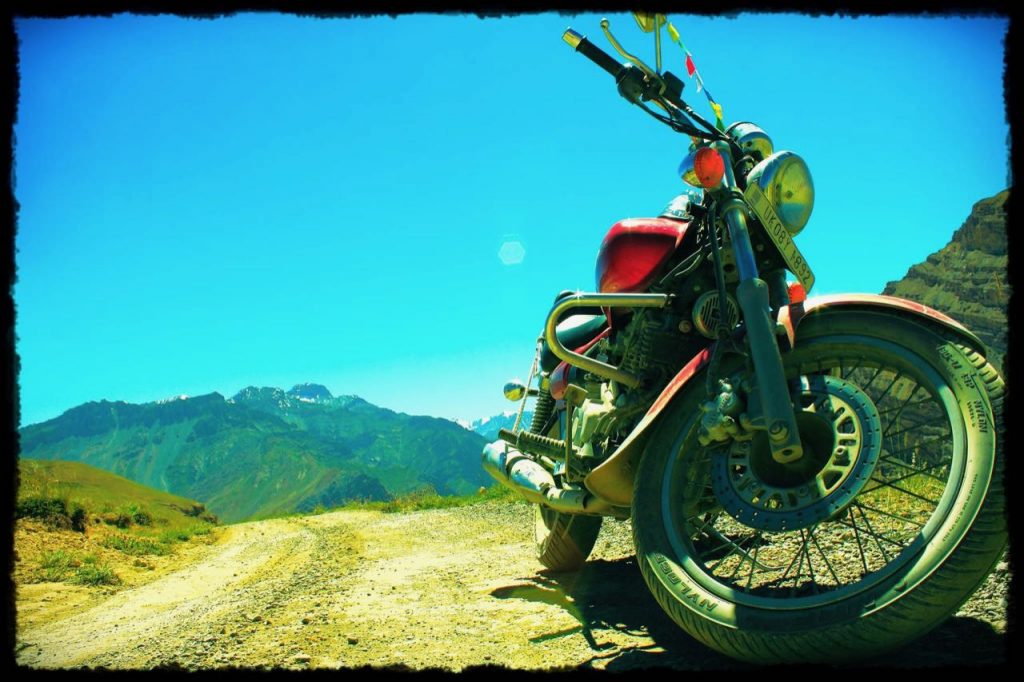
How Much Does a Spiti Valley Bike Trip Cost in 2026?
A bike ride to Spiti Valley can be done on a range of budgets. Here is a rough breakdown for a 10-day Delhi-Spiti-Delhi circuit trip in 2026.
![What is the best bike or best motorcycle for Leh Ladakh bike trip? [4 Things to Consider]](https://discoverwithdheeraj.com/yt_vid_thumbs/ladakh/81.png)
Fuel: Approximately 2,200-2,400 km round trip. At 30 kmpl average and Rs 100-103/litre (2026 petrol prices in Himachal, with the Lahaul-Spiti stretch running the priciest in the state), that works out to around Rs 7,300-8,300 in base fuel, plus another Rs 500-800 for jerry can refills, so budget Rs 7,800-9,000 total.
Accommodation: Budget homestays and guesthouses in Spiti run Rs 500-1,500 per night. Mid-range hotels cost Rs 1,500-3,000 per night. For 9 nights, budget Rs 5,000-15,000 depending on your comfort preference.
Food: Dhaba meals cost Rs 150-300 per meal. Budget Rs 500-800 per day, so Rs 5,000-8,000 for 10 days.
Bike rental (if applicable): Rs 1,500-2,500 per day for a Royal Enfield Himalayan in Manali. For 10 days, that is Rs 15,000-25,000.
Total budget (own bike): Rs 18,000-32,000 for a 10-day trip. With rental bike: Rs 33,000-57,000. For a detailed cost breakdown, check our Spiti Valley trip budget guide.
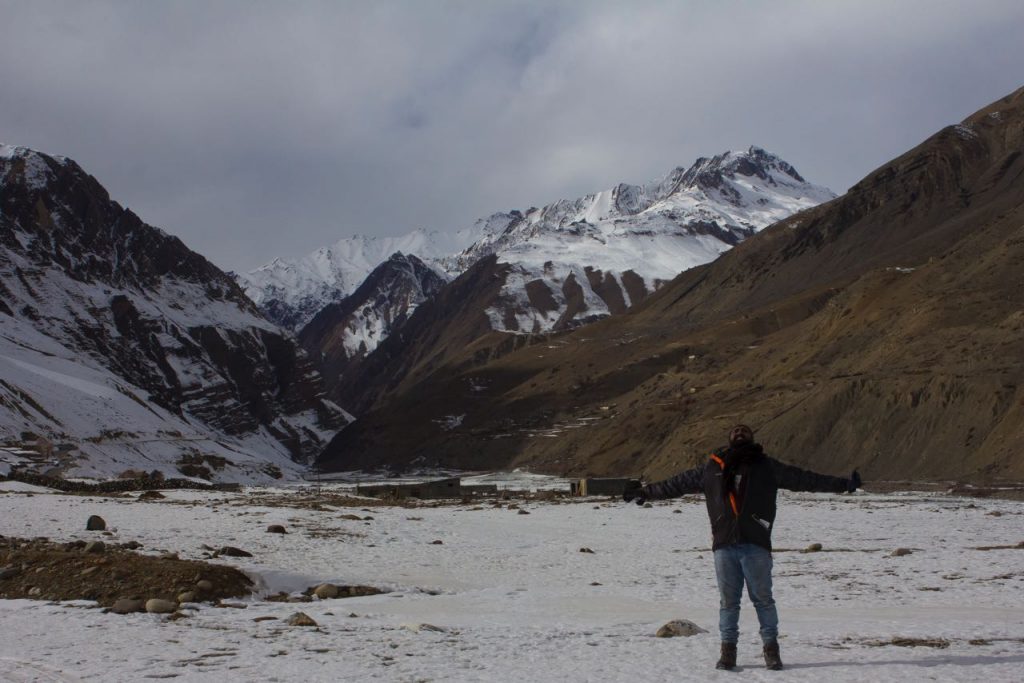
What Are Some Additional Safety Tips for Spiti Riders?
Beyond the riding techniques covered above, here are some practical safety tips that come from experience on these roads.
- Before overtaking a vehicle, check their mirrors for a clear road ahead. Truck drivers in the mountains are generally helpful and will signal you when it is safe to pass.
- When passing a parked vehicle, look below the tires for shadows of animals. Sudden animal crossings have caused many accidents in Kinnaur and Spiti.
- If you are following a vehicle at night (which you should avoid, but sometimes it is unavoidable), follow the wheel tracks to avoid potholes and bumps.
- Never park your motorcycle facing downhill. Always park facing uphill on the flattest surface you can find. Motorcycle side stands are designed to lock when the bike tips backward, not forward.
- Watch out for frost on the road at higher altitudes, especially in shadow regions. You can be riding on a clear, dry road and suddenly hit a patch of ice after rounding a corner into shade.
- If there is a landslide, follow instructions from the local administration. They understand the terrain better than you do. Do not try to ride through an active landslide zone.
- Carry a satellite communicator or at least inform someone about your daily route plan. Mobile connectivity is absent on large stretches of both routes.
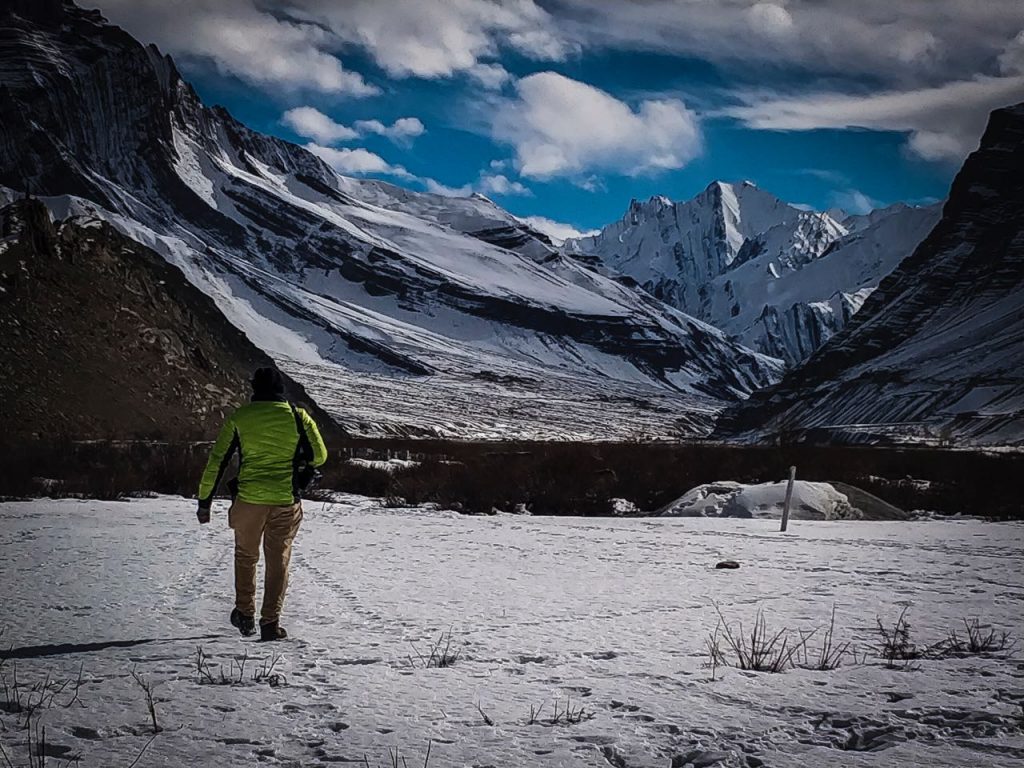
What Mistakes Should You Avoid on a Spiti Bike Trip?
Over the years, I have seen riders make the same mistakes repeatedly. Here are the common ones that you should avoid.
- Skipping acclimatization: Rushing from Manali to Kaza in one day via Atal Tunnel and Kunzum Pass is a recipe for AMS. Take it slow.
- Overloading the bike: Every extra kilogram affects your handling on loose gravel and steep inclines. Pack light and smart.
- Ignoring weather forecasts: Check weather before you ride each day. Sudden snow on Kunzum Pass has stranded riders even in June.
- Not carrying extra fuel: The 200 km gaps between petrol pumps are real. A 5-litre jerry can is not optional, it is essential.
- Riding in a group at highway speed: Maintain safe distance from the rider ahead. Gravel thrown by the lead bike’s tires can hit your visor. Ride at your own pace.
- Not carrying cash: ATMs in Kaza are unreliable. UPI works in some shops but not everywhere. Carry at least Rs 10,000-15,000 in cash.
For a comprehensive list, check our article on 14 common mistakes on a Spiti Valley trip.
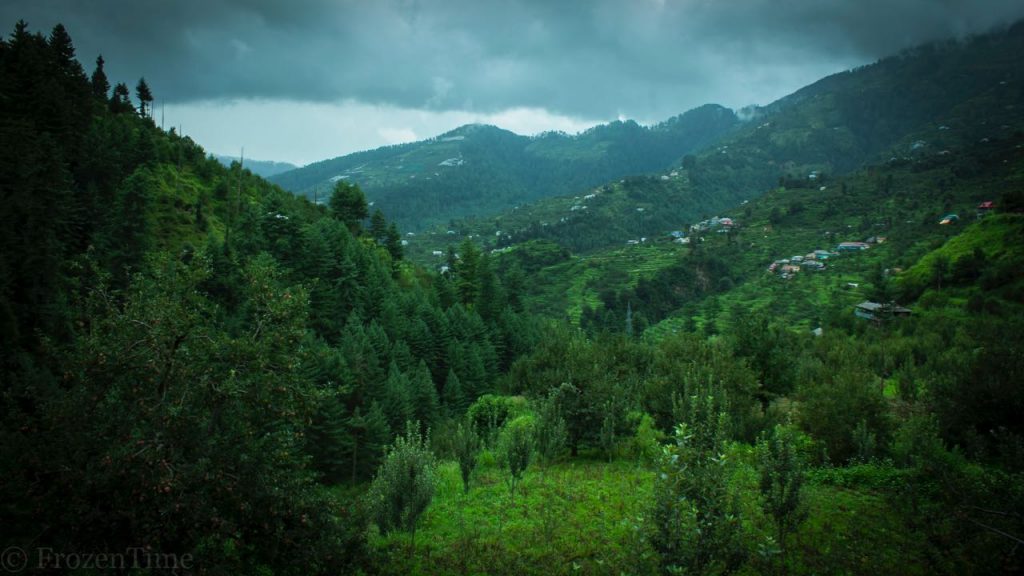
What Is the Best Time for a Bike Ride to Spiti Valley?
The best time for a motorcycle trip to Spiti Valley is mid-June to September. During this window, both routes (Shimla-Kinnaur and Manali) are open, fuel pumps are operational, and accommodation is available in all villages. The best time to visit Spiti Valley varies by what you want to experience.
June: Kunzum Pass opens (usually by mid-June). Snow may still be present on higher sections. Water crossings are intense due to snowmelt. Best for riders who want a challenge.
July-August: All routes are open. Weather is relatively warm (15-20 degrees during the day in Kaza). Monsoon can cause landslides on the Kinnaur route, especially between Rampur and Reckong Peo. This is peak tourist season.
September-early October: The best time in my opinion. Crowds thin out, weather is crisp and clear, roads are at their best condition, and the autumn colors in Nako and Tabo are stunning. But Kunzum Pass can close anytime after mid-October with early snowfall.
If you can only ride from Shimla-Kinnaur side (no Manali exit), then April-May and October-November also work. The Kinnaur route stays open longer, though temperatures will be colder.
What Is a Good Itinerary for a Spiti Bike Trip?
Here is a practical 10-day Spiti Valley circuit itinerary that works well for motorcyclists entering from Shimla and exiting via Manali.
Day 1: Delhi to Narkanda (450 km, 10-11 hours). Start early, reach by evening.
Day 2: Narkanda to Sangla/Chitkul (180 km, 7-8 hours). Scenic Kinnaur Valley begins.
Day 3: Sangla to Kalpa/Reckong Peo (80 km, 3-4 hours). Rest day for acclimatization. Fill fuel at Reckong Peo.
Day 4: Reckong Peo to Nako (120 km, 5-6 hours). Cross into Spiti region.
Day 5: Nako to Tabo to Kaza (115 km, 4-5 hours). Visit Tabo Monastery en route.
Day 6: Kaza rest day. Explore Key Monastery, Kibber, Langza, Hikkim. Fill fuel in Kaza.
Day 7: Kaza to Chandratal Lake (120 km, 6-7 hours via Kunzum Pass). Camp near the lake.
Day 8: Chandratal to Manali (120 km, 7-8 hours via Batal and Atal Tunnel).
Day 9: Rest day in Manali or start riding towards Delhi.
Day 10: Manali to Delhi (530 km, 12-13 hours via NH3).
This itinerary gives you enough acclimatization time and does not push more than 180 km on any single day within Spiti. Adjust the pace based on your comfort level. If you have more days, spend an extra night in Kaza and explore local homestays in Spiti.
Conclusion
A bike ride to Spiti Valley is not just another road trip. It tests your riding skills, your patience, and your ability to adapt to conditions that change by the hour. But the rewards are beyond anything you will find on a regular highway. The silence of the cold desert, the ancient monasteries perched on cliffs, the warmth of homestay owners who treat you like family, and the raw beauty of a landscape that has remained unchanged for centuries.
Prepare your bike well, pack smart, respect the mountains, and ride within your limits. Do not try to prove anything to anyone on these roads. The mountains have a way of humbling even the most experienced riders. Take your time, enjoy every kilometer, and come back with stories that matter.
If you have any questions about planning your Spiti bike trip, feel free to ask in the comments below or reach out through the Spiti Valley FAQs page. Also check our complete guide on long-distance motorcycle riding tips for more general advice on Himalayan bike trips. If you found this guide helpful, share it with your riding group. Ride safe, my friend 🙂
Frequently Asked Questions
Can a beginner rider do a Spiti Valley bike trip?
Yes, but with preparation. You should have at least 6-12 months of regular riding experience and be comfortable handling your bike on rough roads, slopes, and gravel. Practice slow-speed maneuvers, U-turns on inclines, and basic maintenance before the trip. Entering from the Shimla-Kinnaur route is recommended for beginners since the road conditions are better than the Manali side.
Is a 150cc or 200cc bike enough for Spiti Valley?
Technically yes, riders have completed Spiti on 150cc bikes and even scooties. However, the loss of power at high altitude (engines lose roughly 3-4% power per 1,000 feet above sea level) makes a 150cc bike feel like a 100cc at Kunzum Pass. A 350cc or higher motorcycle with good torque and ground clearance is far more comfortable and safer for this terrain.
Is it safe to ride solo to Spiti Valley?
Solo riding in Spiti is doable and many riders do it every year. The main risks are breakdowns in no-network zones and medical emergencies. Carry a basic toolkit, inform someone about your daily plan, and if possible, ride in loose formation with other riders you meet on the route. BSNL postpaid gives the best coverage. Kaza, Tabo, and Reckong Peo have reliable connectivity.
What is the total distance of the Spiti Valley circuit by bike?
The full Delhi-Shimla-Kinnaur-Kaza-Manali-Delhi circuit is approximately 2,200-2,400 km depending on the detours you take. The one-way distance from Delhi to Kaza via Shimla is about 700 km, and from Kaza to Delhi via Manali is about 750 km.

Do I need travel insurance for a Spiti bike trip?
It is highly recommended. Standard health insurance policies may not cover high-altitude emergencies or medical evacuation. Check with your insurance provider whether they cover travel above 10,000 feet. Several Indian insurers now offer specific adventure travel policies. Also ensure your bike has valid insurance with third-party coverage at minimum.
Where can I get my bike repaired in Spiti Valley?
Kaza has a couple of basic motorcycle mechanics who can handle Royal Enfield repairs, punctures, and minor fixes. Reckong Peo also has mechanics. Between these two towns (the 200 km Kinnaur-Kaza stretch), there is almost nothing. On the Manali side, mechanics are available in Manali but nothing between Manali and Kaza. This is why carrying spare cables, a puncture kit, and basic tools is non-negotiable.
Can I carry a pillion rider to Spiti Valley?
Yes, but it adds significant difficulty. A pillion rider increases your bike’s weight by 50-70 kg, which affects handling on loose gravel, steep inclines, and water crossings. Your fuel consumption also increases by 15-20%. Make sure your pillion is comfortable with long hours on rough roads and carries their own rain gear and warm clothing. A bike with at least 350cc displacement is recommended for two-up riding in Spiti.

3 Comments
Comments section gets closed in 90 days. To ask your travel questions, you can follow my YouTube Channel for a faster reply or for a much slower reply follow me on Instagram. :)
Hi Dheeraj, I have spiti trip planned for coming 29th June but yesterday I lost my bikes RC. So will the FIR copy and other original documents like insurance, DL, pollution will be enough to get pass the checkpost?
Look forward to hear mate.
Thanks.
Nice Article
Thank you Sajal bhai