


Parvati Valley is, without a doubt, the most popular valley in Himachal Pradesh. Whether you are a spiritual traveler, a backpacker chasing mountain solitude, or a first-timer heading to the hills, Parvati Valley has something for you. Over the years, I have recommended this itinerary to hundreds of travelers through comments and messages on the blog. It works for solo travelers, couples, families, and groups of friends alike.
In this guide, I am sharing the most common Parvati Valley itinerary covering Kasol, Chalal, Manikaran, Tosh, Pulga, Kalga, Kheerganga, and Malana. This is a day-by-day plan that balances comfort with exploration. You can adjust it based on how many days you have. I have also included a shorter 5-day version for those pressed on time.
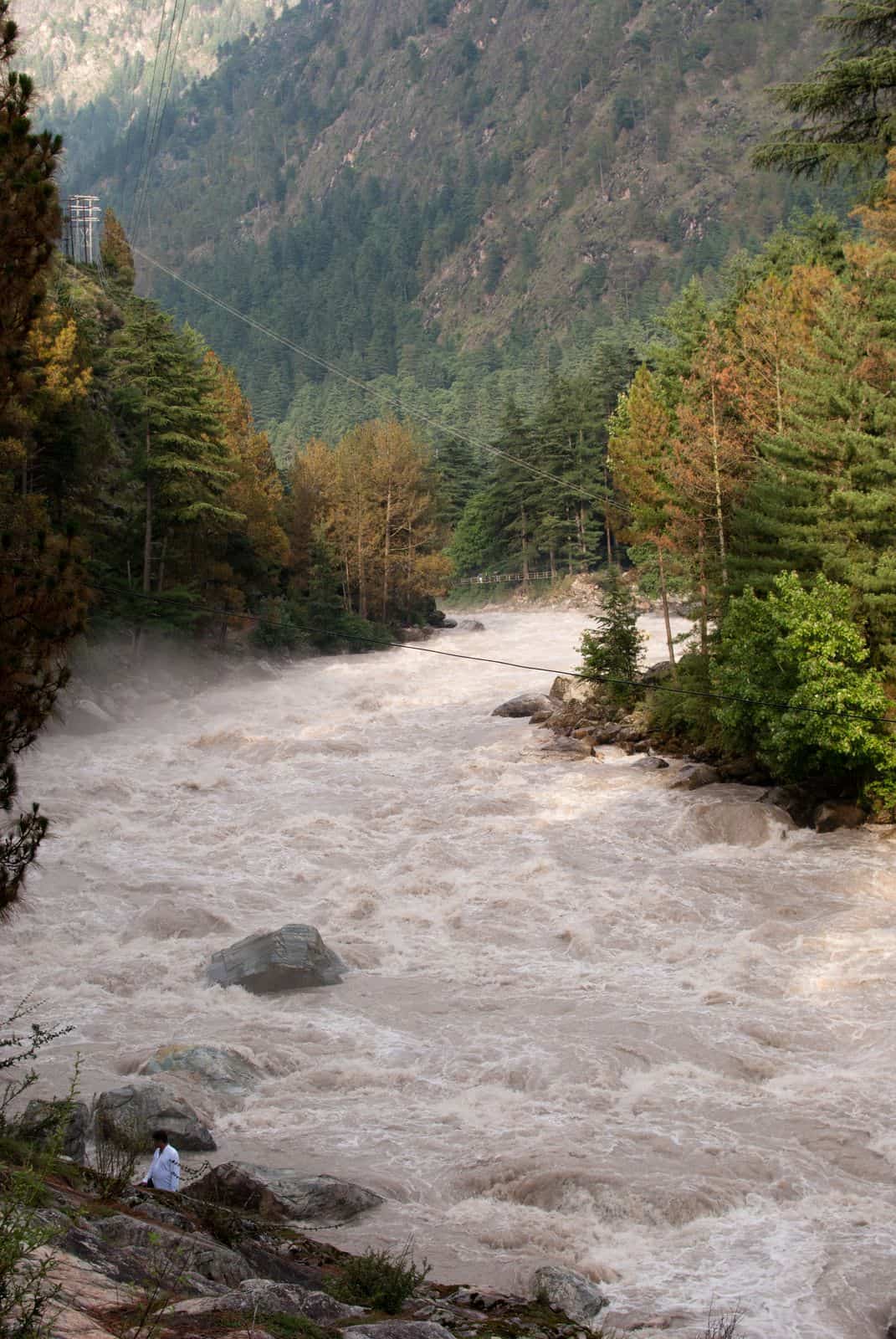
Let's quickly dive into the details:
Is Kasol the Same as Parvati Valley, or Just the Gateway to It?
Kasol is not the whole of Parvati Valley. It is the main base town inside it, the first stop where most trips begin and end. If you landed here searching “Parvati Valley Kasol,” here is the quick orientation before you plan anything else.
- Where Kasol sits: Kasol is a riverside hamlet on the Parvati River, about 3.5 km before Manikaran and 31 km from Bhuntar. It is the gateway, not the entire valley, which stretches further up to Tosh, Pulga, Kalga, and Kheerganga.
- What actually counts as Parvati Valley: Kasol, Chalal, Manikaran, Tosh, Pulga, Kalga, Kheerganga, and Malana all fall inside the valley. Most travelers use Kasol as their overnight base and day trip out from there.
- How much time you need: A Kasol only visit takes 2 to 3 days. Covering the full valley (Kasol to Kheerganga to Malana) needs 7 to 9 days, mapped out day by day below.
- Rough budget: Rs 8,100 to Rs 12,000 per person for a 7 day budget trip, Rs 18,100 to Rs 28,500 for mid range (full breakdown further down this page).
- Emergency contacts to save before you lose signal: Ambulance 108, Police 100, and the Kullu District Emergency Operations Cell (DEOC) at 1077 or 01902-225630 to 01902-225633, published by the Kullu district administration. I tell every reader to save these before Kasol, since BSNL is the only network that reliably works once you head toward Tosh or Kheerganga.
What Are the Key Facts About Parvati Valley?
Parvati Valley sits at an altitude of around 1,580 meters (5,180 ft) at Kasol and stretches higher towards Kheerganga at 2,960 meters (9,711 ft). The valley runs along the Parvati River, which originates from the Man Talai Glacier below the Pin Parvati Pass and flows westward into the Beas River near Bhuntar.
| Detail | Information |
|---|---|
| Location | Kullu District, Himachal Pradesh |
| Base Town | Kasol (5,180 ft / 1,580 m) |
| Nearest Airport | Bhuntar (Kullu-Manali Airport), 31 km from Kasol |
| Distance from Delhi | ~517 km via NH44 and NH3 |
| Distance from Chandigarh | ~280 km |
| Best Time to Visit | March to June, September to November |
| Mobile Network | BSNL works best. Jio and Airtel work in Kasol but patchy beyond |
| ATMs | Kasol has a few ATMs (often out of cash). Carry sufficient cash |
| Last Petrol Pump | Bhuntar |
How Do You Reach Parvati Valley from Delhi?
Bhuntar is the gateway to Parvati Valley. All roads into the valley pass through this small town where the Parvati River meets the Beas. From Bhuntar, it is about 31 km to Kasol, which takes roughly 1 to 1.5 hours by local bus or taxi.
By Bus (Most Popular Option)
HRTC runs multiple overnight buses from Delhi (ISBT Kashmere Gate) to Bhuntar. The ordinary bus fare ranges from Rs 700 to Rs 900 and Volvo/semi-deluxe buses range between Rs 1,400 and Rs 2,800 (2026 fares, always confirm current rates on the HRTC site before booking). Private Volvo sleeper buses cost Rs 2,000 to Rs 4,000 depending on the operator. You can book HRTC buses on online.hrtchp.com. Most buses depart between 5 PM and 8 PM and reach Bhuntar by 7 to 9 AM the next morning.
From Bhuntar, HRTC local buses run to Manikaran via Kasol throughout the day. The first bus departs at 6:00 AM and the last at around 6:25 PM, with a gap between 12:10 PM and 1:30 PM. The bus fare from Bhuntar to Kasol is around Rs 50 to Rs 80. Alternatively, you can take a shared taxi for Rs 100 to Rs 250.
By Car from Delhi
The drive from Delhi to Kasol is approximately 517 km and takes 11 to 13 hours depending on traffic and breaks. The route goes via Chandigarh, Bilaspur, Mandi, and Aut Tunnel before reaching Bhuntar. Road conditions are generally good on the national highway. The stretch from Bhuntar to Kasol is a narrow mountain road along the Parvati River, so drive carefully.
By Flight
The nearest airport is Bhuntar Airport (also called Kullu-Manali Airport). Flights operate from Delhi, though schedules can be irregular and weather-dependent. From the airport, Kasol is about 30 km by taxi.
What Is the Background of Parvati Valley?
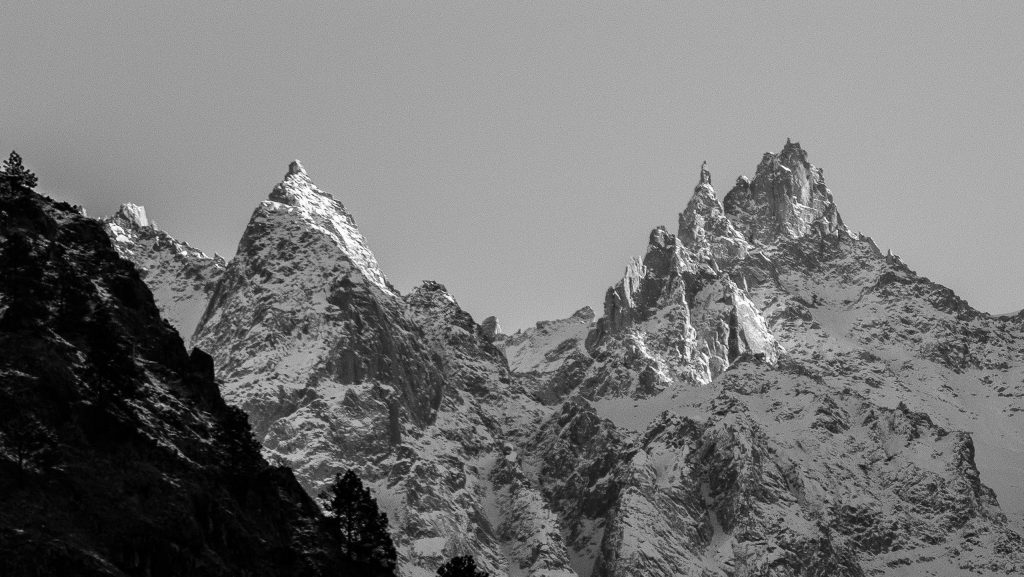
Parvati Valley is situated along the flow of the Parvati River, which originates from the Man Talai Glacier below the Pin Parvati Pass. Moving westwards from the glaciers near the Spiti Valley, the Parvati River graces several Himachali hamlets along the way and provides a source of life for residents and visitors alike.
With sharp-sided valleys cutting through the mountains, Parvati Valley is as green as it gets, especially in the lower altitudes. However, the higher you go, the scarcity of vegetation becomes apparent. The valley is surrounded by great folklore and mythology. Hence, it is no surprise that you will encounter long-term visitors who stay in the region for months on end. The charm of Parvati Valley beckons you to slow down, connect with your inner peace, and match the pace of nature.
I have written a detailed travel guide of Parvati Valley and a separate guide on the treks in the region. These articles cover all aspects of how to travel, what to expect, and where to stay. This itinerary article will help you stitch all of that together into a practical day-by-day plan.


What Is the Best Parvati Valley Itinerary for 7 to 9 Days?
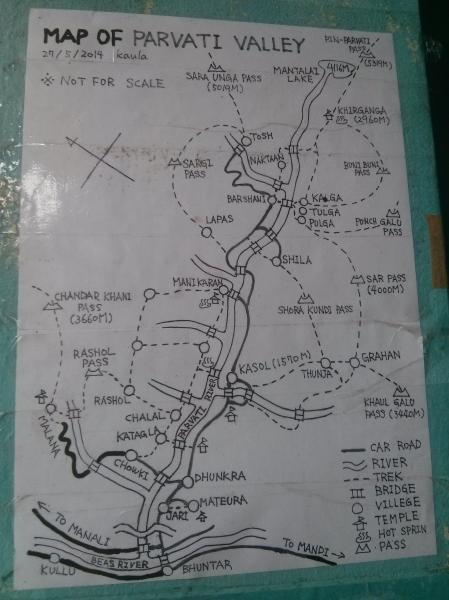
This is the most recommended itinerary that I suggest to travelers every year. It covers the lower part of Parvati Valley, including Kasol, Chalal, Manikaran, Tosh, Pulga, Kalga, Kheerganga, and Malana. Even families and senior travelers can enjoy this plan comfortably. Feel free to share this travel itinerary with friends and family who are planning a trip to Parvati Valley.
Key Road Distances
- Delhi to Bhuntar: 490 km (11-13 hours by road)
- Bhuntar to Jari: 23 km
- Jari to Kasol: 8 km
- Kasol to Manikaran: 3 km
- Manikaran to Barshaini: 14 km
- Barshaini to Tosh: 2-3 km (shared cars available, or trek)
- Barshaini to Kheerganga: 12 km trek (4-6 hours one way)
- Jari to Malana road end: 23 km, then 2-3 km trek
Day 0: Overnight Journey from Delhi
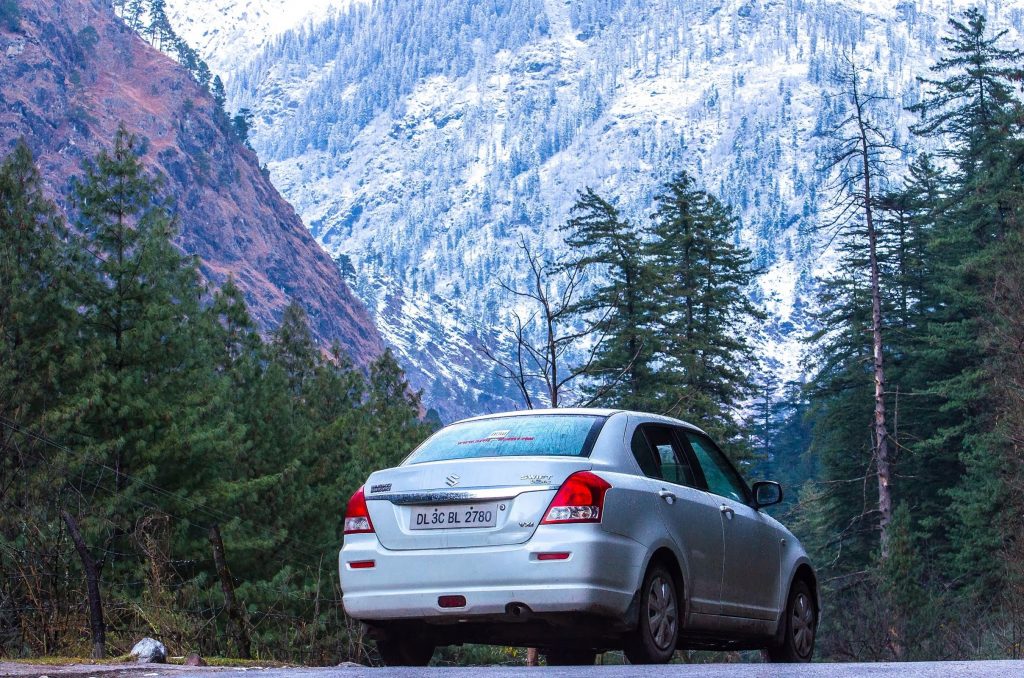
Catch an overnight bus from ISBT Kashmere Gate, Delhi. HRTC ordinary buses cost Rs 700 to Rs 900 and Volvo buses run Rs 1,400 to Rs 2,800. Private sleeper operators charge Rs 2,000 to Rs 4,000. Most buses depart between 5 PM and 8 PM. If you are driving, leave Delhi by 4 to 5 AM to reach Kasol by evening, or drive till Mandi and stay overnight to break the journey.

Day 1: Arrive in Kasol, Explore the Town
Your bus will reach Bhuntar by 7 to 9 AM. From Bhuntar bus stand, catch the next bus to Manikaran (buses leave every 30-60 minutes) and get off at Kasol. Alternatively, take a shared taxi for Rs 100-250. Check into your hotel or hostel (budget options start from Rs 300 for dorms and Rs 800 for private rooms), freshen up, and spend the day exploring Kasol’s cafes along the river. Try some Israeli cuisine at one of the many riverside cafes. The evening is best spent walking along the Parvati River.
Day 2: Trek to Chalal and Back
Wake up early and take the easy 30-minute trek to Chalal village. The trail starts from the bridge in Kasol and is well-marked. Chalal has its own collection of cafes tucked into the hillside. Spend a few hours here and then return to Kasol for the evening. You can also stay overnight in Chalal if you prefer the quieter vibe, but I suggest coming back to Kasol for more food and shopping options.
Day 3: Kasol to Manikaran to Barshaini to Tosh
Catch the morning bus from Kasol to Manikaran (Rs 15-20, 10 minutes). Pay your respects at Manikaran Sahib Gurudwara, which is famous for its hot springs where you can actually boil rice and eggs in the naturally heated water. Take a dip in the hot springs. After spending a couple of hours, take a shared cab from Manikaran to Barshaini (Rs 100-150). From Barshaini, you can trek 3-4 km uphill to reach Tosh, or take a shared vehicle for Rs 300. Tosh offers stunning views of the valley and is much quieter than Kasol. Guesthouses in Tosh range from Rs 500 to Rs 1,500 per night.
Day 4: Tosh to Pulga and Kalga
Explore the lesser-known hamlets of Pulga, Kalga, and Tulga. These villages are immersed in nature and far less commercialized than Kasol. The pace of life here is slow, the forests are thick, and the views of the valley are spectacular. I recommend staying overnight at Kalga or Pulga. Homestays cost Rs 400 to Rs 800 per night. Kalga is the better base if you plan to trek to Kheerganga the next day, as the trailhead is closer.
Day 5: Kheerganga Trek (Day Trip)
Important update for 2026: The Himachal Pradesh Forest Department has enforced a camping ban at Kheerganga since July 2024. Overnight camping is no longer allowed. All tents, huts, and cafes at the top have been removed as per High Court orders to protect the fragile alpine meadow ecosystem. Kheerganga is now a day-visit destination only.
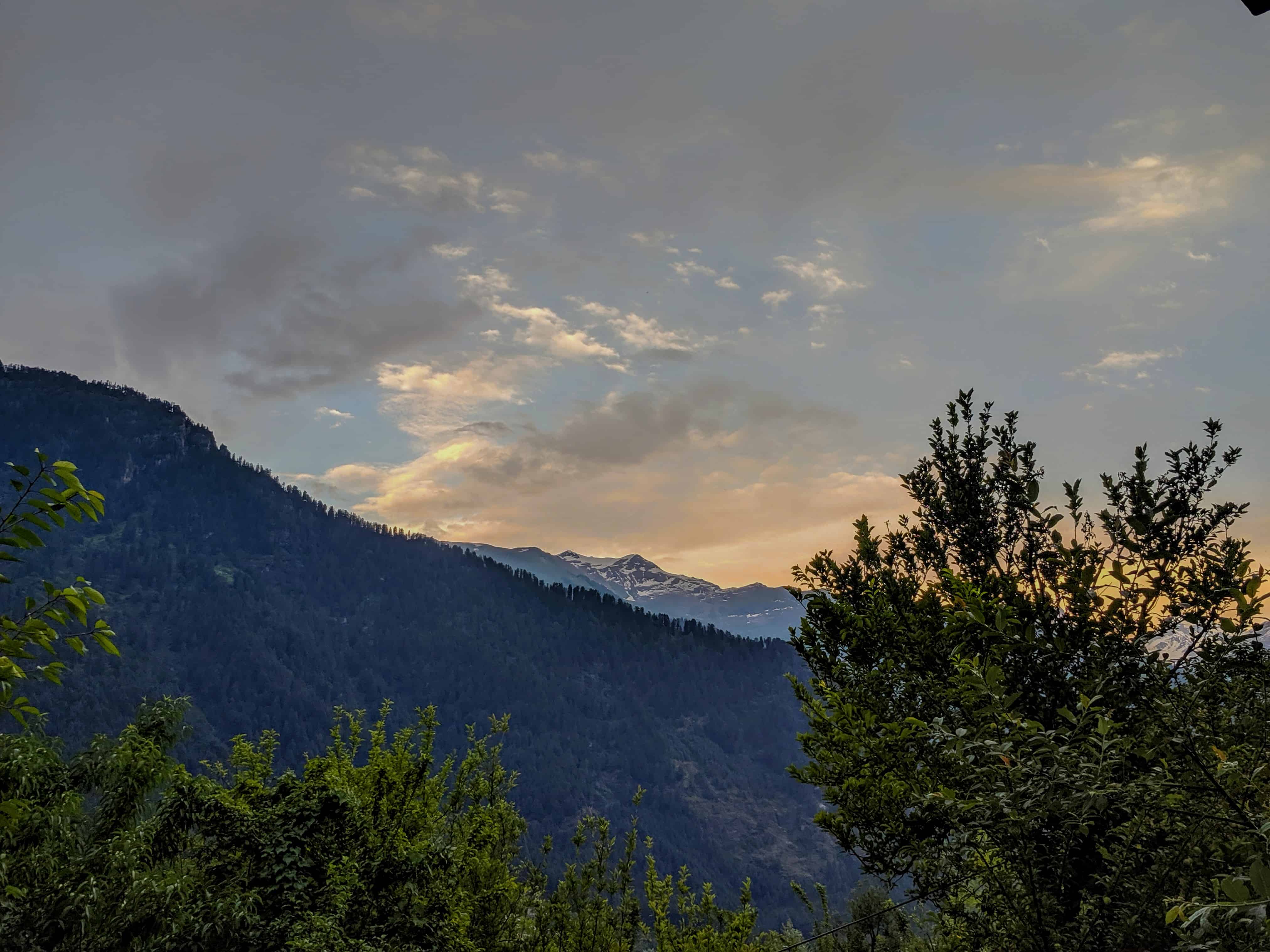
Start your trek to Kheerganga from Kalga or Barshaini as early as possible, ideally by 5 to 6 AM. The trek is about 12 km one way and takes 4 to 6 hours depending on your fitness level. Register at the Forest Check Post in Barshaini before starting and carry a photo ID. As of 2026, the check post collects a Rs 100 forest entry permit per person. The trail passes through dense forests, apple orchards, the Nakthan village, and the Rudranag waterfall. At the top, you can enjoy the hot springs (Parvati Kund). Per the Himachal Pradesh Forest Department order, entry is allowed only before 10 AM and you must start your descent by 2 PM. Anyone caught pitching a tent overnight risks an FIR and permanent revocation of their trekking permit, so do not try to sneak in a night stay. Return to Kalga or Barshaini by evening.
Day 6: Barshaini to Jari
After the Kheerganga trek, take it easy. Head down to Barshaini and take a shared cab to Jari (Rs 100-150). Jari is a small town along the main Parvati Valley road. It is less touristy than Kasol and offers a more authentic local experience. The night skies from Jari are spectacular, especially if you can camp near the river. Guesthouses in Jari cost Rs 500 to Rs 1,000 per night.
Day 7: Jari to Malana and Back
Hire a taxi from Jari to the Malana road end (23 km, approximately Rs 900 for a car). From the road end, trek 2-3 km to reach Malana Village. Malana is known for its unique culture, self-governance system, and isolation from the outside world. The village has its own set of rules. Do not touch any local person, temple, or wall. Stay on marked paths. Foreign tourists need to register at the Naka near the Malana Power House. Keep in mind that most guesthouses inside Malana no longer take overnight tourist bookings, a village council decision, so plan to head back to Jari for the night rather than counting on staying inside the village. I recommend returning to Jari rather than camping in Malana.
Day 8: Jari to Bhuntar to Delhi
Catch a morning bus from Jari towards Bhuntar (buses run frequently, Rs 30-50). From Bhuntar, you can either take an evening HRTC Volvo bus back to Delhi (departures between 4 and 6 PM, reaching Delhi by early morning) or catch a flight. If driving, start early for the 11-13 hour journey back.
Day 9: Buffer Day
This buffer day is important, especially during monsoon season (July to September) when landslides can block roads for hours or even days. Keep this day in reserve. If roads are clear, use it to explore Kasol further or simply relax by the river. If you have fewer days, you can merge Day 6 and 7 by heading directly to Malana from Barshaini on Day 6.
Can You Complete a Parvati Valley Trip in 5 Days?
Yes, you can visit Parvati Valley in 5 days from Delhi. It will be a packed schedule, but it is doable if you are short on time. I prefer to enjoy the hills at a leisurely pace, keeping my eyes and heart open to the self-reflection that the Himalayas bring. But I understand that not everyone gets a week off from work.
5-Day Parvati Valley Itinerary from Delhi
- Day 0/1: Delhi to Bhuntar (overnight bus), Bhuntar to Kasol. Explore cafes and settle in.
- Day 2: Kasol to Chalal (morning trek), return to Kasol. Afternoon at leisure.
- Day 3: Kasol to Manikaran to Barshaini to Tosh. Trek to Kheerganga as a day trip (start very early, return by evening) or skip Kheerganga and spend the day exploring Tosh and nearby hamlets.
- Day 4: Barshaini to Kasol. Visit Manikaran if skipped earlier. Evening rest.
- Day 5: Kasol to Bhuntar. Bus or drive back to Delhi.
In 5 days, you will have to skip Malana and the Pulga/Kalga exploration. If Malana is a priority, replace the Kheerganga day trip with a Malana visit. The details for each day can be adapted from the 7-9 day itinerary above.
For an even shorter trip, check out my weekend trip to Kasol itinerary that covers the essentials in 2-3 days.

What Is the Best Time to Visit Parvati Valley?
The best time to visit Parvati Valley depends on what you are looking for. The valley is accessible year-round, but conditions change significantly with the seasons.
- March to June: The best window for most travelers. Pleasant weather, clear skies, green valleys. Temperatures range from 10C to 30C at lower altitudes. Perfect for treks and exploration. The Kheerganga trail opens by April.
- July to September (Monsoon): Heavy rainfall, frequent landslides, leeches on trails. Roads can get blocked for hours. I would advise novice travelers to avoid this period. If you are an experienced traveler and can handle the risk, the valley is at its greenest during monsoon.
- October to November: Post-monsoon clarity with crisp blue skies. Nights start getting cold. The autumn colors in the valley are beautiful. This is an excellent time for photography.
- December to February: Snowfall at higher altitudes (Tosh, Kheerganga trail area). Kasol gets chilly but rarely receives heavy snow. Temperatures drop to sub-zero at night. Good for travelers who want to experience snowfall near Delhi. Fewer tourists, quieter villages.
How Much Does a Parvati Valley Trip Cost in 2026?
Parvati Valley remains one of the most budget-friendly destinations in Himachal Pradesh. Here is a rough cost breakdown for a 7-day trip from Delhi per person, assuming shared accommodation and public transport.
| Expense | Budget (per person) | Mid-Range (per person) |
|---|---|---|
| Delhi to Bhuntar bus (round trip) | Rs 1,500 – Rs 2,000 | Rs 3,000 – Rs 4,000 |
| Local transport (7 days) | Rs 500 – Rs 800 | Rs 1,500 – Rs 2,500 |
| Accommodation (7 nights) | Rs 2,100 – Rs 4,200 (Rs 300-600/night) | Rs 7,000 – Rs 14,000 (Rs 1,000-2,000/night) |
| Food (7 days) | Rs 3,500 – Rs 5,000 (Rs 500-700/day) | Rs 5,600 – Rs 7,000 (Rs 800-1,000/day) |
| Miscellaneous | Rs 500 | Rs 1,000 |
| Total per person | Rs 8,100 – Rs 12,000 | Rs 18,100 – Rs 28,500 |
If you are planning a super budget trip to Kasol, you can bring the costs down further by opting for dorm beds, eating at local dhabas, and using only public transport. For those driving their own vehicle, add fuel costs of approximately Rs 3,000 to Rs 4,000 for the round trip from Delhi.
Where Can You Get Taxis in Parvati Valley?
Taxis in Parvati Valley are available from Bhuntar, Kasol, Jari, and Barshaini. The Parvati Valley Taxi Operators Union sets fixed rates. Keep in mind that Barshaini is the last road head of the valley. After that, you explore by foot through treks. It is well worth the effort, my friend.
Common Taxi Fares in Parvati Valley (2025-2026)
| Route | Car (4+1) | Sumo (8+1) |
|---|---|---|
| Jari to Kasol | Rs 400 | Rs 600 |
| Jari to Manikaran | Rs 500 | Rs 800 |
| Jari to Barshaini | Rs 1,200 | Rs 1,600 |
| Jari to Tosh | Rs 1,400 | Rs 2,300 |
| Jari to Malana (road end) | Rs 900 | Rs 1,600 |
| Jari to Kalga/Pulga | Rs 1,300 | Rs 2,000 |
| Jari to Bhuntar | Rs 800 | Rs 1,400 |
| Jari to Delhi | Rs 13,700 | Rs 15,000 |
Having your own car is not necessary at all. In fact, it can be a headache when you are trekking for days. Public transport and shared cabs cover everything you need. For a full trip with a dedicated taxi, expect to pay around Rs 3,000 to Rs 4,000 per day as a daily package rate.
What Should You Pack for a Parvati Valley Trip?
Packing depends on the season, but here are the essentials that apply year-round.
- Clothing: Layers are key. Light thermals, a warm fleece, and a waterproof jacket. Even in summer, evenings can get cold at higher altitudes like Tosh and Kheerganga.
- Footwear: Good trekking shoes with ankle support. The trails to Kheerganga and Malana can be slippery, especially during or after rain.
- Rain gear: A poncho or rain jacket is essential from June through September.
- Cash: ATMs in Kasol are unreliable and often run out of cash, especially during peak season. Carry enough cash for your entire trip. UPI works at some cafes in Kasol but not in smaller villages.
- Medications: Basic first aid, painkillers, band-aids, ORS packets. There is a small clinic in Kasol, but the nearest proper hospital is in Kullu (about 40 km).
- Power bank: Mobile charging can be inconsistent in smaller villages.
- Torch/headlamp: Useful for early morning trek starts and evening walks in villages without street lights.
What Are the Important Safety Tips for Parvati Valley?
Parvati Valley is generally safe, but the terrain and remoteness demand some precautions.
- Avoid trekking alone in monsoon. Landslides and flash floods are real risks between July and September. If you must travel during monsoon, keep buffer days in your itinerary.
- Stay on marked trails. Several travelers have gone missing in the Parvati Valley region over the years. Do not venture off established trails, especially around the Kheerganga area.
- Inform your hotel or host about your plans. Before heading on a trek, let someone know where you are going and when you expect to return.
- Register at forest check posts. The Forest Department at Barshaini maintains a register. This is for your own safety.
- Respect local customs in Malana. Do not touch anyone, any wall, or any temple. Follow the instructions of your guide or locals. Violations are taken seriously.
- Watch your step near rivers. The Parvati River current is strong. Keep a safe distance, especially during monsoon when water levels rise suddenly.
What Other Places Can You Explore Near Parvati Valley?
If you have extra days, consider extending your trip to nearby destinations.
- Manali (80 km from Kasol): The popular hill station is an easy day trip or overnight stay. Check out my complete Manali travel guide for planning tips.
- Tirthan Valley (55 km from Bhuntar): A quieter, less crowded alternative with excellent trout fishing and nature walks. Great for families.
- Great Himalayan National Park: Accessible from Tirthan Valley, this UNESCO World Heritage Site offers multi-day treks through pristine forests.
- Hampta Pass Trek (from Manali): A 5-day moderate trek that crosses from Kullu Valley into Lahaul, ending at Chatru near Chandratal Lake.
- Kinnaur Valley: Further along the highway past Kullu, the Kinnaur Valley circuit covering Kalpa, Sangla, and Chitkul is one of the most rewarding road trips in Himachal.
Frequently Asked Questions
Is Kasol the same as Parvati Valley?
No. Kasol is a village inside Parvati Valley, not the whole valley. It sits on the Parvati River about 31 km from Bhuntar and works as the main base town. The valley itself extends further to Chalal, Manikaran, Tosh, Pulga, Kalga, Kheerganga, and Malana. Most itineraries start and end in Kasol because it has the best transport and accommodation options in the valley.
Is Kheerganga trek open in 2026?
Yes, the Kheerganga trek is open, but overnight camping at the top is banned since July 2024 and the ban is still enforced in 2026. According to the Himachal Pradesh Forest Department, all tents and structures have been removed from Kheerganga meadow, entry is allowed only before 10 AM, and you must start descending by 2 PM. There is a Rs 100 forest permit at the Barshaini check post. You can still trek up, enjoy the hot springs, and return the same day. Start early from Barshaini or Kalga (by 5-6 AM) to have enough time at the top.
How many days do you need for a Parvati Valley trip?
I recommend 7 to 9 days including travel from Delhi. This gives you enough time to explore Kasol, Chalal, Manikaran, Tosh, Kheerganga (day trek), and Malana without rushing. If you are short on time, a 5-day trip covering Kasol, Tosh, and a Kheerganga day trek is possible but hectic.
Is Parvati Valley safe for solo female travelers?
Parvati Valley is generally safe for solo female travelers, and you will find many solo women exploring the region. Stick to well-known villages (Kasol, Tosh, Kalga), avoid trekking alone in isolated areas, and inform your hotel about your daily plans. Hostels in Kasol have female-only dorms. The local community is welcoming, but use the same precautions you would anywhere else.
Can you visit Parvati Valley in winter?
Yes, Parvati Valley is accessible in winter (December to February). Kasol rarely gets heavy snowfall, but higher villages like Tosh receive significant snow. The Kheerganga trail remains closed in winter due to snow. Winter is great for those who want a quiet, less crowded experience with the chance of snowfall. Carry heavy woolens and be prepared for sub-zero night temperatures.
What is the nearest ATM to Kasol?
Kasol has two ATMs (Punjab National Bank and UCO Bank), but they frequently run out of cash during peak tourist season. The more reliable ATMs are in Bhuntar, which is 31 km away. I strongly recommend carrying sufficient cash for your entire trip. UPI payments work at some cafes and shops in Kasol, but not in smaller villages like Tosh, Kalga, or Malana.
Do mobile phones work in Parvati Valley?
BSNL has the widest coverage in Parvati Valley. Jio and Airtel work in Kasol town and along the main road, but signal drops in interior villages and on treks. There is no network on the Kheerganga trail or at Kheerganga top. Tosh has patchy coverage. If staying for an extended period, consider getting a BSNL postpaid SIM for the best connectivity.
Is there a direct bus from Delhi to Kasol?
There is no direct HRTC bus from Delhi to Kasol. You need to take a bus to Bhuntar (HRTC fare Rs 770-1,550) and then a local bus or shared taxi (Rs 50-250) to Kasol. Some private operators run overnight buses that go up to Kasol or Manikaran directly, but availability varies by season. Check at ISBT Kashmere Gate or book online on HRTC’s website.

Can families with children visit Parvati Valley?
Parvati Valley is suitable for families with children, though I would recommend sticking to Kasol and Tosh. The Kheerganga trek is too long and steep for young children. Kasol has comfortable accommodation and restaurants. Manikaran is an easy day trip. The road to Tosh is now motorable, so families do not need to trek. Keep in mind that medical facilities are basic, so carry a first-aid kit and any medications your children might need.
That covers the most complete Parvati Valley itinerary I can put together. If you have questions about any specific part of the trip, feel free to drop a comment below. I respond to every query personally. Also, if you found this guide useful, share it with your travel group. Planning together makes for a better trip 🙂
Happy travels to the Himalayas!
Last Updated: August 2026
Related Reading
- How to Plan a Parvati Valley Trip – Detailed Travel Guide
- Treks in Parvati Valley – Travel Guide for Backpackers
- Kheerganga Trek – Complete Guide for Beginners
- Tosh Village Travel Guide – Parvati Valley
- Malana Village – Ultimate Travel Guide
- Budget Trip to Kasol Under Rs 5,000
- Weekend Trip to Kasol – Day by Day Itinerary
