


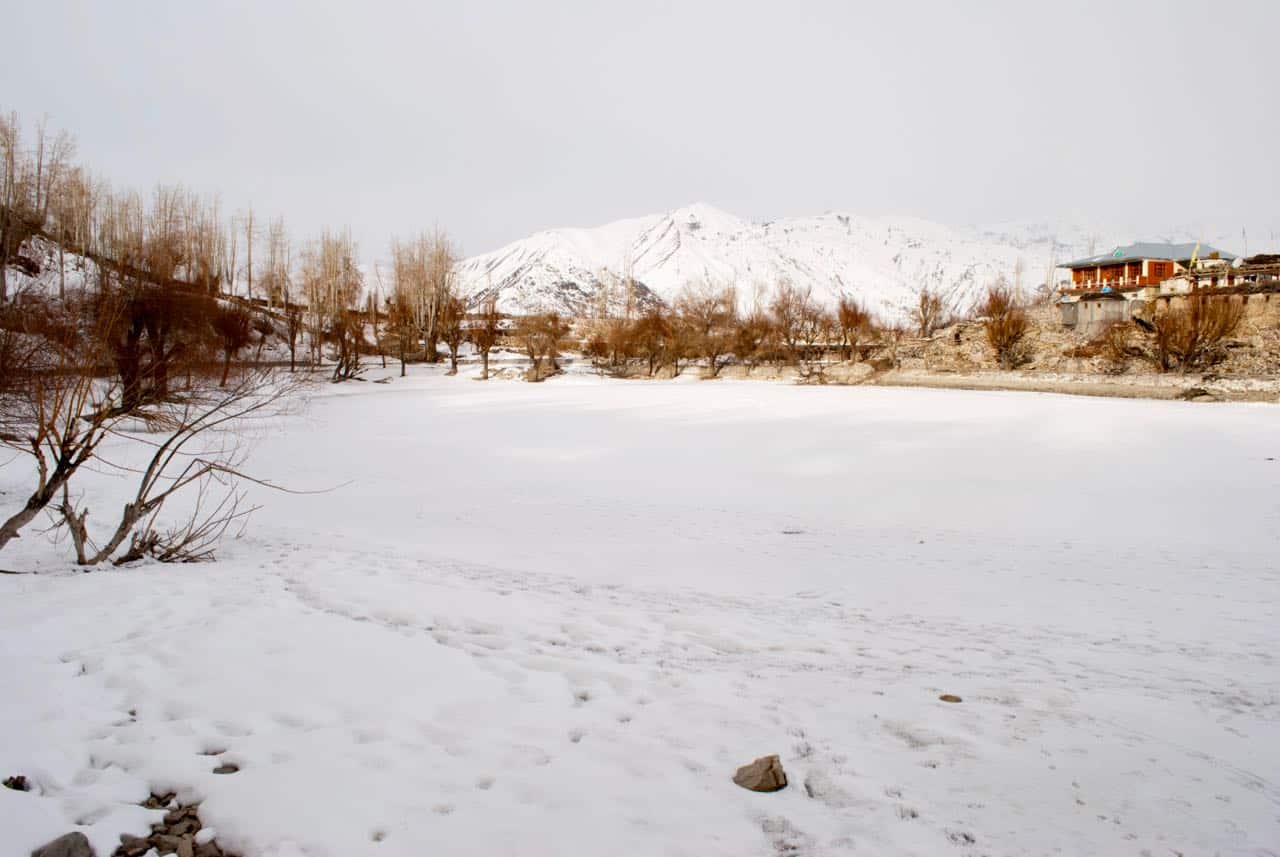
Are you planning a trip to Nako Village in Kinnaur Valley? Located at 11,893 Ft in the remote Hangrang Valley, Nako is the last major village of Kinnaur before the road crosses into Spiti. With its ancient monastery dating back to 1025 AD, a sacred lake that freezes solid in winter, and views of Reo Purgyal (22,362 Ft), the highest peak of Himachal Pradesh, Nako is one of those places that makes you question why you ever settle for crowded hill stations.
I have visited Nako multiple times across seasons, and every visit reveals something new. The autumn colors around the lake, the frozen silence of a winter morning, the warm hospitality of the Buddhist families who call this village home. In this guide, I will cover everything you need to plan your trip to Nako in 2026, from how to reach, where to stay, what to see, bus schedules, road conditions, permits, and practical tips that most guides skip over.
Quick Info: Nako Village | Altitude: 11,893 Ft (3,636 m) | District: Kinnaur, Himachal Pradesh | Nearest Town: Reckong Peo (103 km) | Best Time: May to October | ILP Required: Only for foreigners | Last Updated: February 2026
Let's quickly dive into the details:
What Makes Nako Village Special?
Nako is not your typical tourist stop. Most travelers on the Shimla – Kinnaur – Spiti circuit treat it as a quick photo break before moving on to Tabo or Kaza. That is a mistake. Nako deserves at least one full day, if not two, to soak in everything it offers.
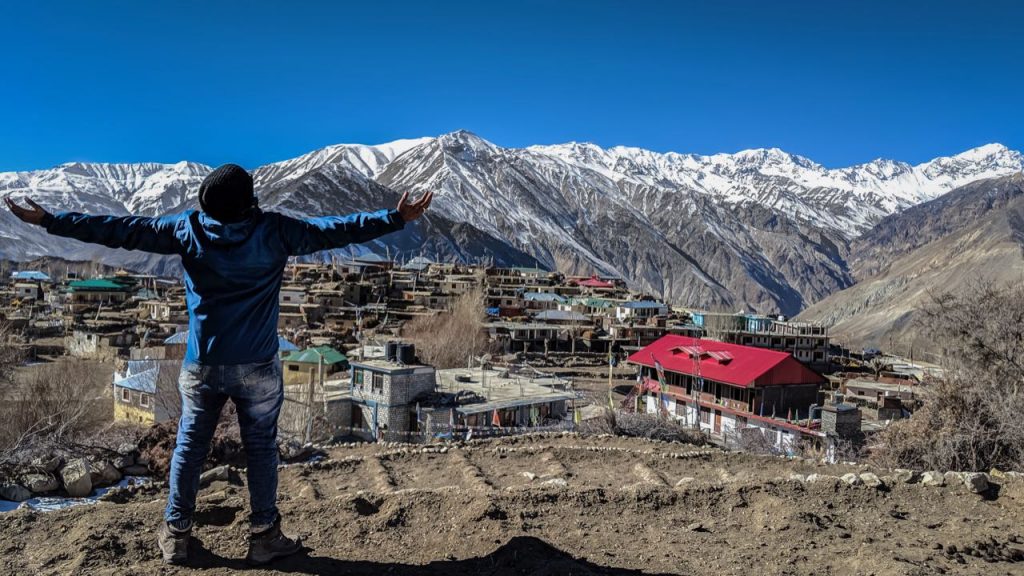
Often ignored for metaphorically bigger pastures, Nako Village has a lot to offer in its quiet, non-pompous manner. Given the extreme isolation from the rest of the world, Nako has a yesteryear charm, and often it feels like you are on another galaxy in another era. The sweet, humble, and beautiful people of the region make for great friends. And, if that was not enough, the travelers you meet in this region are kindred spirits that have a yearning for exploring the world, the same way as you.
Here is what sets Nako apart from other villages on the Hindustan – Tibet Highway. The village sits at the edge of the Hangrang Valley, surrounded by a landscape that shifts between stark brown mountains and patches of green where apple and apricot orchards thrive. The streets are narrow, gated, and built from stone and wood. Step inside any of the older homes and you will find colorful Buddhist religious paintings on the walls, a reminder of how deeply the Buddhist tradition runs through daily life here.
Fun fact about the village: it actually moved locations to be closer to Nako Lake from the opposite side of the river banks because the earlier location became quite unstable due to the movement of tectonic plates. That tells you something about how much this community values the lake that sits at its heart.
What Are the Top Things to Do in Nako Village?
Nako is a small village, but there is more to do here than you might expect. In the words of the ever intelligent Dumbledore:
Happiness can be found in the darkest of times, if one only remembers to turn on the light.
So, look where you think nothing can be found, and nature will reveal its most beautiful treasures. Here are the key sightseeing spots.
Nako Lake
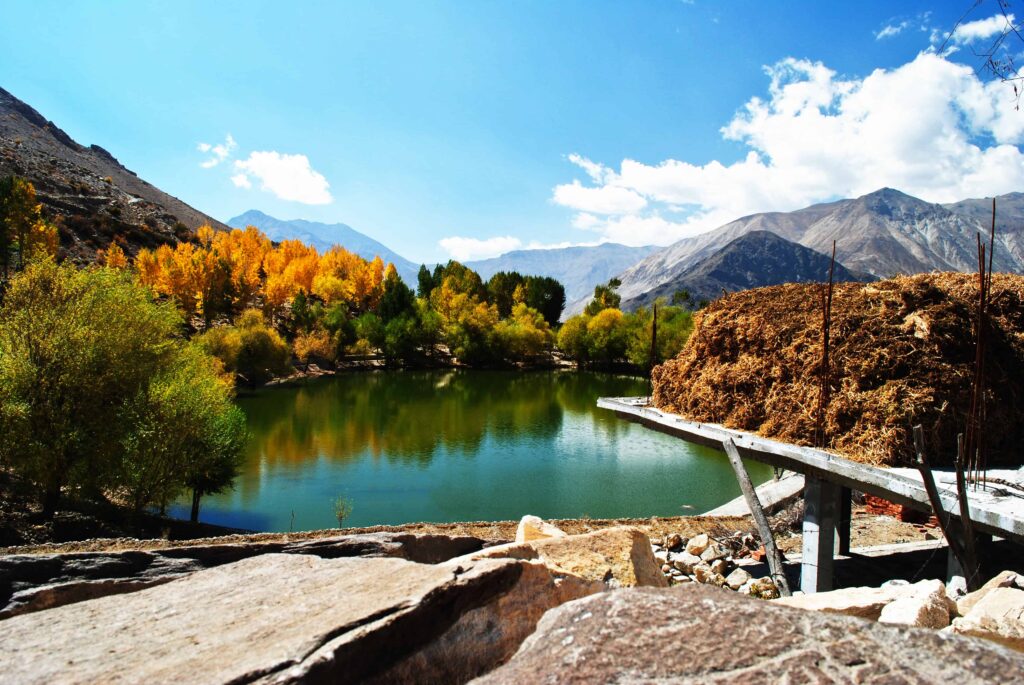
Nako Lake sits at 11,929 Ft on the slopes of the Reo Purgyal mountain range. While it is a small lake compared to some of its famous peers like Chandratal or Pangong, it is an integral part of the village and its culture. In the evening hours, the lake is a sight to behold and provides for a very calming natural experience.
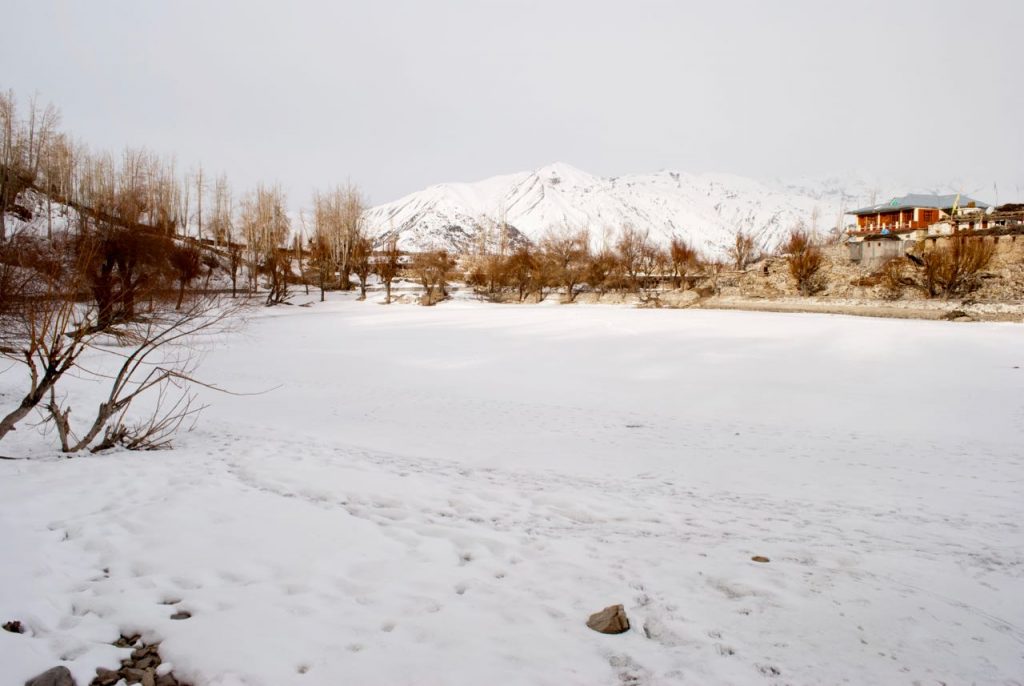
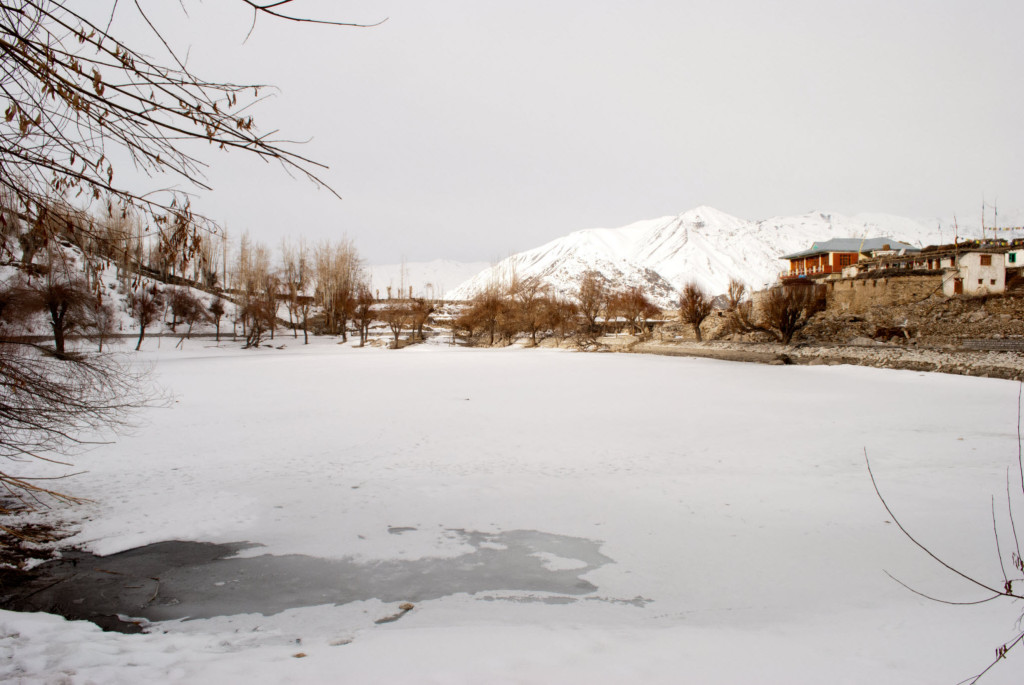
Lots of birds flock to the lake every evening and fill the atmosphere with melancholic songs. The periphery of the lake has plantations of willow and poplar trees. During summer months, the lake has boating facilities, and locals practice ice skating on the lake’s surface when it freezes solid during winter months. The autumn months of September and October are particularly stunning, when the entire landscape around the lake turns golden and red.
Nako Monastery (Lotsava Jhakang)
Nako Monastery was built in 1025 AD (some records say 1075, but the Archaeological Survey dates the earliest structures to 1025) and is one of the places where Rinchen Zangpo, also known as Ratna Bhadra, translated Buddhist scriptures from Sanskrit to Tibetan. The monastery faces Tibet and has a high resemblance to the Tabo Monastery architecturally, consisting of four large halls of which the oldest and largest is known as Dukhong.
To honor Rinchen Zangpo, the monastery is also sometimes called “Lotsava Jhakang”, meaning “complex of the translator”. Rinchen translated Buddhist scriptures from Sanskrit to the Tibetan language and is thus highly revered in Buddhist culture. The artwork inside the monastery is gorgeous and related to Vajrayana Buddhism. Dukhong’s walls are decorated to depict gates, fire-circle, and secondary non-Buddhist deities in attendance.
Other halls in the complex include sculptures representing Yellow Tara, sculptures of five Dhyani Buddhas made out of clay, and a shrine dedicated to Purgyal, also known as the spirit of the mountains. Keep in mind that photography is strictly prohibited inside the monastery. Please respect this rule.
An interesting fact to note: in 1975, due to an earthquake, the monastery was severely damaged, and certain vandals stole important art from this place. With such a terrible condition and subsequent freezing winter seasons, the monastery was near collapse. However, the University of Vienna launched a research project in association with INTACH (Indian National Trust for Art and Cultural Heritage), the Buddhist Association of Nako, and residents of Nako to carry out restoration works. In July 2002, the Nako Preservation Project (NPP) was established for the conservation of the monastery.
Padmasambhava Temple
Near Nako Lake, locals believe there is a rock bearing the footprint of Padmasambhava (Guru Rinpoche). A shrine has been built around this footprint to commemorate it, with a statue of Padmasambhava placed above it. It is a peaceful spot, and you can combine your visit to the lake with a stop here.
Chango Gompa
Chango Gompa lies about 25 km from Nako, on the road to Spiti in the Chango village. The Gompa houses a prayer wheel that is over 500 years old and measures about 11 Ft in diameter, made of yak skin. If you are driving from Nako towards Tabo, this is a must-stop. It will not take more than 30-45 minutes to visit.
Hiking Trails Around Nako
There are easy trails around the village which are mostly used by shepherds to traverse to different surrounding villages, including Chango, Hango, and Tashigang. These make for wonderful day walks to explore the surrounding mountains.
For example, just behind the lake, if you climb upwards to the visible chortens, you will have the most beautiful vantage point. You may keep climbing to the other side of the mountain, which might take you around 3-4 hours, and you will see the entire Sutlej Valley from the village of Tashigang. Here, an interesting and inviting temple will welcome you. The only things you will encounter underway are sheepherders and stunning mountain vistas. I suggest carrying water and some snacks, as there are no shops along the trail.


Trip Suggestion: You can combine a trip to Chitkul with Nako on any of your trips to Kinnaur Valley. Both villages offer a completely different Himalayan experience.
When Is the Best Time to Visit Nako Village?
The best time to visit Nako is from May to October, with each month offering a different experience. Here is a month-by-month breakdown to help you decide.
May to June: The roads open up after winter, the weather is pleasant (10-25 degrees Celsius during the day), and the village slowly comes to life. This is also the best time to complete the full Shimla – Kinnaur – Spiti – Manali circuit. Snow may still be visible on higher peaks, which makes for dramatic views.

July to August: Monsoon period. It can rain anytime, from mild showers to intense rainfall that can cause major landslides. The surrounding area of Nako is quite fragile and vulnerable to landslides. The dreaded Maling Nallah is a constant landslide zone on the Hindustan – Tibet Highway. I suggest avoiding this period unless you are flexible with your dates and prepared for delays.
September to October: This is my personal favorite. The harvest season for apples begins, and the entire landscape turns into colors of gold, red, and orange. The weather is cool but comfortable. Rains have typically subsided, and the roads are usually in better condition than monsoon months. For a detailed guide, check our article on the best time to visit Kinnaur Valley.
November to April: Winter descends on Nako with 5-7 feet of snow being a common phenomenon. The lake freezes completely, and temperatures drop well below zero. While visiting Kinnaur in winters has its own charm, the road conditions become extremely challenging, and most accommodation options shut down. Only attempt this if you are an experienced winter traveler.
How to Reach Nako Village from Delhi, Shimla, or Manali?
There are two main routes to reach Nako. Your choice depends on where you are starting from and whether you want to cover the Kinnaur – Spiti circuit or visit Nako specifically. Let me break down both options.
Route 1: Via Shimla – Kinnaur (Recommended)
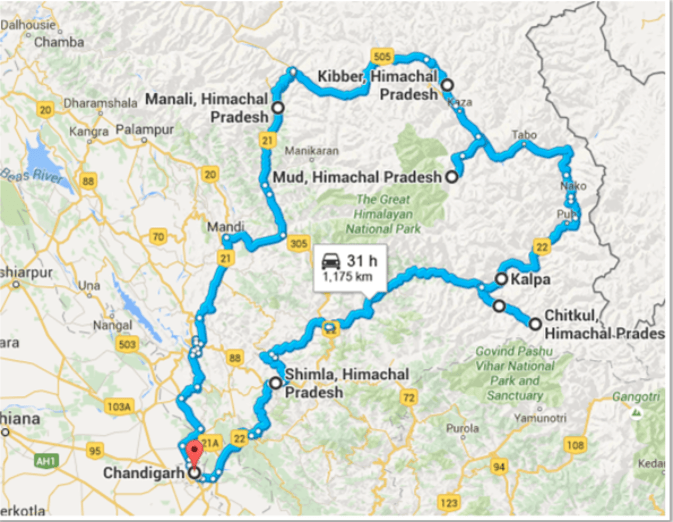
This is the route I prefer and recommend. Traveling from the Shimla side, you stop over at Sarahan (with its beautiful Bhimakali Temple), explore Reckong Peo, Kalpa, Sangla Valley, Chitkul, and then move ahead towards Nako.
The main reason for this suggestion is that it allows for gradual acclimatization to avoid AMS (Acute Mountain Sickness). Nako is at 11,893 Ft, and coming from the Shimla side gives your body time to adjust over 2-3 days.
Driving distances and times from key points:
- Delhi to Nako: approximately 590 km, 18-20 hours of driving (plan 2 overnight stops)
- Chandigarh to Nako: approximately 420 km, 14-16 hours of driving (plan 1-2 overnight stops)
- Shimla to Nako: approximately 312 km, 10-12 hours of driving
- Reckong Peo to Nako: approximately 103 km, 4-5 hours of driving
- Kalpa to Nako: approximately 117 km, 4-5 hours of driving
Nako village is accessed from a branch road of 7 km from National Highway 05 (earlier NH-22). The turnoff is at Yangthang, and the road climbs steeply to the village. I suggest keeping your first night halt at Sarahan or Narkanda, second night at Kalpa or Sangla, and then proceeding to Nako on the third day.
You will reach Tapri on this route, where you will spot a petrol pump. This is a fairly reliable petrol pump. The one ahead might or might not have fuel. So do remember to fill up!
Route 2: Via Manali – Spiti
The second option is to travel to Nako through Manali, crossing the Spiti Valley region. The distance from Manali to Nako is approximately 314 km. It will take 2 days to reach Nako from Manali with an overnight stop at Kaza.
This route is best if you are coming from Manali and want to explore Spiti first. You will cross the Atal Tunnel, Kunzum Pass, visit Chandratal, Kaza, Tabo, and then reach Nako. Keep in mind that this route is typically open only from late June to early October.
How to Reach Nako by Bus?
If you are traveling on a budget, HRTC buses are your best option. Here is what the bus connectivity looks like as of 2026.
From Reckong Peo: There are buses from Reckong Peo that pass through Nako on their way to Tabo and Kaza. The key services are:
- 7:00 AM: Reckong Peo to Kaza (via Nako, Tabo, Sumdo, Schilling)
- 9:00 AM: Reckong Peo to Tabo (via Nako)
- 12:00 PM: Reckong Peo to Sumdo (via Nako)
HRTC bus fares in hilly areas are standardized at approximately Rs 1.75 per km. The fare from Reckong Peo to Nako works out to approximately Rs 180-220 per person. From Reckong Peo to Kaza, expect to pay Rs 400-600. Bus timings can be sporadic, especially during monsoon, so always enquire locally at the bus stand the day before.
From Shimla: Take an overnight HRTC bus to Reckong Peo (approximately Rs 500-700, 10-12 hours). From there, catch one of the morning buses mentioned above. The Shimla to Reckong Peo distance is about 225 km.
There are also a handful of 4WD vehicles at Reckong Peo, some working as shared taxis (slightly costlier than a bus) and some available for private hire. Schedules may vary seasonally, so verify with HRTC or the local bus stand before travel.
By Air or Train
The nearest airport is Shimla (Jubbarhatti), which is 312 km away. However, Shimla has very limited flight connectivity given it is a hill airport. The next best option is Chandigarh Airport, located 425 km from Nako, with better flight availability from Delhi, Mumbai, and Bangalore.
For trains, Shimla is the nearest railhead, but connectivity is limited. Chandigarh is the closest major railhead with decent connectivity to the rest of India. From either city, you will need to continue by road.
Honestly, road travel is the only viable option for reaching Nako. I suggest starting your journey on-road and truly enjoying the mountains. The drive through Kinnaur Valley is one of the most scenic road journeys in India, and rushing through it in a flight-then-cab combination defeats the purpose.
Where to Stay in Nako Village?
Accommodation in Nako has improved significantly since my first visit. While it is still a small village with limited options, you now have a decent range from budget homestays to comfortable camps. Here are the main options as of 2026.
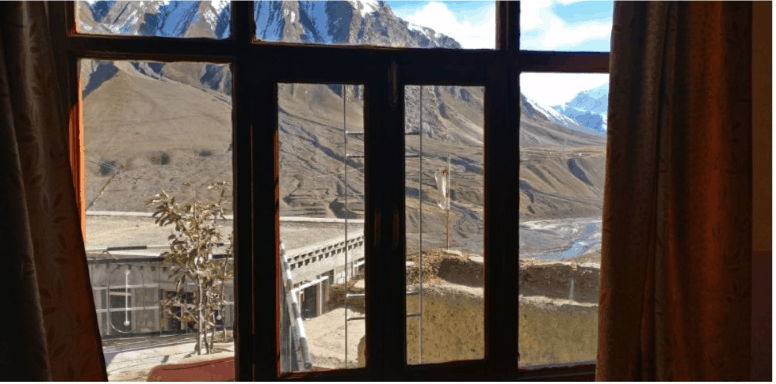
Budget Homestays (Rs 1,000-1,200/night): Amar Homestay is one of the oldest options in the village. The family is super nice and lovely and will provide you with all the comfort. Other budget options include Deepak Homestay, Ama Homestay, and Norbuling Homestay. These offer basic clean rooms with meals and a genuine local experience. In case you want community-style dining with the host family, most homestays will happily accommodate that.
Mid-Range Hotels (Rs 1,100-1,500/night): Hotel Reo Purgil is the closest thing to a conventional hotel in Nako. It does not quite go with the rustic surroundings, but it is best suited for those who need certain western amenities. Alcohol is available at the hotel. The Lovon Hotel (also spelled Lavon Guesthouse) is another option in a similar price range.
Camps (Rs 1,600-3,500/night): Knaygoh Kinner Camp is the standout option here, with 17 Swiss-style tents, 4 guest house rooms, and attached bathrooms. A restaurant on the premises serves decent, comforting food. This is a great option if you want to camp with comfort, especially during the summer months.
You may check our article on good places to stay in Kinnaur and Spiti Valley for a comprehensive list of accommodation options across the entire circuit.
Where to Eat in Nako?
Food options in Nako are basic but satisfying. A few local dhabas serve staples like momos, chowmein, rice and dal, and thukpa. When you are in the region, you MUST try the salted Tibetan butter tea. It is an acquired taste, but once you get used to it, nothing else warms you up the same way at this altitude.
Hotel Reo Purgil has a little more variety on their menu and caters more to non-local tastes. Most homestays also offer home-cooked meals (usually included in your room rate or available for Rs 100-200 per meal). The food is simple, freshly made, and more than adequate. Do not expect restaurant-level variety here, my friend. This is a remote mountain village, and the charm lies in the simplicity.
You should always carry your water bottle and refill it as many times as you need water. It will not only keep you hydrated always, but you will also help in saving the Himalayas from plastic garbage. Remember, every tiny step counts and your step in this direction can help save the Himalayas too !! 🙂 🙂
How Much Does a Trip to Nako Cost?
Here is a rough budget breakdown for a trip to Nako as part of a Kinnaur circuit, assuming you are starting from Delhi. These are per-person costs based on a group of 2-4 people traveling together.
- Transport (self-drive): Fuel for a round trip Delhi – Kinnaur circuit (approximately 1,200 km) will cost around Rs 5,000-7,000 depending on your vehicle’s mileage
- Transport (bus): Delhi to Shimla (Rs 500-800), Shimla to Reckong Peo (Rs 500-700), Reckong Peo to Nako (Rs 180-220), totaling approximately Rs 1,200-1,700 one way
- Accommodation: Rs 1,000-3,500 per night depending on your choice (homestay to camp)
- Food: Rs 300-500 per day at dhabas and homestays
- Miscellaneous: Rs 200-300 per day for chai, snacks, and entry fees
For a detailed budget calculation, check our article on how to calculate the cost of a Kinnaur Valley trip. On a tight budget, you can manage Nako as part of a week-long Kinnaur circuit for Rs 8,000-12,000 per person (using buses and budget homestays). A comfortable mid-range trip will cost Rs 15,000-25,000 per person.
Do You Need a Permit to Visit Nako?
This is one of the most common questions I get, so let me clarify. As of 2026, Indian nationals do not need an Inner Line Permit (ILP) to visit Nako. You just need to carry a valid government-issued photo ID (Aadhaar, Voter ID, or Passport).
Foreign nationals require a Protected Area Permit (PAP) to visit Nako and the surrounding region, as it falls in the restricted zone near the Tibet border. The permit is available at Reckong Peo (Rs 400) or Shimla (Rs 300) and is valid for 14 days. Foreigners must travel in a group of two or more through a registered travel agency. For a complete guide on the permit process, check our detailed article on Inner Line Permits for Kinnaur and Spiti Valley.
What Should You Keep in Mind When Visiting Nako?
Here are practical tips that will make your visit smoother. I have compiled these from personal experience and feedback from the DwD Community over the years.
AMS (Altitude Sickness)
You are at 11,893 Ft. Yes, AMS can become a concern, and the lack of oxygen can become apparent. Nako is notoriously known to cause AMS issues, especially among travelers who rush here directly from the plains. Be careful and aware of the signals your body is giving you. Headache, nausea, and difficulty sleeping are the early signs. Do not forget to check our article on acclimatization and tips to avoid AMS. Hence, I strongly recommend spending at least one night at Kalpa or Sangla before proceeding to Nako.
Mobile and Internet Connectivity
Mobile connectivity in Nako is extremely limited. BSNL postpaid has the best chance of working, though signal strength varies. Locals have mentioned that BSNL sometimes works late at night. Jio and Airtel coverage is unreliable to non-existent as of 2026. In case you need to make an important call, try walking to the higher parts of the village where signal reception is marginally better. Bottom line: inform your family about your whereabouts before reaching Nako, as you may be unreachable for a day or two.
Electricity and Charging
Electricity is available in Nako, but power cuts are frequent. Many places in the village run on solar panels (the village Pradhan strongly believes in keeping the environment clean). Carry a power bank if you need to keep your phone and camera charged. Do not rely on continuous power supply.
Medical Facilities
Medical facilities are close to none. There is a Medical Treatment Center near the Gompa, but it has very limited capability. The nearest proper hospital is in Reckong Peo, which is 4-5 hours away by road. Carry a basic first-aid kit with medicines for headache, nausea, fever, and diarrhea. If you have any pre-existing medical conditions, please take a sensible call about visiting this remote location.
Cultural Etiquette
- Always walk clockwise around temples and chortens, and keep your right side facing them. Do not touch them with your left hand.
- Nako does not see much tourist traffic, so tread lightly and be discreet and polite.
- You are at exceptional height. Even if the weather is pleasant, the sun rays will hit you hard. So hydrate, use sunscreen, and take it easy. Wear layers of clothing to make it easy to be comfortable at all times.
- Photography is strictly prohibited inside the monastery. Respect this rule.
- Carry your trash back with you. The villagers work hard to keep Nako clean, and the least we can do as visitors is not add to their burden.
What Is the Best Itinerary That Includes Nako?
Here is a suggested itinerary for including Nako in a Kinnaur – Spiti circuit trip. This is a 9-10 day plan starting from Delhi.
- Day 1: Delhi to Narkanda or Sarahan (10-12 hours drive)
- Day 2: Sarahan sightseeing (Bhimakali Temple), drive to Sangla or Kalpa (4-5 hours)
- Day 3: Explore Sangla Valley and Chitkul
- Day 4: Drive to Nako via Reckong Peo (4-5 hours). Evening walk around Nako Lake.
- Day 5: Explore Nako village, monastery, hiking trails to Tashigang
- Day 6: Drive to Tabo (75 km, 3 hours). Visit Tabo Monastery.
- Day 7: Drive to Kaza (45 km, 2 hours). Explore Pin Valley, Dhankar Monastery.
- Day 8: Kaza to Chandratal via Kunzum Pass (if coming back via Manali)
- Day 9: Chandratal to Manali via Atal Tunnel (6-7 hours)
- Day 10: Manali to Delhi (12-14 hours) or take a Volvo bus overnight
For detailed itinerary planning, check our Kinnaur Valley most common itinerary and Spiti Valley most common itinerary guides.
Road Conditions and Fuel Availability
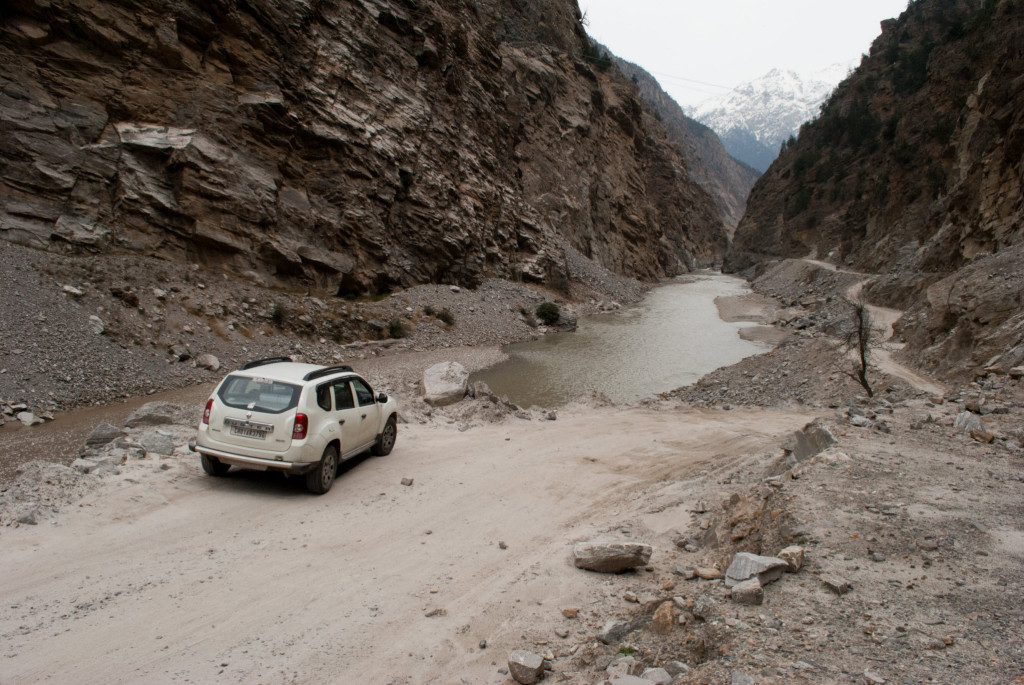
The road to Nako is part of the Hindustan – Tibet Highway (NH-05), and its condition varies dramatically with the seasons. During summer months (May to October), the road is generally in fair condition, though landslide-prone sections near Maling Nallah can cause delays of hours or even days during heavy rains. For the latest road conditions, check our Delhi – Kinnaur – Spiti Valley road status page.
The last 7 km branch road from the highway to Nako village is steep and narrow. It is manageable in any vehicle type during dry conditions, but I would recommend an SUV or at least a high-ground-clearance vehicle for monsoon months.
Fuel availability: The last reliable petrol pump before Nako is at Tapri (approximately 70 km before Nako). The Pooh petrol pump (closer to Nako) may or may not have fuel. I always suggest filling up at Tapri to be on the safer side. If you are continuing towards Spiti, the next reliable petrol pump after Tapri is at Kaza, which is about 200 km further. Plan your fuel accordingly.
For hiring a local taxi for the Kinnaur – Spiti circuit, a full circuit taxi from Shimla covering Kinnaur and Spiti costs approximately Rs 30,000-45,000 for a 10-day trip (as of 2026, verify locally for current rates).
Frequently Asked Questions
Is Nako Village worth visiting?
Absolutely. Nako is one of the most underrated villages in Kinnaur. The 1025 AD monastery, the sacred lake, hiking trails, and the peaceful Buddhist culture make it worth spending at least one full day. Most travelers on the Kinnaur – Spiti circuit skip Nako, which is a shame. If you have the time, I suggest planning an overnight stay here.
Can I visit Nako in winter?
Yes, but it is extremely challenging. Winter temperatures drop well below zero, the lake freezes completely, and heavy snowfall (5-7 feet) is common. Roads can be blocked for days. Accommodation options are very limited. Only attempt a winter visit if you are experienced with Himalayan winter travel. Check our Kinnaur in winters itinerary for planning help.
Is there ATM or banking facility in Nako?
No. There is no ATM in Nako village. The nearest ATMs are in Reckong Peo, which is about 103 km away. Carry sufficient cash before heading to Nako. Most homestays and small shops operate on cash only. Some hotels may accept UPI payments when they have internet, but do not count on it.
What is the altitude of Nako Village?
Nako Village is at an altitude of 11,893 Ft (3,636 meters) above sea level. Nako Lake sits at 11,929 Ft. At this height, AMS is a real concern, especially if you have traveled directly from the plains. Acclimatize properly by spending a night or two at lower Kinnaur destinations like Kalpa (9,711 Ft) before proceeding to Nako.
Can a sedan reach Nako Village?
Yes, a sedan can reach Nako during dry summer months (May to June, September to October) when the roads are in fair condition. However, I would recommend an SUV or at least a car with good ground clearance for comfort and safety, especially during monsoon months when the road develops potholes and loose gravel sections. The 7 km climb from the highway to the village is steep.
How many days are enough for Nako?
One full day is the minimum to see Nako Lake, the monastery, and walk around the village. Two days is ideal if you want to do the hiking trail to Tashigang (3-4 hours round trip) and truly soak in the atmosphere. Most travelers include Nako as part of a larger Kinnaur – Spiti circuit, spending one night in the village before moving on to Tabo.
Is Nako Lake natural or man-made?
Nako Lake is a natural high-altitude lake formed on the slopes of the Reo Purgyal mountain range. It is sacred to the local Buddhist community and is an integral part of village life and culture. The lake is surrounded by willow and poplar trees and freezes solid during winter months.

Have a travel question?? You can subscribe to my YouTube channel and leave a comment to ask your travel questions about traveling to the Himalayas.
I hope this travel guide helps you plan a memorable trip to Nako and nearby villages of Kinnaur or Spiti Valley. Nako is one of those places where the journey and the destination are equally rewarding. On the quest to Spiti, not a lot of people stop over at Nako, and oh what they miss out on. This is a village that deserves your attention, for she has many stories to tell 🙂 …
If any of your friends are planning to travel to Nako or upper Kinnaur Valley, please feel free to share this guide with them. In case you have any questions or need help planning your itinerary, drop a comment below or reach out through the DwD Community. I will be happy to hear from you and help in any way I can.
Last Updated: February 2026
Related Reading: Kinnaur Valley Complete Travel Guide | Best Time to Visit Spiti Valley | Kinnaur Valley Trip Cost Calculator | Offbeat Places in Himachal Pradesh | Camping in Spiti and Kinnaur Valley

1 Comment
Comments section gets closed in 90 days. To ask your travel questions, you can follow my YouTube Channel for a faster reply or for a much slower reply follow me on Instagram. :)
Thanks for this wonderful article