


Last Updated: March 2026
In the early days of my travel, every time I went for a hiking or trekking trip, I used to forget one or the other thing. Being a novice hiker or trekker, you are bound to make mistakes and forget some important things to carry on hiking or trekking trips. Forgetting things is very usual, especially with all the excitement overshadowing the preparations for such adventure trips.
In the last twelve years or so, I have learned from my mistakes, and now I carry at least some essential items which are important for any hiking or trekking trip without fail. Nowadays, most of us no longer live close to nature and are used to the obvious availability of certain things in life. Hence, it is vital to understand and appreciate that when you are hiking or trekking a mountain, some obvious things may not be around you when you find yourself in a tricky situation.
What Are the Most Essential Things to Carry on a Trekking Trip?
If you are planning a hiking or trekking trip to the Himalayas, carrying the right gear can make the difference between a comfortable trek and a miserable one. I have compiled this checklist based on years of personal experience across treks in Himachal, Uttarakhand, Ladakh, and beyond. Each item on this list has helped me in one or another situation, and I am sharing them so you don’t have to learn the hard way 🙂
I do not want you to be stuck in the middle of nowhere, wishing you had carried ‘something’ that could have made the situation much better. In this article, I am going to talk about a comprehensive list of must-have things to carry on a hiking or trekking trip. In case you are starting your trekking or hiking trips and getting used to this hobby, this list will certainly help you quickly start the learning process.
Total items covered: 17 (12 essential + 5 optional)
Budget for basic kit: Rs 5,000 – Rs 15,000 (buying new from Decathlon or online)
Best places to buy: Decathlon stores, Amazon India, local adventure shops in Manali/Leh
Rental option: Many trek operators provide sleeping bags, poles, and gaiters on rent
Pro tip: Break in new trekking shoes at least 2 weeks before your trek to avoid blisters
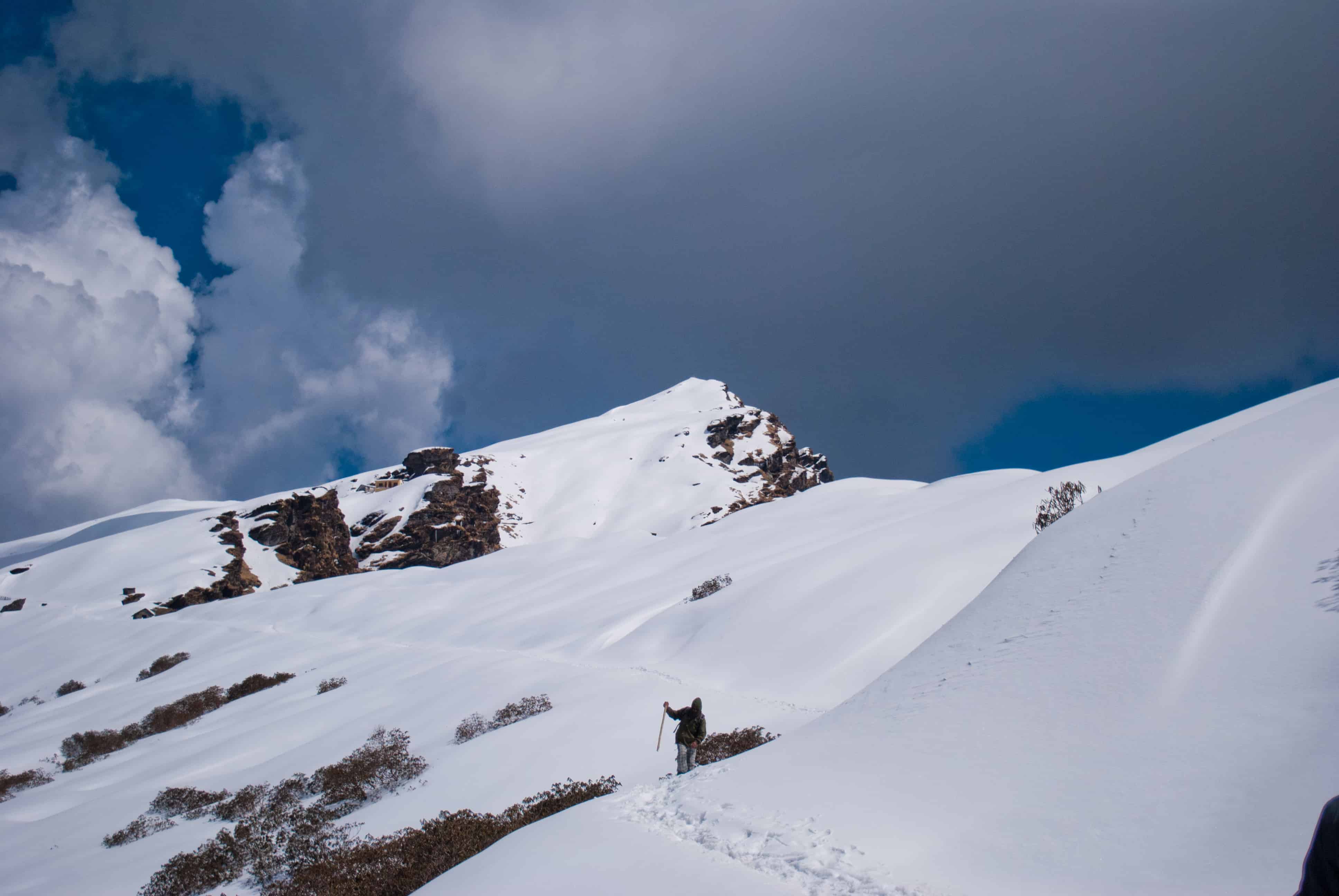
What Should You Pack in Your Trekking Kit? The 12 Essential Items
Let me walk you through the most important items that you absolutely must carry while going for a hiking or trekking trip. Your treks or hikes will become less worrisome to some extent when you don’t have to care about basic items of survival in temporary adverse conditions. I have arranged them roughly in order of priority based on my personal experience.
1. Trekking Shoes or Hiking Boots: Your Most Important Investment
I am putting this at number one for a reason. The quality, comfort, and protection offered by a good pair of trekking shoes far outweighs any other trekking or hiking gear you may have ever purchased. If you have started hiking or trekking or looking forward to it, I will highly recommend saving and investing money in good footwear first.
What makes a good pair of trekking shoes? Look for something comfortable, lightweight, sturdy, warm, and waterproof with good ankle protection and a firm grip on slippery surfaces. The waterproof factor should not be ignored while purchasing hiking boots as it can prove critical during stream crossings and unexpected rain. I used to own Quechua Forclaz 500 Trekking Shoes, and they served me well for years. Decathlon’s MH500 range (around Rs 5,000) is a solid mid-range option, while budget trekkers can find decent options under Rs 3,000 from brands like Quechua and Wildcraft.
One important tip that many beginners miss. Always break in your new trekking shoes at least 2 weeks before the actual trek. Wear them around the house, on walks, and on short hikes. If you show up at the trailhead with brand new shoes, blisters are almost guaranteed, and that can ruin an otherwise perfect trek.
2. Water Bottle: A Lifesaver in More Ways Than One
No need to stress the fact that a water bottle is nothing but a very precious thing to have on any hiking or trekking trip. When you are hiking, your body dehydrates, but most times, due to cold or cool temperatures, you do not realize you are sweating. Hence, sipping water from your bottle frequently will keep you hydrated. I have been on a couple of treks where I forgot to carry a water bottle only to curse myself in the middle of it. One bad experience was my adventurous trek to Chandratal Lake and the other snow trek to Prashar Lake.
You should always carry a water bottle and refill it whenever you get a chance from natural streams. Buy a sturdy water bottle that does not leak or break by falls. I have been using Contigo ones but you can also go with similar models from Milton or Quechua available online. A good insulated bottle (Rs 500-1,500) will not only keep you hydrated always, but you will also help in saving the Himalayas from plastic garbage while carrying less weight than multiple small bottles. Keep in mind, every tiny step counts, and you can help save the mountains by keeping the plastic waste in check.
3. Daypack or Backpack: Travel Light and Organized
A good daypack or a backpack always helps you keep your things well organized on any hike or a trek. There is a wide variety of backpacks available. I own a couple of North Face backpacks and Quechua rucksacks which are quite comforting on my shoulders and balance the loads evenly.
For day hikes, a 20-30 litre daypack is sufficient. For multi-day treks, you will need a 40-55 litre rucksack. The key things to look for are padded shoulder straps, a hip belt (this transfers weight from shoulders to hips and makes a huge difference on long treks), rain cover, and multiple compartments. A good backpack from Quechua or Wildcraft costs Rs 2,000-3,500 and is a solid investment. I have used some cheap quality backpacks too in the past but always felt them either burdening or bruising. Invest in a good one, and your back will thank you.
4. Trail Snacks: Keep Your Energy Levels Up
When you are hiking or trekking, you lose energy much faster than you anticipate. Munching a few things now and then will keep your energy level optimum. I always carry a mix of items such as a pack of trail mix, some dry fruits or nuts, a few Snickers bars, or some energy bars too. The advantage of carrying these munching items is that they take less space and are easier to carry than too much real food without worry about spillovers.
Here is what I typically pack for a day hike: a handful of almonds and cashews, 2-3 chocolate bars, some chikki or granola bars, and maybe a couple of glucose biscuit packs. For multi-day treks, add peanut butter sachets, dried fruit, and electrolyte powder (ORS sachets work great and cost just Rs 20-30 each). The idea is to have something you can eat quickly without stopping for a full meal.

5. Trekking Pants or Quick-Dry Trousers: Comfort on the Trail
Similar to a good pair of trekking shoes, I believe that one must own a comfortable, breathable, cargo-styled and quick-dry trek pants or trousers. In case you are planning a snow trek, you can opt for trek pants that offer built-in gaiters to get the required snow protection. Quick-dry capabilities prove very satisfying in situations of crossing water streams, which are quite common on Himalayan treks.
Also, a good number of pockets on cargo-styled trek pants help keep other things like snacks, a Swiss knife, or your phone handy while you hike. Avoid jeans completely. They are heavy, take forever to dry, and restrict movement. Decathlon’s MH500 trek pants (around Rs 2,000-3,000) are a popular choice among Indian trekkers for good reason.
6. Torchlight or Headlamp: Find Your Way in the Dark
In case it gets late or dark while coming back from the day’s hike, a torchlight or headlamp can prove to be a lifesaver. I still remember the horrors of my trek to Triund and Laka Glacier where it got pitch black by the time we were a KM away from our camps. It proved to be a terrifying ordeal in the absence of torchlight.


I would recommend a headlamp over a handheld torch because it keeps both your hands free for balance and support on tricky terrain. A basic LED headlamp costs Rs 300-800 and runs on AAA batteries. Always carry extra batteries. Some good options include the Decathlon Forclaz headlamp series or the Syska LED head torch. For multi-day treks, a rechargeable headlamp (Rs 800-1,500) is more practical.
7. Swiss Knife or Multi-Tool: A Pocket-Sized Problem Solver
Well, you will be surprised to know that this little piece of handy toolset called a Swiss knife has proven to be useful in more situations than I can remember now. It has proved very helpful in not just my hiking or trekking trips but for all kinds of trips. I own a Victorinox Huntsman Red Swiss Army Knife for over 12 years now, and it still works like a charm.
From cutting fruits and opening cans to fixing loose screws on a backpack strap, a multi-tool earns its weight on every single trek. You can find decent options from Rs 500 onwards. Just keep in mind, if you are flying to a trekking destination (say, flying to Leh or Dehradun), pack it in your check-in luggage, not your cabin bag.
8. Hand Sanitizer and Wet Wipes: Stay Clean on the Trail
Your hands will keep coming in contact with rocks, mud, and tree branches either by falling or climbing or looking for support when you are on a hike or a trek. Hand sanitizers will help keep a check on germs and reduce the probability of getting sick while on a multi-day trek or after coming back from a day’s hike.
Since I got an infection on my Spiti Valley trip in 2014, I always carry hand sanitizer on all my trips. I use it often enough now, even for no reason at times 🙂 … Also carry a pack of wet wipes. They are incredibly useful for cleaning hands before meals, wiping off sweat, and freshening up when there is no water source nearby.
9. Sunscreen, Sunblock, and Lip Balm: Prevent Painful Sunburns
You must protect yourself from UV rays and direct sunlight, especially while trekking or hiking in places like Ladakh or Spiti Valley where the intensity of sun rays is far more impacting than in normal cities. At altitudes above 10,000 Ft, UV radiation is significantly stronger, and sunburns can happen within 30 minutes of exposure.
I always use sunscreens with SPF 50 or higher as I have seen some terrible cases of sunburns, which proved very painful for quite a few days after the trip. Apply sunscreen every 2-3 hours, especially on your face, neck, ears, and the back of your hands. You should also carry a lip balm with SPF ratings to protect lips from getting sunburned. Cracked, burnt lips at high altitude are incredibly uncomfortable, and a Rs 100-200 SPF lip balm can save you a lot of misery.
10. Cap or Hat: Protection From Sun and Rain
Whenever hiking or trekking in the open, you should always protect yourself from direct exposure of skin to the sun. Sometimes the sunburn can be terrible, and if you are too much into hiking and trekking, then buying a cap or hat will help you in the long way. A wide-brimmed hat provides better protection than a baseball cap because it also covers your ears and the back of your neck.
For monsoon treks, a waterproof hat is worth considering. In winter treks, carry a warm beanie or balaclava that covers your ears. The point is, your head loses a significant amount of body heat, so keeping it covered (from sun or cold) is always a smart move on any trek.
11. Trek Route Map or Offline GPS: Do Not Get Lost
You should always keep a hard copy of the map of your trekking trail or route. We know cell phones have GPS, but many times, you will find yourself at a spot where phones do not work or run out of battery. This is especially true for long-running hikes or treks in the Himalayas where mobile network coverage is patchy at best.
In 2026, there are some excellent free options available. Download offline maps on Google Maps for the trekking area before you leave. Also download the AllTrails or Maps.me app, which works entirely offline and shows trekking trails that Google Maps often misses. A dedicated GPS device is still worthy for serious trekkers, but for most beginners, a combination of offline maps on your phone plus a printed route map from your trek operator is sufficient. The key is to have at least one backup when your phone dies.
12. Medical Kit or First-Aid Kit: Your Emergency Safety Net
Last but not the least, you must carry a basic medical kit with creams for burns, bruises, antiseptic lotions, bandages, band-aids, and other first-aid essentials. You never know when a small medical first-aid kit may help you or a fellow hiker or trekker with minor health issues including burns, cuts, or bruises.
Here is what I carry in my first-aid kit for every trek: Dettol antiseptic cream, a roll of bandage, band-aids (assorted sizes), Crocin for fever and headaches, Avomine for motion sickness (especially useful on the drive to the trailhead), Diamox for altitude sickness prevention on treks above 10,000 Ft, ORS sachets for dehydration, Volini spray for muscle soreness, and a pair of blister pads. This entire kit fits in a small pouch and costs under Rs 500 to assemble.
What Optional Gear Should You Also Consider Carrying?
Beyond the 12 essentials, here are some additional items that are good to have on your hiking or trekking trips. These are not mandatory for every trek, but depending on the terrain, duration, and weather, they can make your experience significantly better.
1. Trekking Pole: Support for Your Knees
Carrying a trekking pole is always helpful, especially when trekking on snow and on long treks. It gives you stability, some comfort, and support to your knees and legs on all types of terrains. This is particularly important on descents, where your knees take a beating. You should choose trekking poles that are lightweight, adjustable, foldable, and have some shock-absorbent capabilities. A decent pair of trekking poles costs Rs 800-2,000. Many trek operators also rent them out for Rs 50-100 per day.
2. Rain Gear: A Poncho or Waterproof Jacket
If you are trekking during the monsoon season (July to September) or even in early summer when the weather is unpredictable, carrying a lightweight rain poncho or a waterproof jacket is very important. A basic rain poncho costs just Rs 100-300 and can save your entire trek from becoming a wet, cold ordeal. For serious trekkers, investing in a proper waterproof jacket (Rs 2,000-5,000) that also acts as a windbreaker is worth the money.
3. Smartphone with Powerbank: Capture and Stay Connected
A smartphone is useful both for capturing pictures and getting connectivity the moment you are in the signal zone. However, phone batteries drain quickly at high altitudes (cold temperatures reduce battery life significantly), so always carry a fully charged powerbank. I would recommend a 10,000 mAh or 20,000 mAh powerbank. Just keep the powerbank warm (inside your jacket pocket) as extreme cold can affect its output too.
4. Sunglasses: Protect Your Eyes From Snow Blindness
Sunglasses are essential to block sun rays and protect your eyes. This is especially important when you are hiking or trekking in snow, where the reflection can cause snow blindness. At times, the irritation or burns from the snow glare get quite painful at night, making it hard to sleep or even open your eyes.
Hence, for all snow hikes or treks, it is mandatory to have sunglasses on to protect your eyes on a sunny day in the snow. Go for UV400 protection lenses. Category 3 or 4 sunglasses are recommended for high-altitude snow treks. You do not need expensive brands. A pair with proper UV protection from Rs 500-1,500 will do the job.
5. Layered Clothing: The Key to Comfort at Any Altitude
Rather than packing one thick jacket, the smart approach is to layer your clothing. Here is what works best: a moisture-wicking base layer (thermal innerwear), a warm mid-layer (fleece jacket), and a waterproof outer layer (rain jacket or windbreaker). This way, you can add or remove layers as the temperature changes during the trek. Many beginners make the mistake of carrying heavy woolens that get sweaty on the climb and cold when they stop. Synthetics and fleece are far better for trekking.
How Much Does Basic Trekking Gear Cost in India?
One question I get asked very often is about the budget for trekking gear. Here is a rough breakdown of what a basic trekking kit costs in India as of 2026. Keep in mind, you do not need to buy everything at once. Start with the essentials and build your kit over time.

| Item | Budget Range (INR) | Where to Buy |
|---|---|---|
| Trekking Shoes | Rs 2,000 – Rs 7,000 | Decathlon, Amazon |
| Backpack (40-55L) | Rs 2,000 – Rs 3,500 | Decathlon, Wildcraft |
| Trek Pants (quick-dry) | Rs 1,500 – Rs 3,000 | Decathlon, online |
| Headlamp | Rs 300 – Rs 1,500 | Decathlon, Amazon |
| Water Bottle (insulated) | Rs 500 – Rs 1,500 | Amazon, local stores |
| Rain Poncho/Jacket | Rs 300 – Rs 5,000 | Decathlon, Amazon |
| Sunscreen + Lip Balm | Rs 300 – Rs 800 | Any pharmacy |
| First-Aid Kit | Rs 300 – Rs 500 | Pharmacy, assemble yourself |
| Trekking Poles (pair) | Rs 800 – Rs 2,000 | Decathlon, Amazon |
| Total Basic Kit | Rs 8,000 – Rs 25,000 |
If you are on a tight budget, Decathlon is your best friend. Their Quechua and Forclaz ranges offer the best value for money for Indian trekkers. Also, many trek operators include rental gear (sleeping bags, trekking poles, gaiters) in their package cost, so check what is included before buying everything on your own.
What Common Mistakes Do Beginners Make When Packing for a Trek?
Over the years, I have seen many first-time trekkers make the same mistakes that I made in my early days. Here are some common ones to avoid so you can save yourself some trouble.
Overpacking: This is the number one mistake. Carrying a 15 kg backpack on a Himalayan trek will drain your energy twice as fast. Pack only what you need, wear your heaviest shoes and jacket (do not pack them), and aim for a backpack weight of 8-10 kg maximum for a multi-day trek.
Wearing new shoes on the trek: As I mentioned above, new shoes mean blisters. Break them in first. No exceptions.
Not carrying enough water: Many beginners carry just one small bottle and assume they will find water on the trail. On some treks, water sources can be 2-3 hours apart. Carry at least 1.5-2 litres of water capacity.
Cotton clothing: Cotton absorbs sweat and takes forever to dry. In cold conditions, wet cotton against your skin can lead to hypothermia. Stick to quick-dry synthetics and avoid cotton at all costs on mountain treks.
No waterproofing: Even if the weather forecast says clear skies, Himalayan weather changes in minutes. A dry bag liner for your backpack and a rain poncho should always be in your kit.
How Should You Pack Your Backpack for a Trek?
The way you pack your backpack matters almost as much as what you pack. A well-packed bag distributes weight evenly and keeps frequently needed items accessible. Here is a simple packing system that works.
Bottom compartment: Place your sleeping bag (if carrying one), extra clothes, and items you will not need until you reach camp. Middle (closest to your back): Heavy items like water bottles, food, and your first-aid kit. Keeping heavy items close to your back and at mid-height gives you the best balance. Top compartment: Rain gear, snacks, sunscreen, and anything you might need to grab quickly. Hip belt pockets: Phone, hand sanitizer, trail mix for easy access while walking.
In case you want to learn more about how to pack your backpack efficiently, I have a detailed article on that as well. Also, if you are on a self-drive trip and not on a hiking or trekking trip, then make sure to read the article on 40 must-have things to carry on a Ladakh self-drive trip.
Where Can You Rent Trekking Gear in India?
If you do not want to invest in buying everything right away, renting is a perfectly viable option. Many trek operators include basic gear (sleeping bags, trekking poles, gaiters, and sometimes even jackets) in their trek package. For independent trekkers, here are some options.
Manali: Several shops in Old Manali and Mall Road rent trekking gear including shoes, jackets, sleeping bags, and backpacks. Rates are typically Rs 50-200 per item per day. McLeod Ganj: Shops around the Triund trek starting point offer rental gear. Rishikesh and Dehradun: For Uttarakhand treks, gear shops near Tapovan or Mussoorie Road have rental options. Online: Platforms like RentSher and Gearon Rent deliver rental trekking gear to your doorstep in major cities.
Renting makes especially good sense for beginners who are still figuring out if trekking is their thing. Once you know you are hooked (and trust me, you will be), you can gradually build your own kit.
What About Leave No Trace? Responsible Trekking in the Himalayas
I want to mention something that not enough trekking packing lists talk about. When you are packing for a trek, also pack the mindset of responsible travel in the Himalayas. Here are some practical things to carry and do.
Carry a garbage bag (even a simple plastic bag works) to pack out all your trash. This includes wrappers, tissue paper, and even biodegradable waste like fruit peels (they take months to decompose at high altitudes). Carry a reusable water bottle instead of buying plastic bottles. If you are trekking with a group, designate one person as the “sweep” who checks for any litter left behind at rest stops.
The DwD Community has always been passionate about this. In our DoW Mega Meets and group trips, we carry stationery for schools, medicines for dispensaries, and woolens for villagers along the trekking routes. It is a small effort that makes a real difference. Please be a responsible trekker, my friend. The mountains give us so much. The least we can do is leave them as we found them.
Frequently Asked Questions
What are the most important things to carry on a trekking trip in India?
The most important items are trekking shoes with good ankle support, a water bottle (at least 1.5 litres), a well-fitted backpack, trail snacks for energy, a headlamp, sunscreen with SPF 50+, quick-dry trekking pants, a first-aid kit with Diamox and ORS sachets, and a rain poncho. For treks above 10,000 Ft in the Himalayas, add UV-protection sunglasses and lip balm with SPF.
How much does it cost to buy trekking gear in India?
A basic trekking kit in India costs between Rs 8,000 and Rs 25,000 depending on the brands you choose. Budget options from Decathlon’s Quechua range can bring the cost down to around Rs 8,000-10,000 for essentials (shoes, backpack, pants, headlamp). You can also rent gear from trek operators or shops in Manali, McLeod Ganj, and Rishikesh for Rs 50-200 per item per day.
What should beginners avoid carrying on a trek?
Beginners should avoid carrying cotton clothing (it retains sweat and causes hypothermia risk in cold weather), heavy jeans, multiple pairs of shoes, unnecessary electronics, hardcover books, and too many “just in case” items. Keep your backpack under 8-10 kg for multi-day treks. Overpacking is the most common beginner mistake.
Do I need trekking poles for Himalayan treks?
Trekking poles are not mandatory for all treks, but they are highly recommended for snow treks, steep descents, and multi-day treks. They reduce stress on your knees by up to 25% on descents and provide stability on loose or slippery terrain. If you do not want to buy them (Rs 800-2,000), most trek operators rent them for Rs 50-100 per day.
Can I use regular sports shoes for trekking in the Himalayas?
Regular sports shoes are not recommended for Himalayan treks. They lack ankle support, waterproofing, and proper grip on rocky or muddy terrain. On easy, well-maintained trails like the first stretch of Triund, you might get away with sports shoes, but for anything involving loose rocks, stream crossings, or snow, proper trekking shoes are a must. Good options start from Rs 2,000 at Decathlon.
What medicines should I carry for a high-altitude trek?
For high-altitude treks (above 10,000 Ft), carry Diamox (acetazolamide) for altitude sickness prevention (consult your doctor for dosage), Crocin for headaches and fever, Avomine for motion sickness, ORS sachets for dehydration, Volini spray for muscle pain, Dettol antiseptic cream, band-aids, and blister pads. If you have any pre-existing conditions, carry your regular medicines with a doctor’s prescription.
How do I choose the right backpack size for trekking?
For day hikes (4-8 hours), a 20-30 litre daypack is sufficient. For weekend treks (2-3 days), go for a 35-45 litre backpack. For multi-day treks (4-7 days), you need a 50-60 litre rucksack. The key features to look for are a hip belt (transfers 60-70% of weight from shoulders to hips), padded shoulder straps, rain cover, and multiple access points. Try the backpack on in store with weight inside before buying.
I hope the above list of things will prove helpful in planning your upcoming hiking or trekking trips or completing your hiking kit. Did I miss any important thing that you carry on your trekking or hiking trip?
Please feel free to post them in the comments section of the article. It will help other fellow travelers, hikers, and trekkers of the DwD Community. If you have any questions, you can also ask them in the trek-specific guides or the DwD Community forums. Happy trekking, my friend 🙂 …

13 Comments
Comments section gets closed in 90 days. To ask your travel questions, you can follow my YouTube Channel for a faster reply or for a much slower reply follow me on Instagram. :)
VERY GOOD SIR…..I AM PLANNING FOR MY FIRST TREK TO TRIYUND AND THIS ARTICLE REGARDING BELONGINGS IS VERY USEFUL FOR ME. THANK YOU AGAIN FOR THIS.
Wonderful Pradeep, am glad that it was of such help
Very useful and informative article for beginners. Planning to trek to Valley of flowers and Hemkunt Sahib in the second week of August. This information will come handy to us.
You can check the our complete guide of Hemkunt Sahib and Valley of Flowers and the complete itinerary for Hemkunt Sahib
Feel free to post any further questions you may have for your trip
A really useful article for evry1 who is interested in trek
thanks for the article .
Thank you Nandini, glad you liked the article and was helpful to you.
Good information.. I am planning to trek in 3rd Week of Feb’18. It is very useful for us.
Thank You so much.
Good information.. I am planning to trek Tungnath in 3rd Week of Feb’18. It is very useful for us.
Thank You so much.
Best wishes for the trip, you can also see: Delhi to Tungnath Temple and Chandrashilla, Uttarakhand | Travel Guide
Nice And Very useful info,
This article important and really good the for me is.Keep it up and thanks to the writer.Amazing write-up,Great article. Thanks!
Thank you Suresh ji !!
यह लेख जानकारी से भरा हुआ।
बहुत यात्रियों के काम आयेगा।
Thank you Sandeep !!