


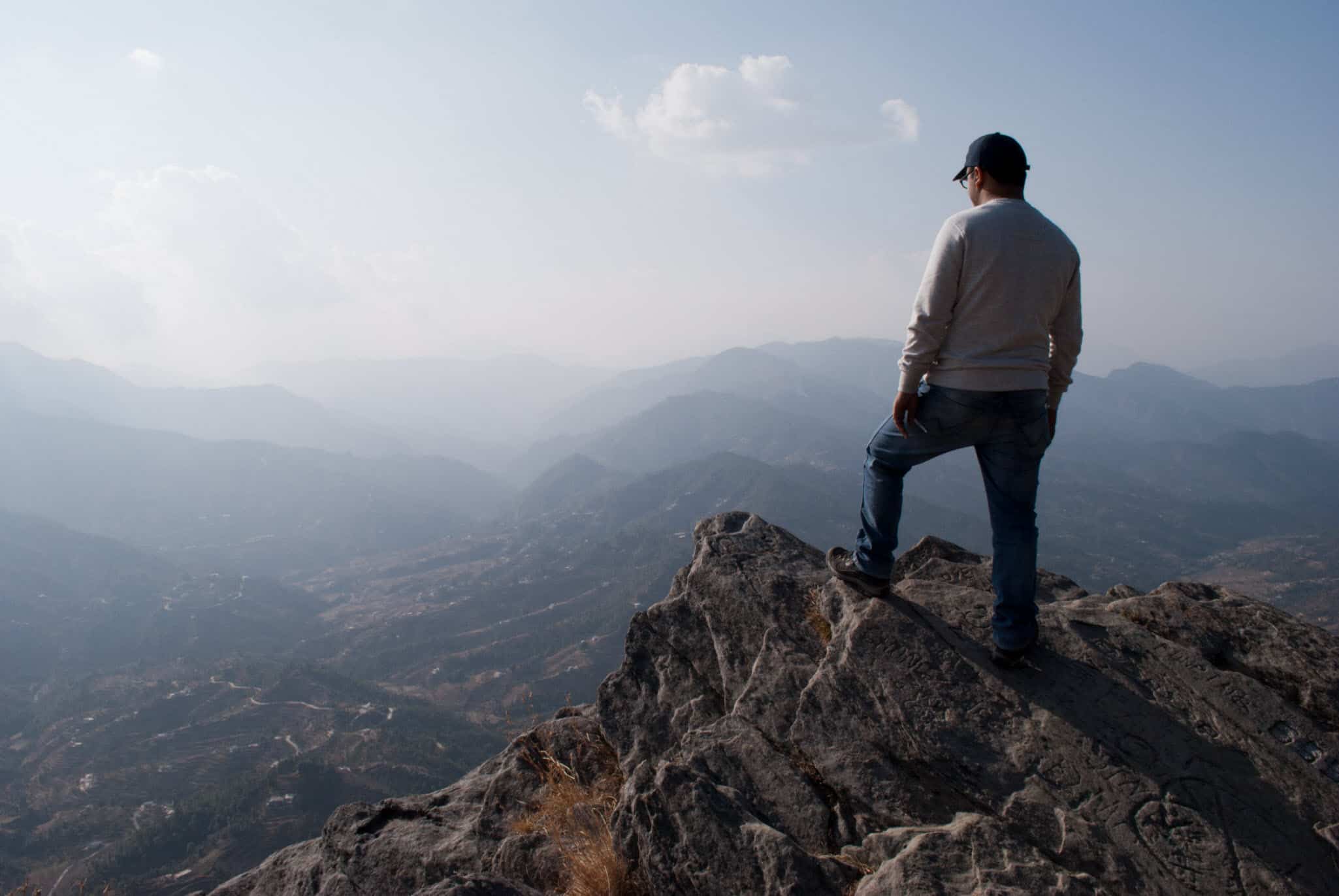
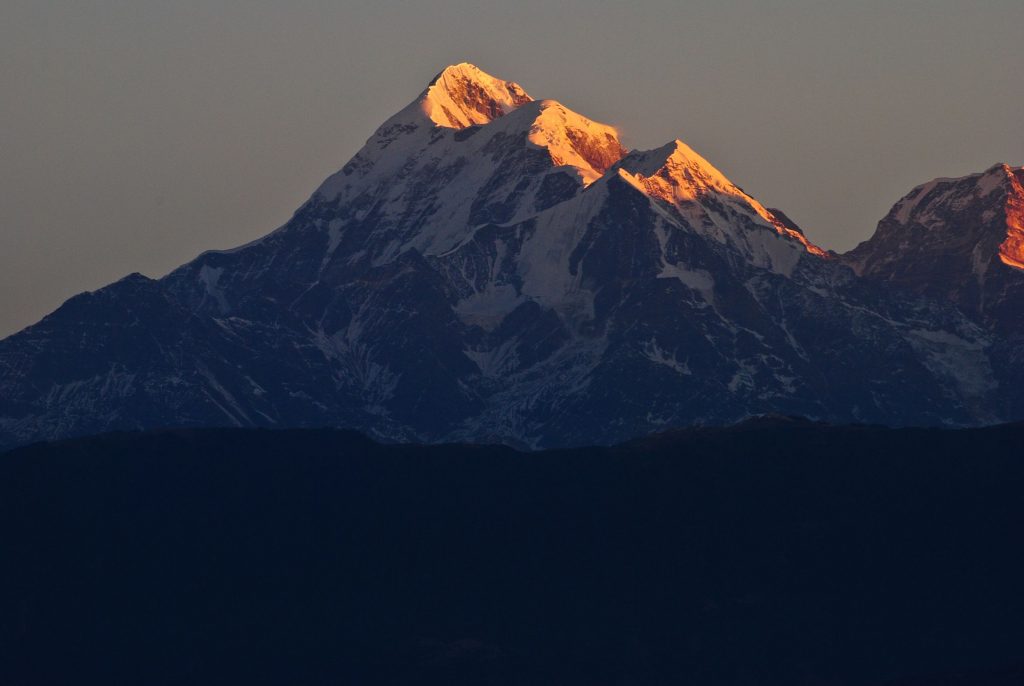
Mukteshwar is one of those quiet Kumaon hill stations that most people overlook while rushing to Nainital or Almora. Sitting at an elevation of 2,285 meters (7,500 ft) in the Nainital District of Uttarakhand, this small village is named after the 350-year-old Mukteshwar Dham temple dedicated to Lord Shiva. The views from the temple hilltop are stunning, with a full 180-degree panorama of the Himalayan peaks stretching across the horizon. If you are looking for a peaceful weekend getaway from Delhi or a quieter alternative to Nainital, this Mukteshwar travel guide covers everything you need to plan your trip in 2026, including things to do, how to reach, and where to stay.
Here is all you need to know about this little offbeat place in Uttarakhand that has so much to offer.
Let's quickly dive into the details:
Quick Facts About Mukteshwar
Quick answer: Mukteshwar sits at 2,285 meters (7,500 ft) in the Kumaon division of Uttarakhand, 340 km from Delhi (7-8 hours by road). No permits are needed to visit or trek here. Best time is March-June and September-November, and 2-3 days is enough for a relaxed trip.
Mukteshwar sits at 2,285 meters (7,500 ft) in the Kumaon division of Uttarakhand. It is 51 km from Nainital, 43 km from Almora, 72 km from Haldwani, and about 340 km from Delhi. The village is accessible year-round, receives light snowfall in January and February, and serves as a base for several treks, adventure activities, and day trips in the region.
| Detail | Information |
|---|---|
| Altitude | 2,285 m / 7,500 ft |
| District | Nainital, Uttarakhand |
| Nearest Railway Station | Kathgodam (57 km) |
| Nearest Airport | Pantnagar (90 km) |
| Distance from Delhi | 340 km (7-8 hours by road) |
| Distance from Nainital | 51 km (1.5-2 hours) |
| Best Time to Visit | March to June, September to November |
| Permits Required | None. Mukteshwar and its nearby treks are open to all Indian and foreign nationals with no permit or ILP process |
| Mobile Network | Jio and Airtel work in town, BSNL patchy |
| ATM | Available in Mukteshwar town, carry backup cash |
What Is the History of Mukteshwar?
Quick answer: Mukteshwar’s name comes from Hindu mythology (Mukti + Ishwar, liberation granted by God) tied to the 350-year-old Shiva temple here. Under the British, it also became a scientific hub after the Indian Veterinary Research Institute (IVRI) was set up in 1893.
Mukteshwar has a layered history that blends mythology, colonial science, and quiet hill life. Until the late 1800s, the area was known mainly for its ancient temples and dense forests.
Mythology
As per Hindu mythology, Lord Shiva fought a fierce battle with a demon at this very spot. When the demon was destroyed, Shiv Ji granted him Mukti, the boon of liberation from the cycle of rebirth. The name Mukteshwar comes from this story. Mukti (liberation) + Ishwar (God), meaning “liberation granted by God.” The Mukteshwar Dham temple stands at the spot where this battle is believed to have taken place.
Colonial History and IVRI
In 1893, the British established the Indian Veterinary Research Institute (IVRI) in Mukteshwar. This brought the hamlet onto the map as a center for scientific research and education. An early mention of the place appears in Jim Corbett’s book “The Temple Tiger,” where he refers to it as “Muktesar.” Nobel Prize-winning scientist Robert Koch visited the hamlet in the early 1900s and created a cold storage room using only biological materials. That cold room still stands today and is a fascinating exhibit at the IVRI museum. If you have any interest in science or history, do visit the museum during your trip.
Trip Ideas: Have you been to Munsiyari? If you have more days in hand, you can plan to add this place to your Kumaon trip plan.
When Is the Best Time to Visit Mukteshwar?
Quick answer: March to June and September to November are the best months, with clear skies and Himalayan views. Winter (late December to mid-February) brings snowfall, and monsoon (July-August) is best avoided unless you are comfortable driving in the hills during rain.
The best time to visit Mukteshwar is from March to June and September to November. The weather stays pleasant with temperatures between 15-30 degrees Celsius in summer and clear skies offering the best mountain views. Here is a season-by-season breakdown to help you plan.
Spring and Summer (March to June)
This is the peak season and for good reason. Daytime temperatures range from 15 to 30 degrees Celsius. The skies are clear, and the Himalayan peaks, including Nanda Devi, Trishul, and Panchachuli, are visible almost every morning. Rhododendrons bloom in March and April. If you can, try to visit during this window. Do purchase the Rhododendron juice concentrate when you are here. It is a local specialty.
Monsoon (July to September)
July and August bring heavy rainfall. Leeches appear on the trails, and the roads can get slippery with occasional landslides. Mountain views are mostly hidden behind clouds. That said, the greenery during monsoon is extraordinary. If you are a seasoned mountain driver and enjoy the rains, the place has a different kind of charm in monsoon. Just be prepared and keep an eye on weather updates.
Autumn (October to November)
Post-monsoon is an excellent time to visit. The air is crisp, the skies are clean, and the views are at their best. Temperatures start dropping, so carry layers. This is also apple harvest season in the orchards around the region.
Winter (December to February)
Mukteshwar receives snowfall from late December to mid-February. Temperatures can drop to minus 5 degrees Celsius at night. If you enjoy snow and are prepared with warm clothing, winter in Mukteshwar is magical. The town gets a dusting of snow, and the peaks glow white. Keep in mind that some homestays and smaller hotels may close during peak winter, so confirm availability before booking.
How to Reach Mukteshwar from Delhi?
Quick answer: Mukteshwar is 340 km from Delhi. The nearest railway station is Kathgodam (57 km) and the nearest airport is Pantnagar (90 km). Most travelers take an overnight train or UTC bus to Kathgodam/Haldwani and a taxi for the last stretch, or self-drive the full 7-8 hour route.
Mukteshwar is well connected to most important towns in Uttarakhand. At about 340 km from Delhi, you can reach Mukteshwar by air, rail, or road.
By Air
The nearest airport is Pantnagar (90 km from Mukteshwar). There are a few direct flights from Delhi each week. From Pantnagar, you can hire a taxi for Rs 2,000-2,500 to reach Mukteshwar. The drive takes about 2.5-3 hours. Alternatively, you can fly to Dehradun and drive from there, though it is a longer route.
By Rail
The nearest railway station is Kathgodam, 57 km from Mukteshwar. Multiple trains run daily from Delhi (Anand Vihar, Old Delhi) to Kathgodam. The Ranikhet Express and Uttarakhand Sampark Kranti are popular options. From Kathgodam, shared taxis to Mukteshwar cost around Rs 100-150 per person. A private taxi will cost Rs 1,500-2,000.
By Road
This is the most popular option. The Delhi-Mukteshwar route via Moradabad and Haldwani takes 7-8 hours. UTC (Uttarakhand Transport Corporation) buses run from ISBT Anand Vihar to Haldwani and Kathgodam, and can be booked online at the official UTC portal (utconline.uk.gov.in). Ordinary bus fares are around Rs 400-600, while UTC’s own AC Volvo services run closer to Rs 950-1,800 depending on the specific service and season. Private operators like RedBus and IntrCity also run sleeper buses to Kathgodam and Haldwani, sometimes priced higher during long weekends. From there, local buses or shared taxis take you to Mukteshwar (Rs 70-150). These are approximate 2025-2026 figures, so do check current fares on the UTC site or a booking app before you travel, especially around festival weekends.


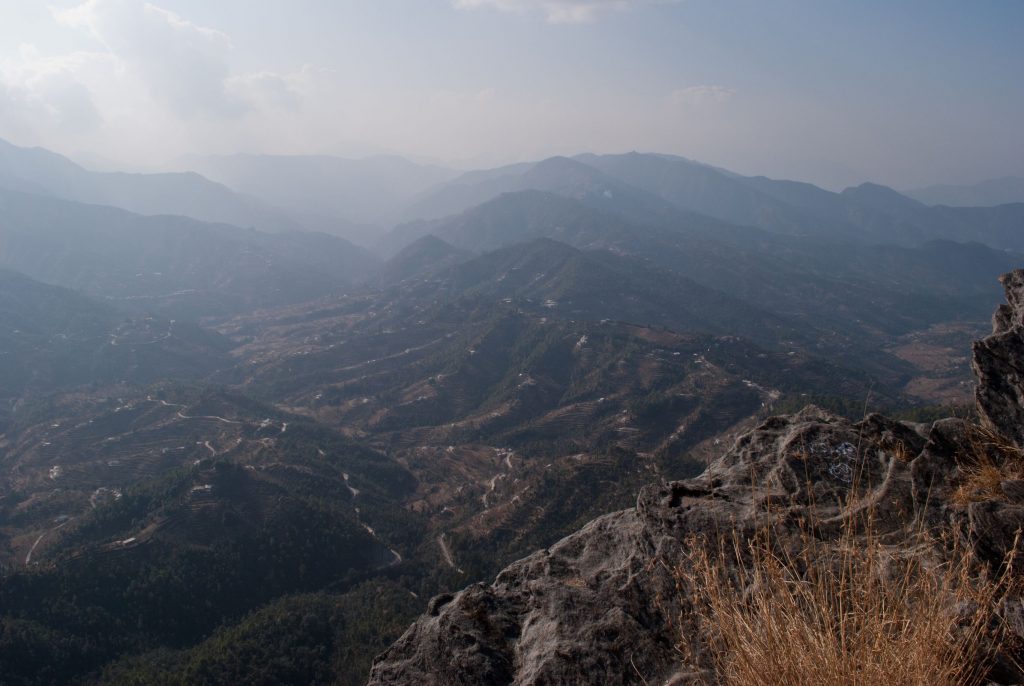
If you are driving, the route is Delhi > Ghaziabad > Moradabad > Rampur > Haldwani > Bhimtal > Mukteshwar. Roads are smooth until Haldwani. After that, it is a gradual hill climb with good tarmac. The last stretch from Bhimtal to Mukteshwar is a scenic mountain road through pine and deodar forests.
Trip Ideas: You can also travel to Binsar, which is another offbeat place in Uttarakhand and pretty nearby as well.
What Are the Best Places to Visit in Mukteshwar?
Quick answer: Mukteshwar Dham Temple, Chauli ki Jali, Zero Point, the IVRI Museum, and Bhalu Gaad Waterfall are the top places to visit. The Starscapes Observatory is the newest and most popular addition for night sky viewing.

The small hamlet packs more sightseeing than you might expect. Here are the top places to visit in Mukteshwar and around the region.
Mukteshwar Dham Temple
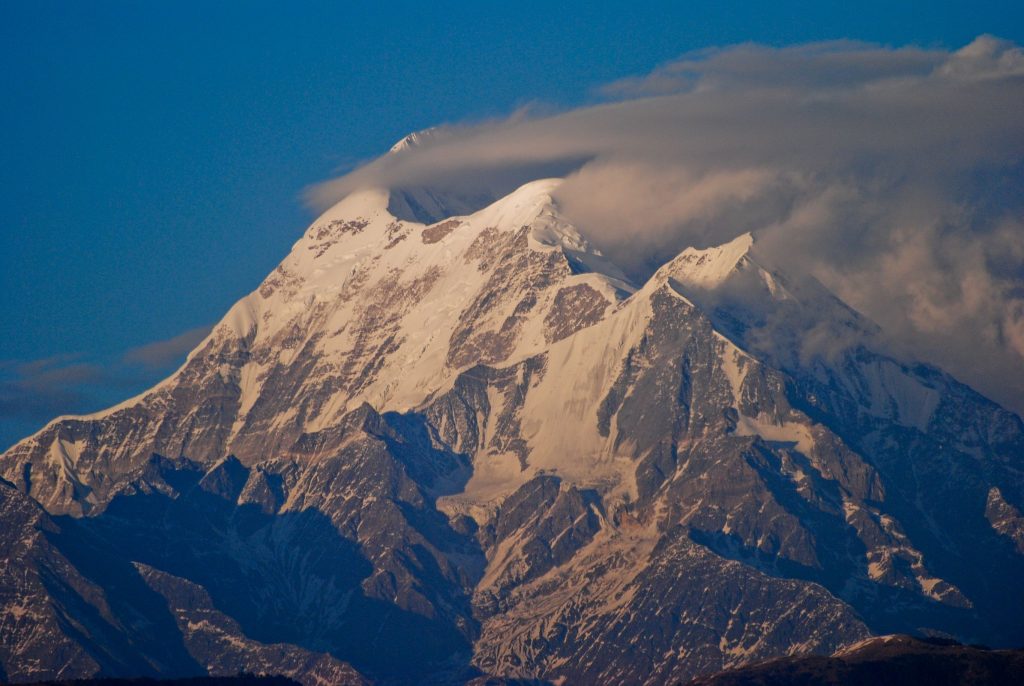
Dedicated to Lord Shiva, this 350-year-old temple sits at the highest point in the village at 2,312 meters. The temple has humble and simple architecture, with a stone staircase leading up to the Shiv Linga. What makes it special is not just the religious significance (it is considered one of the 18 important Shiva temples) but the stunning views from the top. On a clear day, you can see Nanda Devi (7,816 m), Nanda Kot, Trishul, Nandaghunti, and Panchachuli peaks from here. The temple is open from 5:00 AM to 7:30 PM daily, and there is no entry fee.
Chauli ki Jali
Located just 250 meters behind the Mukteshwar Temple, Chauli Ki Jali (also written as Chauthi Jali) is a natural rock formation with a lattice-like pattern carved by wind and time. “Chauli” means rock and “Jali” means mesh or lattice. Locals believe that Goddess Parvati’s ornaments left imprints on these rocks during her penance. Today, this cliff is a popular spot for rock climbing and rappelling. The overhanging rocks with the valley dropping below make it a genuinely thrilling spot, even if you just stand at the edge and take in the view.
Zero Point
Zero Point sits inside the IVRI campus, about 2 km from the main market, at the end of the road leading up to the temple. It is a well-maintained lawn with benches, and it opens up to a genuine 360-degree view of the snow-capped peaks, including Nanda Devi, Trishul, and Panchachuli. Entry is a nominal Rs 60 per person. Here is a tip most first-time visitors miss: try to reach Zero Point before 9 AM. Clouds tend to roll in and cover the peaks by mid-morning, so an early start makes all the difference to whether you actually see the mountains or just the clouds in front of them.
IVRI Museum and Robert Koch’s Cold Room
The Indian Veterinary Research Institute campus is beautifully maintained with colonial-era buildings, manicured lawns, and a small museum. The museum houses the microscope used by Robert Koch and other scientific instruments from the early 1900s. The cold room, built entirely from biological materials without any mechanical cooling, is a remarkable piece of engineering from over a century ago. The campus itself is worth a walk for its quiet, tree-lined avenues, and it is the same campus where you will find Zero Point, so plan to cover both in one visit.
Bhalu Gaad Waterfall
Located about 10-14 km from Mukteshwar town, Bhalu Gaad is a beautiful waterfall hidden in the forest. You drive to Dhari village and then trek about 2 km through a scenic trail with some ups and downs. The waterfall itself is a cascading stream surrounded by dense forest. It is a peaceful spot, far less crowded than waterfalls near Nainital. Best visited between March and June when the water flow is good.
Starscapes Observatory
This is a newer addition to the Mukteshwar experience and a great one at that. Starscapes is a professional astronomical observatory set in a fruit orchard with wide views of the snow-capped peaks. They have an automated telescope on a retractable roof pier and run 45-minute guided night sky sessions where you can spot constellations, planets, and deep-sky objects. There is also an experience centre for children with workshops and hands-on activities. Tickets cost around Rs 400 per person (as of 2025, verify current pricing on their website before booking as special events like the Astro Carnival are priced separately). If you are visiting with family or have any interest in the night sky, this is highly recommended.
What Are the Best Things to Do in Mukteshwar?
Quick answer: Rock climbing at Chauli ki Jali, paragliding, camping in the deodar forests, trekking to Peora, and orchard walks during harvest season are the top activities in and around Mukteshwar.
Beyond sightseeing, Mukteshwar offers plenty of activities for adventure seekers and those looking to simply unwind in nature.
Rock Climbing and Rappelling at Chauli ki Jali
The overhanging cliffs near Chauli Ki Jali are a popular rock climbing destination. Several local operators organize guided climbs with safety equipment. The cliff face offers routes for beginners and intermediate climbers. Rappelling is also available. If you have not tried rock climbing before, this is a fantastic place to start because the setting, with the valley and peaks all around, is out of the ordinary.
Paragliding
Tandem paragliding is available in and around Mukteshwar. A short 5-10 minute flight costs around Rs 1,000-1,500 per person, while a longer session can go up to Rs 5,000. The views during the flight, with the Himalayan peaks on one side and the green valleys on the other, are well worth it. Operators run flights during the clear weather months (March-June, September-November).
Camping
With dense deodar forests and clear night skies, Mukteshwar is a glorious camping site. Several operators offer fixed camps with tents, bonfires, and meals. If you carry your own gear, there are spots around Peora and the forest trails where you can pitch a tent. Combine camping with a night at Starscapes Observatory for the complete experience.
Trekking and Hiking
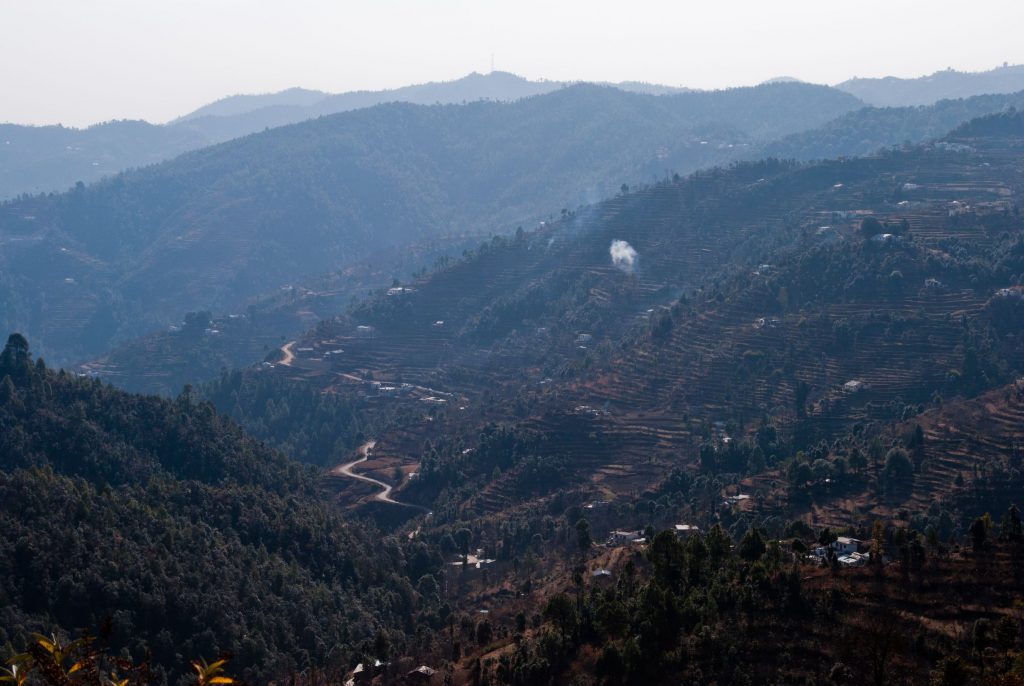
There are several trekking trails near Mukteshwar. The Peora to Mukteshwar trek (about 8 km, easy to moderate) takes you through villages, pine forests, and meadows with views of the snow-capped peaks. Other options include the Peora to Almora trail and the Binsar to Artola trek. None of these require any permits or professional guides, making them perfect for a half-day outing.
Fruit Orchard Walks
Mukteshwar is sometimes called “Apple Country” because of its extensive fruit orchards. Apples, plums, peaches, and apricots grow in abundance here. If you visit between September and October, you can walk through the orchards during harvest season and even pick your own fruit at some farms. It is a delightful experience, especially if you are traveling with kids.
Which Nearby Places Can You Visit from Mukteshwar?
Quick answer: Nainital (51 km), Ramgarh (25 km), Dhanachuli (15 km), and Peora (10 km) are the closest options. If you want a genuinely offbeat detour, the remote village of Mauna is about 1.5 hours away toward Almora.
One of the best things about Mukteshwar is its central location in Kumaon. Several popular and offbeat destinations are within easy driving distance.
Nainital (51 km, 1.5-2 hours)
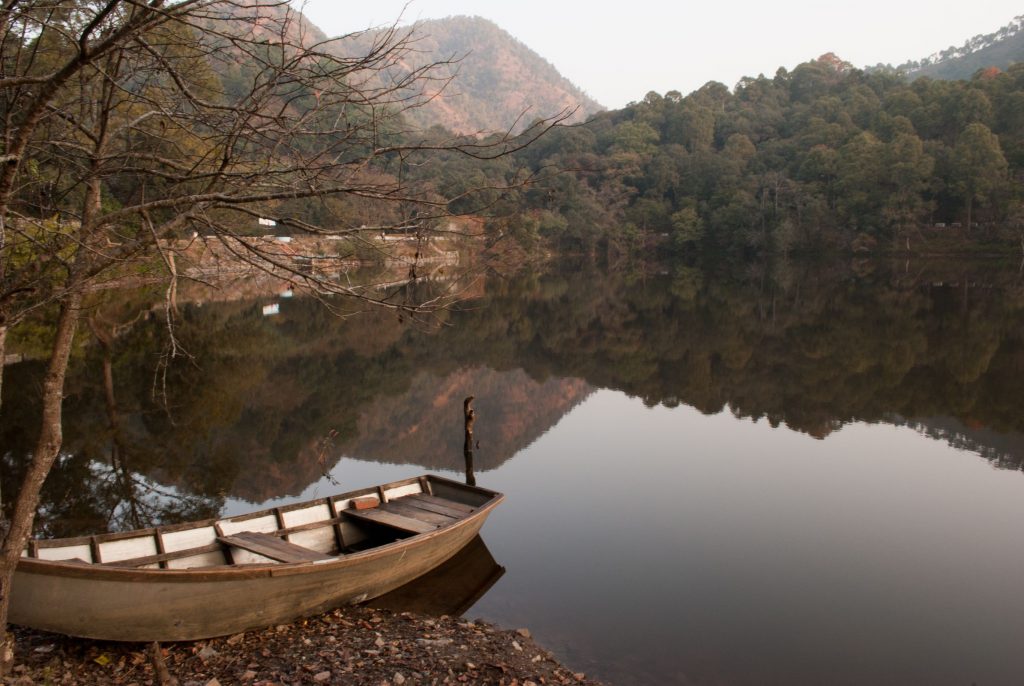
The lake district needs no introduction. Nainital, Bhimtal, Naukuchiatal, Khurpatal, and Sattal are all within reach. Especially at night, the city lights reflecting in the lake give Nainital a magical feel. It gets crowded on weekends and holidays though, so plan accordingly.
Ramgarh (25 km, 45 minutes)
Situated at 1,789 meters, Ramgarh is full of orchards and offers a very tranquil environment. The snow-laden mountain views from Ramgarh are stunning and far less crowded than Nainital. Rabindranath Tagore is said to have written part of Gitanjali here.
Dhanachuli (15 km, 30 minutes)
At 7,000 feet elevation, Dhanachuli is only a short drive from Mukteshwar. It sits surrounded by forests with views of the Himalayas and the Bhimtal valley below. Several boutique resorts and homestays are here, including the well-known Te Aroha. It is perfect for a half-day visit or even as an alternative base for your Mukteshwar trip.
Peora Village (10 km, 20 minutes)
A small village perched at 6,600 feet, Peora is known for its homestays, bird-watching opportunities, and countryside walks through pine forests. Nature enthusiasts and bird lovers will find plenty here, from Blue Magpie sightings to quiet meadow trails. The Peora to Mukteshwar trek starts from here.
Mauna Village (about 1.5 hours toward Almora)
If Peora already feels too discovered, Mauna is the next step further off the map. Perched around 5,000 ft between Mukteshwar and Almora, this small village gets you daytime views of the Nanda Devi and Trishul range, and at night you can see the lights of Almora town twinkling in the distance. There is very little tourist infrastructure here, so this is more of an offbeat detour for travelers with their own vehicle and an extra half day, rather than a stop for everyone. Combine it with a drive toward Almora if you are extending your Kumaon trip.
Mukteshwar or Nainital: Which One Should You Pick?
Quick answer: Pick Nainital if you want a lively lake town with shopping, restaurants, and easy public transport. Pick Mukteshwar if you want quiet hillside views, fewer crowds, and activities like rock climbing, paragliding, and stargazing. Many travelers combine both since they are only 51 km apart.
I get asked this a lot, and honestly, it depends on what kind of weekend you are after. Nainital has the lake, the mall road, and far more restaurants and hotels to choose from, but it also means traffic jams, crowded viewpoints, and inflated weekend prices. Mukteshwar, on the other hand, is a village. There is no mall road, no boating, and a much smaller choice of places to eat. What you get instead is quiet. A clear morning view of Nanda Devi from your homestay balcony, a rock climb at Chauli ki Jali with barely another group around, and a proper dark sky at Starscapes that you simply will not get in Nainital anymore.
My honest suggestion: if this is your first trip to Kumaon and you have 4-5 days, do both. Spend 2 days in Nainital for the lake and the market, then drive the 1.5-2 hours to Mukteshwar for 2-3 quieter days. If you only have a long weekend and are choosing one, go with Mukteshwar for the views and activities, and save Nainital for a separate, dedicated trip when you have time to enjoy the town itself rather than just passing through.
Where to Stay in Mukteshwar?
Quick answer: Budget stays run Rs 1,000-3,000 (homestays, KMVN TRH), mid-range Rs 3,000-7,000 (boutique resorts like Sitla Estate), and luxury Rs 7,000-15,000+ (DYO Organic Village Resort, Te Aroha).
Mukteshwar has plenty of accommodation options across all budgets. Given its proximity to Nainital and Ranikhet, the region has developed a good hospitality scene over the last few years.
Budget (Rs 1,000-3,000 per night)
Guesthouses, basic homestays, and the ever-reliable KMVN Tourist Rest House fall in this range. The KMVN TRH has rooms starting from around Rs 2,900 per night in peak season (May-July). Budget homestays around Peora and Dhanachuli offer rooms in the Rs 1,000-1,500 range with home-cooked meals.
Mid-Range (Rs 3,000-7,000 per night)
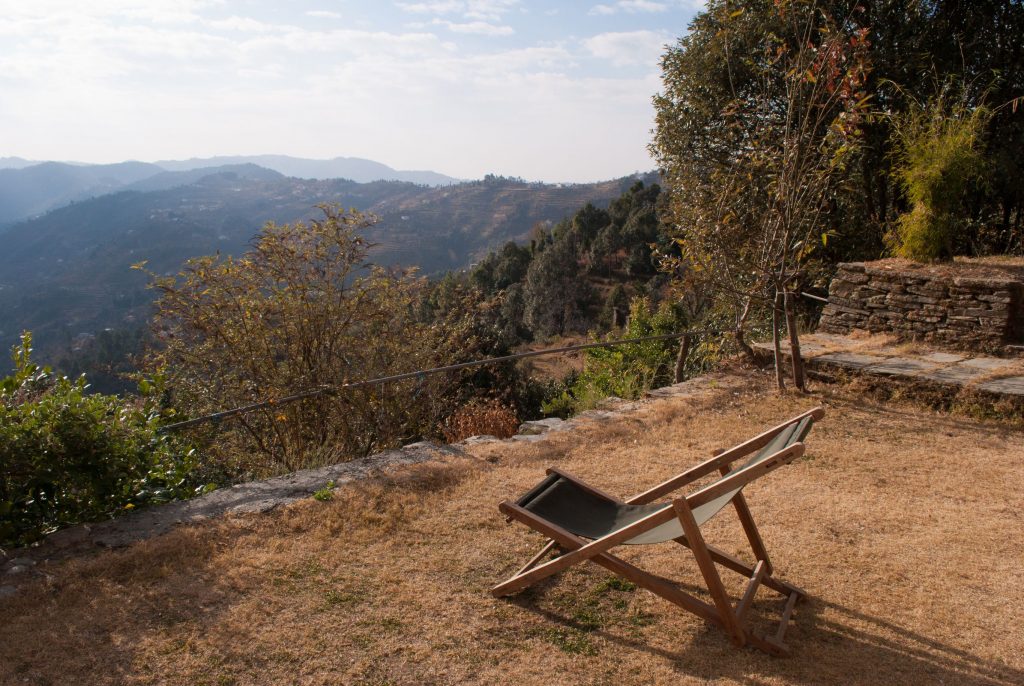
Boutique hotels and well-run resorts offer comfortable rooms with mountain views, meals, and sometimes guided activities. Sitla Estate is a charming 150-year-old homestay set on 40 acres of orchards and forest, and it is excellent for families. Several new properties have opened along the Mukteshwar road in recent years.
Luxury (Rs 7,000-15,000+ per night)
If you are looking for a luxury stay (for honeymoons or special occasions), properties like DYO – The Organic Village Resort and Te Aroha in Dhanachuli offer premium rooms with some of the most stunning views in the region. They are worth every penny if your budget allows.
What Is the Budget for a Mukteshwar Trip?
Quick answer: A 2-night, 3-day trip for two from Delhi works out to roughly Rs 4,700-8,750 per person on a budget itinerary, and Rs 12,950-23,800 per person mid-range, covering travel, stay, food, and activities.
Mukteshwar is an affordable destination compared to Nainital or Mussoorie. Here is a rough breakdown for a 2-night, 3-day trip from Delhi for two people in 2026.
| Expense | Budget (per person) | Mid-Range (per person) |
|---|---|---|
| Delhi to Kathgodam (Bus/Train) | Rs 400-600 | Rs 1,200-1,800 (Volvo) |
| Kathgodam to Mukteshwar (Taxi) | Rs 100-150 (shared) | Rs 750-1,000 (private, split) |
| Accommodation (2 nights) | Rs 2,000-4,000 | Rs 6,000-10,000 |
| Food (3 days) | Rs 1,500-2,000 | Rs 2,500-4,000 |
| Activities (Paragliding/Starscapes/Zero Point) | Rs 400-1,500 | Rs 1,500-5,000 |
| Local Transport | Rs 300-500 | Rs 1,000-2,000 |
| Total (per person) | Rs 4,700-8,750 | Rs 12,950-23,800 |
The Zero Point entry fee (Rs 60 per person) and any adventure activity like rock climbing fall within the Activities range above, so there is nothing extra to budget for separately unless you add a longer paragliding flight. If you are driving from Delhi, fuel costs will be around Rs 3,000-4,000 for the round trip (approximately 680 km total). These are approximate figures as of 2025-2026. Verify locally for current rates, especially for adventure activities and newer properties.
What to Eat in Mukteshwar?
There are several restaurants and dhabas in Mukteshwar with all sorts of cuisine available, from Chinese and Tibetan to North and South Indian. Continental food is also available at some resorts. A local favorite is potato and onion pakoras with bhang (hemp seeds) ki chutney, which you should definitely try. Most homestays offer home-cooked Kumaoni meals, which is honestly the best food experience in the area. A meal for two at a local restaurant costs around Rs 400-800.
Trip Ideas: Have you checked our most common itinerary of Kumaon followed by thousands of travelers?
How to Plan a Weekend Itinerary for Mukteshwar?
Most people visit Mukteshwar for 2-3 days, often over a long weekend. Here is a suggested itinerary that covers the highlights without rushing.
Day 1: Arrive and Settle In
If you take an overnight bus or train from Delhi, you will reach Kathgodam by early morning. Grab breakfast in Haldwani and drive up to Mukteshwar (57 km, 2-2.5 hours). Check into your hotel or homestay. Spend the afternoon exploring the Mukteshwar Dham Temple and Chauli Ki Jali. The evening light at the temple viewpoint is particularly beautiful. If you have booked a Starscapes session, head there after dinner for the night sky show.
Day 2: Explore the Area
Start early and head to Zero Point before 9 AM, since the clouds usually roll in and hide the peaks by mid-morning. From there, drive to Bhalu Gaad Waterfall (10-14 km). The 2 km trek through the forest takes about an hour each way. Return by lunch. In the afternoon, visit the IVRI Museum and campus. If you are interested in adventure, book a rock climbing or rappelling session at Chauli Ki Jali. Alternatively, take the short drive to Dhanachuli or Peora for an evening walk through the orchards and forests.
Day 3: Departure
Check out after breakfast. If you have time, stop at Ramgarh or Bhimtal on the way back to Kathgodam. Both are on the route and offer a pleasant break. Catch an afternoon train or bus back to Delhi. Alternatively, if you are driving, start early and you will be back in Delhi by evening.
What Are the Practical Travel Tips for Mukteshwar?
Here are some things to keep in mind when planning your trip to Mukteshwar.
- Carry cash. While there are a few ATMs in Mukteshwar town, they are known to run out of cash on weekends and holidays. Do not rely solely on UPI or cards either, as network coverage can be spotty.
- Mobile network. Jio and Airtel work in Mukteshwar town. BSNL is patchy. Once you go towards Bhalu Gaad or the trekking trails, expect no signal. Download offline maps before your trip.
- Snowfall season. Mukteshwar receives snowfall from late December to mid-February. Roads can get icy, so carry chains if you are driving. Some smaller roads may be temporarily blocked after heavy snowfall.
- Ideally spend 3 days. While you can “do” Mukteshwar in 2 days, spending 3 days lets you explore at a relaxed pace and also visit Dhanachuli, Peora, or Bhalu Gaad without rushing.
- Carry warm clothes year-round. Even in summer, evenings and early mornings can get chilly at 7,500 feet. The sun can be deceptive in the hills. You might feel warm in direct sunlight and cold within minutes of shade.
- Fuel up before the climb. Fill your tank at Haldwani or Bhimtal. There are fuel stations en route but they can be crowded on weekends.
- Time your Zero Point visit. Reach before 9 AM if you want a clear, cloud-free view of Nanda Devi and Trishul. It gets hazy fast once the sun is up.
- Kumaoni festivals. Almost all Hindu festivals are celebrated in Mukteshwar. Bikhauti, Harela, Ghee Sankranti, Khatarua, and Holi Uttaraini are celebrated following Kumaoni traditions. If your trip coincides with a local festival, you are in for a treat.
- Buy Rhododendron juice. Available at local shops, this bright red juice concentrate is a specialty of the Kumaon hills. It is both refreshing and makes a great souvenir.
Conclusion
Mukteshwar is a perfect extended weekend getaway or even an offbeat honeymoon destination. Whether you love adventure, history, or simply want to sit on a hillside with a cup of chai and stare at the Himalayan peaks, this place delivers. Still relatively untouched by heavy commercial tourism, Mukteshwar retains the charm and quiet that places like Nainital lost years ago.
Related Reading for Your Kumaon Trip
- Kausani Travel Guide, another quiet Kumaon hill town with Himalayan views
- Chaukori Travel Guide, a lesser-known viewpoint close to Mukteshwar
- Sattal Travel Guide, for the lake-district side trip from Mukteshwar
- Uttarakhand Travel Guides Hub, for planning a longer Himalayan trip beyond Kumaon
Have a travel question?? You can subscribe to my YouTube channel and leave a comment to ask your travel questions about traveling to the Himalayas.
I hope this Mukteshwar travel guide has been helpful in planning your trip. If you need any specific information or have questions about the Kumaon region, feel free to reach out. You can also check our Uttarakhand travel guides for more destinations in the state, or join the DwD Community to connect with other travelers planning similar trips. Happy traveling, my friend! 🙂
Last Updated: September 2026
Frequently Asked Questions About Mukteshwar
How far is Mukteshwar from Delhi and how long does it take?
Mukteshwar is approximately 340 km from Delhi. By road, the drive takes 7-8 hours via Moradabad and Haldwani. If you are taking public transport, an overnight bus or train to Kathgodam (57 km from Mukteshwar) followed by a local taxi takes about 8-9 hours total.
Is Mukteshwar safe for solo travelers?
Yes, Mukteshwar is very safe for solo travelers, including women. It is a small, quiet village with friendly locals. The only precaution is to avoid trekking alone on forest trails after dark and to carry a charged phone with offline maps.
Does Mukteshwar get snowfall?
Yes, Mukteshwar receives snowfall from late December to mid-February. The amount varies each year, but you can usually expect a light dusting to moderate snow cover during this period. January is the coldest month with temperatures dropping to minus 5 degrees Celsius.
What is the best time to visit Mukteshwar?
March to June and September to November are the best months. Summer offers pleasant weather (15-30 degrees) and clear mountain views. Autumn brings crisp air and apple harvest season. Monsoon (July-August) is best avoided unless you are an experienced mountain driver.
How many days are enough for Mukteshwar?
Two to three days are ideal. Two days cover the main sights (temple, Chauli Ki Jali, Bhalu Gaad waterfall). A third day lets you explore Dhanachuli, Peora, or Ramgarh at a relaxed pace. If you want to combine Mukteshwar with Nainital, plan for 4-5 days total.
Is there any direct bus from Delhi to Mukteshwar?
There is no frequent direct bus from Delhi to Mukteshwar. The usual route is to take a UTC bus from ISBT Anand Vihar to Haldwani or Kathgodam (Rs 400-1,800 depending on bus type), and then a local shared taxi or bus to Mukteshwar (Rs 70-150). Some private operators run direct services during peak season, but these are not regular.
Can I visit Mukteshwar with family and kids?
Mukteshwar is an excellent family destination. The short treks, orchard walks, Starscapes Observatory workshops for children, and the overall peaceful environment make it ideal for families with kids of all ages. The drives are scenic but not too demanding. Many resorts offer family-friendly activities and play areas.
What is the elevation of Mukteshwar and do I need to worry about altitude sickness?
Mukteshwar sits at 2,285 meters (7,500 feet). At this altitude, altitude sickness is extremely unlikely for most people. You might feel slightly breathless on steep climbs if you are not used to the hills, but it is nothing to worry about. Stay hydrated and take it easy on the first day.
What is Zero Point in Mukteshwar and is it worth visiting?
Zero Point is a viewpoint inside the IVRI campus, about 2 km from the main market, offering a 360-degree view of the Nanda Devi, Trishul, and Panchachuli peaks. Entry costs Rs 60 per person. It is absolutely worth visiting, but go before 9 AM, since clouds typically cover the peaks by mid-morning.
Is Mukteshwar better than Nainital for a weekend trip?
It depends on what you want. Nainital offers a livelier lake town with more shopping and dining. Mukteshwar offers quiet hillside views, adventure activities, and stargazing with far fewer crowds. If you have 4-5 days, combine both since they are just 51 km apart. For a single long weekend, Mukteshwar is the better pick if you want a peaceful trip over a busy one.
