


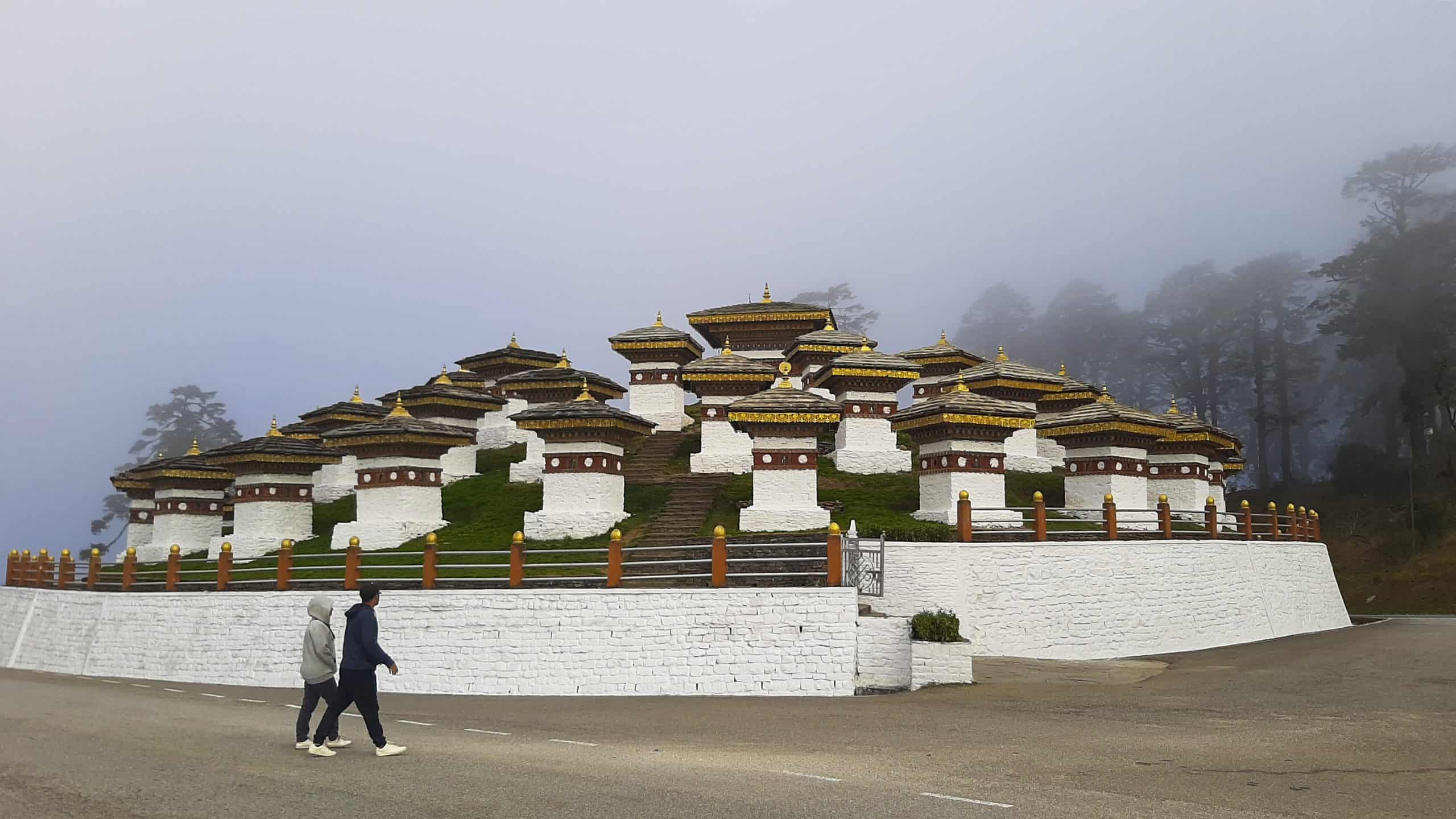
A Bhutan road trip from India starts at the Jaigaon-Phuentsholing border in West Bengal, where Indian nationals can drive their own vehicle after getting a free entry permit and paying the INR 1,200 per person per night Sustainable Development Fee. A 7-day loop covering Western and Eastern Bhutan comfortably covers Thimphu, Paro, and Punakha.
Planning a road trip to Bhutan from India? You are not alone. This is one of the most asked questions I receive on the blog, and rightly so. Bhutan is one of those rare countries where Indian nationals can drive their own vehicle across the border, explore at their own pace, and come back with stories that last a lifetime. The question most people have is simple: how many days do I really need, and what should my route look like?
In this guide, I bring you a tried and tested 7-day Bhutan road trip itinerary that covers the best of Western and Eastern Bhutan. I have also included the 2026 SDF fee details, self-drive rules, permit process, budget breakdown, and practical tips that will help you plan this trip without any confusion. Let us get started 🙂 …
A Bhutan road trip from India follows six clear stages, starting at the Jaigaon-Phuentsholing border in West Bengal. Here is the exact process before you get behind the wheel:
- Reach the border: Get to Jaigaon (India) via Hasimara railway station or New Jalpaiguri (NJP), then cross on foot or by vehicle into Phuentsholing (Bhutan).
- Get your Entry Permit: Apply at the Phuentsholing Immigration Office (free, Monday to Friday, 9 AM to 5 PM with a 1 PM to 2 PM lunch break, closed weekends and public holidays). You can also apply online through immi.gov.bt up to 5 working days before travel, though the online permit only covers Thimphu and Paro.
- Pay the SDF: Indian nationals pay INR 1,200 per person per night as the Sustainable Development Fee (children 6 to 12 pay half, under 5 are exempt). If you are only staying up to 24 hours within Phuentsholing, Samtse, Gelephu, or Samdrup Jongkhar, the SDF is waived entirely, as of the Department of Immigration’s current SDF waiver SOP.
- Clear vehicle formalities: Register your vehicle on the Check Post Management System (CPMS), then clear the Rinchending checkpost with your RC, insurance, PUC certificate, and driving license. The vehicle must be under 10 years old.
- Pay the vehicle Green Fee: Once you cross beyond the free border zone, the daily vehicle fee is INR 4,500, whether you are driving a car or a motorcycle.
- Apply for a Route Permit if needed: The Entry Permit only covers Paro and Thimphu. To continue to Punakha, Bumthang, Trashigang, or Samdrup Jongkhar, get a Route Permit at the Thimphu Immigration Office on your way through, usually on Day 3.
Let's quickly dive into the details:
What Makes This Bhutan Road Trip Itinerary Special?
This is not a standard Paro-Thimphu-back-to-Phuentsholing loop that most guides suggest. This itinerary takes you across the entire length of Bhutan, entering from the west at Phuentsholing and exiting from the east at Samdrup Jongkhar. You cover Western Bhutan, Central Bhutan, and Eastern Bhutan in one go. It is a true road trip, not a weekend getaway.
I should mention here that this itinerary is designed from the India perspective. Most travelers will be starting from Kolkata, Siliguri, or the NJP/Bagdogra area. You can customize it by adding more days for hikes or by skipping the eastern section if you have limited time. However, if you can spare a week to explore the land of dragons, this plan gives you the most complete experience possible.
How Much Does a Bhutan Road Trip Cost in 2026?
Before we get into the day-wise plan, let me address the budget question because this is what most people want to know first. As of 2026, Indian tourists pay a Sustainable Development Fee (SDF) of INR 1,200 per person per night. Children aged 6 to 12 get a 50% discount, and children under 5 are exempt. This fee is mandatory for all overnight stays beyond the border towns.
Here is a rough per-person budget breakdown for a 7-day Bhutan road trip (assuming a group of 4 sharing a car):
| Expense | Budget (per person) | Mid-Range (per person) |
|---|---|---|
| SDF Fee (6 nights) | Rs 7,200 | Rs 7,200 |
| Accommodation (6 nights) | Rs 4,500 – Rs 6,000 | Rs 9,000 – Rs 15,000 |
| Food (7 days) | Rs 3,500 – Rs 5,000 | Rs 7,000 – Rs 10,000 |
| Fuel (shared among 4) | Rs 3,000 – Rs 4,000 | Rs 3,000 – Rs 4,000 |
| Vehicle Daily Fee (shared) | Rs 7,875 | Rs 7,875 |
| Permits & Misc | Rs 500 – Rs 1,000 | Rs 1,000 – Rs 2,000 |
| Total (per person) | Rs 26,575 – Rs 31,075 | Rs 35,075 – Rs 46,075 |
Keep in mind that the vehicle daily fee of INR 4,500 per day is for the entire vehicle, not per person. So, traveling in a group of 4 brings this cost down significantly. Hence, 4 is the magic number for a Bhutan road trip. Also, fuel prices in Bhutan are approximately Rs 60-61 per liter for both petrol and diesel (as of 2025), which is actually cheaper than India. For a more detailed cost analysis, check my guide on how to calculate the budget for a Bhutan trip.
What Documents and Permits Do You Need for a Bhutan Road Trip?
Indian nationals do not need a visa to enter Bhutan. However, you will need an entry permit. Here is the complete list of what you need to carry:
- For individuals: Original Indian Passport (minimum 6 months validity) OR original Voter ID card
- For children under 18: Birth certificate (in English) or passport, and must be accompanied by a legal guardian
- For your vehicle: Vehicle Registration Certificate (RC), valid insurance, PUC certificate, driving license, and the vehicle must be less than 10 years old
- Vehicle daily fee: INR 4,500 per day (called “green fee”), payable at the border
- Third-party insurance: Mandatory for your vehicle in Bhutan (can be purchased at the border)
The entry permit is issued at the Immigration Office in Phuentsholing. The office is open Monday to Friday, 9 AM to 5 PM. You do not need a permit to enter Phuentsholing town itself, but you need one to travel beyond it towards Thimphu or Paro. I have a detailed post covering all the permits and how to get them. Check the complete Bhutan permits guide here.
Pro tip: It is always best to get your Bhutan permits sorted from the Indian Consulate in Phuentsholing or apply in advance through the Kolkata consulate before your trip. This saves you a day of waiting at the border.
Practical Info Box (updated July 2026): The Phuentsholing Immigration Office keeps strict hours, Monday to Friday, 9 AM to 5 PM, closed for lunch between 1 PM and 2 PM, and shut on Saturdays, Sundays, and Bhutanese public holidays. In case you roll up to the border on a weekend, you will be stuck in Jaigaon or Phuentsholing until Monday morning, so plan your departure from India around this. You can skip the queue altogether by applying for the Entry Permit online at immi.gov.bt up to 5 working days in advance (valid for Thimphu and Paro only, so a Route Permit is still needed for the rest of the loop). Also keep in mind that Indian nationals do not pay any SDF at all if they stay under 24 hours within Phuentsholing, Samtse, Gelephu, or Samdrup Jongkhar, a genuinely useful option if you only want a quick border-town visit rather than the full road trip.
The Complete 7-Day Bhutan Road Trip Itinerary
Now let us get to the main plan. I will mention here that you can genuinely customize this Bhutan itinerary and add more days to pack in more experiences. However, if you can only spare a week, this plan gives you the best mix of Western and Eastern Bhutan.
Day 1: Arrive in Phuentsholing and Get Your Permits
Even though there are multiple ways to get to Bhutan from India, the most common and convenient entry point is the Jaigaon-Phuentsholing border in West Bengal. Jaigaon is the last Indian town, and Phuentsholing is where Bhutanese territory begins. You can reach Jaigaon by train to Hasimara station (nearest railway) or New Jalpaiguri (NJP), and then take a taxi.
Your first task is to get the entry permit from the Immigration Office. The office is open Monday to Friday, 9 AM to 5 PM. Carry your passport or Voter ID, passport-size photos, and vehicle documents. The permit usually takes a couple of hours depending on the queue.


If you manage to get your permit before 2 PM, you can use the same day to drive to Paro (about 4 hours). Those not in a hurry can stay the first night in Phuentsholing, which has enough to offer a tourist, including the Zangtho Pelri Lhakhang temple and the bustling border market. Budget hotels in Phuentsholing cost Rs 1,500 to Rs 3,000 per night.
In case you are on a tight schedule, the 4-hour drive to Paro from Phuentsholing is doable the same day you get your permit. The road climbs steadily from sea level at Phuentsholing to over 2,100 meters at Paro, and the views are spectacular throughout.
To enter Phuentsholing town, you do not need a permit. Even an Indian-registered vehicle can pass through with no problem. But as soon as you exit Phuentsholing towards Thimphu or Paro, there is a checkpoint that asks for a valid tourist permit.
Before you leave India, also register your vehicle on the Check Post Management System (CPMS). This has now become a mandatory step for Indian-registered vehicles crossing beyond the Rinchending checkpost in Phuentsholing, and doing it in advance saves real time at the border. In case your paperwork or CPMS registration is not in order, the border staff will simply turn your vehicle back, so double-check your RC, insurance, and PUC certificate before you start driving from Jaigaon (see the Practical Info Box above for exact office hours and the online permit option).
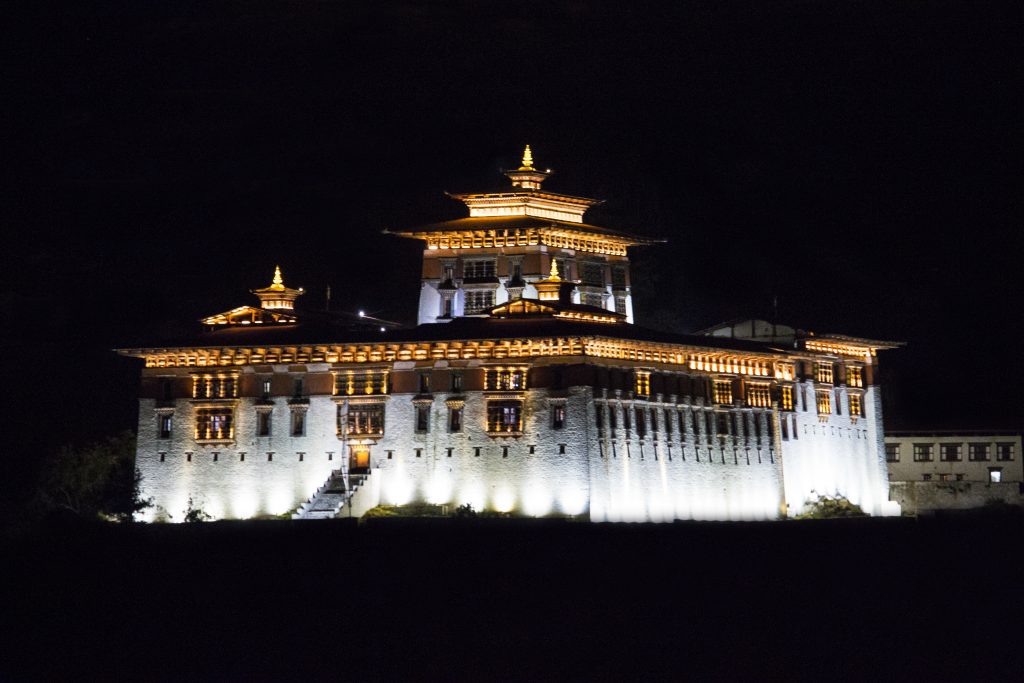
Day 2: Paro Sightseeing and Tiger’s Nest Trek
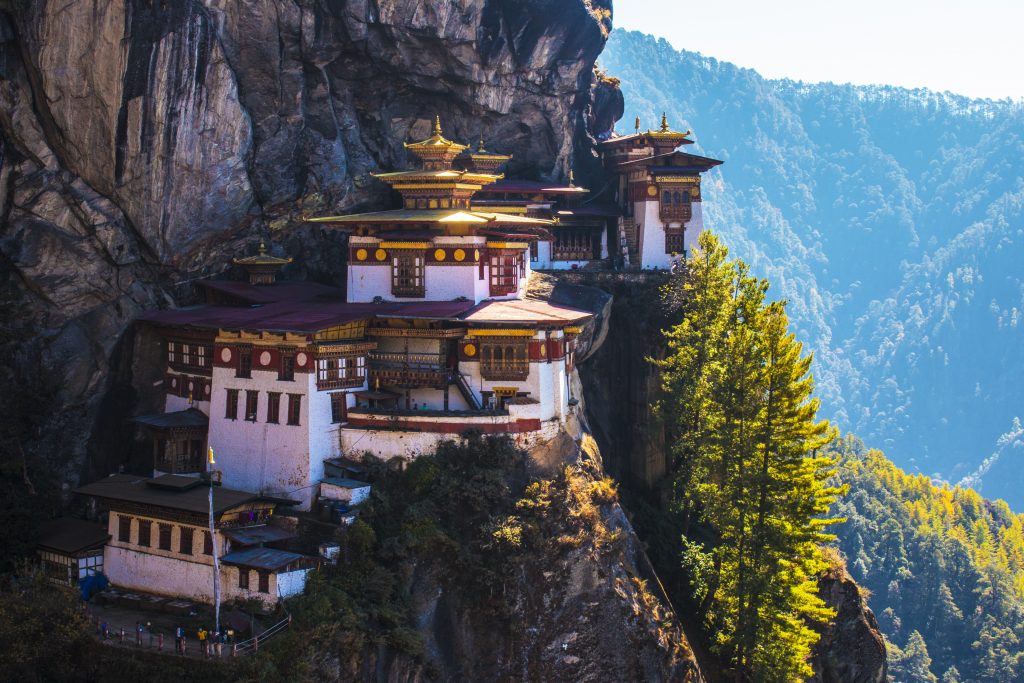
This is one of the most exciting days of the trip. You will spend the day exploring Paro and, of course, hiking to Tiger’s Nest Monastery (Taktsang). This is a bucket-list item for most travelers and one of the most iconic sights in all of Bhutan. The trek takes about 5 to 6 hours round trip and is moderately difficult.
After the trek, you can visit the Rinpung Dzong, the National Museum of Bhutan, and stroll around Paro town. Since Paro has the only international airport in Bhutan, the town is well set up for tourists with plenty of restaurants and shops.
Stay the night in Paro. Budget guesthouses cost around Rs 1,000 to Rs 1,500 per person, while mid-range hotels are Rs 2,500 to Rs 4,000 per room.
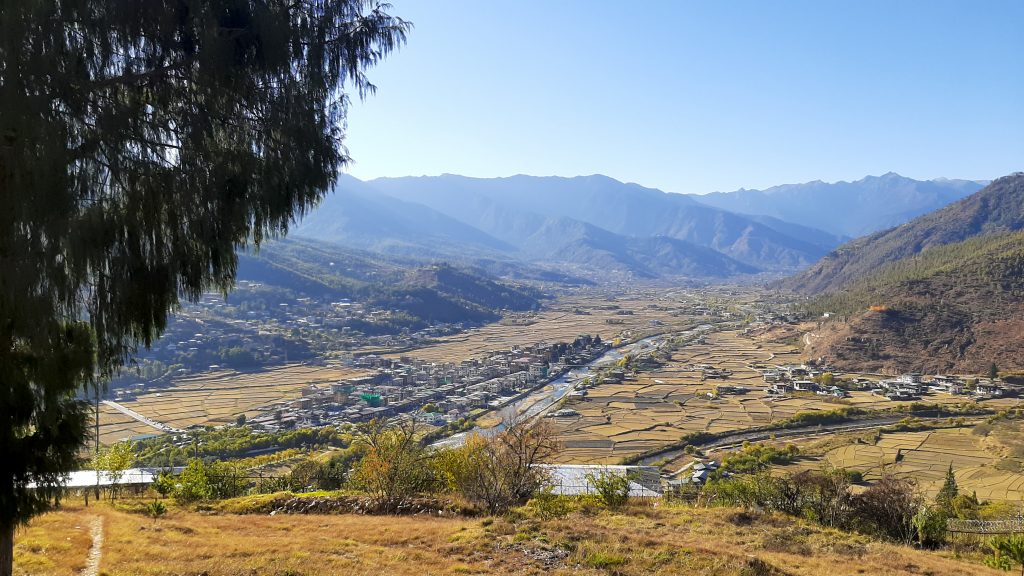
Day 3: Paro to Thimphu (50 km, 1.5 to 2 hours)
Today you move from Paro to Thimphu, the capital of Bhutan. The good news is that this is a short and easy drive. The Paro-Thimphu highway is one of the best roads in Bhutan, a smooth two-lane highway connecting the two cities in about 1.5 to 2 hours over just 50 km.
Spend the rest of the day exploring Thimphu. Must-visit spots include the Tashichho Dzong (seat of the government), the Memorial Chorten, the Buddha Dordenma statue (one of the largest sitting Buddha statues in the world at 169 feet), and the weekend market if you are visiting on a Friday, Saturday, or Sunday. Thimphu also has the best food options in the country, with several Indian restaurants.
Stay the night in Thimphu. Budget accommodation ranges from Rs 800 to Rs 1,500 per person.
Day 4: Thimphu to Bumthang via Punakha and Trongsa (250 km, 8 to 10 hours)
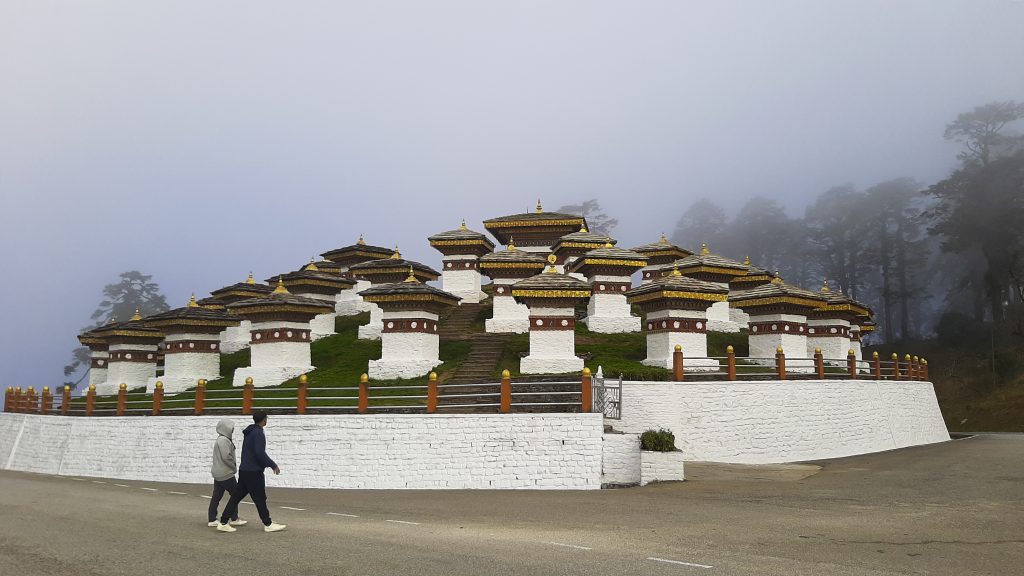
This is the toughest day of the trip, so brace yourself. Thimphu to Bumthang is a long and challenging drive of about 250 km that takes 8 to 10 hours depending on road conditions. The route passes through Dochula Pass (3,100 meters) where you get stunning views of the Eastern Himalayas on a clear day, then descends to Punakha, and climbs again through Trongsa before reaching Bumthang.
There is road widening work going on in some sections beyond Punakha, and you may encounter specific timings within which you need to cross the construction zones. Otherwise, you may have to wait at check posts for a few hours. Leave early, ideally by 6 AM.
Pro Travel Tip: Do not forget to check this complete travel guide for Western Bhutan before starting this leg of the journey.
However, a few budget lodge options right next to the bus station in Bumthang offer dorm beds for as little as Rs 150 to Rs 300 per night, making up for the long and rough journey. As a town, Bumthang does not offer much in terms of tourist sights beyond a 15th-century monastery, but there are several beautiful hikes nearby including the Bumthang Cultural Trek.
Day 5: Bumthang to Trashigang (8 to 9 hours)
Another long day on the road. Bumthang to Trashigang takes 8 to 9 hours of driving. The route is not in great shape for night driving, so leave with the first light to avoid any problems.
The good news is that there is not as much road construction on this stretch compared to the Thimphu-Bumthang route. The landscapes change dramatically as you move east, with dense forests, fewer tourists, and a more raw feel to the villages. Eastern Bhutan is truly offbeat, and you will probably be among the very few Indian tourists here.
There are enough budget accommodations in Trashigang, with guesthouses starting from Rs 500 to Rs 1,000 per person.
Pro Travel Tip: Do not forget to check this complete travel guide for Central Bhutan for detailed information about this section.
Day 6: Trashigang to Samdrup Jongkhar (190 km, 7 hours)
Trashigang to Samdrup Jongkhar takes you back to a manageable highway, though with a few patches of highly landslide-prone areas. The journey is about 190 km and takes around 7 hours to complete.
At Samdrup Jongkhar, you exit Bhutan and enter back into Indian territory. The roads on the Indian side immediately improve (with no mountain terrain). I suggest staying the night in Samdrup Jongkhar on the Bhutanese side rather than the Indian town of Darranga (formerly Sashipur) on the other side, as it is less chaotic and offers better accommodation options.
Pro Travel Tip: Do not forget to check this complete travel guide for Eastern Bhutan for sightseeing options.
Day 7: Return to India
From Samdrup Jongkhar, you can drive to Guwahati (about 4 hours) which connects you to flights back to Delhi or any other city. Alternatively, you can drive to NJP/Siliguri (about 8 to 9 hours) if you want to return via the same route you came.
If you entered from Siliguri/Jaigaon side and want to exit via Samdrup Jongkhar, keep in mind that you will need to get back to your starting point separately. Many travelers plan a one-way car arrangement or take a bus from Guwahati back to their origin city.
Buffer Days (Highly Recommended)
I have kept a couple of buffer days built into this plan for you to indulge in hikes, explore Punakha Valley (which deserves a full day), and also keep a day additional in case your permits do not come through on time. If you have 9 to 10 days, I would recommend spending an extra day in Paro for the Tiger’s Nest hike and one day exploring Punakha with its famous suspension bridge and the stunning Punakha Dzong.
How to Self-Drive Your Own Car in Bhutan?
Indian nationals are among the few foreigners who can drive their own vehicle into Bhutan. This is a significant advantage because self-drive rental is not available in Bhutan. If you do not bring your own vehicle, you will have to hire a car with driver from a local agency.
Here are the key rules for self-driving in Bhutan:
- Speed limits: 30 km/h in cities, 50 km/h on highways. Bhutan takes speed limits very seriously.
- Seatbelts: Mandatory for all passengers and the driver.
- Overtaking: Overtaking from the left or at unsafe distances is strictly prohibited.
- Night driving: I strongly advise against it. Bhutan is still developing its road infrastructure, and many stretches have no street lights, no road markings, and no villages nearby.
- Monsoon caution: During monsoons (June to August), there is a risk of landslides that can block roads for hours or even days.
- Pedestrians: It is compulsory to give way to pedestrians at all times.
- Vehicle age: Your vehicle must be less than 10 years old to enter Bhutan.
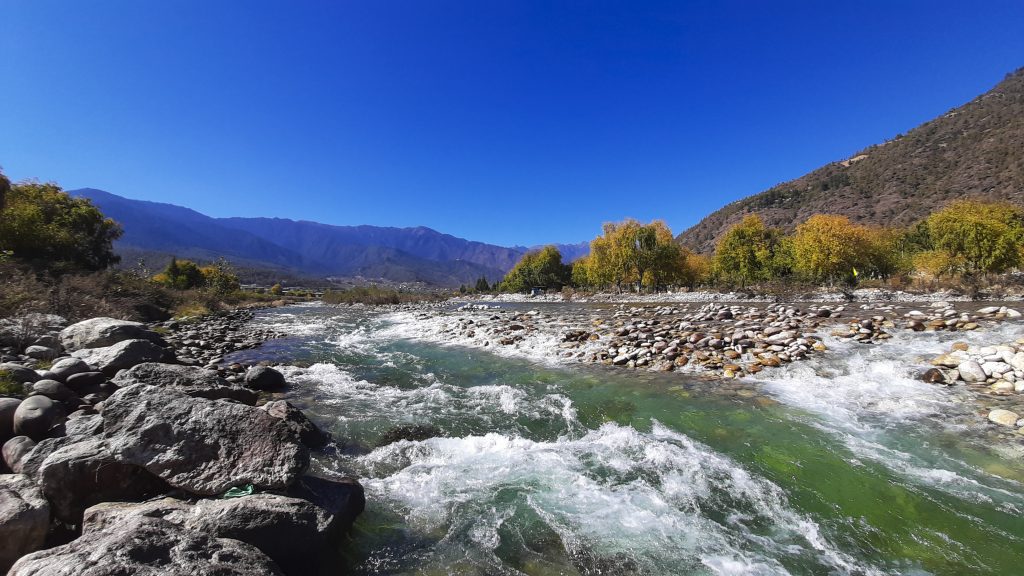
The well-maintained highway built by the Indian Border Roads Organisation (BRO) connects Phuentsholing to Paro and Thimphu, making this stretch very popular among bikers from India. However, roads beyond Punakha towards Central and Eastern Bhutan are considerably rougher and require good driving skills.
For booking a car rental with driver in Bhutan, bring your valid ID proof and driving license. Book at least 2 to 3 months before your visit for the best prices and vehicles. Always check reviews and prices online before paying any travel agency.
How to Reach Phuentsholing from India?
Most travelers reach Phuentsholing from one of these starting points:
- From Siliguri/NJP: About 160 km, 4 to 5 hours by road via NH 17. Shared taxis and buses are available from Siliguri.
- From Kolkata: About 650 km. You can take a train to Hasimara (nearest station to Jaigaon) or NJP, and then a taxi to the border. Or fly to Bagdogra airport and drive from there.
- From Guwahati: About 300 km, but this route is typically used for reaching Samdrup Jongkhar in Eastern Bhutan, not Phuentsholing.
If you are planning to travel by public transport within Bhutan, buses run daily from Phuentsholing to Thimphu (about 7 hours) and to Paro (about 6 hours, fare approximately BTN 200). Bus services are operated by companies like Meto, Master, and Khorlo, with 20 and 50-seater options. However, for a proper road trip experience, I recommend bringing your own vehicle or hiring a car with a driver.
What is the Best Time for a Bhutan Road Trip?
The best months for a Bhutan road trip are March to May (spring) and September to November (autumn). During these months, the weather is pleasant, roads are generally in good condition, and visibility is excellent for mountain views.
Avoid June to August if possible, as the monsoon brings heavy rainfall and frequent landslides, especially on the eastern routes. December to February is cold but beautiful, with clear skies and fewer tourists. However, some high-altitude passes may have restricted access during winter.
What Distances Should You Expect on This Bhutan Road Trip?
| Route | Distance | Driving Time | Road Condition |
|---|---|---|---|
| Phuentsholing to Paro | 165 km | 4 – 5 hours | Good (BRO highway) |
| Paro to Thimphu | 50 km | 1.5 – 2 hours | Excellent (best road in Bhutan) |
| Thimphu to Bumthang (via Punakha, Trongsa) | 250 km | 8 – 10 hours | Mixed (construction zones) |
| Bumthang to Trashigang | ~200 km | 8 – 9 hours | Fair (narrow mountain roads) |
| Trashigang to Samdrup Jongkhar | 190 km | 7 hours | Fair (landslide-prone patches) |
Important Tips for Your Bhutan Road Trip
- Fuel availability: There are enough petrol stations along the route, and since each day’s drive is a maximum of 300 km, you do not need to carry extra fuel. Fuel prices in Bhutan are approximately Rs 60-61 per liter (as of 2025).
- No repair shops: There are no vehicle repair shops between most two destinations, so carry basic tools, a spare tyre, puncture kit, and jump cables.
- Mobile network: Bhutanese SIM cards (TashiCell or B-Mobile) work well in towns. Indian SIMs have limited to no coverage. Get a local prepaid SIM at Phuentsholing.
- ATMs: Available in Phuentsholing, Paro, Thimphu, and Bumthang. Carry enough cash for Eastern Bhutan as ATMs are rare beyond Bumthang.
- Indian Rupee: INR is widely accepted in Bhutan. Rs 500 and Rs 2,000 notes may not be accepted everywhere, so carry smaller denominations.
- Leave early every day: Daylight driving only. Most roads are not safe for night driving.
- Route permits: The basic entry permit covers Paro and Thimphu. For Punakha, Bumthang, Trashigang, and other districts, you need a route permit from the Immigration Office in Thimphu. Get this sorted on Day 3.
Can This Bhutan Road Trip Be Done on a Motorcycle?
Absolutely. In fact, many riders from the DwD community have done this exact route on Royal Enfields and other adventure bikes. The BRO-built highway from Phuentsholing to Thimphu is one of the best riding roads in the Eastern Himalayas. However, the eastern sections beyond Bumthang can be challenging with narrow roads and poor surfaces. I suggest a bike with at least 350cc engine capacity for the eastern stretches.
Keep in mind that the same vehicle documents and daily fee (INR 4,500) apply to motorcycles as well. Carry rain gear, a good toolkit, and extra tubes if you are on a tubed tyre setup.
Conclusion
Bhutan is perfection for any duration. However, if you are determined to make the most of a week, this 7-day road trip itinerary covers the best of what the country has to offer, from the iconic Tiger’s Nest in the west to the raw, untouched landscapes of Eastern Bhutan. The key is to start early each day, keep your documents in order, and be prepared for some long driving days.
I hope this Bhutan road trip itinerary helps you plan your journey. If you have any questions about the route, permits, budget, or anything else, feel free to ask in the comments section below. I will be happy to help. Also, if you know friends or family who are planning a Bhutan trip, do share this article with them. For more trip plans, discussions, and finding travel partners, head over to the DwD Community 🙂 …
Last Updated: February 2026
Have a travel question?? You can subscribe to my YouTube channel and leave a comment to ask your travel questions about traveling to the Himalayas.
Frequently Asked Questions
Do Indian citizens need a visa for Bhutan?
No, Indian citizens do not need a visa to enter Bhutan. However, you need an entry permit issued at the Immigration Office in Phuentsholing. Carry your original passport (with 6 months validity) or Voter ID card. The permit is usually issued within a few hours.
How much does the Bhutan SDF fee cost for Indians in 2026?
Indian tourists pay INR 1,200 per person per night as the Sustainable Development Fee. Children aged 6 to 12 pay 50% of this amount, and children under 5 are exempt. This fee is mandatory for overnight stays beyond border towns like Phuentsholing and Samdrup Jongkhar.
Can I drive my own car from India to Bhutan?
Yes, Indian nationals can drive their own vehicle into Bhutan. You need to pay a daily vehicle fee of INR 4,500 (green fee) and carry your RC, insurance, PUC, and driving license. The vehicle must be less than 10 years old. Third-party insurance for Bhutan is mandatory and can be purchased at the border.
What is the best time to visit Bhutan by road?
The best months are March to May (spring) and September to November (autumn). These months offer pleasant weather, clear mountain views, and roads in good condition. Avoid the monsoon months of June to August due to heavy rainfall and landslide risks.
How many days are enough for a Bhutan road trip from India?
A minimum of 7 days is recommended for a proper Bhutan road trip covering Western and Eastern Bhutan. If you want to include hikes and spend more time in places like Punakha and Bumthang, plan for 9 to 10 days. For just Paro and Thimphu, 4 to 5 days including travel are sufficient.
Is it safe to do a Bhutan road trip solo?
Bhutan is one of the safest countries in the world for travelers. Solo road trips are very much doable, but keep in mind that Eastern Bhutan has limited infrastructure and mobile network coverage. Carry enough cash, basic vehicle tools, and inform someone about your daily route plan. Check the solo Bhutan trip guide for more detailed tips.
Are Indian Rupees accepted in Bhutan?
Yes, Indian Rupees are widely accepted across Bhutan. The Bhutanese Ngultrum (BTN) is pegged to the Indian Rupee at 1:1. However, Rs 500 and Rs 2,000 notes may not be accepted at some smaller shops and hotels. Carry smaller denominations for convenience.
What type of vehicle is best for a Bhutan road trip?
An SUV or a vehicle with good ground clearance is recommended, especially if you plan to go beyond Thimphu towards Bumthang and Eastern Bhutan. The Phuentsholing-Paro-Thimphu stretch is fine for sedans, but the eastern routes have rough patches and narrow mountain roads. Motorcycles with 350cc or above also work well for experienced riders.
Can I apply for the Bhutan entry permit online before reaching the border?
Yes. Indian nationals can apply for the Entry Permit online through immi.gov.bt up to 5 working days before travel, and it is issued free of cost. The online permit is valid for Thimphu and Paro only, so if your itinerary includes Punakha, Bumthang, or Trashigang, you will still need a Route Permit from the Thimphu Immigration Office once you arrive. Keep in mind that the physical Phuentsholing Immigration Office works Monday to Friday, 9 AM to 5 PM only, and is closed on weekends and public holidays.
Is there any way to avoid paying the Bhutan SDF fee?
Yes, but only in a specific case. Indian nationals do not pay the Sustainable Development Fee if they stay for 24 hours or less within the border towns of Phuentsholing, Samtse, Gelephu, or Samdrup Jongkhar and do not travel beyond the local checkposts. The moment you head towards Paro, Thimphu, or beyond, the standard SDF of INR 1,200 per person per night applies for the whole trip.
