


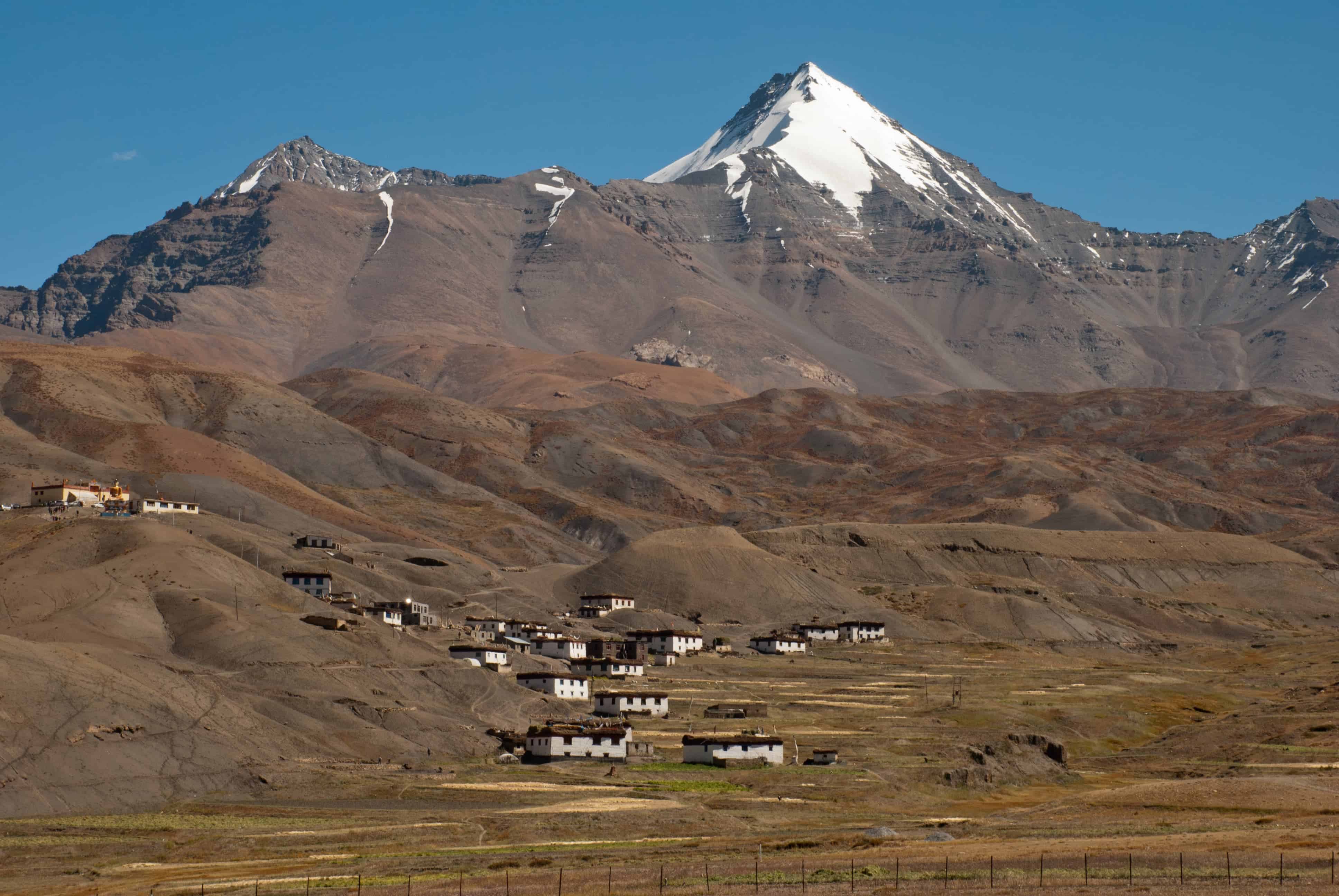
Langza village sits at 14,500 feet in the heart of Spiti Valley, and it is one of those places that stays with you long after you leave. Locals call the ammonite fossils scattered across its slopes Chaudua, and some are revered as Shaligram, a sacred stone worshipped as a form of Lord Vishnu. Add a towering golden Buddha statue and a way of life that has barely changed in centuries, and you will see why. If you are planning a trip to Spiti Valley, Langza deserves more than a quick stop. Spend a night here, and you will understand why.
Let's quickly dive into the details:
What Makes Langza Village Special?
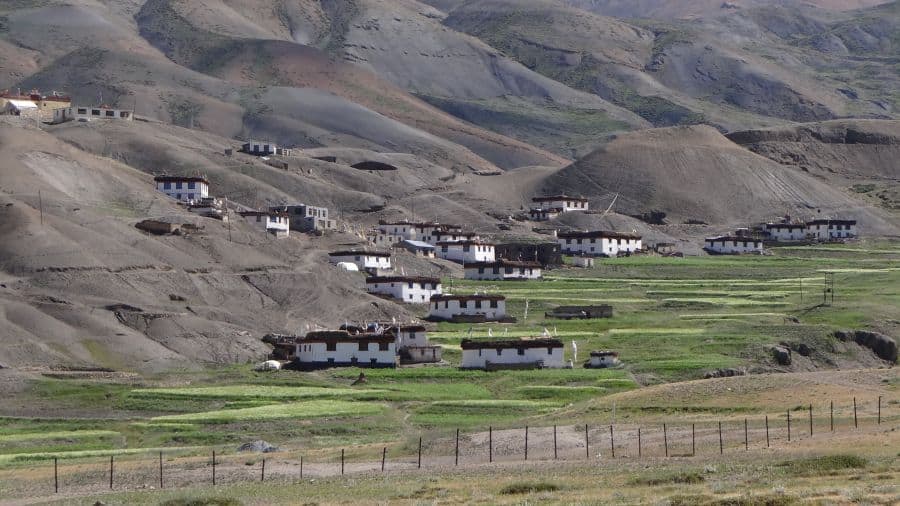
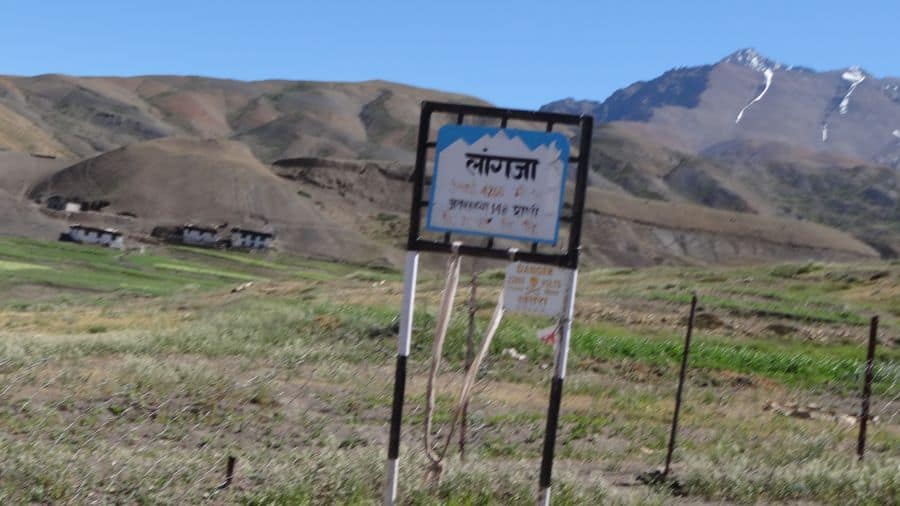
Langza is not your typical tourist destination. It is a tiny settlement of about 35 houses and fewer than 150 people, perched at 4,420 meters above sea level. What sets it apart is a rare combination of geological significance, Buddhist heritage, and raw Himalayan beauty that few places in India can match.
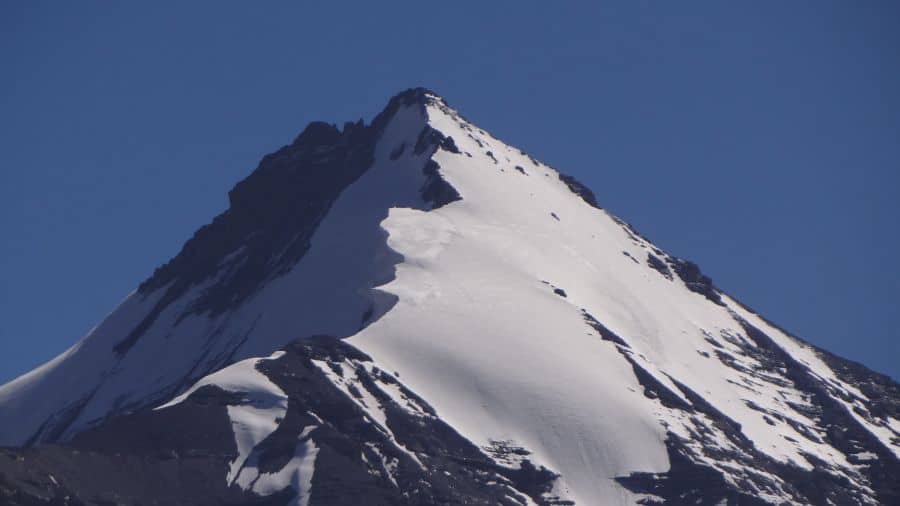
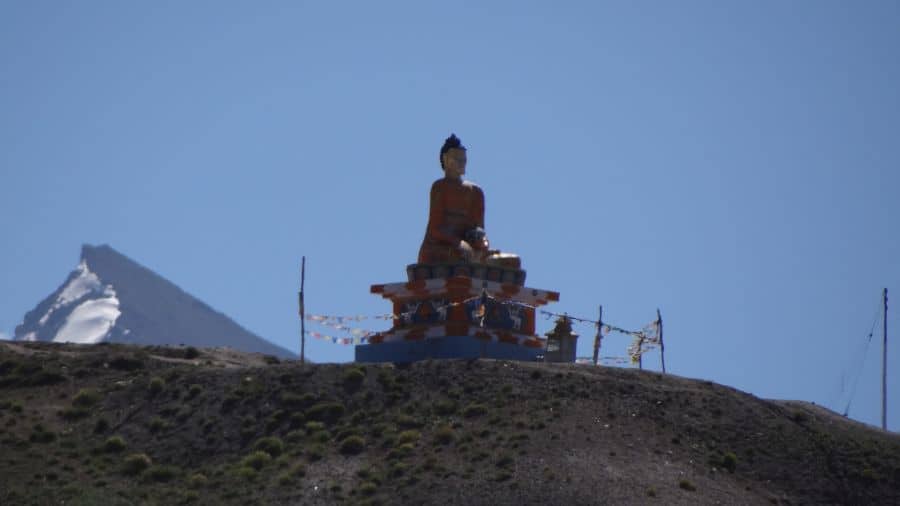
The village is divided into two parts. Langza Yongma (lower village) and Langza Gongma (upper village). The upper village houses the ancient Lang temple and the iconic Buddha statue that has become the most photographed landmark in all of Spiti. Behind the village, the snow-covered Chau Chau Kang Nilda peak (6,303 meters / 20,682 feet) stands guard like a silent sentinel.
I still remember the first time we reached this part of Spiti. After braving monsoon fury, landslides, washed-down roads, and a grueling ride of almost thirty hours from Delhi, we finally stepped out of the car near Battal. We almost screamed with ecstasy as we looked up at the night sky. It was beaming with millions of stars, something we had never seen before. And we had not even reached the magical valley of Spiti yet. It was just the beginning.
Practical Info Box
| Altitude | 14,500 feet / 4,420 meters |
| Distance from Kaza | 16 km (about 1 hour drive) |
| Best Time to Visit | May to October (accessible by road) |
| Homestay Cost | INR 1,200 to 1,800 per person/night with meals (2025-26) |
| Taxi from Kaza | INR 2,000 to 2,500 round trip |
| Mobile Network | BSNL (patchy), Jio/Airtel limited to no signal |
| ATM/Bank | None. Nearest ATM in Kaza |
| Permits Required | No permits needed for Indian nationals |
| Last Updated | July 2026 |
Why Is Langza Called the Fossil Village of India?
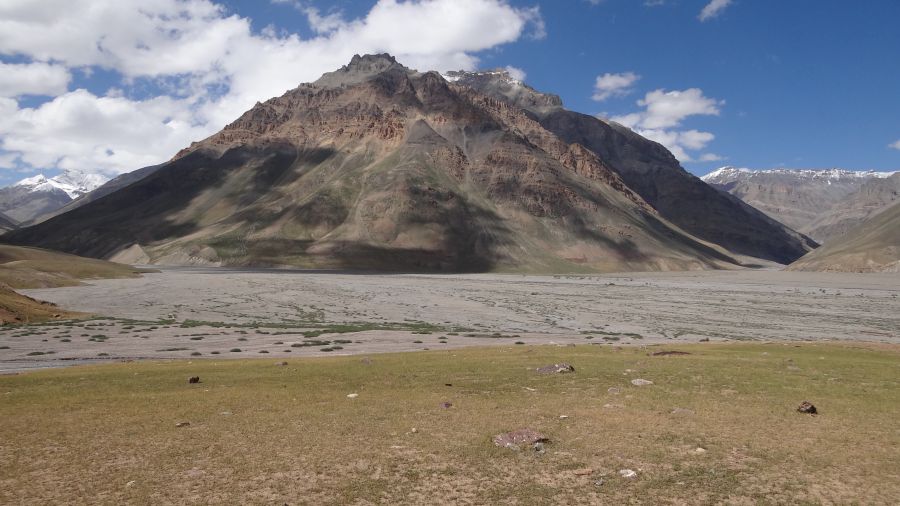
Over 200 million years ago, the land where Langza sits today was submerged under the ancient Tethys Ocean. This prehistoric sea was home to diverse Mesozoic marine animals. Around 50 million years ago, the collision between the Indian and Eurasian tectonic plates pushed the Himalayas upward, and the Tethys Ocean disappeared. The fossils of those marine creatures remain embedded in the soil and rocks around Langza to this day.
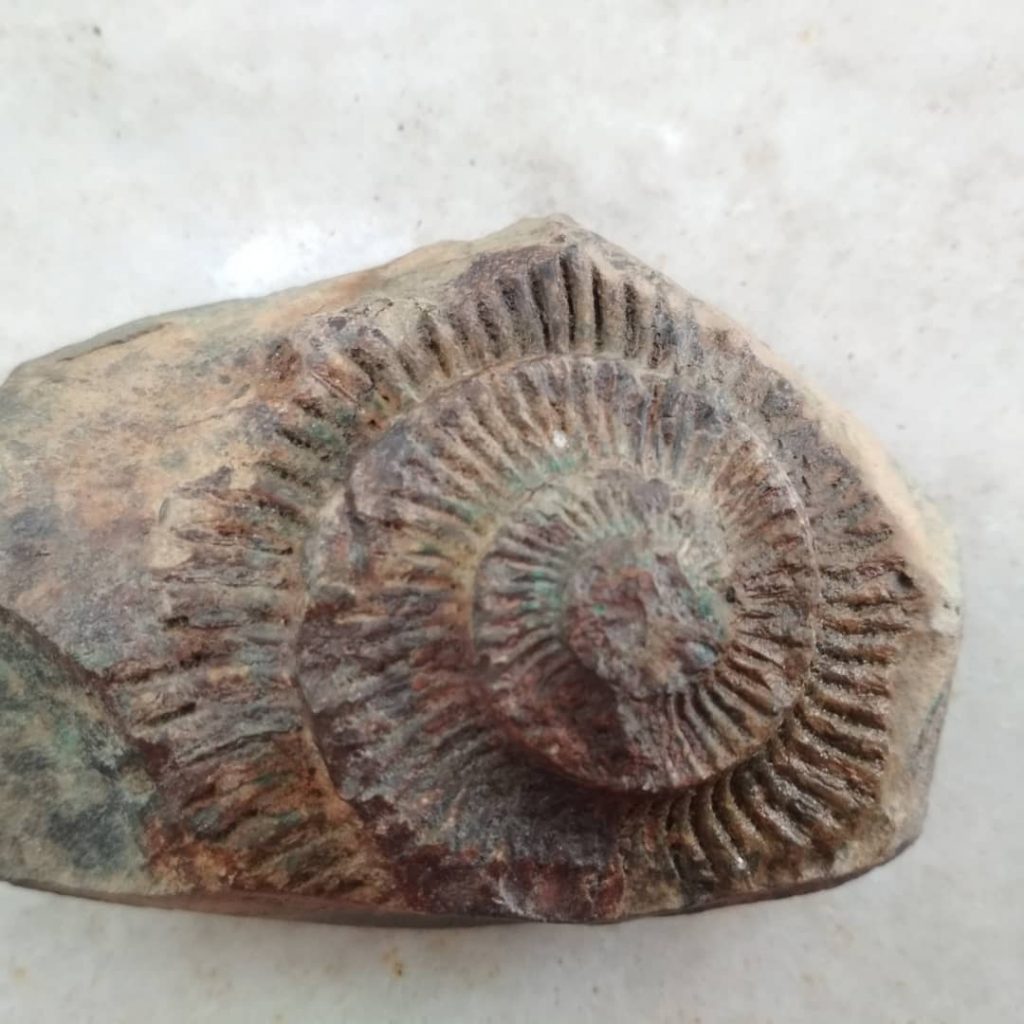
The most common fossils found here are ammonites, spiral-shaped creatures from the late Jurassic era that went extinct along with the dinosaurs. Locals call them chaudua, and because of their wheel-like, chakra shape, some are treated as Shaligram, a naturally occurring stone worshipped by Hindus as a form of Lord Vishnu. Geologists have even named a fossil-bearing layer of the Spiti Shales the “Saligram Member” after this connection. If you take a spade and start digging anywhere around Langza, you would likely find a fossil or two. The village even has a chaudua center where you can see collected specimens.
You might see local children or small shops selling these fossils for Rs 10 to Rs 100. However, the Himachal Pradesh government has restricted the removal of fossils from the Spiti region. Some paleontologists describe Spiti as the “Museum of Indian Geology,” and for good reason. These fossils are not just souvenirs. They are irreplaceable links in the geological history of our subcontinent.
A request from me to all readers: Please do not buy or take these fossils from Langza or its neighborhood. Instead, opt for the mud replicas made by local artisans, or take home Zama pottery as souvenirs. This way, you help preserve a geological treasure AND support a dying local craft at the same time.
What Is the Cultural Heritage of Langza Village?
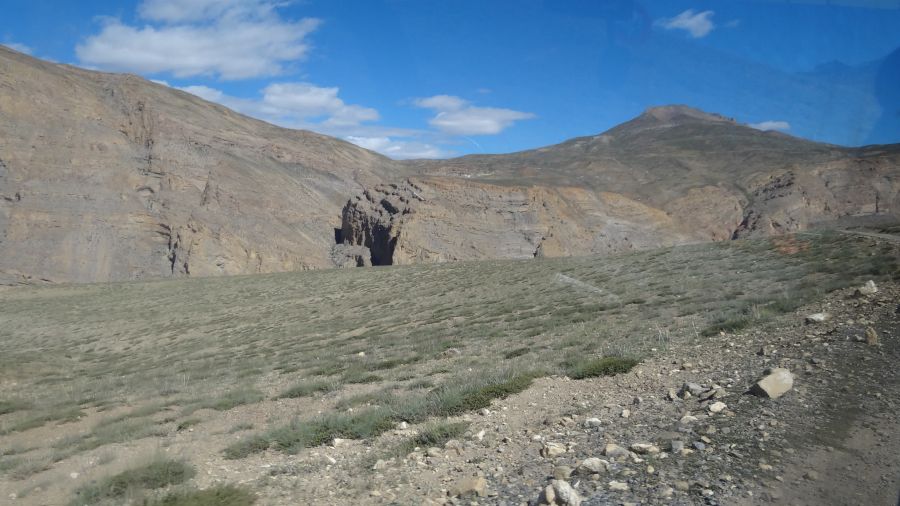
Langza’s cultural identity is deeply rooted in centuries of isolation. The harsh climate and difficult terrain kept the village cut off from the outside world for most of its history. This isolation helped preserve traditions, customs, and crafts that have vanished from most other parts of India.
One of the most significant cultural legacies is Zama pottery, an ancient art form that originated in Spiti because of the presence of yellow and black clay in the region. Historically, every household needed clay pots for cooking, storage, and rituals. The potters of Langza inherited this craft from their forefathers. With the arrival of steel and plastic utensils, the craftsmen diversified into making decorative pots, lamps, and artifacts.
Today, only a handful of potters in Langza still practice Zama pottery. Agriculture has replaced pottery as the main occupation, but if you get a chance during your visit, do meet one of these potters. They are happy to demonstrate their craft and will even make a pot or two for you as a souvenir.
The name “Langza” is believed to come from “La” (mountain pass) and “Za” (from Zama pottery). Another theory links the name to “Lang,” the ancient village temple. Either way, the village and its pottery are inseparable.
What Are the Top Things to Do in Langza Village?
Langza is not a place for conventional sightseeing. The best experiences here come from slowing down, walking through the village, and soaking in a way of life that has survived for a thousand years. That said, here are the key attractions and activities you should not miss.
Visit the Langza Buddha Statue
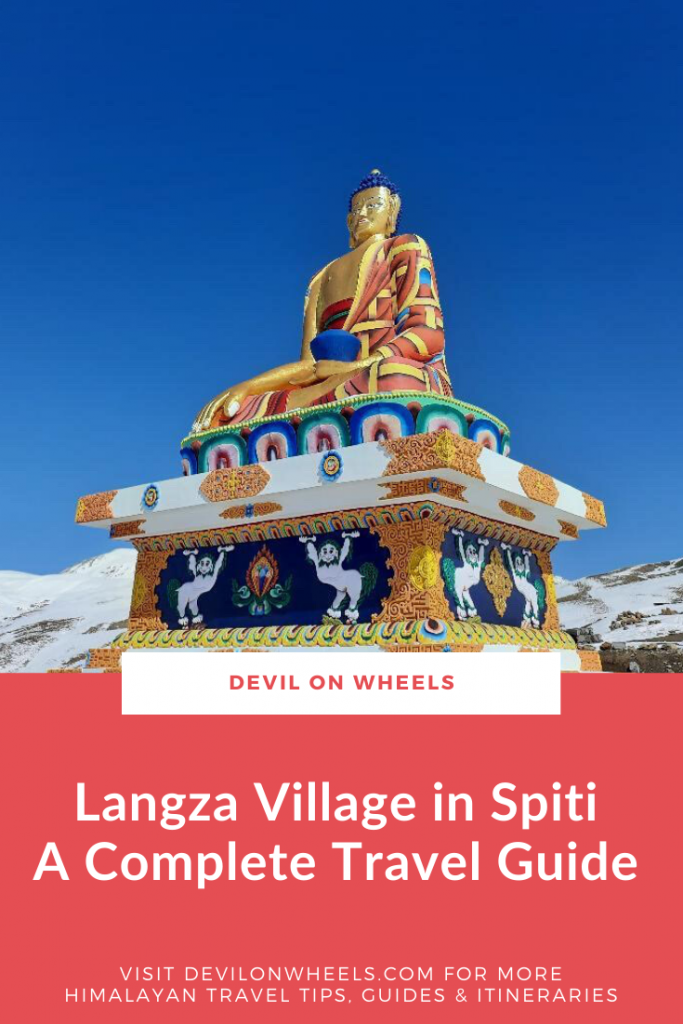
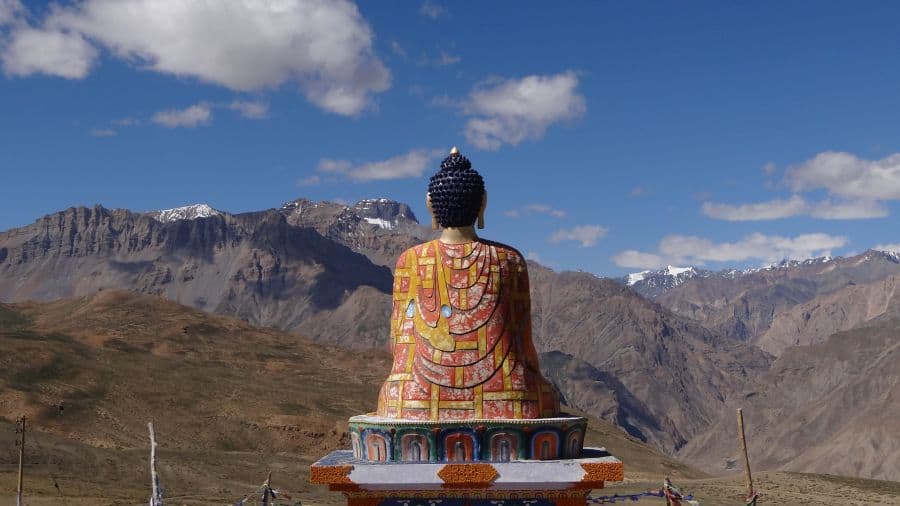
As you approach Langza from Kaza, the first thing you notice is a golden Buddha statue visible from about a kilometer away. Standing approximately 35 feet tall, it is the tallest structure in the village and depicts Maitreya, the Future Buddha, its face turned toward Chau Chau Kang Nilda across the valley. The statue sits on a raised platform in Langza Gongma, and in the serenity that surrounds it, Buddha seems to be watching over the entire valley. It is a 10-minute walk from the parking area, and the view from the statue’s base, with the village below and Chau Chau Kang Nilda behind, is worth the effort.
Explore the Lang (Langza Gompa)
Langza Gompa, also called Lang, predates the golden Buddha statue beside it by centuries, sitting in Upper Langza as Spiti’s local deity shrine dedicated to Lang Chenmo. Local elders date the temple itself at over 500 years old, while records place the 35-foot Buddha statue’s construction in 2005, not the “1,000 years” the local legend claims.
The Lang temple is the ancient spiritual heart of Langza. Locals believe that all the deities of Spiti Valley reside here, making it a kind of spiritual nerve center for the entire region. The gompa is dedicated to the local deity Lang Chenmo. It is a small, intimate space compared to the more famous monasteries like Key or Kibber, but its significance to the local community is immense.
Go Fossil Hunting
Langza is a treasure trove for fossil enthusiasts. Pin Valley and other areas in Spiti also have marine fossils, but Langza has the highest concentration of ammonites, those distinctive spiral-shaped fossils. Walk the slopes above the village with a keen eye, and you will spot them embedded in the rocks. Remember, look but do not take. The fossils are a protected geological heritage.
Walk Through the Green Fields and Farmlands
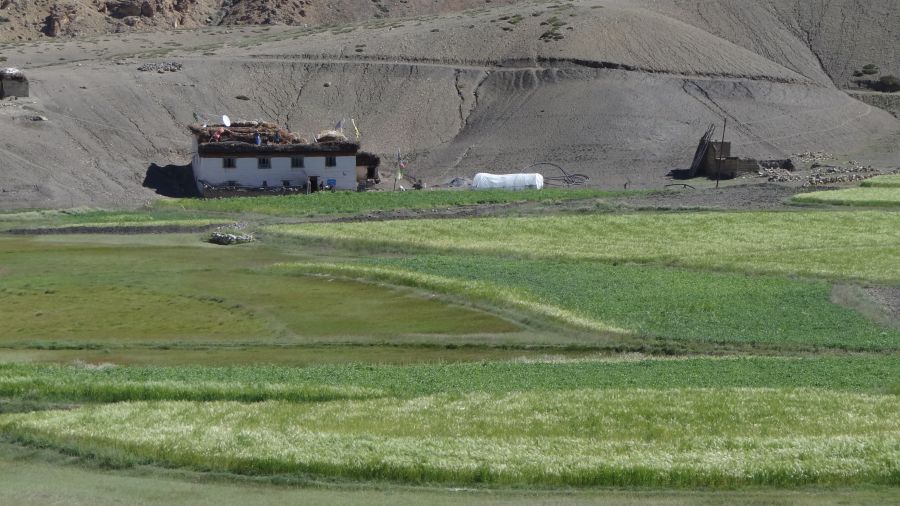
The fields of Langza impart an astoundingly green look to the otherwise brown and white cold desert landscape. The uneven elevation creates an illusion of sorts that looks almost mystical. In the old days, the only crop grown here was potato. Now with warming temperatures and better farming tools, barley and sweet peas are also cultivated alongside potatoes.


The only source of irrigation is the water from streams originating at Chau Chau Kang Nilda peak. If there is less snowfall during winter, it directly impacts farming output the following summer. Beneath all the beauty lies this constant challenge of survival. You can also go camping near the farms of Langza village if you carry your own gear.
Try Night Sky Photography
Langza is heaven for photography enthusiasts. The high altitude means crisp, clear light during the day, and zero light pollution at night. When you can see the Milky Way with your naked eyes, a giant moon, and millions of stars against the clearest sky, what more can you possibly ask for?
Even with minimal equipment and basic camera settings, you can capture stunning shots at Langza. Every nook and corner of this village is unlike anything you will see in a city or even lower Himalayas. So, do not forget to pack your camera and accessories. Check out our guide on how to pack and protect cameras, laptops, and gadgets at high altitudes.
Trek to Chau Chau Kang Nilda Base
Langza village flourishes under the shadow of Chau Chau Kang Nilda (translated as “Blue Moon in the Sky” or “Snow-Capped Mountain Princess of the Sun and Dawn”). At 6,303 meters (20,682 feet), it is the tallest peak in the Spiti region. The peak was first summited by Harold Tilman and Eric Shipton in 1939.

The view from Langza is majestic. If you want to attempt climbing the peak, you will need professional guides, proper mountaineering gear, and prior experience. For most visitors, a trek to the base area offers stunning views without the technical difficulty. Two small lakes near Langza, Tsonyeti and Chumo Tso, sit at 14,000 to 15,000 feet and make for a rewarding day hike.
Spot Snow Leopards in Winter
Langza and surrounding areas in the Spiti Valley are home to the elusive snow leopard. During winter (January to March), these big cats descend to lower elevations in search of prey, making them easier to spot against the white landscape. According to wildlife researchers, the success rate of snow leopard sightings in Spiti is over 50 percent, which is among the highest in the world.
The residents of Spiti have played a major role in this. They have learned to coexist with the snow leopard and actively protect it, which is why the animal has found a safe haven here. You will need a local guide who knows the trails. Several tour operators in Kaza arrange snow leopard expeditions during winter months, typically costing INR 25,000 to 50,000 per person for a 7 to 10-day expedition.
Experience Spitian Village Life
Beyond the specific attractions, the real magic of Langza lies in simply being there. Stay at a homestay, eat with a local family, watch them tend to their livestock, and sit under the stars after dinner. The people of Langza follow the Sankayapa sect of Buddhism. Their proximity to Tibet has influenced their culture for centuries, and you can see it in the temples, prayer flags, and daily rituals.
Summer is work season. Everyone tends to crops, takes care of animals, and stocks up for the long winter. Winter is for festivities, rest, and waiting out the harsh months. One resident told us their winter routine: wake up, clear the piled-up snow from their yards, take care of the livestock, and wait. The bone-freezing temperatures do not leave much scope for anything else.
When you visit during summer, some villagers might ask you for a ride to Kaza, the nearest town and market. Most of us are more than happy to help those smiling faces 🙂
What to Eat in Langza Village?
Your food options at Langza are limited to what your homestay host prepares, and honestly, that is the best part. The meals are simple, home-cooked, and incredibly satisfying after a day of walking at 14,500 feet.
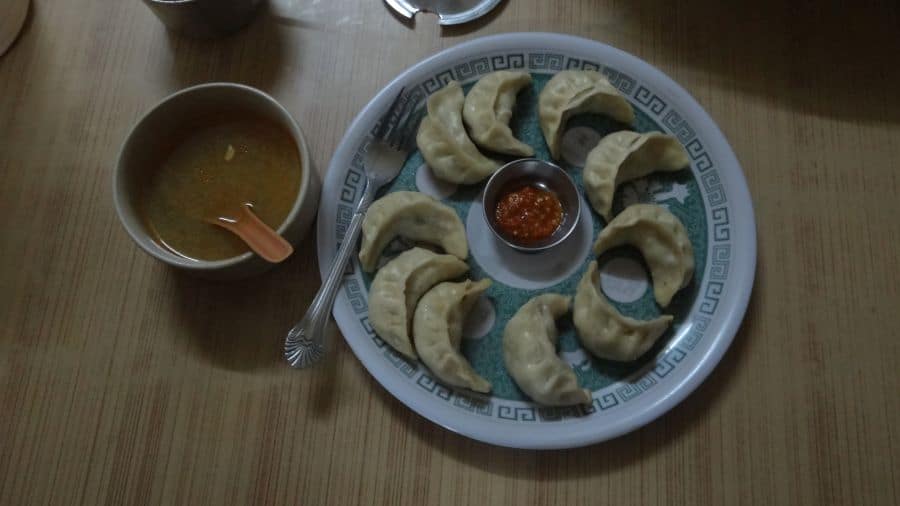
A typical meal includes rice, dal, rajma (red kidney beans), and mixed vegetables. Tibetan fare like Thukpa (noodle soup), Thenthuk (hand-pulled noodle soup), and momos are common too. Barley is a staple local crop, and the villagers make everything from it: bread with honey, porridge, laddoos, and even barley tea. Try the barley tea if you get a chance. There is also local barley beer for those interested.
Breakfast is usually bread, butter, jam, and eggs along with mint tea or ginger black tea. I loved the local black tea with lots of ginger in it. That drink gave ultimate comfort in the cold Langza weather. Keep in mind that you should carry some snacks and dry fruits with you, since there are no restaurants or shops in the village.
When Is the Best Time to Visit Langza Village?
The best time to visit Langza depends on what kind of experience you want. The village is accessible from May to October when the roads to Spiti are open. Here is a season-by-season breakdown.
Summer (May to July)
This is the most popular and convenient window. The sun is bright (altitude intensifies the sunshine), days are pleasant at 15 to 20 degrees Celsius, and the fields are green. Nights are still cold and require woolens. Both the Manali and Shimla routes to Kaza are open. This is also the best time for photography and trekking around Langza.
Monsoon (August to September)
Langza itself does not receive much rain. However, the roads leading to Spiti from Manali or Shimla witness heavy rainfall and landslides. Roads become slushy and broken, causing long delays and unplanned stopovers. If you are okay with adventure and uncertainty, monsoon travel to Spiti can be rewarding, but expect disruptions.
Autumn (October)
October offers clear skies and minimal crowds. However, the Manali-Kaza road via Kunzum Pass starts closing by mid-October due to early snowfall. The Shimla-Kinnaur route typically stays open longer. If you visit in early October, you get the best of both worlds: clear weather and fewer tourists.
Winter (November to April)
Winter at Langza is extreme. Temperatures drop to minus 20 to minus 30 degrees Celsius. Several feet of snow blankets the region. The Manali route is completely shut since the road over Kunzum Pass closes (the Atal Tunnel bypasses Rohtang but does not help beyond Gramphu). You can still reach Kaza via the Shimla-Kinnaur route (Hindustan Tibet Highway), depending on road conditions. For details on winter travel, read our guide on how to plan a trip to Spiti Valley in winters.
For a detailed month-by-month breakdown of when to travel to Spiti, read our pillar guide: Best Time to Visit Spiti Valley, A Month by Month Guide
How to Reach Langza Village from Kaza, Manali, and Delhi?
Langza is a remote village with no direct rail or air connectivity. You first need to reach Kaza, and from Kaza it is a 16 km drive (about 1 hour) to Langza. Here are your options.
From Kaza to Langza
There are no regular buses from Kaza to Langza. Your options are: hire a taxi (INR 2,000 to 2,500 for a round trip as of 2025-26), share a taxi with other travelers, hitch a ride, or walk the 16 km if you are feeling adventurous. The road climbs steadily with wide views of the Spiti landscape.
By Road from Manali
You can travel to Spiti from the Manali side via the Atal Tunnel and Kunzum Pass. This route is open from June to October. HRTC operates a daily bus from Manali to Kaza (departing around 5:00 AM, reaching by 3:00 to 5:00 PM, fare approximately INR 400 to 600). You can also drive or ride your own vehicle. Many travelers take a detour to Chandratal Lake along the way.
By Road from Shimla / Kinnaur
The Shimla-Kinnaur route via Hindustan Tibet Highway is the longer but more scenic option. HRTC buses run from Shimla to Reckong Peo (fare INR 850 to 1,200), and from Reckong Peo you board another bus to Kaza (INR 400 to 600). This route is open year-round except during heavy snowfall or major landslides.
By Train
The nearest narrow-gauge station is Joginder Nagar (364 km from Kaza), which receives a train from Pathankot. The nearest major railway station is Chandigarh (approximately 500 km from Kaza). From either station, you will need to continue by road.
By Air
Chandigarh is the nearest major airport. Bhuntar (Kullu) is the nearest small airport with limited domestic flights. You can also fly to Shimla and then make a two-day drive via the Hindustan Tibet Highway to reach Langza.
By Public Transport (Budget Option)
For detailed bus routes, schedules, and budget travel options around Spiti Valley, refer to our guide on how to make a budget trip to Spiti Valley by public transport.
Where to Stay in Langza Village?
There are no hotels or guesthouses in Langza. Your accommodation options are limited to local homestays, which is actually one of the best parts of visiting this village. These homestays are built in the traditional Spitian way, with mud-brick walls, wooden frames, and rooms heated by a central kitchen “angeethi” (stove). For more options across the valley, check our guide on homestays in Spiti Valley.
A typical Langza house has a large kitchen (which doubles as the family room), a dry toilet, space for livestock, and a few guest rooms. The white-painted walls with blue windows and red borders give the village its distinctive, uniform look.
Recommended Homestays in Langza (2026 Prices)
Lara Homestay Langza: This is one of the more comfortable options, with five clean rooms, attached bathrooms, western toilets, room heaters, and hot water geysers. The facilities come at a higher cost: approximately Rs 3,500 per night for double sharing with two meals (as of 2019, verify locally for current rates). Contact: Lara Tsering, +91-9418537689.
Tenzi Homestay Langza: A five-bedroom homestay with comfortable beds. Two rooms have attached bathrooms. Per night stay with breakfast and dinner costs INR 700 for rooms with attached bath and INR 1,000 for rooms with a separate bathroom (as of 2019, verify locally for current rates). Contact: +91-9459566627.
Pema Homestay and others: Several newer homestays have opened in recent years. Expect to pay INR 1,200 to 1,800 per person per night with meals (2025-26 rates). Most run on solar power, so electricity is generally available. Booking in advance is recommended during peak season (June to September).
What Is a Good Itinerary for Visiting Langza Village?
Langza can be included in your Spiti Valley itinerary as a day trip from Kaza. However, I strongly recommend spending at least one night at a homestay. You will love the local hospitality, the starry nights, and the morning views of Chau Chau Kang Nilda. Here is a suggested 2-day plan.
Day 1 | Kaza to Langza (Stay Overnight)
- Leave Kaza in the morning by taxi or your own vehicle. Reach Langza in about an hour.
- Visit the Lang temple and the Buddha statue. Take your time here.
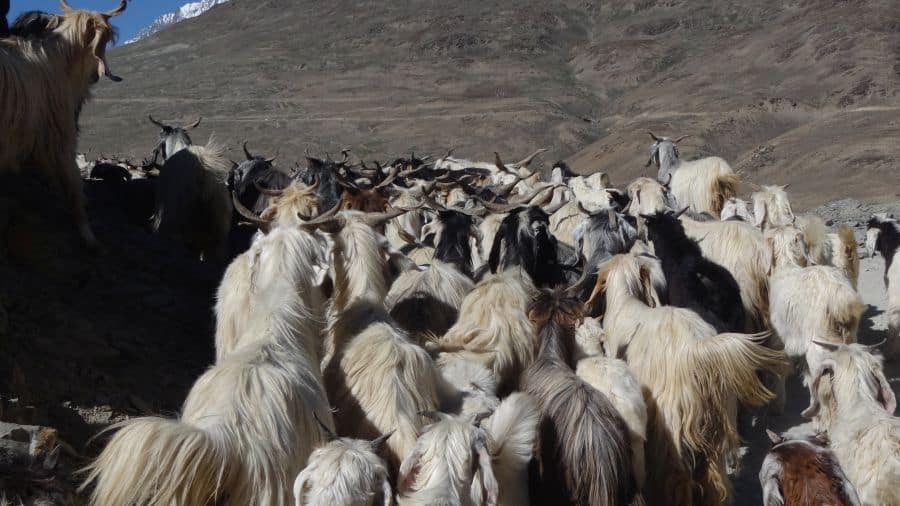
- Walk through the village and explore the farmlands. Try pea-plucking if it is the season. You might spot yaks and sheep lazing around.
- Meet local Zama potters and experience the ancient mud craft. Pick up a souvenir pot.
- Explore the fossil slopes near the village. Visit the Chauda center.
- Spend the night at a local homestay. Enjoy home-cooked Spitian food.
- After dinner, step outside for stargazing and night photography. The Milky Way here is unforgettable.
Day 2 | Langza to Hikkim / Komic / Kaza
- Head to the neighboring villages of Hikkim (home to the world’s highest post office) or Komic village. You can cover both in a few hours.
- If high-altitude treks interest you, hike to the lakes Tsonyeti and Chumo Tso near Langza (14,000 to 15,000 feet). Reserve a full day for this.
- Return to Kaza by evening, or continue to Chandratal Lake if heading back via the Manali route.
What Are the Important Tips for Visiting Langza?
- Prepare for the altitude. At 14,500 feet, Langza can trigger Acute Mountain Sickness (AMS) in some travelers. If you acclimatize well at lower altitudes while traveling to Spiti via Kinnaur, you are unlikely to face issues. Still, carry Diamox and stay hydrated. Go prepared with a basic list of things to carry on a Spiti trip.
- Pack warm layers. Even in summer, nights at Langza drop to near-freezing. Carry a good jacket, thermals, and a sleeping bag if you plan to camp.
- Carry cash. Keep in mind that there are no ATMs, banks, or digital payment options in Langza. The nearest ATM is in Kaza. Carry enough cash for homestays, taxis, and any purchases.
- Mobile connectivity is limited. BSNL has patchy coverage. Jio and Airtel signals are minimal to non-existent. For details, check our article on mobile phone connectivity in Spiti Valley.
- Carry snacks and water. There are no shops or restaurants in Langza. Your homestay will provide meals, but carry dry fruits, biscuits, and a water bottle for hikes.
- Respect the environment. Do not litter. Carry back all your trash. Do not remove fossils. Do not play loud music. The ecology of Spiti is fragile, and it is our responsibility to preserve it.
- Fuel up in Kaza. There is a fuel station in Kaza. Fill your tank before heading to Langza or any of the surrounding villages.
How Much Does a Trip to Langza Village Cost?
Here is a rough budget breakdown for visiting Langza as part of a Spiti Valley trip. These are per-person estimates for a budget to mid-range traveler.
| Expense | Budget (INR) | Mid-Range (INR) |
| Kaza to Langza taxi (round trip, shared) | 500-700/person | 2,000-2,500 (private) |
| Homestay with meals (per night) | 700-1,200 | 1,500-3,500 |
| Food (if cooking own meals) | 200-300/day | Included in homestay |
| Snow leopard expedition (winter) | N/A | 25,000-50,000 (7-10 days) |
| Miscellaneous (souvenirs, tips) | 100-300 | 300-500 |
For a complete cost breakdown of the entire Spiti Valley trip including transport from Delhi, check our detailed guide on Spiti Valley trip cost and budget planning.
How Is Langza Connected to Nearby Villages?
Langza is part of a cluster of high-altitude villages near Kaza that are often explored together. Here is how they connect.
- Langza to Hikkim: About 10 km. Hikkim is famous for having the world’s highest post office. You can send a postcard home from 14,400 feet.
- Langza to Komic: About 15 km. Komic claims to be one of the highest inhabited villages with a motorable road. The Tangyud Monastery here is worth visiting.
- Langza to Kaza: 16 km. Kaza is the base town for all Spiti explorations, with hotels, restaurants, ATMs, and fuel.
- Day circuit: A popular day trip from Kaza covers Langza, Komic, and Hikkim in one loop. But I recommend spending at least one night in one of these villages for a deeper experience.
Be a Responsible Traveler at Langza
Spiti valley is ancient. It preserved its environment and culture only because the terrain was so difficult to reach. Some paleontologists describe Spiti as the “Museum of Indian Geology.” This fact alone sums up the importance of preserving this ecologically and geologically sensitive zone. Rising tourism in the past few years has eroded the valley in several ways. At DwD, we have been leading many initiatives to promote sensible and responsible tourism in the region by educating both locals and travelers. Empowering the locals with eco-friendly practices and encouraging travelers to follow them is extremely important, and it is also our duty as visitors.
Final Thoughts on Visiting Langza Village
Langza is not just another stop on a Spiti Valley checklist. It is a place that gives you tranquility, teaches you about a way of life that values simplicity, and leaves you spellbound with its landscape. The fossils remind you of how ancient this land is. The Buddha statue reminds you to slow down. And the people remind you of the importance of things we take for granted in city life.
If you are planning a trip to Langza with your family, plan well in advance and prepare for the challenges. The altitude, weather, and remoteness are real. But the rewards are worth every bit of effort.
Have a travel question?? You can subscribe to my YouTube channel and leave a comment to ask your travel questions about traveling to the Himalayas.
I hope this detailed guide helps you plan your trip to Langza village better. If you still have questions about visiting Langza, need help with your Spiti itinerary, or want to share your own experience, feel free to drop a comment below or message me on Instagram. You can also join our DwD Community to connect with fellow travelers and get advice from experienced Spiti explorers.
If you found this guide helpful, please share it with anyone planning a trip to Langza or Spiti Valley. Happy traveling, my friend!
Frequently Asked Questions About Langza Village
What is the altitude of Langza village in Spiti Valley?
Langza village sits at an altitude of 14,500 feet (4,420 meters) above sea level. It is one of the highest inhabited villages in India. The altitude can cause AMS in some travelers, so acclimatize properly before visiting. Spending a day or two in Kaza (11,980 feet) before heading to Langza helps.
How do I reach Langza from Kaza?
Langza is 16 km from Kaza, about a 1-hour drive. There are no regular buses. You can hire a taxi (INR 2,000 to 2,500 round trip), share a taxi with other travelers, or hitch a ride. Some adventurous travelers walk the distance.
Is there mobile network in Langza village?
BSNL has patchy coverage in Langza, depending on electricity availability at the mobile tower and weather conditions. Jio and Airtel have minimal to no signal in Langza. Carry a BSNL postpaid SIM for the best chance of connectivity.
Can I find fossils in Langza village?
Yes, Langza is famous for marine fossils, particularly ammonites from the Jurassic era. You can see them on the slopes around the village. However, the Himachal Pradesh government has restricted the removal of fossils from the region. Look at them, photograph them, but please do not take them.
Are Langza’s fossils the same as Shaligram stones?
The ammonite fossils found around Langza, locally called chaudua, come from a layer of the Spiti Shales that geologists have named the “Saligram Member,” the same rock formation that produces the sacred Shaligram stones worshipped in Hindu tradition as a form of Lord Vishnu. Not every fossil here qualifies as a true Shaligram (that depends on its shape and markings), but the geological and spiritual connection is real. As with all fossils in Langza, collecting or removing them is restricted by the Himachal Pradesh government, so admire and photograph them, but leave them where they are.
What is the best time to visit Langza?
May to October is the best window, with June to September being the peak season. Summer offers pleasant daytime temperatures (15 to 20 degrees Celsius), green fields, and clear skies. Winter (November to March) is extreme, with temperatures dropping to minus 20 to 30 degrees, but it is the season for snow leopard expeditions.
Are there hotels in Langza?
No, there are no hotels in Langza. Accommodation is limited to local homestays, which provide basic rooms and home-cooked meals. Expect to pay INR 1,200 to 1,800 per person per night with meals (2025-26 rates). You can also camp near the village if you carry your own gear.
What is Zama pottery in Langza?
Zama pottery is an ancient clay craft that originated in Spiti Valley, and Langza was traditionally its main center. Potters use the yellow and black clay found in the region to make pots, lamps, and decorative items. Only a few potters still practice this craft. You can meet them during your visit and buy handmade pottery as souvenirs.
Can I see snow leopards near Langza?
Yes, the areas around Langza, Kibber, and other Spiti villages are home to snow leopards. The best time for sighting is January to March when the big cats descend to lower altitudes. The success rate in Spiti is over 50 percent. You will need to join a guided expedition, which typically costs INR 25,000 to 50,000 per person for 7 to 10 days.
What is Langza Gompa (Lang Temple)?
Langza Gompa, locally called Lang, is the ancient village temple of Langza dedicated to the guardian deity Lang Chenmo. Local elders trace its history back more than 500 years, making it far older than the golden Buddha statue that stands beside it. The two are separate structures standing close together in Upper Langza. The Lang Gompa is the centuries-old temple, while the 35-foot golden Buddha statue nearby was constructed in 2005, much more recently than the local legend of it being 1,000 years old suggests.

3 Comments
Comments section gets closed in 90 days. To ask your travel questions, you can follow my YouTube Channel for a faster reply or for a much slower reply follow me on Instagram. :)
please provide budgetry tour for two adults to be covered in 9 days (from saturday to sunday) in the month of june, from Delhi to Spiti to Delhi via Shimla. – thanks
Thank you Dipanjan for your kind words. We try to give comprehensive information to travelers, in order to plan their journeys better. In case you need any help with your upcoming trip please write to us.
I had done the Spiti circuit last year June, and thanks to DOW for all the invaluable information. Without this portal, my travel wouldn’t have been as smooth as it was. We are planning again this year April, with intention to stay at Langza and Tashigang.