


Rishikesh to Gaumukh covers about 268 km total: roughly 250 km by road from Rishikesh to Gangotri via Narendranagar, Chamba, and Uttarkashi (7-8 hours drive), then an 18 km trek on foot from Gangotri, since Gaumukh has no road access and sits inside Gangotri National Park requiring a forest permit.
The Gaumukh trek is one of the most spiritually significant and visually stunning treks in the Indian Himalayas. Located at the snout of the Gangotri Glacier, Gaumukh is where the Bhagirathi river is born, which later becomes the Ganga after its confluence with the Alaknanda at Devprayag. Only 150 trekkers are allowed on this trail per day, so even though lakhs of pilgrims visit Gangotri temple every Char Dham season, very few of them actually walk up to the source. If you are planning to trek to Gaumukh in 2026, this complete travel guide covers everything you need to know, from permits and route to accommodation and best time to visit.
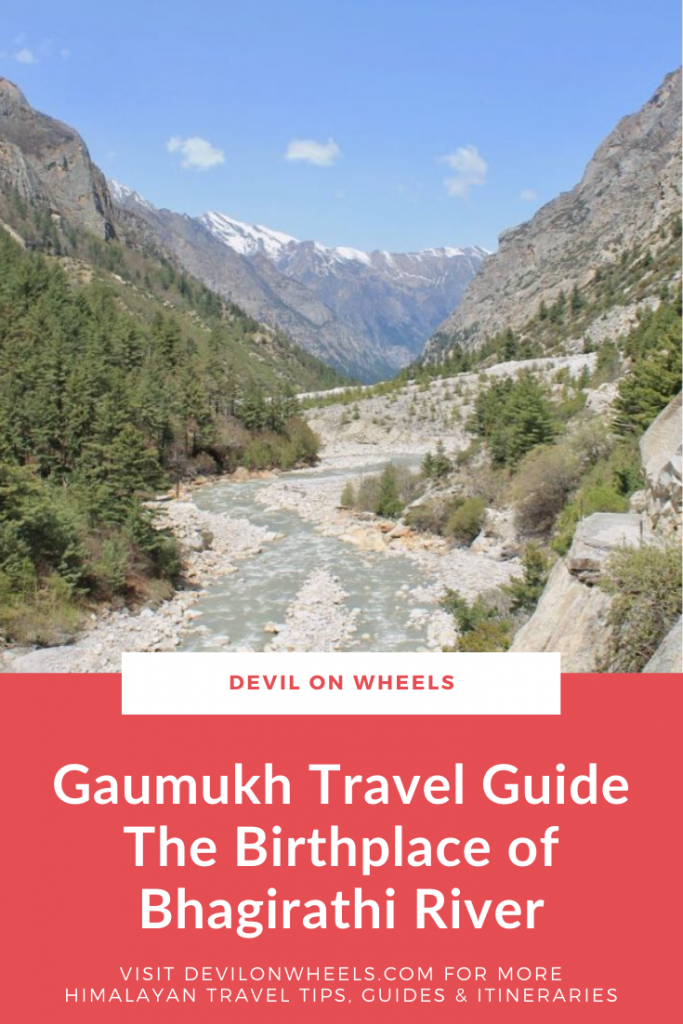
Let's quickly dive into the details:
What is Gaumukh and Why is it Important?
Quick Answer: Gaumukh is the terminus of the Gangotri Glacier at 4,000 m (13,120 ft) in Uttarkashi district, and it is where the Bhagirathi river, considered the true source of the Ganga, emerges from the ice.
Gaumukh (also spelled Gomukh) is the terminus of the Gangotri Glacier, sitting at an altitude of 4,000 meters (13,120 feet) in the Uttarkashi district of Garhwal, Uttarakhand. The name literally means “cow’s mouth,” referring to the shape the glacier snout once had, though it has receded and changed shape considerably over the decades.
Geographically and mythologically, Gaumukh is recognized as the birthplace of the river Ganga. The river that emerges here is called Bhagirathi, and it is only after its confluence with the Alaknanda at Devprayag that it becomes the Ganga we know. Despite other tributaries like the Alaknanda and Mandakini being longer, the Bhagirathi holds the distinction of being considered the true source of the Ganga.
Quick Info: Gaumukh is located 18 km from Gangotri (trek only), at 4,000 m (13,120 ft). The trek takes 1 day each way. Permit fee is Rs 150 for Indians, Rs 600 for foreigners, valid for 2 days. Only 150 trekkers are allowed per day. Guide and insurance are mandatory since September 2024. Gangotri National Park itself reopens for the season around April 1 each year, ahead of the Gangotri temple’s own opening date.
What is the Mythology Behind Gaumukh and the Ganga?
There is a beautiful mythological story behind why the river at Gaumukh is called Bhagirathi. The ancestors of King Bhagiratha were performing an Ashwamedha Yagya, and Lord Indra, out of jealousy, hid the horse. In their search, the ancestors reached the place where Sage Kapila was meditating and disturbed his penance. In a fit of rage, the sage reduced them to ashes.
The ancestors could reach “Pitru Loka” only if their ashes were immersed in the Ganga. So King Bhagiratha performed severe penance to bring Ganga to Earth by pleasing Lord Shiva, on whose head Ganga resided. Lord Shiva, pleased with his devotion, agreed to let Ganga descend through his matted hair. She reached Earth first at Gaumukh.
Bhagiratha then led her to the place where the ashes lay, so the sacred waters could wash away the sins and help his ancestors attain Pitru Loka. Since it was Bhagiratha who brought Ganga to Earth, the river is called Bhagirathi. Only after the confluence of Alaknanda with Bhagirathi at Devprayag does the river take the name Ganga.
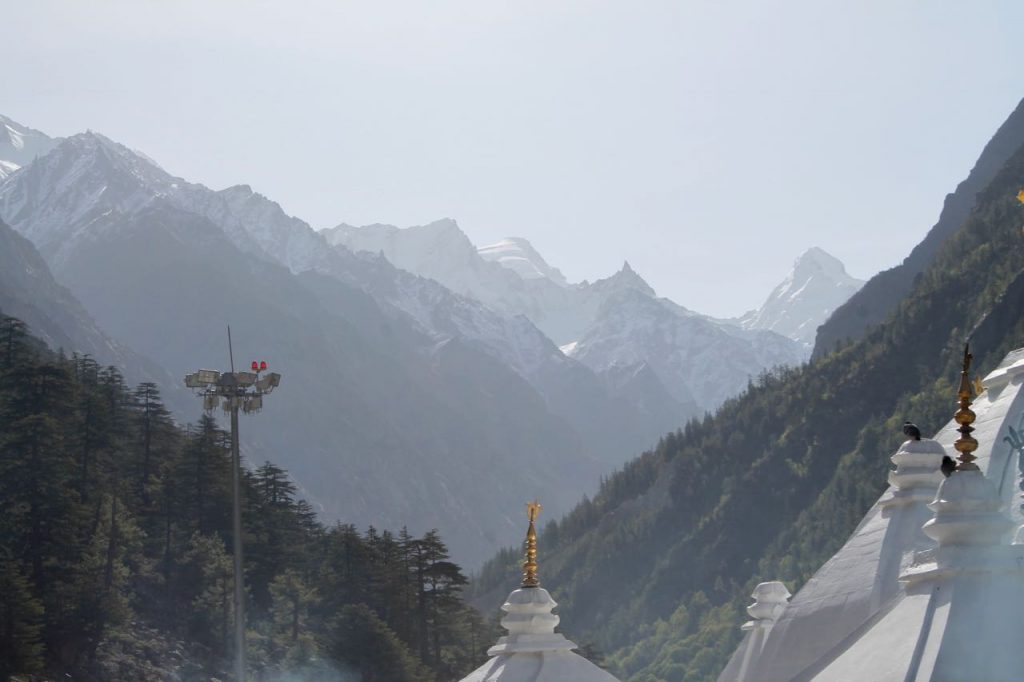
Where is Gaumukh Located and What is the Altitude?
Quick Answer: Gaumukh is inside Gangotri National Park at 4,000 m (13,120 ft), 18 km on foot from Gangotri (3,415 m) and about 45 km from Harsil by road.
Gaumukh is located in the Uttarkashi district of Garhwal, Uttarakhand, inside the Gangotri National Park. It sits at an altitude of 4,000 meters (13,120 feet). The base point for the trek is Gangotri, which is at about 3,415 meters (11,200 feet). Gaumukh is approximately 18 km from Gangotri and about 45 km from Harsil.
Gangotri Dham is one of the four Char Dhams of Uttarakhand. If you are planning a trip to this region, I recommend combining your Gaumukh trek with visits to Gangotri and Harsil for a complete Garhwal experience.
What is the Best Time to Visit Gaumukh?
Quick Answer: May to mid-June and mid-September to mid-October are the two clean weather windows for the Gaumukh trek. Winters bring heavy snow and closures, and the monsoon (late June to mid-August) makes the trail unsafe.
The best time to trek to Gaumukh is from May to June and September to October. These months offer stable weather, clear skies, and the trail is well-accessible. The Gangotri temple opens around mid-April each year (in 2026, the expected opening date is April 19, on Akshaya Tritiya) and closes in November (expected closing date: November 11, 2026, on Bhai Dooj).
During winters, heavy snowfall makes the trail impassable, and entry into the Gangotri National Park is typically restricted. From late June to mid-August, the monsoon brings heavy rainfall, making the trail slippery and increasing the risk of landslides. Hence, the monsoon period is not recommended for the Gaumukh trek.
You can attempt the trek in shoulder months like late April or early November, but conditions will be tougher and some sections may have snow. May and October are generally the most comfortable months for the Gaumukh trek.
What is the Temperature Like on the Gaumukh Trek?
Temperatures swing sharply between day and night at these altitudes, even in the peak trekking months. Carry layers regardless of when you go, and do not go by the daytime warmth alone when packing.
| Season | Daytime Temperature | Nighttime Temperature |
|---|---|---|
| May-June | 15°C to 22°C | Near 0°C, occasionally below |
| September-October | 10°C to 20°C | Below freezing, can drop further at Bhojbasa |
How to Reach Gaumukh from Delhi, Dehradun, and Rishikesh?
Quick Answer: Gaumukh has no road access. Drive or take a bus/shared taxi to Gangotri (about 480 km from Delhi), then trek the remaining 18 km on foot.
Gaumukh is accessible only by trekking from Gangotri. So the first step is reaching Gangotri by road, and then trekking the remaining 18 km to Gaumukh. Here are the main routes and transport options.
How to Reach Gangotri by Road (Self-Drive)?
If you are driving from Delhi, the most common route is via Meerut, Roorkee, Haridwar, Rishikesh, Narendranagar, Chamba, Dharasu Bend, Uttarkashi, Gangnani, Harsil, and finally Gangotri. The total distance from Delhi is approximately 480 km. From Rishikesh, it is about 250 km, and from Uttarkashi, about 90 km.


An alternate route goes via Saharanpur, Dehradun, Mussoorie, Suwakholi, Dharasu Bend, and then onwards to Uttarkashi, Gangnani, Harsil, and Gangotri. The distance is roughly the same, with Gangotri being about 225 km from Dehradun. Keep in mind that the road from Uttarkashi to Gangotri has narrow sections with sharp curves, and during monsoon, landslides can cause delays.
Trip Suggestion: If you are exploring this region, check out these offbeat places in Uttarakhand for some lesser-known gems worth visiting.
How to Reach Gangotri by Bus or Shared Taxi?
If you are traveling by public transport, you have a couple of starting points to choose from.
From Haridwar and Rishikesh
During the Char Dham yatra season, two direct buses run to Gangotri from Haridwar and Rishikesh. The bus from Haridwar leaves by 5:30 AM, and buses from Rishikesh depart around 5:30 AM and 7:30 AM. Seats fill up fast, so try to reserve at the counter the previous evening. It takes about 6 hours to reach Uttarkashi from Rishikesh. You can call 0135-2430344 to confirm timings and availability.

In case you don’t get the direct bus to Gangotri, take a bus from Haridwar or Rishikesh to Uttarkashi first. From Uttarkashi, you can take another bus or a shared cab to Gangotri. The shared cab costs about Rs 200 per person and takes approximately 4 hours. Bus timings from Uttarkashi to Gangotri are 5:30 AM, 7:00 AM, 12:30 PM, 1:30 PM, 2:00 PM, and 2:30 PM. However, verify these timings at the bus stand counter as schedules change seasonally.
From Dehradun
From Dehradun, head to Rispana Bridge where there is a shared taxi stand. Shared taxis ply to Uttarkashi from here, take about 6 hours, and cost around Rs 300 per person. Keep in mind that these taxis leave only when all ten seats are filled. From Uttarkashi, you can catch a bus or shared cab to Gangotri as described above.
Trip Suggestion: Planning a trip to an offbeat destination in Uttarakhand? Check out our travel guide to Mana Village, the last Indian village before the Tibet border.
How to Reach Gangotri by Air or Train?
The nearest airport is Jolly Grant Airport in Dehradun. From there, you can reach Rishikesh or Dehradun and follow the road routes mentioned above. By train, the nearest major railway stations are Haridwar, Rishikesh, and Dehradun. From any of these, you can continue by bus or shared taxi.
How to Get a Permit for the Gaumukh Trek in 2026?
Quick Answer: You need a Gangotri National Park forest permit (Rs 150 Indians, Rs 600 foreigners, valid 2 days), obtainable online via swstourismuki.com or in person at Uttarkashi or Gangotri, plus a mandatory guide, insurance, and medical certificate since September 2024.
You need a permit from the District Forest Officer (DFO), Uttarkashi, to trek to Gaumukh since it falls within the Gangotri National Park. Only 150 trekkers are allowed per day, so planning ahead is important, especially during peak season (May-June). Keep in mind that Gangotri National Park itself reopens for the trekking season around April 1 each year, which is generally a couple of weeks before the Gangotri temple’s own opening, so permits are not issued before that reopening date.
Permit Fee and Documents
The permit fee is Rs 150 per person for Indian citizens and Rs 600 per person for foreign nationals, and it is valid for 2 days from the date of issue. If you are extending your trek to Tapovan or staying longer, mention this while applying so your permit validity matches your actual itinerary. You need to fill a form with your name and address and submit copies of your Aadhaar card or Voter ID. The permit can be obtained on any working day from the DFO office in Uttarkashi during normal office hours.
Important update (September 2024 onwards): A guide, trek insurance, and a medical fitness certificate are now mandatory for all trekkers doing the Gaumukh trek. This applies to both solo trekkers and groups. If you are trekking independently (without an operator), you still need to arrange these three requirements before your permit is approved.
Permit at Gangotri Forest Office
Permits are also available at the forest check post at Gangotri, located just after the arch on the left side. The timings for this office are 8:00 AM to 10:00 AM and 5:00 PM to 7:00 PM. This office is open on Sundays too, which is helpful if you arrive on a weekend 🙂
How to Apply for the Gaumukh Trek Permit Online?
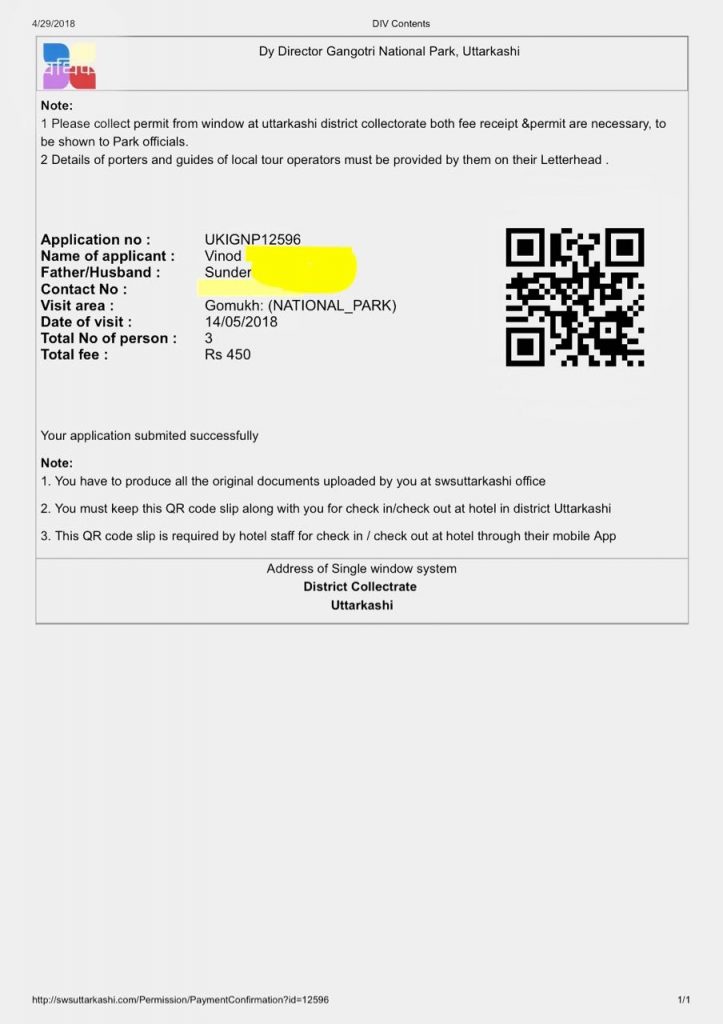
You can apply for the Gaumukh trek permit online through the Single Window System portal at swstourismuki.com. Upload copies of your Aadhaar card or passport, provide details of your trek agency (if applicable), insurance documents, and medical fitness certificate. You can pay the fee online or in cash at the forest check post.
After submitting, you will receive an email confirming that your permit is approved, subject to production of original documents at the office. Take a printout of the online confirmation page. In our case, we were in Uttarkashi on a Sunday when the DFO office was closed, so we showed the printout at the Gangotri forest office on Monday morning and they let us proceed. However, I would recommend not taking chances. If they refuse the printout, you may have to trek back 3 km to Gangotri to sort it out at the forest check post.
Also, based on the plastic you carry, you will need to make a refundable deposit at the permit counter. This deposit is returned when you bring back your plastic waste. It is a good initiative to keep the trail clean, and honestly, every trekker should follow this regardless 🙂
Pro Tip: If you are doing a self-drive trip to Gangotri, make sure to read 40 must-have things to carry on a self-drive trip to the Himalayas.
What is the Gaumukh Trek Route and What to Expect?
Quick Answer: The 18 km trail runs entirely inside Gangotri National Park, following the Bhagirathi river, with a gradual first 9 km to Chirbasa and a steeper, thinner-vegetation second half through Bhojbasa to Gaumukh.
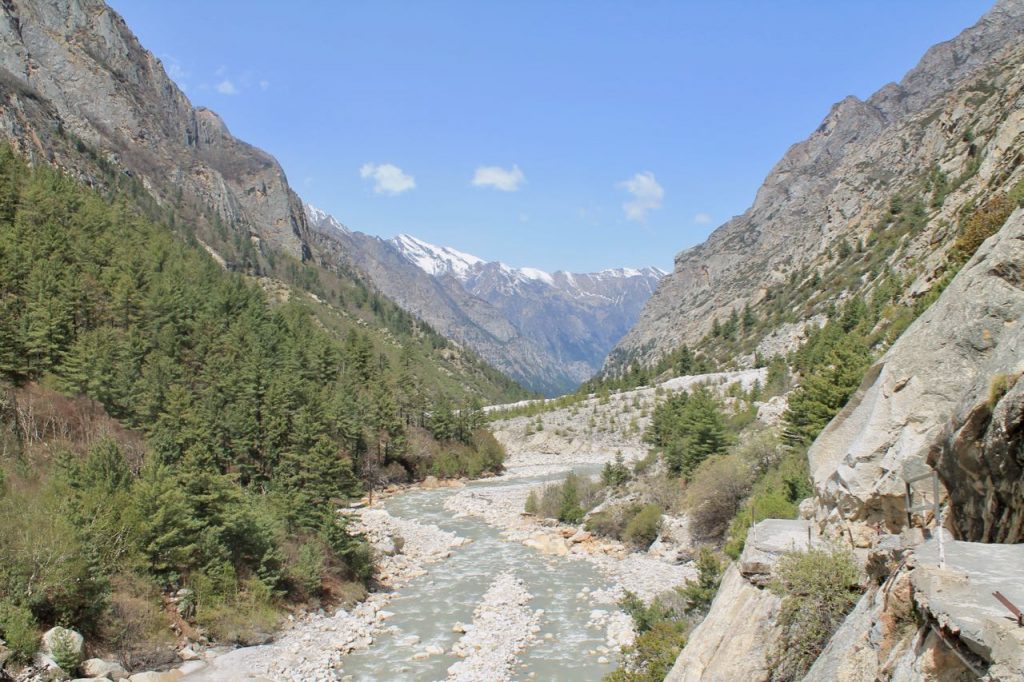
The entire 18 km route from Gangotri to Gaumukh lies within the Gangotri National Park and is accessible only on foot. The trail follows the Bhagirathi river throughout, which keeps you company with its roaring sound all the way to the glacier.
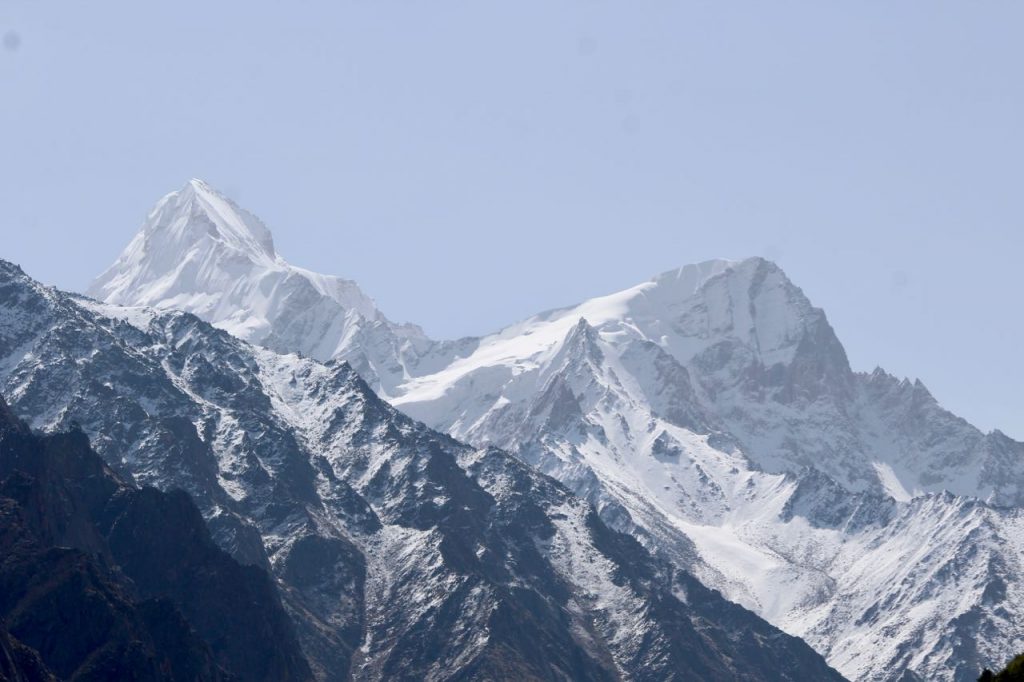
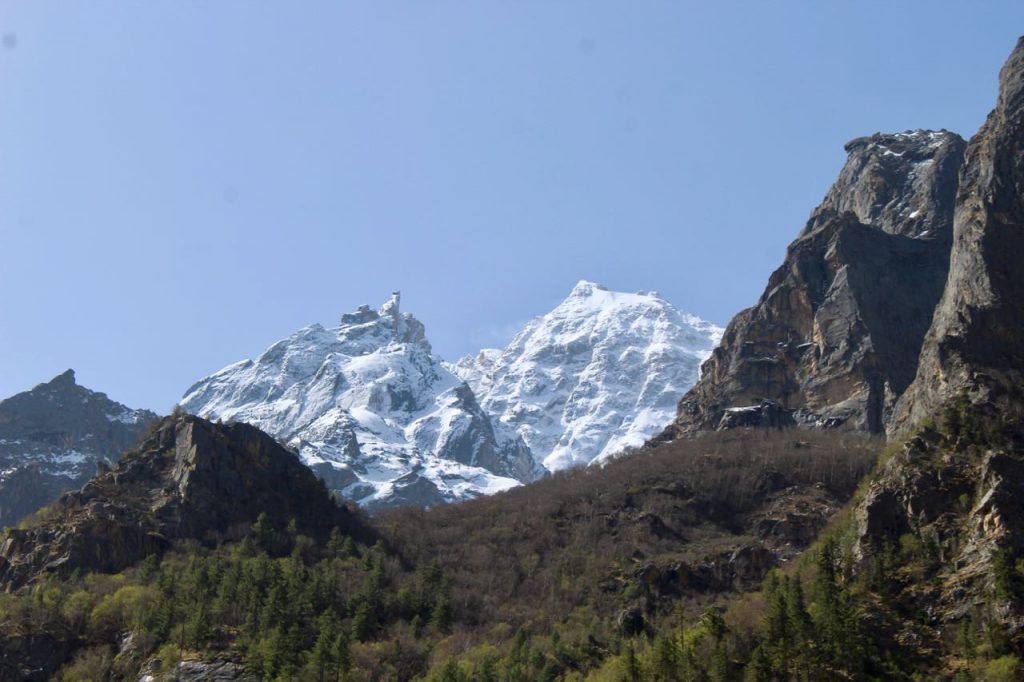
The trek difficulty is moderate. The first 9 km from Gangotri to Chirbasa is relatively easy with a gradual ascent through dense forests of pine and birch. The remaining 9 km from Chirbasa to Bhojbasa and then Gaumukh gets steeper and the vegetation thins out, giving you a landscape that feels very much like Ladakh. You will see snow-capped peaks all around, including the Bhagirathi group and the iconic Mount Shivling. If you are lucky, you might spot Bharals (blue sheep) along the way.
Most trekkers break the journey at Bhojbasa (3,792 m / 12,441 ft), which is about 14 km from Gangotri. From Bhojbasa, Gaumukh is another 4 km. For a detailed step-by-step breakdown of the trek with trail conditions, camping spots, and what to carry, read the second part of this guide: The Trek to Gaumukh, a Step by Step Guide.
Is There an Altitude Sickness Risk on the Gaumukh Trek?
Quick Answer: Gaumukh sits at 4,000 m (13,120 ft), high enough for mild AMS symptoms, but the two-day gradual ascent from Gangotri makes serious AMS uncommon if you pace yourself, hydrate, and rest if you feel unwell.
Since you gain only about 600-700 meters spread across two days of walking, Gangotri to Bhojbasa on Day 1, and Bhojbasa to Gaumukh and back on Day 2, the Gaumukh trek is a relatively gentle acclimatization compared to a sudden jump in altitude on other Himalayan routes. Still, keep in mind that even a moderate gain in altitude affects people differently, and mild headache or breathlessness is fairly common.
Watch out for a persistent headache, nausea, unusual fatigue, or loss of appetite. These are early signs of AMS. In case any of your group members show these symptoms, rest at the same altitude and do not push ahead until they improve. If symptoms worsen, including confusion, severe breathlessness at rest, or vomiting, descend immediately toward Gangotri and seek medical help.
Since your guide is now mandatory for this trek, use their local experience. Most Gangotri-based guides have seen AMS cases before and know when to turn a group back. Drink plenty of water, avoid alcohol the night before, and eat light, energy-rich meals. Please take a sensible call for yourself and your group if anyone is not feeling well. The glacier will still be there another day, but your health comes first.
Should You Extend the Gaumukh Trek to Tapovan?
Quick Answer: Yes, if you have an extra day and don’t mind camping. Tapovan (about 4,463 m / 14,600 ft) sits just above Gaumukh with a face-to-face view of Mount Shivling, but reaching it means crossing the glacier itself with your guide’s help.
Many trekkers ask whether to stop at Gaumukh or push on to Tapovan. Tapovan sits just above Gaumukh, across the Gangotri Glacier’s lateral moraine, at around 4,463 meters (14,600 feet). The meadow opens up right below Mount Shivling (6,543 m), and honestly, the view from Tapovan is what most serious trekking photographers are chasing when they attempt this route.
The catch is that reaching Tapovan means crossing the glacier itself, a loose, unstable stretch of ice and rock with no marked trail. Your guide will help rope you across the trickier sections, and this is exactly why the mandatory-guide rule matters here more than anywhere else on the route. Weather can change quickly at this altitude, so do not attempt the glacier crossing without your guide’s clearance on the day.
There is no permanent accommodation at Tapovan. You camp, either in your own tent or with a tent arranged through your guide or a trek operator. Most people spend one night at Tapovan and then return to Bhojbasa the next day. If you are extending to Tapovan, budget at least one extra day (4 days total instead of 3) and mention it while applying for your permit, since your DFO application should reflect the actual duration of your trek.
If glacier crossings and a night of camping at nearly 14,600 ft don’t excite you, skipping Tapovan and turning back from Gaumukh is a completely valid choice, my friend. You still get the views of Shivling and the Bhagirathi’s source, just from a slightly lower vantage point, and without the technical crossing.
Where to Stay on the Gaumukh Trek?
Quick Answer: Stay in Gangotri (hotels, dharamshalas, GMVN) before and after the trek, and break the trek itself at Bhojbasa (GMVN Guest House or an ashram). There is no accommodation at Gaumukh itself.
Accommodation options exist at both Gangotri (the base) and Bhojbasa (the mid-point camp). There is no accommodation at Gaumukh itself.
Accommodation in Gangotri
Gangotri has several hotels, guest houses, and dharamshalas. The GMVN Tourist Rest House offers deluxe rooms starting at around Rs 2,300 per night. Budget options like dharamshalas and basic hotels are available from Rs 500 to Rs 1,500 per night. During peak Char Dham season (May-June), rooms fill up fast, so booking in advance through GMVN’s official website is recommended.
Accommodation at Bhojbasa
At Bhojbasa, you have two options. The GMVN Guest House has 32 beds and can be booked online through the GMVN website. The other option is staying at one of the two ashrams, Ram Baba Ashram and Lal Baba Ashram. The ashrams charge around Rs 300 per person, which includes food (dinner, breakfast, tea, and warm water). The ashram experience is basic but warm, and many trekkers prefer it for the community atmosphere.
What About Mobile Connectivity on the Gaumukh Trek?
Quick Answer: Airtel, BSNL, and Jio work in Gangotri and for about 1 km beyond. After that, there is zero mobile connectivity, including at Bhojbasa and Gaumukh.
In Gangotri, both Airtel and BSNL mobile networks work (prepaid and postpaid). Jio has also expanded coverage to Gangotri in recent years. However, mobile signals are available only for about 1 km after crossing Gangotri. Beyond that point, there is no mobile connectivity at all, including at Bhojbasa and Gaumukh. Hence, inform your family before you start the trek and enjoy being disconnected from the world for a couple of days 🙂
How Much Does the Gaumukh Trek Cost?
Quick Answer: An independent Gaumukh trek (permit, guide share, insurance, stay, and local transport) costs roughly Rs 3,000-5,000 per person for 3 days, excluding your travel to and from Gangotri. Organized packages run Rs 18,000-30,000 per person.
If you are doing the Gaumukh trek independently (without a tour operator), here is a rough budget breakdown for 2026.
| Expense | Cost (per person, approx.) |
|---|---|
| Gangotri National Park permit | Rs 150 (Indian) / Rs 600 (foreigner) |
| Plastic deposit (refundable) | Rs 100-200 |
| Guide (mandatory since Sep 2024) | Rs 1,500-2,500/day |
| Trek insurance | Rs 500-1,000 |
| Ashram stay at Bhojbasa (per night) | Rs 300 (includes food) |
| GMVN Guest House Bhojbasa | Rs 500-800/night |
| Hotel in Gangotri (budget) | Rs 500-1,500/night |
| GMVN Gangotri (deluxe) | Rs 2,300/night |
| Shared cab Uttarkashi-Gangotri | Rs 200/person |
| Shared taxi Dehradun-Uttarkashi | Rs 300/person |
| Pony service (Gangotri-Bhojbasa) | Rs 1,800-2,500 (round trip) |
Add these up for a typical 3-day independent trip in a group of 3-4 (permit, insurance, guide fee split across the group, 2 nights at the ashram or GMVN Bhojbasa, and local transport from Uttarkashi), and you are looking at approximately Rs 3,000 to Rs 5,000 per person, not counting your travel to and from Gangotri. If you prefer an organized trek, tour operators offer Gaumukh Tapovan packages ranging from Rs 18,000 to Rs 30,000 per person (plus GST), which typically include accommodation, food, guide, porter, and permits. For the basic Gaumukh-only trek (without going to Tapovan), independent trekking is more practical and significantly cheaper.
What Tips Should You Keep in Mind for the Gaumukh Trek?
Quick Answer: Carry warm layers, break in your trekking shoes beforehand, start early, and pack out all your plastic. These simple habits make the biggest difference on the trail.
- Please bring all your waste material back from the Gaumukh trek and be a responsible traveler. Read our guide on responsible travel in the Himalayas for practical tips.
- Normal sports shoes can work for this trek in dry conditions, but ankle-high trekking shoes are strongly recommended. They protect your ankles from twists on rocky terrain. If there is snow on the trail, use trekking shoes with snow gaiters.
- Always carry at least one light woolen jacket or fleece even if you are visiting in summer. Temperatures at Bhojbasa can drop to near freezing at night, even in May or June.
- Carry your own water bottle and refill it along the trail. The streams are clean and safe to drink from. This keeps you hydrated and reduces plastic waste in the national park.
- Start the trek early in the morning (by 6-7 AM) to reach Bhojbasa before afternoon. The trail gets cold and windy after 3 PM.
- If you are a beginner, consider doing some easy treks in Uttarakhand before attempting Gaumukh.
- Check out the 12 must-have things to carry on a trekking trip for a complete packing checklist.
- If you are considering the extension to Tapovan, discuss it with your guide before you start, since the glacier crossing needs a rope and good weather.
Carry your own water bottle and refill it as many times as needed. You will stay hydrated throughout the trek, and more importantly, you will help save the Himalayas from plastic waste. Every small step counts 🙂
Char Dham Registration for Gaumukh Trek in 2026
Starting in 2026, the Uttarakhand government has made it mandatory for every pilgrim visiting the Char Dham (including Gangotri) to register online before the journey. The registration process opened on March 6, 2026. If you are heading to Gangotri for the Gaumukh trek, complete your Char Dham registration as well. This is separate from the Gangotri National Park trek permit and covers the overall yatra coordination and safety monitoring.
For a complete guide on planning your Char Dham Yatra, including all four dhams, read our detailed article. If you are combining the Gaumukh trek with Gangotri and Harsil, check out our Harsil-Gangotri itinerary guide and the Garhwal itinerary for day-by-day plans. And if you are exploring more of Uttarakhand beyond Garhwal, our Tungnath-Chandrashila trek guide is another Himalayan trek worth adding to your list.
Conclusion
The Gaumukh trek is one of those rare experiences where spiritual significance meets raw natural beauty. Even though Gangotri is one of the Char Dhams and receives lakhs of pilgrims every season, not everyone treks up to Gaumukh. The trail is well-laid out and far less crowded compared to, say, the Kedarnath trail where the sheer number of pilgrims makes walking difficult.
You will get quality time alone on the trail, surrounded by the Himalayas on all sides, with the Bhagirathi keeping you company. Commercialization has not hit this trail, primarily due to the permit regime and the 150-person daily cap. That makes the Gaumukh trek one of the best introductory Himalayan treks if you have some basic fitness and want a meaningful experience beyond just ticking off a destination.
If you have any questions about planning your Gaumukh trek, feel free to drop them in the comments section below. You can also connect with fellow travelers in our DwD Travel Community on Facebook to get first-hand advice from people who have done this trek recently. Happy trekking, my friend 🙂
All picture credits go to Pankaj Kumar and Chethan Prasad, who were kind enough to share these pictures with us in the DwD community.
Last Updated: August 2026
Frequently Asked Questions
How far is Gaumukh from Rishikesh?
Gaumukh is about 268 km from Rishikesh: roughly 250 km by road to Gangotri via Narendranagar, Chamba, and Uttarkashi, which takes about 7-8 hours by car or bus, followed by an 18 km trek on foot from Gangotri, since no road reaches Gaumukh itself. Trekkers also need a Gangotri National Park forest permit for the on-foot stretch.
Is the Gaumukh trek difficult?
The Gaumukh trek is rated moderate in difficulty. The 18 km trail from Gangotri to Gaumukh has a gradual ascent with some steep sections in the second half. If you have basic fitness and can walk 8-10 km a day with a daypack, you should be able to complete this trek comfortably. Prior trekking experience is helpful but not mandatory.
How many days do you need for the Gaumukh trek?
For Gaumukh only (without Tapovan), you need a minimum of 3 days from Gangotri. Day 1: trek to Bhojbasa (14 km). Day 2: trek to Gaumukh (4 km) and return to Bhojbasa. Day 3: return to Gangotri. If you want to extend to Tapovan, add 2-3 more days. Most people spend 1-2 days in Gangotri before and after the trek, making it a 5-6 day trip total from Gangotri.
Is a guide mandatory for the Gaumukh trek?
Yes, since September 2024, hiring a guide is mandatory for the Gaumukh trek. You also need trek insurance and a medical fitness certificate. These requirements were introduced by the Uttarkashi forest department for trekker safety. A local guide from Gangotri costs around Rs 1,500-2,500 per day.
Can I trek to Gaumukh without a tour operator?
Yes, you can trek to Gaumukh independently without a tour operator. However, you must arrange a guide, trek insurance, and a medical certificate on your own. The permit can be applied for online through the Single Window System portal. Many experienced trekkers prefer the independent route as it is significantly cheaper than organized packages.
Is there food available on the Gaumukh trek?
At Bhojbasa, the two ashrams (Ram Baba Ashram and Lal Baba Ashram) serve basic meals including dinner, breakfast, and tea for around Rs 300 per person. There is also a small tea stall at Chirbasa (9 km from Gangotri). Beyond Bhojbasa, there are no food options. Carry energy bars, dry fruits, and snacks for the Bhojbasa-to-Gaumukh section.
What is the permit fee for Gaumukh trek in 2026?
The permit fee for the Gaumukh trek is Rs 150 per person for Indian nationals and Rs 600 per person for foreign nationals, valid for 2 days. The permit is issued by the Gangotri National Park forest department and can be obtained online or at the DFO office in Uttarkashi or the forest check post at Gangotri.
Is there mobile network on the Gaumukh trek?
Mobile connectivity (Airtel, BSNL, Jio) works in Gangotri and for about 1 km beyond. After that, there is no network until you return to Gangotri. Bhojbasa and Gaumukh have zero mobile connectivity. Inform your family before starting the trek and plan accordingly.
Should I extend the Gaumukh trek to Tapovan?
Only if you have an extra day and are comfortable with a guided glacier crossing. Tapovan (about 4,463 m) sits just above Gaumukh with a close-up view of Mount Shivling, but there is no permanent accommodation, so you will need to camp for at least one night. If glacier crossings do not appeal to you, stopping at Gaumukh is a perfectly complete trek on its own.
Is there a risk of altitude sickness on the Gaumukh trek?
Mild symptoms like headache or breathlessness are possible at 4,000 m, but the gradual two-day ascent from Gangotri to Bhojbasa to Gaumukh keeps the risk of serious AMS low compared to routes with a faster altitude gain. Stay hydrated, pace yourself, and rest immediately if you or a group member shows symptoms.

3 Comments
Comments section gets closed in 90 days. To ask your travel questions, you can follow my YouTube Channel for a faster reply or for a much slower reply follow me on Instagram. :)
Hello Vinod
We are group of 4 friends would like to visit tapavan at 3rd week of May 2019
Do you know any local guide / porter from Gangotri who can help us
Agency are charging lot beyond our budget we would like to stay in Tapavan
With my limited knowledge I think we definitely need guide who will help cross after gamukh
Hi Vinod,
I applied for gaumukh trek permit online and took the printout of the application.
However,I didn’t receive any email saying approved. The only email I received is an info email saying “application submitted successfully”.
Does it suffice if the prinout is shown?? Please help.
Hi Bharathi,
When did you submit your application? Usually the approval email comes after about a week.. Print out was sufficient when we went earlier this year. If you don’t get the email and are going via Uttarkashi, do drop into the office to get it confirmed..