


Last Updated: October 2026. Closing dates, helicopter booking windows and festival dates below were re-checked on October 8, 2026. The official Badrinath closing date is announced on Vijayadashami (October 20, 2026), so I will update this post once it is out.
Are you planning a Char Dham Yatra in October 2026 and wondering whether the temples are even open, how cold it gets at Kedarnath and Badrinath by then, and whether it is worth the trip once the peak May-June rush is over? I get this question every year around this time, so let me answer it properly. October is genuinely one of the more sensible months to attempt the Char Dham circuit. The monsoon has cleared, the crowds have thinned out, and the hours-long queues of peak season shrink to something manageable. But it is also the closing stretch of the yatra season, so weather, timing, and last-entry dates matter far more than they do in June.
This guide is a companion to my complete Char Dham Yatra 2026 guide, which covers registration, budget, and the full itinerary in detail. Here I am staying focused on what actually changes once you plan for October: the closing dates for all four dhams (and why 2026 is kinder to October travelers than 2025 was), how the weather shifts week by week, what road, trek and helicopter conditions look like this late in the season, and what a late-season yatri needs to pack that a June traveler does not. Let us get into it 🙂
Quick Answer: Is October a Good Time for the Char Dham Yatra in 2026?
Quick answer: Yes. In 2026 Diwali falls late (November 8), so all four dhams stay open through the whole of October, and Kedarnath and Yamunotri are expected to close only around November 10-11. Monsoon disruptions are over and queues are shorter. The trade-off is cold: nights at Kedarnath can dip below freezing by late October.
Practical Info Box: Char Dham Yatra in October 2026 at a Glance
| Best window | October 1 to about October 25, before the cold deepens |
| Season status (as of Oct 8, 2026) | Open at all four dhams, roughly four to five weeks left before winter closure |
| Expected closing 2026 | Gangotri around Nov 9-10 (Annakoot), Kedarnath and Yamunotri around Nov 10-11 (Bhai Dooj), Badrinath to be fixed on Vijayadashami, Oct 20 |
| Kedarnath temperature | Day 5 to 15°C, night can fall to about -3°C by late October |
| Badrinath temperature | Day 8 to 20°C, nights close to freezing late in the month |
| Crowd level | Well below the May-June peak, but Badrinath stays busy and festival weekends spike |
| Registration | Still mandatory and free, via registrationandtouristcare.uk.gov.in |
| Kedarnath trek | About 16 km one way from Gaurikund, unchanged by season |
| Kedarnath helicopter | IRCTC HeliYatra phase for Oct 1-15 opened Sep 22; booking for journeys Oct 16 to Nov 9 opens Oct 9, 2026 at 3 PM |
| Difficulty | Moderate. Cold-weather layering and early starts matter more than in summer |
| Last verified | October 8, 2026 (re-check the Badrinath date after October 20) |
When Do the Char Dhams Actually Close in 2026?
Quick answer: The closing dates follow the Hindu calendar, not a fixed date. Gangotri shuts on Annakoot (Govardhan Puja, around November 9-10, 2026), Kedarnath and Yamunotri on Bhai Dooj (around November 10-11), and Badrinath on a date the temple committee fixes on Vijayadashami, which falls on October 20, 2026.
This is the single most important question for an October trip, because unlike peak season, you now have a hard deadline. The 2026 season opened on April 19 for Yamunotri and Gangotri, followed by Kedarnath on April 22 and Badrinath on April 23. Three of the four closings follow a fixed ritual rule tied to Diwali. Diwali 2026 falls on November 8, with Govardhan Puja on or around November 9-10 and Bhai Dooj on or around November 10-11 depending on the tithi, hence the small spread in the expected closing dates. The Badrinath-Kedarnath Temple Committee announces the exact dates, so confirm there before you book.
Badrinath is the odd one out. The Badrinath Kedarnath Temple Committee (BKTC) fixes its closing date on Vijayadashami, and the date is not tied to Diwali the way the others are. You will see “around November 13” floating around on many websites for 2026, but keep in mind that this is an estimate, not an announcement. In the last two seasons Badrinath has stayed open anywhere from two to nearly five weeks longer than Kedarnath, so do not assume both close the same week.
| Dham | Opened 2026 | Closes on | Expected 2026 closing | Closed in 2025 | Closed in 2024 |
| Yamunotri | April 19 | Bhai Dooj | Around November 10-11 | October 23 | November 3 |
| Gangotri | April 19 | Annakoot (day after Diwali) | Around November 9-10 | October 22 | November 2 |
| Kedarnath | April 22 | Bhai Dooj | Around November 10-11 | October 23 | November 3 |
| Badrinath | April 23 | Date fixed by BKTC on Vijayadashami | Not announced yet (due Oct 20) | November 25 | November 17 |
The 2025 dates in the table come from the official announcement made on Vijayadashami (October 2, 2025), as carried by All India Radio News. That year Kedarnath closed on October 23 while Badrinath stayed open till November 25, a gap of more than a month. The 2024 dates are from ETV Bharat’s report on that season’s closings, when the gap was exactly two weeks (November 3 versus November 17).
Why Does 2026 Give October Travelers More Room Than 2025?
Quick answer: Because Diwali moves every year. In 2025 Diwali came in late October, so Kedarnath, Yamunotri and Gangotri all shut by October 23 and anyone planning a late-October trip simply ran out of season. In 2026 Diwali is on November 8, which pushes those three closings into the second week of November.
This is the one point that most October guides miss, my friend, because they copy last year’s dates forward. If you read somewhere that “Kedarnath closes around October 23”, that was true for 2025 and is not true for 2026. Practically, it means the entire month of October 2026 is inside the season for all four dhams, and you even have the first week of November as a fallback. Hence, the usual advice to finish your yatra by mid-October can be relaxed this year to “finish by the last week of October, and treat early November as a cold, risky buffer rather than your main plan.”
In case you are planning to travel into November, build in a buffer and check the BKTC announcements before you finalize non-refundable bookings. Hence, I would not plan to reach Kedarnath only in the final three or four days before Bhai Dooj unless your dates are flexible. The closing day itself draws a big crowd of devotees who come specifically for the ceremony, and one spell of snow in that week can make the last stretch genuinely difficult.
How Does the Weather Change Once October Arrives?
Quick answer: October splits into two halves. The first half still carries some post-monsoon warmth, with clear skies and crisp mornings. From the third week, temperatures drop noticeably, especially at Kedarnath (3,583 m, about 11,755 feet), where nights can fall to around -3°C and light snow becomes possible before closing.
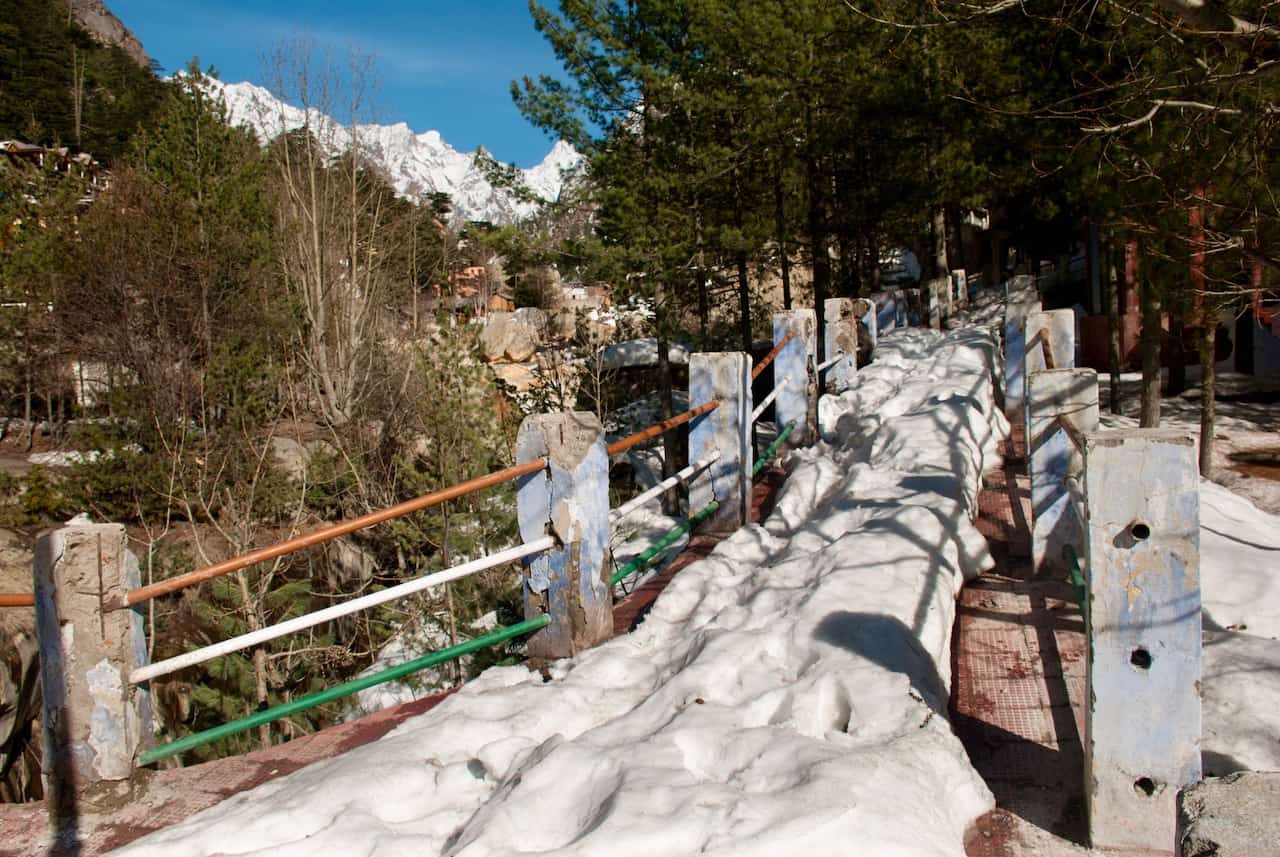
This is similar to what I have seen play out on other high-altitude routes I cover on this blog. At Kedarnath, the highest and coldest of the four dhams, daytime temperatures typically run between 5 and 15 degrees Celsius, but night temperatures can fall to around -3 degrees Celsius toward the end of the month, and occasional light snowfall becomes possible in the final weeks before closure. Badrinath, at around 3,300 meters (10,827 feet), stays a touch milder during the day at 8 to 20 degrees Celsius, but nights get noticeably colder as the month goes on too. Gangotri and Yamunotri, both also above 3,000 meters, follow a similar cooling pattern. Keep in mind that this year’s later closing means some of you will be at Kedarnath in the first week of November, which is colder again than anything in this table.


| Dham | Day | Night (late October) |
| Kedarnath (~3,583 m) | 5 to 15°C | -3 to 5°C |
| Badrinath (~3,300 m) | 8 to 20°C | 0 to 5°C |
| Gangotri (~3,100 m) | 6 to 16°C | -1 to 4°C |
| Yamunotri (~3,293 m) | 6 to 15°C | -1 to 4°C |
These numbers are approximate, drawn from research and traveler reports rather than a single fixed weather station, so treat them as a planning guide and check a proper forecast a few days before you leave. The India Meteorological Department issues district-level warnings for Rudraprayag, Chamoli and Uttarkashi, and those are worth a look the night before the Kedarnath or Badrinath leg. What I can tell you with more confidence, having watched how these mountain seasons behave, is the general trend: with nearly 11 to 12 hours of daylight still available, October days remain workable for temple visits and short walks, but the window for comfortable trekking and darshan closes earlier in the day than it does in summer, so plan your schedule around daylight, not just the temple’s official hours.
Are There Really Fewer Crowds in October?
Quick answer: Yes, compared to May and June, but not empty. Kedarnath still logged 5,614 pilgrims on a single weekday in early October 2025, and Badrinath, being reachable by road, stays the busiest dham late in the season. Expect extra rush around Dussehra (October 20, 2026) and in the closing week.

The single biggest reason experienced yatris quietly prefer October is the crowd difference. Peak season, especially the opening weeks in May and the school-holiday stretch in June, brings enormous footfall, and Kedarnath in particular has seen queues that stretch for hours before pilgrims even reach the temple. By October, that rush has emptied out considerably. The October 2025 figure above comes from a PTI report carried by The Week, which put that season’s Kedarnath total at 16.56 lakh by then, so the numbers are lower, not small.
Practically, helicopter tickets and rooms from Sonprayag to Guptkashi to Badrinath town get much easier to find. However, two windows break this pattern. The Dussehra stretch (October 20, 2026 falls on a Tuesday, so many people will take the Monday off and make it a long weekend), and the last few days before each kapat closes, when devotees come specifically to witness the closing ceremony. In case your dates are flexible, avoid both.
October 2026 Week by Week: Which Dates Should You Pick?
Quick answer: October 1 to 19 is the sweet spot, with stable weather, open dhams and easy helicopter slots. October 20 (Dussehra) brings a festival rush. October 21 to 31 is colder but still fully workable in 2026. November 1 to 11 is the last-chance window, very cold at Kedarnath and tight against the closings.
| Window | Weather | Crowds | Kedarnath helicopter | My call |
| Oct 1 to 15 | Clear, mildest of the month | Moderate | Phase for Oct 1-15 opened on Sep 22 | Best window for the full circuit |
| Oct 16 to 19 | Clear, colder nights | Moderate | Phase for Oct 16 to Nov 9 opens Oct 9, 3 PM | Still excellent |
| Oct 20 (Dussehra) and the weekend before | Same as above | Festival spike | Same phase, fills faster | Avoid if your dates are flexible |
| Oct 21 to 31 | Cold, sub-zero nights at Kedarnath possible | Lighter | Same phase | Good, pack for winter |
| Nov 1 to 11 | Very cold, snow spells possible | Rises again near closing ceremonies | Portal window ends Nov 9 | Only for one or two dhams, with buffer days |
The helicopter windows in this table are what the official IRCTC HeliYatra portal displayed on October 8, 2026. Bookings open in phases, and the opening time changes from phase to phase, so please check the portal yourself rather than assuming a fixed time.
Do You Still Need to Register in October?
Quick answer: Yes. Char Dham registration stays mandatory until the temples close for winter, and it is checked at points along the route in October just like in June. It is free, done online at registrationandtouristcare.uk.gov.in or through the official mobile app, and takes a few minutes if you do it before leaving home.
For 2026, registration opened on March 6 on the official Uttarakhand registration portal and stays open until the temples close. Do not pay anyone who offers to “register” you for a fee, my friend, the official process costs nothing. And do not assume the checkpoints have relaxed just because the peak rush has passed. For the complete step-by-step registration process, document requirements, and any updates on the portal, my Char Dham Yatra 2026 complete guide walks through it in full.
What Are the Roads, the Kedarnath Trek and Helicopters Like in October?
Quick answer: Roads are usually in their best shape of the year after the monsoon. The Kedarnath trek is still about 16 km one way from Gaurikund, only colder. Helicopters from Sersi, Phata and Guptkashi fly through October and into early November in 2026, booked only through IRCTC HeliYatra, with a fuel surcharge from October 1.
Road conditions in October are generally better than what you would face in July or August. The monsoon landslides and temporary road blockages that disrupt the yatra route through the rainy months have usually settled by October. This is one of the genuine upsides of a late-season trip, you are traveling after the worst of the landslide risk has passed, but before the deep winter snow makes the higher stretches dangerous. One specific note for the Gangotri leg: Dharali, about 20 km short of Gangotri, was buried by the August 2025 flash flood. As of August 2026 the highway is open on a realigned stretch, but do not plan on finding rooms or supplies at Dharali the way you could earlier. Base yourself at Harsil, Gangnani or Uttarkashi instead.
The Kedarnath trek itself does not change with the season. The motorable road ends at Sonprayag, where private vehicles stop and shared jeeps carry pilgrims the last 5 km or so to Gaurikund, and from there it remains a trek of about 16 km one way to reach the temple (older guides and some signboards still quote 18 km, from the pre-2013 route). What changes in October is the temperature during that walk, not the distance. Start early, because the light fades faster and the cold sets in as soon as the sun dips behind the ridgeline.
If trekking 16 km each way in cold weather is not something you want to attempt, helicopter services to Kedarnath run from the Sersi, Phata, and Guptkashi helipads. The 2026 round-trip fares published on the IRCTC HeliYatra portal are Rs 6,390 from Sersi (Sirsi), Rs 10,164 from Phata and Rs 12,762 from Guptkashi per person. The portal also states that a fuel surcharge applies for journeys from October 1, 2026, and that the convenience fee and payment-gateway charges are extra, so your final October total will be a little above these figures. As I mentioned above, seats are considerably easier to get than during the May-June rush. For the full booking process, the official portal steps, and the operator list, see my dedicated Kedarnath helicopter booking guide 2026.
What Else Closes Along the Route in October and November?
Quick answer: Hemkund Sahib usually closes around October 10 (the 2026 helicopter window for it runs only October 1 to 10), the Valley of Flowers closes on October 31, and smaller temples like Tungnath and Madhmaheshwar shut in November. Once the dhams close, worship moves to winter seats at Ukhimath, Joshimath, Mukhba and Kharsali.
In case you wanted to add the Valley of Flowers and Hemkunt Sahib to a late-October Badrinath trip, Hemkund Sahib will already be shut, and the valley itself has very few flowers left by then anyway.
And if you miss a closing date altogether, daily worship continues through winter at those seats (Kedarnath at the Omkareshwar Temple in Ukhimath, Badrinath at Pandukeshwar and Jyotirmath). I have put the full winter-seat details, plus short treks and quiet retreats for October to December, in my Uttarakhand after Char Dham 2026 guide. For a sense of what that Ukhimath side looks like in the cold, my own Tungnath, Chandrashilla and Deoria Tal itinerary is a good starting point.
One Dham or All Four? Being Realistic About October
Quick answer: If you start by about October 25, 2026, the full 10 to 12 day circuit is very much doable. If you can only leave in the last days of October or in November, prioritize Kedarnath and Badrinath properly rather than rushing all four against the closing dates, since Gangotri shuts first.
In the first three weeks of October, the full circuit is honestly one of the more pleasant ways to do it, given the thinner crowds. If you can only travel at the very end of the month or into early November, be realistic about how much daylight and good weather you actually have. Keep in mind that the traditional clockwise route visits Yamunotri and Gangotri first, and Gangotri is the first to close (around November 9-10), so a trip that starts on November 1 has almost no margin for a missed day.

| Plan | Days | Route | Latest sensible start |
| Full Char Dham circuit | 10 to 12 from Delhi | Barkot, Yamunotri, Uttarkashi, Gangotri, Guptkashi, Kedarnath, Pipalkoti/Joshimath, Badrinath, back via Haridwar | Around October 25 |
| Do Dham (Kedarnath + Badrinath) | 6 to 7 from Haridwar | Guptkashi, Kedarnath, Pipalkoti/Joshimath, Badrinath, back via Rishikesh | Around November 2 (Kedarnath first) |
| Gangotri + Yamunotri loop | 5 to 6 from Delhi | Barkot, Yamunotri, Uttarkashi, Gangotri, back via Rishikesh | Around November 3 |
Kedarnath and Badrinath tend to be the two most people prioritize if they have to choose, given their spiritual significance and helicopter access as a backup for Kedarnath if trek conditions turn. Hence, in a late-October Do Dham plan, I suggest doing Kedarnath first, since it closes on a fixed day (Bhai Dooj) while Badrinath has historically stayed open longer. Gangotri and Yamunotri are comparatively easier to reach by road and can be combined into a shorter loop if time is tight. For sequencing all four dhams day by day, see my complete guide and the individual guides for Kedarnath, Badrinath, Gangotri, and Yamunotri.
What Should You Pack for a Late-Season Char Dham Yatra?
Quick answer: Pack for winter, not autumn. You need thermals, a fleece mid-layer and a proper down or insulated jacket, plus a woolen cap, gloves, warm socks, broken-in trekking shoes, a headlamp and a light rain shell. At Kedarnath in late October, a June-style windcheater alone is not enough and can make the trip unsafe.
- Heavy layering: thermals as a base layer, a fleece or woolen mid-layer, and a proper down or heavily insulated jacket on top, not just a windcheater. If you need one on a budget, my list of winter jackets under Rs 5,000 is a good place to start.
- Woolen cap, gloves, and warm socks: exposed hands and ears feel the cold fastest at altitude, particularly on the Kedarnath trek in the early morning or after sunset.
- Sturdy, broken-in trekking shoes: the Gaurikund to Kedarnath trail can be uneven, and cold, damp feet make a 16 km walk far more miserable than it needs to be.
- A good sleeping bag or extra blanket request: if you are staying overnight near Kedarnath or Badrinath, confirm your accommodation has proper heating or carry your own backup layer.
- Rain protection: October is generally past the monsoon, but mountain weather is unpredictable, and a light rain shell doubles as extra wind protection.
- Basic medication and a torch or headlamp: days get shorter, and you do not want to be caught on the trail without light if darshan or the walk runs later than planned.
- Some cash: card and UPI work in the bigger towns, but mobile data is patchy higher up (BSNL usually has the widest coverage), so do not rely only on digital payments near the temples.
Keep in mind that this is not optional gear for October, it is the difference between an uncomfortable trip and a genuinely unsafe one if the weather turns colder than forecast on short notice.
Is the Char Dham Yatra Safe in October?
Quick answer: Yes, with preparation. The altitudes (roughly 3,100 to 3,600 m) are moderate, so the real October risks are cold exposure and sudden weather changes, not severe AMS. Start the Kedarnath trek early, carry more warm layers than you think you need, and consider the helicopter for elderly family members or young children.
Compared to Ladakh or Spiti, severe AMS is less commonly reported on this route. A sunny, mild morning at Kedarnath can turn into a windy, near-freezing afternoon within a couple of hours, and pilgrims who underestimate this, especially those doing the trek on foot, are the ones who end up in genuine difficulty. The cold also puts extra strain on the heart, and cardiac problems among older pilgrims are a recurring cause of deaths on the yatra every season, so anyone with a heart or blood pressure condition should get a doctor’s go-ahead before the Kedarnath leg.
Please take a sensible call for yourself and your family waiting for your safe return. The Kedarnath walk is far colder and longer than anything at the other three dhams, so do not be shy about using the helicopter for elderly family members or young children. Keep local emergency contacts, your registration confirmation, and basic medical information on you, and if weather warnings are issued for your travel dates, do not push through regardless.
Does the Budget Change in October?
Quick answer: Only slightly. Transport, stay and food cost about the same as in peak season, and rooms are easier to negotiate as occupancy falls. Kedarnath helicopter fares (Rs 6,390 to Rs 12,762 round trip) now carry a fuel surcharge for journeys from October 1, 2026, and you may need to buy proper winter gear.
For the full budget breakdown across all four dhams I would point you to my complete guide rather than repeat it here. What shifts in your favor in October is availability: you have a better chance of a Kedarnath helicopter seat on your preferred date, and more negotiating room on rooms. However, the helicopter is not cheaper, since the portal adds a fuel surcharge for journeys from October 1, 2026. The other extra line item is cold-weather gear. Buying decent thermals, gloves and a warm jacket in Rishikesh or Haridwar is far cheaper than buying them in a hurry at a temple-town shop at 3,000 meters.
Related Reading
- Char Dham Yatra 2026 Guide – Dates, Registration, Budget, Itinerary and Everything You Need
- Uttarakhand After Char Dham 2026: Himalayan Retreats and Short Treks for Oct-Dec
- Kedarnath – How to Plan a Trip [Complete Travel Guide]
- Kedarnath Helicopter Booking 2026: IRCTC HeliYatra, Operators, Cost and Step-by-Step Guide
- Badrinath – How to Plan a Trip [Complete Travel Guide]
- Gangotri – How to Plan a Trip [Complete Travel Guide]
- Yamunotri – How to Plan a Trip [Complete Travel Guide]
- Uttarakhand in Monsoon 2026: Where to Go (and What to Avoid)
- Valley of Flowers & Hemkunt Sahib – Most Common Itinerary
- Harsil – Gangotri Trip | Most Common Itineraries [Day-By-Day Plans]
Frequently Asked Questions
Is Char Dham Yatra open in October 2026?
Yes, all four dhams remain open through the whole of October 2026. Because Diwali falls on November 8 this year, Gangotri is expected to close around November 9-10 and Kedarnath and Yamunotri around November 10-11, with Badrinath’s date to be announced on October 20.
When will Kedarnath and Badrinath close in 2026?
Kedarnath traditionally closes on Bhai Dooj, expected on or around November 10-11, 2026. Badrinath’s closing date is fixed by the temple committee on Vijayadashami, October 20, 2026. In 2025 Badrinath closed on November 25, more than a month after Kedarnath, so confirm the announced date before booking.
How cold does it get at Kedarnath in October?
Daytime temperatures run roughly 5 to 15 degrees Celsius, but nights can fall to around -3 degrees Celsius by late October, with occasional light snowfall possible in the weeks before the temple closes. Pack heavy winter layers, not just a light jacket.
Are crowds lower for the Char Dham Yatra in October?
Yes, compared to May and June, though not empty. Badrinath stays the busiest dham late in the season, and crowds spike around Dussehra (October 20, 2026) and the closing ceremonies. Outside those dates you get shorter queues and easier rooms and helicopter seats.
Do I still need to register for the Char Dham Yatra in October?
Yes, registration is mandatory for the entire season and is checked at multiple points along the route. It is free and done online at registrationandtouristcare.uk.gov.in, or through the official mobile app, and should be completed before you leave home.
Is the Kedarnath trek harder in October because of the cold?
The trek is still about 16 km one way from Gaurikund, but colder temperatures, shorter daylight, and the possibility of light snow late in the month make it more demanding than the same walk in summer. Start early and dress in proper warm layers.
Are helicopter services to Kedarnath running in October and November 2026?
Yes. The IRCTC HeliYatra portal shows a phase for October 1-15 and another for October 16 to November 9, 2026, with bookings for the second phase opening on October 9 at 3 PM. Round-trip fares are Rs 6,390 from Sersi, Rs 10,164 from Phata and Rs 12,762 from Guptkashi, plus a fuel surcharge and fees.
Can I visit all four dhams in October, or should I pick fewer?
If you can start by around October 25, 2026, the full 10 to 12 day circuit is doable. If you can only travel at the very end of October or in November, prioritize Kedarnath and Badrinath, doing Kedarnath first, since Gangotri closes first and Kedarnath closes on a fixed day.
Are the roads better in October compared to the monsoon months?
Generally yes. The landslide-related disruptions common in July and August have usually cleared by October, though you should still watch for early snow at higher elevations toward the end of the month, which can bring its own temporary road issues.
Final Thoughts: Planning Your October Char Dham Yatra
October gives you a version of the Char Dham Yatra that most peak-season pilgrims never experience: shorter queues, easier helicopter bookings, and roads that have mostly recovered from the monsoon. And in 2026, thanks to a late Diwali, you get the whole month inside the season rather than racing a late-October closing like last year. In exchange, you are working against genuinely cold weather, especially at Kedarnath. My honest recommendation is to aim for October 1 to 25, skip the Dussehra long weekend if you can, confirm Badrinath’s closing date after October 20, and pack proper winter layers.
Plan around the cold and the calendar, and a late-season Char Dham Yatra can be one of the more peaceful ways to do this pilgrimage. If you found this useful, do share it with friends or family planning an October trip, and if you have any questions, feel free to ask in the comments section below. If you are looking for fellow travelers or want to share your own late-season experience, come and join us in the DwD Travel Circle 🙂 …
