


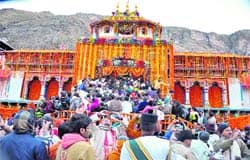
Badrinath Dham, one of the four sacred Char Dham pilgrimage sites in Uttarakhand, sits at 10,827 feet on the banks of the Alaknanda River in Chamoli district. The temple opened for the 2026 season on April 23 and stays open till around mid-November, so as of now, mid-2026, the Yatra is well into its monsoon-season stretch and running smoothly with the usual short landslide-related halts. Whether you are a devoted pilgrim or a traveler drawn to the high Himalayas, Badrinath rewards you with spiritual depth, raw mountain beauty, and stories that go back thousands of years. I have visited Badrinath more than once, and each time, the scale of the mountains and the energy around the temple left a lasting impression.
Let's quickly dive into the details:
Badrinath at a Glance: Quick Facts (2026)
- Altitude: 10,827 ft (3,300 m), Chamoli district, Garhwal Himalayas
- 2026 season: Opened April 23, closes around mid-November (tentatively November 13)
- Distance: ~525 km from Delhi (14-16 hrs), ~300 km from Rishikesh (10-12 hrs)
- Registration: Mandatory and free, online at registrationandtouristcare.uk.gov.in or offline counters in Rishikesh, Haridwar, and Dehradun
- Budget guide (solo, by bus): Rs 5,000-9,000 for 4-5 days
- Budget guide (couple, by taxi): Rs 25,000-50,000 for 4-5 days
- Best time: September-October for thinner crowds, May-June for peak season
- Current status: Open, in the active monsoon window (July-August), so keep buffer days in your plan and check road status before leaving
Badrinath Itinerary at a Glance (5-Day Overview)
A Badrinath itinerary from Delhi runs 5 days door to door: Day 1 covers Delhi to Joshimath, Day 2 moves on to Badrinath for the first darshan, Day 3 is for Mana Village and Vasudhara Falls, Day 4 heads back toward Rudraprayag with an optional Auli stop, and Day 5 returns to Delhi. Full day-by-day details, including timings and stay options, are further down this page.
- Day 1: Delhi to Joshimath (525 km, 14-16 hrs). Overnight halt to acclimatize at 6,150 ft.
- Day 2: Joshimath to Badrinath (42 km, about 2 hrs). Tapt Kund holy dip, evening darshan and aarti.
- Day 3: Morning darshan, then Mana Village (3 km) and, if time allows, the Vasudhara Falls trek.
- Day 4: Badrinath to Rudraprayag or Srinagar via Joshimath, with an optional Auli detour.
- Day 5: Drive back to Delhi via Rishikesh or Haridwar.
One dated planning detail that most itinerary write-ups skip: as of the 2026 Char Dham season, vehicle movement on all four Yatra routes, including the Rishikesh-Badrinath highway, is banned between 10 PM and 4 AM, strictly enforced at highway checkpoints. Build your Day 1 and Day 5 driving legs around that window, especially if you are pushing straight through from Delhi without an overnight break, or you will get held at a checkpoint instead of reaching your stay for the night.
What Makes Badrinath Special?
Badrinath is one of the holiest Hindu shrines in India. It is dedicated to Lord Vishnu and forms part of both the Chota Char Dham circuit of Uttarakhand and the larger all-India Char Dham that includes Puri, Rameswaram, and Dwarka. The temple is also one of the 108 Divya Desams (sacred Vaishnavite shrines) and belongs to the Panch Badri group of five Vishnu temples in Garhwal.
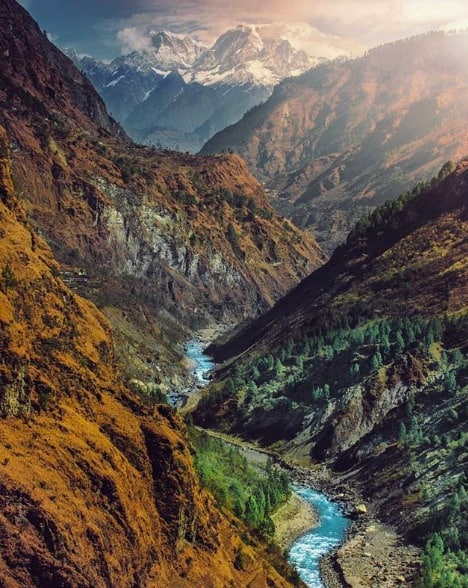
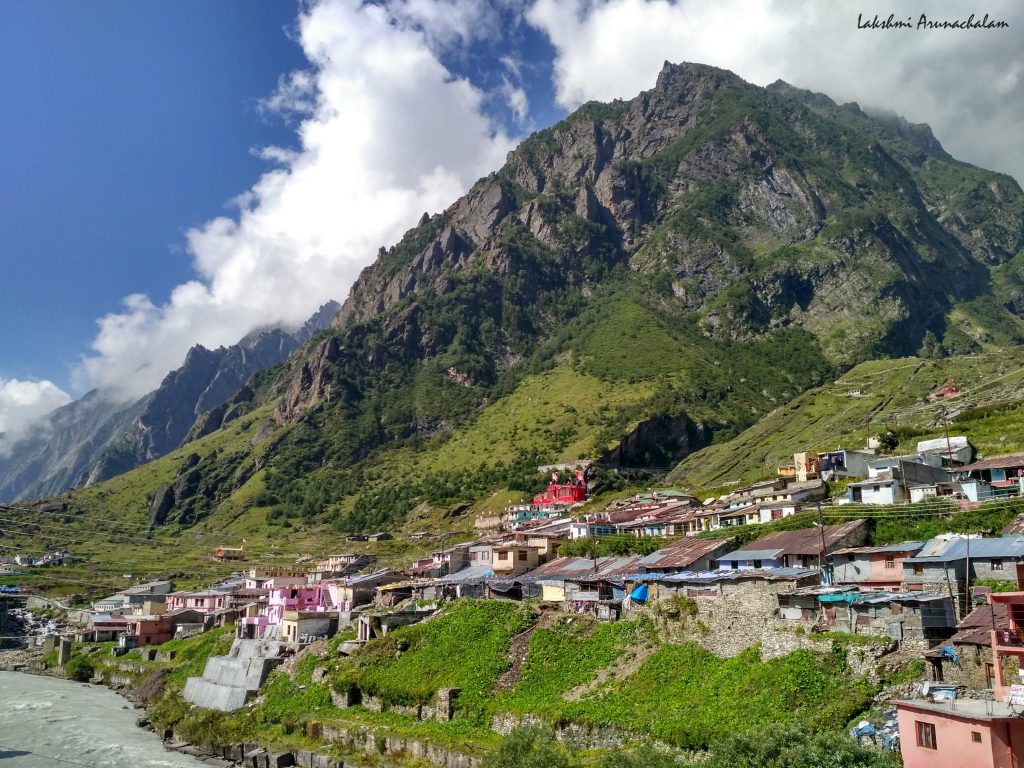
The town sits between the Nar and Narayana mountain ranges, directly in the shadow of the Neelkanth peak (21,246 feet). The Alaknanda River flows right past the temple, and the entire valley is surrounded by snow-capped peaks, turquoise glacial pools, and alpine meadows. It is one of those places where the landscape itself feels sacred.
History and Mythology
The temple was re-established by Adi Shankaracharya in the 9th century, though the site’s spiritual significance goes back much further. In the Mahabharata, this region is mentioned multiple times. The area is known as Badri, signifying the dedication to Lord Vishnu in his dual form of Nara-Narayana. Krishna tells Arjuna in the epic, “You were Nara in a former body and Narayana for your compassion, and didst perform great austerities at Badri for many years.”
The Pandavas are said to have passed through Badrinath and the town of Mana on their final journey, the Ascent to Heaven (Swargarohini). Another legend tells of how the Ganga was split into 12 holy channels when she descended to earth, with the Alaknanda being one of them. These stories are not just mythology here. The villagers in Mana will point out Bhim Pul, the stone bridge Bhima supposedly placed across the Saraswati River, and Vyas Gufa, the cave where Ved Vyas is believed to have composed the Mahabharata.
When Is the Best Time to Visit Badrinath in 2026?
Badrinath Dham opens on April 23, 2026, at 6:15 AM. The tentative closing date is November 13, 2026. The temple remains shut during winter due to extreme snowfall and sub-zero temperatures.
May to June is peak season. The weather is pleasant (8-19 degrees Celsius), but expect heavy crowds, long darshan queues (2-3 hours), and higher hotel rates. If you are combining Badrinath with the full Char Dham Yatra, this is when most pilgrims travel.
September to October is my recommended window. The monsoon has passed, the roads are freshly repaired, the crowds thin out significantly, and the valley looks its greenest. You can often get darshan within 30-45 minutes during this period. The weather stays cool but comfortable (5-15 degrees Celsius).
July to August is monsoon season. Heavy rainfall, frequent landslides on the Rishikesh-Badrinath highway, and road closures make this period risky. I would strongly advise against traveling during these months unless you have flexible dates and are comfortable with delays.
Late October to early November, just before the temple closes, is actually a hidden gem period. Very few pilgrims, clear skies, and the mountains start getting their first dusting of snow. Keep in mind that temperatures drop to near-freezing at night, so pack warm layers. For a full breakdown of closing dates, weather shifts, and what changes in these final weeks, see my Char Dham Yatra October 2026 late-season guide.
How to Reach Badrinath from Delhi, Rishikesh, and Haridwar?
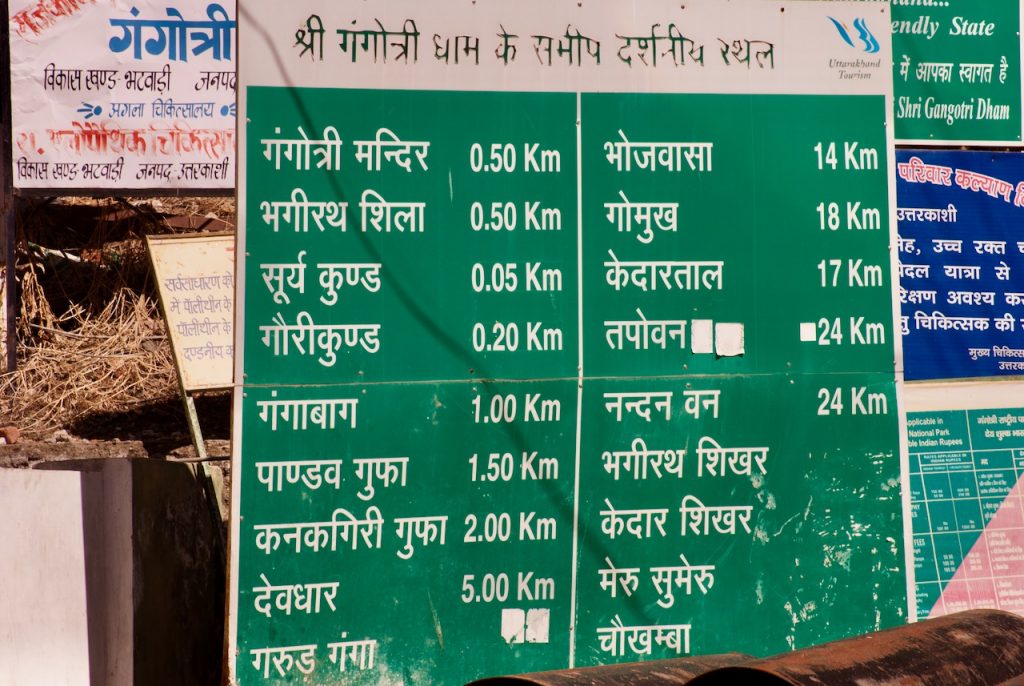
Badrinath is approximately 525 km from Delhi, 300 km from Rishikesh, and 320 km from Haridwar. The journey takes 14-16 hours from Delhi by road, and 10-12 hours from Rishikesh. Most travelers break the journey at Joshimath (42 km before Badrinath) or Pipalkoti.
By Road (Self-Drive or Taxi)
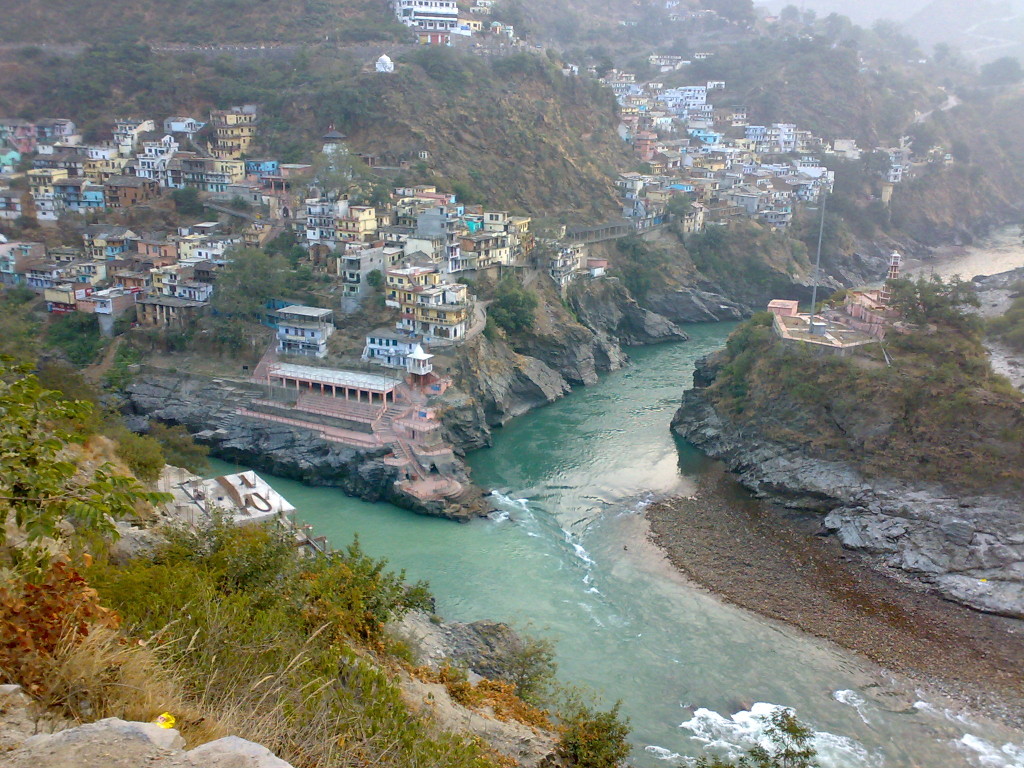
The route from Delhi follows NH-7 (formerly NH-58) through Haridwar, Rishikesh, Devprayag, Rudraprayag, Chamoli, Joshimath, and finally Badrinath. The road is a mix of well-maintained national highway and narrow mountain sections. Beyond Joshimath, the road narrows considerably, and during peak season, you may face traffic jams near Govindghat.
A private taxi from Rishikesh to Badrinath costs approximately Rs 5,000-7,000 one way for a small car (Wagon R, Swift Dzire) and Rs 8,000-12,000 for an SUV (Innova, Bolero). Shared taxis and Tata Sumos run from the Rishikesh taxi stand, costing around Rs 800-1,200 per seat.
By Bus
GMOU (Garhwal Motor Owners Union) and UTC (Uttarakhand Transport Corporation) operate buses from Rishikesh ISBT and Haridwar to Joshimath and Badrinath. From Delhi, you can take an overnight Volvo or sleeper bus to Rishikesh (Rs 400-1,200 depending on bus type) and then catch a morning bus onward.
GMOU buses from Rishikesh to Badrinath depart early morning (around 4:30-5:00 AM) and cost Rs 500-700 for an ordinary bus. The journey takes 12-14 hours with stops. During Char Dham season, special rotation service buses are available for Rs 3,200-3,500 covering the full circuit over 5-6 days.
By Air
Jolly Grant Airport in Dehradun is the nearest airport, approximately 314 km from Badrinath. Multiple daily flights connect Delhi to Dehradun (flight time: 1 hour, fares Rs 2,500-6,000). From the airport, you will need a taxi (Rs 6,000-9,000 to Badrinath) or a bus to Rishikesh followed by another bus onward.
Helicopter services also operate from Dehradun (Sahastradhara helipad) to Badrinath, with a flying time of approximately 1 hour. This is a good option for elderly travelers or those short on time, though seats are limited and bookings fill up fast during peak season.
By Train
The nearest major railway stations are Rishikesh (300 km) and Haridwar (320 km). Haridwar has better connectivity with trains from Delhi, Mumbai, Kolkata, and Chennai. From either station, you continue by bus or taxi. The Shatabdi Express from Delhi to Haridwar takes about 4.5 hours and costs Rs 600-1,200.
What Is the Char Dham Registration Process for 2026?
Char Dham registration is mandatory for every pilgrim visiting Badrinath in 2026. You need a QR-coded e-pass to enter the temple area. Registration opened on March 6, 2026, and over 1.26 lakh pilgrims registered on the first day itself.


Online registration: Visit registrationandtouristcare.uk.gov.in or download the Tourist Care Uttarakhand mobile app. You need an ID proof, travel dates, and contact details. 60% of slots are allocated online.
Offline registration: Counters open from April 17, 2026, in Rishikesh, Haridwar, and Dehradun. The remaining 40% of slots are allocated here. Carry a printed copy of your ID proof.
The registration itself is free. Do not pay anyone who claims to charge a “registration fee.” Feel free to reach out in the DwD Community group if you face any issues with the registration process.
As of mid-2026, the Char Dham Yatra has crossed 40 lakh pilgrims this season, with Badrinath alone at well over 13 lakh visits, per local press figures. The BKTC official site shows live puja seat availability day by day, useful for timing a quieter darshan.
What Are the Badrinath Temple Darshan Timings and Entry Details?
The Badrinath temple follows a daily schedule that has remained largely consistent over the years. Here are the 2026 timings (these may shift slightly based on season and crowd).
Morning darshan: 6:00 AM to 12:00 PM (general entry). The Maha Abhishek puja happens between 4:30 AM and 6:30 AM for VIP ticket holders.
Evening darshan: 4:00 PM to 9:00 PM. The evening aarti at around 7:30-8:00 PM is a powerful experience and worth attending even if you have already had your darshan.
VIP darshan: Puja-based VIP access ranges from Rs 151 (Kapoor Aarti) to Rs 4,700 (Maha Abhishek) per person, as of 2026. This gives you priority entry before the general queue opens. Puja rates get revised occasionally, so confirm the exact amount at the temple counter or the official BKTC website before you pay.
Important for 2026: Pilgrims will not be allowed to carry cameras or mobile phones beyond Singhdwar, located about 100 metres before the sanctum sanctorum. This is to preserve the sanctity of the shrine and manage crowds better. Leave your phone with a companion or use the lockers available near the entrance.
The temple itself is about 50 feet tall, built in traditional Garhwali wooden architecture with a striking resemblance to Buddhist temple design. The facade features arched windows and stone construction. Inside, you will find 15 idols carved in black stone, with the main idol of Lord Vishnu in a meditative posture.
What Are the Top Things to Do in Badrinath?
While the temple darshan is the primary reason most people visit, Badrinath and its surroundings have several places worth exploring. I would recommend spending at least 2 days here to do justice to the area.
Tapt Kund (Natural Hot Spring)
Right below the temple steps, on the banks of the Alaknanda, you will find Tapt Kund, a natural thermal spring where the water temperature touches 45 degrees Celsius. It is customary to bathe here before entering the temple for darshan. The spring is regarded as the residing place of Agni Deva (God of Fire), and the warm water feels incredible after a long, cold journey through the mountains. Separate bathing areas are available for men and women.
Narad Kund
Located just below Tapt Kund, Narad Kund is a natural pool in the Alaknanda River enclosed by rocks. This is the sacred spot where Adi Shankara is believed to have discovered the idol of Lord Vishnu. The water here is also warm, though cooler than Tapt Kund.
Mana Village (Last Indian Village)
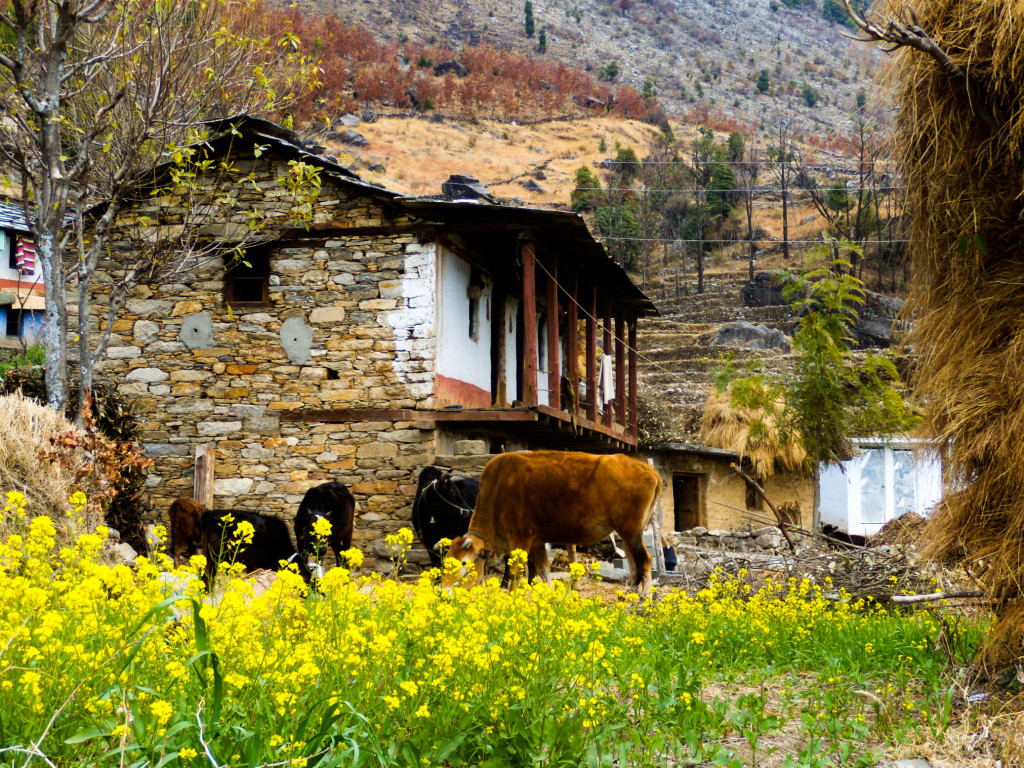
Mana Village, just 3 km from Badrinath, is officially designated as India’s first village (previously known as the last village before the Indo-Tibetan border). You can walk or drive there in about 15 minutes. The village is on the banks of the Saraswati River and sits at 3,219 meters. Key spots include Bhim Pul (the stone bridge), Vyas Gufa (cave of Ved Vyas), and the point where the Saraswati River disappears underground. The village has a few tea stalls and shops selling local woolens and souvenirs.
Vasudhara Falls
About 6 km beyond Mana Village, Vasudhara Falls drops from a height of 400 feet and is one of the most stunning waterfalls in Uttarakhand. The trek from Mana to the falls takes about 2-3 hours one way on a moderate trail. Local belief says the water only touches those who are pure of heart. Regardless of the legend, the setting is genuinely spectacular, with the waterfall surrounded by snow peaks on all sides.
Panch Badri Circuit
Badrinath is part of the Panch Badri, five temples dedicated to Lord Vishnu in Garhwal. The other four are Yogadhyan Badri (near Pandukeshwar), Bhavishya Badri (near Tapovan), Vridha Badri (in Animath), and Adi Badri (near Karnaprayag). If you have an extra day or two, visiting at least Yogadhyan Badri (just 24 km from Badrinath) is a rewarding side trip.
What Are the Best Places to Stay in Badrinath?
Accommodation in Badrinath ranges from temple dharamshalas to mid-range hotels. The town is small, and most hotels are within walking distance of the temple. Here is a rough breakdown of what to expect in 2026.
Budget (Rs 500-1,500/night): Temple dharamshalas and basic guesthouses. The Badrinath Temple Committee runs a few dharamshalas near the temple with clean rooms and basic amenities. The GMVN (Garhwal Mandal Vikas Nigam) guesthouse is a reliable government option with rooms starting around Rs 1,000-1,500/night.
Mid-range (Rs 1,500-4,000/night): Private hotels like Hotel Sarovar, Hotel Badri, and Hotel Devlok offer better facilities including hot water, room heaters, and attached bathrooms. Book at least 2-3 weeks in advance during May-June.
Joshimath as a base: Many travelers, especially those on the Char Dham circuit, prefer staying in Joshimath (42 km away) where hotel options are more varied and slightly cheaper. You can drive up to Badrinath for darshan and return the same day. Joshimath also has better ATM and medical facilities.
My suggestion: book early, especially for May-June. During peak Char Dham season, even basic rooms get fully booked days in advance.
Where to Eat in Badrinath?
Badrinath is a strictly vegetarian town. Non-vegetarian food and alcohol are not available anywhere in the area, so plan accordingly. The food scene is simple but filling.
Most food joints serve North Indian staples: dal, rice, roti, sabzi, and rajma-chawal. A few places offer basic Indo-Chinese dishes. Expect to spend Rs 100-250 per meal at a dhaba or small restaurant.
Saket Restaurant, located near the Temple Bridge, is probably the most popular eating spot. The place stays packed, but the parathas are excellent, and you eat with a view of the temple and the sound of the Alaknanda flowing below. Highly recommended.
The temple also serves free prasad (khichdi) to all devotees after darshan. This is a tradition that has continued for centuries and is worth experiencing.
How Much Does a Badrinath Trip Cost in 2026?
Here is a realistic budget breakdown for a Badrinath trip from Delhi, covering 4-5 days (round trip).

Budget traveler (per person):
- Bus Delhi to Rishikesh: Rs 400-700 (ordinary/Volvo)
- Bus Rishikesh to Badrinath: Rs 500-700
- Return buses: Rs 900-1,400
- Accommodation (3-4 nights): Rs 1,500-4,000 (dharamshalas/budget hotels)
- Food (4-5 days): Rs 1,000-1,500
- Miscellaneous: Rs 500-1,000
- Total: Rs 5,000-9,000 per person
Standard traveler (per couple):
- Private taxi Delhi-Badrinath-Delhi: Rs 15,000-22,000
- Accommodation (3-4 nights): Rs 6,000-12,000
- Food (4-5 days): Rs 3,000-5,000
- VIP darshan (optional): Rs 300-9,400
- Miscellaneous: Rs 2,000-3,000
- Total: Rs 25,000-50,000 per couple
These are approximate numbers as of 2026. Fuel costs, hotel rates, and taxi fares can vary based on season and demand. During peak Char Dham season (May-June), expect everything to cost 20-30% more than the off-season rates.
What Nearby Places Can You Visit from Badrinath?
Auli (Skiing and Mountain Views)
Auli is about 75 km from Badrinath via Joshimath. Known as India’s premier skiing destination in winter, Auli offers stunning views of Nanda Devi, Kamet, and other Himalayan giants even in summer. The cable car ride from Joshimath to Auli is one of the longest in Asia (4 km) and costs around Rs 1,000 return. If you are coming from or going to Badrinath via Joshimath, a half-day detour to Auli is absolutely worth it.
Char Dham Circuit
Most pilgrims visit Badrinath as part of the complete Char Dham Yatra, which covers Yamunotri, Gangotri, Kedarnath, and Badrinath. The traditional order is west to east: Yamunotri first, then Gangotri, Kedarnath, and finally Badrinath. The full circuit takes 10-14 days by road. For a detailed day-by-day plan with 2026 dates and registration details, check my Char Dham Yatra 2026 guide. If you are planning the helicopter option for Kedarnath as part of the circuit, the booking process is different from Badrinath. All flights operate from Phata, Sersi, or Guptkashi and go through IRCTC HeliYatra. My Kedarnath helicopter booking guide has the 2026 pricing and step-by-step booking walkthrough.
Valley of Flowers (Seasonal)
If you are visiting in July-September, the Valley of Flowers National Park (a UNESCO World Heritage Site) is accessible from Govindghat, about 25 km before Badrinath. The trek to the valley is about 17 km from Govindghat via Ghangaria. The valley is home to over 600 species of flowering plants and is genuinely one of the most beautiful places in the Indian Himalayas. For permit details, the 2026 entry fee (Rs 200), the daily cap of 300 visitors, and how to book online at valleyofflower.uk.gov.in, see my Valley of Flowers 2026 guide before you go.
What Practical Things Should You Know Before Visiting Badrinath?
Here are some important practical tips based on personal experience and ground-level information.
Mobile network: BSNL has the widest coverage in the Badrinath area. Jio and Airtel work intermittently in Badrinath town but may drop in Mana Village and beyond. Keep in mind that you should download offline maps and important documents before leaving Joshimath.
ATMs: There is an SBI ATM and an HDFC ATM near the temple in Badrinath, but both frequently run out of cash during peak season. Joshimath has more reliable ATM access. I would suggest carrying at least Rs 3,000-5,000 in cash from Rishikesh or Haridwar to be safe.
Medical facilities: There is a government hospital in Badrinath for basic needs. For anything serious, Joshimath has a better-equipped district hospital. The altitude (10,827 feet) can cause mild AMS symptoms in some people, especially those who drive straight from the plains without acclimatization. Drink plenty of water, avoid heavy meals, and consider spending a night in Joshimath (6,150 feet) before heading up.
Uttarakhand health authorities have reported a rise in pilgrim deaths this Char Dham season, mostly linked to cardiac arrest among elderly travelers and those with pre-existing conditions, not altitude alone. Please take a sensible call here. If you or anyone in your group has a heart condition, high blood pressure, or is above 60, get a health checkup before the trip and carry your regular medicines.
Clothing: Even in May-June, temperatures in Badrinath can drop to 5-8 degrees Celsius at night. Carry a warm jacket, thermals, and a rain jacket. Wear comfortable walking shoes for the temple area and Mana Village.
Photography: Photography is strictly prohibited inside the temple. You can take photos outside the temple complex, of the surrounding mountains, and at Mana Village. Respect this rule, as it is taken seriously by the temple authorities.
Respect the pilgrimage: Badrinath is a deeply sacred place for Hindus. Dress conservatively, avoid alcohol and non-vegetarian food in the town (both are not available anyway), and be mindful of the spiritual atmosphere. The place means a lot to the lakhs of devotees who visit each year.
Monsoon caution: The Rishikesh-Badrinath highway is prone to landslides and road closures during July-August. If you must travel during monsoon, keep buffer days in your itinerary and stay updated on road conditions. The Garhwal itinerary guide has more details on route planning.
Suggested Itinerary: Badrinath from Delhi (5 Days)
Here is a practical 5-day itinerary if you are visiting Badrinath as a standalone trip from Delhi.
Day 1: Delhi to Joshimath (525 km, 14-16 hours by road or overnight bus to Rishikesh + morning bus to Joshimath). Stay in Joshimath overnight to acclimatize.
Day 2: Joshimath to Badrinath (42 km, 1.5-2 hours). Visit Tapt Kund for a holy dip, attend evening darshan and aarti. Stay in Badrinath.
Day 3: Morning darshan at Badrinath temple. After lunch, drive to Mana Village (3 km). Visit Bhim Pul, Vyas Gufa, and the Saraswati River origin point. If time permits, trek towards Vasudhara Falls. Return to Badrinath for the night.
Day 4: Badrinath to Rudraprayag or Srinagar (Garhwal) via Joshimath. Optional: detour to Auli for cable car ride and mountain views. Stay overnight en route.
Day 5: Drive back to Delhi via Rishikesh/Haridwar. Alternatively, you can spend the evening in Rishikesh and drive back to Delhi the next morning.
Frequently Asked Questions
When does Badrinath temple open in 2026?
Badrinath Dham opens on April 23, 2026, at 6:15 AM. The tentative closing date is November 13, 2026. The exact closing date is announced based on Diwali and weather conditions each year.
Is Char Dham registration mandatory for Badrinath in 2026?
Yes, Char Dham registration is mandatory. You must carry a QR-coded e-pass. Register online at registrationandtouristcare.uk.gov.in or at offline counters in Rishikesh, Haridwar, and Dehradun from April 17, 2026. Registration is completely free.
How many days are enough for a Badrinath trip?
A minimum of 4-5 days from Delhi is recommended. This allows 2 days for travel each way and 1-2 days in Badrinath and Mana Village. If you are combining with the full Char Dham Yatra, plan for 10-14 days.
What is a good 5-day Badrinath itinerary from Delhi?
A workable 5-day Badrinath itinerary from Delhi runs: Day 1 Delhi to Joshimath (525 km) with an overnight halt to acclimatize, Day 2 Joshimath to Badrinath (42 km) for Tapt Kund and evening darshan, Day 3 morning darshan followed by Mana Village and the Vasudhara Falls trek, Day 4 Badrinath back toward Rudraprayag or Srinagar with an optional Auli stop, and Day 5 the drive back to Delhi via Rishikesh or Haridwar. Keep in mind that vehicle movement on this route is banned between 10 PM and 4 AM, so plan your Day 1 and Day 5 drive timings accordingly.
Can I visit Badrinath without a car?
Yes. GMOU and UTC buses run from Rishikesh to Badrinath daily during the pilgrimage season (April-November). Shared taxis and Tata Sumos are also available from Rishikesh and Joshimath. A budget trip by public transport is entirely feasible for Rs 5,000-9,000 per person including accommodation and food.
Is Badrinath safe for solo travelers and women?
Badrinath is generally very safe. It is a major pilgrimage destination with constant foot traffic, police presence, and well-lit areas near the temple. Solo women travelers and families with children visit regularly without issues. The locals are helpful and accustomed to tourists. Just exercise normal caution with your belongings.
What is the altitude of Badrinath, and is AMS a concern?
Badrinath sits at 10,827 feet (3,300 meters). While this is not extreme altitude, some people, especially those coming directly from the plains by road without breaks, may experience mild headaches, nausea, or breathlessness. Spending a night in Joshimath (6,150 feet) before heading to Badrinath helps significantly. Drink plenty of water and avoid alcohol.

Are mobile phones allowed inside Badrinath temple?
For 2026, mobile phones and cameras are not allowed beyond Singhdwar, which is about 100 metres before the sanctum sanctorum. You can leave your phone with a companion outside or use the locker facilities near the entrance gate.
What should I pack for a Badrinath trip?
Warm layers (jacket, thermals, fleece), rain jacket, comfortable walking shoes, sunscreen, sunglasses, personal medicines, a small flashlight, and Rs 3,000-5,000 in cash. If you plan to trek to Vasudhara Falls, carry water, energy bars, and a basic first-aid kit.
Is Badrinath open right now, in the monsoon season?
Yes. Badrinath opened for the 2026 season on April 23 and stays open till around mid-November, so it remains open through the July-August monsoon window. All four Char Dham routes, including the Rishikesh-Badrinath highway, are generally passable, though short landslide-related blockages do occur and are usually cleared within hours. Keep buffer days in your itinerary if you are traveling during monsoon, and check the current road status before you leave.
I hope this guide helps you plan your Badrinath trip well. In case you have any questions or need more specific information, feel free to drop a comment below or reach out on the DwD Community group. The community is full of people who have done this trip recently and can share real-time updates on road conditions, hotel availability, and darshan timings. Happy travels, my friend 🙂
Last Updated: July 2026
