


Camping in Spiti Valley and Kinnaur Valley is one of those experiences that changes how you see travel altogether. I have pitched tents at altitudes ranging from 9,000 to 14,000 feet across both valleys, and each time, the silence, the stars, and the raw landscape made every bit of effort worth it. If you are planning a camping trip to Spiti or Kinnaur in 2026, this guide covers everything you need to know, from where to camp, what gear to carry, how to stay safe at high altitude, and which mistakes to avoid.
Thousands of travelers camp in Spiti and Kinnaur every summer season between June and October. Whether you are a solo backpacker looking to save money or a group of friends wanting that billion-star sky experience, camping here is very much possible and incredibly rewarding. You just need to plan it right.
Today, I will share all the practical tips I have gathered over multiple trips, so you can camp safely and responsibly in these remote Himalayan valleys. These tips apply whether you are self-camping with your own tent or staying at organized campsites.
Let's quickly dive into the details:
Is Camping Allowed in Spiti Valley and Kinnaur Valley?
Yes, you can absolutely camp in both Spiti Valley and Kinnaur Valley. There is no blanket ban on camping in either region for Indian nationals. You can pitch your own tent at most locations along the route, and there are also organized campsites that charge between Rs 200 and Rs 6,000 per night depending on the level of comfort (village-hosted lawns at the low end, mid-range and luxury camps at the high end, see the full cost breakdown below).
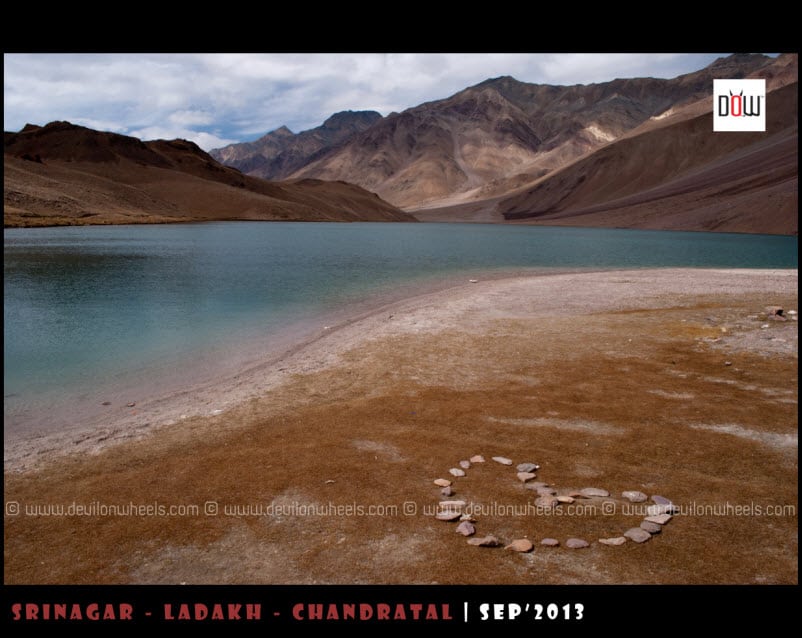
The only major restriction is Chandratal Lake, which is a Ramsar wetland site where camping at the lake banks has been banned since the 2019 Ramsar wetland ruling by the Koksar Gram Panchayat. You must camp at designated sites located 2-5 km away from the lake. Apart from that, certain areas between Jangi and Puh fall under army-controlled zones near the Indo-Tibetan border, and camping there requires caution. Foreigners technically need a Protected Area Permit (PAP), still commonly called an Inner Line Permit (ILP), for the Kinnaur-Spiti stretch beyond Jangi. The fee depends on the issuing office: Rs 250 per person at Reckong Peo, Rs 400 at the Shimla Sugam Center, and Rs 200-400 at Kaza or Keylong. There is still no online application for this permit as of 2026, so budget time for an in-person visit.
Keep in mind that Spiti Valley is a cold desert at altitudes between 10,000 and 14,500 feet. Camping here is very different from camping in the lower Himalayas or forests. Water sources can be scarce, temperatures drop below freezing at night even in summer, and altitude sickness is a real risk. The tips below will help you handle all of this.
One more thing that catches a lot of first-time campers off guard: every vehicle entering Spiti district, whether you come via Manali or Kinnaur, must complete the free e-Aagman vehicle registration at eaagman.hp.gov.in before you arrive. This applies to Indian and foreign travelers alike and is separate from the personal ILP discussed above. Fill it out 24-48 hours ahead of your trip since there is little to no mobile network at the entry barriers to do it on the spot.
What Are the Best Camping Spots in Spiti Valley?
Spiti Valley has dozens of excellent camping locations spread across the entire route. Your choice depends on which direction you are entering from and how many days you have. Here is a breakdown of the best camping spots.
Camping Spots on the Manali to Kaza Route
If you are traveling to Spiti Valley from Manali, you cross through the Atal Tunnel (no Rohtang Pass permit needed), then drive through Sissu, Khoksar, and Gramphu before the road turns towards Batal and Kunzum Pass (4,551 metres / 14,931 feet, one of the highest motorable passes on this route). The following are reliable camping spots on this route.
Chatru and Batal both have dhaba tents where you can pitch your own camp nearby for free or a small fee of Rs 100-200. These dhabas also serve hot meals, which is a huge advantage at these altitudes. Batal sits at around 13,000 feet, so acclimatize properly before spending a night here.
Chandratal area has multiple organized campsites located 2-5 km from the lake. These camps charge Rs 1,200-2,500 per person per night including meals. Self-camping is possible at the designated zone, but you need to carry all your supplies since there are no shops nearby. The e-permit for Chandratal is free and can be obtained from eaagman.hp.gov.in.
Losar village is the first inhabited village after Kunzum Pass and makes a good camping stop. Villagers are generally welcoming if you ask permission politely.
Camping Spots on the Shimla-Kinnaur to Spiti Route
When traveling from Shimla through Kinnaur, the Spiti Valley starts from the Sumdo checkpoint. You can camp at Hurling or Tabo before reaching Kaza. Giu village near the 500-year-old mummy is another option, though it is a small detour from the main road.
Camping Near Kaza and Surrounding Villages
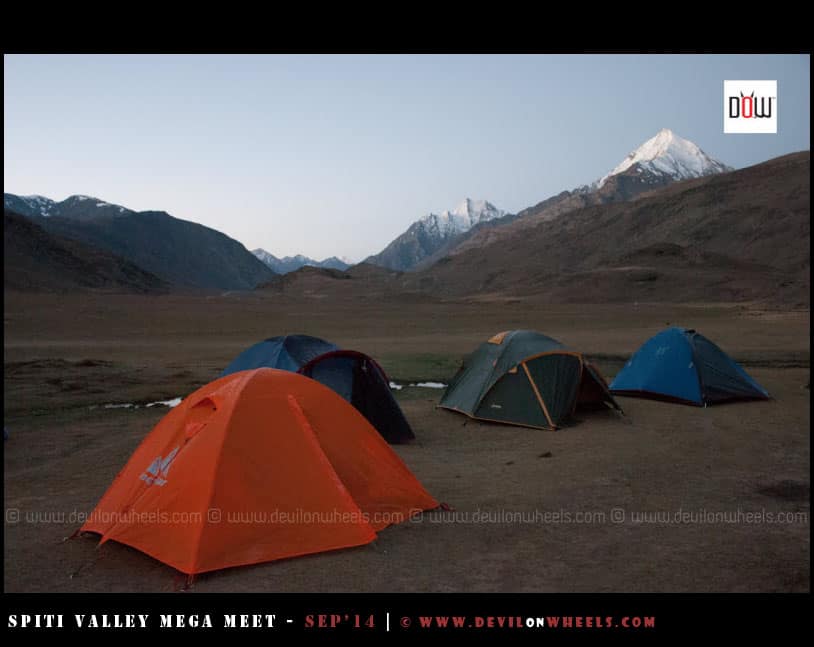
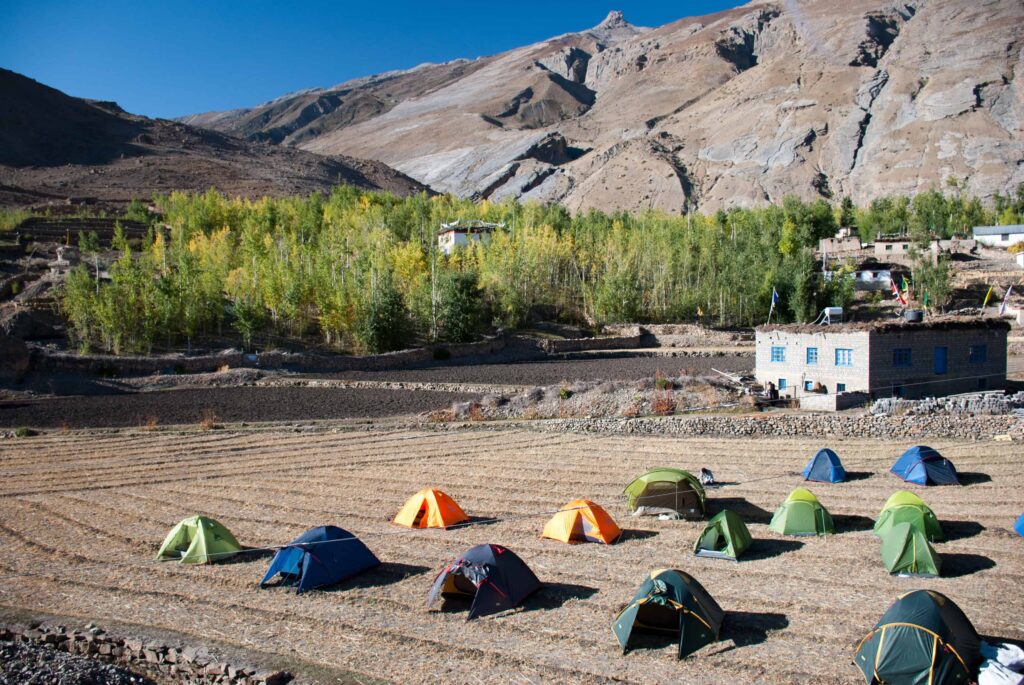
Once you reach Kaza (the district headquarters of Spiti at 12,500 feet), camping options multiply. The nearby villages of Rangrik, Kibber, Langza, Hikkim, and Komic all allow camping. Many villagers have started maintaining small campsites in their lawns or fields, charging Rs 200-500 per tent per night.
Rewa camping site at Rangrik, 7 km from Kaza, allows you to pitch your camps at very nominal rates. You can get in touch with Tsering +919495133253 or Chhering +919459259930.
Dhankar Lake is another excellent option if you enjoy solitude and do not mind a 1.5-2 hour trek to reach the lake at 13,583 feet. Pin Valley is equally stunning for those who want to camp away from the more popular circuits.
Where Can You Camp in Kinnaur Valley?
Kinnaur Valley offers equally beautiful camping opportunities, and the altitudes here are generally lower than Spiti (6,000-11,000 feet), making it slightly more accessible for first-time high-altitude campers.
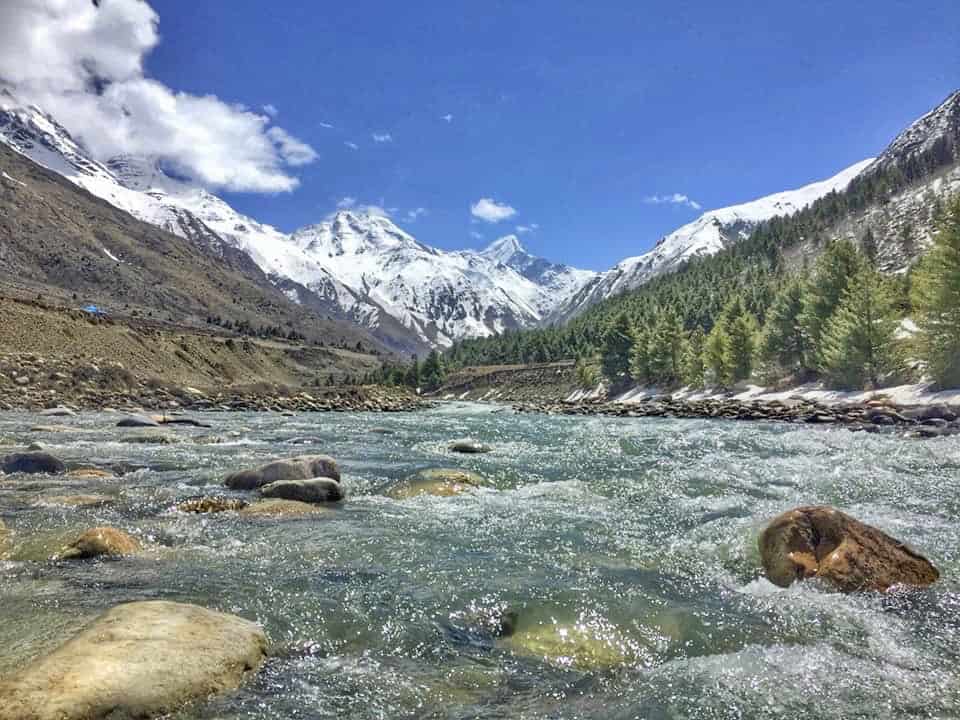
Almost all villages in lower Kinnaur allow camping. Sarahan, Sangla Valley, Rakcham, and Chitkul are the most popular camping destinations. My personal favorite spot in Kinnaur is somewhere between Rakcham and Chitkul, along the Baspa River. The sound of the river, the apple orchards, and the mountain views make it a perfect camping spot.
You can also camp near Kalpa or at Roghi village (8 km ahead of Kalpa) for views of the Kinner Kailash range. As you move towards upper Kinnaur, villages like Ribba, Jangi, Puh, Nako, and Chango have camping-friendly areas, but always camp within or near villages for safety in this region.
How Much Does Camping in Spiti and Kinnaur Cost in 2026?
Camping in Spiti and Kinnaur can be as cheap or as comfortable as you want. Here is a quick breakdown of what you can expect to spend in the 2026 season.


Self-camping (own tent): If you carry your own tent, sleeping bag, and cooking supplies, the cost is essentially zero for accommodation. You may pay Rs 100-200 to a dhaba owner or villager for permission to pitch on their land, plus Rs 200-400 for a meal at a dhaba.
Budget campsites: Basic organized camps with tents, sleeping bags, and shared facilities cost Rs 1,000-2,000 per person per night. These are common near Chandratal, Kibber, and Langza.
Mid-range and luxury camps: Camps with better tents, attached washrooms, meals included, and campfire arrangements charge Rs 3,000-6,000 per person per night. Chandratal and the Kaza area have several such options.
For a full cost breakdown of a Spiti Valley trip including transport, food, and sightseeing, check out the Spiti Valley trip cost guide.

Why Should You NOT Camp at Chandratal Lake?
This is important enough to deserve its own section. Chandratal Lake is a designated Ramsar wetland site, and camping directly at the lake banks has been banned by the Koksar Gram Panchayat to protect its fragile ecosystem. The lake sits at 14,100 feet and the surrounding area is ecologically sensitive.
You can only camp at designated campsites located 2-5 km away from the lake. These sites have proper waste disposal and are monitored. The entry fee for Chandratal is Rs 150 for Indian nationals and Rs 500 for foreigners. The e-permit is free and available at eaagman.hp.gov.in.
I request every traveler to respect this rule. If you see someone camping illegally at the lake banks, politely ask them to move. We need to protect these fragile ecosystems for future generations. As a community, we must take responsibility for the places we visit.
Similarly, be cautious about camping between Jangi and Puh in the Kinnaur section. Parts of this route fall under army-controlled zones near the Indo-Tibetan border, and the area beyond Sumdo requires an Inner Line Permit for foreigners.
What Camping Gear Do You Need for Spiti and Kinnaur?
Packing the right gear can make or break your camping experience in Spiti and Kinnaur. Here is the essential checklist I recommend based on my own trips.
Tent: Carry a sturdy, wind-resistant tent rated for at least 3 seasons. Spiti Valley gets strong winds, especially in the evenings and at higher campsites like Chandratal or Kibber. A 2-person tent works best even for solo travelers because it gives you space to store your gear inside.
Sleeping bag: Get a sleeping bag rated for -5 to -10 degrees Celsius at minimum. Even in June and July, nighttime temperatures at 13,000-14,000 feet can drop to -5 degrees Celsius. A sleeping pad or inflatable mattress underneath is equally important for insulation from the cold ground.
Clothing layers: Pack thermal innerwear, fleece mid-layers, a down jacket, waterproof outer shell, warm socks, gloves, and a beanie. The temperature difference between day and night in Spiti can be 20-25 degrees Celsius. For a complete packing guide, check the list of things to carry for a Spiti Valley trip.
Cooking and water: A portable gas stove, lighter, basic utensils, and a filter water bottle are must-haves for self-camping. Spiti is a cold desert, and clean drinking water is not always easy to find. A LifeStraw or similar filter bottle will save you from waterborne infections.
Safety essentials: First aid kit, torch with extra batteries (or a headlamp), a camping knife, mosquito repellent (yes, there are mosquitoes even at altitude near water sources), ORS packets, and any personal medicines you take regularly. Diamox (acetazolamide) is useful for altitude sickness prevention, consult your doctor before carrying it.
How Do You Choose a Safe Campsite in Spiti and Kinnaur?
Picking the right spot to pitch your tent matters more than you might think. Here are the key factors I always look for when choosing a campsite in these valleys.
Camp near villages or dhabas: I always recommend pitching your tent near a village, a dhaba, or where other campers have set up. This gives you a sense of security, access to meals and drinking water, and help in case of emergencies. Simply ask the villager or dhaba owner for permission. Most people are welcoming, and sometimes paying for a meal at their dhaba is enough.
Stay close to water but elevated: Camp near a water stream for drinking and cooking water, but always position your tent on slightly elevated ground above the water level. Flash floods are a real risk in Spiti and Kinnaur during the monsoon months of July and August. Check the area for past flood marks before setting up.
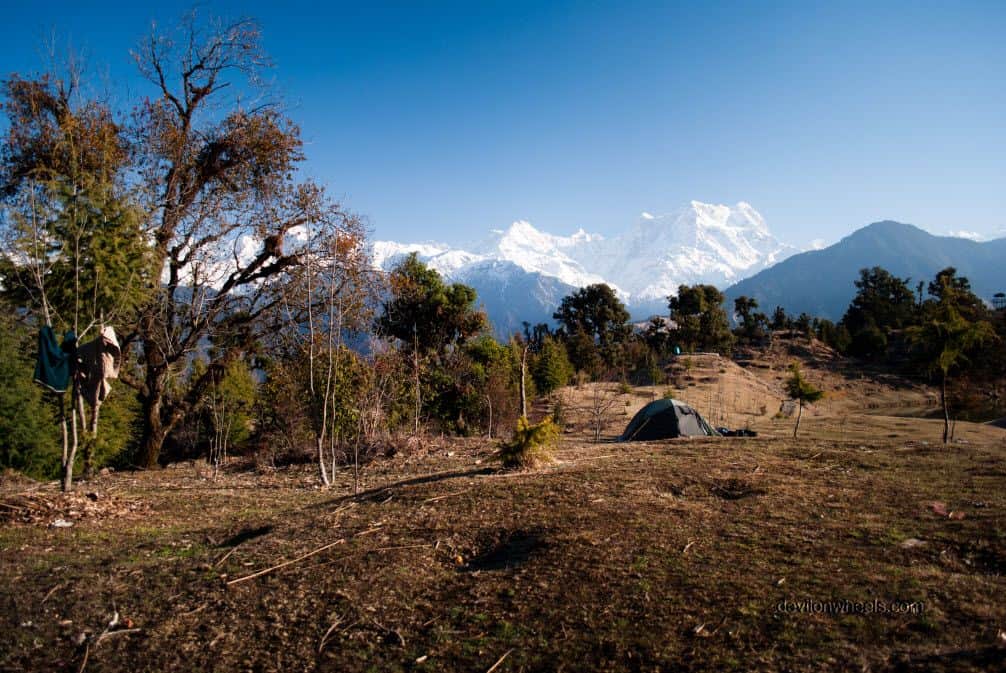
Find wind shelter: Spiti Valley gets fierce winds, especially at open campsites above 12,000 feet. Look for natural windbreaks like large rocks, low walls, or tree lines. Position the narrow end of your tent facing the wind direction. Make sure all tent pegs, guylines, and stakes are properly hammered in. You do not want to wake up at 2 AM with your tent collapsing around you.
Check weather before settling in: If the sky looks threatening and you are near a village, consider spending the night at a homestay in Spiti instead. Homestays cost Rs 500-1,200 per night including meals, and that is money well spent if it keeps you safe. Camping is meant to be enjoyed, not endured during a storm.
How Do You Deal with Altitude Sickness While Camping?
Acute Mountain Sickness (AMS) is the single biggest health risk when camping in Spiti Valley. Most camping spots in Spiti sit between 12,000 and 14,500 feet, and at these altitudes, your body needs time to adjust to the thinner air. Camping involves physical effort like pitching tents, cooking, and walking around, which makes you more susceptible to AMS if you are not properly acclimatized.
Acclimatize gradually: If you are entering Spiti from the Kinnaur side, spend at least one night at Reckong Peo or Kalpa (9,711 feet) and one night at Tabo (10,764 feet) before heading to Kaza and higher villages. This gradual ascent over 2-3 days gives your body the best chance of adjusting.
Do not camp high on your first night: Avoid camping at locations above 13,000 feet on your first or second day in Spiti. Even if the high villages of Langza (14,500 feet), Komic (14,800 feet), or Hikkim (14,400 feet) tempt you, wait until your body has had at least 2-3 days at Kaza elevation before sleeping that high.
Stay hydrated: Drink 3-4 litres of water daily. Dehydration worsens altitude sickness symptoms like headache, nausea, and fatigue. Carry ORS or electrolyte packets and dissolve them in your water throughout the day.
Listen to your body: If you feel persistent headache, nausea, dizziness, or extreme fatigue, do not push through it. Descend to a lower elevation immediately. Camping while feeling unwell at 13,000+ feet can turn a mild case of AMS into a medical emergency.
What Are the Safety Tips for Campfire and Food in Spiti?
Two things that can turn a fun camping trip into a dangerous one are fire and wildlife. Here is what you need to keep in mind.
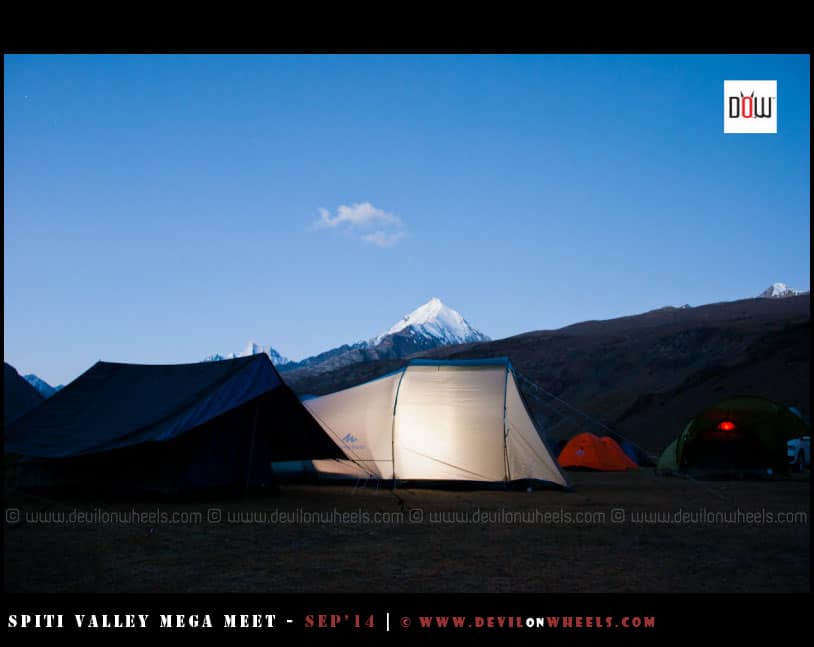
Campfire safety: If you light a campfire in Spiti Valley villages, never do it near thatched roofs or dry grass. Many traditional homes in Spiti have wooden and thatch structures that can catch fire easily. Always completely extinguish your fire before sleeping or leaving. Douse it with water, stir the ashes, and check for any remaining embers. One moment of carelessness can destroy a villager’s home.
Keep food sealed: Open food attracts animals. In Spiti Valley, you could encounter foxes, wolves, and in rare cases, snow leopards near certain villages. In Kinnaur’s lower regions, bears and leopards are more common. Always store your food in sealed bags or containers. After dinner, pack everything away so that no smell attracts wildlife to your tent. You definitely do not want unexpected visitors at 3 AM.

Hygiene matters: Carry a hand sanitizer and use it before every meal. Stomach infections like diarrhea can become serious quickly in remote areas where medical help is hours away. A filter water bottle is essential since stream water may look clean but can carry parasites. Pack medicines for stomach upset, diarrhea, and any other condition you are prone to.
How Can You Camp Responsibly in the Himalayas?
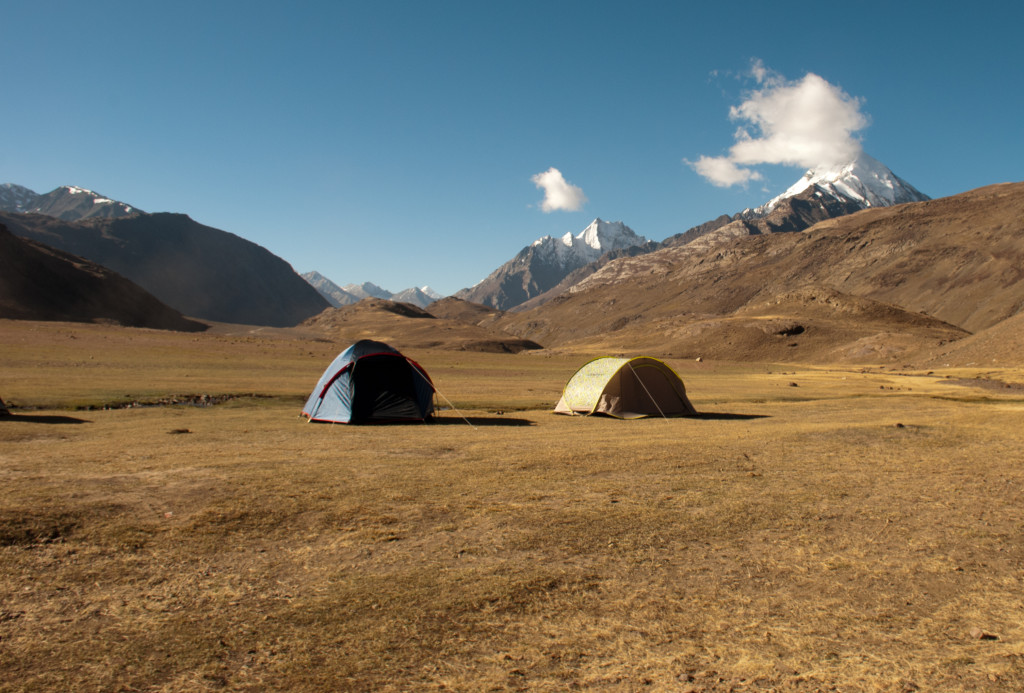
This is something I feel very strongly about. Both Spiti Valley and Kinnaur Valley are ecologically fragile zones. The increased tourism over the past few years has already put pressure on these ecosystems, and as campers, we have a direct responsibility to minimize our impact.
Leave no trace: Carry all your non-biodegradable waste back with you. This includes plastic wrappers, bottles, cans, wet wipes, and sanitary products. Do not bury them, do not burn them, carry them out. Use a dedicated garbage bag and bring it back to Kaza or the nearest town for proper disposal.
Use a refillable water bottle: Single-use plastic bottles are one of the biggest pollution sources in Spiti. Carry a sturdy refillable bottle and fill it from filtered stream water or at dhabas. This small change makes a huge difference when multiplied across thousands of travelers each season.
Respect local customs: Always ask permission before camping on someone’s land. Respect prayer flags, mani walls, and monastery grounds. Do not disturb wildlife or pick wildflowers. These valleys have sustained communities for centuries, and we are visitors in their home.
For a more detailed guide on responsible travel practices, read the Tips for Responsible Travel in the Himalayas.
What Is the Best Time to Go Camping in Spiti and Kinnaur?
The camping season in Spiti Valley runs from mid-June to early October. The Manali-Kaza road via Atal Tunnel and Kunzum Pass typically opens in late May or early June, and the Chandratal camping season starts around mid-June.
June to mid-July: The best window for camping. Weather is relatively stable, days are warm (15-25 degrees Celsius), and nights are cold but manageable (-5 to 5 degrees Celsius). Snow patches may still be visible at higher camps.
Mid-July to August: Monsoon brings rain and landslide risk, especially on the Manali side. The Kinnaur route can also get disrupted. Camping is still possible but you need to be extra cautious about flash floods and road conditions.
September to early October: Post-monsoon period with clear skies and stunning autumn colours. Nights get significantly colder (-10 degrees Celsius at higher spots). This is a great time for photography enthusiasts.
Kinnaur Valley has a slightly longer camping window since altitudes are lower. You can comfortably camp in Sangla, Chitkul, and Kalpa areas from April through October. For a month-by-month breakdown, check the best time to visit Spiti Valley guide.
Practical Information for Camping in Spiti and Kinnaur
Here is a quick reference of practical details you will need when planning your camping trip.
Permits: Indian nationals do not need any permit for Spiti or most of Kinnaur. Foreigners need a Protected Area Permit (still called an ILP locally) for areas beyond Jangi in Kinnaur and for Spiti. It can be obtained from the DC office in Shimla, Reckong Peo, or Rampur, and is valid for 15 days. Separately, if you are driving in with your own vehicle, the Spiti Area Development Authority (SADA) collects a local development charge at the entry barrier, roughly Rs 100-400 depending on vehicle type. This is a vehicle fee, not a personal permit, and it is cash only, so confirm the current rate locally when you cross. Separately, the e-Aagman vehicle e-pass (also free, from the same eaagman.hp.gov.in portal) is mandatory for entry into Spiti district and is checked at the barrier along with the SADA fee.
Mobile connectivity: BSNL has the widest coverage in Spiti Valley. Jio and Airtel work in Kaza town but are patchy in villages. There is no mobile network at Chandratal or Batal. In Kinnaur, Jio and Airtel work in most towns but signal drops between villages. Carry an offline map on your phone.
ATMs and cash: The last reliable ATM before upper Spiti is at Reckong Peo. Kaza has ATMs but they frequently run out of cash. Carry sufficient cash (Rs 5,000-10,000 per person) in small denominations for dhabas, campsites, and emergencies.
Fuel: The last petrol pump on the Kinnaur side is at Reckong Peo. On the Manali side, the Tandi petrol pump is the last one. Kaza has a petrol pump but availability is sometimes limited. Plan your fuel accordingly.
Medical help: Kaza has a government hospital. Reckong Peo also has a district hospital. Beyond these towns, medical facilities are non-existent. Carry a well-stocked first aid kit and know the symptoms of AMS.
For complete itinerary options, check the Spiti Valley most common itinerary or the Kinnaur Valley itinerary guide.

Download your FREE high-resolution PDF version of this infographic guide about camping in Spiti Valley and Kinnaur Valley. If you found it helpful, please feel free to share it with your friends and family.
Related Camping and Travel Guides
If you are planning a camping trip to Spiti or Kinnaur, these related guides will help you prepare better.
- The Most Complete Tips for Camping in the Himalayas
- Tips for Cold Weather Camping
- Tips for Camping Specifically in Kinnaur
- Camping in Zanskar Valley
- Camping in Ladakh
- Budget Trip to Spiti Valley by Public Transport
- Complete Kinnaur Valley Travel Guide
Conclusion
Camping in Spiti Valley and Kinnaur Valley is one of the most rewarding outdoor experiences you can have in India. There is nothing quite like falling asleep under a sky full of stars at 13,000 feet, with the sound of a mountain stream nearby and the silhouette of snow-capped peaks in the distance. It is raw, it is real, and it stays with you long after the trip is over.
The key is preparation. Carry the right gear, acclimatize properly, choose your campsites wisely, and most importantly, respect the environment and the local communities that call these valleys home. If you follow the tips in this guide, you will have a safe and memorable camping experience.
If you have any questions about camping in Spiti or Kinnaur, feel free to drop a comment below or connect with me. If you found this guide useful, share it with your travel buddies who are planning their own camping adventure. You can also join the Discover with Dheeraj community on Facebook to connect with fellow travelers and get real-time updates on road conditions and weather.
Happy camping, my friend. See you on the road 🙂
Last Updated: August 2026
Frequently Asked Questions
Is it safe to camp alone in Spiti Valley?
Solo camping in Spiti is possible but requires experience and preparation. I recommend camping near villages, dhabas, or other campers rather than completely isolated spots. The main risks are altitude sickness, sudden weather changes, and wildlife. If you are new to high-altitude camping, consider joining a group or staying at organized campsites for your first trip.
Do I need a permit for camping in Spiti Valley?
Indian nationals do not need any personal permit for camping in Spiti Valley or most of Kinnaur. Foreign nationals need an Inner Line Permit (ILP) for areas beyond Jangi in Kinnaur and for Spiti. Separately, every vehicle, Indian or foreign, must complete the free e-Aagman vehicle registration at eaagman.hp.gov.in before entering Spiti district, and the Chandratal camping zone requires its own free e-permit from the same portal.
Can I rent camping gear in Kaza or Manali?
Yes, both Kaza and Manali have shops that rent tents, sleeping bags, and other camping equipment. In Manali, rental shops on Mall Road and Old Manali offer tents for Rs 200-500 per day and sleeping bags for Rs 100-300 per day. Kaza has fewer options but you can find basic gear at the market. However, for a proper Spiti camping trip, I recommend carrying your own gear since rental quality can be inconsistent.

What is the best month for camping in Spiti Valley?
June and September are the best months for camping in Spiti Valley. June offers warm days, manageable nights, and snow-capped peaks. September brings clear skies, autumn colours, and fewer tourists. July and August are also viable but carry higher risk of rain and landslides on approach roads.
How cold does it get at night while camping in Spiti?
Nighttime temperatures at camping spots in Spiti Valley typically range from -5 to 5 degrees Celsius between June and September at altitudes of 12,000-14,000 feet. At higher spots like Chandratal (14,100 feet) or near Kunzum Pass, it can drop to -10 degrees Celsius even in July. A sleeping bag rated for at least -10 degrees Celsius is recommended.
Are there any organized campsites near Chandratal Lake?
Yes, there are several organized campsites located 2-5 km from Chandratal Lake. These camps operate from mid-June to early October and charge Rs 1,200-2,500 per person per night including meals, tents, and sleeping bags. Camping directly at the lake banks is not allowed as it is a protected Ramsar wetland site. The designated camping zone has basic facilities and waste management.
Can I camp in Kinnaur Valley during winter?
Winter camping in Kinnaur is only for experienced cold-weather campers. Temperatures drop to -15 to -20 degrees Celsius at higher elevations, and the road to Chitkul closes from mid-December to March. Lower Kinnaur areas like Sarahan (7,589 feet) remain accessible, but you need a sleeping bag rated for -20 degrees Celsius, a 4-season tent, and proper cold-weather gear. For cold-weather camping tips, check the cold weather camping guide.

2 Comments
Comments section gets closed in 90 days. To ask your travel questions, you can follow my YouTube Channel for a faster reply or for a much slower reply follow me on Instagram. :)
Hi Neeraj,
Nice way of exploration bro and thanks for narrating the exploration with us bro. None would suffer if they read it.
very helpful info