


Last Updated: April 2026
Camping in the Himalayas is one of the most fulfilling experiences you can have as a traveler in India. I have pitched tents at altitudes ranging from 6,000 Ft in the Parvati Valley to 14,000+ Ft near Chandratal and Pangong, and every single time, the mountains teach you something new. If Spiti and Kinnaur specifically are on your list, our Spiti and Kinnaur camping guide covers the region in more depth. Whether you are a first-timer planning your debut camping trip or someone who has done this a few times, this guide covers everything you need to know, from choosing the right gear to picking the perfect campsite, staying safe at altitude, and leaving the mountains better than you found them.
From the lower Shivalik hills to the tough terrain of Zanskar and Spiti Valley, the Himalayas offer camping opportunities for every skill level. The key is preparation. A well-planned camping trip is pure joy. A poorly planned one can turn into a nightmare, especially above 10,000 Ft where the weather changes in minutes and help is hours away.
Let's quickly dive into the details:
What Is the Best Time for Camping in the Himalayas?
The best months for camping in the Indian Himalayas are May to June and September to October. These windows give you stable weather, clear skies, and comfortable daytime temperatures between 10 to 25 degrees Celsius depending on the altitude.
May to June is ideal for high-altitude destinations like Chandratal, Pangong, and the Kedarkantha base. Snow has melted enough to make trails accessible, but nights are still cold (dropping to -5 to 0 degrees Celsius above 12,000 Ft). This is also the best window for beginner treks in Uttarakhand where camping is part of the experience.
September to October is my personal favorite. The monsoon has retreated, the air is crisp and clear, and the valleys are still green. This is the best time for camping in Spiti, Kinnaur, and the Garhwal region. The night temperatures start dipping sharply by late October, so keep that in mind.
July to August works for the trans-Himalayan regions (Ladakh, Spiti, Zanskar) because they lie in the rain shadow and receive minimal monsoon precipitation. However, I would avoid camping in the lower Himalayas during monsoon. Landslides, flash floods, and leeches make it risky.
Winter camping (November to March) is for experienced campers only. If you are new to this, please do not attempt winter camping above 8,000 Ft without a guide and proper sub-zero gear. I have covered this in detail in my cold weather camping guide.

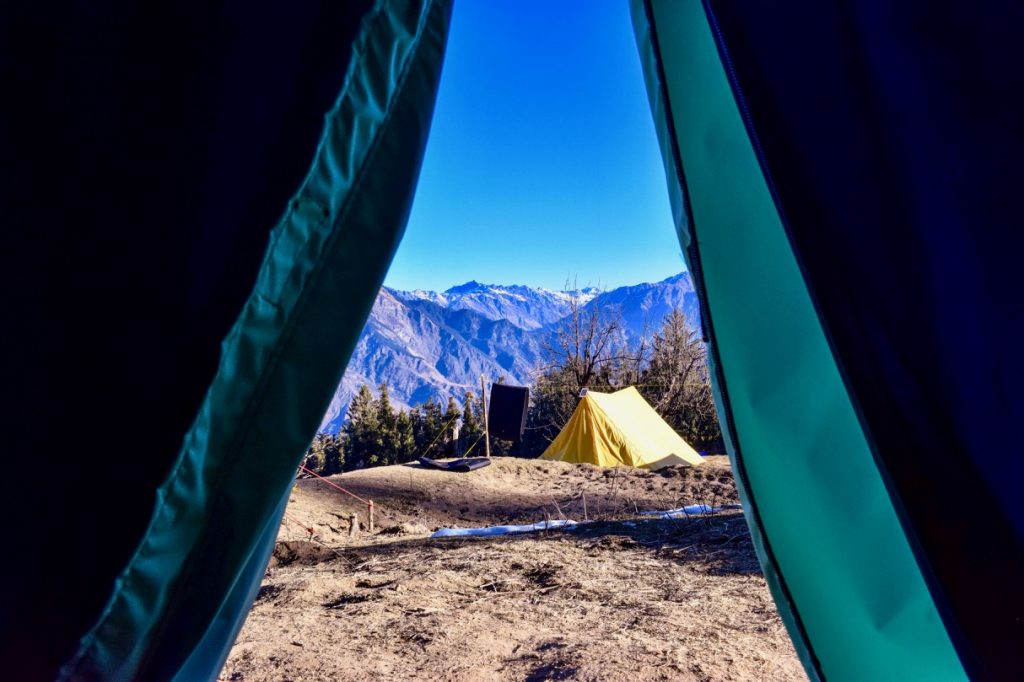
Camping at Kedarkantha Trek in Uttarakhand 
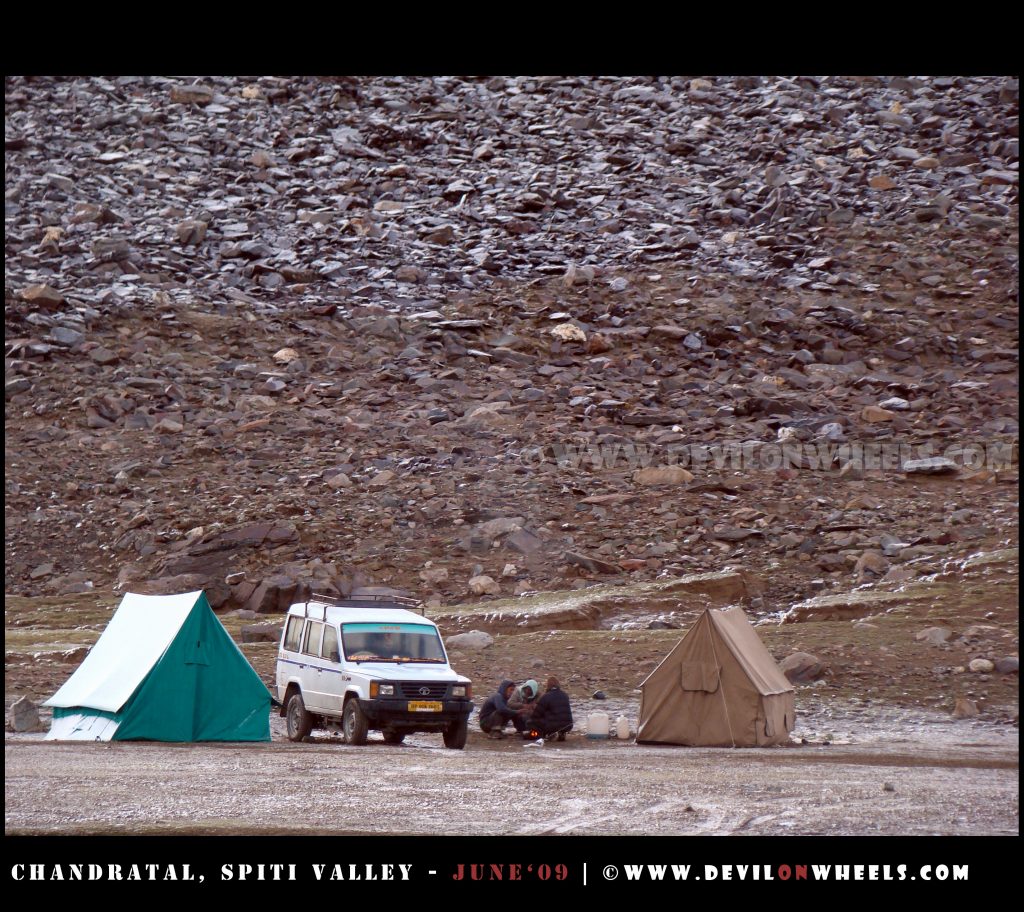
Camping on the Manali to Kaza road, after getting stuck in October
What Camping Gear Do You Need for the Himalayas?
Your gear can make or break your camping experience. I have seen people bring cotton sleeping bags to 13,000 Ft and spend the entire night shivering. Here is what you actually need, based on years of camping in these mountains.
The Essential Camping Gear Checklist
Tent: Invest in a 3-season, double-wall tent that can handle wind and light rain. For the Himalayas, a 2-person tent weighing 1.8 to 2.5 kg is the sweet spot. Brands like Quechua (Decathlon) offer decent budget tents starting at Rs 4,000 to Rs 6,000. If you are serious about camping, a good tent in the Rs 8,000 to Rs 15,000 range will last you years.
Sleeping Bag: This is the single most important piece of gear. I cannot stress this enough. Get a sleeping bag rated for at least -10 degrees Celsius. Even in summer, nights above 12,000 Ft can drop below freezing. Budget options from Decathlon (Forclaz MT500) cost around Rs 5,000 to Rs 6,000 and work well for most Himalayan camping. Premium down sleeping bags from brands like RAB cost Rs 15,000 and above.
Sleeping Mat: Do not skip this. The ground at altitude is cold, and without a mat, your sleeping bag loses a significant amount of its insulation. A basic foam mat costs Rs 500 to Rs 800. Self-inflating mats cost Rs 2,000 to Rs 5,000 but are far more comfortable.
Cooking Setup: A portable gas stove with a windscreen is essential if you plan to cook. Keep in mind that at higher altitudes, water takes longer to boil and fuel consumption increases by 20 to 30 percent compared to sea level. Test your stove at home before the trip. Carry extra fuel canisters because you will use more than you expect.
Other Essentials: Headlamp with extra batteries (cold drains batteries faster), a multi-tool or knife, waterproof stuff sacks for your electronics and documents, a first aid kit, water purification tablets, and 50 feet of paracord (endlessly useful for everything from clotheslines to emergency repairs). Check out my detailed trekking essentials checklist for the complete list.
What If You Do Not Own Camping Gear?
If you are a first-time camper and do not want to invest in gear right away, you have two solid options. First, you can rent the complete kit (tent, sleeping bag, mat, stove) from trekking agencies at base camps for around Rs 3,000 to Rs 5,000 for a 5-day trip. This is a great way to try camping without the upfront cost. Second, you can join an organized camping trip where the operator provides all gear, meals, and guides. These typically cost Rs 2,500 to Rs 8,000 per person per day depending on the location and comfort level.
Many popular camping destinations like Kheerganga, Triund, and Chopta have established campsites where you can rent tents on the spot. However, the quality varies widely. I suggest carrying your own sleeping bag even if you rent everything else, because rental sleeping bags are often not warm enough and may not be hygienically maintained.
How Do You Choose the Right Campsite in the Mountains?
Choosing the right spot to pitch your tent is a skill that comes with experience, but these fundamentals will keep you safe from the start.
Look for natural shelter on at least one side. A hillside, a cluster of boulders, or a tree line can break wind significantly. If you pitch your tent in an open field, you will learn very quickly how powerful mountain winds can be at 3 AM. I have had tent poles bend in wind gusts above Chandratal, and trust me, it is not a fun experience.
Check the ground for drainage. Find a spot that is slightly elevated and not in a depression. In case of sudden rain (common in the Himalayas), water will pool in low-lying areas. You can dig a shallow drain, about 2 to 3 inches deep, around your tent perimeter with one end sloping downhill. This simple step has saved me on multiple occasions.


Stay away from dry riverbeds, cliff edges, and single tall trees. Dry riverbeds can flash flood with zero warning. Cliff edges are unstable. Single tall trees attract lightning during storms. These are basic rules, but I see people violating them constantly in the Himalayas.
Check for rockfall zones. Look up. If you see loose scree or evidence of recent rock slides above your intended spot, move. Rockfall at night is a genuine danger in the Himalayas, especially during monsoon season.
How Do You Stay Safe While Camping at High Altitude?
Safety is not optional in the mountains. The Himalayas are unforgiving terrain and every year, people get into serious trouble because of poor preparation. Here is what you need to keep in mind.
Altitude Sickness (AMS) Awareness
If you are camping above 10,000 Ft, Acute Mountain Sickness is a real risk. Symptoms include headache, nausea, dizziness, and difficulty sleeping. The golden rule is to ascend gradually. Do not gain more than 1,000 to 1,500 Ft of sleeping altitude per day above 10,000 Ft. If symptoms appear, do not ascend further. If they worsen, descend immediately. I have written a detailed guide on preventing altitude sickness that every Himalayan camper should read.
Weather Preparedness
Mountain weather changes in minutes, not hours. You might start the day in bright sunshine and be in a hailstorm by afternoon. Always carry a waterproof rain poncho and a plastic sheet large enough to cover your backpack. If you find yourself in a sudden thunderstorm, snowstorm, or hailstorm, seek shelter immediately. An overhang, a cave, a large boulder, anything that keeps you dry and protected from wind. The basic premise in the hills is this: stay dry, stay warm, stay alive.
Wildlife Precautions
Bears (Himalayan black bears in lower altitudes, brown bears in Ladakh/Zanskar), leopards, and wild dogs are present in many camping areas. Store food away from your tent, preferably hung from a tree branch at least 10 feet off the ground and 4 feet from the trunk. Never cook inside or right next to your tent. Keep a flashlight handy, and making noise while walking on trails (talking, clapping) is enough to keep most wildlife at a safe distance.
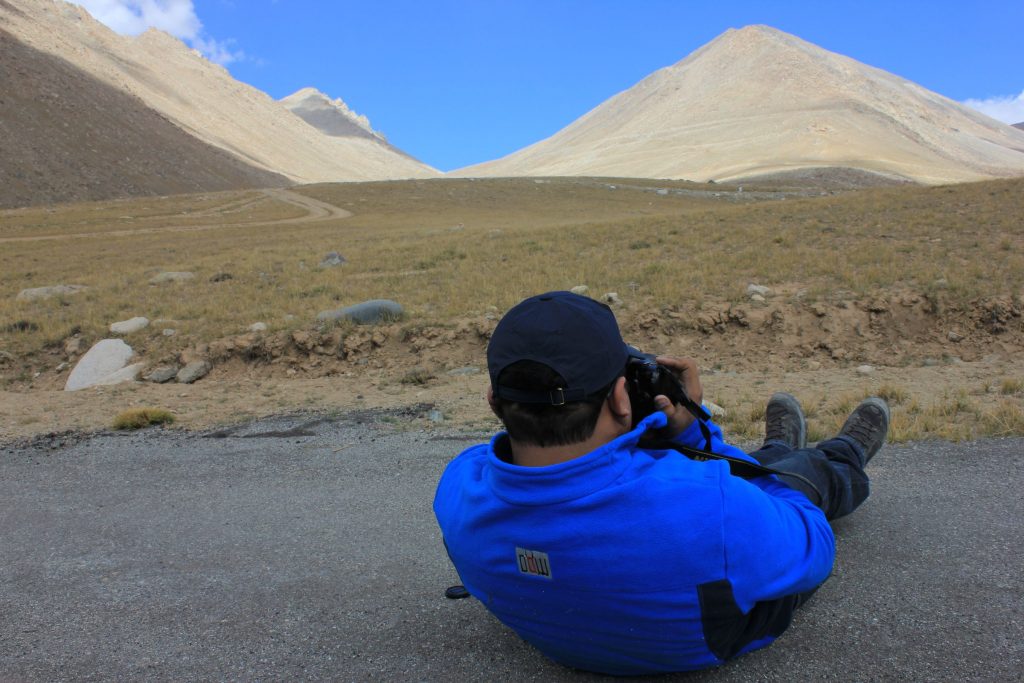
How Do You Take Care of Yourself During a Multi-Day Camp?
Physical Wellness and Hygiene
Personal hygiene matters even when you are in the middle of nowhere. Even if the weather is cold, clean yourself at the end of each day. Here is what I do: take a mug of warm water, a hand towel, and some soap, zip yourself into the tent, and sponge yourself thoroughly. Change into dry night clothes immediately afterwards. Brush out the dust from your hair. Trust me, the entire day’s tiredness will leave you and you will feel completely refreshed. Best feels ever!
Carry biodegradable soap and shampoo. Never wash directly in streams or lakes, as soap pollutants affect the fragile mountain ecosystem. Use your water container at least 50 meters away from any water source.
Mental Wellness and Pushing Through
Camping for multiple days can take a toll on your body and mind, especially if the terrain is challenging. There will be moments when you feel like you have bitten more than you can chew. And trust me, this is completely normal. I have felt it too, many times. The trick is to listen to your body. Take a rest day if needed. Carry less weight for a day. Take more breaks. There is no shame in going at your own pace. The mountains are not going anywhere 🙂
Hydration and Nutrition
Dehydration at altitude is sneaky because the dry mountain air pulls moisture from your body faster than you realize. Drink at least 3 to 4 liters of water per day when camping above 10,000 Ft. Do not rely solely on stream water, as it might be frozen in the early morning, and warming water takes time and precious fuel. Keep your water bottles inside your tent at night (wrapped in a cloth) to prevent them from freezing. Also carry water purification tablets or a Lifestraw filter. Stream water in the Himalayas is generally clean, but it is better to be safe than sorry.
For nutrition, pack calorie-dense foods that are light to carry: dry fruits, energy bars, peanut butter, instant noodles, poha, and upma premix. At altitude, your body burns 300 to 500 extra calories per day just to stay warm and function normally.
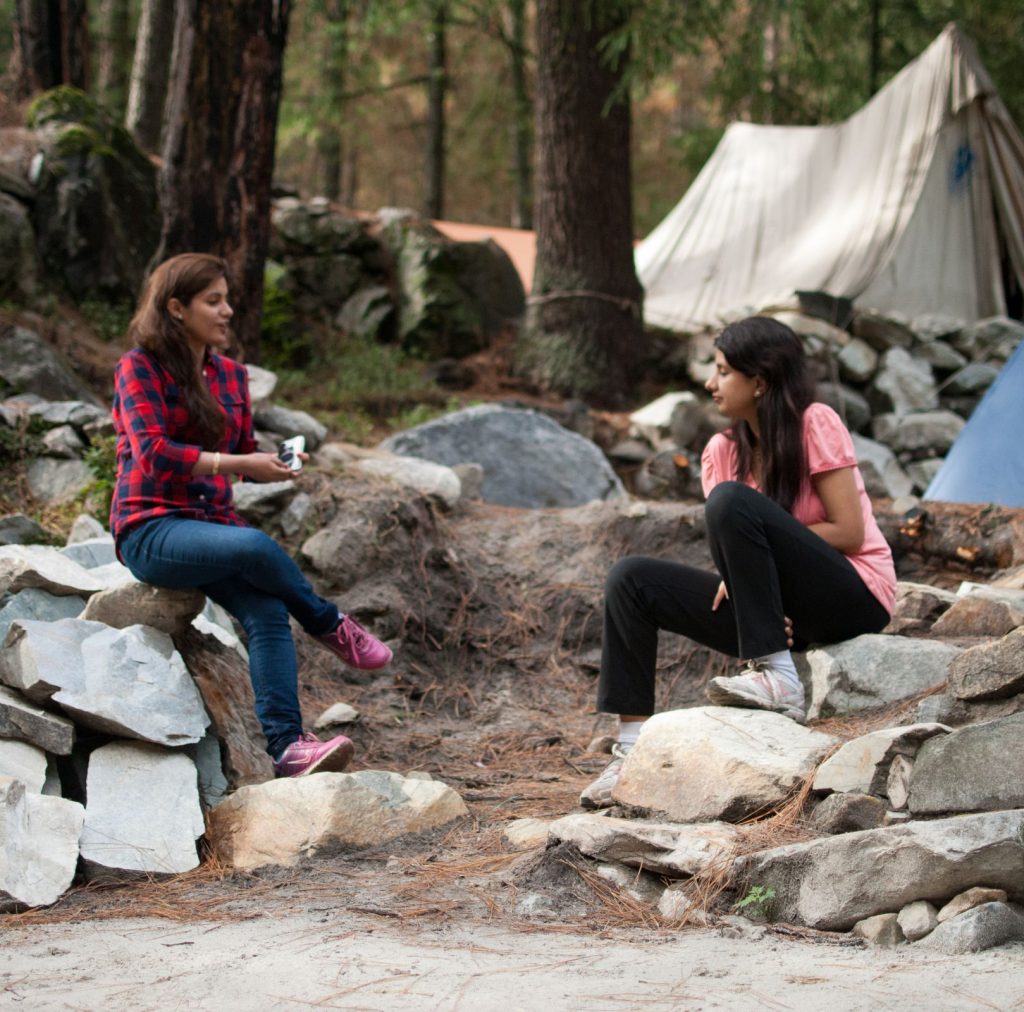
What Are the Best Camping Locations in the Indian Himalayas?
Here are some of the best camping destinations I have experienced or can recommend based on community feedback, organized by difficulty level.
Beginner-Friendly (Below 10,000 Ft)
Kheerganga, Himachal Pradesh (9,700 Ft): One of the most popular camping destinations in India. The trek is about 12 km from Barshaini, and you can rent tents at the top. The natural hot springs are a bonus after a long day of trekking. Read my complete Kheerganga guide for details.
Triund, Himachal Pradesh (9,350 Ft): A relatively easy 9 km trek from McLeod Ganj with stunning views of the Dhauladhar range. Tents available for rent at the top. Best from March to June and September to November.
Chopta, Uttarakhand (8,790 Ft): The gateway to the Tungnath and Chandrashila trek. Multiple camping spots available with established campsite operators. Beautiful rhododendron forests surround the area.
Intermediate (10,000 to 14,000 Ft)
Kedarkantha, Uttarakhand (12,500 Ft): One of the best winter treks in India with excellent camping spots at Juda Ka Talab and the base camp. The Kedarkantha trek guide covers the complete itinerary.
Hampta Pass, Himachal Pradesh (14,100 Ft): A diverse trek with camping at multiple points between Jobra and Chatru. The landscape changes from green valleys to barren moonscape within a day. Check my Hampta Pass trek guide for everything you need to know.
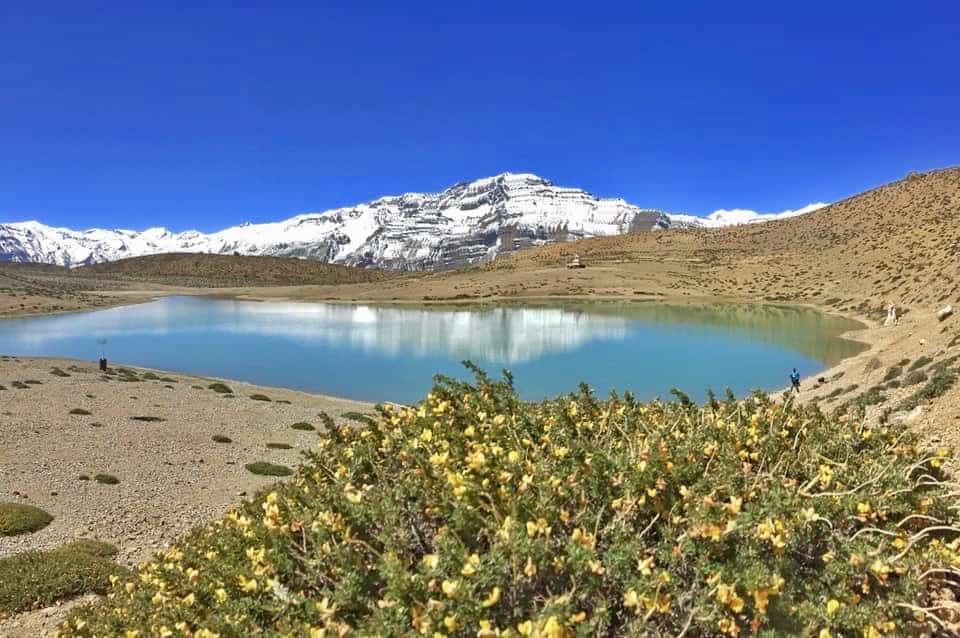
Chandratal Lake, Spiti (14,100 Ft): Camping at the banks of Chandratal is now banned by the Koksar Panchayat, but camps operate 3 to 5 km from the lake. Costs range from Rs 1,200 to Rs 2,500 per night including meals. The lake itself is accessible via a short trek. My Chandratal planning guide has all the logistics.
Advanced (Above 14,000 Ft)
Pangong Lake, Ladakh (14,270 Ft): Camping by the side of Pangong under a sky full of stars is a bucket-list experience. Multiple campsites operate from May to September. You need a valid Inner Line Permit. Keep in mind that there is limited mobile connectivity and the nearest medical facility is hours away in Leh.
Zanskar Valley (11,000 to 14,000 Ft): For those looking for truly remote camping, Zanskar offers an experience unlike anything else in India. You need to be fully self-sufficient as there are no shops or services for long stretches.
Ladakh (various altitudes): From Nubra Valley to Tso Moriri, Ladakh has some of the most dramatic camping landscapes on the planet. My Ladakh camping tips guide covers region-specific advice.
How Much Does Camping in the Himalayas Cost?
Your camping budget depends on whether you own gear or rent, and whether you go solo or with an operator. Here is a realistic breakdown as of 2026.
If you own your gear and camp independently: Your costs are mainly travel, food, and permits. Expect to spend Rs 800 to Rs 1,500 per day on food (if cooking yourself) and Rs 200 to Rs 500 on camping permits where applicable. A 5-day camping trip can cost as low as Rs 5,000 to Rs 8,000 excluding travel to the base.
If you rent gear: Full camping kit rental runs Rs 500 to Rs 1,000 per day. A 5-day trip with rentals adds Rs 3,000 to Rs 5,000 to your budget.

If you join an organized camping trek: Operators charge Rs 2,500 to Rs 8,000 per person per day depending on the destination and comfort level. This includes gear, meals, guides, and often transport from the nearest town. Budget operators on popular routes like Kheerganga or Triund charge Rs 2,500 to Rs 3,500, while premium operators for remote destinations like Zanskar or Great Himalayan National Park charge Rs 6,000 to Rs 8,000.
Buying your own gear (one-time investment): A decent starter kit (tent, sleeping bag, mat, stove, backpack) costs Rs 20,000 to Rs 30,000 from Decathlon. This pays for itself within 3 to 4 trips compared to renting. Premium gear can go up to Rs 50,000 or more, but is not necessary for most Himalayan camping.
What Are the Important Safety and Packing Tips Before You Leave?
Before you head out the door, here are the things that matter most. I have learned most of these the hard way over the years.
Test your gear at home. Set up your tent in your living room or garden. Try your stove. Check if your sleeping bag zipper works properly. There is nothing worse than discovering a broken zipper at 13,000 Ft at midnight when the temperature is -8 degrees Celsius.
Pack smart. Heavy items go towards the top of your backpack and close to your body. This keeps the center of gravity high and reduces strain on your shoulders. Keep frequently needed items (water, snacks, rain cover, sunscreen) in outer pockets. Sandals should be accessible since you will need them at camp.
Carry clothes that dry quickly. Cotton is your enemy in the mountains. It absorbs moisture, takes forever to dry, and pulls heat away from your body. Wear synthetic or merino wool layers. Carry at least two sets of base layers so you always have a dry change.
Keep buffer days in your itinerary. Things will not go according to your exact plan. Weather delays, trail conditions, your own physical condition, there are many variables. I always suggest keeping at least 1 to 2 buffer days for any camping trip of 5 days or more.
Inform someone about your plans. Share your exact itinerary with a family member or friend. Make phone calls to loved ones right before you lose mobile connectivity. Share your GPS coordinates if possible. Yes, it is an adventure for you, but your family members should not be stressed about your safety. Keep them posted on when you will call next.
Carry a basic medical kit. Include Diamox (for AMS prevention, consult your doctor before taking), painkillers, anti-diarrheal medication, antiseptic cream, bandages, ORS packets, and any personal medication. At remote campsites, you are your own first responder.
How Do You Practice Responsible Camping in the Himalayas?
This is something very close to my heart and to the DwD Community. The Himalayas are not just a camping destination. They are home to fragile ecosystems and local communities. Here is how you can camp responsibly.
Carry back ALL your waste. Every wrapper, every bottle, every tissue. Nothing stays behind. If you see waste left by others, pick that up too. The DwD Community runs regular cleanliness drives in the mountains, and I encourage you to do your part on every trip.
Do not use campfires irresponsibly. In many alpine areas, there is no firewood available, and collecting it damages the ecosystem. Use a stove for cooking. If you must have a fire (for warmth at lower altitudes where dead wood is abundant), keep it small, use an existing fire ring if one exists, and make sure it is fully extinguished before you leave. Never leave a fire unattended.
Respect local customs. Many camping areas are near villages, temples, or sacred sites. Ask permission before setting up camp near settlements. Support local economies by buying supplies from local shops and hiring local guides when possible.
Dig cat holes for human waste. Go at least 60 meters from any water source, trail, or campsite. Dig a hole 6 to 8 inches deep, do your business, and cover it back completely. Carry a small trowel for this purpose. On popular treks, some organizations are now providing biodegradable waste bags, so use those when available.
What Permits Do You Need for Camping in the Himalayas?
Permit requirements vary by region and specific location. Here is a quick reference as of 2026.
Ladakh: Inner Line Permit (ILP) is required for areas like Nubra Valley, Pangong Lake, and Tso Moriri. You also need to pay the Ladakh Environmental Development Fee (EDF) of Rs 400 per person plus Rs 20 per person per day. Apply online through the Leh DC office portal.
Spiti Valley: Inner Line Permit needed for areas beyond Sumdo (Tabo side) and beyond Gramphu (Manali side). Free e-permit available through eaagman.hp.gov.in. Camping at Chandratal requires an additional free permit.
Kinnaur: No permit needed for Indian nationals up to Chitkul. Areas beyond Chitkul towards the Tibet border require an ILP from the SDM office. Read more in my Kinnaur camping guide.
Uttarakhand National Parks: Camping inside national parks like Gangotri NP (for Gaumukh trek), Valley of Flowers NP, and Nanda Devi NP requires permits. Apply through the respective forest department offices or online portals. Gangotri NP charges Rs 150 per Indian per day.
General rule: If you are camping on forest land or inside a national park, you need permission. Open areas outside protected zones generally do not require permits, but always check locally before setting up camp.
Frequently Asked Questions
Is wild camping legal in the Indian Himalayas?
Wild camping outside national parks and protected areas is generally tolerated in the Indian Himalayas. However, there are no specific laws governing it. Inside national parks and wildlife sanctuaries, you need permits and must camp only in designated areas. Always ask locals before pitching your tent near villages or sacred sites.
What sleeping bag temperature rating do I need for Himalayan camping?
For summer camping (May to September) between 8,000 to 14,000 Ft, a sleeping bag rated for -10 degrees Celsius is recommended. For winter camping or altitudes above 14,000 Ft, go for -20 degrees Celsius or lower. Always choose a comfort rating, not just the extreme rating listed by manufacturers.
Can beginners go camping in the Himalayas without a guide?
Yes, beginners can camp independently at well-established sites like Kheerganga, Triund, and Chopta where trails are marked and campsites have facilities. For remote or high-altitude camping above 12,000 Ft, I strongly recommend hiring a local guide for your first few trips. A good guide knows the terrain, weather patterns, and escape routes.
How do I keep food safe from animals while camping?
Store food in sealed containers and hang them from a tree branch at least 10 feet above the ground and 4 feet away from the trunk. Never keep food inside your sleeping tent. Cook and eat at least 50 meters from where you sleep. Clean up all food scraps immediately after meals.
Is mobile network available at Himalayan campsites?
Mobile network coverage varies widely. Popular lower-altitude spots like Kheerganga and Triund have intermittent Jio and Airtel coverage. High-altitude remote areas like Chandratal, Pangong, and Zanskar have limited to no coverage. BSNL postpaid generally has the widest reach in the Himalayas. Always assume you will be without connectivity and plan accordingly.
What is the best budget tent for Himalayan camping in India?
The Quechua MH100 (2-person) from Decathlon at around Rs 4,000 to Rs 5,000 is the most popular budget option among Indian campers. It handles light rain and moderate wind. For better wind resistance and durability, the Forclaz Trek 500 at Rs 8,000 to Rs 10,000 is a significant upgrade. Both are available at Decathlon stores across India and online.
How do I deal with rain while camping in the mountains?
Always carry a waterproof rain poncho and a large plastic sheet that can cover your backpack. Set up your tent on slightly elevated ground with good drainage. Dig a shallow drainage channel around your tent if rain is expected. Keep all electronics and dry clothes in waterproof stuff sacks inside your tent. A tarp or groundsheet under your tent adds an extra waterproofing layer.
If you have questions about camping in the Himalayas or want to find camping buddies for your next trip, feel free to check the DwD Community through the link in the main menu. You can also check the DoW Travel Calendar for upcoming group trips. I will be happy to hear from you, so please post your queries in the comments section below or share this article with friends and family who are planning their first camping adventure 🙂 …

2 Comments
Comments section gets closed in 90 days. To ask your travel questions, you can follow my YouTube Channel for a faster reply or for a much slower reply follow me on Instagram. :)
thanks for your article, really i adore to go in camping with my friends and your information help me
such an interesting blog, the way you described about the safety tips we should opt is really nice. It would be very helpful for those who are planing to to camping in the Himalayas.