


Last Updated: October 2026
Are you looking for a trek near Manali that gets you to a high-altitude Himalayan lake without requiring 7-8 days of leave? The Bhrigu Lake Trek is exactly that. At 4,300 m (14,108 Ft) in the Kullu district of Himachal Pradesh, Bhrigu Lake sits above the treeline in a wide open cirque, offering a 360-degree panorama of Deo Tibba, Indrasan, Seven Sisters, and the Kullu valley spread below. You can complete the Bhrigu Lake trek in 3 to 4 days, starting from Gulaba on the Manali – Rohtang road, and you do not need any permit to walk it.
Based on my research and reports from DwD community members who have done this route in recent seasons, this guide covers everything you need: the day-by-day route, the real difficulty (it is not a gentle stroll), the 2026 cost breakdown for both agency and self-guided trekkers, camping options, and the specific AMS risks you must prepare for. If you want the general overview of Bhrigu Lake, I have already covered that in The Ultimate Bhrigu Lake Travel Guide for Trekkers and Backpackers. This article focuses specifically on the route, difficulty, cost, and camping side of things.
Season status, October 2026: the 2026 season is closing, as operators stop running batches by mid-October. If you are reading this now, you are likely planning for June to September 2027, and everything below still applies.
Let's quickly dive into the details:
Quick Answer: Bhrigu Lake Trek at a Glance
| Altitude | 4,300 m (14,108 Ft) |
| Trek Duration | 3 to 4 days |
| Total Distance | Approx. 24 km (out and back via Gulaba) or 27 to 30 km (loop descending to Vashisht) |
| Difficulty | Moderate to Hard (rapid altitude gain) |
| Best Month | July and August (prime season) |
| Start Point | Gulaba (22 to 26 km from Manali on the Rohtang road) |
| End Point | Gulaba (out and back) or Vashisht (3 km from Manali) |
| Agency Trek Cost | Rs 5,500 to Rs 10,000 per person (including Gulaba transfer) |
| Permits | No ILP needed. No Rohtang permit needed for a taxi drop at Gulaba (the permit applies only beyond the Gulaba barrier). |
| Base Town | Manali |
| Last Updated | October 2026 |
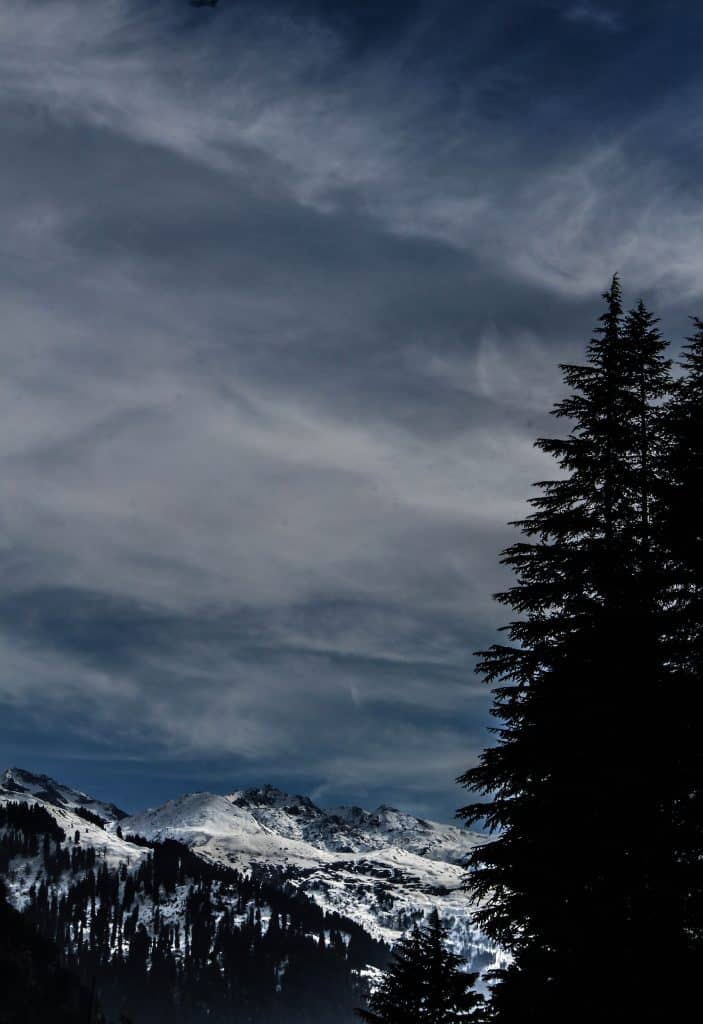
Why Bhrigu Lake? What Makes This Trek Stand Out
Most treks to high-altitude lakes involve long grueling switchbacks with 1,000 m of relentless vertical gain crammed into a single day. Bhrigu Lake is different. The route from Gulaba takes you through a sequence of alpine meadows, locally called thaches, which break the ascent into natural stages. You climb through Jonkar Thatch, then Rola Kholi, gaining altitude steadily rather than in one brutal push. The final approach to the lake is through open snowfields that stretch all the way to the shoreline. There is no dramatic last climb because you are already up there.
The lake itself sits in a glacial bowl at 4,300 m. It is frozen for most of the year. In peak summer (July to August) the ice breaks up and you get clear reflections of Deo Tibba (6,001 m) and Indrasan (6,221 m). On a clear morning, the Kullu valley stretches below and the Pir Panjal range fills the horizon on the other side. This is the panorama that makes Bhrigu Lake worth the effort, and why it has built a strong reputation as one of the most rewarding short treks in Himachal Pradesh.
The other reason to consider Bhrigu Lake is the loop option. You drive up to Gulaba on the Rohtang side, trek to the lake, and descend on the Vashisht side back to Manali. No backtracking on the same trail. This point-to-point format is hard to find in Manali area treks, and it keeps the trek interesting from start to finish.
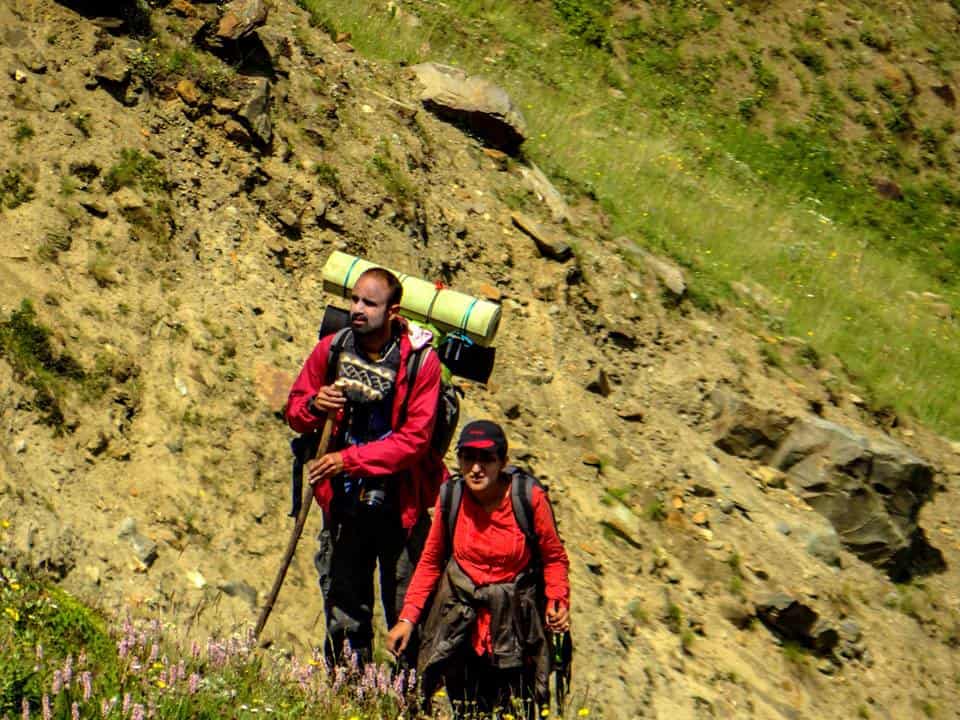
What Is the Bhrigu Lake Trek Route? Day-by-Day Breakdown
Quick answer: there are two versions. Most operators now run an out-and-back route (Gulaba, Rola Kholi, lake, back to Gulaba, about 24 km). The classic loop continues from the lake down to Pandu Ropa and Vashisht, covering roughly 27 to 30 km over 3 trekking days.
On the out-and-back version, Day 2 is a 10 km round trip from Rola Kholi to the lake, and Day 3 retraces the 7 km to Gulaba. Here is how the loop plays out.
| Day | Route | Distance | Altitude | Trek Time |
|---|---|---|---|---|
| Day 0 | Arrive Manali, acclimatize | – | 2,050 m (6,726 Ft) | Rest day |
| Day 1 | Manali to Gulaba (drive), Gulaba to Rola Kholi | 7 to 8 km trek | Rola Kholi: 3,820 m (12,532 Ft) | 4 to 5 hrs |
| Day 2 | Rola Kholi to Bhrigu Lake and down to Pandu Ropa | 12 to 14 km | Lake: 4,300 m (14,108 Ft) | 7 to 8 hrs |
| Day 3 | Pandu Ropa to Vashisht | 8 km | Vashisht: 2,070 m (6,791 Ft) | 3 to 4 hrs |
Day 0: Arrive in Manali and Rest
Keep in mind that Manali sits at 2,050 m, which is already above 6,700 Ft. If you are arriving from Delhi or Chandigarh, your body needs at least one full day to start adjusting before you push for 4,300 m. I strongly suggest spending this rest day exploring Manali town, visiting the Old Manali area, and sleeping well. Do not do any uphill walking today. Hydrate thoroughly. The next three days will demand a lot from your body.
Day 1: Gulaba to Rola Kholi (7 to 8 km, 4 to 5 hrs)
Drive from Manali to Gulaba on the Rohtang road. Gulaba is about 22 to 26 km from Manali and sits at approximately 3,000 m (9,842 Ft). The drive takes about 45 minutes to 1 hour depending on traffic. Here is a point many guides get wrong, including an earlier version of this one: Gulaba is where the NGT Rohtang permit barrier stands, and the permit is checked only for vehicles going beyond it. A taxi dropping trekkers at Gulaba does not need one. If you plan to visit Rohtang as well, our Rohtang Pass Permit 2026 guide covers booking, fees, and daily quotas.
The trek begins at Gulaba. The first section climbs through mixed forests of oak and rhododendron before opening into Jonkar Thatch, a sloping meadow at around 3,350 m (11,000 Ft). This stretch is about 1.5 to 2 km and takes 1 to 1.5 hours. From Jonkar Thatch, the trail continues upward through open grassland to Rola Kholi at 3,820 m. This section takes another 3 to 4 hours. Camp here for the night. Rola Kholi is a wide meadow with a seasonal stream. Beautiful, and cold.
Day 2: Rola Kholi to Bhrigu Lake to Pandu Ropa (12 to 14 km, 7 to 8 hrs)
This is the big day. You leave Rola Kholi early, ideally by 6 to 7 AM. The trail climbs across snowfields and rocky terrain to the lake at 4,300 m. The steep ridge just above Rola Kholi is the hardest section of the whole trek, and the ascent to the lake takes roughly 3 to 4 hours. At the lake, you get the full panorama. Spend some time here. Then descend toward Pandu Ropa on the other side. Pandu Ropa sits at around 3,500 to 3,600 m (11,500 to 11,800 Ft) and is your camp for the night. The entire day covers 12 to 14 km and takes 7 to 8 hours with stops.
Do not camp at the lakeside. The wind at 4,300 m in the evening can be brutal, and the area is sensitive ecologically. Most experienced trek operators set camp at Pandu Ropa (or return to Rola Kholi on the out-and-back route), both at a safer altitude with better wind shelter.
Day 3: Pandu Ropa to Vashisht (8 km, 3 to 4 hrs)
The steep descent from Pandu Ropa to Vashisht is through dense forest and village paths. Vashisht is a small village on the outskirts of Manali, famous for its hot sulfur springs and a temple. At 6,791 Ft, arriving here after 3 days above 12,000 Ft feels like a warm welcome back. From Vashisht, an auto-rickshaw or cab gets you to Manali town in 10 to 15 minutes. The cost for a local auto from Vashisht to Manali is roughly Rs 50 to Rs 100.


How Difficult Is the Bhrigu Lake Trek? Fitness Requirements
Quick answer: moderate to hard. The trail is non-technical, but you gain about 1,300 m from Gulaba to the lake in two trekking days, so AMS is the real challenge.
Let me be honest about the difficulty here. Bhrigu Lake Trek is marketed as moderate by many operators, but the altitude gain is what catches trekkers off guard. You are climbing from 2,050 m in Manali to 4,300 m at the lake in essentially two trekking days. That is a gain of 2,250 m (nearly 7,400 Ft) in a short time. Without at least one acclimatization day in Manali, your body will protest.
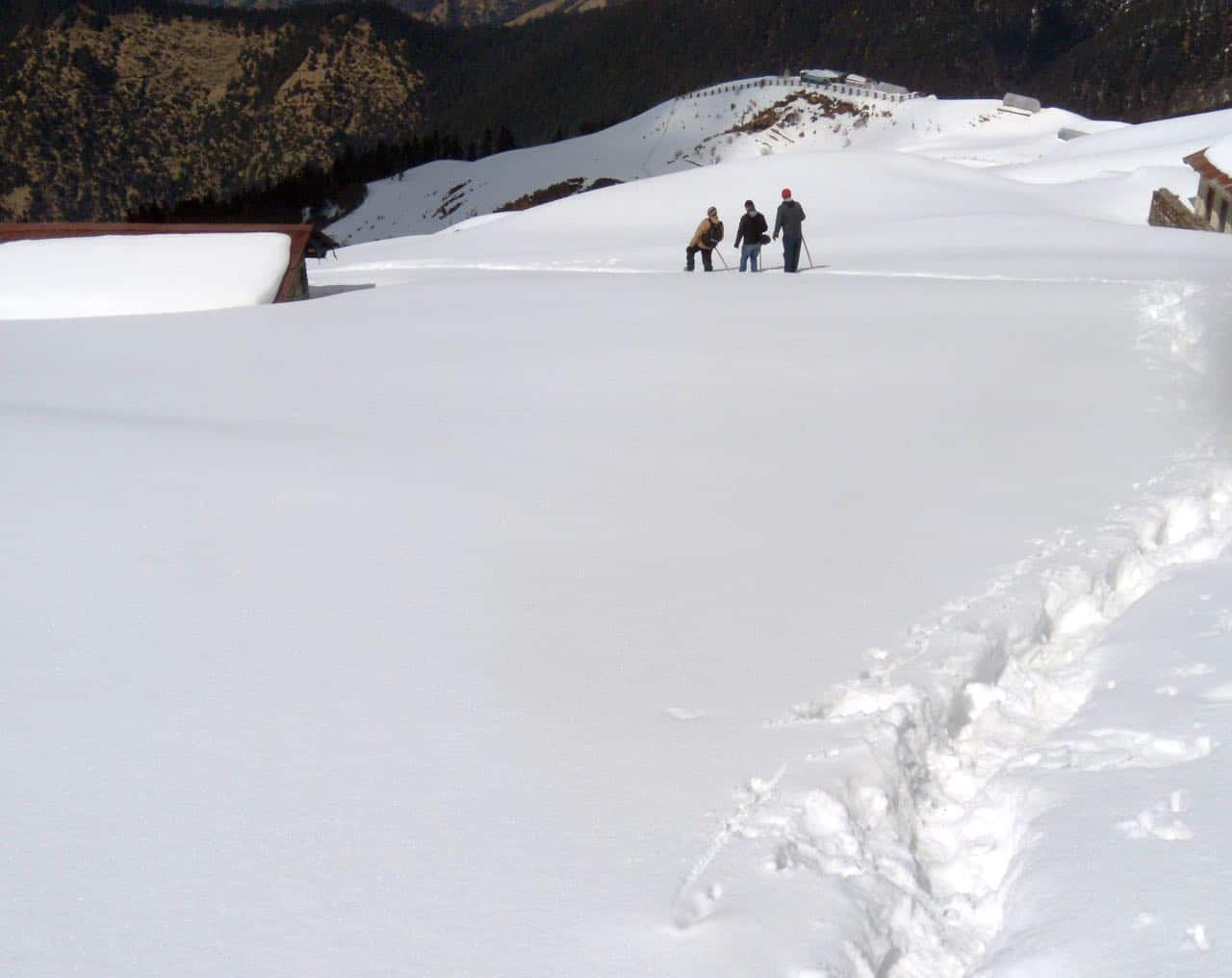
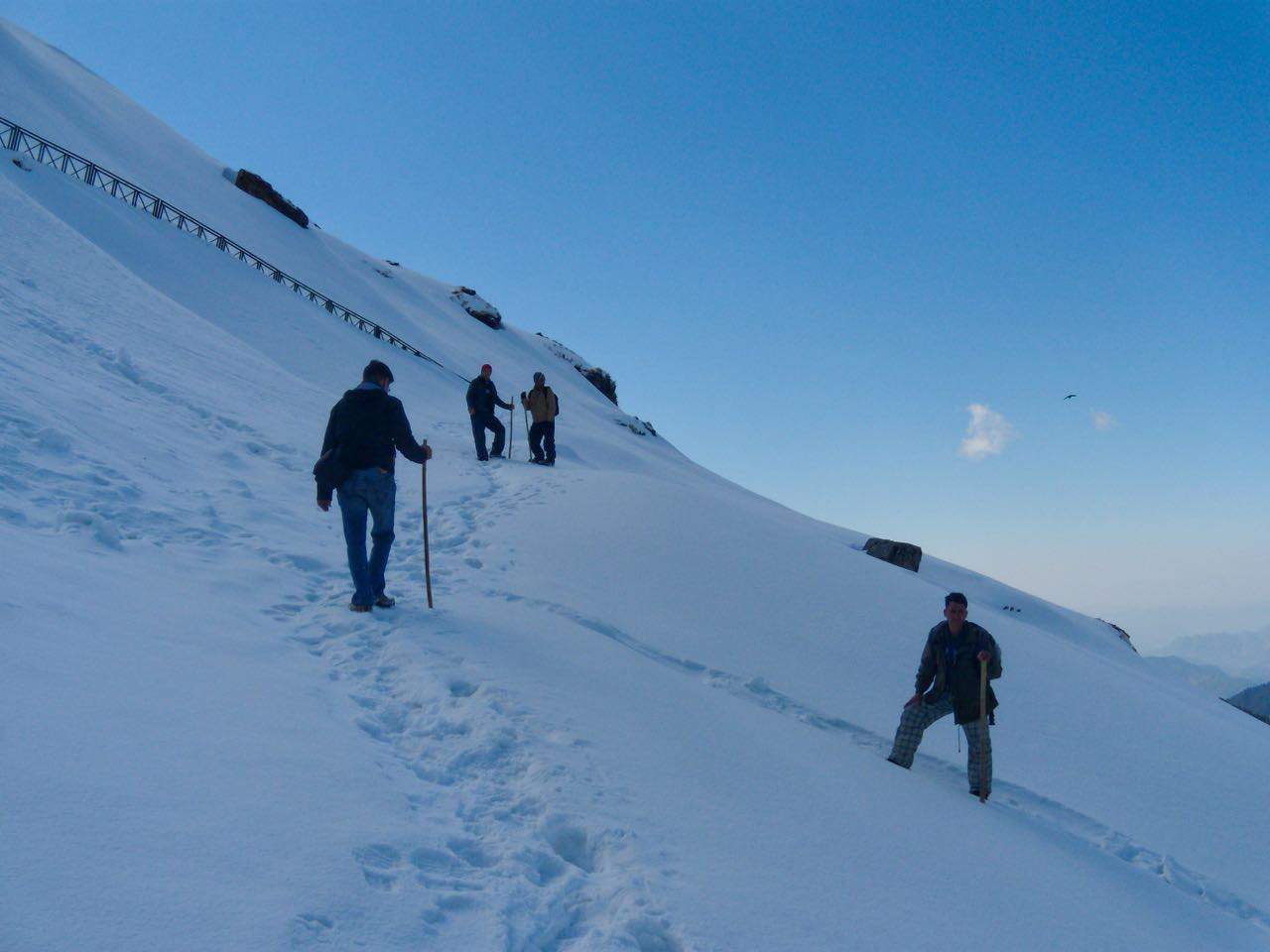
The trail itself does not have technical sections. You do not need ropes, crampons, or rock-climbing experience. However, Day 2 crosses snowfields that can be slippery in the morning when frozen. Trekking poles are very useful here. The long hours on Day 2 (7 to 8 hours of actual trekking) also require a good base level of fitness. If you can walk briskly for 2 to 3 hours on flat ground without stopping, you have the minimum fitness needed. Prior trekking experience at high altitude makes a significant difference.
AMS (Acute Mountain Sickness) is a real risk on this trek. Bhrigu Lake is one of the fastest altitude gains among popular Manali treks. Symptoms to watch: persistent headache, nausea, loss of appetite, dizziness, shortness of breath at rest. If you or anyone in your group shows two or more of these symptoms above 3,500 m, descend immediately. Do not push to the lake if you are symptomatic. You can read more about the personal side of AMS in our post on Adventures of Sarchu and AMS, which covers how our group dealt with altitude sickness on a Manali – Leh trip.
Key fitness and health checklist before you go:
- Spend minimum 1 full day in Manali (ideally 2 days) before starting the trek
- Drink 3 to 4 litres of water per day during the trek
- Carry Diamox (acetazolamide) if recommended by your doctor. Consult before use.
- Avoid alcohol for at least 24 hours before and during the trek
- Do not rush on Day 1. The meadows are beautiful. Slow and steady wins here.
- First-time high-altitude trekkers should strongly consider going with an experienced guide or operator
What Is the Best Time to Visit Bhrigu Lake? Month by Month
Quick answer: July and August, when the lake is ice-free and the meadows are green. June still has deep snow, September is quieter and colder, and the season closes by mid-October.
The Bhrigu Lake Trek season runs from June through September. However, not all months are equal. Here is what to expect from each month based on research and community reports.
| Month | Conditions | Recommended? |
|---|---|---|
| June | Trail opens mid-June. Heavy snow on Day 2 trail and at lake. Cold nights (-5 to 0°C at camp). Spectacular white landscape but physically harder due to deep snow. Few trekkers. | Yes, for experienced trekkers only |
| July | Snow clearing progressively. Upper meadows green by mid-July. Lake surface partially clear. Best combination of snow and greenery. Crowds start building. | Yes, highly recommended |
| August | Peak season. Trail clear. Meadows fully green. Lake fully open. Best photography. Wildflowers in bloom. Maximum operators and other trekkers on trail. | Yes, best month overall |
| September | Crowds thin out. Weather stable. Nights get colder (-5 to -8°C). Trail clear. Excellent for those who prefer solitude. | Yes |
| October onwards | Trail becomes risky after mid-October due to early winter snowfall. Camps close. Not recommended without local guide with specific experience. | No (for most trekkers) |
Hence, July and August are the two months I would recommend for most trekkers. Keep in mind that these are also monsoon months in the Kullu valley, so the road to Gulaba can turn into slush and afternoons often bring rain. Check the IMD Shimla forecast before you start, and read our take on visiting Manali in the monsoon. June is spectacular in its own way but the snow on the trail makes it physically tougher and you need better gear. September is excellent for solitude seekers.
How Much Does the Bhrigu Lake Trek Cost in 2026?
Quick answer: Rs 5,500 to Rs 10,000 per person with an agency, or Rs 3,000 to Rs 6,000 self-guided with a local guide. There is no permit fee.
The cost varies a lot between agency and independent trekking. Let me break down both options.
Option 1: Organized Agency Trek (Recommended for First-Timers)
Most registered Manali-based trek operators offer 3-night, 4-day Bhrigu Lake packages. As of 2026, pricing from multiple operators looks like this:
| Cost Item | Amount (Per Person) |
|---|---|
| Trek registration fee (agency, group basis) | Rs 4,500 to Rs 7,500 |
| Meals (included in most packages) | Included |
| Tent accommodation (twin sharing) | Included |
| Guide and support staff | Included |
| Manali to Gulaba transfer (one way) | Rs 900 + 5% GST (some operators include this) |
| Return to Manali (auto from Vashisht, or the return transfer from Gulaba) | Rs 50 to Rs 100 auto, or Rs 900 + 5% GST |
| Trek permit | None required. Some operators arrange forest camping permission for groups. |
| Backpack offloading (optional mule support) | Rs 1,500 to Rs 1,600 extra per trek |
Total estimated cost with a registered agency: Rs 5,500 to Rs 10,000 per person for a 3-night, 4-day trek, including meals, camping gear, guide, transfers, and optional offloading. Groups of 5 or more usually negotiate better rates. Verify exact inclusions before booking.
Option 2: Self-Guided Trek (For Experienced Trekkers)
It is possible to do the Bhrigu Lake Trek independently if you have prior high-altitude trekking experience and carry your own gear. However, I would not recommend this for first-timers at this altitude without a guide. The trail above Rola Kholi can be disorienting in cloud cover, and the consequences of getting lost at 4,000 m are serious.
| Cost Item | Amount (Estimate) |
|---|---|
| Local guide from Manali (per day) | Rs 1,200 to Rs 1,800/day |
| Shared taxi Manali to Gulaba | Rs 200 to Rs 300 per seat (verify locally) |
| Private taxi Manali to Gulaba | Rs 1,200 to Rs 1,500 for the vehicle |
| Tent rental (if not carrying own) | Rs 300 to Rs 500/night per tent |
| Sleeping bag rental (Manali market) | Rs 100 to Rs 200/day |
| Food (self-carry or roadside before Gulaba) | Rs 200 to Rs 400/day |
| Permits | None for the trek or a Gulaba drop |
Total estimated cost for self-guided trek: Rs 3,000 to Rs 6,000 per person for 3 nights, depending on gear rental and guide choice. If you already own trekking gear, the cost drops further. All prices are approximate and should be verified locally before your trip.
The Manali market near the main bus stand has several gear rental shops. You can rent trekking poles, sleeping bags, and rain jackets here. However, do not rely on rented camp tents for a high-altitude lake at 4,300 m in June. The weather can turn quickly and a flimsy rented tent is a liability.
Where Do You Camp on the Bhrigu Lake Trek?
Quick answer: at Rola Kholi (3,820 m) on night one, and at Pandu Ropa (about 3,500 to 3,600 m) or back at Rola Kholi on night two.
Camp 1: Rola Kholi (3,820 m / 12,532 Ft)
Rola Kholi is a broad meadow with enough flat ground for multiple camps. There is a seasonal stream nearby for water (filter before drinking). Evenings here are cold, with temperatures dropping to -2 to -5°C in July-August. A proper 3-season or 4-season sleeping bag rated to at least -5°C is necessary. The sky here on a clear night is stunning. You are above the haze of the Kullu valley and the Milky Way is visible without obstruction.
Camp 2: Pandu Ropa (approx. 3,500 to 3,600 m / 11,500 to 11,800 Ft)
Pandu Ropa is the standard second camp on the loop, reached on Day 2 after visiting the lake. Some operators also list Bhrigu Lake itself as a campsite option on their itineraries, but as mentioned earlier, camping at 4,300 m is not advisable for the average trekker. The wind, cold, and altitude combine in ways that can ruin your night and your Day 3 energy. Pandu Ropa is lower, more sheltered, and has better natural flat ground for tents.
If you are going with a registered operator, your camps will typically be pre-set at Rola Kholi and Pandu Ropa. Independent trekkers can camp at the same spots, as these are established camping areas used by trek groups for years. No specific paid campsite booking system exists at Bhrigu Lake as of 2026 (verify locally with the Kullu district administration, as this can change). Please carry all your garbage back down to Manali, my friend. These meadows are grazing land for Gaddi shepherds, not a dump.
How Do You Reach Gulaba from Manali?
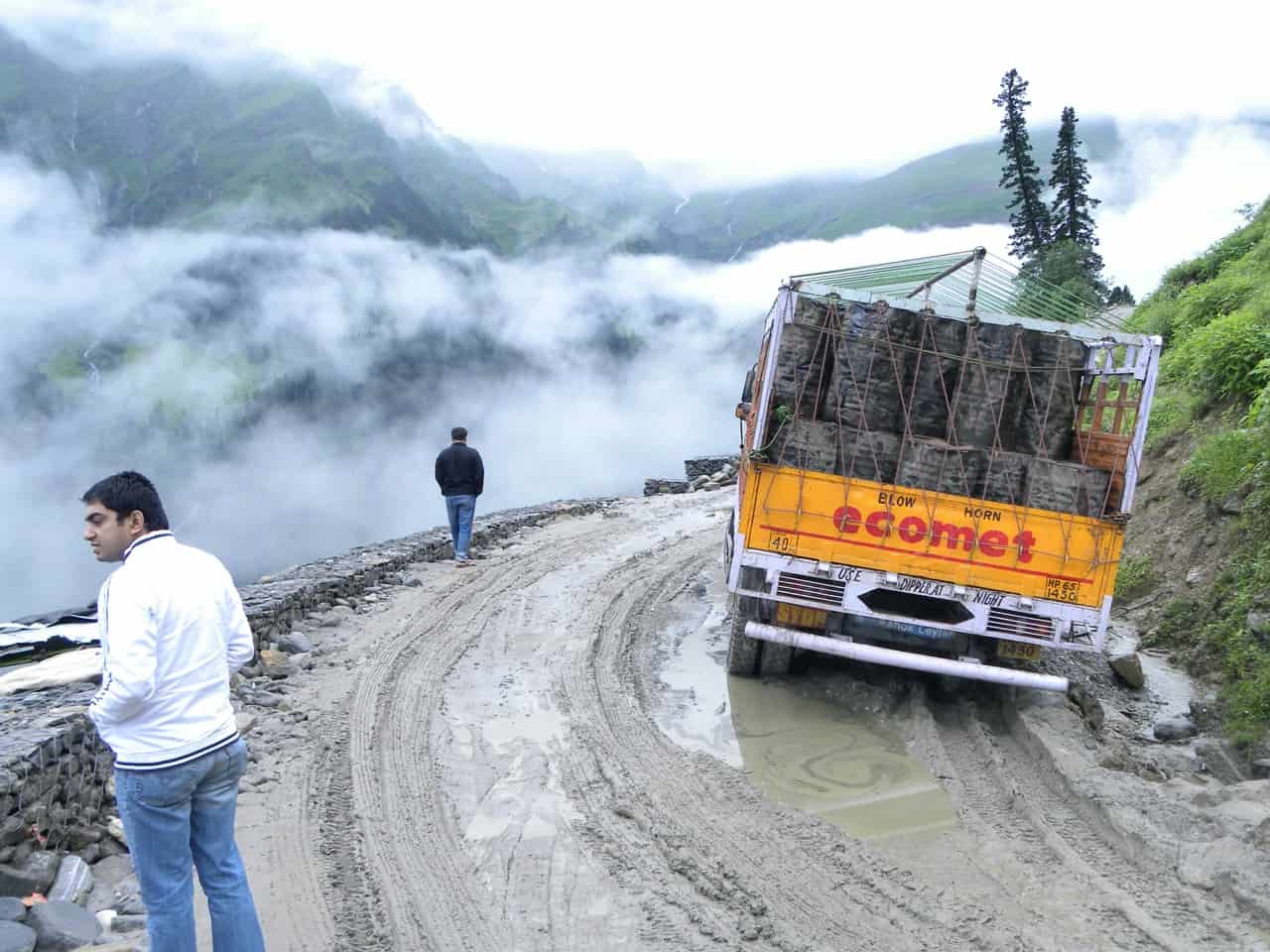
Quick answer: by taxi. Gulaba is 22 to 26 km from Manali on the Rohtang road, about 45 minutes to 1 hour by car. Here are the options as of 2026:
- Private taxi: Rs 1,200 to Rs 1,500 for the full vehicle from Manali to Gulaba. Shared among 4 to 5 trekkers this works out to Rs 240 to Rs 375 per person. This is the most convenient option.
- Shared taxi (from Manali local taxi stand): Sometimes available toward Rohtang in the morning. Cost per seat is approximately Rs 200 to Rs 300. Availability is not guaranteed. Check at the stand the evening before.
- Organized operator transport: If you are booking through an agency, they typically arrange a shared bus or jeep to Gulaba as part of the package. Some charge Rs 900 + 5% GST per person as a separate trailhead transport fee.
Keep in mind that the Rohtang permit (Rs 550 per vehicle as of 2026) is only checked for vehicles crossing the Gulaba barrier, so a trailhead drop does not compete for the daily quota. To add a Rohtang visit, our Rohtang Pass Permit 2026 guide has the booking process. If you are also doing the Manali – Leh Highway after the trek, the Manali – Leh Highway travel guide covers that stretch in detail.
For reaching Manali itself from Delhi or other cities, our complete Manali trip guide covers all transport options including overnight Volvo buses, trains, and flights to Bhuntar.
What Should You Pack for the Bhrigu Lake Trek?
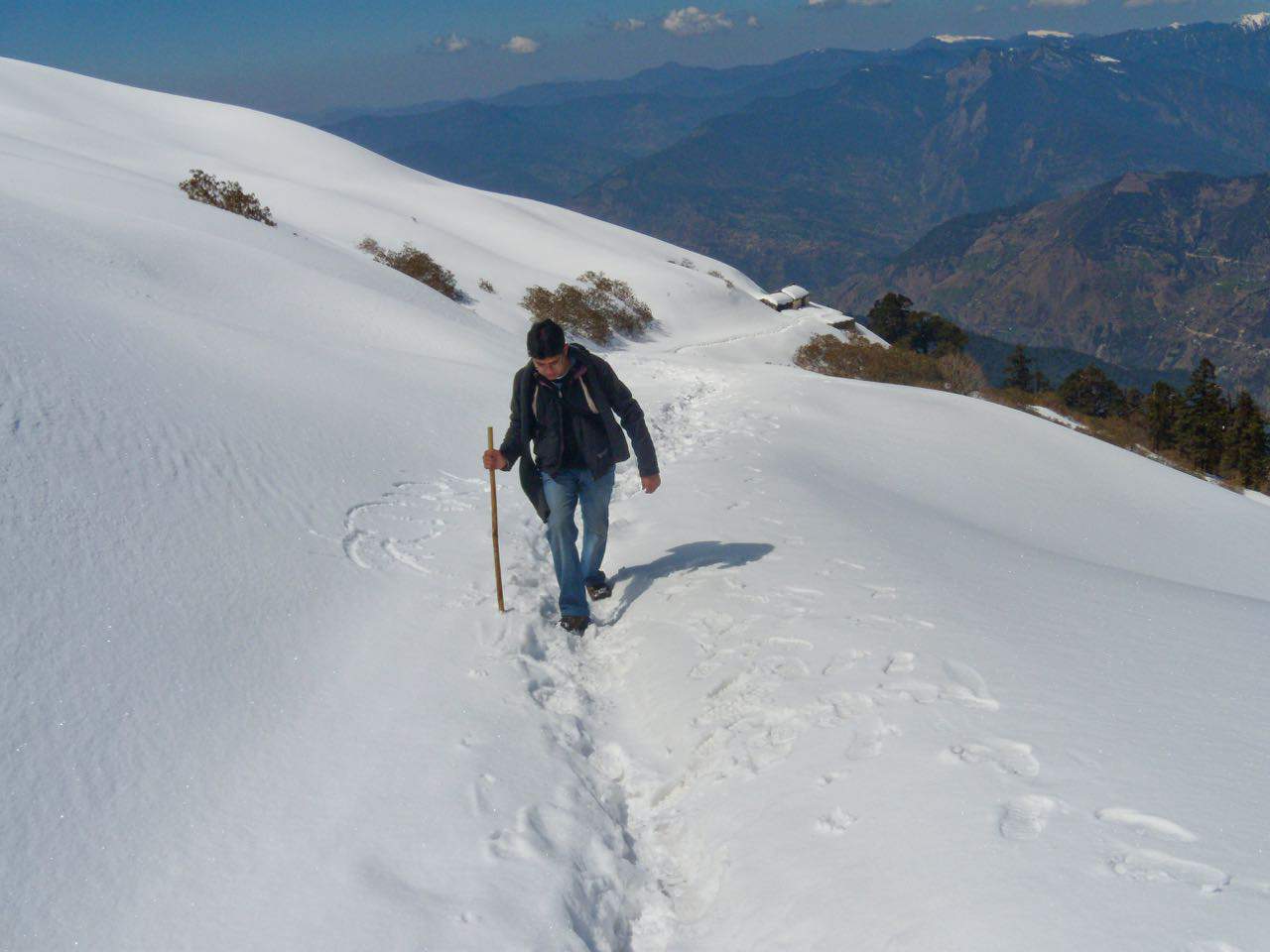
Packing right for Bhrigu Lake is non-negotiable. You are going above 14,000 Ft and the weather changes fast. Here is a practical list based on what actually matters at this altitude.
Clothing and Layering
- Moisture-wicking base layer (top and bottom), avoid cotton
- Mid-layer fleece or down jacket for evenings and mornings at camp
- Outer waterproof shell jacket (mandatory for Bhrigu Lake, weather turns suddenly)
- Trek pants (quick-dry, not jeans)
- Warm cap and gloves (essential above 3,500 m, even in July)
- Gaiters (helpful on snow sections in June and early July)
- Neck gaiter or balaclava for cold nights at camp
Footwear
- High-ankle trekking boots with good grip. Trail running shoes are not adequate for the snow sections.
- Gaiters to keep snow out of boots on Day 2
- Camp sandals or lightweight shoes for wearing around camp in the evening
- Wool socks (2 to 3 pairs minimum)
Gear and Equipment
- Trekking poles (a pair, adjustable), highly recommended for snow sections
- Headlamp with spare batteries (essential for early morning Day 2 start)
- Sunscreen SPF 50+ and UV-protection sunglasses (UV intensity is extreme above 4,000 m)
- Water bottles (at least 2 litres carry capacity) or hydration bladder
- Water purification tablets or filter (streams above Gulaba are generally clean but carry tablets as backup)
- Personal first aid kit including blister plasters, ORS sachets, paracetamol, Diamox (consult doctor)
- Rain cover for your backpack
- Sleeping bag rated to -5°C minimum (if not provided by operator)
If you are going with an operator, confirm which items they provide and which you need to bring. Most operators provide tents, sleeping bags, and mattresses. Confirm this in writing before you pay. The Manali market has rental options but inspect gear quality carefully.
For more trekking tips from the Himalayas, the Kheerganga Trek guide also has useful preparation advice for first-timers tackling Himachal Pradesh trails.
The Bhrigu Lake Trek as Part of the Manali Treks Series
If you are spending 7 to 10 days around Manali and want to combine multiple treks, Bhrigu Lake pairs well with the Hampta Pass Trek. Hampta Pass is a 4-day crossover trek from the Jobra side above Manali into Lahaul, reaching 4,270 m and descending to Chatru. If you do Bhrigu Lake first (3 days) and rest for a day, then do Hampta Pass (4 days), you have a 9-day Manali trekking itinerary that covers two very different landscapes: the green Kullu valley panorama from Bhrigu, and the stark, barren Lahaul side from Hampta. Our comprehensive Hampta Pass guide has the full logistics.
Frequently Asked Questions: Bhrigu Lake Trek
Is Bhrigu Lake Trek suitable for beginners?
It depends on your definition of beginner. If you have never trekked before, Bhrigu Lake is not the right first trek because of the rapid altitude gain to 4,300 m. A better entry point would be Kheerganga or Triund, which top out at lower altitudes. However, if you have done one or two low-altitude treks and are otherwise physically fit, Bhrigu Lake is achievable with proper acclimatization in Manali and a good guide.
Do I need any permit for Bhrigu Lake Trek?
No. No Inner Line Permit (ILP) is required for Indian nationals, and no Rohtang permit is needed for a taxi drop at Gulaba, because the NGT permit is checked only for vehicles going beyond the Gulaba barrier toward Rohtang. Some trek operators arrange a forest department camping permission for their groups. Verify with your operator what they manage on your behalf.
How many km is the Bhrigu Lake trek?
About 24 km if you go out and back from Gulaba via Rola Kholi, and roughly 27 to 30 km on the loop that descends via Pandu Ropa to Vashisht. Day 2 is the longest, at 10 km (out and back) to 14 km (loop).
Can I do Bhrigu Lake Trek solo without a guide?
Technically yes, experienced trekkers have done this independently. However, the trail above Rola Kholi toward the lake can be difficult to follow in cloud cover or fresh snow. AMS risk at this altitude is real. I suggest hiring at least a local guide from Manali if you want to go without an organized operator package. A good local guide knows the trail, the weather patterns, and what to do if someone in your group shows altitude sickness symptoms.
What is the best month for Bhrigu Lake Trek?
July and August are the best months. The trail is clear, the meadows are green, the lake is open, and wildflowers are in bloom. August is peak season with the most operators running batches. July gives you a slightly better chance of catching residual snow near the lake for dramatic visuals without the heavier snow difficulty of June.
Can I do the Bhrigu Lake trek in October?
Only in the first half, and only with a guide. Operators wind down by mid-October once early snow falls above Rola Kholi. For most trekkers, the next safe window is June to September.
Is there mobile network on the Bhrigu Lake Trek?
You will have patchy network at Gulaba and intermittently at Jonkar Thatch. Above Rola Kholi, expect no signal at all. Inform your family or hotel about your itinerary before you start. Leave a clear note with the operator or Manali hotel about your expected return date. This is standard safety protocol for any high-altitude Himalayan trek.
How cold does it get on the Bhrigu Lake Trek?
At camp (Rola Kholi and Pandu Ropa), expect night temperatures of -2 to -5°C in July and August, and -5 to -8°C in September. Daytime is pleasant (15 to 20°C in the meadows), but the wind at the lake bites even in summer. Carry a sleeping bag rated to at least -5°C.
Are there any food or water sources on the trail?
There are no tea stalls or dhabas above Gulaba, so carry all your food (operators handle camp cooking). For water, there are streams at Rola Kholi and on the descent to Pandu Ropa. The streams are generally clean but glacial runoff can carry debris, so always treat it with tablets or a filter.
Can I extend the Bhrigu Lake Trek to 4 or 5 days?
Yes, and a 4-day itinerary is more comfortable than a rushed 3-day version. It adds an acclimatization camp at Gulaba or Jonkar Thatch on Day 1 instead of pushing straight to Rola Kholi, which I recommend for anyone new to high altitude. Some operators also offer a 5-day version with an extra day around the lake.
Final Thoughts on Bhrigu Lake Trek
The Bhrigu Lake Trek earns its reputation. The altitude is real, the effort is real, and the reward at the top is equally real. I have covered plenty of Manali treks on this blog over the years, and Bhrigu Lake consistently comes up in DwD community discussions as one of the most satisfying short high-altitude options in Himachal Pradesh. It is not a casual weekend walk. But with the right acclimatization, a sensible pace, and either a good guide or a registered operator, it is very much within reach for a fit trekker.
Plan your trek for July or August for the best conditions. Give yourself a full day in Manali before you start. Do not skip the acclimatization step just because the trek is “only” 3 days. And keep in mind, that the descent to Vashisht on Day 3 finishes with hot sulphur springs and a chai. That is a very satisfying ending to any high-altitude adventure 🙂 …
If you are planning a Manali trip around the same time, the Hampta Pass Trek pairs beautifully with Bhrigu Lake for a 9-day Manali trekking itinerary. Check out the Kothi and Solang Valley guide or our Naggar Castle guide if you want to explore the Kullu valley on your rest days. For general Manali logistics, including transport, accommodation, and what to see, the Manali trip guide has everything covered.
If you have done the Bhrigu Lake Trek and have tips from the trail, please share them in the comments below. Your firsthand information helps other trekkers plan better. Looking for trek partners? Feel free to post in our DwD Travel Circle. And if you have questions about the route, cost, or what to carry, feel free to ask in the comments section below 🙂
