


Last Updated: April 2026
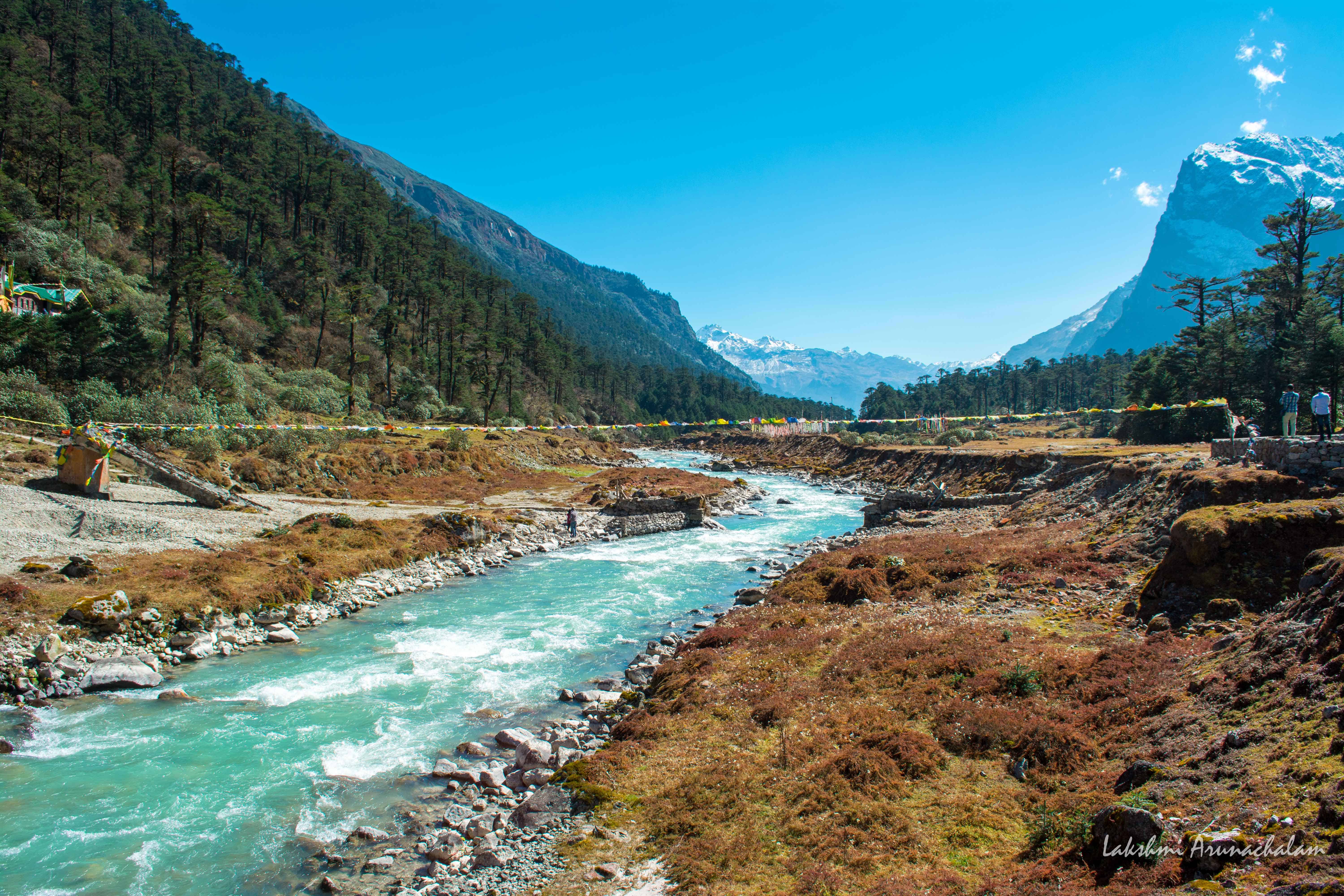
Yumthang Valley in North Sikkim sits at an altitude of 11,800 Ft (3,564 m) and is one of those rare Himalayan destinations that looks stunning no matter when you visit. Locals call it the “Valley of Flowers” for a reason. From March through June, the entire valley floor erupts in a carpet of Rhododendrons, Primulas, and wildflowers. Come October and November, it transforms into a golden autumn landscape. And by December, the valley becomes a white winter wonderland. I have been to Yumthang in different seasons and each time, it felt like visiting an entirely different place. In this complete Yumthang Valley travel guide, I will cover everything you need to plan your trip, from permits and costs to the best season, itinerary, and accommodation.
Let's quickly dive into the details:
Where Is Yumthang Valley and Why Should You Visit?
Yumthang Valley is located in the North Sikkim district, about 148 km from Gangtok and 24 km beyond the small town of Lachung. The valley sits at the confluence of alpine meadows, the Yumthang River (a tributary of the Teesta), and towering snow-capped peaks on both sides. It is part of the Shingba Rhododendron Sanctuary, which means you are essentially walking through a protected alpine ecosystem.
What makes Yumthang special is its accessibility. Unlike many high-altitude Himalayan valleys that require multi-day treks, Yumthang is reachable by road. You drive from Gangtok to Lachung (about 5 to 6 hours), stay overnight, and then visit Yumthang the next morning. This makes it perfect for families, first-time Himalayan travelers, and anyone who wants to experience a genuine alpine valley without the physical demands of trekking.
How to Reach Yumthang Valley from Gangtok?
All trips to Yumthang Valley start from Gangtok, the capital of Sikkim. You cannot drive your own vehicle beyond Gangtok into North Sikkim. The entire region operates under a permit system, and only registered local taxis are allowed. Here is how you can reach Yumthang step by step.
Step 1: Reach Gangtok. Fly into Bagdogra Airport (IXB), which is the nearest airport. From Bagdogra, Gangtok is about 125 km and takes 4 to 5 hours by taxi (Rs 2,500 to Rs 3,500 for a private cab). Alternatively, take a train to New Jalpaiguri (NJP) station and then a shared jeep to Gangtok (Rs 250 to Rs 350 per person, around 3.5 to 4 hours). You can read my detailed Gangtok travel guide for more on getting to Gangtok.
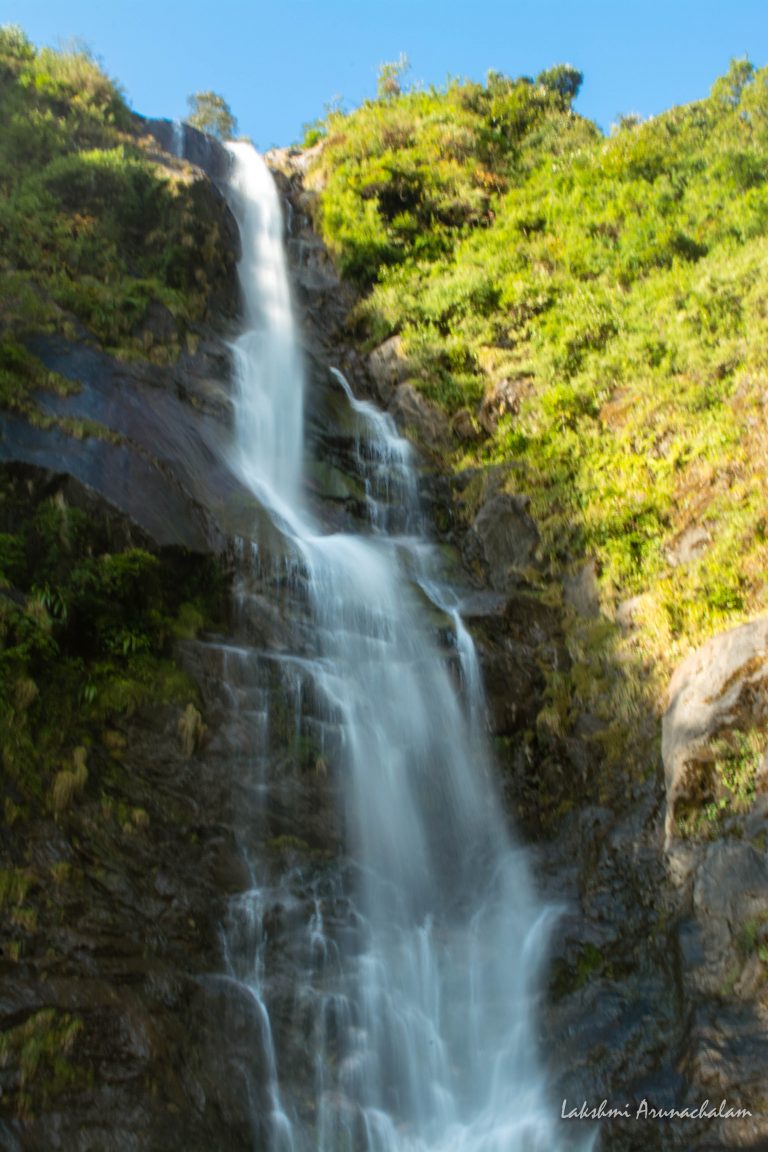
Step 2: Gangtok to Lachung. The distance from Gangtok to Lachung is about 125 km, but the journey takes 5 to 7 hours depending on road conditions, stops, and traffic. The road passes through Mangan (the district headquarters of North Sikkim) and Chungthang before climbing steeply to Lachung. The route is scenic but can be rough, especially during monsoon months. Only Mahindra Bolero, Scorpio, Xylo, or similar SUVs operate on this route. Sedan or hatchback cars are not permitted and honestly, they cannot handle these roads.
Step 3: Lachung to Yumthang. Yumthang Valley is just 24 km from Lachung and takes about 45 minutes to an hour. Your taxi driver will typically take you early in the morning (around 7 to 8 AM) so you can enjoy the valley before clouds roll in by afternoon.
What Are the North Sikkim Permit Requirements for Yumthang?
North Sikkim is a protected area and you need a Protected Area Permit (PAP) to visit Yumthang Valley, Zero Point, Lachung, and Lachen. Here is what you need to know as of 2026.
For Indian tourists: The permit is essentially free (a nominal Rs 200 processing fee). However, you cannot apply for the permit yourself as an individual. It must be arranged through a registered tour operator or travel agency in Gangtok. This is a government requirement, not a marketing tactic. Your operator will need photocopies of your ID (Aadhaar or Voter ID) and two passport-size photographs. The permit is typically processed in one day if you submit documents by afternoon.
For foreign tourists: You need a Protected Area Permit (PAP), which requires a minimum group of two people and a certified local guide. Solo foreign travelers are not allowed in protected areas of North Sikkim. Your travel agency handles the application through the Tourism Department.
Important: You cannot visit North Sikkim independently without a permit and registered vehicle. This is strictly enforced with checkpoints at Mangan and Chungthang. Keep in mind, this is actually a good thing. It controls tourist numbers and protects the fragile alpine ecosystem.
What Is Zero Point (Yumesamdong) and Is It Worth Visiting?
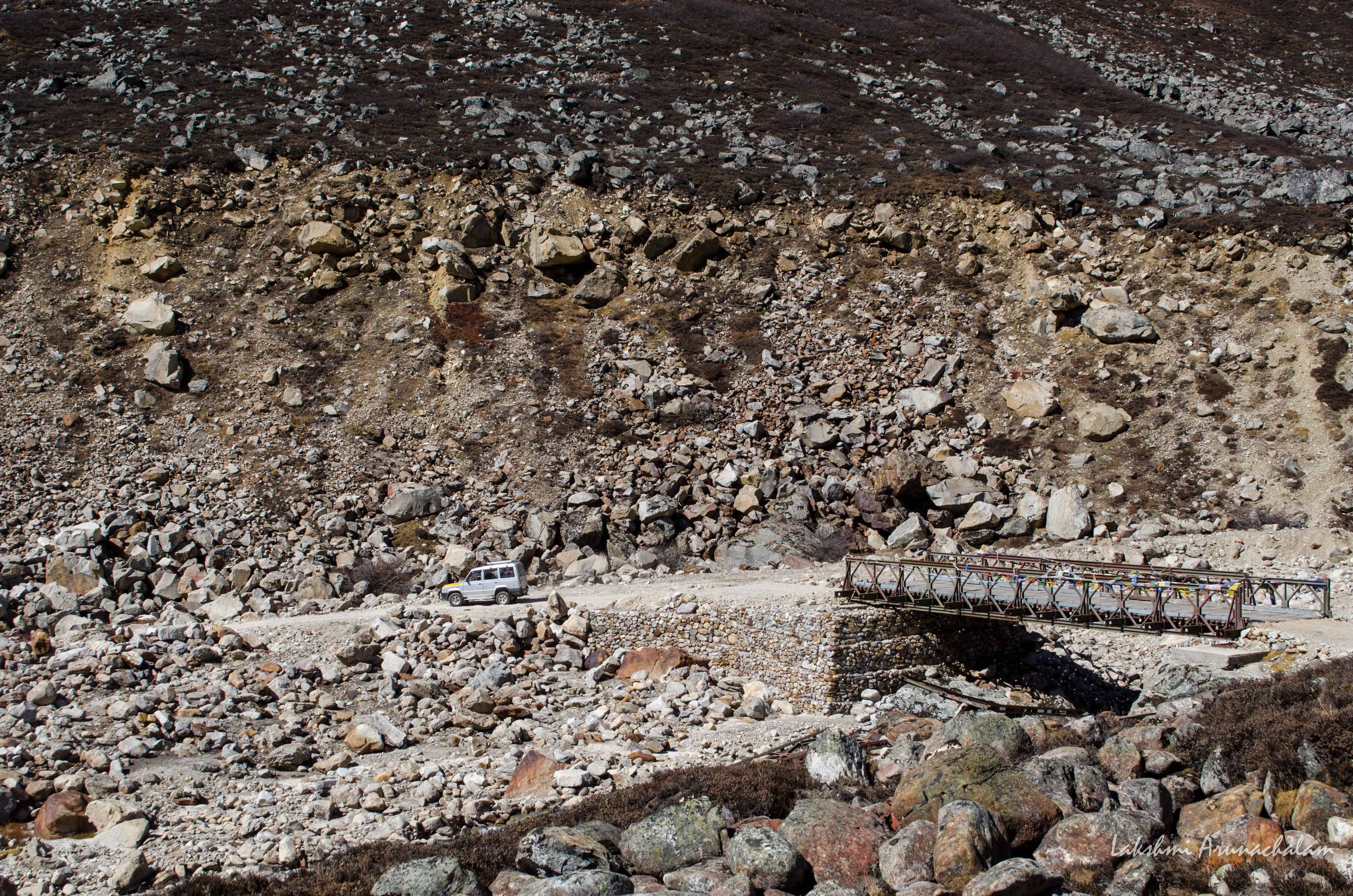
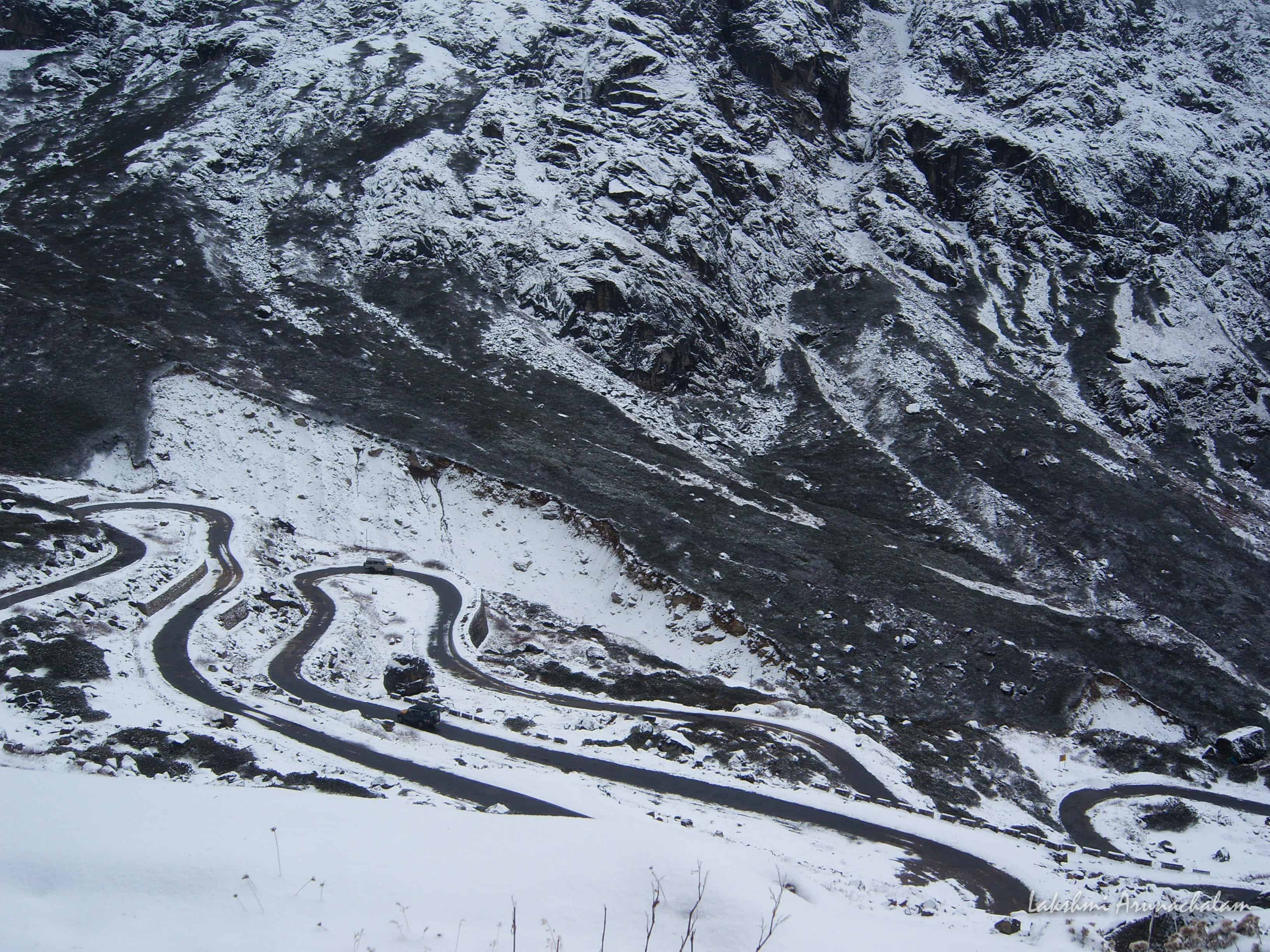
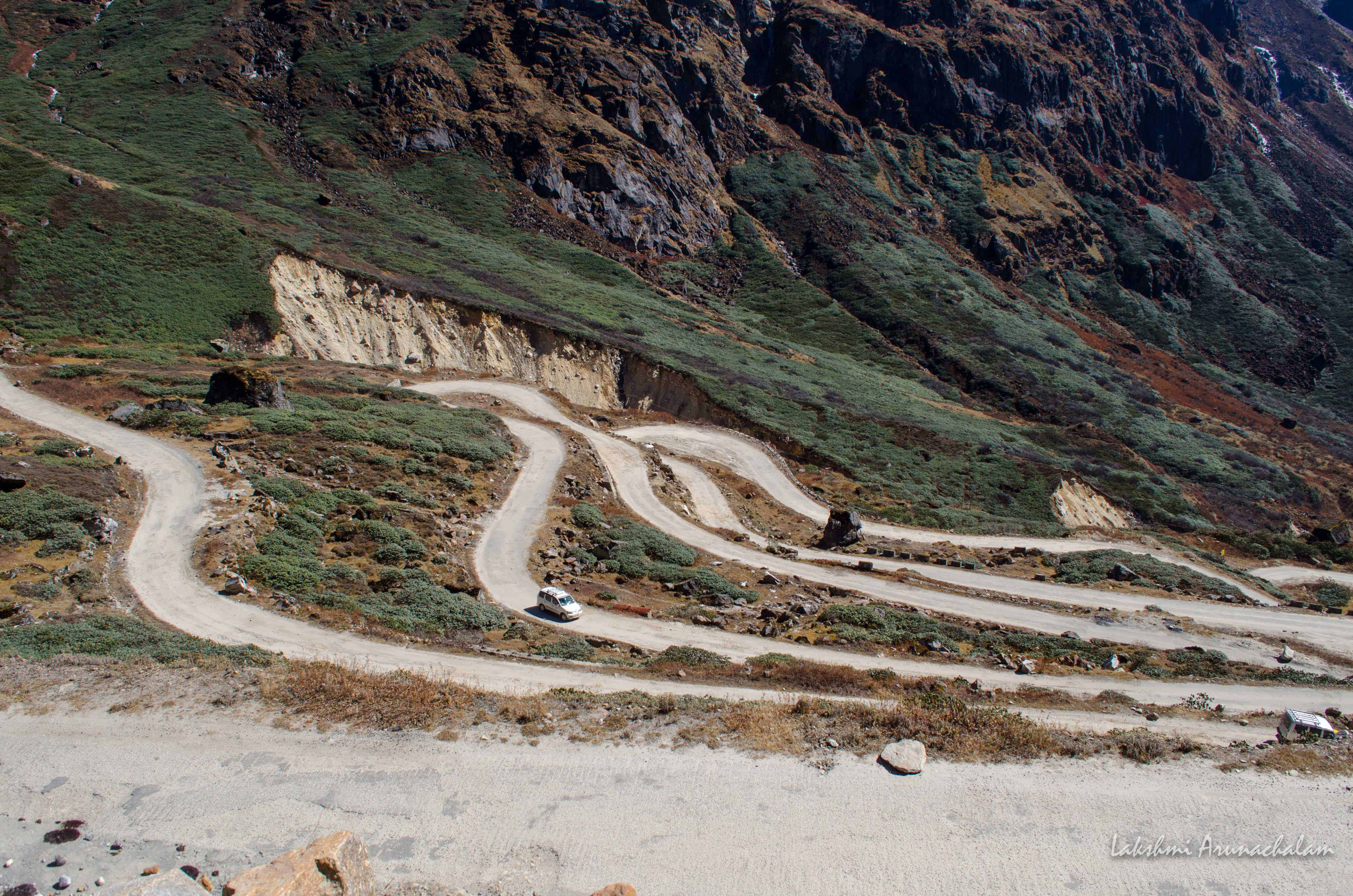
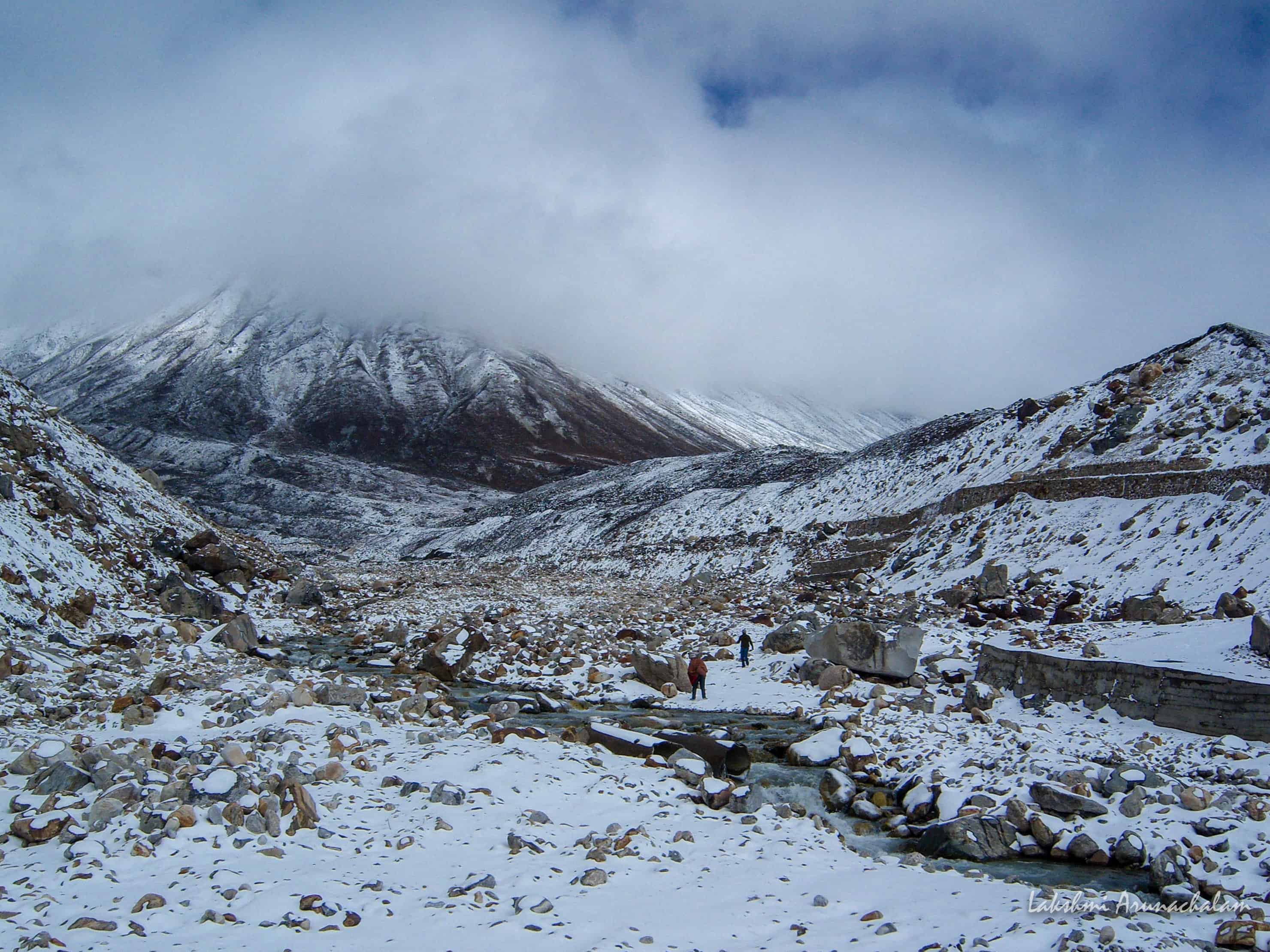
Zero Point, officially called Yumesamdong, is the point beyond Yumthang Valley where the civilian road ends. It sits at an altitude of roughly 15,300 Ft (4,663 m) and is about 13 km further from Yumthang. The location of Zero Point shifts between seasons depending on snow accumulation and road clearance. When I went first, it was just near a bridge. Another time, it was several kilometers after the bridge.
The drive from Yumthang to Zero Point takes about 45 minutes to an hour and costs Rs 2,500 to Rs 3,000 extra (as of 2025, verify locally for current rates) on top of your Lachung package. The road is rough and winding, but the views are spectacular. As you gain altitude, the green alpine meadows give way to a cold, barren landscape that looks more like Ladakh than Sikkim. Once you reach Zero Point, your taxi waits for about an hour while you enjoy the snow, take photographs, and grab a hot cup of tea or Maggi from the makeshift shops.


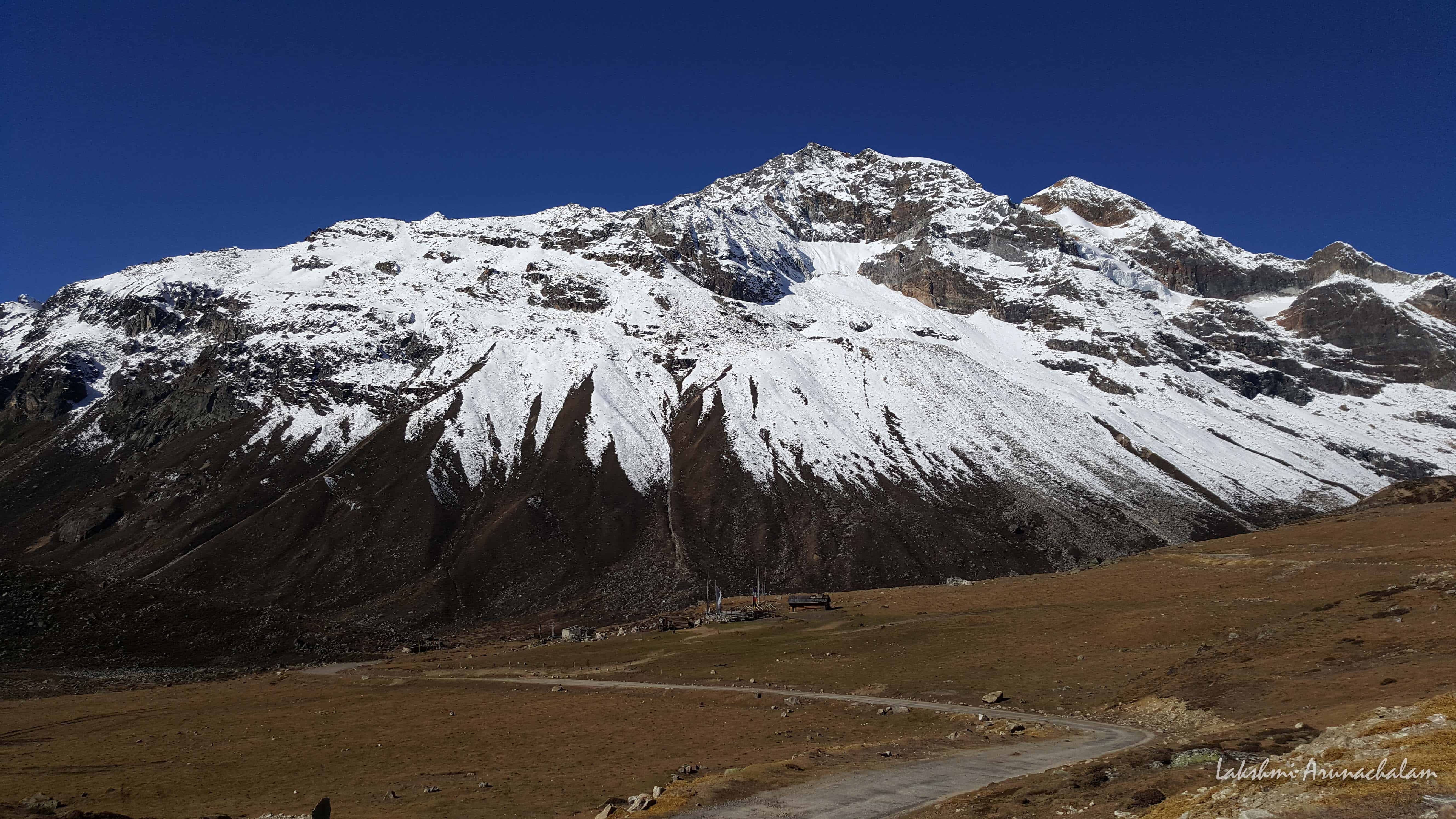
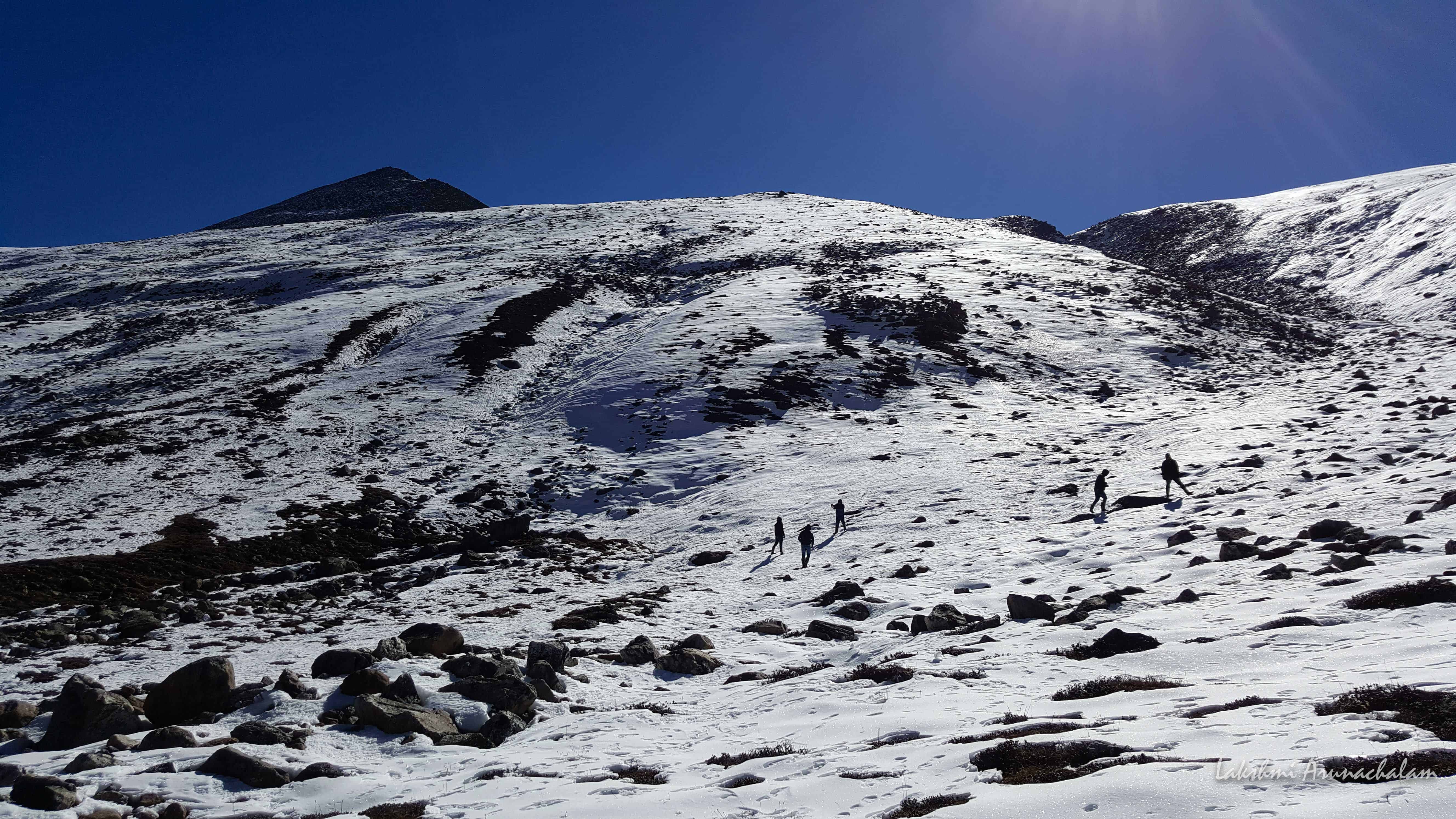
Is Zero Point worth it? Absolutely, especially if you are visiting between November and March when the area is covered in thick snow. The experience of standing at 15,300 Ft surrounded by white peaks under a clear blue sky is something you will remember for a very long time. However, since this is at a high altitude, please do not over-exert yourself. If you feel dizzy, short of breath, or get a headache, sit down and rest. You can read my detailed guide on preventing AMS for more tips on handling high altitude.
Note: Zero Point is open only to Indian tourists. Foreign nationals are not permitted beyond Yumthang Valley.
What Is the Shingba Rhododendron Sanctuary?
The Shingba Rhododendron Sanctuary was established in 1984 and covers an area of 43 sq km. It lies along the road between Lachung and Yumthang at an elevation range of 9,800 Ft to 12,100 Ft (3,000 m to 3,700 m). The sanctuary is home to the endemic Rhododendron Niveum, which is the State Tree of Sikkim, along with over 40 other species of Rhododendrons.

The flowering season runs from March to June, with peak bloom happening in late April and May. During this period, the entire sanctuary explodes with color. Rhododendrons of all shapes, sizes, and colors bloom along the hillsides. I remember walking through this area and genuinely struggling to decide which flower to photograph. Every turn revealed a new variety that seemed more beautiful than the last.
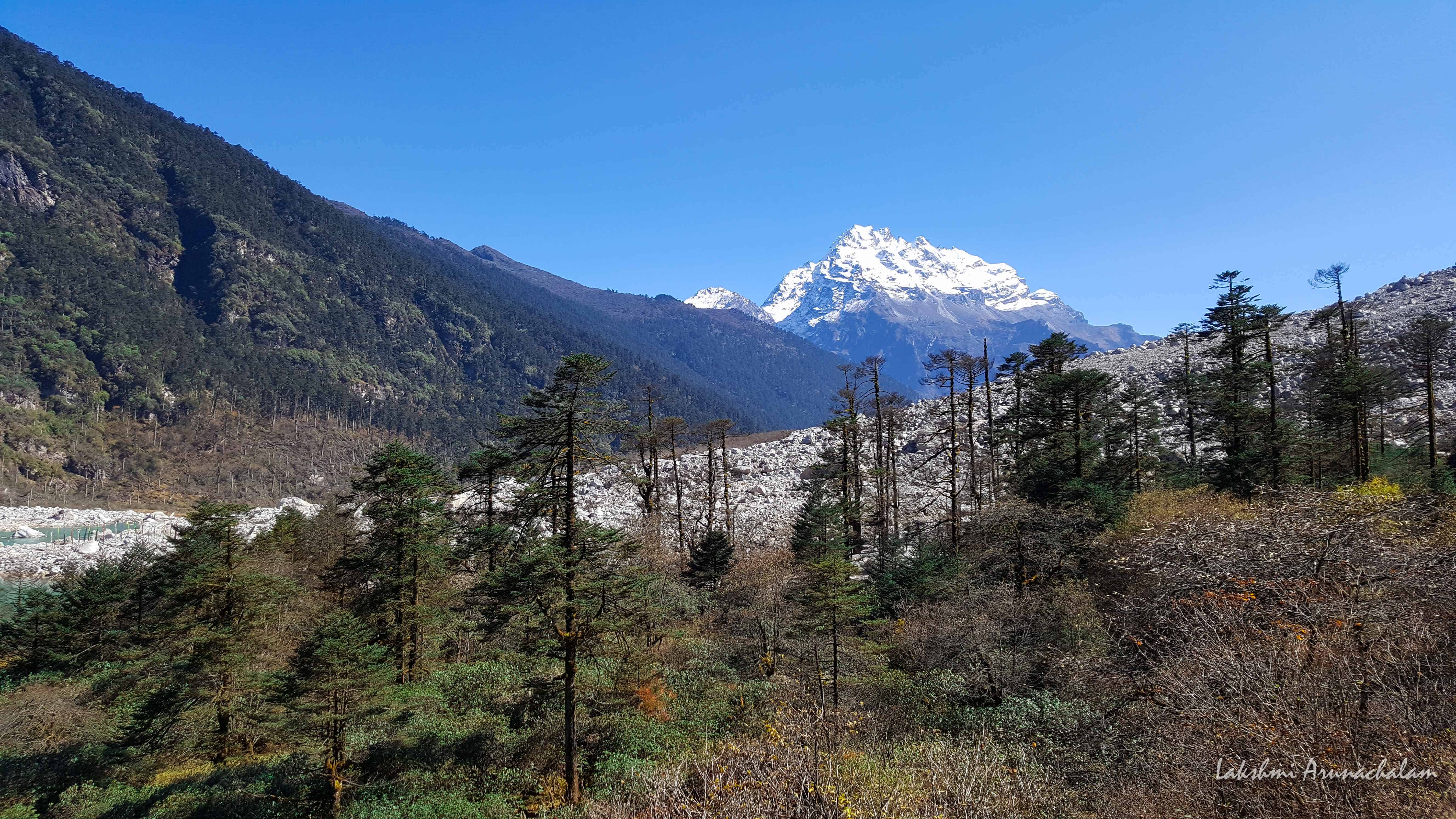
Birding at Shingba: If you are into birdwatching, this sanctuary is a goldmine during the flowering season. You can spot the rare Wood Snipe, Ibisbill, Himalayan Monal, and Blood Pheasants in the higher altitudes. I suggest taking a local bird guide if you are serious about birding. Please do not venture into the higher altitudes of the sanctuary on your own. You can check the eBird website for birding data at Shingba.
The sanctuary is also home to Red Panda, Musk Deer, and Himalayan Weasel, though spotting them requires patience and luck. Keep in mind that increasing tourist footfall is affecting the breeding birds here through noise pollution and garbage. Please be environmentally conscious when visiting. Carry your own refillable water bottles, bring back your litter, and leave minimal ecological footprints.
What Are the Hot Springs Near Yumthang Valley?
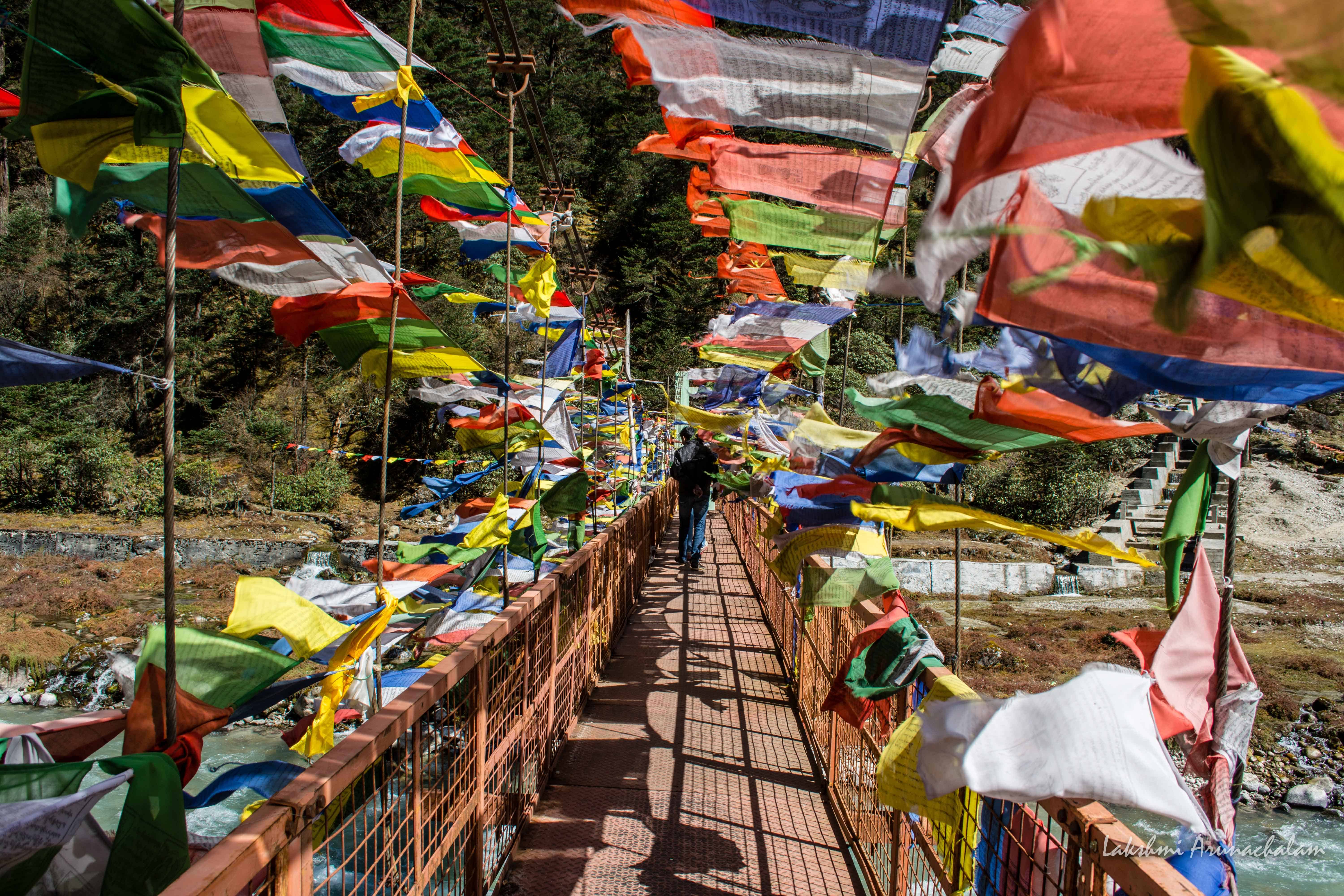
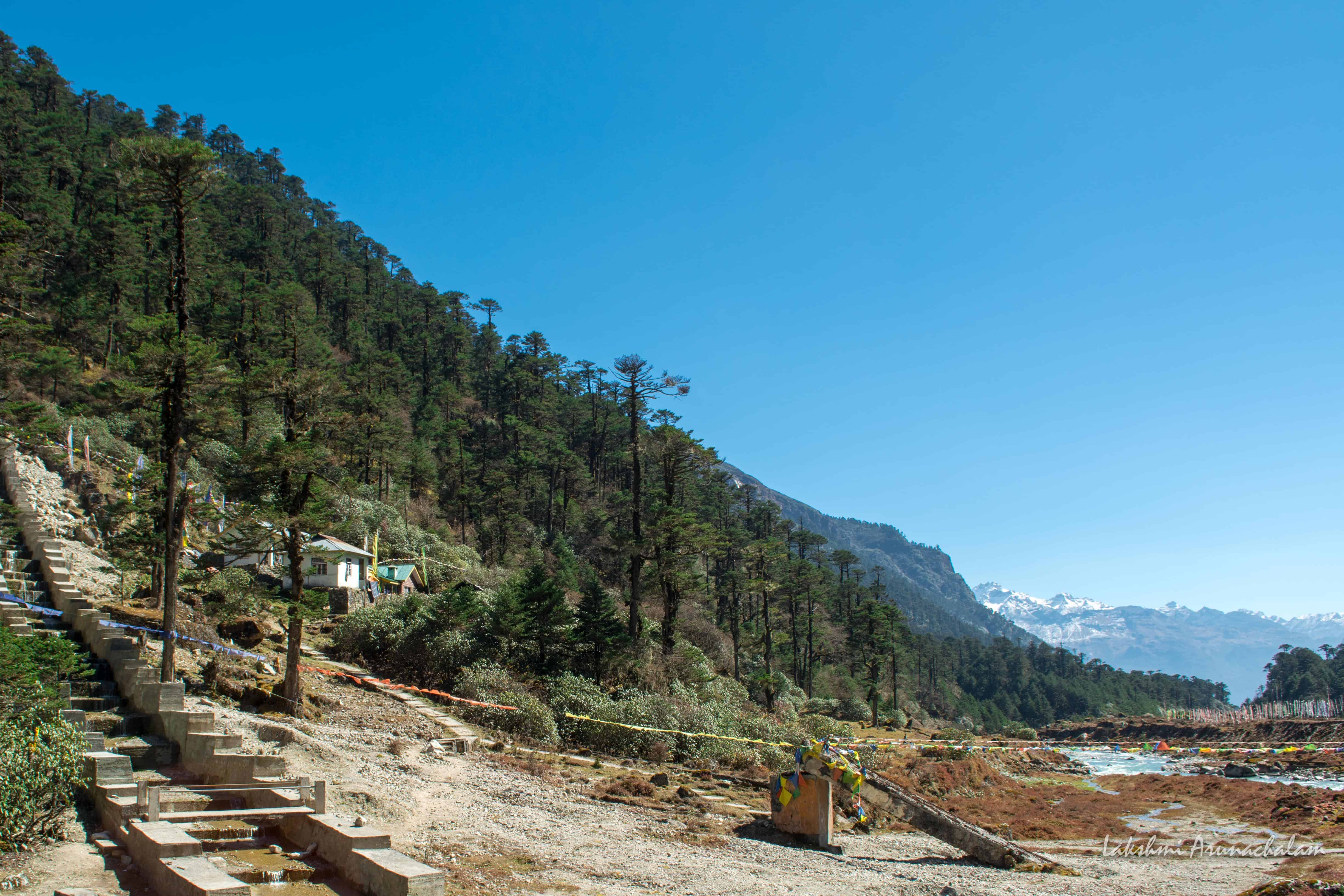
Just near the Yumthang Valley parking area, there are naturally occurring hot springs on the other side of the Yumthang River. From the parking lot, a short walk leads you to an iron bridge. Cross the river on this bridge, walk past the fluttering prayer flags, and you will see the full glory of Yumthang Valley spread out before you.
A few steps further, there are two huts (one for men and one for women) where water from the hot springs is piped into tanks for bathing. The water is rich in sulphur and is well known for its medicinal properties. You can take showers from the pipes or the tanks. It is a unique experience, sitting in naturally heated water while surrounded by snow-capped mountains.
What Is the Best Time to Visit Yumthang Valley?
Yumthang Valley is beautiful throughout the year, and the best time depends entirely on what you want to experience. Here is a month-by-month breakdown.
March to June (Spring, Flower Season): This is peak season for Yumthang. The Rhododendrons start blooming in March and peak in late April to May. The entire valley is flooded with color. Temperatures are pleasant (5 to 15 degrees Celsius during the day). This is the most crowded period, so book your packages well in advance.
July to September (Monsoon): I would not recommend visiting during monsoon. The road from Gangtok to Lachung is highly prone to landslides and road closures. In recent years, heavy rainfall has completely cut off Lachung and Lachen for days at a time, stranding tourists. However, if you do manage to visit, the small Himalayan wildflowers start blooming after the Rhododendron season ends.
October to November (Autumn): The valley turns golden brown with autumn colors. Temperatures start dropping (0 to 10 degrees Celsius). Early snowfall can happen in November. This is a less crowded but very photogenic period.
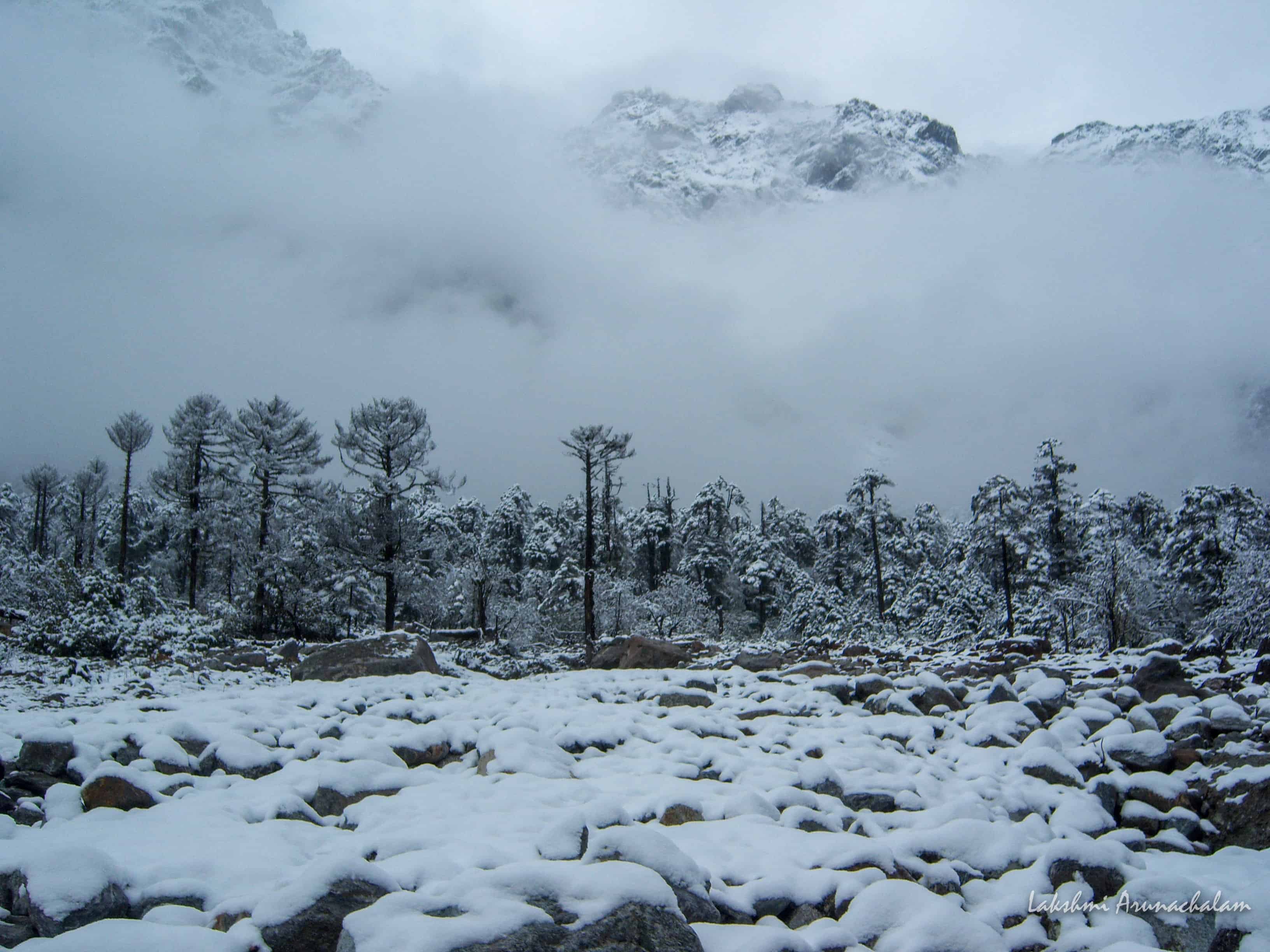
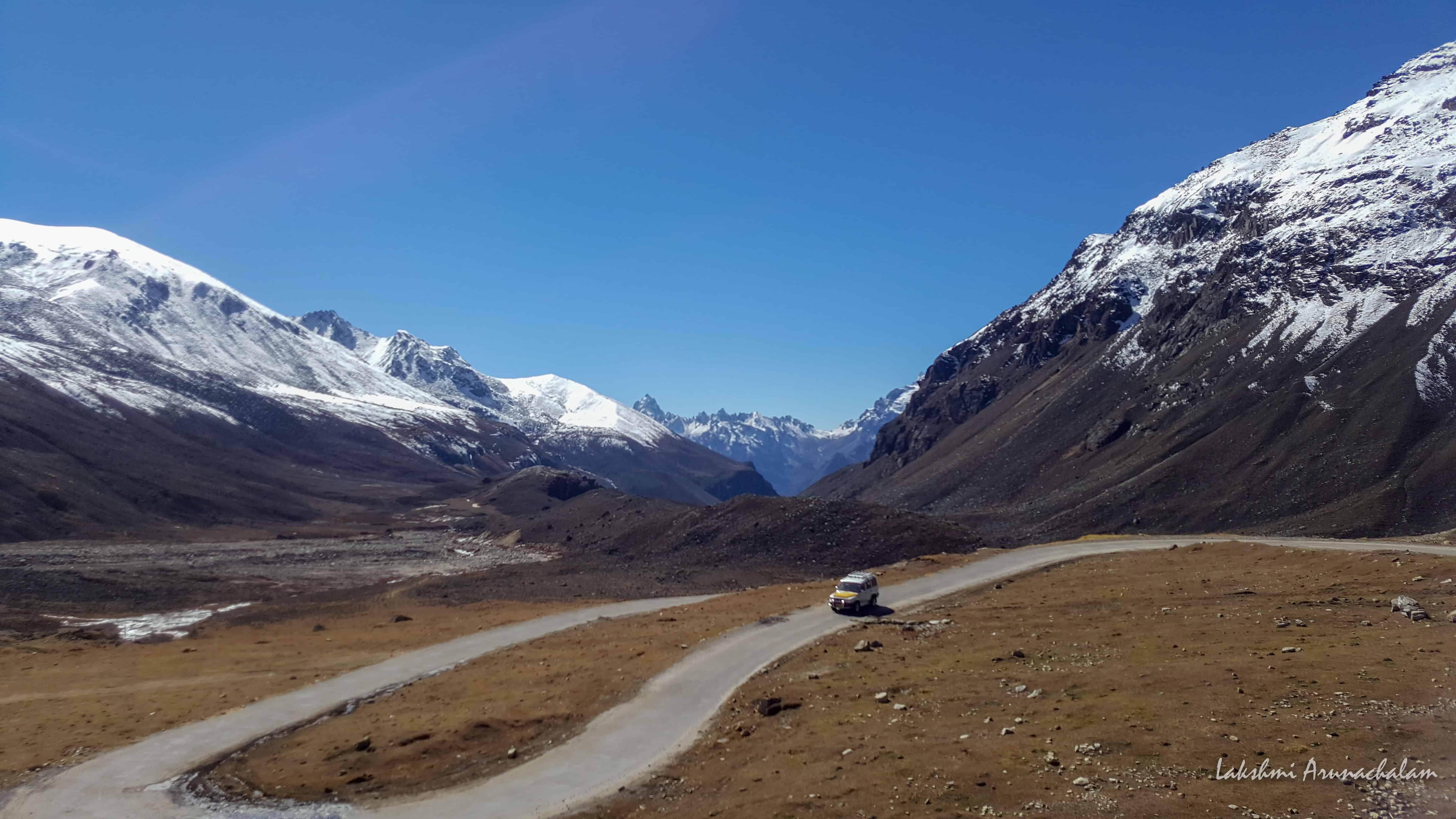
December to February (Winter): Yumthang becomes a winter wonderland. Heavy snowfall covers the entire valley, the river banks, and the roads. Temperatures can drop to minus 10 to minus 15 degrees Celsius. Zero Point is at its most spectacular during this period. Keep in mind, road closures due to snow are common, so plan for flexibility in your itinerary.
How Much Does a Yumthang Valley Trip Cost in 2026?
North Sikkim operates on a package system, which means you cannot really customize your travel. Here is a rough budget breakdown for a 2-night, 3-day Lachung-Yumthang trip from Gangtok as of 2025-2026. Verify locally for current rates.
Shared package (per person): Rs 2,500 to Rs 4,000. This typically includes transport in a shared SUV, accommodation with meals, permit processing, and sightseeing at Yumthang and Zero Point.
Private taxi (Gangtok to Lachung return): Rs 7,500 to Rs 9,500 for the vehicle. Zero Point excursion costs Rs 2,500 to Rs 3,000 extra.
Accommodation in Lachung: Budget hotels start from Rs 1,200 to Rs 2,000 per night (basic but clean). Mid-range properties like Apple Valley Inn or Etho Metho cost Rs 3,000 to Rs 5,000. Luxury options like Yarlam Resort go up to Rs 8,000 to Rs 20,000 per night. Most packages include accommodation and meals, so you may not need to book separately.

Permit fee: Rs 200 (processing fee through tour operator).
Meals: If not included in your package, budget Rs 300 to Rs 500 per person per day. Lachung hotels serve decent meals. At Yumthang, there are makeshift shops selling Maggi (Rs 50 to Rs 80), tea (Rs 20 to Rs 30), and hot soup.
Total estimated cost from Gangtok (2N/3D): Rs 3,000 to Rs 5,000 per person on shared package. Rs 8,000 to Rs 15,000 per person for private vehicle (splitting costs with 3 to 4 people).
What Is the Best Itinerary for Yumthang Valley?
Here are two itinerary options depending on how many days you have.
Short Itinerary (4 days):
- Day 1: Arrive at Bagdogra/NJP. Taxi to Gangtok (4 to 5 hours). Explore MG Marg in the evening.
- Day 2: Gangtok to Lachung (5 to 7 hours). Stop at Bhim Nala Waterfall and Chungthang. Overnight at Lachung.
- Day 3: Early morning drive to Yumthang Valley. Visit Zero Point (optional extra). Return to Lachung for lunch. Drive back to Gangtok by evening.
- Day 4: Gangtok sightseeing or depart for NJP/Bagdogra.
Extended Itinerary (6 days, includes Lachen and Gurudongmar Lake):
- Day 1: Arrive at Bagdogra/NJP. Taxi to Gangtok.
- Day 2: Gangtok to Lachung via Mangan and Chungthang. Overnight at Lachung.
- Day 3: Lachung to Yumthang Valley and Zero Point. Return to Lachung. Overnight.
- Day 4: Lachung to Lachen via Chungthang (about 2 hours). Lachung and Lachen are two roads that diverge from Chungthang. Lachung is 22 km from Chungthang and Lachen is 28 km away. Overnight at Lachen.
- Day 5: Lachen to Gurudongmar Lake and Chopta Valley. Return to Gangtok by evening.
- Day 6: Gangtok sightseeing or depart.
I suggest the extended itinerary if you have the time. Gurudongmar Lake at 17,100 Ft is one of the most magnificent high-altitude lakes in India, and combining it with Yumthang makes for a truly complete North Sikkim experience. You can read my detailed North Sikkim trip report for more on this route.
Where to Stay Near Yumthang Valley?
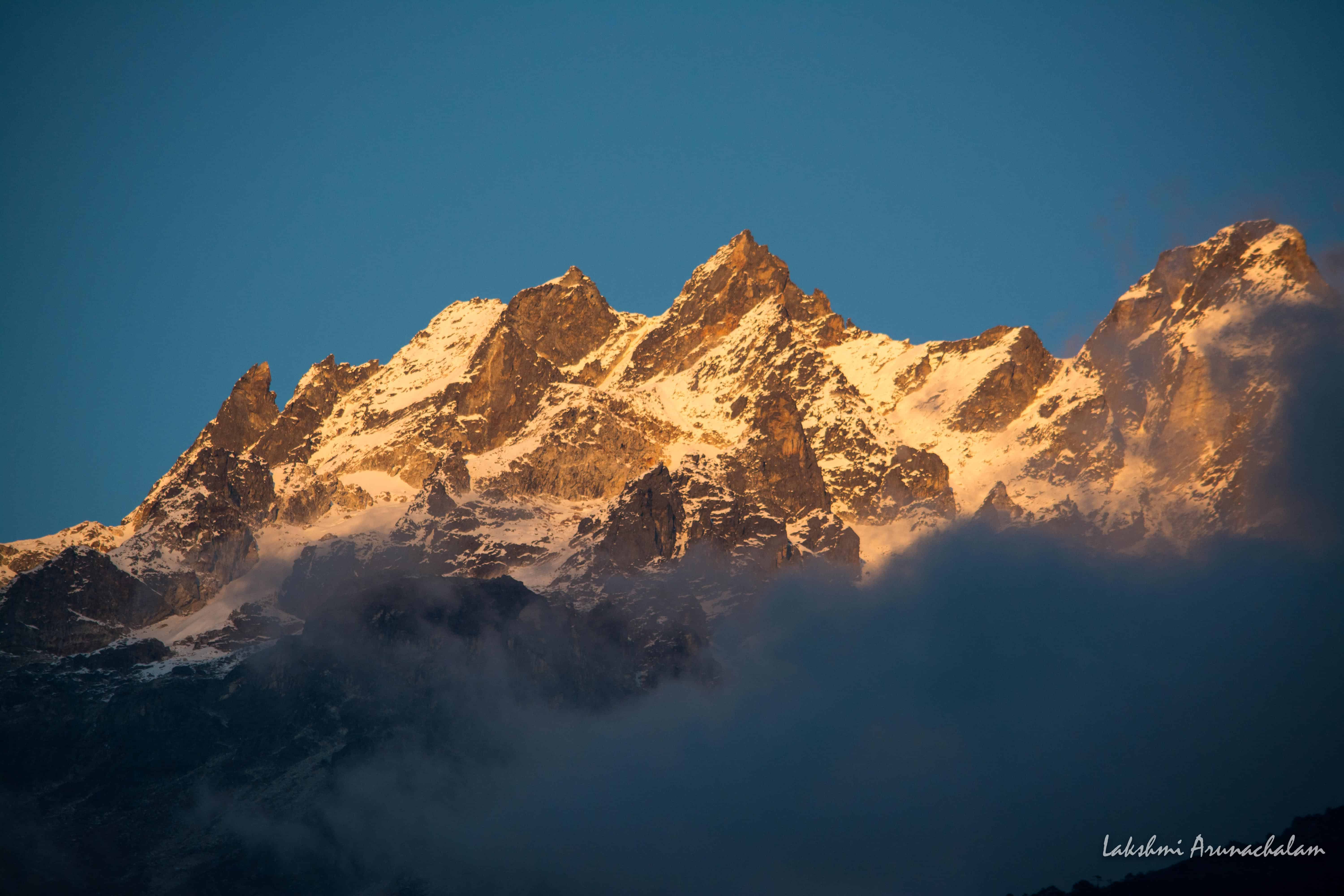
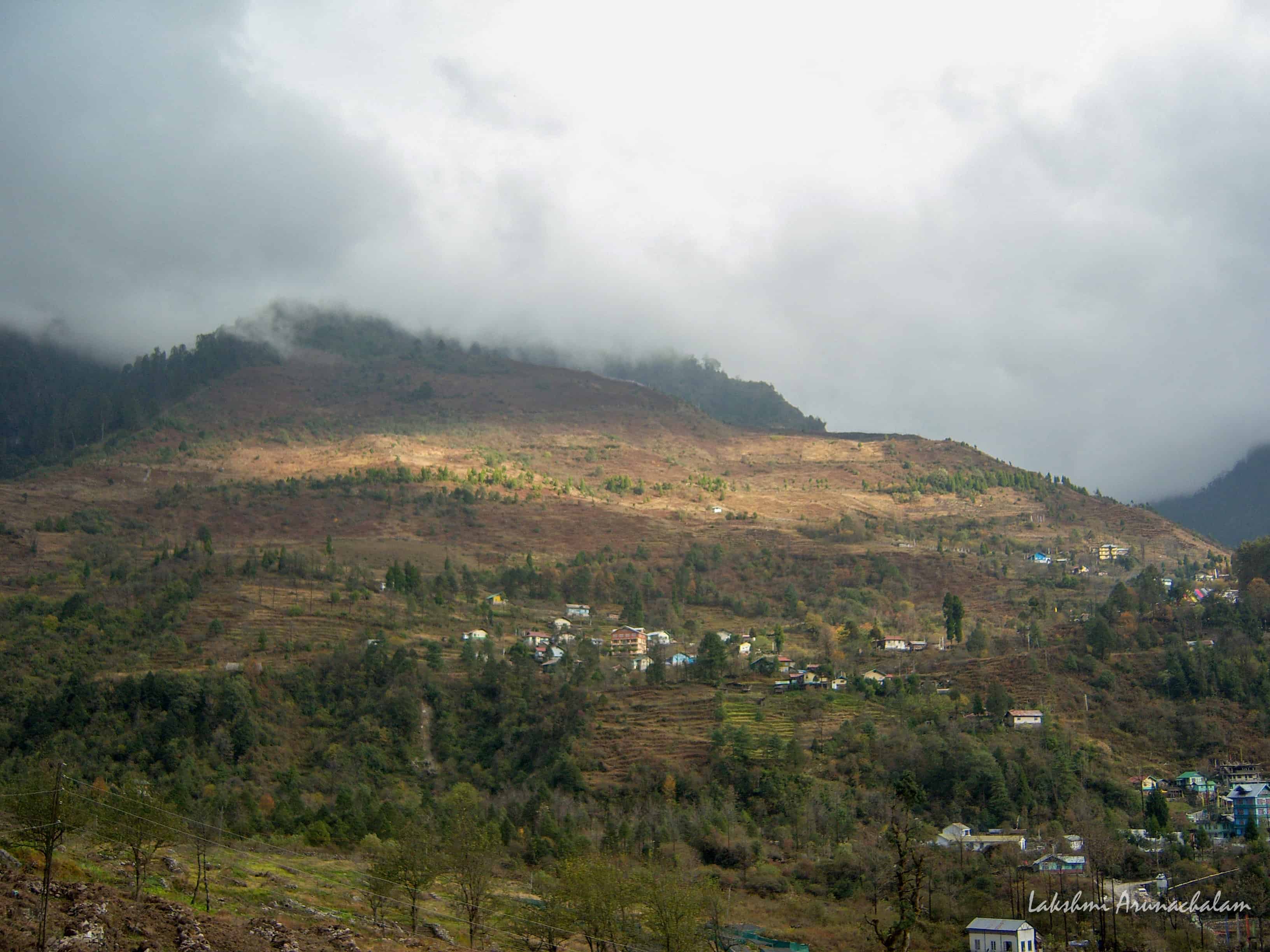
There is no accommodation at Yumthang Valley itself. Your base will be Lachung, a small village at 8,800 Ft (2,700 m) overlooking the mountains. I still remember watching one of the most spectacular sunsets I have ever seen from my room in Lachung. The snow-clad mountain in front of our hotel was turning golden yellow and slowly into an explosion of orange, pink, and red hues that faded away with the last light of the day. I was staying on a Diwali night and it was a bonus to watch fireworks burst against the sky. If you dare to step out bearing the cold night, billions of stars shine above you.
Here are some accommodation options in Lachung.
- Hotel Tenzing Retreat: Beautiful mountain views right from the window. Rooms require some climbing up and down, but the views more than make up for it. Budget to mid-range pricing.
- Apple Valley Inn: Good value for money with decent food, wonderful views, and clean rooms. Contact: 03592-214903. Kolkata office: 033-22251522 / 9830443616.
- Yarlam Resort and Spa: The only luxury hotel in the region with a specialty bar and spa. Tariff: Rs 7,000 to Rs 20,000 per night. Contact: 03592-281663.
- Etho Metho by RightClique: A 3-star property. Tariff: Rs 5,000 to Rs 10,000 per night. Contact: 099714 96422.
- Lachung Continental (Jain Group): A 2-star property. Tariff: Rs 1,500 to Rs 4,000 per night. Contact: 06295685224.
What About Lachung Monastery?
If time permits, you can visit the small Lachung Monastery, located about 4 to 5 km from the main town. It is a peaceful, picturesque monastery much like other smaller monasteries in Sikkim. However, I will be honest. If you have already visited Rumtek Monastery or other larger ones in Gangtok, this one might feel a little underwhelming. But like all monasteries in the Himalayas, it compensates with lovely views of the surrounding hills.
What Is the Mobile Network Situation in Yumthang?
There is no mobile tower at Yumthang Valley or Zero Point. You will have zero network coverage there. In Lachung, BSNL postpaid has the widest coverage, though it is still patchy. Airtel and Jio work intermittently in Lachung town but are unreliable. Some hotels in Lachung offer Wi-Fi, but do not expect fast or consistent internet. Think of it as a digital detox. Carry an offline map on your phone and download any essential information before leaving Gangtok.
What Should You Pack for Yumthang Valley?
The packing list depends heavily on the season. Here are the essentials.
- Winter (Oct to Feb): Heavy down jacket, thermal innerwear, woolen socks, waterproof boots, gloves, beanie or balaclava, hand warmers. Temperatures can drop to minus 15 degrees Celsius.
- Spring/Summer (Mar to Jun): Layered clothing. A warm jacket for early mornings and evenings, comfortable trekking shoes, sunscreen (SPF 50+), polarized sunglasses (snow glare is real).
- All seasons: Personal medications, moisturizer (the air is very dry), a refillable water bottle, portable charger (no charging points at Yumthang), and cash (ATMs are unreliable beyond Gangtok).
What Are Some Important Tips for Visiting Yumthang Valley?
- Carry sufficient cash. There are no ATMs in Lachung or beyond. The last reliable ATM is in Gangtok. Carry at least Rs 5,000 to Rs 8,000 in cash per person.
- Book through registered operators only. Do not try to arrange North Sikkim travel independently. The permit system requires a registered operator, and unregistered vehicles are turned back at checkpoints.
- Acclimatize in Gangtok first. If you are coming from the plains, spend at least one night in Gangtok before heading to Lachung. The altitude jump from Gangtok (5,400 Ft) to Yumthang (11,800 Ft) and Zero Point (15,300 Ft) is significant.
- Avoid monsoon (July to September). Landslides are frequent and roads can be blocked for days. In 2024-2025, multiple incidents stranded tourists in North Sikkim due to heavy rainfall.
- Carry your own snacks and water. Food options at Yumthang are limited to a few makeshift shops. Carry dry fruits, energy bars, and water from Lachung.
- Start early from Lachung. The morning light at Yumthang is magical, and clouds typically roll in by early afternoon. An early start gives you the best views and photographs.
- Respect the environment. This is a protected sanctuary area. Do not litter, do not pluck flowers, and do not play loud music. Carry back everything you bring.
What Else Can You Explore Near Yumthang Valley?
If you are spending more time in Sikkim, here are some destinations you can combine with your Yumthang Valley trip.
- Gurudongmar Lake and Chopta Valley: One of the highest lakes in India at 17,100 Ft, accessible from Lachen (2 hours from Chungthang). A must-visit if you have an extra day.
- Gangtok and Nathu La Pass: The capital city with MG Marg, Rumtek Monastery, and the India-China border at Nathu La (14,140 Ft).
- East Sikkim Old Silk Route: An offbeat circuit through Zuluk, Nathang Valley, and Kupup Lake. Great for those who want to avoid the usual tourist trail.
- Zuluk: Famous for its 32 hairpin bends and stunning sunrise views. Can be done as a separate trip from Gangtok.
- Pelling: West Sikkim with views of Kanchenjunga, Rabdentse Ruins, and Pemayangtse Monastery. A 2-day addition to your itinerary.
Two roads diverged in a yellow wood, And sorry I could not travel both
And be one traveler, long I stood, And looked down one as far as I could
The Road Not Taken, Robert Frost
If you do not want to feel like Robert Frost and regret taking only one road, I strongly suggest adding Lachen and Gurudongmar to your North Sikkim trip. Lachung and Lachen are two diverging roads from Chungthang, and both lead to extraordinary destinations.
Frequently Asked Questions
Is Yumthang Valley open throughout the year?
Yes, Yumthang Valley is accessible throughout the year. However, road access to Zero Point may be restricted during heavy snowfall in December to February. The monsoon months (July to September) also see frequent road closures due to landslides. The best time to visit is March to June for flowers and October to February for snow.
Do I need a permit to visit Yumthang Valley?
Yes. A Protected Area Permit (PAP) is mandatory for all visitors to North Sikkim, including Yumthang Valley and Zero Point. For Indian tourists, the permit costs Rs 200 and must be arranged through a registered tour operator. Foreign tourists need a PAP with a minimum group of two and a certified guide.
Can I drive my own car to Yumthang Valley?
No. Private vehicles and self-drive are not allowed in North Sikkim. Only registered local taxis (typically Bolero, Scorpio, Xylo type SUVs) operate on this route. You must book through a tour operator in Gangtok.
How many days do I need for a Yumthang Valley trip?
A minimum of 3 to 4 days from Gangtok. Day 1 for Gangtok to Lachung, Day 2 for Yumthang and Zero Point, Day 3 for return to Gangtok. If you want to include Lachen and Gurudongmar Lake, plan for 5 to 6 days.
Is Yumthang Valley safe for families with children?
Yes, Yumthang Valley is one of the more family-friendly high-altitude destinations in India. The valley itself is a flat meadow that is easy to walk around. However, be cautious with young children at Zero Point (15,300 Ft) due to altitude. Ensure your child is well-hydrated and not exerting too much at high altitude.
What is the temperature at Yumthang Valley?
Summer temperatures (March to June) range from 5 to 15 degrees Celsius. Winter temperatures (November to February) can drop to minus 10 to minus 15 degrees Celsius. Carry appropriate clothing based on the season.
Is there food available at Yumthang Valley?
There are a few makeshift shops at the Yumthang parking area selling Maggi (Rs 50 to Rs 80), tea, hot soup, and snacks. At Zero Point, similar shops are available. However, the options are limited and prices are higher than usual. I suggest carrying your own snacks, water, and a thermos of hot tea from Lachung.
Can foreigners visit Zero Point?
No. As of 2026, Zero Point (Yumesamdong) is accessible only to Indian tourists. Foreign nationals are permitted only up to Yumthang Valley.

Yumthang Valley is one of those places that stays with you long after you leave. Whether you visit for the Rhododendrons in spring or the snow in winter, it delivers a Himalayan experience that is accessible, safe, and genuinely beautiful. If you are planning a trip to Sikkim, do not skip North Sikkim. It is the heart of the state.
I hope this travel guide helps you plan your Yumthang Valley trip. If you have any questions, feel free to drop a comment below or reach out through the DwD Community. For more Sikkim guides, check my Gangtok weekend trip guide and the complete North Sikkim trip report. Feel free to share this article with friends and family who are planning a Sikkim trip 🙂 …

7 Comments
Comments section gets closed in 90 days. To ask your travel questions, you can follow my YouTube Channel for a faster reply or for a much slower reply follow me on Instagram. :)
As i’m planning my trip on march 16’that gangtok.from there how i reach at yumthang and zero point and came back to gangtok… Where we should stay and for how many days….
Sir your narration of yumthung valley and lachung is spellbound. We are planning to visit yumthung, guru dongmar in 2nd week of January. Is it advisable to visit at that time?
I am planning to visit this place in December end.should i go?
can you suggest some reliable driver for Sikkim tour ?
Hi Chandra,
You can contact Bablu Rain (Xylo) at +91 8900402674 or James (Innova) at +91 8348287268. You can contact the Gangtok local sightseeing driver at +91 8334942211. Hope I haven’t replied very late and have a great trip!!
Makes me want to visit the place. Such beauty and so well written. Anyone who reads cannot resist the urge to want to go there atleast once !
Thanks Janani! Hope you plan your trip there.