


Are you planning to carry your camera to Leh – Ladakh this winter and wondering whether it will survive the cold, or whether you will? Winter photography in Ladakh is a different game from the summer trip most of us know. The lakes turn to ice, the crowds disappear and the light stays low for most of the day. However, batteries die in minutes, lenses fog up the moment you walk into a warm room, and standing still at 14,000 feet in minus 20 degrees Celsius is a safety problem, not just a comfort problem.
I have made multiple winter visits to Ladakh, and I have already covered how to plan a winter trip to Ladakh, while my all-season Ladakh photography guide covers locations and settings for every month. This post is the winter-only companion: gear that holds up in sub-zero cold, frozen-lake locations from December to February, and staying safe while you wait for the light. The camera-handling advice is based on research, manufacturer guidance and feedback from DwD community members who have shot here in winter.
Quick Answer: Is Winter a Good Time for Photography in Ladakh?
Quick answer: Yes, if you are prepared. January and February give you frozen Pangong and Tso Moriri and almost no tourists in your frame. You fly in (both highways are closed), rest two full days in Leh, carry 3-4 spare batteries kept warm inside your jacket, bag your camera before entering heated rooms, and never shoot alone at the lakes.
Winter Photography in Ladakh at a Glance
| Best window | Mid-December to February. Lakes freeze solid in January and February |
| Access | Flight to Leh only. Manali – Leh and Srinagar – Leh highways are closed |
| Altitude | Leh 11,520 ft, Pangong Tso 14,270 ft, Tso Moriri 15,075 ft |
| Cold | Leh’s coldest January night ranged from minus 7.6 to minus 20.7 degrees Celsius between 2015 and 2024 (IMD). Expect minus 30 or lower at Pangong and Tso Moriri |
| January daylight | Sunrise around 7:20-7:30 AM, sunset around 5:20-5:50 PM in Leh |
| Camera rating | Most bodies and batteries are rated for 0 to 40 degrees Celsius |
| Fees | Ladakh EDF about Rs 590 per person for a 7-day trip |
| Difficulty | Hard. Altitude plus extreme cold plus fewer services |
| Budget (6 days) | Rs 23,240-37,440 per person (budget) to Rs 51,690-86,090 (comfort) |
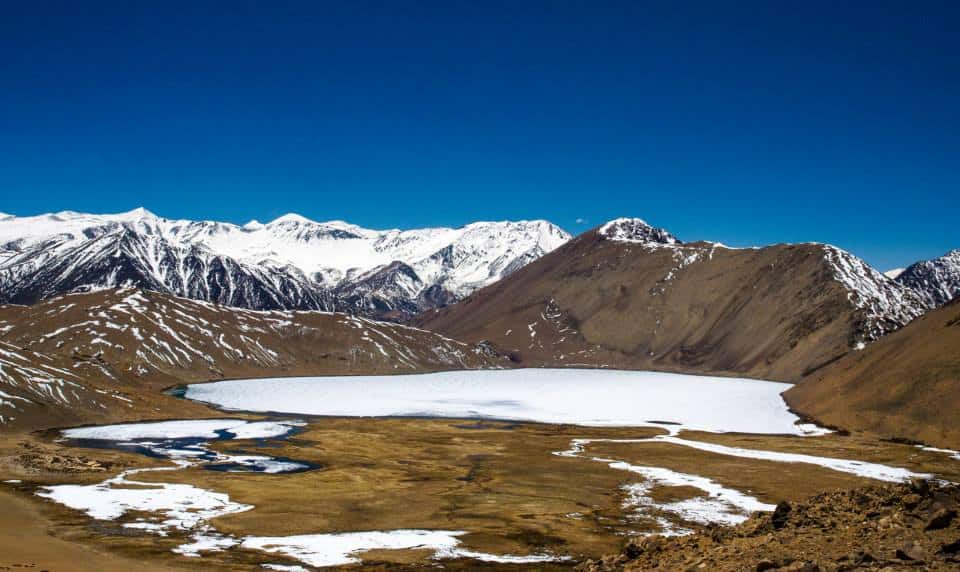
What Makes Winter Photography in Ladakh Different From Summer?
Quick answer: Lower sun, shorter days, snow that fools your meter, frozen water instead of blue lakes, and far fewer people. Every shoot is limited by battery life, finger dexterity and altitude, so plan fewer locations and spend longer at each one.
In summer, the Ladakh sun is harsh from about 9 AM to 4 PM. In winter it stays low even at noon. Hence, side light and long shadows last much of the day, which is a gift for textures in ice, snow ridges and monastery walls. The day itself is short though. As per the IMD climate data for Leh, January is the coldest month, and lake shores lose direct sun early behind the surrounding mountains.
Snow fools your meter, which turns a bright frozen lake into dull grey. Add plus 1 to plus 1.5 stops of exposure compensation and trust the histogram rather than the screen. Also, Pangong in July has hundreds of cars at Spangmik, while in January you may have the shoreline to yourself. Lovely for clean frames, but keep in mind that nobody is around if something goes wrong.
What Camera Gear Actually Works in Ladakh’s Sub-Zero Cold?
Quick answer: Any modern camera works if you manage batteries and moisture. Carry 3-4 spare batteries rotated from an inside pocket, a power bank, zip-lock bags for condensation, a tripod with foam-wrapped legs, liner gloves under mittens, and lens cloths. Weather sealing helps but does not make a camera cold-proof.
Batteries: Your Biggest Problem
Most manufacturers rate camera bodies and lithium-ion batteries for 0 to 40 degrees Celsius. Nikon’s EN-EL15a battery is specified for that range, and Sony’s help guide for some bodies quotes minus 10 to plus 40. A pre-dawn shoot at Pangong in January is far below both. The battery usually is not damaged. It simply cannot deliver current, so the camera shuts down while the battery is half full.
So, I suggest rotation. Keep one battery in the camera and two or three spares in an inside chest pocket. When the camera dies, swap in a warm battery and pocket the cold one, which often recovers once it warms up. Spares in an outer pocket or the camera bag are just as cold as the dead one. Charge everything every night, and carry a power bank that can charge your camera over USB-C, because power supply can be erratic in winter outside Leh.
Condensation: The Mistake That Ends Shoots
When a camera at minus 15 degrees enters a heated room or warm taxi, moisture condenses on the cold glass and electronics, sometimes inside the lens. Go back outside and that moisture can freeze. The fix works: before going indoors, remove the memory card and battery, then seal the camera in a large zip-lock bag while still outside. Let it warm inside the bag for one to two hours before opening. Condensation forms on the bag, not the camera, and with the card out you can still back up the day’s photos. Add a few silica gel packets.
Tripod, Gloves and Your Fingers
A metal tripod leg at minus 20 degrees is painful and risky to hold bare-handed. Wrap the top section of each leg with foam leg wraps or pipe insulation, and prefer large flip locks you can work with gloves on. For hands, layer a thin touchscreen liner glove under a warm mitten. Do fiddly work in liners for a few seconds only, then go back into the mitten. Hand warmers and the camera’s two-second self-timer mean fewer bare-finger touches.
Lenses, Filters and Phones
A wide-angle zoom (16-35mm on full frame or equivalent) is the workhorse for frozen lakes and ice cracks, and a 70-200mm compresses layers of snowy ridges. For snow leopards, 500-600mm is considered the minimum, as covered in my snow leopard safari guide. Change lenses outdoors as rarely as possible. A polarizer cuts glare off ice, but on a wide lens at altitude it can turn part of the sky almost black, so use partial strength. Phones shut down even faster than cameras, so keep yours in an inside pocket and take it out only to shoot.


| Gear item | Why it matters in winter | How to use it |
|---|---|---|
| 3-4 spare batteries | Cold batteries cannot deliver current | Rotate from an inside chest pocket |
| Power bank + cables | Power cuts outside Leh | Charge in the taxi or overnight, keep it warm |
| Large zip-lock bags | Stop condensation indoors | Card and battery out, seal outside, open after 1-2 hours |
| Silica gel packets | Absorb moisture in the bag | Replace when saturated |
| Foam tripod leg wraps | Bare metal at minus 20 is dangerous | Wrap the leg section you hold |
| Liner gloves + mittens | Dexterity without frostbite | Liners for seconds, mittens otherwise |
| Self-timer or remote | Fewer touches, sharper exposures | Two-second timer works fine |
| Lens cloths + blower | Snow, frost and dust on the lens | Never breathe on a cold lens, it freezes |
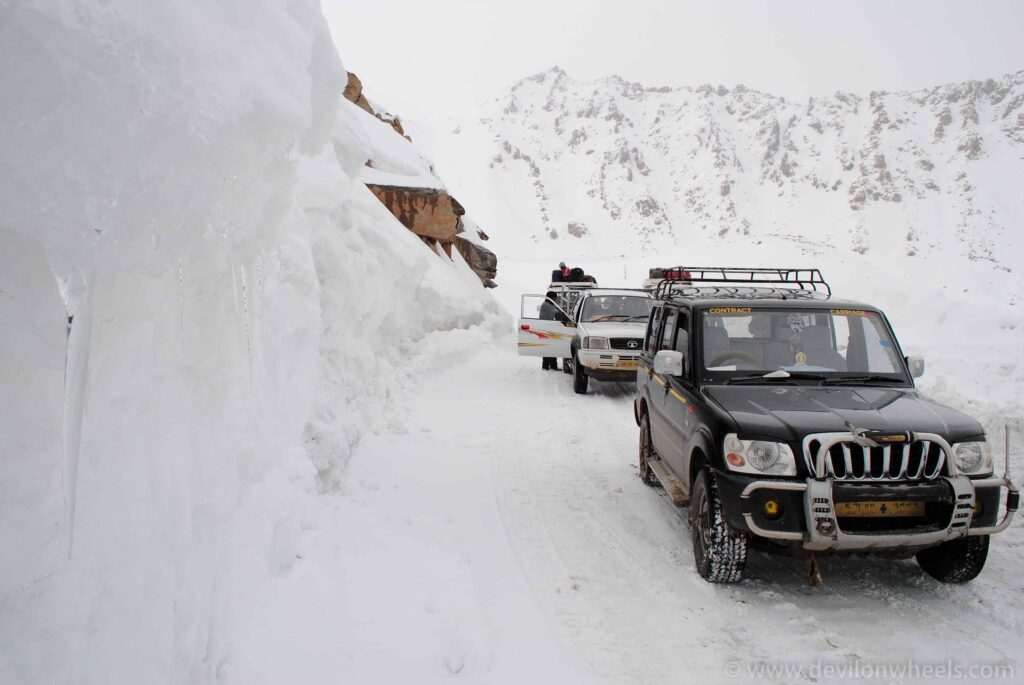
Where Are the Best Frozen-Lake Shot Locations in Ladakh in Winter?
Quick answer: Pangong Tso is the main frozen-lake location, best with a night at Tangtse rather than a rushed day trip from Leh. Tso Moriri is quieter and higher but suits only well-prepared groups. Smaller Changthang lakes like Yaye Tso need an experienced local driver. Hanle is for night skies, not frozen lakes.
| Location | Altitude | From Leh | Winter access | What to shoot |
|---|---|---|---|---|
| Pangong Tso | 14,270 ft | About 170 km via Chang La, 5-6 hrs | Usually open, closes temporarily after heavy snow | Ice sheets, pressure cracks, trapped bubbles |
| Tso Moriri | 15,075 ft | About 240 km via Chumathang, 7-8 hrs | Serious, experienced travelers only | Frozen lake, Korzok village, snowy ridges |
| Yaye Tso and Changthang lakes | About 16,368 ft (Yaye Tso) | Remote, via the Hanle side | Verify locally, local driver essential | Small frozen lakes, no visitors |
| Zanskar (Chadar) | 10,400-11,100 ft | Trek starts at Chilling / Shingra Koma, about 64 km | Permit-controlled trek, January-February | Frozen river, ice walls, Nerak waterfall |
Pangong Tso: The Frozen Lake Everyone Comes For
Pangong freezes solid in January and February. The 170 km drive from Leh crosses Chang La at 17,585 feet, where cafes may be shut in winter, so carry your own hot drinks. Most people do it as a day trip, but that means reaching the lake around late morning in flat light. Hence, if photography is the point, I suggest a night at Tangtse, about 34 km before the lake, where basic homestays operate. You get the lake in afternoon side light and at sunrise the next morning. Only a handful of basic homestays stay open at Spangmik or Man – Merak in winter, so check before you go. My Pangong Tso travel guide has the full route.
On the ice, look for long pressure ridges, cracks running towards the mountains and clear patches with trapped bubbles. A wide lens held low to the surface makes these lines lead to the far shore, and the edge where ice meets snow and stones is a natural foreground.

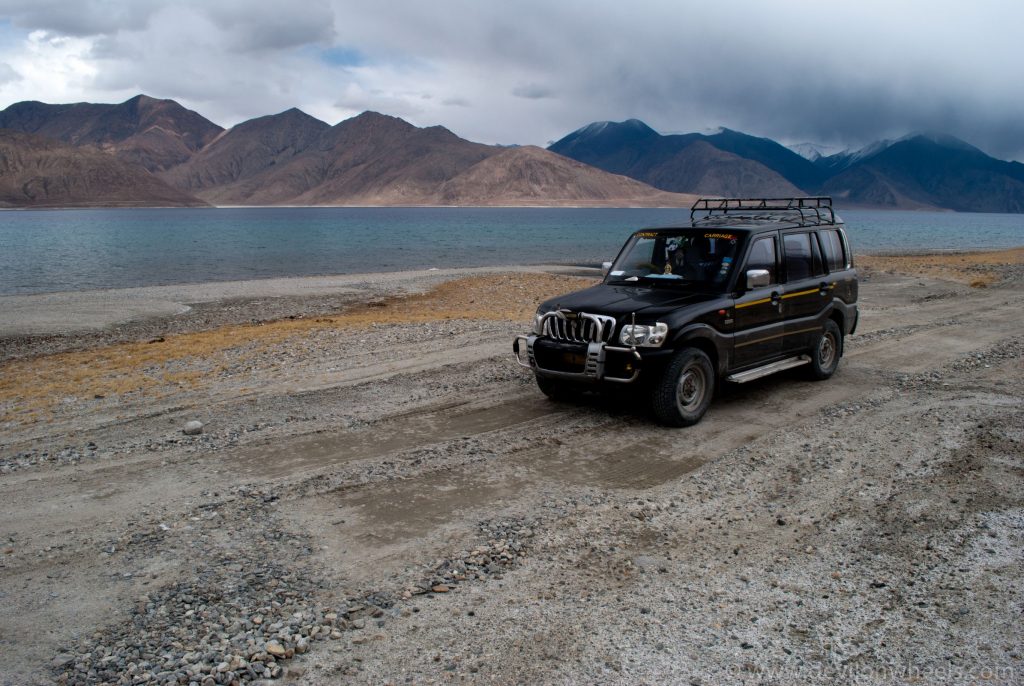
Tso Moriri: Higher, Colder, Quieter
Tso Moriri sits at 15,075 feet, about 240 km from Leh via Upshi and Chumathang. The route does not cross a high pass, so it can work when Chang La is snowed in. However, it is colder than Pangong, facilities at Korzok are minimal in winter and help is far away. Go only as a well-prepared group with an experienced local driver, and read my Tso Moriri travel guide first.
Smaller Frozen Lakes and the Chadar
Smaller Changthang lakes like Yaye Tso near Hora La are hard to reach even in summer. I could not find reliable, current information on their winter road conditions, so do not plan for them unless a local driver who has done that circuit the same season agrees to go. The frozen Zanskar on the Chadar Trek gives dramatic ice photography, but it is a permit-controlled, multi-day trek that depends on ice conditions each year, not a photo stop.
Can You Walk on Frozen Pangong Lake Safely?
Quick answer: In peak freeze, the main body of Pangong is thick enough to host the official frozen-lake marathon. However, ice near inlets, the shoreline and cracks is unpredictable. Walk only where locals walk, never alone, never in a vehicle, and stay off grey, slushy or snow-covered patches.
According to the Administration of UT Ladakh, the Pangong Frozen Lake Marathon 2026 was held on 25 February 2026, organised by The Thin Ice Adventure with the UT government. So by late February the main sheet clearly carries people. That does not make every part of the lake safe on every day.
I could not find any official ice-thickness chart for Pangong. The widely used general guideline from the Canadian Red Cross, as published by Parks Canada, is at least 15 cm of ice for one person walking and 20 cm for a group. The Red Cross also warns that natural ice is never 100% safe and that grey ice is unsafe. You cannot measure this yourself at Pangong, so follow these rules:
- Never drive onto the ice, not for a photo and not for a reel.
- Ask locals or your driver where people are walking that week, and stay there.
- Avoid inlets, stream mouths and pressure cracks, where ice is often thinner.
- Never go out alone, and keep someone on the shore.
- Use a telephoto from the shore for the “person on ice” shot.
Also, please leave nothing on the ice. Whatever is dropped there ends up in the lake when it melts around April.
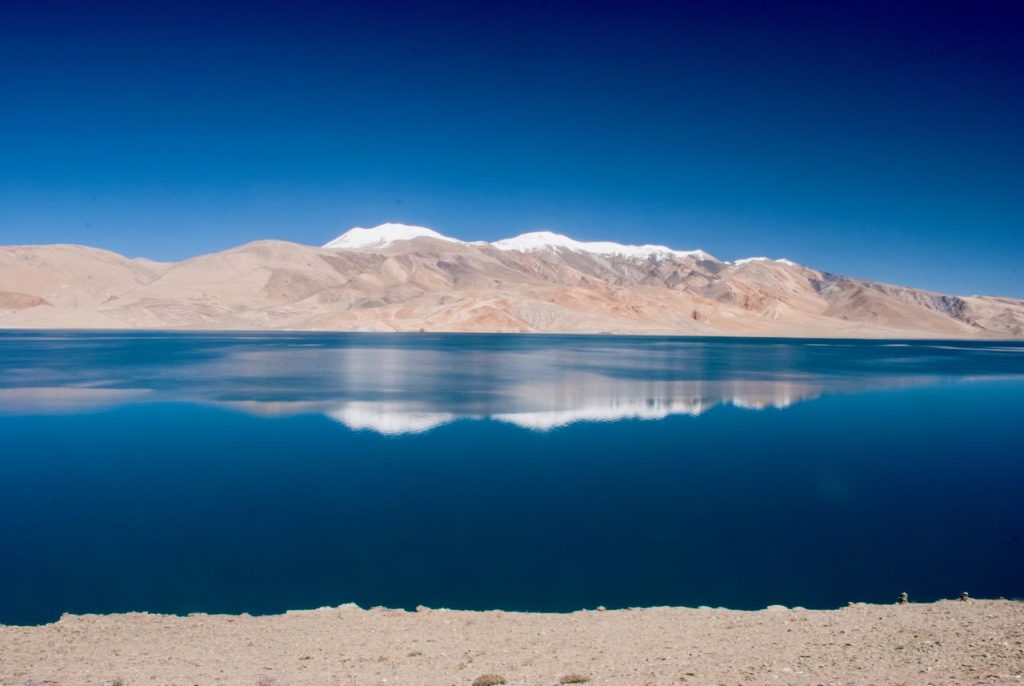
What Else Can You Photograph in Ladakh in Winter?
Quick answer: Monastery festivals in January and February, snow on Leh town and the Stok range, snowy passes like Khardung La and Chang La, snow leopards in Hemis National Park on a guided expedition, and very clear night skies at Hanle, if you can handle the cold.
Winter Monastery Festivals
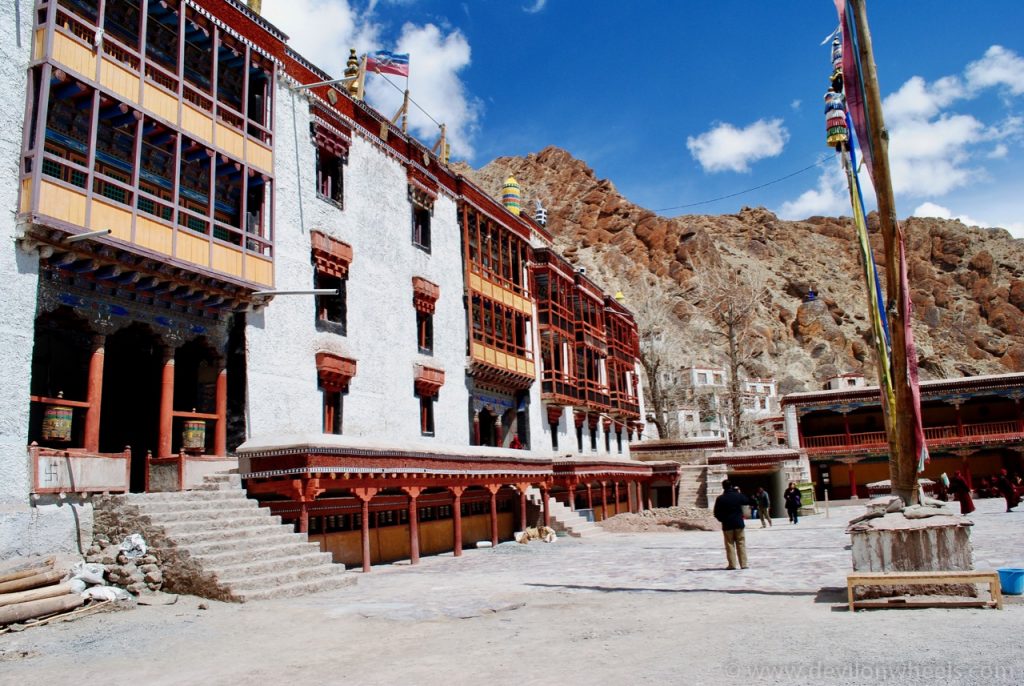
As per my Ladakh festival calendar, the 2027 dates are Spituk Gustor on 5-6 January, Dosmochey on 4-5 February (Leh Palace, Likir, Diskit), Stok Guru Tsechu on 15-16 February and Matho Nagrang on 19-20 February. Dates follow the Tibetan calendar, so confirm locally before booking flights. Keep in mind that a festival is a religious event, not a photo shoot. Ask before photographing monks up close, never use flash during the cham dances, and shoot with a 70-200mm from the gallery instead of pushing to the front.
Leh Town, the Stok Range and Snowy Passes
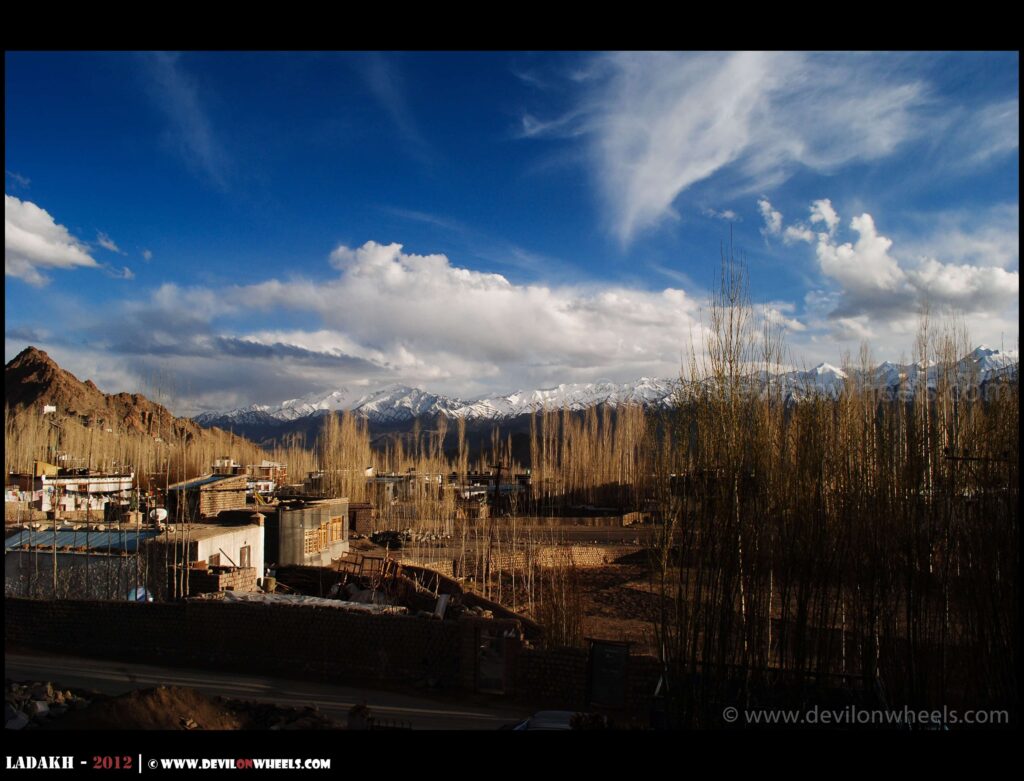
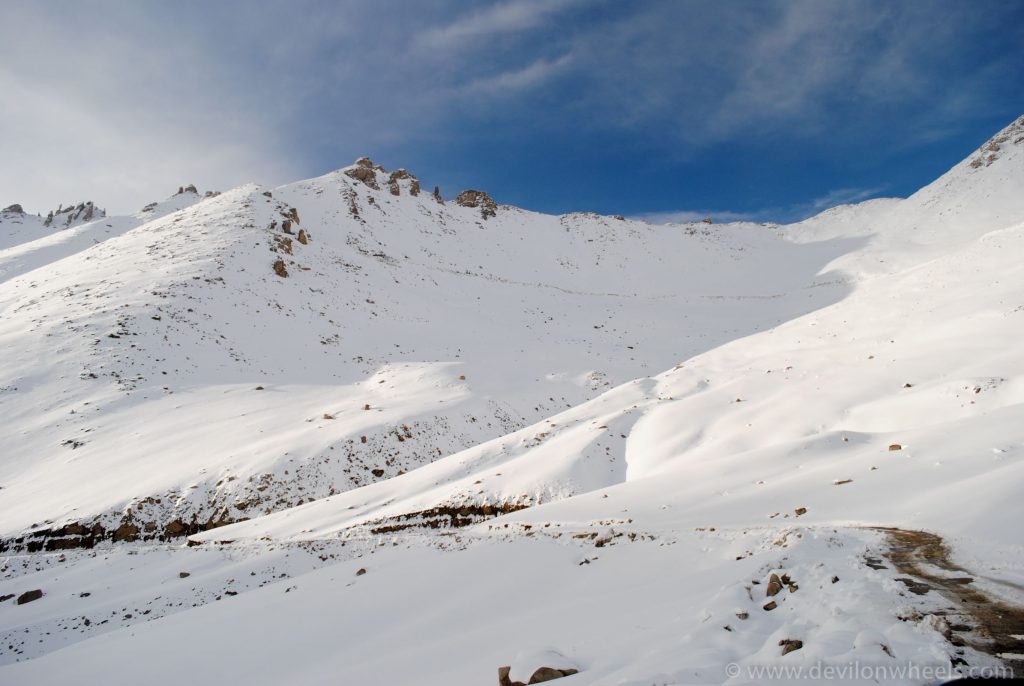
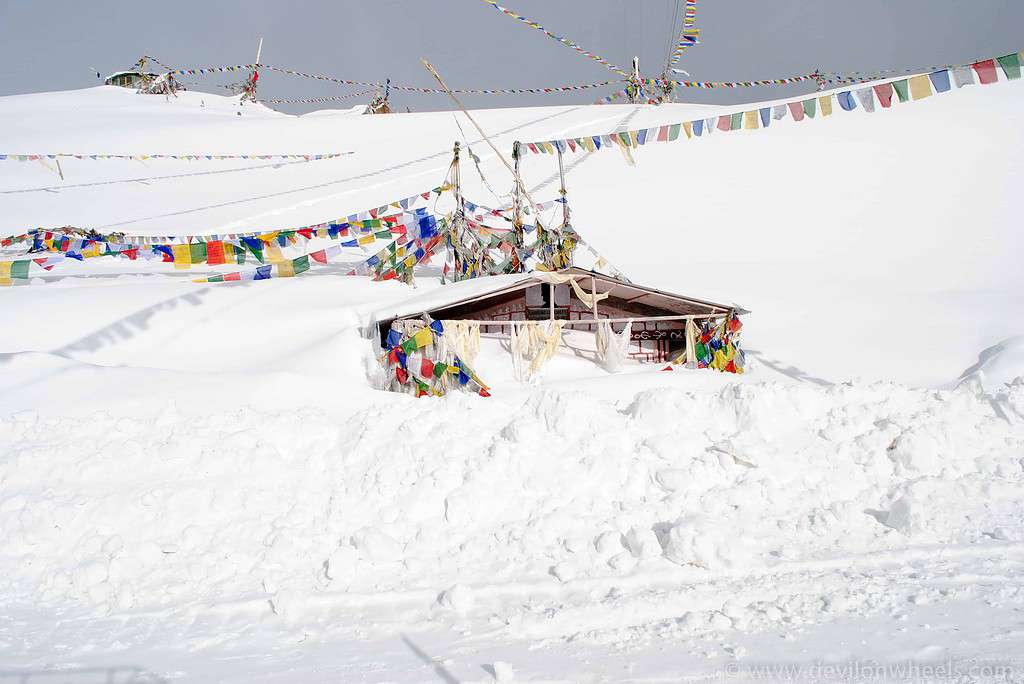
Your first two days are for acclimatization, but you can still shoot gently. Bare poplars around Leh against the snowy Stok range look lovely in late afternoon, and Thiksey and Shey are short drives away for morning light. Do not climb to Shanti Stupa or Leh Palace on day one, my friend. Khardung La and Chang La give you deep snow and prayer flags, but both are above 17,000 feet. Keep the stop short and get back in the vehicle at the first sign of a headache.
Snow Leopards and Night Skies
Winter is snow leopard season in Hemis National Park, but that is a dedicated multi-day expedition with trackers, not a side trip. Long, dry winter nights also give very clear skies. Hanle, India’s first Dark Sky Reserve, is the obvious place, and my Hanle travel guide covers the astro-stays and rules. However, a night shoot at minus 25 degrees is the hardest test of all. Frost forms on the front element within minutes, so carry a USB lens heater strip running off a power bank, and plan short sessions with warm-up breaks.
How Do You Stay Safe While Shooting in Sub-Zero Conditions at Altitude?
Quick answer: Acclimatize two full days in Leh before going higher, limit time at passes and lakes, watch your fingers and face for frostbite, keep a warm vehicle and driver close, and carry layers you can add while standing still. Photographers get colder than other travelers because they stand in one place for long periods.
Acute Mountain Sickness (AMS)
You fly from Delhi straight to Leh at 11,520 feet, with no gradual road ascent. Hence, rest two full days in Leh before Khardung La, Chang La or Pangong. Drink plenty of water, avoid alcohol and do not push for photos on day one. Cold and AMS work together badly, because a headache feels worse in the cold and excitement about the light makes you ignore warning signs. If symptoms get worse, descend. My guide on preventing AMS in Ladakh lists the symptoms, and please consult your doctor about Diamox before the trip.
Frostbite and Hypothermia
Walking travelers generate heat. Photographers waiting for sunrise or running a long exposure do not, and that is when fingers, toes, nose and ears get into trouble. Watch for numbness and skin turning white, greyish or waxy. If you see that, stop shooting and warm the area slowly, without rubbing it or holding it to a heater. Shivering that will not stop, slurred speech or clumsiness signal hypothermia, so get into the warm vehicle immediately.
Dress for standing still, not walking: a down jacket over your other layers, insulated boots a size larger for thick socks, a balaclava and two pairs of gloves. If you are buying for the first time, my list of budget winter jackets under Rs 5,000 is a good start.
Vehicle, Network and Emergencies
In winter, I always suggest a local Leh taxi driver rather than self-driving. Local drivers know where black ice forms and when to turn back. Ask yours to keep the vehicle close and warm during lake shoots. BSNL postpaid is usually the most reliable network, and others are patchy away from Leh. Call 112 for emergencies. The main hospital is SNM Hospital in Leh. Always tell your guesthouse where you are going.
Sample 6-Day Winter Photography Plan From Leh
This plan puts acclimatization first and gives Pangong two light windows instead of one rushed visit. It assumes a local taxi throughout. Add a day for a festival.
| Day | Plan | Photography focus |
|---|---|---|
| Day 1 | Fly Delhi to Leh, complete rest | Nothing. Charge batteries, test your bagging routine |
| Day 2 | Leh, short walks only | Poplars and the Stok range in late afternoon light |
| Day 3 | Thiksey and Shey early, Hemis in the afternoon | Monastery morning light, courtyards, snowy rooftops |
| Day 4 | Leh to Tangtse via Chang La, afternoon at Pangong | Side light on ice, pressure cracks |
| Day 5 | Sunrise at Pangong, drive back to Leh | Sunrise on the frozen lake, ice textures |
| Day 6 | Buffer day or fly out | Winter flights get cancelled. Keep this day free |
If Chang La is closed after snowfall, shift the Pangong days and do not force the drive. For a longer itinerary covering Nubra and Tso Moriri, see my 7-8 day Ladakh winter itinerary.
How Much Does a Winter Photography Trip to Ladakh Cost in 2026-27?
Quick answer: A 6-day winter photography trip costs roughly Rs 23,240-37,440 per person on a budget (four sharing a taxi) and Rs 51,690-86,090 in comfort (two sharing a taxi, heated mid-range hotels). Camera gear, festival extras and snow leopard expeditions are not included.
| Expense (6 days, 5 nights) | Budget (per person) | Comfort (per person) |
|---|---|---|
| Delhi – Leh return flight (booked 4-6 weeks ahead) | Rs 5,000-12,000 | Rs 5,000-12,000 |
| Stay, 5 nights | Rs 4,000-7,500 (Rs 800-1,500/night guesthouse) | Rs 20,000-40,000 (Rs 4,000-8,000/night heated hotel) |
| Taxi (Rs 45,000-55,000 per vehicle for 6-7 days) | Rs 11,250-13,750 (split by 4) | Rs 22,500-27,500 (split by 2) |
| Food, 6 days | Rs 2,400-3,600 | Rs 3,600-6,000 |
| Ladakh EDF (7 days) | Rs 590 | Rs 590 |
| Total | Rs 23,240-37,440 | Rs 51,690-86,090 |
These figures use the 2026 winter rates from my other Ladakh winter posts, so treat them as estimates and check current rates before booking. The taxi rate covers a fuller circuit, so a shorter Leh – Pangong plan may cost less. Ask Leh operators for a winter quote. Flight fares climb sharply around New Year and festival dates. The EDF is paid online, as explained in my Ladakh EDF and permit guide.
Related Reading
- Ladakh Photography Guide: Locations and Settings by Season
- Winter Trip to Ladakh: Essential Tips and Budget
- Snow Leopard Safari in Ladakh
Frequently Asked Questions About Winter Photography in Ladakh
Which is the best month for winter photography in Ladakh?
January and February. Pangong and Tso Moriri are frozen solid, winter monastery festivals happen in these months, and snow leopard season peaks. December gives snow and empty landscapes, but the lakes may not be fully frozen yet.
Will my camera work in minus 20 degrees in Ladakh?
Usually yes, but the batteries will not last. Most cameras are rated for 0 to 40 degrees Celsius. Rotate 3-4 spare batteries from an inside pocket and seal the camera in a zip-lock bag before entering any warm room to avoid condensation.
How do I stop my camera lens from fogging in Ladakh’s cold?
Remove the memory card and battery, seal the camera in a large zip-lock bag while still outside, and let it warm up inside the bag for one to two hours before opening. For night shoots, a USB lens heater strip prevents frost on the front element.
Is Pangong Lake frozen in winter, and when?
Yes. Pangong freezes solid in January and February and starts melting around April. The Pangong Frozen Lake Marathon 2026 was held on the ice on 25 February 2026, according to the UT Ladakh administration.
Is it safe to walk on frozen Pangong Lake?
Only with care. The main ice sheet can carry people in peak freeze, but ice near inlets, the shore and cracks is unpredictable. Walk only where locals walk, never alone, never drive onto the ice, and stay off grey or slushy patches.
Can I do Pangong as a day trip for photography in winter?
You can, as Pangong is about 170 km from Leh via Chang La, a 5-6 hour drive. However, a day trip puts you at the lake in flat midday light. For photography, a night at Tangtse, about 34 km before the lake, gives you afternoon and sunrise light.
Can I fly a drone in Ladakh in winter?
Drone use in Ladakh is heavily restricted because it is a sensitive border area, and flying near military installations, airfields and border areas is prohibited. Cold also cuts drone battery life sharply. Check the official airspace map and local rules before carrying one.
How many days do I need for a winter photography trip to Ladakh?
At least six days: two for acclimatization in Leh, two for Pangong with a night at Tangtse, one for monasteries and one buffer day for cancelled flights. Add more for festivals, Tso Moriri or a snow leopard expedition.
Final Thoughts: Is a Winter Photography Trip to Ladakh Worth It?
If you have seen Ladakh in summer, winter is a completely different place to photograph, and it is worth it for anyone who respects the cold and the altitude. My recommendation: fly in, rest two full days, base yourself at Tangtse for Pangong, rotate warm batteries, bag your camera before every warm room, and never walk out on the ice alone. Fewer locations shot properly beat a rushed circuit.
If you have shot in Ladakh in winter, tell me in the comments how your gear held up and what the ice at Pangong was like on your dates, so fellow travelers can plan better. Looking for travel partners for a winter trip? The DwD Community is the place. Do share this post with friends taking their cameras to Ladakh this winter 🙂 …

Last updated: October 2026. Festival dates, flight fares and road status change every season, so verify locally before you travel.
If you have any questions, feel free to ask in the comments section below 🙂
