


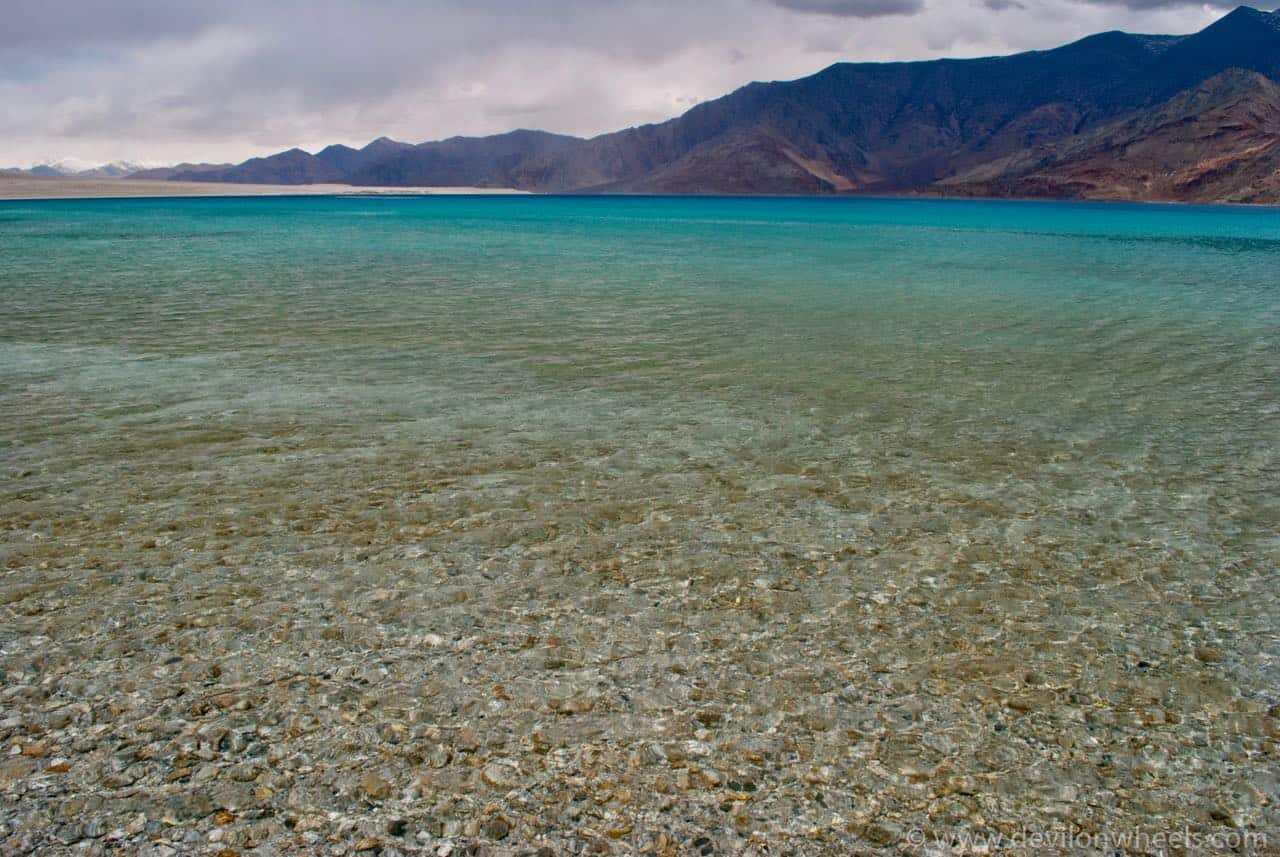
So you have finally decided to stay overnight at Pangong Tso. Good call. A one-night stay at this lake changes how you experience it entirely. The day trippers roll in around noon, take their photos near the “3 Idiots” boulder, and head back to Leh by evening. You get the lake at sunrise when the water shifts from black to deep cobalt, and at dusk when the mountains on the Tibetan side turn amber. But here is the first thing you need to know before you book anything: lakeside camping at Pangong is banned. The camps you see in photos and tour operator brochures are not on the shore. They are set back from the waterline, in the villages of Spangmik, Man, and Merak. And that brings you to the question this guide is going to answer: which side do you stay on, and what should you actually expect?
Quick Answer: Spangmik or Merak for Camping at Pangong Lake?
Spangmik is the right choice for most travelers. It sits on the south bank at 4,350 m (14,270 Ft), offers 10-12 registered camp operators, easy road access from Leh (about 160 km, 5-6 hours), and views of Fingers 1, 2, and 3 across the lake. Merak is quieter and further east, about 18-20 km beyond Spangmik along a rougher track, and suits travelers who want fewer people and more remote feel. Both sides are at the same altitude, so AMS precautions apply equally. If this is your first time at Pangong, base yourself in Spangmik. If you have been before and want something different, Merak rewards the extra effort.
The Camping Ban: What It Actually Means for You
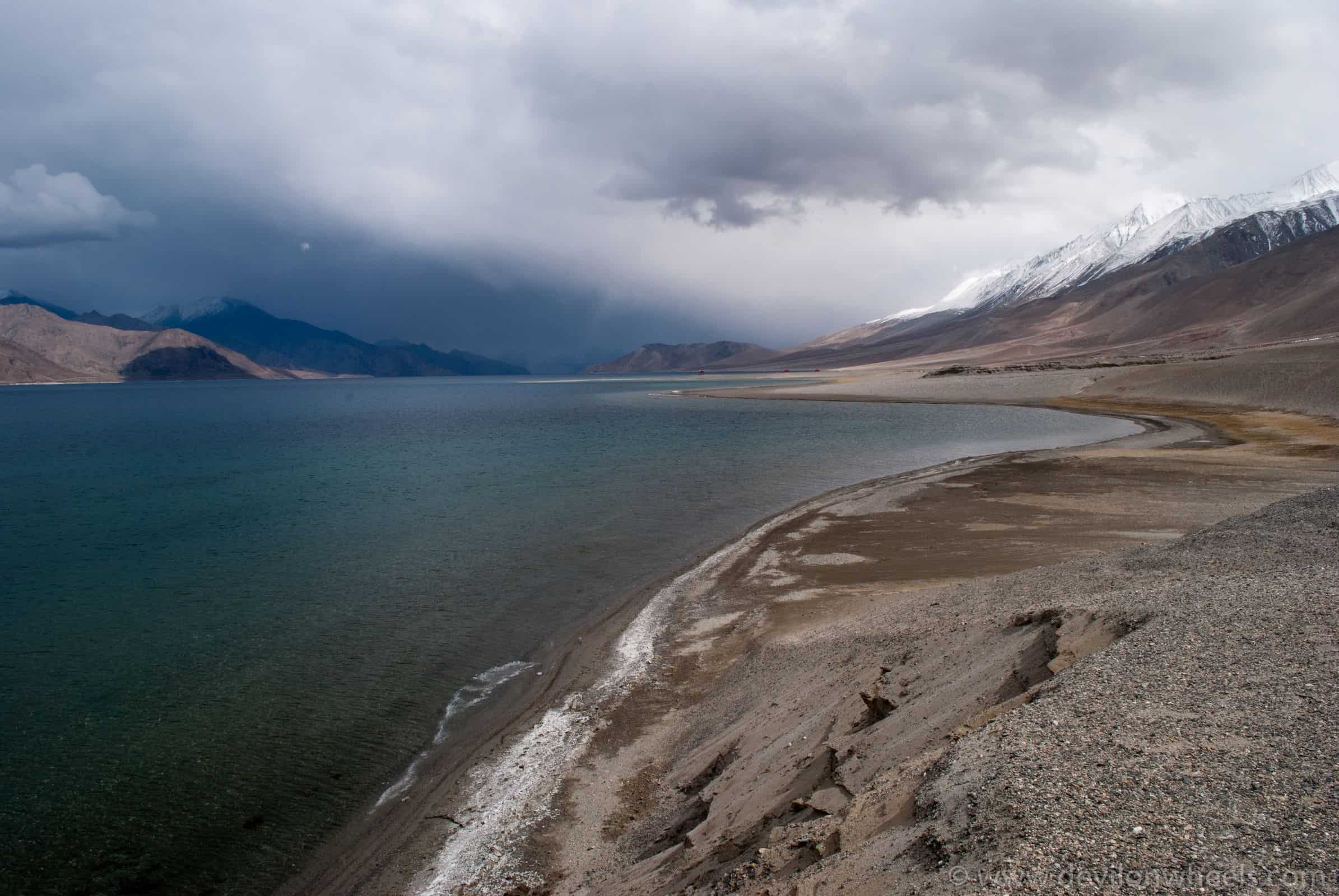
In 2018, the Leh District Development Authority issued an order banning camping directly on the Pangong lakeshore. The ban was reinforced in subsequent years as the lake’s fragile ecosystem was showing signs of strain from the surge in tourist numbers. As of 2026, the rules are still in effect. You cannot pitch a tent or park a vehicle on the water’s edge. The licensed camp operators in Spangmik, Man, and Merak have set up their tented accommodations inside the village boundary, which puts them anywhere from 300 m to 2 km back from the waterline depending on which camp you book.
Keep in mind that this is not a bad thing for most travelers. The camps in Spangmik are comfortable, the views from inside your tent are still over the lake, and you are sleeping in a proper camp bed rather than on cold gravel. What the ban does eliminate is the possibility of wild camping or driving right up to the shore for a bonfire night. That era is over. If you see a tour operator advertising “lakeside camping at Pangong,” they almost certainly mean a camp in Spangmik village, not a tent on the water’s edge. Read the fine print before booking.
Staying at Spangmik: The South Bank Guide
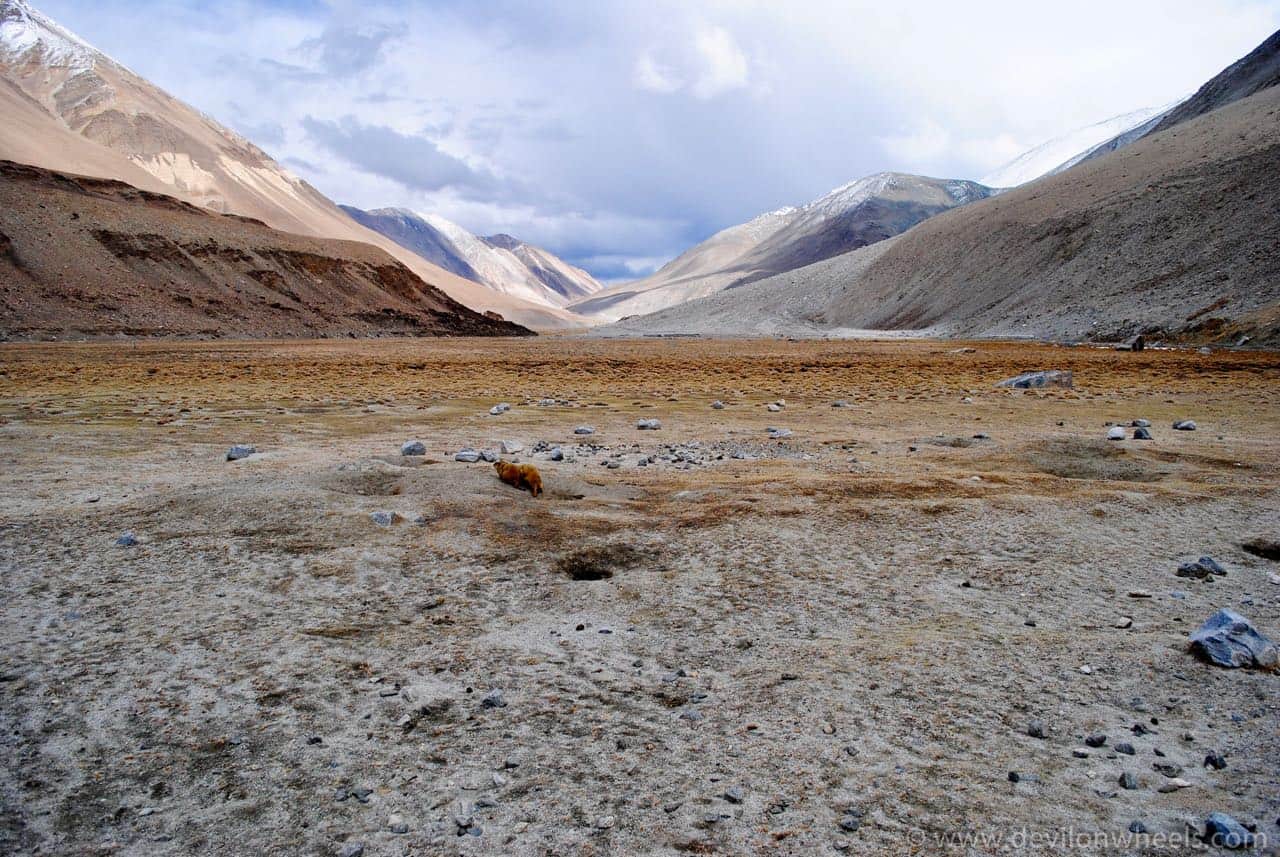
Spangmik is where the overwhelming majority of overnight Pangong visitors stay. The village sits on the south bank, around 4 km beyond Lukung, and it is where the main road from Chang La terminates for most vehicles. The lake is most accessible here, and you can walk from your camp tent to the nearest viewpoint in 5-10 minutes. Based on reports from travelers who have visited in recent seasons, there are around 10-12 registered camp operators in and around Spangmik, ranging from basic tented camps to more comfortable setups with attached bathrooms and heating.
The camps line up along the village, and the better ones face north toward the lake. From Spangmik, you are looking at Fingers 1, 2, and 3 of the Pangong lake system, which is the area that shows up in most photographs. The famous “3 Idiots” shooting location (actually called “Rancho School” or the “3 Idiots bridge”) is just a few minutes from the main Spangmik camp area, so you will pass it whether you want to or not. Sunrise from this side is genuinely worth waking up early for. The sun comes up behind the eastern mountains and the light hits the lake in phases, starting from the far Tibetan end and washing toward you.
Spangmik Camp Rates 2026
| Category | What You Get | Rate (per person, with meals) |
|---|---|---|
| Budget tented camp | Shared bathrooms, basic meals, 2-3 blankets | Rs 1,200 to Rs 1,800 |
| Mid-range camp | Attached bathroom, better meals, heater | Rs 2,000 to Rs 3,000 |
| Comfort/luxury camp | Geodomes or large Swiss tents, attached bath, 3-4 blankets, good food | Rs 4,000 to Rs 8,000 |
These rates are on a twin-sharing basis with all meals included (dinner and breakfast). Rates from 2025-26 camp reports suggest this range is accurate, but do verify locally before booking. Peak season (mid-June to mid-August) will push rates toward the higher end. September is a good month to get better rates with fewer crowds.
Staying at Merak: The Quieter Eastern Shore
Merak is a small village about 18-20 km beyond Spangmik, continuing east along the southern shore of Pangong. The road from Spangmik to Merak (and then on to Man) is rough in sections, a mix of paved and gravel track, and you will need a sturdy vehicle or bike to cover it comfortably. The drive takes about 45 minutes to 1 hour depending on road conditions. Based on traveler reports, there are roughly 4-6 registered camp operators in and around Merak, significantly fewer than Spangmik.
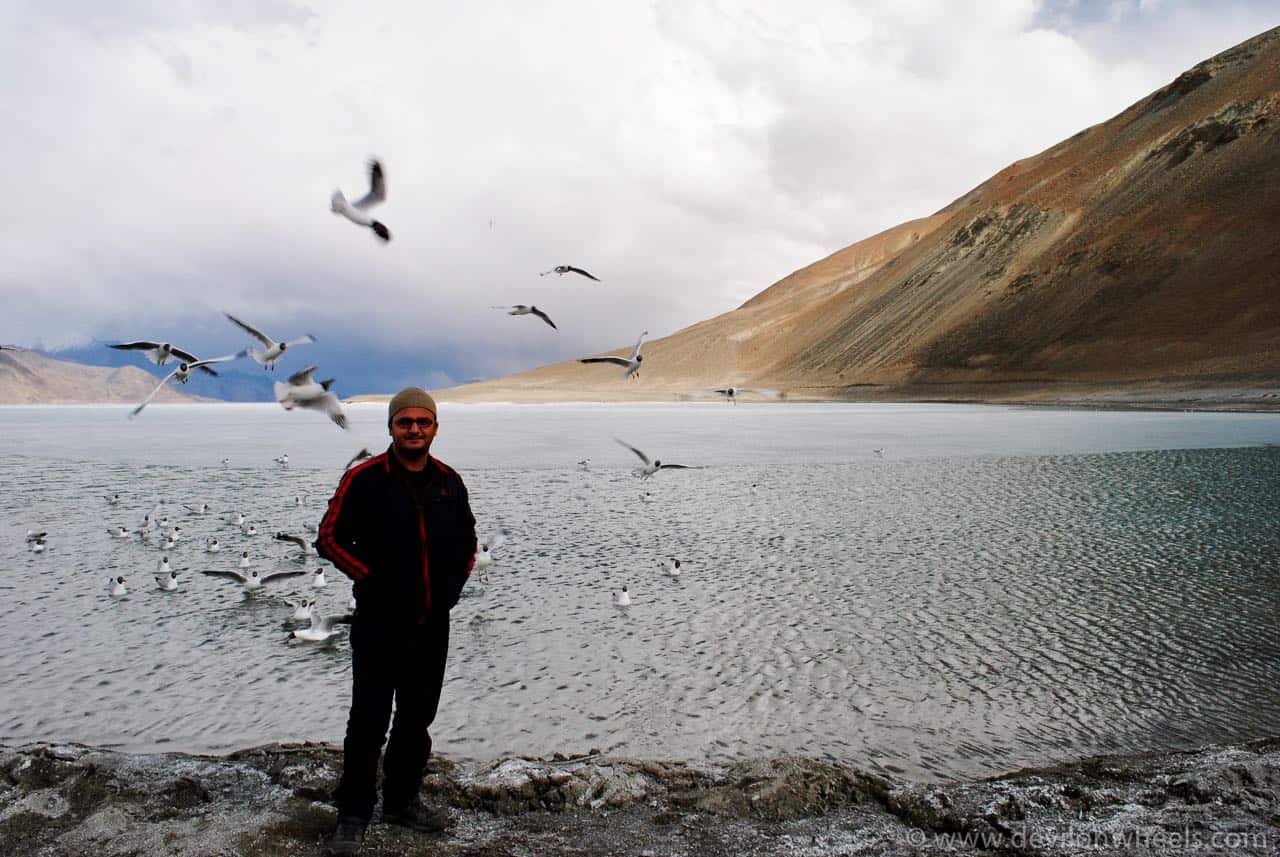
What you gain at Merak is the quiet. On a morning in September, you might have the lakeshore almost entirely to yourself. The crowds that fill Spangmik simply do not reach this far. The lake looks different from the east. You are now past the famous Fingers, looking back westward toward where most of the tourist infrastructure sits. The light at Merak catches differently in the afternoon, and the eastern orientation means your mornings feel calmer without the rush of day-trippers arriving from Leh by 11 AM.
The main trade-off at Merak is logistics. Fewer camp operators means you must book in advance in peak season. The road condition varies. There are no shops or medical facilities. Mobile network at Merak is unreliable even by Pangong standards, and BSNL is your best bet (even then, coverage is patchy). If you or anyone in your group is prone to altitude sickness, Spangmik is the safer choice because help is more accessible. Merak rewards experienced Himalayan travelers who know what they are getting into.
Spangmik vs Merak: The Decision Table
| Factor | Spangmik | Merak |
|---|---|---|
| Distance from Leh | ~160 km (5-6 hours) | ~178-180 km (6.5-7 hours) |
| Road condition | Paved all the way | Rough 18-20 km section from Spangmik |
| Camp options | 10-12 operators | 4-6 operators |
| Crowd level | Busy in peak season | Noticeably quieter |
| Views | Fingers 1, 2, 3 looking north | Looking west toward Spangmik side, more isolated feel |
| Mobile network | BSNL (intermittent), Airtel sometimes | BSNL only, often no signal |
| Sunrise quality | Excellent (sun rises to your east) | Different angle, softer morning light looking west |
| Best for | First-timers, families, comfort seekers | Repeat visitors, solitude seekers, photographers |
| AMS help accessibility | More accessible | Less accessible |
Hence, my recommendation, based on what travelers consistently report: start with Spangmik for your first Pangong overnight stay, my friend. If you are coming back for a second time or want something more offbeat, Merak is worth the extra drive. You can also split your nights, one at Spangmik and one at Merak, if you have the flexibility, though this adds planning complexity.


Practical Info Box: Pangong Lake Camping 2026
| Detail | Info |
|---|---|
| Altitude | 4,350 m (14,270 Ft) at Spangmik and Merak |
| Lake size | 134 km long, up to 5 km wide, 60% in Tibet |
| Distance from Leh | ~160 km to Spangmik (5-6 hours via Chang La) |
| Permit required | Yes. EDF receipt via lahdclehpermit.in (Rs 400 one-time + Rs 20/day wildlife fee) |
| Best time to camp | June to September (peak: July-August, best for calm: September) |
| Camp rates | Rs 1,200 to Rs 8,000/person with meals (twin sharing) |
| Camping ban | Lakeside/wild camping banned since 2018. Camps are 300m-2km from waterline. |
| ATM nearest | Karu or Leh. No ATM at Pangong. |
| Petrol nearest | Karu (~120 km from Spangmik). Fill in Leh. |
| Mobile network | BSNL (best), Airtel (Spangmik only, intermittent) |
| Last updated | June 2026 |
Permits and Logistics: The ILP Situation in 2026
One of the most common sources of confusion for first-time Ladakh visitors is the permit situation. As of 2026, Indian tourists do not need a separate Inner Line Permit (ILP) to visit Pangong Tso. The ILP requirement for Indians was revised after the restructuring of Jammu and Kashmir into a Union Territory. What you do need is the Ladakh Environment and Development Fee (EDF) receipt, which you apply for online at lahdclehpermit.in. The fee is Rs 400 (one-time) plus Rs 20 per day for the wildlife component. For a typical 10-day Ladakh trip, this works out to roughly Rs 590 to Rs 600 per person. The receipt is valid for 21 days and must be carried in print at checkposts.
Foreign tourists still need a Protected Area Permit (PAP) for Pangong Tso. This is applied for in Leh, either through a registered travel agent or at the District Commissioner’s office. In case you need more detailed guidance on the permit process, I have covered it thoroughly in our complete Ladakh permits guide.
Now for the logistics of getting to Pangong. The standard route from Leh is via Karu, then up over Chang La (5,360 m / 17,590 Ft), and down through Sakti, Tangtse, and Lukung before reaching Spangmik. This is roughly 160 km and takes 5-6 hours under normal conditions. Chang La is one of the three high passes that most Ladakh itineraries include, and it stays open from late May to October in most years. The road beyond Lukung to Spangmik is in reasonable condition, though it narrows in places.
If you are on a standard Leh – Ladakh itinerary, Pangong is typically visited on Day 4 or Day 5 after acclimatizing in Leh, doing Nubra Valley, and returning via the Shyok route. In case you are coming from Nubra Valley to Pangong directly, check the Nubra to Pangong direct route guide for the latest road conditions. That route via Shyok is longer but cuts out the backtrack to Leh.
Altitude, AMS, and Safety at 14,270 Ft
Spangmik village sits at 4,350 metres (14,270 feet), confirmed by Leh district’s official tourism record. The Wilderness Medical Society, cited in the CDC Yellow Book, caps safe sleeping-altitude gain at 500 m per night above 3,000 m, with an extra rest day per 1,000 m gained, since AMS risk climbs sharply past 3,500 m.
Both Spangmik and Merak sit at 4,350 m (14,270 Ft). This is genuinely high altitude, and you need to take it seriously. By the time most travelers reach Pangong, they have already spent 2-3 nights in Leh (3,500 m / 11,500 Ft), which helps with acclimatization. However, the jump from Leh to Pangong involves crossing Chang La at 5,360 m, so your body will feel the effects of the altitude gain even if you have been in Leh for a few days.
Keep in mind: do not drink alcohol the evening you arrive at Pangong. The cold and altitude hit harder together, and alcohol interferes with your body’s acclimatization response. Headache, nausea, and difficulty sleeping are common on the first night. Drink plenty of water. If symptoms worsen (confusion, severe headache that does not ease, inability to walk straight), you need to descend to Tangtse or Karu immediately. Do not wait until morning. The nearest medical facility with any equipment is in Tangtse (about 30 km from Spangmik).
For women traveling solo or in small groups, Pangong is considered safe by Ladakh standards, and most camp operators are professional. I would still suggest booking a reputable, named camp rather than showing up without a reservation, especially in peak season when availability is tight. You can read more about solo travel considerations in our women solo travel Ladakh guide.
What to Pack for a Night at Pangong
The temperature at Pangong drops sharply after sunset even in July and August. Nights regularly touch 0 to -5 degrees Celsius, and the wind off the lake adds to the chill. Even if you are visiting in peak summer, pack accordingly.
- Warm layers (mandatory, not optional): Thermal base layer, a fleece mid-layer, and a down jacket or windproof outer shell. Even in July.
- Warm socks and waterproof shoes or boots: The ground near the lake is damp and cold in the early morning.
- Sunscreen and lip balm: The UV intensity at 14,270 Ft is significantly higher than at lower altitudes. You can burn badly in an hour without realising it.
- Altitude sickness medication: Carry Diamox only if your doctor has recommended it and you are not allergic to sulfa drugs. Also carry basic pain relief (paracetamol, not ibuprofen, at altitude).
- Enough cash: No ATMs at Pangong. Last ATMs are in Karu or Leh. Carry all camp fees in cash since UPI connectivity is hit or miss.
- Power bank: Electricity supply at camps is usually available a few hours per evening only. Charge your devices early.
- Water and snacks for the drive: The road from Leh to Pangong has limited food stops. Stock up in Leh.
Best Time to Camp at Pangong Lake
The camping season at Pangong runs from June to September. Each month has a different character:
June: The road from Leh opens once Chang La clears, usually by late May or early June. June is crisp and clear, with fewer tourists than July. Camp operators are just setting up for the season, so some of the smaller camps may not be fully ready in early June. Nights are cold, around -3 to -5 degrees Celsius. Good option if you want space and clarity.
July and August: Peak season. The lake is at its most vivid in this period, the weather is relatively stable, and the camps are fully operational. This is also when crowds peak. Spangmik fills up significantly, especially on weekends. Book at least 2-3 weeks in advance for any named camp. Nights are cold but less severe, around 0 to 3 degrees Celsius.
September: Arguably the best month. Crowds thin out significantly after Indian Independence Day (August 15), camp rates often drop, and the quality of light in September is exceptional for photography. The lake can appear darker and deeper in September. Nights get colder again, around -3 to -7 degrees Celsius. September is the month I would recommend for anyone who has flexibility in their travel dates.
The camps start closing down from mid-October onward. Some camps on the Merak side close before those in Spangmik. By November, Pangong is effectively inaccessible for regular vehicles due to snow and ice on Chang La.
How to Book a Camp at Pangong
Most of the reputable camps at Spangmik and Merak can be booked through Leh-based travel agents, the camp’s own phone number, or through aggregator platforms. If you are booking directly, ask the camp operator specifically: (1) is the camp inside the village or on the lakeshore (village camps are fine and legal; anyone claiming they are on the actual shore is likely misrepresenting), (2) does the rate include all meals, (3) do they have heating or extra blankets available, and (4) what is their cancellation policy since the road can be affected by landslides or bad weather.
In case you are doing a Ladakh road trip and plan to check out some wildlife en route, the snow leopard safari route from Leh through Hemis National Park is a good add-on either before or after your Pangong stay. The Pangong area around Lukung and Tangtse also has Tibetan wild ass (kiang), migratory birds at the wetlands near Tangtse, and occasional sightings of Tibetan fox. You do not need a separate safari, just keep your eyes open on the drive.
FAQs: Pangong Lake Camping 2026
Is camping allowed at Pangong Lake in 2026?
Wild camping directly on the lakeshore is not allowed. The Leh District Development Authority banned lakeshore camping to protect the ecosystem. Registered camp operators in Spangmik, Man, and Merak villages offer tented accommodation that is set back from the waterline. These are legal and recommended.
Is Spangmik or Merak better for camping at Pangong?
Spangmik is better for first-time visitors and those who want more camp choices, easier access, and better AMS support proximity. Merak is better for repeat visitors who want fewer tourists, a more remote feel, and a different angle of the lake. Both are at 4,350 m altitude.
Do I need a permit to visit Pangong Lake?
Yes. Indian tourists need the Ladakh EDF (Environment and Development Fee) receipt, available online at lahdclehpermit.in. The fee is approximately Rs 400 one-time plus Rs 20 per day for the wildlife component. Foreign tourists additionally need a Protected Area Permit (PAP), applied for in Leh.
What is the temperature at Pangong Lake at night?
Night temperatures at Pangong (4,350 m) range from approximately -5 to +3 degrees Celsius depending on the month. July-August nights are coldest around 0 to 3 degrees. June and September nights can drop to -3 to -7 degrees. Always bring warm layers regardless of the season you visit.
Is there an ATM at Pangong Lake?
No. There are no ATMs at Spangmik or Merak. The nearest ATMs are in Karu (approximately 120 km from Spangmik) or in Leh. Carry all cash you need for camp fees, food, and incidentals before leaving Leh. UPI and card payments are unreliable due to poor mobile connectivity.
Can I drive from Spangmik to Merak on the same trip?
Yes. The road from Spangmik to Merak via Man village is about 18-20 km and takes 45 minutes to 1 hour in a suitable vehicle or bike. The track is rough in sections. If you are in a sedan, ask your driver about the current road condition before attempting it. SUVs and bikes handle this section comfortably in most seasons.
Related Reads for Your Pangong Trip
Planning a full Ladakh trip around your Pangong stay? Here are some guides from DwD that will help fill in the blanks:
- Most Common Leh – Ladakh Itinerary — how Pangong fits into a typical 10-14 day Ladakh plan
- Ladakh Permits Guide 2026 — step-by-step EDF application with screenshots
- Nubra Valley Travel Guide — most Pangong itineraries combine this with Nubra
- Nubra to Pangong Direct Route Tips — how to do the Shyok route to cut travel time
- Women Solo Travel Ladakh Guide — safety and logistics for solo women travelers
- Snow Leopard Safari in Ladakh — if wildlife encounters are on your Ladakh list
- Hotels and Accommodation near Pangong Tso — for those who prefer a hotel-style setup over camping
Conclusion: Pick Your Side and Go
Pangong Tso at sunrise is one of those experiences that makes the long drive from Leh entirely worth it. The camping ban has not diminished that. It has just shifted where you sleep from the waterline to the village, and honestly, the difference in terms of what you see is minimal. A good camp in Spangmik still gives you that early morning walk to the lake, the sound of wind off the water, and the silence that day trippers simply cannot access.
If you are planning your first overnight at Pangong, go with Spangmik. Book a named camp in advance (especially in July-August), carry all your cash, layer up for the cold nights, and acclimatize properly in Leh before attempting the drive. If you have been before and want to push further east, Merak is waiting. The extra 45 minutes of rough road takes you somewhere genuinely different.
![How to tackle water-crossings on Ladakh Bike Trip / Spiti Valley Bike Trip? [20 Important Tips]](https://discoverwithdheeraj.com/yt_vid_thumbs/ladakh/82.png)
If you have any questions about camping at Pangong, the Spangmik versus Merak choice, or anything else about planning your Ladakh trip, feel free to ask in the comments section below. I will be happy to help 🙂
Last updated: June 2026. Rates and regulations based on 2025-26 traveler reports. Verify camp rates locally as they can change seasonally.
