


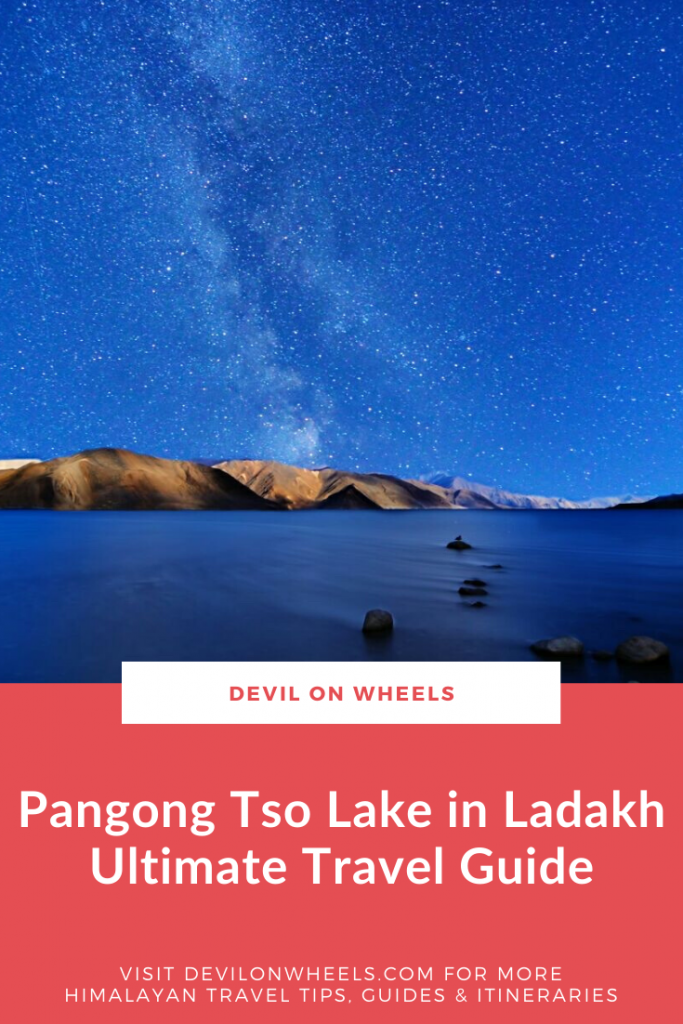
Pangong Tso lake in the Changthang region of Ladakh has emerged as one of the most wanted places to visit among domestic tourists, especially after the Bollywood blockbuster “3 Idiots.” And honestly, once you see the multiple shades of blue that this lake offers, you will understand why. I have been fortunate enough to visit Pangong Tso multiple times over the years, and each time, the lake surprises me with a different color palette.
In this complete travel guide for Pangong Tso Lake, I will cover everything you need to know to plan your trip properly. From how to reach, best time to visit, where to stay, permits, road conditions, budget, and all the practical details you will need. Keep in mind that Pangong Tso sits at a staggering altitude of 14,270 feet, so planning is not optional here. It is essential for your safety 🙂
Last Updated: February 2026
Let's quickly dive into the details:
Quick Facts About Pangong Tso Lake
Before we dive into the details, here are the essential facts about Pangong Tso that every traveler should know.
| Detail | Information |
|---|---|
| Altitude | 4,350 meters / 14,270 feet |
| Length | About 134 km (60% in Tibet, 40% in India) |
| Width | About 5 km at broadest point |
| Distance from Leh | About 170 km via Chang La |
| Drive Time | 5-6 hours from Leh |
| Permit Required | Yes, Inner Line Permit |
| Best Time to Visit | May to September (peak), late Sep-Oct (best colors) |
| Mobile Network | BSNL and Jio (limited, at Lukung) |
| Nearest Petrol Pump | Karu (135 km) or Leh |
| Nearest ATM | Leh town |
What Makes Pangong Tso Lake So Special?
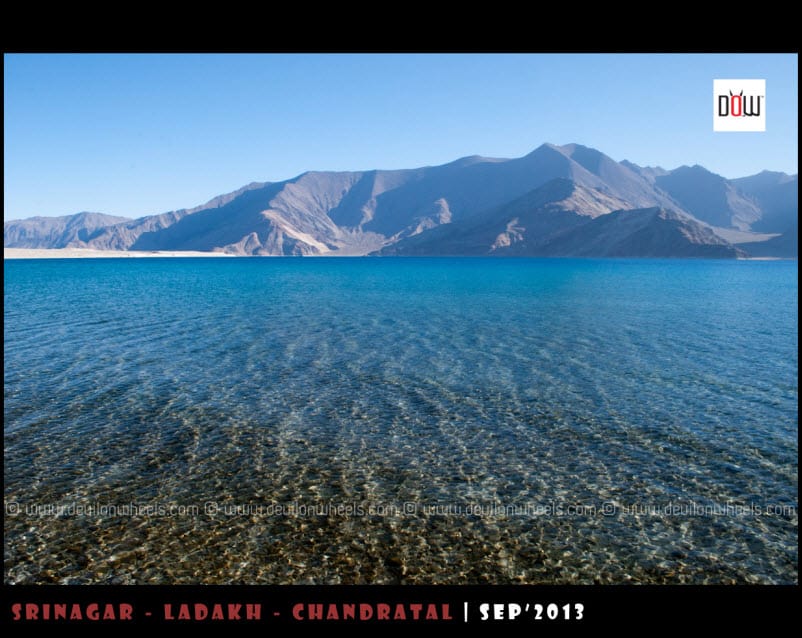
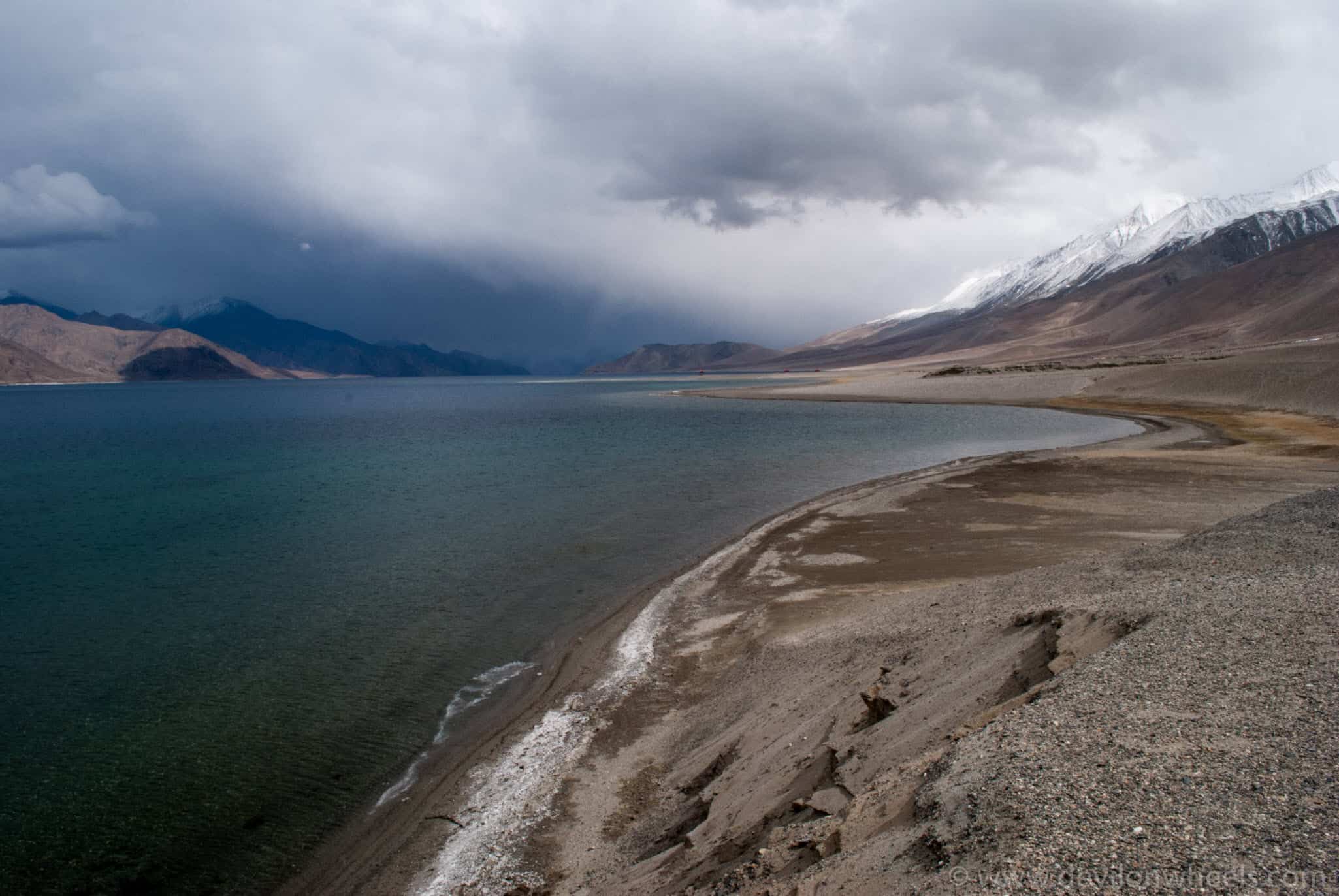
Pangong Tso is a saltwater lake, one of the highest in the world, and the biggest of all lakes in Leh Ladakh. The name “Pangong Tso” is Tibetan and translates to “high grassland lake.” What makes this lake truly special is its ever-changing color. Depending on the time of day, season, and weather, the lake shifts between shades of azure, turquoise, deep blue, and even green.
This beautiful ocean-like lake is about 5 km wide at its broadest point and about 134 km long, with about 60% of its length extending into Tibet. During winters, the lake freezes completely, which itself is a sight to witness if you have seen the other aqua and blue colors of this pristine lake. Since it is near the Line of Actual Control (LAC), you need to get an Inner Line Permit to visit Pangong Tso, both as an Indian and as a foreigner.
The multi-shade blue colors offered by this lake along with a picturesque landscape around give this place a romantic feel, as shown in Bollywood film songs. However, sitting behind the TV it looks so, but in actual reality, the place is harsh and difficult to survive, especially in winters 🙂 🙂
There are only a couple of cemented accommodations available around the lake, and the facilities like electricity, medical aid, hot running water, and western toilets are a luxury in themselves. The lack of oxygen makes survival difficult if your body is not properly acclimatized to its high altitude. Hence, one needs to plan the journey extremely carefully to avoid acute mountain sickness.
When Is the Best Time to Visit Pangong Lake?
The best time to visit Pangong Tso depends on what kind of experience you are looking for. Here is a month-by-month breakdown to help you decide.
Similar to what we learned about the best time to travel to Leh Ladakh, in the months of January to March, Pangong Tso remains mostly frozen. The conditions are extremely cold, with no options to stay around the lake except a few basic homestays in Spangmik and Man-Merak villages. If you are visiting Ladakh in winters, Tangtse (about 34 km from the lake) is a safer base with better facilities.
In April, the lake starts to melt and begins transforming into its beautiful palette of multi-shade blue colors. The roads may or may not be fully open depending on snowfall that year.
May to September is the peak tourist season. Tourists flock to the shores of Pangong Tso in these months. During this summer period, you can witness a large number of birds around the lake, including the most common Bar-headed Goose and Brahmini Ducks. Accommodation options are at their maximum, and the weather is relatively pleasant during the day (5 to 15 degrees Celsius). However, keep in mind that nights are always cold at this altitude, even in July and August.
Come late September and early October, the tourists start to recede as the cold sets in and accommodation tents start to pack up. In my opinion, this is by far the best time to visit Pangong Tso to see the full glory of beautiful shades of blue color in this lake. The colors are purely magical at this time of the year, and with fewer tourists comparatively, you get better deals and enjoy more.
Pangong Lake in Winter
After mid-October up to December, all the accommodation packs up, and the only nearest place you can stay is either in some homestay with basic facilities to fight the harsh cold or in some guest house at Tangtse, about 34 km away from the lake.
Tangtse has a few guesthouses with much better facilities to fight the cold and provide comfort in winter months. If the sun is shining and you do not mind the hard cold winters, then you can make a day trip to Pangong Tso from Tangtse to see the magical frozen lake. However, do not forget to check the weather conditions before leaving Leh. For more details on winter travel, you can check our guide on Leh Ladakh in Winters.
How to Reach Pangong Tso Lake from Leh?
You can reach Pangong Tso lake from Leh by road via Karu and Chang La pass. Pangong Lake is also connected from Nubra Valley directly by the Shyok Village route and by the Wari La pass route. There is also a route from Tso Moriri, though that is less commonly used. Let us look at all the routes in detail.
Route 1: Leh to Pangong Lake via Chang La (Most Common)
This is the most popular route and the one with the best road conditions. Leh to Pangong lake distance by road via Karu and Chang La pass route is about 170 km. You can reach in about 5-6 hours depending upon the number of breaks you take. The route is as follows:
Leh – Karu (36 km) – Sakti (10 km) – Chang La (34 km) – Durbuk (32 km) – Tangtse (9 km) – Lukung (34 km) – Spangmik (16 km) = 171 km
You can cover Thiksey, Hemis, and Shey monasteries while going through this route. If you are someone who prefers a relaxing vacation and does not want to rush through places, then I will suggest making a two-day trip to Pangong Tso lake via this route from Leh.
Of course, I assume your body has been acclimatized properly by staying for a couple of nights in Leh and spending a night or two in Nubra Valley before attempting to sleep near Pangong Tso. If you are short on time, then you should make a day trip to Pangong Tso via this route only because it has the best road conditions compared to other routes and is hence the fastest of all.
Route 2: Nubra Valley to Pangong Tso (Direct Routes)
Many domestic tourists are short on leaves and also do not want to miss the opportunity of sunrise or sunset at Pangong Tso by making a day trip. Hence, when they visit Nubra Valley first (always recommended for better acclimatization), most of them seek some direct route from Nubra Valley to Pangong Tso without going back to Leh. For all such people, there exist two routes from Nubra Valley to Pangong Tso:
Via Wari La Pass
This route goes via the mighty Wari La pass, one of the remotest passes of the Ladakh region, and takes about 11-12 hours depending upon several interim breaks. The route is long and rough and hence requires you to leave very early from Nubra Valley so that you reach Pangong Tso (Lukung or Spangmik) before the sun goes down.
If you are planning via the Wari La route, then do check the conditions at Agham village before ascending towards it. It is a remote region, and you will hardly find any tourist or vehicle going past by you. Hence, in case help is required, it will not be easy to find. You do not need any special permit for Wari La pass route. Permits for Nubra Valley and Pangong Tso are sufficient.


Diskit – Khalsar (19 km) – Agham (31 km) – Tangyar (11 km) – Wari La (28 km) – Tathok (25 km) – Sakti (4 km) – Chang La (34 km) – Durbuk (32 km) – Tangtse (9 km) – Lukung (34 km) – Spangmik (16 km) = 243 km
Do not attempt this route in the early season because firstly, Wari La might not be open (it is low on priority for BRO), and secondly, the roads are not stable in the early season. Being a remote place, any help might be hard to find.
Via Shyok Village (Shorter and More Popular)
This route from Nubra Valley to Pangong Tso goes via Shyok Village and has become quite popular among tourists with fewer days. As of 2026, this is the hot favorite among tourists coming from Nubra Valley to Pangong Tso.
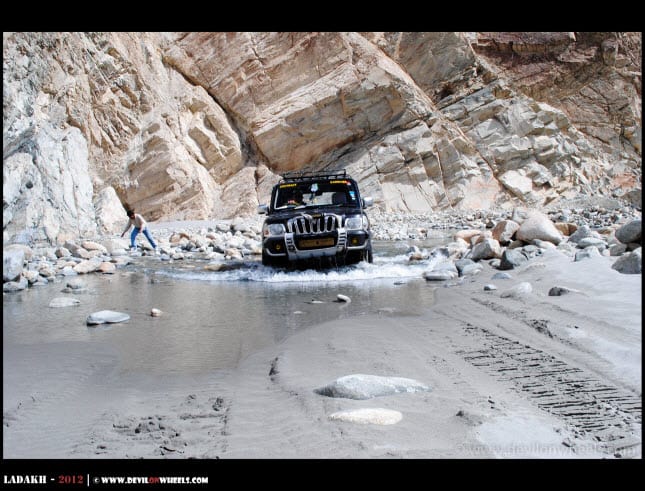
It is much shorter than the Wari La route, takes about 6-7 hours from Nubra Valley to Pangong Tso, and hence will save more time and energy. But, again, there are some landslide-prone stretches on this route, and sometimes you may have a couple of nasty water crossings to tackle.
So, leave early in the day from Nubra and confirm about route conditions at Agham village. If you are alone, it is better to wait for a few vehicles at Agham village to tag along with them. You do not need any special permit for the Shyok Village route. Permits for Nubra Valley and Pangong Tso are sufficient.
Diskit – Khalsar (19 km) – Agham (31 km) – Shyok Village (48 km) – Durbuk (18 km) – Tangtse (9 km) – Lukung (34 km) – Spangmik (16 km) = 175 km
Route 3: Tso Moriri to Pangong Tso (via Changthang)
There exists a route between Tso Moriri and Pangong Tso as well. In most general cases, you will always be doing it from Pangong Tso to Tso Moriri because you can exit Ladakh from Tso Moriri towards Manali – Leh Highway after visiting Pangong Tso without coming back to Leh.
Secondly, Tso Moriri is higher in altitude than Pangong Tso. So, as per the acclimatization schedule, you must stay at Pangong Tso before spending a night at Tso Moriri. However, for informational purposes, you can go to Pangong Tso from Tso Moriri directly via the remote and ever beautiful Changthang region.
The drive between Pangong Tso and Tso Moriri is one of the most beautiful drives in the entire Ladakh region. You need a special permit from Leh DC office to cross Chusul to travel on this route.
Tso Moriri (Korzok) – Sumdo (53 km) – Mahe (10 km) – Nyoma (25 km) – Loma (22 km) – Tsaga Village (23 km) – Tsaga La (20 km) – Chusul (33 km) – Kakstet (24 km) – Merak (4 km) – Man (12 km) – Spangmik (9 km) = 235 km
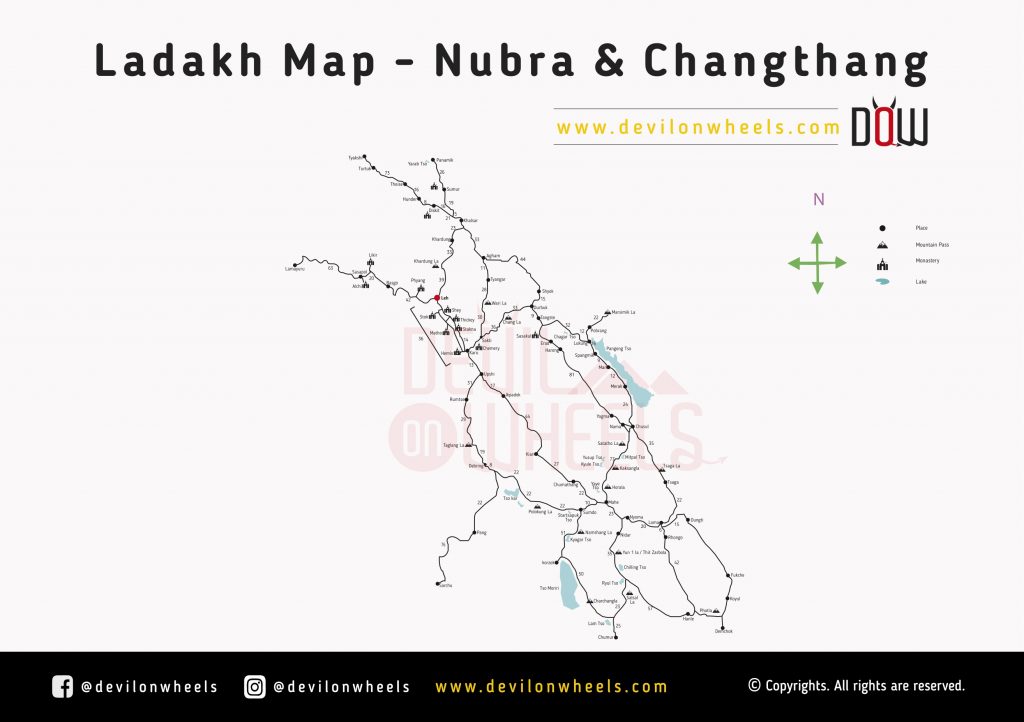
You can check the detailed Pangong Lake map below. You can download this detailed map of Leh Ladakh by right-clicking and then select the option: “Save Image As…”
What About Fuel Planning for Pangong Tso?
Fuel planning is one of the most critical aspects of a Pangong Tso trip. There is no petrol pump at or near Pangong Lake. The nearest petrol pump is at Karu, about 135 km from Pangong Tso, on the way from Leh.
I will suggest that you top up the fuel from Leh itself and then drive or ride up to the lake. If you are taking the Leh to Pangong via Chang La route and returning the same way, a full tank from Leh should be sufficient for most vehicles. However, if you are coming from Nubra Valley via the Shyok Village route, keep in mind that the Diskit petrol pump in Nubra Valley may or may not have fuel, especially in peak season. Since 2016, the fuel availability has been much better at the Diskit pump, but I still suggest you carry spare fuel from Leh to cover about 350-400 km, just to be on the safer side.
For the Pangong Tso to Tso Moriri via Changthang route, you will need to carry spare fuel from Leh, Upshi, or Karu to cover about 600-700 km because you will be covering Leh – Tso Moriri – Nyoma – Loma – Pangong Tso – Leh without any other petrol pump. For detailed fuel planning, you can check my guide on fuel availability in Leh Ladakh.
What Vehicle Is Best for Pangong Tso?
The higher ground clearance vehicles are preferable, and 4×4 ones would be helpful, especially between Tso Moriri and Pangong Tso as well as on the Nubra Valley – Shyok Village – Pangong Tso route. However, quite a few people do it in hatchbacks and sedans as well, which depends upon your driving skills and road conditions.
In general, the Leh to Pangong lake road condition via Karu – Chang La route is good enough for any type of car, including hatchbacks and sedans. The road has been improved significantly over the years, and as of 2026, it is largely tarred with some broken patches. If you are a first-timer, I suggest sticking to the Chang La route which is most comfortable for all vehicle types.
It is always recommended to carry important essentials when you self drive to Ladakh. Also, do check our 7 useful tips for a self-drive to Leh Ladakh before you finalize your plan.
How to Avoid Acute Mountain Sickness at Pangong Tso?
This is something I cannot stress enough. Pangong Tso sits at 14,270 feet, and the lack of oxygen at this altitude is a real challenge. I have personally seen people suffer from severe AMS symptoms at Pangong, from headaches and nausea to vomiting and bleeding nostrils. Please take this seriously.
Here are some important things to keep in mind for avoiding AMS:
- Spend at least 2 nights in Leh before heading to Pangong Tso. Do not rush to Pangong on Day 1 or Day 2 after arriving in Leh.
- Visit Nubra Valley first if possible. Spending a night at Nubra (10,000 feet) helps with gradual acclimatization before going to Pangong (14,270 feet).
- Stay hydrated. Drink at least 3-4 liters of water daily. Avoid alcohol completely during your first few days in Ladakh.
- Do not overexert. Walk slowly, avoid running, and let your body adjust.
- Carry Diamox (after consulting your doctor) as a preventive measure.
- If you experience severe headache, confusion, loss of balance, or breathlessness at rest, descend immediately. Do not wait it out.
Please take a sensible call for yourself and your loved ones waiting for your safe return. AMS is not something to be taken lightly, and it does not discriminate based on age or fitness level.
What to See Near Pangong Tso Lake?
While Pangong Tso itself is the main attraction, there are a few other things you can explore in the area:
- Spangmik Village: The most common overnight stop near Pangong Tso, with camps and homestays.
- Man and Merak Villages: Located further along the lake shore, these villages offer a quieter experience away from the tourist crowds.
- 3 Idiots Point: The famous filming location from the Bollywood movie. While the yellow scooter has been removed, the spot remains popular for photos.
- Chang La Pass: One of the highest motorable passes, you cross it on the way from Leh. There is a small cafeteria at the top where you can have some hot chai.
- Monasteries on the way: Hemis Monastery, Thiksey Monastery, and Shey Palace all fall on the route from Leh to Pangong.
What Is the Best Itinerary for Pangong Tso?
Generally, at least a one-night stay is preferable to truly witness the beauty of this blue colored saltwater lake. One night’s stay will help you watch sunrise and sunset over the picturesque landscape and increase the charm of your vacation to a great extent. Most people generally do the following:
Day 1 | Leh – Hemis Monastery – Pangong Tso Lake
- Cover either of Hemis, Thiksey, and Shey on the way towards Pangong Tso
- Overnight at Pangong Tso (Spangmik or Lukung)
Day 2 | Pangong Tso Lake – Thiksey Monastery – Shey Palace – Leh
- Enjoy sunrise at Pangong Tso, then head back to Leh
- Cover the remaining monasteries (Hemis, Thiksey, or Shey) on return to Leh
- Overnight at Leh
If you are coming from Nubra Valley and going to Pangong Tso via Shyok Village, then your itinerary becomes Nubra Valley – Pangong Tso – Leh, which covers two major attractions in one loop without backtracking to Leh in between.
You can also check our Most Common Itinerary for Leh Ladakh or the Ladakh itinerary by air for a complete trip plan.
Where to Stay Near Pangong Tso Lake?
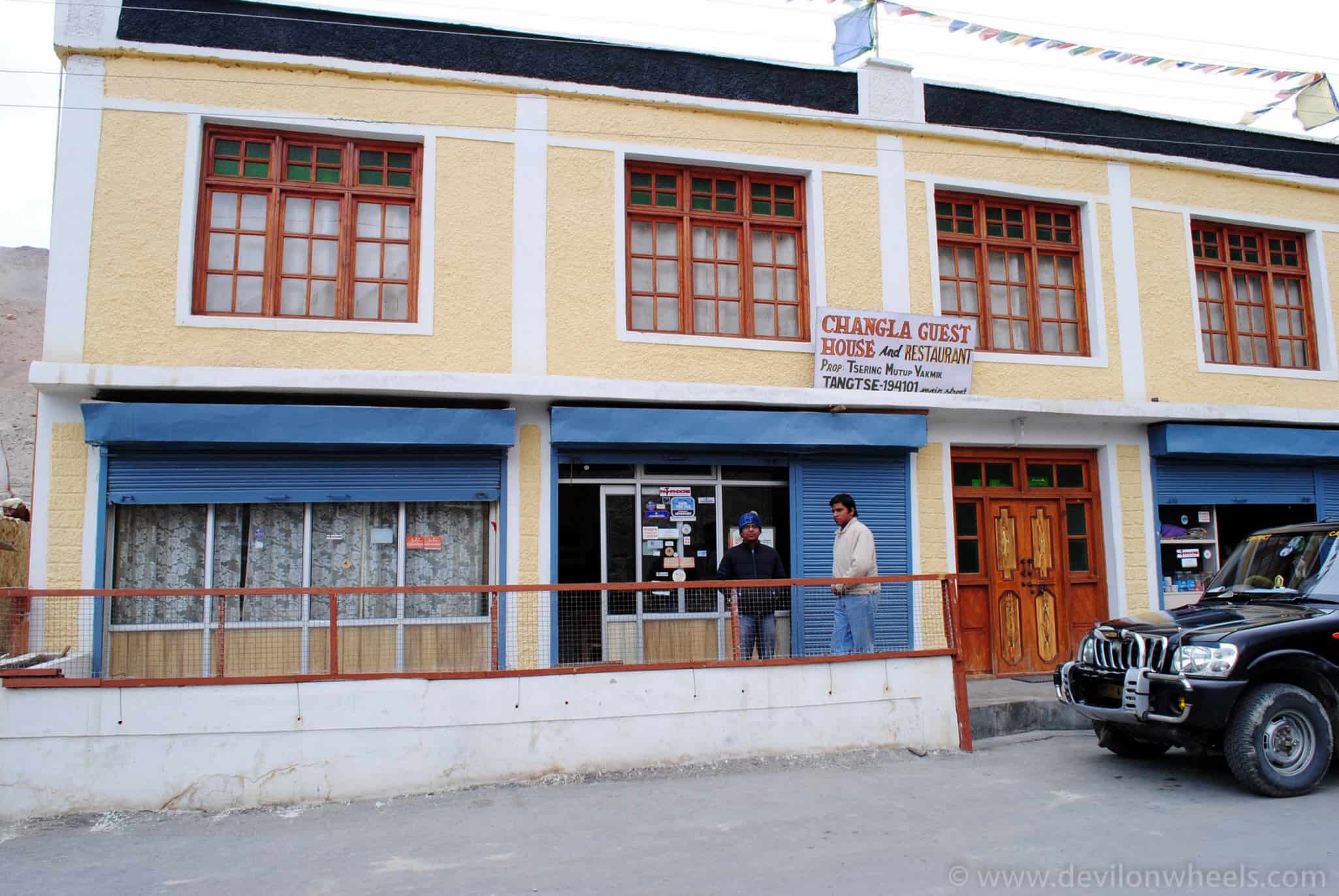
For a comprehensive list of accommodation options, hotels, or camps around Pangong Tso lake, you can refer to these good stay options nearby the lake. There are a few important things to keep in mind about accommodation at Pangong:
- Camps and tents: Most accommodation near Pangong is in the form of luxury or basic tented camps. Rates range from Rs 2,500 to Rs 5,500 per night for a double-occupancy tent with meals included (as of 2025, verify locally for current rates).
- Homestays at Spangmik: Basic but warm homestays are available at Rs 500 to Rs 1,500 per person with meals. These are run by local families and I always recommend supporting them.
- Tangtse guesthouses: If you want more comfort, especially in the shoulder season, Tangtse (34 km from the lake) has better options with proper rooms and attached bathrooms.
Important: Starting from 2018, Leh DC has issued a ruling to vacate all illegal camps near Pangong lake shores. Pangong Tso is a Ramsar site wetland reserve, which means camping directly on the lake shore is not permitted. Make sure you double-check with your hotel or camp folks before making the deal. Licensed camps at designated locations (like Spangmik, Man, and Merak villages) are still operational.
How Much Does a Pangong Tso Trip Cost in 2026?
This is one of the most common questions I get. The cost depends on how you travel, but here is a rough per-person budget breakdown for a 2-day Leh to Pangong trip (assuming a group of 4):

| Expense | Budget (per person) | Mid-Range (per person) |
|---|---|---|
| Taxi (shared, 2-day trip) | Rs 2,500 – 3,000 | Rs 3,500 – 4,000 |
| Accommodation (1 night) | Rs 500 – 800 | Rs 1,500 – 2,500 |
| Food (2 days) | Rs 400 – 600 | Rs 800 – 1,200 |
| Inner Line Permit | Rs 400 (online) | Rs 400 (online) |
| Miscellaneous | Rs 200 – 300 | Rs 500 |
| Total (per person) | Rs 4,000 – 5,200 | Rs 6,700 – 8,600 |
If you are self-driving, replace the taxi cost with fuel cost. A round trip from Leh to Pangong via Chang La and back is about 340 km, so your fuel cost will be around Rs 1,500 – 2,500 depending on your vehicle’s mileage. For a more detailed cost breakdown for all of Ladakh, check our complete budget guide for Leh Ladakh.
How to Reach Pangong Tso by Taxi?
Hiring a taxi is the most common way to visit Pangong Tso if you are not self-driving. As per the Ladakh Taxi Union rates (which have remained stable since 2022 with no increment in 2023, 2024, or 2025), here are the approximate fares:
- Leh to Pangong Tso (day trip, return same day): Rs 8,650 – Rs 10,000 for a sedan/SUV
- Leh to Pangong Tso (2-day trip with overnight): Rs 10,500 – Rs 12,000 for a sedan/SUV
- Shared taxi per person: Rs 400 – 600 (one way, subject to availability)
These rates are as of 2025. For the most current rates, you can check our Leh Ladakh Taxi Rates page which is updated regularly. You can also find taxis from our recommended taxi drivers list for Ladakh.
Can You Reach Pangong Tso by Bus?
Yes, there is a bus service from Leh to Pangong Tso. The bus departs from Leh Bus Stand at 6:30 AM. As of the last available schedule, the bus operates on specific days of the week (Saturday and Sunday being the most consistent). The one-way fare is approximately Rs 270 per person.
However, keep in mind that the bus takes considerably longer than a taxi or self-drive, and the schedule may vary seasonally. I suggest verifying the current schedule at Leh Bus Stand before planning your trip around it. For all details including timings, fare, and travel tips, you can read the complete guide on Leh to Pangong Tso bus service. You can also check our complete guide on all bus services in Leh Ladakh.
What About Mobile Connectivity at Pangong Tso?
Mobile connectivity at Pangong Tso is limited but has improved over the years. Here is the current situation as of 2025:
- BSNL: Works at Lukung and Spangmik, though the signal is often weak and inconsistent. Voice calls work better in the morning hours.
- Jio: Has limited coverage at Lukung. Data connectivity is spotty but improving.
- Airtel: Works well in Leh town but has no coverage at Pangong Tso. Some reports of signal near Tangtse.
- Vi (Vodafone-Idea): No coverage at Pangong.
I strongly suggest downloading offline maps (Google Maps or Maps.me) before you leave Leh. Also, carry a postpaid BSNL or Jio SIM for best chances of connectivity in remote Ladakh areas. Prepaid SIMs do not work in most of Ladakh. For a complete network guide, check our detailed post on mobile phone connectivity in Leh Ladakh.
Are There Any Medical Facilities Near Pangong?
The nearest basic medical health center is at Tangtse Village, about 50 km from Spangmik village and 34 km from Lukung village. You can get basic first aid including oxygen doses at some of the camps. I suggest that you carry your own oxygen cylinder if anyone in your group has a history of respiratory issues or is visiting high altitude for the first time.
Also, carry a basic first-aid kit with you including medicines for headache, cold, stomach issues, and pain relief. The nearest proper hospital is back in Leh town, which is a good 5-6 hours away.
Where to Eat at Pangong Tso?
Being a remote place, your eating options are fairly limited to roadside shacks, homestays, and camping sites. You will either be eating in the homestay at Spangmik Village or at the camps and tents you might be staying overnight. Most camps include meals (dinner and breakfast) in their tariff.
I suggest carrying some dry snacks, biscuits, and energy bars from Leh, especially if you are traveling with kids. Also, a thermos with hot water or soup can be a lifesaver in the cold evenings at Pangong.
You should always carry your water bottle and refill it as many times as you need water. It will not only keep you hydrated always, but you will also help in saving the Himalayas from plastic garbage. Remember, every tiny step counts and your step in this direction can help save the Himalayas too !! 🙂 🙂
Are There Any ATMs Near Pangong Lake?
No. You will not find any ATMs near Pangong Tso lake. The only reliable ATMs in Ladakh are in Leh town. Hence, it is always better to carry sufficient cash from Leh itself. I suggest carrying Rs 3,000 to Rs 5,000 in cash per person for the Pangong Tso leg of your trip, covering accommodation, food, and any small purchases. UPI payments work at some camps near Pangong but do not rely on it entirely since mobile network is unreliable.
What Permits Do You Need for Pangong Tso?
You need an Inner Line Permit (ILP) to visit Pangong Tso. This is mandatory for all Indian citizens and foreigners. As of 2026, the permit can be applied for online through the Leh administration portal at a cost of Rs 400 per person. The permit is valid for up to 7 days and covers Pangong Tso, Nubra Valley, and other restricted areas.
For the Pangong Tso to Tso Moriri route via Chusul, you need an additional special permit from the Leh DC office. This is because the route passes through sensitive areas near the LAC. I suggest applying for all permits at least 2-3 days before your planned visit, especially during peak season when there can be a rush.
What to Pack for a Pangong Tso Trip?
Pangong Tso is at 14,270 feet and the weather can change rapidly. Here is a quick packing checklist:
- Warm layers: Even in summer, nights at Pangong drop to near zero. Carry a good quality down jacket, thermals, and a woolen cap.
- Sunscreen and sunglasses: The UV radiation at this altitude is intense. SPF 50+ is a must.
- Medicines: Diamox (with doctor’s prescription), Disprin, ORS, and basic first-aid kit.
- Oxygen can/cylinder: Especially if you have not acclimatized properly.
- Snacks and water: Carry at least 2-3 liters of water and some dry snacks.
- Power bank: There is no guarantee of electricity at camps, and your phone battery drains faster in cold temperatures.
- Cash: No ATMs at Pangong. Carry sufficient cash from Leh.
- Offline maps: Mobile network is unreliable, so download Google Maps offline.
For a comprehensive packing list, check our 40 must-have things to carry on a Ladakh self-drive trip.
Pangong Tso and Responsible Travel
This is something very close to my heart. Pangong Tso is one of the most fragile ecosystems in Ladakh. It is a Ramsar site and a critical habitat for migratory birds including the Bar-headed Goose. Over the years, increasing tourism has put immense pressure on this delicate environment.
It is a humble request that you help in not making Pangong Tso an environmental disaster. Please follow these simple rules:
- Do not litter. Carry a garbage bag and bring all your waste back to Leh.
- Do not wash clothes or utensils in or near the lake water.
- Avoid using plastic bottles. Carry a reusable water bottle instead.
- Respect the local wildlife and do not disturb the birds on the lake shore.
- Do not play loud music near the lake. The silence is part of the experience.
Frequently Asked Questions
Let us look at some of the most frequently asked questions about Pangong Tso. In case I have missed covering any question in this article, feel free to give me a shoutout in the comments and I will answer and add to this list.
What is the taxi fare from Leh to Pangong Tso?
As per the Ladakh Taxi Union rates (stable since 2022 with no increment through 2025), the Leh to Pangong lake taxi fare is approximately Rs 10,500 to Rs 12,000 for a two-day trip and Rs 8,650 to Rs 10,000 for a day trip. The exact fare depends on the vehicle type (sedan vs SUV). For the latest rates, check our Leh Ladakh Taxi Rates page.
Can I travel from Leh to Pangong Tso by bus?
Yes, buses operate from Leh Bus Stand to Pangong Tso on select days (primarily Saturday and Sunday). The bus departs at 6:30 AM and costs approximately Rs 270 per person one way. Schedules may vary seasonally, so verify with the Leh Bus Stand before planning. Read our complete guide on Leh to Pangong Tso bus service for all details.
Is Pangong Tso safe to visit?
Yes, Pangong Tso is safe to visit. However, the main risks are altitude sickness (AMS), cold weather exposure, and the remote location with limited medical facilities. As long as you acclimatize properly in Leh (minimum 2 nights) and carry adequate warm clothing, medicines, and provisions, it is safe for most travelers including families and solo travelers.
Can I camp at Pangong Lake?
Camping directly on the lake shores is not permitted since Pangong Tso is a Ramsar site wetland reserve. However, licensed camps and tented accommodations are available at designated locations in Spangmik, Man, and Merak villages. Self-camping on the open shoreline is banned by the Leh DC order since 2018.
How many days do I need for Pangong Tso?
Ideally, a 2-day trip from Leh (1 night at Pangong) gives you enough time to enjoy sunrise and sunset at the lake and cover the monasteries on the route. If you are short on time, a day trip from Leh is also possible but it will be a long 13-hour day with limited time at the lake.
Does mobile phone work at Pangong Tso?
BSNL postpaid has limited connectivity at Lukung and Spangmik. Jio postpaid has some coverage at Lukung as well. Other networks (Airtel, Vi) do not work at Pangong. Prepaid SIMs do not work in most of Ladakh. I suggest carrying a BSNL or Jio postpaid SIM and downloading offline maps before leaving Leh.
What is the altitude of Pangong Tso?
Pangong Tso lake is at an altitude of 4,350 meters or 14,270 feet above sea level. It is one of the highest saltwater lakes in the world and the biggest lake in Leh Ladakh.
Can I visit Pangong Tso in winter?
Yes, you can visit Pangong Tso in winter (November to February), but it requires careful planning. The lake freezes completely, accommodation options are extremely limited (only some homestays in Spangmik and guesthouses in Tangtse), temperatures drop to minus 20 to minus 30 degrees Celsius, and the road conditions can be challenging. Read our guide on Leh Ladakh in Winters for a complete winter travel plan.
Conclusion
Pangong Tso lake is a place that stays with you long after you leave. I am sure if you visit Ladakh, this one surely is not the place you would like to exclude from your trip plan. The colors of the lake, the silence of the surrounding mountains, and the sheer remoteness of it all make Pangong Tso a once-in-a-lifetime experience.

I hope the information in this travel guide for Pangong Lake will be useful for your upcoming Leh Ladakh trip in 2026. If you know your friends or family are planning a road trip to Ladakh, do share this article with them to help them make a memorable trip 🙂 …
Have a travel question?? You can subscribe to my YouTube channel and leave a comment to ask your travel questions about traveling to the Himalayas.
Please feel free to post any questions or doubts you might have in planning your trip to Pangong Tso in the comments section below. If you have been to this beautiful place, kindly share your thoughts and other information you might feel will be worth sharing with other fellow travelers and prove helpful to them. You can also check the DwD Community and the DoW Travel Calendar from the links in the Main Menu for travel discussions and finding travel partners.
If you know your friends or family are planning a trip to Ladakh, do share this article with them to help them make a memorable Ladakh trip.
