


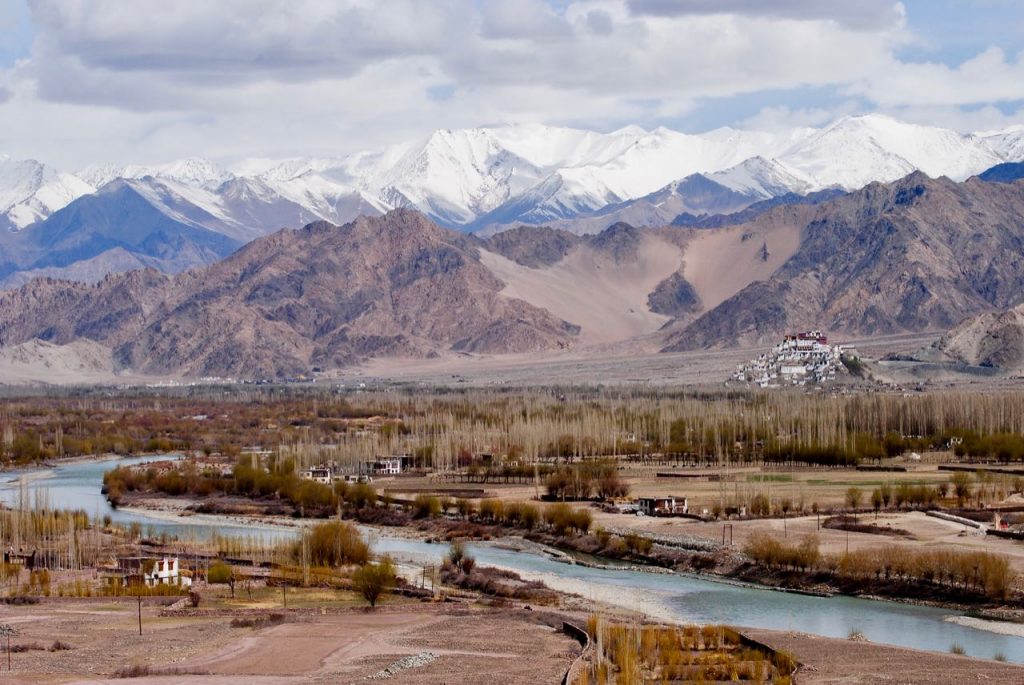
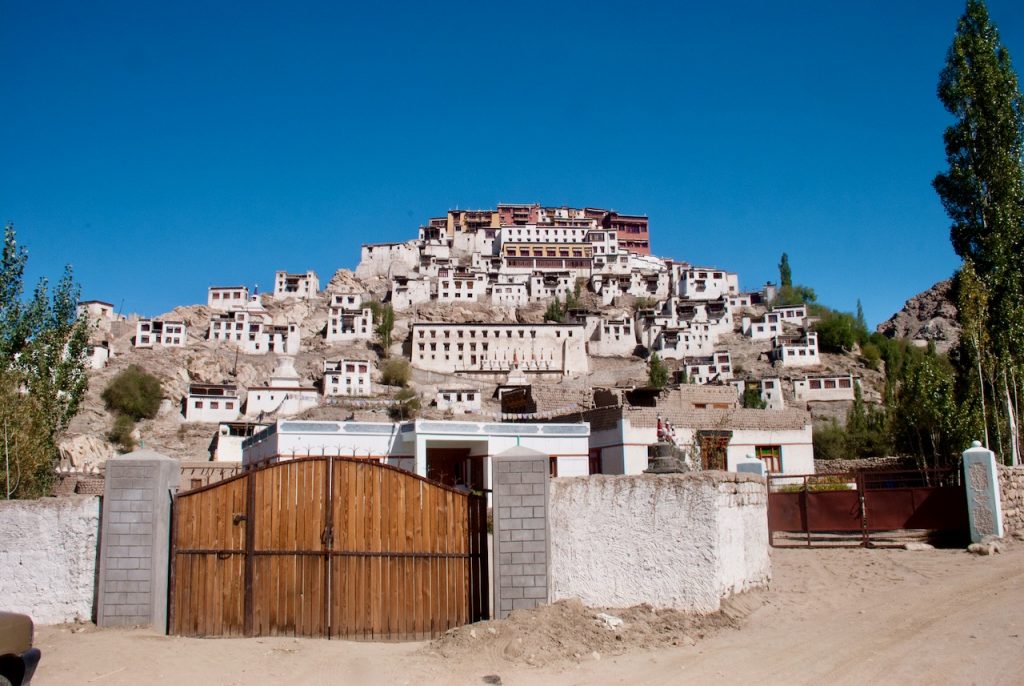
Shey Palace and Monastery sit on a hillock 15 km south-east of Leh on the Leh-Manali Highway. The present palace was built in 1655 AD on the orders of King Deldan Namgyal, and the complex houses a 39-foot (12 m) seated Shakyamuni Buddha in copper and gold. Entry is a nominal Rs 30, no permit is needed, and it is a Centrally Protected Monument under the Archaeological Survey of India.
If you are planning a trip to Ladakh, Shey Monastery is one place you should not skip. This 17th-century palace and monastery complex was the seat of the Namgyal kings until 1842, and Shey itself was Ladakh’s capital long before Leh took over. It is also the very first stop on the popular monastery day tour from Leh that covers Shey, Thiksey, Hemis, and Stakna in a single day. In this guide, I will share everything you need to know before visiting Shey Monastery Leh: entry fee, timings, how to reach, what else sits in Shey village, where to stay, a day-trip budget, and practical tips so that you make the most of your 45 minutes on that hill.
Let's quickly dive into the details:
What Is the Practical Info for Visiting Shey Monastery in 2026?
Quick answer: Shey Monastery is 15 km from Leh (about 30 minutes by road), costs Rs 30 per person to enter, and is usually open from 6 AM to 6 PM with a short lunch break. You need 45 minutes to 1 hour, no permit, and cash in small notes. Photography is not allowed inside the prayer hall.
Here are the key details you should note before planning your visit.
| Detail | Information |
|---|---|
| Location | 15 km from Leh, on the Leh-Manali Highway (towards Karu) |
| Altitude | 11,204 ft (3,414 m) |
| Entry Fee | Rs 30 per person (cash at the gate) |
| Timings | 6:00 AM to 1:00 PM, 1:30 PM to 6:00 PM (some 2025-26 listings give 9 AM to 5 PM for the inner hall, verify at the gate) |
| Time Needed | 45 minutes to 1 hour |
| Photography | Not allowed inside the prayer hall |
| Built By | King Deldan Namgyal, 1655 AD |
| Permit | None. No ILP or EDF needed for Shey |
| Best Time to Visit | May to September (road from Leh open all year) |
| Nearest Town | Leh (15 km, 30 min drive) |
| Nearest Petrol Pump | Leh or Karu |
A common question is whether foreign tourists pay more than Indian tourists at Shey. They do not. The Rs 30 entry fee is the same for everyone, and there is no separate camera or video fee at the gate. Keep in mind that recent visitor reports quote anything between Rs 20 and Rs 40, so carry small notes and do not argue over ten rupees 🙂 Also, Shey’s fee is not an ASI ticket. According to the Ladakh UT administration’s 12 February 2026 heritage review, Leh Palace is the only ticketed ASI monument in Leh, so what you pay at Shey is collected at the site itself.
| Category | Fee |
|---|---|
| Indian Nationals | Rs 30 per person |
| Foreign Nationals | Rs 30 per person (same rate) |
| Camera / Video Fee | None |
| ASI Ticket | Not applicable, Leh Palace is the only ASI-ticketed monument in Leh |
In case you want to beat the crowd, keep in mind that taxi groups doing the Shey-Thiksey-Hemis-Stakna circuit from Leh tend to leave town after breakfast, so the complex is usually busiest from mid-morning until about 1 PM. Hence, the first hour after opening and the last hour before closing are your best bet for a quiet visit, and the low sun at those hours is kinder for photos of the hill too. If you are driving yourself rather than joining a taxi tour, this is an easy way to time your Shey stop just before or after the rush.
What Is the History of Shey Palace and Monastery?
Quick answer: Shey was Ladakh’s earliest capital, with the first palace credited to King Lhachen Palgyigon in the 10th century. The present palace and monastery were built in 1655 on the orders of King Deldan Namgyal, in memory of his father Sengge Namgyal. The royal family abandoned it for Stok in 1842 after the Dogra invasion.
Shey Palace holds a special place in the history of Ladakh. The complex you see today was built in 1655 AD by King Deldan Namgyal of the Namgyal dynasty in memory of his father. Shey had been the seat of Ladakhi kings for centuries before that, and even after Leh Palace was built, the Namgyals kept Shey as their summer palace. The royal family used this hill for nearly 200 years after the 1655 rebuild.
The most striking feature of the monastery is the massive seated Shakyamuni Buddha statue, 39 feet (12 m) tall, made of copper and gilded with gold. As per the Wikipedia entry on Shey Monastery, it rises through three floors of the building. It is often described as the second-largest Buddha statue of its kind in Ladakh. The giant outdoor Maitreya at Diskit Monastery in Nubra Valley is far bigger, but that is a different kind of statue altogether. On both sides of the Buddha, you will find the 16 Arhats (saints who achieved Nirvana), and the wall behind the Buddha has paintings of his two most well-known disciples.

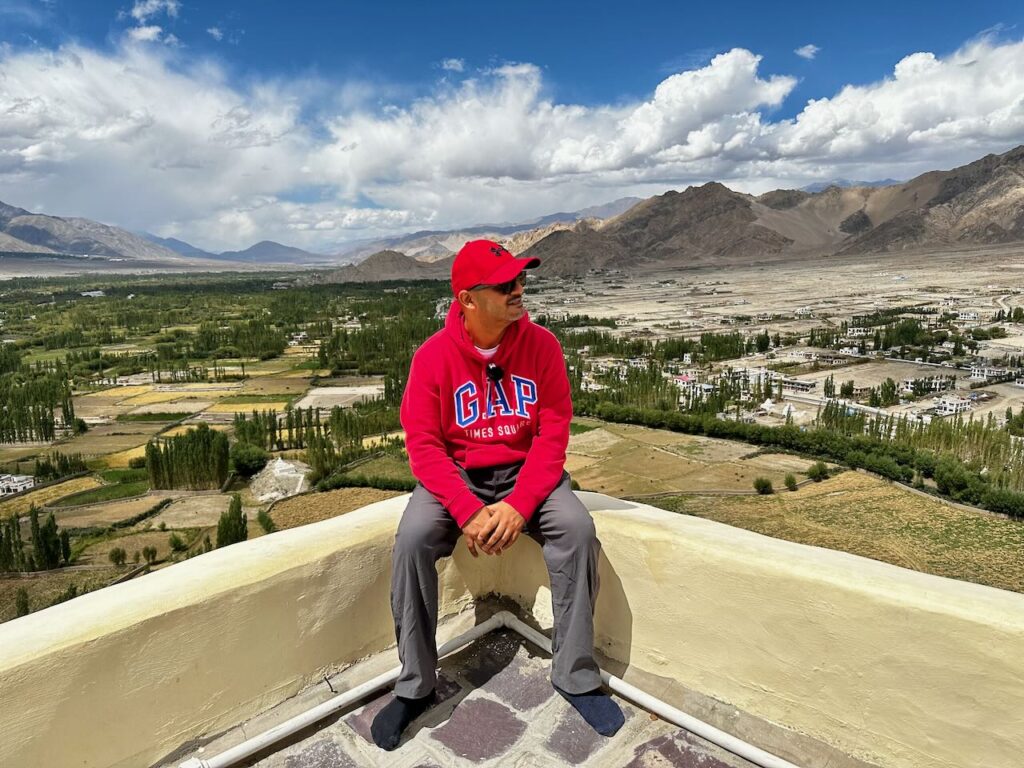
The entire monastery complex is decorated with colorful murals, rock carvings, and chortens. About 400 meters from the main palace, there is another shrine attributed to King Sengge Namgyal, which houses a second Shakyamuni Buddha statue. From the official residence of the monastery’s Lama, which sits at the far end of the hill, you get a grand view of the Indus Valley along with Thiksey Monastery, Stakna Monastery, and Leh town in the distance.
Historical Note: The Namgyal rulers had to abandon Shey Palace in 1842 and flee to Stok when the Dogra forces from Jammu invaded Ladakh. This is why Stok Palace became the final residence of the Ladakhi royal family, and Shey was left largely in ruins.
Shey Palace remains a Centrally Protected Monument under the Archaeological Survey of India (ASI). The ASI list for Ladakh named at that same 12 February 2026 review includes Leh Palace, Shey Palace, Hemis, Thiksey, Alchi, Lamayuru, Likir and Phyang. At the meeting, Chief Secretary Ashish Kundra directed that informative historical display boards be installed at all major heritage sites, so visitors get context for the ruins and chortens they are walking through. It is a reminder that Shey’s crumbling walls are documented and protected, not simply abandoned. If you enjoy this kind of layered history, the Sham Valley monasteries (Alchi, Likir, Basgo) on the other side of Leh make a great second day.
Which Festivals Are Celebrated at Shey Monastery?
Quick answer: Shey hosts two monastery festivals, Shey Doo Lhoo (start of the sowing season) and Shey Rupla (harvest, with the tiger-costume Rupla dance). Separately, Sindhu Ghat near Shey village hosts the Sindhu Darshan celebrations every June, which ran from 23 to 27 June in 2026.
Two festivals are held at Shey Monastery every year, and both are worth timing your visit around if possible.
Shey Doo Lhoo is celebrated on the 26th and 27th day of the first month of the Tibetan calendar and marks the beginning of the sowing season. Locals gather at the monastery for prayers, offerings, and traditional dances. Keep in mind that most guides, Wikipedia included, place it in July or August even though the first Tibetan month normally falls in February or March. Since the sources contradict each other, confirm the exact date with the monastery or the Leh tourist office before you build a trip around it.
Shey Rupla (also spelled Rhupla) is a harvest festival where farmers offer the first fruits of the crop to the monastery. The highlight is the Rupla dance, performed by men wearing tiger costumes. If you happen to be in Ladakh during late summer, attending it adds a completely different dimension to the visit.
Sindhu Darshan at Sindhu Ghat is not a monastery festival, but it happens right at Shey’s doorstep. Sindhu Ghat is a stretch of the Indus riverbank near Shey village (Shey Manla), roughly 8 to 10 km from Leh depending on where you measure from. In 2026, the Sindhu Darshan Yatra Samiti ran it as the Pratham Sindhu Kumbh from 23 to 27 June, as per the Ladakh government. In case you are in Leh in late June, it is easy to combine with a Shey visit.
A visit to Shey Palace along with Hemis Monastery and Thiksey Monastery is considered one of the top things to do in Leh Ladakh. You can easily cover all three in a single day trip from Leh or while traveling to or from Pangong Tso lake.



How to Reach Shey Monastery from Leh?
Quick answer: Drive or take a taxi 15 km down the Leh-Manali Highway towards Karu, about 30 minutes. A full-day monastery taxi from Leh costs roughly Rs 3,000 to Rs 4,000 per vehicle. Budget travelers can take a local bus towards Sakti, Karu or Hemis for about Rs 30 to Rs 50 one way, or walk 4 km from Thiksey.
Shey Monastery is one of the easiest places to reach from Leh. It sits right on the Leh to Manali Highway (the road towards Karu and Upshi), so you do not need to take any diversion. The road from Leh to Shey is well-paved and remains open throughout the year, even in winter.
By Taxi or Private Vehicle
The most convenient way to visit Shey is by hiring a taxi from Leh. Most visitors combine Shey with Thiksey, Hemis, and Stakna monasteries in a single day tour. A taxi for the full monastery circuit from Leh costs approximately Rs 3,000 to Rs 4,000 for the day (as of 2025, verify locally for current rates, since union rates are revised and bigger vehicles cost more). You can check the list of reliable taxi drivers in Ladakh that I have compiled over the years.
If you are on a bike or have your own car, just take the Leh-Manali Highway and you will reach Shey in about 30 minutes. The palace hill is clearly visible from the highway, so you will not miss it.
By Bus (Budget Option)
If you are traveling on a tight budget, you can take a local bus from Leh heading towards Sakti, Karu, or Hemis. These buses pass through Shey. The fare is about Rs 30 to Rs 50 one way. Keep in mind that local buses in Ladakh do not run very frequently and schedules change with the season, so check the timings at Leh bus stand before starting.
By Hiking from Thiksey
There is a 4 km walking trail between Thiksey Monastery and Shey. This trail passes through what is described as Ladakh’s biggest chorten field, with hundreds of whitewashed shrines of varying sizes scattered across the desert landscape. If you enjoy walking, this is a wonderful way to experience the area. Carry water and a cap, because there is almost no shade on this stretch and the sun at 11,000 ft is harsher than it feels.
In What Order Should You Visit Shey, Thiksey, Hemis and Stakna?
Based on research and how local drivers usually run the circuit, there are two sensible orders. In case you want to attend the morning prayers at Thiksey (around 6 AM to 7 AM), start there at dawn, step back 5 km to Shey once it opens, then continue to Stakna and Hemis. Otherwise, drive straight to Hemis first (the farthest, about 45 km from Leh) and work your way back via Stakna, Thiksey and Shey, so that the last stop is the one closest to your hotel. Either way, the whole day fits between 8 AM and 5 PM if you do not linger too long at any one place.
How to Reach Leh in the First Place?
By Road: You can reach Leh by driving on the Manali to Leh Highway (typically open from late May or June to October) or the Srinagar to Leh Highway (open April/May to November). Both highways close in winter due to heavy snowfall. The Manali road also takes you right past Shey on your way into Leh, so you can stop here on arrival day if you are not feeling the altitude.
By Air: Kushok Bakula Rimpochee Airport in Leh has several daily flights from Delhi, plus connections from cities like Mumbai and Srinagar (some routes are seasonal). This is the only option to reach Leh from November to April/May when the highways are closed. From the airport, you can hire a taxi to your hotel in Leh and visit Shey as a day trip once you have acclimatized. For more details, refer to my guide on planning a Ladakh trip by air.
By Train: Since June 2025, trains run all the way to Srinagar on the Udhampur-Srinagar-Baramulla rail link, which makes Srinagar the closest railhead to Leh at roughly 430 km by road. Jammu Tawi is the other option. From either station, you would drive to Leh via Sonamarg, Zoji La and Kargil, which takes 2 days from Srinagar with an overnight halt in Kargil.
When Is the Best Time to Visit Shey Monastery?
Quick answer: May to September is the best time to visit Shey Monastery, with daytime temperatures of about 20 to 30 degrees Celsius and both highways into Leh open. Shey is reachable in winter too, since the Leh-Shey road stays open all year, but you must fly into Leh and pack for minus 15 to minus 20 degrees.
The best time to visit Shey Monastery is from May to September, which aligns with the overall best time to visit Ladakh. During these months, the weather is pleasant (daytime temperatures around 20 to 30 degrees Celsius), and both the Manali-Leh and Srinagar-Leh highways are open.
If you want to catch a festival, late June is good for Sindhu Darshan at Sindhu Ghat, and late summer for the Shey Rupla harvest festival. Do confirm the exact monastery festival dates locally, as explained above.
You can visit Shey in winter as well (November to March), since the road from Leh to Shey remains open year-round. However, you will need to fly into Leh during winter as the highways are closed. Temperatures can drop to minus 15 to minus 20 degrees Celsius, so carry proper winter gear. For more on winter trips, check my guide on visiting Ladakh in winters.
What Else Is There to See in Shey Village?
Quick answer: Apart from the palace and monastery, Shey village has Sindhu Ghat on the Indus (the Sindhu Darshan venue) and the Druk Padma Karpo School, better known as the “Rancho school” from the film 3 Idiots. The school is a working school, so check whether visitors are allowed before you walk in.
Druk Padma Karpo School (the “3 Idiots” or Rancho school): This school, also known as the Druk White Lotus School, sits in Shey village and became famous after parts of Aamir Khan’s 3 Idiots were shot here. Keep in mind that it is a working school first. The Daily Excelsior has reported that the school razed the famous “Rancho Wall” and restricted tourist entry because crowds were disturbing students. Travel listings still publish visiting hours, but I could not confirm current access for 2026, so ask your driver or at the gate, and please be quiet on the campus if you are let in. My Stakna Monastery guide covers where the school sits between Stakna and Shey.
Sindhu Ghat: A calm stretch of the Indus near Shey village with prayer flags and a viewing area. Outside the June festival days it is a quiet place for a short walk by the river, and a good spot to understand why the Indus has been so central to Ladakh’s history.
The chorten fields: The plain between Shey and Thiksey is dotted with hundreds of chortens. Even if you do not walk the full 4 km trail, a 15-minute stroll among them is worth it.
Where to Stay Near Shey Monastery?
Quick answer: Most people do not stay at Shey. They visit it as a half-day or full-day trip from Leh, which has the widest choice of hotels. If you prefer a quieter base, Shey village has a few homestays and guesthouses at roughly Rs 1,000 to Rs 2,000 a night, and Thiksey, 5 km further, has more options.
Most visitors explore Shey, Thiksey, Hemis, and Stakna monasteries as a day trip from Leh and return to their hotel in Leh by evening. This is the most practical approach since Leh offers the widest range of accommodation, restaurants, and services.
That said, if you want to stay closer to Shey, there are a few guesthouses and homestays in Shey village itself, such as Poro Homestay and Botho Guesthouse. Expect to pay around Rs 1,000 to Rs 2,000 per night for basic accommodation. You can also find stay options at Thiksey, which is just 5 km further on the same road. Staying here also means you are close to Stok and Matho across the river for the next morning.
For a curated list of budget and mid-range options, check out my guide on good hotels and guesthouses in Leh.
Where to Eat Near Shey?
There are a few small eateries and dhabas at Shey and along the road from Leh. You will find places serving local Ladakhi and Tibetan food, including thukpa (noodle soup), momos, and butter tea. Some roadside restaurants also serve north Indian dishes.
My suggestion is to stock up on some snacks and water bottles from Leh before starting the day trip. The dhabas on this stretch are simple, and a meal for two should cost around Rs 200 to Rs 400. Do try the local thukpa if you get the chance, it is a perfect warm meal at this altitude. For a sit-down Ladakhi meal on the way back, see my Leh food and restaurant guide.
How Much Does a Day Trip to Shey Monastery Cost?
Quick answer: A shared-taxi monastery day trip from Leh covering Shey, Thiksey, Hemis and Stakna costs about Rs 1,100 to Rs 1,600 per person, including all four entry fees and a dhaba lunch. By local bus, the same day comes in under Rs 500 per person, but with a lot more waiting.
Here is a rough budget breakdown for a monastery day tour from Leh covering Shey, Thiksey, Hemis, and Stakna. Entry fees are aligned with my individual guides for each monastery.
| Expense | Cost (Per Person, Approx.) |
|---|---|
| Taxi for full day (Rs 3,000 to Rs 4,000, shared among 3-4 people) | Rs 800 to Rs 1,200 per person |
| Entry fee at Shey | Rs 30 |
| Entry fee at Thiksey | Rs 40 |
| Entry fee at Hemis (Indians) | Rs 50 |
| Entry fee at Stakna | Rs 30 |
| Lunch at a dhaba | Rs 150 to Rs 250 |
| Total per person | Rs 1,100 to Rs 1,600 |
Keep in mind that Hemis charges foreigners more (Rs 200) and has an optional camera fee of Rs 100, which is not included above. If you take a local bus instead of a taxi, your transport cost drops to around Rs 50 to Rs 100 for the entire day, making the total under Rs 500 per person. Buses are not very frequent, though, and you will spend more time waiting than sightseeing.
What Are the Important Tips for Visiting Shey Monastery?
Quick answer: Do not visit on your first day in Leh, respect the no-photography rule inside the prayer hall, carry small cash for the Rs 30 ticket, and do not count on the inner Buddha hall being open, since a single Lama looks after it. Fuel and mobile network are not a concern this close to Leh.
Respect the Monastery Rules
Photography is strictly not allowed inside the prayer hall of the monastery. Please follow this rule. Also, do not step over any religious statues or objects, and always ask permission before photographing monks. Remove your shoes before entering the prayer halls, and walk clockwise around chortens and prayer wheels. These are sacred spaces and should be treated with respect.
Access to the Inner Sanctum
The inner sanctum of Shey Monastery is generally kept closed since there is only one Lama residing at the monastery. If you want to see the main Buddha statue up close, you may need to request access. Sometimes the Lama is available and will open the doors for visitors, but do not count on it. Even without entering the inner hall, the surrounding ruins, chorten fields, and panoramic views of the Indus Valley make the visit worthwhile.
Take AMS Seriously
Shey sits at 11,204 ft, and Leh itself is at 11,500 ft. If you have just arrived in Leh, especially by air, do not rush out to visit monasteries on your first day. Spend at least 24 to 48 hours acclimatizing in Leh before venturing out, and keep in mind that the palace involves a short but steep climb up the hill. Acute Mountain Sickness (AMS) can affect anyone regardless of fitness level. Drink plenty of water, avoid alcohol on the first day, and listen to your body.
Permits: Do You Need an ILP or EDF for Shey?
No. Shey, Thiksey, Hemis and Stakna are all on the open Leh-Karu belt, so no permit is checked here. In case you are carrying on to Nubra, Pangong or Tso Moriri, Indian tourists no longer need a stamped Inner Line Permit anywhere in Ladakh. Instead, you pay the Ladakh Environment and Development Fee (EDF) online at the official LAHDC Leh permit portal: Rs 400 one-time plus Rs 20 per day wildlife fee, with an optional Rs 50 Red Cross contribution. Foreign nationals still need a Protected Area Permit for those areas. My guides on the Ladakh EDF and inner line permit process and the Protected Area Permit for foreigners explain both step by step.
Fuel and Petrol Pumps
If you are driving your own vehicle, the petrol pumps in Leh and at Karu (about 35 km from Leh) are functional throughout the year. You do not need to carry extra fuel for a day trip to the monasteries along this route. For longer trips towards Pangong or Nubra, refer to my guide on fuel availability in Ladakh.
Mobile Network at Shey
Since Shey is only 15 km from Leh, mobile connectivity here is decent. BSNL postpaid has the widest coverage across Ladakh. Jio and Airtel 4G/5G also work well in Leh and the surrounding areas including Shey, Thiksey, and Hemis. Only postpaid connections from other states work in Ladakh, so keep that in mind. For a detailed breakdown, check my guide on mobile connectivity in Leh Ladakh.
What Else to See Nearby?
The stretch of highway from Leh towards Karu is dotted with some of the most important monasteries and attractions in Ladakh. Here are the key ones you should combine with your Shey visit.
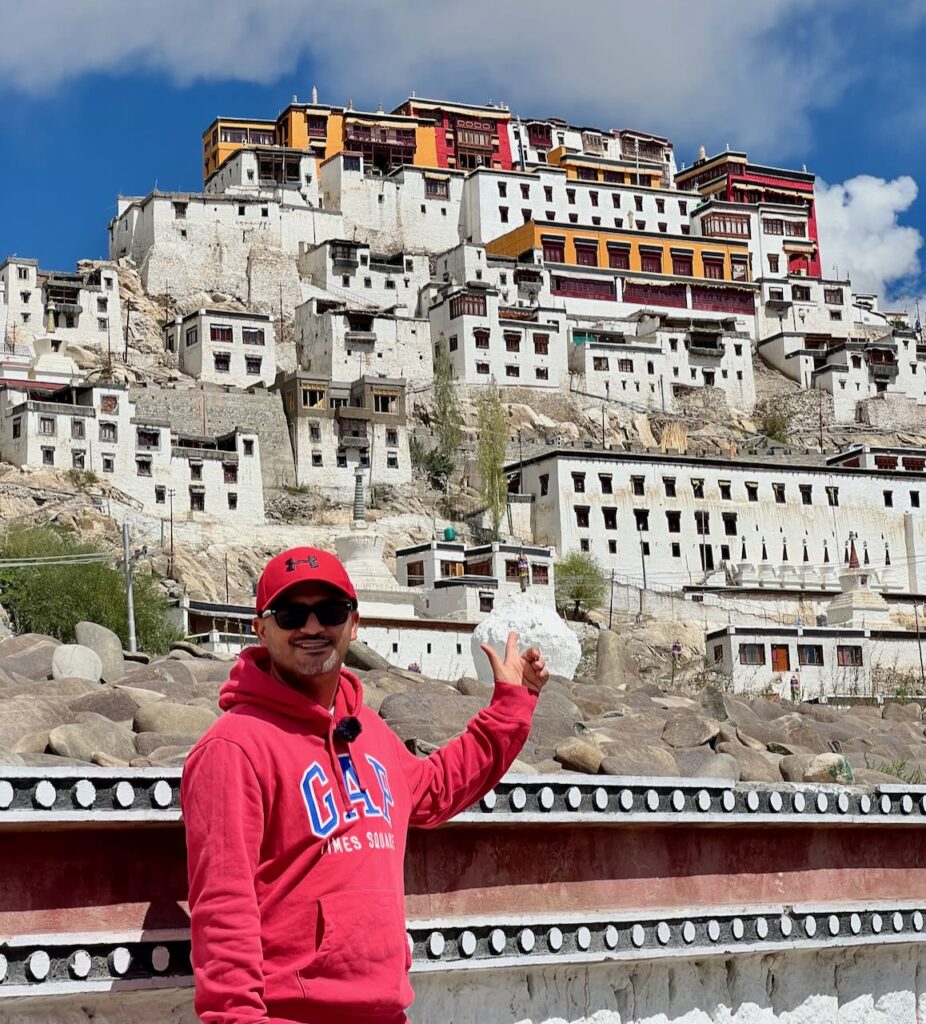
- Thiksey Monastery (5 km from Shey): Often called the “Mini Potala Palace” because of its resemblance to the Potala Palace in Lhasa, Tibet. The early morning prayer ceremony (around 6 AM) is a must-see.
- Hemis Monastery (about 30 km from Shey): The largest and wealthiest monastery in Ladakh, famous for its annual Hemis Festival held in June/July.
- Stakna Monastery (about 10 km from Shey, across the Indus): A small but beautiful monastery perched on a hill overlooking the Indus River. Less crowded than the others.
- Stok Palace (about 15 km from Leh, across the Indus): The current residence of the Ladakhi royal family, where they moved after leaving Shey in 1842. Has a museum with royal artifacts and jewels.
- Matho Monastery (about 15 km from Shey, across the Indus): The only monastery in Ladakh belonging to the Sakya school of Tibetan Buddhism. Famous for its oracle festival (Matho Nagrang) in February/March.
For the full day-by-day breakdown of what to see and do in Leh, check out my Leh local sightseeing guide. And if this is your first trip, my introduction to Leh Ladakh is a good place to start.
Frequently Asked Questions
What is the entry fee for Shey Monastery?
The entry fee for Shey Monastery is Rs 30 per person, the same for Indians and foreigners. The monastery is usually open daily from 6:00 AM to 1:00 PM and again from 1:30 PM to 6:00 PM. Carry cash in small notes.
How far is Shey Monastery from Leh?
Shey Monastery is about 15 km from Leh, on the Leh to Manali Highway. The drive takes approximately 30 minutes by taxi or private vehicle.
Do I need a permit to visit Shey Monastery?
No. Shey is on the open Leh-Karu stretch and needs no permit. Indian tourists no longer need a stamped Inner Line Permit anywhere in Ladakh. For Nubra, Pangong or Tso Moriri, you pay the online Ladakh EDF instead: Rs 400 one-time plus Rs 20 per day, with an optional Rs 50 Red Cross contribution. Foreigners need a Protected Area Permit for those areas.
Can I visit Shey Monastery in winter?
Yes, the road from Leh to Shey remains open year-round. However, you will need to fly into Leh during winter (November to April) since the highways close due to snow. Temperatures can drop to minus 20 degrees Celsius, so carry proper cold-weather gear.
Is photography allowed inside Shey Monastery?
Photography is not allowed inside the prayer hall of the monastery. You can take photos of the exterior, the chorten fields, and the views from the hilltop. Always ask permission before photographing any monks.
How much time do I need at Shey Monastery?
Most visitors spend about 45 minutes to 1 hour at Shey Monastery. If you also explore the Thiksey-to-Shey walking trail and the chorten fields, you could spend 2 to 3 hours in the area.
What is the altitude of Shey Monastery?
Shey Monastery sits at an altitude of 11,204 feet (3,414 meters). This is roughly the same as Leh town, so if you have acclimatized to Leh, you will have no trouble at Shey.
Is Shey Palace protected by the Archaeological Survey of India?
Yes, Shey Palace is a Centrally Protected Monument under the Archaeological Survey of India (ASI), listed alongside Leh Palace, Hemis, Thiksey, Alchi and Lamayuru. At a review on 12 February 2026, Ladakh’s Chief Secretary directed that historical information boards be installed at all major heritage sites.
Do foreign tourists pay more than Indian tourists at Shey Monastery?
No, the Rs 30 entry fee at Shey Monastery is the same for Indian and foreign visitors. There is no separate camera or video fee charged at the entrance.
Is Shey Monastery an ASI-ticketed monument?
No. As per the Ladakh UT administration’s 12 February 2026 heritage review, Leh Palace is the only ticketed ASI monument in Leh. The Rs 30 fee at Shey is collected at the site and is not an ASI ticket, even though Shey Palace itself is an ASI Centrally Protected Monument.
What is the best time of day to visit Shey Monastery to avoid crowds?
The first hour after opening and the last hour before closing are usually the quietest. Taxi groups doing the Shey-Thiksey-Hemis-Stakna circuit tend to leave Leh after breakfast, so the complex is busiest from mid-morning until about 1 PM.
Is the 3 Idiots (Rancho) school near Shey Palace?
Yes. The Druk Padma Karpo School, popularly called the Rancho school, is in Shey village, a short drive from the palace. It is a working school and has restricted tourist entry in the past, so check whether visitors are allowed before you go.
Can I cover Shey, Thiksey, Hemis and Stakna in one day?
Yes. All four sit within about 45 km of Leh on or near the Leh-Manali Highway. Start by 8 AM, either at Thiksey for morning prayers or at Hemis (the farthest), and you will be back in Leh by 5 PM. A full-day taxi costs about Rs 3,000 to Rs 4,000 per vehicle.
Last Updated: October 2026
Conclusion
Shey Monastery and Palace is one of those places in Ladakh that blends history, faith, and wide valley views into a single short stop. The 39-foot golden Buddha, the crumbling palace walls, and the vast chorten fields give you a real sense of Ladakh’s royal past and Buddhist heritage. Combined with Thiksey, Hemis, and Stakna, the monastery day tour from Leh is easily one of the best days you will spend in Ladakh.
I hope this travel guide helps you plan your visit to Shey Monastery. If you have any questions, feel free to ask in the comments below or reach out on the DwD Community on Facebook. There are thousands of fellow travelers there who are always happy to help 🙂 You can also join the DwD Travel Circle to find people heading to Ladakh on the same dates.
If you know someone planning a trip to Leh Ladakh, do share this article with them. It might just save them some research time, my friend.
