


Planning a cold weather motorcycle ride in Ladakh, Spiti, or any other Himalayan region? It sounds thrilling, and trust me, it is one of the most rewarding experiences a rider can have. But it also demands serious preparation. Riding a motorcycle in sub-zero temperatures is a completely different game compared to summer rides, and if you are not prepared, it can turn dangerous very quickly.
I have done winter rides across the Himalayas multiple times, and every single trip has taught me something new about dealing with the cold, the ice, and the unpredictable weather. In this guide, I will share everything I have learned over the years about preparing yourself and your motorcycle for a cold weather ride. Hence, if you are planning a winter trip to Spiti Valley or a winter trip to Ladakh, this article will help you prepare well.
Last Updated: March 2026
Let's quickly dive into the details:
What Should You Know Before a Cold Weather Motorcycle Ride?
A cold weather motorcycle ride in the Himalayas is not something you do on a whim. It is not a general recommendation to ride a motorcycle in below-freezing temperatures because motorcycles are smaller, more exposed vehicles. You have no cabin, no heater, and no windshield to protect you. Your body is the first thing that takes the hit from the cold wind, ice, and snow.
But if you are an adventure lover and have your heart set on experiencing the raw beauty of the Himalayas in winter, then you must be well prepared. Being callous about your safety is not only a risk to you but also to anyone else on the road. Keep in mind that the remote Himalayan roads in winter are not like the highways back home. Help can be hours away if something goes wrong.
How Does Cold Weather Affect Your Motorcycle Ride?
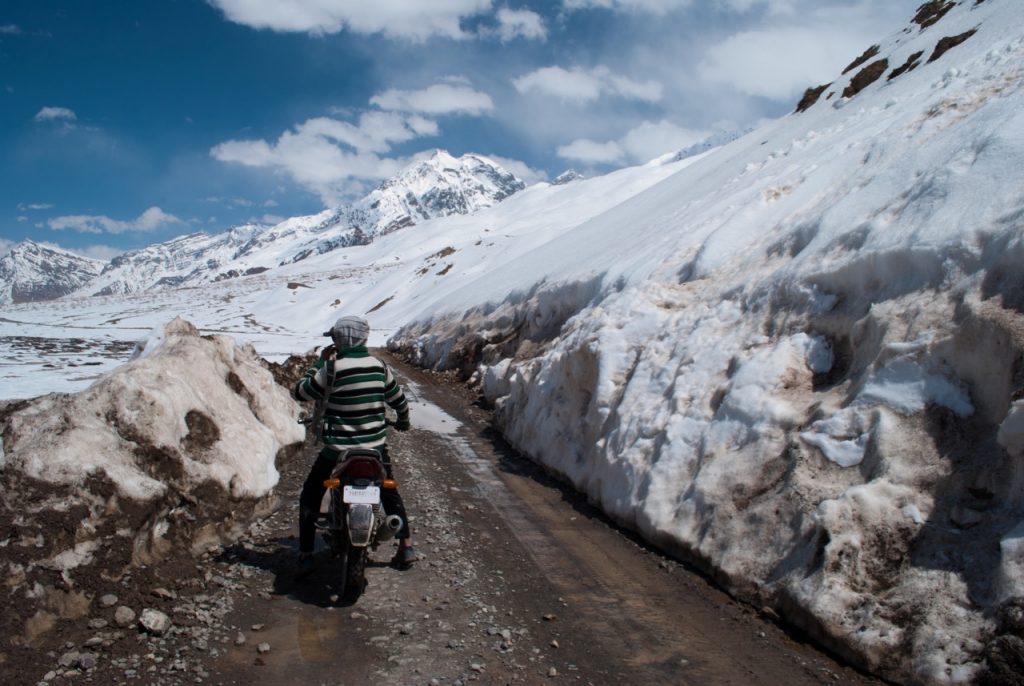
Understanding how cold weather impacts both your body and the road surface is the first step to staying safe. There are two critical factors every winter rider must understand: wind chill and ground temperature.
What Is Wind Chill and Why Does It Matter?
Wind chill is a real thing, my friend. Even if the ground temperature reads a manageable minus 2 or 3 degrees Celsius, the effective temperature on your body while riding at 40-50 kmph can drop to minus 15 or lower. Without proper gear, your body loses heat faster than it can produce. Your internal temperature starts dropping, and that is when hypothermia becomes a serious risk. Early symptoms include shivering, stiff hands, slowed reaction times, and decreased mental clarity. If you notice any of these signs, stop immediately, find shelter, and warm up.
What Is Black Ice and How Do You Handle It?
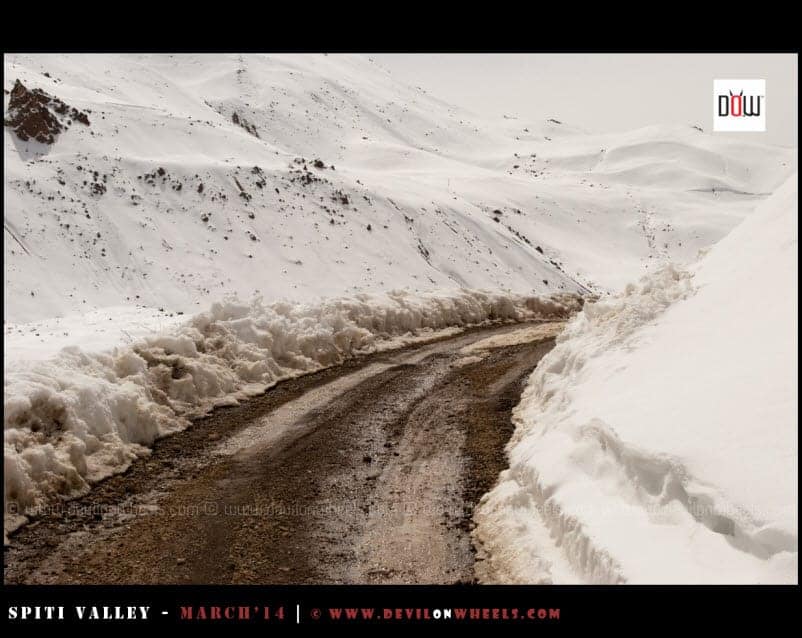
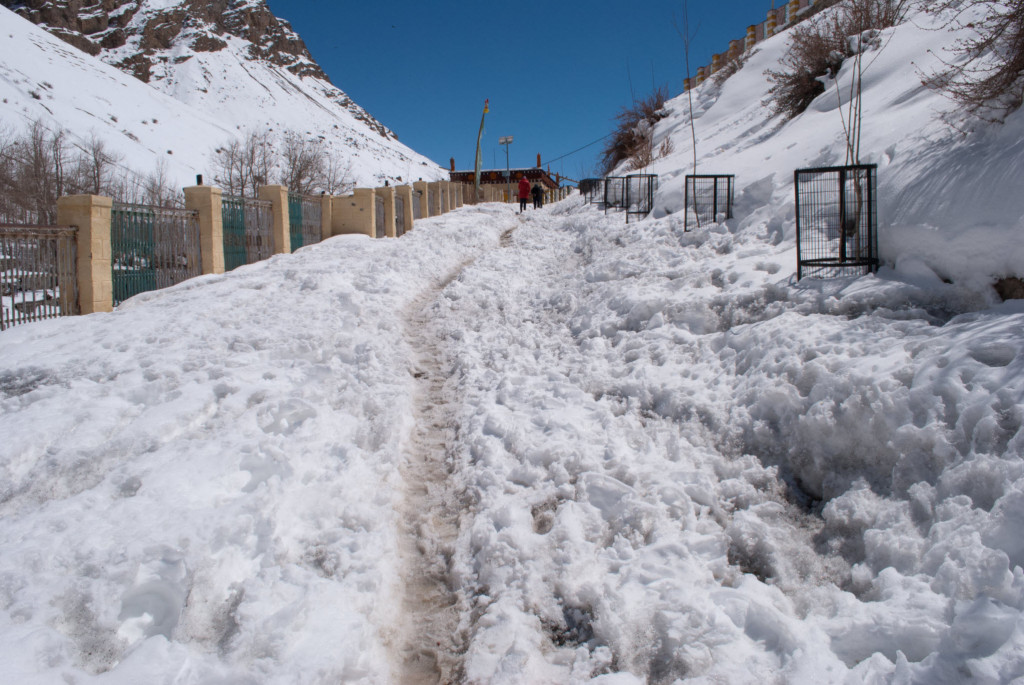
Ground temperature is equally important. When the ground temperature drops below freezing, you will encounter black ice, a transparent sheet of ice that forms on the road surface. It is nearly invisible, and when it gets wet from warming temperatures during the day, it becomes dangerously slick. Your tires simply cannot grip the road on black ice.
If you unintentionally ride onto a patch of black ice, never press the brakes. Your tires will not stop on that slick surface, and braking will almost certainly cause you to slide and crash. The best approach is to keep going at a slow, steady speed, maintain your line, and ride it out. I have seen disastrous scenarios in Spiti in March where riders panicked and braked on ice. It never ends well.
Black ice is most common in early mornings and late evenings when temperatures are at their lowest. Shaded stretches of road, bridges, and areas near water crossings are particularly dangerous. Keep a keen eye out.
How Do You Define Your Riding Limitations?
If your gut feeling is telling you that the weather is too harsh or the road conditions are beyond your comfort level, listen to it. Some other riders might push through, but everyone has different limits. Do not push yourself based on what others feel comfortable doing on extreme winter trips to Ladakh or Spiti.
Also, know the limitations of your motorcycle. Not every bike handles cold conditions the same way. A carbureted bike with a kick start will handle freezing mornings far better than a fuel-injected bike that relies entirely on electronics. I will discuss bike choice in detail below.
What Gear Do You Need for a Cold Weather Motorcycle Ride?
Proper gear is the single most important factor in a successful winter ride. Without it, you will not last more than a few hours in the Himalayan cold. Here is a detailed breakdown of every piece of gear you need.
Helmet
The helmet is the most critical piece of gear for any ride, and for cold weather, it must be full-face. Anything less will not protect you from the biting cold wind. A full-face helmet traps warm air inside and shields your face from wind chill. Look for a helmet with good ventilation that you can close off in winter, and invest in a fog-resistant visor or pinlock insert. Fogging up at high altitude on a narrow mountain road is genuinely dangerous.


Do not be stingy with the helmet. If the protection is good, it is worth every rupee. Some of my rider friends also let their hair grow a bit longer in winter for added insulation under the helmet. Whatever works!
Travel Tip: Don’t forget to check my list of things to carry on a trip to Ladakh or Spiti Valley.

Balaclava and Neck Protection
One of the most common areas where cold air sneaks in is around your neck, the gap between your jacket collar and helmet. A good balaclava or a thick wool scarf plugs this gap completely. By wrapping the garment around your neck and lower face, you block the wind from entering through the gaps.
I suggest wrapping the scarf around your head as well as your neck if you are not comfortable with a balaclava. This gives you an extra layer of warmth inside the helmet and keeps the wind out of the neck gap. It is a simple trick that makes a big difference on long, cold stretches.
Riding Jacket
A good riding jacket for cold weather should be made of synthetic material, synthetic-blend, or leather. All these materials deflect wind well. However, keep in mind that leather does not protect as well against rain, so if there is a chance of rain or snowfall, go for a textile jacket with a waterproof membrane.
Look for a jacket with elastic cuffs at the wrists, waist, and ankles (for both jacket and pants). These cuffs prevent cold air from slipping through. A jacket with spine support is also a smart investment. During winter months, your body stiffens up faster, and a supportive jacket helps maintain posture while keeping you warm. If it rains or snows and you get wet, you will shiver and have to cut short your ride. So a waterproof jacket that handles rain is essential.
Gloves
Many riders think gloves are restrictive and that bare hands give better control. Well, that is wrong. In cold weather, your hands lose heat extremely fast because they are constantly exposed to the wind hitting the handlebars. Numb fingers cannot operate the clutch or brake lever properly, and that is when accidents happen.
Invest in windproof, insulated gloves. Anything that is not windproof will be worthless in Himalayan winter conditions. Look for gloves with a clasp or elastic at the wrist so you can seal them tight around your jacket sleeves. Here is a tip from personal experience: wear thin surgical gloves (doctor gloves) underneath your riding gloves. They add an extra layer of insulation and completely block any air from getting in. This trick alone can save your fingers on a long, cold ride through Ladakh or Spiti.
Boots and Socks
In cold weather, your body goes into survival mode. Blood rushes to your major internal organs to keep them functioning, which means less blood flow to your extremities, especially your feet. This makes your feet far more vulnerable to the cold than other body parts.
You need a good pair of wind-resistant, waterproof boots. Quechua and Forclaz make excellent options that work well for motorcycle riding in the Himalayas. Pair them with wool socks, which retain warmth even when slightly damp. You can layer two pairs of socks if your feet still feel cold. Make sure the boots are comfortable for long hours, because you will be wearing them all day.
Planning to self-drive up there? If yes, do check out this list of must-have things to carry on a self-drive Himalayan trip.
Riding Pants and Warmers
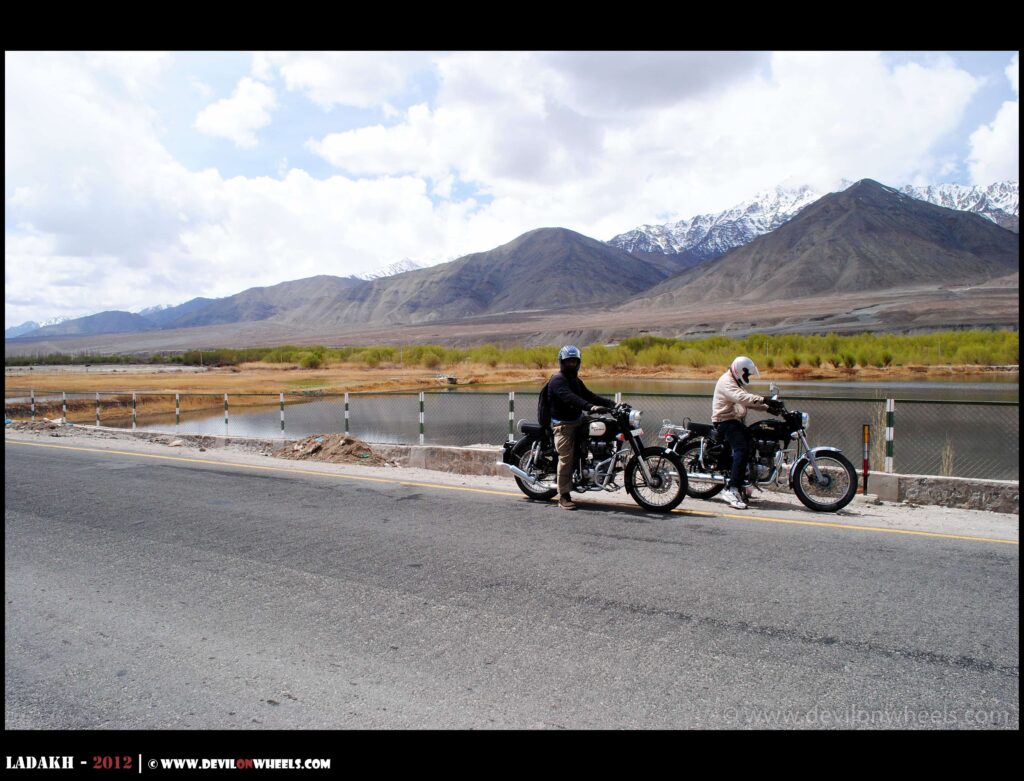
I will suggest you go for proper riding pants and you must layer up with thermal warmers underneath. Your legs take the brunt of the cold air while riding, and regular jeans will not cut it in Spiti or Ladakh winter conditions. Riding pants with a thermal liner, paired with wool or fleece warmers underneath, make a massive difference.
Having a good base layer is one of the most important aspects of staying warm on a winter ride. It is the last line of defense between you and the cold. Always wear a thermal warmer beneath your shirt and jacket. The moment cold air hits your chest, you will start shivering, and that impacts your ability to ride. More layers equal more warmth. There is no shame in layering up. It will only add to your comfort and ensure you get to enjoy the experience on your Spiti itinerary.
Which Motorcycle Is Best for a Cold Weather Ride in the Himalayas?
Choosing the right motorcycle for a winter Himalayan ride is critical. Not all bikes handle freezing conditions equally. Here is what I have learned from experience.
For winter trips, avoid fuel-injected bikes without a kick start. In sub-zero temperatures, your battery will likely die overnight (at least temporarily). A bike that relies entirely on electronics will suffer much more than an old-school carbureted bike with a kick starter. You can kick-start a carb bike even with a dead battery, but a fuel-injected bike without a kicker leaves you stranded.
Also, avoid sports bikes with aggressive riding positions. The crouched posture becomes painful in cold conditions when your muscles are already stiff. Cruisers with a relaxed riding position are the best choice. Many riders swear by Royal Enfield Bullets for Himalayan trips, and they are solid options. But personally, I feel a Honda Unicorn (V1 or V2) is excellent for winter rides. It is a mono-shock bike with a smooth engine, an 18-liter fuel tank with around 45 kmpl mileage in the hills (giving you 900+ km range on a full tank), and it weighs just 140 kg with a relaxed riding position. What more does a Himalayan rider need?
How Do You Manage Fuel on a Winter Motorcycle Ride?
Fuel management becomes even more critical in winter than in summer. Keep tanking up at every fuel station you come across. Do not assume the next pump will be open, because in winter, many pumps operate on reduced hours or shut down entirely.
Carry spare engine oil and make sure you get an oil change at the 750 km mark. Engine oil degrades exponentially faster in freezing conditions. After parking your bike overnight in sub-zero temperatures, check the engine oil in the morning. It will be extremely thick and viscous. Let your bike warm up for at least 5-10 minutes in the morning before riding. Never start a cold engine and immediately hit the road. This patience will extend your engine’s life and give you a smoother ride.
How Do You Stay Hydrated and Fed on a Cold Weather Ride?
Bikers get dehydrated much faster than people traveling in cars, and in sub-zero temperatures, you may not even realize you are dehydrating because you do not feel thirsty. But you must keep drinking fluids. Have tea or hot water whenever possible. The warmer the water, the easier it is to drink in cold conditions.
Garlic helps with breathing at high altitude. Ask for extra garlic in your soup at dhabas. A piping hot bowl of garlic soup does wonders for both warmth and altitude sickness prevention. Chai is practically the perfect cold weather drink for riders: it has sugar for energy, heat for warmth, water for hydration, and milk (fat) for sustained energy. Have as much chai as you can.
Also, it might seem contradictory, but have as much sugar as possible. You will be amazed at the rate your body burns sugar from day 2 or 3 of your trip once it adapts to the cold. Sugar candies, dry sweets, and energy bars are your best friends on a winter Himalayan ride.
What Are the Essential Road Safety Tips for Winter Riding?
Beyond gear and preparation, your riding technique and decision-making on the road will determine whether your winter ride is memorable for the right reasons. Here are the most important tips from my experience.
- Drive slow on black ice. Keep a keen eye out for black ice or frost on the road surface. This is especially common in early mornings and late evenings when traffic is minimal and temperatures are at their lowest.
- Deflate tires slightly for better grip. If your bike is skidding a lot and you cannot maintain a good grip, try deflating your tires a bit. The increased surface area in contact with the road improves traction. But do not overdo it. Remember, fixing tire issues in freezing conditions is extremely difficult.
- Carry essential spares. Always carry an extra spark plug, a tire tube, a puncture repair kit, electrical tape, a tire valve, and most importantly, a spare clutch wire. I have been on the suffering end of a broken clutch wire many times. This one spare can save your entire trip.
- Stop riding by 3 PM. From personal experience, I can tell you that during winters in the high-altitude deserts, climatic conditions become exponentially unstable after around 3 PM. Avoid riding after 3 PM and make sure you avoid riding at all costs after 5 PM.
- Never wait out a snowstorm. If you face a snowstorm, do not try to wait it out. Keep moving to lower ground immediately. This is also a good reason to carry a tent as emergency shelter.
- Take regular pit stops. Avoid rushing. If there is no dire need, do not push yourself or your bike too hard. We are on a journey, not a cross-country race. Take breaks wherever possible to warm up and rest.
- Carry hand warming packets. These small heat packs can be a lifesaver. You can even put a couple inside your warmers or gloves to generate extra heat when your body temperature refuses to come up.
- Use winter-grade engine oil. Cold weather thickens standard engine oil, making the engine sluggish. Switch to a lighter winter-grade oil (like 5W-30 or 10W-30) before your trip for smoother engine operation in freezing temperatures.
What Emergency Kit Should You Carry for a Winter Ride?
Winter riding in remote Himalayan regions means you could be hours away from the nearest mechanic or hospital. Having a well-stocked emergency kit is not optional, it is essential for survival. Here is what I recommend based on my own experiences.
- Basic tool kit with wrenches, pliers, screwdrivers, and a multipurpose knife
- Puncture repair kit with extra tubes and a portable air pump
- Spare spark plug and clutch wire
- Electrical tape and zip ties (these can temporarily fix almost anything)
- First aid kit with bandages, antiseptic, pain relievers, and any personal medication
- Emergency thermal blanket (space blanket), weighs almost nothing but can save your life
- Torch/headlamp with extra batteries
- Portable phone charger (batteries drain faster in cold weather)
- Rope (about 10 meters) for towing or securing luggage in emergencies
In case you are planning a longer trip, do check out the complete packing guide for long-distance motorcycle riding and the guide on must-have things to carry on a Himalayan trip.
Other Articles in the Ladakh – Spiti Bike Ride Series
- Preparing Your Bike for a Ladakh or Spiti Ride
- The Complete Guide to Long Distance Motorcycle Riding
- Packing List for Long-Distance Motorcycle Riding
- Safely Carrying Spare Fuel and Luggage on a Motorcycle
- Clothes and Accessories to Carry on a Ladakh Bike Ride
- Tips for Tackling Water Crossings on a Ladakh – Spiti Bike Ride
- Tips for a Bike Ride to Spiti Valley
- Tips for Cold Weather Camping
Conclusion
A cold weather motorcycle ride in the Himalayas is an extreme adventure that demands respect and preparation. If you have your heart set on exploring the Himalayas in winter on two wheels, prepare thoroughly and most of your journey will be smooth. You will face challenges, you will curse yourself at certain moments when the cold bites through everything. But the reward of riding through snow-covered passes and frozen landscapes is something that stays with you forever.
The key takeaway is simple: prepare your gear, know your limitations, respect the weather, and never ride beyond your comfort zone. If you do these things, a winter ride through Ladakh or Spiti will be one of the most memorable experiences of your life.
I hope this guide helps you prepare for your cold weather motorcycle ride. If you have done a winter ride in the Himalayas and have tips to share, I would love to hear about it in the comments below. Feel free to share this article with your riding buddies who are planning a winter trip. You can also connect with fellow riders on the DwD Community to find riding partners and get real-time road updates 🙂 …
Frequently Asked Questions
What temperature is too cold for a motorcycle ride?
Generally, riding below minus 5 degrees Celsius (23 degrees Fahrenheit) is considered very risky. At these temperatures, black ice becomes common, your body loses heat rapidly, and motorcycle batteries can fail. In the Himalayas, winter temperatures regularly drop to minus 15 to minus 25 degrees Celsius at higher altitudes. With proper gear and preparation, experienced riders manage rides in temperatures down to minus 10 degrees, but anything below that requires extreme caution.
Can I ride a fuel-injected bike in winter in Ladakh?
You can, but it is not ideal. Fuel-injected bikes rely heavily on battery and electronics. In freezing conditions, batteries drain faster and may not start the bike in the morning. A carbureted bike with a kick starter is a safer choice because you can start it even with a dead battery. If you must take a fuel-injected bike, carry a fully charged portable jump starter and keep your battery warm overnight by removing it and storing it indoors.
How do I prevent my motorcycle battery from dying in cold weather?
Remove the battery from the bike at night and keep it indoors or inside your sleeping bag. Cold temperatures significantly reduce battery capacity. In the morning, reinstall the battery and let the bike warm up for 5-10 minutes before riding. Carrying a portable lithium jump starter (these weigh under 500 grams) is also excellent insurance.
What should I do if I hit black ice on my motorcycle?
Never brake. Braking on black ice will cause your tires to lock and you will slide. Instead, keep a steady throttle, do not make any sudden movements, and ride straight through the patch. Reduce speed before you reach potentially icy sections (shaded areas, bridges, water crossings) and stay alert in early mornings and evenings when black ice is most common.
Is it safe to ride a motorcycle to Spiti Valley in winter?
It is possible but extremely challenging. The road to Spiti via Shimla (NH-5) remains open year-round, though the stretch between Nako and Kaza can be treacherous with ice and snow. The Manali to Kaza route via Kunzum Pass is closed from November to May. Only experienced riders with proper winter gear, a well-maintained motorcycle, and adequate supplies should attempt a winter trip to Spiti. I strongly suggest not riding solo on this route in winter.
What is the best motorcycle for a Himalayan winter ride?
The best motorcycle for winter Himalayan riding is one that has a kick starter, a comfortable upright riding position, good ground clearance, and a large fuel tank. Royal Enfield Himalayan and Classic 350 are popular choices. I personally find the Honda Unicorn (V1 or V2) excellent due to its light weight (140 kg), smooth engine, 18-liter tank with 45 kmpl mileage, and relaxed riding position. Avoid sports bikes with aggressive postures as they become painful in cold, stiff conditions.
How much does a winter motorcycle trip to Ladakh cost?
A winter motorcycle trip to Ladakh typically costs between Rs 15,000 to Rs 25,000 per person for a 7-10 day trip if you are riding your own bike. This includes fuel (Rs 3,000-5,000), accommodation in homestays and guesthouses (Rs 500-1,500 per night), food at dhabas (Rs 200-400 per day), and miscellaneous expenses. If you are renting a bike, add Rs 800-1,500 per day for rental. Keep in mind that options are limited in winter, so carry extra cash as ATMs may not work in remote areas.
