


The popularity of Spiti Valley as a travel destination has grown massively over the years, and one of the most common questions I get asked is, “What is the best time to visit Spiti Valley?” The answer is not as straightforward as you might think, because it depends on what kind of experience you are looking for. A winter trip to Spiti is a completely different world from a summer visit, and each month brings its own set of conditions, challenges, and rewards. That said, June to mid-October is the best time for most travellers, with September being the sweet spot for clear skies, fewer crowds, and open roads on both routes.
I have been traveling to Spiti Valley for over a decade now, across different months and seasons, and in this article, I will share a complete month-by-month breakdown to help you pick the best time for your Spiti Valley road trip in 2026. Whether you want snow, autumn colors, clear skies, or the full circuit, this guide will help you plan your trip the right way.
Spiti Valley temperatures run from a summer high of about 22 C in July down to below -20 C in the depths of winter. These are daytime readings in a high cold desert above 3,800 m, so nights are far colder, and from November to March the valley is effectively snow-bound with only the Kinnaur road partly open.
| Month | Daytime Temperature | Conditions |
|---|---|---|
| January | -20 to -5 C | Extreme cold, valley snow-bound |
| February | -20 to -5 C | Heavy snow, most roads shut |
| March | -15 to 0 C | Cold and snowy, Kinnaur road only |
| April | 0 to 10 C | Cool, off-season, snow melting |
| May | 5 to 15 C | Pleasant, snow peaks, bearable |
| June | 10 to 20 C | Warm, main season opens |
| July | 15 to 22 C | Warmest; monsoon on the Kinnaur side |
| August | 12 to 18 C | Monsoon cloud cover keeps days cooler than July; landslide and flash-flood risk on approach roads |
| September | 8 to 18 C | Cool, clear, best for photography |
| October | 0 to 15 C | Cold, fall colours, roads closing |
| November | -10 to 5 C | Very cold, Kinnaur access only |
| December | -15 to 0 C | Extreme cold, valley cut off |
Let's quickly dive into the details:
How Does the Season Affect Your Spiti Valley Road Trip?
Before jumping into the month-by-month details, you need to understand one important thing about Spiti Valley. There are two routes to reach Kaza, the main town in Spiti. The route you choose directly affects when you can travel.
Route 1: Shimla – Kinnaur – Kaza (via Hindustan Tibet Highway, NH-05). This route is technically open all year round because there is no high mountain pass that gets heavy snowfall. However, winter travel on this route is extremely challenging with icy roads, sub-zero temperatures, and limited facilities. You can check the latest conditions on my Delhi – Kinnaur – Spiti Valley road status page.
Route 2: Manali – Atal Tunnel – Kunzum Pass – Kaza. This route depends entirely on the opening of Kunzum Pass (4,551 m / 14,931 Ft). With the Atal Tunnel (opened in October 2020) now operational, you can bypass Rohtang Pass year-round. However, the road from Gramphu to Kunzum Pass and beyond to Kaza still closes during winter. As of 2026, Kunzum Pass typically opens by late May to the second week of June and closes by late October or early November, depending on snowfall. You can track the opening on my Manali – Kaza road status page.
Hence, if you want to do the complete Spiti circuit (Delhi – Shimla – Kinnaur – Kaza – Kunzum Pass – Manali – Delhi), your window is roughly mid-June to mid-October 2026. Keep this in mind while planning your trip 🙂
What is the Best Time to Visit Spiti Valley in 2026? Quick Answer
Quick Answer: The best time to visit Spiti Valley in 2026 is mid-June to mid-October for the full circuit. For first-time visitors wanting maximum access, go in late June onwards when both routes are fully open and all facilities are running. For clear skies, fewer crowds, and autumn photography, plan for September. Here is the key difference: June brings rough early-season roads and weekend crowd surges at Kunzum Pass and Chandratal. September brings settled roads, crisp air, golden trees, and roughly a third fewer tourists. Both are good months but for very different reasons.
Practical Info: Spiti Valley sits at 12,500 Ft average altitude in Himachal Pradesh. Two access routes exist. The Shimla – Kinnaur route (NH-05) stays open year-round. The Manali – Kunzum Pass route opens late May/early June and closes by late October. Kaza is the main town. BSNL postpaid has the widest coverage. The nearest reliable ATM is SBI Kaza (often non-functional in winter, carry cash). Petrol pumps are at Reckong Peo, Tabo, and Kaza. Inner Line Permit is not required for Indians in most of Spiti, but is needed for foreign nationals.
In the following sections, let us look at each month in detail so you can decide which season suits your Spiti Valley trip the best.
What is Spiti Valley Like in January, February, and March?
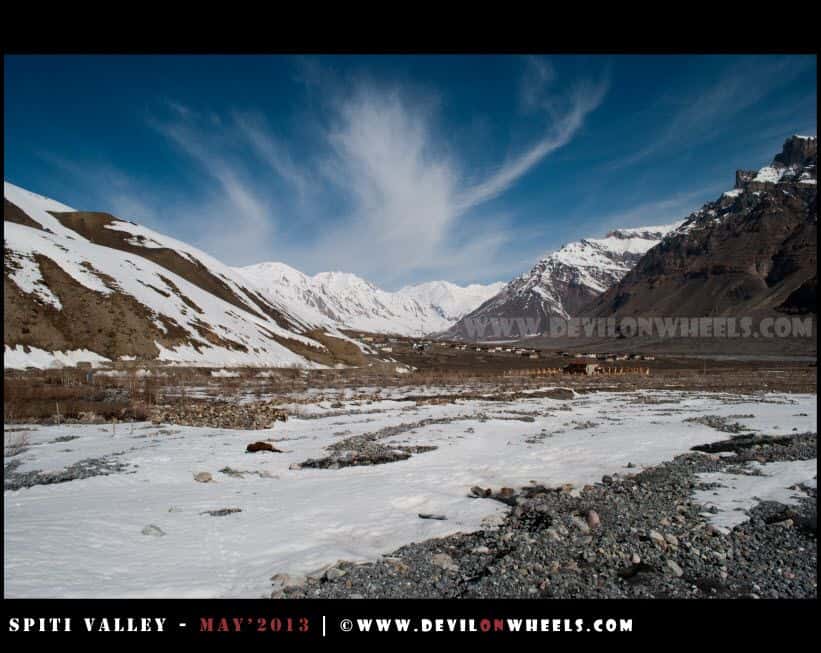
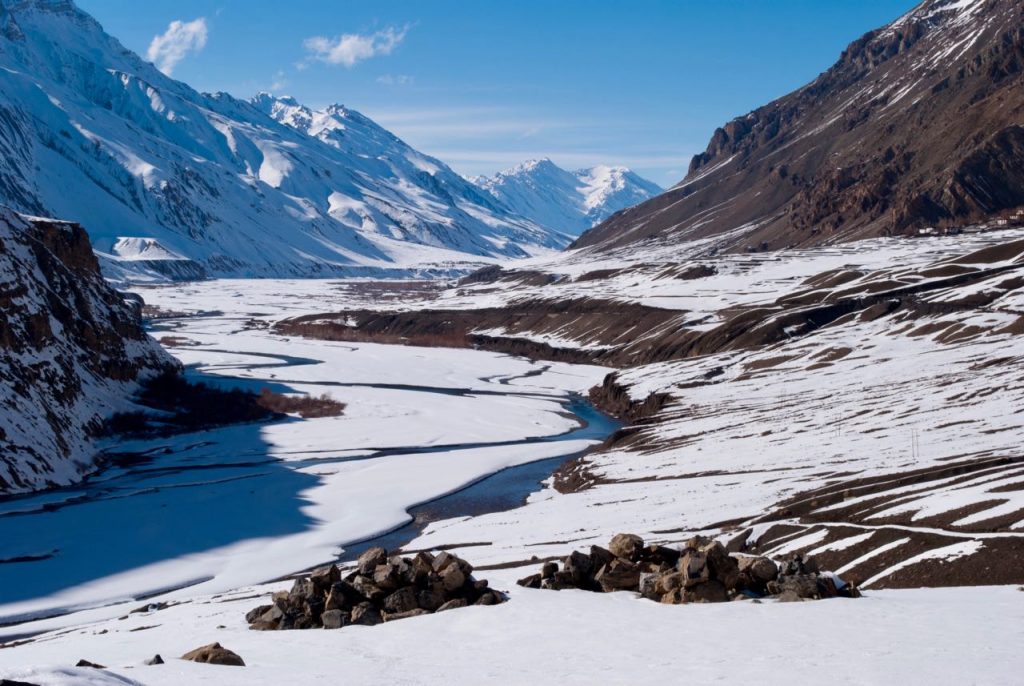
January, February, and March are the extreme winter months in Spiti Valley. The entire valley is draped in a thick blanket of white snow, temperatures can drop well below -20 degrees Celsius, and life slows down to a crawl. The road from Manali to Kaza is completely closed during this period, and your only way in is via the Shimla – Kinnaur route.
Here is what you should expect and prepare for if you are considering a winter Spiti trip.
Road Conditions in Winter
The Hindustan Tibet Highway via Kinnaur remains “technically” open all year. However, traveling to Spiti Valley in winter is not as easy as it sounds. The road conditions on this route are extremely challenging and tough, with ice on the roads, narrow stretches, and the constant risk of black ice. Hence, you should avoid traveling to Spiti Valley in winter unless you are prepared for extreme conditions.
Accommodation and Facilities in Winter
Most hotels in Spiti shut down for winter. You will need to rely on limited homestay options, and even those will have basic facilities. Do not expect running water in taps, because the water freezes in the pipes. Dry pit toilets are the norm from January to March. Carry a hand sanitizer and be mentally prepared for basic conditions. Food will be whatever the homestay can provide, and you should carry emergency snacks and high-energy food as well.
A good temperature-rated sleeping bag is essential because even homestays can get bitterly cold at night. Homestay rates in winter months are around Rs 500 to Rs 1,000 per night including basic meals (as of 2026, verify locally for current rates). In case you are looking for verified options, check my curated list of Spiti Valley homestays.
Which Roads are Open Within Spiti in Winter?
Within Spiti Valley itself, roads are open only to a limited extent in these months. Kaza to Losar remains closed, so you cannot visit Kunzum Pass. The roads to Langza, Komic, and Hikkim also close during peak winter months. You can typically access Kaza, Tabo, and the main highway villages, but the interior circuits shut down one by one after heavy snowfall.
January typically has the least snowfall of these three months, while February and March bring snow in abundance. In my honest opinion, March is one of the best months to enjoy a winter Spiti trip because you get plenty of snow along with slightly more daylight and marginally better road conditions. You should also read my detailed guide on Spiti Valley in February if you are considering a February visit. For a complete winter itinerary, check my White Spiti in March guide.
How is Spiti Valley in April and May?
April and May mark the transition from winter to the travel season in Spiti Valley. The snow starts melting, temperatures begin climbing into positive territory, and the valley slowly comes back to life. This is when adventurous travelers start planning their trips to Spiti Valley.
What Opens Up in April and May?
As the snow melts, several link roads within Spiti Valley start becoming accessible. The road to Losar from Kaza opens up, along with the roads to Pin Valley towards Mud, the road to Lhalung and Demul, and the Langza – Hikkim – Komic circuit. However, the Kunzum Pass and the road from Kaza to Manali typically remain closed until late May or early June. In 2026, BRO snow clearance on the Manali side started in March, and Kaza-side day-trip access to Chandratal is most likely between May 20-28, with the full Manali-side route expected to open between late May and the first week of June.
Hotels start coming out of hibernation, fresh fruits and vegetables start arriving in the valley more frequently, and overall conditions become much more bearable than the preceding winter months. The daytime temperature in Kaza ranges from about 5 to 15 degrees Celsius, while nights can still be cold (around -5 to 0 degrees).
Who Should Visit in April or May?
If you are someone who wants to experience the deserted roads, a low tourist count, and are OK with basic facilities and the possibility of missing a place or two (because that link road might not have opened yet), then this is a good window for you. Keep in mind that you will not be able to do the complete circuit from Shimla to Kinnaur to Kaza to Manali because the road from Kaza over Kunzum Pass to Manali does not open until late May or June.
In case you are a snow lover and want to see snow-studded peaks while enjoying somewhat bearable weather, then May is arguably the sweet spot. You get the dramatic white peaks, the roads within Spiti are largely open, and you avoid the extreme conditions of the deep winter months.
Is June Good for a Spiti Valley Trip? Early June vs Late June
June marks the beginning of the main travel season for Spiti Valley, and a large number of tourists make their journey during this month. The big milestone is the opening of the Manali to Kaza route via Kunzum Pass, which typically happens by late May to the second week of June. BRO starts snow clearance work from March, and the exact opening depends on snowfall that year. Once Kunzum Pass opens, the road to Chandratal Lake from Manali also becomes accessible, and Chandratal is one of the most popular places to visit in the entire Spiti region.


Early June vs Late June: These Are Two Different Trips
This is something most generic guides completely miss, and I want to be clear about it. Early June (June 1-12) and late June (June 18-30) are essentially two different trips. In early June, Kunzum Pass may or may not be open yet, Chandratal is likely still snow-covered, and the Gramphu-Batal stretch of the Manali route has winter damage that has not been repaired. Water crossings are at their highest and most unpredictable because of snowmelt peaking through the day. I have seen routes that look passable at 6 AM turn into knee-deep water crossings by noon.
By late June, the situation changes considerably. The Manali route has been driven by enough vehicles that BRO has done initial repairs, the road surface has settled, and Kunzum Pass is reliably open for all vehicles. Chandratal becomes accessible. Hotels and restaurants in Kaza are at full capacity. This is when the June experience most people imagine actually kicks in. So if you are planning a June trip, try to keep your Kaza arrival after June 15 if you are coming from the Manali side.
Road Access and Sightseeing in June
By mid-to-late June, almost all the link roads to various sightseeing places open up. You can plan visits to Langza, Hikkim, Komic, Demul, Lhalung, Pin Valley and Mudh Village, Gete, Tashigang, and the twin villages of Mane. Hotels in Spiti Valley are all open with full facilities, and Kaza town buzzes with tourists, bikers, and backpackers.
The daytime temperature stays between 15 to 20 degrees Celsius, which makes it comfortable for sightseeing and outdoor activities. It is a great retreat from the scorching heat of northern Indian cities like Delhi.
Water Crossings and Weather Concerns in June
However, there is one thing you must be careful about. As the snow melts rapidly in June, many water crossings (nallahs) become active on the routes to Spiti. These water crossings can be tricky, especially in the afternoon when the flow peaks. Hence, follow my “Leave Early, Sleep Early” principle very strictly. Start your drive by 6-7 AM and reach your destination by 2-3 PM to avoid getting stuck at a water crossing or behind one.

In recent years, June has also brought pre-monsoon showers on the way to Spiti Valley, especially in Kinnaur. Even Spiti experiences occasional spells of snow in June. The 2013 tragic flash floods in Kinnaur district are a reminder that weather in the Himalayas is becoming increasingly unpredictable. Despite these concerns, mid-to-late June remains one of the better and more popular times for a Spiti Valley road trip.
June vs September: Which Month is Actually Better for Spiti Valley?
Every website tells you the best time to visit Spiti is June to October. But that range covers months that are completely different in character. Let me give you a direct comparison between the two most popular months so you can make a clear call for your trip.
Roads: June roads are early-season rough. Winter damage on the Gramphu to Batal stretch has not been fully repaired. Loose gravel, patchy surfaces, and peak water crossings are the norm. Drive times can stretch 10-12 hours for stretches that take 7-8 hours in September. By September, the roads have had an entire summer of traffic and BRO repairs. The Gramphu-Batal stretch is in its best condition of the year. Water crossings are lower, drive times are predictable, and you can actually enjoy the views instead of white-knuckling the steering wheel.
Crowds and cost: June sees the highest footfall of any month, driven by summer holidays from Delhi, Chandigarh, and Punjab. Weekends at Kunzum Pass, Chandratal, and Kaza get seriously crowded. Booking homestays 2-3 weeks in advance is not optional in June. By September, the school holiday crowd is gone, walk-in availability at most homestays is realistic, and accommodation prices drop 15-20% compared to June peak rates. A 10-day September trip can save you Rs 2,000 to Rs 5,000 per person on accommodation alone.
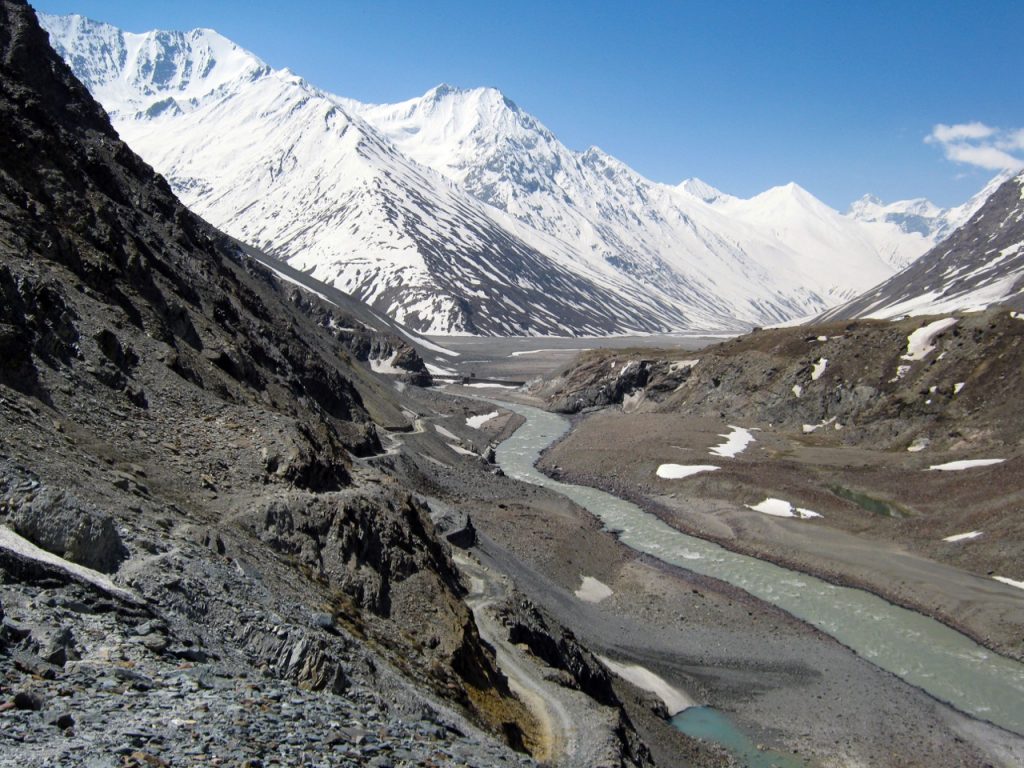
Photography and scenery: June gives you a specific kind of beauty: last winter snow on the high peaks, bright green patches on the valley floor, and deep blue snowmelt rivers. September gives you something different: orange and golden autumn trees, aqua-green river water, crystal clear post-monsoon air with deeper blue skies, and the best light angles of the year on the valley walls. If you are serious about photography, September wins this comparison clearly. If you want full facilities and maximum access, late June wins. My personal recommendation is September.
Is July Good for Spiti Valley?
July is a solid month for Spiti Valley. Both routes are fully open and all sightseeing roads within the valley are accessible. The Ladarcha Trade Fair in Kaza happens in late July or early August, worth timing your trip around if you enjoy cultural events. The concern with July is the approach roads. The Kinnaur route via NH-05 sees increasing landslide activity because the monsoon reaches the region from the east. Sections like Malling Nalla between Nako and Khab and the stretches near Nigulsari are known trouble spots. BRO maintains a presence and clears debris, but closures of 4-12 hours are routine after heavy rain. Always carry buffer time in your July itinerary. The Kinnaur Valley travel guide covers these hazards in detail. Daytime temperatures in Kaza in July range from 15 to 22 degrees Celsius.
Should You Travel to Spiti Valley in August During Monsoon?
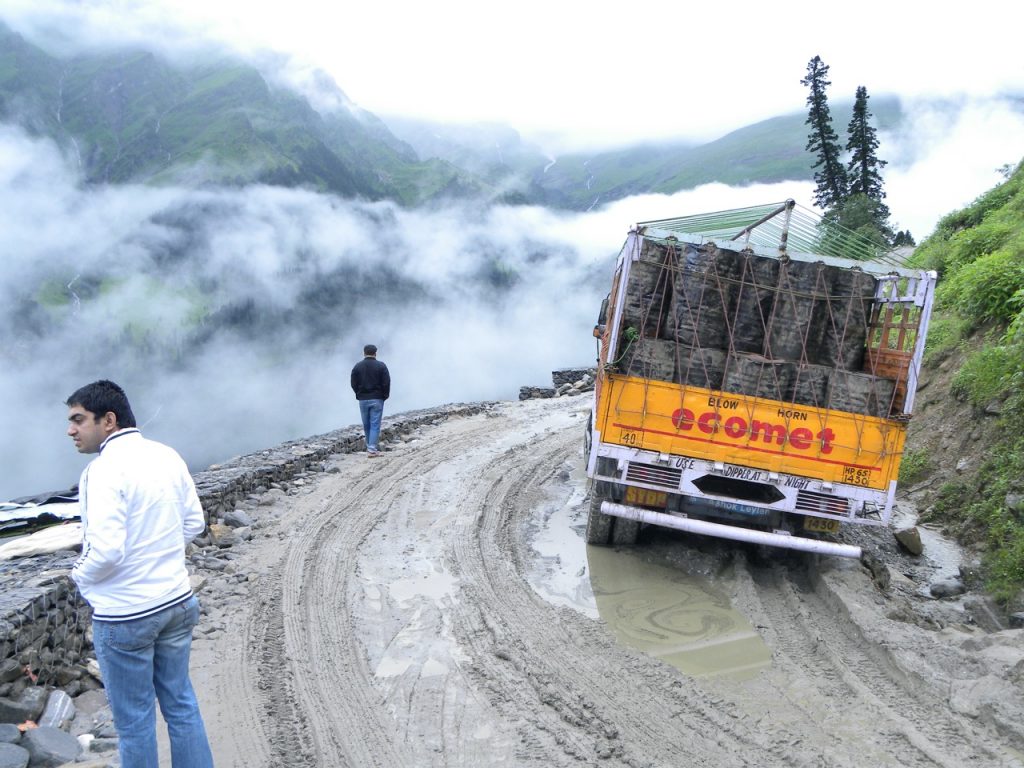
This is the time when the monsoon is in full flurry in Kinnaur Valley and other parts of Northern India. You MUST understand that Kinnaur is not a place to be during heavy rains, given its history of massive landslides and the live landslide zone of Malling Nalla ahead of Nako.
Road Conditions During Monsoon
During August, the roads leading to Spiti Valley are in their worst state compared to the rest of the year, especially through Kinnaur Valley. In recent years, even the roads from Delhi to Manali have caused major concerns with landslides and flooding around Mandi and Kullu. If you are coming via the Manali route, the road beyond Atal Tunnel can be in a big mess, and the roads towards Mandi may be submerged. NH-05 also took heavy damage during the 2025 monsoon around Nigulsari and the Pooh to Kaurik stretch in Kinnaur. Repair work continues through 2026, so expect single-lane sections and holding zones at key repair points.
Is It Still Worth Visiting in August?
Having said all that, it does not mean August is completely off limits. Spiti Valley itself falls under the Trans Himalayan region, which is generally rain-shadowed. Once you reach Spiti Valley, things remain mostly OK with occasional drizzles and overcast skies. The problem is getting there and getting back, because both the Kinnaur and Manali routes experience heavy monsoon rains.
My honest suggestion is to avoid August if possible. You may only consider it when you have enough buffer days in hand (at least 2-3 extra days) to handle intermittent delays or even trip cancellation due to road closures.
Also, keep in mind that August is the peak time for the apple season and crop transportation in Kinnaur. This creates significant traffic jams on the Kinnaur Valley route due to the high number of trucks. If you do happen to be there, make sure to buy one or two cartons of golden or red apples from Kinnaur 🙂
You should read my detailed tips on traveling to Kinnaur and Spiti Valley in monsoon time before planning an August trip.
Why is September to Mid-October the Best Time for Spiti?
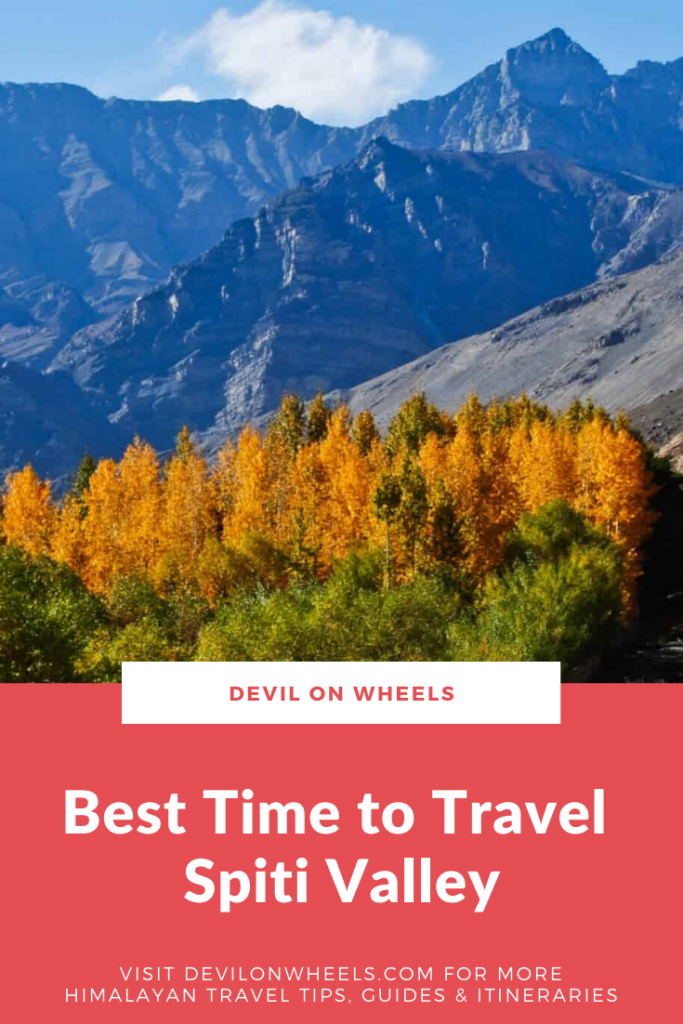
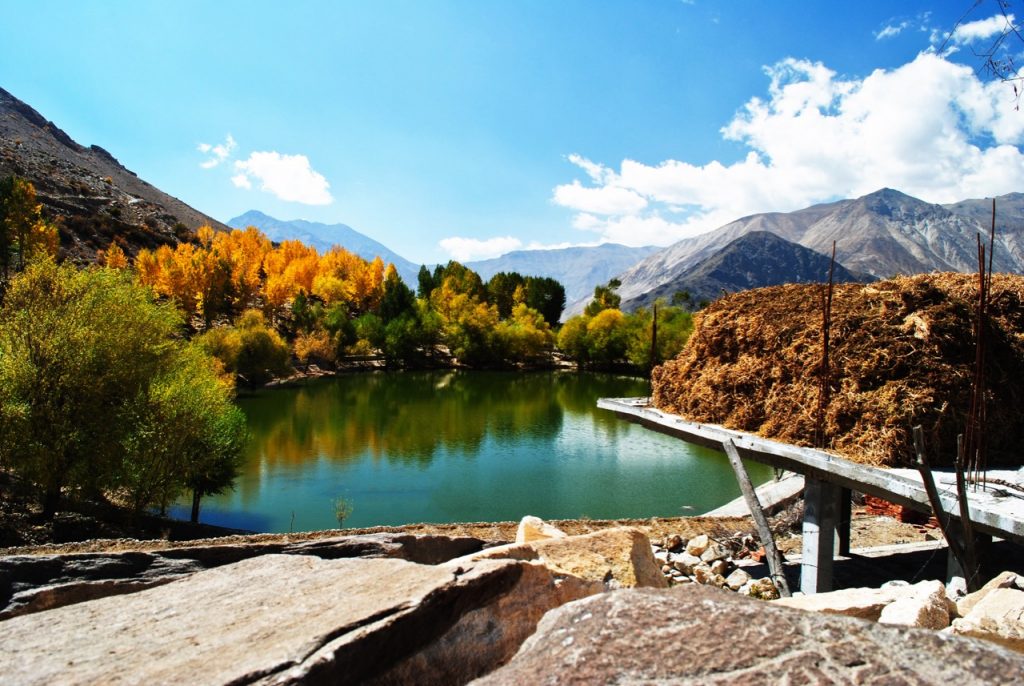
This is the time which is my personal favorite, and I will tell you why. The autumn colors of Spiti Valley are something you have to see to believe. The trees turn orange and golden, the river water takes on aqua-green shades, and the entire valley looks like a painting against the backdrop of barren mountains. The Spiti Valley weather in September is clear, crisp, and perfect for photography.
Weather and Temperature in September
The daytime temperature is pleasant (around 10 to 18 degrees Celsius), but nights and mornings can get quite cold, sometimes dropping to 2-3 degrees Celsius in parts of the valley. Hence, do carry heavy woolens or thermals with you for this time of the year. The monsoon has retreated, roads have stabilized, and the skies are crystal clear.
Spiti Apples and Local Produce
September and October is also the apple season in Spiti Valley. You can get your hands on super delicious Spiti apples around Tabo, Hurling, and even in Kaza from local houses. I am sure you would not have tasted such an apple before. DO NOT miss trying or buying them if possible 😉 …
What About the Complete Circuit in October?
Regarding the complete circuit, you can enter from the Kinnaur side and exit via the Manali side until about mid-October. However, after mid-October, you need to be very careful. Kunzum Pass starts getting snowfall by September end, and crossing it in late October or November can be very risky. It is no man’s land up there, and getting stuck in snow with no help for kilometers is a real danger.
Hence, you need to be very sure of the weather forecast when making a move from Kaza to Manali beyond Kunzum Pass in October. My frank and modest advice will always be to avoid the Manali to Kaza road in late October and November. Please take a sensible call for yourself and your loved ones waiting for your safe return.
In case you are a snow lover, keep in mind that you will not see much snow on the peaks during September and early October because most peaks around you would be bare after the summer melt. The snow returns only towards late October.
How Tough is Spiti Valley in November and December?
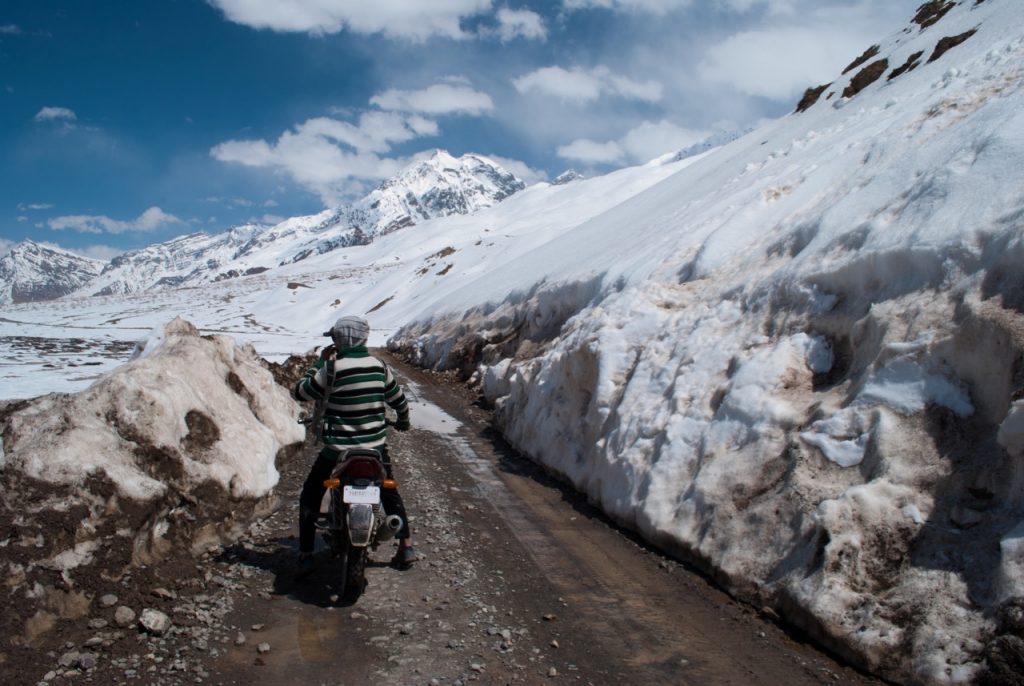
November and December mark the beginning of harsh winters in Spiti Valley. The valley starts freezing, water in the pipes begins to ice up, and running water becomes a luxury. The Spiti Valley weather gets bitterly cold, with sub-zero temperatures becoming the norm even during the day.
Conditions You Should Expect
While traveling to Spiti Valley in November, you will face ice on the roads, lack of electricity in many villages, extreme cold, and basic facilities because most guesthouses close for the season. Kunzum Pass closes by November for the next 6-7 months, so completing the circuit from Shimla – Kinnaur to Manali is not possible during this period.
In Kaza and other villages, taps freeze and people depend on hand pump water or boiled water in buckets. Washrooms without running water are a serious challenge, and you need to be mentally prepared for this. Kaza especially suffers from a shortage of water in the winter months.
December Road Closures
By December, the link roads to various places within Spiti start closing one by one after snowfall. Roads to Gyu Mummy, Pin Valley and Mudh, Gete, Komic, Langza, and Losar beyond Kaza all shut down. You can only make a trip up to Kaza on the main highway, and there is always a chance of the highway itself closing for a few days if it snows continuously.
So, if you are planning a winter trip to Spiti Valley, go very well prepared at every level. Be ready for extreme adventure, potential delays, and basic conditions. Carry enough food, proper winter gear, and have buffer days in your itinerary. You can check my detailed guide on how to plan a trip to Spiti Valley in winters for the complete breakdown. Also check my Spiti in winters common itinerary for a day-by-day plan.
Do not forget to check what things and clothes to pack for your Spiti trip.
Which Month is Best for Spiti Valley? A Quick Comparison
Here is a summary table to help you decide at a glance which month works best for your Spiti Valley trip in 2026.
| Month | Weather | Routes Open | Crowd Level | Best For |
|---|---|---|---|---|
| January | Extreme cold (-20 to -5 C) | Kinnaur only | Very Low | Snow photography, solitude |
| February | Heavy snow (-20 to -5 C) | Kinnaur only | Very Low | Winter Spiti experience, Losar Festival |
| March | Cold, snowy (-15 to 0 C) | Kinnaur only | Low | Best winter month overall |
| April | Cool (0 to 10 C) | Kinnaur + some link roads | Low | Off-season travel, fewer tourists |
| May | Pleasant (5 to 15 C) | Kinnaur + most link roads | Moderate | Snow peaks with bearable weather |
| June (early) | Warm (10 to 20 C) | Shimla route + Kunzum opening | High | First-season feel, rough roads, Kinnaur entry preferred |
| June (late) | Warm (10 to 20 C) | Both routes + Chandratal | Very High | Full circuit, all access, peak season facilities |
| July | Warm (15 to 22 C) | Both routes open | High | Escape summer heat, Ladarcha Fair, full access |
| August | Cooler, monsoon (12 to 18 C) | Both routes (landslide risk) | Moderate | Only with 2-3 buffer days and flexible plan |
| September | Cool (8 to 18 C) | Both routes open | Moderate-Low | Best roads, autumn colors, photography, lower costs |
| October | Cold (0 to 15 C) | Circuit possible till mid-Oct | Low | Fall colors, apples, quiet roads, early winter feel |
| November | Very cold (-10 to 5 C) | Kinnaur only | Very Low | Early winter, only for hardy experienced travelers |
| December | Extreme cold (-15 to 0 C) | Kinnaur (limited) | Very Low | Only for the truly adventurous, extreme preparation needed |
What About Permits for Spiti Valley?
Indian tourists do not need a special permit to visit most parts of Spiti Valley, including Kaza, Tabo, Key Monastery, Kibber, and Chandratal. However, if you plan to visit areas close to the Indo-China border (like Pin Valley beyond Mudh, or areas near Sumdo), you may need an Inner Line Permit for Kinnaur and Spiti. Foreign nationals do require an ILP for the entire Spiti Valley and Kinnaur region. As of 2026, the permit process is fairly straightforward and can be done at the DC office in Shimla or Kaza. You can also apply online via the Himachal Pradesh e-permit portal.

Speaking of Kibber, it is worth planning a full day for it rather than a quick stop. It is one of the highest motorable villages in Asia, and the drive up from Kaza takes you past the Kibber Wildlife Sanctuary, a good spot for snow leopard sightings in winter. My Kibber village Spiti Valley guide covers the road, altitude, and what to expect once you get there.
Keep in mind that this is different from a small local development charge under SADA (Spiti Area Development Authority), collected at entry barriers when you enter Spiti Valley. This is not a permit, it funds local infrastructure, and rates vary by vehicle category (verify current rates locally at the barrier). If you are entering via the Manali side through Atal Tunnel, Koksar, and on to Chandratal, vehicle registration also happens through the e-Aagman portal, the district’s official vehicle tracking system introduced to manage the post-Atal Tunnel tourist surge. Neither of these is an ILP, so do not confuse them with a border permit.
How Much Does a Spiti Valley Trip Cost in 2026?
Budget planning is a big part of deciding when to go. Here is a rough breakdown of what a Spiti Valley trip costs per person per day, as of 2026. Keep in mind that prices fluctuate by season, with peak months (June to July) being more expensive than shoulder months (September-October). For a more granular view, check out my complete Spiti Valley cost breakdown which I keep updated with separate estimates for 7-day, 10-day, and 14-day trips.
| Expense | Budget | Mid-Range |
|---|---|---|
| Accommodation (per night) | Rs 500 – 1,200 (homestay) | Rs 1,500 – 3,000 (hotel) |
| Meals (per day) | Rs 300 – 500 (dhabas) | Rs 600 – 1,000 (restaurants) |
| Transport (per day avg.) | Rs 200 – 400 (HRTC bus) | Rs 1,500 – 3,000 (self-drive fuel) |
| Misc. (permits, tips, snacks) | Rs 100 – 200 | Rs 300 – 500 |
For a budget solo traveler using public transport and homestays, expect to spend around Rs 1,500 to Rs 2,000 per day. For a self-drive trip with mid-range hotels, the cost goes up to Rs 3,500 to Rs 7,000 per person per day. September gives you roughly Rs 2,000 to Rs 5,000 total savings on a 10-day trip versus June peak season. You can read the detailed breakdown in my Spiti Valley trip cost and budget guide.
What is the Best Way to Reach Spiti Valley?
There are mainly two approaches, and the time of year determines which one you can use.
Via Shimla and Kinnaur (Year-Round)
This is the recommended route from the Shimla – Kinnaur side. The route goes from Delhi to Shimla to Rampur to Reckong Peo to Nako to Tabo to Kaza. The total distance is about 680 km from Delhi, and the journey typically takes 2-3 days with overnight stops. HRTC runs buses from Shimla to Reckong Peo and onward to Kaza, with fares starting around Rs 850 to Rs 1,200 per person (schedules may vary seasonally, verify with HRTC before travel).
Via Manali and Kunzum Pass (Late May/June to October)
The Manali to Kaza route goes through the Atal Tunnel (or over Rohtang Pass if you prefer), then via Gramphu, Chattru, and Kunzum Pass to reach Kaza. The distance from Manali to Kaza is about 200 km, and it takes 8-12 hours depending on road conditions. HRTC seasonal buses operate on this route with fares around Rs 400 to Rs 600 per person. You can also check the advantages of coming via the Manali route.
For the complete circuit, I recommend entering via the Shimla – Kinnaur side and exiting via Manali (or vice versa). This way, you experience both routes without retracing your steps. Check my Spiti Valley most common itinerary for day-by-day planning.
What Festivals Can You Attend in Spiti Valley?
If you want to experience the cultural side of Spiti, timing your trip around local festivals is a great idea. Here are the main ones to keep in mind.
Losar Festival (January/February) is the Tibetan New Year celebration and the biggest festival in Spiti. The locals dress up, perform traditional dances, and the monasteries come alive with rituals. It is a spectacular experience if you are up for a winter trip. The exact date is determined by the Tibetan lunar calendar and varies each year.
Tsheshu / Ki Cham Festival (June/July) is celebrated at Key Monastery and other monasteries across Spiti. Lamas perform masked devil dances (Cham) in colorful traditional costumes. This is one of the most visually striking festivals you can witness in the valley.
Ladarcha Fair (July/August) is a traditional trade fair held in Kaza. Historically, it was a meeting point for traders from India and Tibet. Today, it features cultural programs, stalls, and local festivities.
Gataur Festival (September/October) is celebrated in villages across Spiti to mark the harvest season. It is a community gathering with traditional food, dances, and rituals. Timing your September trip around a local Gataur celebration adds a completely different dimension to the experience.
For a complete list with dates, check my article on the complete list of festivals in Spiti Valley and Lahaul.
Essential Tips for Planning Your Spiti Valley Trip
Regardless of which month you choose, here are some practical tips that will make your trip smoother and safer.
Mobile Network: Do not expect reliable mobile connectivity in Spiti Valley. BSNL postpaid works in Kaza and some villages. Jio and Airtel have limited to no coverage in most of Spiti as of 2026. Read my detailed guide on mobile phone connectivity in Spiti Valley for more details.
ATM and Cash: Kaza has an SBI ATM, but it is not always functional, especially in winter. Carry enough cash for your entire trip. Rs 5,000 to Rs 10,000 per person is a safe amount for a week-long trip.
Fuel: The nearest reliable petrol pumps are at Reckong Peo (Kinnaur side), at Tabo, and at Kaza. On the Manali side, fill up before entering the route. Always carry reserve fuel for emergencies. Fuel prices in Kaza are around Rs 110 to Rs 125 per litre as of June 2026.
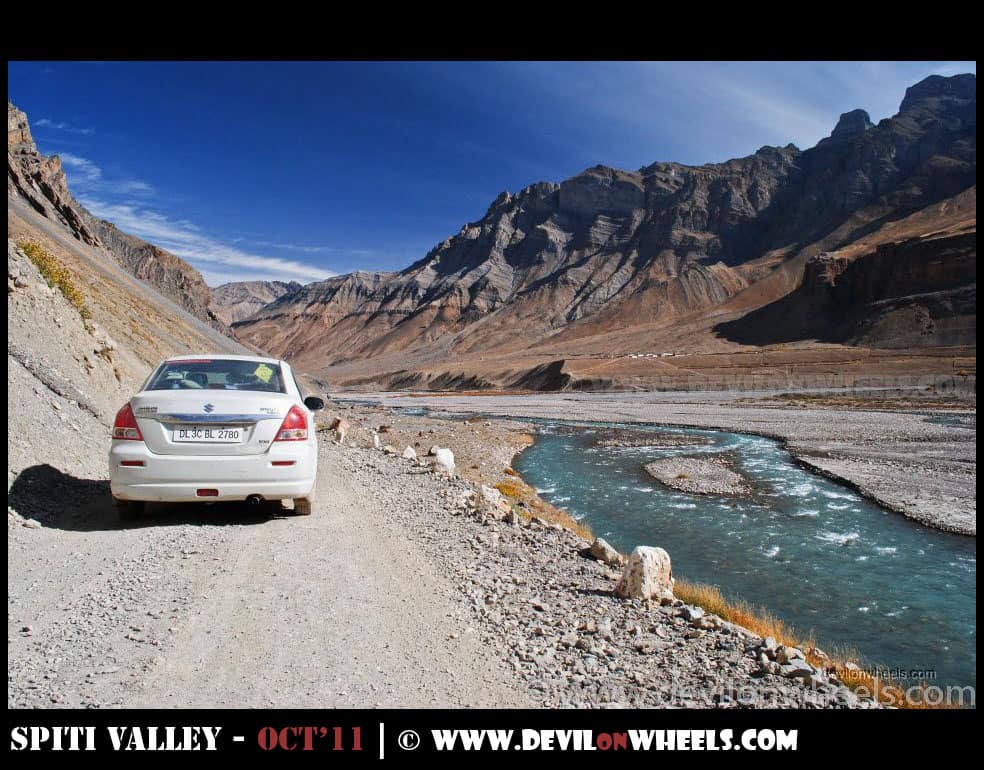
Vehicle: A high-clearance vehicle (SUV or 4×4) is strongly recommended, especially for the Manali route and interior roads. Sedans and hatchbacks can manage the Kinnaur route in good weather but will struggle on the rough interior roads and water crossings. In June specifically, even SUVs should expect extra punishment from rough early-season road surfaces. In case you would rather not drive yourself on this terrain, I suggest checking my list of taxi drivers for Spiti Valley and Kinnaur Valley for verified contacts who know these roads well.
AMS (Acute Mountain Sickness): Spiti Valley sits at an average altitude of 12,000 to 14,000 feet. While not as extreme as Ladakh, AMS can still affect you, especially at Kunzum Pass (14,931 Ft) and Chandratal (14,100 Ft). Acclimatize properly, stay hydrated, and do not rush to high-altitude points.
Homestays: For an authentic experience and to support local communities, I always recommend staying at homestays in Spiti. Check my curated list of Spiti Valley homestays for verified options. Homestay rates in 2026 range from Rs 700 to Rs 1,500 per person per night including breakfast and dinner.
Also, do read my article on 14 common mistakes people make on a Spiti Valley trip to avoid the pitfalls that many first-time travelers fall into.
Frequently Asked Questions
When is the best time to visit Spiti Valley for the first time?
For a first-time visitor, late June to September is the best window. Both routes are open, all sightseeing spots are accessible, hotels and homestays are fully operational, and you can do the complete Spiti circuit. In case you want fewer crowds and better roads, aim for September. If you want maximum facilities and do not mind the crowd, go in late June or July.
Can I visit Spiti Valley in winter?
Yes, you can visit Spiti Valley in winter (November to March) via the Shimla – Kinnaur route. However, conditions are extreme with temperatures dropping below -20 degrees Celsius, limited facilities, frozen water pipes, and basic homestay-only accommodation. It is recommended only for experienced travelers who are well-prepared for harsh winter conditions.
When does Kunzum Pass open and close in 2026?
Kunzum Pass typically opens by late May to the second week of June and closes by late October or early November. The exact dates depend on snowfall that winter and BRO’s road clearance work, which begins in March. For 2026, BRO snow clearance started in March, and the pass is expected to open between late May and the first week of June. Kaza-side day-trip access to Chandratal is most likely between May 20-28, 2026. Always check the latest road status before planning your trip around this pass.
Is August a good time for Spiti Valley?
August is the monsoon month, and while Spiti Valley itself is rain-shadowed, the approach roads through Kinnaur and Manali experience heavy rains and landslides. I recommend avoiding August unless you have 2-3 buffer days and are flexible with your itinerary. Road closures of 4-12 hours are routine during and after heavy rain on the Kinnaur route. The NH-05 stretch near Nigulsari and Malling Nalla is particularly prone to closures in this period.
What is the best month for photography in Spiti Valley?
September to mid-October is the best time for photography in Spiti Valley. The autumn colors are stunning, the skies are clear after the monsoon retreat, the river water turns aqua-green, and the crowds are thinner. The air is also cleaner than in June, giving you better visibility and deeper blue skies. Winter (February-March) is also excellent for dramatic snow landscape photography.
Do I need a permit to visit Spiti Valley?
Indian tourists do not need a permit for most parts of Spiti Valley including Kaza, Tabo, Key, Kibber, and Chandratal. An Inner Line Permit is required for areas near the Indo-China border and for all foreign nationals visiting the Kinnaur and Spiti region. The permit can be obtained from the DC office in Shimla or Kaza, or applied for online via the Himachal Pradesh e-permit portal. If camping is part of your plan, our Spiti and Kinnaur camping guide covers the best spots, permits and safety tips.
How many days are enough for a Spiti Valley trip?
A minimum of 8-10 days is recommended for a proper Spiti Valley trip from Delhi. In case you are doing the complete circuit (Shimla – Kinnaur – Kaza – Manali), plan for at least 10-12 days. For a shorter trip via Kinnaur only, you can manage in 6-7 days. Check my Spiti Valley itinerary guide for detailed day-by-day plans.
Can I travel to Spiti Valley by bus?
Yes, HRTC operates regular bus services to Spiti Valley. From Shimla, buses go to Reckong Peo and onward to Kaza year-round (weather permitting). From Manali, seasonal buses run to Kaza via Kunzum Pass from June to October, with fares around Rs 400 to Rs 600 per person. A budget trip by bus is a great way to experience Spiti. Check my guide on how to make a budget trip to Spiti Valley by public transport.
Is Spiti Valley safe for solo travelers?
Yes, Spiti Valley is generally safe for solo travelers, including women traveling alone. The locals are friendly and welcoming. However, solo travelers should be extra cautious about AMS, carry enough cash (ATMs are unreliable), inform someone about their itinerary, and avoid isolated stretches after dark. In winter, solo travel is not recommended due to extreme conditions and limited help available.
Can I visit Chandratal Lake in May?
In most years, Chandratal Lake is not accessible in May because the road from Batal to Chandratal remains snow-covered. The lake typically becomes accessible by mid-June once Kunzum Pass opens. Even in early June, you may find the last few kilometers to the lake under snow. For the best Chandratal experience, plan for late June to September. Check my Chandratal Lake itinerary guide for planning details.

Conclusion
I hope this month-by-month guide helps you decide the best time to visit Spiti Valley for your trip in 2026. Each season offers something unique, and there is no single “perfect” month. What matters is matching the month to what you want from your experience. If you want maximum access and facilities, go in late June or July. If you want clear skies, settled roads, autumn colors, and fewer crowds, September is the answer. If you want the snow experience, plan for February or March via Kinnaur. Just make sure you go prepared, respect the mountains, and do not rush through the journey.
In case you have any questions about planning your Spiti trip, feel free to ask in the comments section below. I will be happy to help. And if you know your friends or family are planning a trip to Spiti, do share this article with them. It might save their trip 🙂 …
For more discussions, finding travel partners, and the latest updates, check the DwD Community and the DoW Travel Calendar from the link in the Main Menu of the website. Also check my other articles on Spiti Valley, especially the Spiti Valley FAQs page which answers dozens of common queries.
You should also check my article on the best time to visit Ladakh in case you are planning a trip to Leh Ladakh and Spiti Valley together.
Last Updated: August 2026
