


One of the most common questions I get asked about Spiti Valley is, “Dheeraj, how much will this trip actually cost me?” And honestly, I understand the frustration. Most guides online throw out a vague range like “Rs 10,000 to Rs 50,000” and call it a day. That tells you nothing useful when you are trying to plan your leaves, save money, and figure out whether you can afford 7 days or stretch it to 14.
So in this guide, I am going to do something different. I am breaking down the Spiti Valley trip cost for 2026 into three clear plans: a 7-day quick trip, a 10-day standard trip, and a 14-day extended trip. For each one, you will get day-by-day cost estimates across three budget levels: backpacker, mid-range, and comfort. Every number in this guide is based on current 2026 prices, verified from ground reports and the DwD Community.
Practical Info at a Glance
| Distance from Delhi | 650 km (via Shimla-Kinnaur) / 570 km (via Manali) |
| Best Time to Visit | June to September (both routes open) |
| Budget Range (per person) | Rs 9,600 (7-day backpacker) to Rs 86,000+ (14-day comfort) |
| Permits Required | No ILP needed for Indian citizens |
| Difficulty | Moderate (high altitude, remote terrain) |
| Last Updated | March 2026 |
What Are the Major Expenses on a Spiti Valley Trip?
Before jumping into the duration-wise breakdowns, you need to understand the five cost buckets that make up any Spiti trip. Every rupee you spend will fall into one of these categories, and knowing them helps you decide where to save and where to spend.
1. Transport (40-50% of total cost): This is your biggest expense and the one variable that changes your budget most dramatically. A solo backpacker on HRTC buses spends a fraction of what a group hiring a private taxi pays. For reference, traveling Spiti by public transport can bring your transport cost down to Rs 3,000-5,000 for the entire trip.
2. Accommodation (20-30%): Spiti has come a long way from the days when you could only find basic rooms in Kaza. Today, you have homestays starting from Rs 500 per night in villages like Langza and Demul, guesthouses in Kaza for Rs 1,000-2,000, and even premium camps near Chandratal for Rs 3,000-5,000. I always recommend homestays in Spiti Valley because the experience is genuine and it supports local families directly.
3. Food (15-20%): Meals at local dhabas and homestays cost Rs 100-200 per meal in the valley. Homestay meals (often included in the room rate) are the cheapest and best option. Kaza has a few restaurants where a meal costs Rs 200-400.
4. Fuel (for self-drive only, 10-15%): If you are riding a bike or driving a car, budget approximately Rs 8,000-12,000 for fuel depending on your vehicle’s mileage and route. Petrol is available in Kaza, Tabo, and Reckong Peo. Keep in mind that mileage drops significantly on mountain roads, so plan for 20-25 kmpl for bikes and 8-12 kmpl for cars. For more on fuel logistics, check out my guide to carrying extra fuel on motorcycle trips.
5. Miscellaneous (5-10%): This covers entry fees, parking, tips, phone charging at remote locations, medicines, and unexpected expenses. Keep Rs 1,000-2,000 aside for this.
How Much Does a 7-Day Spiti Valley Trip Cost in 2026?
A 7-day trip is the minimum I recommend for Spiti Valley, and honestly, it will feel rushed. But if you have limited leave and want to cover the highlights, here is what to expect. This plan assumes you enter via Manali (the faster route when open, June to October) and exit the same way, or enter via Shimla and exit via Manali.
Typical 7-Day Route: Delhi – Manali (overnight) – Manali to Kaza (via Rohtang and Kunzum Pass) – Kaza and Key Monastery – Kibber and Langza – Chandratal Lake – Kaza to Manali – Manali to Delhi (overnight). For a detailed route plan, check my Spiti Valley via Manali planning guide.
| Expense | Backpacker | Mid-Range | Comfort |
|---|---|---|---|
| Transport (Delhi round trip) | Rs 2,500 (bus) | Rs 4,000 (Volvo/fuel share) | Rs 7,000 (taxi share/flight) |
| Local Transport (5 days) | Rs 1,500 (shared/bus) | Rs 5,000 (shared taxi) | Rs 10,000 (private taxi) |
| Accommodation (6 nights) | Rs 3,000 (Rs 500/night) | Rs 9,000 (Rs 1,500/night) | Rs 18,000 (Rs 3,000/night) |
| Food (7 days) | Rs 2,100 (Rs 300/day) | Rs 4,200 (Rs 600/day) | Rs 5,600 (Rs 800/day) |
| Miscellaneous | Rs 500 | Rs 1,000 | Rs 2,000 |
| Total per Person | Rs 9,600 | Rs 23,200 | Rs 42,600 |
Key notes for the 7-day plan: The backpacker budget assumes you are traveling by HRTC buses, staying in basic homestays, eating at dhabas, and possibly hitchhiking for local sightseeing. The comfort budget includes private taxi, good hotels in Kaza, and restaurant meals. For money-saving strategies on this exact route, read my 6 tips for a budget Spiti trip.
How Much Does a 10-Day Spiti Valley Trip Cost?
Ten days is what I consider the sweet spot for a Spiti Valley trip. You get enough time to cover both routes (enter via Shimla-Kinnaur, exit via Manali or vice versa), spend a day at Chandratal, explore the villages around Kaza properly, and still have breathing room for a rest day. This is the duration I recommend to most first-timers.
Typical 10-Day Route: Delhi – Shimla/Narkanda (Day 1) – Narkanda to Sarahan or Sangla (Day 2) – Sangla/Chitkul to Kalpa (Day 3) – Kalpa to Tabo (Day 4) – Tabo, Dhankar, Pin Valley (Day 5) – Kaza, Key, Kibber (Day 6) – Langza, Komic, Hikkim (Day 7) – Chandratal Lake (Day 8) – Manali (Day 9) – Delhi (Day 10). For a complete day-by-day plan, refer to my Spiti Valley most common itinerary.
| Expense | Backpacker | Mid-Range | Comfort |
|---|---|---|---|
| Transport (Delhi round trip) | Rs 3,000 (bus both ways) | Rs 5,500 (Volvo + fuel share) | Rs 9,000 (taxi share/flight) |
| Local Transport (8 days) | Rs 2,500 (HRTC buses) | Rs 8,000 (shared taxi) | Rs 16,000 (private taxi) |
| Accommodation (9 nights) | Rs 4,500 (Rs 500/night) | Rs 13,500 (Rs 1,500/night) | Rs 27,000 (Rs 3,000/night) |
| Food (10 days) | Rs 3,000 (Rs 300/day) | Rs 6,000 (Rs 600/day) | Rs 8,000 (Rs 800/day) |
| Miscellaneous | Rs 1,000 | Rs 1,500 | Rs 2,500 |
| Total per Person | Rs 14,000 | Rs 34,500 | Rs 62,500 |
Why the 10-day plan costs more per day than 7 days: It is not just about adding 3 more days. The 10-day circuit covers two routes (Shimla side and Manali side), which means more distance, more fuel, and additional overnight stops in Kinnaur Valley. But the trade-off is worth it. You see Chitkul, Kalpa, Sangla Valley, and the entire Hindustan-Tibet Road, which many travelers consider the more scenic approach. For details on the Kinnaur route, read my guide on planning Spiti via Kinnaur.
How Much Does a 14-Day Extended Spiti Trip Cost?
Fourteen days is what I wish every traveler could spend in Spiti. With this kind of time, you can do the full circuit at a relaxed pace, add a trek to Pin Bhaba or explore Pin Valley National Park, spend time at offbeat villages like Demul and Lhalung, camp at Chandratal for two nights, and even make a side trip to Chitkul. There is no rushing, and you actually get to know the valley instead of just photographing it.
Typical 14-Day Route: Delhi – Shimla (Day 1) – Narkanda to Rampur (Day 2) – Sarahan (Day 3) – Sangla and Chitkul (Day 4) – Kalpa (Day 5) – Kalpa to Tabo (Day 6) – Tabo and Dhankar (Day 7) – Pin Valley and Mud Village (Day 8) – Kaza, Key Monastery, Kibber (Day 9) – Langza, Komic, Hikkim (Day 10) – Rest day in Kaza or Demul (Day 11) – Chandratal Lake camping (Day 12) – Chandratal to Manali (Day 13) – Manali to Delhi (Day 14).
| Expense | Backpacker | Mid-Range | Comfort |
|---|---|---|---|
| Transport (Delhi round trip) | Rs 3,000 (bus both ways) | Rs 5,500 (Volvo + fuel share) | Rs 9,000 (taxi share/flight) |
| Local Transport (12 days) | Rs 3,500 (HRTC buses) | Rs 12,000 (shared taxi) | Rs 24,000 (private taxi) |
| Accommodation (13 nights) | Rs 6,500 (Rs 500/night) | Rs 19,500 (Rs 1,500/night) | Rs 39,000 (Rs 3,000/night) |
| Food (14 days) | Rs 4,200 (Rs 300/day) | Rs 8,400 (Rs 600/day) | Rs 11,200 (Rs 800/day) |
| Miscellaneous | Rs 1,500 | Rs 2,000 | Rs 3,000 |
| Total per Person | Rs 18,700 | Rs 47,400 | Rs 86,200 |
The per-day math: On a 14-day backpacker trip, you are spending roughly Rs 1,335 per day. On a 10-day mid-range trip, it is about Rs 3,450 per day. The longer your trip, the lower your per-day cost because the fixed costs (Delhi to Spiti transport) get spread over more days. Hence, if budget is your concern, spending more days actually works in your favor.


Quick Comparison: Which Duration Gives the Best Value?
| Duration | Backpacker Total | Mid-Range Total | Comfort Total | Per-Day (Mid-Range) |
|---|---|---|---|---|
| 7 Days | Rs 9,600 | Rs 23,200 | Rs 42,600 | Rs 3,314/day |
| 10 Days | Rs 14,000 | Rs 34,500 | Rs 62,500 | Rs 3,450/day |
| 14 Days | Rs 18,700 | Rs 47,400 | Rs 86,200 | Rs 3,386/day |
As you can see, the per-day cost stays remarkably consistent across all three durations at the mid-range level. The biggest jump happens between 7 and 10 days because the circuit route adds Kinnaur. Between 10 and 14 days, you are mostly adding more village exploration and rest days, which cost very little extra. My recommendation: if you can manage 10 days, go for it. That is the best balance of coverage and value.
How Can You Reduce Your Spiti Valley Trip Cost?
Over the years, I have seen travelers cut their Spiti budget by 30-40% using these strategies. These are not theoretical tips. They come from real trip reports shared in the DwD Community.
Travel by HRTC buses. This is the single biggest money-saver. A bus from Shimla to Reckong Peo costs approximately Rs 500-600, and Reckong Peo to Kaza costs Rs 400-600. Compare that to a private taxi charging Rs 5,000-6,000 per day. HRTC buses run daily on the Shimla-Kinnaur-Spiti route from June to October, with departures from Shimla ISBT around 6-7 AM. Check the HRTC official website for current schedules before booking.
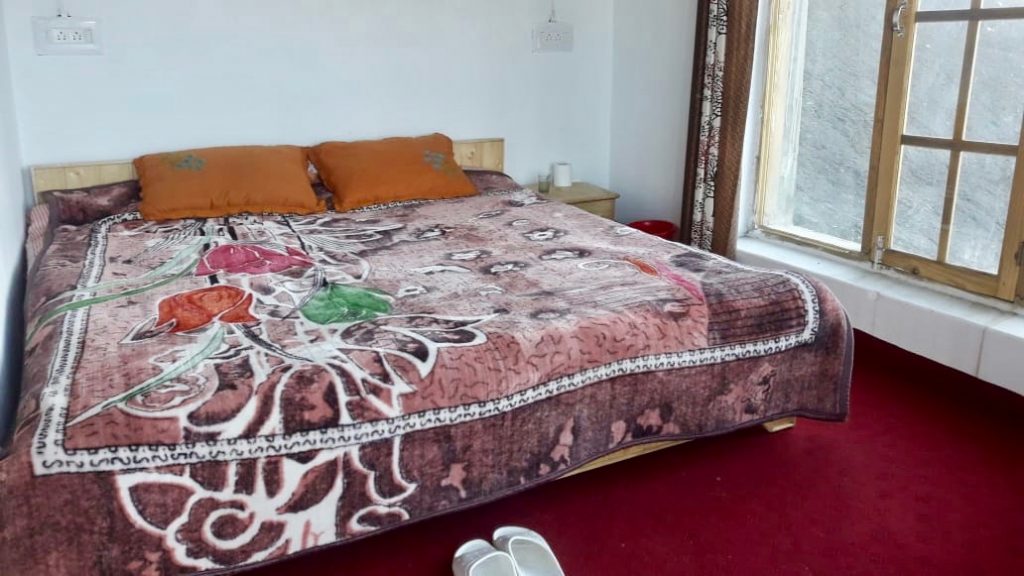
Stay in village homestays. Homestays in Langza, Demul, Lhalung, and Mud Village charge Rs 500-800 per night including meals. That is cheaper than a hotel room alone in Kaza. Plus, the food is home-cooked and the experience is something a hotel cannot match. I have curated a list of verified Spiti Valley homestays that you can refer to.
Form or join a group. Shared taxi costs drop dramatically with 4-5 people. A taxi from Kaza to Chandratal costs around Rs 5,000. Split between 5 people, that is Rs 1,000 each. Use the DwD Community to find travel partners heading to Spiti around your dates.
Carry dry snacks and instant food. Trail mix, instant noodles, energy bars, and biscuits save you from overpriced restaurant meals on the road. Dhabas between Shimla and Kaza charge double what they charge in cities.
Travel in shoulder season. May and late September-early October offer lower accommodation prices and fewer crowds. Just keep in mind that the best time to visit Spiti Valley depends on which route you plan to take. The Manali route typically opens in June and closes by mid-October.
What Does Transport Cost for Different Travel Modes?
Transport is where the biggest budget swings happen, so let me break this down by travel mode. These costs are for the full round trip from Delhi.
| Travel Mode | Round Trip Cost (Delhi) | Local Sightseeing (per day) | Best For |
|---|---|---|---|
| HRTC Public Buses | Rs 2,500-3,500 | Rs 200-400 | Solo backpackers, budget travelers |
| Own Bike (fuel only) | Rs 8,000-11,000 | Rs 200-500 | Riders, adventure seekers |
| Own Car (fuel only) | Rs 10,000-14,000 | Rs 300-600 | Families, groups of 3-4 |
| Rental Bike | Rs 15,000-20,000 (rental + fuel) | Rs 200-500 | Riders without own bikes |
| Shared Taxi | Rs 4,000-6,000 per person | Rs 1,000-1,500 | Small groups, couples |
| Private Taxi (full trip) | Rs 40,000-60,000 (total) | Included | Families, comfort seekers |
A private taxi for Spiti charges approximately Rs 5,000-6,000 per day for an Innova or Scorpio. For a 10-day circuit, that comes to Rs 50,000-60,000 total. Split between 4-5 people, it works out to Rs 10,000-15,000 per person, which is actually reasonable for the comfort level. I have a verified list of taxi drivers for Spiti Valley with direct contact numbers if you want to book directly without middlemen.
What Should You Budget for Food in Spiti Valley?
Food in Spiti is simple, hearty, and surprisingly affordable if you eat where the locals eat. Here is a realistic daily food budget based on where and what you eat.
Homestay meals (Rs 150-250 per meal): Most homestays include dinner and breakfast in their room charge. Lunch can be arranged separately. The food is basic but filling: rice, dal, sabzi, roti, and sometimes momos or thukpa. This is the cheapest and most authentic way to eat in Spiti.
Dhaba meals on the road (Rs 100-200): Dhabas along the Shimla-Kinnaur and Manali-Kaza routes serve standard North Indian food. Expect to pay Rs 100-150 for a thali. Quality varies wildly, but the food is generally safe and hot.
Restaurants in Kaza (Rs 200-400 per meal): Kaza has several cafes and restaurants now, especially around the main market area. A good meal with coffee costs Rs 250-400. These are pricier than dhabas but offer more variety including continental and Tibetan options.
Realistic daily food budgets: Backpacker: Rs 300-400/day (homestay meals + dhaba). Mid-range: Rs 500-700/day (mix of homestay and restaurant). Comfort: Rs 700-900/day (mostly restaurants and cafes). Keep in mind that food is limited in the remoter parts of Spiti. Carry some backup snacks, especially for the Manali-Kaza stretch where options are few.
What Are the Hidden Costs Most Travelers Miss?
No budget guide is complete without talking about the expenses that catch people off guard. These are the costs that do not show up in most online breakdowns but they add up fast.
AMS medicine (Rs 200-500): Diamox or Acetazolamide is recommended for high-altitude travel. Buy it before you leave, not in Kaza where pharmacies are limited. For detailed AMS prevention advice, read my guide on 12 tips to prevent AMS.
Extra fuel cans for bikers (Rs 300-500): If you are riding a bike, carry a 5-liter jerry can. Petrol pumps exist in Kaza, Tabo, and Reckong Peo, but if you are on the Manali side, there is a long stretch between Manali and Kaza with no fuel. Better to carry extra than be stranded.
Vehicle repairs (Rs 500-5,000): Punctures, chain issues, clutch cable snaps are common on Spiti roads. Basic repairs are available in Kaza, but anything major means waiting for parts from Manali or Shimla. Keep some repair budget aside, especially for older vehicles.
Phone charging and power banks (Rs 500-1,500): Some remote homestays charge Rs 50-100 for charging your phone because they run on solar or limited electricity. Carry a good power bank. Mobile connectivity in Spiti is limited to BSNL postpaid in most villages, and Jio works in Kaza now.
Warm clothing (Rs 2,000-5,000 one-time): If you do not already own thermal wear, a windproof jacket, and warm layers, you will need to buy or rent them. Manali has rental shops. For a complete packing list, check my guide to clothes for a Spiti Valley trip.
How Do Self-Drive and Bike Trip Costs Differ?
Self-drive is the most popular way to do Spiti. Here is a side-by-side comparison for a 10-day trip.
| Cost Head | Own Bike | Rental Bike | Own Car |
|---|---|---|---|
| Fuel (approx 1,600 km) | Rs 8,000-10,000 | Rs 8,000-10,000 | Rs 12,000-16,000 |
| Rental cost | Rs 0 | Rs 15,000-20,000 | Rs 0 |
| Servicing + Repair fund | Rs 4,000-7,000 | Rs 1,000 | Rs 5,000-9,000 |
| Toll/parking | Rs 500 | Rs 500 | Rs 1,000 |
| Total transport | Rs 12,500-17,500 | Rs 24,500-31,500 | Rs 18,000-26,000 |
If you own a bike or car, self-drive is very cost-effective. Rental bikes are the most expensive option due to daily charges. For solo travelers without a vehicle, the bus + shared taxi combination is both the cheapest and most flexible. For bike preparation tips, read my complete guide on preparing your bike for a Spiti ride.
Important Things to Keep in Mind About Money in Spiti
Carry enough cash. ATMs exist in Kaza (SBI and PNB) but they run out of cash regularly during peak season. Withdraw enough in Shimla or Manali before entering Spiti. Budget travelers should carry at least Rs 10,000-15,000 in cash for the valley portion.
UPI works in Kaza, barely. Some shops in Kaza accept UPI, but internet is too slow in villages for digital payments. Do not rely on it as your primary payment method.
Bargaining is not common. Prices in Spiti are generally fair and fixed. Homestay owners charge what they need to, and the margins are thin. Please do not bargain aggressively with local families. They are not running a hotel chain.
Keep an emergency fund. I always recommend carrying Rs 3,000-5,000 above your planned budget. Road closures or vehicle breakdowns can extend your stay unexpectedly. Better to come home with extra cash than be stuck without it.
How Does the Spiti Budget Compare to Ladakh?
This is a question I get frequently, so let me give you a straight answer. A Spiti trip is generally 20-30% cheaper than a Ladakh trip of equivalent duration. Accommodation in Spiti is cheaper (Leh hotels are more expensive than Kaza guesthouses). Local transport costs less because distances within Spiti are shorter. Food prices are comparable. The main saving is on fuel, since a Ladakh circuit covers 2,000+ km compared to Spiti’s 1,600 km.
For a detailed Ladakh cost comparison, you can check my Ladakh trip cost calculator. And if you are torn between the two destinations, read my comparison: 5 reasons to choose Spiti over Ladakh.
Frequently Asked Questions
What is the minimum budget for a Spiti Valley trip in 2026?
A solo backpacker traveling by HRTC buses and staying in basic homestays can complete a 7-day Spiti trip for approximately Rs 9,000-10,000 from Delhi. This assumes the most basic accommodation, dhaba meals, and no private transport.
Is Rs 15,000 enough for a Spiti Valley trip?
Yes, Rs 15,000 is enough for a 10-day backpacker trip or a 7-day mid-range trip. You will need to travel by public buses, stay in homestays, and eat simple meals. For specific strategies, refer to our complete Spiti Valley cost guide.
How much does a private taxi cost for a 10-day Spiti trip?
A private taxi (Innova, Scorpio, or Xylo) for a 10-day Spiti circuit costs approximately Rs 50,000-60,000 total, at the rate of Rs 5,000-6,000 per day. Split among 4-5 passengers, this comes to Rs 10,000-15,000 per person, which is reasonable for the comfort and flexibility it offers.
Are ATMs available in Spiti Valley?
SBI and PNB ATMs are available in Kaza, but they frequently run out of cash during peak season (July-August). There is an ATM in Reckong Peo as well. Always carry enough cash from Shimla or Manali before entering Spiti.
Can I do Spiti Valley on a bike for under Rs 20,000?
Yes, if you own your bike and it is in good condition. Your main costs will be fuel (Rs 8,000-10,000 for the full circuit), accommodation (Rs 4,500-6,500 for 9-13 nights at homestays), and food (Rs 3,000-4,200). Keep aside Rs 2,000-3,000 for repairs and miscellaneous.
What is the best time to visit Spiti Valley on a budget?
Late May and September-October offer the best value. Homestay and hotel rates are 20-30% lower than peak season (July-August). Fewer tourists also mean more availability of shared taxis and homestays. The Manali route opens around mid-June, so if you want the full circuit, aim for late June or September.
How much does a Chandratal Lake camping trip cost?
A night at a campsite near Chandratal costs Rs 1,000-3,000 per person depending on the campsite quality. This usually includes dinner and breakfast. Budget campers who carry their own tent can camp for free (no camping fees as of 2026), but you will need to be self-sufficient with food and water.
Do I need a permit for Spiti Valley?
Indian citizens do not need any permits for Spiti Valley. Foreign nationals require a Protected Area Permit (PAP), which can be obtained at the DC office in Reckong Peo for approximately Rs 250. For detailed permit information, read my Inner Line Permits guide for Kinnaur and Spiti.
Is it cheaper to travel Spiti from Manali or Shimla?
The Manali route is slightly cheaper because it is shorter (570 km vs 650 km from Delhi). However, the Manali route is only open from June to mid-October. The Shimla-Kinnaur route is open year-round but costs more in fuel and takes an additional day. For the best value, enter via Shimla and exit via Manali (or vice versa) to see both routes without doubling back.
Should I book accommodation in advance for Spiti?
During peak season (July-August), booking Key locations like Kaza and Chandratal campsites in advance is recommended, especially on weekends. In shoulder season, walk-ins are easy. Village homestays in Langza, Demul, and Lhalung rarely need advance booking. You can find options through my hotels and accommodation guide for Spiti.
Final Thoughts and My Recommendation
If I had to boil this entire guide down to one recommendation, it would be this: aim for a 10-day mid-range trip (Rs 30,000-35,000 per person). This gives you the full Shimla-Kinnaur-Spiti-Manali circuit, comfortable homestays, good food, and enough budget for local sightseeing without feeling like you are counting every rupee.

If budget is tight, a 7-day backpacker trip under Rs 10,000 is absolutely possible. It has been done by hundreds of travelers in the DwD Community, and it is one of the most rewarding ways to experience Spiti. You will travel slower, meet more locals, and come back with better stories than someone who flew through in a private SUV.
Whatever your budget and duration, the most important thing is that you actually go. Spiti Valley has a way of resetting your perspective on what matters, and no amount of money or planning can replicate what those empty valleys and star-filled skies do to you.
For trip planning discussions, finding travel partners, and the latest ground reports from Spiti, join the DwD Community from the link in the main menu. If you have any questions about budgeting your Spiti trip, feel free to ask in the comments section below 🙂
