


Sopona Lake does not sound like a familiar name to most people traveling to Spiti Valley. When I suggest this place to friends and fellow travelers, I get looks like “Where is it? Is it even real? Never heard of it.” Well, that is exactly what makes Sopona Lake so special. It is one of those places in the Himalayas where you step out of the tourist trail and into something raw, untouched, and deeply personal.
Let's quickly dive into the details:
What Is Sopona Lake and Why Should You Trek There?
Sopona Lake is a seasonal glacial lake at 13,500 feet (4,122 meters) in Spiti Valley, fed by snowmelt from the Manirang range. It sits above Maneyogma village, and the trek from there covers 5-6 km one way, taking 2.5 to 3 hours, with the full round trip taking 6-7 hours.
I know Chandratal Lake outshines most places in Spiti Valley and is among the most visited destinations in the region. Apart from Chandratal, most travelers limit themselves to Kaza, Tabo, Ki, Kibber, and Dhankar. However, Spiti Valley offers many other offbeat gems like Sopona Lake, Langza, Hikkim, Komic, and Demul. In this article, I will share everything you need to know about the Sopona Lake trek based on my experience from the DoW Mega Meet 2014 and help you plan this offbeat adventure for 2026.
Sopona Lake was earlier known as Yangcho Lake, and you will still see it marked that way on a few old maps and on Wikipedia. Maneyogma village itself sits at approximately 31.9591°N, 78.03254°E, in case you want to drop a pin on Google Maps before you set out, since there is zero mobile network to pull up directions once you are past Schichiling bridge.
Practical Info Box
| Altitude | 13,500 feet (4,122 meters) |
| Trek Distance | 5-6 km one way from Maneyogma |
| Trek Duration | 6-7 hours (round trip including lake time) |
| Difficulty | Moderate to difficult (steep gradient) |
| Best Season | June to September |
| Base Village | Maneyogma (upper Mane village) |
| Nearest Town | Kaza (approx. 31 km from Mane) |
| Mobile Network | None at Mane or on the trek |
| Permits | No stamped permit needed for Indian nationals to visit Mane villages or the lake itself |
| Vehicle e-Pass | e-Aagman registration mandatory (free) for every vehicle entering Spiti district, register at eaagman.hp.gov.in before Sumdo checkpost |
| Local Guide | Rs 800-1,000 per day from Mane village |
Where Is Sopona Lake and How Do You Get There?
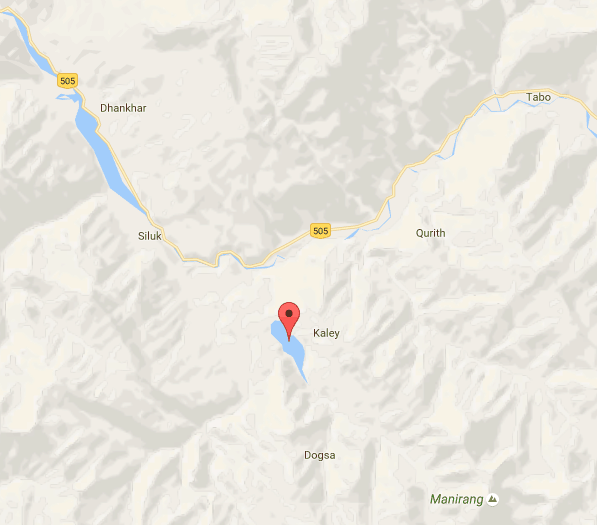
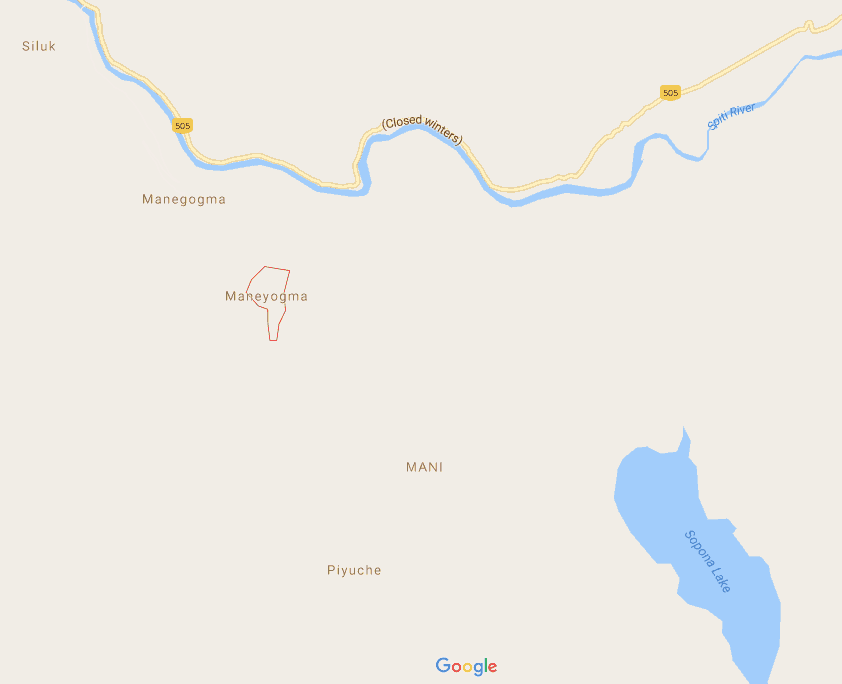
Sopona Lake sits above Maneyogma village. To get there, drive from Tabo towards Dhankar, turn off at Schichiling bridge, and continue 5-6 km to Manegogma and then another 2 km to Maneyogma on a motorable but rough mountain track. There is no public bus to Mane villages.
Sopona Lake is located above the remote twin villages of Mane in the Spiti Valley. To reach Mane, you drive from Tabo towards Dhankar. Before the Dhankar village diversion point, you will cross a small bridge at Schichiling. Take a left here across the Spiti river. From Schichiling, drive about 5-6 km to reach Manegogma (lower village) first, then another couple of kilometres ahead to reach Maneyogma (upper village). The trek to Sopona Lake begins from Maneyogma.
Keep in mind that the road from Schichiling to Mane villages is a narrow mountain track. It is motorable but can get rough, especially after rains. A local taxi or your own vehicle with decent ground clearance works best here. There is no public bus service to Mane villages.
What Is the Sopona Lake Trek Like?
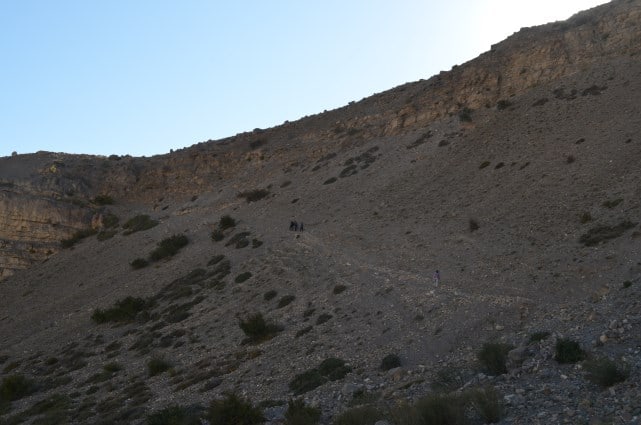
The trek from Maneyogma to Sopona Lake covers approximately 5-6 km one way. At a steady pace, you will reach the lake in about 2.5 to 3 hours. The trail starts from the last house in Maneyogma village (Sonam Homestay) and climbs gradually at first before hitting some steep sections. The entire round trip, including time spent at the lake, takes about 6-7 hours.
The trail is well-defined for the most part but can be confusing near the top. I strongly recommend hiring a local guide from Mane village for Rs 800-1,000 per day. He will not just show you the correct path but also share stories about the Manirang range and local folklore. A morale boost is such an important aspect of trekking in the high Himalayas.
Most of the trek is moderate for regular trekkers but can feel difficult for novices due to the steep gradient and the altitude. You are trekking above 13,000 feet, so take it slow, stay hydrated, and listen to your body. If you have not spent at least 2 days acclimatizing in Spiti (at places like Tabo or Dhankar which sit around 10,000-12,000 feet), do not attempt this trek.
About the Manirang Range and Why the Trek Views Are Special
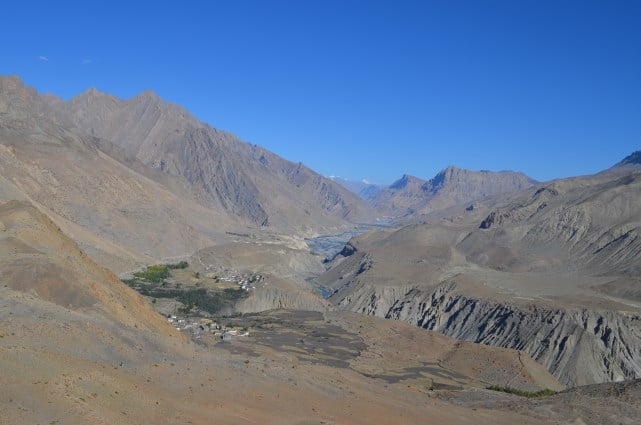
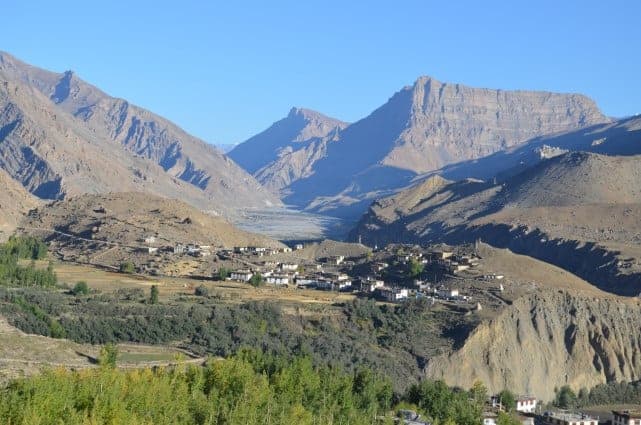
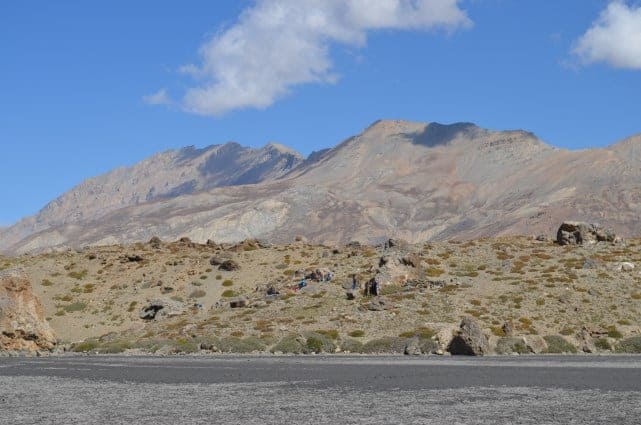
Even if the lake itself sometimes disappoints (I will explain this ahead), the trek to Sopona Lake offers jaw-dropping views of the Spiti Valley and the massive Manirang range. Mount Manirang itself, at 21,631 feet (6,593 meters), is the seventh-highest peak in Himachal Pradesh and sits on the border between Kinnaur and Lahaul-Spiti districts. In case you come across the name Manirang Pass while researching this trek, do not confuse it with the peak. The pass, locally called Ropakla, is a much lower saddle at about 18,200 feet (5,550 meters) on the old trade route Spitians once used to reach Ropa village in Kinnaur before the motorable road existed, and it is the pass, not the towering peak, that the Sopona Lake trail actually climbs towards.
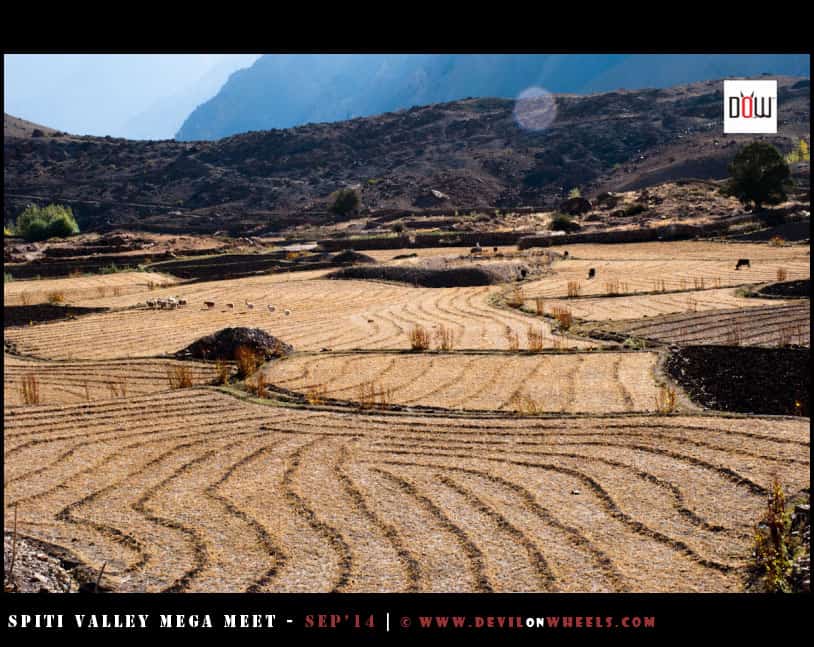
Sopona Lake and the Mane villages are some of the very few places in Spiti that can completely disconnect you from the outer world and put you right in the lap of nature with your “self.” These are places that take you back in time, where you can easily reflect on things or just be lost in the silence. So step out and experience the magic of this place where solitude and nature are experienced at their best 🙂
When Is the Best Time to Visit Sopona Lake?
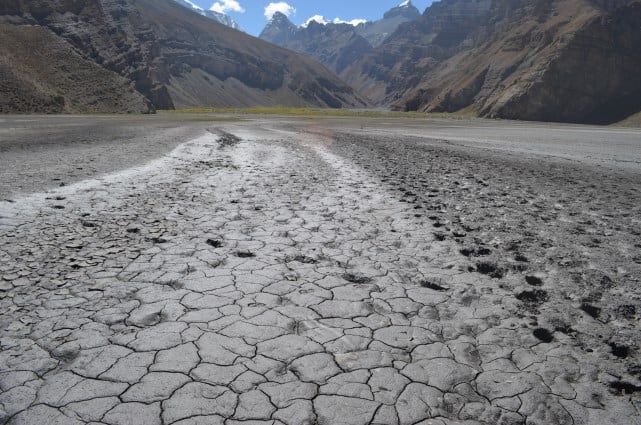
The best time to trek to Sopona Lake is mid-June to September, when Spiti’s roads are open and glacial melt fills the lake with water. Visit in May-early June or after late October and you will likely find the lake dry, though the trek and Manirang range views are worthwhile in any season.


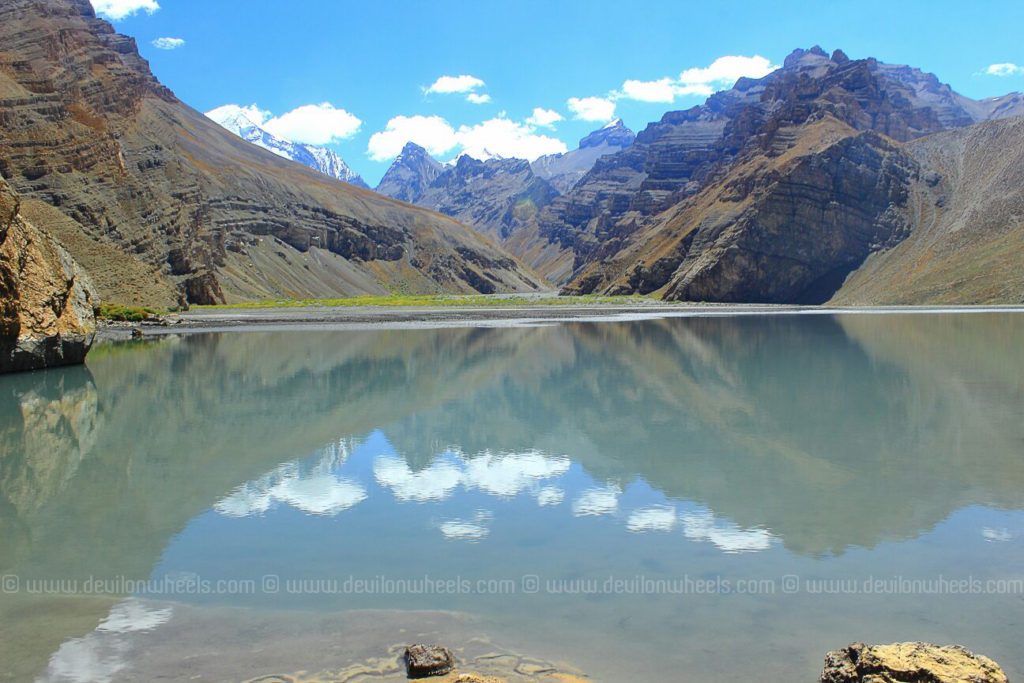
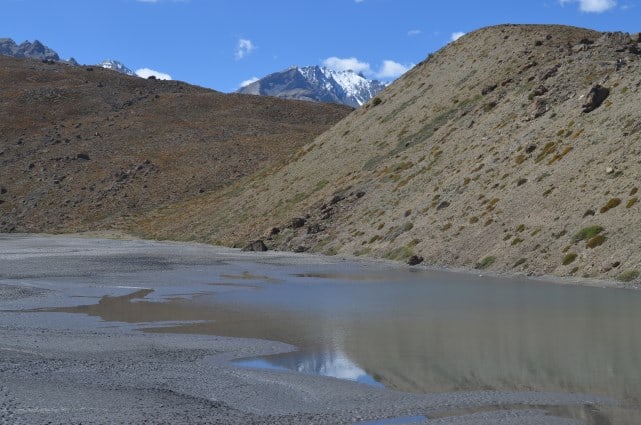
Sopona Lake is a seasonal lake formed by glacial melts from the Manirang range. The best time to visit is between mid-June and September, when roads to Spiti Valley are also open. This is when the snow melts enough to fill the lake with clear, still water surrounded by the barren mountain landscape.
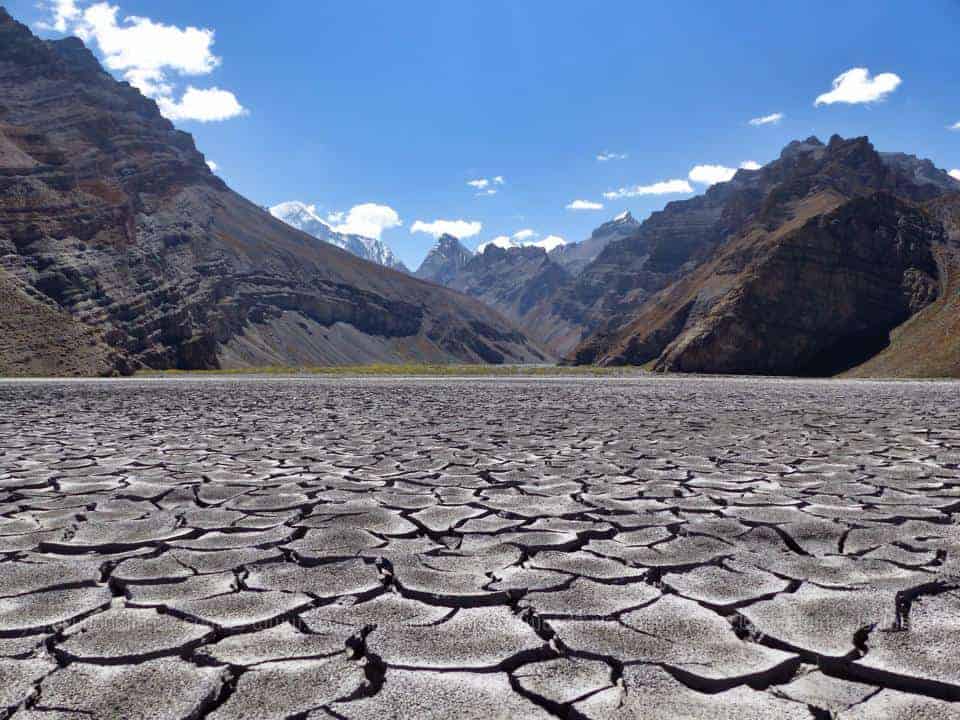
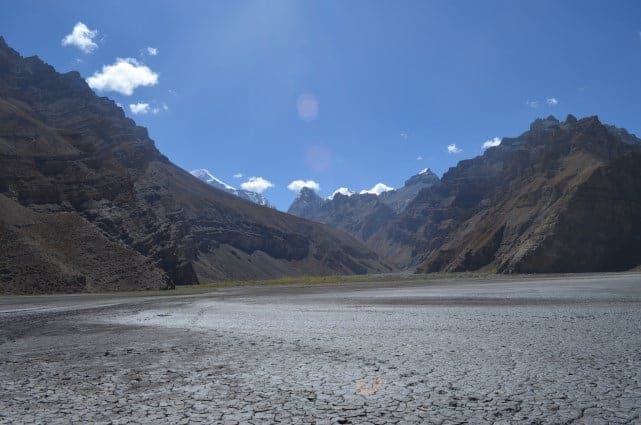
In early summers (May to mid-June), the glacial melt has not started fully, so the lake may be partially dry. By late October and into winter, the water dries up and the lake turns barren. However, the trek itself is beautiful in any season. Even if the lake is dry, the panoramic views of the Spiti Valley and Manirang range make the effort worthwhile. A dry Sopona Lake has its own stark, desolate beauty that you will not find elsewhere.
One thing to keep in mind: the lake can sometimes be disappointing if you arrive expecting a large body of shimmering water. Think of it as a high-altitude seasonal pond rather than a sprawling lake. The real reward is the trek itself, the views, and the solitude.

How to Plan a Trip to Sopona Lake from Delhi?
Fit Sopona Lake into a 5-day Spiti loop from Delhi: Shimla or Narkanda (Day 1), Kalpa or Reckong Peo (Day 2), Nako-Giu-Tabo (Day 3), Dhankar and Mane village (Day 4), then the trek itself before continuing to Pin Valley or Kaza (Day 5). This routing also helps you acclimatize gradually.
You can refer to the most common itineraries for Spiti Valley from Kinnaur or Manali in the Spiti Valley section of the website for end-to-end plans. For the sake of this article, I will suggest how you can fit Sopona Lake into your Spiti Valley trip plan in a way that makes the most sense and also helps you acclimatize properly to avoid acute mountain sickness.
Day 1 | Delhi to Shimla or Narkanda
- About 8 hours of driving to reach Shimla
- Shimla sightseeing includes the Ridge, Mall Road, Lakkar Bazaar, Jakhu Temple
- Narkanda is about 60 km ahead of Shimla, takes about 2 hours
- Overnight at Shimla or Narkanda, whichever suits your timings
Day 2 | Shimla or Narkanda to Kalpa or Reckong Peo
- Leave early, especially if starting from Shimla, and enjoy the vistas en route
- Plan lunch at Rampur
- About 8-9 hours of beautiful drive through Kinnaur Valley
- Overnight at Kalpa or Reckong Peo
Day 3 | Kalpa or Reckong Peo to Nako, Giu Mummy, and Tabo
- Start early and watch the mountain views over the Hindustan-Tibet Highway
- Check out Khab, the confluence of Spiti and Sutlej rivers
- See Leo Purygal Peak from Khab Bridge
- Have lunch at Nako
- Cross the Malling Nala (not as dreaded anymore) and after Chango and Sumdo, you enter Spiti Valley
- After Sumdo police registration (keep your free e-Aagman e-pass and ID ready, along with the SADA entry fee of roughly Rs 100-300 depending on your vehicle type), take the detour towards Giu village to visit the 500-year-old mummy. Then continue towards Tabo.
- About 8-9 hours of driving depending on breaks
- Overnight at Tabo
Day 4 | Tabo to Dhankar, Dhankar Lake, and Mane Village (Maneyogma)
- Start early and visit Dhankar Monastery
- Trek to Dhankar Lake if time permits (about 1.5 hours one way)
- Have lunch at Dhankar monastery restaurant
- Track back to the Schichiling bridge and cross over to Mane villages. I have deliberately backtracked you here because this will help you acclimatize well for the trek on Day 5.
- About 2 hours of driving in the day
- Overnight at Mane Village (Maneyogma)
Day 5 | Mane Village (Maneyogma) to Sopona Lake and onward to Pin Valley
- Start the trek early, around 5-6 AM, and head up to Sopona Lake
- Take a packed breakfast. You will be back in 6-7 hours at maximum to Maneyogma village.
- Have lunch after reaching back and start towards Pin Valley or Kaza
- About 2 hours of driving onward
- Overnight at Pin Valley or Kaza
Where to Stay Near Sopona Lake at Mane Villages?
Mane villages have no hotels, only homestays like Sonam Homestay in Maneyogma, the last house in the village before the trek starts, for roughly Rs 500-800 per person with meals. There is also a camping ground on-site if you are carrying your own tent.
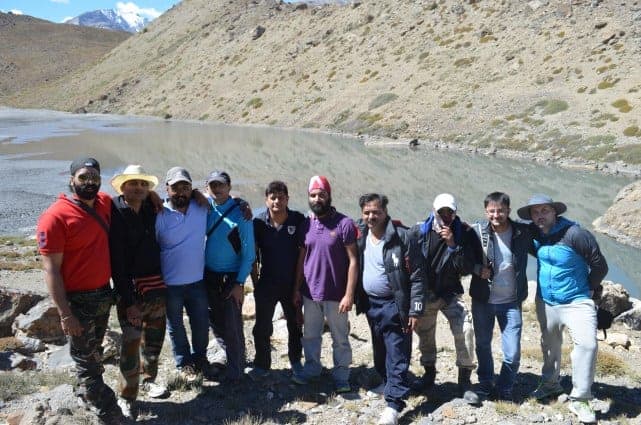
Both Mane villages are tiny hamlets. There are no hotels or guest houses in the traditional sense. However, there are homestays in Maneyogma village where we stayed during the DoW Mega Meet 2014. You will be amazed by the hospitality of the locals here, no matter what 🙂
If you are looking for more homestay options across Spiti Valley, I have a dedicated article that covers the best stays from Tabo to Kaza to Kibber.
Sonam Homestay, Maneyogma Village
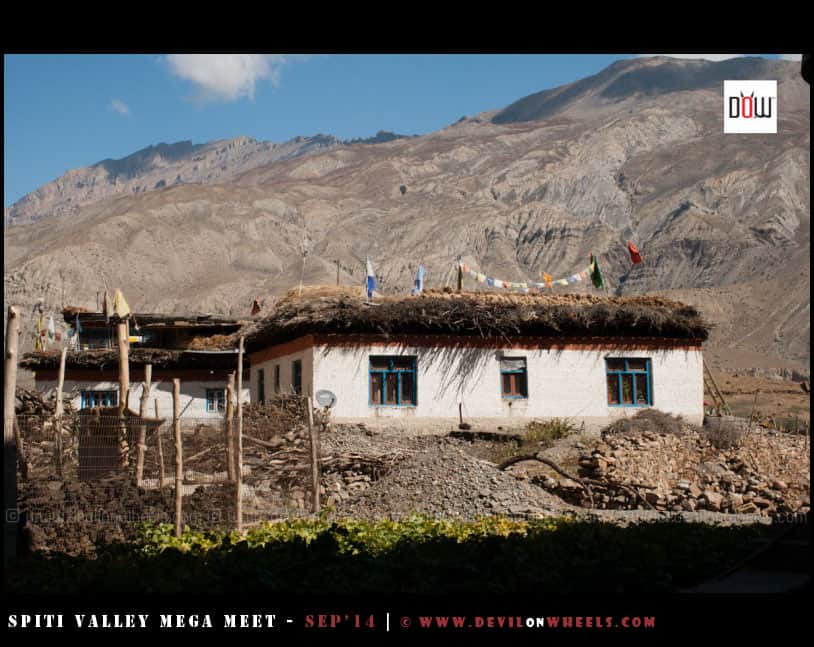
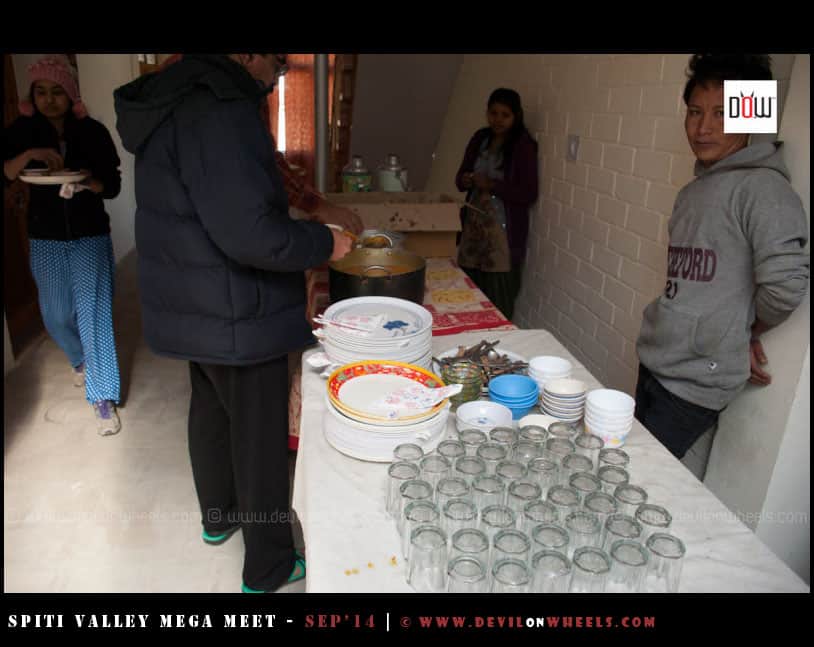
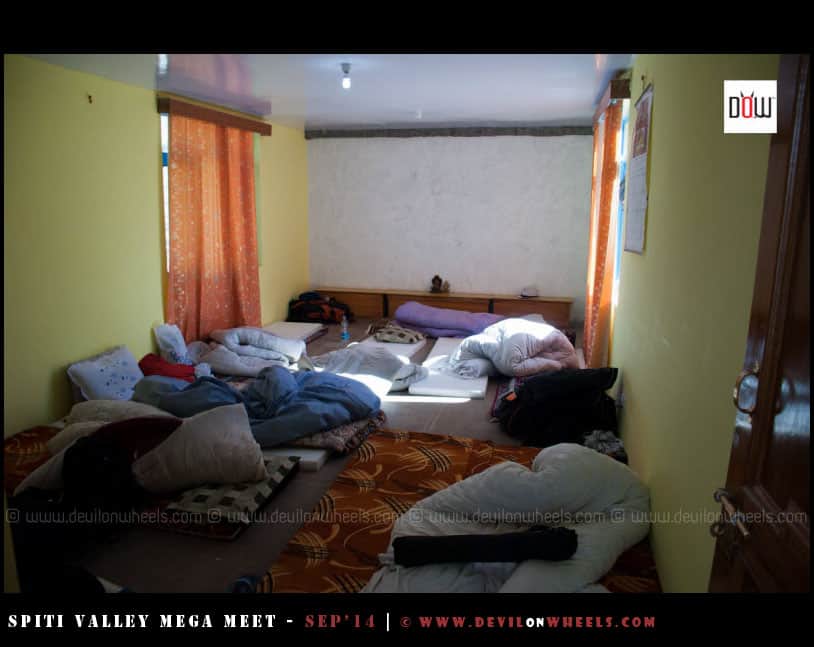
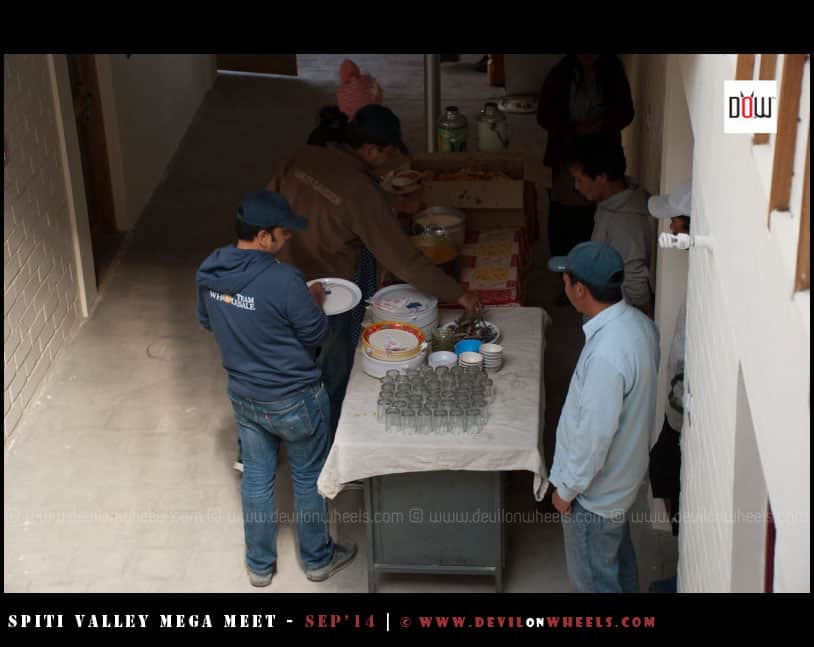
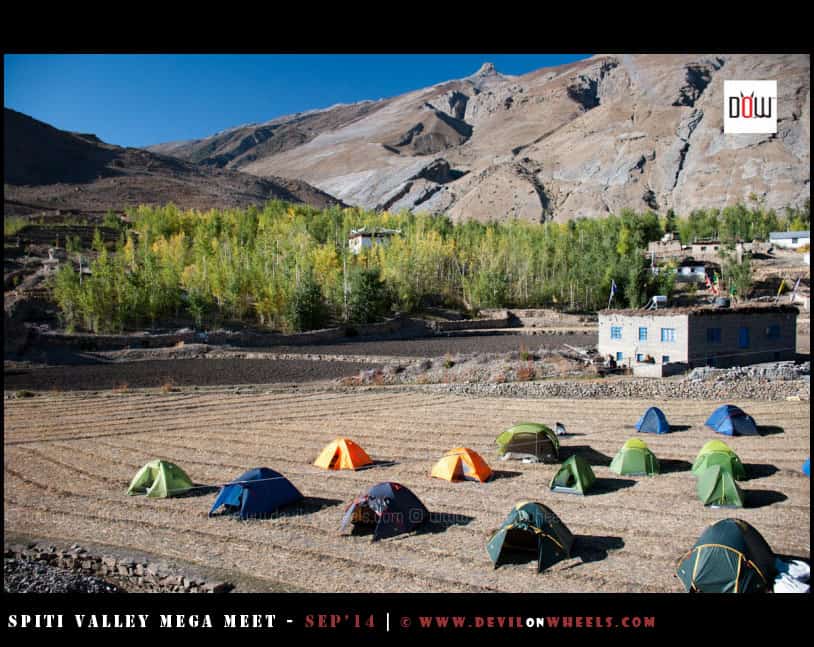
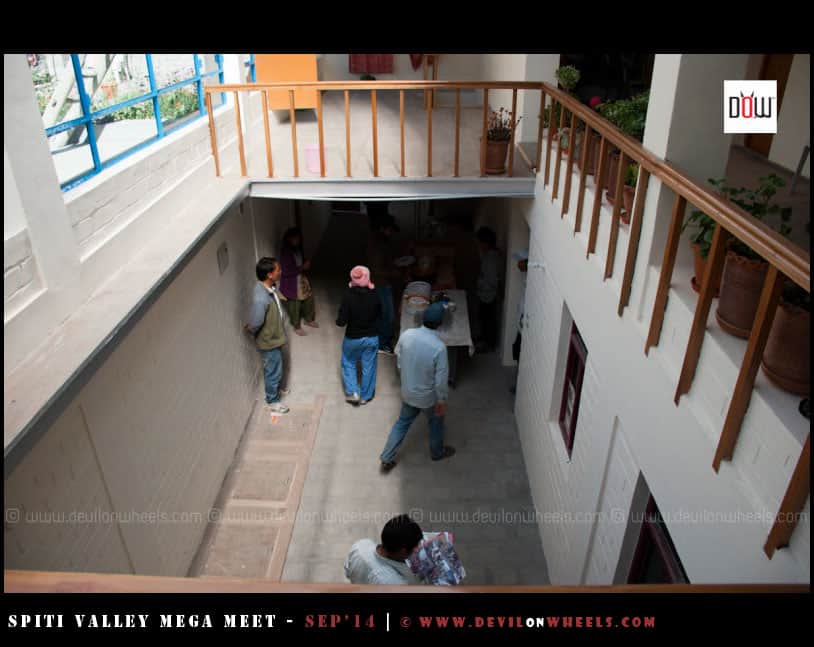
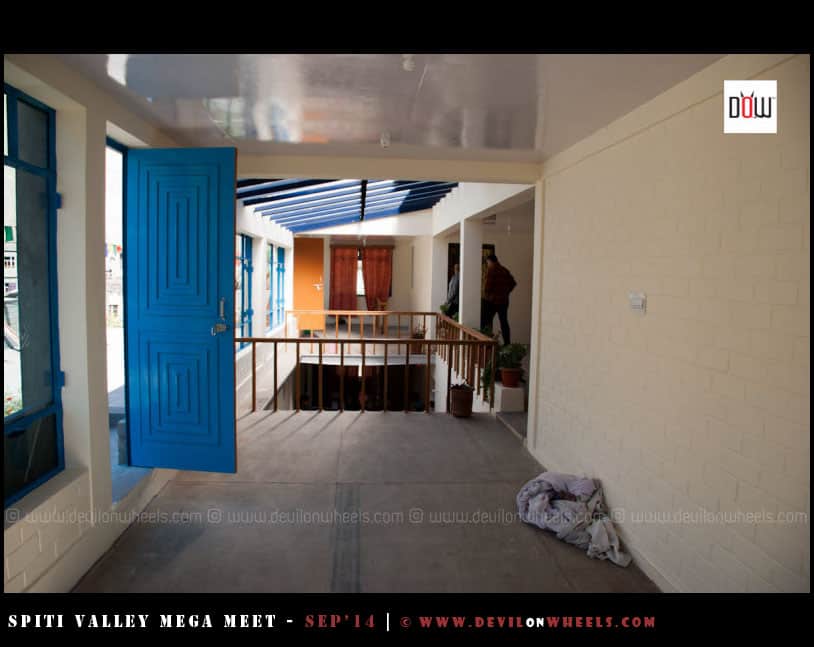
We stayed at Sonam Homestay at Mane village. It is fairly newly built and has 5-6 rooms, a couple of dry-pit local toilets, and a big dining hall where food is served. You will feel comfortable here. There is a big camping ground outside where you can pitch your tents. It is the last home in Maneyogma village, and from here the trek to Sopona Lake starts.
You can reach Sonam Ji at +91-9418503966 or +91-9459481431. Your phone may be picked up by Lobsang Ji. Refer to Sonam Ji from Mane village, and he will recognize and take care of your bookings. Expect to pay around Rs 500-800 per person per night including basic meals (as of 2024, verify locally for current rates).
Other Homestays in Mane Villages
There are other homestays in Maneyogma village as well where you can stay, or feel free to put up your own camps. Unfortunately, I do not have contacts for the other homestays.
You can also get in touch with Tsering Bhai (tseringsakya@gmail.com or +91-9418208987) in case you need things pre-booked or pre-arranged. Sonam Ji is family with Tsering Bhai, so he should be able to help you in any way needed.
What Should You Carry for the Sopona Lake Trek?
Carry trekking shoes, at least 2 litres of water, packed food, sunscreen, warm layers, a rain jacket, and Diamox as an AMS precaution. There are no shops, cafes, or water sources anywhere on the trail between Maneyogma and Sopona Lake, so you need to be self-sufficient.
The Sopona Lake trek does not require any technical gear, but you still need to be well prepared. There are no shops, cafes, or water sources on the trail. Here is what I recommend carrying.
- Trekking shoes with good grip. The trail is loose gravel and scree in sections.
- At least 2 liters of water. There is no water source between Maneyogma and the lake.
- Packed breakfast and snacks. Dry fruits, energy bars, and glucose are good options. You will be trekking for 6-7 hours.
- Sunscreen and sunglasses. At 13,500 feet, the UV radiation is intense.
- Warm layers. Even in summer, mornings at this altitude can be cold, and weather can change quickly.
- Rain jacket or poncho. Sudden showers are possible in July-August.
- Diamox tablets. Keep them as a precaution for altitude sickness. Consult your doctor before the trip.
- A small daypack. Leave heavy luggage at the homestay.
- Trekking pole (optional but helpful for the steep descent).
You can also check our complete list of things to carry on a trip including a medical kit for a more comprehensive packing guide.
How Much Does the Sopona Lake Trek Cost in 2026?
Budget Rs 1,000-2,000 per person for the trek portion alone: homestay at Maneyogma (Rs 500-800), a local guide split among the group (Rs 800-1,000/day), and packed food and water (Rs 100-200). This is separate from your overall Spiti Valley trip budget.
The Sopona Lake trek is one of the most budget-friendly treks in Spiti Valley since there is no entry fee, no permit, and minimal infrastructure. Here is a rough cost breakdown per person for the trek portion only (not including travel to Spiti).
| Expense | Budget (per person) |
| Homestay at Maneyogma (1 night, with meals) | Rs 500-800 |
| Local guide for trek | Rs 800-1,000 (split among group) |
| Packed food and water | Rs 100-200 |
| Total (trek portion) | Rs 1,000-2,000 per person |
For the overall Spiti Valley trip budget breakdown, refer to our dedicated cost guide. The Sopona Lake trek adds just 1 extra day and minimal cost to your overall Spiti itinerary.
What Are the Key Tips and Safety Considerations?
- Hire a local guide. The trail to Sopona Lake can be confusing near the top, and a local villager from Mane will ensure you do not get lost. He will also share insights about the area that you will not find in any guidebook.
- Acclimatize first. Do not trek to 13,500 feet on your first or second day in Spiti. Spend at least 2 days at lower altitudes (Tabo at 10,764 feet, Dhankar at 12,776 feet) before attempting this trek.
- Start early. Leave by 5-6 AM from Maneyogma. This gives you enough daylight for the round trip and avoids afternoon weather changes.
- Fuel up in Kaza. Kaza is the nearest place with a petrol pump. Make sure your tank is full before heading to Mane.
- No mobile signals. There is zero mobile network coverage in Mane villages or on the trek. Read our Spiti mobile connectivity guide for full details on which networks work where in the valley.
- Carry enough cash. ATMs are available only in Kaza. Homestay payments, guide payments, and everything in Mane is cash-only.
- Nearest hospital is in Kaza. About an hour’s drive from Mane. The village has a small local dispensary for basic medical needs only.
- Travel responsibly. Mane villages and Sopona Lake are pristine, undeveloped places. Carry back all your trash, do not disturb the wildlife, and respect the local community.
What Else Can You Visit Near Sopona Lake?
Sopona Lake sits between Tabo and Kaza, so you can easily combine it with Tabo Monastery, Dhankar Monastery and Lake, Pin Valley and Mud village, Kibber, Langza, and Ki Monastery on the same Spiti loop without any major detours.
Since Sopona Lake is located between Tabo and Kaza, you can easily combine it with several other attractions in Spiti Valley.
- Tabo Monastery, founded in 996 CE, often called the “Ajanta of the Himalayas.” Just 30 minutes from Schichiling.
- Dhankar Monastery and Dhankar Lake, perched on a cliff overlooking the Spiti-Pin river confluence. The lake is a 1.5-hour trek from Dhankar.
- Pin Valley and Mud Village, home to the Pin Valley National Park and the Kungri Monastery.
- Kibber village and the Kibber Wildlife Sanctuary, known for snow leopard sightings in winter.
- Langza, the fossil village with its giant Buddha statue.
- Ki Monastery and local sightseeing around Kaza.
I recommend spending at least 7-8 days in Spiti to do justice to these places. If you only have 5-6 days, read our guide on how to make a Spiti Valley trip in 6 days.
Can You Camp at Sopona Lake?
Yes, camping at or near Sopona Lake is possible if you carry your own gear. However, keep a few things in mind. There is no water source at the lake (the lake water is not potable), so you need to carry all drinking water. Temperatures drop significantly at night at 13,500 feet, even in summer. A good 3-season sleeping bag rated to at least -5 degrees Celsius is essential.
If you want to camp, I recommend hiring a porter from the village to help carry gear up. Alternatively, pitch your tents at the camping ground at Sonam Homestay in Maneyogma, which is easier and still gives you a beautiful night under the stars.
All trek photographs in this article are credited to Preet Kamal, our core devil from the DwD community, who was with us on the DoW Mega Meet 2014. A sincere thanks to him.
Frequently Asked Questions
What is Sopona Lake?
Sopona Lake is a seasonal glacial lake at 13,500 feet (4,122 meters) in Spiti Valley, Himachal Pradesh, fed by snowmelt from the Manirang range. It sits above Maneyogma village and is reached by a 5-6 km trek that takes 2.5 to 3 hours one way, with the full round trip taking about 6-7 hours.
How long is the Sopona Lake trek?
The Sopona Lake trek is approximately 5-6 km one way from Maneyogma village. At a steady pace, the uphill climb takes 2.5 to 3 hours. The full round trip including time at the lake takes about 6-7 hours. The trail has a steep gradient in sections, making it moderate for experienced trekkers and challenging for beginners.
Do I need a permit to visit Sopona Lake?
No stamped permit is needed for Indian nationals to visit Sopona Lake or the Mane villages themselves. However, every vehicle entering Spiti district, including on the Kinnaur route this itinerary uses, must register for the free e-Aagman e-pass at eaagman.hp.gov.in before you reach the Sumdo checkpost. Fill it in advance since there is no mobile network at the barrier to do it on the spot. Foreign nationals may need a Protected Area Permit for certain restricted areas in Spiti, so check the latest requirements with the Kinnaur-Lahaul-Spiti ILP guide before traveling.
Is Sopona Lake worth visiting if it is dry?
Yes. Even when the lake is dry (common in May-June and October onwards), the trek offers panoramic views of the Manirang range and the Spiti Valley. The barren landscape has a haunting beauty. The solitude and disconnect from civilization make it worth the effort regardless of lake water levels.
How do I reach Mane village from Kaza?
From Kaza, drive towards Tabo on the Spiti highway. After about 25 km, just before the Dhankar diversion, you will reach Schichiling bridge. Take a left here, cross the Spiti river, and drive 5-6 km to reach Manegogma (lower Mane) and then another 2 km to Maneyogma (upper Mane). Total drive time from Kaza is about 1-1.5 hours. There is no bus service to Mane.
Is there mobile network at Mane village or Sopona Lake?
No. There is zero mobile network coverage at Mane villages or on the Sopona Lake trek. The nearest signal (BSNL) is available at or near the Schichiling-Tabo stretch. Plan accordingly, inform your family before going offline, and enjoy the digital detox.
Can beginners do the Sopona Lake trek?
Beginners with reasonable fitness can attempt the trek, but it is not easy. The altitude (13,500 feet), steep gradient, and lack of a marked trail in some sections make it challenging. Acclimatize for at least 2 days in Spiti before attempting it, hire a local guide, start early, and take frequent breaks. If you have never trekked above 10,000 feet before, I suggest building some experience with easier treks first.

What wildlife can I spot near Sopona Lake?
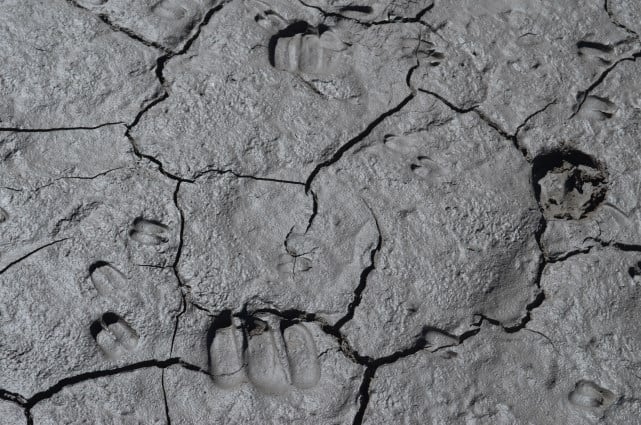
The area around Mane and Sopona Lake is home to Himalayan blue sheep (bharal), Himalayan foxes, marmots, and various raptors. Snow leopard presence has been reported in the broader Manirang range area, though sightings are extremely rare. We found fresh wildlife pugmarks near the lake during our trek, likely from a fox or a wild cat.
In the end, feel free to post any queries in the comments section below. If you have been to Sopona Lake and would love to share your experience to help fellow travelers, please leave a comment and I will make sure to include your inputs in this article. You can also join the DwD community for itinerary advice and trip planning help for Spiti Valley and beyond 🙂
Last Updated: September 2026

14 Comments
Comments section gets closed in 90 days. To ask your travel questions, you can follow my YouTube Channel for a faster reply or for a much slower reply follow me on Instagram. :)
Can I plan a motorbike trip on 20.09.2017 to spiti valley from shimla side including langza, hikkim, komic, chandrapal etc. and return through kunjum pass to manali side.
An early response will be highly appreciated. Thanks in advance.
YEs, you can plan the trip in September easily in Spiti valley. The roads will be in good conditions.
Hello Dheeraj,,
I want to ask you few things:
1. Is going to kaza from Manali is a good idea during 22-27th June. ? if so what are the public transport and timing of it , as Himachal transportation is not showing any online.
2. Who all to conatct for the camping permission at chandrataal.
3. Apart from kaza, tabo and Nako do you suggest any place worth visiting ?
thanks is advance
Hello Arunima,
1. The road from Kaza to Manali will be open by that time of the year and HRTC buses from Kullu – Manali – Kaza will be operational else shared taxis from Manali taxi stand will also be running during that time. There are two HRTC buses which runs between Manali and Kaza every morning, as soon as road to Spiti Valley via Manali get open in the season, mostly in June. These buses run from Kullu to Kaza via Manali and it reaches Manali around 4.45 AM and leaves at 5.00 AM. Ticket to Kaza will cost you only about INR 250.
2. You cannot camp at Chandratal, it is against the laws and disrespect to the environment. Please camp at the camping sites dedicated near parking lot for camps to save it for future.
3. Well, you can refer: Spiti Valley from Manali – Most Common Itinerary
Thanks so much 🙂
best wishes for your trip. Feel free to post any further questions you may have for your trip.
I have been to this lake. It is really beautiful. Mane does not have home stays like other villages in Spiti. In lower Mane, a woman named Lobzang and her husband are open to tourists staying with them. Else, it might be difficult to find accommodation.
Chinar, now few things have changed. You can stay at Sonam guest house/home stay as well in upper mane village. It is the last house almost.
Detailed information.Thank you
Thank you, glad it is useful for you.
We missed this opportunity to visit this lake..Next time for sure..Thanks DHEERAJ for sharing
Sure Aryan, it is blissful place and the trek offers some breathtaking views.
Glad to know about this lake.
It is a beautiful trek, do plan on your next trip 🙂