


Sach Pass in Pangi Valley, the big daddy of all mountain passes and we say that the name is JUST enough to give you shivers down the spine 😀 D… Yes, you guessed it right; I just came back from a f***** amazing adventure of my entire life last week only.
2026 road status first, because that is what most of you are here for. Sach Pass opened for light motor vehicles on Monday, 12 May 2026, after the Public Works Department cut through the last stretch of snow late on 11 May. As per The Tribune’s report on the reopening, that was almost a month ahead of the usual schedule, and it ended a seven-month winter freeze. The pass normally stays open until mid-October.
If you are wondering whether July is a good time to attempt Sach Pass, let me tell you from experience that it absolutely is, but you need to be well prepared. July brings monsoon rains, swollen nallahs, and unpredictable landslides. In this guide, I will share my complete 5-day itinerary, a section-by-section road conditions breakdown, budget details, the 2026 monsoon incidents you must factor in, and everything you need to plan a safe Sach Pass trip in July.
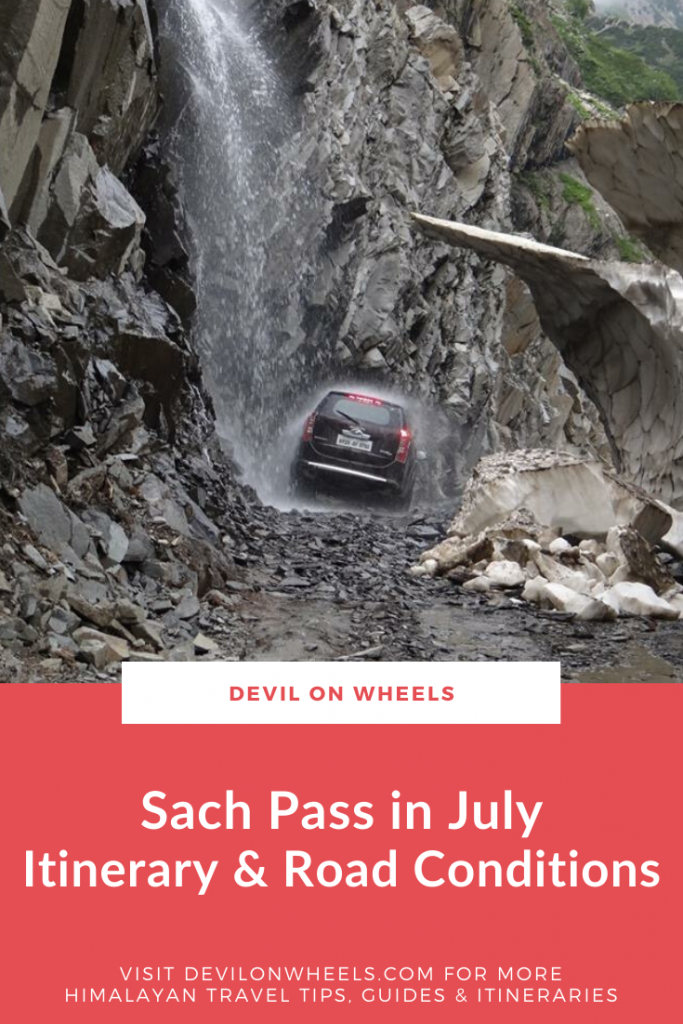
Let's quickly dive into the details:
Practical Info: Sach Pass in July at a Glance
- 2026 opening date: 12 May 2026 for light motor vehicles (PWD Pangi and Churah divisions cleared it)
- Season: Mid-May to mid-October in a good year. Officials say it normally opens by mid-June, end of May at the earliest
- Altitude: 4,420 m / about 14,500 ft on the Pir Panjal Range (state officials quote 4,500 m, Wikipedia says 4,414 m, so treat the number as approximate)
- Key distances: Chamba to Sach Pass 120 km, Chamba to Killar 166 km, Tissa to Sach Pass about 57 km, Dalhousie to Killar about 221 km, Delhi to Bairagarh 686 km
- Permits: None for Indian nationals. Vehicle details noted at the Satrundi police check post
- Fuel gap: About 200 km with no pump between Tissa/Bhanjraru and Tandi. Carry 15 to 20 litres spare
- Mobile network: BSNL only beyond Bairagarh. Airtel, Jio and Vi are dead on the pass
- July weather: Roughly 5 to 15 degrees C by day at the top, close to freezing at night, with monsoon rain most afternoons
- Golden rule in July: Cross Bagotu and Madgran nallahs before noon
- Last Updated: August 2026
The journey to Sach Pass, Pangi Valley in Himachal Pradesh was something I still cannot properly put into words. It is the one drive I can barely believe I made it through. If you are planning a trip to this region, do not forget to refer my article on the most common itinerary of Pangi Valley.
Why Plan a Sach Pass Trip in July?
Quick Answer: July is the month when Sach Pass is completely free of snow and the valley is at its greenest, with waterfalls running at full force. The trade-off is monsoon. Nallahs swell by afternoon, landslides are active, and the road can shut for a day at a time. Go in July only if you have a high-clearance vehicle and flexible dates.
By July the snow clearing is long finished and the route is at its most accessible state for the season. In 2026 the pass was already open from 12 May, so a July traveller gets a road that has had two months of traffic and repair on it. Yes, monsoon rains bring challenges, but they also bring something truly special to this landscape.
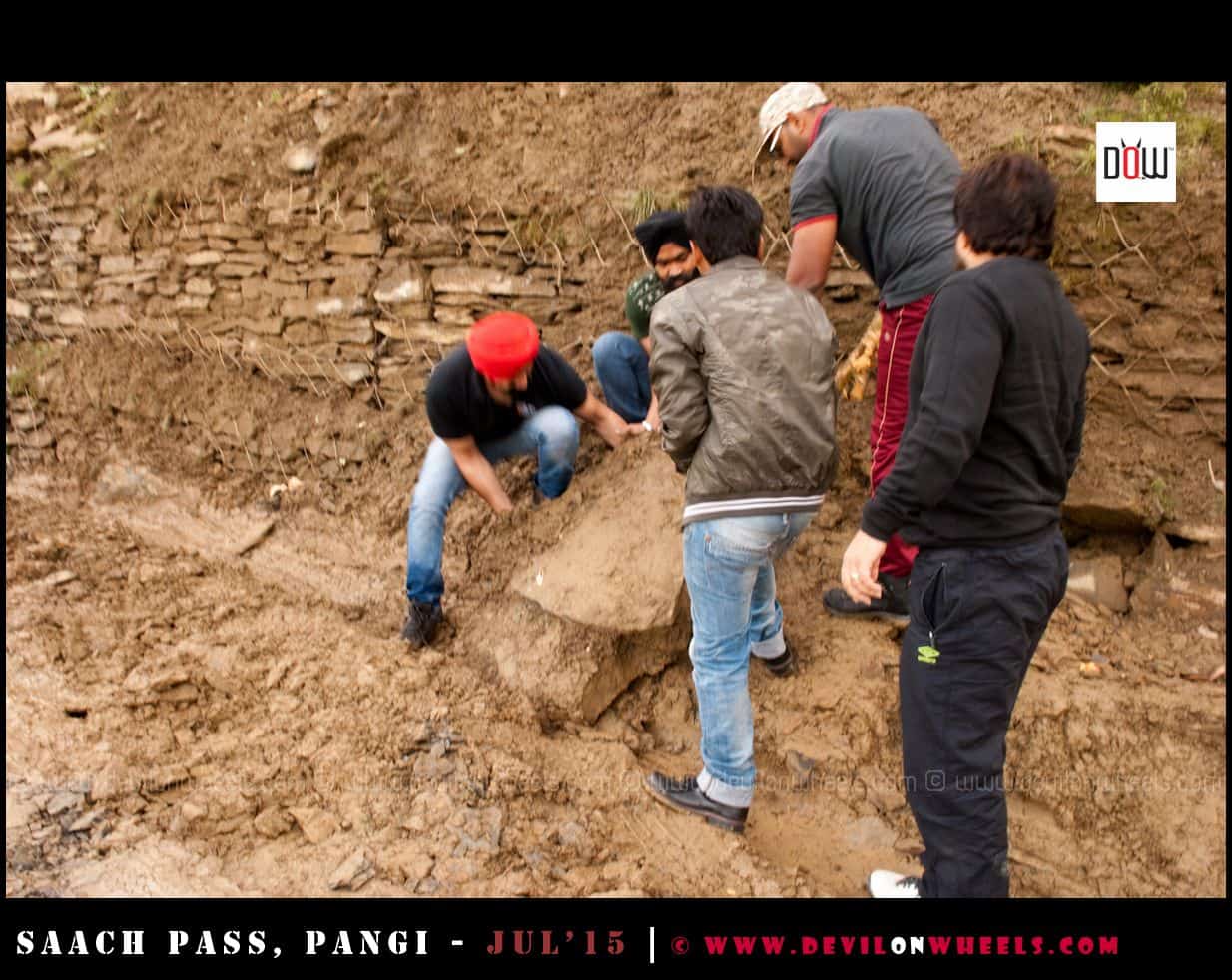
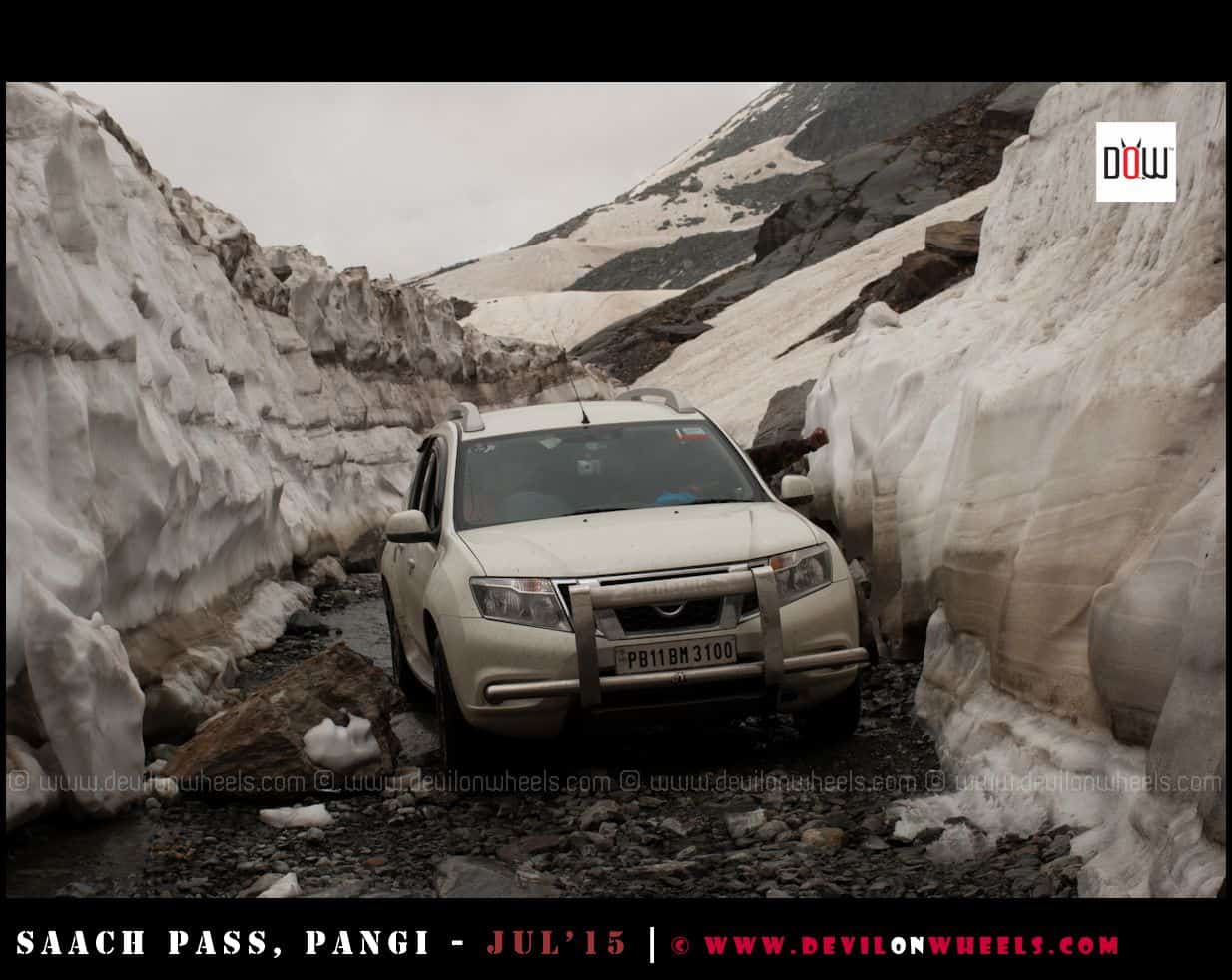
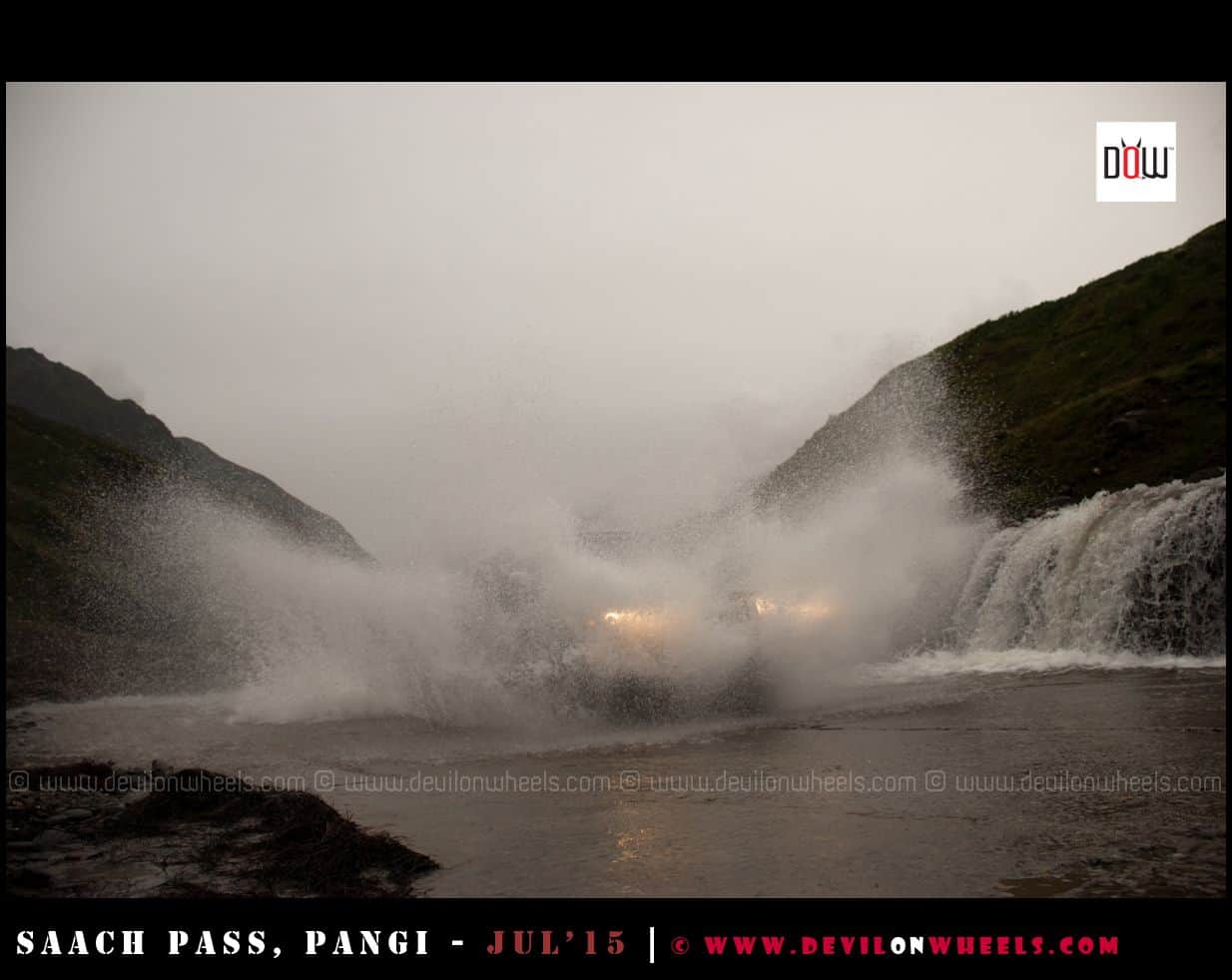
Numerous water crossings, endless waterfalls, snow walls as high as 40 feet, roads as if the pathway to hell, picking up an XUV to cross a landslide, clearing the landslide on your own, driving through ever violent gushing streams, taking an open wild waterfall bath, and crossing over Rohtang Pass and Jalori Pass in the middle of the night…
Uff… Can you ask for anything more?? 😀 :D… All in all, an F-amazing drive to the daddy of all mountain passes.

How Was My Experience at Sach Pass in July?
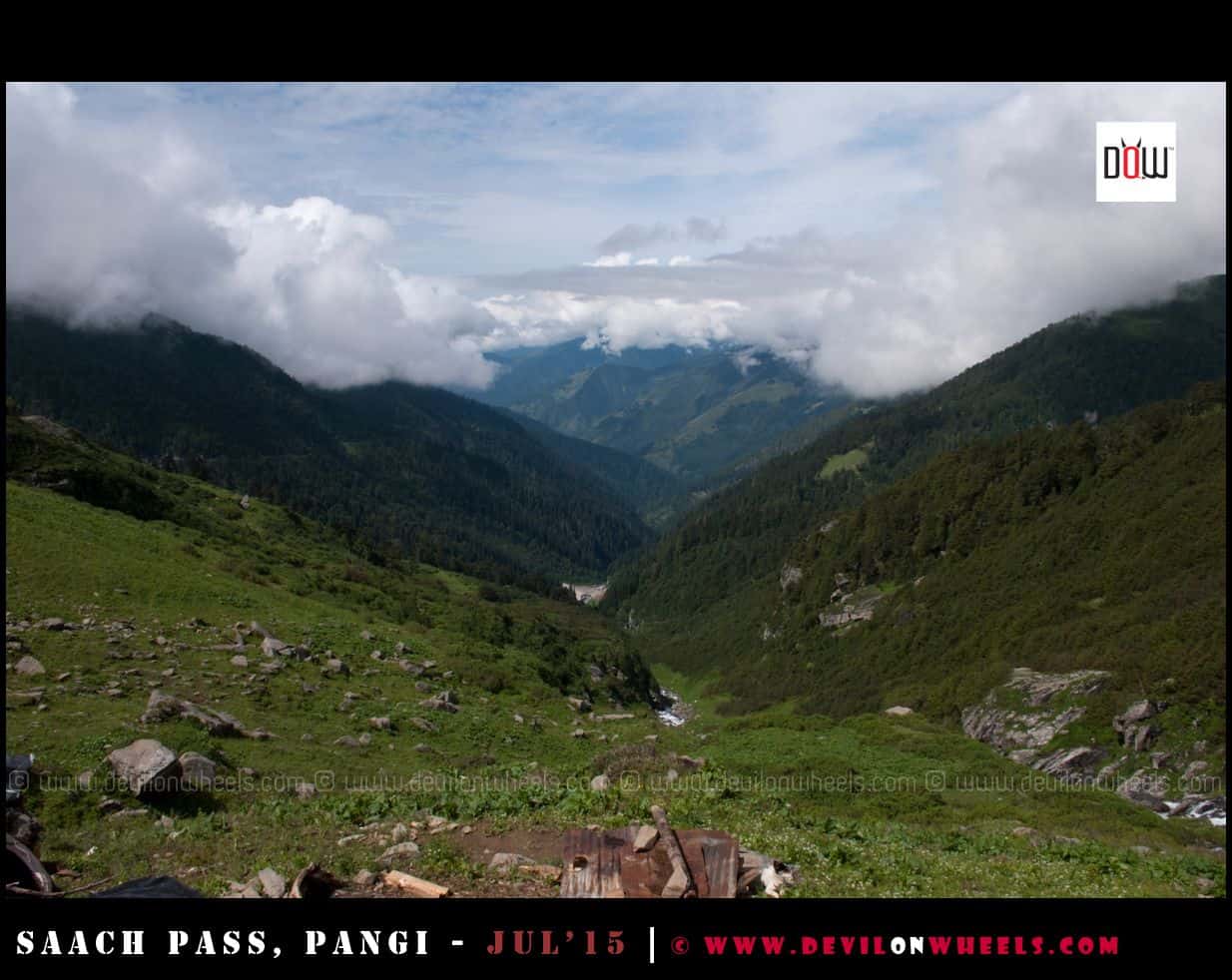
Well, overall, the road conditions lived up to the expectations though we were just lucky to save ourselves from the heavy rains predicted at the start of the journey. The weather kept itself to light rains and ever-refreshing green colors.
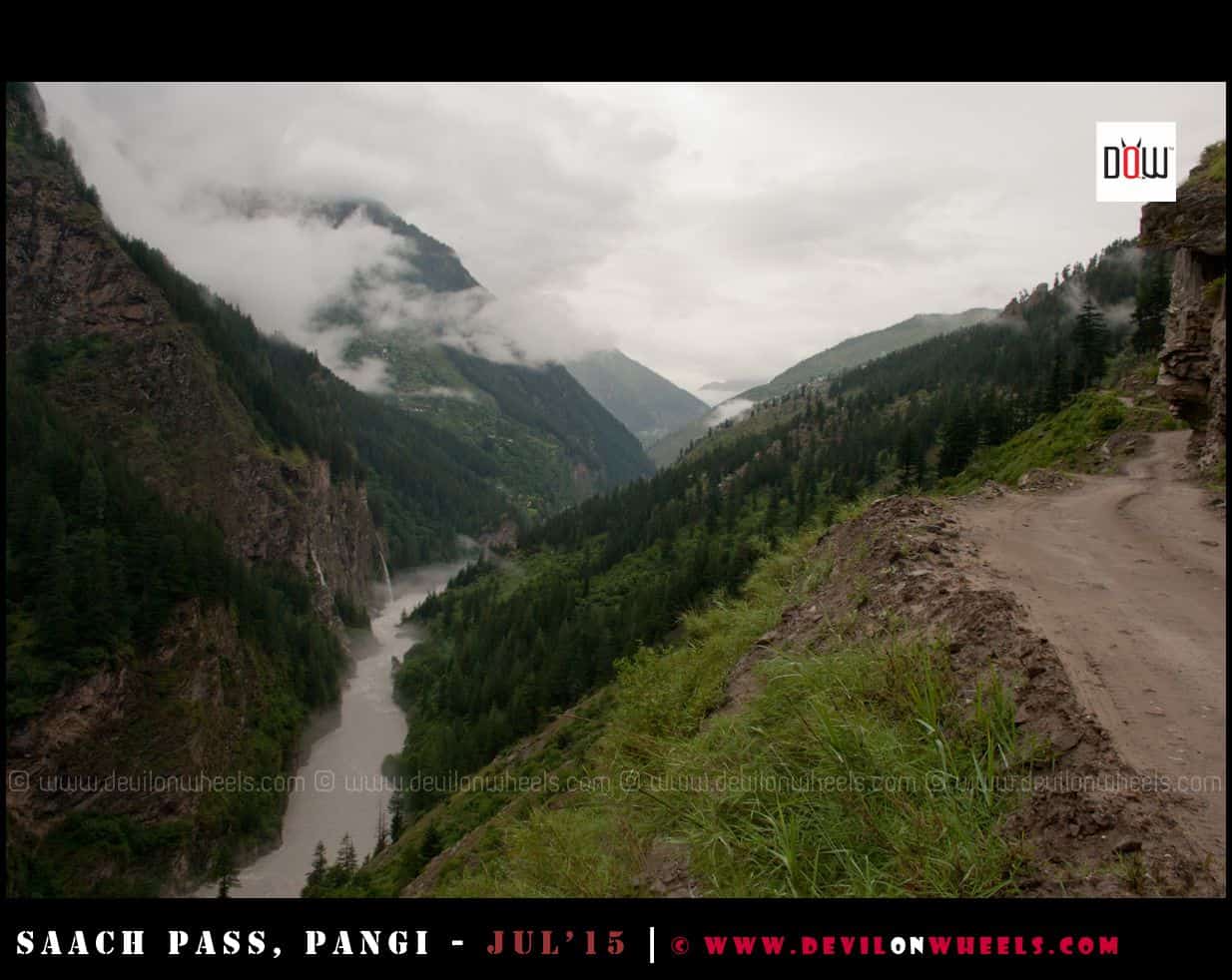
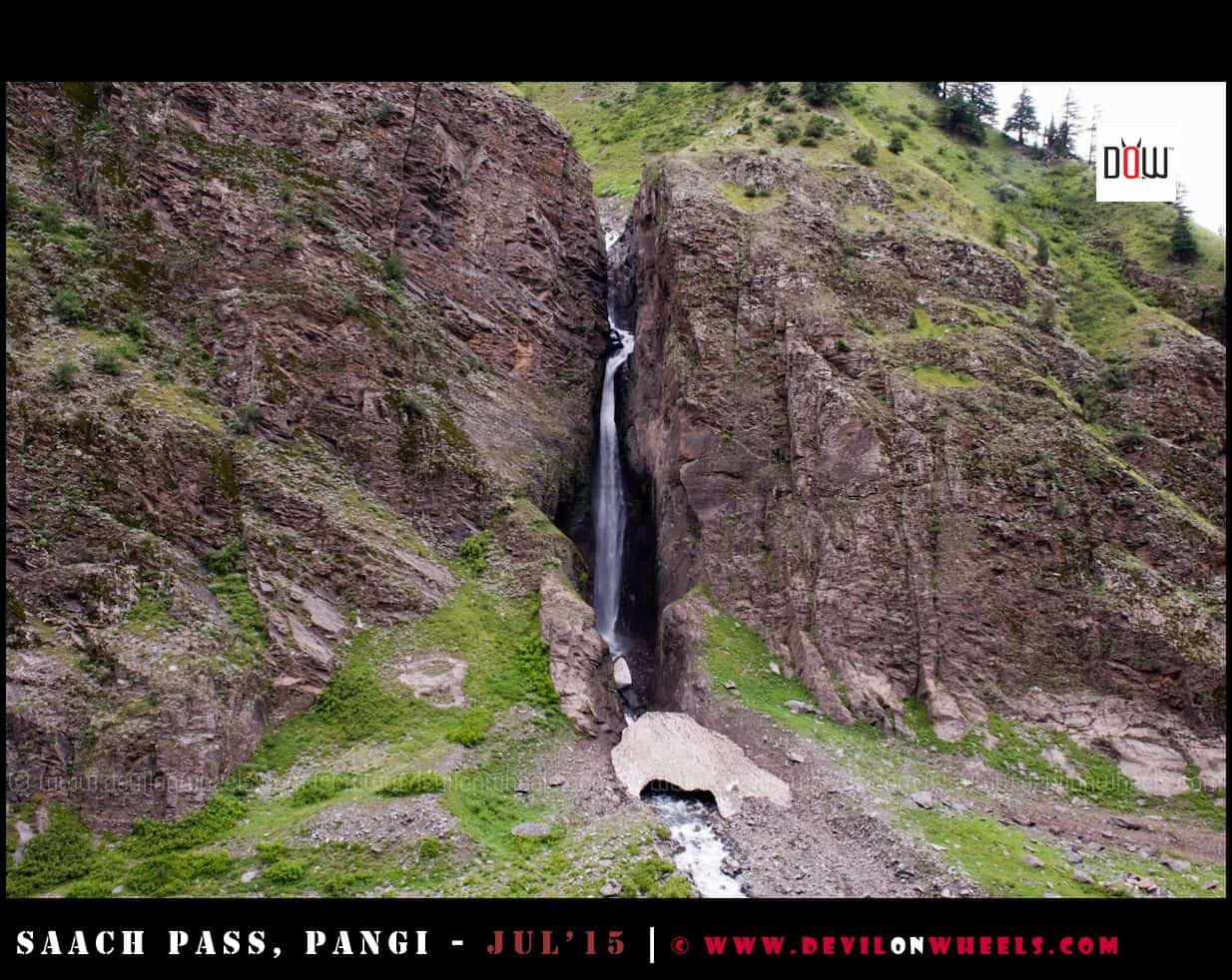
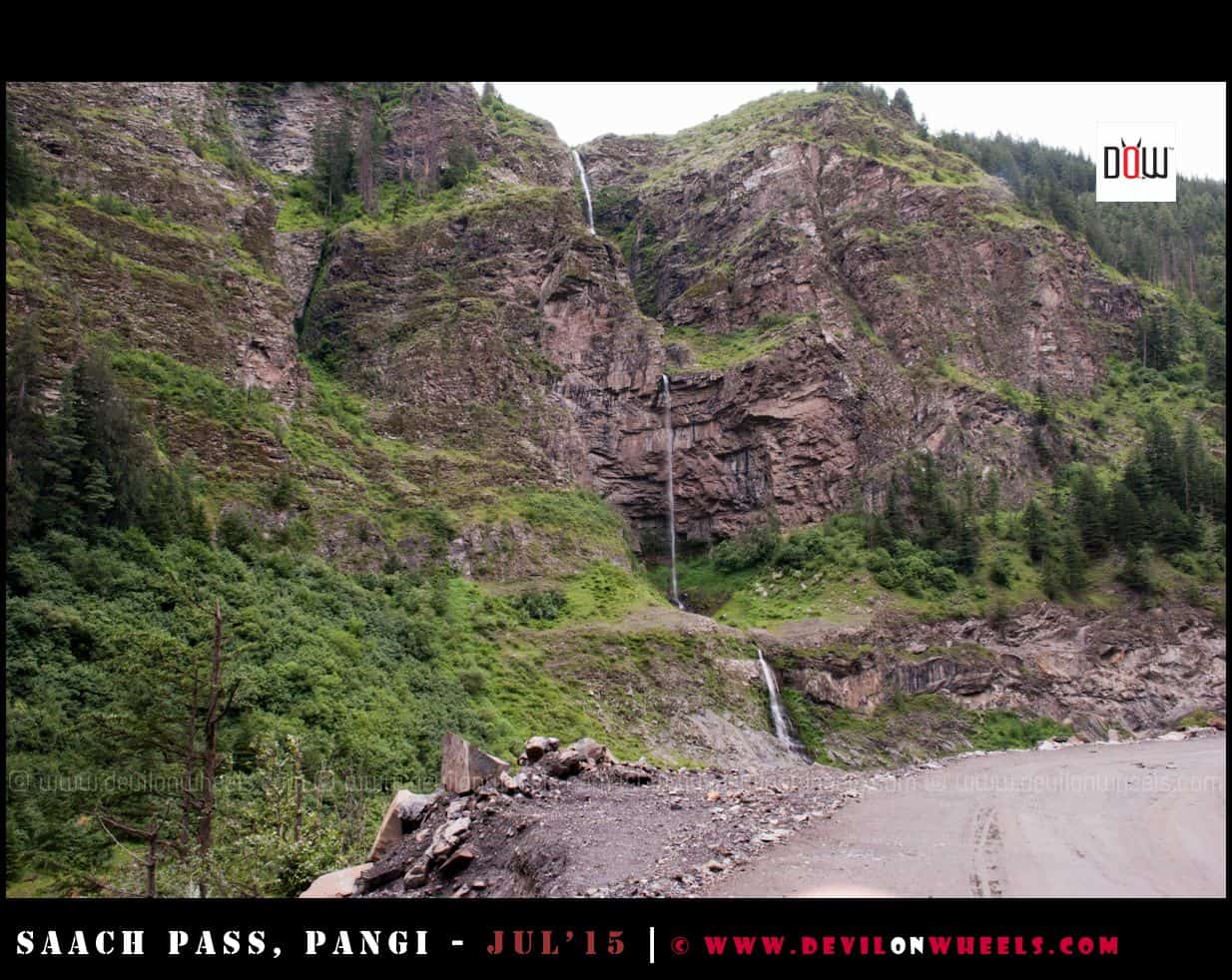
The Chandrabhagha river accompanied us throughout Pangi Valley, with an almost infinite number of waterfalls pouring down into it, some of them multi-storey falls right from the top of the mountains. All of it was WORTH the effort we had put into the trip 🙂 :)… The road conditions through most of Pangi Valley were, to put it politely, horrendous. In this article I am sharing the exact itinerary I followed, the route, and the road condition updates from this mega-adventure in the trans-Himalayas.
Trip Suggestion: Are you looking for an offbeat place to travel in Himachal Pradesh?
What Is Sach Pass and Where Is It Located?
Quick Answer: Sach Pass sits at 4,420 m (about 14,500 ft) on the Pir Panjal Range and connects Chamba/Churah Valley with Pangi Valley in Himachal Pradesh. It is the shortest link from Chamba to Killar at 166 km. When the pass is shut in winter, Pangi residents face a roughly 600 km detour through Jammu and Kashmir instead.
Sach Pass is a high-altitude mountain pass on the Pir Panjal Range that connects Chamba Valley / Churah Valley with Pangi Valley. It is the shortest route from Chamba to Killar, the headquarters of Pangi Valley. For a complete guide to the region, you can also check my most complete guide to Pangi Valley and the newer offbeat Pangi Valley travel guide.
That 600 km number is worth sitting with for a second, because it explains why this road matters so much to the people who live there. District officials told The Tribune that with Sach Pass open, the same Chamba to Pangi journey drops to around 170 km. Hence, once the pass opens, this route is preferred by locals too, and you will be sharing it with supply trucks and shared taxis, not just tourists.
The pass is open from roughly mid-May or mid-June through to mid-October, after which the road closes for winters after heavy snowfall. The other routes to Killar are Chamba – Manali – Udaipur – Killar, about 680 km, and Chamba – Jammu – Doda – Gulabgarh – Kishtwar – Killar, about 570 km. It is also the shortest approach for Pathankot to Leh over Manali – Leh Highway.
Route Breakdown: Chamba to Killar via Sach Pass
The breakup of route direction and distance to Sach Pass from Chamba is as follows: Chamba – Tissa (63 km) – Bairagarh (90 km) – Satrundi (106 km) – Sach Pass (120 km) – Bagotu (130 km) – Killar (166 km).
The altitude graph from Chamba to Sach Pass to Killar goes like Tissa (1,570 m) – Bairagarh (2,800 m) – Satrundi (3,400 m) – Sach Pass (4,420 m) – Bagotu (3,600 m) – Killar (2,590 m).
Once you enter Pangi Valley, you unlock some of the most beautiful and amazing places to explore in the Himalayas. You will need at least 4-5 days to explore Pangi Valley after reaching Killar, and can then head towards Udaipur – Tandi – Manali for going back home.
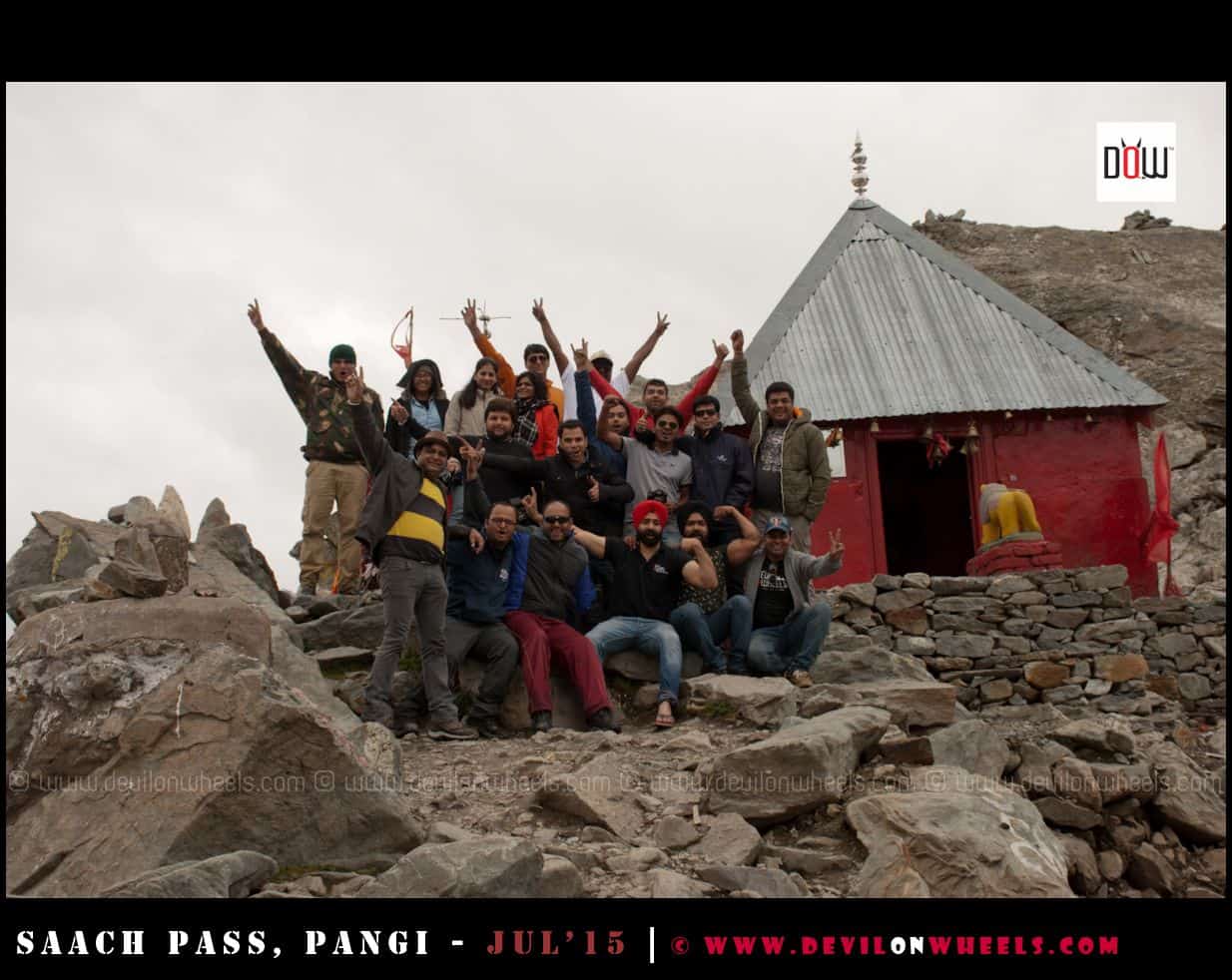
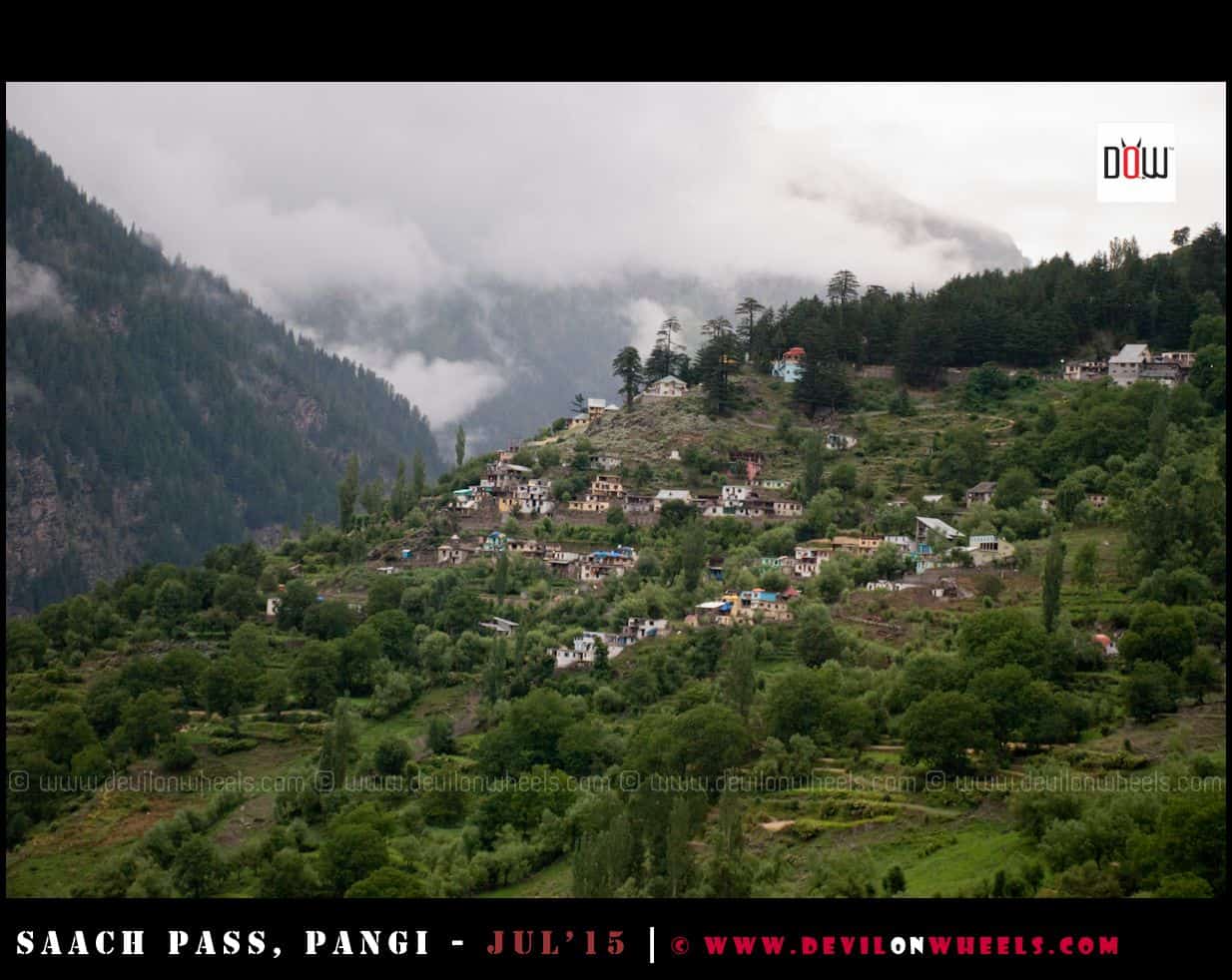
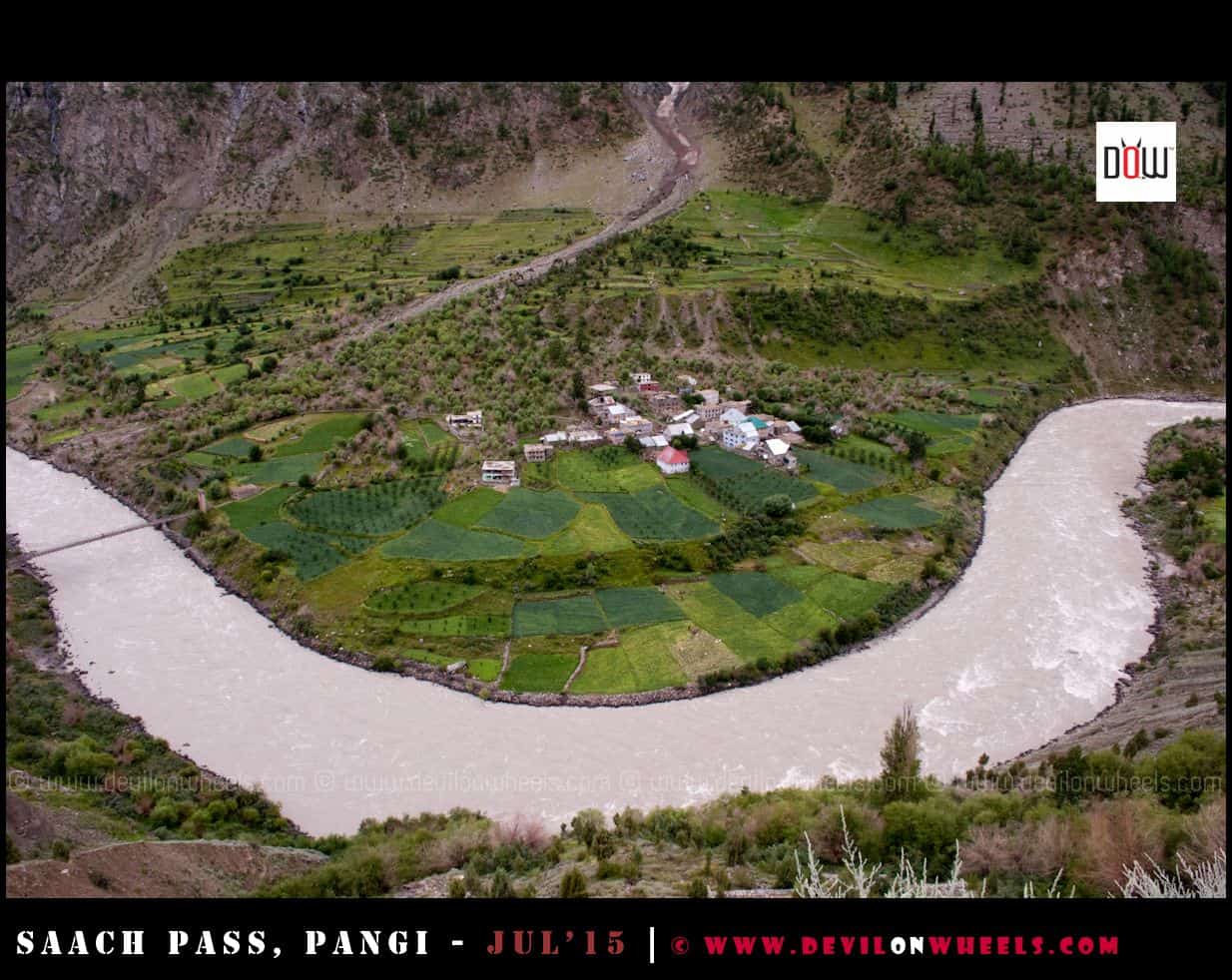
Some of the beautiful places to explore around Killar are Dharwas, Luj, Sural, Hundan, Findroo, Findar, Mindhal and Parmar. The entire Pangi Valley offers many picturesque villages, and there is a PWD rest house in Cherry where you can stay in peace, along with hotels and guest houses in Killar.
Do You Need a Permit for Sach Pass?
As of 2026, Indian nationals do not require any special permit to travel to Sach Pass or Pangi Valley. You can drive through freely. However, foreign tourists may need an Inner Line Permit (ILP) for certain restricted areas of Pangi Valley. Keep in mind that there is a police check post at Satrundi where your vehicle details will be noted.
What Vehicle Is Best for Sach Pass in July?
Quick Answer: An SUV or 4×4 with high ground clearance is the minimum for Sach Pass in July. Both the XUV and the Terrano in our group struggled with boulders, slush and water crossings beyond the pass. A sedan will very likely be damaged on the Bairagarh to Killar stretch, and bikes need a rider experienced with water crossings.
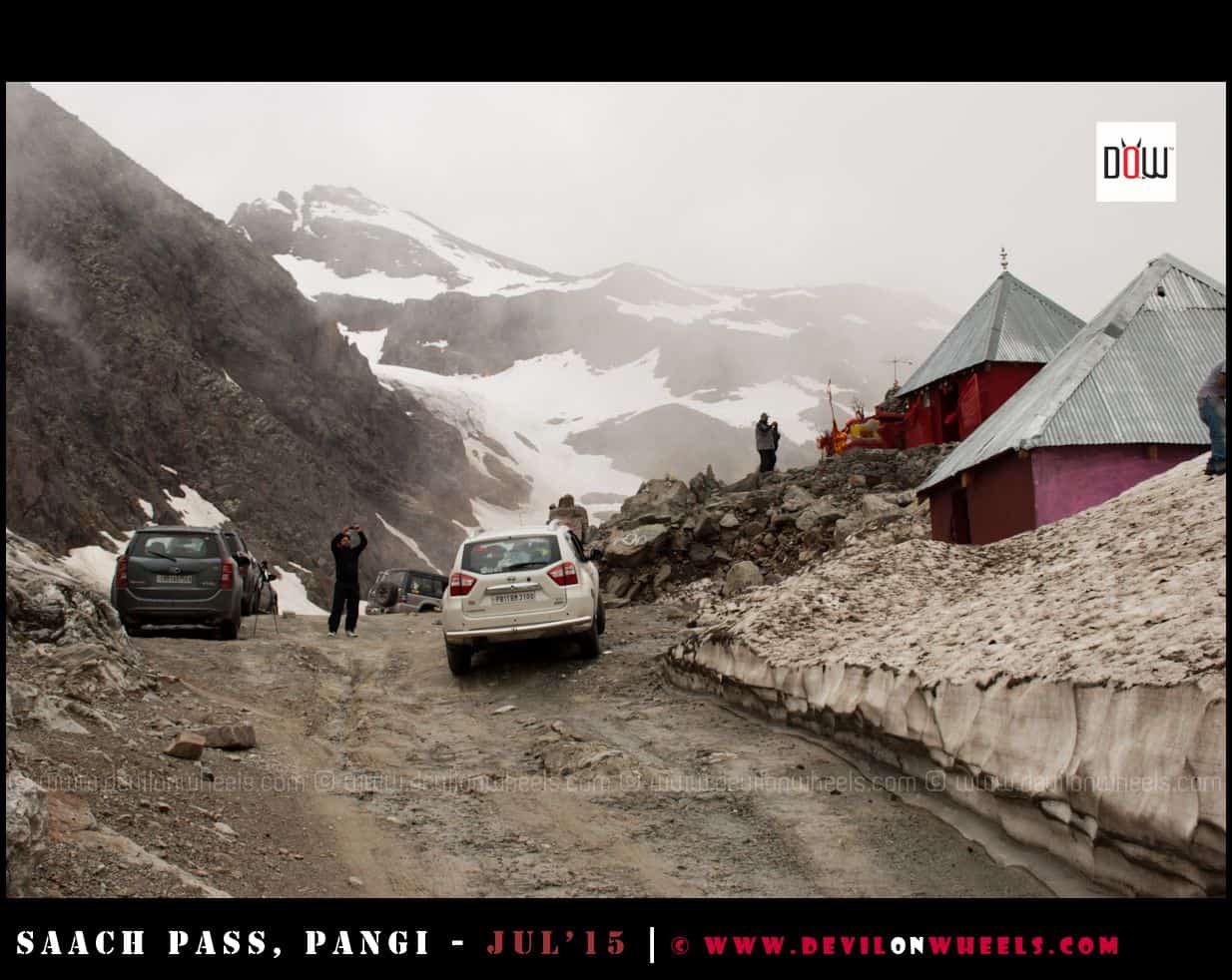
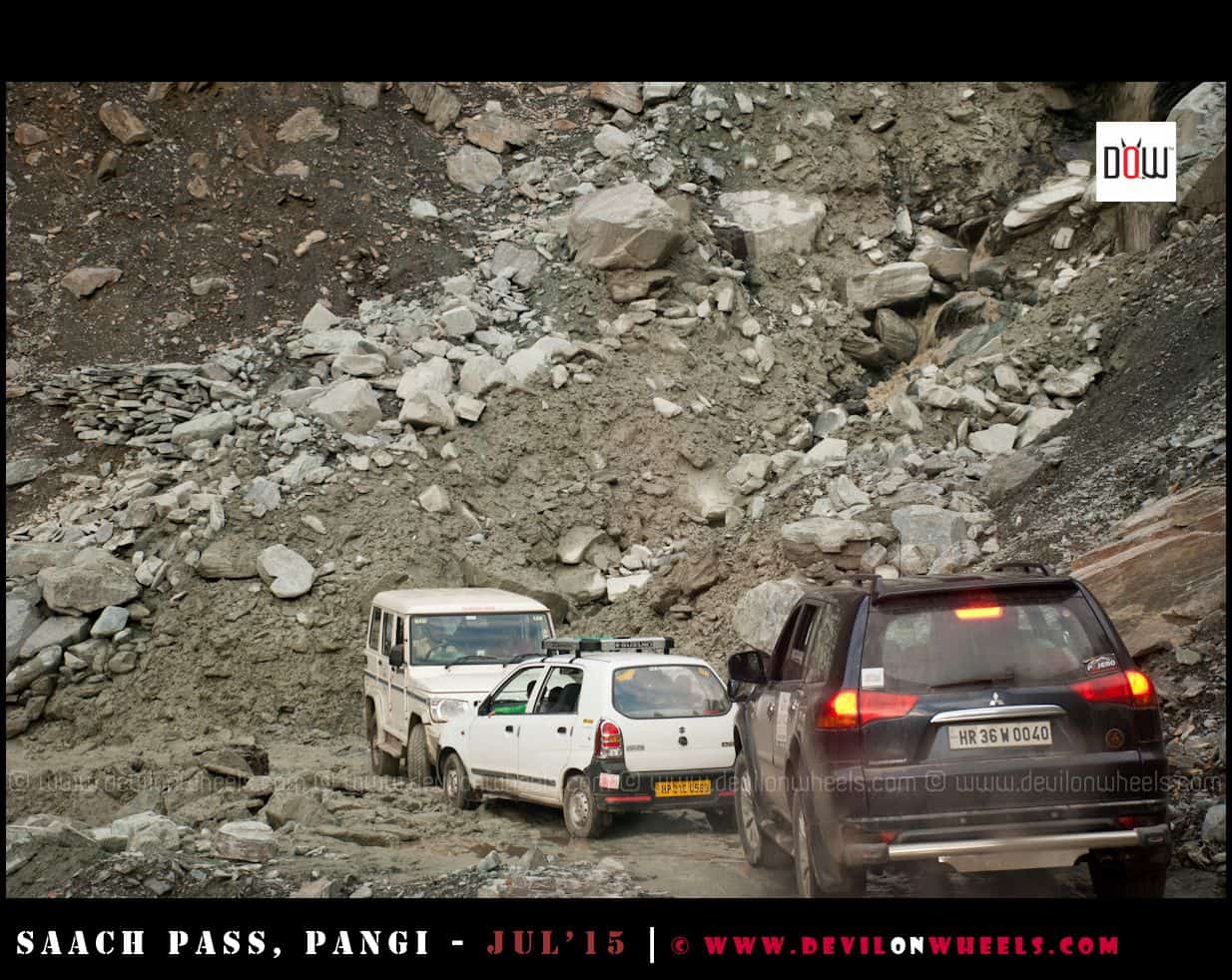
I would strongly recommend taking an SUV or a 4×4 for this journey. In July, the water crossings are at their most aggressive, and a vehicle with high ground clearance is not a luxury but a necessity. During our trip, both the XUV and Terrano struggled at multiple points with boulders, snow, and slush on the road beyond Sach Pass towards Killar.


If you are bringing a sedan, I will be honest with you, my friend. The stretch from Bairagarh to Killar via Sach Pass might kill your car. The road is practically non-existent at many points. Bikes are doable if you have hill riding experience, but be very careful at water crossings. An experienced rider who knows water crossing techniques will manage fine, but a first-timer should avoid this route on a bike in peak monsoon.
My Sach Pass Trip in July: Complete 5-Day Itinerary
Quick Answer: A 5-day Sach Pass trip from Delhi runs like this. Day 1 Delhi to Bairagarh (686 km), Day 2 Bairagarh to Killar over Sach Pass (76 km), Day 3 Killar to Udaipur to Manali (245 km), Day 4 Manali to Jalori Pass, Day 5 Jalori Pass to Narkanda to Delhi. Total drive was about 1,610 km.
Well, we had 5 days in hand for my Sach Pass trip including one buffer day and we followed the itinerary as mentioned below.
Day 1: Delhi to Bairagarh (686 km)
We started around 3.30 AM from my house, got together by 4.30 AM at Delhi bypass and left from Delhi. We had breakfast at Zhilmil, Karnal, with stuffed paranthas and then continued in heavy and light rains to Pathankot. There we took the road towards Dalhousie – Chamba and went on to reach Bairagarh at 7.30 PM. Half of the group stayed at Mannat homestay, and the other half stayed at hotel Chamunda just near it. Delhi to Bairagarh came out to be 686 km with a wrong detour towards Amritsar road for about 12-13 km on one side.

Important tip: Do NOT go towards Chamba or Dalhousie. Follow the road to Chamera Lake from Banikhet, then reach Koti from there. That is the short route. The other route via Chamba or Dalhousie is significantly longer. Neither Chamba nor Dalhousie should come on your route to Bairagarh from Pathankot.
Day 2: Bairagarh to Sach Pass to Killar (76 km)
This was supposed to be the D-Day, the day when we crossed Sach Pass going through Kalaban – Satrundi and reaching Killar in Himachal by evening with ample stops on the way. We started at 7.20 AM from Bairagarh to cross the pass early in the morning before the nallahs get flooded on the route, and traveled around 76 km that day to reach Killar in the evening passing through Bagotu nallah. We stayed at Chamunda Hotel in Killar too :)…
Pro tip: In July, always start early in the morning. The nallahs swell as the day progresses due to snowmelt and afternoon rain. By afternoon, water crossings that were knee-deep in the morning can become waist-deep and dangerous. Aim to cross Sach Pass and Bagotu nallah before noon.
Day 3: Killar to Udaipur to Manali (245 km)
There was quite an anxiety on this day because a lot was heard about Madgran Nallah, which could swallow big buses by afternoon or evening. The bridge was not there, and hence, our only option was to cross it as early as possible. So, we started at 5.45 AM from Killar, and it was raining that day. Passing through various beautiful villages of Pangi Valley, witnessing loads of waterfalls and water crossings.
We were able to reach Udaipur by 12.55 PM after crossing Madgran, though it was one of the longest crossings I ever did, and it was doable without much trouble at that time. We had our brunch at Udaipur at Bhandari Bhojnalya, which served us amazing vegetarian food. Then, we went to Trilokinath Ji for darshan and cruised to Tandi – Sissu – Khoksar. We reached Rohtang Pass at 7.40 PM and old Manali at 9.20 PM. We called off this never-ending day in Old Manali at Dontell Mama Guest House.
Please read this before you plan Day 3 in 2026. This Killar – Udaipur leg, formally the Sansari – Killar – Thirot – Tandi (SKTT) road, has had a very bad 2026 monsoon. A landslide damaged the bridge over Jahalma Nallah, BRO built a temporary crossing, and then on 29 June 2026 a glacial-melt flashflood washed that temporary road away and snapped the Lahaul to Pangi link altogether. BRO put up a footbridge and then a zipline for residents while a permanent Bailey bridge is built. Then on 24 July 2026, a rockfall at Kadu Nala on this same Udaipur – Killar road crushed a Tata Sumo carrying 15 people and killed 13 of them, including a six-month-old infant. Keep in mind this is a DIFFERENT road from Sach Pass itself, but it is the road my Day 3 uses. In case it is shut, your only exit from Killar is back over Sach Pass to Chamba. Plan a buffer day for exactly this.
2026 Update: The Atal Tunnel (opened October 2020) now connects Manali directly to Sissu, bypassing Rohtang Pass entirely. On your return via Udaipur – Tandi – Sissu, you can skip the Rohtang Pass stretch and take the Atal Tunnel straight to Manali. This saves about 1-2 hours and avoids the often treacherous Rohtang descent. The tunnel is 9.02 km long and is open year-round. If you want more on this side of the mountains, check my complete guide to Lahaul Valley.
Route of the day was like Killar – Cherry (14 km) – Purthi (28 km) – Tindi (54 km) – Madgran (70 km) – Udaipur (79 km) – Trilokinath (96 km) – Khoksar (175 km) – Rohtang Pass (194 km) – Manali (245 km).
Day 4: Manali to Jalori Pass
We killed half of this day in Manali, and then realized we had to move to Narkanda via Jalori Pass 😀 :D… A series of events held us on the road up to 2.00 PM. Around 4.30 PM we crossed Aut tunnel and started the ascend towards Jalori Pass passing through Banjar Valley – Jibhi. We spared 2.30 hours at Shringi Vatika as some of us wanted chicken made up there as a specialty. Hence, we ended our day in a dhabha at Jalori Pass at 10.40 PM. Amit, Anshul and Nitin went on to sleep in camps at Jalori Pass.
Day 5: Jalori Pass to Narkanda to Delhi
Started from Jalori Pass at 7.15 AM, passed through Ani – Khanag – Sainj – Kingal – Narkanda – Shimla – Ambala – Delhi. We had our brunch at Narkanda at Himalayan Restaurant this time, skipping my favorite Negi Dhabha just opposite it. We had our dinner at Zirakpur and then drove non-stop to Delhi to reach home by 10.00 PM, which concluded the trip.
The total drive over the trip was about 1,610 km done in a budget of around Rs 5,600 per head, including a couple of very costly meals at about Rs 1,000 per person in Manali that just got wasted 🙁 🙁 …

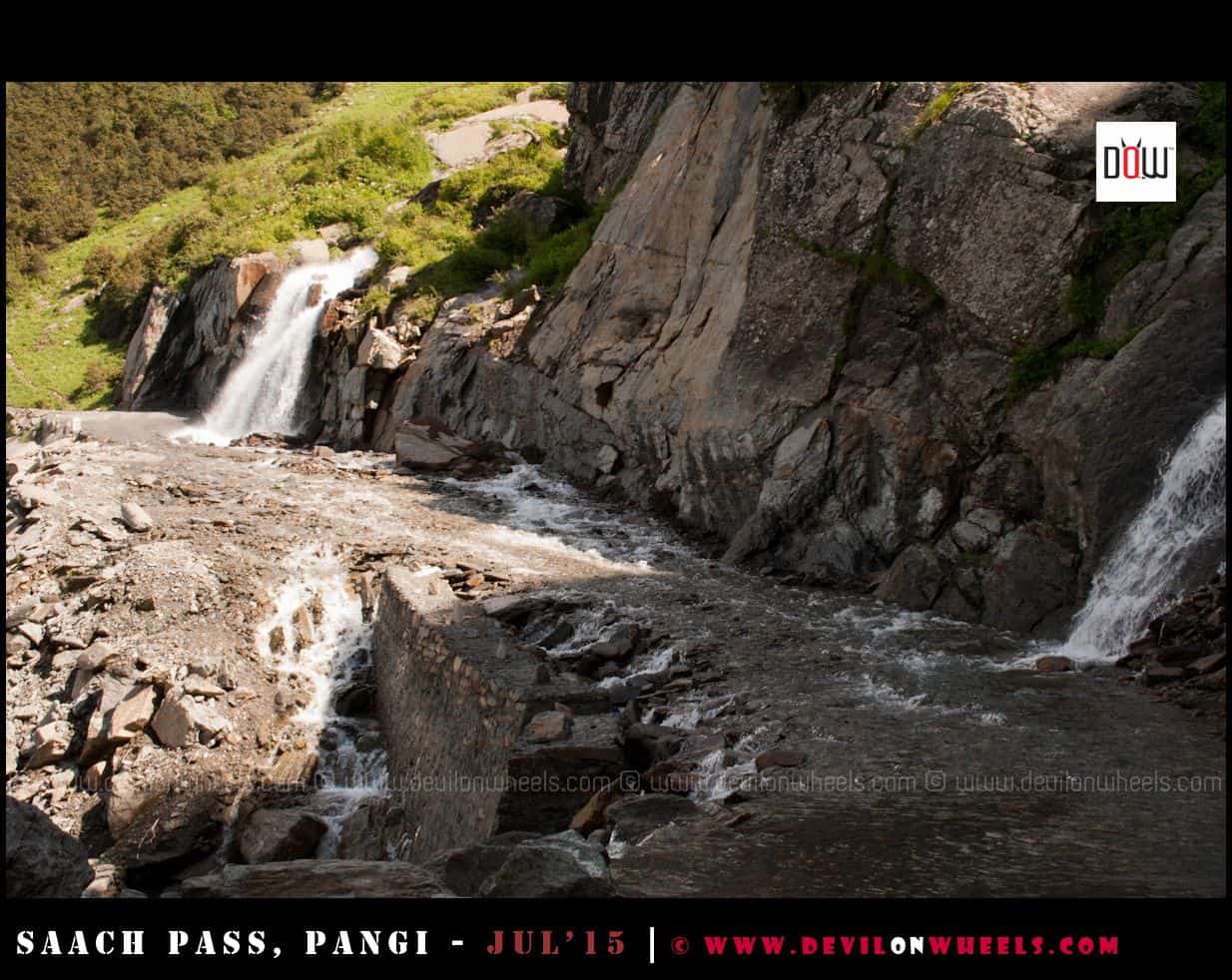
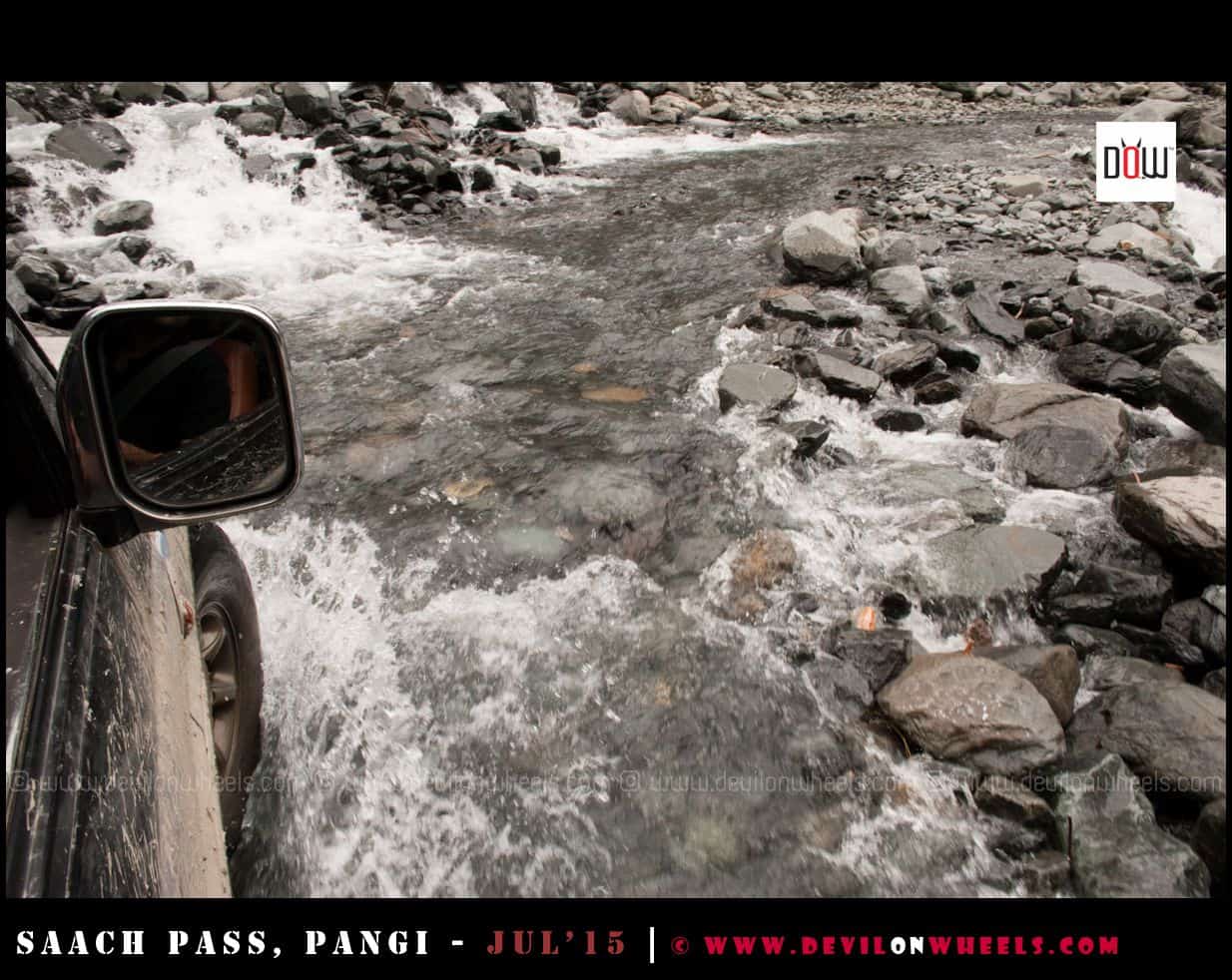
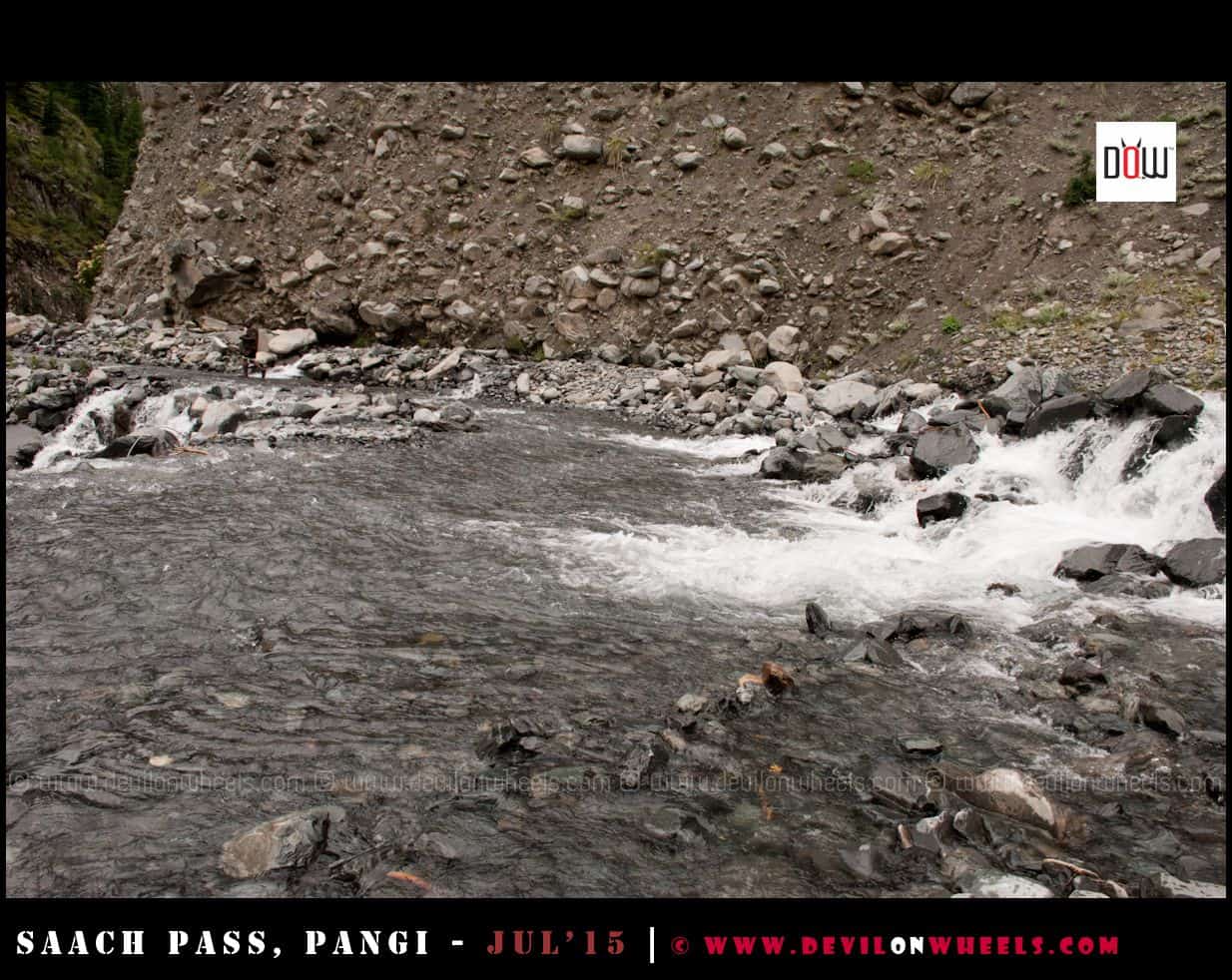

What Are the Road Conditions for Sach Pass in July?
Quick Answer: Delhi to Bairagarh is mostly good tarmac. From Bairagarh to Killar over Sach Pass there is effectively no road, just rock, boulders, slush and live water crossings for about 76 km. Killar to Udaipur is a dirt track with two violent nallahs. From Udaipur onward via Tandi you are back on reasonable roads.
July is monsoon season, and the road conditions vary dramatically from section to section. Here is a detailed breakdown based on my trip. Keep in mind that conditions can change from one week to the next during monsoon, so always check for the latest updates before you go.
- Delhi to Pathankot to Banikhet: Mostly excellent toll highway, then good with a few average sections and potholes near Banikhet.
- Banikhet to Koti (via Chamera Lake): Mix of good and average roads.
- Koti to Tissa to Bairagarh: Roads are mostly bad with few average patches. Between Tissa and Bairagarh, there are some landslide points and tricky sections along with a few water crossings. Drive with care here.
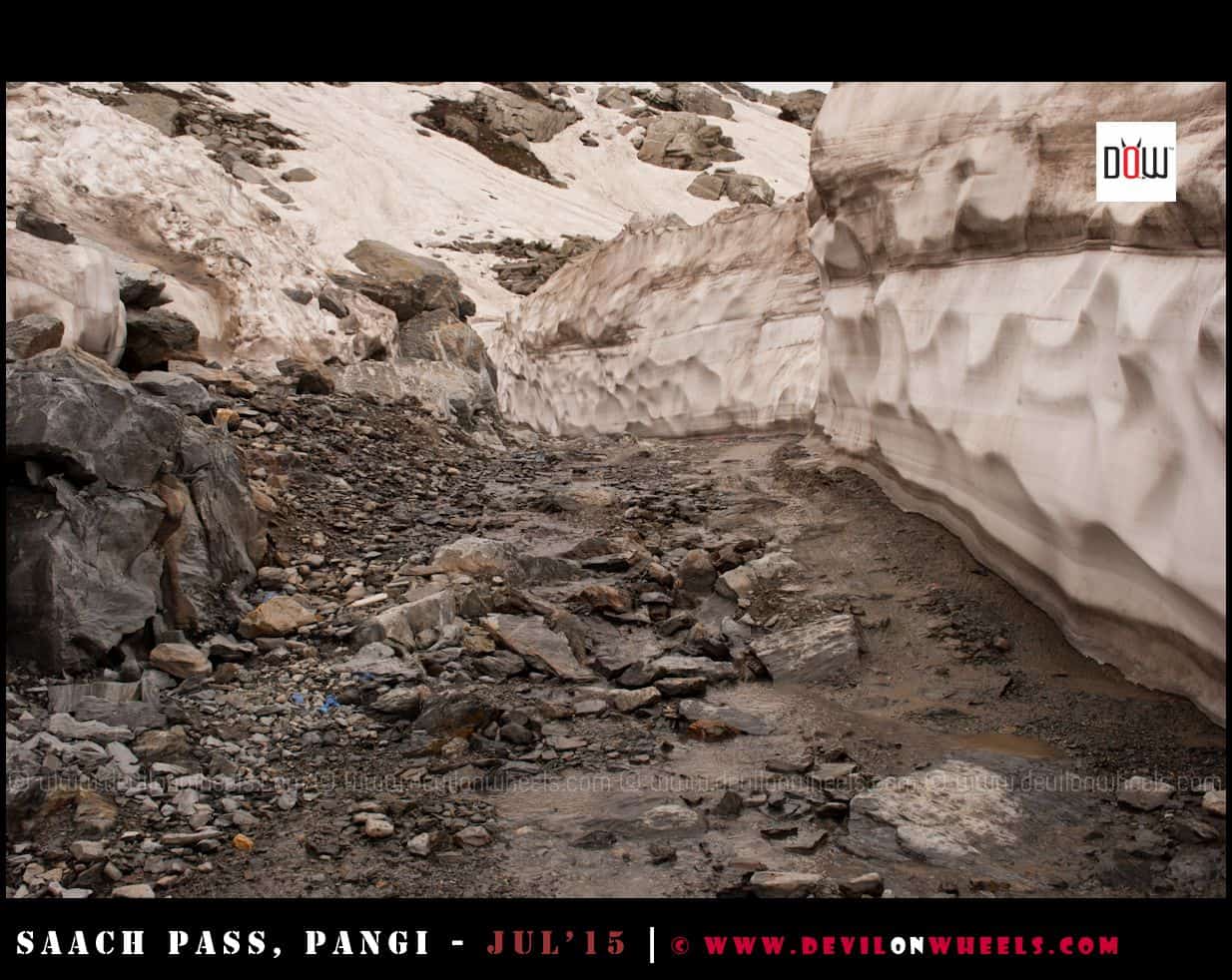
- Bairagarh to Satrundi to Sach Pass: Mostly non-existent roads, rocks, boulders on road, multiple gushing water crossings, landslide points, slush near the pass and some very tricky sections. Quite difficult, I will say.
- Sach Pass to Bagotu to Killar: Again mostly non-existent road especially till Bagotu nallah which was totally flooded. The road on the other side of Sach Pass was extremely pathetic. No other word for it. Might destroy a sedan completely. Both XUV and Terrano struggled a lot in water crossings, big boulders, snow, and slush.
- Killar to Cherry to Purthi to Tindi: No roads, dirt track but is OK to drive with average conditions and a couple of water crossings.
- Tindi to Madgran to Udaipur: Again no roads, dirt track, slush, couple of very heavy/violent water crossings including Madgran. 2026 note: the Jahalma Nallah crossing on this stretch has been repeatedly cut this monsoon. Verify before committing.
- Udaipur to Trilokinath to Tandi: Many patches of good tarred roads and smooth sailing. A couple of places have average and bad sections.
- Tandi to Sissu to Khoksar: The majority of sections are good but there are a few sections which are narrow, with slush and very bad especially for small cars.
- Khoksar to Gramphu to Rohtang Pass: Quite bad roads, some sections are very rough especially almost up to a few km before Rohtang Pass. 2026 note: If you take the Atal Tunnel from Sissu, you bypass this entire Rohtang stretch.
- Rohtang Pass to Marhi to Manali to Kullu to Aut: Mostly very good roads except for Rohtang Pass to Marhi which has a couple of bad sections.
- Aut to Banjar to Ghiyaji/Jibhi to Shoja: Narrow road with a mix of good and average roads.
- Shoja to Jalori Pass to Ani: Quite bad at places with slush on the road which made it more difficult. On the other side of Jalori Pass towards Ani, still fine with a few bad sections.
- Ani to Khanag to Sainj to Kingal: Mostly good roads.
- Kingal to Narkanda to Shimla to Delhi: Smooth sailing while passing through the regular route of Shimla – Mashobra to Delhi.
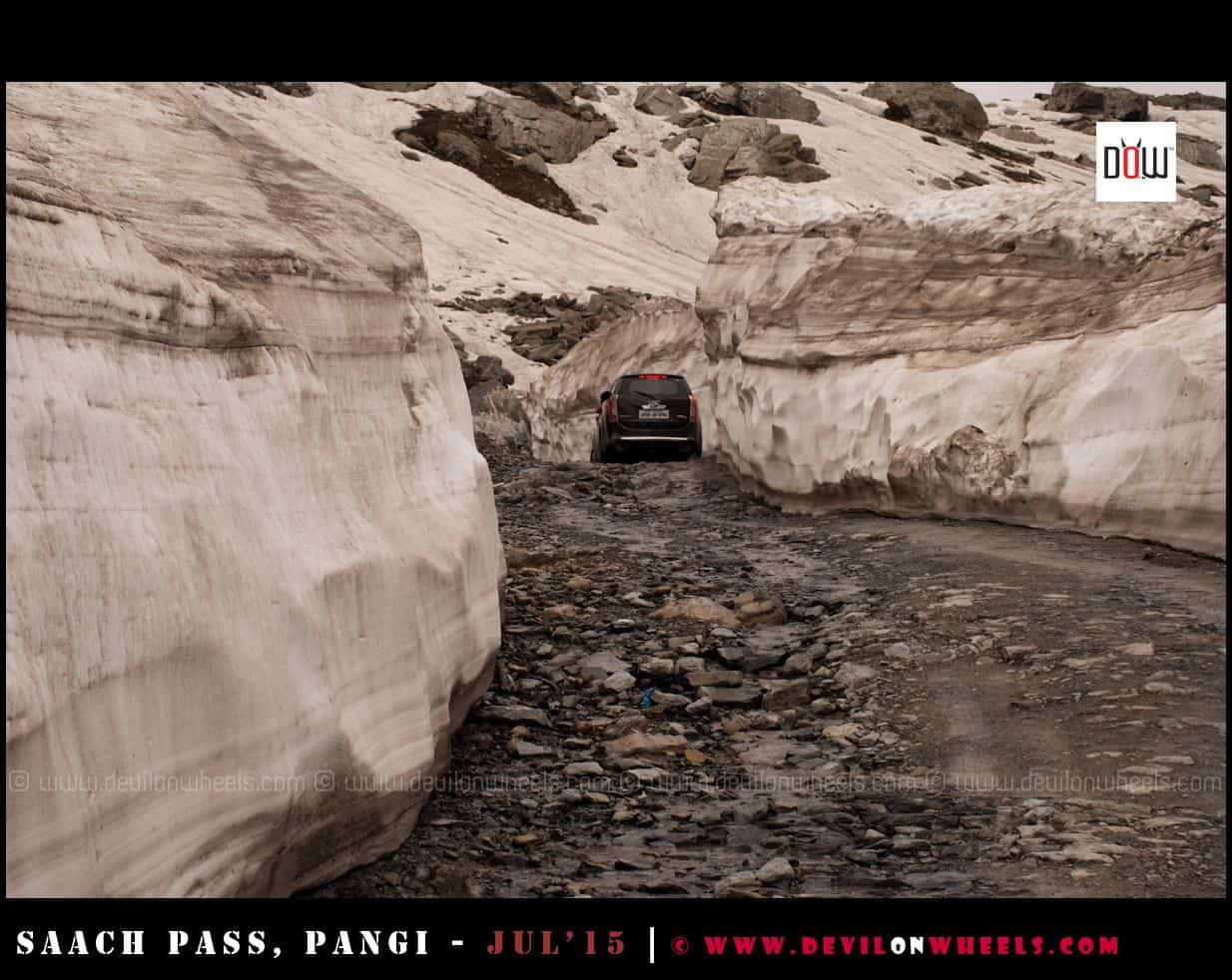

How Is the Water Crossing Situation at Sach Pass in July?
Quick Answer: The two big ones are Bagotu Nallah between Sach Pass and Killar, and Madgran Nallah between Tindi and Udaipur. In July both are knee-deep at 7 AM and can be waist-deep and dangerous by 2 PM, because snowmelt and afternoon rain feed them through the day. Cross before noon, always.
This is probably the most important thing to understand about a July trip to Sach Pass. The water crossings are at their peak intensity during monsoon. Here is what you need to keep in mind.
The biggest nallahs on this route are Bagotu Nallah (between Sach Pass and Killar) and Madgran Nallah (between Tindi and Udaipur). Both of these can be dangerously swollen by afternoon in July. During our trip, Madgran was one of the longest water crossings I ever faced, but it was doable because we crossed early. However, vehicles that attempted it in the afternoon got stuck for hours.
Water crossing tips for July:
- Always cross before noon. The nallahs swell as the day gets warmer and snowmelt increases.
- If you are unsure about the depth, wait and watch another vehicle cross first.
- Keep your engine revving and do not stop mid-stream. Stopping can flood your exhaust.
- For bikers, check my detailed guide on tips for water crossings on a motorcycle.
- Carry a tow rope. You might need it, or someone else might need yours.
What About Mobile Network and Phone Signals on the Sach Pass Route?
Quick Answer: Only BSNL works beyond Bairagarh, and even that is erratic. Airtel, Jio and Vi all die after Bairagarh and do not return until Tandi. There is zero signal at Sach Pass top. Carry a BSNL SIM, and tell people at home you will be offline for roughly two days.
I was carrying Airtel Postpaid and BSNL Postpaid connections, while a Vodafone Postpaid connection was with some friends. Here is what we found.
All three networks were working mostly through all the routes up to Bairagarh. Then, there was no signal of Airtel or Vodafone up to Tandi. In Killar, by evening, BSNL started to work, but the connection is erratic. Udaipur had signals but then in between no signals. Jalori Pass too had signals though a bit weak for all the connections.
2026 Update: Jio and Airtel have expanded coverage in some parts of Himachal, and Killar may have improved connectivity. However, the stretch from Bairagarh to Killar via Sach Pass remains mostly a dead zone for all networks except BSNL. Always carry a BSNL SIM as backup. Data connectivity was mostly limited to 2G, with 4G only at a few places where signals were present.
Travel Tip: Do not forget to carry these 40 must-have things for a self-drive trip to the Himalayas.
Where to Get Fuel on the Sach Pass Route?
Fuel availability is a critical concern on this route. There are no fuel pumps between the Tissa/Bhanjraru area and Tandi on the Manali – Leh Highway. That is a stretch of roughly 200+ km with zero fuel stations. We filled up the fuel before Bairagarh, somewhere near Tissa, and then after that, we could spot a fuel pump only at Tandi.

Keep in mind that there is an Indian Oil fuel pump near Tissa/Bhanjraru area, about 65 km from Chamba town. Fill your tank to the brim here. If your vehicle has a small tank, I suggest carrying extra fuel in jerry cans. You will need at least 15-20 liters of reserve for the Bairagarh to Udaipur stretch. Riders can check my guide on how to carry extra fuel safely on a motorcycle.
How Much Does a Sach Pass Trip Cost in July?
Quick Answer: Our 5-day, 1,610 km self-drive trip worked out to about Rs 5,600 per head in a group of four. Budget Rs 5,000 to Rs 7,000 per person for a group of four, and Rs 8,000 to Rs 12,000 if you are solo or a couple, since fuel and rooms no longer split as well.
Our 5-day trip covering about 1,610 km cost us approximately Rs 5,600 per head including all expenses. This was for a group of friends sharing vehicles, so the per-person cost was quite reasonable. Here is a rough breakdown of what to expect.
Budget estimate per person (group of 4, self-drive, 5 days):
- Fuel: Rs 2,000 to Rs 2,500 (depending on vehicle mileage)
- Accommodation: Rs 600 to Rs 800 per night (sharing basis, budget hotels). Hotel rooms at Bairagarh go for Rs 1,200 to Rs 1,500 per room, Killar hotels for Rs 1,000 to Rs 2,000 per room (as of recent reports, verify locally for current rates).
- Food: Rs 300 to Rs 500 per day at dhabas and local restaurants
- Tolls: Rs 500 to Rs 700 (Delhi to Pathankot and back, FASTag rates may vary)
- Miscellaneous: Rs 300 to Rs 500
- Total per person: Rs 5,000 to Rs 7,000 (for a 5-day trip in a group of 4)
If you are traveling solo or as a couple, the per-person cost will be higher, around Rs 8,000 to Rs 12,000, as you cannot split fuel and accommodation as efficiently. Shared taxis from Chamba to Killar cost around Rs 1,000 to Rs 1,200 per person. There is also a bus now. HRTC restored its direct Chamba to Killar service over Sach Pass on 1 July 2026 after an eleven-month suspension. It runs daily in season, leaves Chamba at 5 AM and Killar at 9 AM, and the one-way fare is about Rs 432. The service is seasonal, roughly July to mid-October, so do confirm with HRTC before you count on it.
What Should You Pack for a July Trip to Sach Pass?
July means rain, slush, and unpredictable weather. Here are the essentials I suggest you carry beyond the standard self-drive checklist.
- Rain gear: Good quality raincoat, waterproof shoes/gumboots (not just trekking shoes)
- Warm layers: Temperature at Sach Pass top (14,500 feet) can drop to near freezing even in July
- Tow rope and basic tools: You may need to help others or get help yourself
- Extra fuel: Jerry can with 15-20 liters minimum
- Dry food and water: Dhabas are sparse between Bairagarh and Killar
- BSNL SIM card: The only network that works in Pangi Valley
- First aid kit: Including medicines for altitude sickness, pain relief, and diarrhea
- Torch/headlamp: Power cuts are common in Killar and Bairagarh
Other Important Tips for a Sach Pass Trip in July
- Bairagarh and Killar both have decent hotels and also liquor shops, though preferred brands can be an issue.
- Once you cross Bairagarh, you will find a dhabha at Satrundi checkpost, but no paranthas, so pack your food from the hotel. After crossing Sach Pass, you get to eat around Bagotu Nallah before Killar. Beyond Killar in Pangi Valley, you will find dhabhas at Purthi and then at Udaipur only.
- Killar is the headquarters of Pangi Valley and does have an SBI ATM.
- You can get good Rajma from Baban or Purthi villages, and peas from Udaipur in Lahaul, in case you want to carry some back home.
- Whenever making a trip to Sach Pass or Pangi Valley, do leave early in the day so that water crossings have less water in them, with Madgran being the most violent along with Bagotu nallah.
- Bhandari Bhojnalya at Udaipur is a great place to eat homely food. We loved it a lot.
- If you want to explore more of Pangi, you can also drive from Killar to Kishtwar via what is called the world’s most dangerous road. That is a story for another day.
- Road widening work has been ongoing in several sections, so expect some delays due to construction.
Is Sach Pass Safe in July?
Quick Answer: Sach Pass itself is manageable in July with a high-clearance vehicle and an early start. The bigger 2026 risk is the Udaipur – Killar road on the Lahaul side, where a 24 July 2026 rockfall killed 13 people. Travel in a convoy, keep a buffer day, and treat a road-closure day as normal, not as bad luck.
Let me be honest here. Sach Pass is one of the most challenging routes in Himachal Pradesh regardless of the month. In July, the monsoon adds an extra layer of risk with swollen nallahs, active landslides, and reduced visibility due to fog and rain. However, it is also when the pass is most accessible and when the landscape is at its greenest.
I want to give you the 2026 numbers rather than a vague warning, because this has been a rough monsoon in Himachal. The season began around 30 June 2026, and by the second week of August the state had recorded roughly 65 rain-related deaths, with about 185 roads shut on a single bad day and 14 of those in Chamba district alone. The India Meteorological Department has issued flash flood advisories for nine districts including Chamba. You can check current warnings yourself on the IMD portal before you leave.
And this is not new for Pangi. In the 2025 monsoon, heavy rain in late August wrecked the valley’s lifeline SKTT road along with the Bailey bridge at Dharwas Nallah, cut off telecom for four days, and left residents at Udaipur and Bairagarh stranded and asking for an air force airlift. Hence, when I say carry a buffer day, I do not mean it as a formality, my friend. In case the road shuts behind you, you may genuinely be sitting in Killar for two or three days.
Please take a sensible call for yourself and your loved ones waiting for your safe return. If you have experience driving on mountain roads and your vehicle has the ground clearance for it, July is a perfectly fine time to do this trip. If this is your first time on such roads, I strongly suggest going in a convoy of 2-3 vehicles and sticking to the early morning rule for water crossings.
Also keep in mind that there is no hospital or mechanic between Bairagarh and Killar (about 76 km of the most difficult terrain). Carry a first aid kit, basic tools, and let someone at home know your rough plan and expected check-in times.


Related Reading: More Pangi Valley and Himachal Guides
- The Most Complete Guide to Pangi Valley
- Sach Pass – Pangi Valley: Most Common Itinerary
- How to Make a Sach Pass Trip in 4-5 Days
- Sach Pass Trip Travel Guide: Detailed Day by Day Itinerary
- Killar to Kishtwar: The World’s Most Dangerous Road
- Pangi Valley: The Last Frontier of Himachal, Complete Offbeat Guide
You should always carry your water bottle and refill it as many times as you need water. It will not only keep you hydrated always, but you will also help in saving the Himalayas from plastic garbage. Remember, every tiny step counts and your step in this direction can help save the Himalayas too !! 🙂 🙂
Conclusion
I hope this Sach Pass in July article helps you plan a trip on this adventurous route of Himachal. I have covered the 2026 opening date, the route plan, road conditions section by section, water crossing tips, fuel availability, budget details, and phone signals, along with the monsoon incidents you must factor in this year.
If you have done the Sach Pass trip in July or any other month, I would love to hear about your experience. Feel free to share your tips in the comments section so that other travelers can benefit. And if you know your friends or family are planning a trip to Sach Pass, do share this article with them to help them make a memorable Pangi Valley trip 🙂 …
For other travel queries, discussions, and finding travel partners for Sach Pass or Pangi Valley, please check the DwD Community. You can also check the DoW Travel Calendar from the link in the main menu of the website for upcoming trips.
Have a travel question?? You can subscribe to my YouTube channel and leave a comment to ask your travel questions about traveling to the Himalayas.
Last Updated: August 2026
Frequently Asked Questions
When did Sach Pass open in 2026?
Sach Pass opened for light motor vehicles on Monday, 12 May 2026. The Public Works Department’s Pangi and Churah divisions cut through the final stretch of snow late on 11 May, roughly a month ahead of the usual schedule, ending a seven-month winter closure. Officials note the pass normally opens by mid-June and at the earliest by end of May.
Is Sach Pass open right now, and how do I check the live road status?
Sach Pass is open through the season from mid-May to mid-October, but during monsoon it can shut for a day or two at a time after landslides. There is no official live status page. The reliable checks are the Chamba district administration, the PWD Pangi division office, HRTC’s Chamba bus stand for whether the Killar bus ran that morning, and your hotel at Bairagarh.
Is there a bus to Killar over Sach Pass?
Yes. HRTC restored its direct Chamba to Killar bus over Sach Pass on 1 July 2026 after an eleven-month suspension. It runs daily in season, departing Chamba at 5 AM and Killar at 9 AM, with a one-way fare of about Rs 432. The service is seasonal, roughly July to mid-October. Shared taxis from Chamba cost around Rs 1,000 to Rs 1,200 per person.
Is Sach Pass open in July?
Yes, Sach Pass is open through July every year. It typically opens between mid-May and mid-June once the PWD finishes snow clearing, so by July the route from Chamba to Killar has been running for weeks. Road conditions can still change quickly due to monsoon rains and landslides, so always check the latest status before starting your trip.
What is the weather like at Sach Pass in July?
Expect roughly 5 to 15 degrees C during the day at the top of Sach Pass in July, dropping close to freezing at night, with monsoon rain on most afternoons. Killar, much lower at 2,590 m, is noticeably warmer and more humid. Fog and rain reduce visibility on the pass, which is another reason to cross in the morning.
Can a sedan go to Sach Pass?
I would strongly advise against taking a sedan to Sach Pass, especially in July. The road between Bairagarh and Killar is practically non-existent at many points, with large boulders, deep slush, and aggressive water crossings. Even our SUVs (XUV and Terrano) struggled significantly. An SUV or 4×4 with high ground clearance is the minimum recommended vehicle.
How many days do you need for a Sach Pass trip from Delhi?
A minimum of 5 days is recommended for a Sach Pass trip from Delhi. Our itinerary was: Day 1 Delhi to Bairagarh, Day 2 Bairagarh to Killar via Sach Pass, Day 3 Killar to Manali, Day 4 Manali to Jalori Pass, Day 5 Jalori Pass to Delhi. If you want to explore Pangi Valley villages around Killar, add 1-2 more days. You can also refer to my guide on how to make a Sach Pass trip in 4-5 days.
What is the best time to visit Sach Pass?
Sach Pass is open from roughly mid-May or mid-June to mid-October. The best months for stable weather are September and early October, once the monsoon has receded. July and August offer the greenest landscapes but also the most challenging water crossings and the highest landslide risk. Late May and June are possible but snow patches may still remain near the top. If you are planning a late-season trip, my dedicated guide to the last window to cross Sach Pass before winter has the exact 2026 shutdown dates.
Is there mobile network at Sach Pass?
There is no mobile network at Sach Pass top or on most of the route between Bairagarh and Killar. Only BSNL works intermittently in Killar and a few villages in Pangi Valley. Airtel, Jio, and Vodafone do not work in this stretch. Always carry a BSNL SIM card as a backup when traveling in this region.
Is a permit required for Sach Pass?
No, Indian nationals do not require any permit to visit Sach Pass or travel through Pangi Valley as of 2026. There is a police check post at Satrundi where vehicle details are recorded, but no formal permit is needed. Foreign tourists may need an Inner Line Permit for certain areas of Pangi Valley.
Where to stay near Sach Pass?
The two main stay options on the Sach Pass route are Bairagarh (before the pass) and Killar (after the pass). In Bairagarh, Chamunda Hotel and Mannat Homestay are decent budget options with rooms going for Rs 1,200 to Rs 1,500 per night. In Killar, you have several hotels and guest houses with rooms from Rs 1,000 to Rs 2,000 (verify locally for current rates). There is also a PWD rest house in Cherry village between Killar and Tindi.
What is the altitude of Sach Pass?
Sach Pass is situated at an altitude of 4,420 meters or approximately 14,500 feet above sea level, on the Pir Panjal Range. State officials quote 4,500 m and Wikipedia lists 4,414 m, so treat the figure as approximate. While Acute Mountain Sickness is less of a concern here compared to Ladakh passes, since you spend limited time at the top, carry basic AMS medication as a precaution.
