


Are you already planning a Spiti Valley trip and wondering whether the detour into Pin Valley National Park is worth it? If you have heard faint whispers about snow leopards, herds of ibex on the cliffs, and the cleanest green meadows you will ever see in a cold desert, then yes, my friend, it absolutely is. Pin Valley is one of those offbeat corners of Spiti that most people drive past on their way to Kaza without realising what they are missing. In this guide I will cover everything you need to plan a visit in 2026, from how to reach Mud village from Kaza, to what wildlife you can actually expect to see in summer versus winter, permits, homestays, fuel, and a clear honest answer on the snow leopard question that everyone asks me.
I have travelled through Spiti several times over the years, and Pin Valley remains one of the few places that still feels genuinely quiet. Keep in mind that this is a protected national park, not a tourist circuit, so the experience here is more about slow exploration than ticking boxes. Let us get into the details.
Quick answer: Pin Valley National Park is about 50 km (2 to 2.5 hours) from Kaza via Attargoo. Best season is June to early October. Indian visitors need a valid photo ID, and the Forest Department has been charging a park entry fee since June 2025 (see the permits section below). There is no petrol pump, ATM or mobile signal in the valley, so fill up and withdraw cash in Kaza.
- Base: Mud village, about 3,800 m (12,500 ft), road head of the valley
- Road: 50 km from Kaza, last 30 km patchy. SUV preferred, hatchback doable in dry weather
- Stay: homestays at roughly Rs 800 to Rs 1,500 per person with dinner and breakfast
- Last updated: October 2026
What is Pin Valley National Park and Why Visit It?
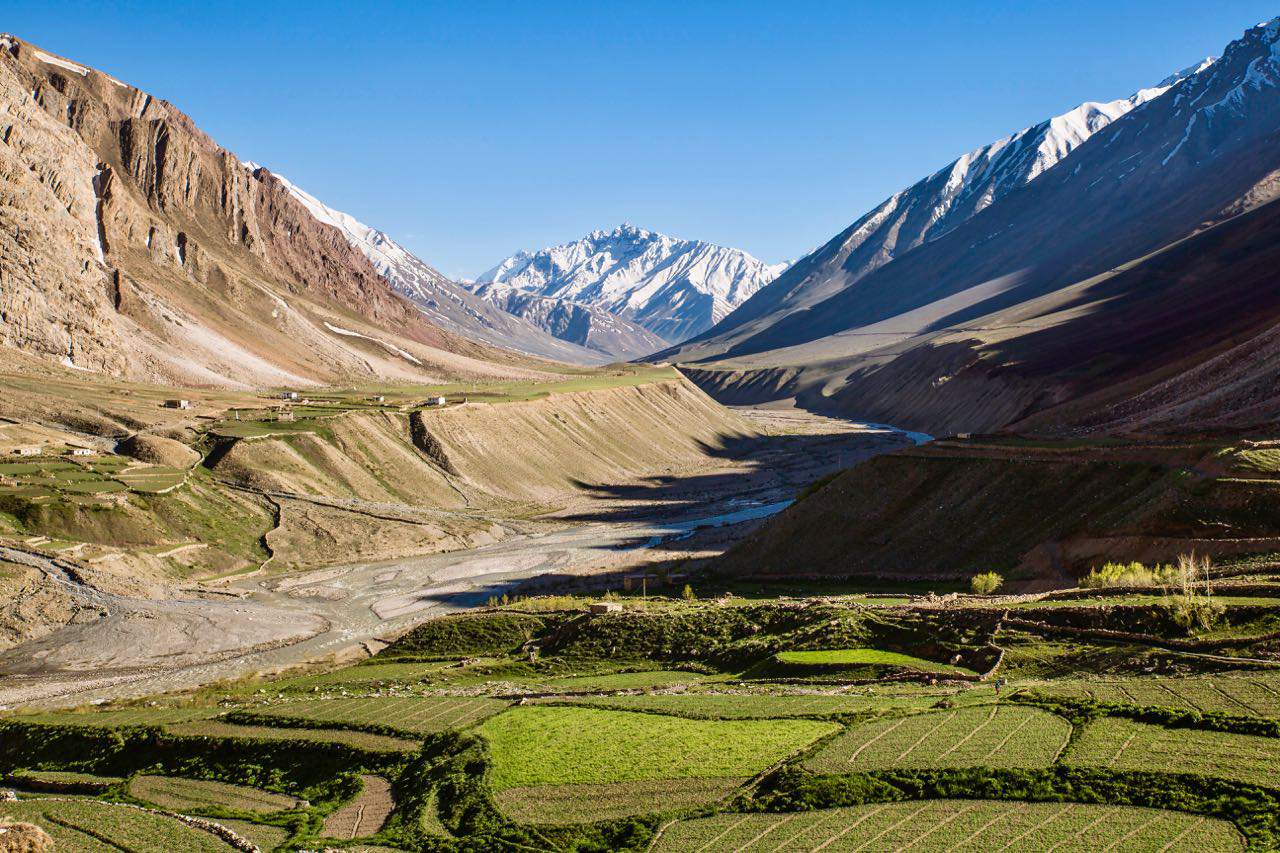
Pin Valley National Park is a high-altitude cold desert sanctuary in the Lahaul and Spiti district of Himachal Pradesh. It was established in 1987 and, as recorded on Wikipedia, the core protected zone covers about 675 square km, with the buffer extending the overall area to roughly 1,150 square km. The park stretches from around 3,500 metres (about 11,500 feet) near Ka Dogri at its lower edge to over 6,000 metres (around 20,000 feet) at its highest peaks. It forms a natural link between the cold desert of Spiti and the greener Bhaba Valley of Kinnaur on the other side of the mountains.
What makes Pin special is that it is one of the most important snow leopard habitats in India. As per the Lahaul and Spiti district administration, the park protects the endangered snow leopard along with the ibex and bharal, and the snow leopard density here is among the highest in the entire state. The valley is also home to the Pin River, which carves the whole landscape, the tiny village of Mud (also spelled Mudh) at the road head, and the famous Pin Bhabha and Pin Parvati trek routes that start from here. If you are someone who likes wildlife, raw mountain scenery, and villages where life has barely changed in decades, this is your kind of place.
What Wildlife Can You See in Pin Valley National Park?
The headline animal here is the snow leopard, with an estimated dozen or so resident in the park, but the realistic wildlife you will see in summer is the Himalayan ibex and the bharal (blue sheep) grazing on the high slopes. Other species include the Tibetan wolf, red fox, marten, weasel, pika, and birds like the golden eagle, bearded vulture, Himalayan snowcock, chukor, griffon, and Himalayan chough. The park also protects rare alpine medicinal plants.
Let me be honest about expectations here, because this is where a lot of generic blogs oversell. In the summer months of June to September, when the road is open and most travellers visit, you are very likely to see herds of Himalayan ibex and bharal on the cliffs above the Pin River, especially in the early morning and late evening. The blue sheep in particular are quite commonly spotted from the road itself near Mud. Birdlife is excellent, with golden eagles and bearded vultures (lammergeier) riding the thermals overhead. The snow leopard, however, is almost never seen in summer. These cats stay high up near the ridgelines where the ibex are, and the dense vegetation and rockfall make them nearly invisible.
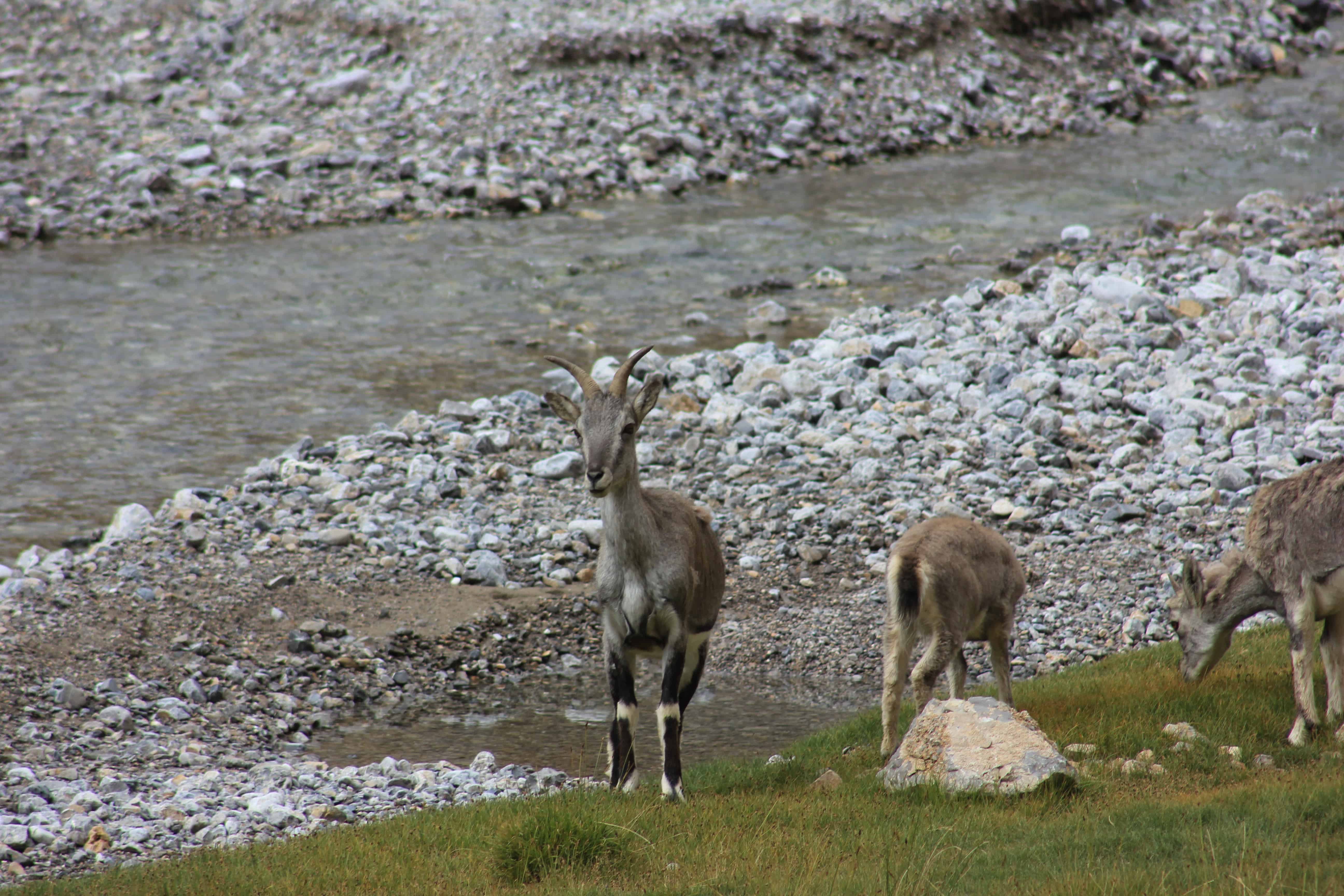
The bharal are the key to the whole ecosystem. Snow leopards follow the blue sheep, so wherever the bharal graze, the cats are not far behind, even if you cannot see them. Keep this in mind when you scan the slopes with binoculars. Carrying a decent pair of binoculars is honestly the single best thing you can do to improve your wildlife experience here.
Can You Actually Spot a Snow Leopard in Pin Valley?
You can, but realistically only in deep winter (January to March), not during the summer travel season. When heavy snow covers the high ridges, the ibex and bharal descend closer to the villages to graze, and the snow leopards follow them down to within sight of human settlements. This is when the famous Spiti snow leopard expeditions run, mostly based out of Kibber and Chicham village rather than Pin Valley itself.
Here is some context that genuinely surprised me. In 2025 the Himachal Forest Department, working with the Nature Conservation Foundation, camera-trapped 44 unique adult snow leopards and estimated the total state population at around 83, which is nearly double the 2021 estimate of 51. The highest densities were recorded in Spiti and Pin Valley. The slopes around Kibber and Chicham alone are believed to hold at least three adult leopards. So the cats are genuinely here in good numbers, which is a real conservation success story. You can read more about the park and its protected wildlife on the official Spiti Wildlife Division page.


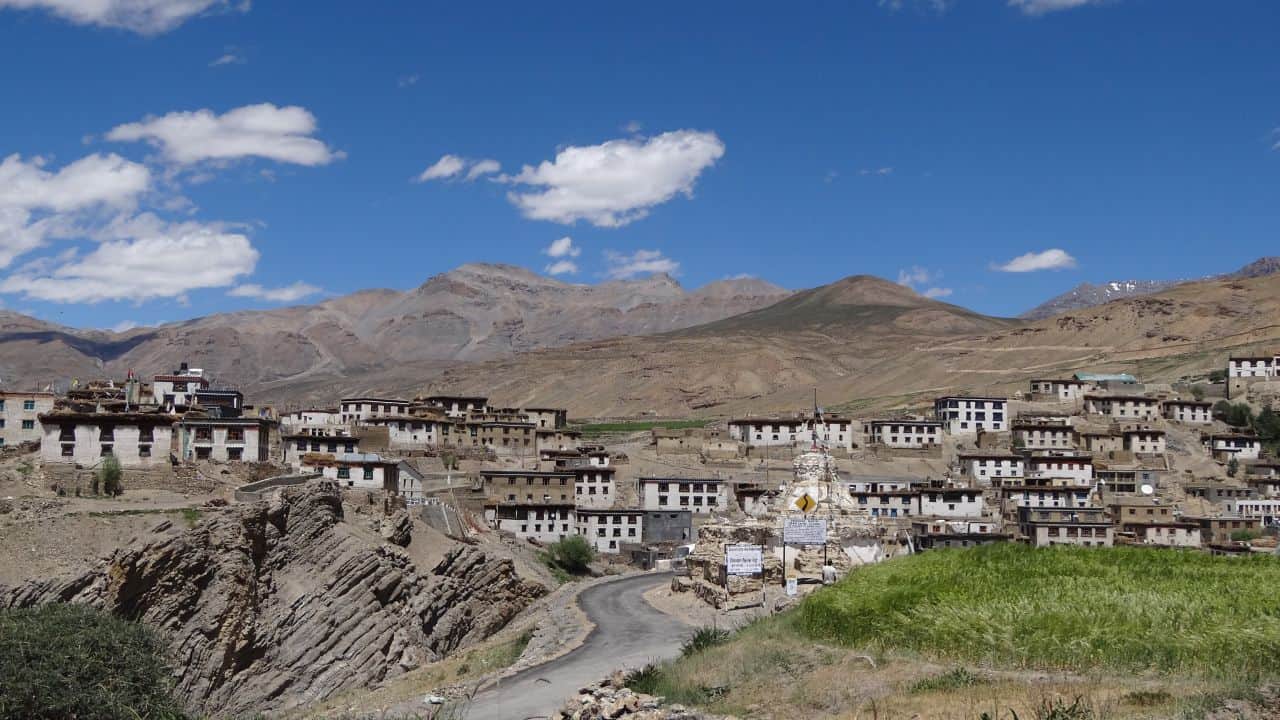
That said, no honest operator will ever guarantee a sighting. Even on a 10 to 14 day dedicated winter expedition with expert spotters and high-powered scopes, success depends on snowfall, weather, the mating season, and the movement of prey. The prime spotting locations in winter are the Kibber wildlife sanctuary, the Kibber-Chicham plateau, the slopes between Kee, Gete and Tashigang, the Shilla Nalla area, and the plateaux around Langza, Hikkim, Komic, Demul, and Lalung. If a snow leopard is your single goal, you should plan a winter trip, not a summer Pin Valley detour. For a deeper look at how these winter wildlife trips work, you can read my guide on the snow leopard safari and Hemis National Park in Ladakh, which covers similar territory and tracking methods.
How to Reach Pin Valley and Mud Village from Kaza
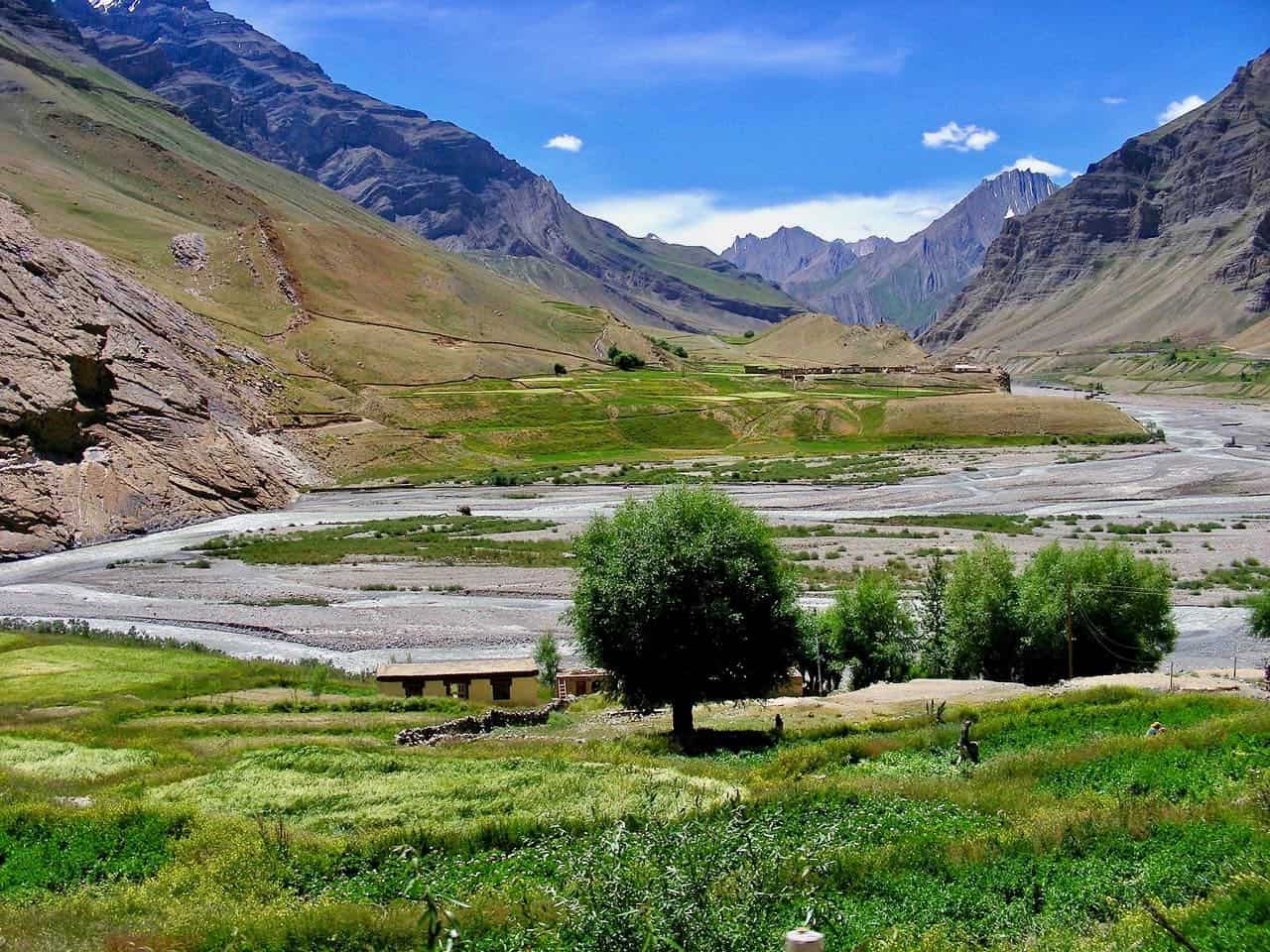
Mud village, the road head of Pin Valley, is about 50 km from Kaza and takes roughly 2 to 2.5 hours by road. From Kaza you drive on the main road towards Tabo and Dhankar for about 20 km until you reach Attargoo (also spelled Atargu). Here you turn right, cross the bridge over the Spiti River, and follow the Pin River upstream for another 30 km to Mud.

The first stretch up to Attargoo is on the well-maintained main Spiti road. After you turn into Pin Valley, the road becomes patchy and partly unpaved, though it is steadily being improved year after year. In good summer weather a regular hatchback or sedan can manage it carefully, but a higher-clearance vehicle or SUV makes the drive far more comfortable. As of 2026 the road is generally open from around June to early October, after which snow starts blocking the upper sections. Always check current conditions before you set off, since landslides and washouts are common in this terrain.
By Bus, Shared Taxi, or Private Taxi
There is a local bus that connects Kaza to Mud. As per the schedule that has been running in recent years, the bus departs Kaza at around 4 PM and reaches Mud by about 6:15 PM. The same bus then leaves Mud the next morning at around 6:30 AM for the return to Kaza. This means if you take the bus, you are committing to at least one overnight stay in Mud, which is honestly the best way to experience Pin Valley anyway. Do verify the current timing locally at the Kaza bus stand, as mountain bus schedules change with the season and road conditions.
For more flexibility, a private taxi for a day trip from Kaza to Pin Valley and back costs roughly Rs 3,000 to Rs 4,000, depending on how long you stay and your negotiation. If you are travelling solo or on a budget, shared taxis run between Kaza, Dhankar, and Pin Valley for approximately Rs 50 to Rs 70 per person, though these are infrequent and you may have to wait. Hiring a local driver is genuinely worth it here. They know the road, the wildlife spots, and they help support the local economy. For broader transport context, my detailed guide on planning your Spiti Valley journey via Manali covers how the whole circuit connects.
Pin Valley National Park Permits and Entry Fees in 2026
As of 2026, Indian tourists do not need an Inner Line Permit for Pin Valley. You only need to carry a valid government photo ID, since the park lies in a sensitive border region and your details may be checked at ITBP or police check posts in Spiti. Foreign tourists, however, do require an Inner Line Permit, which can be obtained from the SDM office in Kaza, Reckong Peo, or Shimla, because the park lies within roughly 40 km of the international border.
The park is no longer free to enter. As per a Tribune report dated 10 June 2025, quoting the Kaza Forest Division (DFO Kaza), the Forest Department introduced a daily entry fee for Pin Valley, Kibber and Chandratal of Rs 150 per Indian tourist and Rs 500 per foreign national, following a Himachal High Court direction. Activity fees apply on top, for example Rs 500 per day for personal shooting and Rs 200 to Rs 500 for tents. Keep in mind that a June 2026 report (Curly Tales) says Himachal’s national park rates have been raised statewide to Rs 300 (Indians) and Rs 600 (foreigners) per day for the first three days, with separate camera fees. I could not confirm from an official notice whether this applies to Pin Valley, and the old “Rs 50 still camera, Rs 200 video” figures I once quoted here are outdated. Hence, carry cash, ask at the forest check post, and verify the current rate with the Kaza Forest Division before you rely on any figure. If you are entering Spiti from the Kinnaur side, you will also pass through the ITBP check post at Sumdo where your ID is recorded. For first-timers confused about the whole permit and route situation, my guide on planning a Spiti trip from Shimla via Kinnaur walks through every check post on the way.
Best Time to Visit Pin Valley National Park
The best time to visit Pin Valley for a normal trip is June to September, when the road from Kaza is open, the weather is pleasant, and the valley turns surprisingly green with grazing herds and wildflowers. For snow leopard tracking, the only realistic window is the harsh winter months of January to March, which requires a dedicated, well-supported expedition rather than a casual visit.
Let me break it down month by month, because the experience changes a lot:
- June: The road opens up after winter, snow patches linger on the higher slopes, and the valley starts greening. Wildlife is active and the air is crisp. This is the start of the season and searches peak now for a reason.
- July to August: Peak summer. The meadows are at their greenest, wildflowers and medicinal plants are in bloom, and ibex and bharal are easy to spot. Keep in mind this overlaps with the monsoon elsewhere, so the approach roads through Kinnaur can see landslides even though Spiti itself stays mostly dry.
- September to early October: My personal favourite. The crowds thin out, the light turns golden, and the autumn colours are stunning. The road is usually still open. This is the best time for photography and quiet.
- November to March: Deep winter. The valley is snowbound and bitterly cold, with temperatures dropping well below freezing. This is snow leopard expedition season, but it demands serious preparation, the right gear, and an experienced operator.
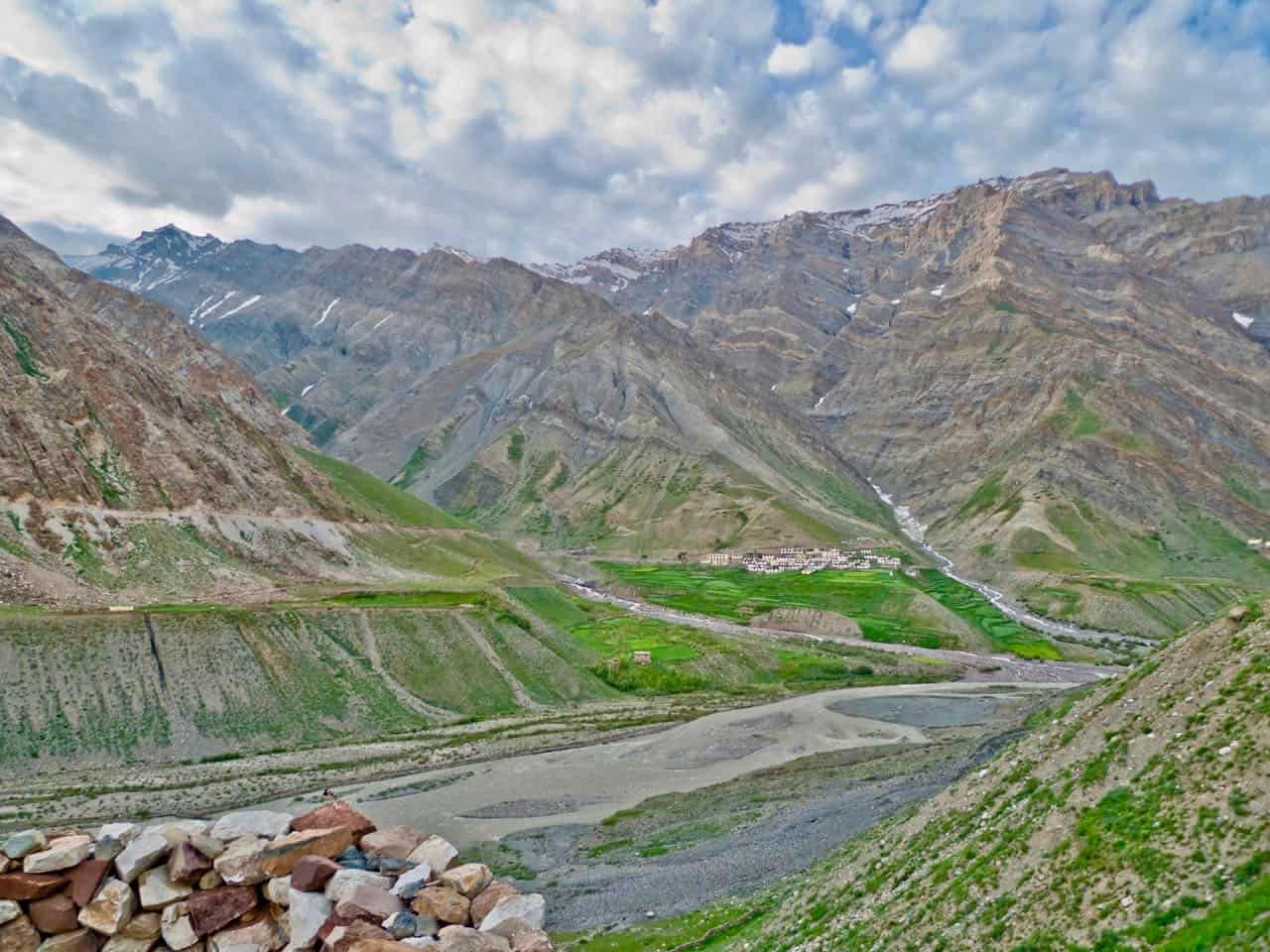
For a wider view of when to plan your overall Spiti trip, including which passes open when, do read my detailed best time to visit Spiti Valley month by month guide. And if winter Spiti tempts you, my guide on how to plan a Spiti Valley trip in winters covers the logistics and dangers of cold-season travel here.
Where to Stay in Pin Valley: Homestays in Mud Village
Accommodation in Pin Valley is concentrated in Mud village and is almost entirely simple, family-run homestays and guest houses. Expect basic but warm and clean rooms, home-cooked vegetarian meals, and shared or attached bathrooms depending on the property. Rates typically run from around Rs 800 to Rs 1,500 per person, and most homestays offer this on a per-person basis including dinner and breakfast, which is the norm in Spiti.
The Tara Guest House and the Sonam Tara Homestay are among the oldest and most well-known options in Mud, run by local families who also help arrange treks and guides. Do not expect hotels, room service, or reliable hot water on tap here. This is a remote Himalayan village, and the charm is exactly in its simplicity. The food is honest and filling, usually dal, rice, vegetables, and local breads, with the occasional plate of Maggi for the road.
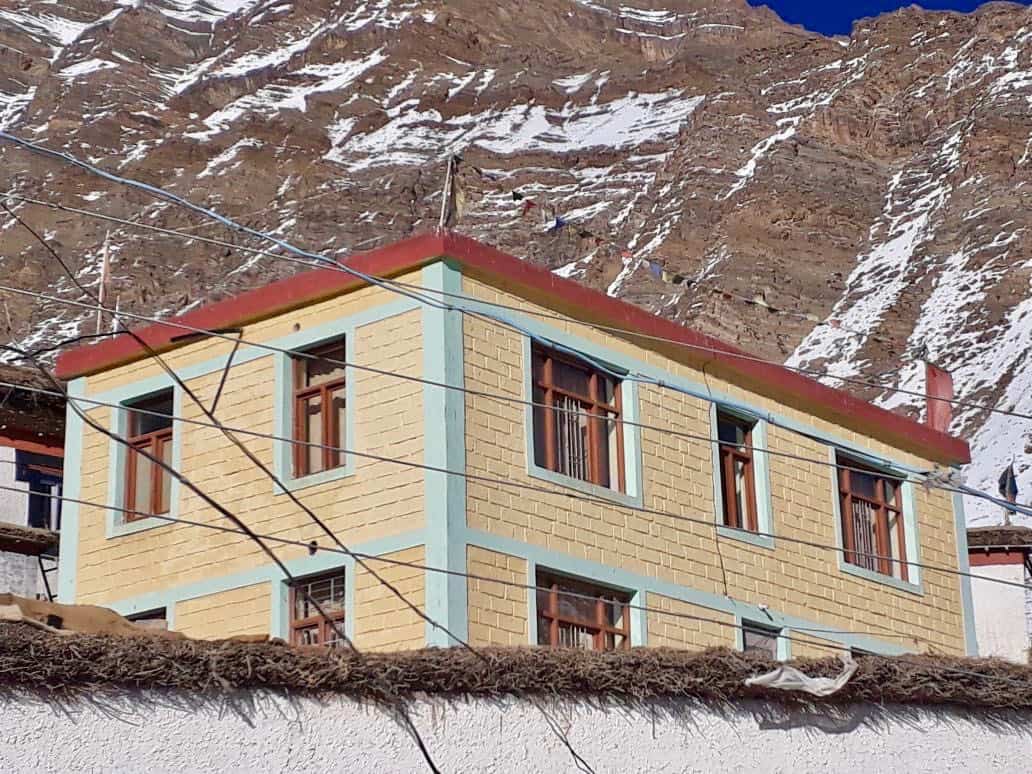
I always suggest spending at least one night in Mud rather than rushing in and out on a day trip. The valley is at its most magical in the early morning and late evening, which is also when wildlife is most active. For a full breakdown of homestay options across Spiti including Mud, Dhankar, Langza, and Kaza, you can refer to my detailed travel guide to Mud village in Pin Valley.

Fuel, Connectivity, and Practical Tips
This is the part you cannot afford to skip, my friend. Here are the essentials for Pin Valley:
- Fuel: There is no petrol pump anywhere in Pin Valley. The nearest and only fuel station for the entire region is the IndianOil pump in Kaza, which sits at about 3,740 metres and is among the highest petrol pumps in the world. Always fill your tank completely in Kaza and carry a buffer, because the round trip plus exploration adds up.
- Mobile network and internet: Connectivity inside Pin Valley is close to zero. Even in Kaza only BSNL and Jio work reliably. Inform your family before you head into Pin and do not count on any signal. Carry sufficient cash since there are no working ATMs or card machines in the valley.
- AMS and altitude: Mud village sits at around 3,800 metres. Acute Mountain Sickness is a real risk if you have not acclimatised properly in Spiti first. Please take a sensible call, hydrate well, and do not push into Pin on your very first day at high altitude. Read my detailed guide on preventing AMS on a Ladakh, Spiti, or Zanskar trip before you go.
- Responsible travel: This is a national park and a fragile ecosystem. Carry back all your waste, do not feed or chase wildlife, keep a respectful distance, and avoid loud music. The DwD community follows a strict responsible travel ethic, and a place like Pin Valley deserves it more than most.
- Medical: The nearest hospital is in Kaza. Carry a basic medical kit, AMS medication after consulting your doctor, and any personal medicines, since nothing is available in Mud.
How to Fit Pin Valley Into Your Spiti Itinerary
Most travellers slot Pin Valley as a one or two night detour from Kaza, which is the natural base for all of central Spiti. Here is a simple way to add it without disrupting your overall plan:
- Day 1: Reach Kaza and acclimatise. Do not rush into Pin on the same day if you have just gained altitude.
- Day 2: Drive Kaza to Mud village (about 50 km, 2 to 2.5 hours). Stop at Dhankar monastery on the way if time permits. Explore Mud village, walk along the Pin River in the evening, and scan the slopes for ibex and bharal. Overnight in a Mud homestay.
- Day 3: Early morning wildlife watching and a short walk towards the trek trailheads, then drive back to Kaza by afternoon to continue your Spiti circuit towards Langza, Komic, Hikkim, and Key Monastery.
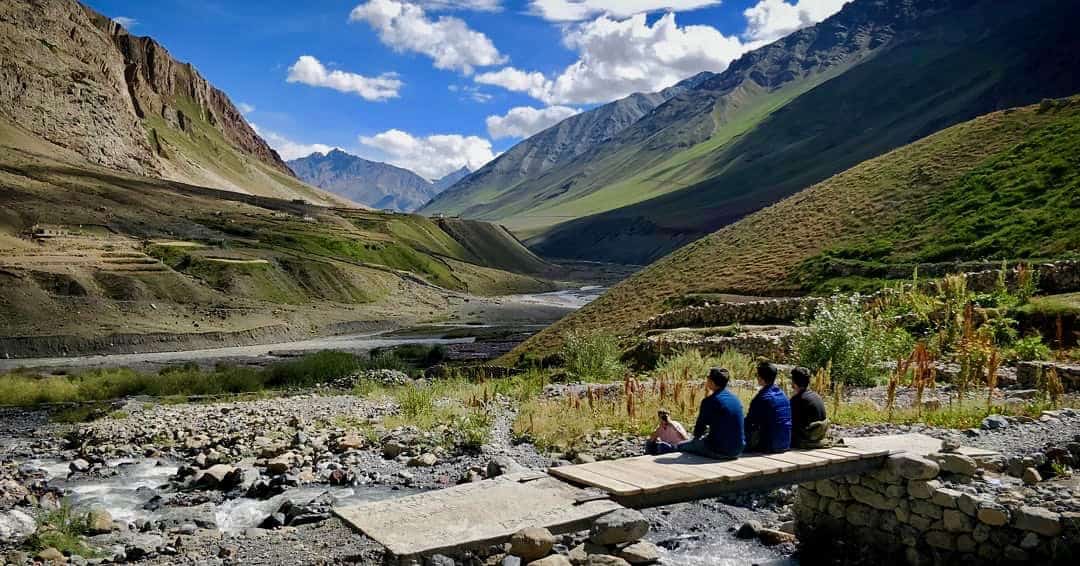
If you are a trekker, Pin Valley is also the gateway to two classic high-altitude treks. The Pin-Bhabha crossover trek (Kafnu to Mudh) crosses over from Kinnaur into Pin Valley via a 4,890m pass over 6 days, and the Pin Parvati Pass trek connects to the Parvati Valley near Kullu. Both are serious, multi-day, guided treks and not something to attempt casually, but they are worth knowing about if you want to go deeper. To plan budgets for the whole trip, my guides on calculating the cost of a Spiti Valley trip and the complete Spiti Valley budget guide for 2026 will help you do the math. If you also want to pair Spiti with a nearby valley, the Kinnaur Valley 7-day itinerary from Shimla to Chitkul connects beautifully with a Spiti loop. And if Chandratal is on your radar, check my guide on planning a trip to Chandratal Lake.
Frequently Asked Questions About Pin Valley National Park
Is Pin Valley National Park worth visiting?
Yes, especially if you are already in Spiti. Pin Valley offers a rare combination of green meadows in a cold desert, easy sightings of ibex and bharal, excellent birdlife, and a genuinely quiet village experience in Mud. It is one of the more rewarding detours from Kaza for anyone who likes nature over crowds.
How far is Mud village from Kaza?
Mud village is about 50 km from Kaza and takes roughly 2 to 2.5 hours by road. You drive 20 km towards Tabo and Dhankar to Attargoo, then turn right across the bridge and follow the Pin River for another 30 km to Mud.
Do you need a permit to enter Pin Valley National Park?
As of 2026, Indian tourists do not need an Inner Line Permit and only need to carry a valid government photo ID. Foreign tourists do require an Inner Line Permit, available from the SDM office in Kaza, Reckong Peo, or Shimla. The Forest Department has charged an entry fee since June 2025 (Rs 150 for Indians, Rs 500 for foreigners per day as per Tribune, with a possible 2026 hike to Rs 300/Rs 600), so verify the current rate at the forest check post.
Can you see snow leopards in Pin Valley in summer?
Almost never. Snow leopards stay high near the ridgelines in summer and are extremely hard to spot. The realistic season for snow leopard sightings is deep winter (January to March), when heavy snow brings the cats and their prey down closer to villages like Kibber and Chicham. Summer visitors should focus on ibex, bharal, and birds instead.
What is the best time to visit Pin Valley?
June to September is best for a regular trip, with open roads, pleasant weather, and green meadows full of grazing wildlife. September to early October is ideal for photography and fewer crowds. For snow leopard tracking, January to March is the only realistic window, but it requires a dedicated winter expedition.
Is there a petrol pump in Pin Valley?
No. There is no fuel anywhere in Pin Valley. The only petrol pump in the region is the IndianOil station in Kaza at about 3,740 metres. Always fill your tank fully in Kaza and carry a buffer before heading into Pin Valley.
Where can you stay in Pin Valley?
Accommodation is concentrated in Mud village, the road head of the valley. Options are simple family-run homestays and guest houses like Tara Guest House and Sonam Tara Homestay, with rates of around Rs 800 to Rs 1,500 per person typically including dinner and breakfast. Do not expect hotels or reliable hot water here.
How many days do you need for Pin Valley?
One to two nights based out of Mud village is enough for most travellers to enjoy the valley, watch wildlife, and walk along the Pin River. Trekkers planning the Pin Bhabha or Pin Parvati Pass routes will of course need many more days for those multi-day guided crossings.
Final Thoughts on Visiting Pin Valley National Park
If you have made it all the way to Kaza, skipping Pin Valley would be a genuine miss. It is not a place that screams for attention, and that is exactly its charm. You come here for slow mornings watching ibex on the cliffs, for the unreal green of the meadows against bare brown mountains, for the quiet of Mud village, and for the knowledge that somewhere on those high ridges, a snow leopard is watching you back. Set your expectations honestly, carry your own fuel and cash, respect the wildlife, and Pin Valley will reward you with one of the most peaceful experiences in all of Spiti.
As always, do plan around the season, acclimatise properly, and check current road and permit conditions locally before you set off, since things change fast in these mountains. If you are mapping out your full Spiti circuit, the DwD community and the DoW Travel Calendar are great places to connect with fellow travellers heading the same way.
Last updated: October 2026. If you have any questions about planning your Pin Valley trip, or if you have spotted wildlife here and want to share your experience to help other travellers, feel free to ask in the comments section below 🙂
