


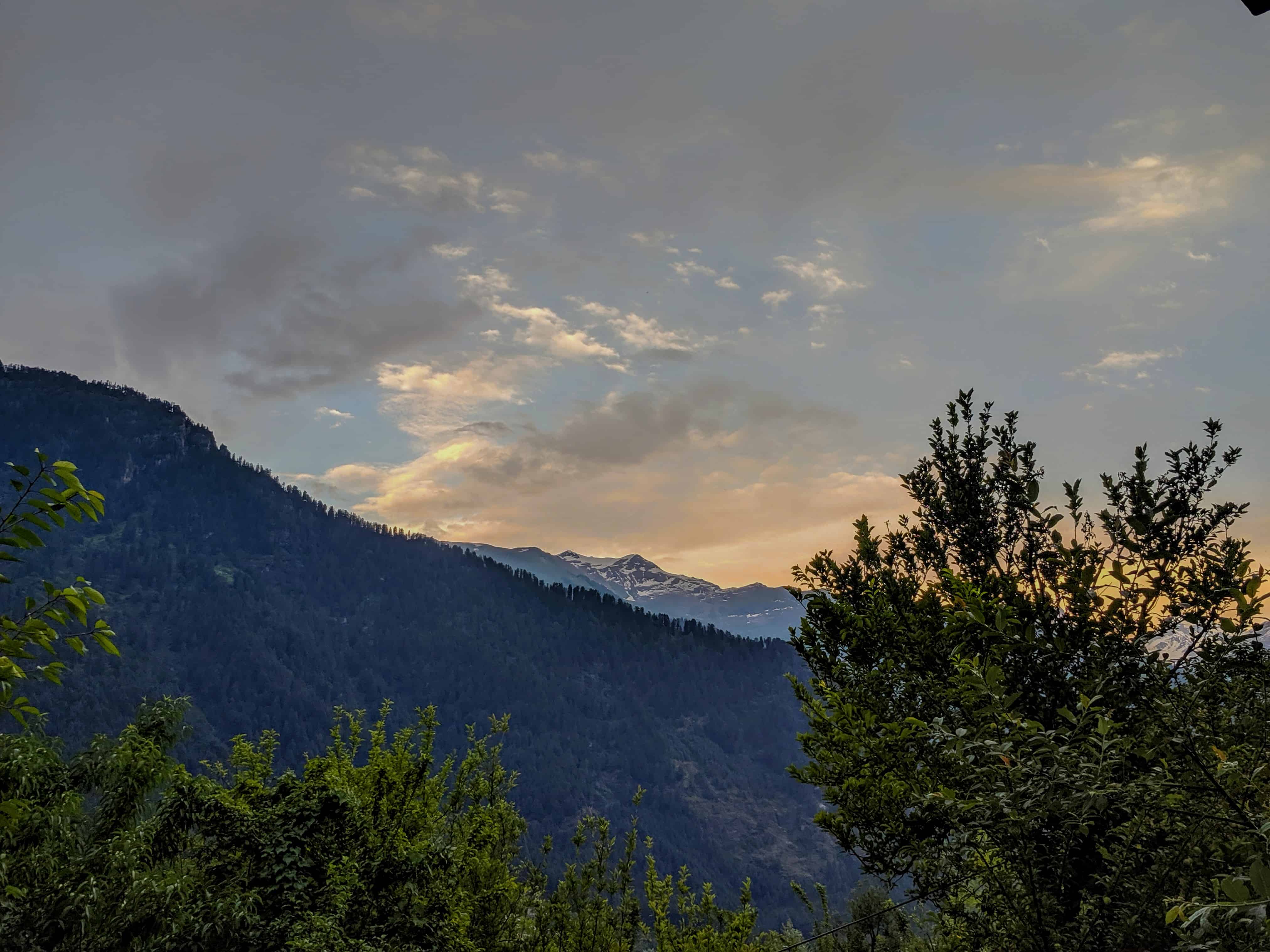
Parvati Parvat rises to 6,633 meters (21,762 feet) in Himachal Pradesh’s Punjab Himalayas, the peak that gives Parvati Valley and the Parvati River their name. The mountain sits above the Kasol-Pulga-Kheerganga-Tunda Bhuj trek corridor near the Pin Parvati Pass (17,450 ft), and trekkers pushing past Tunda Bhuj should watch for AMS above 12,000 ft.
Parvati Valley is one of those places that gets under your skin. On the surface, it looks like a quiet green valley with pine forests and a river running through it. But spend a few days here, and you will realize why people keep coming back, some for weeks, some for months, and a few never really leave. The hot springs, the dense deodar forests, the sound of the Parvati River, and the laid-back culture of the valley create something that is hard to put into words.
I have been visiting Parvati Valley for years now, and every trip has been different. This Parvati Valley travel guide covers everything you need to plan your trip in 2026, from how to reach, where to stay, best time to visit, budget breakdown, places to explore, and treks to do. Whether you are a first-timer or a returning visitor, this guide will help you plan well.
Let's quickly dive into the details:
What Makes Parvati Valley So Special?
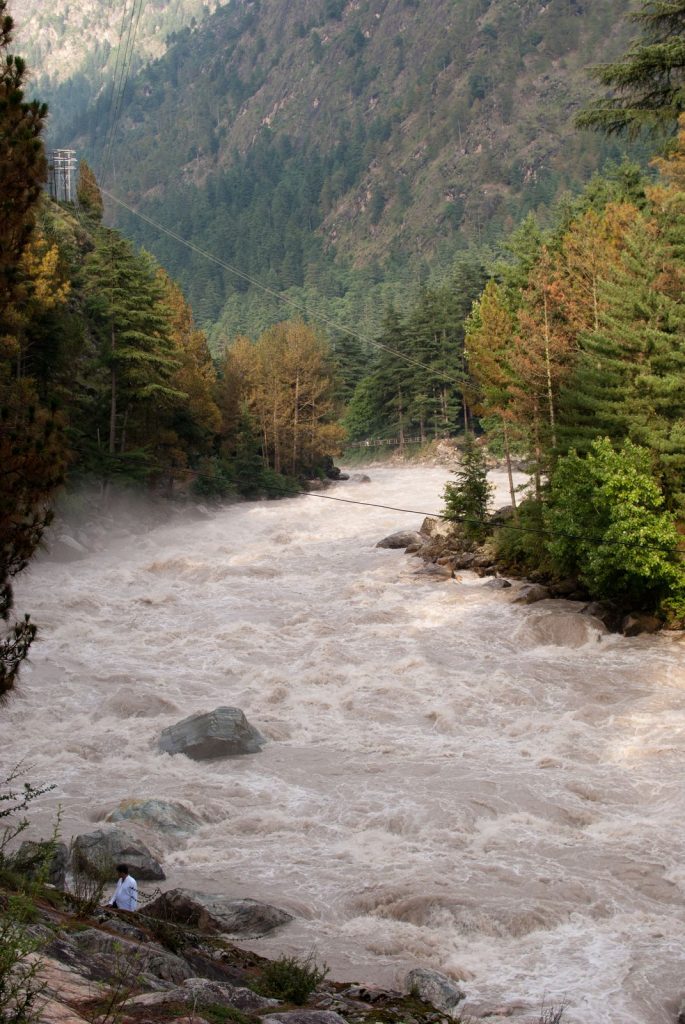
Parvati Valley sits in the Kullu district of Himachal Pradesh, carved by the Parvati River that originates from the Man Talai Glacier below the Pin Parvati Pass. The river flows westward through the valley, joining the Beas River near Bhuntar. What makes this valley unique is the sheer variety it packs into a relatively small area.
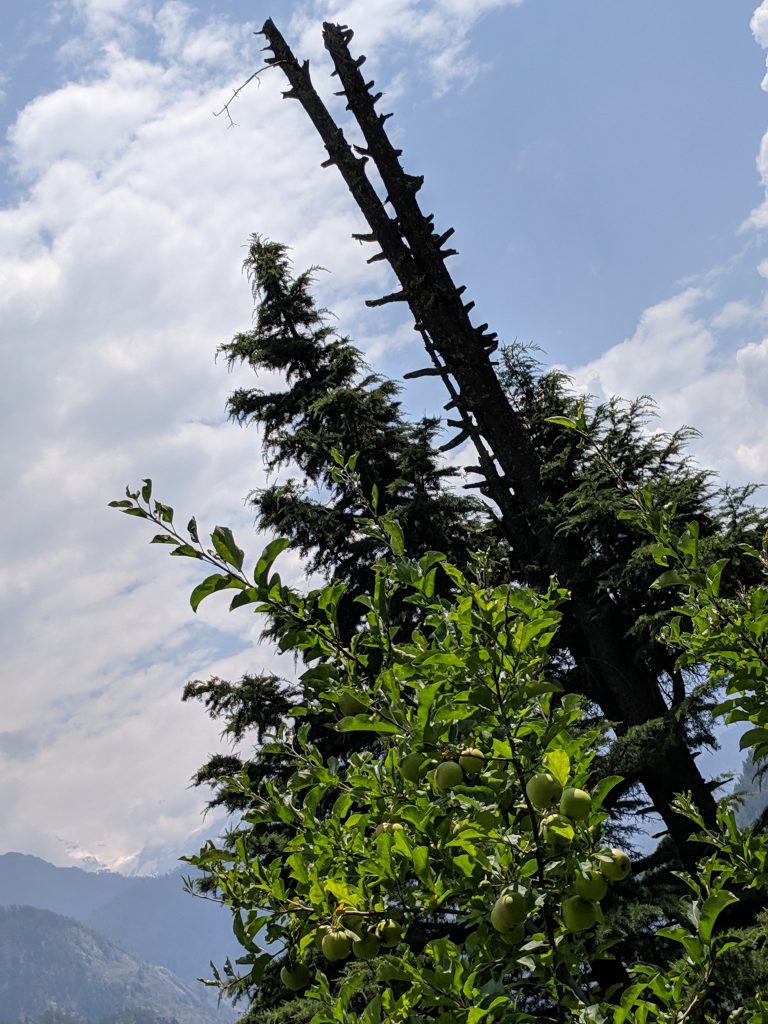
At the lower altitudes near Kasol and Jari (around 5,000-6,000 ft), you get thick pine and deodar forests, apple orchards, and a mild climate. As you move deeper towards Kheerganga, Tunda Bhuj, and eventually the glaciers, the landscape shifts to alpine meadows and boulder fields. The Parvati River picks up tributaries along the way, and waterfalls appear at almost every turn. It is this diversity that makes Kasol and the surrounding hamlets so popular with travelers of all kinds.
The valley attracts a diverse crowd. You will find Israeli backpackers who have been coming here for decades, Sikh pilgrims headed to Manikaran Sahib, weekend warriors from Delhi and Chandigarh, solo travelers looking for peace, and trekkers preparing for trails like Kheerganga or Pin Parvati Pass. This mix of people and energy is part of what makes Parvati Valley feel alive.
Practical Information at a Glance
| Detail | Information |
|---|---|
| Location | Kullu District, Himachal Pradesh |
| Altitude Range | 5,180 ft (Kasol) to 13,000+ ft (Kheerganga) |
| Distance from Delhi | 520-540 km (12-14 hours by road) |
| Nearest Airport | Bhuntar (Kullu-Manali Airport), 31 km from Kasol |
| Best Time to Visit | March to June, September to November |
| Budget Per Day | Rs 1,500-2,500 (budget) | Rs 3,500-6,000 (mid-range) |
| Mobile Network | Jio and Airtel work in Kasol. BSNL works in remote areas. Patchy beyond Barshaini. |
| ATM | Available in Kasol and Manikaran. Carry cash for villages. |
| Permits Required | None for most villages. Required for Pin Parvati Pass trek. |
| Last Updated | March 2026 |
When Is the Best Time to Visit Parvati Valley?
Parvati Valley is accessible year-round, but the experience changes significantly with the seasons. For most travelers, the sweet spot is either the pre-monsoon summer months or the post-monsoon fall window. Here is a season-by-season breakdown to help you decide.
Summer (April to June)
This is the peak season and the best time for first-time visitors. The weather is pleasant with daytime temperatures around 20-25°C in Kasol and 10-15°C at higher altitudes like Tosh and Kheerganga. The valley is at its greenest, the trails are open, and all villages are accessible. Keep in mind that May and June weekends get crowded, especially in Kasol. If you prefer quieter experiences, visit on weekdays or head to lesser-known villages like Kalga, Pulga, or Grahan.
Monsoon (July to September)
This is a tricky period. The valley looks stunning with lush greens and waterfalls everywhere, but the risks are real. Landslides are common on the Bhuntar-Manikaran road, and the route beyond Manikaran towards Barshaini can get blocked for days. Much like Kinnaur Valley during monsoon, I would recommend caution. In February 2026, a major landslide blocked the Manikaran-Barshaini road, stranding travelers in Tosh and Barshaini. If you do visit during monsoon, keep your schedule flexible and carry extra supplies.
Post-Monsoon / Fall (October to November)
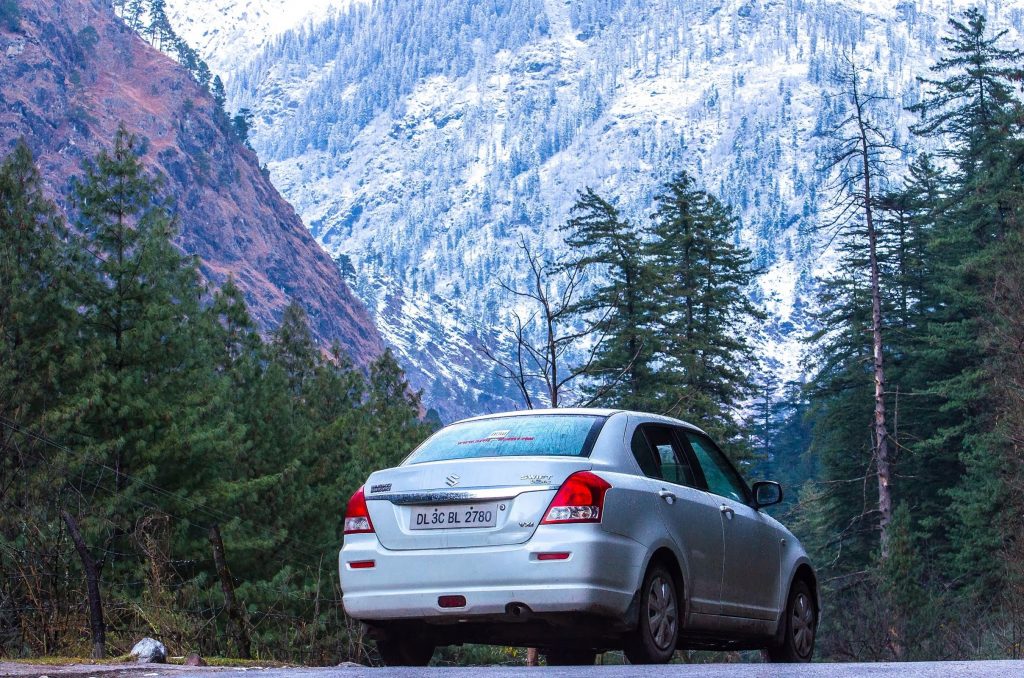
This is my personal favorite window. The monsoon crowds have left, the air is crisp, the skies are clear, and the hills start changing colors. Temperatures drop to 8-15°C during the day and can go below 5°C at night. Commercial activity slows down, some cafes close, but the villages feel more authentic. If you enjoy quieter travel and do not mind cooler weather, this is the time to go.
Winter (December to February)
Parvati Valley in winter is beautiful but challenging. Kasol gets snowfall in January and February, and the upper villages like Tosh and Kheerganga can be snowed in for days. Temperatures drop to -5°C to 5°C. I have friends who went for New Year’s Eve to Kasol and came back the next morning because the cold was too harsh. That said, if you are prepared with proper winter gear and are okay with limited food and accommodation options, winter in Parvati Valley can be a magical experience.
How to Reach Parvati Valley from Delhi?
All roads to Parvati Valley pass through Bhuntar, the gateway town on the Kullu-Manali highway. From Bhuntar, a 31 km road along the Parvati River takes you to Kasol, and further ahead to Manikaran, Barshaini, and the trailheads. Here are your options.
By Road (Best Option)
The total driving distance from Delhi to Kasol is about 520-540 km, depending on your route. The drive takes 12-14 hours with breaks. The route goes through Chandigarh, Bilaspur, Sundernagar, Mandi, Aut, and then Bhuntar. From Bhuntar, take the left turn towards Manikaran/Kasol.
Road conditions are generally decent on the national highway until Bhuntar. The Bhuntar to Kasol stretch (31 km) is narrow and winding but tarred. Beyond Kasol towards Barshaini, the road deteriorates. Self-drive is a great option if you enjoy mountain driving. I have used self-drive rental services from Delhi and they work well for this route.
By Bus (Budget-Friendly)
HRTC and private operators run overnight buses from Delhi ISBT to Bhuntar and Kullu. Here are the current fare ranges for 2026.
| Bus Type | Delhi to Bhuntar Fare | Duration |
|---|---|---|
| HRTC Ordinary | Rs 780-850 | 13-14 hours |
| HRTC Semi-Deluxe | Rs 1,000-1,200 | 12-13 hours |
| HRTC Volvo / HIMSUTA | Rs 1,500-1,600 | 11-12 hours |
| Private Volvo / Scania | Rs 1,500-4,000 | 11-13 hours |
From Bhuntar, local HRTC buses run to Kasol and Manikaran every 30-45 minutes. The fare is Rs 50-80, and the ride takes about 1.5 hours. The first bus starts around 6:00 AM, and the last one is around 6:30 PM. You can also take a shared taxi from Bhuntar to Kasol for Rs 200-300 per person, or a private taxi for Rs 800-1,000.
Another option is to take the Shatabdi Express from Delhi to Chandigarh (fare around Rs 700, reaches by 11 AM), and then catch a bus or taxi to Bhuntar. Chandigarh to Bhuntar takes about 6-7 hours by bus (fare Rs 500-750).
You can check availability and book HRTC buses on the official HRTC booking portal.
By Air
The nearest airport is Kullu-Manali Airport at Bhuntar. Flights operate from Delhi, but the frequency is limited and cancellations are common due to weather. If your flight lands successfully, Kasol is just 31 km away. The safer option is to fly to Chandigarh airport and then take a bus or taxi onwards.
By Train
The nearest broad gauge railway station is Kiratpur Sahib or Chandigarh. The narrow gauge station at Joginder Nagar is closer but not well connected. From Chandigarh or Kiratpur, you will need to take a bus or taxi to Bhuntar (6-8 hours).
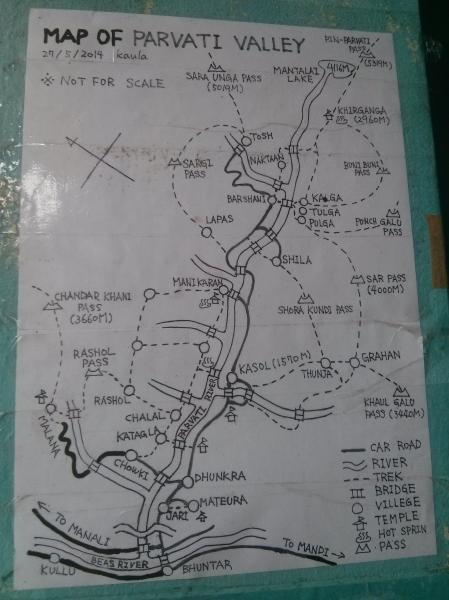
Parvati Valley Map
Here is a map of Parvati Valley showing the major villages and how they connect. This will help you understand the layout and plan your movements.
What Are the Best Places to Visit in Parvati Valley?
Parvati Valley packs a surprising number of villages, treks, and experiences into a single valley. Here are the places you should not miss, organized from the most accessible to the more offbeat.


Kasol
The most popular base in the valley, often called “Mini Israel” for its long history with Israeli backpackers. Kasol is where most travelers start their Parvati Valley trip. It has the most cafes, guesthouses, and travel services in the valley. The vibe is relaxed, the food scene is excellent (try the Israeli and Italian cafes along the river), and it is the starting point for treks to Chalal, Rasol, and Kheerganga. That said, Kasol has become quite commercialized in recent years. If you want peace, use it as a base and spend your days in the surrounding villages.
Manikaran
Just 6 km from Kasol, Manikaran is a pilgrimage town known for its hot springs and the Manikaran Sahib Gurudwara. The hot springs here are naturally boiling, and the Gurudwara actually uses them to cook langar (community meals). It is a fascinating place regardless of your faith. The legend says that Goddess Parvati lost her earring (mani) here, and Lord Shiva’s anger caused Sheshnag to release boiling water and precious stones from the earth. Free langar is available at the Gurudwara, and there are bathing areas where you can soak in the hot water.
Chalal Village
If you want the most accessible village experience near Kasol, Chalal is the answer. It is a 25-minute walk from Kasol, across the river, and feels like a different world. No vehicles, no noise, just a forest trail leading to a small village with a handful of cafes perched above the Parvati River. The walk itself is beautiful, and the village is entirely safe to explore. This is perfect for those who want to escape Kasol’s crowds without committing to a full trek. The food here is good and wallet-friendly.
Tosh
Situated about 20 km from Kasol and accessible by a steep road from Barshaini, Tosh has become the go-to village for backpackers who want mountain views without a long trek. The views from Tosh are genuinely spectacular, with snow-capped peaks visible on clear days. The village has plenty of guesthouses and cafes now, though it retains more charm than Kasol. The road up to Tosh is in rough condition, so most people either walk from Barshaini (about 3 km uphill) or take a local taxi.

Jari
One of the first villages you encounter in Parvati Valley, Jari is often skipped by travelers rushing to Kasol. That is a mistake. I have camped near Jari, and the views from the hills above are incredible. The climb to Mateura Jari is just 1 km from the road but steep. The rural Himachal character here will tug at your heartstrings. The only downside is the Alana Hydro Project near the river, which is a bit of an eyesore. But head up the hill, and you forget it exists.
Rasol Village
Situated at about 10,000 ft, Rasol is 5 km from Kasol and accessible by a moderately steep trek. The village sits above Chalal, towards Malana, and the views from here are simply outstanding. The community is small and protective of their traditions, similar to nearby Malana. The main occupation is agriculture and wool spinning. Be respectful of their customs, do not touch the temple or the villagers’ belongings, and you will be welcomed warmly.
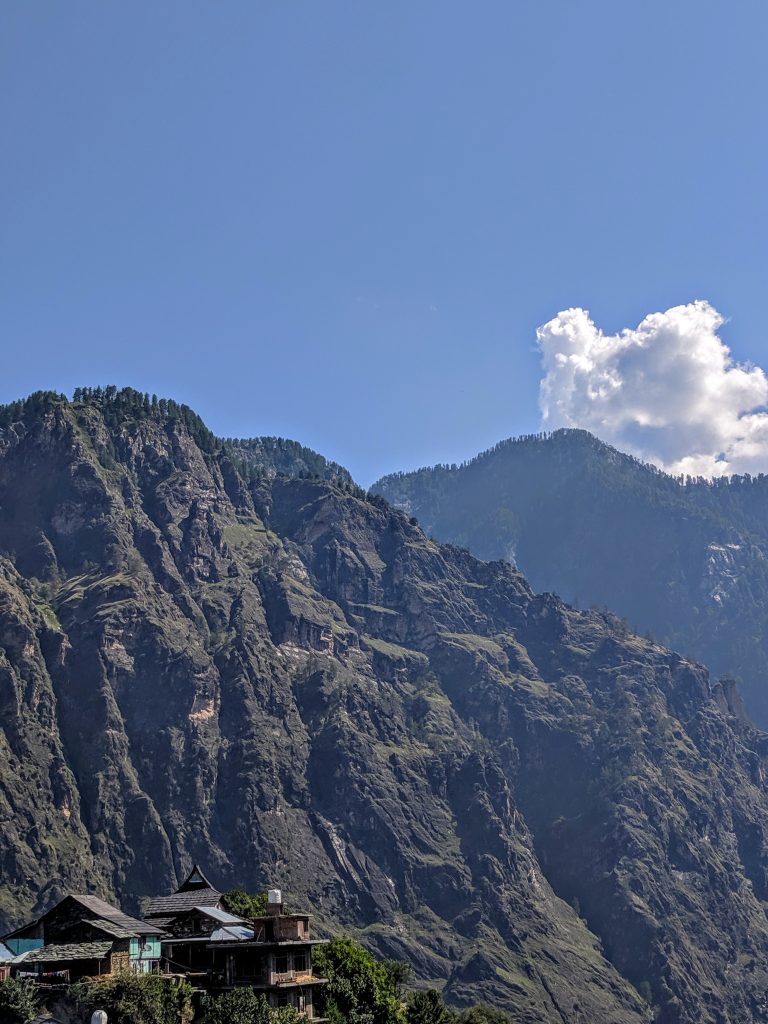
Kalga, Pulga, and Tulga
These three sister villages near Barshaini are the quieter alternatives to Kasol and Tosh. There are no raves here, no party scene, just beautiful mountain views, homestays run by local families, and the sound of the river below. Kalga has become especially popular as a base for the Kheerganga trek (since camping at Kheerganga is now banned). Pulga is the most remote of the three and feels the most untouched.
Malana
Malana is one of the most unique villages in the Indian Himalayas. The people here consider themselves descendants of Alexander the Great and have maintained their own democratic system of governance for centuries, complete with a parliament. Their deity is Jamlu Rishi, and the village has strict rules about outsiders. Do not touch anyone, do not touch the temple walls, and do not enter houses uninvited. The trek from Jari takes about 5-6 hours. Malana is famous (or infamous) for its cannabis cultivation, but the real story here is the ancient culture and the fierce independence of its people.
What Are the Offbeat Places to Explore in Parvati Valley?
Beyond the well-known villages, Parvati Valley has several hidden spots that most travelers miss. If you have extra time and enjoy exploring beyond the tourist trail, these places are worth the effort.
Tunda Bhuj
Located 15 km beyond Kheerganga, Tunda Bhuj marks the point where the valley transforms completely. The forests give way to meadows and boulders, and the landscape becomes raw and wild. The only residents here are local Gaddi shepherds. There is a Babaji who lives alone in Tunda Bhuj and is known for his hospitality, even cooking for trekkers who pass through. This area is usually combined with longer treks heading towards Man Talai or the Pin Parvati Pass.
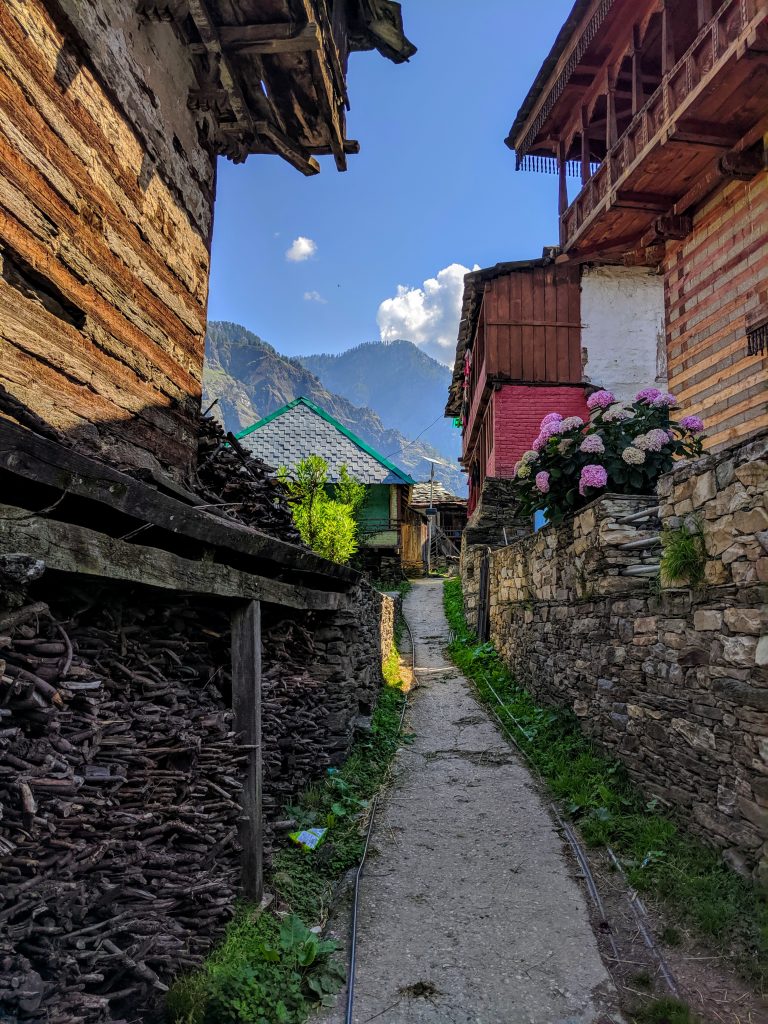
Rudra Nag and Naktan Village
Lying halfway between Barshaini and Kheerganga, Rudra Nag is one of those places where everything just feels right. The waterfall here is powerful, the apple orchards are picture-perfect, and there are a couple of guesthouses if you want to break your Kheerganga trek into two days. Naktan village nearby is equally charming, with locals who are genuinely happy to see visitors. This is rural Himachal at its most welcoming.
Waichin Valley
Just 4 km from Malana, Waichin Valley is a hidden gem that very few people know about. The landscapes are dramatic, the hike is rewarding, and you will likely have the entire valley to yourself. If you have already explored the main villages and want something truly offbeat, this is it.
Pandupul, Thakur Kuan, and Odi Thatch
Deep in the upper Parvati Valley, Pandupul is named after the Pandavas who reportedly meditated here. A massive boulder bridges the Parvati River naturally, creating a spectacular sight. The trek to get here is a proper multi-day effort and is usually combined with the Pin Parvati Pass trek. This is not for casual visitors but for serious trekkers looking for a wilderness experience.
Pin Valley National Park
Technically in the Lahaul-Spiti district but connected to Parvati Valley via the Pin Parvati Pass, this national park is steeped in Tibetan Buddhist culture. The terrain shifts from green forests to cold desert, the architecture becomes Spitian, and you might spot endangered species like the Snow Leopard and Siberian Ibex. The park contains Bhabha Pass, Kara Lake, and Mantalai Lake. Reaching it from the Parvati side requires a serious multi-day trek.
What Are the Popular Treks in Parvati Valley?
Parvati Valley is one of the best trekking destinations in Himachal Pradesh. The range of trails here suits everyone from complete beginners to experienced mountaineers. Here are the key treks you can do from Parvati Valley.
Kheerganga Trek (Important 2026 Update)
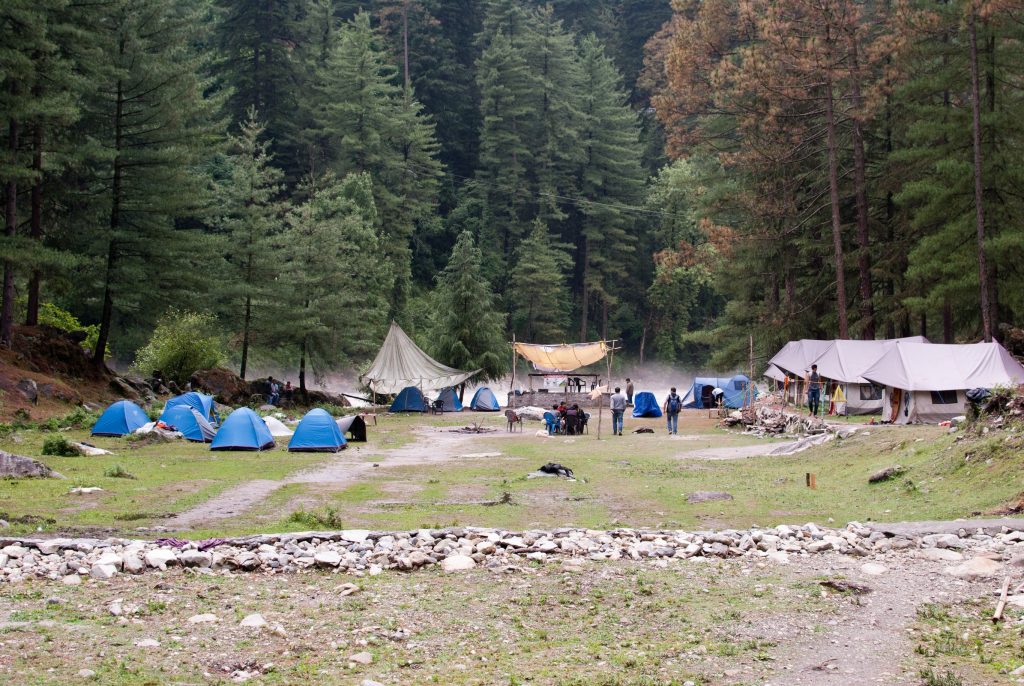
Camping at Kheerganga is currently banned. In July 2024, the Forest Department enforced a High Court order banning all overnight stays at Kheerganga. All tents, huts, and cafes have been removed from the meadow. The ban was implemented because the area had been severely damaged by unregulated camping, with up to 500 tents appearing during peak season.
As of 2026, you can still do the Kheerganga trek as a day trip. Trekkers must arrive before 10 AM and leave by 2 PM. The trek from Barshaini is about 12-14 km one way and takes 4-5 hours uphill. The hot springs at the top are still accessible. If you want to combine this with an overnight stay, base yourself in Kalga or Barshaini and do the trek as a day hike. It is a long day but doable for reasonably fit trekkers.
Chalal Walk
The easiest “trek” in the valley. A 25-minute walk from Kasol across the river. Perfect for beginners or anyone who just wants a peaceful walk in the forest.
Rasol Trek
A moderate 5 km trek from Kasol, climbing to about 10,000 ft. Takes 3-4 hours one way. Great views and a unique village at the top.
Grahan Village Trek
A less-known trail from Kasol that leads to Grahan village at around 7,700 ft. The trek takes 3-4 hours and passes through beautiful oak and rhododendron forests. Grahan is quieter than Rasol and has homestay options.
Pin Parvati Pass Trek
The big one. This is a challenging 110 km trek that connects Parvati Valley to Spiti Valley over the Pin Parvati Pass at 17,450 ft. It takes 10-12 days and is recommended only for experienced trekkers with proper gear and a guide. The season is July to September. A permit from the local forest office is required (Rs 1,500 per person as of 2026).
Do not forget to check our list of essential things to carry on a trek before heading out.
What Is the Mythology Behind Parvati Valley?
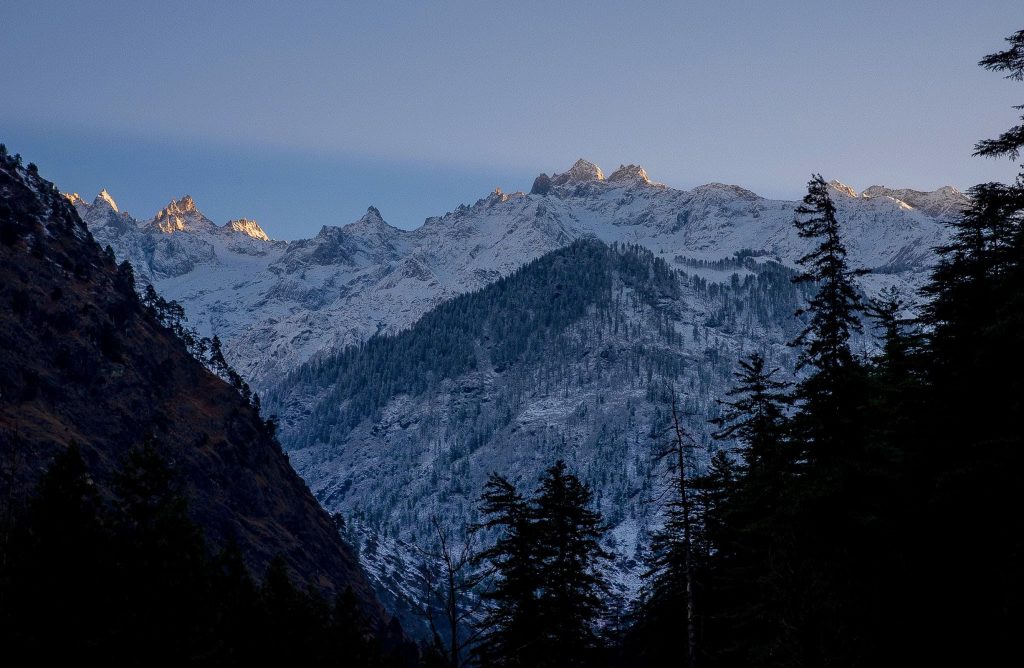
With a place this beautiful, it is no surprise that deep mythology surrounds every corner of the valley. Talking to locals is the best way to hear these stories, but here are the key legends.
How Did the Valley Get Its Name?
According to Hindu mythology, Lord Shiva meditated at the Pin Parvati Pass for thousands of years as a Naga Sadhu. When he finally observed the valley’s perfect landscape and untouched beauty, he named it after his consort, Goddess Parvati. This is why the river, the valley, and many of the sacred sites here carry her name.
The Story of Kheerganga
Kheerganga holds significance in both Hindu and Sikh traditions. In Hindu mythology, when Parvati and Shiva visited their son Kartikeya who was meditating nearby, Parvati cooked Kheer (rice pudding) using the naturally hot springs. This is said to explain the greyish, milky color of the water.
In Sikh tradition, Guru Nanak Dev Ji visited Kheerganga during his Udasi and found his disciple Bhai Mardana hungry with no food. Guru Nanak asked him to collect flour from the Langar. With no fire to cook, Guru Nanak instructed Mardana to remove a large stone, revealing a hot spring. When Mardana dipped rotis in the spring, they sank. After praying, the rotis floated back fully cooked, and Mardana shared them with others. The moral: those who give in God’s name will always receive meaningful karma in return.
The Legend of Manikaran
During their time in the valley, Parvati lost an earring (mani) in the river. Lord Shiva, in his anger, opened his third eye. To prevent destruction, people appealed to Sheshnag, who released boiling water from the earth along with precious stones resembling what Parvati had lost. This is the origin of Manikaran’s famous hot springs.
How Much Does a Parvati Valley Trip Cost in 2026?
Parvati Valley is one of the most budget-friendly destinations in Himachal Pradesh. You can have a great trip even on a tight budget. Here is a realistic breakdown for 2026.
| Expense | Budget (per person) | Mid-Range (per person) |
|---|---|---|
| Delhi to Bhuntar (bus, one way) | Rs 800-1,200 | Rs 1,500-2,000 |
| Bhuntar to Kasol (local transport) | Rs 50-80 (bus) | Rs 400-500 (shared taxi) |
| Accommodation (per night) | Rs 400-1,200 | Rs 2,500-4,000 |
| Food (per day) | Rs 400-600 | Rs 800-1,500 |
| Local Transport (per day) | Rs 100-200 | Rs 500-1,000 |
| Activities / Treks | Rs 0-500 | Rs 500-2,000 |
Budget estimate for a 4-day trip from Delhi (per person): Rs 5,000-8,000 if you take buses, stay in hostels or basic guesthouses, and eat at dhabas. For a more detailed cost breakdown, check our guide on planning a budget trip to Kasol under Rs 5,000.
Mid-range estimate for a 4-day trip (per person): Rs 12,000-18,000 with Volvo buses, riverside cottages, cafe meals, and a guided trek. Keep in mind that prices go up during peak season (May-June) and long weekends. ATMs in Kasol and Manikaran can be unreliable, so always carry enough cash for your entire stay.
Where to Stay in Parvati Valley?
Accommodation in Parvati Valley ranges from Rs 300 hostel dorms to Rs 8,000 luxury cottages. Here is what to expect at different price points.
Budget (Rs 400-1,200/night): Basic guesthouses and homestays in Kasol, Chalal, Tosh, and Kalga. Rooms are simple but clean. Hostels in Kasol offer dorm beds starting at Rs 300-500. Village homestays in Pulga and Grahan are in this range too.
Mid-range (Rs 2,500-4,000/night): Riverside cottages and nicer guesthouses in Kasol and Tosh. You get better views, attached bathrooms, and hot water. Some options include Parvati Kuteer and similar riverside properties.
Luxury (Rs 6,000-8,000/night): Places like Himalayan Village near Kasol offer traditional Himachali architecture and premium amenities. These are good for couples or families looking for comfort.
Pro tip: During peak season, book in advance for Kasol and Tosh. For offbeat villages like Pulga and Kalga, you can usually find rooms on arrival. In case you are planning a trip to offbeat places in Himachal Pradesh, Parvati Valley’s quieter villages are some of the best options.
What Should You Know About Safety in Parvati Valley?
Parvati Valley is generally safe for all types of travelers, including solo travelers and women. However, there are a few things you should keep in mind.
Do not trek alone in unfamiliar areas. Several people have gone missing in the upper Parvati Valley over the years. The trails beyond Kheerganga are remote and can be disorienting, especially in fog or rain. Always trek with a buddy or hire a local guide for anything beyond the main villages.
Landslides are a real risk during monsoon. The Bhuntar-Manikaran-Barshaini road is prone to landslides from July to September. Keep your schedule flexible and do not drive at night on these roads.
Respect local customs. Villages like Malana and Rasol have strict rules about outsiders. Do not touch people, temple walls, or belongings without permission. This is not just etiquette, it matters deeply to these communities.
Mobile network: Jio and Airtel work well in Kasol town. Airtel has coverage in Tosh. Beyond Barshaini and on treks, only BSNL (postpaid) works intermittently. Download offline maps before heading to remote areas.
Medical facilities: The nearest hospital is in Bhuntar/Kullu. Kasol has a few pharmacies but no hospital. For serious emergencies, you will need to get to Kullu (42 km from Kasol).
How to Get Around Inside Parvati Valley?
Once you are in the valley, the best way to get around depends on where you are going.
On foot: This is the primary (and often only) way to reach most villages. Chalal, Rasol, Grahan, Malana, and Kheerganga are all accessible only by trekking. Even for villages with road access like Tosh and Kalga, walking is often more enjoyable than the bumpy ride.
Local buses: HRTC buses run between Bhuntar, Kasol, and Manikaran regularly. Beyond Manikaran towards Barshaini, bus frequency drops. Expect to pay Rs 20-80 depending on distance.
Shared taxis: Available between Kasol, Manikaran, and Barshaini. Fares range from Rs 100-300 per person.
Private taxis: Useful for day trips or if you are traveling with family. A taxi from Kasol to Barshaini costs about Rs 600-800 one way. From Barshaini to Tosh, expect Rs 300-500.
For more on trekking in the Himalayas, including preparation tips and gear recommendations, check our comprehensive guide.
Why Should You Visit Parvati Valley?
With everything Parvati Valley has to offer, the question really is, why not? Whether you need some peace away from city life, whether you want to trek through forests and meadows, whether you are a backpacker looking for affordable Himalayan travel, or whether you just want to sit by a river and read a book, Parvati has you covered.
What sets this valley apart from other Himalayan destinations is the combination of accessibility and depth. You can get here in one overnight bus from Delhi, yet once you are in the valley, you can keep going deeper for weeks and still find new places. That is rare.
If you are planning your first trip, I would suggest starting with a Parvati Valley itinerary that covers Kasol, Tosh, and Chalal over 3-4 days. If you have more time, add Malana and Kheerganga (as a day trek). And if you have been here before and want something different, head to Grahan, Pulga, or Waichin Valley.
For those looking for a similar valley experience but in a different region, check out our guide to Tirthan Valley, which is equally beautiful and less crowded.
Feel free to drop your questions in the comments below or reach out to the DwD community. If you have been to Parvati Valley, I would love to hear about your favorite spots and memories. Safe travels, my friend 🙂
Frequently Asked Questions
Is Parvati Valley safe for solo female travelers?
Yes, Parvati Valley is generally safe for solo female travelers, especially in popular areas like Kasol, Tosh, and Chalal. Many women travel solo here. Use common sense precautions: avoid trekking alone in remote areas, inform your guesthouse about your plans, and avoid walking isolated trails after dark. The backpacker community in Kasol is welcoming and you will find plenty of other solo travelers.
Can I still trek to Kheerganga in 2026?
Yes, but only as a day trip. Camping at Kheerganga has been banned since July 2024 by the Forest Department. All tents, huts, and cafes have been removed. You can still visit the hot springs, but you must arrive before 10 AM and leave by 2 PM. Base yourself in Kalga or Barshaini for the overnight stay.
How many days are enough for a Parvati Valley trip?
A minimum of 3-4 days is recommended for a first visit, covering Kasol, Tosh, and one short trek (Chalal or Rasol). For a more relaxed trip that includes Malana and Kheerganga (day trek), plan for 5-7 days. If you want to explore offbeat villages like Pulga, Grahan, and do longer treks, a week or more is ideal.
What is the best month to visit Parvati Valley?
May and October are the two best months. May offers warm weather with all trails open and lush greenery. October offers clear skies, fewer crowds, and beautiful autumn colors. Avoid July-August due to heavy monsoon rains and landslide risks.
Is there ATM and mobile network in Parvati Valley?
ATMs are available in Kasol and Manikaran, but they run out of cash frequently during peak season. Always carry sufficient cash. For mobile networks, Jio and Airtel work in Kasol town. Airtel works in Tosh. Beyond Barshaini and on treks, only BSNL postpaid has intermittent coverage. There is no network at Kheerganga or in remote villages.
Do I need any permits for Parvati Valley?
No permits are needed for visiting the main villages like Kasol, Tosh, Malana, Chalal, or Manikaran. Permits are required only for high-altitude treks like the Pin Parvati Pass trek (Rs 1,500 per person, apply through the local forest office in Kullu).

How do I reach Parvati Valley from Delhi by bus?
Take an overnight HRTC or private bus from Delhi ISBT to Bhuntar. HRTC Volvo buses cost Rs 1,500-1,600, and private buses range from Rs 1,500-4,000. The journey takes 11-14 hours. From Bhuntar, catch a local bus (Rs 50-80, every 30-45 min) or shared taxi (Rs 200-300) to Kasol. The total journey from Delhi to Kasol takes about 14-16 hours including the connection.
Can I visit Parvati Valley in winter?
Yes, but be prepared for harsh cold. Kasol gets snowfall in January-February with temperatures dropping to -5°C. Upper villages like Tosh may be snowed in. Many cafes and guesthouses close in winter. Roads can be blocked after heavy snowfall. If you enjoy winter travel and have proper warm clothing, it can be a beautiful, quiet experience.
What is Parvati Parvat?
Parvati Parvat (also called Parbati Parbat or Mount Parvati) is a 6,633-meter (21,762-foot) peak in Himachal Pradesh’s Punjab Himalayas, on the Kullu-Lahaul watershed near the Pin Parvati Pass. It is the source peak that gives Parvati Valley and the Parvati River their name, and it was first climbed on 10 June 1968 by an Italian expedition led by Marino Tremonti.
Can you trek to Parvati Parvat, or only see it from a distance?
Parvati Parvat is a technical mountaineering peak, not a trekking summit. The 1968 first-ascent team approached it on foot from Bhuntar through Kasol, Pulga, Kheerganga, and Tunda Bhuj before entering the Dibibokri Nala, the same route trekkers still use today. Regular trekkers on the Pin Parvati Pass trail get clear views of the peak from Tunda Bhuj and beyond, but summiting requires a permitted mountaineering expedition.
