


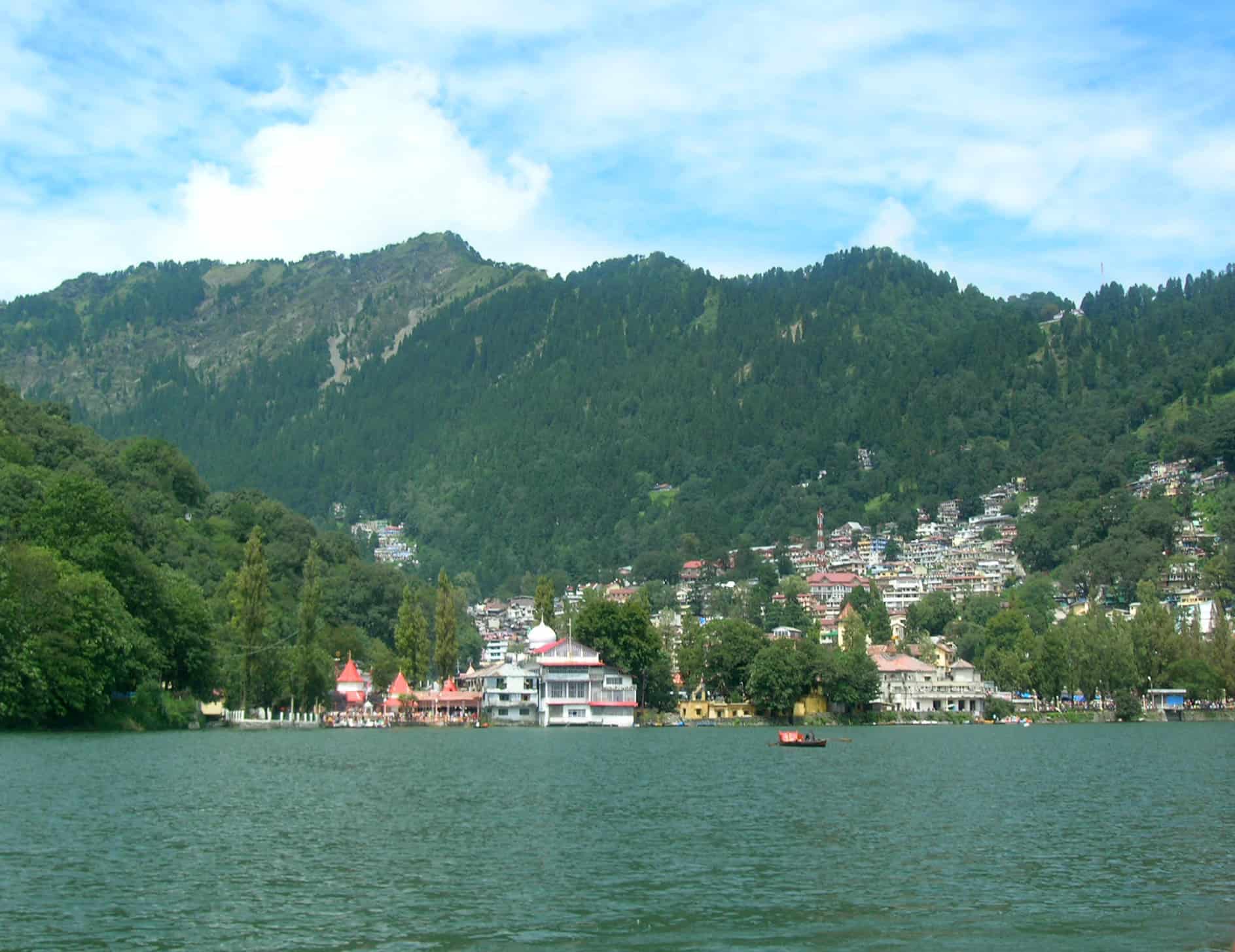
Pangot sits 15 km from Nainital via the Cheena Peak road, a scenic drive of about 30-40 minutes by taxi. Perched at 6,300 ft in the Naina Devi Himalayan Bird Conservation Reserve, Pangot swaps Nainital’s crowded Mall Road for quiet oak forests and over 580 recorded bird species, making it the closest birding escape to Nainital.
Pangot is 15 km from Nainital and feels like a different world. While Nainital crowds its lakeside with tourists every weekend, Pangot sits quietly in the Cheena Peak forests with barely a soul around. Tucked at an altitude of 6,300 ft (1,920 m), this small village in the Nainital district has earned a serious reputation among birdwatchers across India, and it is also one of the very few villages in the region from where you can actually trek to Jim Corbett National Park on foot over three days. Over 250 species have been recorded in Pangot alone, and the adjoining Naina Devi Himalayan Bird Conservation Reserve pushes that count past 580 species. If you are looking for a peaceful weekend escape from Delhi, a focused birding trip, or the start of a proper forest trek towards Corbett, Pangot is the answer that overcrowded Nainital cannot give you.
I first visited Pangot as a detour from Nainital, expecting a quick stop. I ended up staying two days, completely absorbed by the oak forests and the Himalayan views. This guide covers everything you need to plan your trip to Pangot in 2026, from how to reach, where to stay, what to do, and how much it will cost.
Let's quickly dive into the details:
Quick Facts About Pangot You Should Know
Pangot sits in the Nainital district of Uttarakhand, about 15 km from Nainital town via the Cheena Peak road. The village is at 6,300 ft (1,920 m) above sea level. It falls within the Naina Devi Himalayan Bird Conservation Reserve, which is one of the richest birding zones in North India. The nearest railway station is Kathgodam (35 km), and the nearest airport is Pantnagar (about 95 km). Unlike Nainital, Pangot sees very few tourists, which is precisely why the bird populations remain undisturbed here.
| Detail | Information |
|---|---|
| Altitude | 6,300 ft (1,920 m) |
| Distance from Nainital | 15 km |
| Distance from Delhi | 340 km (7-8 hours by road) |
| Nearest Railway Station | Kathgodam (35 km) |
| Nearest Airport | Pantnagar (95 km) |
| Bird Species Recorded | 250+ in Pangot, 580+ in Kilbury |
| Trek to Jim Corbett National Park | 3 days, via Kunjkharak and Akashkhanda |
| Best Time to Visit | October to June |
| Entry Fee (Naina Devi Bird Reserve) | Rs 50 per person, plus a small vehicle charge at the Kilbury barrier (verify on arrival) |
Why Pangot Instead of Nainital?
This is the question most travelers do not think to ask, but it is the right one. Nainital is genuinely beautiful, but it has been discovered many times over. On a long weekend in May or October, the Nainital Mall Road is shoulder-to-shoulder, parking is a nightmare, and the lake views are shared with a few thousand other people. Pangot, just 15 km away, has none of that. You can spend an entire morning on the Kilbury trail and not see another traveler. The birdsong is undisturbed. The forest feels genuinely quiet.
Beyond the crowd contrast, Pangot offers something Nainital cannot: direct access to the Naina Devi Himalayan Bird Conservation Reserve, a protected forest with 580+ species, and a forest trail that keeps going all the way to Jim Corbett National Park if you have three spare days. The Incredible India government portal lists Pangot as a dedicated birding paradise, separate from the Nainital tourism circuit. Hence, if you have already done Nainital or want something more than a hill station visit, Pangot is the natural upgrade. You can always visit Nainital Lake for an evening, but you sleep in Pangot, and if you are up for it, you can walk out of Pangot straight into Corbett territory.
What Makes Pangot a Birdwatcher’s Paradise?
Pangot and the surrounding Kilbury forests are home to a staggering diversity of bird species. The thick oak, pine, and rhododendron forests at different altitudes create multiple micro-habitats, which is why you can spot everything from pheasants to raptors within a short walking distance.
Some of the notable species you can spot here include the Lammergeier (Bearded Vulture), Himalayan Griffon, Blue-winged Minla, Spotted Forktail, Slaty-backed Forktail, Rufous-bellied Niltava, Rufous-bellied Woodpecker, Khalij Pheasant, Koklass Pheasant, and if you are lucky, the Cheer Pheasant. The Himalayan Monal, with its iridescent plumage, is another prized sighting in the higher reaches near Kilbury.
Early mornings (6-8 AM) and late afternoons (4-6 PM) are the best windows for birdwatching, as most species are active during these hours. Keep in mind that resident species are present year-round, but the winter months (November to February) bring migratory birds from Central Asia, making the birding even more rewarding.
When Is the Best Time to Visit Pangot?
Pangot is a year-round destination, but each season offers a different experience. Here is a quick breakdown to help you plan.
March to June (Spring/Summer): This is the most popular window. Temperatures stay between 12-25 degrees Celsius, making it perfect for trekking and birdwatching. The real highlight is the Rhododendron bloom in March and April, when entire hillsides turn a deep crimson. The forests are alive with resident bird activity, and the weather is comfortable for long walks.
July to September (Monsoon): Heavy rainfall makes trails slippery and leech-prone. Only resident birds are observable, and many lodges reduce operations. I would not recommend this period unless you specifically want monsoon photography.
October to February (Autumn/Winter): This is prime birding season. Migratory birds arrive from Central Asia and the Tibetan Plateau, joining the resident species. Temperatures drop to 0-5 degrees Celsius in December and January, so pack warm layers. The forest canopy thins out, making it easier to spot birds among the bare branches. Snowfall is possible in January.
If I had to pick one window, I would say late October to early November, when the weather is pleasant, migratory birds have just arrived, and the autumn colors are at their peak.
How to Reach Pangot from Delhi?
Pangot is about 340 km from Delhi, and you can reach it by road, rail, or air. Here are all the options.
By Road (Self-Drive or Bus)
From Delhi, take NH 9 (old NH 24) towards Hapur and Rampur, then switch to NH 87 towards Haldwani and Nainital. From Nainital, take the road past Snow View Point towards Cheena Peak. Pangot is about 15 km from Nainital town on this route, passing through some of the best birding territory in the Kumaon hills. The entire drive from Delhi takes 7-8 hours depending on traffic at Hapur and Haldwani.
That 15 km stretch from Nainital to Pangot is worth driving slowly, my friend. The road passes through dense oak and pine forests, and you will want to stop every few hundred meters. Step farming on the hillsides, small streams crossing the road, and birdsong from every direction. It is one of those drives where the journey genuinely overshadows the destination.


By bus: UTC (Uttarakhand Transport Corporation) runs overnight Volvo and ordinary buses from ISBT Anand Vihar, Delhi to Nainital. Fares range from around Rs 530 (ordinary) to Rs 1,500 (Volvo AC), with the journey covering 337 km in roughly 9-10 hours (as of 2026, verify on UTC online before booking). From Nainital, you can take a shared taxi to Pangot for Rs 100-200 per person, or hire a private taxi for Rs 500-800.
By Train
The nearest railway station is Kathgodam (about 35 km from Pangot). Several trains run from Delhi, including the Ranikhet Express and Kathgodam Shatabdi. From Kathgodam, shared taxis to Nainital cost Rs 100-150 per person, and private taxis cost Rs 1,500-2,000 (as of 2026). Add another Rs 500-800 for the Nainital to Pangot leg.
By Air
The nearest airport is Pantnagar, about 95 km from Pangot (roughly 3 hours by road). Flights from Delhi are limited and often seasonal. From Pantnagar, you will need to hire a taxi (Rs 2,000-3,000) to reach Pangot. Honestly, the train or road route is more practical unless you are combining this with a longer Kumaon itinerary.

What Are the Top Things to Do in Pangot?
Beyond birdwatching, Pangot and its surroundings offer several activities. Here is what you can fill your days with.
Pangot to Kilbury Trek (Easy, Day Hike)
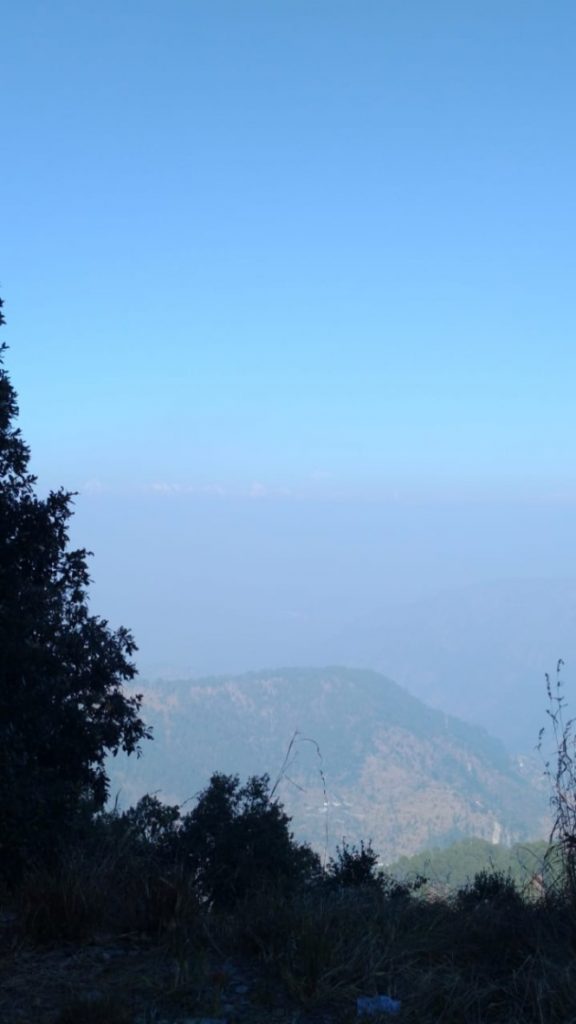
This is the most popular trek from Pangot. The 8 km trail (one way) passes through dense oak and deodar forests, leading to the Kilbury Forest Rest House. Along the way, you pass through Naina Peak (also called Cheena Peak), the highest point in the Nainital area at 8,622 ft (2,611 m). From the top, you get panoramic views of the Kumaon hills and, on a clear day, the snow-capped peaks of Nanda Devi, Trishul, and Nanda Ghunti.
The trail is well-marked and easy to moderate in difficulty. No guide is needed, but carry enough water and snacks as there are no shops along the way. The Kilbury rest house is about 3 km downhill from Naina Peak. Allow 5-6 hours for the round trip.
Pangot to Corbett Trek (Moderate, 3 Days)
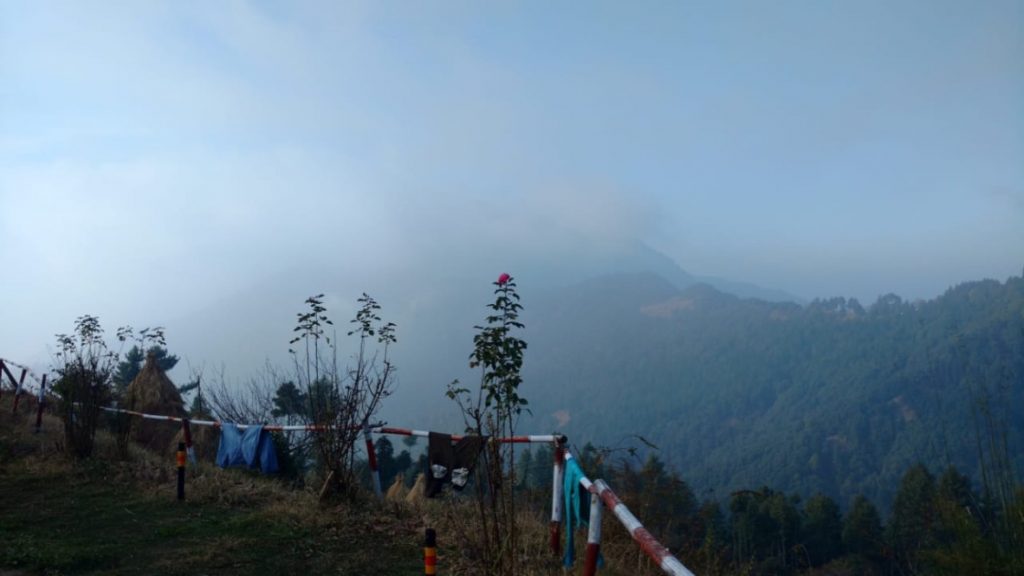
Very few villages near Nainital let you walk out of your homestay and into a national park three days later, but Pangot is one of them. There is a 3-day trek from Pangot to Jim Corbett National Park, and it is an extension of the Naina Peak trek. Instead of turning back, you continue through the forests towards Corbett. The trail passes through Kunjkharak (a high mountain pass with wildlife sightings), Akashkhanda (a remote bungalow rarely visited by trekkers), and finally descends to Kumeria, where a suspension bridge over the Kosi River connects you to the national park.
This trek is best done between October and June. The second-day stretch through Kunjkharak can get extremely cold and windy in winter, so pack accordingly. You will pass through villages like Akhorwadi (known for its walnut trees) and see colonial-era architecture along the route. The trail is mostly through dense oak, chestnut, and pine forests, with occasional clearings that open up to spectacular valley views.
In case you are planning this trek, I would recommend carrying your own food supplies and a tent. The bungalows along the route are not always operational. If you need help, ask the local villagers who use these trails for carrying supplies. They are always happy to guide.
Mountain Biking and Camping
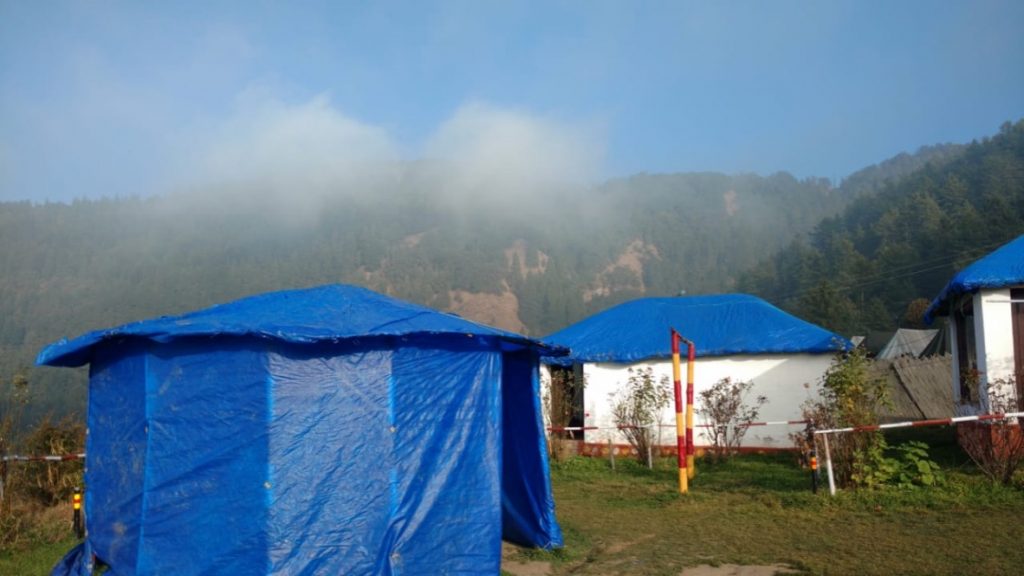
The forest trails around Pangot are excellent for mountain biking. Several lodges rent out bikes, and the terrain is varied enough to keep things interesting. For camping, there are designated camping zones near Pangot village where you can pitch your own tent or book an organized camping experience through local operators. A campsite typically costs Rs 1,500-3,000 per person including meals (as of 2026).
Visit Nainital Lake
Since Nainital is just 15 km away, most visitors combine Pangot with a visit to Nainital Lake. It is worth spending an evening there, even if the crowds are a contrast to the silence of Pangot.

Where to Stay in Pangot?
Pangot is a small village, so accommodation options are limited compared to Nainital. But the quality is good, and the settings are peaceful. Here is a breakdown by budget.
Budget (Rs 800-2,500/night): Basic guesthouses and homestays run by local families. Rooms are clean and functional. Meals are usually available on request (Rs 200-400 for a full meal). Some homestays have balconies with forest views.
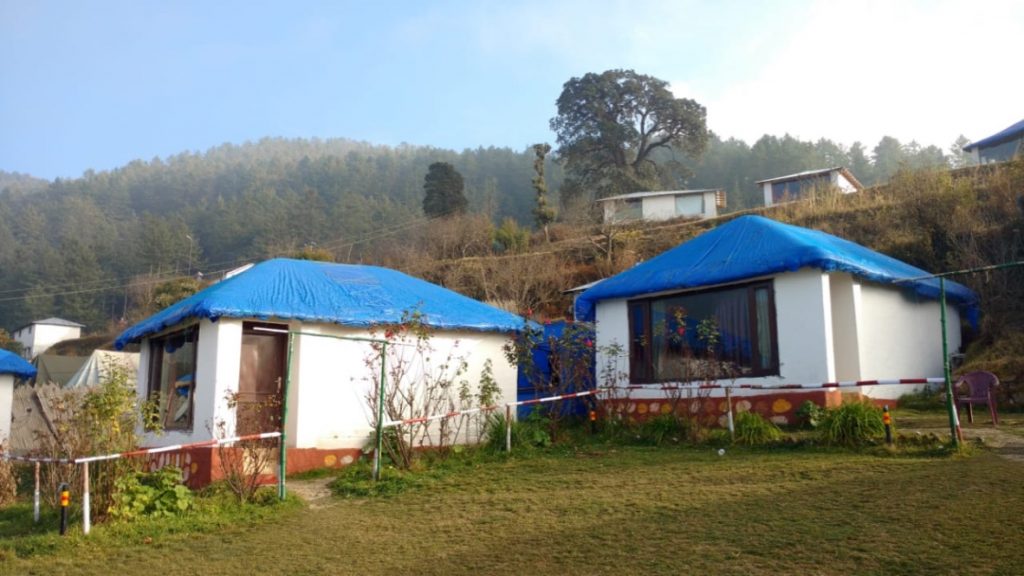
Mid-range (Rs 2,500-5,000/night): Cottages and lodges with better amenities. The Jungle Lore Birding Lodge is the oldest birding lodge in India and a landmark property in Pangot. It has five cottages and Swiss tents, and the staff can arrange guided birding walks. Other options include The Nest Cottages (great for families) and Naina Bird Cottage.
Premium (Rs 5,000-10,000/night): A handful of boutique properties and eco-resorts. Seclude Pangot and a few Raj-era bungalows converted into heritage stays fall in this range. These include room service, curated nature walks, and bonfire evenings.
My recommendation: book directly with the lodge or homestay rather than through aggregator sites. Prices tend to be 15-20% lower, and you get better room assignments. Also, if birding is your primary goal, stay at a dedicated birding lodge. The guides attached to these lodges know exactly where each species shows up at different times of the day.
What to Eat in Pangot?
Food options in Pangot are limited to your accommodation’s kitchen and a few roadside dhabas. Resort restaurants serve standard North Indian meals. For something more local, try these Kumaoni specialties.
Dubuk: A specialty of the Kumaon region, made from local pulses, slow-cooked with spices. Simple, filling, and perfect after a long trek.
Chudkaani: Another traditional Kumaoni dish, cooked overnight with love and patience. It is essentially a gravy preparation with local herbs.
Sissunaak Saag: Made from nettle grass (Bichu Buti) in the winter months, served with generous amounts of ghee. It sounds unusual, but it is genuinely delicious.
Rhododendron Juice: This is a must-try. The juice is made from Buransh (Rhododendron) flowers and is sweet, floral, and refreshing. You will find it at most dhabas and lodges in the March-April season.

Momos and thukpa are also widely available, as is the case across most hill stations. A meal for two at a dhaba will cost Rs 200-400.
How Much Does a Pangot Trip Cost?
Pangot is a budget-friendly destination. Here is a rough cost breakdown for a 2-night trip from Delhi for two people.
| Expense | Budget (2 people) | Mid-Range (2 people) |
|---|---|---|
| Delhi to Nainital (bus/train) | Rs 1,200-2,000 | Rs 3,000-4,000 |
| Nainital to Pangot (taxi) | Rs 500-800 | Rs 800-1,200 |
| Accommodation (2 nights) | Rs 1,600-5,000 | Rs 5,000-10,000 |
| Food (2 days) | Rs 800-1,200 | Rs 1,500-2,500 |
| Activities/Guide | Rs 0-500 | Rs 1,000-2,000 |
| Total (2 people) | Rs 4,100-9,500 | Rs 11,300-19,700 |
| Per Person | Rs 2,050-4,750 | Rs 5,650-9,850 |
These are estimates for 2026. If you are driving your own car, replace the transport costs with fuel (approximately Rs 2,500-3,000 for a Delhi round trip in a petrol car). In case you want to keep costs low, take the UTC bus to Nainital and share a taxi to Pangot.
What Are Some Practical Tips for Visiting Pangot?
Here are some things I wish I had known before my first visit.
- Carry binoculars. Even a basic pair makes a massive difference for birdwatching. If you do not own one, some lodges lend binoculars to guests.
- Wear muted, earthy colors. Bright clothing spooks birds. Olive green, brown, or khaki work best.
- Carry cash. There is no ATM in Pangot. The nearest ATMs are in Nainital. UPI works at some lodges, but do not rely on it.
- Mobile network: BSNL has the widest coverage. Jio and Airtel work in Pangot village but get patchy on the forest trails.
- Good walking shoes are essential. The trails are rocky and can be slippery after rain.
- Pack layers. Even in summer, mornings and evenings at 6,300 ft are chilly. In winter, temperatures drop to near zero.
- Carry a reusable water bottle and your own snacks for treks. There are no shops on the trails.
- Be quiet on trails. This applies to birding specifically, but loud conversations and music will scatter wildlife. Keep phones on silent.
How to Plan a Weekend Itinerary for Pangot?
If you have a standard Friday-to-Sunday window, here is a suggested itinerary that covers the highlights without rushing.
Friday Night: Take an overnight bus from ISBT Anand Vihar, Delhi to Nainital (departs 9-10 PM, arrives 5-6 AM). Alternatively, drive out of Delhi by 8-9 PM and reach Nainital by 3-4 AM.
Saturday Morning: Reach Nainital early. Take a taxi to Pangot (30-40 minutes). Check into your lodge and head out for a morning birding walk. The 6-8 AM window is golden.
Saturday Afternoon: Rest, explore the village, or do a short trail walk around your lodge. Evening birding session from 4-6 PM.
Sunday Morning: Early start for the Pangot to Kilbury/Naina Peak trek. Allow 5-6 hours. Return to lodge, pack up, and head back to Nainital by afternoon. If driving, leave Nainital by 2-3 PM to beat traffic at Haldwani.
If you have an extra day, I would recommend exploring Sattal, another birding hotspot about 25 km from Nainital. It is equally peaceful and combines well with a Pangot trip.
Nearby Places to Visit from Pangot
Pangot works well as a base for exploring the Kumaon region. Here are some places you can combine with your trip.
- Nainital (15 km): The famous lake town, perfect for an evening visit.
- Sattal (25 km): A cluster of seven interconnected freshwater lakes. Excellent for birding and kayaking. Read the complete Sattal travel guide.
- Mukteshwar (60 km): Known for its 350-year-old Shiva temple and panoramic Himalayan views.
- Jim Corbett National Park (130 km): India’s oldest national park, famous for Bengal tigers. Read the Jim Corbett travel guide.
- Kausani (115 km): Gandhi called it the “Switzerland of India” for its 300 km panoramic view of the Himalayan peaks.
Frequently Asked Questions
How far is Pangot from Nainital?
Pangot is 15 km from Nainital via the Cheena Peak road, a drive of about 30-40 minutes by taxi or self-drive car. The route passes Snow View Point and cuts through dense oak and pine forest, and the entire stretch is paved though narrow in places.
How do I get from Nainital to Pangot?
From Nainital, take a shared taxi for Rs 100-200 per person or a private taxi for Rs 500-800 along the Cheena Peak road past Snow View Point. The drive takes 30-40 minutes, and a regular car with decent ground clearance can manage it. A 4×4 is only needed during heavy snowfall in January.
Is Pangot part of Nainital?
No. Pangot is a separate village in the Nainital district, 15 km from Nainital town, inside the Naina Devi Himalayan Bird Conservation Reserve. It has its own homestays, birding lodges, and forest trails, and sees far fewer tourists than the Nainital hill station itself.
Can I visit Pangot on a day trip from Nainital?
Yes, a day trip from Nainital is possible since the drive is only 30-40 minutes each way. Leave early to catch the 6-8 AM birding window on the Kilbury trail, and head back by afternoon. However, staying overnight lets you catch both the morning and evening (4-6 PM) birding sessions.
Is Pangot safe for solo travelers and women?
Yes, Pangot is very safe. It is a small, close-knit village community. The lodges and homestays are family-run, and the local people are helpful. That said, always inform your lodge if you are heading out for a trek, and carry a fully charged phone. Solo women travelers have visited Pangot without issues, though I would recommend sticking to established trails.
Can I visit Pangot with family and kids?
Absolutely. The easy trails and peaceful environment make Pangot ideal for a family getaway. Kids enjoy the camping experience, and the birding walks are gentle enough for children above 6-7 years. The Pangot to Kilbury trek is suitable for families, though the full Naina Peak summit is better for older kids.
Do I need any permit to visit Pangot?
No permit is required for visiting Pangot village or the surrounding forests. However, for entry into the Naina Devi Himalayan Bird Conservation Reserve, there is a nominal entry fee of about Rs 50 per person, plus a small vehicle charge at the Kilbury barrier (as of 2026). Check with your lodge or the local forest office for current rates before heading out.
Is Pangot good for a honeymoon trip?
Pangot is one of the more romantic offbeat destinations in Uttarakhand. The quiet forests, misty mornings, and zero crowds create a very private atmosphere. Several lodges offer cottage stays with valley views. If you are looking for nightlife or shopping, Pangot is not the place. But for couples who want nature and silence, it is perfect.
What is the best time for birdwatching in Pangot?
November to February is the peak birding season, when migratory species join the resident birds. March to May is also good, with the added bonus of Rhododendron blooms. Early morning (6-8 AM) and late afternoon (4-6 PM) are the best times of day for spotting birds.
Can I drive to Pangot or do I need a 4×4?
The road from Nainital to Pangot is a narrow but paved hill road. Any car with decent ground clearance can manage it. You do not need a 4×4 unless you are visiting in heavy snowfall (January). The road does get narrow in places, so if you are not comfortable driving on hill roads, hire a local taxi from Nainital.
Is there snowfall in Pangot?
Yes, Pangot receives light to moderate snowfall in late December and January. It is not guaranteed every year, but when it happens, the oak forests covered in snow are a spectacular sight. If snowfall near Delhi is what you are looking for, Pangot is one of the closest options.
That covers everything you need for planning a trip to Pangot. It is one of those rare Himalayan destinations where you get genuine peace without having to drive for days. Just 7-8 hours from Delhi, and you are in a world where the loudest sound is a Rufous-bellied Niltava calling from an oak branch.
If you have been to Pangot, I would love to hear about your experience. And if you are planning your first visit, feel free to drop your questions in the comments below. I will try to help with whatever I can. If you have any tips or updates that could help fellow travelers, please share those too 🙂
Also, do check out our easy treks in Uttarakhand for beginners if you are looking for more trekking options in the region. And if responsible travel in the Himalayas is something you care about, that guide has some useful pointers.
Last Updated: July 2026

1 Comment
Comments section gets closed in 90 days. To ask your travel questions, you can follow my YouTube Channel for a faster reply or for a much slower reply follow me on Instagram. :)
Hi Shefali,
Good write-up for an overview of Pangot. Do you know of any birding guide ther ? Contact?
Thanks and warm regards,
Ambav