


The Manali to Leh route via Zanskar is the brand new alternate access into Ladakh, and as of 2026, the entire Nimmu-Padum-Darcha road is operational. It is a 700 km drive (via Kargil) that crosses Shinkula Pass at a staggering 16,580 ft, opens around mid-June 2026, and stays accessible until early October. No inner line permits are required for Indian travelers, and Tandi remains your last reliable fuel stop before you peel off the conventional Manali-Leh highway at Darcha.
Some patches are still rough, and somewhere the road barely exists, if at all. That is the real charm of Ladakh road diaries, my friend, and this route does not disappoint. If you are looking for the sheer isolation and stunning beauty that earlier Ladakh trips were known for, this is the route to take. In this guide, I will walk you through the full Manali-Darcha-Shinkula-Padum-Nimmu-Leh stretch, day-by-day distances, where to stay, fuel and food, the upcoming Shinku La Tunnel timeline, and exactly what kind of vehicle and prep you need to pull this off in 2026.
Quick Answer: The Manali to Leh via Zanskar route is roughly 700 km via Kargil or 540 km via Lingshed, takes 7 days at a comfortable pace, and crosses Shinkula Pass at 16,580 ft (5,050 m). It opens around mid-June 2026 and closes by early October. No inner line permits are needed for Indian travelers. You will need either a 4X4 SUV or a Royal Enfield 350cc and above. Tandi is your last reliable petrol pump, so carry 20-30 liters of extra fuel. Homestays in Zanskar villages cost Rs 1,000-1,500 per person, including meals.
Yes, the journey is long. Yes, it will take you through many tough patches. But, will it be worth it? Absolutely, without a doubt!
482 km is the distance from Manali to Kargil via the Zanskar route through Darcha, Shinkula Pass, and Padum, typically covered in 4 to 5 driving days. Shinkula Pass, the highest point, sits at 16,580 ft. Continuing past Kargil to Leh adds another 217 km, for a full Manali to Leh via Zanskar distance of about 699 km.
Let's quickly dive into the details:
Manali to Leh via Zanskar Route – Quick Facts (2026)
| Detail | Info |
|---|---|
| Total Distance | ~700 km (via Kargil), ~540 km (via Lingshed) |
| Duration | 7 days (comfortable), 5-6 days (fast) |
| Highest Point | Shinkula Pass, 16,580 ft (5,050 m) |
| Best Time | Late June to September |
| Road Status (2026) | Open mid-June to early October (seasonal) |
| Vehicle | 4X4 SUV or RE 350cc+ motorcycle |
| Fuel Stops | Tandi (last reliable), Padum (limited) |
| Permits | Not required for domestic tourists (as of 2026) |
| Mobile Network | BSNL postpaid only, limited coverage |
| Accommodation | Homestays Rs 1,000-1,500/person with meals |
What Are the New Routes from Manali to Leh via Padum and Zanskar?
The new route from Manali to Leh via Padum and Zanskar is the Nimmu-Padum-Darcha road, a 298 km stretch linking Darcha in Lahaul to Nimmu near Leh through the Zanskar valley. It cuts the Manali to Kargil distance to roughly 482 km and opens 15 remote Zanskar villages to summer road access.
After nearly 3 decades of planning and execution, the Nimmu-Padum-Darcha road is finally operational. So much so that seasoned off-roaders can head on out. With only two critical roads of Srinagar to Leh and the Manali to Leh Highway, it was a critical need of the region to create alternate access to Ladakh, especially given the Kargil conflict of 1999 and the recently rising tensions from both China and Pakistan from an army movement perspective.
Add to that, the Manali to Leh route is still considered long, and with five high-altitude mountain passes, it is closed for several months every year. Hence, this enviable road of 298 km length extending from Nimmu-Padum-Darcha has many benefits. These include reducing the commute distance to directly reach Kargil from Manali to 522 km from the current nearly 700 km. That older highway has its own iconic moments too, like the surreal More Plains stretch between Pang and Tanglang La, a complete contrast to the barren isolation you will find on this Zanskar road.
Latest 2026 Update: The Nimmu-Padum-Darcha road construction was completed in March 2024, and BRO is continuing blacktopping and widening work to a 7.5-9 meter carriageway. As of May 2026, the route opens for the season around mid-June and stays accessible until early October. The under-construction Shinku La Tunnel, a 4.1 km twin-tube structure being built under BRO’s “Project Yojak” at a cost of Rs 1,681 crore, began major construction in May 2025 with a four-year contract timeline. Completion is now targeted for August 2028. Once ready, it will bypass the 16,580 ft Shinkula Pass entirely and make this an all-weather route, connecting 15 remote Zanskar villages currently cut off in winter.
Road Status Note: This route is genuinely weather-dependent even mid-season. On May 1, 2026, a small bridge near Shinkula Pass temporarily collapsed under a loaded truck, closing the pass for about two weeks. Traffic was restored on May 14, 2026, but restricted to 4X4 vehicles only near the pass itself, with all vehicle types still permitted up to the midpoint of the Darcha-Shinkula stretch. As of July 2026, the road was reported in good shape and the Manali to Padum leg was doable in under 8 hours, but always check the latest status before you set off, since conditions here can change within days.
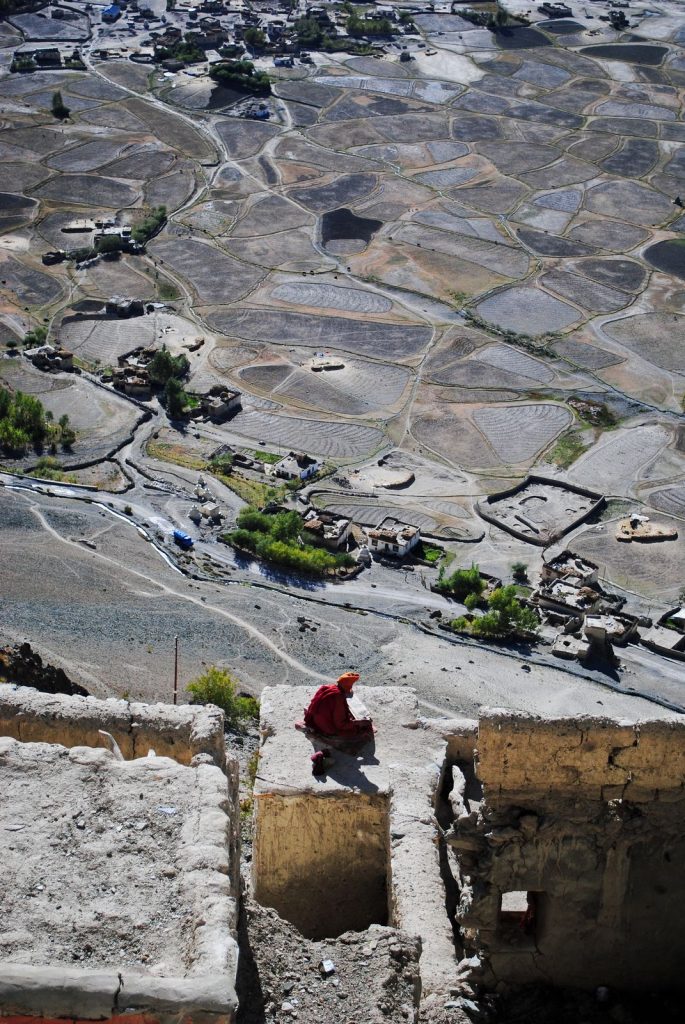
How Does the Road Journey from Manali to Padum Look Like?
The road journey from Manali to Padum covers about 246 km via Darcha and Shinkula Pass, split into two stages: the old Manali-Leh highway section to Darcha, then a new stretch through Shinkula Pass at 16,580 ft, Gombo Ranjan, and Kargiak into Zanskar. Most travelers take 3 to 4 driving days to reach Padum comfortably.
Let us look at the entire journey and how it will pan out for you. In the upcoming sections, I will pen down the detailed distances between key points, things you need to keep in mind, and the overall day plan for your easy reference!
Old Route Portion of Manali – Leh Highway: Manali to Darcha
Manali – Atal Tunnel – Sissu – Tandi – Keylong – Gemur – Darcha
Those familiar with the Manali to Leh highway will have no trouble deciphering this route. This journey follows the regular route, albeit with the addition of the Atal Tunnel, saving us precious time and ensuring easy access to the journey ahead.
The moment you enter the Lahaul Valley, right after the end of the 10 km stretch of the Atal Tunnel, you are transported into a new world with new vistas. You will not be disappointed, and with each turn, each angle is pretty beyond belief.
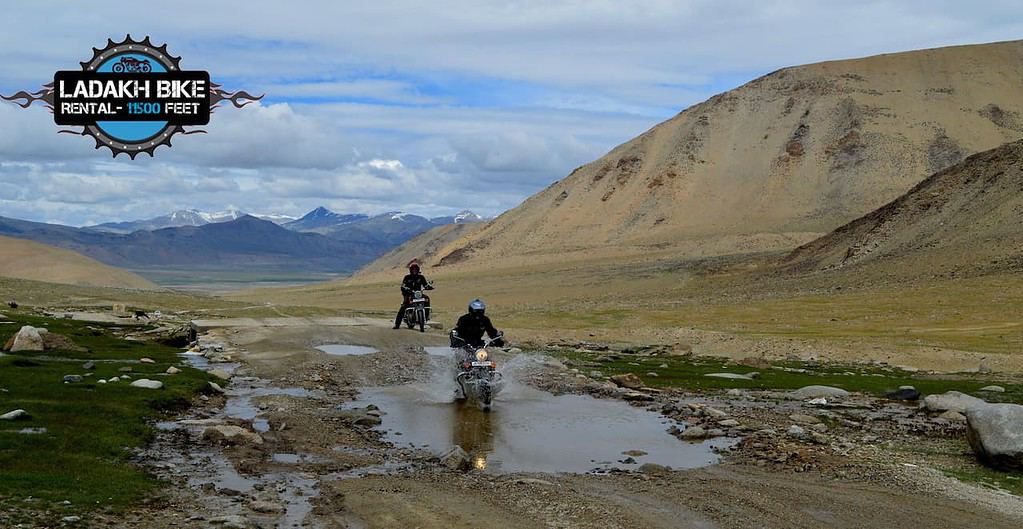
I have covered detailed places worth exploring along the Sissu, Tandi, and Keylong stretch in my Lahaul Valley sightseeing guide. One thing to keep in mind here is the importance of Tandi. Tandi is the last reliable petrol pump before the route diverges towards Zanskar. So ensure you fill up your tanks (and carry fuel with you, if on a motorcycle) for the remainder of the journey ahead. You will have access to a petrol pump when you reach Padum, which we will discuss below.
The last familiar stop on the conventional Manali to Leh highway, from where our path starts differing, is Darcha. A new road has been constructed, and there is a signboard put up here pointing toward Shinkula Pass. This is the route we will now take and explore unchartered territories, literally and figuratively.
New Route, Entering Zanskar: Darcha to Shinkula Pass to Padum
The route can be properly divided as below:
Darcha – Shinkula Pass – Lakhang – Gonbo Rangjan – Kurgaik – Purne – Phuktal Monastery – Padum
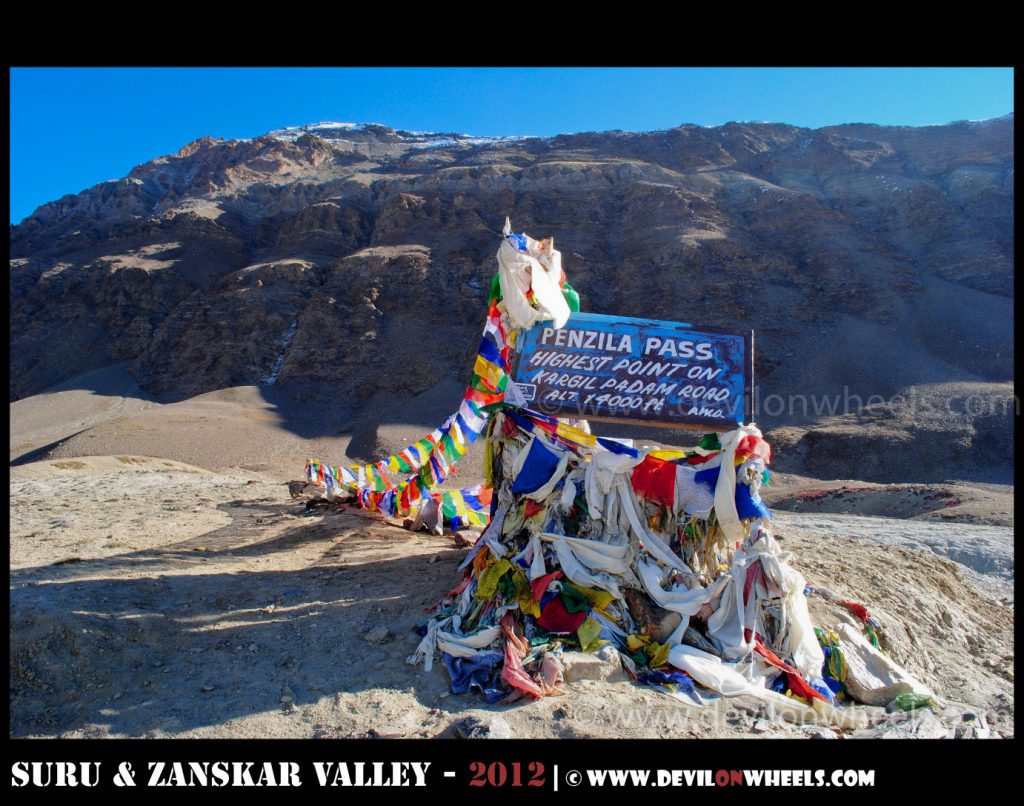
Okay, so now we earnestly begin new journeys on almost virgin roads, with no one around for as far as the eye can see, and beyond! Deep in the tribal districts of Lahaul Valley, you will be engulfed with a sense of awe and a crystal clear reality of being oh-so-insignificant. Today’s route involves you crossing the high altitude pass of Shinkula, which clocks in at a staggering 16,580 ft (5,050 m). This is higher than Baralacha La, Lachalung La et al. So, brace yourself for some tough conditions. Make sure you have read up on AMS and acclimatization before you head out.
Shinku-la (Singoo-la, Shingu-la)
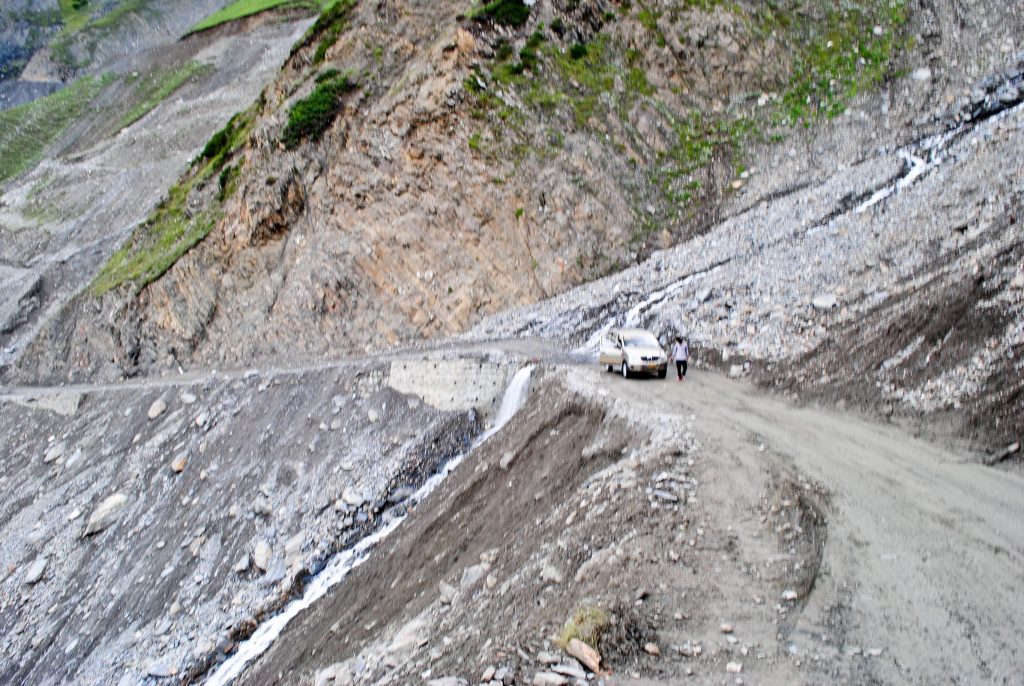
The road from Darcha towards Zanskar Sumdo is pretty well laid initially. Then, you will come across a path of off-roading up to Shinkula of about 25 km. BRO is actively blacktopping this stretch as part of the ongoing widening project, so road conditions improve each season. Shinkula is the gateway into Zanskar valley with small-time river crossings. Nothing too tough, though.
At least till the back-breaking climb to the pass begins. You will be immersed in the old-school Ladakhi road journey experience in no time, and that, truly, is the beauty of this new route. The mountains are barren, and the river crossings are aplenty. The journey towards the top accompanies you with the most cobalt of skies. The lack of oxygen can be felt, especially towards the top.


Once you get to the top of the pass, you will have a visual of the route you have followed up top. That feeling of accomplishment is quite beautiful and an immediate pat on the back. It truly gives you a lot of courage for the journey up ahead, especially when you have covered a tricky part of the journey upfront. This pass is a bit different from others in the sense that the topmost portion of the road is quite long, and you will be at quite a height for quite some time.
Gombo Ranjan
Right after you descend from Shinkula, the majority of your route will now move next to the Zanskar river. Also, remember the route is still fairly new and patchy in places, and you will come across multiple river crossings. Keep in mind that river crossings get more intense as the day warms up, so always start early. The views, however, will leave you breathless (and only partially because of lack of oxygen!). You will spot yaks, meadows, stunning peaks, and some of the most surreal moments of your life.
Before you reach Kargaik, you will spot the most beautiful mountain, known as the Gombo Ranjan. Standing tall and barren, this will be YOUR ABSOLUTE FAVORITE mountain in the whole world. One of the most revered and sacred mountains for the Zanskari folk, it stands alone and mighty. With snow-covered mountains as its backdrop and the river flowing through a meadow nearby, you will be hard-pressed to find a more heavenly place in the world.
Kargiak
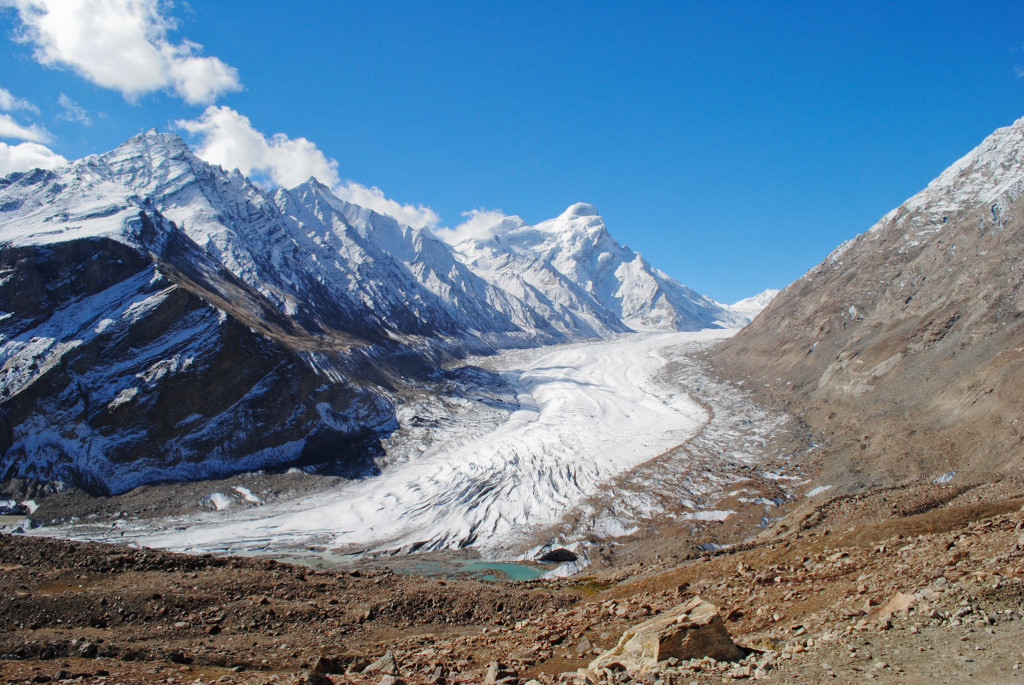
Now, after spending a lot of time here (as it is hard to pull back and drive up ahead), you reach the tiny hamlet of Kargiak. Kargiak is the first village of Zanskar and is inhabited along the Kargyak River. You can stay up here in a homestay as well if you are later in your travel plans. Another way to stay the night here is, of course, camping by the river. Though, keep in mind, when camping, ensure you have decent cover nearby. The area near Kurgaik involves about 20 km of crisscrossing the river, so plan accordingly. If camping is more your style, my camping in Ladakh guide covers gear and site selection tips that apply just as well out here in Zanskar.
Purne
I urge you, however, to go up ahead of the route and have your first night in Zanskar in Purne. There is a beautiful Himalayan homestay in the village, with the most loving family that can be your home for the day. Homestays in Purne charge about Rs 1,000 to Rs 1,500 per person, including dinner and breakfast (as of 2025-26). Options include the popular Himalayan Homestay Purne and Dolma Campsite and Homestays.
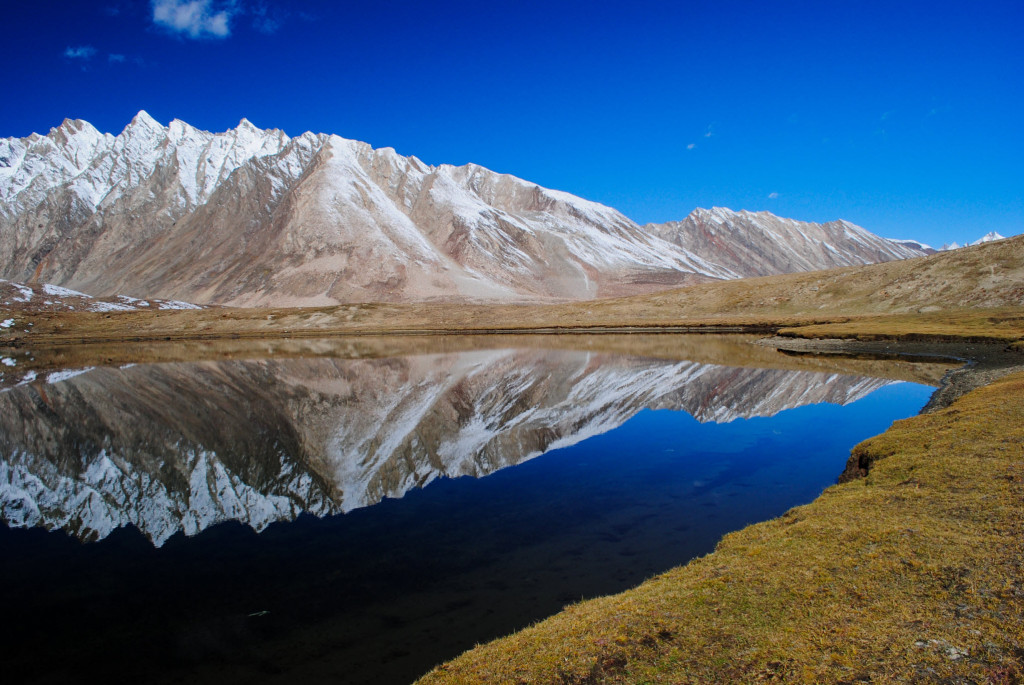
The drive towards Purne will provide you with unbelievable views. It is pretty much like a picture being painted right in front of you. The view keeps evolving, and everywhere you look, you will realize the beauty of barrenness like never before. Many small villages and multiple stupas are there to bring you to reality. One particular mountain is standing like a natural wall, a fortress even, with shades and colors to keep you enthralled.
Also, if you check out the brief itinerary, I suggest you stay the next day in this village itself. The reason for this is because of the most surreal monastery, only an 8 km hike away from here. Phugtal Gompa is unlike any experience. The village itself is stunning, and you will love the views. The river flows thick here, and the folk is kind. The lack of any materialistic comfort is not an adherent to their capabilities of kindness. The village has some surrounding greens which are a perfect contrast to the barren mountains.
The trek is lovely and scenic and sufficiently challenging. The trek takes approximately 1.5 hours one way from the parking point. The river keeps you company, but the mountain is a tough beast to conquer. You will cross a bridge to get to the other side of the river, and once you reach the monastery, you will be in shock. Cut upright with the mountain itself, words cannot describe its beauty. This is a not-to-be-missed place, and you will happily have to add another day to your trip to see this wonder, where the monastery seems like it is a part of the mountain itself, having always existed so long as the Himalayas have been around.
Padum
The next day, you move on to the key point from where you will have an option. Padum is a big settlement town with a market, restaurants, and a petrol pump nearby. Padum can pretty much compete with Leh if you ask me. This is a tourist spot waiting to be discovered. The views are ethereal, the huge patches of plain land with green sprinkled around, the mountains in the background, all barren and pretty. This city is stunning!
Important 2026 Update: As of 2026, there is one operational petrol pump in Padum (hand-operated, about Rs 88 per liter) and a newer pump at Stara (inaugurated November 2024). However, fuel availability can be unreliable as supply is limited. I suggest filling up your tanks completely at Tandi before starting this route and carrying extra fuel cans, especially if on a motorcycle. For more details on managing fuel in the region, check my detailed fuel availability guide for Ladakh.
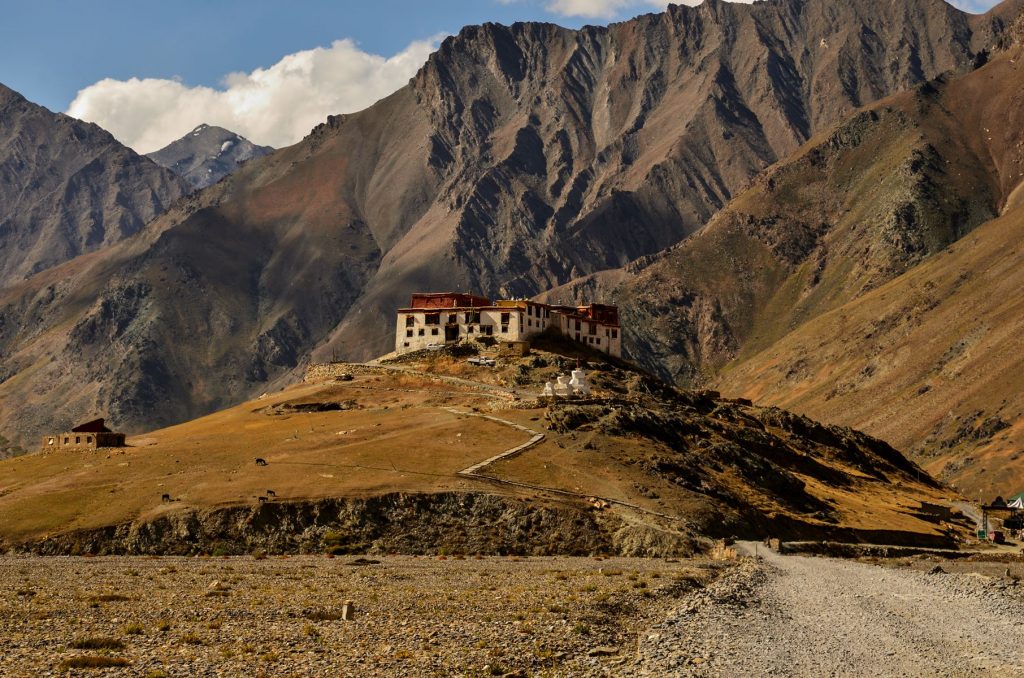
From Purne to Padum will take you about 3 hours. Some places are dangerous, some are just awesome. The three-hour journey will take you through many villages, and your driving time for today is only to reach Padum. I suggest you explore some places to your heart’s desire. Along the way, one of the most stunning villages is the Icchar Village, which seems like a monastery in itself. The village has a very castle feel and is even home to a statue of Maitreya Buddha.
While driving through Zanskar, you will come across many of these tiny hamlets, gompas, stupas, and monasteries. The valley has a different, unique feel to it. Being isolated and truly just with your group or self, reaching Padum is a kick to the senses. Padum is a big town with a sizeable Muslim population. Because of this, you will learn that shops are closed during Namaz. I personally love experiencing this amalgamation of cultures and how everyone co-exists with respect. Simply poetry to witness!
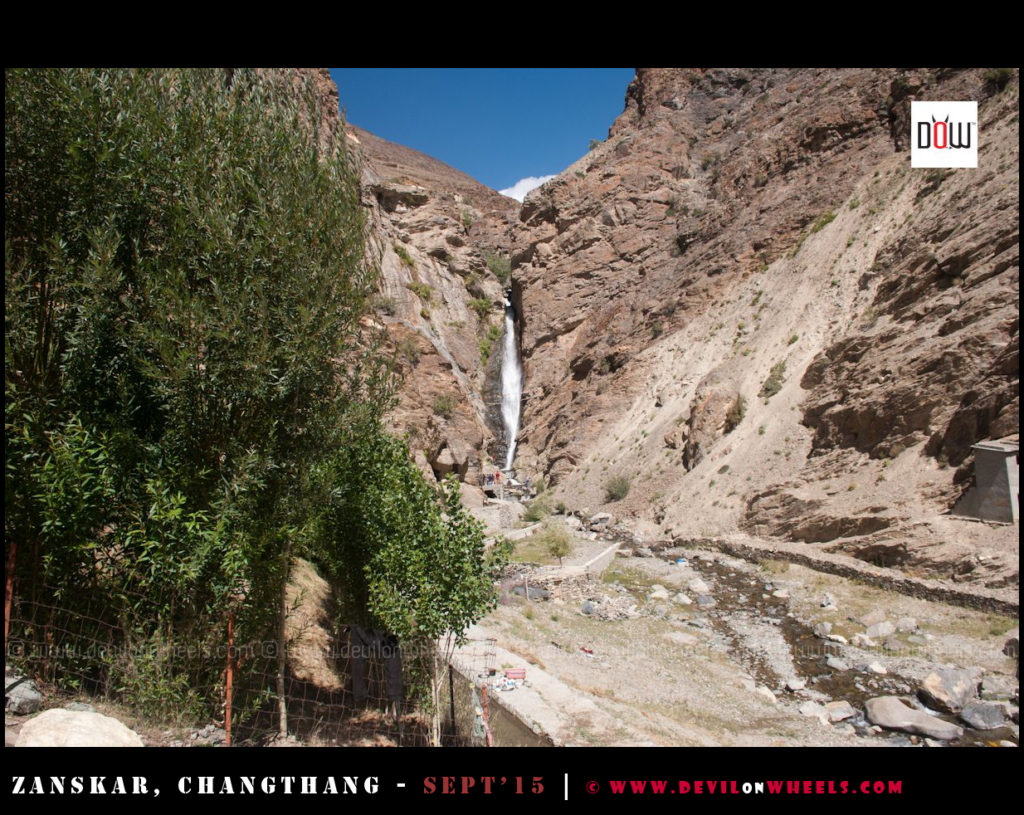
Spend the night in this beautiful town and explore the civilization of Zanskar here! Chinese or Tibetan food is a must, and OF COURSE, explore the typical Zanskari food. Other things to explore nearby include a beautiful waterfall near Sheela Village. For more on what to do here, check my Padum local sightseeing guide. Waterfalls are not synonymous with the region for some reason, and this particular one will leave you having a GREAT time. A memory waiting to happen.
Two Alternatives from Padum, Zanskar
This is where you get to make a choice and choose your route up ahead. There are two ways you can go from Padum. One route will take you deep through Zanskar into Suru Valley via Rangdum and Kargil, and the other will take you through Lingshed, Singey La, and Sirsir La passes directly towards Leh. The journey distance is mentioned in the distance chart below. For a broader look at planning your Zanskar trip, you can also refer to my Zanskar Valley beginners guide.
Remember there are petrol pumps near Padum on both routes. Remember to fill up and carry fuel. After this, your major fuel source will be in bigger cities only.
Zanskar Route Via Kargil
This route is expected to be an all-weather route once the Shinku La Tunnel is complete (expected August 2028, as per BRO’s latest timeline). The overall journey is as below.
Padum – Rangdum – Kargil – Leh
You will know of Rangdum if you have read my blog on Suru Valley. The roads are well laid for quite a huge portion. Since the overall distance to reach Kargil from this route is about 260+ km, I would highly recommend breaking your trip into two portions and having a night stay at Rangdum. The journey is beautiful, and the views are spectacular. The river will keep you company for the most part, and the snow-covered mountains act as the cherry on top.
Many little villages are sprinkled across the route as well. Also, there is a check post en route to Rangdum, where they will be noting your details (number of passengers, car number, where to or from, etc.) as is common in the region. This helps them keep track of your whereabouts and trace you in case needed. What is stunning about today’s route is that you are presented with multiple opportunities to cross bridges and experience beautiful new vistas! Nothing disappoints, not in Zanskar.
Rangdum
Situated at an elevation of 11,998 ft, the isolated location tucked deep in the Suru Valley is a little place called Rangdum. Located midway between Kargil and Padum, the area is about 100 km from Kargil. The difficulties on the road are more than made up by the views here. There is a JKTDC bungalow here where you can easily stay and make the most of your time in this stunning wonder!
Kargil
Reach Kargil the next day. I have covered the Rangdum to Kargil part extensively. However, just to give you a brief, the road will mostly keep you company with the Suru River, a tributary of the Indus River, fed by the Panzella glacier. The road towards Kargil from Rangdum is decent, but I truly say that every corner of Suru Valley is worth exploring. So, I write this “getting to a destination” post with a heavy heart.
Stay overnight at Kargil and make your way to Leh as per the Srinagar to Kargil to Leh route.
Leh to Padum – Zanskar Valley Via Lingshed, Singey La, Sirsir La
The route from this alternative is as below:
Padum – Zangla – Lingshed – Singela – Photoskar – Sirsirla – Hanupatta / Wanla – Khaltse – Leh
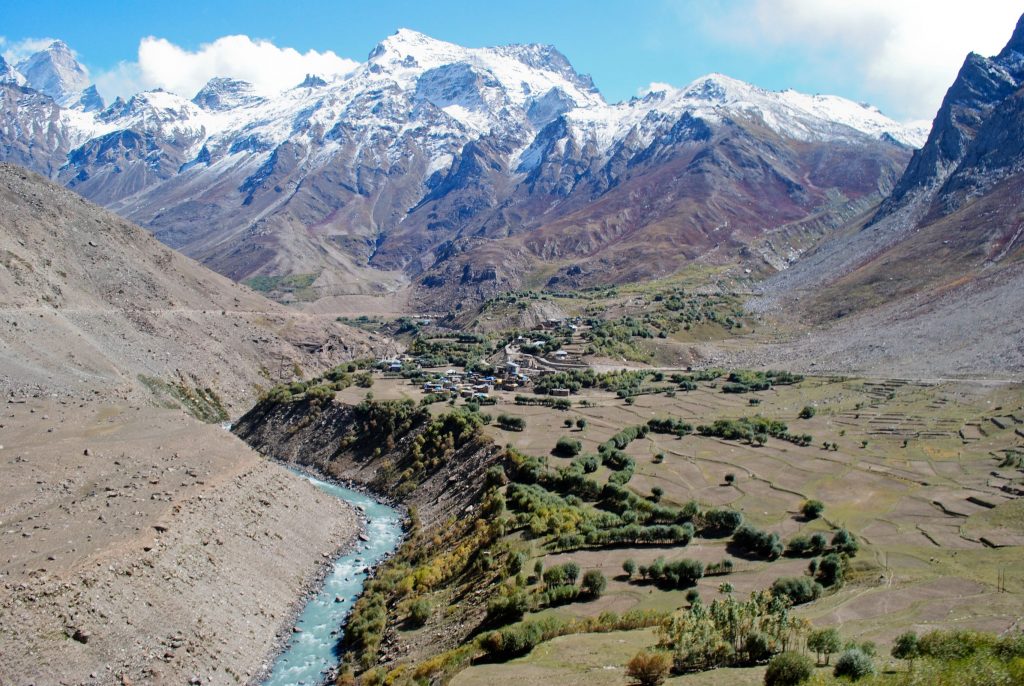
This is the more adventurous of journeys if you ask me. There is a lot to see here, a lot to cover. The road is newly built and the views will leave you speechless. This section of the journey is known as the “untraceable” road, and for good reason. Immediately after taking a right from Padum towards Zangla, there is a petrol pump about 4 km down. Zangla’s distance from Padum is about 40 km, and the road is well made. Post that, you will be on some off-roading journey towards Lingshed and up ahead. Signature views, synonymous with the Zanskar valley, keep you company for the day.
Zangla
After Zangla village, you will have to again cross a checkpoint where all your details will be recorded. The height keeps increasing after Zangla. Three passes await you today: Murgunla, Singeyla, and Sirsirla. These are not as tough except Sirsirla, which is at a mighty elevation. The journey is so remote you will not see the route on Google Maps. The journey will be back-breaking and tough. The valleys will also start wrapping you up, starkly different than the Rangdum route especially. The mountains are squeezing in with each other, adding to the intimidation. The views, however, will give you an out-of-body experience.
While the journey in km does not sound too long, the roads are quite difficult, and it is advisable to stay in Zangla for the night. This will also allow you to explore Zangla village, where there is a beautiful monastery. There is a tiny guesthouse below the monastery that will make for a great home for the night.

Lingshed
This day will require you to travel about 220 km+. However, this journey can be broken down too, and you can plan on having a night stop at Khaltse. When you leave from Zangla towards Lingshed, the journey will take you through several loops, almost similar to the Gata Loops. The roads are non-existent, and you will be off-roading very near the hills, accompanied by the river. From Lingshed, you will need to take the route that goes up (not down towards the village), and then you will reach the Singey La pass. But wait, right after Lingshed you will come across multiple tents pitched where you can get yourself some much-needed food.
Towards Leh
This route ahead will take you through the small settlements of Photoksar and then a mighty pass of Sirsirla Pass. From here, you will reach Hanupatta, after which God will grace you with the most beautiful and well-deserved tarmac road towards Wanla (which is a village, not a pass!). Take a right on the highway towards Khaltse, from where Leh is about 80 km away. I urge you to stay at Khaltse because the journey has been tough.
Explore the region of Ladakh to the earnest and your heart’s desire! For your complete Ladakh planning, do check my best time to travel Ladakh and Zanskar guide and the Ladakh permits guide for the latest permit information.
What Are the Distances on the Manali to Leh Route via Zanskar?
The Manali to Leh via Zanskar route covers 699 km via Kargil or 536 km via Lingshed. Padum to Kargil alone covers 236 km via Rangdum, while Manali to Padum is 246 km via Shinkula Pass. Kargil to Leh adds a further 217 km to complete the journey.
Via Kargil Route (recommended for first-timers):
| Segment | Distance |
|---|---|
| Manali to Gemur (via Atal Tunnel) | 86 km |
| Gemur to Purne (via Shinkula Pass) | 105 km |
| Purne to Padum | 55 km |
| Padum to Rangdum | 106 km |
| Rangdum to Kargil | 130 km |
| Kargil to Leh | 217 km |
| Total (Via Kargil) | ~699 km |
Via Lingshed Route (for experienced off-roaders):
| Segment | Distance |
|---|---|
| Manali to Padum (as above) | 246 km |
| Padum to Zangla | 30 km |
| Zangla to Leh (via Lingshed, Khaltse) | 260 km |
| Total (Via Lingshed) | ~536 km |
How Far Is Shinkula Pass From Leh?
Shinkula Pass to Leh covers approximately 588 km via the Kargil route, the most common path for first-time travelers on this new Zanskar road. The journey passes through Purne, Padum, Rangdum, and Kargil before reaching Leh, and takes 3 to 4 driving days depending on rest stops and road conditions near Kargiak.
This leg starts right after you cross the 16,580 ft pass, descend past Gombo Ranjan, and drop into the Zanskar villages. Here is how the remaining distance to Leh breaks down leg by leg, using the same segment data from the distance chart above.
| Leg | Distance | Approx Time |
|---|---|---|
| Shinkula Pass to Purne (via Gombo Ranjan, Kargiak) | ~80 km | 6-7 hours |
| Purne to Padum | 55 km | ~3 hours |
| Padum to Rangdum | 106 km | ~5 hours |
| Rangdum to Kargil | 130 km | 6-7 hours |
| Kargil to Leh | 217 km | 6-7 hours |
| Total (Shinkula Pass to Leh) | ~588 km | 3-4 driving days |
The Shinkula Pass to Purne stretch is the toughest part of this leg, with the Kargiak river crossings getting harder as the day warms up. Once you clear Kargil, the road to Leh joins the familiar, well-paved Srinagar-Leh highway, so that last 217 km moves noticeably faster than anything before it.
What Is the Suggested Itinerary for Manali to Leh via Zanskar?
Via Kargil Route (7 days):
Day 1: Manali to Gemur (86 km, 4-5 hours via Atal Tunnel)
Day 2: Gemur to Kargaik (via Shinkula Pass, ~80 km, full day)
Day 3: Kargaik to Purne (~25 km, half day, settle in)
Day 4: Purne (explore Phuktal Monastery, 8 km trek each way)
Day 5: Purne to Rangdum (via Padum, ~161 km, full day)
Day 6: Rangdum to Kargil (130 km, 6-7 hours)
Day 7: Kargil to Leh (217 km, 6-7 hours)
Via Lingshed Route (replace Days 5-7):
Day 5: Purne to Zangla (via Padum, ~125 km)
Day 6: Zangla to Khaltse (via Lingshed, Singey La, Sirsir La, ~180 km, tough day)
Day 7: Khaltse to Leh (80 km, easy drive)
What Are the Important Things to Know Before Traveling This Route?
- Petrol and Fuel: Tandi is the last reliable petrol pump before the route diverges. After that, you have pumps near Padum: one hand-operated pump in Padum itself and one at Stara (inaugurated November 2024), plus a pump about 4 km towards Zangla. As of 2025-26, fuel in Padum costs about Rs 88 per liter, but availability is unreliable. Fill up to the fullest and carry extra fuel with you. I suggest carrying at least 20-30 liters in jerry cans. For detailed fuel planning tips, refer to my fuel availability guide for Ladakh.
- Homestays and Accommodation: Homestays along the route charge Rs 1,000 to Rs 1,500 per person, including two meals (as of 2025-26). In Purne, look for Himalayan Homestay Purne or Dolma Campsite and Homestays. In Padum, options like Ghaskith Guest House and Hotel Potala offer basic but comfortable stays. Padum Eco Homestay charges around Rs 2,200 per person per night for a more comfortable option.
- Camping: Camping is allowed in many spots near key towns. Ensure you have decent cover nearby and carry all necessary camping equipment. For detailed camping advice, check my camping in Zanskar guide.
- Mobile Connectivity: Only BSNL postpaid works, and that too in very few places. Jio and Airtel signals drop after Darcha. Padum has decent BSNL connectivity and even has a cyber cafe. For more details, check my mobile connectivity in Zanskar guide. Download offline maps before you start.
- Acute Mountain Sickness (AMS): AMS is a real thing, and you must acclimatize properly before starting the journey. Speak with your doctor about any medication you must have or any precautions you should take. Shinkula Pass is at 16,580 ft, so take it seriously.
- Clothing and Layers: Wear proper clothes and dress in layers. Temperatures in the summertime might be in the early 10s, but with the sun right above you, it can definitely feel scorching. Temperatures can change super quickly, so keep that in mind.
- Sun Protection: Sunscreen and eyewear are a must. The UV rays at this altitude are intense.
- River Crossings: Keep an eye out for river crossings. These can be tough. So, it is advisable to start your travels early in the day. As the sun rises, the water flow can become intense. The Kurgaik section alone has about 20 km of river crisscrossing.
- Checkpoints and Documents: There are multiple checkpoints near Padum, Zanskar, and Rangdum. Keep your documents ready (driving license, vehicle RC, ID proof). Inner line permits are not required for domestic tourists as of 2026.
- Responsible Travel: Be kind to the people, to nature. Do not pollute, and do not dirty the place. Pick up after yourself and leave the place as how you got it when you got there. The DwD community strongly believes in responsible travel in the Himalayas.
When Is the Best Time to Travel the Manali to Leh via Zanskar Route?
The Manali to Leh via Zanskar route via Shinkula Pass is open only from mid-June to early October, depending on snowfall and BRO clearance. The best time to visit Shinkula Pass is from late June to September, when the snow has melted and the routes are open for travel. If October travel is unavoidable, I have a detailed breakdown of which routes stay open and what actually changes on the ground in my Ladakh in October guide.
July and August are peak months with the best weather conditions. July can also bring occasional rain, and as seen in September 2025, flash floods can temporarily block the Darcha-Shinkula stretch. September offers clearer skies and fewer crowds but can get cold towards the end of the month. I would avoid attempting this route in late September or October as the passes start closing and weather becomes unpredictable. For a broader look at seasonal conditions, check my best time to travel Ladakh and Zanskar guide.
What Kind of Vehicle Do I Need for This Route?
Given the rough terrain, river crossings, and off-road sections (especially near Kurgaik and between Darcha and Shinkula), I would highly recommend a 4X4 SUV for this journey. Sedans and hatchbacks are NOT recommended for this route, unlike the standard Manali to Leh highway. If you were hoping to rent a self-drive car once you reach Ladakh itself, keep in mind that rented self-drive cars are banned for local sightseeing within Ladakh. My self-drive car ban guide explains the rule and what you can do instead.
For motorcycles, Royal Enfield 350cc or above is ideal. The route has multiple water crossings and steep climbs where a good engine and ground clearance are essential. Make sure your vehicle is in excellent mechanical condition before attempting this route. Keep in mind there are no mechanics between Darcha and Padum, so carry a basic toolkit and essential spares. For a full checklist of what to carry, refer to my must-carry items for a Ladakh self-drive trip. If you would rather skip the self-drive logistics altogether, it is also possible to reach Zanskar on a budget using buses and shared transport, which I cover in my guide to a budget Zanskar trip by public transport.
Frequently Asked Questions
Is the Manali to Leh via Zanskar route open in 2026?
Yes, the Nimmu-Padum-Darcha road is open during summer months (typically mid-June to early October). The road construction was completed in March 2024, and BRO continues widening and blacktopping work. The route is still seasonal and closes in winter due to snow at Shinkula Pass. Once the Shinku La Tunnel is completed (expected August 2028), this will become an all-weather route.
How many days does it take from Manali to Leh via Zanskar?
A comfortable itinerary takes 7 days from Manali to Leh via Zanskar, including a day to explore Phuktal Monastery. If you are an experienced driver and do not mind long days, you can do it in 5-6 days, but I would not recommend rushing through this stunning route.
Where can I get petrol on the Manali to Zanskar route?
The last reliable petrol pump is at Tandi (before Darcha). After that, you will find a hand-operated pump in Padum (about Rs 88/liter, supply unreliable), a newer pump at Stara (inaugurated November 2024), and one about 4 km towards Zangla. I strongly suggest filling up completely at Tandi and carrying extra fuel in jerry cans (at least 20-30 liters).
Can I do this route in a sedan or hatchback?
I would NOT recommend sedans or hatchbacks for this route. The terrain has multiple off-road sections, river crossings, and rough patches, especially between Darcha and Shinkula Pass, and near Kurgaik. A 4X4 SUV is highly recommended. If on a motorcycle, go for Royal Enfield 350cc or above.
Do I need permits for the Manali to Zanskar route?
No, inner line permits are not required for domestic tourists for this route as of 2026. You will encounter checkpoints where your details (vehicle number, passenger count, ID proof) will be recorded for safety and tracking purposes.
When will the Shinku La Tunnel be completed?
The Shinku La Tunnel is under active construction as of 2026, with major work having started in May 2025 under BRO’s “Project Yojak.” The tunnel will be 4.1 km long (twin-tube, 4 lanes) and is being built at a cost of Rs 1,681 crore. According to the latest BRO timeline, completion is expected by August 2028. Once complete, it will bypass the 16,580 ft Shinkula Pass entirely, cut the Manali to Leh distance by 60 km, and connect 15 remote villages of Zanskar that are currently cut off in winter.
How difficult is the Phuktal Monastery trek from Purne?
The Phuktal Monastery trek from Purne takes approximately 1.5 hours one way from the parking point. It is a moderate trek with some steep ascents and descents, narrow paths, and altitude making it tougher than a simple valley walk. Fit beginners who respect altitude can attempt it, but I recommend going with an experienced local guide.
What is the mobile network like on this route?
Mobile connectivity is very limited. Only BSNL postpaid works in some areas. Jio and Airtel signals are lost after Darcha. Padum has decent BSNL connectivity and even has a cyber cafe. For most of the route, expect no mobile network. Inform your family before starting the journey and download offline maps.
How far is Shinkula Pass from Leh?
Shinkula Pass to Leh is approximately 588 km via the Kargil route, passing through Purne, Padum, Rangdum, and Kargil, which takes about 3 to 4 driving days. This does not include the Manali to Shinkula Pass stretch, which adds roughly 111 km more if you are starting your trip from Manali.
Conclusion
This up-and-coming, brand-new route is stunning and beautiful, something words cannot describe. For folks that love Ladakh for its isolation and sheer in-your-face intimidation from the hills surrounding you, this new route is a total beast! As someone who has explored brand new roads in the region, let me tell you, your amazement at the sheer grit of BRO will be skyrocketing.
Overall, this route has taken the army and BRO around three decades to construct. Yes, this is an absolute boon to the tiny hamlets and settlements of the region. So, I urge you to be kind to the people and the nature surrounding you. Be helpful to anyone you might see on the road (though that number will be limited!).
This route is tough. It will test your patience and your skills and challenge you in every way possible. Remember to show respect to nature and treat it kindly. Do not rush when you see a strip of tarmac road, though I do understand that temptation well. Just be patient, enjoy the route, the barrenness, and all that Zanskar has to offer.
For discussions, queries, or finding travel partners for your Zanskar adventure, feel free to check out the DwD Community section on this blog. If you found this guide helpful, do share it with your friends and family planning a Ladakh trip. For a complete Zanskar itinerary, check my Zanskar Valley itinerary and Zanskar budget guide.
Good luck, my friend, and do share LOTS of pictures with me please when you do visit! Looking forward to hearing about your journeys, dear travelers 🙂 …
Last Updated: August 2026 (v2 AEO structure pass, added Shinkula Pass to Leh distance table and May 2026 bridge-closure road status update)

1 Comment
Comments section gets closed in 90 days. To ask your travel questions, you can follow my YouTube Channel for a faster reply or for a much slower reply follow me on Instagram. :)
Can a 200cc bike make it till rangdum via shinku la? (solo traveller)
Also, till when can a journey be planned, as in shinku la remains motorable for a bike till when? I am planning this journey around mid-october.