


Last Updated: March 2026. Are you looking for a truly offbeat place in Spiti Valley, one that even repeat visitors to Spiti have likely missed? Mane village, a set of twin villages called Maneyogma and Manegogma, sits quietly on a green plateau above the Spiti River at an altitude of about 3,600 meters (11,800 Ft). With a population of just 440 people across 93 households, Mane is one of the most lush and least visited villages in all of Spiti. If you are the kind of traveler who wants to go beyond Kaza, Key, and Chandratal, then Mane deserves a spot on your itinerary.
Let's quickly dive into the details:
What Makes Mane Village Special in Spiti Valley?
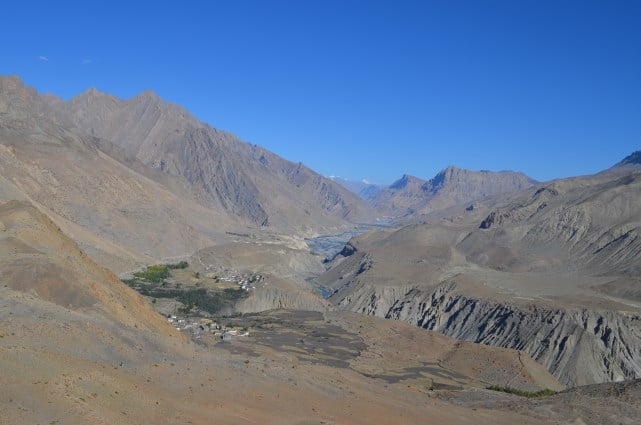
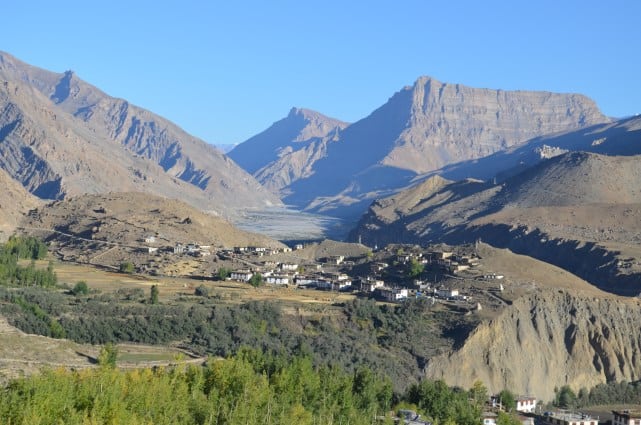
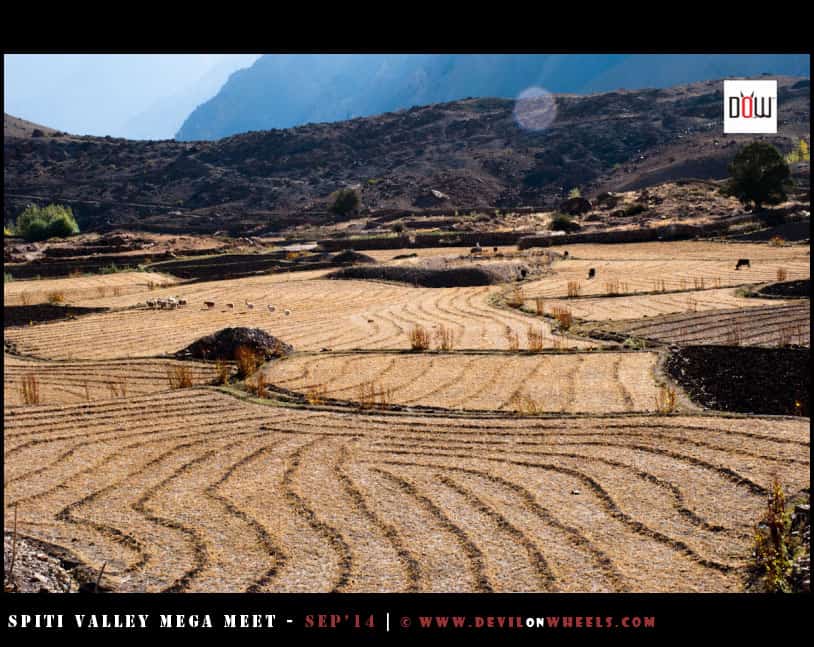
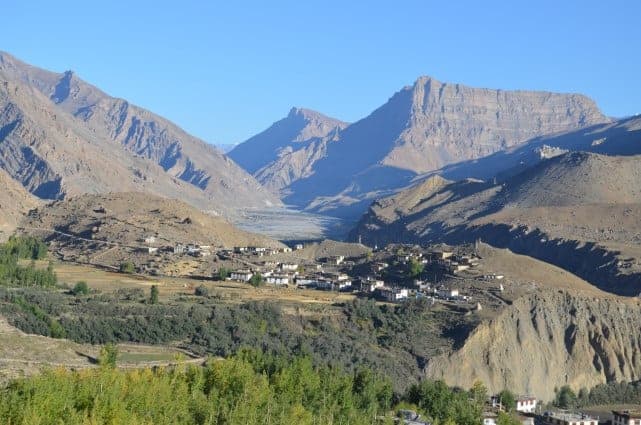
Mane is considered to be Spiti’s most flourished village with a surprisingly wide range of vegetation and greenery. While most of Spiti is a cold desert with barren mountains, Mane stands out with its lush barley fields, patches of cabbage, carrots, and potatoes, and a general sense of life that you do not see in other Spiti villages. This contrast is what makes Mane so striking. On paper, it is just a collection of about 93 households spread across two sections. But in person, the village feels like a green oasis tucked into the stark brown landscape of the valley.
The twin villages of Manegogma (lower Mane) and Maneyogma (upper Mane) were once a single village. A flash flood some years ago split the settlement into two. Manegogma sits at the lower elevation and Maneyogma higher up. Both are connected by a motorable road, roughly 3 km apart. The total area covered by both villages is about 776 hectares, which is quite large for a Spiti settlement. This twin-village layout is not a recent development either. Indian mountaineer Harish Kapadia documented passing through both Mane Kogma and Mane Yogma back in 1994, while his team was attempting an ascent of the Manirang peak, describing the same green plateau rising above the barren slope that visitors still remark on today.
Where Is Mane Village Located and How Far Is It from Kaza?
Mane village is located on the left bank of the Spiti River, about 33 km from Kaza and 26 km from Tabo via NH-505. The village sits on a small plateau roughly 200 meters above the river. To reach Mane, you need to turn off the main highway at a point called Atergu Bridge (not to be confused with Attargo Bridge of Pin Valley). This bridge is about 20 km after Kaza on your right, or about 4 km before Attargo Bridge if coming from Tabo.
After crossing the bridge, the road immediately starts climbing. In about 3 km, you will reach Manegogma (lower Mane). Another 3 km of driving takes you to Maneyogma (upper Mane). The road is unpaved and can be rough in parts, but any car can manage it in dry weather. During monsoon, I would suggest an SUV or at least a high ground clearance vehicle, as the road can get slippery. Keep in mind that Mane is 6 km off the main highway, so you need to plan for the detour.
For readers who like exact coordinates, Mane sits at 31°57’33″N 78°01’57″E. The two villages are closer than the road makes them feel. In a straight line across the nullah separating them, Manegogma and Maneyogma are just 1 km apart, but the winding motorable road between them runs about 3.3 km. A steel girder bridge carries this road across the nullah, so despite the unpaved approach from the highway, the crossing between the two villages themselves is straightforward.
The village falls under the Dhankar Gram Panchayat and has the postal code 172113. It has a primary school in Manegogma and a senior secondary school (Classes 1-12) in Maneyogma. Piped water, electricity, and telephone connections are available.
Why Does Only BSNL Network Work in Mane Village?
In case you are wondering why Jio and Airtel do not work here while BSNL does, there is a specific reason. Ahead of the 34th Kalachakra, a major Buddhist teaching event the Dalai Lama had planned for January 2017 at Dhankar Gompa just across the Spiti River, BSNL installed a solar-powered base transmission tower in Manegogma, linked by satellite to handle the expected footfall of monks and pilgrims. The Kalachakra event was eventually shifted to Bodh Gaya, but the tower stayed behind. It remains the only functioning mobile network tower in the Mane villages to this day. Hence, if you are on Jio or Airtel, carry a BSNL postpaid SIM or be ready to stay offline for your visit.
Practical Info Box
| Detail | Information |
|---|---|
| Altitude | 3,560-3,650 m (11,680-11,980 Ft) |
| GPS Coordinates | 31°57’33″N 78°01’57″E |
| Distance from Kaza | 33 km via NH-505 + 6 km off-highway |
| Distance from Tabo | 26 km via NH-505 + 6 km off-highway |
| Population | 440 (2011 Census), 93 households |
| Best Time to Visit | June to September |
| Mobile Network | BSNL postpaid only |
| Nearest Petrol Pump | Kaza (33 km) |
| Nearest ATM | Kaza |
| Nearest Hospital | Kaza Community Health Centre |
| Permit Required | No (Indian nationals). Foreigners need ILP from Reckong Peo or Kaza |
| Accommodation | Homestays (Rs 800-1,500/night including meals) |
How to Reach Mane Village in Spiti Valley?
In order to reach Mane, you first need to make your way to Spiti Valley. There are two main routes, and we have a detailed article about how to plan your Spiti Valley itinerary for your reference. Let me briefly cover both routes here.
Route 1: Via Shimla and Kinnaur (Open Year-Round)
The easier and more commonly used route is Spiti via Shimla and Kinnaur. You start from Shimla and reach Kaza via Narkanda, Rampur, Reckong Peo, and Nako. This is a journey of about 430 km and takes at least 2 days to complete. I genuinely suggest making the most of this journey, as the Kinnaur Valley stretch is spectacular. Do not just rush through to reach Spiti.
Route 2: Via Manali (Open Mid-May to Mid-October)
The second route is Spiti via Manali. This route goes through the Atal Tunnel and then over Kunzum Pass. The distance is only about 200 km from Manali to Kaza, and you can cover it in a single long day. However, the altitude gain is steep and this route is harder on the body. It remains open only from mid-May to mid-October.
By Public Transport
Traveling to Spiti by public transport is quite doable. HRTC runs a daily bus from Shimla to Kaza (via Reckong Peo), and from Manali to Kaza (via Atal Tunnel and Kunzum Pass) during summer. From Kaza, there is no direct public bus to Mane. You will need to take a shared taxi or hitch a ride to the Atergu Bridge turn-off, and then walk or arrange local transport for the 6 km climb to the village. Alternatively, you can hire a taxi from Kaza for about Rs 2,500-3,000 for a day trip to Mane.
From Kaza to Mane Village
Once you have arrived in Kaza (or in Tabo if coming from the Shimla side), head towards the Kaza-Tabo highway. About 20 km from Kaza, you will see the Atergu Bridge on your right. If you are coming from Tabo, this bridge will be on your left, about 4 km before the Attargo Bridge that leads to Pin Valley. Cross the bridge and the road will start climbing immediately. In about 6 km total, you will be in Mane.
What Are the Best Things to Do in Mane Village?
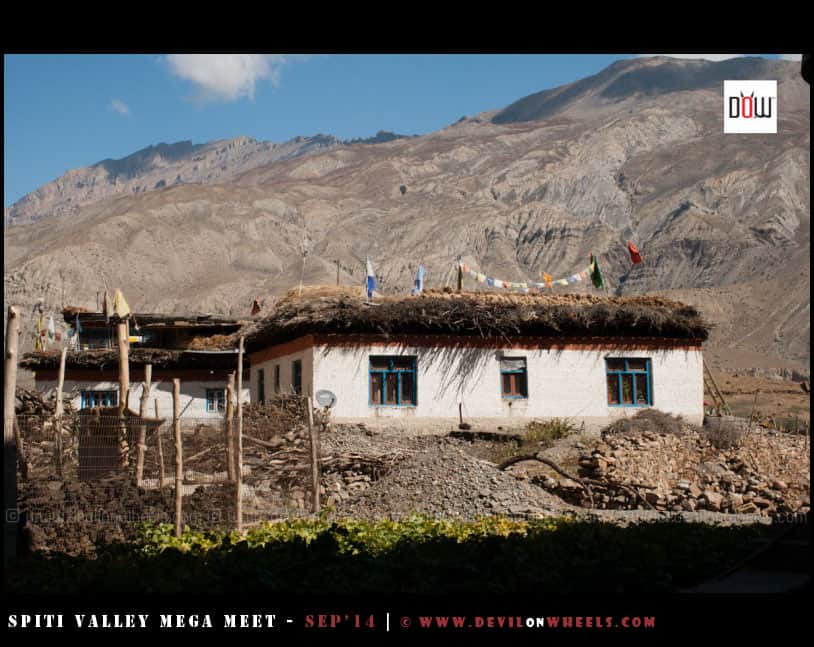
If you are a tourist looking for a checklist of attractions, Mane is not the place for you. But if you are a traveler wanting to immerse yourself in a place, to understand the culture and rhythm of a Spiti village, and to give as much as you get, then Mane scores in spades. Much like any other high village of Spiti Valley, the natural beauty and the vivid scenery is Mane’s greatest draw.


How Difficult Is the Sopona Lake Trek from Mane?
Undoubtedly, if someone knows about Mane, it is because of Sopona Lake. This tiny seasonal glacial lake is located about 6 km from Maneyogma (upper Mane) at an altitude of approximately 4,122 meters (13,520 Ft). The lake is formed by glacier melt from the Manirang range and only exists from May to October. As winter arrives, the lake vanishes completely. You can read my detailed Sopona Lake travel guide for the full trek information.
The trek from Maneyogma to Sopona Lake takes about 2.5 to 3 hours at a normal pace. The trail is not well-marked but is easily navigable. I will suggest taking a local villager as a guide. Not only will they take you to the lake more efficiently, but they will also tell you about the place and show you things you might miss. And as a beautiful coincidence, you will be supporting the livelihood of the villagers. You can also camp near the lake overnight, so carry your camping gear and warm clothes if you plan to do that.

Village Gompa
Like every village in Spiti, Mane has a deep connection to Tibetan Buddhism. The village monastery (gompa) is located on top of a small hill and makes for a stunning spot to get a panoramic view of both villages and the valley around them. The gompa is simple and humble, not as grand as Dhankar or Tabo, but its setting is genuinely photogenic.
Chudolsa Cave
Chudolsa is a largely unexplored cave near Mane. For about 7 months of the year, water flows through the cave. During the dry months from November to mid-April, you can enter and explore it. What makes it interesting is that no one knows the actual length of the cave. It is one of those genuinely mysterious attractions that Spiti hides away for the curious traveler.
Confluence of Pin and Spiti Rivers
Before you turn off the highway and cross the bridge towards Mane, you can see the confluence of the Pin and Spiti rivers. The merging of two distinct colored rivers is a sight worth stopping for. Keep your camera ready.
Manirang Trek
Mount Manirang (6,593 m / 21,630 Ft) is known as the crown of Spiti Valley and is considered one of the most challenging and remote high-altitude treks in the Himalayas. It lies on the border of Kinnaur and Lahaul-Spiti. Manirang Pass at 5,550 m (18,210 Ft) is regarded as the least explored pass in the region. Mane village acts as the base for this trek. The route takes you from Mane through the pass and towards Ropa Village in Kinnaur. This is a serious expedition, not a casual trek. Only experienced mountaineers with proper permits and equipment should attempt it.
Stargazing and Photography
Nights in Mane are something else entirely. With virtually zero light pollution and the thin atmosphere at 11,800 Ft, the entire Milky Way is visible to the naked eye. If you are into astrophotography, this is one of the best spots in Spiti for long exposure shots. With the village houses and barren mountains as your foreground, even the sunrises and sunsets are spectacular here.
What Is the Culture and Tradition of Mane Village?
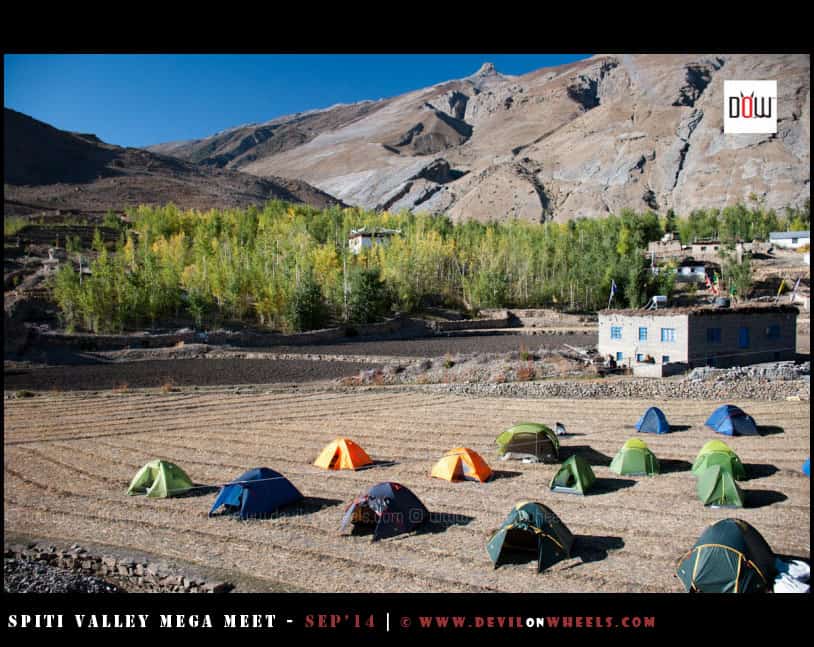
The local way of life in Mane is humble, tranquil, and deeply rooted in farming. Barley, cabbage, carrots, and potatoes are the main crops. Animal husbandry is the other livelihood. In terms of religion, the area is immersed in Tibetan Buddhism, and villagers converse in Bodi (Bodhi), which is a mix of Tibetan, Mongolian, and bits of Hindi and Chinese.
There is fascinating local lore that says Mane was once a cursed village. Basically, a villager’s soul did not “move on” and haunted the village and its residents. A monk from Kaza and Dharamshala was called in to bless the village. After several days of rituals, the village was cleansed and both the restless soul and the villagers found peace.
Every three years, the people of Mane get together for a special ceremony that involves three days of prayer and ends with a Cham dance performed by monks from Dhankar Monastery. During every festival, the villagers divide the work among households, and the prayer takes place in one home selected through a lottery system. This kind of communal participation is what makes Spiti villages so special.
When Is the Best Time to Visit Mane Village?
Like with the rest of Spiti, the best time to visit Mane is during the summer months of June to September. The weather is pleasant with daytime temperatures between 15-25 degrees Celsius and nights dropping to around 5-10 degrees. Roads are in their best condition, and Sopona Lake is accessible only during these months. If you come too early or too late, the lake will be either frozen or just slush.
Since Spiti lies in a rain shadow area, the valley itself does not receive much direct rainfall. However, the approach routes via Shimla and Manali do experience heavy monsoon rains in July and August, which can cause landslides and road blockages. Hence, if you are traveling during monsoon, keep a few buffer days in your itinerary and be prepared for delays. Even in summer, I want to remind you to carry layers and warm clothes. The temperature at 11,800 Ft can change quickly.
Where to Stay in Mane Village?
Since Mane is a remote and rarely visited village, there are no hotels here. Accommodation is available in the form of homestays and camping. Some villagers have extended their homes by a few rooms and rent those out to visitors. Your stay will be basic but comfortable, and meals are typically included in the tariff. Expect to pay around Rs 800-1,500 per person per night including breakfast and dinner.
Sonam Homestay, Maneyogma
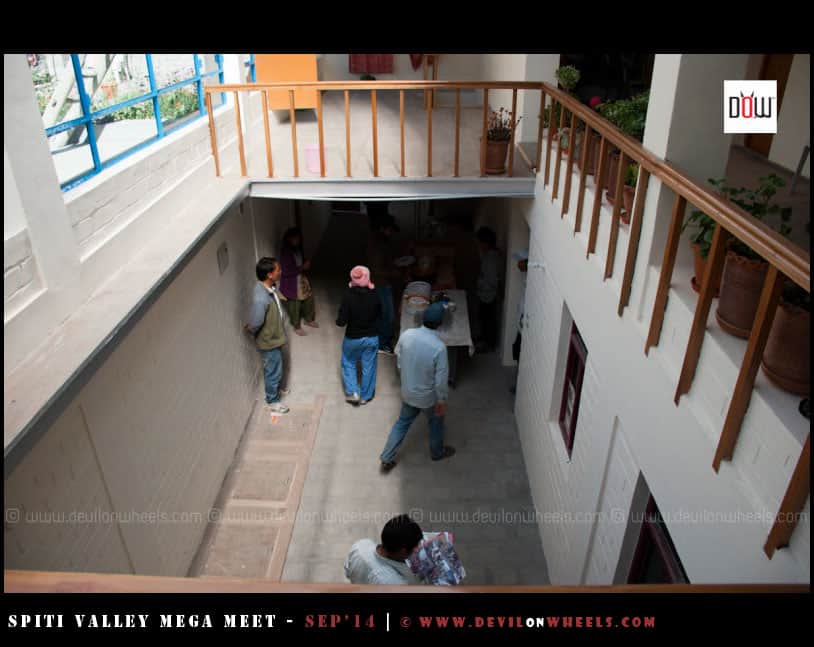
We stayed at Sonam Homestay in the upper Mane village. It is fairly newly built and has 5-6 rooms, a couple of dry pit toilets, and a big dining hall where food is served. There is a large camping ground outside where you can pitch your tents. It is the last home in Maneyogma village, and the trek to Sopona Lake starts right from here.
You can reach Sonam Ji at +91-9418503966 or +91-9459481431. Your call may be picked up by Lobsang Ji. You can refer to Sonam Ji from Mane village, and he will recognize and take care of your bookings. You can also check our Spiti Valley homestays list for more options in the region.
Other Homestays and Camping
There are a few other homestays in Maneyogma where you can stay, and you can also set up your own camps. Unfortunately, I do not have contact details for the other homestays. The best approach is to ask local villagers when you arrive. In recent years, The Doksa, a boutique farmstay, has also started operations in Mane for those looking for a slightly more comfortable option.
You can also get in touch with Tsering Bhai (tseringsakya@gmail.com or +91-9418208987) in case you need anything pre-booked or pre-arranged. Sonam Ji is in the family of Tsering Bhai, so he should be able to help you in any possible way. For camping in Spiti Valley, we have a separate detailed guide.
Where to Eat in Mane Village?
Mane has no restaurants or dhabas. The only source of food is the families in the village. The families are very warm and inviting and will be happy to provide you with local delicacies. The food typically includes rajma, roti, rice, and seasonal vegetables like cabbage. In all homestays, the per-day tariff usually includes meals. However, it is wise to confirm this when making your booking.
In terms of local specialties, do try Arak, a local alcoholic drink that helps keep you warm in the cold. Also try the Tibetan bread stuffed with egg or omelet. It is simple food, but after a day of trekking or exploring, it tastes incredible. If you have specific dietary requirements, let your homestay host know in advance.
What Budget Should You Plan for a Trip to Mane Village?
Mane is a budget-friendly destination since there are no luxury options to tempt you. Here is a rough breakdown of costs as of 2026. Keep in mind these are approximate and may vary.
| Expense | Budget (Per Person) |
|---|---|
| Homestay (per night, meals included) | Rs 800-1,500 |
| Local guide for Sopona Lake trek | Rs 500-800/day |
| Taxi from Kaza (day trip) | Rs 2,500-3,000 |
| Camping charges (if using homestay ground) | Rs 300-500/night |
| Misc (snacks, tips) | Rs 200-300/day |
If you are traveling on a tight budget, you can reach the Atergu Bridge turn-off by hitching a ride from the main highway and then walk the 6 km uphill to the village. Our budget tips for Spiti Valley cover more ways to save money on your overall trip.
What Are the Essential Travel Tips for Mane Village?
- Trekking shoes are a must. Whether you are exploring the village or trekking to Sopona Lake, good trekking shoes with proper grip are essential anywhere in Spiti.
- Only BSNL works here. Carry a BSNL postpaid SIM if you need connectivity. Jio and Airtel do not work in Mane. For more details, check our Spiti Valley mobile connectivity guide.
- Carry cash. The nearest ATM is in Kaza (33 km). There are no digital payment options in the village.
- Fuel up in Kaza. The nearest petrol pump is in Kaza. If coming from the Shimla side, Reckong Peo also has a reliable fuel station.
- Medical help is far. The nearest medical facility is in Kaza. Carry a basic first aid kit and any personal medications.
- Carry warm layers. Even in summer, temperatures can drop sharply after sunset at 11,800 Ft. A good down jacket and thermals are wise to have.
- Respect the village. Mane is a living community, not a tourist attraction. Ask before photographing people. Remove shoes before entering the gompa. Keep noise levels low, especially at night.
- Carry a water bottle and snacks. There are no shops in the village. Bring everything you need from Kaza or Tabo.
How to Include Mane in Your Spiti Valley Itinerary?
Mane works best as a 1-2 day detour from your main Spiti Valley itinerary. Here are two ways to include it.
Option 1: Day Trip from Kaza (1 Day)
Hire a taxi from Kaza in the morning (Rs 2,500-3,000). Drive to Mane, explore both villages, visit the gompa, and return to Kaza by evening. This works if you are short on time but still want to see an offbeat side of Spiti. However, you will miss the night sky, which is one of the best reasons to visit Mane.
Option 2: Overnight Stay with Sopona Lake Trek (2 Days)
This is the recommended option. Arrive in Mane on Day 1, settle into a homestay, explore the village and gompa. On Day 2, trek to Sopona Lake in the morning (2.5-3 hours up, 1.5-2 hours down) and then head back to the highway. This gives you a complete Mane experience and also fits well if you are traveling between Kaza and Tabo.
You can combine Mane with visits to other offbeat places in Spiti Valley like Lhalung, Demul, and Hikkim for a truly offbeat circuit.
A Humble Appeal for Responsible Travel
It is my humble request to anyone reading this to please not litter in the hills. Especially in far-flung, isolated villages like Mane, please ensure you clean up after yourself. Carry a reusable water bottle and keep refilling it. If you must buy packaged water, please dispose of the bottles properly. There are no cleanup crews here.
It breaks my heart to see plastic bottles, cigarette butts, and discarded food containers strewn around in the hills. I love these mountains, and I am sure you do too. Let us do our part to ensure that when we return next time, the place is still the same. Anyone who travels through these hills is part of a sacred community, and it is our duty to keep them clean for future travelers and for the villagers who call these places home.
Conclusion
Mane village is a true gem of Spiti Valley. While it is not on the radar of even the most seasoned Spiti travelers, it is a place worthy of your time. The lush green fields, the warm hospitality, the challenging trek to Sopona Lake, the mysterious Chudolsa Cave, and the star-filled nights make Mane a complete experience for those who seek it.
I hope the information above on Mane Village in Spiti Valley was of help. If you have any questions or need any other details, please feel free to comment below and I will be happy to assist. You can also join the DwD Community for discussions, travel partner searches, and the latest updates on Spiti Valley. Feel free to share this article with your friends and family who are planning a trip to Spiti 🙂 …
Frequently Asked Questions
How to reach Mane village in Spiti Valley?
Mane is located 33 km from Kaza and 26 km from Tabo. You need to turn off NH-505 at Atergu Bridge and climb 6 km on an unpaved road to reach the village. There is no direct public bus to Mane. You can hire a taxi from Kaza (Rs 2,500-3,000) or take a shared taxi to the bridge turn-off and walk up.
What is the altitude of Mane village?
Mane village sits at an altitude of 3,560-3,650 meters (11,680-11,980 Ft) above sea level. The village is on a plateau about 200 meters above the Spiti River.
Is there any hotel in Mane village?
No, there are no hotels in Mane. Accommodation is available only through homestays and camping. Sonam Homestay in Maneyogma is a well-known option with 5-6 rooms. Expect to pay Rs 800-1,500 per person per night including meals.
Is Sopona Lake trek difficult?
The Sopona Lake trek is moderate in difficulty. The distance is about 6 km from Maneyogma, and it takes 2.5-3 hours at a normal pace. The trail is not well-marked but is navigable. Hiring a local guide (Rs 500-800) is recommended. The lake sits at approximately 4,122 meters (13,520 Ft).
What is the best time to visit Mane village?
June to September is the best time to visit Mane. The weather is pleasant, the roads are in good condition, and Sopona Lake is accessible. Avoid monsoon months (July-August) if you are concerned about landslides on the approach routes.
Do I need a permit to visit Mane village?
Indian nationals do not need any special permit to visit Mane village. Foreign nationals require an Inner Line Permit (ILP) which can be obtained from the DC office in Reckong Peo or Kaza. For more details, check our Spiti Valley permits guide.

Is there mobile network in Mane village?
Only BSNL postpaid works in Mane village. Jio and Airtel do not have coverage here. Carry a BSNL postpaid SIM if you need basic connectivity. For internet, prepare to be offline during your stay.
Can I visit Mane village in winter?
Technically yes, but it is not recommended for casual visitors. In winter, Mane is covered in heavy snow, temperatures drop well below freezing, and the road to the village can be extremely difficult. Sopona Lake will be frozen and inaccessible. If you are interested in winter Spiti, keep in mind that Mane is not a standard winter itinerary stop.
