


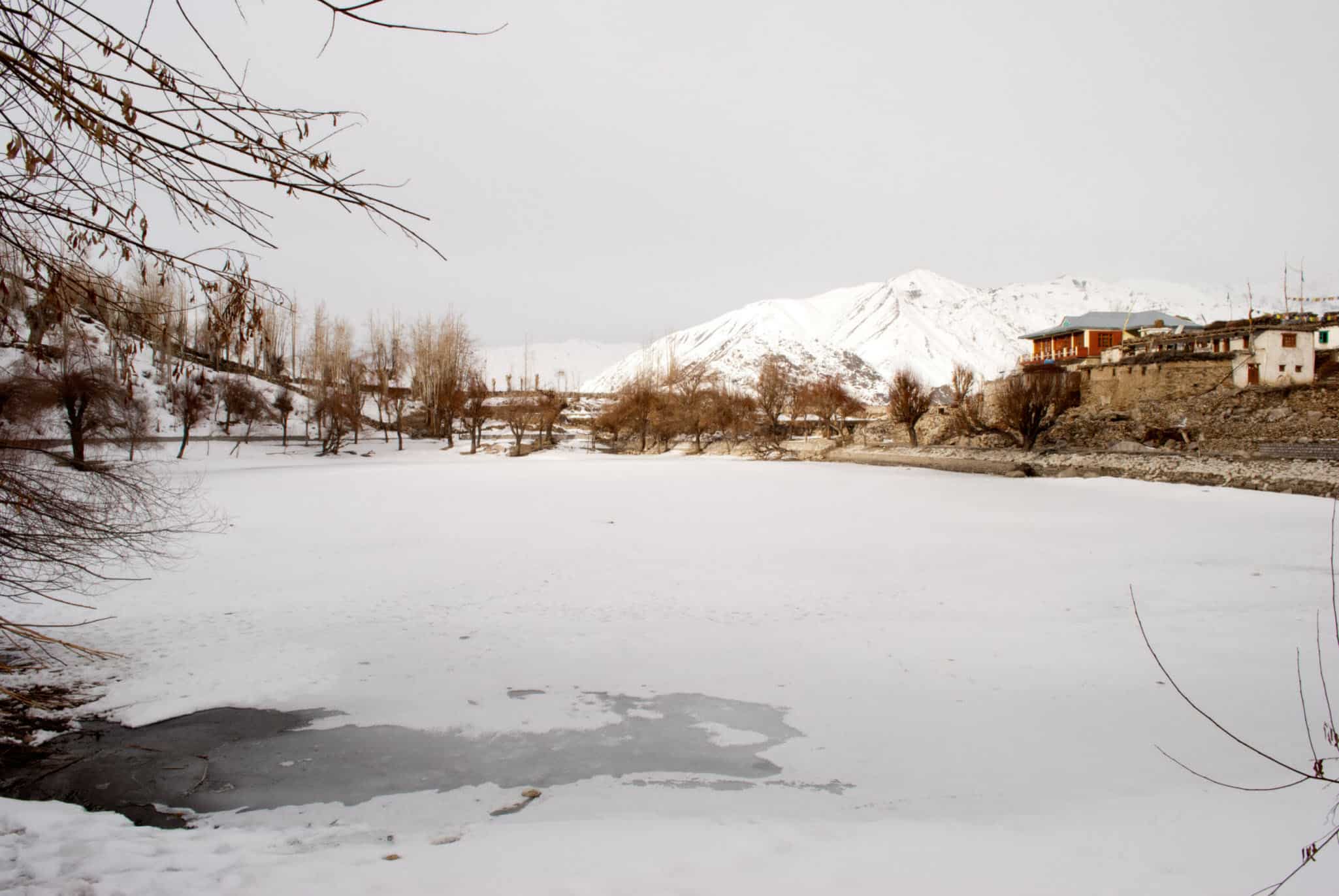
Planning a trip to Spiti Valley in winters? The frozen landscapes, snow-covered monasteries, and empty roads make winter Spiti one of the most rewarding trips you can take in the Indian Himalayas. But let me be honest with you, it also comes with serious challenges. Temperatures drop to -20°C at night, many roads close without warning, and facilities are extremely limited. You need a solid plan before you set out.
I covered many of the important questions about winter Spiti travel in my detailed guide on how to plan a trip to Spiti Valley in winters. In this article, I will focus specifically on the day-by-day itinerary, so you know exactly where to go, where to stop, and what to expect each day. If you have 9 to 12 days in hand, this itinerary will help you make the most of your winter Spiti trip in the 2026-27 season.
A Spiti tour plan for winter runs Delhi to Kaza and back via Shimla and Kinnaur over 9 to 12 days, because the shorter Manali route through Kunzum Pass stays closed from mid-October to mid-June. Here is the core structure I use for planning a winter Spiti trip.
- Fix your dates and route first. Winter Spiti opens only one way, Shimla to Kinnaur to Kaza. Block 9 days as the minimum and 10-12 days if you want a buffer for road closures.
- Drive Delhi to Shimla or Narkanda on Day 1. Cover 350-400 km in 8-9 hours, starting by 4-5 AM to beat Delhi traffic.
- Push to Kalpa or Reckong Peo on Day 2. This is your last stop with reliable mobile network, so call home and check the weather here before you go further.
- Cross the Malling Nalla stretch to Tabo on Day 3. This is the hardest driving day of the whole plan, with frozen road sections between Nako and Sumdo.
- Reach Kaza via Tabo Monastery on Day 4, then spend Days 5 and 6 acclimatizing and exploring Ki Monastery, Kibber, and the local market.
- Retrace the same route back over Days 7 to 9, through Tabo, Nako, and Reckong Peo, with an optional detour to Sangla Valley near Sarahan.
- Budget Rs 1,400 to Rs 3,000 per person per day. That is the verified daily range across accommodation, food, shared fuel, and incidentals for a self-drive group of 3-4, checked February 2026, which puts a full 9-day winter Spiti tour plan at roughly Rs 12,600 to Rs 27,000 per person.
Let's quickly dive into the details:
What Is the Best Route to Reach Spiti Valley in Winter?
Quick answer: Shimla to Rampur to Reckong Peo to Nako to Tabo to Kaza on the Hindustan Tibet Road, roughly 410-440 km from Shimla. It is the only winter route, so you drive the same road in and out.
In winter, there is only one route to reach Spiti Valley, and that is via Shimla and Kinnaur Valley. The Manali side route through Kunzum Pass (about 15,050 feet) remains closed from mid-October to mid-June due to heavy snowfall. So you will travel the same road going in and coming back.
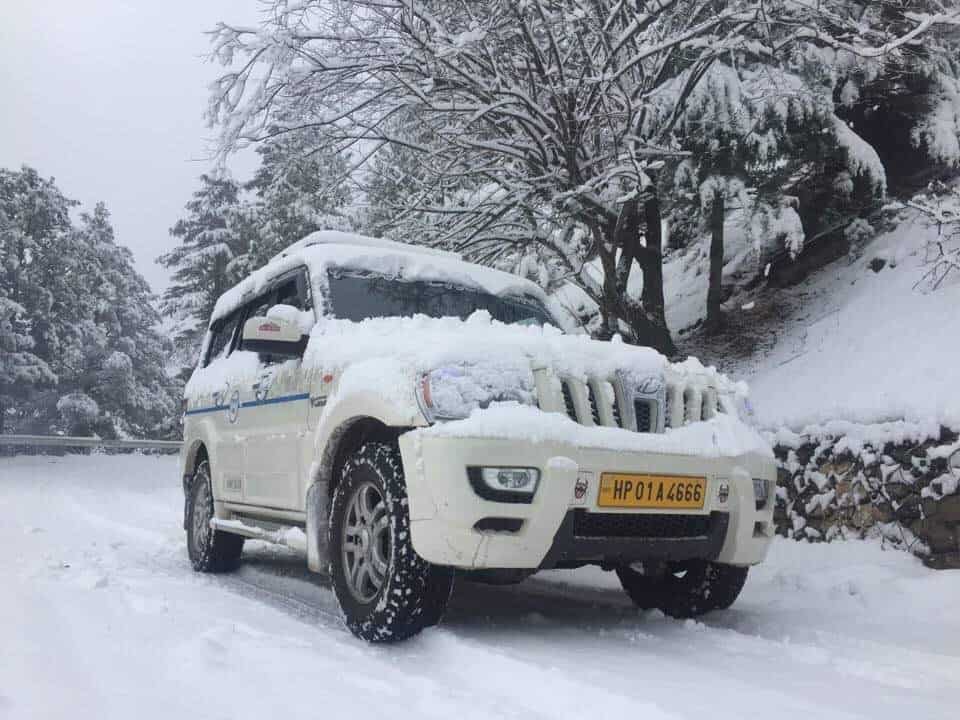
The Shimla to Kaza route via Kinnaur stays open almost throughout the year, barring a few days when heavy snowfall blocks NH-05 or the stretch between Tabo and Pooh. Keep in mind that even though this route is technically “open,” winter driving conditions can be very challenging with black ice, frozen nallahs, and reduced visibility. Hence, a SUV or 4×4 vehicle is strongly recommended for winter Spiti travel.
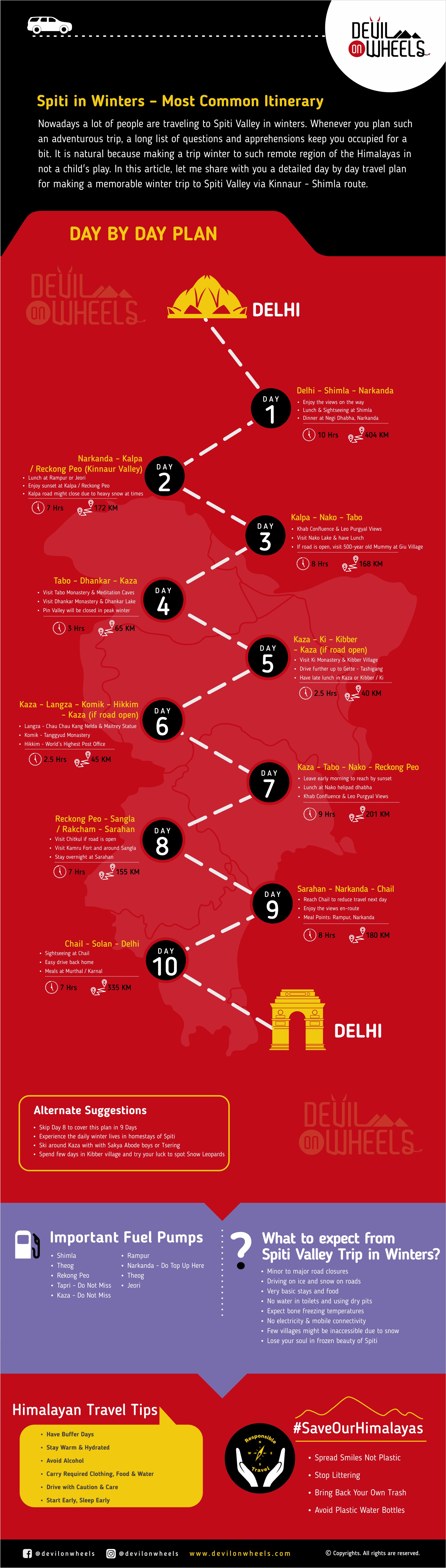
Download your FREE high-resolution version pdf copy of this Spiti Valley in Winters day-by-day plan infographic guide. If you liked it and found it helpful, please feel free to share it with your family and friends to help them too.
How Many Days Do You Need for Spiti Valley in Winter?
Quick answer: 9 days Delhi to Delhi is the realistic minimum. Plan 10-12 if your leave allows, because one snowfall near Malling Nalla or Pooh can hold you for a day or two.
You need a minimum of 9 days for a comfortable winter Spiti trip from Delhi. I suggest keeping 10-12 days if possible, because road closures due to snowfall or landslides can eat into your schedule. Buffer days are not a luxury in winter Spiti, they are a necessity.
Practical Info: Best months for winter Spiti are December to March. Temperatures range from -5°C to 5°C during the day and -15°C to -30°C at night. Only route open is Shimla – Kinnaur – Kaza. Budget: Rs 1,400 – Rs 3,000 per person per day. Vehicle e-pass: register on e-Aagman before you leave Shimla (free). Mobile network: all operators until Reckong Peo, then BSNL and Jio only, patchy beyond Kaza. Carry enough warm clothing and medicines.
What Is the Day-by-Day Itinerary for Winter Spiti?
Quick answer: Delhi to Narkanda, Reckong Peo, Tabo, Kaza (two nights), then back via Reckong Peo and Sarahan to Delhi. Day 3 is the hardest drive, Days 5-6 are for acclimatizing around Kaza.
Below is the most common 9-day itinerary for a winter trip to Spiti Valley. This itinerary flows from Delhi via Shimla and Kinnaur to Kaza, and returns the same way since the Manali route stays closed. Let us look at each day in detail.
Day 1 | Delhi to Shimla or Narkanda (350-400 km, 8-9 hours)
Start early from Delhi, ideally by 4-5 AM, to beat the traffic on NH-44 through Haryana and Punjab. The drive to Shimla takes about 8 hours, and if you are making good time, push ahead another 60 km to Narkanda (about 2 hours from Shimla). Staying at Narkanda saves you significant time on Day 2.
- Shimla sightseeing if you stop here: Ridge, Mall Road, Lakkar Bazaar, Jakhu Temple
- There may be snow on the road between Shimla and Narkanda in peak winter months
- Overnight at Shimla or Narkanda (budget hotels Rs 800-1,500 per night)
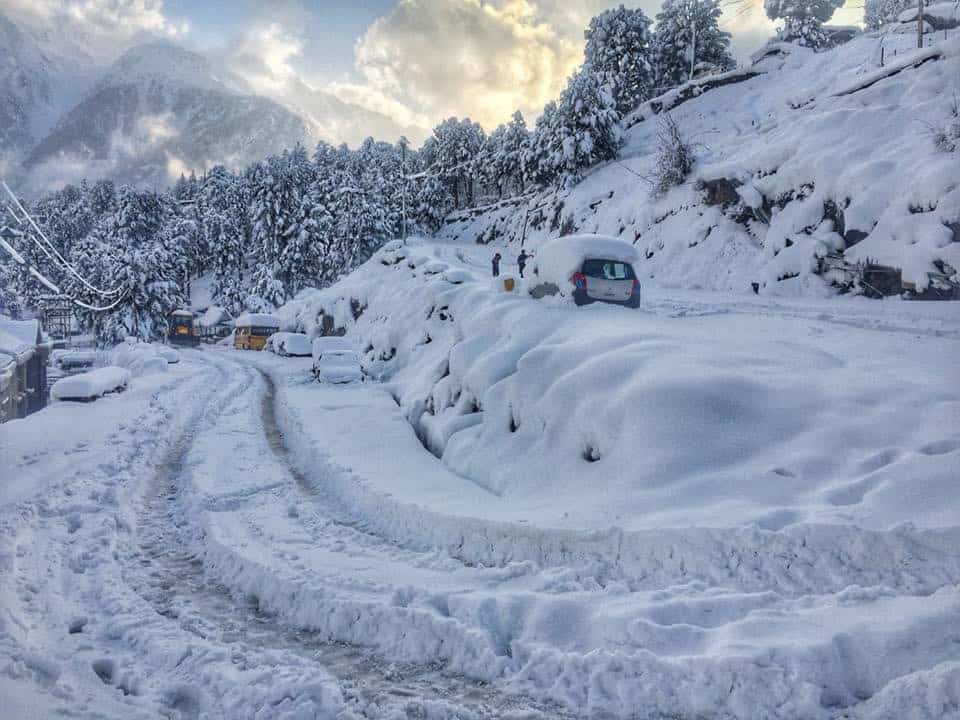
Day 2 | Shimla/Narkanda to Kalpa or Reckong Peo (175-250 km, 8-9 hours)
This is a long driving day through some of the most scenic stretches of the Hindustan Tibet Highway. Leave early, especially if starting from Shimla. Plan your lunch stop at Rampur. My Kinnaur in winters itinerary covers this stretch in detail.
- Beautiful drive through Kinnaur Valley along the Sutlej river
- The road to Kalpa might be closed due to snow, but the road to Reckong Peo usually remains open
- Important: This is your last place where every network works. Call your family, check weather updates, and make sure your vehicle’s e-Aagman pass for Lahaul and Spiti is saved offline before heading further
- Once you cross Reckong Peo, there is no looking back. The chances of getting stuck between Pooh, Nako, and Tabo are always high in winter. Hence, check weather updates before leaving
- Overnight at Kalpa or Reckong Peo (homestays Rs 500-1,200 per night)
Day 3 | Kalpa/Reckong Peo to Nako to Tabo (160-180 km, 8-9 hours)
This is the most challenging day of the entire trip. The stretch from Reckong Peo through Pooh and Nako towards Tabo passes through some treacherous sections in winter, especially around Malling Nalla where the road surface is completely frozen.


- Check out Khab, the confluence of Spiti and Sutlej rivers
- See Reo Purgyil, the highest peak in Himachal, from around Khab Bridge
- Have lunch at Nako village. The Nako Lake will be frozen in winter, a beautiful sight
- The dreaded Malling Nalla ahead of Nako will be completely frozen. Drive very carefully on this section
- After Chango and Sumdo, you enter Spiti Valley. In case the weather turns bad, try stopping at Chango. Avoid sleeping at Nako where it will be extremely cold and AMS prone
- After Sumdo police registration, the detour towards Gue Village (the 500-year-old Mummy) is often snowbound in peak winter. Ask at Sumdo before you attempt it
- Overnight at Tabo (homestays Rs 500-1,000 per night with meals)
Day 4 | Tabo to Dhankar to Kaza (50-60 km, 2-3 hours)
A relatively easy day after the previous day’s grueling drive. The distance from Tabo to Kaza is short, so you have time to explore Tabo Monastery in the morning before heading to Kaza.
- Visit Tabo Monastery, one of the oldest monasteries in the world (founded 996 AD)
- Visit Dhankar Monastery if the road is open, otherwise continue to Kaza
- The road into Pin Valley towards Mudh village can get snowbound after fresh snowfall. Check in Kaza before you head in, and do not plan a night there without local advice
- Overnight at Kaza (budget hotels Rs 800-1,500, homestays Rs 500-1,000 per night)
Day 5 and 6 | Exploring Kaza and Nearby Villages
Kaza is the headquarters of Spiti Valley, sitting at about 12,500 feet. Spend two days here exploring the area and acclimatizing to the altitude. The cold at this altitude in winter is intense, so pace yourself.

- Explore the road to Ki Monastery, Kibber, Gette, and Tashigang which remains mostly open even in winter
- Visit Kibber village and try your luck spotting the elusive Snow Leopard. Kibber is one of the best places in India for Snow Leopard sighting in winter
- Roads to Langza, Hikkim, and Komic may be closed due to snow. Check locally before attempting
- Visit the local market in Kaza, have hot thukpa and momos at a local eatery
- Overnight at Kaza
Day 7 | Kaza to Tabo to Nako to Reckong Peo (200-215 km, 9-10 hours)
The return journey begins. This is again a long day, but you have already driven this road on the way in, so you know what to expect. Start early and make quick progress since you have already covered the places of interest.
- After Chango and Sumdo you exit Spiti Valley and enter Kinnaur Valley
- Have your lunch at Nako or Pooh
- Nako has an IPH Rest House, and Pooh has a PWD Rest House where you can stay if road closure forces an overnight stop. Chango also has a PWD rest house
- Overnight at Reckong Peo
Day 8 | Reckong Peo to Sangla Valley to Sarahan (80-120 km, 2-5 hours)
If the road to Sangla Valley is open, take a detour to enjoy the beautiful Sangla and Baspa Valley. However, I am not suggesting you stay overnight at Sangla. If the road to Sangla gets closed due to snow, you might get stranded for days. Visit during the day and then move to Sarahan for the night.
- Visit Kamru Fort at Sangla if the road is open
- The road to Chitkul will be closed in winter
- Plan lunch at Sangla village and reach Sarahan by evening
- Visit the famous Bhimakali Temple at Sarahan
- Overnight at Sarahan (HPTDC Hotel Shrikhand or local guesthouses, Rs 800-2,000 per night)
Day 9 | Sarahan to Narkanda to Shimla or Delhi (250-600 km, 6-14 hours)
The last driving day. If you have an extra day, break this into two days and stay at Chail or Shimla overnight. If you are short on time, push through to Delhi.
- Plan lunch at Narkanda, try Negi Dhaba (check review in DwD Community)
- Instead of returning via Shimla, you can take the inner route to Chail from Kufri if the road is open. This route sometimes gets closed due to snow
- Overnight at Chail, Shimla, or Delhi depending on your schedule
Day 10-12 | Buffer Days (Keep These in Your Plan)
When planning a road trip to such remote corners of the trans-Himalayas in winter, buffer days are essential. Road closures due to snowfall or landslides can happen without warning, and you do not want to be rushing through dangerous conditions because you have a flight to catch. I always suggest keeping at least 2-3 buffer days in your winter Spiti plan.
What Extra Activities Can You Do in Winter Spiti?
Quick answer: With 2-3 spare days, do a guided snow walk to Langza or Komic, try your luck with Snow Leopards around Kibber, or spend a day living winter routines with a homestay family. None of these need a vehicle.
- Snow trek to Langza, Hikkim, or Komic: These villages are accessible on foot even when roads close. Do not attempt without a local guide. Carry enough food, water, and a sleeping bag to sleep in homestays up in these villages
- Snow Leopard spotting at Kibber: Winter (January to March) is the best time for Snow Leopard sighting in Spiti. Spend a few days at Kibber village with a local guide, who knows it could be your lucky day to spot this elusive cat 🙂
- Skiing near Kaza: Spend a day with the Sakya Abode boys or locals who ski on the snow slopes around Kaza. An exhilarating experience
- Experience local winter life: Spend a day working through winter routines at a homestay to understand the hardships of daily life in Spiti during winter. Collecting yak dung for fuel, breaking ice for water, sitting around a bukhari stove with the family
Where Are the Petrol Pumps Between Shimla and Kaza?
Fuel planning is critical for any Spiti trip. The good news is that when traveling from the Kinnaur side, you do not need to worry as much about fuel as you would on the Manali route. There are several petrol pumps along the way. However, in winter, some pumps may have irregular hours or run out of stock temporarily. Hence, always top up whenever you get a chance.
- Theog
- Narkanda – Do top up here
- Rampur – After crossing the town, the last one on the right side is reliable
- Jeori
- Tapri – Relatively newer pump, can be relied upon
- Reckong Peo
- Kaza – Do not miss. This is the last and only petrol pump in Spiti Valley. Fill up here before local sightseeing and top up again before starting the return journey
I usually prefer to top up at Narkanda and then at the Tapri or Reckong Peo pump. After Reckong Peo, the next petrol pump is at Kaza (about 200 km away), so make sure your tank is full before crossing into Spiti.
What Is the Budget for a Winter Spiti Trip in 2026?
Quick answer: Rs 1,400 to Rs 3,000 per person per day for a self-drive group of 3-4, so about Rs 12,600 to Rs 27,000 for 9 days, excluding the vehicle itself.
Winter Spiti is cheaper than summer because rates drop and tourists vanish. Here is a daily breakdown per person, for 3-4 people sharing a vehicle.
| Expense Category | Budget (Per Person/Day) | Notes |
|---|---|---|
| Accommodation | Rs 500 – Rs 1,500 | Homestays to budget hotels |
| Food | Rs 300 – Rs 600 | Dhabas and homestay meals |
| Fuel (shared among 4) | Rs 400 – Rs 600 | Based on 15-20 km/l mileage |
| Miscellaneous | Rs 200 – Rs 300 | Chai, snacks, parking |
| Total Per Day | Rs 1,400 – Rs 3,000 |
For a 9-day trip, your total budget would be approximately Rs 12,600 to Rs 27,000 per person (9 x the daily range above) depending on your travel style. For a fuller summer-vs-winter cost comparison, see my Spiti Valley trip cost breakdown. This does not include the cost of your vehicle or rental car. If you are using public transport (HRTC buses), the costs will be even lower. A bus from Shimla to Reckong Peo costs about Rs 400-600 and Reckong Peo to Kaza about Rs 300-500 (as of 2025, verify locally for current rates as winter bus frequency is limited).
What Should You Know About Safety and AMS in Winter Spiti?
Quick answer: The real risks are AMS above Kaza, -20°C nights, roads blocked for 2-5 days, and patchy network. Acclimatize, carry -20°C gear, extra food and fuel, and share your plan with family before Reckong Peo.
I will be direct with you, my friend. Winter Spiti is not a casual holiday, and it demands serious preparation.
- Acute Mountain Sickness: Kaza is at 12,500 feet and Kibber at 14,200 feet. AMS is a real risk, especially in winter when the cold makes it worse. Acclimatize properly at Kalpa or Reckong Peo before pushing higher. If you feel persistent headache, nausea, or dizziness, descend immediately
- Hypothermia: Nighttime temperatures can go below -20°C. Carry proper winter gear including thermals, down jackets, gloves, and a good sleeping bag rated for -20°C or lower
- Road closures: Snowfall can block roads for 2-5 days at a time. Always have extra food, water, and fuel in your vehicle. Carry essential supplies and medicines
- Patchy mobile network: Beyond Reckong Peo, only BSNL and Jio work, and only in pockets. Jio 4G now reaches Kaza and Tabo, while BSNL covers more villages, but both can drop for days when power fails in winter. Airtel effectively stops in Kinnaur. More in my Spiti mobile connectivity guide. Inform your family about your itinerary before you lose signal
- Medical facilities: The nearest hospital is at Reckong Peo. Kaza has a basic medical center, but do not rely on it for anything serious. Carry a proper first aid kit and any personal medications
Do You Need Permits for Spiti Valley in Winter?
Quick answer: Indian travellers need no permit, but your vehicle needs a free e-Aagman e-pass for Lahaul and Spiti district. Foreign nationals need an Inner Line Permit for the Kinnaur-Spiti border stretch.
Indian tourists do not need any personal permit to travel to Spiti Valley or Kinnaur Valley. Just carry a valid photo ID proof (Aadhaar card or voter ID). There are police checkpoints at Sumdo and other places where you will need to register.
Keep in mind, the vehicle is a different story. The Lahaul and Spiti district administration now requires every vehicle entering the district to register on the Himachal government’s e-Aagman portal, which applies on the Kinnaur side too. It is free and generates a QR e-pass. Fill it in Shimla or Reckong Peo, a day ahead, and save a screenshot, because there is no reliable network near Sumdo to do it on the spot.
Foreign nationals visiting the protected areas of Spiti Valley and Kinnaur Valley are required to get the Inner Line Permits (ILP). The process and requirements are detailed in our separate guide on Kinnaur and Spiti permits.

What Are the Best Months to Visit Spiti in Winter?
Each winter month offers a different experience in Spiti. Here is a quick breakdown to help you decide when to go. For a more detailed month-by-month guide, check my article on best time to visit Spiti Valley.
- November: Early winter. Temperatures drop but are still manageable (0°C to 10°C daytime). Less snow on roads. Most facilities still open
- December – January: Peak winter. Temperatures drop to -20°C to -30°C at night. Heavy snowfall possible. Many side roads closed. This is when Spiti is at its most raw and beautiful
- February: Still very cold but days start getting slightly longer. Good for Snow Leopard spotting season. Check road status before planning
- March: Late winter. Snow starts melting on lower stretches. Road conditions improve. A good balance between winter experience and accessibility. I personally recommend March for first-timers attempting winter Spiti, and I have written a separate Spiti in March guide for it
How to Reach Spiti Valley by Bus in Winter?
Quick answer: Take an HRTC bus from Shimla to Reckong Peo, then the early morning Reckong Peo to Kaza bus. In December-February the second leg may not run daily, so keep a taxi as backup.
If you do not have your own vehicle, HRTC (Himachal Road Transport Corporation) operates buses on the Shimla to Kaza route. However, keep in mind that bus frequency reduces significantly in winter. Even Himachal Tourism describes the regular Kinnaur-side service as May to October. In peak winter months (December-February), buses may not run daily on the Reckong Peo to Kaza stretch.
- Shimla to Reckong Peo: Multiple HRTC buses daily, departing from Shimla ISBT (Tutikandi). Night buses available. Fare: approximately Rs 400-600
- Reckong Peo to Kaza: One bus daily (when running), departs early morning around 7:30 AM. Fare: approximately Rs 300-500 (as of 2025, verify locally). This bus may not operate on days of heavy snowfall
- Alternative: Hire a local taxi from Reckong Peo to Kaza. A private taxi costs about Rs 6,000-8,000 one way (as of 2025, verify locally). Sharing with other travelers can reduce costs
Bus schedules change seasonally. In winter, always verify with HRTC or locally at the bus stand before planning your next leg. You can check the HRTC official website for updated schedules and online booking, though not all buses can be booked online.
What Should You Pack for Winter Spiti?
Quick answer: Layers rated to -20°C, a -20°C sleeping bag, snow chains, a jerry can, Diamox, a power bank, and enough cash. ATMs beyond Reckong Peo are unreliable in winter and homestays may be short on blankets.
- Thermal innerwear (at least 2 sets)
- Down jacket or heavy winter jacket (rated for -20°C)
- Woolen cap, neck gaiter, and gloves (waterproof preferred)
- Snow boots or waterproof trekking shoes
- Sleeping bag rated for -20°C (some homestays have limited blankets)
- Sunglasses and sunscreen (snow glare at altitude is intense)
- First aid kit with Diamox (for AMS), painkillers, and any personal medicines
- Power bank and extra batteries (cold drains batteries fast)
- Snow chains for your vehicle (essential for icy stretches)
- Jerry can for extra fuel (as backup, especially beyond Reckong Peo)
- Enough cash (no ATMs beyond Reckong Peo that work reliably in winter)
For a more detailed packing list, check my article on things to carry on a Himalayan road trip.
Distance Table: Delhi to Kaza via Shimla (Winter Route)
| From | To | Distance (approx) | Driving Time (Winter) |
|---|---|---|---|
| Delhi | Shimla | 350 km | 8-9 hours |
| Shimla | Narkanda | 60 km | 2 hours |
| Narkanda | Rampur | 65 km | 2-3 hours |
| Rampur | Reckong Peo | 110 km | 4-5 hours |
| Reckong Peo | Nako | 100 km | 5-6 hours |
| Nako | Tabo | 60 km | 3-4 hours |
| Tabo | Kaza | 46 km | 2-3 hours |
| Total Delhi to Kaza | ~780 km | 3-4 days driving |
Note: Distances are approximate. Kinnaur district administration puts Reckong Peo 235 km from Shimla. Winter driving times are significantly longer than summer. Ice on roads, narrow stretches, and reduced visibility add time. Always start early and plan to reach your destination before dark. For a complete understanding of this route, check my article on Delhi to Kinnaur to Spiti Valley road status.
Conclusion
I hope this day-by-day itinerary helps you plan your winter trip to Spiti Valley. It is not an easy trip. But the silence of a frozen Kaza morning and a cup of butter tea by a homestay bukhari are worth every hour on that road.
If you are planning a winter Spiti trip and have questions about road conditions, accommodation, or anything else, feel free to drop your questions in the comments section below. I will be happy to help you plan your trip. You can also join the DwD Community for the latest updates and to connect with fellow travelers heading to Spiti in winter 🙂 …
If you know friends or family who are planning such a trip, please feel free to share this article with them. It might just save their trip.
Have a travel question?? You can subscribe to my YouTube channel and leave a comment to ask your travel questions about traveling to the Himalayas.
Last Updated: October 2026
Frequently Asked Questions
Is Spiti Valley safe to visit in winter?
Yes, if you are well-prepared. The key risks are extreme cold (down to -30°C at night), road closures due to snowfall, and AMS. Carry proper winter gear, keep buffer days, and share your itinerary with family. An SUV or 4×4 with snow chains is strongly recommended.
Can I visit Spiti Valley by bike in winter?
Technically yes, but I would not recommend it unless you are very experienced on snow and ice. Roads are slippery, the cold makes riding painful, and help is far away. If you must ride, go in a group with proper cold weather gear.
Is the road from Manali to Kaza open in winter?
No. The Manali to Kaza route via Kunzum Pass (15,050 feet) stays closed from mid-October to mid-June. In winter, the only route to reach Spiti Valley is via Shimla and Kinnaur. You will need to travel the same route going in and coming back.
What is the temperature in Spiti Valley in winter?
In Kaza, daytime temperatures range from -5°C to 5°C while nights drop to -15°C to -25°C. Higher villages like Kibber, Langza, and Hikkim can see temperatures as low as -30°C at night. The wind chill factor makes it feel even colder. January and February are the coldest months.
Are hotels and homestays open in Spiti during winter?
Most hotels in Spiti shut down for winter. Your main accommodation options are homestays, which offer basic but warm rooms with meals. Expect to pay Rs 500 to Rs 1,200 per night including basic meals at homestays (as of 2025, verify locally). In Kaza, a few budget hotels remain open year-round with rooms starting at Rs 800-1,500 per night (as of 2025, verify locally for current rates).
Can I see Snow Leopards in Spiti Valley in winter?
Yes, winter is the best time for Snow Leopard sighting in Spiti. The area around Kibber village is one of the top Snow Leopard habitats in India. January to March is the prime spotting season when Snow Leopards descend to lower altitudes in search of prey. Hire a local guide and carry good binoculars. Sightings are never guaranteed, but your chances are highest in winter.
Is there mobile network in Spiti Valley in winter?
All networks work up to Reckong Peo. Beyond that, only BSNL and Jio work, in pockets. Jio 4G now reaches Kaza and Tabo, and BSNL covers more villages, but villages like Kibber and Langza get weak or no signal. In winter, towers can go down for days during power outages, so inform your family before you leave Reckong Peo.
How much does a winter Spiti trip cost from Delhi?
For a 9-day self-drive trip with a group of 4, budget approximately Rs 12,600 to Rs 27,000 per person including fuel (shared), accommodation (homestays and budget hotels), and food. If using public transport, the cost can be lower at around Rs 8,000 to Rs 15,000 per person. This does not include vehicle rental if applicable.
What is the best Spiti tour plan for winter beginners?
Follow the 9-day plan above and travel in March if you can choose your dates. Roads are kinder than in peak winter, yet you still get snow and Snow Leopard season. Keep at least one buffer day and do not attempt snow treks to Langza, Hikkim, or Komic without a local guide.
Do I need a 4×4 vehicle for a Spiti tour plan in winter?
A 4×4 or SUV is strongly recommended, not mandatory, for a winter Spiti tour plan. Regular hatchbacks and sedans do complete the trip, but sections like Malling Nalla near Nako and the stretch between Pooh and Tabo get black ice and frozen patches where ground clearance and traction genuinely matter. Carry snow chains regardless of which vehicle you take.
Do I need e-Aagman registration to drive to Spiti from Shimla?
Yes. Every vehicle entering Lahaul and Spiti district needs a free e-Aagman e-pass from eaagman.hp.gov.in, including vehicles coming via Kinnaur and Sumdo. You as an Indian traveller need no permit, only photo ID. Register a day ahead in Shimla or Reckong Peo and save the QR offline.

38 Comments
Comments section gets closed in 90 days. To ask your travel questions, you can follow my YouTube Channel for a faster reply or for a much slower reply follow me on Instagram. :)
Hi Dheeraj,
I’m planning a trip up to Kaza with my family ( wife, d-12 yrs, s-9 yrs) around Xmas.
I will be driving a hexa Xta
Do you it is advisable?
Hemang, I will not recommend a family trip to Spiti Valley in winters. Are you used to such harsh conditions?
Thanks Dheeraj. In that case would you advise a Kinnaur family trip around Xmas? what itinerary should I take – ex delhi?
Well, yeah, Kinnaur Valley is still doable and provide enough adventure. You can pretty much do below plan:
Day 1 | Delhi – Narkanda
Day 2 | Narkanda – Sarahan
Day 3 | Sarahan – Kalpa
Day 4 | Kalpa – Sangla, if the road is open
Day 5 | Sangla – Shimla/Fagu/Chail
Day 6 | Shimla/Fagu/Chail – Delhi
You can add a day based on the rest or more days you want to spend at Sangla and Kalpa
Hello dheeraj 🙂
Hope you are doing well .
It’s not about spiti
My query is for sikkim and bhutan road trip from delhi to delhi. I want to take this trip in this may 2017.. having 14 days..
You helped me in my three trips one is ladakh.. second is chitkul and third is spitivalley… Thank u so much.. help me for my trip to bhutan and sikkim…
Thank u dheeraj 🙂
Karnesh, for Sikkim and Bhutan I will suggest that you please post the question under DwD Community North East Forum and tag Soumen da or Vinod who are the experts of that region in DoW. Refer: https://discoverwithdheeraj.com/india/plan-sikkim-arunachal-pradesh-north-east-india/
i m thinking of spiti valley plan in mid or late april. what will be the road condition?? and upto how far we can reach?
Arijit, it will be cold and I am hoping that you have read the above article. You will have to follow a similar plan as mentioned in the article above. You can reach up to Kaza and then few KMs ahead till where the road is open.
Hii sir,
We are planning to go spiti around 13th dec. We have swift diesel(one year old). Can we go in this or we should drop the plan. we have the experience driver who can dive on any terrain.
Suggest us.
Thanks
Hi Gagan,
It is not an ideal time to visit Spiti Valley. Are you really sure about it? Have you read: How to plan a trip to Spiti Valley in Winters
Hello,
I’m from Taiwan. First of all, thanks for your great suggested-itinerary, it really helps me a lot 🙂
I plan to visit Spiti Valley in Jan, 2017 and I wonder how about the transportation from Shimla to Kaza?
I’m solo traveler, would like to know if it’s possible to take the public transportation, and including all the transportation and accommodation during these 9 days, how much approximately will be the budget?
Really thanks for your big help!
Hello Vicky,
I hope you have read: How to plan a trip to Spiti Valley in Winters and of course you have read the above itinerary too.
Regarding public transport, the daily bus from Shimla – Reckong Peo runs and from Reckong Peo a daily bus at 7 AM also runs to Kaza. If the road is closed due to snow, the bus will run up to road closed point and from there people walk if it is walkable distance to the other side where bus from Kaza to Reckong peo usually waits.
Keep in mind if you are planning just for 9 days and have something important at the end, you may be stuck there. So, keep that contiengencies in mind.
Sir, I wish to visit himachal pradesh with my 10years old daughter& wife in mid of March 2017 for six days Simla to Simla including Manali by a taxi .PLease suggest other must visit places and itinerary. Regards.
Sudip, are you open to visit Kinnaur Valley? If yes, then it is better that you drop Manali from the plan and enjoy only Kinnaur Valley in 6 days.
Hey dheeraj !
I’m looking to make an itinerary for 5 days from reckong to kaza and back …
I’m relying on public transport for the trip .. do you think it can be done in 5 days ?
And what are the must see places ?
Ideally I cant extend it to 9 days .. it’s a long journey for me since im coming from Karnataka.
No Rahul, 5 days Spiti trip is not possible form Kinnaur side. Possible but not at all recommended unless you just want to sleep and eat on bus itself.
After some adjustments… We have a return flight from Delhi on the 6th.
Reaching shimla on the 27th..
How long will the bus take from kaza to Shimla ?
Any suggestions on how to make use of the time available ?
Also I’m travelling with a foreign national who needs a permit .. we plan to get it at Peo since 27th is a Sunday in Shimla
Sorry, seems I am late and you should be off to the trip already. Yes, you should get the permit in Peo only. Kaza to Peo first will take about 9 Hrs in bus and same is true for Peo to Shimla.
Hi Dheeraj,
the details which you mentioned in this blog are very helpful.
Unfortunately, i am plannig the trip in End of Dec month-2016.
So, Can you pls suggest/advise me which are the best places to visit like this spiti valley starts from Dec 23rd 2016 to Jan 2nd 2017. Start point: Shimla , end point: Dharmashala.
And the Travel agent details too that who can provide CAB, Hotels & all 3 meal.
Pls note this is my 1st trip to Himachal pradesh.
Appreciate your support in this regards and Happy & Safe Diwali..
Thanks & Regards,
Hari
Hari, it is the harshest place in Himachal to make your first trip to Himachal. Better contain yourself to at max Kinnaur Valley if you really want to be adventurous. DO NOT go into Spiti Valley
Hi Hari,
First of all to visit Spiti valley in the month of December is not a good idea. As Dheeraj rightly said that climate will be harsh during that time.
All the places that I have visited in Spiti I found personally Losar is must see place if you are travelling in Spiti valley. I was there in the month of October this year temperature around -7 to -8 celsius. This is was my first trip to Himachal with my family. We have stayed there for more than two weeks without any health issue, even I was travelling with my six years old son.
Regards,
Explorer
Thanks for the suggestions Ayan, yeah, those places are beautiful.
Hi,
Is a royal enfield bike ride to Spiti Valley in Winter season (December-January) recommended from the Shimla side? I went to Chandratal Lake from Manali side this July, but could not finish the trip to Spiti. So I was planning to do it this winter.
Rocky, above article will help you out with trip to Spiti Valley in winters. Also, do read: How to plan a trip to Spiti Valley in Winters
Hi Dheeraj, Your website is very helpful for someone planning to travel to these places for the first time.
We are a couple planning to visit Manali in October end. I am very disappointed to see this article that Manali – Kunzum pass would be closed after Mid October. Can you please clarify if the entire route would be closed or just after Rohtang pass ?
Thanks a ton!
Sarath, the route will be closed after Rohtang Pass. Manali – Leh Highway has already been decalred officially closed and same risk applies to the highway beyond Rohtang Pass into Spiti Valley.
Thanks Dheeraj, Can you please tell me about the activities availability at Rohtang pass in October end. If we are unable to do any activities in Solang valley or Rohtang pass, it would be huge disappointment for us after reaching Manali.
Sarath, there will be few activities going on in Solang Valley but other activities are banned in Rohtang Pass now. Only solang will be having the activities and no snow will be present during that time for snow activities.
Hey planning a trip last week of this month 23/10/16 – 30/10/2016 in a petrol sedan -skoda rapid, please suggest must visit places, intenarary, essentials to carry and things to watch out for
Hi Aditya,
You can refer the below plan as rest I replied to your other comment:
Day 1 | Delhi – Narkanda – Sarahan
Day 2 | Sarahan – Rakcham/Sangla/Chitkul
Day 3 | Rakcham/Sangla/Chitkul – Nako – Geyu Mummy – Tabo
Day 4 | Tabo – Dhangkar – Dhangkar Lake – Pin Valley – Kaza
— For stay check Sakya Abode or snow lion are two good options at Kaza apart from PWD Guest houses. Get in touch with Tsering, the guy who runs it. He is a very good friend of mine and you can refer my name or DoW to him. Read more about Sakya Abode at: Sakya Abode Kaza – An Enriching Experience in Spiti Valley
Day 5 | Kaza Rest and Local Sightseeing
— Ki, Kibber, Gette, Tashigang
Day 6 | Kaza – Hikkim, Komik, Langza circuit – Kaza and then reach Nako by evening
Day 7 | Nako – Rampur / Narkanda
Day 8 | Rampur / Narkanda – Delhi
OR
Day 1: Delhi – Sarahan
Day 2: Sarahan – Kalpa
Day 3: Kalpa – Nako – Nako Lake – Tabo
Day 4: Tabo – Dhangkar – Dhangkar Lake – Pin Valley – Kaza
Day 5: Kaza – Ki, Kibber, Komik, Langza – Kaza
Day 6: Kaza – Tabo – Nako – Sangla / Chitkul
Day 7: Sangla / Chitkul – Narkanda / Shimla
Day 8: Narkanda / Shimla – Delhi
will it be good snowy in nov mid for honeymoon?
Juhi, Spiti valley is a harsh place not something to plan for a honeymoon. In winters, it will be much more harsher.
Is diesel car a good option at that moment?
I’ll be travelling by mahindra scorpio in December..
Prateek, in case you do have an option of petrol car, it shall be fine to take diesel car. Locals will help you out with jugaads in case you face any issues.
Thanks for the advice…
Best wishes for your trip 🙂
I think there is a petrol pump in Powari before the climb to Peo. That was the last one i saw on the highway till Kaza. No need to go to peo just for fuel. Please correct me if i am wrong.
Yes there is petrol pump at Powari but now it is closed and they don’t sell fuel anymore over it. They have installed one new one just before entering Tapri, that is the last pump.