


Planning a trip to Zanskar Valley from Leh? This 9-day itinerary covers everything you need, from acclimatization in Leh to exploring Padum, Rangdum, ancient monasteries, and the stunning Penzi La Pass. Zanskar remains one of the most remote and rewarding destinations in Ladakh, and this day-by-day plan will help you make the most of your time there.
I have been to Zanskar Valley multiple times, and every visit reinforces one thing. This is not a place you rush through. The roads demand patience, the landscapes demand stillness, and the monasteries demand respect. If you give Zanskar the time it deserves, it gives back experiences that no other valley in Ladakh can match.
Let's quickly dive into the details:
Why Should You Visit Zanskar Valley from Leh?
Zanskar Valley is one of the last regions in Ladakh that still feels truly remote. While Nubra Valley and Pangong Lake have seen a massive surge in tourism over the past decade, Zanskar remains relatively untouched. The Suru Valley and Zanskar have started gaining popularity as the next adventure destinations after Ladakh and Spiti Valley, but the tourist numbers are still manageable.
Hence, if you are someone who prefers quiet monasteries over crowded cafes, dirt roads over highways, and homestays over hotels, Zanskar is where you should be headed. The valley sits at an average altitude of 3,500-4,000 meters and is accessible only from June to September via the Kargil-Padum road. The rest of the year, the only way in is the famous Chadar Trek on the frozen Zanskar River.
Do You Need an Inner Line Permit for Zanskar Valley?
Quick answer: No. As of September 2026, Zanskar and the Kargil-Padum road need no Inner Line Permit and no Ladakh EDF receipt for Indian travelers. The Rs 590 (approx.) EDF only matters if you add Nubra, Pangong, Tso Moriri or Hanle to the same trip.
No, you do not need an Inner Line Permit (ILP) to visit Zanskar Valley. In fact, Indian nationals no longer need a stamped ILP anywhere in Ladakh, since the online EDF replaced it in 2021. The EDF is collected for areas like Nubra Valley, Pangong Lake and Tso Moriri, while Zanskar and the Kargil-Padum road are exempt. Hence, if Zanskar is your only destination, you can skip the permit process entirely. Foreign nationals are a different case and still need a Protected Area Permit through a registered Leh travel agent.
If you are combining Zanskar with Nubra Valley, Pangong Tso, Tso Moriri, or Hanle in the same trip, you will need the Ladakh Environment and Development Fee (EDF) for those restricted sections. This EDF replaced the stamped ILP for Indian nationals back in 2021. As of September 2026, the fee is paid entirely online through the official LAHDC Leh portal, lahdclehpermit.in, and it works out to roughly Rs 590 for a 7-day trip. Here is the exact breakdown, verified against the official portal:
| Fee Component | Amount | Notes |
|---|---|---|
| Environment Fee | Rs 400 per person | One-time, flat, regardless of trip length |
| Wildlife Conservation Fee | Rs 20 per person, per day | Scales with the number of days on your EDF receipt |
| Red Cross Fund Contribution | Rs 50 per person | One-time, and optional at checkout |
| Typical 7-day total | Approx. Rs 590 per person | Rs 400 + (Rs 20 x 7) + Rs 50 optional |
Hence, note two corrections that trip up a lot of travelers researching this online. The Red Cross contribution is a one-time Rs 50, not a daily Rs 10 charge, and it is optional at the payment step, so you can decline it without affecting your permit. Apply and pay online before you leave Leh, since checkpoints on the Nubra and Pangong roads verify your printed EDF receipt, they do not collect payment on the spot. The receipt stays valid for 21 days, which is enough for most Ladakh circuits combined with Zanskar. If Zanskar is your only destination, none of this applies, you can skip the EDF entirely.
How Do You Travel Within Zanskar Valley?
Quick answer: Hire a Leh taxi up to Kargil, then switch to a Kargil-based taxi (about Rs 14,000-16,000 one way to Padum in 2026) or a shared Sumo seat (Rs 2,000-2,200). Public buses are infrequent, and bikes are only for experienced riders.
Transport in Zanskar follows a union-based system, and the rules can be confusing for first-time visitors. Here is what you need to know.
By Taxi: Leh-based taxis can drop you to Kargil, but they are not allowed to proceed to Padum. At Kargil, you need to hire a Kargil-based taxi for the Kargil-Padum sector. A one-way Kargil to Padum drop costs approximately Rs 14,000-16,000 for a Sumo/Bolero in the 2026 season, and roughly Rs 23,000-30,000 if you keep the same taxi for the full round trip with a Rangdum halt. A shared Sumo seat on this sector runs about Rs 2,000-2,200 per person each way. Keep in mind that these rates move with the season, so verify with the Leh Ladakh taxi union rate list before you book. Once in Padum, you hire a local Padum-based taxi for sightseeing. Check the list of recommended taxi drivers for Ladakh and Zanskar with reviews from the DwD community.
By Bike: If you love riding and want to rent a motorcycle, you can check the Leh Ladakh bike rental rates. However, I will strongly recommend a bike ride to Zanskar only if you have experience riding in the trans-Himalayas on bad dirt roads. The Kargil-Padum stretch has some seriously broken sections, especially between Sankoo and Rangdum. If you have any back pain issues, please stay away from a bike ride to Zanskar.
By Bus: JKSRTC buses run reliably only as far as Sankoo and Panikhar. A Kargil to Padum bus does operate in some summer weeks (June-September), leaving Kargil early morning and taking the whole day, with a fare of roughly Rs 400-500 (as per earlier seasons, verify at the Kargil bus stand). There is also a once-a-week Leh to Padum bus while the road is open, with a night halt at Kargil, but there is no daily direct service, so I would not build a tight itinerary around it. You can also check our detailed guide on how to make a budget trip to Zanskar Valley by public transport.
Self-Drive: If you are driving your own vehicle, make sure to check our guide on 40 must-have things to carry on a self-drive road trip. Fill your fuel tank completely at Kargil. There are 2 petrol pumps in Padum as of 2025, including an IOCL outlet, but supply gets irregular when the road is blocked by a landslide, so do not depend on them entirely. In case you are self-driving, carry extra fuel in a jerry can for the return stretch.
What Is the Practical Information You Need Before Going to Zanskar?
Here are some quick facts and practical details that will help you plan better.
| Detail | Information |
|---|---|
| Best Time to Visit | Mid-June to September (road typically opens mid-June and closes by mid to late October) |
| Distance from Leh | ~450 km via Kargil-Padum road (2 days minimum) |
| Leh to Kargil | 213 km, 6-7 hours drive |
| Kargil to Padum | ~240 km, 9-12 hours drive |
| Altitude of Padum | 3,657 m (12,000 ft) |
| Penzi La Pass | 4,401 m (14,436 ft) |
| Permits Required | No ILP and no EDF needed for Zanskar itself. EDF (approx. Rs 590 for 7 days) only if you add Nubra, Pangong, Tso Moriri or Hanle |
| ATM | 1 SBI ATM in Padum (unreliable). Carry sufficient cash from Leh or Kargil |
| Petrol Pumps | Last reliable at Kargil. 2 pumps in Padum (supply inconsistent) |
| Mobile Network | BSNL postpaid works in Kargil and Padum. Jio and Airtel are reported in Padum town but patchy. No signal along Penzi La and the Suru Valley |
| Accommodation | Homestays Rs 1,500-4,500/night in Padum, Rs 800-1,500 at Rangdum |
For a complete planning guide covering routes, accommodation, and budget, refer to our detailed article on how to plan a journey to Zanskar Valley.


What Does the 9-Day Zanskar Valley Itinerary Look Like?
This itinerary assumes you are flying into Leh and returning by flight. Since Leh sits at 11,500 ft, proper acclimatization on Day 1 is non-negotiable. I have kept a conservative approach with a full rest day in Leh and another rest day in Padum to help your body adjust to the altitude.
You must take Acute Mountain Sickness (AMS) seriously. Please do not skip the acclimatization day, no matter how fit you feel.
Quick answer: The plan is Leh (rest), Kargil, Padum (3 nights), Rangdum, Drass, Leh, then fly out. Total road distance is roughly 1,000 km, and the longest driving day is Day 3 at 240 km. Here is the whole trip at a glance before we go day by day 🙂 …
| Day | Route | Distance | Overnight |
|---|---|---|---|
| 1 | Arrive Leh, rest | Airport transfer only | Leh |
| 2 | Leh to Kargil via Lamayuru | 213 km | Kargil |
| 3 | Kargil to Padum via Penzi La | 240 km | Padum |
| 4 | Rest, Zongkhul Monastery | Short local drive | Padum |
| 5 | Stongde, Zang La, Karsha, Sani loop | Local loop | Padum |
| 6 | Padum to Rangdum | About 117 km | Rangdum |
| 7 | Rangdum to Drass via Sankoo and Umba La | About 160 km | Drass |
| 8 | Drass to Leh | About 275 km | Leh |
| 9 | Fly back to Delhi | Airport transfer only | None |
Day 1: Arrive in Leh by Flight, Rest and Acclimatize
Your Zanskar journey begins in Leh. Most hotels offer free airport pickup, so confirm this when booking. After landing, check in and take complete rest for at least 5-6 hours. Drink plenty of water but do not over-hydrate. Carry ORS sachets from home.
In the evening, if you feel comfortable, take a gentle stroll to Leh Palace, Shankar Gompa, and the Main Bazaar. Avoid climbing stairs or any strenuous activity. Have dinner on Changspa Road, which offers excellent cafes and restaurants. Go back to the hotel early and sleep well.
Overnight stay: Leh
Day 2: Leh to Kargil via Lamayuru (213 km, 6-7 hours)
Start early by 7 AM. The Leh-Kargil highway is well-paved and passes through some iconic spots. On the way, cover Sham Valley sightseeing including Gurudwara Pathar Sahib, Magnetic Hill, and the Confluence of Indus and Zanskar rivers at Nimmu.
Continue to Lamayuru Monastery and the famous Lunar Landscapes. You will cross Fotu La (4,108 m) and Namika La (3,700 m) before reaching Kargil. If time permits, stop at the Mulbekh Maitreya (a rock-carved future Buddha statue).
Overnight stay: Kargil
Day 3: Kargil to Padum via Suru Valley and Penzi La (240 km, 9-12 hours)
This is the longest and most challenging day of the trip. Leave Kargil by 6:30-7 AM sharp with a packed breakfast from your hotel. The road passes through the beautiful Suru Valley with stops at Sankoo (42 km), Panikhar (67 km), Parkachik (98 km), and Rangdum (138 km).
Have lunch at Rangdum. I am not recommending an overnight stay here on the way in because Rangdum has very basic facilities compared to Padum. It makes more sense to break the return journey at Rangdum instead.
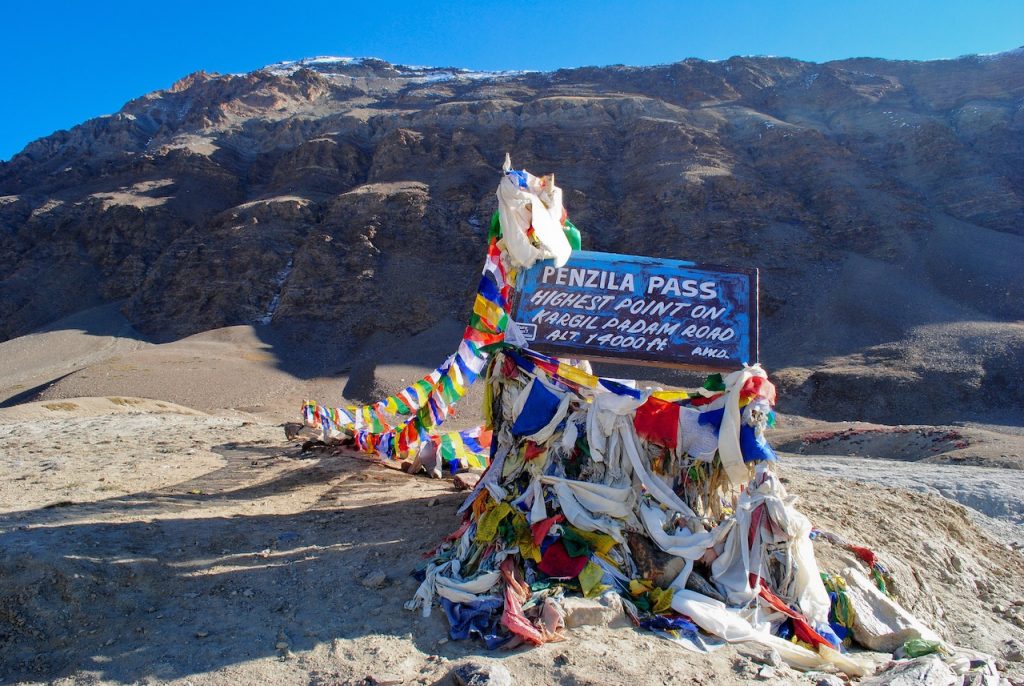
After Rangdum, you cross Penzi La Pass (4,401 m / 14,436 ft), the gateway to Zanskar Valley. The beautiful Stod River joins your path after descending from Penzi La. The last stretch to Padum can be tiring, so prepare for a 9-12 hour drive depending on road conditions and stops.
Safety note: Padum sits at 3,657 m, but you cross Penzi La at 4,401 m on the same day, only a day and a half after landing in Leh. Keep in mind that headache, nausea or disturbed sleep at Padum are signals to rest, not to push on to Stongde the next morning. Talk to your doctor about Diamox before the trip, and in case symptoms get worse, descend towards Rangdum and Kargil rather than waiting it out. Mobile signal is absent for most of this stretch, so tell someone at Kargil when you leave.
Overnight stay: Padum
Day 4: Rest Day in Padum or Visit Zongkhul Monastery
After the grueling Day 3, take the morning to rest and acclimatize in Padum. This is important because Padum sits at 12,000 ft and you have been traveling through high passes.
After lunch, if you feel energetic, drive to Zongkhul Monastery (37 km from Padum via Tungri). This cave monastery, associated with the great translator Naropa, is carved into a cliff face and takes about 2-3 hours for the round trip. The road to Zongkhul is rough but the monastery is worth the effort.
Overnight stay: Padum
Day 5: Padum Local Sightseeing, Stongde, Zang La, and Karsha (74 km loop)
This is your main sightseeing day in the Zanskar Valley. Explore the local attractions around Padum on this circular route.
- Stongde Monastery (15 km): Visit in the morning for the best views. This Gelugpa monastery sits dramatically on a hilltop overlooking the valley.
- Sheela Village Waterfall: Stop here on the way back from Stongde for a refreshing break.
- Zang La Fort (32 km): An ancient fort offering wide panoramic views of the Zanskar landscape. The old royal palace here is fascinating.
- Karsha Monastery (62 km): The largest and most important monastery in Zanskar. Visit in the evening for beautiful views of Padum village below. Karsha also hosts the famous annual festival in July.
- Sani Monastery: One of the oldest monasteries in Ladakh, known for the Kanika Stupa.
This loop takes about 3-4 hours of driving plus sightseeing time. Return to Padum by evening.
Overnight stay: Padum
Day 6: Padum to Rangdum via Penzi La (117 km, 5 hours)
Start the return journey from Padum. Today is a relatively relaxed day as you only need to reach Rangdum. On the way, enjoy the sights you may have missed on Day 3.
- Drang Drung Glacier: Visible from the road near Penzi La, this is one of the largest glaciers in Ladakh. Stop for photographs.
- Statso and Langtso Twin Lakes: Two beautiful high-altitude lakes on the approach to Penzi La. Stunning photo opportunities.
- Penzi La Pass: Take your time here. The views are spectacular on a clear day.
- Rangdum Gompa: Located about 2-3 km from Rangdum village, this monastery sitting on a small hillock surrounded by flat fields is a must-visit. Do not miss it.
I recommend staying at a homestay in Rangdum rather than the JKTDC Rest House. Homestays offer better food, warmer hospitality, and a more authentic experience.
Overnight stay: Rangdum
Day 7: Rangdum to Drass via Suru Valley and Umba La (160 km, 7-8 hours)
This day takes you back through the Suru Valley with time to enjoy the places you rushed past on Day 3. For more stops in this stretch, see our Suru Valley travel guide and the list of 7 must-visit places in Suru Valley.
- Panikhar Village: Spend some time here. The scenery around Panikhar with the Nun-Kun peaks in the background is stunning.
- Nun-Kun Views from Purikutchey: Excellent views of Ladakh’s highest peak (7,135 m). Keep your camera ready.
- Kartse Khar: A rock-carved Maitreya (future Buddha) statue on the roadside. Easy to miss if you are not looking for it.
- Lunch at Sankoo: Good dhaba food available here.
- Umba La Route: From Sankoo you can take the Umba La shortcut to Drass (about 65 km) instead of going back via Kargil. It is a badly broken, mostly unpaved road with tight bends, barely one vehicle wide in places, and it is typically open only from June to October. Hence, I suggest it only with an experienced local driver and a high-clearance vehicle, and only in dry weather. In case of rain or doubt, go via Kargil.
Overnight stay: Drass
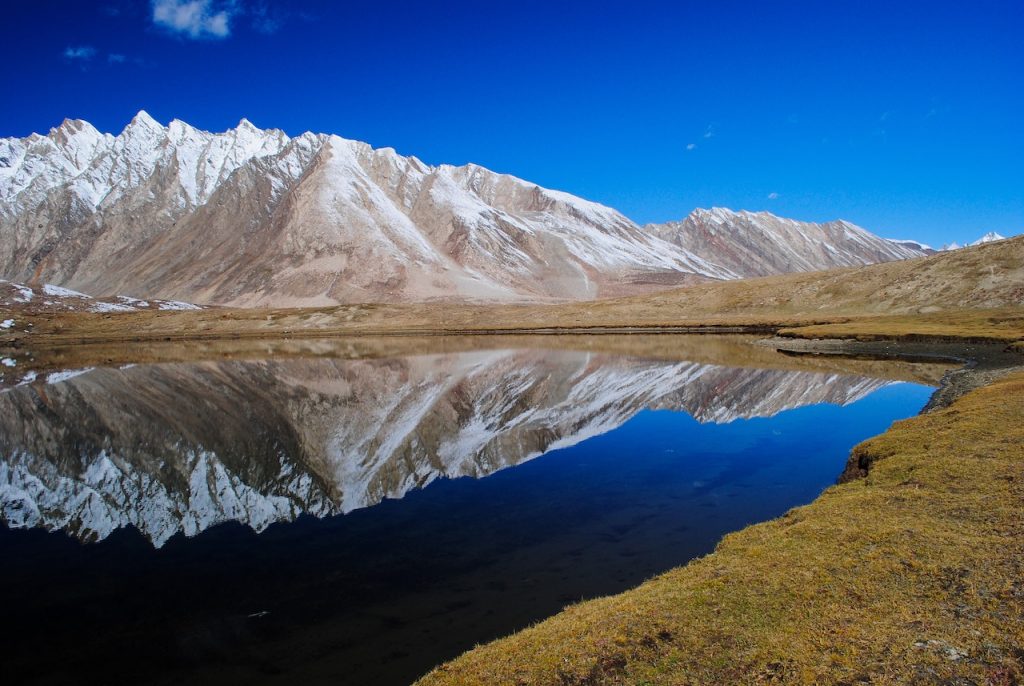
Day 8: Drass to Leh via Kargil War Memorial and Lamayuru (about 275 km, 8-9 hours)
Start early from Drass. This is a long but rewarding drive back to Leh, roughly 60 km to Kargil and then the 213 km Leh-Kargil highway you already know from Day 2.
- Kargil War Memorial: A must-visit, especially if you skipped it on Day 2. The memorial is deeply moving and well-maintained.
- Mulbekh Maitreya: A 9-meter tall rock-carved Buddha from the 7th century.
- Lamayuru Monastery: If you want to spend more time here than you did on Day 2, this is your chance.
- Gurudwara Pathar Sahib, Magnetic Hill, Confluence at Nimmu: Quick stops on the Leh-Kargil highway.
Reach Leh by evening. This is your last night in Leh, so enjoy a good dinner at one of the restaurants in the Main Bazaar or on Fort Road.
Overnight stay: Leh
Day 9: Fly Back from Leh to Delhi
Take a morning flight back to Delhi. Most Leh flights depart early (6-8 AM), so plan accordingly. If your hotel offers airport drop, confirm the pickup time the night before.
What About the Darcha to Padum Route via Shinkula Pass?
Quick answer: Yes, you can enter Zanskar from Manali via Darcha and Shinku La (5,091 m). It is shorter than the Kargil route but also seasonal, with the Shinku La tunnel targeted for August 2028. As of 2026 the road is open roughly mid-June to early October.
The Darcha-Shinkula-Padum route from the Manali side has become increasingly viable since 2019, when the first car made it through. As of 2025, BRO has improved this road significantly as part of the Nimmu-Padum-Darcha road project, and a Shinku La tunnel (expected completion 2028-29) will eventually make this an all-weather route.
The Darcha-Shinkula road reopened for all vehicle types on 9 May 2026 after BRO completed seasonal snow clearance, per Tribune India reporting. The bigger change is underway underground. BRO’s Project Yojak broke ground on the Shinku La tunnel in mid-2025, a Rs 1,681 crore, 4.1 km twin-tube structure targeted for completion by August 2028, which will eventually bypass the 16,580 ft pass entirely for year-round access. Until then, both routes into Zanskar remain seasonal, open roughly mid-June to early October, so plan around that window regardless of which side you enter from.
Kargil Route vs Shinkula Route: Which Way Into Zanskar?
Here is how the two access routes actually compare, based on current 2026 status.
| Route | Distance | Duration | Road Status / Season (2026) | Notes |
|---|---|---|---|---|
| Kargil-Padum (via Suru Valley, Penzi La) | 240 km from Kargil | 9-12 hours | Open early June to mid-October. Penzi La (4,401 m) clears first each season, BRO maintained | Traditional route. No ILP/EDF needed for Zanskar itself. Rough, unpaved stretches between Rangdum and Parkachik |
| Manali-Darcha-Shinkula-Padum (NPD road) | 246 km from Manali | Under 8 hours reported for the Manali-Padum run in 2026 | Reopened for all vehicles 9 May 2026 (BRO); open roughly mid-June to early October | Shorter and newer. Shinku La (5,091 m / 16,580 ft) is the high point, 4×4 recommended in shoulder season, all-weather tunnel targeted August 2028 |
Hence, keep in mind that neither route is genuinely all-weather yet. The Shinku La tunnel is the fact that changes this permanently, but it is still under construction, so treat both the Kargil side and the Shinkula side as seasonal until BRO confirms otherwise.
If you are interested in this newer route, check our complete guide on the new route from Manali to Leh via Zanskar. This route opens up the possibility of a circuit trip: enter Zanskar from Kargil and exit via Shinkula to Manali, or vice versa.
What Is the Estimated Budget for This 9-Day Zanskar Trip?
Quick answer: Budget travelers should plan about Rs 24,000-36,000 per person for 9 days from Delhi, and mid-range travelers about Rs 41,500-63,000 (2 people sharing). Flights and the Kargil-Padum taxi are the two biggest line items.
Here is a rough budget breakdown for this 9-day itinerary. These are per-person costs assuming 2 people sharing.
| Expense | Budget (per person) | Mid-Range (per person) |
|---|---|---|
| Delhi-Leh flights (round trip) | Rs 8,000-12,000 | Rs 12,000-18,000 |
| Accommodation (8 nights) | Rs 4,000-6,000 | Rs 8,000-16,000 |
| Transport (shared taxi/bike) | Rs 8,000-12,000 | Rs 15,000-20,000 |
| Food (9 days) | Rs 3,000-4,500 | Rs 5,000-7,000 |
| EDF + miscellaneous | Rs 1,000-1,500 | Rs 1,500-2,000 |
| Total | Rs 24,000-36,000 | Rs 41,500-63,000 |
Do the math for your own group, my friend. The mid-range transport column assumes a private Kargil-based taxi for the Zanskar sector (about Rs 23,000-30,000 for the round trip as of 2026, split between two) plus the Leh-Kargil legs, while the budget column assumes shared Sumo seats at Rs 2,000-2,200 each way. Flight fares swing a lot with the month, so treat that row as a ballpark. For a detailed cost breakdown, refer to our dedicated article on how to calculate cost or budget for a Zanskar Valley trip, and for the cheapest way to do it, read these money-saving tips for a Zanskar trip.
What Are Some Important Tips for Your Zanskar Valley Trip?
- Carry enough cash. There is only 1 ATM in Padum and it is unreliable. Withdraw enough from Leh or Kargil to cover your entire Zanskar stay.
- Pack warm clothing. Even in July-August, nights in Zanskar can drop to 0-5 degrees Celsius. Carry a good sleeping bag if staying at homestays.
- Do not rely on mobile networks. BSNL postpaid works in Kargil and Padum, but there is no signal for most of the journey between the two, including Penzi La and the Suru Valley. Jio and Airtel are reported to work in Padum town now, though coverage is patchy, so keep BSNL postpaid as your backup. Check our guide on mobile phone connectivity in Zanskar Valley.
- Carry basic medicines. There is a government hospital in Padum, but it has limited facilities. Carry Diamox (for AMS), painkillers, ORS, and any personal medication.
- Respect local culture. Zanskar is a deeply Buddhist region. Remove shoes before entering monasteries, ask permission before photographing monks, and dress modestly.
- Fuel up at Kargil. Fill your tank completely. While Padum has 2 petrol pumps now, supply can be erratic.
- Book accommodation in advance during peak season (July-August). Padum has limited hotels and homestays, and they fill up fast during the Karsha and Sani festivals.
- Keep a buffer day. Road conditions in Zanskar are unpredictable. Landslides and weather can delay travel by hours or even a full day. If possible, keep Day 9 as a buffer and fly out on Day 10.
Can You Modify This Itinerary for Different Travel Plans?
This 9-day plan is designed for travelers flying in and out of Leh. But you can easily modify it based on your route.
Coming via Manali-Leh Highway: If you are driving from Manali to Leh, add 2 days for the highway journey. You can also enter Zanskar directly from the Manali side via Darcha-Shinkula if the road is open.
Coming via Srinagar-Leh Highway: If arriving from Srinagar via the Srinagar-Leh Highway, you can divert to Zanskar directly from Kargil on Day 1 of reaching Kargil. This saves the Leh-Kargil-Leh backtracking.
Want a shorter trip? Check our Zanskar Valley most common itinerary for an 8-day plan. For the best time to visit, refer to best time to travel to Ladakh and Zanskar Valley.
Related Reading on Zanskar Valley
- How to Plan a Journey to Zanskar Valley
- Local Sightseeing in Padum, Zanskar Valley
- Budget Trip to Zanskar Valley by Public Transport
- Phugtal Monastery Trek Travel Guide
- Cost and Budget for a Zanskar Valley Trip
- Everything About Camping in Zanskar
- New Route: Manali to Leh via Zanskar
- Maps of Ladakh, Srinagar, Kargil, and Leh
- A Sprint from Rangdum to Padum (Zanskar 2012 trip report)
- Padum to Kargil Road Trip (Zanskar 2012 trip report)
Conclusion
I hope this 9-day itinerary helps you plan your trip to Zanskar Valley from Leh. Zanskar is not a destination you visit for Instagram photos. It is a place where you go to disconnect, slow down, and experience a way of life that has remained unchanged for centuries. The monasteries, the people, the stark landscapes, and the silence make it one of the most special places I have visited in the Himalayas.
If you have any questions about this itinerary or need help customizing it for your travel dates, feel free to drop a comment below or reach out on the Discover with Dheeraj community. And if you have already been to Zanskar, I would love to hear about your experience, tips, and suggestions in the comments section.
In the end, if you know a friend or family member planning a trip to Zanskar Valley, please share this article with them. Safe travels, my friend 🙂
Last Updated: September 2026
Frequently Asked Questions
How many days do you need for a Zanskar Valley trip from Leh?
A minimum of 8-9 days is recommended for a Leh-Zanskar-Leh circuit. This includes 1 day for acclimatization in Leh, 2 days for the Leh-Kargil-Padum journey, 2-3 days for sightseeing in and around Padum, and 2-3 days for the return journey. If you want to add a trek to Phugtal Monastery, add 2 more days.
Is Zanskar Valley safe for solo travelers?
Yes, Zanskar is generally safe for solo travelers. The locals are friendly and helpful. However, solo travel here requires more planning because public transport is very limited and you will need to arrange shared taxis in advance. Carry enough cash, basic medicines, and inform someone about your itinerary. Mobile connectivity is minimal between Kargil and Padum.
What is the best time to visit Zanskar Valley?
The best time to visit Zanskar Valley by road is mid-June to September. July and August offer the warmest weather and all roads are open. June is good but Penzi La may still have snow early in the month. September is beautiful with clear skies but nights get cold quickly. The road typically closes by mid to late October.
Can I reach Zanskar Valley from Manali?
Yes, you can reach Zanskar from Manali via the Darcha-Shinkula Pass-Padum route. This road is being improved by BRO as part of the Nimmu-Padum-Darcha project. It is open from approximately June to September and offers a shorter approach to Zanskar than the traditional Kargil route. However, the road conditions can be rough, especially near Shinkula Pass (5,091 m).
Is there any phone network available in Zanskar Valley?
BSNL postpaid has the best coverage in Zanskar, working in both Kargil and Padum. Jio and Airtel are reported to work in Padum town with patchy coverage, and Jio also has some signal in Kargil. Between Kargil and Padum, there is virtually no mobile signal along Penzi La and the Suru Valley. Carry important offline maps and inform your family about the communication gap before you leave.
What kind of vehicle is best for a Zanskar Valley road trip?
A high-clearance SUV or a robust vehicle like a Mahindra Bolero, Thar, or Toyota Innova Crysta is recommended. The Kargil-Padum road has broken stretches, river crossings, and unpaved sections that require good ground clearance. Sedans and hatchbacks are not suitable for this route. For bikes, a Royal Enfield Himalayan or similar adventure bike with good suspension is ideal.
How much does a Zanskar Valley trip cost from Delhi?
A budget 9-day Zanskar trip from Delhi costs approximately Rs 24,000-36,000 per person (shared basis). This includes flights (Rs 8,000-12,000), shared transport (Rs 8,000-12,000), accommodation at homestays (Rs 4,000-6,000), food (Rs 3,000-4,500), and miscellaneous expenses. A mid-range trip with private taxi and better hotels can cost Rs 41,500-63,000 per person.
Is there a bus from Leh to Padum?
There is a once-a-week bus from Leh to Padum while the road is open, with a night halt at Kargil and arrival the next day. There is no daily direct service. JKSRTC buses run reliably only to Sankoo and Panikhar, so most travelers use a shared Sumo from Kargil (Rs 2,000-2,200 per seat) or a private taxi. Verify the current schedule at the Leh or Kargil bus stand.
Is the Red Cross fee mandatory for the Ladakh EDF permit?
No, the Red Cross Fund contribution on the Ladakh EDF permit is a one-time Rs 50 charge, not a daily fee, and it is optional at checkout on lahdclehpermit.in. The mandatory portion of the EDF is Rs 400 per person as a one-time environment fee, plus Rs 20 per person per day as a wildlife conservation fee. This only applies if you are combining Zanskar with restricted areas like Nubra Valley or Pangong Tso, since Zanskar itself does not require the EDF or any permit.

2 Comments
Comments section gets closed in 90 days. To ask your travel questions, you can follow my YouTube Channel for a faster reply or for a much slower reply follow me on Instagram. :)
Can someone suggest any change that we might have to do in the itinerary?
Day 1: Early morning flight Delhi to Leh 0740 hrs arrival. Spend remainder of the day resting. (Shanti stupa popular sunset + Leh palace + Local bazzar)
Day 2: Leh kargil highway -> Hall of fame museum -> Gurugwara pathar sahib -> Magnetic hill -> Confluence of indus and zanskar river -> Spituk Monestry -> Leh
Day 3: Nubra valley -> After 2 hours -> Khardungla -> Indus Valley (Rest) -> Hunder sand dunes and camel ride (Overnight stay in hotel)
Day 4: Nubra -> Khardungla-> Leh (Diskit monestry on hill top ) Optional: Jokhng leh mosque, Central asian museum
Day 5: Leh -> Changla pass -> Pangong (Chang thang valley -> Chang la(2nd highest point)) -> Tangtse temple(OPT)-> Overnight in tent or guest house
Day 6: Pangong -> Thicksey Gompa -> Shey palace -> Leh
Day 7: (Friday morning )Leh -> Manalli Day 8: (Saturday) Leh -> Manalli (Reach in afternoon by 2PM) Bus at 5PM
Your plan is nice and good and relaxed. Go ahead with it.