


If you are planning a trip to Kinnaur Valley, you have picked one of Himachal Pradesh’s finest destinations. Kinnaur is that rare corner of the Indian Himalayas where apple orchards, ancient temples, adventurous roads, and snow-capped peaks all come together within a single district. I have been visiting Kinnaur since 2011, and every trip still surprises me with something new.
This Kinnaur Valley travel guide covers everything you need to plan your trip in 2026, including Kalpa, Sangla Valley, Chitkul, and Sarahan. I will walk you through how to reach, the best time to visit, a suggested itinerary, accommodation options, costs, road conditions, permit rules, and all the practical details that actually matter when you are on the ground.
Quick Answer: The best way to visit Kinnaur Valley is a 7 to 8 day road trip from Delhi via Shimla on NH-05, covering Sarahan, Kalpa, Sangla, and Chitkul (the last inhabited Indian village on this route). Indian nationals need no permit for these destinations, only a photo ID. The best time to visit is April to June and September to November. Budget travellers can do the trip for Rs 10,000 to 15,000 per person; a mid-range trip with taxi and hotels runs Rs 25,000 to 40,000 per person.
Sangla to Chitkul is 28 km by road on NH-5 through the Baspa Valley, roughly a 1-hour drive. Chitkul sits at 3,450 m as the last inhabited village before the Indo-Tibetan border, where an ITBP checkpoint requires every visitor to carry a valid photo ID before proceeding.
| Leg | Distance | Approx. Drive Time |
|---|---|---|
| Shimla to Sangla | ~205 km | 7-8 hours |
| Sangla to Chitkul | 28 km | ~1 hour |
| Kalpa to Chitkul | ~65 km | 2-3 hours |
Let's quickly dive into the details:
What Makes Kinnaur Valley Special?
Kinnaur is one of the 12 districts in Himachal Pradesh, tucked away in the northeast corner near the Indo-Tibetan border. The district is known for its apple orchards (Kinnaur apples are considered some of the finest in India), dense cedar and pine forests, beautiful meadows, ancient Hindu and Buddhist temples, and roads that will test your nerves. One of the roads to Sangla Valley was featured on History Channel as one of the Deadliest Roads in the World. That should tell you something about the adventure factor 🙂
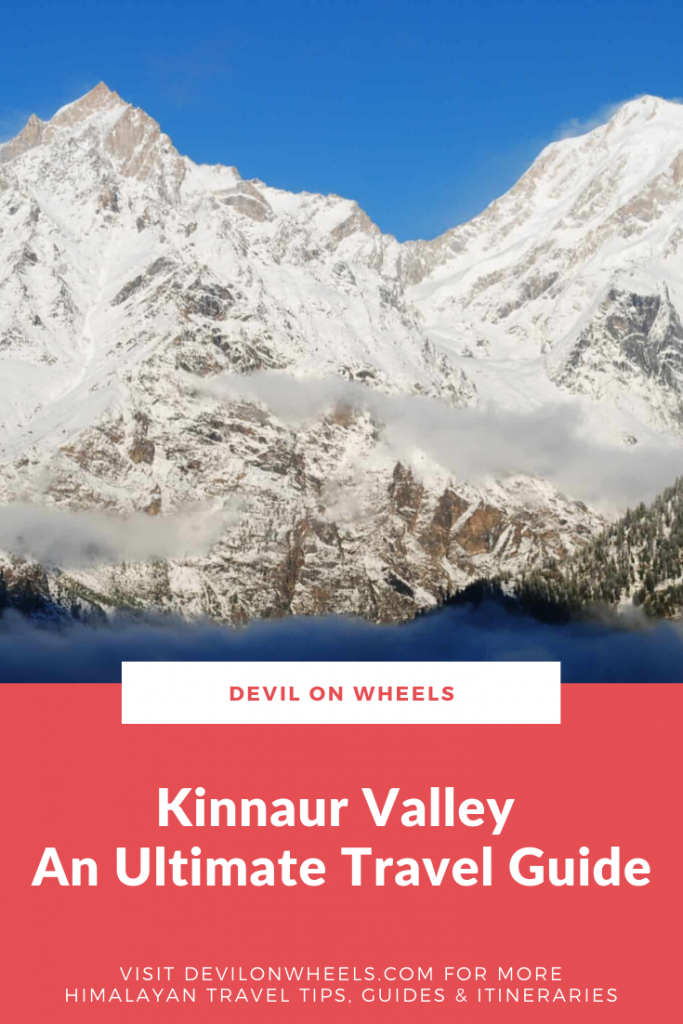
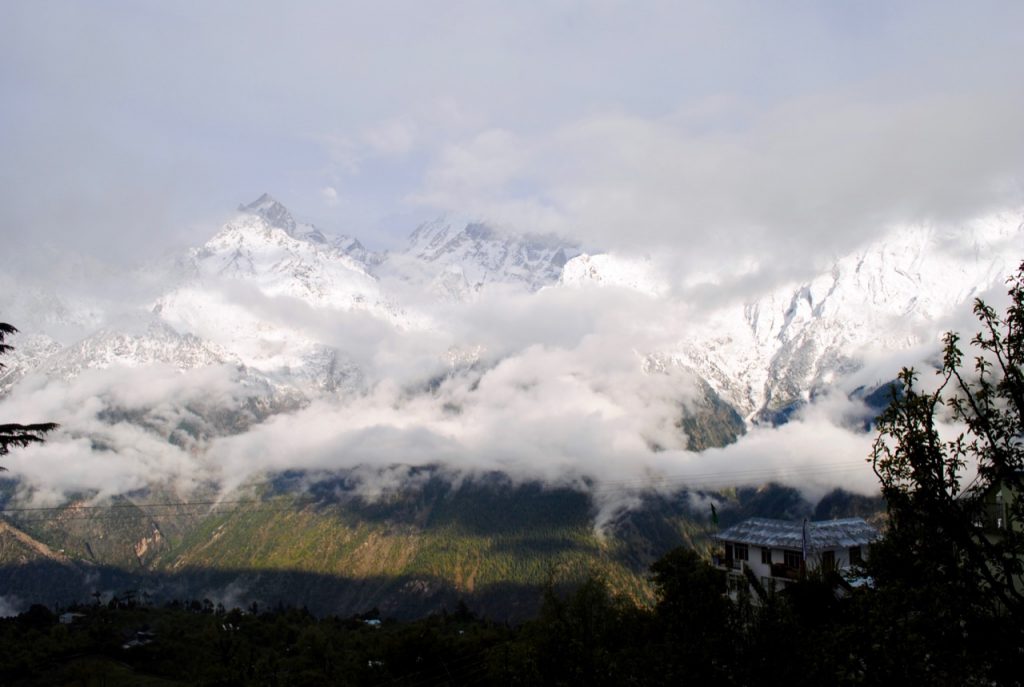
The major attraction here is the Kinner Kailash range, a mountain sacred to Hindus, which towers over Kalpa at around 20,000 ft. For those wanting to go beyond viewpoints, my Kinnaur Kailash Parikrama trek guide covers the full 4-5 day circuit around this massif via Charang La, starting near Reckong Peo. The sunrises and sunsets over this range are among the most spectacular I have witnessed anywhere in the Himalayas. Then there is Chitkul, considered the last inhabited village in India on this side before the Indo-Tibetan border, and Sangla Valley (also called Baspa Valley) with its gorgeous meadows and traditional villages. Watch for locals wearing the Kinnauri topi (the green-capped grey wool hat), a cultural marker worn with pride across the district.
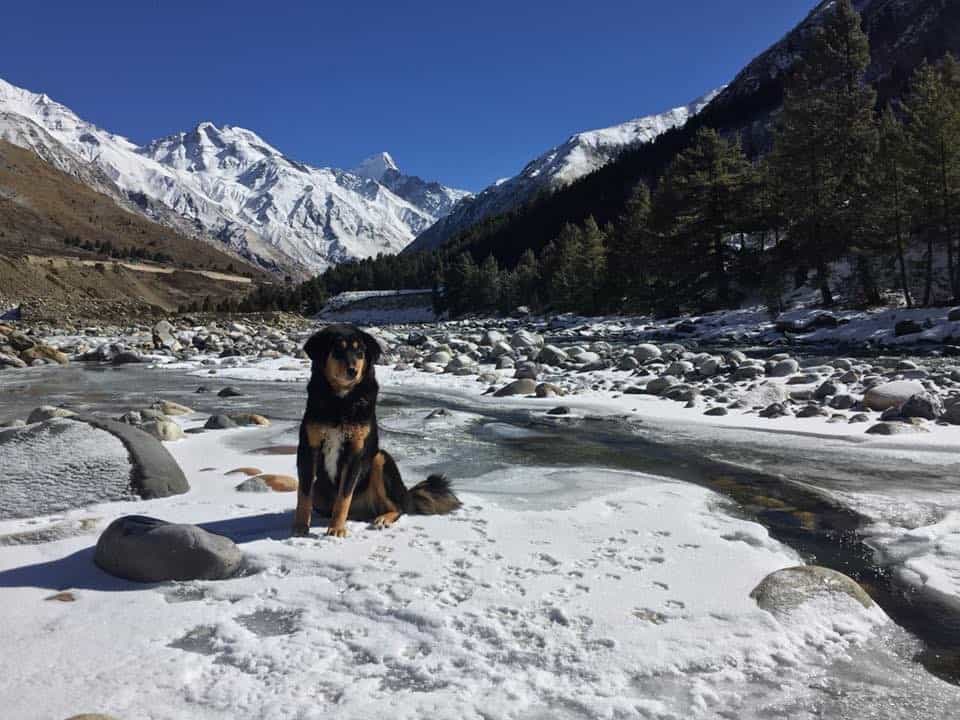
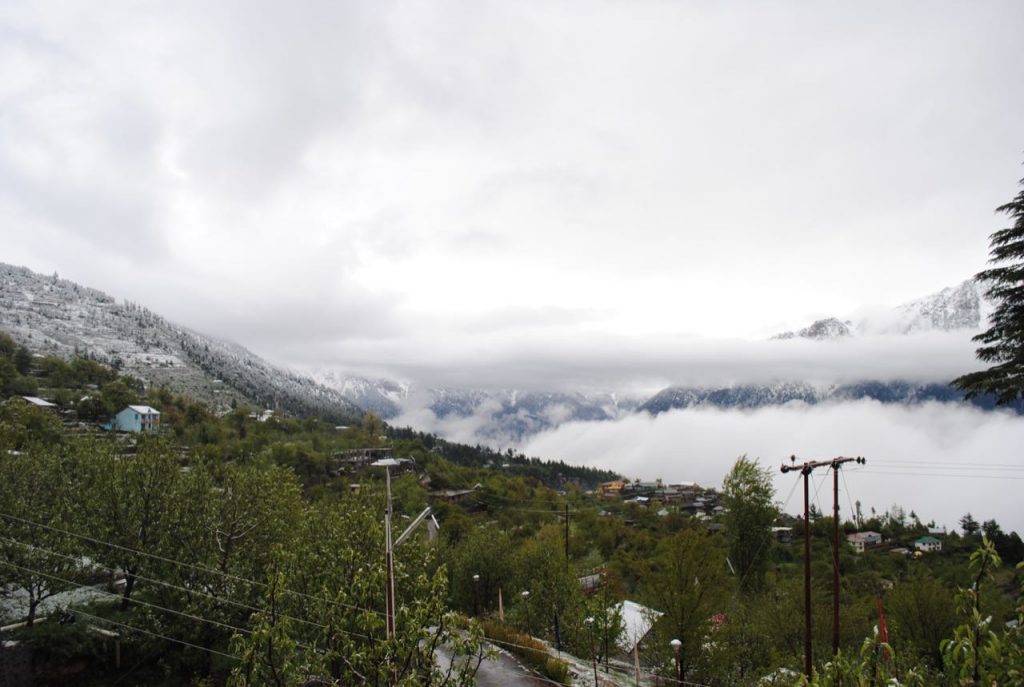
In winters, the entire valley transforms into a snow-covered landscape. In autumn, the apple orchards turn golden and red. In summer, the meadows are a bright green carpet under clear blue skies. Kinnaur rewards you no matter when you visit, as long as you plan well.
Where is Kinnaur Valley Located and What is the Altitude?
Kinnaur Valley is located about 235 km from Shimla and roughly 570 km from Delhi (taking Reckong Peo as the reference point). From Chandigarh, the distance is about 340 km. Despite feeling incredibly remote, Kinnaur is not as far from civilization as people assume, and that is part of its charm.
Practical Info Box
District: Kinnaur, Himachal Pradesh
Distances: 235 km from Shimla | 570 km from Delhi | 340 km from Chandigarh
Key altitudes: Kalpa 9,711 ft (2,960 m) | Sangla 8,900 ft (2,696 m) | Chitkul 11,319 ft (3,450 m)
Permits: No permit needed for Indian nationals at Kalpa, Sangla, Chitkul (ILP required only when crossing Sumdo into Spiti, or for foreigners near Shipki La)
Best time: April to June, September to November
Budget: Rs 1,500 to 4,000 per day depending on travel style
Last updated: April 2026
The altitude in Kinnaur ranges from about 7,600 ft to over 22,000 ft across the district. The three main tourist destinations sit at different heights. Kalpa is at 9,711 ft (2,960 m), Sangla is at 8,900 ft (2,696 m), and Chitkul is the highest at 11,319 ft (3,450 m).
Keep in mind that people sometimes face acute mountain sickness (AMS) if they spend their second night directly at Chitkul without acclimatizing first. Hence, I always recommend spending a night in Sangla or Kalpa before sleeping overnight at Chitkul.
What is the Best Time to Visit Kinnaur Valley?
You can visit Kinnaur Valley throughout most of the year, but each season offers a very different experience. The best months for most travellers are April to June and September to November. Let me break it down season by season so you can pick the window that works best for you.
Kinnaur in December, January, and February (Winter)
Winters in Kinnaur are harsh. Temperatures drop well below zero, and several feet of snow is common. Many hotels remain closed, especially in Chitkul and upper Kinnaur. The road to Chitkul closes down in January and February and sometimes even in December. Roads to Kalpa and Sangla also close intermittently during bad weather, though authorities restore connectivity as soon as conditions improve. If you plan a winter trip to Kinnaur, prepare very well with heavy woolens and check road conditions before leaving.
Kinnaur in March to July (Spring and Summer)
Snow starts melting in March, and roads within Kinnaur, including the road to Chitkul, gradually open to welcome tourists. The heat picks up from April onward, and this is when the heavy tourist rush begins. From late April through June, Kinnaur sees its peak season. Temperatures in summer hover around 15 to 25 degrees Celsius, which is quite pleasant.
Once you hit the last week of July, the monsoon arrives. This is where things get tricky. The road journey to Kinnaur becomes problematic with landslides and closures.
Kinnaur in August (Monsoon)
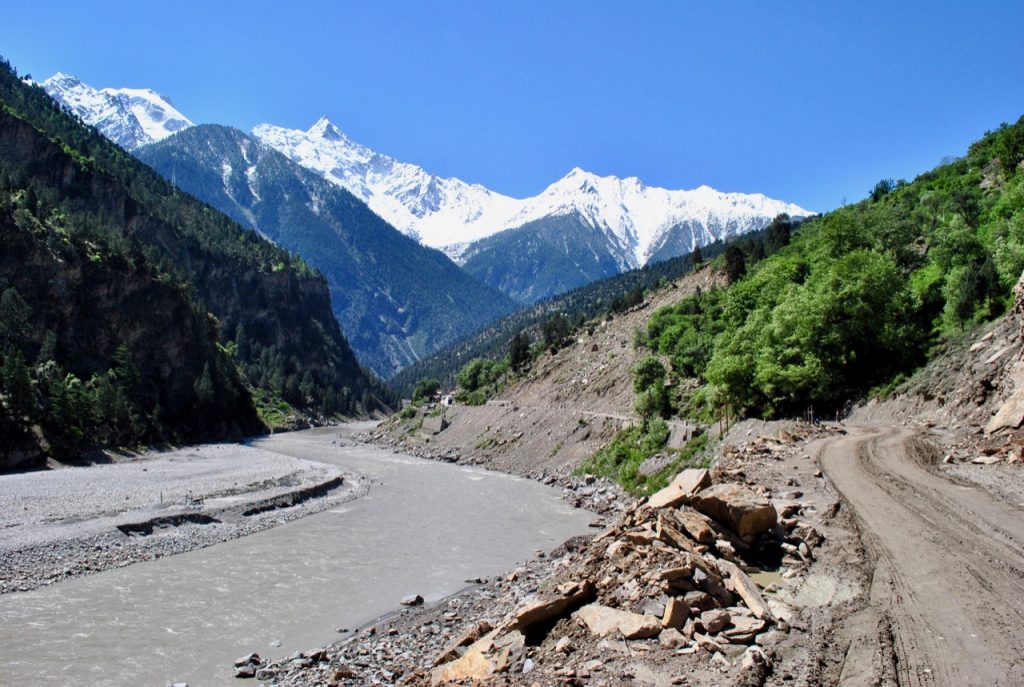
I strongly feel that Kinnaur is not the place to be during the monsoon. The entire Kinnaur region sits on fragile mountains, and combining heavy rains with these fragile slopes creates a dangerous combination. Road closures become common, landslides are frequent, and you could get stranded for days. Hence, avoid August unless you are comfortable with the risks.
Kinnaur in September to November (Autumn)
Once the rains recede, the apple harvest season begins in Kinnaur from late August through October. My favourite time to visit Kinnaur Valley is autumn, when the orchards are loaded with apples, the skies are crystal clear, and the roads have dried up and improved significantly. September also brings the Fulaich flower festival in many Kinnauri villages, where locals climb to high meadows to collect sacred flowers and perform traditional dances. In November, temperatures start dipping toward sub-zero, and water in pipes begins to freeze at night. The winter chill is right around the corner.
My pick: September to mid-October is the sweet spot. Clear skies, apple orchards in full harvest, dried-up roads, Fulaich festival atmosphere, and fewer crowds. Read my detailed article on the best time to visit Kinnaur Valley for a month-by-month breakdown.
In case you are going during the apple season (late July to August), be ready for a massive mess of truck traffic along with rains and landslides. The apple trucks clog NH-05 during this period. If you want to time your visit around the actual harvest rather than just the traffic, my Kinnaur apple harvest guide breaks down which weeks the orchards peak by altitude.
Also, keep in mind that Chitkul becomes inaccessible during peak winters. One snowfall can trap you for months in Chitkul 🙂 so never go there in late winters without checking weather conditions first.
How to Reach Kinnaur Valley?
Getting to Kinnaur Valley involves a road journey, whether you drive yourself, take a bus, or hire a taxi. There is no direct air or rail connectivity to Kinnaur. Here are all the options.
By Road from Delhi via Shimla (Most Common Route)
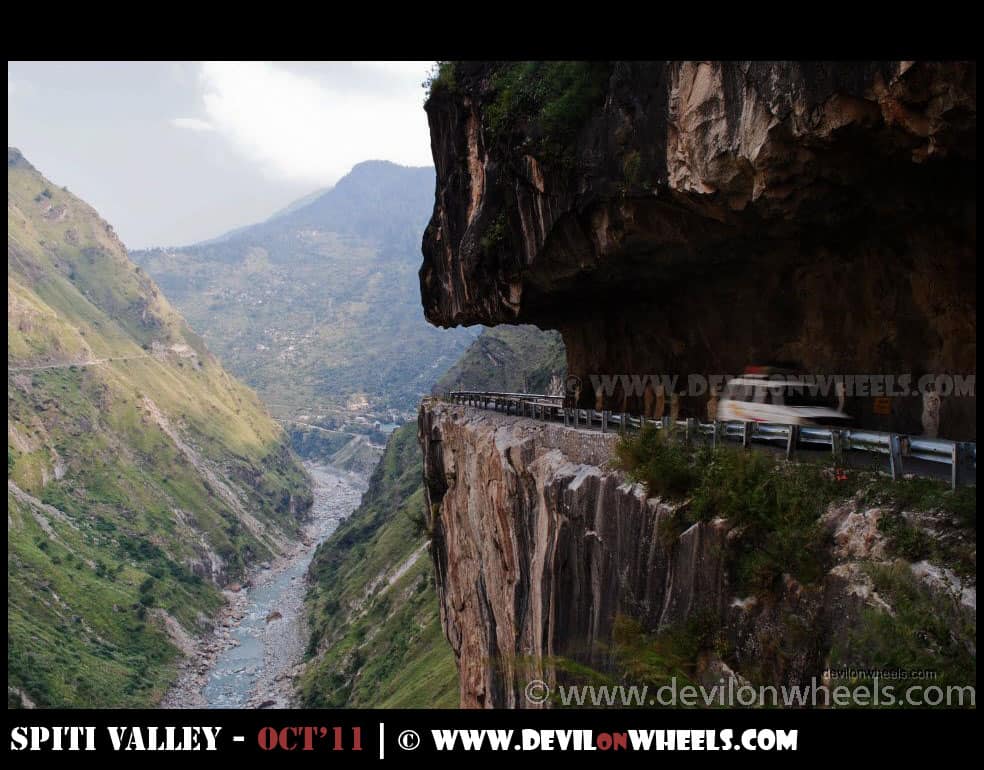
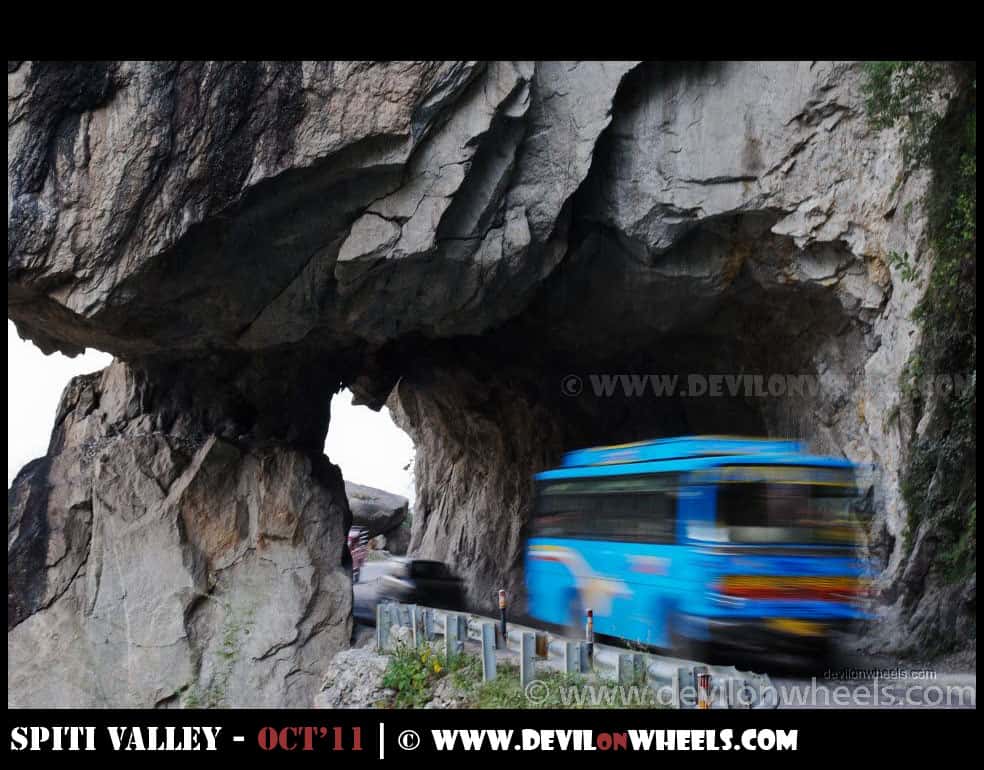
The most popular route to Kinnaur Valley from Delhi runs along the Hindustan Tibet Road (NH-05), passing through Shimla and Narkanda. The road is adventurous once you enter Kinnaur territory, with steep drops and narrow stretches that add to the thrill. If you drive yourself, you will enjoy the offroading in certain sections.
Here is the route with distances from Delhi:
Route to Kalpa: Delhi (0 km) → Shimla (360 km) → Narkanda (420 km) → Rampur (488 km) → Karcham (566 km) → Reckong Peo (587 km) → Kalpa (595 km)


Route to Chitkul: Delhi (0 km) → Shimla (360 km) → Narkanda (420 km) → Rampur (488 km) → Karcham (566 km) → Sangla (582 km) → Rakcham (596 km) → Chitkul (610 km)
At Karcham, the road splits. Go straight for Reckong Peo and Kalpa. Turn right for Sangla Valley and Chitkul.
You will need a minimum of 2 days from Delhi to reach Kalpa or Sangla. An overnight halt at Narkanda or somewhere near Shimla is ideal to distribute the journey evenly. If you are starting from Chandigarh, consider staying overnight at Sarahan, which is a 17 km climb from the Jeori turn-off on NH-05 (about 23 km from Rampur). Sarahan itself is home to the famous Bhimakali Temple and makes a wonderful first stop.
Food Stop on the Way
A pit stop must is a makeshift dhaba right after the Jeori/Sarahan diversion where an old lady serves lip-smacking Rajma Chawal. Yes, the hygiene is slightly questionable, but it is a dhaba after all! The taste is unbeatable. Rs 80 to 100 for an unlimited plate of Rajma Chawal, sign me up! The Annapurna Dhaba nearby is also quite famous for Rajma Chawal.

By Road from Manali
You can also travel to Kinnaur from Manali. Two routes exist. The shorter route goes via Jalori Pass to Rampur (about 310 km, 12 to 15 hours). This route merges at Rampur on NH-05 and then follows the same road toward Kinnaur. I recommend an overnight halt at Jalori to break the journey evenly.
The longer route takes you through the Atal Tunnel, into Spiti Valley from Manali side, and then down to Kinnaur. This is a much longer journey but a fantastic option if you want to combine Spiti and Kinnaur in one trip.
By Air
The nearest airport is at Shimla (Jubbarhatti), about 220 km from Reckong Peo. If coming from Manali side, the Bhuntar Airport near Kullu is about 245 km from Reckong Peo. Both airports have limited connectivity and small capacity. Chandigarh Airport is about 340 km away and is the most practical option if you are flying in from another part of India.
By Railways
Shimla has a narrow-gauge railway station (the famous Kalka-Shimla toy train), but connectivity is limited. My suggestion is to make Chandigarh your railway endpoint, as it is well connected to all major cities. From Chandigarh, you can hire a taxi or take a bus to Kinnaur.
By Bus or Public Transport
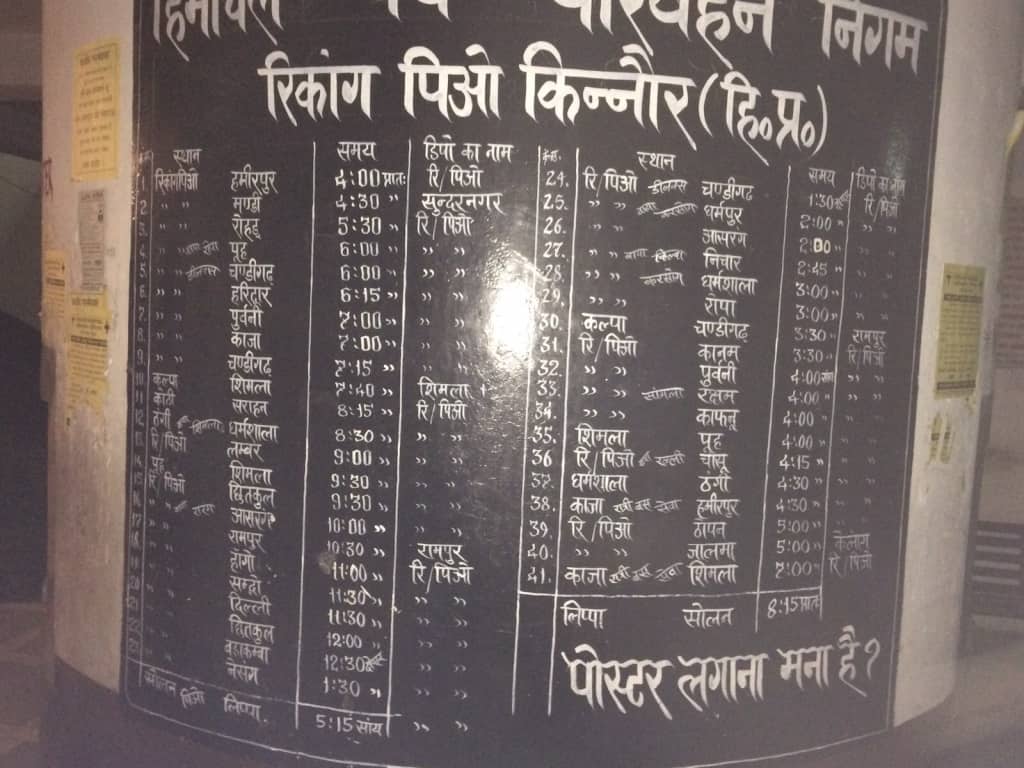
Reckong Peo is well connected with Chandigarh and Shimla by direct HRTC buses. Here are the key bus services as of 2025-2026:
- Chandigarh to Reckong Peo: Overnight bus available. Fare approximately Rs 700 to 1,200 depending on bus type (ordinary vs Himmani Deluxe).
- Shimla to Reckong Peo: Multiple departures daily (around 13 buses). First bus around 3:25 AM, last around 9:20 PM. Fare Rs 430 for ordinary and Rs 650 for Himmani Deluxe. Journey covers 221 km in 9 to 10 hours.
- Kaza (Spiti) to Reckong Peo: One daily morning bus connects Spiti to Kinnaur.
- Within Kinnaur: Connecting buses run from Reckong Peo to Kalpa (7 km, frequent), Sangla (about 40 km, departures around 9:30 AM and 12 PM), and Chitkul (about 65 km). The Reckong Peo to Chitkul bus fare is approximately Rs 100 to 150.
Bus schedules change seasonally, so always verify the latest timings with HRTC before travel. You can book tickets online on the HRTC portal or at the bus stand.
For a detailed breakdown of bus routes, fares, and how to plan the entire trip by public transport, read my article on how to visit Kinnaur Valley by public transport.
How Much Does a Taxi Cost for Kinnaur Valley Trip?
Private taxis are a comfortable option for exploring Kinnaur Valley, especially if you are travelling with family or a group. Taxis can be booked from Shimla, Chandigarh, or even Delhi. I always recommend travelling with local drivers in remote regions like Kinnaur because they know the roads, the weather patterns, and the shortcuts.
As of 2025-2026, here are the approximate taxi rates:
- Per day rate: Rs 3,500 to 5,000 per day (includes driver’s stay and food). Rates have gone up from the Rs 3,200-3,500 range of earlier years.
- Full Kinnaur trip (7-8 days): Rs 28,000 to 40,000 depending on vehicle type and season.
- Shimla to Kinnaur (one-way drop): Rs 8,000 to 12,000 approximately.
You can connect with local taxi drivers through this list of taxi drivers in Kinnaur and Spiti Valley. The prices come down if you are travelling in a group. You can also book self-drive cars from Delhi or Chandigarh if you prefer driving yourself.
What Type of Vehicle is Best for Kinnaur?
Higher ground clearance vehicles are preferable, but 4×4 is not required. That said, many people make the trip in hatchbacks and sedans as well. It depends on your driving skills and the road conditions at the time. In monsoon, I would strongly recommend an SUV or at least a high ground clearance car.
Before you start packing, refer to my list of top 40 things to carry on a self-drive trip. Most of these apply to Kinnaur as well.
What is the Best Itinerary for Kinnaur Valley?
I mostly recommend people to spare at least 7 to 8 days for a relaxing trip to Kinnaur Valley. This gives you enough time to explore the beautiful places along the Hindustan Tibet Road and actually soak in the peaceful villages of Kalpa, Sangla, Chitkul, and Sarahan without rushing. If you need a day-by-day plan, my Kinnaur Valley 7-day itinerary from Shimla to Chitkul covers each stop with driving times, accommodation suggestions, and permit notes.
Here is a high-level day-by-day plan:
- Day 1: Delhi to Shimla or Narkanda (360 to 420 km)
- Day 2: Shimla/Narkanda to Sarahan (about 170 km from Shimla). Visit Bhimakali Temple.
- Day 3: Sarahan to Kalpa via Tapri and Reckong Peo (about 100 km)
- Day 4: Rest day at Kalpa. Explore Roghi Village, Chaka Meadows, watch sunrise over Kinner Kailash.
- Day 5: Kalpa to Sangla or Rakcham via Karcham (about 50 km)
- Day 6: Day trip to Chitkul from Sangla (28 km one way). Return to Sangla or Rakcham.
- Day 7: Sangla to Rampur or Narkanda (about 200 km). Halt at Daranghati, Narkanda, or Chail.
- Day 8: Return to Delhi.
If you are not someone who visits places just to tick them off a bucket list, you can refer to my detailed article on the Kinnaur Valley most common itinerary for a more detailed plan. I have also covered variations for shorter trips (5-day) and longer trips combining Kinnaur with Spiti.
If you want to combine Kinnaur with Spiti Valley, plan for at least 12 to 14 days. You can enter from the Shimla side, explore Kinnaur, continue to Spiti via the Kinnaur route, and exit via the Atal Tunnel to Manali.
Where to Stay in Kinnaur Valley?
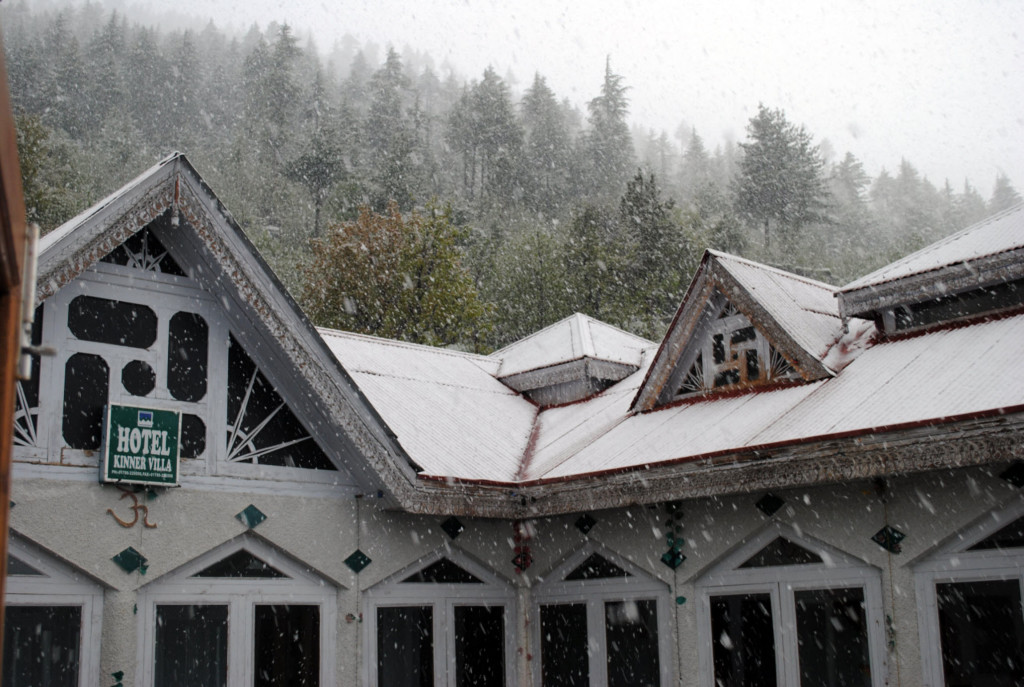
Accommodation options are available at Reckong Peo, Kalpa, Sangla, Rakcham, and Chitkul. The range covers everything from budget homestays to comfortable mid-range hotels. Here is what you can expect in 2026:
- Budget homestays and guesthouses: Rs 500 to 1,200 per night. Available at all main stops. Basic but clean rooms with meals often included.
- Mid-range hotels: Rs 1,500 to 3,000 per night. Better amenities, hot water, attached bathrooms, and valley views.
- Comfortable/upscale properties: Rs 3,500 and above. Options like Hotel Rollingrang in Kalpa or Apple Pie in Sangla offer good comfort.
- PWD Rest Houses: Economical and comfortable, available at multiple locations in Kinnaur. You need advance booking and occasionally face the risk of being bumped for VIP visits. Refer to how to book HP PWD Rest Houses for the process.
- Zostel Chitkul: Dorm beds start from Rs 500 to 600 per night, private rooms from Rs 1,500 to 1,900.
Most hotels remain closed during peak winters (January to March), especially in Chitkul. In summer season, I recommend booking at least a week in advance, particularly for Kalpa and Chitkul, as options are limited and fill up fast.
For detailed hotel recommendations and reviews, read: Good hotels and accommodation in Kinnaur and Spiti Valley.
What are the Top Places to Visit in Kinnaur Valley?
Once you enter the gates of Kinnaur Valley, the towering mountains, deep gorges, and narrow roads set the tone for the entire trip. Every major stop in Kinnaur is closer to raw nature than to commercialized tourist towns. Here are the must-visit places.
Sangla Valley (Baspa Valley)
About 16 km from the Karcham junction on NH-05, Sangla Valley (also known as Baspa Valley) is one of the most beautiful valleys in Kinnaur. The valley is surrounded by thick forest slopes, and the views of snow-capped mountains from Sangla village are gorgeous. The meadows near Rakcham village have become popular for film shoots and advertisements too.
Things to do in Sangla: walk through apple orchards, visit Kamru Fort (a 1000-year-old fort about 2-3 km from Sangla), hike to the Glacier Point (easy 3-4 hour hike for some snow play), walk the 12 km trail from Batseri village to Sangla through dense cedar forests, and visit the Trout Fishery Farm on the other side of Baspa River.
Read the complete detailed travel guide of Sangla Valley for more.
Chitkul Village
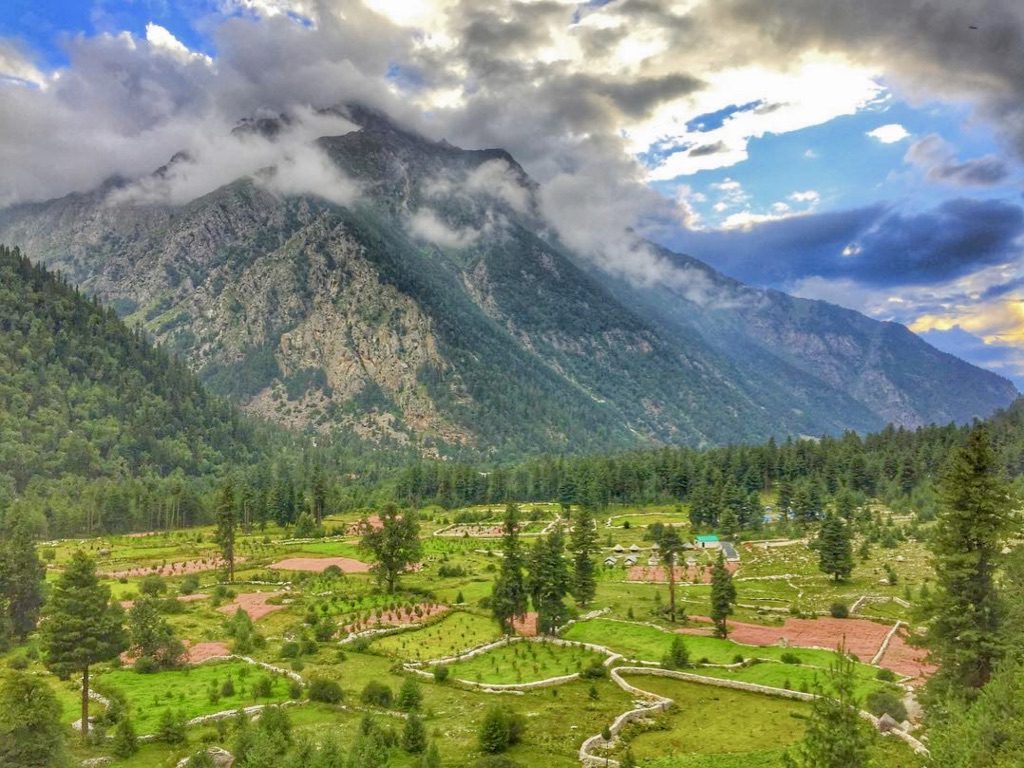
About 28 km from Sangla at 11,319 ft, Chitkul sits on the banks of the Baspa River and is the last inhabited village in India before the Indo-Tibetan border on this route. The ITBP (Indo-Tibetan Border Police) has a checkpost here. Chitkul is famous for its magical beauty, its potatoes (Kinnaur potatoes are among the most expensive in the world), and the “Last Indian Dhaba” which is a must-visit.
The village closes during peak winters and the road usually remains blocked from mid-December to March. Do not miss the Mathi Devi Temple, which is over 500 years old.
Read the complete detailed travel guide of Chitkul Village for more.
Kalpa
Kalpa is one of the best places to see sunrise and sunset in the Himalayas, with the Kinner Kailash range right in front of you. The village is about 7 km from Reckong Peo (the district headquarters) and sits at 9,711 ft. I never thought it would be as beautiful as what I witnessed after reaching this place. The views of Kinner Kailash from almost any hotel in Kalpa would leave you speechless.
Things to do in Kalpa: watch sunrise/sunset over Kinner Kailash, visit Sapni Fort, walk to Chaka Meadows (easy hike), explore the old Kalpa village with its traditional wood-and-stone architecture, and simply sit and absorb the views.

Read the complete detailed travel guide of Kalpa for more.
Roghi Village
About 8 km from Kalpa, Roghi is known for its traditional Kinnauri lifestyle surrounded by apple orchards. It is a wonderful short hike or drive from Kalpa. The road to Roghi is narrow and runs along a cliff, so drive carefully. The villagers have great knowledge of the region’s flora and fauna. You will feel like you have stepped back in time if you spend an hour or two here.
Kothi Village
Just 3 km from Reckong Peo, Kothi has the Chandika Devi Temple with unusual architectural style and fine sculpture set against a mountain backdrop.
Sarahan
Though technically at the gateway to Kinnaur (17 km detour from Jeori on NH-05), Sarahan is home to the famous Bhimakali Temple, one of the 51 Shaktipeethas. There is no entry fee, and the temple is open 6 AM to 8 PM. The Daranghati Wildlife Sanctuary is just 4 km away. I recommend spending a night here as your first or last stop on the Kinnaur circuit.
Read the complete detailed travel guide of Sarahan for more.
How Much Does a Kinnaur Valley Trip Cost?
The cost of a Kinnaur Valley trip depends on your travel style. Here is a rough breakdown for a 7 to 8 day trip in 2026:
- Budget traveller (public transport + homestays): Rs 10,000 to 15,000 per person for the entire trip. Daily costs work out to Rs 1,500 to 2,000 including food, stay, and transport.
- Mid-range (own car/taxi + hotels): Rs 25,000 to 40,000 per person. Fuel costs roughly Rs 4,000 to 5,000 for the entire trip if self-driving.
- Comfortable (taxi + good hotels): Rs 40,000 to 60,000 per person with mid-range to premium stays.
Meals at dhabas and local restaurants cost about Rs 150 to 300 per meal. Hotel meals can run Rs 300 to 600 per meal.
For a detailed cost breakdown with exact numbers, read: How to calculate cost or budget for Kinnaur Valley trip.
What About Permits for Kinnaur Valley?
Good news: Indian nationals do not need any permit to visit the main tourist destinations in Kinnaur Valley, including Kalpa, Sangla, Chitkul, and Sarahan. These places lie below the Inner Line in Himachal Pradesh. Just carry a valid photo ID (Aadhaar, driving license, or passport) with you at all times.
If you plan to continue beyond Chitkul toward the Indo-Tibetan border, or cross Sumdo into Spiti Valley (via Nako, Tabo, Kaza), there is a police checkpost at Jangi where you need to register with your ID proof, vehicle registration certificate, and driving license. Foreign nationals need an Inner Line Permit (ILP) for the Shipki La border zone and certain protected areas beyond Chitkul. The ILP for foreigners is issued by the SDM office at Reckong Peo; applications typically need a passport copy, photographs, and a day or two of processing. For more on permits in the wider region, read the Inner Line Permits for Kinnaur, Lahaul, and Spiti Valley guide.
Where to Eat in Kinnaur Valley?
Most of the time you will be eating at your hotel, camp, guesthouse, or homestay. Many homestays in Kinnaur offer home-cooked meals (dal, rice, sabzi, chapati) which are both affordable and delicious. On the highway between Shimla and Kalpa, there are several dhabas serving good food.
Do not forget the famous “Last Indian Dhaba” in Chitkul. It has become quite a tourist attraction in itself. The Rajma Chawal at the dhaba near the Jeori/Sarahan diversion (mentioned earlier) is also a must-try. Trout fish is a local specialty in the Baspa Valley area. If you can get fresh trout, barbecue it over a campfire in the evening for a memorable meal 🙂
You should always carry your water bottle and refill it as many times as you need water. It will not only keep you hydrated always, but you will also help in saving the Himalayas from plastic garbage. Remember, every tiny step counts and your step in this direction can help save the Himalayas too !! 🙂 🙂
What About Phone Connectivity and Mobile Network?
Mobile connectivity in Kinnaur Valley has improved over the years but is still limited in some areas. Here is the current situation as of 2025-2026:
- Reckong Peo and Kalpa: Airtel, Jio, and BSNL all work here. 4G is available on Airtel and Jio. This is the most connected area in Kinnaur.
- Sangla Valley: Airtel and BSNL work. Jio coverage is patchy. 4G available on Airtel.
- Chitkul: Only BSNL works reliably (intermittent voice/SMS). Private networks are mostly dead here. Do not rely on data connectivity in Chitkul.
- Upper Kinnaur (Nako, Pooh, Spillow onwards): BSNL is the only option. Airtel connectivity drops off after Spillow (just beyond Reckong Peo).
My recommendation: carry a BSNL postpaid connection as backup if you need to stay connected throughout the trip. Postpaid connections from outside Himachal work better than prepaid in these regions. Also, make sure to download offline maps before you leave as data connectivity is unreliable in many parts.
Where are the Nearest Petrol Pumps and ATMs?
Petrol pumps and ATMs are limited in Kinnaur, so plan ahead:
Petrol Pumps
- Tapri: The most reliable fuel stop before entering deeper into Kinnaur. Confirmed functional as of 2026.
- Reckong Peo: About 10 km from Kalpa. This is the last reliable petrol pump before Spiti if you are continuing further.
- Rampur: A petrol pump on the right side while coming from Shimla. Good quality fuel.
- Narkanda: A good option to top up before entering Kinnaur territory.
The best strategy is to top up your fuel tank at Narkanda or Rampur. If you are heading to Spiti after Kinnaur, fill up at Reckong Peo as there is no fuel station until Kaza.
ATMs
There is an ATM in Sangla and reliable ATMs at Reckong Peo (about 8 km from Kalpa, 38 km from Sangla). There is no ATM at Chitkul. Whenever I travel to such remote villages, I always carry enough cash for emergencies. Do not rely on cards alone. I recommend carrying at least Rs 5,000 to 8,000 in cash per person beyond what you plan to spend.
Do You Need Medical Facilities in Kinnaur Valley?
There is a district hospital at Reckong Peo, the administrative headquarters of Kinnaur. Sangla also has a local hospital. For anything major, the next reliable medical facility is in Shimla. Carry a basic first-aid kit, any prescription medicines you need, and medicines for common mountain ailments like headache, nausea, and stomach issues. Also carry Diamox if you are prone to altitude sickness, though you should consult your doctor before taking it.
What Should You Know About Camping in Kinnaur?
Kinnaur offers some beautiful camping spots, especially near Sangla, Rakcham meadows, and along the Baspa River. If you are the camping type, you can either carry your own tent or book through organized camping setups that operate during summer season (May to October). Basic camping setups in the valley cost about Rs 1,000 to 2,500 per person per night including meals.
For detailed camping tips and site recommendations, read: Tips for camping in Kinnaur, Himachal Pradesh.
Can You Combine Kinnaur with Spiti Valley?
Absolutely, and I highly recommend it if you have the time. The classic Kinnaur-Spiti circuit is one of the best road trips in India. You enter from Shimla side, explore Kinnaur (Sarahan, Kalpa, Sangla, Chitkul), continue on NH-05 through Nako and Tabo to Kaza in Spiti, explore Spiti Valley, and then exit via Kunzum Pass and the Atal Tunnel to Manali.
This circuit requires at least 12 to 14 days and is best done between June and October when both the Kinnaur route and the Kunzum Pass route are open. You can also enter from Manali side and exit via Kinnaur to Shimla. I have laid out complete day-by-day 10-day and 14-day versions of this circuit, with cost breakdowns, in my Kinnaur to Spiti circuit guide.
For planning this combined trip, these guides will help:
- Spiti Valley via Kinnaur: how to plan your journey
- Best time to visit Spiti Valley
- Nako Village travel guide (key stop between Kinnaur and Spiti)
Conclusion
Kinnaur Valley is one of those places in Himachal Pradesh where you get to experience raw, untouched nature in its purest form. It is perfect for a family vacation, a romantic getaway (it also works beautifully as a honeymoon destination in Himachal), or a solo adventure. The apple orchards, the Kinner Kailash views, the adventurous roads, and the warmth of the local people make Kinnaur a place that stays with you long after you leave.
For more tips on visiting Kinnaur in winters or calculating your budget, check out those dedicated articles as well.
Have a travel question?? You can subscribe to my YouTube channel and leave a comment to ask your travel questions about traveling to the Himalayas.
If you have been to Kinnaur Valley, feel free to share your thoughts and any additional information that might help fellow travellers plan better. And if your friends or family are planning a road trip to Kinnaur, do share this guide with them. Happy travels, my friend 🙂
Last Updated: April 2026
Frequently Asked Questions
Is Kinnaur Valley safe for families with children?
Yes, Kinnaur is quite safe for families. The main destinations like Kalpa, Sangla, and Sarahan are well-connected and have decent accommodation. Keep in mind that the roads can be rough in some sections, and altitude might affect very young children at Chitkul (11,319 ft). I would recommend skipping Chitkul for families with toddlers and sticking to Kalpa and Sangla, which are at comfortable altitudes.
Do Indian tourists need a permit for Kinnaur Valley?
No. Indian nationals do not need any permit to visit Kalpa, Sangla, Chitkul, or Sarahan. Just carry a valid photo ID (Aadhaar, driving license, or passport). If you cross Sumdo into Spiti Valley or move beyond Chitkul toward the border, you will need to register at the Jangi police checkpost. Foreign nationals need an Inner Line Permit for the Shipki La zone and protected stretches beyond Chitkul.
How many days are enough for Kinnaur Valley?
A minimum of 5 days is needed to cover the main highlights (Kalpa, Sangla, Chitkul) if you are in a hurry. I recommend 7 to 8 days for a relaxed trip that includes Sarahan. If combining with Spiti, plan for 12 to 14 days.
Which is better, Kinnaur or Spiti Valley?
They are very different experiences. Kinnaur has lush green valleys, thick forests, apple orchards, and moderate altitudes. Spiti is a cold desert with barren landscapes, Buddhist monasteries, and extreme altitudes. Kinnaur is more accessible and suitable for families and first-time Himalayan travellers. Spiti requires more preparation and is better for adventure seekers. If you have the time, do both.

Is there snowfall in Kinnaur in April?
Yes, it is possible. Kinnaur can surprise you with snowfall even in April, especially at higher altitudes like Kalpa and Chitkul. I have personally witnessed snowfall in Kalpa in April. Always carry warm layers regardless of the month you visit.
Can I visit Kinnaur Valley by bike or motorcycle?
Absolutely. The Kinnaur circuit is popular among motorcycle riders. The roads from Shimla to Kinnaur are mostly paved (NH-05), with some rough patches in the interior. A Royal Enfield or any 150cc+ bike handles the route well. Carry rain gear, basic tools, and extra fuel capacity if you plan to continue to Spiti from Kinnaur.
What mobile network works best in Kinnaur Valley?
Airtel and BSNL have the widest coverage in lower Kinnaur (Kalpa, Sangla, Reckong Peo). For Chitkul and beyond, only BSNL works. Jio is available in Reckong Peo and Kalpa but patchy elsewhere. Carry a BSNL postpaid connection as backup for reliable coverage throughout the trip.
Is the road from Shimla to Kinnaur safe?
The road (NH-05, Hindustan Tibet Highway) is generally safe during dry months (April to June, September to November). It becomes risky during monsoon (July to August) due to landslides and road closures. Always check road conditions before starting. Drive carefully on the narrow stretches after Rampur, where the road hugs the Sutlej gorge with steep drops. According to BRO and HPPWD, major resurfacing work has improved conditions on several stretches in recent years.
