


Kaza is the nerve center of Spiti Valley, and some of the most stunning sightseeing lies just 14-25 km from town. Key Monastery, Kibber, Gette, and Tashigang form a natural circuit that you can cover in a single day from Kaza. I have driven and walked through this route multiple times over the years, and each visit brings something new.
This circuit takes you from the iconic 1000-year-old Key Gompa, perched on a hilltop above the Spiti River, through the high-altitude villages of Kibber (14,200 ft), Gette (14,000 ft), and finally Tashigang (15,256 ft), the highest village in India with a permanent polling station. Whether you are driving a car, riding a motorcycle, or trekking on foot, this loop is one of the most rewarding day trips in all of Spiti Valley.
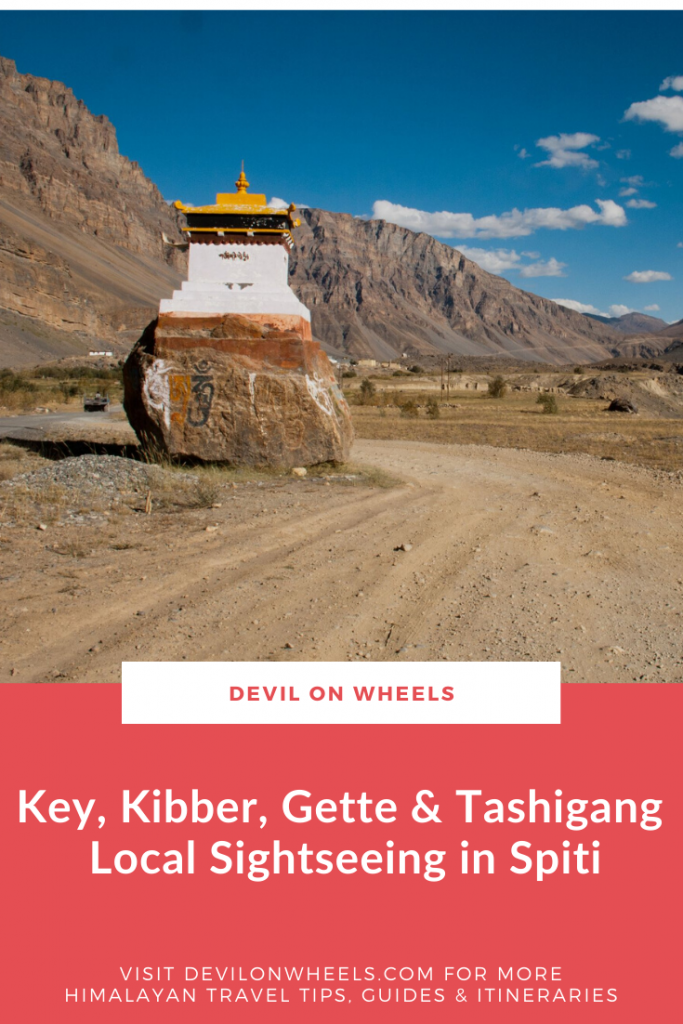
Gette is a scattered hamlet of stone houses at 4,270 meters (14,009 ft), 7 km east of Kibber on the Key-Kibber-Tashigang circuit in Spiti Valley. There is almost no infrastructure here, so most visitors treat it as a short stop rather than a destination. Here is what to see and do in Gette village:
- Gette Viewpoint. A natural lookout near the village overlooks up to nine other Spiti villages, including Kibber and the valley below Key Monastery, on a clear day.
- Small blue ponds and green fields. A rare patch of color against Spiti’s brown, wind-blown mountainsides, especially striking in July and August.
- Traditional stone houses. Unlike the mud and brick homes lower in the valley, Gette’s handful of houses are built from stone, in the same style as Kibber.
- The onward dirt track to Tashigang. Gette marks the point where the road turns to loose gravel for the final climb, making it a natural photo stop before the tougher stretch.
- A quiet, no-frills halt. There are no shops, homestays, or ATMs in Gette, and mobile network drops out completely. Carry water, snacks, and cash. Base yourself in nearby Kibber instead, where homestays list from around Rs 2,700 a night on booking platforms as of 2026, though most owners quote Rs 500-1,500 if you arrange directly on arrival.
Let's quickly dive into the details:
How Do You Plan the Key-Kibber-Gette-Tashigang Circuit from Kaza?
The entire circuit is about 50-60 km round trip from Kaza and takes 5-7 hours depending on how much time you spend at each stop. You can do this by private vehicle, rented motorcycle, or even a combination of the daily HRTC bus and walking. Here is a quick practical overview before we get into each place in detail.
| Detail | Information |
|---|---|
| Circuit Distance | ~50-60 km round trip from Kaza |
| Time Needed | 5-7 hours (full day recommended) |
| Starting Point | Kaza Bus Stand or Main Market |
| Best Time | June to October (roads open, clear skies) |
| Key Monastery Entry | No formal entry fee, donations welcome |
| Key Monastery Stay | Rs 250/night including meals (monastery guesthouse) |
| Taxi for Circuit | Rs 2,500-3,000 for the full loop |
| HRTC Bus | Kaza to Kibber daily at 4 PM, returns same evening |
| Altitude Range | 12,500 ft (Kaza) to 15,256 ft (Tashigang) |
| Mobile Network | BSNL patchy, Jio/Airtel in Kaza only |
I will be writing more articles in the coming days to cover other places that you can explore around Kaza on your road trip to Spiti from Delhi. This article is part of a comprehensive travel guide series for Spiti Valley.
What Are All the Places to Visit Near Kaza in Spiti Valley?
All these places, Key Monastery, Kibber, Gette, and Tashigang, can be covered in the famous village trek in Spiti. This village trek usually starts from Key Gompa and follows the trail sometimes all the way up to Dhankar Monastery. The trek covers beautiful hidden gems of Spiti Valley like Chicham, Kibber, Gette, Tashigang and then towards Langza, Komik, Hikkim, Demul, Lhalung, Dhankar and back to Kaza either directly or covering Pin Valley on the way back from Dhankar village.
There is so much to cover in Spiti Valley. The best part is that all these villages are a day trek from each other. Usually, people start the sightseeing from Kaza to Key Monastery and then complete the loop back to Kaza, either covering all or skipping a few villages depending on the number of days in hand.
However, for the brevity of this article, I will keep myself focused on the Key, Kibber, Gette, Tashigang circuit. I will cover Langza, Komik, and Hikkim and other places around Kaza in separate articles of this comprehensive Spiti Valley guide series.
What Makes Key Monastery the Most Iconic Sight in Spiti Valley?
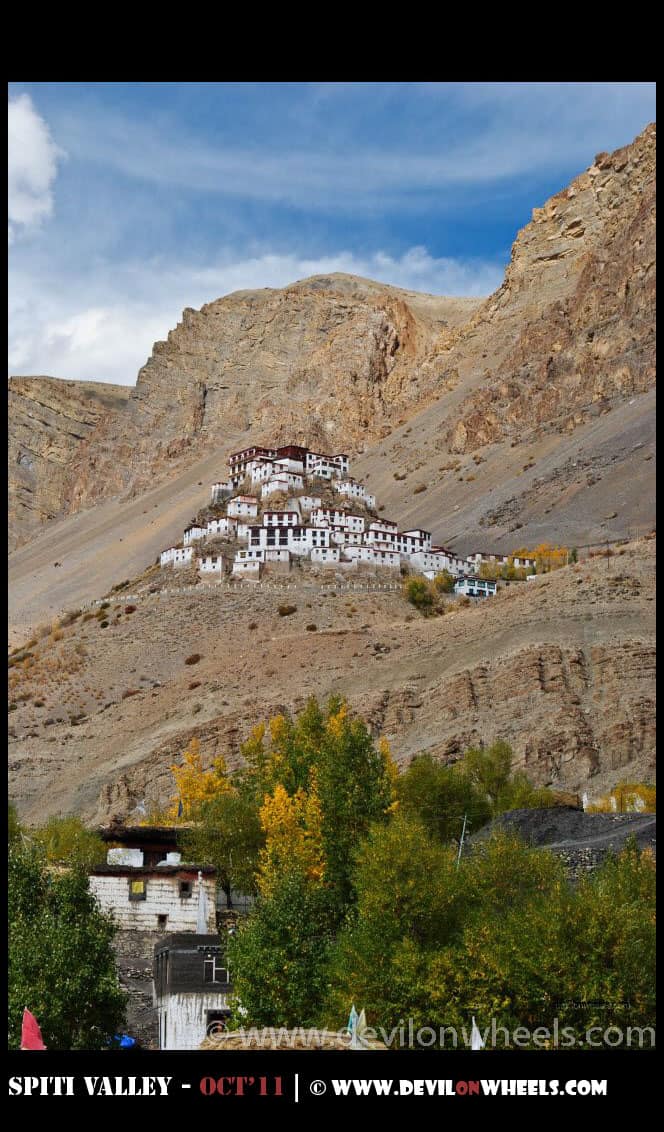
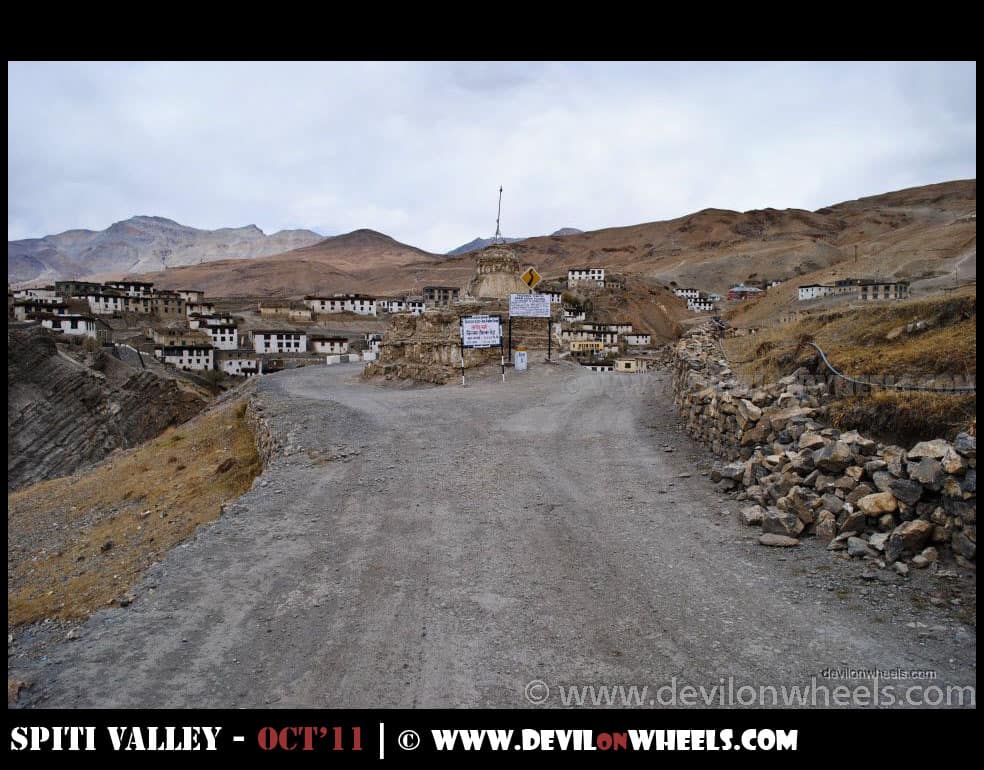
Key Monastery (also spelled Ki or Kye Gompa) sits about 14 km north of Kaza at an altitude of 4,166 meters (13,668 ft). Founded in the 11th century by Dromton, a pupil of the renowned Buddhist teacher Atisha, it is the oldest and the largest monastery in all of Spiti Valley. The monastery has survived earthquakes, Mongol raids, and avalanches over a thousand years, and it still stands strong on its hilltop, looking like a fortress merged with a place of worship.
When you drive towards Losar from Kaza, there comes a bridge from where the straight road leads to Key and Kibber, while the left goes towards Rangrik and further towards Losar. The drive from this junction to Key Monastery is smooth and paved. As you climb the final approach road to the monastery, the views of the Spiti River valley below are extraordinary. You can spot Rangrik Village across the river from the monastery terrace.
The monastery houses some wonderful scriptures and paintings of Lord Buddha and other deities. Key Gompa is famous for its priceless collection of ancient Tibetan silk thangkas up to 800 years old, along with frescoes depicting the life of Padmasambhava. If you have seen the Bollywood movie Highway, several scenes were shot right here at Key Monastery.
What Are Key Monastery Timings and Entry Fee?
Key Monastery is open from sunrise to sunset (roughly 6 AM to 6 PM) throughout the tourist season. There is no formal entry fee, keeping with the Buddhist tradition of open hospitality. However, you are welcome to make a donation to the monastery. Plan about 1-2 hours for a proper visit, including the main prayer hall, the rooftop terrace with panoramic views, and the smaller chapels.
Can You Stay at Key Monastery?
Yes, and I would highly recommend it if you have the time. Key Gompa has a monastery guesthouse where you can stay for about Rs 250 per night, which includes meals. You share the same food that the monks eat. You can also stay inside the monastery rooms by paying a small fee. It is a simple, no-frills experience, but waking up at 4,166 meters with the prayer chants echoing through the halls is something you will carry with you long after the trip ends. Book in advance during peak season (July-August) as rooms are limited.
When Is the Key Monastery Annual Festival?
The Key Monastery celebrates its annual Cham dance festival in June or July (exact dates follow the Tibetan lunar calendar, so check locally). During this festival, lamas perform masked dances in the ritual ground below the monastery, and a large butter sculpture of a demon is set ablaze. It is one of the most vivid cultural experiences in Spiti Valley. If your travel dates are flexible, try to time your visit around this festival.


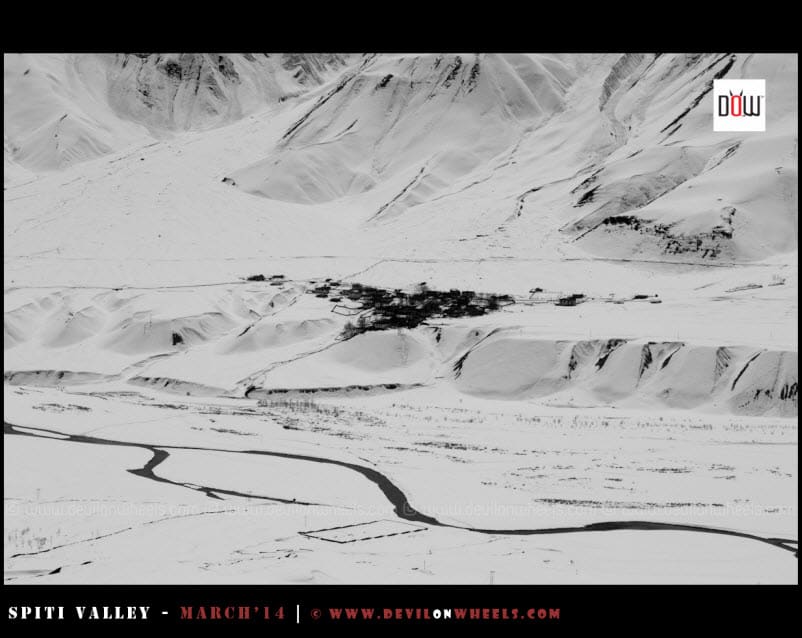
Why Should You Visit Kibber Village in Spiti Valley?
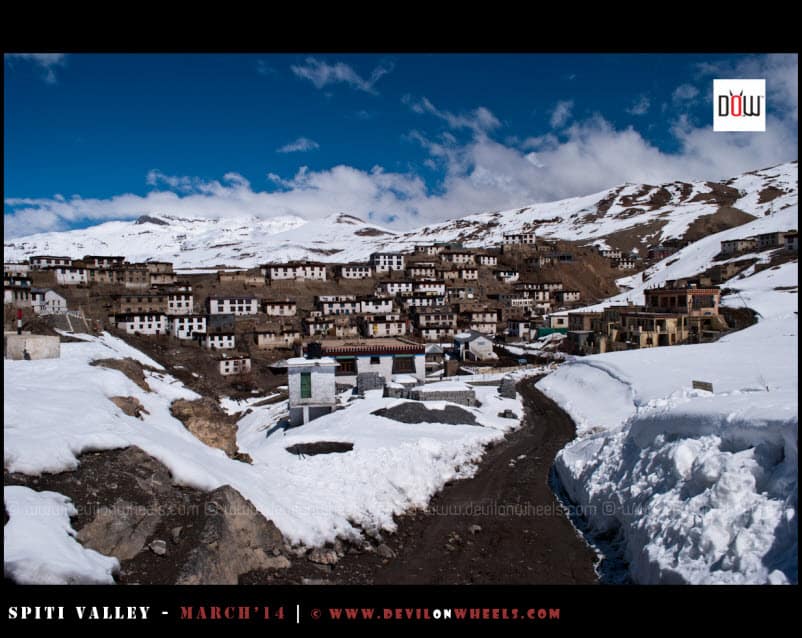
About 9-10 km ahead from Key Monastery, at an altitude of 4,205 meters (13,796 ft), lies the striking village of Kibber. The drive from Key to Kibber takes about 20-30 minutes through a landscape that shifts from monastery hills to raw, wind-blown plateau. Kibber claims to be one of the highest permanently inhabited villages in the world connected by motorable road, though this claim is contested by several other villages in Spiti itself and in Ladakh.
I have been to Hanle in Ladakh as well, which is also around 4,500 meters, and I am not sure how true these “highest village” claims are. There might be more villages in Tibet or other parts of the Himalayas that disprove these claims. The fact is, Kibber was once the highest polling station in India before losing that distinction to Tashigang (which we will cover later in this article). So, forget the accolades and just enjoy the village for what it is.
The houses in Kibber are unique to Spiti. Most of them are made of stones instead of the mud or brick used in other parts of the valley, though the overall design is similar to traditional Spitian architecture. The vistas surrounding Kibber and Gette are all mountains of limestone, which adds striking contrast to the landscape, especially if you visit Spiti Valley in autumn or fall when the light turns golden.
Kibber also acts as the base for the amazing 3-day trek to Mount Kanamo at an altitude of 5,974 meters (19,600 ft). If you are into serious trekking, this is one of the most accessible 6,000-meter peaks in India. You will need proper gear and acclimatization, so make sure you are well-prepared before attempting it.
Can You Spot a Snow Leopard Near Kibber?
If you are trekking from Chicham to Tashigang through Kibber, you will pass through the Kibber Wildlife Sanctuary, which is one of the most famous spots in India for snow leopard sightings. The sanctuary is home to an estimated 30 snow leopards, along with Tibetan wolves, Himalayan ibex, blue sheep (bharal), and yaks.
Keep in mind that snow leopard sightings are most common in winter (December to March), when these big cats descend to lower altitudes to hunt bharal. Dedicated snow leopard expeditions run from Kibber during winter and typically cost Rs 48,000 to Rs 80,000 per person for 8-10 day packages, including homestays, meals, guides, and permits. If you are visiting in summer, you are unlikely to spot a snow leopard, but the ibex and blue sheep are commonly seen on the hillsides.
Where to Stay in Kibber?
Kibber has several homestays ranging from Rs 500 to Rs 1,500 per night including meals. The village has grown in tourism infrastructure over the past few years, and you will find clean rooms with basic amenities. If you want to experience the real Spiti, staying a night in Kibber instead of rushing back to Kaza is worth it. The silence at night, broken only by wind and the occasional dog bark, is something Kaza cannot offer.
What Are Gette and Tashigang, and Why Are They Worth the Extra Drive?
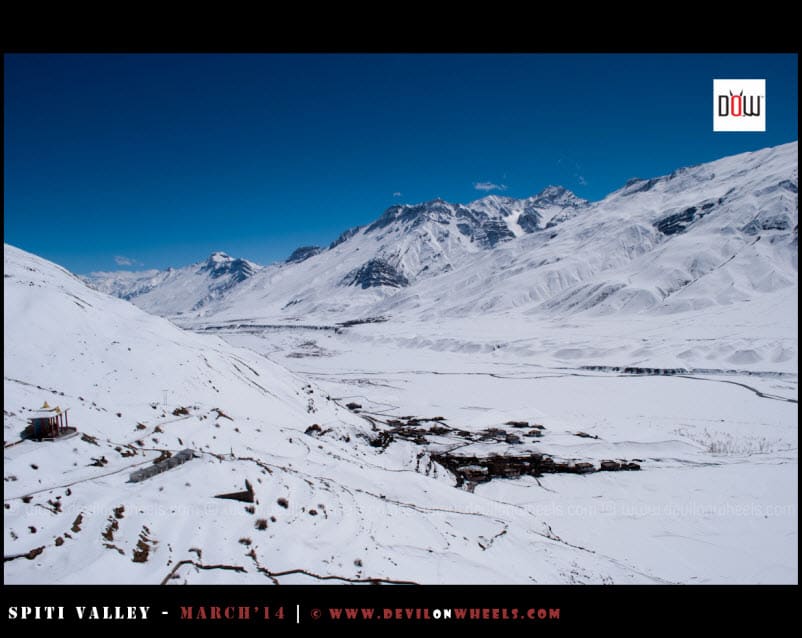
Most tourists stop at Kibber and head back to Kaza. But if you push just 7 km further east from Kibber, you reach Gette village at about 4,270 meters (14,009 ft). Gette is barely a village in the conventional sense. It is a handful of stone houses scattered across brown mountainsides, green fields, and small blue ponds. The road to Gette branches off just before you enter Kibber proper.
From Gette, the same dirt road continues upward to Tashigang, which sits at approximately 4,650 meters (15,256 ft). This is where the motorable road effectively ends. Tashigang holds the distinction of being India’s highest village with a permanent polling station, a record verified during the 2019 general elections. The road can be challenging due to loose gravel, and sometimes vehicles struggle on the final climb, so a high-clearance vehicle or motorcycle works best.
From the Tashigang viewpoint, you can see Langza village in the distance, overlooking the Shilla Valley and the towering Chau Chau Kang Nilda peak (6,303 meters). The sense of isolation here is complete. No mobile network, no shops, just mountains, sky, and a few resilient villagers who call this place home year-round.
How Does Chicham Bridge Connect to This Circuit?
You can easily spot Chicham Village nestled below two massive mountain peaks from the Kibber side. Before 2017, reaching Chicham required a terrifying manual trolley ride across a deep gorge. Locals would sit in a metal cage and pull themselves across using ropes. Definitely not for the faint-hearted.
The Chicham Bridge, opened in 2017, changed everything. This suspension bridge sits at 13,596 ft altitude and spans a 500-foot deep gorge, making it one of the highest bridges in Asia. It connects Kibber directly to Chicham, reducing what was a 2-hour detour via Kaza to a 20-minute drive. The bridge is well-built and safe for cars, SUVs, and motorcycles.
This is important for your itinerary planning: because of the Chicham Bridge, you no longer need to return to Kaza from Kibber to exit Spiti Valley towards Chandratal or Manali. You can drive from Kibber across the bridge to Chicham, and from there head towards Losar and Kunzum Pass. This saves significant time and fuel on your Spiti Valley road trip.
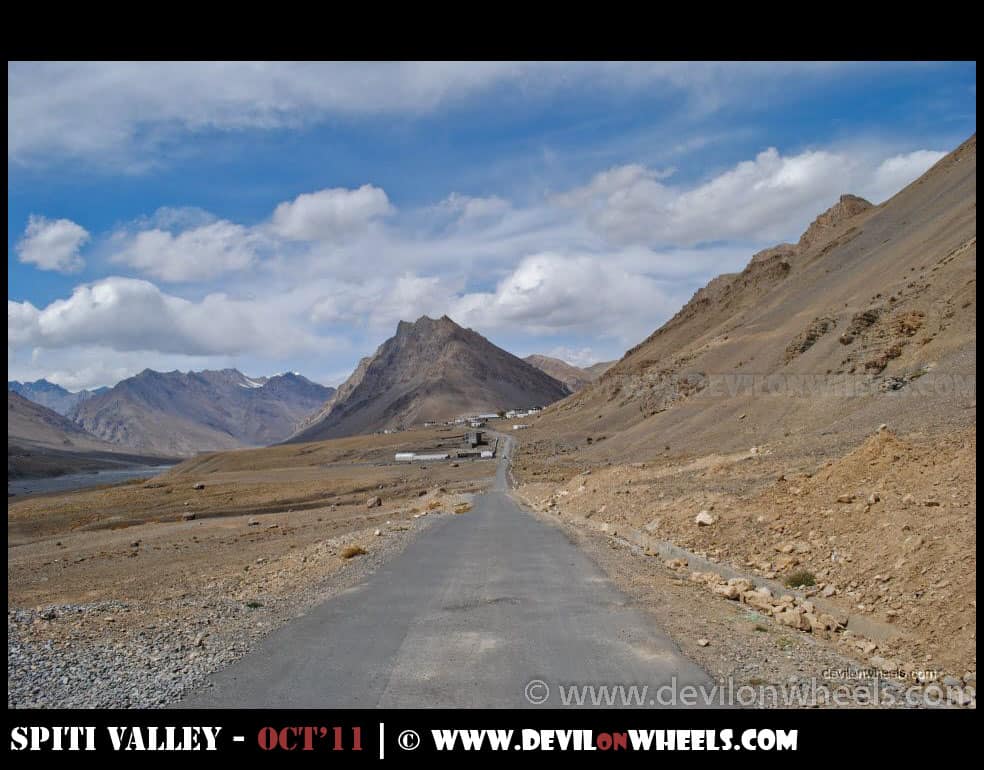
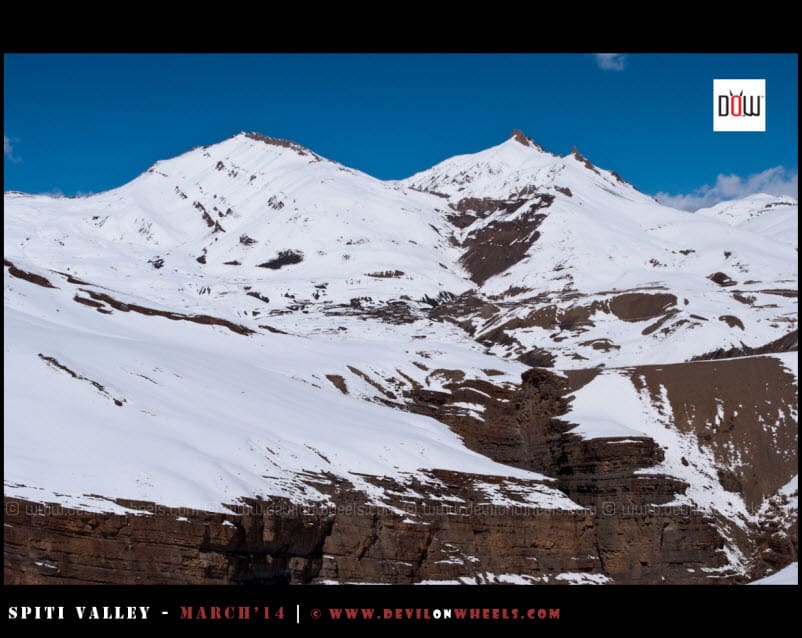
How Do You Reach Key Monastery and Kibber from Kaza?
It does not matter from which direction you travel to Spiti Valley, whether from Kinnaur or Manali to Kaza. Once you are in Kaza, reaching Key and Kibber is straightforward.
By Taxi from Kaza
A taxi for the full Key-Kibber-Gette-Tashigang circuit costs about Rs 2,500 to Rs 3,000 from Kaza (as of 2025-2026). If you combine it with Langza, Komik, and Hikkim, the full day sightseeing rate is around Rs 3,000-3,500. Your homestay owner in Kaza can usually arrange a taxi at better rates than the taxi stand. You can also check the list of taxi drivers for Spiti Valley that I maintain on this blog.
By HRTC Bus
HRTC runs a daily bus from Kaza to Kibber at 4 PM. The bus passes right next to Key Monastery, so you can get off there, explore the monastery, and then either trek up to Kibber (about 9-10 km, 2-3 hours uphill) or catch the same bus if the timing works. The bus fare from Kaza to Kibber is nominal, about Rs 30-50. The bus returns the same evening after a brief halt at Kibber. Keep in mind that bus timings change seasonally, so verify locally before planning your day around it.
By Motorcycle or Self-Drive
If you are on a motorcycle trip through Spiti, the Key-Kibber-Gette-Tashigang circuit is one of the best day rides. The road from Kaza to Key is paved. Key to Kibber has some unpaved sections but is manageable on any motorcycle. Beyond Kibber towards Gette and Tashigang, the road turns into dirt and loose gravel. A Royal Enfield handles it fine, but go slow on the gravel stretches.

How Much Does This Day Trip Cost?
This is one of the most affordable day trips in Spiti Valley. Here is a rough budget breakdown for one person (as of 2025-2026).
| Expense | Budget (Rs) | Mid-Range (Rs) |
|---|---|---|
| Taxi / Fuel (shared among group) | 500-750 | 1,000-1,500 |
| Lunch in Kibber / Kaza | 100-200 | 200-400 |
| Key Monastery donation | 50-100 | 100-200 |
| Snacks and tea | 50-100 | 100-200 |
| Total per person | 700-1,150 | 1,400-2,300 |
If you stay overnight at Key Monastery (Rs 250 including meals) or at a Kibber homestay (Rs 500-1,500), add that to your budget. For a detailed cost breakdown of the entire Spiti trip, check my Spiti Valley trip cost guide.
What Tips Should You Keep in Mind for This Circuit?
Here are some practical tips from my experience driving this route multiple times.
- Acclimatize first. If you just arrived in Kaza, take a rest day before heading to Kibber and beyond. The altitude jumps from 12,500 ft in Kaza to over 15,000 ft at Tashigang. Make sure you are acclimatized to avoid acute mountain sickness.
- Carry cash. There is no ATM in Kibber, Gette, or Tashigang. The nearest ATMs are in Kaza, and even those run out of cash during peak season. Carry enough cash for the day.
- Start early. Leave Kaza by 8-9 AM to have plenty of time at each stop. The afternoon light at Key Monastery is excellent for photography, so you can visit the monastery first, then head to Kibber, and catch the golden hour at the higher villages.
- Carry water and snacks. Kibber has a couple of small shops and homestays serving food. Gette and Tashigang have virtually nothing. Carry your own water, snacks, and a packed lunch if heading beyond Kibber.
- Mobile network. BSNL has patchy coverage in Kibber. Jio and Airtel work in Kaza town but not beyond. At Gette and Tashigang, expect zero connectivity. Inform your family before heading out.
- Respect local culture. Remove shoes before entering the monastery. Ask permission before photographing monks or inside the prayer halls. Keep the villages clean, carry back your trash.
- Fuel up in Kaza. The petrol pump in Kaza is the only one in the region. Fill your tank before heading out. For more on fuel availability, read my guide on fuel in the Himalayas.
- Dress in layers. Even in summer, the temperature at 15,000 ft can drop sharply, especially after sunset. Carry a warm jacket and windcheater. For a full packing list, see my Spiti Valley clothing guide.
When Is the Best Time to Visit Key Monastery and Kibber?
The best time to visit this circuit is from mid-June to early October. During this window, all roads are open, the weather is pleasant during the day (10-20 C), and the monastery and villages are fully accessible. July and August bring occasional rain and some cloud cover, but also the greenest landscapes. September and October offer the clearest skies and stunning autumn colors.
If you are interested in snow leopard spotting near Kibber, plan for January to March, but keep in mind that winter in Spiti is harsh, with temperatures dropping to minus 20 C at night. Roads beyond Kaza may be snow-blocked, and you will need proper winter gear. For a month-by-month breakdown, check the best time to visit Spiti Valley guide, which is the pillar article for all Spiti planning.
How to Fit This Circuit into Your Spiti Valley Itinerary?
If you are spending 7-10 days in Spiti (which I strongly recommend), here is how I suggest fitting this circuit into your overall plan.
- Day 1-2: Arrive in Kaza via Kinnaur route or Manali route. Rest and acclimatize.
- Day 3: Key Monastery, Kibber, Gette, Tashigang circuit (this article).
- Day 4: Langza, Komik, Hikkim sightseeing loop.
- Day 5: Tabo, Dhankar, Pin Valley day trip.
- Day 6-7: Chandratal Lake excursion or extended trekking.
For more detailed itinerary options, check the Spiti Valley most common itinerary article or the 6-day Spiti Valley itinerary if you are short on time.
Final Thoughts on the Key-Kibber-Tashigang Circuit
Rather than reading more about these places, I would recommend that you hit the road soon and witness them with your own eyes. The Key-Kibber-Gette-Tashigang circuit packs more variety into a single day than most week-long trips elsewhere. A 1000-year-old monastery, one of the highest villages on earth, a snow leopard sanctuary, and views that stretch all the way to the Shilla range.
Have you been to these places in Spiti Valley? If you have any queries, feel free to leave a comment below or reach me on my Instagram account @devilonwheels. If you know friends or family planning a trip to Spiti Valley, do share this article with them to help them plan a memorable trip.
I hope you are still enjoying this series of articles on Spiti Valley. Do leave a comment to let me know, it helps keep the engine of motivation running. If you found this useful, join the Discover with Dheeraj community for more honest, experience-based travel planning from the Himalayas.
Last Updated: March 2026
Frequently Asked Questions
Is there an entry fee for Key Monastery in Spiti Valley?
No, Key Monastery does not charge a formal entry fee. Visitors are welcome to make voluntary donations. The monastery is open from roughly 6 AM to 6 PM during the tourist season (June to October). Plan 1-2 hours for a proper visit including the prayer halls and rooftop terrace.
How far is Key Monastery from Kaza?
Key Monastery is about 14 km north of Kaza, a 30-minute drive on a paved road. The monastery sits at 4,166 meters (13,668 ft) on a hilltop above the Spiti River. You can reach it by taxi (Rs 2,500-3,000 for the full circuit including Kibber), HRTC bus (daily 4 PM from Kaza), or self-drive.
Is Kibber the highest village in India?
Kibber at 4,205 meters (13,796 ft) was once considered the highest motorable village in India, but this claim is contested. Tashigang, just 7 km further in the same valley, sits at 4,650 meters and now holds the record for India’s highest polling station. Komic village in Spiti and Hanle in Ladakh are also at comparable altitudes.
Can I see snow leopards near Kibber?
The Kibber Wildlife Sanctuary is one of the best places in India for snow leopard sightings. However, sightings are most common in winter (December to March) when the leopards descend to lower altitudes. Dedicated expeditions cost Rs 48,000 to Rs 80,000 per person for 8-10 days. In summer, you are more likely to spot ibex and blue sheep.
Is the Chicham Bridge safe to cross by car?
Yes, the Chicham Bridge opened in 2017 and is well-constructed for regular vehicle traffic including cars, SUVs, and motorcycles. It sits at 13,596 ft and spans a 500-foot deep gorge. The bridge connects Kibber to Chicham, allowing direct access to Losar and Chandratal without returning to Kaza.
What is the best time to visit Key Monastery and Kibber?
The best time is mid-June to early October when roads are open and the weather is pleasant (10-20 C during the day). July-August are the greenest months but have occasional rain. September-October offer the clearest skies and autumn colors. For snow leopard expeditions, visit in January to March.
Is there mobile network coverage at Kibber and Tashigang?
BSNL has patchy coverage in Kibber. Jio and Airtel work in Kaza town but not beyond Key Monastery. At Gette and Tashigang, expect zero mobile connectivity. Inform your family before heading out and download offline maps.
How much does a taxi cost for the Key-Kibber circuit from Kaza?
A taxi for the Key-Kibber-Gette-Tashigang circuit costs Rs 2,500 to Rs 3,000 from Kaza (as of 2025-2026). Combining it with Langza, Komik, and Hikkim brings the full-day rate to Rs 3,000-3,500. Homestay owners in Kaza often arrange taxis at better rates than the taxi stand.
What is there to see in Gette village?
Gette itself is a tiny hamlet with no major attractions, but it offers a natural viewpoint overlooking up to nine other Spiti villages, small blue ponds, green fields, and traditional stone houses. Most travelers treat it as a scenic 15-20 minute stop between Kibber and Tashigang rather than a destination on its own.
Is there anywhere to stay or eat in Gette village?
No, Gette has no shops, homestays, or ATMs, and mobile network is completely unavailable. Base yourself in Kibber instead, where homestays list from around Rs 2,700 per night on booking platforms as of 2026, or Rs 500-1,500 if arranged directly with cash on arrival.

40 Comments
Comments section gets closed in 90 days. To ask your travel questions, you can follow my YouTube Channel for a faster reply or for a much slower reply follow me on Instagram. :)
Dear Dhiraj ji,
Fascinating reads these articles are. Me & my wife are now planning to visit Spiti valley in September 2018.We are planning to enter from Shimla and exit from Manali.
Now regarding transport,as we will be coming from Kolkata,We will have to rent a car for the whole trip.Can I book sedan cars for the trip as I am not too sure whether a sedan can cover the whole distance?If yes,then whom should I contact?
Can the person driving the car will also be able to help us book accommodations as well?
Or should we go with a travel agency like Spiti Valley Tours or Spiti Ecosphere?
I am abit confused and your expert advice can surely help clearing the air.
Debayan, you do not actually need ay tour travel agency to make a Spiti Valley trip. You have a good plan in place and can book the trip on your own with all the info. available on this website. Save some money and use some of it to spread some smiles in the Himalayas with some causes like sharing stationary with the local kids in schools or chocolates or toys 🙂 … We are here to help you with all possible questions or contacts to make the trip successful on your own.
You can get connected directly to some drivers in Himachal or Spiti Valley or Kinnaur Valley at the link: List of Taxi Drivers for Spiti Valley & Kinnaur Valley. These drivers can come and pick you up from Manali / Shimla / Delhi / Chandigarh too, of course with a price of the pickup as well.
The rates of the taxis are about Rs 3500 per day depending on the number of days you plan to travel, more the days, less the price. If you are 2-3 in the group, you can opt for sedan taxi cars as well which charges around Rs 2200 per day.
Otherwise, taxis, in general, are also available on the spot from Shimla or Manali from respective taxi stands. These drivers can help you with finding local stay options too.
For stay options in Kinnaur and Spiti, check the link: Some Good Options of Stays in Spiti Valley / Kinnaur Valley.
You can keep an average of 900-1200 per person per day for food and stay on the tour to Spiti Valley.
I will request that you please refer the following articles for planning a trip to Spiti Valley: Spiti Valley via Manali | How to Plan Your Journey AND Spiti Valley via Kinnaur | How to Plan Your Journey
They have all the details. Feel free to let me know in case of any doubts
last year i took a 4×4 Scorpio from a group called Unwind Outdoors .. they also did my stay. i didnt have to spend my time in hunting for hotel bookings / taxis and they were pretty professional in the whole trip
Hi,
I want to explore Mane, getting, tasigang, chichum , in what order would be advisable. I am coming to spiti by the kinnaur side and halt at dhankar.
any other beautiful village you can suggest , i have been to kibber, komic, langza, hikkim, pin , mud in my last trip last year.
If you reach Dhangkar, you need to backtrack a little bit to Mane bridge from where you will reach Mane villages. After visiting it, you can enter Lingti – Rama Valley to cover Lhalung village, Rama Village, and Demul villages. After staying overnight at Lhalung, go over to Kaza and visit Gete and Tashigang which is above Kibber. You can visit Chicham using the pulley near Kibber OR can drive from the other side to reach Chicham. The road to Chicham is dirt track only and could be in very bad condition.
Dheeraj ji Namskar,
Angad aur mai 26 jun ko shimla ke raste lahaul spiti velly me ja rahe hai . Hamare pas 10 din shimla to manali tak hai kya itne samay me ghumna ho jayega? aur yah samay thik hai kya?
Nitish Lokhande
Nitish ji, I hope you and Angad doing great !! Very nice to hear from you after long time. yes 10 days are good enough. Refer Most Common Itinerary for Spiti Valley.
You can get connected directly to some drivers in Himachal or Spiti Valley or Kinnaur Valley at the link: List of Taxi Drivers for Spiti Valley & Kinnaur Valley. These drivers can come and pick you up from Manali / Shimla / Delhi / Chandigarh too, of course with a price of the pickup as well.
The rates of the taxis are about Rs 3200-3500 per day depending on the number of days you plan to travel, more the days, less the price. If you are 2-3 in the group, you can opt for sedan taxi cars as well which charges around Rs 2200 per day.
Otherwise, taxis, in general, are also available on the spot from Shimla or Manali from respective taxi stands. These drivers can help you with finding local stay options too.
For stay options in Kinnaur and Spiti, check the link: Some Good Options of Stays in Spiti Valley / Kinnaur Valley.
You can keep an average of 900-1200 per person per day for food and stay on the tour to Spiti Valley.
Hi Dheeraj Sir,
First up, I would like to thank you for writing such informative articles in a lucid manner and also taking out time to reply patiently to out queries.It incredible and words can’t express what an awesome job you are doing.And for me.. your Ladakh travel guides were really useful.So..Thanks again..:-) and congrats for your writings getting featured in list of top 10 travelouges in India on a website i came across recently.
Anyways, i would be travelling to Kinnaur Spiti in Feb last week-march 1st week tentatively.So had some questions regarding the village treks you mentioned around Key Kibber in this article
1. How many days should i keep in hand just for the Key–Chicham–Kibber– Gette–Tashigang–Langza,-Komik,-Hikkim,-Demul,-Lhalung,-Dhangkar circuit trek.
2. Is it possible to get help of local villagers as guides on the spot or i need to call someone in advance
3.How about the accomodation in these places.Are they homestay friendly.
4.etc..:-)
Would appreciate if you can help me out on these points.Thanks again
Thank you so very much Satyam !! Glad DoW has helped you along the way of travel to Himalayas 🙂
1. I will suggest about 8-10 days for making these treks only. Keep in mind you should take the guide or a local with you as these places will be filled with snow during these days. It will be very cold/harsh and you will get very basic food + homestay only stay in Spiti during winter months.
2. Yes, easily possible in winters.
3. Yes, there will be only homestays available during these days.
Ohh..unfortunately i can set aside 3 days tops for the treks as of now So
1> Can a small part trek of the full round trek Key–Kibber– Chicham–Gette–Tashigang-Key only can be done in 3 days. I will leave aside Langza,-Komik,-Hikkim,-Demul for now.
2>Are local guides and homestays available easily on just asking around when i land keeping in mind.
Thanks
Hi Satyam, Gette – Tashiganag may not be possible as there isn’t much to stay over there and in winters yo will need some place to stay. Regarding homestays, you will needs to search a bit, not all homestays are operational but yes, those which are you should not have much issues finding the place to stay for yourself.
Hi Dhiraj,,
I have planned my month long spiti valley exploration trip…Since I have enough time in hand, I am planning to stay back at the remote villages , I know homestay is the only option… It would be great if you can share any homestay contact details in these villages. Also, Since I will be reaching Kaza first, crossing Kunzum la, any suggestion on say in kaza? I want to prebook that as I am sure i will be tired enough after the long bus journey from Manali and also the high altitude may play a trick on my health. By the way, I will be traveling alone, thus any contact of place in kaza near the bus stand (so that I donot have to put in much efforst after getting down from the bus on the first evening) which you have experienced personally will be highly appreciated.
Thanks
Debjani
Debjani, crossing Kunzum is fine up to mid of October. Then, once you reach Spiti there will be abundance of options and since not its end of season, there is no need to book any homestay in advance. You can go over and stay. Take good rest in around Tabo in initial days and then start towards higher villages like Ki, Kibber, Langza, Komic, Demul, Lhalung, Dhangkar (not in order) Since, you will be relying much on public transport so go the way you feel comfortable once reaching Spiti and feeling comfortable.
Hello Dheeraj Ji
I am planning to visit Kaza from Delhi in mid October , starting from 11th Oct, with my wife and two year old kid.
I have allotted two full days to reach Kaza, two full days to return back with two days stay at Kaza.
This completes the trip in 6 days, I will be the only driver and I will take the Shimla route.
Please tell your opinion regarding
* Is it fine to reach kaza from Delhi in 2 days ( I can squeeze out just 6 days from office.)
* Shall I expect tourist rush at Kaza at this time of the year.
* Is there any risk of AMS for the kid considering her age.
* Is October too cold for a comfortable trip and good sleep there
* Where could I see/ walk in snow in nearby areas
Atul, It depends on person to person to take the children of such age group because AMS do not matter with respect to age or sex or any fitness level. It can happen to anyone of any age or sex or fitness I shall say :D… The issue with children is that they tend to exert the body considering it the same kind of place they belong to and this elevates the chances of getting struck with AMS. Secondly, they are not much expressive about their uneasy feelings, so it is parents who need to watch out and take care that the child is not suffering from uneasy feelings, headache or nausea and is behaving properly. With less than 4 year child, I think he/she will also be NOT able to convey the uneasiness she may feel. You have to be vigilant and if you notice any such feeling or he/she tells you about such a feeling then please do not ascend anywhere, either descend to lower altitude or stay at the same place to watch things overnight and if symptom increase then start descending immediately. Same is applicable for any adult as well. And yes, do keep the body adequately hydrated!!
Also, PLEASE read the article: Traveling to Ladakh with Kids or Babies. This article covers this topic in complete detail.
It will be cold out there as well in Spiti Valley and the route from Manali – Kaza is treacherous.
If you trust me, I will not suggest that you should take your 2 yr kid to Spiti Valley. It may end up like a punishment to him.
Hello Devil on Wheels,
We are 6-8 member with 3 girls. We are planning to go Kaza after 18th of aug or starting of sept. Is it safe in this whether conditions to travel Kaza and end our journey by Kumzum la ,manali to CHD
Deepak, if you will make the trip in Starting of September, that will be great. Yes, better to plan from Shimla side and come back from Manali side from Spiti Valley.
Thanks 🙂
Hello Devil on Wheels,
We are 6-8 member with 3 girls . We are planning to go Kaza after 18th of aug or starting of sept. Is it safe in this whether conditions to travel Kaza and end our journey by Kumzum la ,manali to CHD
Replied to your other comment.
Dear Dheeraj
We are planning to visit Lahaul, Spiti in the May end or June. Is it the right time for visiting the place and what are the economical mode of travel for 2 persons? Or from where we can get shared taxis
Thanks & Regards
Deepak Joshi
Deepak, Spiti and Kinnaur is well connected with daily HRTC buses. You can travel in them.
Brilliant job Dheeraj!
I was initially planning Spiti with a tour operator but thanks to your hard efforts on this comprehensive website, I’ve taken control of planning my own trip.
Quick question – is there a direct motorable road from Demul – Komic (like it shows on Google maps?)
Thanks in advance.
dear dheeraj,
me and a frnd of mine wants to go to spiti on my pulsar 150.
is it good to go with this plan.
please guide me.
Yes, Pulsar will do fine in Spiti Valley
Excellent job.
Thanks again Pradip 🙂
hi dheeraj
make a proper itinerary for delhi to spitivalley
places to visit
things to do .
we have 10 days
You can check a very balanced and most common itinerary for Spiti Valley followed by many travellers including me at the link here for 10-11 days: Most Common Itinerary for Spiti Valley.
You can get connected directly to some drivers in Spiti Valley or Kinnaur Valley at the link: List of Taxi Drivers for Spiti Valley & Kinnaur Valley. These drivers can come and pick you up from Manali / Shimla / Delhi / Chandigarh too, of course with a price of pickup as well.
The rates of the taxis are about Rs 3000-3500 per day depending upon the number of days you plan to travel, more the days, less the price.
Otherwise, taxis in general are also available on the spot from Shimla or Manali from respective taxi stands
For stay options in Kinnaur and Spiti, check the link: Some Good Options of Stays in Spiti Valley / Kinnaur Valley
I will request that you please refer the following articles for planning a trip to Spiti Valley: Spiti Valley via Manali | How to Plan Your Journey AND Spiti Valley via Kinnaur | How to Plan Your Journey
They have all the details. Feel free to let me know in case of any doubts
Can I drive through alto from manali to kaza in July
Yes JB bhai, Manali to Kaza shall be difficult in Alto with lot of deep and difficult water crossings.
Is it possible to go to kaza in February first week?
Venkatesh, it is very much possible to go to Kaza in Feb first week. However, the risk of getting stuck for few days to couple of weeks is very high. Also, the facilities from Kinnaur to Spiti will be very basic including food and water. Washrooms will be dry only. Regardless to stay, the cold will be very harsh.
Dear Dheeraj,
Firstly highly appreciate the fact that you are sharing vital information for enthusiastic travellers. I am Vicky from Mumbai and every year in the last week of December I usually like going to places with a lot of snow. Himachal being one of the states that I have never visited, I am planning to go this year. My tickets for Delhi are already booked from 24th Dec to 2nd Jan return. Initially started planning to go to Spiti Valley, but it seems that its just too far and would take up lot of time and energy considering that it is a simple backpack trip of 4-5 people. Also I read that Rohtang Pass has shut down and Landslides are very very common in Himachal. Could u suggest some OFF-BEAT non- commercial places with snow for me this end of December. Also 2nd Jan being the return date I wouldn’t want to get stuck someplace and fail to return to New Delhi. Lastly, with all the research I am carrying out to plan the trip I am unable to gather substantial information regarding travelling in Himachal during peak winters. Pls suggest…Uttrakhand too can be considered.
Warm regards,
Vickey
Hello Viceky,
Thank you. I will suggest that you opt for Kinnaur Valley. It is still close to civilization and there is good time you have in hand. Please check this: Kinnaur Valley Travel Guide | Kalpa, Sangla & Chitkul
I will be making a road trip DELHI-SHIMLA-SPITI-LEH-KASHMIR (19 JUN – 9 JUL 2016) and should reach Kaza around Jun 26.
Will there be snow still at Spiti Valley as shown in your lovely photos above? Really looking forward to the adventurous road trip.
Thanks.
GK, Snow will only be present after you cross Kunzum Pass towards Gramphu. At rest of the places up to Kaza and Kunzum Pass it will be all gone and melted. Yes, that is for sure that you will live your adventure 🙂
Thank you, Dheeraj.
Dear Dhiraj,
Your writings are always stimulating and informative.
I have one query is it safe and appropriate to visit key and kibber during second half of November.
I will be grateful if you can guide me
Your’s
Dr Deepak Agrawal
Hello Dr. Deepak,
Thank you. Regarding travel to Key – Kibber in the month of November, it will be quite difficult, cold and harsh to go through. The toilets might have gone to dry pits, the food will be limited to just basic food and stay will be limited to few hotels may be Sakya Abode, Snow Lion and then limited guest houses. Also, chances of snow is high so in case you have just limited days and want to run back, in case it snows, it can make you stuck for couple of days to a week type depending on amount of snow but chances are low in November. Finally, you will need to go from Kinnaur and come back from Kinnaur only.